Interviews are more than just a Q&A session—they’re a chance to prove your worth. This blog dives into essential Articulation and Phonology Disorders interview questions and expert tips to help you align your answers with what hiring managers are looking for. Start preparing to shine!
Questions Asked in Articulation and Phonology Disorders Interview
Q 1. Describe the difference between articulation and phonological disorders.
Articulation and phonological disorders both affect speech sound production, but they differ significantly in their underlying causes and the types of errors observed. Articulation disorders are motor-based difficulties; the child *knows* the sounds but has trouble physically producing them. Think of it like learning to play the piano – you understand the music, but your fingers don’t quite cooperate. Phonological disorders, on the other hand, are pattern-based; the child may not have fully developed the sound system of their language. It’s like not understanding the musical notes themselves, not just having trouble playing them.
For example, a child with an articulation disorder might consistently substitute a /w/ for an /r/, saying "wabbit" instead of "rabbit," but they may correctly produce /r/ in other words. A child with a phonological disorder might exhibit a pattern of simplifying consonant clusters, like saying "poon" for "spoon" and "top" for "stop" – impacting multiple sounds systematically. The distinction is crucial for effective intervention.
Q 2. Explain the various types of articulation errors.
Articulation errors are categorized in several ways. Substitutions involve replacing one sound with another (e.g., ‘wabbit’ for ‘rabbit’). Omissions leave sounds out (e.g., ‘ca’ for ‘cat’). Distortions involve producing a sound imprecisely (e.g., a lateralized /s/, where air escapes from the sides of the tongue). Finally, Additions involve adding extra sounds (e.g., ‘buh-lack’ for ‘black’). Understanding the *type* of error helps us tailor therapy. For instance, a child consistently omitting final consonants might benefit from activities focusing on strengthening that position.
Q 3. What assessment tools would you use to diagnose an articulation disorder?
Diagnosing an articulation disorder involves a comprehensive assessment. I’d use several tools, including:
- Formal articulation tests: Standardized tests like the Goldman-Fristoe Test of Articulation (GFTA) or the Khan-Lewis Phonological Analysis provide a structured way to evaluate sound production in different word positions. These offer normative data for comparison.
- Speech sample analysis: A spontaneous speech sample allows for a more natural assessment and reveals patterns of errors not captured in formal tests. I’d transcribe the sample and analyze the frequency and types of errors.
- Oral-peripheral examination: A physical examination assesses the structure and function of the oral mechanism (tongue, lips, teeth, palate) to identify any anatomical limitations contributing to articulation difficulties.
- Hearing screening: Untreated hearing loss can significantly impact speech development; therefore, a hearing screening is essential.
The combination of these assessments provides a holistic picture of the child’s articulation skills, guiding the development of a personalized intervention plan.
Q 4. How do you differentiate between a phonological delay and a phonological disorder?
Differentiating between a phonological delay and a disorder is crucial. A delay implies that the child is exhibiting typical phonological processes, but at a later age than expected. They are on a similar developmental trajectory as typically developing children, just behind schedule. A disorder, however, refers to atypical patterns of sound production that are not consistent with typical development. These patterns are often idiosyncratic, meaning they are not commonly observed in children learning language.
Consider a child who simplifies consonant clusters (e.g., ‘top’ for ‘stop’) at age four. While this process is typical at younger ages, it might indicate a delay if other aspects of language development are also slightly behind. However, if the child displays unusual and unique sound substitutions that are not observed in typical development, it could signify a phonological disorder.
Q 5. Describe your approach to therapy for a child with a phonological process disorder.
My approach to therapy for a child with a phonological process disorder is highly individualized and focuses on targeting the underlying phonological patterns, not just individual sounds. I utilize a cyclical approach. This means we repeatedly cycle through a small set of target sounds or patterns, mastering each before moving on to the next. This minimizes frustration and maximizes success.
I’d start with an assessment to identify the specific phonological processes affecting the child’s speech. Then, I’d select target sounds representing those processes. Therapy might involve:
- Minimal pairs: Using word pairs that differ by only one phoneme (e.g., ‘sun’ and ‘fun’) to help the child perceive and produce the contrast.
- Maximal oppositions: Utilizing word pairs that differ by multiple features (e.g., ‘shoe’ and ‘go’) to maximize the phonetic contrast.
- Metaphon therapy: Focusing on the child’s understanding of the phonological rules they are using incorrectly.
- Play-based activities: Integrating speech therapy into playful activities to maintain engagement and motivation.
Regular monitoring of progress and adjustments to therapy based on the child’s response are crucial elements of my approach.
Q 6. What are some common phonological processes?
Many phonological processes are common in the speech of young children. Some examples include:
- Final consonant deletion: Omitting the final consonant in a word (e.g., ‘ca’ for ‘cat’).
- Cluster reduction: Simplifying consonant clusters by omitting one or more consonants (e.g., ‘poon’ for ‘spoon’).
- Stopping: Replacing fricatives (e.g., /s/, /f/) or affricates (e.g., /ch/, /j/) with stops (e.g., /p/, /b/, /t/, /d/).
- Fronting: Replacing velar sounds (e.g., /k/, /g/) with alveolar sounds (e.g., /t/, /d/).
- Liquid simplification: Replacing liquids (/l/, /r/) with other sounds (e.g., ‘wabbit’ for ‘rabbit’).
The persistence of these processes beyond the expected age range indicates a possible phonological disorder.
Q 7. How would you assess the intelligibility of a child’s speech?
Assessing a child’s speech intelligibility involves a multifaceted approach. While there isn’t a single perfect measure, I would use a combination of methods:
- Percentage of consonants correct (PCC): This is a common measure calculating the percentage of correctly produced consonants in a speech sample. A lower PCC indicates reduced intelligibility.
- Subjective judgment: I’d listen to the child’s speech sample and make a judgment on their overall intelligibility, considering factors such as the listener’s familiarity with the child’s speech and the context of the conversation. Using a scale (e.g., 1-5, with 5 being fully intelligible) offers a structured approach to subjective evaluation.
- Parent report: I would also consider the parents’ or caregivers’ perspective on the child’s intelligibility in different settings (home, school, with unfamiliar listeners). This provides valuable contextual information.
A combination of these methods provides a more comprehensive picture than any single approach. For instance, a child might have a relatively high PCC but still experience reduced intelligibility due to the type of errors impacting crucial aspects of word production.
Q 8. Explain the principles of motor learning as applied to articulation therapy.
Motor learning principles are fundamental to articulation therapy. They guide how we teach new motor skills, like producing sounds correctly. Think of it like learning to ride a bike – it takes practice, feedback, and repetition. Key principles include:
- Practice: Consistent, structured practice is crucial. We use various techniques to ensure the client practices the target sounds in different contexts and at increasing complexity.
- Feedback: Providing immediate, specific feedback is essential. This can be auditory (listening to the sound), visual (seeing the articulatory placement), or tactile (feeling the placement). Knowing whether a sound is correct or not helps the client adjust their movements.
- Specificity of practice: Practicing the specific sounds the client is struggling with, rather than general exercises, is more effective. We target those sounds in varied contexts and positions within words and sentences.
- Transfer of learning: We aim to help the client generalize learned sounds to different situations. Starting with simple words and gradually moving to more complex sentences and conversational speech is vital for this.
- Knowledge of performance (KP) and knowledge of results (KR): Providing feedback on *how* the client produced the sound (KP) and whether the sound was correct (KR) are both valuable. For example, ‘Your tongue placement for /s/ was a little too forward this time, but I heard the /s/ sound!’ combines both.
We use these principles to structure our therapy sessions, ensuring that practice is meaningful, feedback is constructive, and progress is monitored closely.
Q 9. What are some evidence-based treatment approaches for articulation disorders?
Evidence-based treatment approaches for articulation disorders are diverse, but some stand out for their efficacy. These include:
- Traditional Articulation Approach: This focuses on precise motor movements for each sound, often using drills and repetition. It’s highly structured and works well for children with a few sound errors.
- Cycles Approach: This approach is ideal for children with multiple sound errors. It targets sounds in cycles, focusing on one or two sounds for a set period before moving on to others. This prevents frustration and allows for generalization across sounds.
- Minimal Pairs Approach: This uses pairs of words that differ by only one phoneme (e.g., ‘ship’ and ‘sip’). By contrasting sounds, the client learns to discriminate and produce the target sound more accurately.
- Multiple Oppositions Approach: Similar to minimal pairs, but contrasts the target sound with multiple error sounds simultaneously, leading to faster generalization.
- Metaphon Approach: This focuses on the phonological rules governing sound errors. It helps clients understand the patterns in their speech errors and improve their self-monitoring abilities.
The choice of approach depends on the client’s specific needs and error patterns. A thorough assessment is essential to determine the most effective method.
Q 10. Describe your experience using different therapy techniques (e.g., cycles approach, minimal pairs).
I have extensive experience using various therapy techniques. The Cycles Approach has been particularly effective with preschool-aged children exhibiting multiple phonological processes. For example, a child with a persistent stopping of fricatives (replacing /s/ with /t/) would benefit greatly from this approach. We might focus on /s/ and /z/ for a few sessions, then shift to another target. The cyclical nature prevents over-practice of single sounds, maintaining engagement.
Minimal pairs therapy has proven valuable with older children and adults who have a few specific sound errors. For instance, a client struggling to differentiate between /l/ and /r/ would engage in tasks differentiating words like ‘lip’ and ‘rip,’ ‘lake’ and ‘rake’. The focus on minimal contrasts helps refine the motor planning for these sounds.
I often integrate elements of various techniques, tailoring my approach to each client’s unique profile. For example, I might use minimal pairs to address specific sound contrasts within a broader cycles-based approach. This flexibility ensures the most efficient and effective outcomes.
Q 11. How do you adapt your therapy techniques for different age groups?
Adapting therapy techniques across age groups is crucial. Younger children respond well to play-based activities, incorporating games and songs to make learning fun. For instance, we might use picture cards and interactive apps to target sound production within a fun context. Therapy sessions are generally shorter and more frequent to maintain attention.
With older children and adults, I incorporate more structured activities, focusing on self-monitoring and metacognitive strategies. They can actively participate in goal setting and treatment planning. Activities might include reading aloud, conversation practice, and working on specific speech tasks relevant to their daily lives.
The language used also adapts to the client’s developmental level. Simple instructions and clear explanations are essential for younger children. Older clients can participate in more sophisticated discussions regarding their speech challenges and how to self-monitor their improvement.
Q 12. How do you involve parents in the therapy process?
Parental involvement is key to successful articulation therapy. I regularly communicate with parents, providing detailed explanations of the child’s progress, challenges, and treatment plan. We work together to establish consistent practice routines at home. This collaborative approach ensures that therapy is not limited to session times, reinforcing learning at home.
I provide parents with specific activities and strategies they can use to practice with their child. This might include reading specific books, playing games focusing on target sounds, and providing positive reinforcement. Regular communication ensures consistency and helps address any questions or concerns parents may have.
Open communication and shared responsibility are essential. Parents are valuable allies in the journey towards better communication.
Q 13. How do you measure treatment progress?
Measuring treatment progress involves a multifaceted approach. We utilize formal and informal assessments throughout the therapy process. Formal assessments include standardized articulation tests administered at the beginning, midpoint, and end of therapy to track changes in the number and types of errors.
Informal measures are equally important. These include observations of spontaneous speech in different contexts, analyzing speech samples during play or conversation, and using rating scales to assess the client’s overall intelligibility. Progress is also assessed through the client’s ability to self-monitor their speech production and the ease with which they apply learned strategies in functional communication.
Regular data collection, both quantitative (e.g., percentage of correct sounds) and qualitative (e.g., observations on fluency and confidence), provides a comprehensive picture of progress and guides adjustments to the therapy plan as needed.
Q 14. Describe a situation where you had to modify a treatment plan.
I once had a young client who initially responded well to the Cycles Approach but plateaued after several sessions. Despite consistent practice, their progress on certain sounds stalled. After careful review of their progress and speech samples, I realized the therapy might be too demanding. His frustration levels were rising, affecting his motivation.
We modified the treatment plan by focusing on fewer sounds per cycle, increasing the practice intensity for those sounds, and integrating more play-based activities to increase engagement. We also incorporated more visual and tactile feedback to improve his awareness of articulatory placement. By reducing the intensity and increasing the fun, we successfully reignited his motivation. The changes improved his progress on his prior targets and allowed us to reintroduce more sounds at a later stage.
This highlights the importance of flexibility and responsiveness in articulation therapy. Regular monitoring of client progress and willingness to adapt the plan, based on their performance, is crucial for optimal results.
Q 15. What are some common challenges in treating articulation and phonological disorders?
Treating articulation and phonological disorders presents several challenges. One major hurdle is generalization – getting the child to use newly learned sounds consistently across different contexts (e.g., at home, with friends, and in different settings). Another challenge is motivation and engagement, especially with younger children or those who have difficulty focusing. Children with severe disorders may require intensive therapy, which can be time-consuming and resource-intensive. Furthermore, differential diagnosis can be complex, distinguishing between articulation disorders (problems producing individual sounds) and phonological disorders (problems with the sound system as a whole) requires careful assessment. Finally, comorbid conditions, such as language impairments or hearing loss, can complicate treatment and require integrated approaches.
For example, a child might consistently produce /s/ correctly in therapy, but struggle to use it correctly in spontaneous conversation or when excited. This highlights the generalization challenge. Or, a child with a severe speech delay might find the intense therapy sessions fatiguing leading to less engagement. We tackle this by making therapy fun and rewarding.
Career Expert Tips:
- Ace those interviews! Prepare effectively by reviewing the Top 50 Most Common Interview Questions on ResumeGemini.
- Navigate your job search with confidence! Explore a wide range of Career Tips on ResumeGemini. Learn about common challenges and recommendations to overcome them.
- Craft the perfect resume! Master the Art of Resume Writing with ResumeGemini’s guide. Showcase your unique qualifications and achievements effectively.
- Don’t miss out on holiday savings! Build your dream resume with ResumeGemini’s ATS optimized templates.
Q 16. How do you address co-occurring disorders (e.g., language impairment, hearing loss)?
Addressing co-occurring disorders is crucial for successful therapy. It requires a collaborative, multidisciplinary approach. For instance, if a child has both a speech sound disorder and a language impairment, I would collaborate closely with a speech-language pathologist specializing in language development. We’d coordinate our treatment plans to avoid conflicting goals and maximize the child’s progress.
If hearing loss is involved, close collaboration with an audiologist is essential to ensure the child’s hearing aids or cochlear implants are functioning optimally. We would work to address both auditory processing and speech production skills. A child with both hearing loss and speech difficulties may need to improve auditory skills before focusing on production. Therapy might include activities enhancing auditory discrimination and improving sound awareness to support their speech development. We’d integrate strategies to teach compensatory articulation strategies.
Q 17. Explain the importance of phonological awareness in literacy development.
Phonological awareness – the ability to hear, identify, and manipulate the sounds of language – is the bedrock of literacy development. It’s like building a house: you need a strong foundation before you can build walls and a roof. Strong phonological awareness skills allow children to:
- Segment words into sounds: This helps in decoding written words (sounding out words).
- Identify rhyming words: This helps with word recognition and spelling.
- Manipulate sounds: This helps with spelling, reading fluency, and generating words (e.g., adding a sound to a word).
Children with weak phonological awareness often struggle with reading and spelling. Therefore, we frequently incorporate phonological awareness activities into speech therapy, especially for children with phonological disorders. This proactive approach ensures improved language and literacy outcomes. For example, we’d use games like rhyming games and sound blending activities to develop these crucial skills.
Q 18. How would you address a child’s speech sound errors that impact their academic performance?
Speech sound errors impacting academic performance require a comprehensive approach. Firstly, a thorough assessment is vital to determine the nature and severity of the errors and their impact on the child’s academic functioning (e.g., difficulty with reading comprehension, spelling, participation in class discussions). Secondly, the plan must prioritize the sounds that most significantly affect communication and academics. We might focus on sounds crucial for reading and writing or those that consistently lead to communication breakdowns in the classroom.
Thirdly, intervention may involve direct speech therapy focusing on improving articulation skills, along with strategies to support classroom performance such as using assistive technology and providing teacher training on supporting communication for the child. For example, a child with significant difficulties pronouncing initial consonants in words may struggle with reading and spelling. Treatment would focus on those sounds, and the teacher would be provided strategies to create a supportive classroom environment such as giving extra time for speaking and providing written notes.
Q 19. What are some strategies for improving the generalization of treatment gains?
Improving generalization of treatment gains is a key challenge in speech therapy. We employ several strategies to encourage the carryover of learned skills into real-world situations. One crucial method is to use a variety of stimuli and contexts throughout therapy. The sounds aren’t only practiced with flashcards, but with books, play activities, and conversations simulating various social environments.
Another key approach is to involve the child’s family and teachers. We might teach them to use specific techniques or provide them with activities for consistent practice at home and school. Involving the child in self-monitoring their speech by having them actively listen to their recordings and identify errors enhances generalization. Also, providing regular booster sessions can help to maintain the skills learned in therapy.
Q 20. How do you collaborate with other professionals (e.g., teachers, audiologists)?
Collaboration is paramount in providing comprehensive care for children with articulation and phonological disorders. I regularly collaborate with teachers to understand the child’s classroom performance and communication needs. This helps to tailor therapy goals to address specific challenges in the classroom. Information such as the child’s level of participation in class discussions or their ability to understand spoken instructions helps to contextualize the therapy. For instance, a teacher may inform us that a child struggles to participate in group discussions due to difficulty with specific speech sounds. We can then prioritize those sounds in our therapy sessions.
With audiologists, collaboration is essential, especially for children with hearing impairments. We need to coordinate our assessment and intervention plans to ensure that any auditory processing difficulties are addressed alongside speech sound production challenges. A shared understanding of the child’s abilities and challenges ensures that the support provided is holistic and effective. Regular meetings and shared documentation are essential for seamless collaboration.
Q 21. Describe your experience with using technology in articulation and phonology therapy.
Technology has revolutionized articulation and phonology therapy. I use various technological tools to enhance treatment effectiveness and engagement. For example, I use speech-generating devices (SGDs) for nonverbal children or those with limited speech to facilitate communication, and augmentative and alternative communication (AAC) apps can help improve communication.
I utilize apps and software for articulation practice, providing visual and auditory feedback to children to refine their pronunciation. Speech analysis software allows for objective measurement of progress and identification of specific areas for improvement. Video recording helps to monitor the child’s progress and to analyze their speech patterns. Interactive games and apps make therapy more engaging and fun, improving motivation and adherence. Virtual reality (VR) applications hold promise for immersive and stimulating practice environments. The possibilities are vast and constantly expanding.
Q 22. What are some ethical considerations when working with individuals with communication disorders?
Ethical considerations in working with individuals with communication disorders are paramount. They center around ensuring client autonomy, confidentiality, and providing competent and culturally sensitive care. This includes obtaining informed consent before initiating any assessment or treatment, respecting client choices regarding their intervention plan, and maintaining strict confidentiality according to HIPAA regulations (or equivalent in your jurisdiction). It also means being mindful of power dynamics and ensuring equitable access to services regardless of background or socioeconomic status. For example, if a client is a minor, obtaining informed consent from their parents or guardians is crucial, while also respecting the child’s wishes and developmental stage within the process. Another crucial aspect involves ongoing self-reflection on potential biases and ensuring that all aspects of treatment are tailored to the individual’s unique needs and preferences, not just what might be convenient for the clinician. Failing to prioritize ethical considerations could result in a breach of trust, legal repercussions, and ultimately, harm to the client.
Q 23. How do you stay up-to-date on the latest research and best practices in your field?
Staying current in this rapidly evolving field requires a multi-pronged approach. I regularly attend professional development workshops and conferences, such as those offered by ASHA (American Speech-Language-Hearing Association), to learn about cutting-edge research and best practices. I also actively participate in continuing education courses, both online and in-person, focusing on specific areas like neurogenic communication disorders or fluency disorders, depending on evolving clinical needs and interests. Furthermore, I dedicate time to reading peer-reviewed journals like the Journal of Speech, Language, and Hearing Research and Language, Speech, and Hearing Services in Schools. Critically appraising research methodologies and integrating findings into my clinical practice is a core component of maintaining professional competence. I also engage in professional networks, participating in online forums and discussions to learn from colleagues and share experiences. This combination of active participation and continuous learning ensures I’m offering evidence-based and up-to-date services.
Q 24. Describe your experience working with diverse populations.
My experience working with diverse populations is extensive. I’ve worked with clients from various cultural, linguistic, and socioeconomic backgrounds, recognizing that communication disorders manifest differently across diverse populations. For instance, a child from a bilingual household may present with language delays that are misinterpreted without considering the influence of two languages. My approach focuses on cultural sensitivity and tailoring assessments and treatments to respect individual differences. This involves utilizing interpreters when necessary, adapting assessment tools to be culturally appropriate, and collaborating with families and communities to understand the client’s unique context. I’ve also gained experience working with individuals from different age groups, from infants to the elderly, each presenting with unique communication challenges and needs. Working with a diverse population has enriched my understanding of the complexities of communication and enhanced my ability to provide culturally relevant and effective services.
Q 25. What is your approach to documenting client progress and treatment outcomes?
Comprehensive documentation is vital for tracking client progress and demonstrating treatment outcomes. I use a combination of methods, including detailed session notes, standardized assessments, and progress reports. Session notes meticulously record the client’s performance, the intervention techniques used, and any observations about their progress or challenges. These notes are formatted consistently and include objective data, such as the number of correct responses or the duration of fluent speech. Standardized assessments provide quantifiable data on a client’s strengths and weaknesses, which are tracked over time to demonstrate progress. I also generate regular progress reports that summarize the client’s overall progress, including both quantitative and qualitative data. This ensures transparency and facilitates effective communication with clients, their families, and other professionals involved in their care. For example, documenting a client’s improved articulation of /r/ sounds using both percentage accuracy on a standardized test and anecdotal observations of increased /r/ usage in spontaneous conversation provides a more complete picture of progress than either measure alone.
Q 26. How do you manage caseloads effectively?
Effective caseload management is crucial for providing quality care. My approach involves careful scheduling, prioritization of client needs, and utilization of technology. I use a digital scheduling system to efficiently manage appointments and minimize wait times. I prioritize clients based on their needs and severity of their communication disorders, ensuring that those with the most pressing needs receive timely intervention. Furthermore, I leverage technology, including electronic health records (EHRs) and teletherapy, to streamline administrative tasks and improve efficiency. Regularly reviewing my caseload, identifying potential bottlenecks, and adjusting my scheduling strategies as needed helps me maintain a manageable workload without compromising the quality of services I provide. Delegate tasks where appropriate and utilize administrative staff to help in scheduling and administrative tasks whenever possible.
Q 27. Explain the importance of conducting a thorough oral-motor assessment.
A thorough oral-motor assessment is fundamental to identifying potential structural or functional factors that may contribute to communication disorders. It involves a systematic examination of the oral structures, such as the lips, tongue, teeth, and palate, assessing their size, shape, movement, and coordination. We evaluate things like lip seal, tongue mobility (protrusion, retraction, lateralization), and the functioning of the jaw. This assessment also includes an evaluation of oral motor skills, such as sucking, chewing, and swallowing, and how these might impact speech production. For example, a child with limited tongue mobility might struggle with the articulation of certain sounds. By identifying these issues, we can develop targeted intervention strategies. In some cases, an oral-motor assessment may reveal a need for referral to other professionals such as dentists or orthodontists, if there are structural issues such as malocclusion that require attention.
Q 28. Describe your understanding of stimulability and its role in treatment planning.
Stimulability refers to a client’s ability to produce a correct sound or sound sequence with verbal cues or modeling. It’s a crucial factor in treatment planning because it indicates the client’s potential for improvement. If a client is stimulable for a particular sound, it suggests that with appropriate intervention, they are likely to learn to produce that sound consistently. This informs the therapist’s choice of treatment strategies. For example, a child who can produce the /s/ sound correctly with imitation, but inconsistently in spontaneous speech, has a high level of stimulability. This indicates a good prognosis for therapy, and the therapist might focus on techniques that facilitate generalization of the sound to spontaneous speech. Conversely, a client with low stimulability requires a more intensive and potentially different therapeutic approach, possibly focusing on establishing foundational oral-motor skills before targeting specific speech sounds. The presence or absence of stimulability significantly impacts the selection of therapy targets, the intensity of therapy, and the projected treatment duration.
Key Topics to Learn for Articulation and Phonology Disorders Interview
- Phonetic vs. Phonemic Disorders: Understanding the difference between articulation errors (phonetic) and patterns of sound errors (phonemic) is fundamental. Be prepared to discuss assessment methods that differentiate between these.
- Assessment and Diagnosis: Know various assessment tools and procedures used to identify articulation and phonological disorders. Practice explaining the process of differential diagnosis, considering other potential contributing factors.
- Intervention Strategies: Familiarize yourself with different therapeutic approaches, such as articulation therapy, phonological therapy (e.g., cycles approach, minimal pairs), and the rationale behind choosing specific techniques for different clients.
- Developmental Norms: A strong understanding of typical speech sound acquisition is crucial. Be ready to discuss age-appropriate expectations and how deviations from these norms are identified.
- Case Study Analysis: Practice analyzing hypothetical case studies, identifying the disorder, developing a treatment plan, and justifying your choices.
- Types of Articulation Errors: Be familiar with common articulation errors (e.g., substitutions, omissions, distortions, additions) and their characteristics.
- Phonological Processes: Understand common phonological processes (e.g., stopping, fronting, gliding) and how they manifest in children’s speech.
- Collaboration and Teamwork: Highlight your experience and understanding of collaborating with other professionals (e.g., SLPs, teachers, parents) in providing comprehensive services.
- Ethical Considerations: Be prepared to discuss ethical considerations related to assessment, diagnosis, and treatment of articulation and phonology disorders.
- Data Collection and Analysis: Demonstrate your proficiency in collecting and analyzing data to monitor client progress and modify intervention plans as needed.
Next Steps
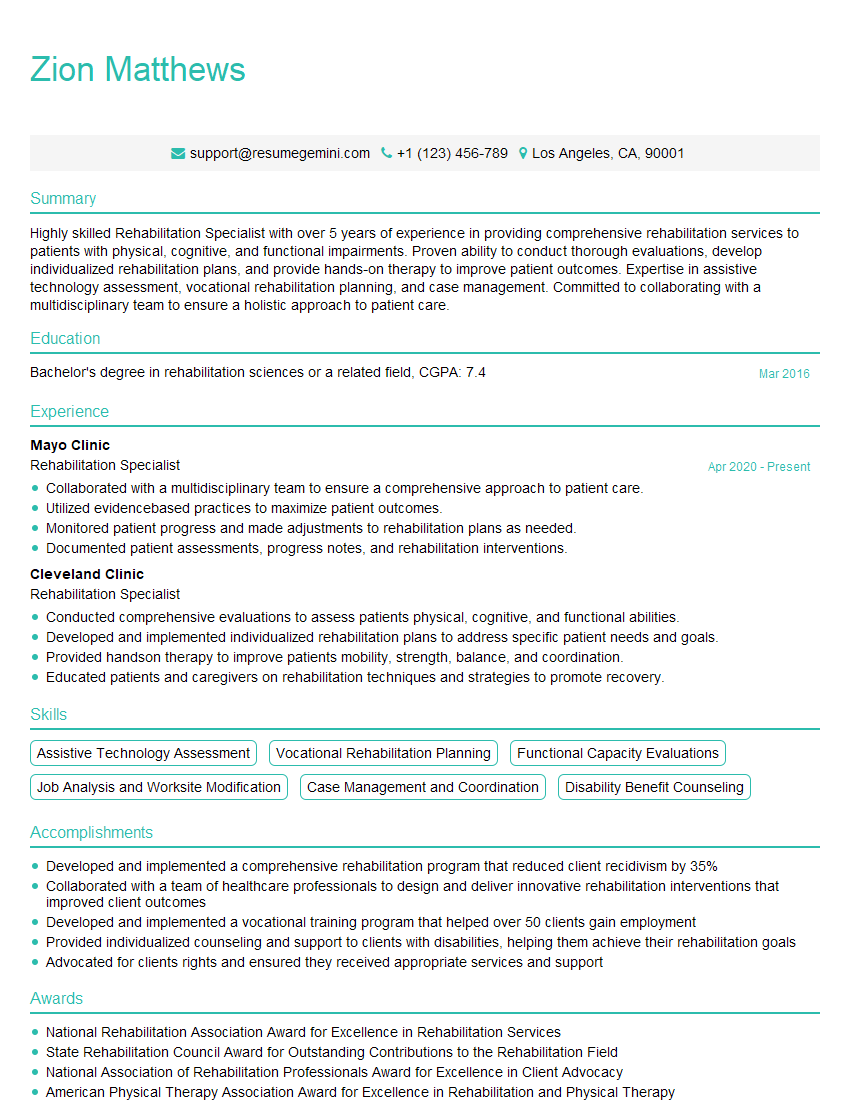
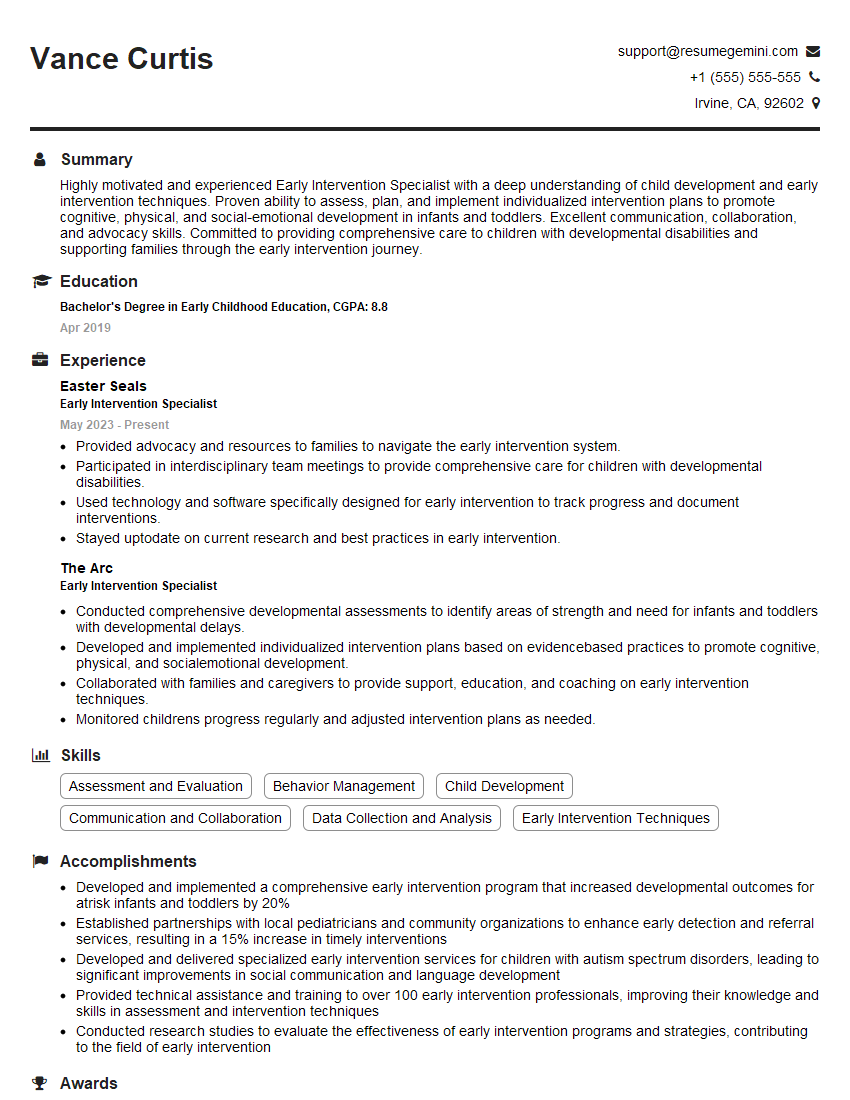
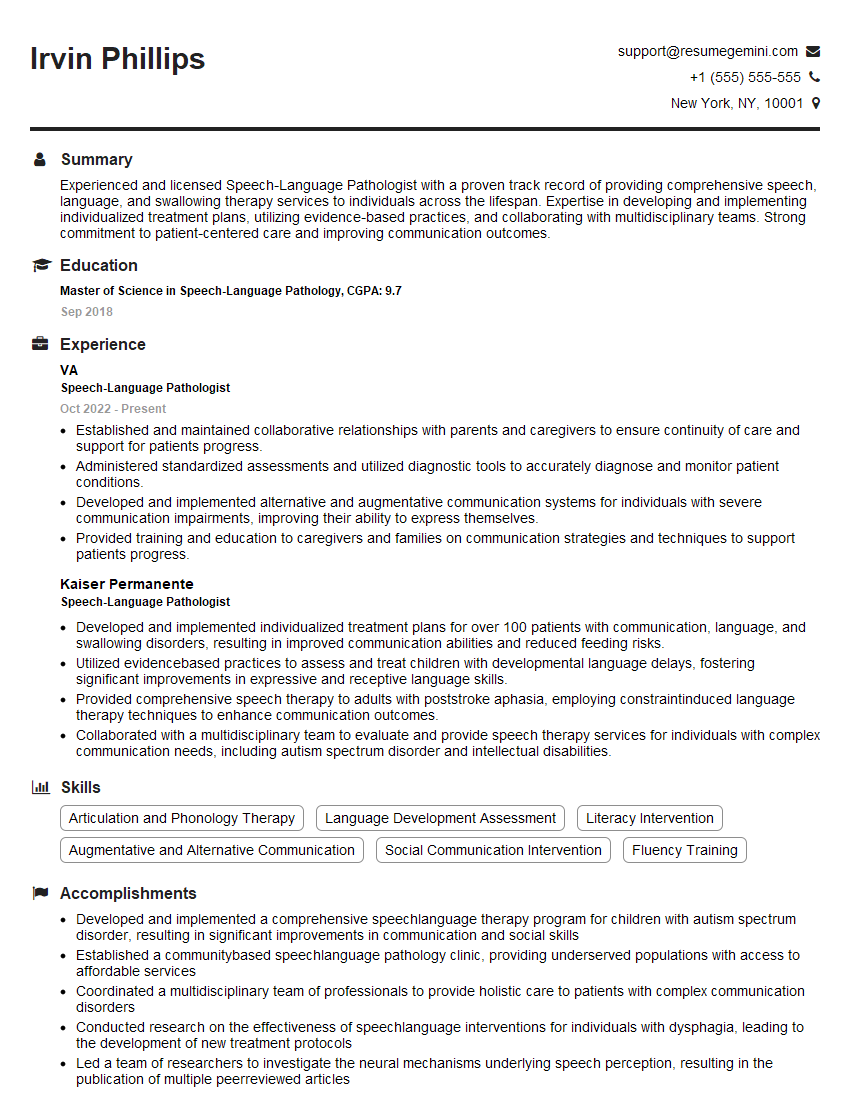
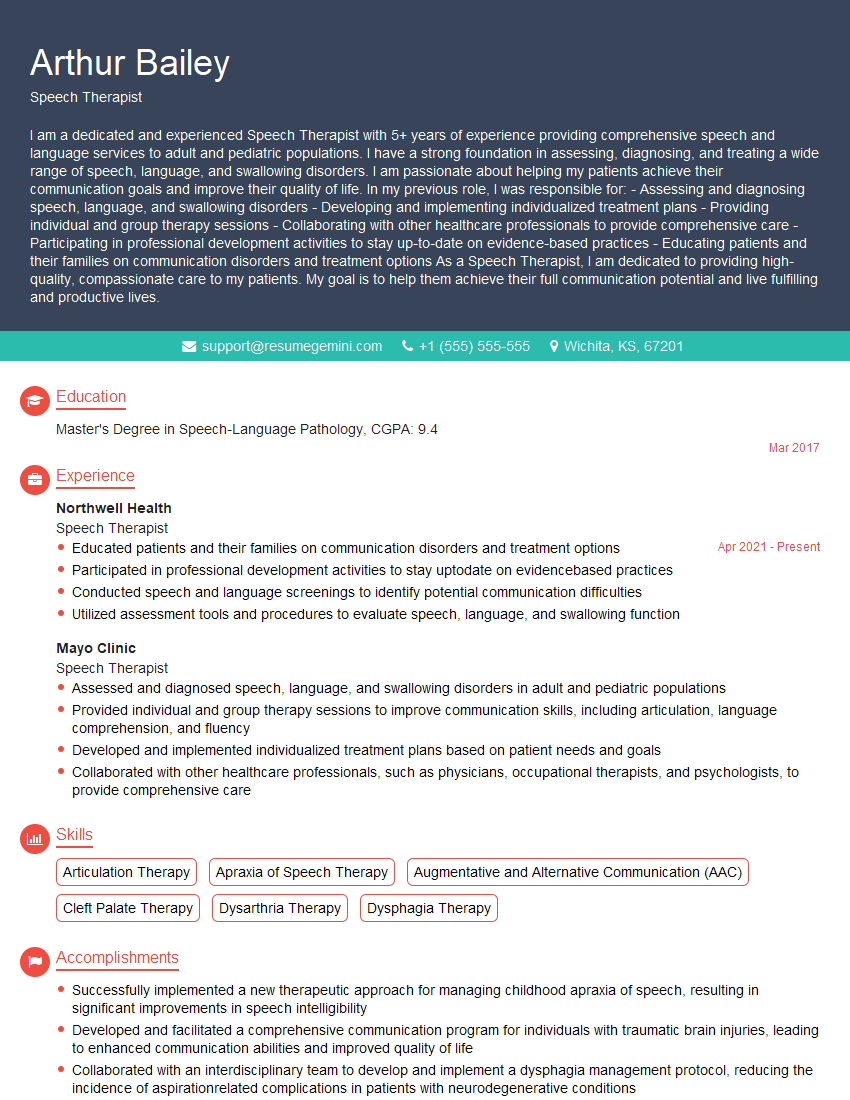
Mastering Articulation and Phonology Disorders is key to a successful and rewarding career in speech-language pathology. A strong foundation in these areas will significantly enhance your job prospects and allow you to make a real difference in the lives of your clients. To increase your chances of landing your dream role, it’s crucial to present yourself effectively. Creating an ATS-friendly resume is paramount. ResumeGemini is a trusted resource that can help you build a compelling and professional resume, optimized for applicant tracking systems. They even provide examples of resumes tailored to Articulation and Phonology Disorders to help you get started. Take the next step towards your career goals – build your best resume with ResumeGemini.
Explore more articles
Users Rating of Our Blogs
Share Your Experience
We value your feedback! Please rate our content and share your thoughts (optional).
What Readers Say About Our Blog
To the interviewgemini.com Webmaster.
Very helpful and content specific questions to help prepare me for my interview!
Thank you
To the interviewgemini.com Webmaster.
This was kind of a unique content I found around the specialized skills. Very helpful questions and good detailed answers.
Very Helpful blog, thank you Interviewgemini team.