Interviews are more than just a Q&A session—they’re a chance to prove your worth. This blog dives into essential Asset Life Cycle Management interview questions and expert tips to help you align your answers with what hiring managers are looking for. Start preparing to shine!
Questions Asked in Asset Life Cycle Management Interview
Q 1. Explain the phases of the asset life cycle.
The asset life cycle encompasses all stages of an asset’s existence, from its initial planning and acquisition to its eventual disposal. Think of it like the lifecycle of a car – from design and manufacturing to use, maintenance, and eventual scrapping.
- Planning & Acquisition: This phase involves identifying the need for an asset, specifying requirements, selecting vendors, and procuring the asset. It’s like choosing the right car model based on your needs and budget.
- Implementation & Commissioning: This involves installing, testing, and integrating the asset into the operational environment. This is akin to getting your new car delivered, insured, and ready for driving.
- Operation & Maintenance: This is the longest phase, focusing on maximizing asset uptime and performance through routine maintenance, repairs, and upgrades. Regular servicing and timely repairs for your car fall under this.
- Decommissioning & Disposal: This involves safely removing the asset from service and disposing of it responsibly, considering environmental regulations and asset recovery. This is equivalent to selling or scrapping your car at the end of its useful life.
Q 2. Describe your experience with asset valuation techniques.
My experience encompasses a variety of asset valuation techniques, tailored to the specific asset and its context. I’ve utilized methods like:
- Cost Approach: This method estimates value based on the current replacement cost, less depreciation. For example, valuing a piece of industrial equipment by considering the cost of a new, similar machine and accounting for its age and wear.
- Market Approach: This relies on comparing the asset to similar assets that have recently been sold. Think of appraising a house by looking at recent sales of comparable properties in the neighborhood.
- Income Approach: This technique focuses on the future income the asset is expected to generate. For instance, valuing a rental property based on its potential rental income stream.
The choice of method depends heavily on the nature of the asset, the availability of data, and the purpose of the valuation. I always ensure the chosen method aligns with generally accepted accounting principles and industry best practices.
Q 3. How do you prioritize maintenance activities?
Prioritizing maintenance activities requires a structured approach. I typically use a combination of methods:
- Risk-Based Prioritization: This involves assessing the potential consequences of failure for each asset. Assets with high failure consequences and high probability of failure are prioritized. Imagine prioritizing the repair of a critical pump in a water treatment plant over a minor crack in a non-essential wall.
- Criticality Analysis: This approach classifies assets based on their importance to the overall operation. Critical assets receive higher maintenance priority. A critical power generator in a hospital would take precedence over a less critical piece of office equipment.
- Maintenance Backlog Management: This involves creating a prioritized list of maintenance tasks based on urgency, cost, and impact. This ensures the most urgent and impactful tasks are tackled first.
Software tools can help automate this process, allowing for data-driven decision making and optimization of maintenance schedules.
Q 4. What are the key performance indicators (KPIs) you track in Asset Life Cycle Management?
Key Performance Indicators (KPIs) are crucial for monitoring the effectiveness of Asset Life Cycle Management. I typically track:
- Mean Time Between Failures (MTBF): This measures the average time between asset failures, indicating reliability.
- Mean Time To Repair (MTTR): This indicates the efficiency of the maintenance team in restoring asset functionality.
- Overall Equipment Effectiveness (OEE): This holistic metric considers availability, performance, and quality of the asset.
- Maintenance Costs as a percentage of Asset Value: This helps assess the cost-effectiveness of maintenance strategies.
- Asset Utilization Rate: This indicates how effectively assets are being used.
Regular monitoring of these KPIs allows for proactive adjustments to maintenance strategies and resource allocation, ultimately improving overall asset performance and reducing operational costs.
Q 5. How do you handle unexpected asset failures?
Unexpected asset failures require a swift and organized response. My approach involves:
- Immediate Action: Secure the area to prevent further damage or injury. Isolate the failed asset to prevent cascading failures.
- Diagnosis & Assessment: Determine the root cause of the failure through thorough investigation. This might involve analyzing log files, conducting inspections, or consulting with specialized technicians.
- Emergency Repair or Replacement: Implement a temporary fix or source a replacement asset, depending on the severity and criticality of the failure. Prioritize speed and minimizing downtime.
- Root Cause Analysis (RCA): Conduct a detailed RCA to identify the underlying causes of the failure. This helps prevent future occurrences through corrective actions.
- Corrective Actions & Preventative Measures: Implement corrective actions to address the root cause and establish preventative measures to reduce the likelihood of similar failures in the future.
Effective communication and collaboration within the team are critical during these situations.
Q 6. Explain your experience with different maintenance strategies (preventive, predictive, corrective).
I have extensive experience implementing and optimizing various maintenance strategies:
- Preventive Maintenance (PM): This involves performing routine maintenance tasks at scheduled intervals to prevent failures. Think of regular oil changes and tire rotations for a car. This reduces the likelihood of unexpected breakdowns.
- Predictive Maintenance (PdM): This utilizes data and analytics to predict when maintenance is required, enabling proactive interventions before failures occur. Sensors on equipment monitor vibration, temperature, and other parameters, allowing for early detection of potential problems. This minimizes unexpected downtime and optimizes maintenance costs.
- Corrective Maintenance (CM): This is reactive maintenance performed after a failure has occurred. While necessary, it is generally the most costly and disruptive approach. Addressing a broken engine in a car after it has failed is an example of corrective maintenance.
The optimal maintenance strategy often involves a blended approach, combining elements of PM, PdM, and CM based on the specific needs of each asset. For critical equipment, predictive maintenance is often preferred. For less critical assets, a preventive maintenance schedule may be sufficient.
Q 7. What software or tools have you used for asset management?
Throughout my career, I’ve utilized several software and tools for asset management. These include:
- Computerized Maintenance Management Systems (CMMS): Software like IBM Maximo, SAP Plant Maintenance, and Fiix are widely used for managing work orders, scheduling maintenance, tracking asset history, and generating reports. These systems are essential for efficient and data-driven asset management.
- Enterprise Asset Management (EAM) Systems: These more comprehensive systems integrate with other business systems to provide a holistic view of asset performance and lifecycle costs. Examples include Infor EAM and IBM Maximo.
- Data Analytics and Visualization Tools: Tools such as Tableau and Power BI are useful for visualizing asset performance data, identifying trends, and improving decision-making.
- Building Information Modeling (BIM) Software: This is especially relevant for managing infrastructure assets, providing a 3D model of the asset and allowing for better planning and management of maintenance activities.
The specific tools I employ depend on the scope and complexity of the project and the client’s existing infrastructure.
Q 8. How do you manage asset data and ensure its accuracy?
Accurate asset data is the cornerstone of effective Asset Life Cycle Management (ALCM). We achieve this through a multi-pronged approach focusing on data standardization, validation, and continuous monitoring.
- Standardization: We implement a structured data model, ensuring all asset information (e.g., location, specifications, maintenance history) is consistently recorded and categorized using a defined taxonomy. This could involve leveraging industry standards or creating a bespoke system.
- Data Validation: Data entry is subject to validation rules and checks to minimize errors. For instance, we might use automated checks to ensure that asset IDs are unique and that maintenance dates are chronologically accurate. This can involve custom scripts or utilizing features within our chosen Asset Management System (AMS).
- Continuous Monitoring: Regular audits and comparisons against other data sources (e.g., sensor readings, work orders) help detect and correct inconsistencies. We also encourage feedback loops, empowering field technicians to report discrepancies and suggest improvements to our data collection process.
For example, in my previous role managing a fleet of heavy machinery, we implemented a barcode system to track individual assets. This minimized human error during data entry and facilitated automated reporting on maintenance schedules and operational hours. Any discrepancies identified were investigated immediately to maintain data integrity.
Q 9. Describe your experience with risk assessment and mitigation in asset management.
Risk assessment and mitigation are crucial for optimizing asset performance and preventing costly downtime. My approach involves a structured process encompassing identification, analysis, evaluation, and control.
- Identification: We systematically identify potential risks through methods like Failure Modes and Effects Analysis (FMEA), HAZOP studies, and regular equipment inspections. This involves considering both internal factors (e.g., equipment wear, operator error) and external factors (e.g., environmental conditions, regulatory changes).
- Analysis: We analyze the likelihood and potential impact of each identified risk. This often involves using quantitative methods (e.g., risk matrices) to prioritize risks based on their severity.
- Evaluation: The evaluated risks are ranked and prioritized based on their severity and likelihood. This enables us to focus our resources on the most critical risks.
- Control: We develop and implement mitigation strategies for each risk, ranging from preventative maintenance schedules and operator training to the installation of safety systems and insurance policies.
In a past project involving the management of a large-scale power generation facility, we used FMEA to identify potential risks associated with each component of the turbines. This analysis highlighted the criticality of regular inspections and timely component replacements, ultimately preventing several potential catastrophic failures.
Q 10. How do you ensure regulatory compliance in asset management?
Regulatory compliance is paramount in asset management. We achieve this through a combination of proactive monitoring, documentation, and continuous improvement.
- Proactive Monitoring: We stay abreast of relevant regulations and updates through subscriptions to industry publications, participation in professional organizations, and engagement with regulatory bodies.
- Documentation: Meticulous record-keeping is crucial. We ensure all asset-related documentation (e.g., inspections reports, maintenance records, safety certifications) is thoroughly maintained and readily accessible for audits.
- Continuous Improvement: Regular internal audits and external compliance reviews help identify areas for improvement. This involves not just meeting minimum regulatory requirements, but also striving for best practices.
For example, in a previous role managing assets within the pharmaceutical industry, we implemented a robust system for tracking and managing Good Manufacturing Practices (GMP) compliance. This involved detailed documentation of all maintenance activities, calibration records, and operator training, ensuring we could confidently demonstrate compliance to regulatory inspectors.
Q 11. How do you integrate sustainability considerations into asset management?
Integrating sustainability into asset management is increasingly critical. It’s about optimizing resource use, minimizing environmental impact, and enhancing the long-term value of assets.
- Sustainable Procurement: We prioritize the selection of eco-friendly assets with lower energy consumption, reduced emissions, and recyclable components.
- Energy Efficiency: We implement strategies to reduce energy consumption of assets, such as implementing smart meters, optimizing operational parameters, and investing in energy-efficient upgrades.
- Waste Management: We implement procedures for responsible waste management, including recycling, reuse, and proper disposal of obsolete materials.
- Carbon Footprint Reduction: We track and analyze the carbon footprint associated with asset operations and implement strategies to minimize emissions, such as optimizing transportation routes and using renewable energy sources.
For instance, in a project involving the refurbishment of a large manufacturing facility, we incorporated energy-efficient lighting systems, high-efficiency motors, and improved insulation, leading to a significant reduction in energy consumption and overall environmental impact. We also prioritized the use of recycled materials wherever feasible.
Q 12. How do you manage the disposal or decommissioning of assets?
Asset disposal or decommissioning requires a structured approach that considers safety, environmental regulations, and potential recovery of value.
- Planning: A detailed plan is developed outlining the steps involved in the disposal or decommissioning process, including safety protocols, environmental considerations, and regulatory compliance aspects.
- Data Management: All relevant asset data, including maintenance records and operational history, are archived to ensure continuity and for future reference.
- Decommissioning: Assets are safely and responsibly decommissioned, adhering to all relevant safety and environmental regulations. This could involve dismantling, cleaning, and decontamination.
- Disposal: We ensure assets are disposed of in an environmentally sound manner, considering options such as recycling, reuse, or safe disposal in accordance with relevant regulations.
- Documentation: All activities are thoroughly documented, ensuring traceability and accountability throughout the process.
In a project involving the decommissioning of an oil platform, we followed a rigorous plan encompassing safety protocols, environmental impact assessment, and detailed documentation of the dismantling process. We also explored options for repurposing or recycling components, maximizing resource recovery.
Q 13. Explain your experience with lifecycle costing.
Lifecycle costing is a crucial aspect of ALCM, considering all costs associated with an asset over its entire lifespan. It’s not just about the initial purchase price; it involves factoring in operating costs, maintenance, repairs, upgrades, and ultimately, disposal costs.
- Data Collection: Accurate data on all costs associated with the asset are meticulously collected and documented. This includes acquisition cost, maintenance expenses, energy consumption, and disposal costs.
- Cost Modeling: We use specialized software and analytical techniques to create cost models that predict future expenses. This allows for better budgeting and investment decision-making.
- Decision Making: Lifecycle cost analysis informs key decisions, such as selecting the most cost-effective asset from among various options, determining optimal maintenance schedules, and evaluating the economic feasibility of upgrades or replacements.
For instance, in comparing two different types of industrial pumps, lifecycle costing analysis might reveal that although pump A has a higher initial purchase price, its lower maintenance requirements and longer lifespan result in overall lower costs compared to pump B. This informs the selection of pump A despite the higher initial investment.
Q 14. Describe your experience with asset optimization strategies.
Asset optimization strategies aim to maximize the value and performance of assets throughout their lifecycle. This requires a holistic approach that integrates various aspects of ALCM.
- Predictive Maintenance: Using sensor data and predictive analytics to anticipate potential failures and schedule maintenance proactively. This minimizes downtime and extends asset lifespan.
- Performance Monitoring: Continuous monitoring of asset performance using key performance indicators (KPIs) to identify areas for improvement and optimize operational efficiency.
- Capacity Planning: Strategic planning to ensure adequate asset capacity to meet future demands while avoiding over-investment.
- Technology Integration: Leveraging technologies such as IoT sensors, AI-powered analytics, and digital twins to enhance asset monitoring, predictive maintenance, and overall optimization.
In a project involving the optimization of a manufacturing plant, we implemented a system of predictive maintenance for critical machinery using sensor data and AI-powered analytics. This resulted in a significant reduction in unplanned downtime and improved overall production efficiency. The analysis also revealed opportunities to optimize production parameters, leading to further improvements in productivity.
Q 15. How do you manage asset obsolescence?
Managing asset obsolescence is crucial for maintaining operational efficiency and minimizing financial losses. It involves proactively identifying assets nearing the end of their useful life or those becoming functionally outdated due to technological advancements. This isn’t just about age; it considers factors like performance degradation, increased maintenance costs, and the availability of superior replacements.
- Regular Technology Audits: Conducting periodic reviews of available technology to identify superior alternatives that offer improved performance, efficiency, or reduced operating costs. For instance, comparing the capabilities of an aging CNC machine with newer, more efficient models.
- Performance Monitoring: Tracking key performance indicators (KPIs) related to asset performance. A significant drop in efficiency or output, even before complete failure, might signal the need for replacement.
- Lifecycle Cost Analysis: Comparing the costs of continued operation and maintenance of an aging asset with the total cost of ownership (TCO) of a replacement. This involves evaluating factors like repair costs, downtime, energy consumption, and potential productivity gains.
- Strategic Planning for Replacement: Developing a phased replacement plan that considers budget constraints, operational requirements, and potential disruptions during the transition to new assets.
For example, consider a manufacturing company with aging robots on its assembly line. A proactive approach would involve monitoring their performance, comparing their operational costs to newer models, and planning for a gradual replacement to avoid major production disruptions.
Career Expert Tips:
- Ace those interviews! Prepare effectively by reviewing the Top 50 Most Common Interview Questions on ResumeGemini.
- Navigate your job search with confidence! Explore a wide range of Career Tips on ResumeGemini. Learn about common challenges and recommendations to overcome them.
- Craft the perfect resume! Master the Art of Resume Writing with ResumeGemini’s guide. Showcase your unique qualifications and achievements effectively.
- Don’t miss out on holiday savings! Build your dream resume with ResumeGemini’s ATS optimized templates.
Q 16. How do you measure the return on investment (ROI) for asset management initiatives?
Measuring the ROI of asset management initiatives requires a clear understanding of both the costs and the benefits. We need to quantify the improvements achieved through better management practices.
- Cost Reduction: Quantify savings achieved through reduced maintenance, repairs, and downtime. This could include tracking the reduction in maintenance hours or the decrease in the number of unplanned outages.
- Improved Efficiency: Calculate the gains in productivity or output resulting from improved asset utilization and performance. For example, track the increase in production volume after implementing a preventative maintenance program.
- Extended Asset Lifespan: Estimate the cost savings due to an extended asset lifespan achieved through effective maintenance and management. This is often challenging but crucial for long-lived assets.
- Reduced Risk: Assess the financial impact of avoided risks, such as safety incidents, environmental damage, or regulatory non-compliance resulting from better asset management.
We can use various metrics like Net Present Value (NPV) and Internal Rate of Return (IRR) to compare the investment in asset management against the projected returns. A simple ROI calculation is (Total Benefits – Total Costs) / Total Costs. For instance, if an asset management program costs $100,000 and generates $150,000 in savings, the ROI is 50%.
Q 17. How do you handle stakeholder communication in asset management?
Effective stakeholder communication is paramount in asset management. It involves building consensus and ensuring everyone understands the goals, strategies, and outcomes of asset management initiatives.
- Regular Reporting: Providing regular, clear, and concise reports to stakeholders, highlighting key performance indicators (KPIs) and progress against established goals. This might involve dashboards, presentations, or written reports tailored to the audience.
- Open Communication Channels: Establishing clear channels for feedback and questions from stakeholders. This could include regular meetings, email updates, or dedicated online forums.
- Stakeholder Engagement: Actively engaging with stakeholders to gain their input and address their concerns. This might involve workshops, surveys, or individual consultations.
- Transparency and Accountability: Maintaining transparency in decision-making and demonstrating accountability for the outcomes of asset management initiatives. This builds trust and fosters collaboration.
For example, in a large organization, we would establish regular communication with the finance department (regarding budgets), operations teams (regarding asset performance), and senior management (regarding strategic alignment).
Q 18. Describe a time you had to make a difficult decision related to asset management.
In a previous role, we faced a critical decision regarding a major piece of equipment nearing the end of its useful life. The initial assessment indicated that a major repair was needed, which would cost approximately 60% of the cost of a new machine. However, the projected lifespan after the repair was only about 2 years. Replacing the machine with a new one would entail significant upfront costs but would offer improved efficiency and extended lifespan.
The difficult decision was whether to invest in the expensive repair or replace the asset. We used a TCO analysis, factoring in the projected costs of repairs, maintenance, and downtime for both options over the next 10 years. The analysis clearly showed that, despite the higher upfront cost, the new machine was the more economically viable option in the long run. We presented our analysis to senior management and secured approval for the replacement, ultimately avoiding significant cost overruns and productivity losses in the years to come.
Q 19. How do you use technology to improve asset management efficiency?
Technology plays a vital role in improving asset management efficiency. We leverage various tools and platforms to streamline processes, enhance data analysis, and improve decision-making.
- Computerized Maintenance Management Systems (CMMS): These software solutions help track asset information, schedule maintenance, manage work orders, and analyze historical data. Examples include Fiix and UpKeep.
- Enterprise Asset Management (EAM) Systems: EAM systems provide a more comprehensive approach to asset management, integrating data from various sources and providing advanced analytical capabilities. Examples include SAP EAM and IBM Maximo.
- IoT Sensors and Data Analytics: Integrating IoT sensors into assets provides real-time data on their performance, allowing for proactive maintenance and optimized utilization. Data analytics tools help process this data to identify trends and patterns.
- Mobile Applications: Mobile apps can empower field technicians with real-time access to asset information, allowing for faster and more efficient troubleshooting and maintenance.
For instance, using IoT sensors on industrial equipment allows for predictive maintenance, preventing costly breakdowns by detecting anomalies before they lead to failure. This saves time, reduces downtime, and extends the lifespan of assets.
Q 20. Explain your understanding of Total Cost of Ownership (TCO).
Total Cost of Ownership (TCO) is a holistic approach to evaluating the total cost of an asset over its entire lifespan, extending beyond the initial purchase price. It includes all direct and indirect costs associated with acquiring, operating, maintaining, and disposing of the asset.
- Acquisition Costs: Include the purchase price, taxes, delivery, and installation charges.
- Operating Costs: Cover energy consumption, labor, consumables, and other recurring expenses.
- Maintenance Costs: Encompass preventative maintenance, repairs, and replacements.
- Disposal Costs: Include the costs of decommissioning, dismantling, and disposing of the asset at the end of its useful life.
Understanding TCO is vital for informed decision-making. It allows us to compare different assets or technologies based on their long-term cost implications, not just their initial purchase price. For example, a less expensive piece of equipment might have significantly higher operating and maintenance costs over its lifespan, making a seemingly more expensive option more economical in the long run.
Q 21. Describe your experience with developing and implementing an asset management plan.
I’ve been involved in several asset management plan development and implementation projects. The process typically involves these key steps:
- Asset Inventory and Assessment: Conduct a thorough inventory of all assets, including their specifications, condition, and location. This often involves utilizing barcode scanning or RFID technology for efficiency.
- Risk Assessment: Identify potential risks and vulnerabilities associated with each asset, considering factors such as age, condition, and criticality to operations.
- Maintenance Strategy Development: Define a maintenance strategy for each asset, specifying the type and frequency of maintenance activities (preventative, corrective, predictive).
- Budget Allocation: Develop a budget that covers all aspects of asset management, including maintenance, repairs, replacements, and upgrades.
- Implementation and Monitoring: Implement the asset management plan, and monitor its effectiveness by tracking key performance indicators (KPIs) and adjusting the plan as needed.
- Reporting and Communication: Regular reporting on asset performance, costs, and risks to all stakeholders.
In one instance, I worked with a large manufacturing company to implement an EAM system. This involved a comprehensive asset inventory, the development of a standardized maintenance program, and extensive training for maintenance personnel. The result was significant improvements in asset reliability, reduced downtime, and lower maintenance costs.
Q 22. How do you ensure data integrity in an asset management system?
Data integrity in an asset management system is paramount. It ensures the accuracy, consistency, and reliability of all asset-related information. Compromised data leads to poor decision-making, inefficient operations, and potentially significant financial losses. We achieve this through a multi-pronged approach:
- Data Validation Rules: Implementing strict data validation rules at the point of entry prevents inaccurate or illogical data from entering the system. For instance, ensuring that asset IDs are unique and that depreciation rates are within acceptable ranges.
- Data Auditing Trails: Maintaining detailed audit trails of all data modifications, including who made the changes, when they were made, and what changes were implemented. This allows us to track down errors and inconsistencies effectively. Think of it like a detailed history log for every asset record.
- Regular Data Reconciliation: Periodically reconciling data from the asset management system with physical inventories or other reliable sources to identify and correct discrepancies. This is a crucial step to catch any inconsistencies that might have slipped through other checks.
- Data Backup and Recovery: Implementing robust backup and recovery procedures to protect against data loss due to hardware failure, software glitches, or even cyberattacks. This ensures business continuity and minimizes disruptions.
- Access Control and Authorization: Limiting access to the asset management system to authorized personnel only, with different levels of access based on roles and responsibilities. This prevents unauthorized modifications and protects sensitive data. For example, only managers can approve asset disposals.
- Data Cleansing and Standardization: Regularly cleansing and standardizing data to ensure consistency and improve data quality. This includes addressing inconsistencies in data formats, correcting typographical errors, and ensuring compliance with defined standards.
By combining these strategies, we build a robust system that ensures the accuracy and reliability of asset data, forming the foundation for effective asset management.
Q 23. What are the challenges of implementing a new asset management system?
Implementing a new asset management system presents several significant challenges. These aren’t just technical hurdles but also involve organizational and cultural changes.
- Data Migration: Migrating data from legacy systems can be complex and time-consuming. Data cleansing, transformation, and validation are crucial steps to ensure data integrity in the new system.
- User Adoption: Gaining user buy-in and ensuring smooth adoption of the new system is vital. Effective training and change management strategies are essential for successful implementation. Resistance to change is a common hurdle.
- Integration with Existing Systems: Integrating the new system with other enterprise systems (e.g., ERP, accounting) can be technically challenging and require significant effort. Seamless integration is key to avoiding data silos.
- Cost and Resource Allocation: Implementing a new system involves significant costs, including software licensing, hardware upgrades, implementation services, and training. Proper budgeting and resource allocation are essential.
- System Customization: Balancing the need for customization to meet specific business requirements with the risks of increased complexity and maintenance is a delicate act. Too much customization can make the system difficult to maintain and upgrade.
- Change Management: Effectively managing the organizational change associated with a new system is crucial for success. This includes addressing concerns from employees, communicating the benefits of the new system, and providing adequate support.
Successfully navigating these challenges requires careful planning, strong project management, effective communication, and a dedicated team.
Q 24. How do you handle conflicting priorities in asset management?
Conflicting priorities in asset management are common. For example, you might need to balance maximizing asset utilization with minimizing maintenance costs. Addressing this requires a structured approach:
- Prioritization Matrix: Using a prioritization matrix (e.g., a weighted scoring system) to evaluate different projects or tasks based on factors such as urgency, impact, and alignment with strategic goals. This allows for objective decision-making.
- Stakeholder Alignment: Clearly defining stakeholder expectations and aligning everyone on the key objectives. This includes involving key stakeholders in the prioritization process.
- Resource Allocation: Carefully allocating resources (budget, personnel, time) based on the prioritized projects and tasks. This ensures that resources are used effectively to achieve the most critical objectives.
- Trade-off Analysis: Conducting a trade-off analysis to evaluate the potential benefits and drawbacks of different options. This involves understanding the implications of choosing one course of action over another.
- Regular Monitoring and Adjustment: Regularly monitoring progress and making necessary adjustments to the plan as circumstances change. This ensures that the plan remains flexible and adaptable to unforeseen events.
Essentially, it’s about making informed decisions based on a clear understanding of the organization’s strategic goals and constraints. This often involves making difficult choices, weighing short-term needs against long-term benefits.
Q 25. What are your strengths and weaknesses in asset management?
My strengths in asset management lie in my analytical skills, my experience with various asset management software, and my ability to translate complex technical information into actionable insights for business decision-making. I’m adept at developing and implementing asset management strategies, optimizing maintenance schedules, and improving overall asset performance. I’ve successfully led projects involving data migration and system integration, and I excel in problem-solving.
My area for development is further expanding my knowledge in predictive maintenance techniques using advanced analytics. While I’m familiar with the concepts, I’m looking to deepen my expertise in implementing and interpreting data from IoT sensors and predictive models. I actively seek opportunities to learn and improve in this area.
Q 26. What are your salary expectations?
My salary expectations are in line with the market rate for a domain expert with my experience and skills in asset life cycle management. I’m open to discussing a competitive compensation package based on the specifics of the role and the company’s compensation structure. I’m more interested in finding a challenging and rewarding role that allows for professional growth than in focusing solely on salary.
Q 27. Where do you see yourself in 5 years?
In five years, I see myself as a respected leader in the asset management field, possibly heading a team or managing a significant portfolio of assets for this organization. I’m keen to continue developing my skills in predictive maintenance and data analytics, contributing to the company’s growth and efficiency through innovative solutions. I aim to become a subject matter expert, mentoring others and sharing my expertise within the organization.
Q 28. Do you have any questions for me?
Yes, I do have a few questions. Firstly, could you elaborate on the specific technologies and software used in your asset management processes? Secondly, what are the company’s plans for future expansion or development in the area of asset management? Finally, what opportunities are there for professional development and training within the organization?
Key Topics to Learn for Asset Life Cycle Management Interview
- Acquisition & Planning: Understanding asset needs, budgeting, procurement strategies, and vendor selection. Practical application: Developing a cost-benefit analysis for a new piece of equipment.
- Implementation & Deployment: Installation, configuration, testing, and initial operational phases. Practical application: Creating a detailed implementation plan including risk mitigation strategies.
- Operation & Maintenance: Routine maintenance schedules, preventative maintenance programs, performance monitoring, and troubleshooting. Practical application: Optimizing maintenance schedules to minimize downtime and maximize asset lifespan.
- Upgrades & Modernization: Identifying opportunities for improvements, evaluating upgrade options, and managing the upgrade process. Practical application: Conducting a cost-benefit analysis for a system upgrade versus replacement.
- Retirement & Disposal: Decommissioning, asset disposal, and environmental considerations. Practical application: Developing a sustainable disposal plan compliant with relevant regulations.
- Data Analysis & Reporting: Utilizing data to track asset performance, predict future needs, and inform strategic decision-making. Practical application: Creating reports that visualize key performance indicators (KPIs) related to asset health and operational efficiency.
- Risk Management: Identifying and mitigating risks throughout the asset lifecycle, including financial, operational, and security risks. Practical application: Developing a risk assessment matrix for a critical asset.
- Financial Management: Understanding asset valuation, depreciation methods, and return on investment (ROI) calculations. Practical application: Building a financial model to justify an asset purchase.
- Technology & Software: Familiarity with CMMS (Computerized Maintenance Management Systems) and other relevant software tools for managing assets. Practical application: Demonstrating proficiency in using CMMS software for tasks like work order management and inventory tracking.
Next Steps
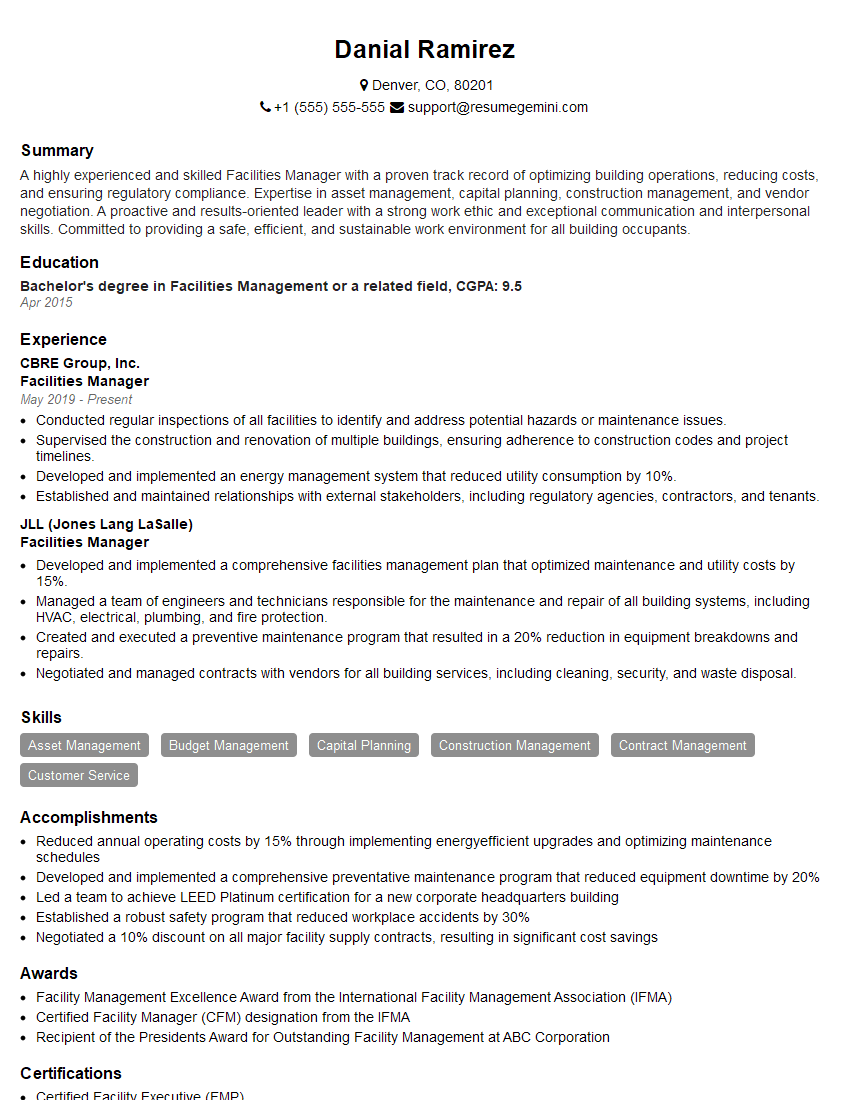
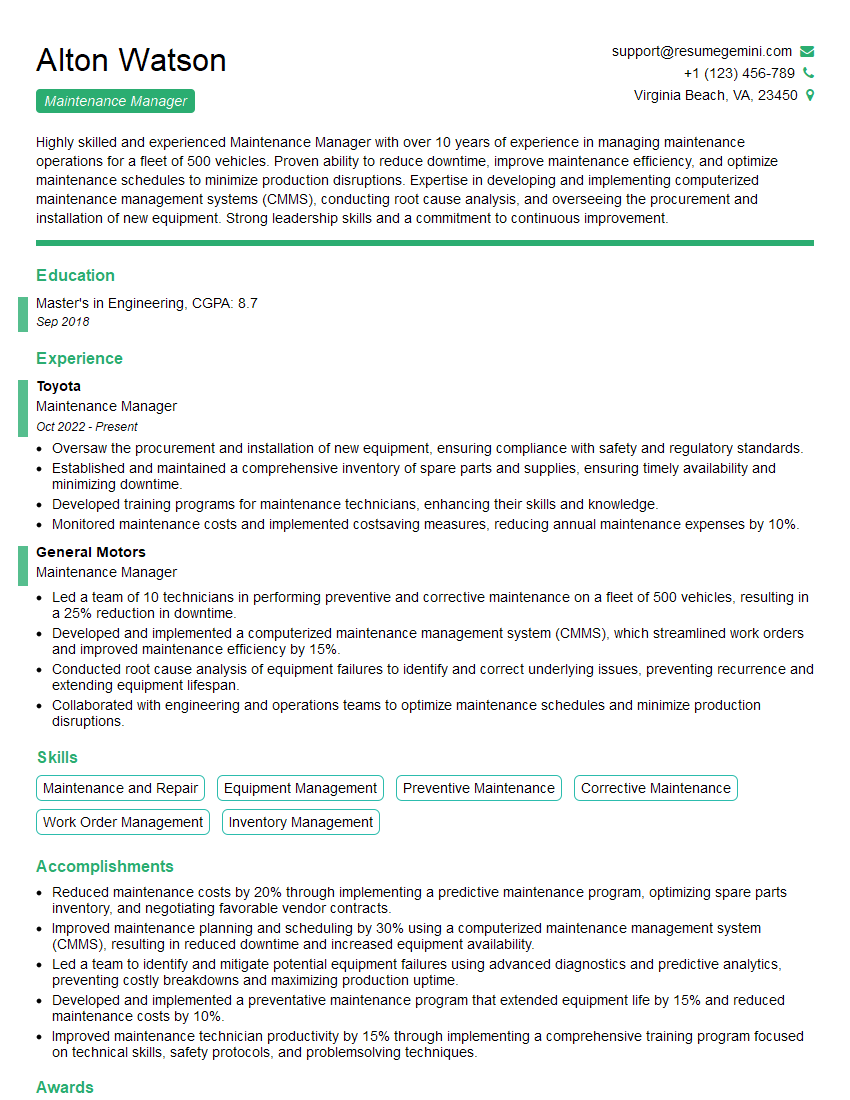
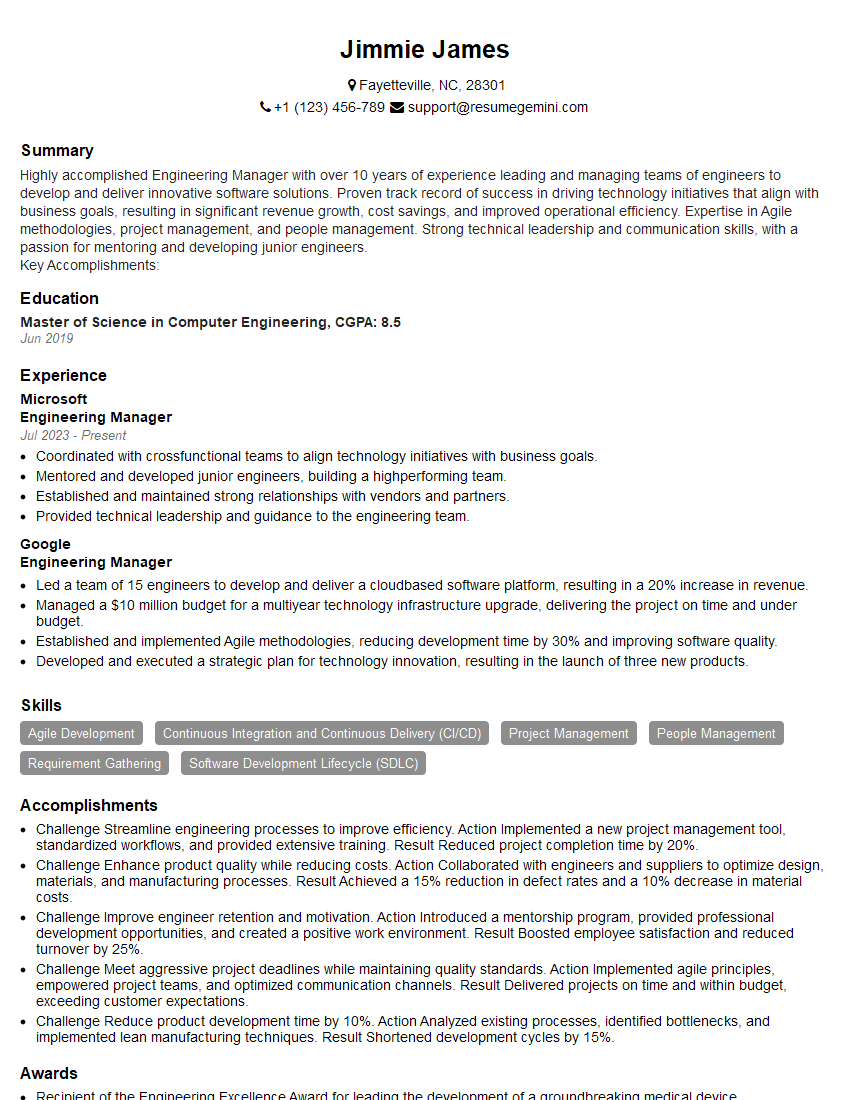
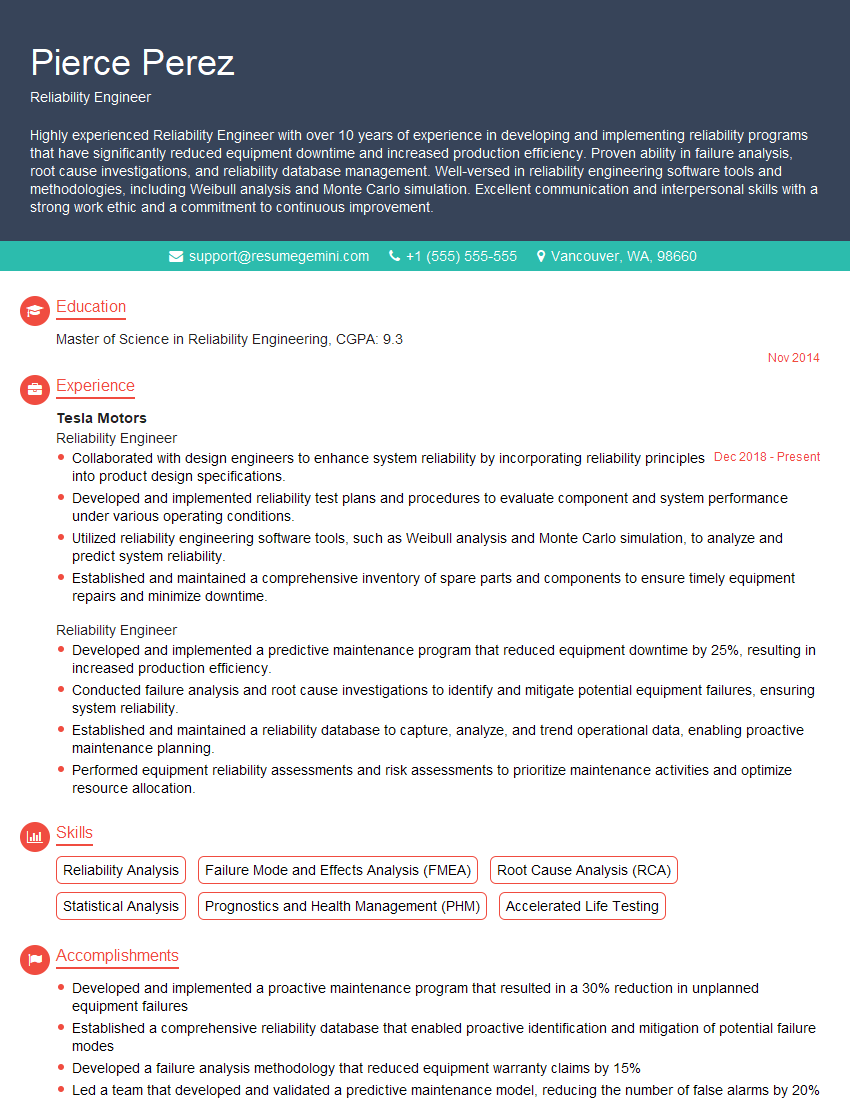
Mastering Asset Life Cycle Management is crucial for career advancement in today’s dynamic business environment. A strong understanding of these principles demonstrates valuable skills in strategic planning, operational efficiency, and cost optimization, opening doors to exciting opportunities. To maximize your job prospects, focus on creating an ATS-friendly resume that highlights your relevant experience and skills. ResumeGemini is a trusted resource that can help you build a professional and impactful resume. We provide examples of resumes tailored to Asset Life Cycle Management to help you get started.

Explore more articles
Users Rating of Our Blogs
Share Your Experience
We value your feedback! Please rate our content and share your thoughts (optional).
What Readers Say About Our Blog
To the interviewgemini.com Webmaster.
Very helpful and content specific questions to help prepare me for my interview!
Thank you
To the interviewgemini.com Webmaster.
This was kind of a unique content I found around the specialized skills. Very helpful questions and good detailed answers.
Very Helpful blog, thank you Interviewgemini team.