Are you ready to stand out in your next interview? Understanding and preparing for Backcountry Camping and Hiking interview questions is a game-changer. In this blog, we’ve compiled key questions and expert advice to help you showcase your skills with confidence and precision. Let’s get started on your journey to acing the interview.
Questions Asked in Backcountry Camping and Hiking Interview
Q 1. Describe your experience with Leave No Trace principles.
Leave No Trace (LNT) principles are fundamental to responsible backcountry travel. They’re a set of seven guidelines designed to minimize our impact on the natural environment. My experience encompasses years of practical application, from leading guided trips to solo expeditions. I consistently educate participants on the importance of LNT, and I rigorously follow these principles myself.
Plan ahead and prepare: This involves thorough trip planning, including researching regulations, obtaining necessary permits, and packing appropriately to avoid leaving waste behind.
Travel and camp on durable surfaces: Stick to established trails and campsites to prevent erosion and damage to vegetation. If camping off-trail, choose resilient surfaces like rock or dry, well-drained soil.
Dispose of waste properly: Pack out everything you pack in. This includes food scraps, toilet paper (pack out even if biodegradable), and any trash. Human waste should be buried at least 6 inches deep and far from water sources.
Leave what you find: Resist the urge to pick flowers, move rocks, or disturb natural artifacts. Respect the integrity of the ecosystem as you found it.
Minimize campfire impacts: Use existing fire rings where available, and keep fires small. Avoid building fires in dry or windy conditions. Consider using a lightweight stove instead.
Respect wildlife: Observe animals from a distance, never feed them, and store food properly to avoid attracting them to your campsite.
Be considerate of other visitors: Respect other hikers and campers’ experience by keeping noise levels down and yielding the trail where appropriate.
For example, on a recent trip, I meticulously cleaned the area around our campsite, leaving it exactly as I found it. We used a lightweight stove rather than building a fire, thus minimizing environmental impact.
Q 2. What are the key elements of a successful backcountry camping trip plan?
A successful backcountry camping trip relies on meticulous planning. Key elements include:
Trip Objectives and Itinerary: Define your goals (e.g., peak bagging, scenic hiking) and create a realistic daily itinerary, considering distance, elevation gain, and potential delays.
Navigation and Mapping: Selecting appropriate maps and possessing proficiency with map and compass (and GPS as a backup) is crucial to avoid getting lost. Understanding terrain features is equally important.
Weather forecasting: Checking the weather forecast before and during the trip is paramount. Be prepared for unexpected changes and have appropriate gear.
Gear selection: Choose suitable clothing and equipment appropriate for the weather conditions, terrain, and duration of the trip. Pack light but efficiently. Properly fitting footwear is critical.
Food and Water: Plan your meals to minimize weight and pack sufficient water or a reliable water filtration/purification system. Calorie intake should be high to account for physical exertion.
Safety: Include a comprehensive first aid kit, communication devices (satellite messenger, personal locator beacon), and knowledge of wilderness first aid and emergency procedures. Inform someone of your plans.
Permits and Regulations: Obtain necessary permits and be familiar with local regulations and Leave No Trace principles.
I often use spreadsheet software to detail my itinerary, gear list, and emergency contacts. This organized approach helps ensure a smooth and safe trip.
Q 3. Explain your method for selecting a safe campsite.
Selecting a safe campsite involves a multi-step process prioritizing safety and minimizing environmental impact:
Distance from Trails: Campsites should be at least 200 feet from trails and water sources to minimize human impact and avoid disturbing wildlife.
Level Ground: Find a level, well-drained area to pitch your tent. Avoid rocky, sloped, or areas prone to flooding.
Natural Barriers: Look for natural windbreaks, such as trees or rocks, for shelter and privacy. Consider the direction of the prevailing wind.
Water Source Proximity (but Distant Enough): A nearby water source is convenient but must be sufficiently distant to prevent contamination.
Fire Regulations: Check fire regulations and look for existing fire rings or designated fire areas. If fires are prohibited, use a stove.
Consider Wildlife: Avoid areas with signs of recent animal activity, such as fresh tracks or scat. Store food properly to prevent attracting animals to the campsite.
For instance, on a recent trip, I chose a campsite on a slightly elevated, level area near a stream but still at a safe distance to prevent contamination. I used a lightweight stove and avoided building a fire because it was a fire restricted zone.
Q 4. How do you assess and mitigate risks in a backcountry setting?
Risk assessment in backcountry settings is critical. My method involves:
Identifying potential hazards: This includes weather conditions, terrain features, wildlife encounters, and navigation challenges.
Analyzing risk levels: Assess the likelihood and severity of each hazard. For example, a thunderstorm in mountainous terrain poses a higher risk than a sunny day on a well-maintained trail.
Developing mitigation strategies: Implement strategies to reduce the risk. This could involve postponing a trip due to bad weather, carrying appropriate gear, or having sufficient knowledge and skill to handle potential challenges.
Monitoring and adapting: Continuously monitor conditions and adapt plans as needed. Be flexible and willing to adjust your itinerary based on changing circumstances.
For example, if I anticipate a potential for flash floods, I’ll choose a campsite higher above the watercourse. If weather deteriorates unexpectedly, I’ll seek shelter and adjust my schedule accordingly.
Q 5. What are the signs of hypothermia and how would you treat it?
Hypothermia is a dangerous drop in body temperature. Signs include shivering (which can eventually cease as the condition worsens), slurred speech, confusion, drowsiness, and loss of coordination. In severe cases, the victim may become unconscious.
Treatment involves:
Get out of the cold: Find shelter immediately. This may mean setting up a tent, finding a sheltered area, or even building a makeshift lean-to.
Remove wet clothing: Replace with dry clothes if possible. If dry clothes aren’t available, wring out excess water from the wet clothing and let it dry somewhat on the body.
Insulate the body: Add layers of insulation. This could include extra clothing, a sleeping bag, or even using dry leaves or other natural materials for insulation.
Provide warmth from external sources: Use warm drinks (not alcohol or caffeine), warm food, or external heat sources (if safe and available) to generate warmth slowly.
Seek medical attention: Once out of immediate danger and stabilized, seek immediate medical attention. Hypothermia can be fatal if not treated properly.
It’s crucial to act swiftly. Early intervention is key to a successful outcome.
Q 6. Describe your experience with navigation using map and compass.
I have extensive experience using map and compass navigation. My approach emphasizes a thorough understanding of topographic maps and the ability to accurately take bearings and follow courses.
Map Study: Before any trip, I meticulously study the map, noting key landmarks, trails, water sources, and elevation changes. This pre-trip planning minimizes the chance of getting lost.
Compass Use: I’m proficient in taking bearings, orienting the map, and following compass courses. This includes understanding declination and how to correct for it.
Pace Counting: I use pace counting to estimate distances and track progress, especially in areas with limited visibility or poor trail markings.
Land Navigation Skills: I can identify and use natural features for navigation such as ridges, valleys, and streams. Understanding terrain features is very important.
GPS as a Backup: While I primarily rely on map and compass, I use GPS as a backup for verification and in situations with poor visibility.
On a challenging route through dense forest, I relied solely on map and compass to navigate, successfully finding our way to the designated campsite.
Q 7. How do you handle unexpected weather changes during a backpacking trip?
Unexpected weather changes can significantly impact a backpacking trip. My response involves:
Monitoring forecasts: I regularly check weather updates using a reliable source such as a satellite messenger or a NOAA weather radio.
Adapting plans: Based on the forecast, I may adjust my itinerary, perhaps shortening daily distances or finding suitable shelter.
Seeking shelter: If the weather deteriorates significantly (e.g., severe thunderstorms, heavy snow), I’ll find appropriate shelter, which might be a pre-planned shelter, a natural feature, or setting up camp earlier than planned.
Adjusting layers: I use layering systems to regulate body temperature, adapting to changing conditions by adding or removing layers as needed.
Safety protocols: I prioritize safety by following established procedures for severe weather conditions. This may involve contacting emergency services or waiting out the storm in a safe location.
During a recent trip, an unexpected snowstorm forced me to find shelter in a rock overhang and delay my schedule for a day until the storm passed. Preparedness, assessment, and adaptive strategies were key to maintaining safety.
Q 8. What is your experience with water purification and treatment?
Water purification and treatment are paramount in backcountry camping. Contaminated water can lead to serious illness. My experience encompasses various methods, prioritizing safety and efficiency.
Boiling: The simplest and most reliable method. Water needs to be at a rolling boil for at least one minute to kill most harmful bacteria and viruses. This is my go-to method when unsure of water source quality.
Water Filters: I utilize high-quality ceramic or carbon filters that effectively remove bacteria, protozoa, and sediment. These are faster than boiling and ideal for larger volumes of water. Regular maintenance and filter replacement are crucial. For example, I carry a Sawyer Squeeze filter, which is lightweight and easy to use.
Water Purifiers (UV or Chemical): UV purifiers use ultraviolet light to kill microorganisms, while chemical treatments (like iodine or chlorine dioxide tablets) are effective but may alter water taste. I pack purification tablets as a backup, particularly for emergency situations or when dealing with cloudy water sources.
Choosing the right method depends on factors such as water clarity, volume needed, and the duration of the trip. I always prioritize multiple methods for redundancy.
Q 9. Explain your knowledge of different types of shelters and their suitability.
Shelter selection is crucial for comfort, safety, and protection from the elements. Different shelters suit various conditions and preferences.
Tents: Offer the best protection from weather, but are heavier and bulkier. Choosing a tent depends on the number of people, expected weather, and terrain. For example, a lightweight backpacking tent might be suitable for solo trips in good weather, whereas a larger, more robust tent might be better for group trips in harsh conditions.
Tarps: Lightweight and versatile, tarps offer basic weather protection. They require more skill to set up effectively but are excellent for minimalist backpacking or emergencies. I often combine a tarp with a lightweight bivy sack for added protection.
Bivy Sacks: These are waterproof sacks that offer minimal protection, best suited for warm, dry conditions or as supplementary shelter under a tarp. They are lightweight and pack easily.
Hammocks: Comfortable in warm, dry conditions, but offer limited protection from rain or wind unless paired with a tarp. They require trees for setup.
The choice of shelter depends on the specific trip’s requirements, personal preferences, and the expected conditions.
Q 10. How do you manage food storage to prevent attracting wildlife?
Food storage is essential to prevent attracting wildlife, ensuring both your safety and preserving the natural environment. The key is to eliminate odors and access to food sources.
Bear Canisters: In areas with bears, these are mandatory. They are bear-resistant containers designed to store food and scented items.
Bear Bags: Hanging food from a tree using a bear bag and rope is another effective method. Proper techniques are essential to avoid attracting animals.
Food Storage Bags: For areas with less stringent regulations, using airtight bags that prevent odor leakage is critical. I often use scent-proof bags combined with strong closures.
Proper Disposal: Pack out all food scraps and waste. Never bury food, as it attracts animals.
Always check local regulations and best practices for food storage in the specific area before heading out. Improper food storage can lead to dangerous encounters with wildlife.
Q 11. What are the potential hazards associated with backcountry travel and how to avoid them?
Backcountry travel presents various hazards, and preparedness is key.
Weather: Sudden changes in weather can be dangerous. Checking forecasts, packing appropriate clothing, and being prepared for unexpected conditions are crucial. Hypothermia and heatstroke are serious risks.
Wildlife: Encounters with wildlife can range from minor annoyances to dangerous situations. Understanding animal behavior, maintaining distance, and carrying bear spray (where appropriate) are essential.
Navigation: Getting lost is a common risk. Carrying a map, compass, GPS, and knowing how to use them is crucial. Sharing your itinerary with someone before departure is a safety precaution.
Injuries: Falls, sprains, and other injuries can occur. Proper first aid knowledge, carrying a well-stocked first aid kit, and knowing your physical limits are essential.
Altitude Sickness: At high altitudes, altitude sickness can be life-threatening. Ascent planning, proper hydration, and recognizing symptoms are crucial.
Risk mitigation involves thorough planning, proper training, packing appropriate gear, and respecting the environment.
Q 12. Explain your first aid and emergency response procedures in a wilderness setting.
Wilderness first aid requires specialized skills and knowledge beyond basic first aid. I have completed a Wilderness First Responder (WFR) course, which provides the necessary training for managing medical emergencies in remote locations.
Assessment: Following a systematic approach to assess the situation, the patient’s injuries, and available resources.
Treatment: Administering appropriate first aid, including wound care, splinting fractures, managing hypothermia, and treating altitude sickness.
Evacuation: Determining the best course of action for evacuation, whether self-evacuation, assisting a self-evacuation, or calling for external rescue.
Prevention: Educating group members on safety precautions to minimize risks and injuries.
My first aid kit is well-stocked with essential supplies and adapted to the specific needs of the environment and the duration of the trip. Regular practice and updates on first aid techniques are crucial for maintaining proficiency.
Q 13. Describe your experience with group management and leadership in a backcountry context.
Effective group management is essential for a successful and safe backcountry experience. My approach is based on collaborative leadership, shared responsibility, and clear communication.
Pre-Trip Planning: Thorough planning sessions that involve group members, focusing on itinerary, risk assessment, gear checks, and roles and responsibilities.
Decision-Making: Adopting a collaborative decision-making process, ensuring all group members are heard and have a voice in important choices.
Communication: Maintaining open and clear communication throughout the trip, addressing concerns and conflicts promptly and efficiently.
Delegation: Delegating tasks effectively and fairly, empowering group members to contribute actively to the team’s success.
Conflict Resolution: Addressing conflicts constructively, prioritizing problem-solving and maintaining group harmony.
My experience with various group sizes and dynamics has helped me develop a flexible leadership style that adapts to different situations and personalities. I believe in fostering a team spirit that values collaboration and mutual respect.
Q 14. How do you ensure the safety and well-being of your group members?
Ensuring the safety and well-being of group members is my top priority. My approach is proactive, based on risk mitigation and constant monitoring.
Pre-Trip Screening: Assessing participants’ physical and mental fitness levels, ensuring they are prepared for the challenges of the trip.
Gear Checks: Conducting thorough gear checks before departure, ensuring everyone has the necessary equipment and understands its use.
Regular Check-ins: Conducting regular check-ins throughout the trip, monitoring group members’ physical and emotional state, and addressing concerns promptly.
Environmental Awareness: Educating group members about Leave No Trace principles, minimizing environmental impact, and promoting responsible outdoor practices.
Emergency Procedures: Having clear emergency procedures in place, including communication protocols, evacuation plans, and first aid response.
My experience highlights the importance of building trust within the group and creating a positive and supportive environment where everyone feels safe and comfortable expressing concerns.
Q 15. How would you handle a conflict within your group during a trip?
Conflict resolution in the backcountry demands a calm and collaborative approach. It’s crucial to remember that a stressed environment can exacerbate tensions. My strategy involves a three-step process: Identify, Address, and Resolve.
Identify: First, I’d create a safe space for everyone to express their concerns without interruption. Active listening is key here; understanding each person’s perspective is paramount. I might use phrases like, “I understand you’re feeling frustrated because…” to show empathy.
Address: Once everyone’s feelings are acknowledged, I’d focus on the specific issue. What caused the conflict? Is it a logistical disagreement (e.g., pace of hiking), a difference in opinions on safety protocols, or something else? Clearly defining the problem is crucial.
Resolve: We’d work together to find a mutually agreeable solution. This may involve compromising, finding creative alternatives, or even agreeing to disagree respectfully. It’s important to ensure everyone feels heard and that the resolution is realistic given the backcountry setting. For example, a disagreement about campsite location might be resolved by exploring alternative nearby options together.
Ultimately, I aim to foster a sense of shared responsibility and teamwork, remembering that everyone’s safety and enjoyment depends on a positive group dynamic. My experience leading multiple backcountry groups has honed this skill significantly.
Career Expert Tips:
- Ace those interviews! Prepare effectively by reviewing the Top 50 Most Common Interview Questions on ResumeGemini.
- Navigate your job search with confidence! Explore a wide range of Career Tips on ResumeGemini. Learn about common challenges and recommendations to overcome them.
- Craft the perfect resume! Master the Art of Resume Writing with ResumeGemini’s guide. Showcase your unique qualifications and achievements effectively.
- Don’t miss out on holiday savings! Build your dream resume with ResumeGemini’s ATS optimized templates.
Q 16. What is your experience with wilderness navigation techniques (GPS, altimeter)?
Wilderness navigation is fundamental to safe backcountry travel. I’m proficient in using both GPS devices and altimeters, understanding their limitations and strengths. I don’t rely solely on technology; map and compass skills remain my primary navigational tools. Think of it like this: GPS is a great assistant, but the map and compass are your dependable partners.
GPS: I use GPS devices to track our progress, check our location against the map, and find waypoints. However, I’m aware of potential challenges such as battery life, signal interference (especially in canyons or heavily forested areas), and the possibility of device malfunction. Therefore, I always have backup navigation methods.
Altimeter: An altimeter provides crucial elevation data, which is invaluable for route planning and assessing potential hazards, particularly in mountainous terrain. Knowing the elevation helps me anticipate changes in weather and terrain. I cross-reference altimeter readings with the map to ensure accuracy.
Map and Compass: This remains the gold standard. I regularly practice map reading and compass orientation to maintain proficiency and ensure I’m not solely dependent on technology. This includes understanding contour lines, scale, and declination.
Combining these techniques, I can confidently navigate diverse backcountry environments, ensuring the safety and efficient progress of the group.
Q 17. Describe your experience with identifying and avoiding hazardous wildlife.
Encountering hazardous wildlife is an inherent risk of backcountry travel. My approach focuses on prevention and preparedness. I understand the behaviours and habitats of common wildlife in the regions I explore. I regularly consult local wildlife agencies for updates on animal activity and any necessary precautions.
Prevention: This involves making noise while hiking (talking, singing), storing food properly (using bear canisters or hanging food from trees depending on the location and local regulations), and maintaining a safe distance from animals. Respecting wildlife habitats and avoiding areas where animals are known to congregate is also critical.
Preparedness: Carrying bear spray, knowing how to use it effectively, and understanding what to do in case of an encounter are non-negotiable. I also carry a whistle for signaling and first aid supplies to treat potential injuries resulting from encounters.
Identification: I’m proficient in identifying common dangerous wildlife in the area. Knowing how to distinguish signs of animal presence (tracks, scat, etc.) helps me to avoid dangerous situations proactively. For example, I know the difference between a black bear and a grizzly bear tracks and behaviors.
My experience navigating various ecosystems, including those with significant wildlife populations, has instilled in me a cautious and respectful approach to coexisting with nature.
Q 18. How do you handle injuries or medical emergencies in a remote location?
Handling injuries or medical emergencies in remote locations requires a proactive and well-prepared approach. The key is to prioritize swift action, effective communication, and resourcefulness.
Assessment: My first step is to assess the severity of the injury or illness using a systematic approach (e.g., SAMPLE questions: Signs and Symptoms, Allergies, Medications, Past medical history, Last meal, Events leading to the injury). This helps to determine the urgency of the situation.
First Aid: I’m a certified Wilderness First Responder (WFR), enabling me to administer appropriate first aid. This includes stabilizing injuries, managing pain, and providing life support as needed.
Evacuation: Depending on the severity of the situation, I would determine the best course of action for evacuation—whether self-rescue, assisted rescue with group members, or calling for external assistance via satellite phone or personal locator beacon (PLB). Pre-trip planning with the group will define communication protocols.
Communication: I’d utilize a satellite phone or PLB to contact emergency services, providing them with our location, the nature of the emergency, and the number of people affected. If no technology is available, I would employ established emergency signaling techniques.
Experience handling numerous real-world scenarios has equipped me with both the theoretical knowledge and the practical skills needed to effectively manage medical emergencies in remote settings.
Q 19. What is your experience with different types of outdoor cooking methods and equipment?
My outdoor cooking experience encompasses a range of methods and equipment, adapted to the specific needs and context of the backcountry trip.
Stoves: I’m proficient in using both canister stoves (lightweight and easy to use) and liquid fuel stoves (more robust and reliable in cold weather). I understand the importance of fuel efficiency and proper maintenance of these stoves.
Cooking Methods: I adapt my cooking to minimize weight and maximize fuel efficiency. This includes techniques like one-pot meals, foil packet cooking, and using dehydrated or freeze-dried foods. I also incorporate the principles of Leave No Trace, properly disposing of waste and minimizing impact on the environment.
Equipment: I choose cookware based on weight, durability, and ease of cleaning. Lightweight titanium or aluminum cookware is preferred. I’m skilled at improvising when necessary, utilizing natural resources to support cooking where appropriate.
Food is essential for morale and energy in the backcountry. I approach cooking as an integral part of the trip experience, balancing nutrition, practicality, and environmental responsibility.
Q 20. How do you maintain a positive and supportive team environment in a challenging backcountry setting?
Maintaining a positive and supportive team environment in the backcountry relies heavily on pre-trip planning and proactive leadership throughout the journey. It’s about fostering a sense of shared purpose and mutual respect.
Pre-Trip Planning: Open communication before the trip is critical. This involves discussing expectations, roles, and responsibilities. Knowing everyone’s skill levels and experience is essential for assigning tasks and adapting plans as needed. I always have a detailed trip plan with contingency plans.
Shared Leadership: Encouraging group participation in decision-making keeps everyone invested. This may involve delegating tasks and responsibilities according to skill sets, while ensuring everyone feels valued. I encourage problem-solving as a team.
Positive Reinforcement: Throughout the trip, I actively acknowledge contributions, celebrate successes, and address challenges constructively. Maintaining humor and a positive attitude is important, even when facing adversity.
Conflict Resolution: (as mentioned in question 1) Addressing conflicts promptly and fairly is crucial for maintaining team cohesion.
By fostering a culture of cooperation and mutual support, even the most challenging backcountry experiences can be transformed into rewarding and memorable adventures.
Q 21. Describe your experience with gear selection and maintenance for backcountry trips.
Gear selection and maintenance are paramount for safety and enjoyment in the backcountry. My approach involves careful planning and meticulous care of equipment.
Gear Selection: I select gear based on the specific trip’s requirements, considering factors like weather conditions, terrain, and duration. This involves careful consideration of weight, durability, and functionality. I prioritize quality over quantity, focusing on versatile, high-performance items. For example, layering clothing items for varied conditions is prioritized over carrying bulky, single-use items.
Pre-Trip Inspection: Before any trip, I conduct a thorough inspection of all gear, ensuring everything is in good working order. This includes checking for repairs needed, cleaning items, and ensuring proper functioning of equipment like stoves, GPS, and headlamps.
Maintenance during Trip: Daily maintenance is crucial, such as cleaning and drying gear, addressing any minor repairs, and storing items properly to protect them from the elements.
Post-Trip Maintenance: After each trip, a thorough cleaning and inspection takes place. Repairs are made, and gear is stored appropriately to maintain its functionality and lifespan.
This meticulous approach to gear ensures that the equipment performs reliably and safely throughout the trip, minimizing potential problems and maximizing enjoyment.
Q 22. What is your understanding of different terrain types and their associated challenges?
Understanding terrain is fundamental to safe and successful backcountry travel. Different terrains present unique challenges, demanding varied strategies and equipment.
- Trails: Well-maintained trails offer the easiest navigation, but even these can be challenging depending on steepness, surface material (loose rock, mud, roots), and exposure to the elements.
- Scramble: Scrambling involves using hands and feet to navigate rocky terrain. It requires good balance, strength, and awareness of rock stability. Route finding becomes more crucial.
- Off-trail Navigation: This is the most challenging, requiring advanced navigation skills, including map and compass use, and potentially GPS. You’ll encounter varied obstacles, from dense vegetation to steep slopes and unpredictable terrain.
- Snow & Ice: Winter conditions drastically change the landscape. Avalanche danger is a serious concern, requiring snow safety training and proper equipment like avalanche transceivers, probes, and shovels. Ice can make traversing slopes extremely hazardous.
- Water Crossings: Navigating rivers and streams necessitates assessing water depth, current speed, and the stability of the crossing point. This often involves improvisation and may require specialized equipment like wading boots or dry bags.
For example, planning a trip through a scree field (loose rocks) requires extra caution and may necessitate using trekking poles for stability. Understanding these variations allows for appropriate trip planning and risk mitigation.
Q 23. How do you communicate effectively with clients or participants with varying levels of experience?
Effective communication is paramount in backcountry settings. I adapt my communication style to the experience level of each participant.
- Beginners: I focus on clear, concise instructions, emphasizing safety basics, and using visual aids like maps and diagrams. I provide ample opportunities for questions and encourage them to share their concerns.
- Intermediate: I incorporate more technical discussions on navigation, route planning, and risk assessment. I encourage participation in decision-making and problem-solving.
- Advanced: I engage in more complex discussions, exploring alternative routes, advanced techniques, and contingency planning. I foster a collaborative environment where shared expertise is valued.
For example, with beginners, I’ll explicitly explain how to use a map and compass; with advanced participants, I might engage in a discussion about the merits of different compass techniques for a challenging section of the route. This tiered approach ensures everyone feels comfortable and knowledgeable.
Q 24. Explain your knowledge of backcountry regulations and permits.
Knowledge of backcountry regulations and permits is essential for responsible outdoor recreation. This involves understanding:
- Leave No Trace Principles: Minimizing environmental impact by packing out all trash, staying on designated trails, and respecting wildlife.
- Fire Restrictions: Knowing and adhering to any fire bans or restrictions in place. This often depends on weather conditions and fire risk.
- Permits and Reservations: Many areas require permits or reservations, especially for popular campsites or trails. Obtaining these in advance is crucial to avoid fines and ensure a safe and legal trip.
- Wildlife Regulations: Understanding how to interact safely with wildlife, including maintaining a safe distance, properly storing food, and understanding regulations around hunting or fishing.
- Specific Area Regulations: Each park or wilderness area has unique rules and regulations. It is essential to study these beforehand to ensure compliance.
For instance, failing to secure a wilderness permit can lead to fines and negatively impact the natural environment. Understanding these regulations ensures responsible and legal backcountry travel.
Q 25. How do you adapt your plans and strategies based on changing conditions?
Adaptability is key in backcountry travel. Unexpected changes in weather, trail conditions, or participant capabilities require dynamic adjustments to plans.
My approach involves:
- Regular Weather Monitoring: Checking forecasts before and during the trip to anticipate changes.
- Contingency Planning: Developing alternative routes or campsites in case of unforeseen obstacles. This might include having a ‘Plan B’ and even a ‘Plan C’.
- Communication and Collaboration: Openly communicating any changes with participants and seeking their input in making decisions.
- Risk Assessment: Continuously reassessing the risks and adjusting the plan accordingly, sometimes this means turning back.
- Flexibility: Embracing unexpected detours or changes, focusing on safety and the overall well-being of the group.
For example, encountering an unexpected snowstorm might require modifying the route to avoid high-altitude areas or shortening the trip to return to a lower elevation before nightfall. Adapting plans safely is always the top priority.
Q 26. Describe a time you had to make a critical decision in a backcountry setting.
During a guided backpacking trip in the Sierra Nevada, we encountered an unexpected and significant flash flood. Our planned route crossed a normally shallow river, but torrential rain upstream caused it to swell rapidly and become dangerously swift.
My critical decision was to immediately halt our progress and find a safer alternative crossing point further downstream. We spent several hours waiting for the water levels to recede, carefully observing the river’s flow, and discussing alternative routes with the group. This delay meant we adjusted our schedule and camped in a different location than initially planned. Prioritizing the safety of the group over sticking to the original schedule was paramount, and this decision proved successful.
Q 27. How do you handle difficult conversations about safety concerns with participants?
Handling difficult conversations about safety concerns requires a sensitive and direct approach. I focus on:
- Private and Respectful Setting: Addressing concerns in a private setting away from the group to maintain respect and avoid embarrassment.
- Active Listening: Patiently listening to the participant’s perspective without interrupting.
- Clear and Specific Feedback: Clearly articulating the safety concern using specific examples.
- Collaboration and Problem-Solving: Working collaboratively to find a solution, such as adjusting the pace or route, or suggesting alternative gear.
- Empathy and Understanding: Acknowledging the participant’s feelings and validating their concerns.
For example, if a participant is displaying signs of exhaustion or discomfort, I’ll have a private conversation to assess the situation, offer support, and discuss adjustments to the plan. My goal is always to ensure everyone is safe and comfortable.
Q 28. What strategies do you use to prevent and address altitude sickness?
Altitude sickness is a serious concern in backcountry settings. Prevention and management strategies are crucial:
- Gradual Ascent: Ascending gradually allows the body to acclimatize to the decreasing oxygen levels at higher elevations.
- Hydration: Drinking plenty of water helps maintain blood volume and oxygen transport.
- Rest: Adequate rest at each night’s camp allows the body to acclimatize.
- Avoid Alcohol and Caffeine: These can dehydrate the body and worsen altitude sickness symptoms.
- Medication: For some individuals, medication like Diamox (acetazolamide) can be used preventively, but it should only be taken under the guidance of a physician.
- Recognize and Respond to Symptoms: Learning to recognize symptoms like headache, nausea, shortness of breath, and dizziness is crucial. If symptoms develop, descending to a lower altitude is essential.
For example, if a participant experiences a severe headache and nausea at high altitude, immediate descent is crucial. Ignoring these symptoms can lead to severe and potentially life-threatening complications like High Altitude Pulmonary Edema (HAPE) or High Altitude Cerebral Edema (HACE).
Key Topics to Learn for Backcountry Camping and Hiking Interview
- Leave No Trace Principles: Understanding and applying the seven principles for minimizing environmental impact. Practical application includes demonstrating knowledge of proper waste disposal, campsite selection, and fire safety.
- Navigation and Map Reading: Proficiency in using maps, compasses, and GPS devices for route planning and safe navigation in varied terrain. This includes understanding contour lines, scale, and bearings, and problem-solving scenarios like getting lost or encountering unexpected obstacles.
- Wilderness First Aid and Emergency Procedures: Knowledge of common backcountry injuries and illnesses, and the ability to provide basic first aid. Practical application involves describing procedures for treating injuries, signaling for help, and making critical decisions in emergency situations.
- Campsite Setup and Safety: Understanding principles of proper tent pitching, choosing safe campsites, and managing risks associated with weather, wildlife, and terrain. Problem-solving involves adapting to unexpected conditions and addressing potential safety hazards.
- Gear Selection and Maintenance: Knowledge of essential backcountry gear, including clothing, shelter, cooking equipment, and navigation tools. This also includes understanding proper gear maintenance and repair techniques.
- Risk Assessment and Mitigation: Ability to identify and assess potential risks in backcountry environments (weather, wildlife, terrain) and develop strategies to mitigate these risks. This involves demonstrating decision-making skills and understanding the importance of planning and preparation.
- Backcountry Cooking and Water Purification: Understanding safe and efficient methods for cooking and purifying water in the backcountry. This includes knowledge of different cooking stoves, water purification techniques, and food storage strategies.
- Wildlife Awareness and Safety: Understanding the behaviour of common wildlife species and implementing strategies to minimize human-wildlife conflicts, including safe food storage and encounter protocols.
Next Steps
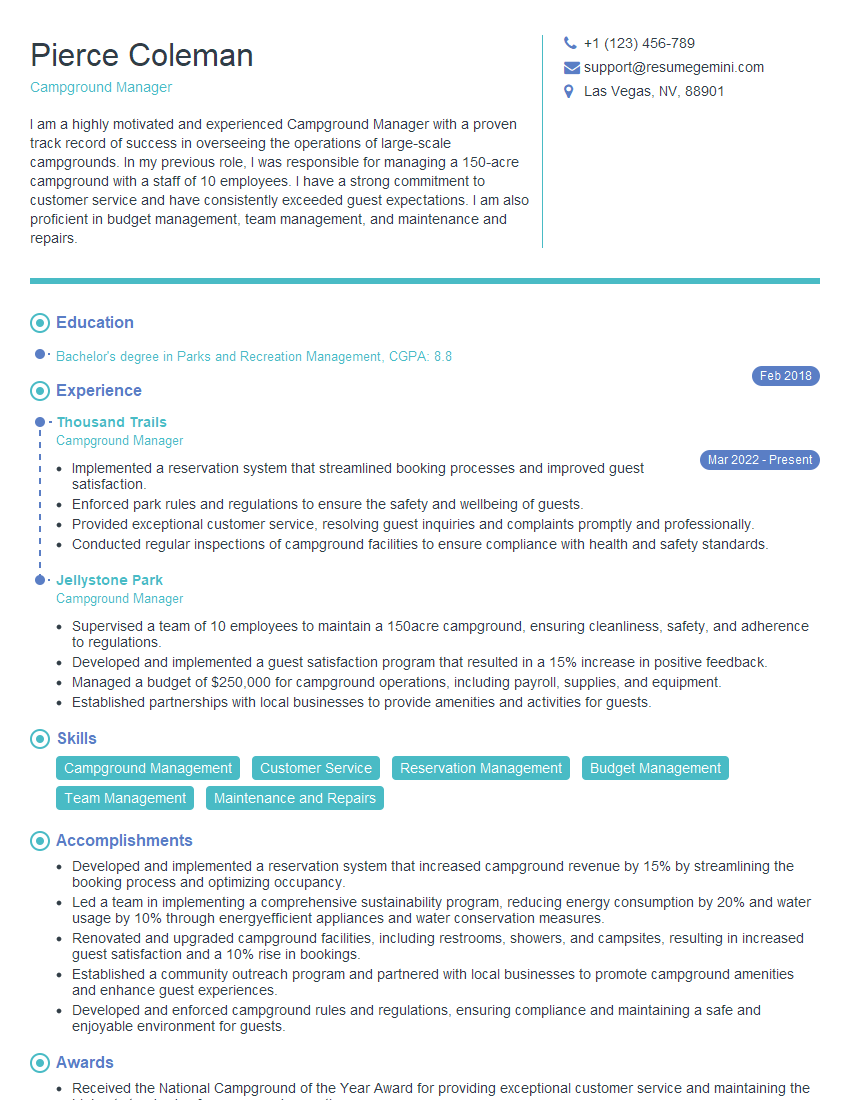
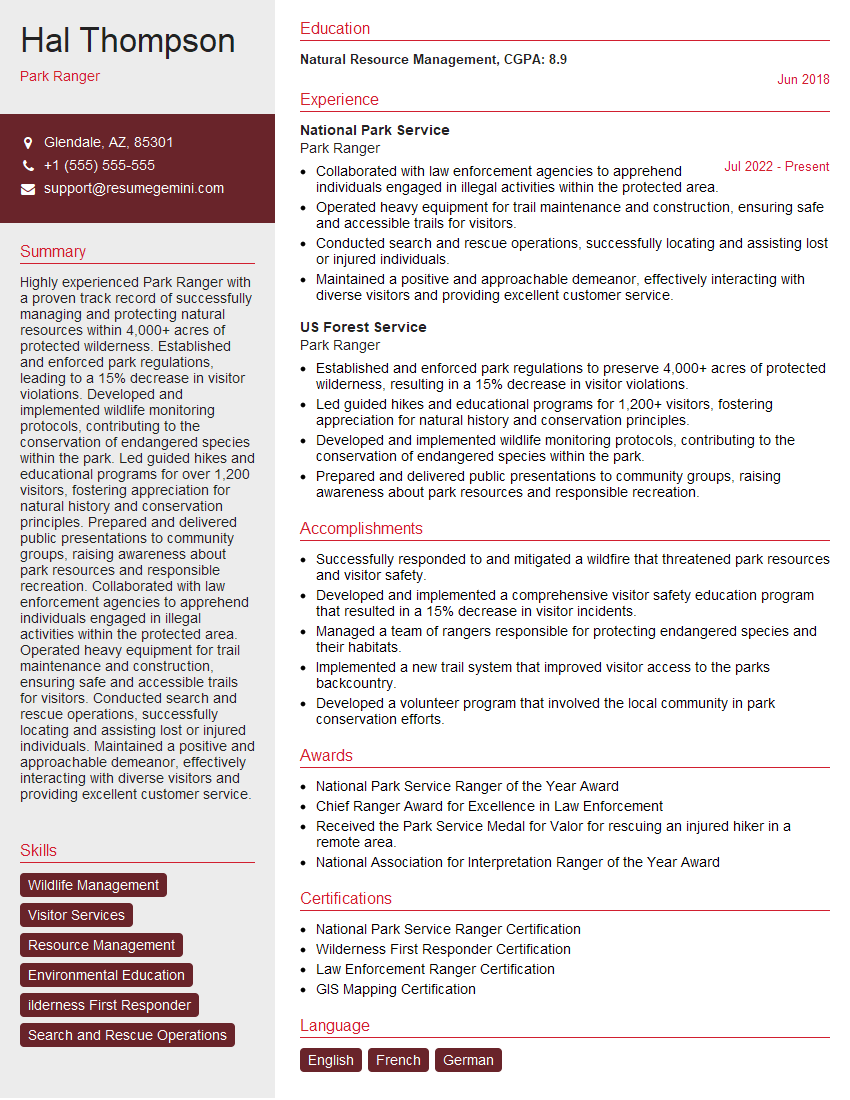
Mastering Backcountry Camping and Hiking skills demonstrates valuable attributes highly sought after by employers: adaptability, problem-solving, resourcefulness, and teamwork. These skills translate effectively across various professional fields. To significantly increase your job prospects, creating an ATS-friendly resume is crucial. ResumeGemini is a trusted resource that can help you build a professional and impactful resume tailored to showcase your expertise in Backcountry Camping and Hiking. Examples of resumes tailored to this field are available to help guide you.

Explore more articles
Users Rating of Our Blogs
Share Your Experience
We value your feedback! Please rate our content and share your thoughts (optional).
What Readers Say About Our Blog
To the interviewgemini.com Webmaster.
Very helpful and content specific questions to help prepare me for my interview!
Thank you
To the interviewgemini.com Webmaster.
This was kind of a unique content I found around the specialized skills. Very helpful questions and good detailed answers.
Very Helpful blog, thank you Interviewgemini team.