Cracking a skill-specific interview, like one for Backhoe Operations, requires understanding the nuances of the role. In this blog, we present the questions you’re most likely to encounter, along with insights into how to answer them effectively. Let’s ensure you’re ready to make a strong impression.
Questions Asked in Backhoe Operations Interview
Q 1. Describe your experience operating a backhoe.
I’ve been operating backhoes for over 10 years, working on a wide range of projects, from residential utility installations to large-scale commercial developments. My experience encompasses everything from trenching and excavation to loading and material handling. I’m proficient in operating various models, including both crawler and wheeled backhoes, and I’m comfortable working in diverse terrain and weather conditions. For example, on one project, I successfully excavated a complex trench system for a new pipeline installation, navigating challenging soil conditions and coordinating with other construction crews to ensure the project was completed on time and within budget.
Q 2. What types of backhoes are you familiar with?
My experience includes operating several types of backhoes. I’m familiar with both wheeled and crawler backhoes, understanding the advantages and disadvantages of each. Wheeled backhoes offer greater mobility on paved surfaces and are ideal for road work or projects with easy access. Crawler backhoes, with their tracks, provide superior stability and traction on uneven or soft ground, making them better suited for more challenging terrains and heavy excavation tasks. I’ve also worked with various sizes of backhoes, from compact models suitable for tight spaces to larger models capable of handling extensive excavation projects. For example, I recently used a compact wheeled backhoe to install underground utilities in a residential neighborhood where maneuverability was crucial.
Q 3. Explain the different types of backhoe attachments and their uses.
Backhoes are incredibly versatile machines thanks to their interchangeable attachments. Some common attachments include:
- Buckets: Standard buckets are used for digging, loading, and moving materials. Different sizes and shapes are available to suit specific needs. For instance, a narrow trenching bucket is ideal for creating precise trenches, whereas a wider bucket is better for loading.
- Rippers: These are used to break up hard or compacted soil, making excavation easier. Think of it like a giant claw tearing through tough ground.
- Augers: These drill holes for posts, pilings, or other underground structures. They are essential for fence installation or setting deep foundation footings.
- Hydraulic Hammers: These powerful attachments are used to break up rock, concrete, or other tough materials. This is crucial when dealing with particularly hard terrain.
- Grapples: These are used for grabbing and moving bulky materials like scrap metal, logs, or large rocks. They are like a giant claw for handling awkward shapes.
- Thumbs: These act as a supplementary gripping device, enabling the operator to manipulate materials more precisely within the bucket.
The selection of the right attachment is critical for efficiency and project success. Choosing the wrong one can significantly impact productivity and safety.
Q 4. How do you ensure the safety of yourself and others while operating a backhoe?
Safety is paramount in backhoe operation. My safety procedures always start with a pre-operation inspection to ensure the machine is in good working order. I always wear appropriate personal protective equipment (PPE), including a hard hat, safety glasses, gloves, and steel-toed boots. Before commencing any work, I thoroughly assess the worksite, identifying potential hazards such as overhead power lines, underground utilities, and unstable ground. I clearly mark the work area and set up safety cones or barriers to prevent unauthorized entry. I maintain constant awareness of my surroundings, particularly when operating near other equipment or personnel. Communication is key; I use hand signals or radios to communicate with other workers and ensure everyone is aware of my movements. Furthermore, I strictly adhere to the manufacturer’s operating instructions and all relevant safety regulations. Regular training and maintaining a cautious, observant approach are vital components of my safety protocols. For example, I always ensure that the backhoe is properly stabilized before beginning any excavation work to prevent tipping.
Q 5. Describe your experience with preventative maintenance on a backhoe.
Preventative maintenance is crucial for ensuring the longevity and safe operation of a backhoe. My routine includes daily checks of fluids (hydraulic oil, engine oil, coolant), tire pressure, and the overall condition of the machine. I also inspect all moving parts for wear and tear, paying close attention to hydraulic lines and hoses for any leaks or damage. Regular lubrication of moving parts is essential. I meticulously document all maintenance activities, noting any repairs or replacements. Scheduled maintenance, such as filter changes and more thorough inspections, are carried out according to the manufacturer’s recommendations. Proactive maintenance prevents costly repairs and downtime, ensuring consistent operational efficiency and safety. For instance, regularly checking and changing the hydraulic oil prevents wear on internal components and maintains the machine’s overall efficiency.
Q 6. What are the common causes of backhoe malfunctions, and how do you troubleshoot them?
Common backhoe malfunctions can range from simple issues to more complex problems. Some frequent issues include hydraulic leaks (often requiring hose or seal replacement), engine problems (requiring attention to fuel, oil, or filters), and electrical faults (which might need a qualified electrician). Troubleshooting starts with a systematic approach. I begin by identifying the symptom – for example, a loss of hydraulic pressure. Then, I check the obvious things, like fluid levels and hoses, looking for leaks or damage. If the problem persists, I might consult the machine’s manual for troubleshooting guides or seek assistance from a qualified mechanic. I’ve learned to systematically isolate the problem, making careful observations and tests to pinpoint the faulty component. Safety is always prioritized, and if a significant problem is suspected, I immediately cease operation and seek expert assistance.
Q 7. How do you calculate the amount of excavation needed for a project?
Calculating excavation needs involves several steps. First, I determine the precise dimensions of the area to be excavated – length, width, and depth. This information is usually provided in project plans. Next, I calculate the volume using the formula: Volume = Length x Width x Depth. However, this is often a simplification. In practice, I might need to account for factors like soil compaction, which affects the actual volume of material removed. The type of soil also matters; some soils expand after excavation while others compact. I usually overestimate the volume slightly to account for these uncertainties. Once the volume is calculated, I consider the type of material to be removed and the efficiency of the backhoe. This allows me to estimate the time required for the excavation. For example, if excavating rock, I’d factor in the time required for breaking it up using a hydraulic hammer. Finally, I always double-check my calculations to ensure accuracy and avoid costly errors. Accurate calculations ensure the project is completed with the right amount of materials and efficient use of time.
Q 8. How do you determine the appropriate digging depth and angle for various tasks?
Determining the appropriate digging depth and angle is crucial for efficient and safe backhoe operation. It depends entirely on the project’s specifications. Think of it like baking a cake – you need the right measurements for the perfect result. For instance, installing a fence post requires a much shallower and narrower hole than excavating a foundation.
- Project Plans: The blueprints and site plans always dictate the required depth and angles. These plans clearly show the dimensions of trenches, footings, and other excavations.
- Soil Conditions: The type of soil significantly impacts depth and angle. Hard, rocky soil may require a steeper angle and more powerful digging, while softer soil allows for shallower angles and potentially deeper digs.
- Utility Lines: When working near underground utilities, the digging depth and angle must be carefully considered to avoid damage. Often, this involves hand digging near utilities or using specialized tools and techniques.
- Structural Considerations: For foundations, the depth and angle need to accommodate the structural requirements of the building or structure being constructed.
For example, when excavating a trench for a water line, the depth is specified in the plans, but I would adjust the angle slightly to ensure the trench base is level and stable, accounting for slight slopes in the terrain.
Q 9. Explain your understanding of soil types and their impact on backhoe operation.
Understanding soil types is paramount for safe and efficient backhoe operation. Different soils behave drastically differently under pressure, and each requires a unique approach. Imagine trying to dig with a spoon in clay versus sand—the challenges are completely different!
- Clay: Clay soils are dense and cohesive, making them difficult to excavate. They tend to stick to the bucket, requiring more power and potentially causing the bucket to become overloaded.
- Sandy Soil: Sandy soil is loose and well-drained. It’s generally easier to dig in sandy soil, but it can be prone to collapse, potentially causing cave-ins in trenches unless properly shored.
- Silty Soil: Silty soil falls between clay and sandy soil in terms of cohesion. It can be relatively easy to excavate, but can still be unstable, particularly when wet.
- Rocky Soil: Rocky soil presents the biggest challenges, requiring specialized tools and techniques, such as rippers or rock breakers, to effectively excavate.
- Organic Soil: This type of soil contains a high amount of decomposing organic matter, which can be unstable. Its ability to support weight will also be much weaker than other types of soil.
I always assess the soil type before commencing any digging operation. This helps me select the appropriate bucket, adjust the backhoe’s digging angle, and choose the appropriate speed to avoid equipment damage or accidents. In a particularly challenging situation with mixed soil types, I’ll often start with a smaller excavation and observe the soil’s stability before proceeding.
Q 10. How do you handle different ground conditions, such as rocky terrain or unstable soil?
Handling different ground conditions requires adaptability and experience. It’s like navigating different terrains in a car – you adjust your speed and driving style according to the road conditions.
- Rocky Terrain: For rocky terrain, I use a rock breaker or a more durable bucket designed to handle impact. I’ll also need to change the backhoe’s digging angle and approach the rock at the most vulnerable point to avoid unnecessary wear on the equipment.
- Unstable Soil: Dealing with unstable soil requires careful planning. Techniques such as shoring (installing supports), benching (creating step-like slopes), or using a less aggressive digging approach are essential. The bucket is also changed to the appropriate size to allow for the most efficiency and safest excavation.
- Wet Soil: Wet soil can be incredibly unstable. I reduce the backhoe’s digging depth and use techniques like benching to improve safety.
- Frozen Soil: Frozen ground often requires thawing before excavation, which might involve using thawing equipment or allowing the ground to thaw naturally, given favorable weather conditions.
One time, I encountered a particularly unstable area with shifting sands. I had to adjust my strategy continuously, using benching to create stable platforms and working in small sections to minimize the risk of a collapse. Safety is always the utmost priority.
Q 11. Describe your experience working with blueprints and site plans.
Working with blueprints and site plans is fundamental to my work. It’s like having a detailed map that guides me through the excavation process. Accuracy is key, and I thoroughly review the plans before starting any excavation.
- Understanding the Plans: I carefully examine the plans to identify the location, depth, and dimensions of all excavations. This includes understanding the utility locations to avoid any potential damage.
- Identifying Key Features: I look for details like existing structures, elevations, and any special instructions or notes.
- Interpreting Symbols and Annotations: I understand the various symbols and notations used in construction drawings, including symbols for pipes, cables, and other underground utilities.
Recently, I worked on a project with complex underground utilities. The plans showed intricate details, including the exact depth and location of gas lines and water mains. By carefully studying the plans, I was able to complete the excavation without damaging these vital utilities, preventing costly repairs and potential safety hazards.
Q 12. How do you ensure accurate measurements and grading during excavation?
Ensuring accurate measurements and grading is critical for successful excavation. It’s like creating a perfectly level foundation for a building – any inaccuracies can compromise the entire structure.
- Using Measuring Tools: I use accurate measuring tools, such as laser levels, measuring tapes, and grade stakes, to verify depths, and angles.
- Regular Checks: I frequently check measurements during the excavation process to ensure everything aligns with the blueprints. This is especially important when creating slopes or leveling ground.
- Grade Stakes and String Lines: I set grade stakes to establish the desired grade and use string lines to provide visual guidance.
- Calibration: I regularly calibrate the measuring equipment to maintain accuracy.
On a recent project, I was responsible for excavating a trench for a retaining wall. By using a laser level and grade stakes, I ensured the trench was perfectly level and at the correct depth specified on the blueprints. This precision prevented costly adjustments later in the process.
Q 13. What safety procedures do you follow when working near underground utilities?
Safety near underground utilities is paramount. It’s crucial to understand the potential risks and take appropriate precautions. I’d rather be safe than sorry.
- Utility Locating Services: Before commencing any excavation, I always call utility locating services (like 811 in the US) to have them mark the location of underground lines.
- Hand Excavation: I use hand tools near marked utility lines to carefully excavate.
- Spotters: I often work with spotters who continuously monitor the excavation to prevent damage to utilities.
- Proper Equipment: Using equipment designed to avoid hitting underground utilities is essential. This includes specialized sensors and monitoring tools.
Once, we had a close call when a line was mis-marked. Thanks to our careful hand excavation and constant monitoring, we were able to prevent any damage. That highlighted the importance of due diligence and proper procedures.
Q 14. How do you communicate effectively with other workers on a construction site?
Effective communication is the cornerstone of a safe and productive construction site. It’s like having a well-coordinated orchestra – everyone needs to be on the same page to create a harmonious outcome.
- Clear and Concise Language: I use clear and concise language to avoid misunderstandings.
- Visual Aids: I use visual aids like drawings or gestures to enhance understanding, especially when communicating with individuals who might not speak the same language.
- Regular Check-Ins: I regularly communicate with other workers to coordinate activities and ensure everyone is aware of the plans and any changes.
- Respectful Communication: I always maintain a respectful and professional tone, regardless of any challenges that may arise.
For example, when working with the concrete crew, I make sure to communicate exactly when and where the excavated area is ready for the concrete to be poured, avoiding delays and ensuring a smooth workflow.
Q 15. Describe your experience working under pressure and meeting tight deadlines.
Working under pressure and meeting tight deadlines is a crucial aspect of backhoe operation, especially in construction projects with aggressive schedules. I’ve consistently demonstrated my ability to handle such situations by prioritizing tasks effectively and utilizing time management techniques. For example, on a recent project to install underground utilities before a major road closure, we faced a remarkably tight window of just 48 hours. By meticulously planning the excavation route, coordinating with other crews, and maintaining constant communication, we successfully completed the project on time, avoiding costly delays. This involved accurately assessing the scope of work, anticipating potential bottlenecks, and allocating resources strategically. My ability to stay calm and focused in high-pressure environments is a valuable asset.
Career Expert Tips:
- Ace those interviews! Prepare effectively by reviewing the Top 50 Most Common Interview Questions on ResumeGemini.
- Navigate your job search with confidence! Explore a wide range of Career Tips on ResumeGemini. Learn about common challenges and recommendations to overcome them.
- Craft the perfect resume! Master the Art of Resume Writing with ResumeGemini’s guide. Showcase your unique qualifications and achievements effectively.
- Don’t miss out on holiday savings! Build your dream resume with ResumeGemini’s ATS optimized templates.
Q 16. How do you handle unexpected problems or challenges during excavation?
Unexpected problems are par for the course in excavation. My approach involves a systematic process. First, I assess the situation safely and completely, identifying the nature of the problem. This often involves visual inspection, checking utility locates, and evaluating potential hazards. Then, I consider various solutions. For instance, if I encounter an unforeseen underground obstruction like a large rock or buried utility line, I don’t just try to power through it. I would immediately halt operations, re-evaluate the situation with my supervisor and potentially use a different approach. This might include adjusting the excavation plan, using specialized equipment like a smaller excavator or a hydro-hammer, or contacting utility companies for assistance. Thorough planning and regular communication with the team minimizes the impact of these unexpected challenges.
Q 17. What is your experience with GPS-guided excavation?
I possess significant experience with GPS-guided excavation. This technology has revolutionized accuracy and efficiency in the field. I’m proficient in using various GPS systems to precisely follow pre-planned digital designs. This includes accurately digging trenches, installing utilities, and grading land to exact specifications. For example, on a recent pipeline project, using GPS-guidance allowed us to maintain pinpoint accuracy, minimizing the risk of damaging existing infrastructure and resulting in significant time savings compared to traditional methods. My skillset includes understanding the limitations of GPS technology, accounting for potential errors and ensuring accurate data input.
Q 18. Describe your knowledge of relevant safety regulations and standards.
Safety is paramount in backhoe operation. I have a thorough understanding of OSHA (Occupational Safety and Health Administration) regulations, and other relevant safety standards concerning excavation, including safe digging practices, personal protective equipment (PPE) use, and hazard recognition and mitigation. This includes awareness of confined space entry protocols, trench shoring requirements, and lockout/tagout procedures for machinery maintenance. I’m also trained in recognizing and avoiding potential hazards like underground utilities, unstable ground conditions, and potential encounters with hazardous materials. Regular safety training and adherence to company protocols are integral to my work ethic.
Q 19. How do you maintain a clean and organized work area?
Maintaining a clean and organized work area isn’t just about tidiness; it’s crucial for safety and efficiency. At the end of each day, or as the job dictates, I ensure that the backhoe is parked correctly, tools and equipment are properly stored, and the excavation site is free of debris. This includes removing excavated material, properly disposing of waste, and ensuring the site is secure and well-lit, reducing the risks of accidents and making it easier for future tasks. A well-organized site translates to smoother operations, fewer accidents, and increased overall productivity.
Q 20. What are your strengths and weaknesses as a backhoe operator?
My strengths lie in my precision, efficiency, and problem-solving abilities. I’m adept at operating a backhoe with skill and precision, consistently delivering high-quality results. I pride myself on my ability to work quickly and efficiently while maintaining a high standard of safety. My experience allows me to anticipate and resolve unexpected challenges effectively. A potential weakness would be my relative lack of experience with certain specialized attachments. However, I’m a quick learner, and I’m always eager to expand my skill set. I proactively seek opportunities for training and professional development.
Q 21. What are your salary expectations?
My salary expectations are commensurate with my experience and skills, and align with the industry standards for a backhoe operator with my qualifications and years of experience. I’m open to discussing a competitive compensation package that reflects the value I bring to your company.
Q 22. What are your long-term career goals?
My long-term career goals center around becoming a leading expert in heavy equipment operation and safety. I envision myself eventually overseeing a team of operators, contributing to large-scale infrastructure projects, and mentoring the next generation of skilled professionals. I’m particularly interested in specializing in complex excavation projects, requiring precision and a deep understanding of soil mechanics and safety regulations. This path involves continuous learning, staying updated with the latest technologies in backhoe operation and contributing to the improvement of safety standards within the industry. I aim to reach a position where I can influence positive change in the efficiency and safety of heavy equipment operations.
Q 23. Describe a time you made a mistake operating a backhoe. What did you learn from it?
Early in my career, I misjudged the stability of a slope while excavating a trench. I was using a backhoe with a narrow trenching bucket and didn’t adequately assess the soil’s compaction. The side of the trench collapsed, fortunately without causing injury, but it resulted in significant time lost for cleanup and resloping. The mistake was a costly lesson in proper site assessment and the importance of adhering strictly to trenching and shoring regulations. I learned the critical need for thorough pre-operation checks, including soil testing and proper shoring techniques, even for seemingly minor projects. I now emphasize risk assessment and utilize appropriate safety measures before commencing any excavation work, regardless of the project’s size.
Q 24. How do you handle conflict with other workers on a construction site?
Conflict resolution on a construction site is paramount for efficiency and safety. My approach involves direct and respectful communication. I always start by actively listening to understand the other person’s perspective. I believe in finding a common ground, focusing on the project goals rather than letting personal differences impede progress. If a direct conversation doesn’t resolve the issue, I escalate it to the site supervisor, providing a clear and unbiased account of the situation. For example, I once had a disagreement with another operator regarding the best approach to excavating around a utility line. Instead of arguing, we jointly discussed the risks and benefits of each method, ultimately agreeing on a solution that prioritized safety and efficiency. Open communication and a collaborative mindset are key to resolving conflict professionally.
Q 25. What is your experience with different types of digging buckets?
My experience encompasses a variety of digging buckets, each suited for specific tasks. I’m proficient with standard digging buckets for general excavation, narrow trenching buckets for precise trench work, and ditch-cleaning buckets for maintaining drainage systems. I’ve also worked with specialized buckets like rock buckets for breaking up hard materials and clean-up buckets for fine grading and finishing. Understanding the different bucket types and their optimal applications allows me to choose the right tool for the job, maximizing efficiency and safety. For instance, using a narrow trenching bucket in confined spaces significantly reduces the risk of cave-ins compared to a wider general-purpose bucket. This selection process is vital for ensuring project safety and success.
Q 26. Explain your understanding of hydraulic systems in a backhoe.
A backhoe’s hydraulic system is its lifeblood, powering all its movements. It relies on pressurized hydraulic fluid to actuate the various cylinders, controlling the boom, dipper stick, bucket, and travel. The system involves a pump that creates high-pressure fluid, which is directed to the hydraulic cylinders through a network of valves and hoses. These cylinders convert the hydraulic pressure into mechanical force, allowing for precise and powerful movements. Understanding hydraulic pressure, flow rate, and the function of individual components is vital for troubleshooting and maintaining the machine. For example, a leak in the hydraulic system can lead to reduced power or complete system failure. A good operator needs to be able to identify leaks, understand pressure readings, and know when to seek professional maintenance.
Q 27. How do you perform a pre-operation inspection of a backhoe?
A thorough pre-operation inspection is crucial for safety and operational efficiency. My inspection follows a standardized checklist, covering all vital aspects of the machine. I start by visually checking fluid levels (hydraulic fluid, engine oil, coolant), looking for leaks and ensuring all gauges are within the normal operating range. I then inspect the tires for wear and pressure, verifying the brakes are functioning correctly. I carefully examine the structural integrity of the boom, dipper stick, and bucket for any damage or cracks. Next, I check the operational functionality of all controls, ensuring smooth and responsive movements. Finally, I visually inspect the immediate working area for any hazards or obstacles that might affect operation. This detailed pre-operation inspection ensures the backhoe is in optimal condition, mitigating the risk of accidents and downtime.
Q 28. Describe your experience with trenching and shoring techniques.
I have extensive experience in trenching and shoring techniques, adhering strictly to OSHA regulations. This involves calculating the required depth and width of the trench, considering soil type and environmental conditions. I’m proficient in utilizing various shoring methods, including trench boxes, sheet piling, and sloping or benching. The selection of the appropriate shoring method depends heavily on the soil conditions and trench depth. For example, in unstable soil, a trench box provides superior protection compared to sloping. Before starting any trenching work, I always conduct a site assessment to determine the soil’s composition and stability. This allows me to choose the most appropriate shoring system, ensuring a safe working environment. I regularly update my knowledge of relevant safety regulations and best practices to ensure compliance and maintain a high safety standard.
Key Topics to Learn for Your Backhoe Operations Interview
- Machine Operation & Controls: Understanding the intricacies of backhoe controls, including hydraulic systems, levers, and pedals. This includes safe startup and shutdown procedures.
- Excavation Techniques: Mastering various digging techniques for different soil types and project requirements. Consider practical applications like trenching, foundation excavation, and material handling.
- Safety Procedures & Regulations: Demonstrate a thorough understanding of OSHA regulations and safety protocols specific to backhoe operation, including pre-operational checks, personal protective equipment (PPE), and hazard identification.
- Maintenance & Troubleshooting: Familiarize yourself with routine maintenance tasks, identifying potential mechanical issues, and basic troubleshooting techniques. Knowing when to call for professional assistance is crucial.
- Site Awareness & Planning: Explain your approach to site assessment, including identifying potential obstacles, planning efficient excavation routes, and ensuring site safety for yourself and others.
- Load Capacity & Stability: Understanding the backhoe’s weight limits, load capacity, and how to maintain stability during operation on varying terrains. This includes considerations for load shifting and potential tipping hazards.
- GPS & Surveying (if applicable): If relevant to the position, demonstrate knowledge of using GPS technology for precise excavation and grading. Understanding basic surveying principles is beneficial.
Next Steps: Level Up Your Career
Mastering backhoe operations opens doors to a rewarding career with excellent growth potential. From entry-level positions to specialized roles, your expertise will be highly valued in construction, utilities, and landscaping. To maximize your job prospects, creating a strong, ATS-friendly resume is key. ResumeGemini is a trusted resource to help you build a professional resume that showcases your skills and experience effectively. We offer examples of resumes tailored to Backhoe Operations to help you get started.
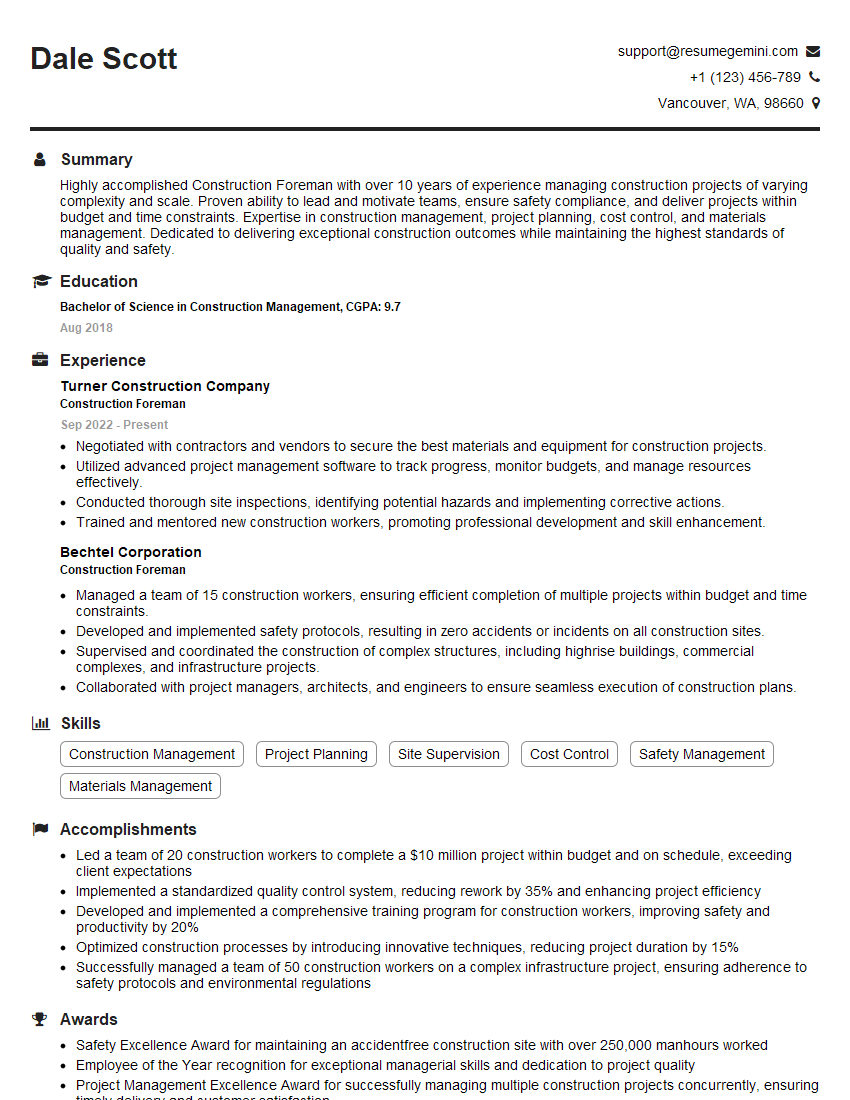
Construction Foreman Resume Sample

Equipment Technician Resume Sample

Heavy Equipment Operator Resume Sample

Backhoe Operator Resume Sample
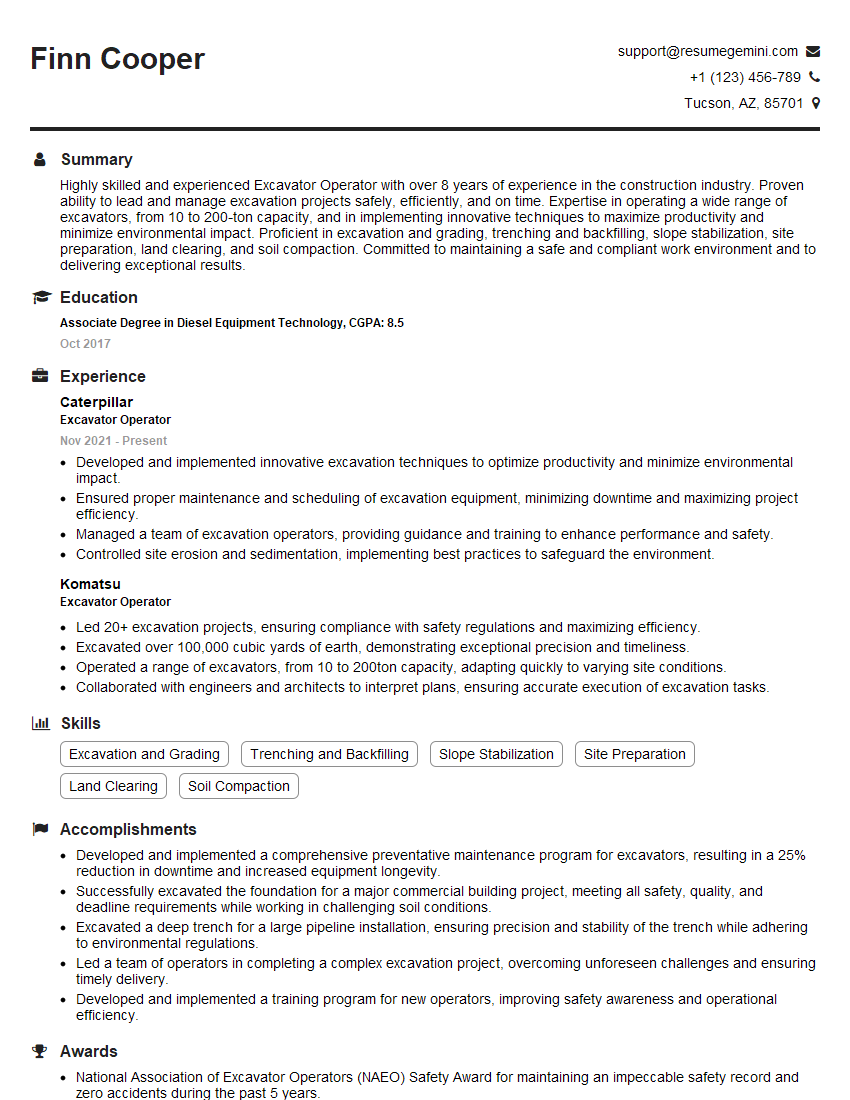
Excavator Operator Resume Sample

Construction Equipment Mechanic Resume Sample
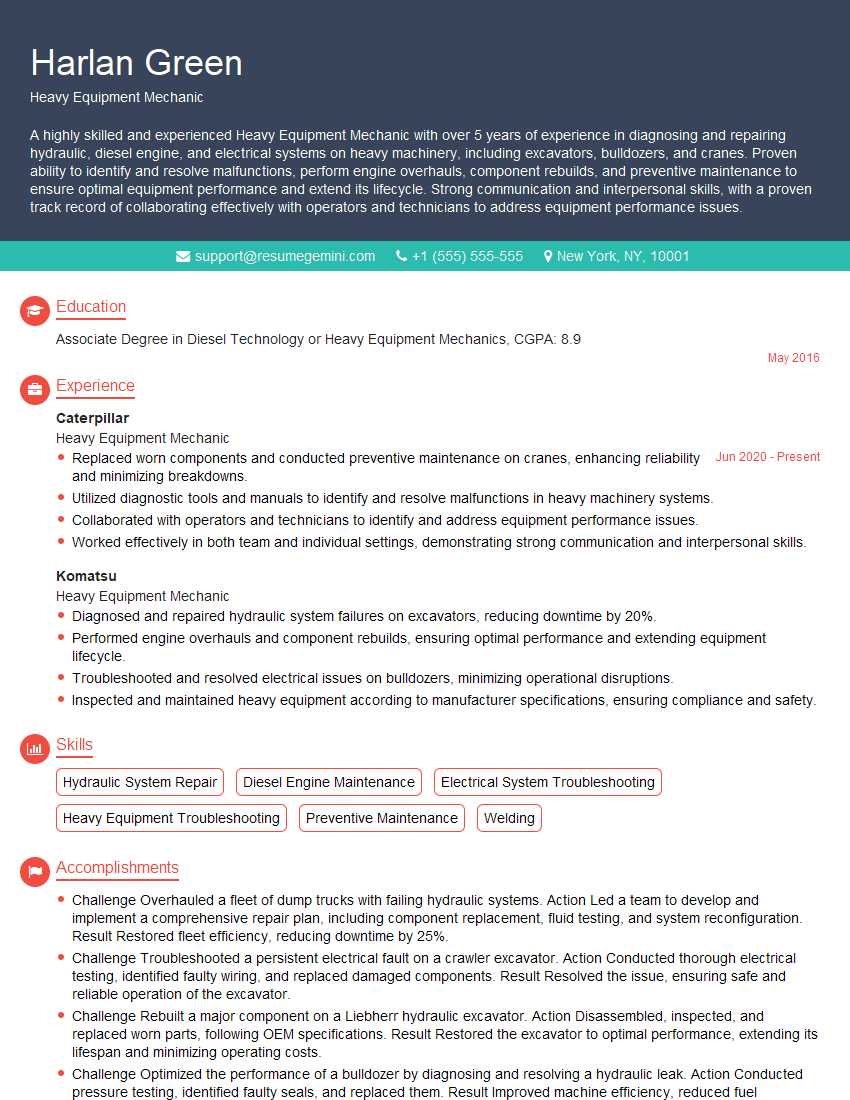
Heavy Equipment Mechanic Resume Sample

Utility Operator Resume Sample

Pipeline Operator Resume Sample
Explore more articles
Users Rating of Our Blogs
Share Your Experience
We value your feedback! Please rate our content and share your thoughts (optional).
What Readers Say About Our Blog
To the interviewgemini.com Webmaster.
Very helpful and content specific questions to help prepare me for my interview!
Thank you
To the interviewgemini.com Webmaster.
This was kind of a unique content I found around the specialized skills. Very helpful questions and good detailed answers.
Very Helpful blog, thank you Interviewgemini team.