Preparation is the key to success in any interview. In this post, we’ll explore crucial Biodiesel Process Development interview questions and equip you with strategies to craft impactful answers. Whether you’re a beginner or a pro, these tips will elevate your preparation.
Questions Asked in Biodiesel Process Development Interview
Q 1. Explain the transesterification process in detail.
Transesterification is the chemical process at the heart of biodiesel production. It’s a reaction where triglycerides (vegetable oils or animal fats) react with an alcohol (typically methanol or ethanol) in the presence of a catalyst to produce fatty acid methyl esters (FAME, for methanol) or ethyl esters (FAEE, for ethanol), which are the components of biodiesel. Think of it like this: you’re taking a large, complex fat molecule and breaking it down into smaller, more useful fuel molecules.
The process involves three main steps:
- Mixing: The oil, alcohol, and catalyst are thoroughly mixed to ensure a uniform reaction mixture.
- Reaction: The triglycerides react with the alcohol, breaking down into glycerol (a byproduct) and the alkyl esters (biodiesel).
- Separation: After the reaction, the mixture is separated into two layers: the biodiesel layer (lighter) and the glycerol layer (heavier). This is usually done through settling or centrifugation.
The reaction is typically represented as:
Triglyceride + 3 Alcohol <=> 3 Fatty Acid Alkyl Esters + GlycerolThe reaction conditions, such as temperature, reaction time, and molar ratio of alcohol to oil, are crucial for achieving high biodiesel yield and quality. For instance, using an excess of alcohol drives the equilibrium towards the products, increasing yield. Careful control of temperature prevents unwanted side reactions.
Q 2. What are the different feedstocks used in biodiesel production?
A wide variety of feedstocks can be used to produce biodiesel, broadly classified into vegetable oils and animal fats. The choice of feedstock often depends on factors such as availability, cost, and environmental impact.
- Vegetable Oils: Soybean oil, rapeseed (canola) oil, sunflower oil, palm oil, algae oil, and jatropha oil are some of the commonly used vegetable oils. Soybean oil is currently the most prevalent due to its large-scale production and relatively low cost.
- Animal Fats: Tallow (beef fat) and lard (pork fat) are examples of animal fats used in biodiesel production. These are often considered a more sustainable option compared to directly burning fossil fuels.
- Waste Oils: Used cooking oil (UCO) is a significant potential feedstock. Recycling UCO reduces waste and provides a valuable resource for biodiesel production. However, careful pre-treatment is essential to remove contaminants and improve the quality of the final product.
The suitability of a feedstock also depends on its free fatty acid (FFA) content. High FFA content can hinder the transesterification process and require pre-treatment, such as acid or enzymatic esterification, before biodiesel production. For example, using UCO often demands pre-treatment due to its varying FFA content.
Q 3. Describe the role of catalysts in biodiesel synthesis.
Catalysts play a critical role in accelerating the transesterification reaction. They are substances that increase the reaction rate without being consumed themselves. The most commonly used catalysts are homogeneous bases, such as sodium hydroxide (NaOH) or potassium hydroxide (KOH), but homogeneous acids (like sulfuric acid) and heterogeneous catalysts (e.g., solid-base catalysts) are also employed.
Homogeneous base catalysts are highly effective and are preferred due to their high reaction rate and relatively low cost. However, they require a separate step for catalyst removal and neutralization which adds complexity. The catalyst must be completely removed from the final product, as residual alkali can negatively impact the biodiesel’s properties.
Homogeneous acid catalysts are less efficient than base catalysts but are less sensitive to FFA content in the feedstock and have advantages with high-FFA feedstocks. However, they tend to require more severe reaction conditions such as higher temperature and reaction time, increasing energy consumption and potentially causing unwanted side reactions.
Heterogeneous catalysts offer advantages of easy separation and reusability, minimizing waste and simplifying downstream processing. However, these catalysts may exhibit lower activity compared to homogeneous base catalysts, necessitating longer reaction times or higher temperatures.
Q 4. How do you ensure the quality of biodiesel produced?
Ensuring biodiesel quality is crucial for its safe and efficient use in engines. This involves adhering to stringent quality standards, such as ASTM D6751 (in the US) or EN 14214 (in Europe). These standards specify the acceptable ranges for various parameters, which are tested using standardized analytical techniques. The key parameters include:
- Fatty Acid Methyl Ester (FAME) content: This indicates the percentage of biodiesel in the product.
- Water content: Excess water can lead to corrosion and microbial growth.
- Free glycerol content: High levels of glycerol indicate incomplete transesterification.
- Acid value: This measures the acidity of the biodiesel.
- Viscosity: It is important for proper engine performance.
- Cetane number: Measures the ignition quality of the fuel.
Regular quality control checks throughout the production process, including raw material analysis and regular testing of the final product, are essential for maintaining consistent product quality. In a real-world scenario, a Quality Control (QC) lab would routinely test biodiesel samples, flagging batches that fail to meet specifications and investigating the cause of failures to implement corrective actions.
Q 5. What are the common impurities found in biodiesel and how are they removed?
Biodiesel can contain several impurities, depending on the feedstock and the production process. Some common impurities include:
- Glycerol and its derivatives: These are byproducts of the transesterification reaction.
- Soap: Formed by the reaction of free fatty acids with the catalyst.
- Unreacted triglycerides: Indicative of incomplete transesterification.
- Monoglycerides and diglycerides: Partial hydrolysis products of triglycerides.
- Catalyst residues: Leftover catalyst from the reaction.
- Water: Can be present in the feedstock or introduced during processing.
Removal of impurities is crucial for ensuring biodiesel quality. Techniques include:
- Washing: Water washing helps remove soap, glycerol, and catalyst residues.
- Centrifugation: Separates different phases based on density differences.
- Vacuum distillation: Removes volatile impurities like water and unreacted methanol.
- Adsorption: Using adsorbents to remove specific impurities.
The choice of purification method often depends on the type and level of impurities, as well as the desired quality of the final biodiesel.
Q 6. Explain the process of biodiesel purification.
Biodiesel purification aims to remove impurities to meet the required quality standards. The process typically involves several stages:
- Washing: The crude biodiesel is washed with water to remove soap, glycerol, and catalyst residues. Multiple washes may be necessary to achieve sufficient purity.
- Drying: Water is removed from the washed biodiesel using methods like vacuum drying or the use of desiccants to prevent corrosion and microbial growth.
- Filtration: Filtration removes any remaining solid particles, enhancing the clarity and stability of the biodiesel.
- Optional further purification steps: Depending on the feedstock and the desired purity, further purification steps such as distillation or adsorption may be employed to remove specific impurities.
The choice of purification methods influences the overall cost and efficiency of the process. For example, while vacuum distillation is highly effective, it’s also energy-intensive. The optimal purification strategy is a careful balance between effective impurity removal and cost considerations.
Q 7. What are the different types of reactors used in biodiesel production?
Various types of reactors are used in biodiesel production, each with its own advantages and disadvantages. The choice of reactor depends on factors like production scale, feedstock characteristics, and desired level of automation.
- Batch reactors: Simple to operate and suitable for smaller-scale production. However, they are not efficient for large-scale operations due to the batch-wise nature of operation.
- Continuous stirred tank reactors (CSTRs): Offer better control over reaction parameters and higher production capacity compared to batch reactors. They provide continuous flow and consistent reaction conditions, but complete mixing can be challenging to ensure.
- Plug flow reactors (PFRs): Ideal for large-scale production due to their high throughput. They offer minimal backmixing which allows for better reaction kinetics, but are less tolerant to fluctuations in feed conditions.
- Fixed-bed reactors: Employ solid catalysts packed in a bed, facilitating easier catalyst separation and reusability, but may suffer from pressure drop and catalyst deactivation issues.
In practice, many biodiesel plants utilize CSTRs for their relatively simple design, controllability, and flexibility compared to PFRs and better scalability than batch reactors. However, the best reactor configuration will always be dependent on project requirements.
Q 8. Discuss the factors affecting biodiesel yield.
Biodiesel yield, essentially the amount of biodiesel produced from a given amount of feedstock, is influenced by several interconnected factors. Think of it like baking a cake – you need the right ingredients and conditions for a perfect result.
Feedstock Quality: The type of oil (e.g., soybean, canola, used cooking oil) and its free fatty acid (FFA) content significantly impact yield. High FFA content requires pre-treatment (e.g., acid or enzymatic esterification) reducing the overall yield of the final product. Imagine trying to bake a cake with spoiled eggs – the outcome won’t be ideal.
Reaction Conditions: The parameters of the transesterification reaction – the chemical process that converts oils into biodiesel – are crucial. These include methanol-to-oil molar ratio, catalyst type and concentration, reaction temperature, and reaction time. Optimizing these parameters is like adjusting the oven temperature and baking time for perfect cake texture.
Catalyst Efficiency: The catalyst, typically sodium or potassium hydroxide, facilitates the reaction. Its activity and concentration directly influence the speed and completeness of the reaction. A more efficient catalyst is like a better oven, getting the job done faster and more completely.
Purification Process: The efficiency of separating glycerol, a byproduct, from biodiesel directly impacts the final yield. Impurities in the biodiesel can also reduce the apparent yield, because we’re measuring the pure biodiesel produced.
For example, using a feedstock with high FFA content will result in lower biodiesel yield compared to using a feedstock with low FFA content, even with optimal reaction conditions. A poorly designed purification step would also lead to losses and thus lower yields.
Q 9. How do you optimize the process parameters for maximum biodiesel yield?
Optimizing biodiesel production for maximum yield is a multi-step process involving careful experimentation and analysis. It’s akin to fine-tuning a complex machine for peak performance.
Experimental Design: Start with a statistically designed experiment (e.g., factorial design or response surface methodology) to systematically vary process parameters and assess their impact on yield. This helps avoid random experimentation and ensures a thorough understanding of the process.
Process Parameter Screening: Initially, focus on a broad range of parameters to identify the most influential ones. This involves conducting several small-scale experiments to pinpoint the most significant factors affecting yield. Think of this as a preliminary screening to narrow down the options.
Optimization through iterative adjustments: Once the key parameters are identified, refine their values incrementally through further experimentation. Utilize techniques like gradient descent or genetic algorithms for efficient optimization. This iterative process resembles fine-tuning musical instruments to achieve perfect harmony.
Analytical Techniques: Regularly monitor the reaction progress and product quality using analytical techniques such as Gas Chromatography (GC) and High-Performance Liquid Chromatography (HPLC). This provides real-time feedback for adjusting process parameters and ensures optimal yield and quality.
Data Analysis: Careful analysis of experimental data is critical to understand the interactions between different parameters and optimize them accordingly. Statistical software packages are crucial for this task.
For example, you might find that increasing the methanol-to-oil ratio initially increases yield, but beyond a certain point, it plateaus or even decreases. Similarly, the optimal catalyst concentration is typically within a specific range and exceeding this could lead to adverse effects. Careful data analysis helps in identifying these points.
Q 10. Explain the importance of quality control in biodiesel production.
Quality control in biodiesel production is paramount for ensuring product safety, meeting regulatory standards, and maintaining market competitiveness. Imagine building a house without proper quality checks – it could be unsafe and unstable.
Feedstock Analysis: Regularly analyzing the feedstock for FFA content, moisture, and impurities helps identify potential problems before they impact the final product. This ensures consistent starting material.
Process Monitoring: Closely monitoring reaction parameters (temperature, pressure, time) and reaction progress helps maintain consistency and identify deviations from the optimal operating conditions. Regular testing for things such as methanol levels or residual catalyst is critical.
Product Testing: The final biodiesel must meet stringent quality standards specified in ASTM or EN standards (e.g., viscosity, density, cetane number, water content, etc.). This ensures the fuel meets performance and safety requirements.
Documentation and Traceability: Maintaining thorough records of every step of the production process, including raw material sourcing, processing parameters, and quality testing results, is essential for traceability and accountability. This helps in identifying and correcting any issues which arise.
Without robust quality control, you risk producing substandard biodiesel that may damage engines, fail to meet emissions standards, or even be unsafe to handle. Consequences can include product recalls, legal issues, and reputational damage.
Q 11. What are the environmental benefits of using biodiesel?
Biodiesel offers several compelling environmental benefits compared to petroleum diesel. Think of it as a greener alternative, reducing our carbon footprint.
Reduced Greenhouse Gas Emissions: Biodiesel, being derived from renewable sources, significantly reduces greenhouse gas emissions compared to fossil fuels. The exact reduction depends on the feedstock used and its lifecycle. Using waste oils further reduces the environmental impact.
Improved Air Quality: Biodiesel combustion produces lower levels of particulate matter, hydrocarbons, and carbon monoxide compared to petroleum diesel, leading to improved air quality in urban areas. This benefit is particularly important in combating air pollution.
Reduced Dependency on Fossil Fuels: Using biodiesel reduces reliance on finite fossil fuels, contributing to energy security and reducing geopolitical vulnerabilities. It contributes to more sustainable and locally sourced energy options.
Potential for Carbon Sequestration: The plants used for biodiesel production absorb carbon dioxide during their growth, effectively sequestering carbon. This is a significant aspect, particularly when considering the entire lifecycle analysis.
However, the environmental benefits of biodiesel are contingent on sustainable feedstock production and efficient processing methods. Unsustainable practices can negate these benefits, for example unsustainable palm oil production.
Q 12. Discuss the economic aspects of biodiesel production.
The economics of biodiesel production are complex and influenced by many factors, making it a dynamic and ever-evolving landscape.
Feedstock Costs: The price of raw materials (vegetable oils, animal fats, used cooking oil) significantly impacts the overall production cost. Fluctuations in agricultural commodity prices are critical here.
Energy Costs: Energy consumption throughout the biodiesel production process, including heating, mixing, and purification, adds to the overall cost. The more energy-efficient the plant, the lower the operational cost.
Catalyst and Chemical Costs: The cost of catalysts, methanol, and other chemicals used in the process affects profitability. Catalyst recovery methods can lead to lower operating costs.
Production Scale and Efficiency: Large-scale biodiesel plants typically have lower production costs per unit due to economies of scale. Improvements in process efficiency and technology also lead to lower costs.
Government Policies and Subsidies: Government policies, including subsidies and tax incentives, significantly influence the economic viability of biodiesel production. These policies and incentives vary based on location and government priorities.
Biodiesel Market Prices: The price of biodiesel itself influences profitability. Government mandates for blending biodiesel into regular diesel can lead to increased demand and potentially higher prices.
Profitability is contingent on optimizing each of these factors. A well-managed facility, leveraging economies of scale and incorporating efficient technologies will be more economically viable than a less well-managed one. Additionally, favorable government policies can significantly improve the profitability and sustainability of biodiesel production.
Q 13. What are the safety considerations in biodiesel production?
Biodiesel production involves several safety considerations that must be meticulously addressed to prevent accidents and ensure worker safety. Think of it like working in a chemical plant – safety protocols are paramount.
Flammable Materials: Biodiesel, methanol, and other materials involved are flammable, so stringent fire safety measures (fire extinguishers, emergency showers, proper ventilation) are essential. Always follow regulations regarding fire safety.
Caustic Chemicals: The catalysts used (sodium or potassium hydroxide) are highly corrosive. Workers must use appropriate personal protective equipment (PPE), including gloves, goggles, and lab coats, to prevent skin and eye injuries. Proper handling and disposal procedures must always be followed.
Toxic Substances: Methanol is toxic and inhaling its vapors can cause serious health problems. Adequate ventilation and respiratory protection are crucial during handling and processing. Training should be provided on recognizing and mitigating the symptoms of methanol poisoning.
Process Hazards: High-pressure and high-temperature reactions require robust equipment and procedures to prevent leaks and explosions. Regular equipment maintenance and safety inspections are critical.
Glycerol Handling: Glycerol, a byproduct, is relatively non-toxic but can still cause skin irritation. Appropriate measures should be in place to protect workers during handling and disposal.
Regular safety training for personnel, adherence to strict safety protocols, and implementation of emergency procedures are crucial to minimize risks in biodiesel production. A proper risk assessment is required before production commences.
Q 14. Describe the process of biodiesel storage and handling.
Proper storage and handling of biodiesel are critical to maintain its quality and prevent degradation. Think of it like storing fine wine – you need the right conditions to maintain quality.
Storage Tanks: Biodiesel should be stored in clean, dry, and inert containers that are compatible with biodiesel. Stainless steel tanks are generally preferred. The tanks should be protected from sunlight and extreme temperatures.
Temperature Control: Temperature extremes can affect biodiesel quality. Storing it in a temperature-controlled environment within a specific range (typically 15-30°C) is recommended. Very high or low temperatures can accelerate degradation.
Protection from Oxidation: Biodiesel is susceptible to oxidation, which leads to quality deterioration. Storing it in a sealed container helps prevent contact with air. The addition of antioxidants can also slow down this process.
Water Contamination: Water contamination can severely affect biodiesel quality. Storage tanks should be designed to prevent water ingress and regular checks for water content are necessary.
Handling Procedures: Biodiesel should be handled carefully to avoid spills and contamination. Appropriate safety measures must be in place during transferring and transporting biodiesel to reduce risk of accidents.
Proper storage and handling ensure the longevity and usability of the produced biodiesel. Failure to adhere to these practices can result in a poor-quality fuel, which can lead to reduced efficiency, engine damage, or even failure to comply with regulatory standards.
Q 15. What is the difference between methanol and ethanol as transesterification agents?
Both methanol and ethanol are alcohols used as transesterification agents in biodiesel production, reacting with triglycerides in vegetable oils or animal fats to produce fatty acid methyl esters (FAME) or fatty acid ethyl esters (FAEE), respectively. The key difference lies in their chemical properties and resulting biodiesel characteristics. Methanol, being smaller, reacts faster and at lower temperatures, leading to a more efficient process. However, FAME biodiesel produced using methanol has slightly lower cetane numbers (a measure of ignition quality) compared to FAEE biodiesel from ethanol. Ethanol, on the other hand, is a renewable resource, making it a more sustainable choice, although its reaction is slower and may require more stringent reaction conditions. The choice between methanol and ethanol often involves a trade-off between efficiency, sustainability, and the desired biodiesel properties. For instance, in a large-scale commercial setting where speed and efficiency are prioritized, methanol might be preferred, whereas a smaller-scale operation prioritizing sustainability might opt for ethanol.
Think of it like this: methanol is the ‘fast sprinter’ – quicker but potentially less environmentally friendly. Ethanol is the ‘endurance runner’ – slower but more sustainable. The best choice depends on your specific needs and priorities.
Career Expert Tips:
- Ace those interviews! Prepare effectively by reviewing the Top 50 Most Common Interview Questions on ResumeGemini.
- Navigate your job search with confidence! Explore a wide range of Career Tips on ResumeGemini. Learn about common challenges and recommendations to overcome them.
- Craft the perfect resume! Master the Art of Resume Writing with ResumeGemini’s guide. Showcase your unique qualifications and achievements effectively.
- Don’t miss out on holiday savings! Build your dream resume with ResumeGemini’s ATS optimized templates.
Q 16. How do you handle wastewater generated during biodiesel production?
Wastewater from biodiesel production is a significant environmental concern, containing glycerol (a byproduct of transesterification), methanol or ethanol residues, soapstock (impurities from the oil), and potentially heavy metals. Effective wastewater management is crucial. A typical approach involves a multi-stage process: first, separating the glycerol-rich layer from the biodiesel. Then, the remaining wastewater undergoes neutralization to adjust its pH, followed by treatment processes such as coagulation/flocculation to remove suspended solids, and finally, biological treatment (e.g., activated sludge) to remove organic pollutants. Advanced treatment methods like membrane filtration or activated carbon adsorption can be employed for stricter effluent standards. The recovered glycerol can be purified and used in other industries, turning a waste product into a valuable resource, making the process more economically and environmentally viable. Recycling and reuse strategies are essential components of minimizing environmental impact and promoting sustainability.
For example, in my previous role, we implemented a closed-loop system for glycerol recovery, drastically reducing wastewater volume and recovering a valuable by-product for sale. This approach decreased our environmental footprint significantly and improved profitability.
Q 17. Explain the concept of biodiesel blending and its importance.
Biodiesel blending involves mixing biodiesel with conventional petroleum diesel to create a fuel blend with improved environmental characteristics. The blending ratio is typically expressed as a percentage (e.g., B20 signifies 20% biodiesel and 80% petroleum diesel). This practice is crucial because it allows for a gradual transition to a more sustainable transportation fuel system while minimizing disruptions to existing infrastructure and engine compatibility. Blending reduces the reliance on fossil fuels, decreasing greenhouse gas emissions and improving air quality. Different blends (B5, B10, B20, etc.) offer varying levels of environmental benefits depending on the specific biodiesel feedstock and blending ratio. Moreover, blending can enhance certain fuel properties, such as lubricity (reducing engine wear), depending on the biodiesel feedstock.
Imagine it like gradually switching from coffee to tea – blending allows a smooth transition, enabling a comfortable adaptation.
Q 18. What are the challenges faced in biodiesel production?
Biodiesel production faces several challenges, including:
- Feedstock availability and cost: The price and availability of suitable feedstocks (vegetable oils, animal fats, etc.) can fluctuate significantly, impacting the overall cost competitiveness of biodiesel.
- Glycerol disposal: Efficient and sustainable management of the glycerol byproduct is vital to avoid environmental issues.
- Catalyst recovery and reuse: The cost and environmental impact of catalysts used in the transesterification process can be substantial; efficient recovery and reuse are essential.
- Water content in feedstock: High water content can hinder the transesterification reaction, requiring careful pretreatment of the feedstock.
- Engine compatibility: Some biodiesel blends may require engine modifications to ensure optimal performance and avoid problems.
- Seasonal variations in feedstock quality: The quality of feedstocks like vegetable oils can change depending on the season, affecting the biodiesel yield and properties.
Overcoming these challenges requires research and development of advanced technologies, improved process optimization, and sustainable feedstock management strategies.
Q 19. How do you troubleshoot common problems in biodiesel production?
Troubleshooting in biodiesel production involves systematic investigation to identify and rectify problems. A common approach involves:
- Analyzing the feedstock: Checking for impurities, free fatty acids, water content, and overall quality.
- Monitoring reaction parameters: Ensuring proper temperature, reaction time, and stoichiometric ratios of reactants.
- Assessing catalyst activity: Determining if the catalyst is functioning effectively.
- Inspecting separation efficiency: Checking for proper separation of biodiesel and glycerol layers.
- Evaluating the quality of the biodiesel: Measuring parameters such as viscosity, density, acid value, and cetane number to ensure compliance with standards.
For example, if the biodiesel yield is low, we might investigate whether the feedstock contained excessive free fatty acids, requiring pre-treatment, or if the catalyst concentration was insufficient. If the biodiesel has a high acid value, we would investigate potential issues with the washing and purification process. By systematically analyzing these parameters, the root cause can be identified, and corrective actions can be implemented.
Q 20. What are the future trends in biodiesel technology?
Future trends in biodiesel technology focus on:
- Advanced feedstocks: Utilizing non-edible oils, algae, and waste biomass to reduce competition with food production.
- Process intensification: Developing more efficient and cost-effective production methods using innovative technologies like supercritical fluids or microwave-assisted reactions.
- Catalyst development: Exploring novel and environmentally benign catalysts with improved activity and reusability.
- Integration with other technologies: Combining biodiesel production with other renewable energy systems, such as biogas production, for greater sustainability and energy efficiency.
- Life cycle assessment and sustainability metrics: Developing comprehensive tools to assess the environmental and economic impacts of biodiesel production and consumption throughout its entire life cycle.
These advancements will make biodiesel a more sustainable and competitive alternative to petroleum diesel, contributing significantly to decarbonizing the transportation sector.
Q 21. Describe your experience with process simulation software.
I have extensive experience using process simulation software such as Aspen Plus and SuperPro Designer for biodiesel process development and optimization. I’ve used these tools to model various biodiesel production processes, including different reaction pathways, feedstocks, and process configurations. My work has involved:
- Process modeling and simulation: Developing dynamic and steady-state models to predict process performance and identify bottlenecks.
- Optimization studies: Performing sensitivity analyses and optimization studies to improve process efficiency and reduce costs.
- Economic analysis: Conducting economic evaluations to assess the profitability and sustainability of different biodiesel production scenarios.
- Scale-up and design: Utilizing simulation results to guide the scale-up of biodiesel production processes and design new plants.
For instance, I once used Aspen Plus to optimize a biodiesel production process, identifying a more efficient reaction pathway that resulted in a 15% increase in yield and a 10% reduction in energy consumption. These simulations provided critical data for the successful scale-up of the process to a larger commercial facility.
Q 22. How do you ensure the sustainability of biodiesel production?
Ensuring the sustainability of biodiesel production involves a multifaceted approach focusing on minimizing environmental impact and maximizing resource efficiency throughout the entire lifecycle. This includes responsible feedstock sourcing, minimizing waste and emissions, and optimizing energy consumption.
- Sustainable Feedstock Selection: Prioritizing non-food crops like algae, jatropha, or waste cooking oil reduces competition with the food supply and minimizes land-use change. Careful consideration must be given to the environmental footprint of feedstock cultivation, including water usage and fertilizer application.
- Waste Reduction and Recycling: Implementing efficient process designs minimizes waste streams like glycerol, which can be valorized into other valuable products. Closed-loop systems can further improve sustainability by recycling process water and recovering energy.
- Energy Efficiency: Optimizing the production process for reduced energy consumption is paramount. This includes employing advanced process control strategies, optimizing reaction parameters, and utilizing renewable energy sources to power the plant itself.
- Lifecycle Assessment (LCA): A comprehensive LCA is crucial to quantify the overall environmental impacts, from feedstock production to biodiesel distribution and end-of-life disposal, allowing for targeted improvements.
For example, in a project I worked on, we successfully implemented a closed-loop system for water recycling, reducing water consumption by 40% and minimizing wastewater discharge. This contributed significantly to the plant’s overall sustainability score.
Q 23. What are the different types of biodiesel standards?
Biodiesel standards ensure quality, safety, and interchangeability. Different countries and regions have their own standards, but many align with international guidelines. Key standards typically specify the following:
- Fatty Acid Methyl Ester (FAME) Profile: This defines the composition of the biodiesel, identifying the types and proportions of fatty acid methyl esters present. This is critical for engine compatibility and performance.
- Purity: Limits on contaminants like free glycerin, water, and methanol are crucial for both engine performance and storage stability.
- Cetane Number: This reflects the ignition quality of the biodiesel, influencing cold-start performance and engine efficiency.
- Oxidative Stability: Measuring the resistance to oxidation is crucial for preventing gum formation and maintaining fuel quality over time.
Examples include EN 14214 (European Standard), ASTM D6751 (American Standard), and similar standards from other regions. These standards provide a framework to ensure consistent product quality and regulatory compliance. Variations exist, primarily focusing on the permitted feedstock and acceptable contaminant levels.
Q 24. How do you monitor and control the reaction parameters in real time?
Real-time monitoring and control of reaction parameters are vital for optimal biodiesel production and quality. This is typically achieved through a combination of online sensors and advanced process control systems.
- In-line Sensors: Temperature, pressure, flow rate, and pH are continuously measured using inline sensors. This data provides instantaneous feedback on the reaction progress.
- Spectroscopic Techniques: Near-infrared (NIR) spectroscopy allows for real-time monitoring of the composition of the reacting mixture, enabling adjustments to optimize yield and purity.
- Advanced Process Control (APC): Implementing sophisticated algorithms and software allows for automated adjustments to reaction parameters (e.g., temperature, flow rates) based on real-time sensor data, maintaining optimal conditions throughout the process.
For instance, in a project involving a continuous biodiesel reactor, we integrated NIR spectroscopy and APC to automatically adjust the methanol flow rate based on the real-time FAME concentration. This resulted in a consistent product quality and improved yield by 5%.
Q 25. Explain your experience with different types of analytical techniques used in biodiesel analysis (e.g., GC, HPLC).
My experience includes extensive use of Gas Chromatography (GC) and High-Performance Liquid Chromatography (HPLC) for detailed biodiesel analysis. These techniques provide comprehensive information on the biodiesel composition and quality.
- Gas Chromatography (GC): GC is primarily used for determining the FAME profile, quantifying individual fatty acid methyl esters. This information is essential for meeting various biodiesel standards and understanding the fuel’s properties.
- High-Performance Liquid Chromatography (HPLC): HPLC is valuable for analyzing impurities such as free glycerin, monoglycerides, diglycerides, and other contaminants. It provides a quantitative measure of these impurities, helping assess the purity and overall quality of the biodiesel.
In a recent study, we utilized GC-MS (Gas Chromatography-Mass Spectrometry) to identify and quantify unusual FAMEs in a biodiesel sample derived from a novel feedstock. This detailed analysis helped us understand the implications of using this feedstock for biodiesel production.
Q 26. How would you design a new biodiesel plant, from concept to commissioning?
Designing a new biodiesel plant involves a structured approach, from initial concept to final commissioning. This process typically includes:
- Feasibility Study: Assessing feedstock availability, market demand, regulatory compliance, and economic viability.
- Process Design: Selecting the appropriate production technology (batch or continuous), designing the reactor system, and defining the process flow diagram.
- Engineering Design: Developing detailed engineering drawings, equipment specifications, and site layout plans.
- Procurement: Sourcing and purchasing necessary equipment, instruments, and materials.
- Construction: Supervising the construction of the plant, ensuring adherence to safety and environmental regulations.
- Commissioning: Testing and validating the plant’s performance, ensuring it meets design specifications and safety standards. This involves thorough testing of all equipment and systems, with optimization of reaction parameters to reach the targeted production capacity and quality.
For example, in one project, we opted for a continuous flow reactor to optimize production efficiency and reduce costs compared to a batch process, especially for high-volume applications. The selection of the reactor was based on rigorous modeling and simulation studies that helped us predict optimal performance parameters.
Q 27. What are the key performance indicators (KPIs) you would use to evaluate the efficiency of a biodiesel production process?
Key Performance Indicators (KPIs) for evaluating biodiesel production efficiency are crucial for continuous improvement and optimization. These should encompass:
- Yield: The amount of biodiesel produced per unit of feedstock, expressed as a percentage.
- Purity: The concentration of FAMEs in the final product, measured by meeting the relevant standards (e.g., EN 14214).
- Energy Efficiency: The ratio of biodiesel energy output to the energy consumed in the process.
- Productivity: The amount of biodiesel produced per unit of time (e.g., liters/hour).
- Waste Generation: The amount of waste generated per unit of biodiesel produced, including glycerol and wastewater.
- Operating Costs: Costs associated with raw materials, utilities, labor, and maintenance.
By consistently monitoring these KPIs, we can identify areas for improvement, troubleshoot process bottlenecks, and optimize operating parameters to enhance overall profitability and sustainability.
Q 28. Describe your experience with process optimization techniques such as Design of Experiments (DOE).
Design of Experiments (DOE) is a powerful statistical technique for optimizing complex processes like biodiesel production. It allows us to systematically investigate the effect of multiple factors on the response variables (e.g., yield, purity).
In a typical DOE study, we would first identify the key process parameters (e.g., temperature, molar ratio of methanol to oil, catalyst concentration, reaction time) and then design a set of experiments to evaluate their combined effect. Statistical analysis of the results allows us to identify the optimal settings for each parameter to maximize the desired response. DOE helps reduce the number of experiments required compared to a trial-and-error approach, saving time and resources.
For example, we used a fractional factorial design in a previous project to optimize the transesterification reaction for a specific feedstock. This revealed that temperature and catalyst concentration were the most influential factors affecting yield and purity. By optimizing these two parameters, we achieved a significant improvement in biodiesel yield (15%) and purity (99.5%). DOE allowed for a systematic approach, avoiding potentially costly experimentation with less critical parameters.
Key Topics to Learn for Biodiesel Process Development Interview
- Raw Material Selection and Pretreatment: Understanding the impact of feedstock quality (e.g., oil type, free fatty acid content) on biodiesel yield and properties. Practical application: Analyzing different feedstocks for suitability and optimizing pretreatment techniques to improve efficiency.
- Transesterification Reaction Kinetics and Optimization: Mastering the chemical principles governing the transesterification process, including reaction mechanisms, catalysts, and reaction parameters (temperature, time, molar ratio). Practical application: Designing and optimizing a biodiesel reactor for maximum yield and purity.
- Process Design and Engineering: Familiarize yourself with various biodiesel production processes (batch, continuous), reactor design considerations, and process control strategies. Practical application: Evaluating the economic and environmental impact of different process configurations.
- Product Purification and Quality Control: Understanding methods for removing impurities (e.g., glycerol, soapstock) and ensuring the final product meets ASTM standards. Practical application: Developing and implementing quality control protocols to maintain consistent biodiesel quality.
- Sustainability and Life Cycle Assessment: Demonstrate knowledge of the environmental impact of biodiesel production, including greenhouse gas emissions, energy consumption, and waste management. Practical application: Analyzing the environmental benefits of using different feedstocks and production methods.
- Troubleshooting and Process Optimization: Develop skills in identifying and resolving common problems encountered during biodiesel production, such as catalyst deactivation, low yield, and product contamination. Practical application: Developing strategies for continuous improvement and enhanced process efficiency.
- Economic Analysis and Cost Optimization: Understanding the economic factors influencing biodiesel production, including raw material costs, energy costs, and operating expenses. Practical application: Developing cost-effective strategies for biodiesel production.
Next Steps
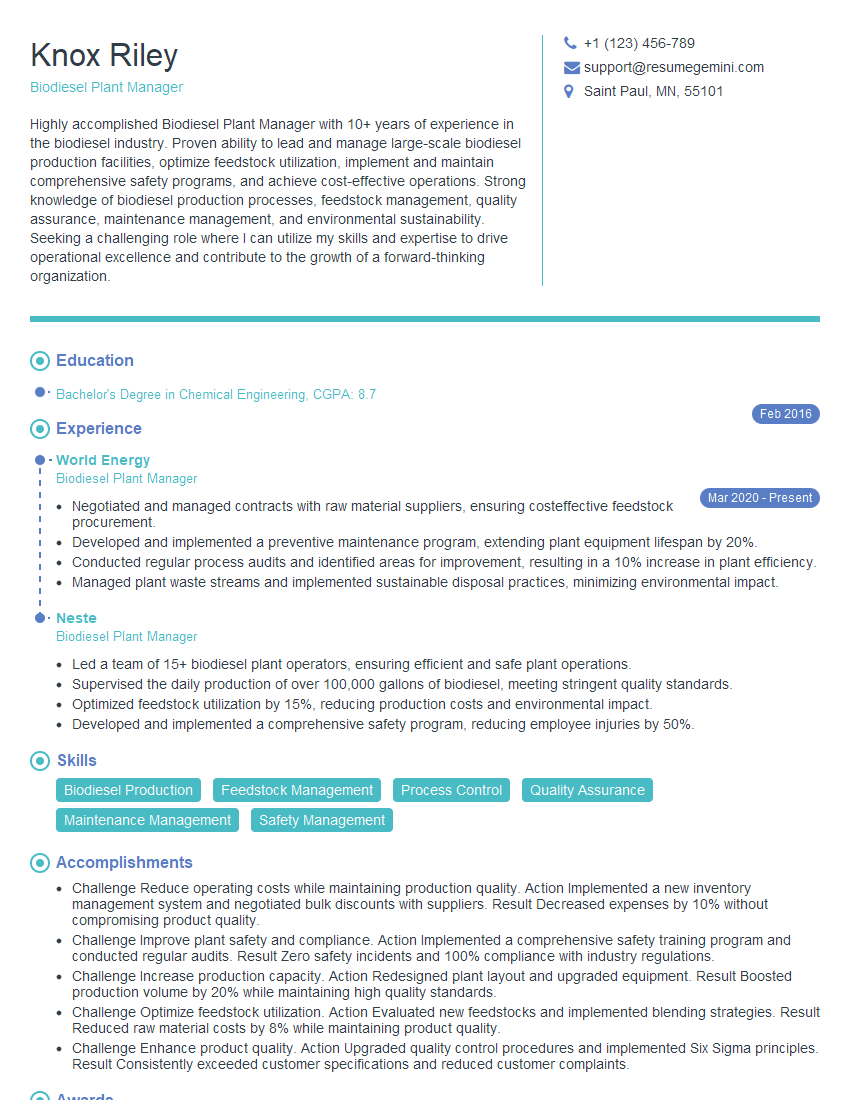
Mastering Biodiesel Process Development opens doors to exciting career opportunities in a rapidly growing industry focused on renewable energy and sustainability. A strong understanding of these concepts will significantly boost your interview performance and pave the way for a successful career. To increase your job prospects, creating an ATS-friendly resume is crucial. We recommend using ResumeGemini, a trusted resource, to build a professional and impactful resume that highlights your skills and experience effectively. ResumeGemini provides examples of resumes tailored to Biodiesel Process Development to help you create a compelling application.

Explore more articles
Users Rating of Our Blogs
Share Your Experience
We value your feedback! Please rate our content and share your thoughts (optional).
What Readers Say About Our Blog
To the interviewgemini.com Webmaster.
Very helpful and content specific questions to help prepare me for my interview!
Thank you
To the interviewgemini.com Webmaster.
This was kind of a unique content I found around the specialized skills. Very helpful questions and good detailed answers.
Very Helpful blog, thank you Interviewgemini team.