The thought of an interview can be nerve-wracking, but the right preparation can make all the difference. Explore this comprehensive guide to Biodiesel Process Research interview questions and gain the confidence you need to showcase your abilities and secure the role.
Questions Asked in Biodiesel Process Research Interview
Q 1. Explain the transesterification process in detail, including catalysts and reaction conditions.
Transesterification is the backbone of biodiesel production. It’s a chemical reaction where triglycerides (the main component of vegetable oils and animal fats) react with an alcohol (typically methanol or ethanol) in the presence of a catalyst to produce fatty acid methyl esters (FAME) – biodiesel – and glycerol.
The process involves these steps:
- Mixing: The oil, alcohol, and catalyst are thoroughly mixed. Think of it like making a cake – you need to combine all ingredients properly.
- Reaction: The mixture is heated and stirred for several hours, allowing the triglycerides to break down into FAME and glycerol. This is where the magic happens, similar to how baking time is crucial for a perfect cake.
- Separation: After the reaction, the mixture separates into two layers: the biodiesel (FAME) layer on top and the glycerol layer on the bottom. This is like separating oil and water – they don’t mix!
- Washing & Purification: The biodiesel layer is washed to remove any residual catalyst, alcohol, or glycerol. This step is akin to washing your cake batter to remove any clumps before baking.
Common catalysts include:
- Homogenous Catalysts: These are usually strong bases like sodium hydroxide (NaOH) or potassium hydroxide (KOH), which dissolve in the reaction mixture. They’re effective but require careful handling due to their corrosive nature.
- Heterogeneous Catalysts: These are solid catalysts, such as calcium oxide (CaO) or certain zeolites, which don’t dissolve. They offer advantages in terms of ease of separation and reduced waste, but can be less effective than homogenous catalysts.
Reaction conditions: Temperature typically ranges from 50-65°C, and the molar ratio of alcohol to oil is usually around 6:1. The reaction time varies but is generally several hours.
Q 2. Describe different feedstocks used in biodiesel production and their impact on fuel quality.
Many feedstocks can be used for biodiesel production, each impacting the final fuel quality. Common ones include:
- Vegetable Oils: Soybean oil, rapeseed oil (canola oil), sunflower oil, palm oil. These are widely used, but the sustainability concerns related to land use and deforestation need to be considered, especially with palm oil.
- Animal Fats: Tallow and lard from animal processing are potential feedstocks; however, ethical and public perception issues need to be addressed.
- Waste Vegetable Oils (WVO): Used cooking oils from restaurants and households can be recycled into biodiesel, reducing waste and environmental impact. However, they often require more extensive purification due to the presence of free fatty acids and contaminants.
- Algae: Algae are a promising feedstock for sustainable biodiesel production, as they don’t compete with food crops for land and can grow in various environments. However, the technology for large-scale algae cultivation and harvesting is still under development.
Impact on Fuel Quality: The fatty acid profile of the feedstock significantly affects biodiesel quality. For example, feedstocks with high levels of saturated fatty acids can lead to higher viscosity and cloud point, while unsaturated fatty acids can contribute to oxidative stability issues. Contaminants in WVO can negatively impact the fuel quality, requiring thorough purification.
Q 3. Discuss various methods for biodiesel purification and their effectiveness.
Biodiesel purification is crucial to meet quality standards and ensure engine compatibility. Methods include:
- Water Washing: Removes excess alcohol, catalyst, glycerol, and soap. This is a simple and effective method but requires careful water management to prevent environmental issues.
- Acid Washing: Neutralizes residual base catalyst and removes any remaining soap. This step is less frequently used compared to water washing but can be beneficial when dealing with high-acid feedstocks.
- Drying: Removes residual water after washing; this prevents microbial growth and improves oxidative stability. Drying can be achieved through various methods like using a vacuum dryer or heating.
- Filtration: Removes solid impurities, such as catalyst residues or particulate matter. Different filter types (e.g., membrane filters, activated carbon filters) are used depending on the level of impurities.
The effectiveness of each method depends on the feedstock, process parameters, and desired biodiesel quality. A combination of these methods is often employed to ensure the desired level of purity.
Q 4. How do you analyze biodiesel quality parameters like acid value, viscosity, and cetane number?
Biodiesel quality parameters are analyzed using standard methods:
- Acid Value: Measured by titrating a sample with a base; it indicates the free fatty acid content, influencing corrosion and engine wear. A lower acid value is preferred.
- Viscosity: Measured using a viscometer, it affects fuel flow and atomization in the engine. Viscosity needs to be within the specified range for optimal performance.
- Cetane Number: Indicates the ignition quality of the fuel; a higher cetane number ensures easier ignition and smoother engine operation. It’s determined through a standardized engine test.
These analyses are typically conducted in a laboratory setting using standardized procedures (e.g., ASTM methods) to ensure consistency and accuracy. Results are compared against regulatory standards to confirm biodiesel quality meets the required specifications.
Q 5. Explain the role of catalysts in the transesterification reaction and their selection criteria.
Catalysts are essential in transesterification, accelerating the reaction without being consumed themselves. They facilitate the breaking of ester bonds in triglycerides and the formation of new ester bonds in FAME.
Catalyst Selection Criteria:
- Activity: The catalyst should be highly active to ensure a fast and complete reaction. A more active catalyst can reduce the reaction time and energy consumption.
- Selectivity: It should favor the formation of FAME and minimize side reactions, resulting in higher yields and less waste.
- Stability: The catalyst should maintain its activity throughout the reaction and be resistant to deactivation. This prolongs its lifespan and reduces the need for frequent replacement.
- Cost and Availability: Economic considerations are critical. The catalyst should be cost-effective and readily available.
- Environmental Impact: The catalyst and its waste products should have minimal environmental impact; heterogeneous catalysts often score better in this regard.
The choice between homogenous and heterogeneous catalysts involves a trade-off between activity, ease of separation, and environmental impact. Homogenous catalysts are often more active, but their removal can be challenging and generates waste. Heterogeneous catalysts offer easier separation but may have lower activity.
Q 6. Describe common problems encountered during biodiesel production and their solutions.
Several problems can occur during biodiesel production:
- Incomplete Reaction: Insufficient reaction time, low catalyst concentration, or improper mixing can lead to incomplete conversion of triglycerides to FAME, resulting in low yield and poor fuel quality.
- Soap Formation: Excessive catalyst or the presence of free fatty acids can lead to soap formation, which emulsifies the biodiesel and makes separation difficult.
- Catalyst Deactivation: The catalyst may lose its activity due to various factors, such as poisoning by impurities or high temperatures.
- Water Contamination: Water in the feedstock can hinder the reaction and lead to soap formation.
Solutions:
- Optimization of Reaction Parameters: Adjust reaction time, temperature, alcohol-to-oil ratio, and catalyst concentration to achieve optimal conditions.
- Feedstock Pretreatment: Remove free fatty acids or water from the feedstock before transesterification.
- Catalyst Selection and Handling: Choose a suitable catalyst, handle it carefully, and use appropriate amounts.
- Improved Separation Techniques: Use effective methods for separating biodiesel from glycerol and soap.
Q 7. How would you optimize a biodiesel production process for maximum yield and efficiency?
Optimizing a biodiesel production process for maximum yield and efficiency requires a multifaceted approach.
Strategies for Optimization:
- Process Parameter Optimization: Employ techniques like Response Surface Methodology (RSM) or Design of Experiments (DOE) to systematically investigate the effects of various parameters (temperature, time, catalyst concentration, alcohol-to-oil ratio) on yield and quality.
- Feedstock Selection and Pretreatment: Choose suitable feedstocks with minimal impurities. Implement appropriate pretreatment methods to remove free fatty acids, water, or other contaminants.
- Catalyst Optimization: Select the most appropriate catalyst for the chosen feedstock, considering activity, selectivity, cost, and environmental impact. Explore the use of novel catalysts or catalyst support materials.
- Improved Reaction Engineering: Employ efficient mixing techniques to enhance mass transfer and reaction kinetics. Consider using alternative reactor designs, like microreactors, to improve process control and heat transfer.
- Process Intensification: Implement techniques like ultrasound or microwave irradiation to accelerate the reaction rate and reduce energy consumption. Explore continuous processing techniques for higher throughput.
- Waste Management and Recycling: Develop efficient methods for glycerol recovery and reuse, minimizing waste generation and environmental impact. Explore the use of byproducts in other applications.
Through a systematic approach, incorporating data analysis and process modeling, it’s possible to achieve significant improvements in biodiesel yield, efficiency, and sustainability.
Q 8. What are the environmental considerations associated with biodiesel production and use?
Biodiesel production, while offering environmental benefits, isn’t without its own set of considerations. The primary advantage is its reduced reliance on fossil fuels, leading to lower greenhouse gas emissions compared to petroleum diesel. However, the feedstock used significantly impacts the overall environmental footprint. Using food crops for biodiesel production can lead to competition for land and resources, potentially driving up food prices and impacting food security. Sustainable feedstocks, such as waste vegetable oils (WVO) and algae, are crucial for minimizing these negative impacts. Furthermore, the biodiesel production process itself consumes energy, and the handling and disposal of by-products, like glycerin, require careful management to prevent water and soil contamination. Finally, the lifecycle assessment of biodiesel, considering the entire production chain from feedstock cultivation to end-use, needs comprehensive evaluation to accurately determine its overall environmental benefits.
- Reduced Greenhouse Gas Emissions: Biodiesel generally produces less CO2 during combustion.
- Sustainable Feedstock Selection: Using waste oils minimizes land use competition.
- Waste Management: Careful handling of glycerin is essential to avoid pollution.
- Energy Consumption: The production process itself has an energy demand that needs to be optimized.
Q 9. Discuss the economic viability of biodiesel production compared to other fuels.
The economic viability of biodiesel is a complex issue, fluctuating with factors such as feedstock prices, energy costs, government subsidies, and the price of petroleum diesel. Currently, biodiesel production costs are often competitive with or slightly higher than petroleum diesel, depending on the feedstock and production scale. However, government incentives and mandates can significantly improve biodiesel’s economic competitiveness. The economic picture also changes when considering the environmental externalities—the cost of pollution associated with petroleum diesel production is often not fully reflected in its market price. Biodiesel’s lower greenhouse gas emissions could lead to long-term economic advantages, especially if carbon pricing mechanisms are implemented. Furthermore, the local and regional production of biodiesel can stimulate rural economies and reduce dependence on imported fossil fuels.
For example, a biodiesel plant utilizing locally sourced waste vegetable oil might have lower transportation costs and thus a more favorable economic position compared to a plant relying on imported feedstock. Conversely, a substantial increase in the price of the feedstock could easily swing the economic balance in favor of petroleum diesel.
Q 10. How do you ensure the safety of personnel and equipment during biodiesel production?
Safety is paramount in biodiesel production. The process involves handling flammable materials (biodiesel, methanol, and potentially other solvents), corrosive substances (catalysts like sodium hydroxide or potassium hydroxide), and high-pressure systems. Comprehensive safety protocols are essential, starting with proper training and safety equipment for all personnel. This includes personal protective equipment (PPE) such as safety glasses, gloves, lab coats, and respirators. Regular safety inspections and maintenance of equipment are crucial to prevent accidents. The plant layout should minimize risk, with proper ventilation, emergency shut-off systems, fire suppression systems, and clearly marked hazard areas. Robust safety procedures must be in place to handle spills and leaks, including dedicated spill kits and emergency response plans. Methanol, in particular, requires stringent safety protocols due to its toxicity and flammability. Regular safety audits and training refreshers are vital to maintain a safe working environment.
Q 11. Describe your experience with different types of reactors used in biodiesel production.
My experience encompasses several reactor types used in biodiesel production, each with its own advantages and disadvantages. Batch reactors are the most common at smaller scales, offering simplicity and flexibility. They are relatively inexpensive to set up and are ideal for process optimization and experimentation. However, they are less efficient for large-scale production compared to continuous reactors. Continuous stirred tank reactors (CSTRs) provide better control over reaction parameters and higher throughput, making them suitable for industrial settings. However, they require more complex control systems. Fixed-bed reactors are less common in biodiesel production but offer advantages in catalyst handling and product separation in specific configurations. Finally, I have also worked with supercritical fluid reactors which can offer superior reaction kinetics and product separation but are typically more complex and expensive.
The choice of reactor depends significantly on the scale of operation, the desired production capacity, and the specific process parameters. For instance, a small-scale biodiesel operation might opt for a batch reactor for its simplicity, while a large commercial operation would prefer the higher efficiency of a continuous reactor.
Q 12. Explain the process of glycerin recovery and its potential applications.
Glycerin is a significant byproduct of biodiesel production, typically making up about 10% of the total mass produced. Its recovery is crucial both economically and environmentally. Effective glycerin recovery involves separating it from the biodiesel product through processes like settling, centrifugation, or membrane filtration. The crude glycerin then requires purification to remove impurities such as methanol, soapstock, and water. Various purification methods exist, such as distillation, ion exchange, and membrane technologies. The purified glycerin has numerous applications, including the production of cosmetics, pharmaceuticals, food additives, and even as a component in renewable energy applications. The market value of purified glycerin can significantly contribute to the overall profitability of the biodiesel production process. Efficient glycerin recovery and valorization are vital to ensuring a commercially and environmentally sustainable biodiesel industry.
Q 13. Discuss the challenges of scaling up biodiesel production from lab-scale to industrial-scale.
Scaling up biodiesel production from lab-scale to industrial-scale presents several significant challenges. Firstly, maintaining consistent reaction kinetics and product quality at larger scales requires meticulous process control and robust equipment. Lab-scale reactions often rely on precise temperature and stirring control that are more challenging to achieve in larger reactors. Heat and mass transfer limitations can become more prominent at larger scales, necessitating optimized reactor design and potentially more complex mixing strategies. Furthermore, the handling and storage of large volumes of feedstock and product require significant infrastructure and logistics planning. The cost of equipment and infrastructure escalates dramatically with scale, necessitating careful economic analysis and securing appropriate funding. Moreover, scaling up may reveal unforeseen issues related to process stability and safety that were not apparent in the lab-scale operations. Thorough pilot plant studies are crucial to mitigate these challenges before investing in full-scale production.
Q 14. How do you handle process upsets or deviations from optimal operating conditions?
Process upsets or deviations from optimal operating conditions are inevitable in biodiesel production. Our response is based on a multi-pronged approach: real-time monitoring of key process parameters (temperature, pressure, flow rates, reactant concentrations), automated safety systems to shut down the process if critical thresholds are exceeded, and a well-defined procedure for troubleshooting and corrective actions. First, identifying the root cause of the upset is crucial. This might involve analyzing process data, inspecting equipment, or conducting lab analyses of samples. Depending on the severity and nature of the upset, corrective actions may range from minor adjustments to process parameters to complete shut down and cleaning of the reactor. Process deviations are also valuable learning opportunities, providing feedback for improving process control, optimizing operating conditions, and enhancing the robustness of the process. Detailed records of upsets, their causes, and the corrective actions taken are essential for continuous improvement and preventing future occurrences.
Q 15. Describe your experience with quality control procedures in a biodiesel production facility.
Quality control in biodiesel production is paramount to ensuring a consistent, high-quality product that meets industry standards and avoids potential issues with engine performance and environmental impact. My experience encompasses all stages, from feedstock analysis to final product testing. We employed a robust system involving regular sampling and testing at various process points.
- Feedstock Quality: This involved analyzing the free fatty acid (FFA) content, moisture level, and viscosity of the raw feedstock (e.g., vegetable oils or animal fats) to ensure it meets the specifications required for optimal transesterification. Deviation from these parameters can significantly affect the yield and quality of biodiesel.
- Reaction Monitoring: During the transesterification reaction, regular sampling allowed us to monitor parameters like methanol content, glycerol concentration, and the conversion rate of triglycerides to fatty acid methyl esters (FAMEs). This provided real-time feedback, enabling adjustments to optimize the process and maintain quality.
- Product Analysis: The final biodiesel product underwent rigorous testing to ascertain its compliance with standards such as ASTM D6751 or EN 14214. This included measurements of FAME content, water content, viscosity, density, cetane number, and the presence of contaminants like free glycerin and soap. Any discrepancies triggered investigation and corrective actions.
- Documentation and Traceability: A comprehensive record-keeping system ensured full traceability of the entire production process. Every step, from feedstock receipt to product dispatch, was documented, enabling effective quality control, troubleshooting, and continuous improvement.
For example, during one instance, we noticed a slight increase in the FFA content of our incoming soybean oil. By immediately adjusting the pre-treatment process (adding extra acid catalyst during pre-esterification), we prevented this from affecting the quality of the final biodiesel.
Career Expert Tips:
- Ace those interviews! Prepare effectively by reviewing the Top 50 Most Common Interview Questions on ResumeGemini.
- Navigate your job search with confidence! Explore a wide range of Career Tips on ResumeGemini. Learn about common challenges and recommendations to overcome them.
- Craft the perfect resume! Master the Art of Resume Writing with ResumeGemini’s guide. Showcase your unique qualifications and achievements effectively.
- Don’t miss out on holiday savings! Build your dream resume with ResumeGemini’s ATS optimized templates.
Q 16. What are the different types of biodiesel standards and regulations?
Biodiesel standards and regulations are crucial for ensuring the safety and consistent performance of the fuel. These standards define the physicochemical properties of biodiesel and its acceptable limits. Key differences exist between standards, reflecting varying regional priorities and feedstock types.
- ASTM D6751 (American Society for Testing and Materials): This is a widely recognized standard in North America, specifying the requirements for biodiesel made from various feedstocks. It outlines numerous parameters like FAME content, water content, viscosity, cetane number, and oxidation stability.
- EN 14214 (European Standard): This European standard is similar to ASTM D6751 but may have slight variations in certain parameters. It places emphasis on environmental compatibility and the potential impact of biodiesel on engine components.
- National and Regional Standards: Many countries have their own national or regional standards, often aligning with or adapting from ASTM D6751 or EN 14214. These local standards may include specific requirements related to feedstock sourcing, environmental concerns, and other factors relevant to the region.
- Regulatory Compliance: Aside from these standards, biodiesel production must also comply with environmental regulations regarding emissions, waste management (glycerol disposal), and potentially feedstock sustainability. Regulations will vary from one location to another.
Compliance is crucial; non-compliance can result in penalties and market restrictions. Understanding these standards and regulations is crucial for any biodiesel producer to ensure legal compliance and market access.
Q 17. How would you troubleshoot a problem in the biodiesel production process?
Troubleshooting in biodiesel production requires a systematic approach. It’s like detective work, carefully examining each stage of the process to pinpoint the source of a problem.
- Identify the Problem: Begin by clearly defining the issue. Is the biodiesel yield lower than expected? Does the product fail to meet quality standards? Are there unusual process parameters, like higher than expected temperatures or pressures?
- Analyze Process Data: Review all available data, including feedstock analysis, reaction parameters (temperatures, pressures, times), and product quality test results. Look for deviations from normal operating conditions or patterns.
- Check Equipment: Inspect the equipment for any malfunctions or defects. Look for blockages in pipes or pumps, faulty sensors, or equipment wear that may contribute to the problem.
- Assess Feedstock Quality: Re-analyze the feedstock to verify it meets the required specifications. Variations in feedstock quality (e.g., high FFA content, excess moisture) are frequent sources of production issues.
- Consider Reaction Kinetics: Review the reaction conditions (catalyst concentration, temperature, methanol-to-oil ratio, reaction time) to check if they are within the optimal range. A deviation might explain suboptimal conversion rates.
- Implement Corrective Actions: Once the root cause has been identified, implement corrective actions and monitor their effectiveness. This might include adjusting process parameters, replacing faulty equipment, or modifying the feedstock pretreatment method.
- Document Everything: Maintain detailed records of the problem, the investigation process, corrective actions taken, and the results achieved. This is vital for future troubleshooting and continuous improvement.
For instance, if the biodiesel’s cetane number is low, it might indicate incomplete transesterification or the presence of contaminants. We would systematically investigate the reaction parameters, feedstock quality, and purification steps to pinpoint the specific issue before implementing corrective action.
Q 18. Describe your experience with data analysis and process optimization software.
Data analysis and process optimization software are indispensable in modern biodiesel production. They allow for efficient data management, process monitoring, and improved decision-making.
- Data Acquisition and Management: Software like LabVIEW, Aspen Plus, or dedicated process control systems (DCS) can automate the collection of process data (temperature, pressure, flow rates, etc.) from various sensors throughout the production line. This data is then stored and organized for later analysis.
- Statistical Analysis: Software packages like Minitab, JMP, or R can perform statistical analysis on the collected data to identify trends, correlations, and outliers. This helps in understanding the impact of different parameters on product quality and yield.
- Process Simulation and Optimization: Software like Aspen Plus can simulate various scenarios and optimize the process parameters to achieve higher yields, better product quality, and reduced operating costs. This allows for ‘what-if’ analysis without disrupting the actual production line.
- Predictive Modelling: Advanced analytical techniques like machine learning can be used to build predictive models for process outcomes based on historical data. This can significantly improve process control and reduce the chances of encountering unexpected problems.
In my previous role, we utilized Aspen Plus to simulate the impact of various feedstock compositions and reaction parameters on the final biodiesel quality. This modeling allowed us to optimize the process, reducing waste and improving overall efficiency significantly.
Q 19. Explain the importance of proper feedstock pretreatment in biodiesel production.
Proper feedstock pretreatment is critical for efficient and high-quality biodiesel production. Raw feedstocks often contain impurities like free fatty acids (FFAs), moisture, and gums that can hinder the transesterification reaction and negatively affect the final product.
- Reduced Catalyst Consumption: High FFA content can consume a significant amount of the catalyst (usually sodium or potassium hydroxide), leading to increased costs and reduced efficiency. Pretreatment methods like acid esterification reduce the FFA content, minimizing catalyst usage.
- Improved Yield and Quality: Impurities in the feedstock can react with the catalyst, forming soap and reducing the yield of biodiesel. Pretreatment helps to remove these impurities, ensuring higher yields and improved product quality.
- Minimized Side Reactions: Moisture in the feedstock can lead to saponification (soap formation) and other side reactions that degrade the biodiesel. Pretreatment reduces moisture content, preventing such reactions.
- Enhanced Reaction Kinetics: The pretreatment steps improve the fluidity and reactivity of the feedstock, facilitating better mixing and faster reaction times during transesterification.
Imagine trying to bake a cake with spoiled ingredients—the end result wouldn’t be desirable. Similarly, using untreated feedstock leads to inferior biodiesel. Therefore, proper pretreatment, including steps like degumming, deacidification, and drying, is essential for optimal biodiesel production.
Q 20. Discuss different methods for characterizing the fatty acid profile of feedstocks.
Characterizing the fatty acid profile of feedstocks is vital for assessing their suitability for biodiesel production and predicting the properties of the resulting biodiesel. Different techniques provide different levels of detail and precision.
- Gas Chromatography (GC): This is the most common method for fatty acid analysis. A sample of the feedstock is converted into fatty acid methyl esters (FAMEs), which are then separated and quantified using a gas chromatograph. The resulting chromatogram shows the relative abundance of different fatty acids, providing a detailed fatty acid profile.
- Nuclear Magnetic Resonance (NMR) Spectroscopy: NMR provides a non-destructive way to analyze the fatty acid composition of feedstocks. It can be used to determine the proportions of saturated, monounsaturated, and polyunsaturated fatty acids, providing valuable insights into the overall composition.
- Fourier-Transform Infrared Spectroscopy (FTIR): FTIR can be used to provide a rapid estimation of the feedstock composition, specifically looking at functional groups present in the fatty acids. While not as detailed as GC, it’s a quicker and often less expensive screening method.
The choice of method often depends on factors like the available equipment, required accuracy, and budget constraints. The fatty acid profile impacts the fuel properties of the resulting biodiesel, such as viscosity, cetane number, and oxidation stability. A comprehensive understanding of the feedstock composition enables optimizing the biodiesel production process and predicting the performance of the final product.
Q 21. What are the benefits and drawbacks of using different catalysts in the transesterification process?
The choice of catalyst in the transesterification process significantly impacts the efficiency, cost, and environmental footprint of biodiesel production. Different catalysts have their own advantages and disadvantages.
- Homogeneous Catalysts (Alkaline): These are typically sodium or potassium hydroxide (NaOH or KOH). They are very effective and provide high conversion rates. However, they are corrosive, require precise control of reaction conditions (moisture levels), and produce a large amount of waste (glycerol stream needs cleaning).
- Homogeneous Catalysts (Acidic): These usually involve strong acids such as sulfuric acid or methane sulfonic acid. They’re less efficient and require longer reaction times, but they can handle high FFA content feedstocks. They are also more environmentally friendly to deal with than alkaline waste streams.
- Heterogeneous Catalysts (Solid Catalysts): These include various solid bases (e.g., metal oxides like CaO, MgO) and enzymes (lipases). They offer advantages like easier separation from the product, lower corrosion, and reusability. However, they often have lower activity and require more severe reaction conditions or longer reaction times compared to homogeneous catalysts. The effectiveness is often impacted by the reusability and the catalyst deactivation.
The selection of the catalyst depends on various factors, including the feedstock properties (FFA content, moisture), desired reaction rate, cost considerations, and environmental regulations. For example, while alkaline catalysts are efficient, the challenges associated with waste management might make solid catalysts a more sustainable option for certain applications. The optimal catalyst will depend on a careful trade-off between these different factors.
Q 22. How do you ensure the sustainability of biodiesel production?
Ensuring the sustainability of biodiesel production hinges on a holistic approach encompassing the entire lifecycle, from feedstock sourcing to waste management. It’s not just about producing a cleaner fuel; it’s about minimizing the environmental footprint of the entire process.
- Sustainable Feedstock: Utilizing non-food crops like algae, jatropha, or waste cooking oil significantly reduces competition with food production and minimizes land-use change. This is crucial for avoiding deforestation and preserving biodiversity. For example, using waste vegetable oil from restaurants directly reduces reliance on newly cultivated crops.
- Efficient Production Processes: Optimizing the transesterification process itself is vital. This includes minimizing energy consumption through efficient reactor design and employing renewable energy sources to power the facility. Techniques like supercritical methanol processing can enhance efficiency.
- Waste Management: Careful management of glycerol, a byproduct of biodiesel production, is crucial. It can be refined into valuable products like cosmetics or pharmaceuticals, turning a waste stream into a revenue source. Proper disposal of any other waste materials, adhering to all relevant environmental regulations, completes the picture.
- Carbon Footprint Reduction: A comprehensive Life Cycle Assessment (LCA), discussed in the next question, is essential to track and reduce the overall carbon emissions associated with the production, distribution, and use of biodiesel. This includes considering transportation impacts and the energy required for feedstock processing.
Q 23. Explain the concept of lifecycle assessment (LCA) in the context of biodiesel.
A Life Cycle Assessment (LCA) in biodiesel production is a cradle-to-grave analysis of the environmental impacts associated with the entire process. Imagine it as a detailed accounting of all the inputs and outputs, from growing the feedstock to the final disposal of byproducts and even the eventual combustion of the biodiesel.
An LCA typically examines several key impact categories:
- Global Warming Potential (GWP): Measures the contribution of greenhouse gas emissions (like CO2, methane) to climate change. Biodiesel often shows a significant reduction compared to fossil fuels in this area.
- Acidification Potential: Assesses the contribution to acid rain. The production process itself has to be carefully considered for this.
- Eutrophication Potential: Measures the contribution to nutrient runoff that causes algae blooms. Improper waste disposal could increase this.
- Resource Depletion: Examines the use of land, water, and other resources. Sustainable feedstock choices minimize this impact.
By meticulously tracking these impacts, an LCA helps identify areas for improvement, guiding process optimization for reduced environmental impact. For instance, an LCA might reveal that a particular feedstock or processing method is unexpectedly increasing the eutrophication potential, prompting a shift to more environmentally sound practices.
Q 24. Discuss your experience with different types of separation techniques used in biodiesel processing.
Biodiesel processing involves separating the biodiesel from the glycerol and other byproducts after the transesterification reaction. Several separation techniques are employed, each with its own advantages and drawbacks.
- Gravity Separation: This is the simplest method, relying on the density difference between biodiesel (less dense) and glycerol (more dense). The mixture is allowed to settle, and the biodiesel layer is drawn off. While cost-effective, it’s not very efficient, leaving some glycerol in the biodiesel.
- Centrifugation: A centrifuge spins the mixture at high speed, accelerating the separation process and improving efficiency compared to gravity separation. This yields a higher-quality biodiesel with reduced glycerol content.
- Water Washing: After the initial separation, water washing helps remove residual soapstock and glycerol. This step improves the purity of the biodiesel.
- Membrane Separation: This is a more advanced technique that uses membranes to separate the biodiesel and glycerol based on their molecular size. Membrane separation is highly efficient but can be expensive.
In my experience, a combination of these techniques often proves most effective. For example, I’ve been involved in projects using a centrifuge for primary separation followed by water washing to achieve the desired biodiesel quality and meet stringent purity standards. The choice of separation technique depends on factors like the scale of operation, desired biodiesel quality, and economic considerations.
Q 25. How would you manage waste products generated during biodiesel production?
Waste management in biodiesel production is critical for environmental protection and regulatory compliance. The main waste stream is glycerol, but other potential wastes include spent catalyst, wastewater, and solid residues.
- Glycerol valorization: Glycerol is a high-value byproduct. It can be refined and used in various industries, such as pharmaceuticals, cosmetics, and food additives. This is a far more sustainable approach than simple disposal.
- Wastewater treatment: Wastewater from washing and cleaning processes must be treated to remove contaminants before discharge. This often involves biological treatment methods to reduce the organic load and chemical treatment to remove any remaining chemicals.
- Spent catalyst disposal: If a catalyst is used in the transesterification process, its proper disposal is crucial. Depending on the type of catalyst, it might require specialized handling and disposal methods in compliance with environmental regulations.
- Solid waste management: Any solid waste from the process should be disposed of responsibly, potentially through incineration with energy recovery or secure landfill disposal.
Implementing a robust waste management plan, including proper storage, transportation, and treatment, is essential. This plan should be regularly reviewed and updated to ensure compliance with evolving regulations and best practices. I’ve always advocated for a circular economy approach, minimizing waste and maximizing the value of byproducts.
Q 26. Describe your experience with process instrumentation and control systems.
Process instrumentation and control systems are fundamental to ensuring the efficiency, safety, and quality of biodiesel production. These systems monitor and control various parameters throughout the process.
- Temperature sensors: Precise temperature control is essential during transesterification to optimize reaction kinetics and prevent unwanted side reactions.
- Flow meters: Accurate measurement of reactant flow rates is critical for achieving the desired stoichiometry.
- Pressure sensors: Pressure monitoring ensures safe operation and prevents equipment damage.
- Level sensors: These monitor the levels of reactants and products in various tanks and vessels.
- pH sensors: Monitoring pH is important to ensure optimal reaction conditions and prevent corrosion.
Advanced control systems, often incorporating Programmable Logic Controllers (PLCs) and Supervisory Control and Data Acquisition (SCADA) systems, automate the process, allowing for precise control of parameters and reducing the risk of human error. My experience includes designing and implementing SCADA systems for biodiesel plants, leading to improved process efficiency, reduced waste, and enhanced product quality. I’ve worked with both hardware and software components of these systems, including data acquisition, data analysis, and alarm management.
Q 27. Explain the importance of maintaining accurate records and documentation in a biodiesel production facility.
Maintaining accurate records and documentation in a biodiesel production facility is paramount for several reasons: quality control, regulatory compliance, process optimization, and traceability.
- Quality control: Detailed records of raw materials, process parameters, and product quality allow for monitoring and ensuring consistent product quality. This also enables quick identification and resolution of any quality issues.
- Regulatory compliance: Stringent environmental and safety regulations require thorough record-keeping. This documentation demonstrates adherence to regulations and prevents potential penalties.
- Process optimization: Data on process parameters and yields enables the identification of areas for improvement. By analyzing historical data, one can make informed decisions to enhance efficiency and reduce costs.
- Traceability: Comprehensive documentation ensures the traceability of the entire process, from feedstock to finished product. This is crucial for identifying the source of any potential problems and facilitating product recalls if necessary. Imagine tracking down the source of a batch of biodiesel with an unexpected contaminant – detailed records are essential.
In my experience, a well-organized and digitalized record-keeping system is essential. This system should incorporate electronic data logging, process monitoring, and automated reporting capabilities, ensuring data integrity and facilitating efficient analysis.
Q 28. How would you design an experiment to investigate the effect of a specific parameter on biodiesel yield?
Designing an experiment to investigate the effect of a specific parameter on biodiesel yield requires a structured approach. Let’s assume we want to investigate the effect of reaction temperature on biodiesel yield.
- Define the objective: Clearly state the goal of the experiment – to determine the optimal reaction temperature for maximizing biodiesel yield.
- Choose the independent variable: This is the parameter we’re manipulating – reaction temperature. We’ll test a range of temperatures, e.g., 40°C, 50°C, 60°C, 70°C.
- Control variables: Keep other parameters constant, such as the type and amount of feedstock, catalyst concentration, reaction time, and methanol-to-oil ratio.
- Dependent variable: This is what we’re measuring – the biodiesel yield (%).
- Experimental design: Employ a statistically sound design, such as a completely randomized design or a randomized block design, to minimize experimental error and ensure the results are robust.
- Data collection: Carefully measure and record all relevant parameters, including temperature, reaction time, and biodiesel yield. Multiple replicates for each temperature setting will enhance the reliability of results.
- Data analysis: Analyze the data using appropriate statistical tools (e.g., ANOVA, regression analysis) to determine the effect of temperature on biodiesel yield. Graphing the results is crucial for visualizing the relationship.
- Conclusion: Based on the analysis, determine the optimal reaction temperature that maximizes biodiesel yield while considering any trade-offs with reaction time, energy consumption, or product quality.
This structured approach ensures the experiment is well-designed, reproducible, and yields reliable results for informed decision-making.
Key Topics to Learn for Biodiesel Process Research Interview
- Feedstock Selection and Pre-treatment: Understanding the impact of different feedstocks (vegetable oils, animal fats, etc.) on biodiesel quality and exploring pre-treatment methods like degumming, refining, and esterification.
- Transesterification Reaction: Mastering the chemical principles of transesterification, including reaction kinetics, catalysts (homogeneous and heterogeneous), and optimization strategies for yield and purity.
- Process Optimization and Scale-up: Familiarize yourself with techniques to enhance the efficiency of biodiesel production, considering factors like reaction time, temperature, molar ratios, and catalyst loading. Understand the challenges associated with scaling up laboratory-scale processes to industrial production.
- Product Purification and Quality Control: Learn about different methods for purifying biodiesel, such as washing, drying, and filtration. Understand relevant quality standards and analytical techniques used to assess biodiesel properties (e.g., ASTM standards).
- Biodiesel Properties and Applications: Be prepared to discuss the physical and chemical properties of biodiesel, its advantages over petroleum diesel, and its various applications in different engines and sectors.
- Environmental Impact and Sustainability: Understand the life-cycle assessment of biodiesel production, including its carbon footprint, renewable resource utilization, and contribution to reducing greenhouse gas emissions.
- Troubleshooting and Problem Solving: Develop your ability to diagnose and solve common problems encountered during biodiesel production, such as low yields, poor quality, or equipment malfunctions. Consider case studies and practical examples.
- Advanced Biodiesel Technologies: Explore emerging technologies in biodiesel production, such as supercritical transesterification, microwave-assisted processes, and utilization of waste resources.
Next Steps
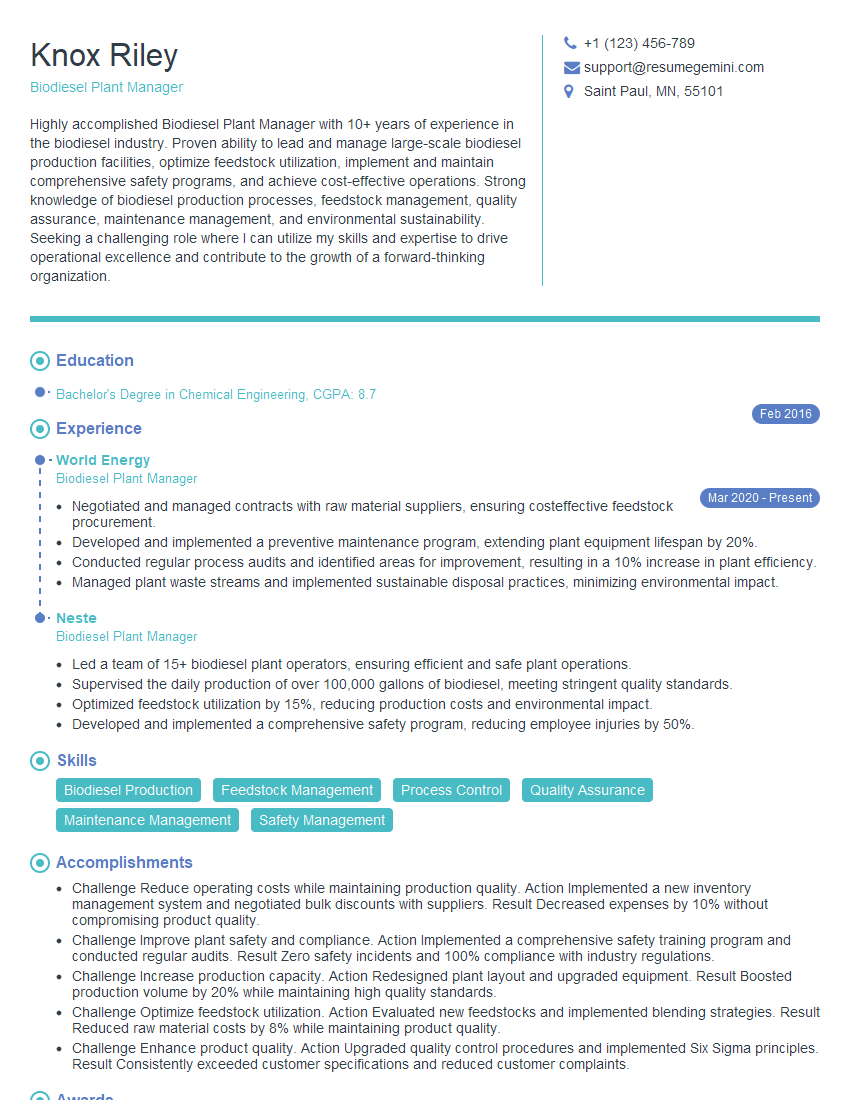
Mastering Biodiesel Process Research is crucial for a successful career in this growing field. It demonstrates a deep understanding of sustainable energy solutions and positions you for exciting opportunities in research, development, and production. To significantly enhance your job prospects, invest time in creating a compelling, ATS-friendly resume that highlights your skills and experience effectively. ResumeGemini is a trusted resource that can help you build a professional resume tailored to your specific goals. Examples of resumes tailored to Biodiesel Process Research are available to guide you, ensuring your application stands out.

Explore more articles
Users Rating of Our Blogs
Share Your Experience
We value your feedback! Please rate our content and share your thoughts (optional).
What Readers Say About Our Blog
To the interviewgemini.com Webmaster.
Very helpful and content specific questions to help prepare me for my interview!
Thank you
To the interviewgemini.com Webmaster.
This was kind of a unique content I found around the specialized skills. Very helpful questions and good detailed answers.
Very Helpful blog, thank you Interviewgemini team.