Are you ready to stand out in your next interview? Understanding and preparing for Calculating quantities and estimating materials required for projects interview questions is a game-changer. In this blog, we’ve compiled key questions and expert advice to help you showcase your skills with confidence and precision. Let’s get started on your journey to acing the interview.
Questions Asked in Calculating quantities and estimating materials required for projects Interview
Q 1. Explain the difference between a quantity takeoff and a cost estimate.
A quantity takeoff and a cost estimate are distinct but interconnected processes in project management. A quantity takeoff (QTO) is the systematic process of measuring and calculating the amounts of materials, labor, and equipment needed for a construction project. Think of it as creating a detailed shopping list. It focuses solely on the quantities. A cost estimate, on the other hand, takes the quantities from the QTO and assigns unit costs to each item to determine the total project cost. It’s the act of putting a price tag on that shopping list. The QTO provides the foundation for the cost estimate; you can’t accurately estimate costs without knowing the quantities first. For example, a QTO for a flooring project would detail the square footage of each type of flooring needed, while the cost estimate would add the cost per square foot of each material, labor costs for installation, and other associated expenses to arrive at the total project cost.
Q 2. Describe your experience with different estimating methods (e.g., unit cost, assembly cost, parametric estimating).
My experience encompasses a variety of estimating methods. Unit cost estimating is a straightforward approach where we determine the cost per unit (e.g., cost per square foot for flooring, cost per linear foot for fencing) and multiply it by the quantity. This method is suitable for projects with well-defined units and readily available historical cost data. Assembly cost estimating breaks down the project into smaller, easily defined assemblies (like a wall assembly or a roof assembly), calculating the cost of each assembly based on its components and labor. This offers more detail and accuracy than unit cost estimating. Finally, parametric estimating leverages historical data and statistical analysis to predict project costs based on key project parameters (e.g., square footage, number of rooms, complexity). This method is particularly useful for large or complex projects and provides a quick initial cost estimate.
For example, I recently used assembly cost estimating for a high-end residential project. We broke down the project into distinct assemblies such as the foundation, framing, roofing, and interior finishes. This allowed us to develop accurate costs for each assembly and to better manage potential variations within each assembly. I’ve also used parametric estimating to provide preliminary budget estimates for large commercial developments, using software to analyze historical data and extrapolate costs based on building size and features.
Q 3. How do you account for contingencies and risk in your estimates?
Accounting for contingencies and risks is crucial for realistic cost estimation. We typically include a contingency factor, expressed as a percentage of the estimated cost, to cover unforeseen circumstances like material price fluctuations or labor shortages. The percentage varies depending on the project’s complexity and risk level; high-risk projects require a larger contingency. Beyond the contingency, a thorough risk assessment identifies potential problems, evaluates their likelihood, and assigns a cost to mitigate them. This could involve adding specific allowances within the estimate for potential issues, such as a potentially difficult excavation site requiring specialized equipment.
For instance, in estimating a coastal building project, I’d incorporate a higher contingency to account for potential weather delays and the challenges of working in a corrosive environment. A detailed risk assessment might identify the risk of finding unexpected underground utilities and include an allowance for potential excavation delays and modification costs.
Q 4. What software are you proficient in for quantity takeoffs and cost estimation?
I am proficient in several software applications for quantity takeoffs and cost estimation, including PlanSwift, On-Screen Takeoff, and Bluebeam Revu. These tools allow for accurate digital measurement of plans, automated quantity calculations, and integration with cost databases. I’m also experienced using spreadsheets (Excel) to manage and analyze cost data and generate reports. My proficiency extends to using specialized estimating software for specific project types, such as those used for electrical and mechanical systems estimation.
Q 5. How do you manage changes and revisions to an estimate during the project lifecycle?
Managing changes and revisions is an iterative process. We maintain a detailed record of all changes, including the reasons for the change and the impact on the overall estimate. We use change orders to formally document any alterations to the scope of work and their associated costs. This ensures transparency and accountability. Regular meetings with stakeholders to discuss potential changes and their implications are vital. The revised estimates are always communicated clearly and promptly to all parties involved, keeping everyone informed and aligned.
Q 6. How do you handle discrepancies between your estimate and the actual costs?
When discrepancies arise between the estimate and actual costs, a thorough investigation is necessary. We start by comparing the original estimate to the actual quantities used and the costs incurred. We look for reasons for variations: were there unforeseen site conditions, changes in material pricing, or scope creep? This analysis helps to pinpoint the source of the discrepancies. Following this, we document the reasons for variances and develop a plan to address and mitigate similar issues in future projects. This process improves our estimating accuracy over time.
For example, I once encountered significant cost overruns due to unforeseen rock formations during excavation. The investigation identified this as a contributing factor and led to a more detailed site investigation process for future projects to better account for potential geological surprises.
Q 7. Explain your process for gathering and validating data for material estimation.
Gathering and validating data for material estimation is critical. The process begins with reviewing project plans and specifications to determine the required materials. I then consult multiple suppliers for pricing and availability, cross-referencing information to ensure accuracy and competitiveness. I verify material quantities using the quantity takeoff process, double-checking measurements and accounting for waste factors. Historical data from past projects provides a valuable benchmark for pricing and helps identify potential cost drivers. Furthermore, I use online databases and industry publications to stay updated on current material pricing and trends, ensuring my estimates reflect current market conditions. This rigorous approach helps to minimize errors and maintain the reliability of my estimates.
Q 8. How do you ensure accuracy in your quantity takeoffs?
Accuracy in quantity takeoffs is paramount for successful project delivery. It’s achieved through a multi-faceted approach combining meticulous planning, precise measurements, and thorough review processes.
- Detailed Drawings and Specifications: I begin by thoroughly reviewing all architectural, structural, and engineering drawings, ensuring I understand the project’s scope completely. Specifications are equally crucial for clarifying material types and finishes.
- Accurate Measurements: Direct measurements from the site (if available) are preferred, but accurate scaled drawings are used as a secondary source. I employ different measurement techniques depending on the project, such as using laser measurement tools for precision and checking dimensions multiple times to minimize errors.
- Organized Takeoff Sheets: I use standardized takeoff sheets that clearly outline all materials needed, their quantities, and the relevant specifications. This ensures consistency and prevents omission of items.
- Double-Checking and Peer Review: A crucial step involves independent verification of the takeoff. This might involve a peer review where another estimator checks my work, or a self-review where I revisit the calculations after some time to catch any potential oversights.
- Software Utilization: I leverage estimating software to streamline calculations, generate reports, and improve the accuracy of the overall process. These tools automate many calculations, reducing human errors.
For instance, in a recent project involving the construction of a multi-family dwelling, I used a combination of laser measurements on-site and detailed architectural plans. By employing a systematic takeoff sheet, I was able to accurately estimate the quantity of lumber, concrete, and drywall needed, resulting in minimal material waste and accurate cost projections.
Q 9. Describe a time you had to significantly revise an estimate. What caused the revision, and how did you handle it?
During a large commercial renovation project, I initially underestimated the amount of structural steel required due to an oversight in the initial blueprints. The initial estimate didn’t account for a significant change order requiring the relocation of some major supporting beams.
This oversight was discovered during the detailed design phase when structural engineers provided updated drawings reflecting the change. The revision involved recalculating the quantity of steel, fasteners, and welding materials. I handled the situation by:
- Open Communication: I immediately informed the project manager and stakeholders about the discrepancy. Transparency was crucial in maintaining trust.
- Thorough Re-estimation: I systematically reviewed the revised plans and performed a complete re-estimation of the affected materials.
- Documentation: I meticulously documented the changes and the rationale for the revised estimate, ensuring everyone understood the reasons for the adjustments.
- Contingency Planning: To avoid similar situations in the future, I implemented stricter quality control measures for reviewing drawings and specifications more rigorously.
This experience reinforced the importance of thorough due diligence and open communication throughout the estimation and project execution processes.
Q 10. How familiar are you with different building codes and their impact on material quantities?
I’m very familiar with building codes, specifically those related to material selection and quantity. These codes directly impact material quantities by specifying minimum requirements for structural integrity, fire safety, and accessibility. For example, building codes mandate specific fire-resistant materials in certain areas, increasing material quantities compared to scenarios where such regulations aren’t applicable.
Different jurisdictions and building types have unique requirements. For instance, seismic codes in earthquake-prone areas will increase the need for reinforced concrete and specialized structural elements. Accessibility codes mandate specific ramp slopes and door widths, thus impacting material use. I use code references from governing bodies, such as the International Building Code (IBC) and local building departments, to understand the relevant regulations for each project and incorporate them into my quantity calculations. Failing to account for these regulations can lead to project delays, costly rework, and even legal issues.
My approach includes:
- Early Code Review: I review the applicable building codes early in the estimating process, even before detailed drawings are available, to anticipate the potential impact on material quantities.
- Code-Specific Takeoffs: I have templates for takeoffs that account for different code requirements, customizing the quantities based on the specific project’s jurisdiction and building type.
- Staying Updated: I regularly stay informed about changes and updates to building codes to ensure my estimates are always current and compliant.
Q 11. Explain your understanding of life-cycle costing.
Life-cycle costing (LCC) considers the total cost of ownership of a material or system over its entire lifespan, encompassing initial costs, maintenance costs, replacement costs, and disposal costs. It’s a holistic approach that goes beyond initial purchase price.
In estimating, understanding LCC helps in making informed material selection decisions. While a material might have a lower initial cost, it could have higher maintenance or shorter lifespan, resulting in greater long-term expenses. For example, choosing a cheaper roofing material with a shorter lifespan may seem economical initially but will require more frequent and costly replacements over the building’s lifetime.
I incorporate LCC principles by:
- Researching Material Lifespans: I gather data on the expected lifespan and maintenance requirements of different materials.
- Estimating Future Costs: I project future maintenance, repair, and replacement costs based on the chosen materials.
- Comparative Analysis: I compare the total life-cycle costs of different materials to make informed and cost-effective choices.
This ensures that the client understands not just the initial investment, but the overall financial implications over the asset’s lifespan. It promotes sustainable choices and long-term cost savings.
Q 12. How do you prioritize accuracy versus speed in your estimating process?
The balance between speed and accuracy in estimating is critical. While speed is essential for timely project bidding, accuracy is non-negotiable for a successful project. My approach prioritizes accuracy, but employs strategies to maintain reasonable speed.
I don’t compromise accuracy for speed. Instead, I use efficient methods to achieve both. This includes:
- Standard Takeoff Procedures: Using standardized methods and software reduces the time spent on routine calculations.
- Effective Organization: A well-organized approach minimizes the risk of errors and time wasted searching for information.
- Prioritization of Critical Items: I prioritize the estimation of high-cost, complex items, ensuring these are particularly accurate.
- Technology Utilization: I utilize software to automate calculations, reduce errors and accelerate the process.
- Regular Review and Quality Control: I build in time for thorough review and quality control to catch errors early.
For instance, while estimating the quantity of concrete for a foundation, I would prioritize precise calculations because it forms the base of the entire structure. However, for items like minor landscaping, I would still maintain accuracy but might use slightly faster estimation techniques knowing that potential variations won’t significantly affect the overall project cost.
Q 13. How do you communicate your estimates to stakeholders?
Communicating estimates effectively is crucial for ensuring all stakeholders are on the same page. My approach involves presenting estimates clearly, concisely, and visually.
I use a multi-pronged approach:
- Clear and Concise Reports: I prepare comprehensive reports that summarize the estimated quantities, unit costs, and total costs. These reports use clear language and avoid technical jargon where possible.
- Visual Aids: I often incorporate charts and graphs to illustrate key data points and make complex information easily digestible.
- Detailed Breakdown: I provide a detailed breakdown of the cost elements, allowing stakeholders to understand where costs are allocated. This transparency builds trust and allows for informed decision-making.
- Verbal Presentations: I present the estimates in meetings, answering any questions and addressing concerns. This fosters interactive dialogue and ensures a shared understanding.
- Regular Updates: Throughout the project lifecycle, I maintain open communication and provide updates, particularly if the initial estimates need revision.
My goal is to ensure the estimates are not just numbers, but a clear and comprehensive picture of the project’s projected costs.
Q 14. How do you deal with incomplete or ambiguous project plans when estimating?
Incomplete or ambiguous project plans pose a significant challenge in estimating. Addressing this requires a proactive approach that combines careful analysis, communication, and contingency planning.
My strategy involves:
- Identifying Gaps: I thoroughly review the plans and identify areas where information is missing or unclear. This involves identifying missing drawings, undefined specifications, or ambiguous descriptions.
- Communication with Stakeholders: I immediately communicate my concerns to the relevant stakeholders, including architects, engineers, and the project manager. This open communication ensures clarity and allows for timely clarification.
- Making Reasonable Assumptions: Where information is genuinely missing, I make documented assumptions based on similar projects or industry standards. These assumptions are clearly communicated in the estimate.
- Contingency Planning: I build in a contingency factor into the estimate to account for uncertainties and the potential for unforeseen costs related to incomplete information. The contingency is based on the level of uncertainty or the criticality of the missing information.
- Iterative Approach: I recognize that estimating with incomplete plans is an iterative process. As more information becomes available, I revise the estimate accordingly.
It’s important to clearly document all assumptions and uncertainties, so all parties understand the basis of the estimate and any associated risks. This ensures that there are no surprises during the project execution phase.
Q 15. Describe your experience working with different types of contracts (e.g., lump sum, unit price).
My experience spans various contract types, each demanding a unique approach to estimating. Lump sum contracts, for instance, require a highly accurate upfront estimate as the total cost is fixed. This necessitates meticulous planning, detailed material takeoffs, and thorough contingency planning to account for unforeseen circumstances. I’ve successfully managed numerous lump sum projects, including a recent school renovation where precise budgeting was crucial for staying within the allocated funds.
Unit price contracts, on the other hand, involve pricing individual items or work units. This offers flexibility as the final cost is determined by the actual quantities used. However, it demands robust quantity takeoffs to prevent cost overruns. For example, in a highway construction project using a unit price contract, I developed a detailed breakdown of quantities for asphalt, concrete, and earthworks, allowing for accurate cost projections based on the actual work completed.
I’ve also worked with cost-plus contracts, where the contractor’s costs are reimbursed, plus a markup. These require meticulous tracking of all expenses and transparent reporting. The key here is robust documentation and clear communication with the client to avoid disputes. A recent example involved a complex industrial facility refurbishment where change orders were frequent, and careful cost tracking was essential.
Career Expert Tips:
- Ace those interviews! Prepare effectively by reviewing the Top 50 Most Common Interview Questions on ResumeGemini.
- Navigate your job search with confidence! Explore a wide range of Career Tips on ResumeGemini. Learn about common challenges and recommendations to overcome them.
- Craft the perfect resume! Master the Art of Resume Writing with ResumeGemini’s guide. Showcase your unique qualifications and achievements effectively.
- Don’t miss out on holiday savings! Build your dream resume with ResumeGemini’s ATS optimized templates.
Q 16. How do you incorporate labor costs into your estimates?
Incorporating labor costs is a critical aspect of accurate estimating. I use a bottom-up approach, breaking down each task into its constituent labor components. This involves identifying the specific trades required, estimating the number of workers per trade, and determining the time needed for each task. I then use industry-standard labor rates, considering factors like location, skill level, and prevailing wage rates.
For instance, for a roofing project, I’d separately estimate labor costs for tear-off, underlayment installation, shingle installation, and cleanup. This detailed breakdown, combined with hourly rates sourced from local union scales or other reliable sources, provides a realistic labor cost estimate. I often also build in a contingency for potential delays or unforeseen challenges to prevent underestimation. This might involve a percentage markup or adding buffer time to the overall schedule.
Q 17. How do you account for inflation and price fluctuations in your estimates?
Inflation and price fluctuations are significant factors impacting project costs. I address them through several strategies. First, I use up-to-date pricing data from reliable sources, such as construction cost indexes (like the ENR Construction Cost Index), material suppliers’ catalogs, and market research. These sources frequently provide historical data, enabling me to project future price changes.
Second, I employ escalation clauses in contracts, especially for long-term projects. These clauses allow for adjustments based on documented inflation rates or changes in material prices. For instance, a contract for a multi-year infrastructure project would incorporate escalation clauses to account for anticipated increases in steel or concrete prices.
Third, I build contingency factors into my estimates to account for unexpected price swings. The size of this contingency depends on market volatility and the project’s duration. It acts as a buffer against unforeseen inflationary pressures.
Q 18. How do you validate your material pricing?
Validating material pricing is crucial for accurate cost estimation. I rely on multiple sources to cross-check prices and ensure accuracy. This includes obtaining quotes from multiple suppliers, consulting online databases and catalogs, and using historical pricing data if available.
For example, when estimating the cost of lumber for a framing project, I wouldn’t rely on a single supplier’s quote. I obtain quotes from at least three different suppliers to compare prices and identify potential discounts. I also check prices on online databases to verify the reasonableness of the quotes. If discrepancies exist, I investigate the reasons for the differences, ensuring I use the most accurate and reliable price for the estimate. I meticulously document all price sources and comparisons, maintaining transparency and providing evidence for my chosen pricing.
Q 19. What are some common sources of error in construction estimating?
Construction estimating is prone to several common errors. One frequent mistake is inaccurate quantity takeoffs – underestimating or overestimating material quantities significantly affects costs. I mitigate this by using precise measurement techniques and double-checking my work. Another common error is neglecting indirect costs like permits, insurance, or overhead, which are crucial for a complete cost picture. I always include a detailed breakdown of these costs.
Incomplete scope definition is another potential source of error. If the project requirements aren’t clearly defined, unforeseen work can arise, leading to cost overruns. I use thorough scope reviews and detailed specifications to prevent this. Finally, unrealistic labor productivity estimates can lead to underestimation. I use historical data, industry benchmarks, and adjust for site-specific conditions to create accurate labor cost estimates.
Q 20. How do you ensure that your estimates align with the project schedule?
Aligning estimates with the project schedule is essential for effective project management. I achieve this by integrating the estimating process with the scheduling process from the outset. My approach involves developing a detailed work breakdown structure (WBS) that breaks down the project into smaller, manageable tasks. Each task is then assigned a duration and associated costs, enabling a direct link between the estimate and the schedule.
For example, if the schedule dictates that the foundation needs to be completed within four weeks, my estimate will accurately reflect the labor and material costs associated with achieving this milestone within the allotted timeframe. Any delays or changes to the schedule are immediately reflected in the cost estimate, allowing for proactive cost management. I use scheduling software to manage and track the progress, ensuring a close tie between the project schedule and the associated budgets.
Q 21. Describe your experience with value engineering.
Value engineering is a crucial aspect of my work. It involves identifying opportunities to reduce project costs without sacrificing quality or functionality. My experience with value engineering includes collaborating with architects, engineers, and contractors to explore alternative materials, design modifications, and construction methods.
For example, on a recent commercial building project, I suggested substituting a more cost-effective type of insulation without compromising energy efficiency. This led to significant savings without impacting the building’s performance. I also have experience in exploring alternative construction techniques, such as prefabrication, to improve efficiency and lower labor costs. My approach is data-driven, focusing on objectively comparing different options based on cost, performance, and lifecycle analysis to ensure that the final solution offers the best value for the client.
Q 22. How do you use historical data to improve your estimating accuracy?
Historical data is the cornerstone of accurate estimating. I leverage past projects to establish baseline costs and durations for similar tasks. This isn’t simply copying numbers; it’s about understanding the nuances. For example, I analyze past projects, noting factors such as material price fluctuations, labor rates at the time, and unforeseen challenges. I use spreadsheet software to track this data, categorizing costs by labor, materials, equipment, and subcontracts. This allows me to identify trends and adjust my estimates accordingly. If concrete work on a past project cost $X per cubic yard, and I know material costs have risen by Y%, I can adjust my current estimate for concrete accordingly. Further, I document reasons for variances in past projects – was there a delay due to weather? Were there unexpected site conditions? – to better account for potential risks in future projects.
Beyond simple cost analysis, I examine project schedules, noting durations for various phases. This helps me create realistic timelines, considering factors like weather delays or potential supply chain issues. This historical context enables me to refine my estimating model over time, continuously improving its predictive power.
Q 23. How do you manage your time effectively during the estimating process?
Effective time management in estimating is crucial. I employ a structured approach, starting with a detailed work breakdown structure (WBS) to break down the project into manageable tasks. This WBS becomes the framework for my estimate, allowing me to allocate specific timeframes for each task. I prioritize tasks based on their dependencies and potential impact on the overall schedule. Using project management software helps track my progress and deadlines. I also regularly review my progress against the schedule, adjusting timelines as needed. It’s important to dedicate focused time blocks for estimating, minimizing interruptions. This prevents context switching and helps maintain accuracy. Regular short breaks help prevent burnout and maintain concentration.
Realistic time allocation is key. I always add buffer time to account for unforeseen events. This isn’t padding; it’s recognizing the inherent uncertainties in construction. Proactive communication with stakeholders is also vital. Regularly updating them on my progress keeps everyone informed and prevents last-minute surprises.
Q 24. What is your approach to identifying and mitigating potential cost overruns?
Mitigating cost overruns requires a proactive, multi-faceted strategy. First, thorough upfront planning is essential. This includes detailed scope definition, accurate quantity takeoffs, and comprehensive risk assessment. I identify potential cost risks—like material price volatility or labor shortages—and build contingency buffers into the estimate. These buffers aren’t arbitrary; they’re calculated based on a probabilistic analysis of the risks involved. I’ll often conduct sensitivity analysis to understand how changes in specific cost factors might affect the overall estimate.
Regular monitoring during project execution is equally crucial. I track actual costs against the budget, flagging any deviations early. This enables prompt corrective actions to prevent minor issues from escalating. Open communication with subcontractors and suppliers is critical. Maintaining strong relationships and clear contract terms helps prevent disputes and cost escalations. Value engineering – finding cost-effective alternatives without compromising quality – is also a powerful tool.
Q 25. Explain your experience with different types of construction projects.
My experience spans a range of construction projects, from residential renovations to large-scale commercial developments. I’ve worked on projects involving various materials and construction methods, including concrete structures, steel framing, and timber construction. I have experience estimating for both new construction and renovation projects, understanding the unique challenges each presents. My experience with residential projects has honed my skills in detailed takeoffs and managing smaller budgets. Working on larger commercial projects has allowed me to develop expertise in managing complex schedules and coordinating multiple subcontractors.
Specific examples include estimating costs for a high-rise apartment building, a large-scale highway project (requiring detailed earthworks calculations), and several smaller-scale residential projects (including accurate material quantity calculations for roofing, siding, and flooring). I’m proficient in using various estimating software to handle the complexity of these diverse projects.
Q 26. How do you handle conflicting priorities between cost, schedule, and quality?
Balancing cost, schedule, and quality is a constant challenge in construction. My approach centers on collaborative decision-making. I work closely with project managers, architects, and clients to establish priorities. We often use a weighted scoring system to rank the relative importance of each factor for a particular project. For instance, a project with a tight deadline might prioritize schedule over minimizing costs, while a luxury residential project might prioritize quality above all else.
Value engineering is crucial in resolving conflicts. It involves exploring alternative solutions that achieve the desired quality while optimizing cost and schedule. Transparency and communication are key; keeping stakeholders informed and involving them in decision-making processes helps avoid conflicts and ensures everyone is aligned on priorities.
Q 27. Describe a situation where your estimate was challenged. How did you defend it?
On a recent commercial project, my initial estimate was challenged by the client, who felt it was too high. The discrepancy stemmed from a difference in interpretation of the scope of work. The client had assumed certain aspects were included, while my estimate factored them in as change orders. To defend my estimate, I presented a detailed breakdown, showing the individual cost components—labor, materials, equipment, and contingency. I then highlighted the areas of discrepancy in the scope definition, explaining why those items weren’t included in the original bid. I provided supporting documentation such as material quotes and labor rate estimates. Ultimately, the client understood the basis of my calculations and the reasons for the initial estimate. The client and I reached a mutual understanding, even if some line items were adjusted. The process emphasized clear communication and detailed documentation.
Q 28. What are your strategies for continuous improvement in your estimating skills?
Continuous improvement is critical in estimating. I regularly review my past projects, analyzing variances between estimated and actual costs. This helps identify areas for improvement in my methods and assumptions. I actively seek out professional development opportunities, attending workshops and conferences to stay current with industry best practices and new technologies. I maintain a network of colleagues and mentors, engaging in peer reviews to gain different perspectives and learn from others’ experiences. I also use various software and tools to refine my processes. For example, I’m always looking for ways to improve my quantity takeoff accuracy through better use of 3D modeling and BIM (Building Information Modeling) software.
Data analysis is another key aspect of my continuous improvement strategy. I use software to track and analyze my past estimates, identifying trends and patterns that can help refine my predictive models. I regularly evaluate the performance of my contingency reserves and adjust my planning as needed, always aiming to improve the accuracy of my cost estimates.
Key Topics to Learn for Calculating Quantities and Estimating Materials Required for Projects Interview
- Understanding Project Scope and Requirements: Accurately defining the project’s boundaries and translating them into quantifiable needs. This includes thorough blueprint reading and understanding specifications.
- Unit Conversions and Measurement Systems: Proficiently converting between different units of measurement (e.g., feet to meters, cubic yards to cubic feet) and understanding the implications of using different systems (e.g., metric vs. imperial).
- Material Calculations: Mastering formulas and techniques for calculating the exact quantities of materials needed (e.g., concrete, lumber, paint) based on project dimensions and specifications, accounting for waste and potential loss.
- Estimating Waste and Material Loss: Developing strategies to account for material waste, spoilage, and breakage during the project. This involves considering factors such as cutting losses, material handling, and weather conditions.
- Cost Estimation and Budgeting: Accurately estimating material costs, labor costs, and other expenses. Understanding different costing methodologies (e.g., unit cost, quantity take-off) and creating realistic project budgets.
- Software and Tools: Familiarity with relevant software (e.g., CAD, estimation software) and tools used for quantity take-off and material estimation. Demonstrating proficiency in utilizing these tools will significantly enhance your application.
- Problem-Solving and Adaptability: Showcasing your ability to tackle unexpected challenges, adjust calculations based on unforeseen circumstances, and offer solutions to minimize cost overruns or material shortages.
- Communication and Presentation Skills: Effectively communicating your calculations and estimations to clients, supervisors, and team members. Presenting your findings clearly and concisely, both verbally and in written reports.
Next Steps
Mastering the art of calculating quantities and estimating materials is crucial for career advancement in many fields. It demonstrates your ability to manage projects efficiently, minimize waste, and control costs – highly valued skills by employers. To maximize your job prospects, focus on creating an ATS-friendly resume that highlights these skills. ResumeGemini is a trusted resource to help you build a professional and impactful resume. We offer examples of resumes tailored to this specific skill set to help you present yourself effectively. Take the next step in your career journey – build a winning resume with ResumeGemini today.
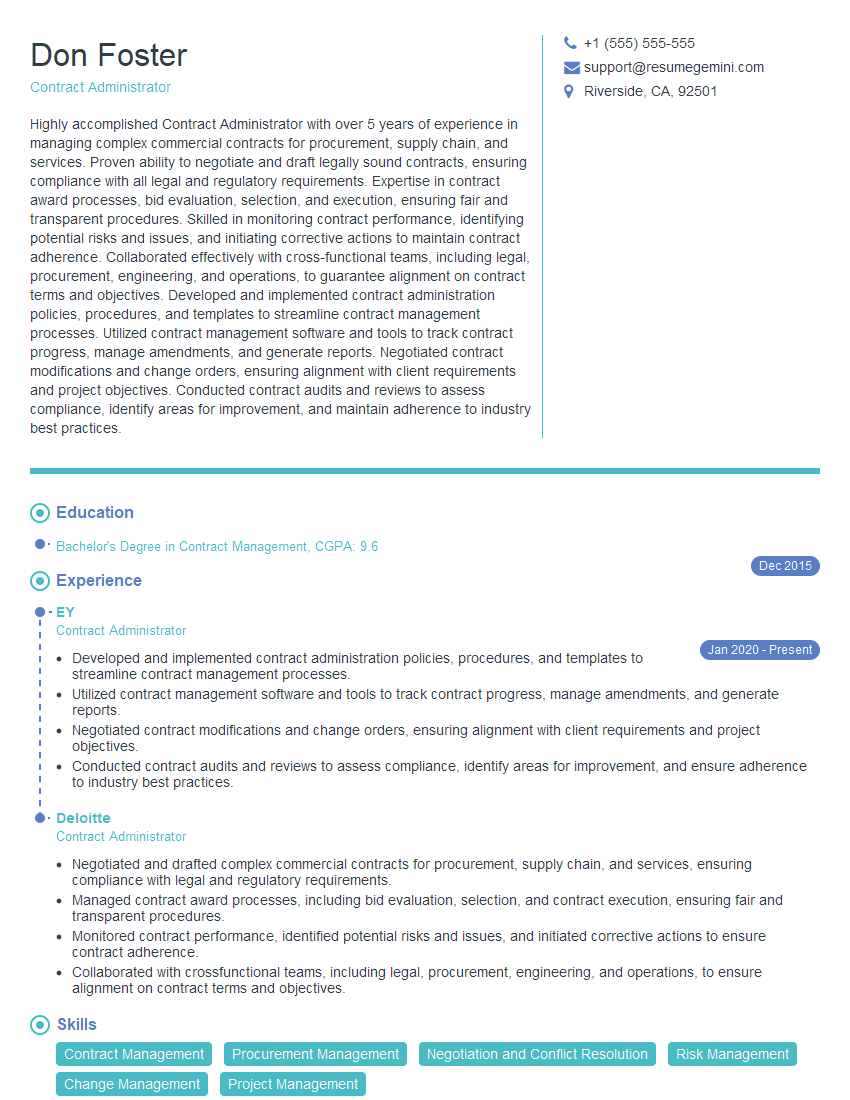
Contract Administrator Resume Sample
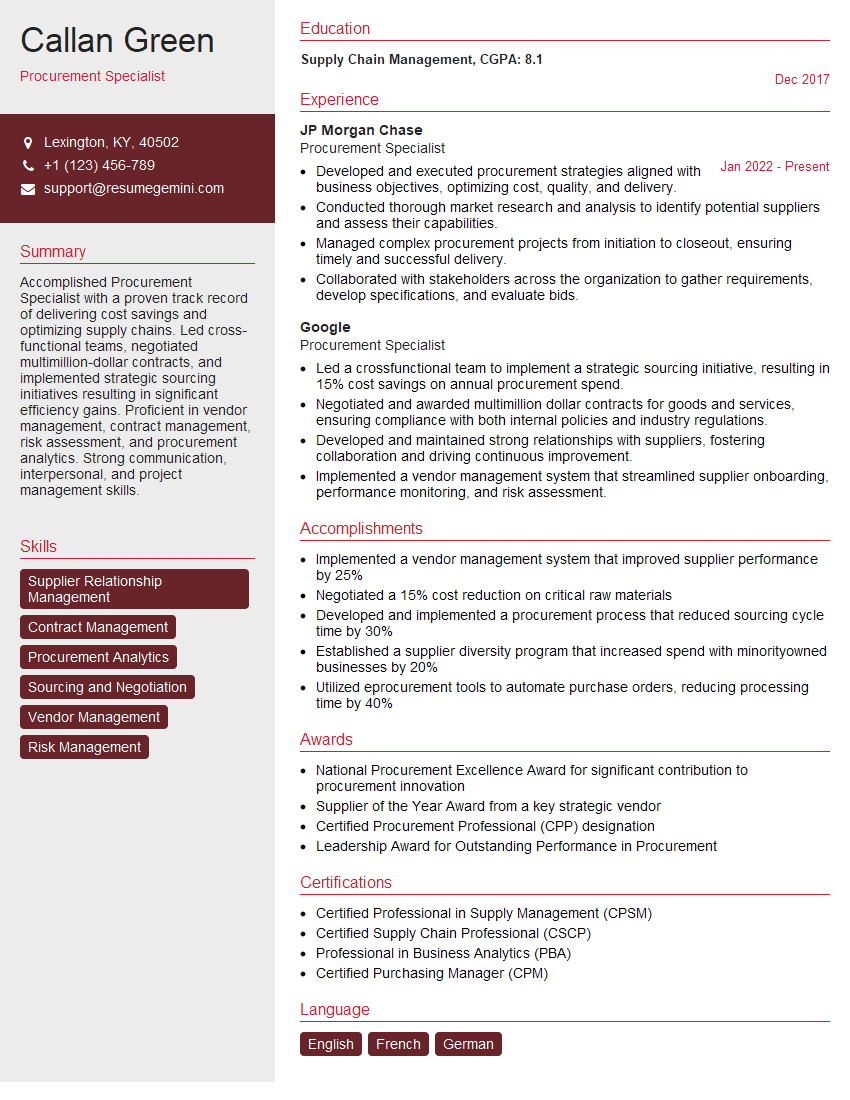
Procurement Specialist Resume Sample
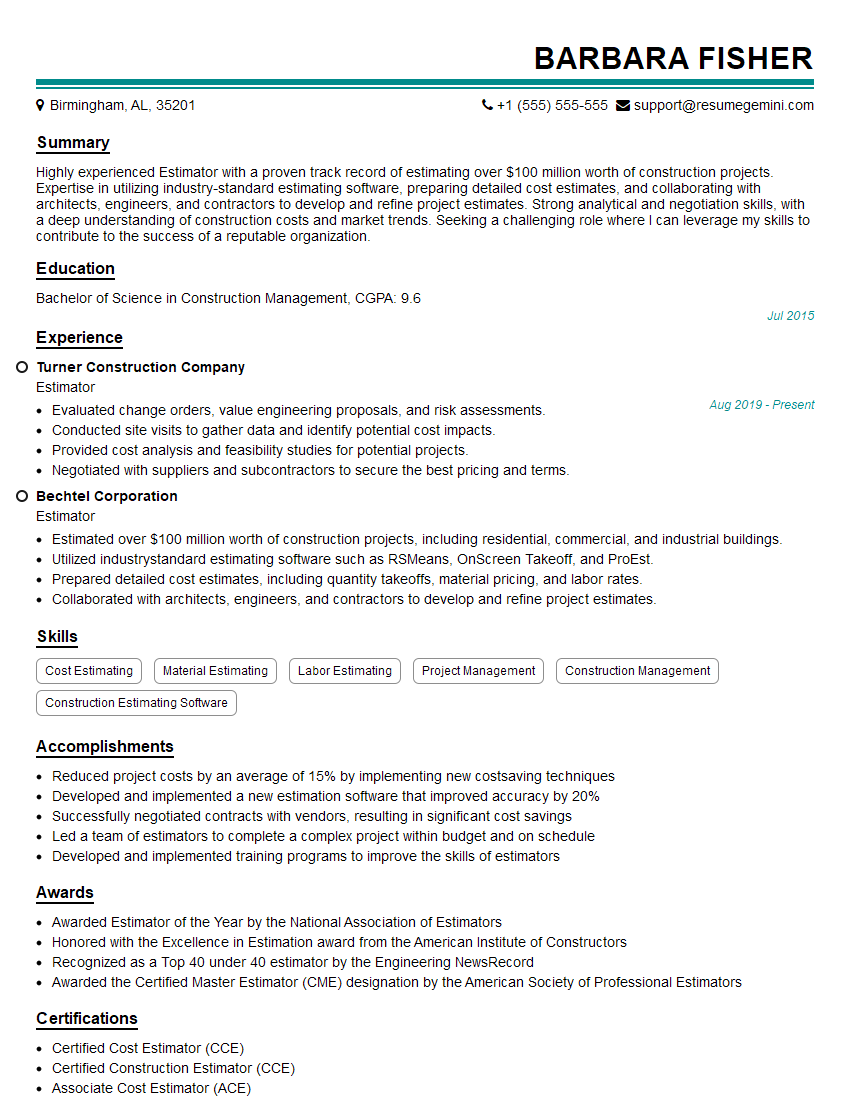
Estimator Resume Sample
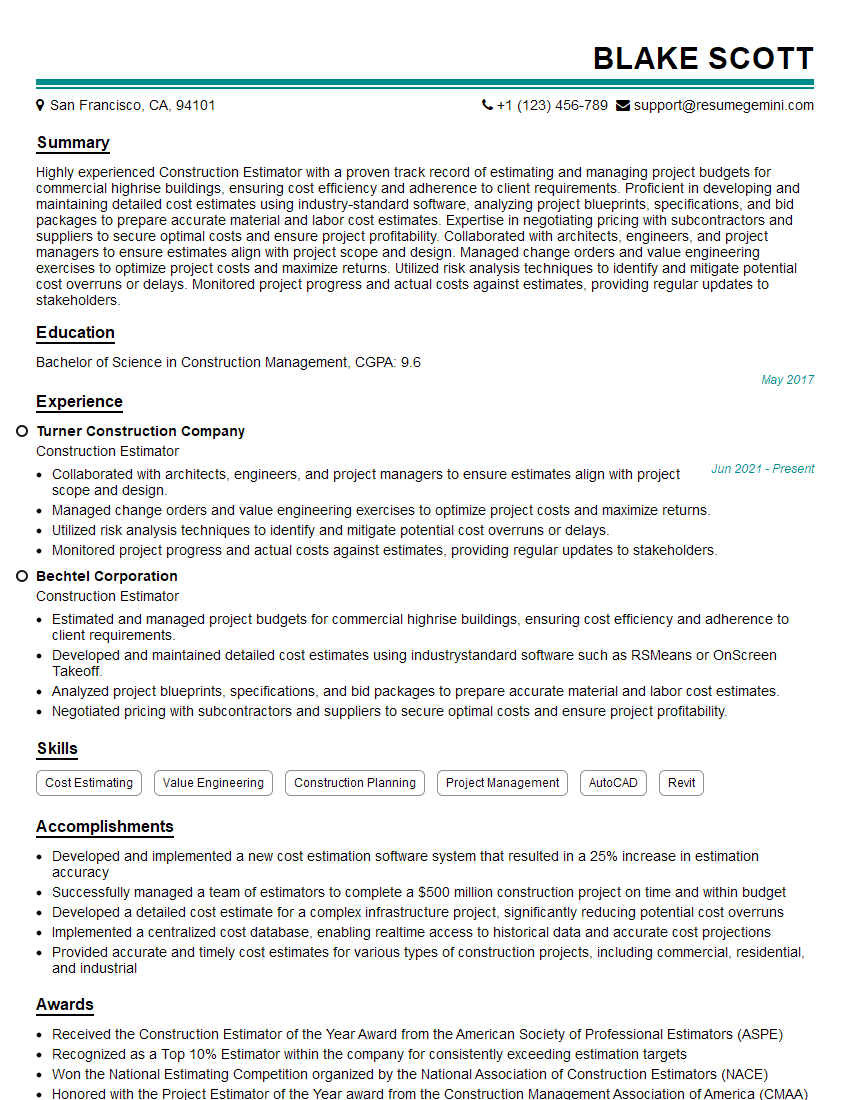
Construction Estimator Resume Sample
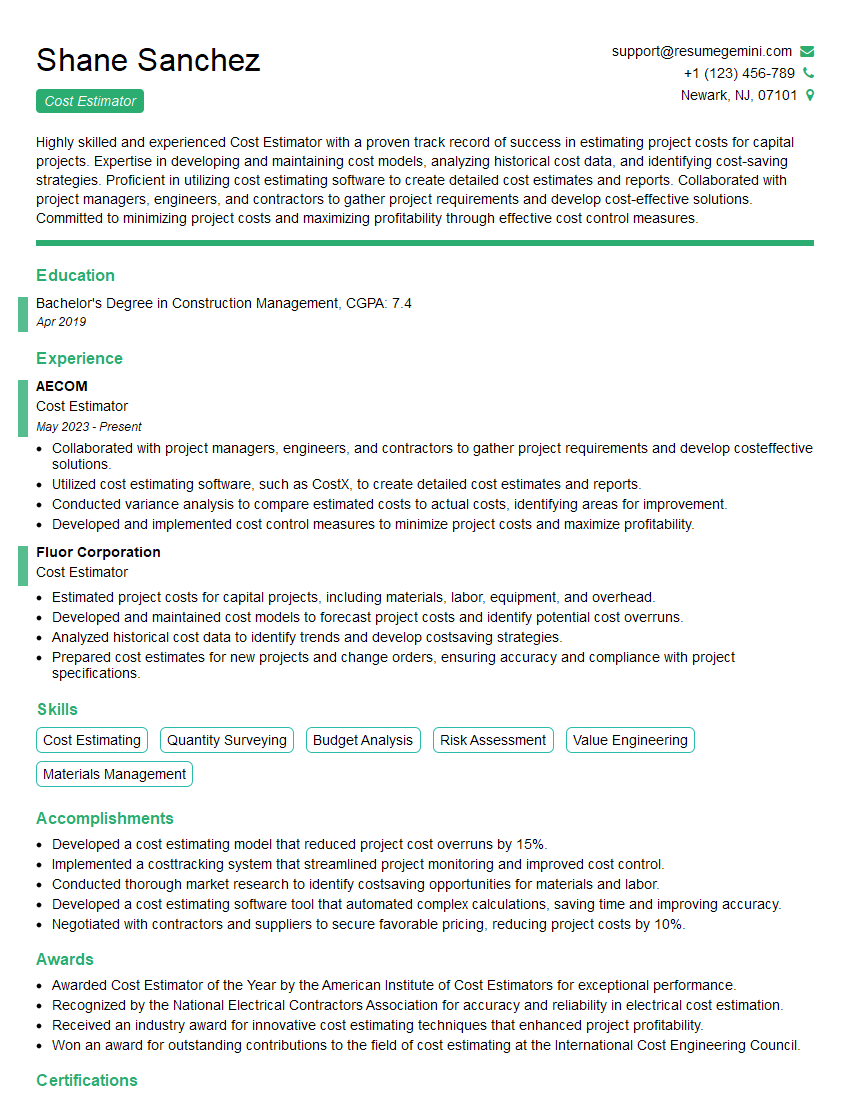
Cost Estimator Resume Sample
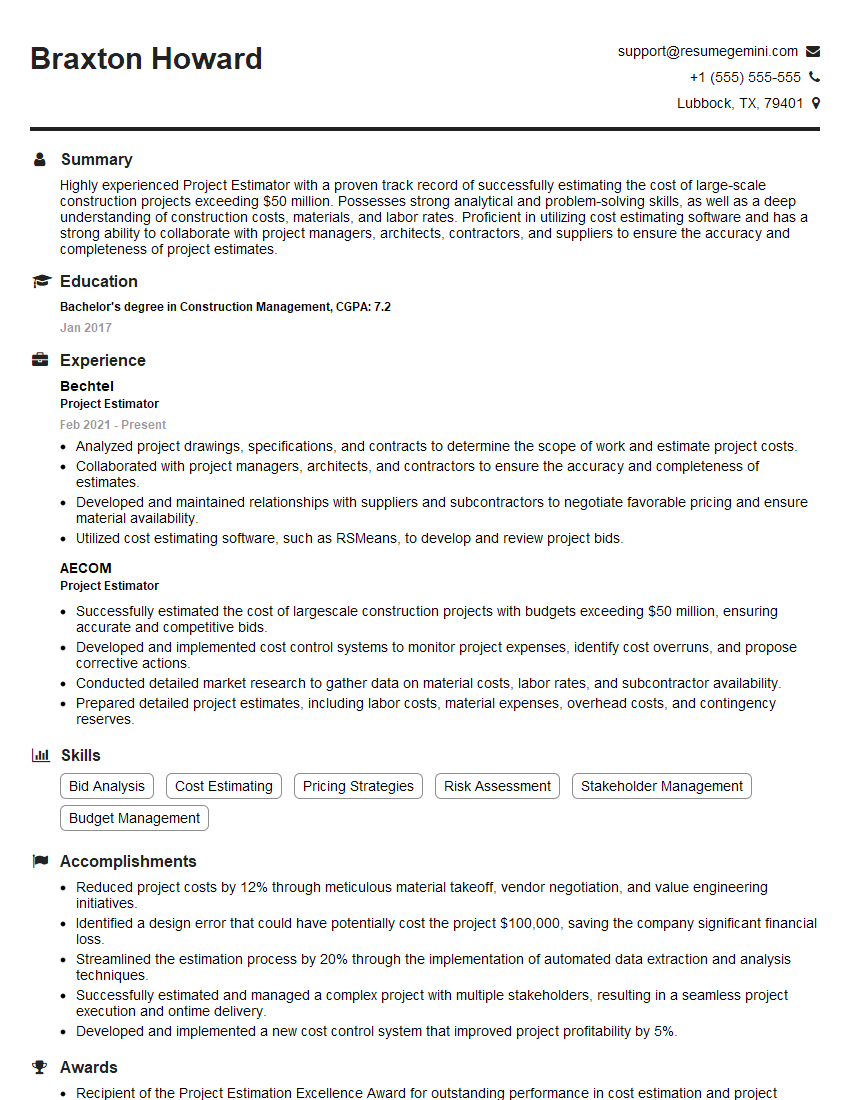
Project Estimator Resume Sample
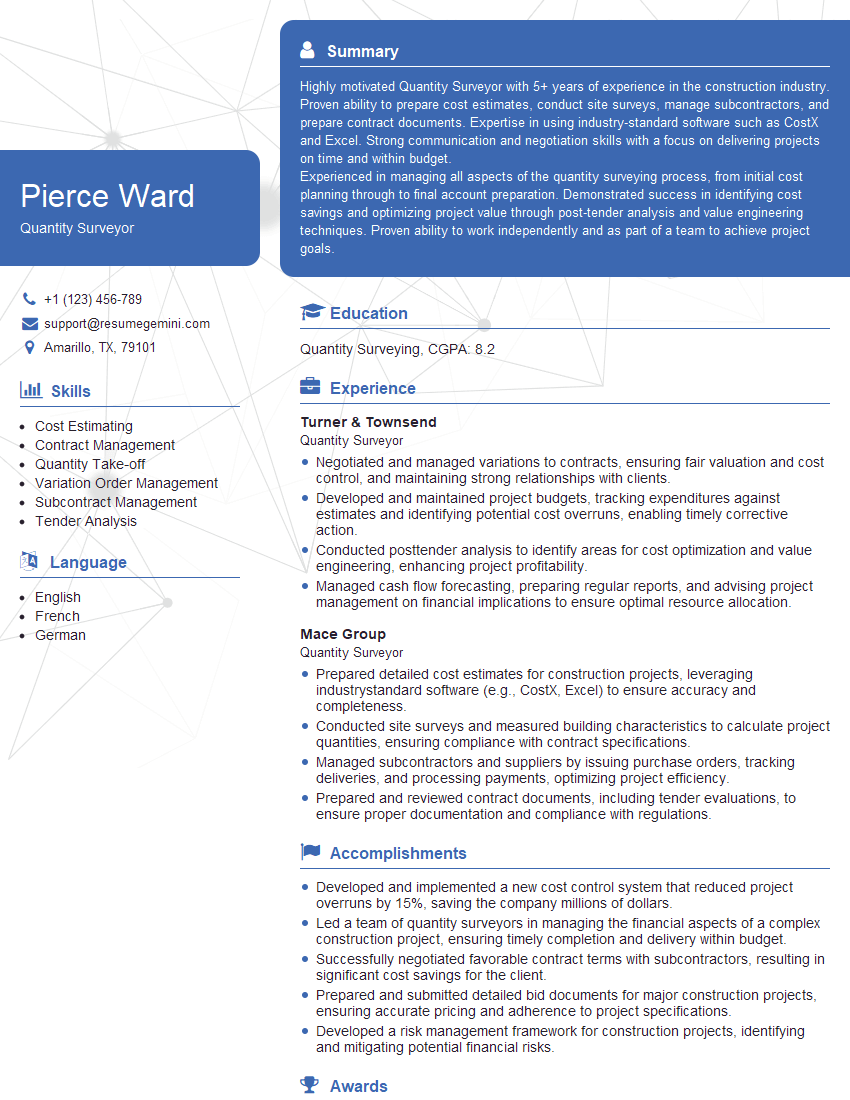
Quantity Surveyor Resume Sample

Value Engineer Resume Sample
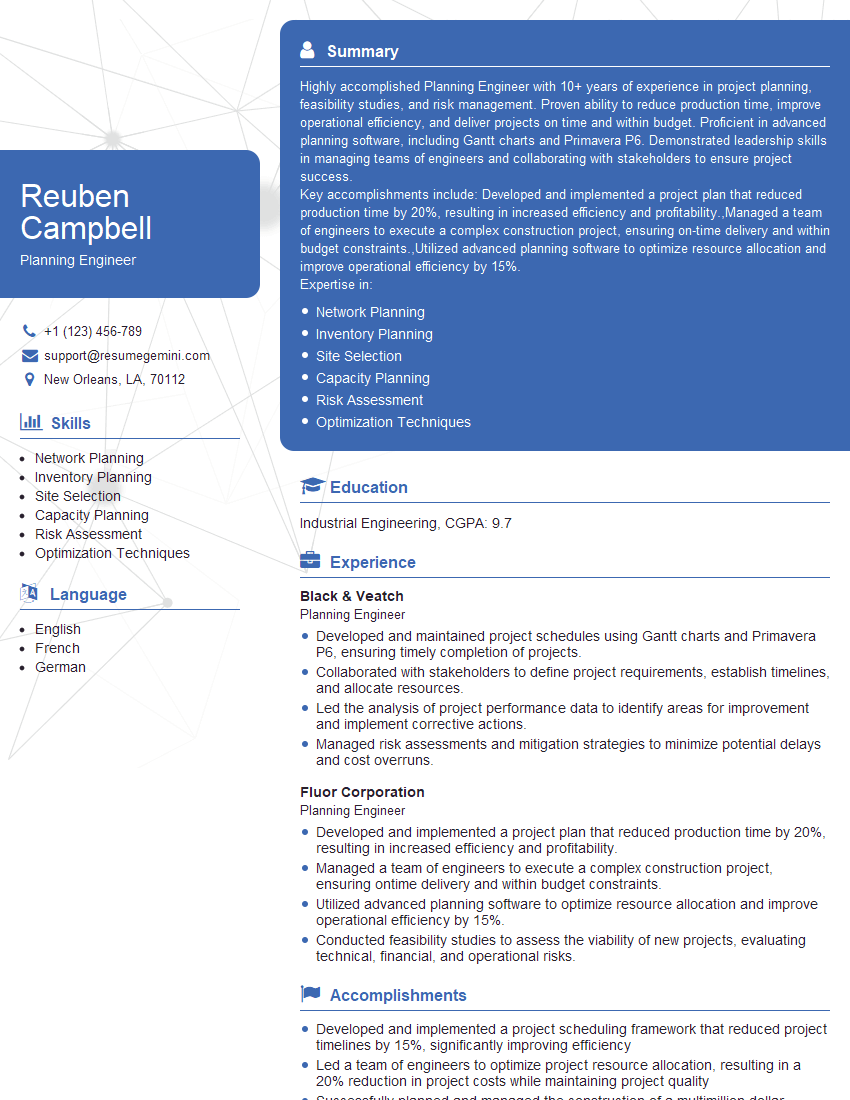
Planning Engineer Resume Sample
Explore more articles
Users Rating of Our Blogs
Share Your Experience
We value your feedback! Please rate our content and share your thoughts (optional).
What Readers Say About Our Blog
To the interviewgemini.com Webmaster.
Very helpful and content specific questions to help prepare me for my interview!
Thank you
To the interviewgemini.com Webmaster.
This was kind of a unique content I found around the specialized skills. Very helpful questions and good detailed answers.
Very Helpful blog, thank you Interviewgemini team.