Unlock your full potential by mastering the most common Cardiopulmonary Exercise Testing (CPET) interview questions. This blog offers a deep dive into the critical topics, ensuring you’re not only prepared to answer but to excel. With these insights, you’ll approach your interview with clarity and confidence.
Questions Asked in Cardiopulmonary Exercise Testing (CPET) Interview
Q 1. Explain the physiological principles underlying Cardiopulmonary Exercise Testing (CPET).
Cardiopulmonary Exercise Testing (CPET) measures the interplay between the cardiovascular and respiratory systems during incremental exercise. It’s based on the principle that as exercise intensity increases, so does the body’s demand for oxygen. CPET assesses how efficiently the heart and lungs deliver oxygen to working muscles and remove carbon dioxide. This is reflected in key physiological variables like oxygen consumption (VO2), carbon dioxide production (VCO2), ventilation (VE), and heart rate (HR). The test reveals the limits of these systems, identifying potential bottlenecks and providing insights into overall cardiovascular fitness and functional capacity.
Imagine a car engine: the fuel (oxygen) needs to be efficiently delivered and the exhaust (carbon dioxide) needs to be removed effectively for optimal performance. CPET acts like a sophisticated diagnostic tool for this ‘engine,’ highlighting any inefficiencies in the oxygen delivery and waste removal systems.
Q 2. Describe the different types of CPET protocols and when each is appropriate.
Several CPET protocols exist, each tailored to specific needs and patient populations. The most common include:
- Ramp Protocol: A constant increase in workload, typically expressed as watts or % grade on a cycle ergometer or treadmill. This is the most widely used protocol due to its simplicity and reproducibility. It’s suitable for most individuals, though may not be ideal for those with severe cardiorespiratory limitations.
- Step Protocol: Workload increases in stages with periods of rest or steady state between each stage. This allows for better monitoring of physiological responses at specific workload levels and is useful for patients with limited exercise tolerance. This is particularly useful for those with severe heart failure or pulmonary diseases.
- Bruce Protocol (treadmill): A specific, standardized step protocol commonly used for treadmill testing. The workload increases at regular intervals, making it easy to compare results across different studies. This protocol is often used in research but less flexible for individual patient needs.
- Modified Bruce Protocol: Adjustments are made to the original Bruce protocol to accommodate for individual’s limitations.
The choice of protocol depends on the patient’s clinical condition, functional capacity, and the specific questions the test aims to answer. For instance, a ramp protocol might be suitable for a relatively healthy individual undergoing a pre-surgical evaluation, while a step protocol might be preferred for a patient with advanced heart failure.
Q 3. What are the key safety considerations during a CPET test?
Safety is paramount during CPET. Several key considerations include:
- Patient History and Screening: A thorough medical history and physical examination are crucial to identify any contraindications to exercise testing, such as recent myocardial infarction, unstable angina, or uncontrolled arrhythmias.
- Informed Consent: Patients must understand the procedures, risks, and benefits before undergoing the test.
- Continuous Monitoring: ECG, blood pressure, and oxygen saturation should be continuously monitored throughout the test. The testing room should have readily available emergency equipment and trained personnel capable of managing potential complications.
- Symptom Monitoring: Patients should be closely observed for any signs of discomfort, such as chest pain, shortness of breath, dizziness, or leg cramps. The test should be stopped immediately if any concerning symptoms appear.
- Medication Review: Certain medications (e.g., beta-blockers) can affect the results and require careful consideration.
Careful attention to these points ensures the safety and well-being of the patient during the test.
Q 4. How do you interpret a CPET waveform?
Interpreting a CPET waveform requires an understanding of the relationships between various physiological parameters. The waveforms typically display oxygen consumption (VO2), carbon dioxide production (VCO2), ventilation (VE), and heart rate (HR) against time or workload. Key features to look for include:
- Linearity of VO2: A linear increase in VO2 with increasing workload indicates normal cardiovascular function. A plateau or early decline suggests limited cardiac output.
- Anaerobic Threshold (AT): The point at which lactate production exceeds lactate clearance, leading to a nonlinear increase in ventilation and heart rate relative to oxygen consumption. This signifies the transition from aerobic to anaerobic metabolism.
- Ventilatory Threshold (VT): The point at which ventilation increases disproportionately to oxygen consumption, suggesting the body is struggling to maintain adequate oxygen delivery. Often precedes AT.
- VO2 Max: The maximum amount of oxygen the body can utilize during maximal exercise; a measure of peak cardiovascular fitness.
- Breathing Pattern: Irregular or excessive breathing patterns may indicate underlying respiratory issues.
Analyzing these features in conjunction with the patient’s clinical history provides a comprehensive assessment of cardiopulmonary function.
Q 5. Explain the significance of VO2 max, anaerobic threshold, and ventilatory threshold.
The key parameters from CPET, VO2 max, anaerobic threshold (AT), and ventilatory threshold (VT), provide crucial insights into functional capacity and exercise tolerance.
- VO2 max: Represents the peak oxygen uptake during maximal exercise. It’s a robust indicator of overall cardiovascular fitness and is useful in assessing prognosis, guiding exercise prescription, and monitoring response to interventions. A lower VO2 max often reflects underlying cardiovascular disease or deconditioning.
- Anaerobic Threshold (AT): Indicates the point at which the body shifts from primarily aerobic to anaerobic metabolism. It’s an important measure of exercise tolerance, as sustained exercise above AT leads to rapid fatigue. It’s used for exercise prescription to prevent overtraining.
- Ventilatory Threshold (VT): Reflects the point at which ventilation increases disproportionately to oxygen consumption. It’s often considered a good marker of endurance capacity and can precede AT. It signals the point where the respiratory system is becoming the limiting factor.
These parameters, combined with other CPET data, create a detailed picture of an individual’s cardiopulmonary health and functional status.
Q 6. How do you identify and manage potential complications during a CPET test?
Potential complications during CPET are rare but must be managed promptly. These may include:
- Hypotension or Bradycardia: A significant drop in blood pressure or heart rate can indicate cardiac ischemia. The test should be immediately stopped, and the patient monitored closely. Treatment may involve medications or supportive measures.
- Angina or Chest Pain: This warrants immediate cessation of the test, administration of nitroglycerin (if appropriate), and close monitoring. Further evaluation for coronary artery disease is typically required.
- Arrhythmias: Abnormal heart rhythms can occur, ranging from mild to life-threatening. ECG monitoring is crucial to detect and manage these events. Treatment may include medication or cardioversion.
- Hyperventilation: This can lead to dizziness and lightheadedness. Slowing the exercise intensity or encouraging slow, deep breaths can help manage this.
- Fatigue or Muscle Cramps: These can be managed by slowing the exercise intensity or providing electrolyte drinks.
Proper training, continuous monitoring, and readiness to respond to any adverse events are essential for managing complications effectively. The immediate availability of emergency medical services should also be ensured.
Q 7. Describe the equipment used in CPET and its calibration procedures.
CPET utilizes several key pieces of equipment:
- Metabolic Cart: Measures oxygen consumption (VO2), carbon dioxide production (VCO2), and ventilation (VE). Calibration is crucial and typically involves using a known gas mixture (e.g., 16% oxygen, 4% carbon dioxide) to ensure accurate measurements. Regular calibration checks according to manufacturer’s recommendations are essential.
- ECG Machine: Monitors the heart’s electrical activity and detects any arrhythmias. It needs to be regularly checked and maintained and the leads should be placed correctly.
- Blood Pressure Monitor: Measures blood pressure continuously or at set intervals. The blood pressure cuff should be the correct size for the patient and checked for proper inflation.
- Pulse Oximeter: Measures oxygen saturation (SpO2) in arterial blood. Should be regularly checked to ensure accuracy.
- Cycle Ergometer or Treadmill: Provides the graded exercise stimulus. The ergometer or treadmill should be regularly inspected and maintained.
Regular calibration of the metabolic cart is essential for reliable results, typically involving a gas calibration and a flow calibration. Each piece of equipment needs to undergo regular maintenance and quality control checks. Failure to calibrate and maintain equipment accurately can lead to significant errors in the CPET results.
Q 8. How do you calculate the gas exchange parameters (VO2, VCO2, RER)?
Gas exchange parameters during Cardiopulmonary Exercise Testing (CPET) provide crucial insights into the body’s response to exercise. We calculate these parameters using measurements of oxygen consumption (VO2), carbon dioxide production (VCO2), and the respiratory exchange ratio (RER).
VO2 (Oxygen Consumption): This is the volume of oxygen utilized by the body per minute. It’s calculated using the following formula:
VO2 = (FiO2 - FeO2) * V̇E * STPD/BTPS, where FiO2 is the fraction of inspired oxygen, FeO2 is the fraction of expired oxygen, V̇E is the minute ventilation, STPD is standard temperature and pressure dry, and BTPS is body temperature and pressure saturated.VCO2 (Carbon Dioxide Production): This measures the volume of carbon dioxide produced by the body per minute. The formula is similar:
VCO2 = (FeCO2 - FiCO2) * V̇E * STPD/BTPS, where FeCO2 is the fraction of expired carbon dioxide and FiCO2 is the fraction of inspired carbon dioxide.RER (Respiratory Exchange Ratio): This reflects the ratio of carbon dioxide produced to oxygen consumed (
RER = VCO2/VO2). An RER of approximately 1.0 suggests a reliance on carbohydrates as the primary fuel source, while an RER below 0.7 indicates fat metabolism. Values above 1.0 often signify hyperventilation.
Imagine a patient cycling on a CPET system. The metabolic cart continuously analyzes the inspired and expired gases, and using the above formulas, it precisely determines VO2, VCO2, and subsequently RER, allowing us to track the patient’s metabolic response throughout the test.
Q 9. What are the limitations of CPET?
While CPET is a powerful tool, it has limitations. These include:
Patient Factors: Factors such as patient effort, comorbidities (e.g., arthritis limiting exercise), medications, and the patient’s understanding of instructions can affect results. A truly maximal effort is crucial for accurate interpretation.
Technical Limitations: Calibration of equipment, accurate measurement of gas exchange, and the potential for artifacts in the data can affect the reliability of the results. Proper training of personnel is crucial.
Specificity: Although CPET offers valuable insights, it may not always definitively diagnose a specific disease. It provides functional information, which needs to be integrated with other clinical data.
Safety: As with any exercise test, there’s a risk of adverse events, although rare with proper screening and monitoring. Absolute contraindications must be carefully considered.
For example, a patient with severe underlying lung disease might not be able to achieve a maximal effort, leading to underestimation of their true functional capacity. Similarly, a poorly calibrated metabolic cart could lead to inaccurate results.
Q 10. How do you interpret abnormal CPET results?
Interpreting abnormal CPET results involves a holistic approach, considering the entire data set – not just isolated values. Key areas to examine include:
Peak VO2: A significantly reduced peak VO2 compared to predicted values suggests impaired cardiopulmonary function. The degree of reduction helps gauge the severity.
Ventilation Parameters: Elevated ventilation (V̇E) at low exercise intensities, or a disproportionately high increase in ventilation relative to oxygen uptake, suggests possible pulmonary disease (like restrictive or obstructive lung disease).
Gas Exchange Parameters: An abnormally high RER suggests inefficient fuel utilization, often observed in individuals with metabolic disorders or certain cardiac conditions. A low VO2 max with a normal RER could suggest a cardiac limitation.
Cardiovascular Responses: Abnormally low or high heart rate responses, elevated blood pressure during exercise, and an abnormal blood pressure response to exercise might indicate cardiac dysfunction.
Breathing Pattern: Dyspnea (shortness of breath) and the presence of abnormal breathing patterns can provide further insights.
For example, a patient with a low peak VO2, elevated ventilation at low exercise levels, and a normal RER might be suggestive of chronic obstructive pulmonary disease (COPD). However, this is just one potential interpretation and should be considered along with clinical presentation and other diagnostic information.
Q 11. How do you differentiate between cardiovascular and pulmonary limitations during CPET?
Differentiating between cardiovascular and pulmonary limitations during CPET requires careful analysis of multiple parameters. A key differentiator is the shape of the VO2 vs. work rate curve and the relationship between ventilation and gas exchange.
Cardiovascular Limitation: Often presents with a relatively normal ventilation response, but a plateau or early decline in VO2 despite an increase in workload. The heart is unable to deliver sufficient oxygen to the muscles.
Pulmonary Limitation: Characterized by an abnormally high ventilatory response (V̇E) compared to the oxygen consumption (VO2). The lungs are unable to adequately exchange oxygen and carbon dioxide.
A patient with a predominantly cardiovascular limitation might exhibit a normal RER at peak exercise, whereas a patient with a pulmonary limitation could have an elevated RER at submaximal workloads. It’s not always a clear-cut distinction, and often, a combination of factors contributes to the limitation.
Q 12. Explain the role of CPET in diagnosing various cardiovascular and pulmonary diseases.
CPET plays a significant role in diagnosing various cardiovascular and pulmonary conditions. It helps assess the functional capacity of the cardiorespiratory system and provides quantitative data, enabling a more precise diagnosis and prognosis:
Heart Failure: CPET helps assess the severity of heart failure, determining peak VO2 and detecting limitations in exercise capacity.
Valvular Heart Disease: CPET can identify exercise-induced limitations, such as reduced peak VO2 and abnormal heart rate response, suggesting valvular dysfunction.
Chronic Obstructive Pulmonary Disease (COPD): CPET helps characterize the severity of airflow limitation and assess the patient’s functional capacity, guiding treatment decisions.
Interstitial Lung Disease: It can detect the restrictive nature of the disease and aid in monitoring disease progression.
Pre- and Post-Operative Assessment: CPET aids in assessing surgical risk and post-operative recovery in patients undergoing cardiac or pulmonary surgery.
For instance, a patient presenting with dyspnea could undergo CPET to differentiate between cardiac and pulmonary origins. The test’s findings would help guide the physician towards specific diagnostic investigations such as echocardiography or pulmonary function tests.
Q 13. How do you counsel patients before, during, and after a CPET test?
Counseling patients before, during, and after CPET is crucial for optimal test performance and patient well-being:
Pre-Test Counseling: This includes a thorough explanation of the procedure, potential risks and benefits, and addressing any anxieties. It’s essential to obtain informed consent and review any medications that might influence the results. We also check for contraindications.
During the Test: Providing encouragement and monitoring the patient’s vital signs, symptoms, and overall well-being are critical. We need to make sure they understand the incremental workload and are comfortable voicing any concerns.
Post-Test Counseling: This involves a comprehensive explanation of the test results, their implications, and potential next steps. We should answer any questions, provide recommendations for lifestyle changes and/or medical management, and emphasize the importance of follow-up care.
Imagine a patient apprehensive about the test. Reassuring them, explaining the procedure step-by-step, and allowing them to ask questions can alleviate anxiety and contribute to a successful and safe testing experience.
Q 14. Describe the role of CPET in exercise prescription and rehabilitation.
CPET plays a vital role in exercise prescription and rehabilitation. It provides objective data to guide the development of safe and effective exercise programs tailored to individual needs and limitations:
Exercise Prescription: CPET helps determine the appropriate intensity and duration of exercise, ensuring that it remains within the patient’s safe working capacity. It also helps to identify potential limitations and adjust the exercise prescription as needed.
Rehabilitation: CPET aids in monitoring the effectiveness of rehabilitation programs by tracking changes in exercise capacity over time. This allows for a more personalized approach to rehabilitation, maximizing patient outcomes and recovery.
Monitoring Disease Progression: CPET results can be used to monitor the effects of treatment on functional capacity in patients with various cardiovascular and pulmonary diseases.
For example, a post-surgical cardiac rehabilitation program can utilize CPET data to design a progressive exercise plan for each individual, gradually increasing exercise intensity within their safe range, as determined by their peak VO2 and other relevant parameters.
Q 15. How do you analyze CPET data and prepare a comprehensive report?
Analyzing CPET data involves a multi-step process that goes beyond simply looking at numbers. It’s about piecing together a story of the patient’s cardiovascular and respiratory function. First, we visually inspect the raw data for artifacts or inconsistencies. Then, we focus on key parameters: VO2 max (maximum oxygen uptake), ventilatory threshold (VT), anaerobic threshold (AT), and gas exchange ratios (RER). We analyze the slopes of the oxygen uptake and carbon dioxide production curves to identify potential limitations in cardiovascular or respiratory function. For example, a plateau in VO2 despite increasing workload suggests a true VO2 max has been reached. A sudden increase in ventilation relative to oxygen uptake indicates VT, a point of metabolic inefficiency. We look at the relationship between heart rate and oxygen consumption, assessing the patient’s cardiovascular response. Finally, we consider the patient’s age, gender, and medical history to interpret the findings in context. The comprehensive report summarizes these findings, including graphs and key metrics, with recommendations and interpretations for the referring physician. This report helps in understanding the patient’s functional capacity, identifying potential limitations, and guiding treatment strategies. A typical report will also include a summary of the patient’s symptoms, medications, and other relevant clinical information, allowing a holistic evaluation.
For instance, a patient with a low VO2 max and early VT might suggest a need for cardiac rehabilitation, while a patient with normal VO2 max but limitations in their respiratory parameters might benefit from pulmonary rehabilitation. Understanding the interplay between these parameters and the clinical picture is crucial for accurate interpretation.
Career Expert Tips:
- Ace those interviews! Prepare effectively by reviewing the Top 50 Most Common Interview Questions on ResumeGemini.
- Navigate your job search with confidence! Explore a wide range of Career Tips on ResumeGemini. Learn about common challenges and recommendations to overcome them.
- Craft the perfect resume! Master the Art of Resume Writing with ResumeGemini’s guide. Showcase your unique qualifications and achievements effectively.
- Don’t miss out on holiday savings! Build your dream resume with ResumeGemini’s ATS optimized templates.
Q 16. What is the difference between a Bruce protocol and a Balke protocol?
The Bruce and Balke protocols are both graded exercise tests used in CPET, but they differ significantly in their approach. The Bruce protocol is a ramp protocol, meaning the workload increases in stages of fixed increments of speed and incline on a treadmill, resulting in a fairly rapid increase in workload. This makes it ideal for determining peak exercise capacity in relatively healthy individuals. The Balke protocol, on the other hand, is a continuous protocol. The workload increases at a constant rate, with speed remaining constant and the incline incrementing at fixed intervals. This provides a more gradual increase in workload, making it potentially more suitable for patients with cardiac or pulmonary limitations. The choice between protocols depends on the patient’s clinical status and the goal of the test. For patients with severe limitations, a Balke protocol or a modified Bruce protocol might be preferable to reduce the risk of abrupt exertion. It’s crucial to choose a protocol appropriate for the individual’s capabilities to ensure a safe and accurate test.
Q 17. What are the indications and contraindications for CPET?
CPET has several indications and contraindications. Indications include evaluating dyspnea on exertion, unexplained fatigue, assessing pre-operative cardiac risk, diagnosing and staging cardiovascular and pulmonary disease, monitoring disease progression and treatment response, and guiding exercise prescription in rehabilitation programs. CPET provides a more objective assessment of functional capacity compared to subjective questionnaires. For example, we can use CPET to assess a patient’s ability to tolerate surgery or to evaluate the effectiveness of a cardiac medication on exercise tolerance.
Contraindications include acute myocardial infarction (heart attack), unstable angina, uncontrolled arrhythmias, severe valvular heart disease, severe pulmonary hypertension, and acute respiratory infections. Patients with significant orthopedic limitations that would compromise the ability to perform the exercise may also be unsuitable candidates. A thorough medical history and physical exam are crucial before performing a CPET to identify potential risks and ensure patient safety. We must prioritize safety and only proceed if the benefits outweigh the potential risks.
Q 18. How do you handle patient anxiety or discomfort during the test?
Patient anxiety and discomfort are common during CPET. We address this by providing thorough explanation of the procedure, ensuring the patient understands what to expect. This includes explaining the sensation of breathing difficulty, muscle fatigue, and potential lightheadedness. We create a supportive and reassuring environment by ensuring the patient feels comfortable and in control. This can involve allowing breaks, talking through the process and encouraging them throughout the test. If anxiety is significant, we may discuss the use of mild anxiolytics. We closely monitor vital signs and the patient’s verbal and non-verbal cues. For instance, providing positive reinforcement, or employing distraction techniques like conversational engagement can effectively manage discomfort. Adjusting the protocol’s intensity if needed is another important strategy; we always prioritize patient safety and well-being. It’s important to remember that empathy and clear communication are essential in managing a patient’s anxiety during CPET.
Q 19. Explain the significance of respiratory exchange ratio (RER).
The respiratory exchange ratio (RER) is the ratio of carbon dioxide produced (VCO2) to oxygen consumed (VO2). It’s a valuable indicator of substrate utilization during exercise. An RER of approximately 0.7 indicates that fat is the primary fuel source, while an RER approaching 1.0 suggests carbohydrate is the predominant fuel. RER values above 1.0 usually indicate the accumulation of lactate, indicating the anaerobic threshold has been crossed. Monitoring RER during CPET helps to determine the patient’s metabolic response to exercise and identify potential metabolic limitations. A patient who shows an early rise in RER might indicate a lower capacity for fat metabolism.
For example, a patient with an early increase in RER could indicate an underlying metabolic problem that affects their ability to utilize fat during exercise. This information is valuable in designing a tailored exercise program which could focus on improving fat metabolism.
Q 20. How does CPET help in assessing functional capacity?
CPET is a gold standard for assessing functional capacity because it provides a comprehensive and objective measure of how well the cardiovascular and respiratory systems work together during exercise. It determines the peak oxygen consumption (VO2 max), which is a strong indicator of overall fitness and endurance. CPET helps to identify limitations in oxygen delivery to muscles and carbon dioxide removal, which can point toward cardiac, respiratory, or metabolic issues. It also helps in determining the patient’s anaerobic threshold, showing at what point the body shifts from aerobic to anaerobic metabolism. This point is clinically relevant and can assist in prescribing appropriate exercise intensity for cardiac rehabilitation programs. For example, determining if the patient can tolerate a higher workload without experiencing excessive metabolic stress. The data from a CPET provides a more detailed, objective assessment compared to other methods like self-reported questionnaires.
Q 21. What are the differences between absolute and relative VO2 max?
Absolute VO2 max is expressed in liters of oxygen consumed per minute (L/min). This represents the actual amount of oxygen the body can utilize during maximal exercise. Relative VO2 max, on the other hand, is normalized to body weight and expressed in milliliters of oxygen consumed per kilogram of body weight per minute (mL/kg/min). This allows for comparison across individuals of different sizes. Absolute VO2 max is useful for assessing overall cardiovascular fitness, while relative VO2 max is valuable for comparing individuals of varying weights. For example, a larger individual might have a higher absolute VO2 max, but a smaller individual might have a higher relative VO2 max, indicating superior fitness relative to their body mass. Both values provide important pieces of the puzzle for an accurate and well-rounded interpretation of a patient’s exercise capacity.
Q 22. Explain the concept of exercise-induced bronchoconstriction (EIB) and its detection during CPET.
Exercise-induced bronchoconstriction (EIB), also known as exercise-induced asthma, is a temporary narrowing of the airways in the lungs that occurs during or after strenuous exercise. It’s not the same as asthma, although people with asthma are more prone to EIB. During CPET, EIB is detected by monitoring changes in pulmonary function before, during, and after exercise.
Specifically, we look for a decrease in FEV1 (forced expiratory volume in one second) or PEF (peak expiratory flow) of 10% or more post-exercise, compared to pre-exercise values. A drop in FEV1 or PEF is indicative of airway narrowing. We might also see changes in respiratory rate, oxygen saturation, and the patient’s subjective feeling of breathlessness. For example, a patient might report wheezing or chest tightness after the exercise portion of the test. We carefully compare these physiological changes alongside the patient’s symptoms to make the diagnosis. The degree of the decrease often helps determine the severity of EIB.
The timing of the drop is also important. Often, the greatest decrease happens 5-10 minutes post-exercise, as the bronchoconstriction is not immediate. So, post-exercise monitoring is critical for detecting EIB.
Q 23. How does CPET inform treatment decisions?
CPET data is crucial for guiding treatment decisions across various cardiopulmonary conditions. The information derived from a CPET informs therapeutic strategies by providing objective physiological data. For instance, in patients with heart failure, the test can help determine the patient’s functional capacity, identifying the level of exertion that triggers symptoms. This guides the intensity of cardiac rehabilitation programs and helps assess the effectiveness of medical therapy.
In patients with chronic obstructive pulmonary disease (COPD), CPET helps determine the severity of the disease and assess the patient’s response to pulmonary rehabilitation or oxygen therapy. The gas exchange data provides a clear picture of how well the lungs are functioning. Similarly, CPET helps stratify risk in patients with suspected pulmonary hypertension or other respiratory issues. The data might reveal limitations in exercise capacity earlier than symptoms alone, allowing for timely intervention.
Furthermore, CPET helps to guide the decision-making process related to surgical interventions, such as lung volume reduction surgery or cardiac surgery. By measuring the patient’s physiological response to exercise, we can better assess the risk and potential benefit of these procedures. It’s not just about numbers; the data allows us to create a personalized approach to treatment, ensuring the plan is tailored to the individual’s limitations and capabilities. We use the data to set realistic goals and monitor progress.
Q 24. How do you manage data and ensure its accuracy during CPET?
Data management and accuracy are paramount in CPET. We adhere to rigorous protocols to ensure reliable results. This begins with calibration of all equipment – metabolic carts, spirometers, and ECG machines – before each test. We follow a strict calibration checklist to ensure everything is within the manufacturer’s specified tolerances.
Data acquisition is usually handled by dedicated software linked to the metabolic cart, which automatically records and stores data like oxygen consumption (VO2), carbon dioxide production (VCO2), respiratory exchange ratio (RER), heart rate, blood pressure, and ECG data. We also ensure the patient is properly positioned and understands the instructions to minimize errors. This includes proper placement of sensors and ensuring adequate ventilation and gas collection.
Data analysis involves checking the data for artefacts (e.g. periods of equipment malfunction, or patient movement), ensuring a steady state is reached at each workload. Manual data correction is minimal and clearly documented when performed. We use quality control checks in the software to identify outliers or inconsistencies and use our clinical judgment to validate the data. We maintain detailed patient records, including medical history and medication information, as well as test parameters and the raw data files.
Q 25. Describe your experience with different types of CPET equipment (e.g., metabolic carts).
My experience encompasses various CPET equipment, primarily metabolic carts. I’ve worked extensively with systems from multiple manufacturers, including those with breath-by-breath gas analysis and those with integrated spirometry. Each system has its unique features and strengths. For example, some carts offer advanced functionalities like automatic data processing and sophisticated analysis software. Others are more basic but reliable.
I’m familiar with the nuances of each system’s calibration procedures and troubleshooting techniques. Experience with various brands helps me identify potential issues quickly and efficiently. I have worked extensively with both open-circuit and closed-circuit metabolic carts, understanding the benefits and limitations of each. Understanding the differences in gas analysis techniques is critical for ensuring the accuracy of the results. For instance, breath-by-breath gas analysis provides more detailed information about respiratory patterns and gas exchange dynamics during exercise. But it requires higher maintenance.
Beyond the metabolic cart itself, I’m also familiar with different types of exercise equipment used in conjunction with CPET, such as treadmills, cycle ergometers, and arm ergometers. The choice of exercise modality depends on the patient’s abilities and clinical indication. Each presents unique challenges and requires careful monitoring to obtain optimal and safe results.
Q 26. What is your experience in data interpretation using various CPET software?
I have extensive experience with various CPET software packages. This includes both standalone applications and those integrated into electronic health record (EHR) systems. My expertise spans data import, manipulation, analysis and report generation. I’m proficient in interpreting various parameters, identifying physiological responses to exercise, and generating meaningful reports for clinicians.
Proficiency in different software allows me to adapt to varying clinical settings and optimize workflow. Different software may offer different analytical capabilities. For example, some software facilitates advanced analysis of the ventilatory threshold, anaerobic threshold, and other key indicators. I can identify the software’s strengths and weaknesses to best utilize the information for clinical decision making. This includes using different graphical presentations of data, allowing for a customized approach to understanding the results. A visual representation of the data, such as graphs and charts, greatly enhance the clarity and understanding of complex physiological processes.
Critical evaluation of the data is paramount. I don’t just rely on the software’s automated calculations; I critically assess the data for consistency and relevance to the patient’s clinical presentation. I always consider the clinical context when interpreting results.
Q 27. How do you stay updated on current guidelines and best practices in CPET?
Staying current with CPET guidelines and best practices requires a multifaceted approach. I actively participate in professional organizations, such as the American Thoracic Society (ATS) and the American College of Cardiology (ACC), to stay abreast of the latest research and clinical updates related to CPET. I attend conferences and workshops focused on CPET methodology and interpretation to enhance my skills and knowledge. I’m a member of several CPET-focused online communities and forums to engage with colleagues worldwide.
Regularly reviewing peer-reviewed publications, including journals like the Journal of Applied Physiology and the Chest, is essential. This allows me to stay on top of new research findings, methodological advancements, and evolving interpretations of CPET data. I also actively follow the guidelines issued by organizations like the ACC and ATS, which regularly update their recommendations for CPET performance, data interpretation, and clinical applications. Continuous learning in this dynamic field is critical for delivering high-quality, evidence-based CPET services.
Continuous professional development is a cornerstone of my practice. I regularly review cases with colleagues, and participate in journal clubs and other continuing medical education activities focused on CPET interpretation and application. This helps me refine my analytical skills and stay aware of emerging best practices.
Key Topics to Learn for Cardiopulmonary Exercise Testing (CPET) Interview
- Physiological Principles of Exercise: Understanding oxygen uptake (VO2), carbon dioxide production (VCO2), respiratory exchange ratio (RER), and their interpretation during exercise.
- CPET Equipment and Procedures: Familiarize yourself with different CPET systems, protocols (e.g., Bruce, Balke), and the step-by-step process of conducting a test, including patient preparation and safety protocols.
- Data Interpretation and Analysis: Master the analysis of CPET data, including identifying key parameters like VO2max, anaerobic threshold, ventilatory threshold, and their clinical significance. Practice interpreting graphical representations of the data.
- Clinical Applications of CPET: Understand how CPET is used to diagnose and manage various conditions such as heart failure, pulmonary hypertension, and chronic obstructive pulmonary disease (COPD). Be prepared to discuss specific case examples.
- Exercise Prescription and Rehabilitation: Learn how CPET results inform the development of individualized exercise prescriptions and rehabilitation programs for patients with different conditions.
- Limitations and Artifacts of CPET: Understand potential limitations and sources of error in CPET testing, and how to interpret and mitigate these challenges. Discuss the impact of patient factors and equipment malfunctions.
- Advanced CPET Techniques: Explore more advanced topics like cardiopulmonary interactions, gas exchange dynamics during exercise, and the use of CPET in specific patient populations (e.g., pediatrics, athletes).
Next Steps
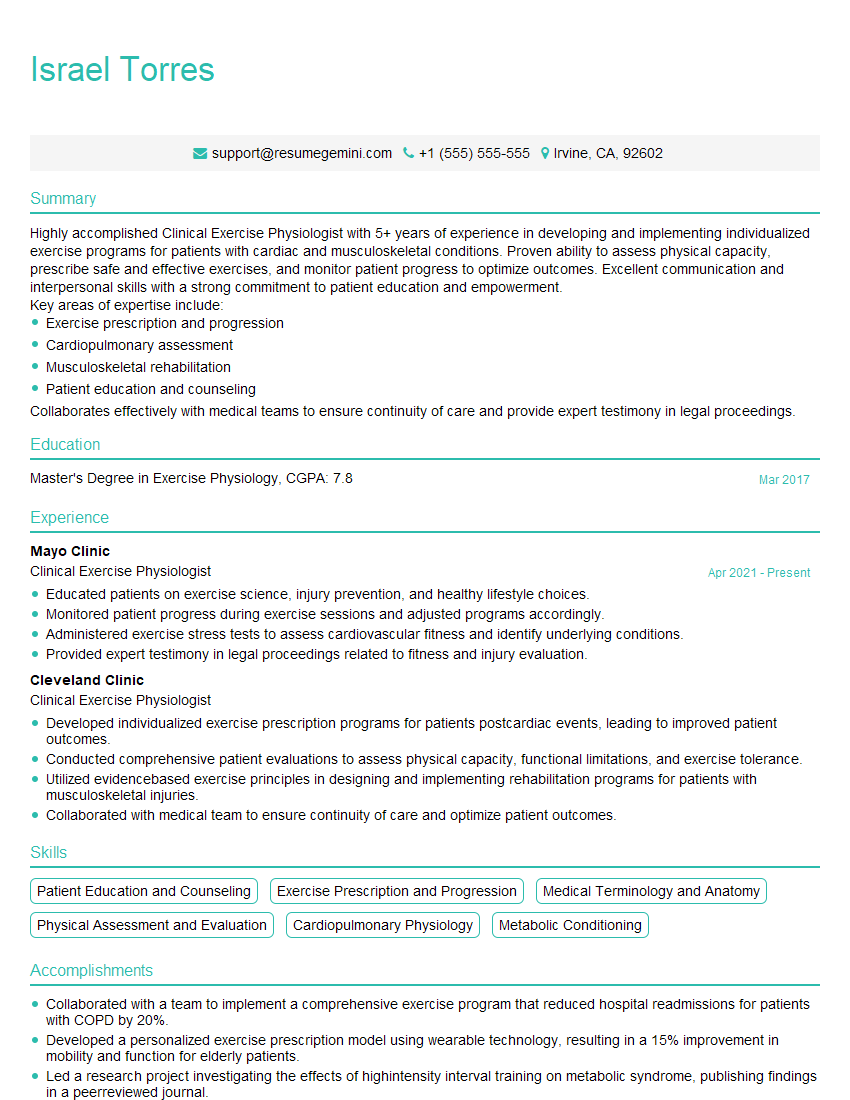
Mastering Cardiopulmonary Exercise Testing (CPET) opens doors to exciting career opportunities in respiratory therapy, cardiology, and exercise physiology. A strong understanding of CPET principles and their practical applications is highly sought after in the field. To significantly enhance your job prospects, invest time in crafting an ATS-friendly resume that effectively showcases your skills and experience. ResumeGemini is a trusted resource to help you build a professional and impactful resume. They provide examples of resumes tailored to Cardiopulmonary Exercise Testing (CPET) roles, giving you a head start in your job search.
Explore more articles
Users Rating of Our Blogs
Share Your Experience
We value your feedback! Please rate our content and share your thoughts (optional).
What Readers Say About Our Blog
To the interviewgemini.com Webmaster.
Very helpful and content specific questions to help prepare me for my interview!
Thank you
To the interviewgemini.com Webmaster.
This was kind of a unique content I found around the specialized skills. Very helpful questions and good detailed answers.
Very Helpful blog, thank you Interviewgemini team.