Interviews are opportunities to demonstrate your expertise, and this guide is here to help you shine. Explore the essential Chemical Plants interview questions that employers frequently ask, paired with strategies for crafting responses that set you apart from the competition.
Questions Asked in Chemical Plants Interview
Q 1. Explain the principles of mass and energy balances in a chemical plant.
Mass and energy balances are fundamental principles in chemical engineering, ensuring that both mass and energy are conserved within a chemical plant. Think of it like a perfectly balanced scale: what goes in must come out, accounting for any transformations.
Mass Balance: This principle states that the mass entering a system equals the mass leaving the system plus any accumulation or depletion within the system. For example, in a reactor producing ammonia (NH3), the mass of nitrogen (N2) and hydrogen (H2) fed into the reactor must equal the mass of ammonia produced plus any unreacted nitrogen and hydrogen leaving the reactor. This is expressed mathematically as:
Input Mass = Output Mass + AccumulationEnergy Balance: This principle states that the energy entering a system equals the energy leaving the system plus any change in the system’s internal energy. This includes heat, work, and chemical energy. Consider a distillation column separating a mixture of liquids. The energy input (e.g., steam) is used to vaporize the more volatile component, and energy leaves with the product streams and as heat loss to the surroundings. This is mathematically expressed as:
Input Energy = Output Energy + Change in Internal EnergyUnderstanding and applying these balances is crucial for designing, operating, and troubleshooting chemical processes. Accurate balances are essential for optimizing efficiency, minimizing waste, and ensuring safe operation.
Q 2. Describe different types of chemical reactors and their applications.
Chemical reactors are the heart of many chemical plants, where chemical transformations occur. Different reactor types are selected based on the specific reaction kinetics and process requirements. Here are some common types:
- Batch Reactors: These reactors are filled with reactants, allowed to react, and then emptied. They’re simple to operate but less efficient for large-scale production. An example is a batch polymerization reactor producing plastics.
- Continuous Stirred-Tank Reactors (CSTRs): Reactants continuously flow into and out of these reactors, maintaining a well-mixed reaction environment. They’re suitable for reactions that are relatively insensitive to temperature and concentration changes. An example is a CSTR used in the production of pharmaceuticals.
- Plug Flow Reactors (PFRs): These reactors have a tubular design, with reactants flowing through in a plug-like manner, exhibiting minimal mixing in the axial direction. They’re ideal for reactions where precise control of residence time is crucial. Examples include many gas-phase reactions like catalytic cracking of hydrocarbons.
- Fluidized Bed Reactors: These reactors involve finely divided solid catalysts suspended in a gas stream. They have high surface area for reaction, excellent heat transfer characteristics, and can process large quantities of materials. Examples include catalytic cracking units in refineries.
The choice of reactor type depends on factors such as reaction kinetics, heat transfer requirements, scale of operation, and product specifications.
Q 3. How do you ensure process safety in a chemical plant?
Process safety in a chemical plant is paramount. It’s achieved through a multi-layered approach encompassing various strategies. Think of it as building a strong fortress with multiple walls of defense.
- Hazard Identification and Risk Assessment (HIRA): Identifying potential hazards (e.g., flammable materials, high pressures) and evaluating their associated risks is the first critical step. This involves using techniques like HAZOP (Hazard and Operability Study) and what-if analysis.
- Engineering Controls: Implementing safety systems like pressure relief valves, emergency shutdown systems (ESD), and fire suppression systems mitigates the consequences of potential hazards. These are our physical barriers.
- Safe Operating Procedures (SOPs): Detailed procedures for operating equipment and handling chemicals ensure consistent and safe practices. These are our rules of engagement.
- Training and Competency Assurance: Thorough training of personnel in safe operating procedures, emergency response, and hazard recognition is crucial. Well-trained personnel are the foundation of a safe plant.
- Emergency Response Planning: Developing and regularly practicing emergency response plans prepares the plant for various scenarios, from small leaks to major incidents. This is our readiness for unforeseen circumstances.
- Regulatory Compliance: Adhering to all relevant safety regulations and standards ensures compliance with legal requirements and best practices.
A proactive and integrated approach to process safety is vital for preventing accidents and protecting both personnel and the environment.
Q 4. What are the key performance indicators (KPIs) for a chemical plant?
Key Performance Indicators (KPIs) for a chemical plant are metrics used to track and evaluate its performance. They provide insights into efficiency, profitability, and safety. Some key examples include:
- Production Rate/Yield: Measures the amount of product produced per unit time or the efficiency of the conversion of reactants to products.
- Operating Costs: Includes energy consumption, raw material costs, labor, and maintenance.
- Product Quality: Assesses the purity and consistency of the product, ensuring it meets specifications.
- Safety Performance: Tracks safety incidents, lost-time injuries, and near misses, reflecting the plant’s safety culture.
- Environmental Performance: Measures emissions, waste generation, and energy consumption, reflecting the plant’s environmental impact.
- On-stream Factor (Uptime): Represents the percentage of time the plant is operating as planned, minimizing downtime and maximizing production.
Regular monitoring and analysis of KPIs allow for timely identification of areas for improvement and optimization.
Q 5. Explain your experience with process optimization techniques.
My experience with process optimization techniques encompasses a range of methodologies aimed at improving efficiency, reducing costs, and enhancing product quality. I’ve utilized several techniques including:
- Statistical Process Control (SPC): Implementing SPC charts to monitor process variables and identify deviations from target values. This allowed for early detection of problems and prevented large-scale issues.
- Data-driven process optimization: Using process data and advanced analytics techniques (e.g., multivariate analysis, machine learning) to identify relationships between process variables and optimize performance. In one project, we used this to reduce energy consumption by 15% in a distillation column.
- Process simulation and modelling: Using process simulators (e.g., Aspen Plus, HYSYS) to model the process, predict the impact of changes, and optimize process parameters. This has helped in designing new processes and improving existing ones.
- Lean manufacturing principles: Applying Lean techniques like value stream mapping to identify and eliminate waste in the production process. For example, we implemented a Kanban system in one plant to reduce inventory and improve workflow.
The selection of the appropriate optimization technique depends on the specific process, available data, and desired objectives.
Q 6. Describe your experience with different types of chemical processes (e.g., batch, continuous).
I have extensive experience with both batch and continuous chemical processes. Each presents unique challenges and advantages:
- Batch Processes: These are suitable for smaller production volumes, specialized products, or processes involving multiple steps with changing conditions. I’ve worked on batch processes in pharmaceutical manufacturing, where flexibility is crucial for producing different formulations. The challenge lies in ensuring reproducibility and consistency between batches.
- Continuous Processes: These are better suited for large-scale production of commodity chemicals. I’ve worked on continuous processes in the petrochemical industry, where consistent, high-throughput production is essential. The challenge is maintaining stable operation and addressing potential upsets efficiently.
My experience encompasses process design, optimization, and troubleshooting in both batch and continuous environments. Understanding the strengths and weaknesses of each is vital for selecting the most appropriate process for a given application.
Q 7. How do you troubleshoot process upsets in a chemical plant?
Troubleshooting process upsets requires a systematic approach. It’s like detective work, gathering clues and piecing together the puzzle to understand the root cause.
- Identify the upset: What is deviating from the normal operating conditions? This might be a pressure drop, temperature increase, or change in product quality.
- Gather data: Collect data from various process sensors, including temperature, pressure, flow rates, and product composition. This provides the evidence.
- Analyze the data: Use process knowledge and data analysis techniques to identify potential causes. Look for correlations between variables and deviations from setpoints.
- Formulate hypotheses: Based on the data analysis, develop several hypotheses about the root cause of the upset. This is where your experience comes into play.
- Test hypotheses: Implement controlled changes to the process to test the validity of your hypotheses. This is a careful and iterative process.
- Implement corrective actions: Once the root cause is identified, implement corrective actions to restore normal operation. This may involve adjusting process parameters, repairing equipment, or changing operating procedures.
- Document findings: Thoroughly document the upset, its cause, and the corrective actions taken. This provides a valuable learning experience for future troubleshooting efforts. This ensures we learn from our mistakes and prevent similar problems.
Effective troubleshooting requires a strong understanding of process chemistry, equipment operation, and data analysis techniques. Experience is crucial in formulating effective hypotheses and choosing appropriate corrective actions.
Q 8. What are your experiences with HAZOP studies?
HAZOP, or Hazard and Operability study, is a systematic technique for identifying potential hazards and operability problems in a chemical plant. It’s a proactive risk assessment method, not a reactive one. My experience involves leading and participating in numerous HAZOP studies across various plant designs and operational phases. This includes:
- Facilitating HAZOP workshops: Guiding multidisciplinary teams (engineers, operators, safety professionals) through a structured process of reviewing process flow diagrams (P&IDs) and identifying deviations from intended design.
- Identifying hazards and operability problems: Using a predefined set of guide words (e.g., ‘no,’ ‘more,’ ‘less,’ ‘part of’) to systematically challenge each part of the process. For example, considering ‘what if there is less cooling water flow in the reactor?’
- Evaluating risks: Assessing the likelihood and severity of identified hazards, using risk matrices to prioritize actions.
- Recommending mitigation strategies: Developing practical and cost-effective solutions to reduce risks, such as installing safety instrumented systems (SIS), improving alarm systems, and enhancing operator training.
- Documenting findings and follow-up actions: Creating comprehensive HAZOP reports detailing all identified hazards, risk assessments, and recommended actions, then ensuring timely implementation and verification.
For instance, in one HAZOP study, we identified a potential for overpressurization in a distillation column due to a failure in the reflux control system. This led to the implementation of a redundant pressure relief valve and improved operator training on emergency procedures. The result was a significant reduction in the risk of a major incident.
Q 9. Explain your understanding of process control systems (e.g., PID controllers).
Process control systems are the nervous system of a chemical plant, ensuring that processes operate safely and efficiently. PID controllers are a fundamental component of these systems. PID stands for Proportional-Integral-Derivative. They are feedback controllers that maintain a desired process variable (e.g., temperature, pressure, flow rate) at a setpoint by manipulating a control element (e.g., valve, pump speed).
- Proportional (P) control: The controller output is proportional to the error (difference between the setpoint and measured value). A larger error leads to a larger corrective action.
- Integral (I) control: Addresses persistent errors by accumulating the error over time. This eliminates offset or steady-state error.
- Derivative (D) control: Anticipates future errors by considering the rate of change of the error. This improves response time and reduces oscillations.
The PID controller’s performance is tuned by adjusting the proportional gain (Kp), integral gain (Ki), and derivative gain (Kd) parameters. These parameters are carefully selected based on the process dynamics to achieve optimal performance (stability, speed of response, and minimal overshoot). Imagine driving a car – P control is like adjusting the gas pedal, I control eliminates the gradual drift, and D control helps you smoothly navigate curves. In practice, I’ve used advanced control strategies beyond basic PID, such as cascade control, feedforward control, and model predictive control (MPC) to optimize complex chemical processes, improving yield and reducing waste.
Q 10. Describe your experience with different types of pumps and compressors.
My experience encompasses a wide range of pumps and compressors, crucial for fluid transport and process intensification in chemical plants. The selection of a pump or compressor depends on several factors, including fluid properties, flow rate, pressure requirements, and cost.
- Pumps: I’ve worked with centrifugal pumps (ideal for high-flow, low-pressure applications), positive displacement pumps (like piston or diaphragm pumps, suitable for viscous fluids or high-pressure applications), and other specialized pumps such as gear pumps or peristaltic pumps (used for precise dosing or delicate fluids). For example, centrifugal pumps are common in cooling water systems, while positive displacement pumps might be used to transport slurries or viscous reactants.
- Compressors: I have experience with reciprocating compressors (for high-pressure, low-flow applications), centrifugal compressors (for high-flow, moderate-pressure applications), and rotary compressors (like screw or scroll compressors, offering a balance between pressure and flow rate). In petrochemical plants, for instance, centrifugal compressors are frequently used in gas processing units, while reciprocating compressors might be used in ethylene plants for high-pressure synthesis.
Beyond basic operation, I understand the importance of pump and compressor maintenance, including regular inspections, lubrication, and seal replacements, to ensure optimal performance, prevent failures, and enhance safety. I’ve been involved in troubleshooting malfunctions, analyzing vibration data, and implementing corrective actions to minimize downtime.
Q 11. How do you ensure the quality of products in a chemical plant?
Ensuring product quality in a chemical plant is paramount. It requires a comprehensive approach encompassing various stages of the production process.
- Raw material quality control: Thorough testing of incoming raw materials to meet specified purity and quality standards. This involves chemical analysis, physical property testing, and documentation.
- Process monitoring and control: Utilizing advanced process control systems and in-line analytical instruments to monitor critical parameters and maintain consistent process conditions. Deviations are immediately addressed.
- In-process quality control: Sampling and testing at various stages of the process to detect any deviations from specifications. This allows for immediate corrective actions.
- Finished product quality control: Rigorous testing of the final product to confirm compliance with regulatory standards and customer specifications. This involves lab-based analysis and statistical process control (SPC).
- Quality management system (QMS): Implementing and maintaining a robust QMS compliant with standards like ISO 9001, providing a framework for continuous improvement and documentation.
A real-world example: In one project, we implemented a near-infrared (NIR) spectroscopy system for in-line monitoring of product composition during polymerization. This provided real-time feedback, enabling immediate adjustments to the reaction parameters, thereby maintaining consistent product quality and minimizing off-spec production.
Q 12. Explain your understanding of environmental regulations related to chemical plants.
Environmental regulations for chemical plants are stringent and vary by location, but broadly aim to minimize pollution and protect human health and the environment. My understanding encompasses:
- Air emissions: Regulations limit the release of pollutants into the atmosphere, including volatile organic compounds (VOCs), particulate matter (PM), and greenhouse gases (GHGs). This often involves installing pollution control equipment, such as scrubbers, incinerators, and catalytic converters.
- Water discharge: Regulations restrict the discharge of wastewater containing pollutants into water bodies. Treatment facilities are necessary to remove contaminants like heavy metals, organics, and suspended solids. Zero liquid discharge (ZLD) systems are becoming increasingly common.
- Waste management: Regulations govern the handling, treatment, and disposal of hazardous and non-hazardous wastes generated during plant operations. This includes proper storage, transportation, and disposal in accordance with environmental permits.
- Spill prevention, control, and countermeasures (SPCC): Regulations require the development and implementation of plans to prevent, control, and respond to spills of hazardous substances. This often includes secondary containment measures, emergency response plans, and regular drills.
Compliance requires meticulous record-keeping, regular environmental monitoring, and proactive measures to minimize environmental impact. Failure to comply can lead to significant penalties and reputational damage. I’ve directly participated in obtaining permits, conducting environmental audits, and implementing environmental management systems (EMS) conforming to ISO 14001.
Q 13. Describe your experience with safety management systems (SMS).
Safety Management Systems (SMS) are crucial for ensuring safe operations in a chemical plant. My experience includes developing, implementing, and maintaining SMS based on industry best practices and regulatory requirements.
- Hazard identification and risk assessment: Conducting systematic hazard identification using techniques like HAZOP, what-if analysis, and fault tree analysis, followed by a risk assessment to prioritize hazards and determine necessary control measures.
- Safe operating procedures (SOPs): Developing and implementing detailed SOPs for all critical operations and emergency situations. This includes clear instructions, checklists, and emergency response procedures.
- Training and competency assurance: Providing comprehensive training to operators, maintenance personnel, and other employees on safe work practices, emergency procedures, and use of personal protective equipment (PPE).
- Emergency response planning: Developing and regularly practicing emergency response plans to handle various scenarios, including fires, explosions, and chemical spills. This includes drills, simulations, and emergency response team training.
- Incident investigation and reporting: Thoroughly investigating all incidents and near-misses to identify root causes and implement corrective actions to prevent recurrence. This involves data analysis, interviewing witnesses, and implementing preventative measures.
I’ve worked within SMS frameworks compliant with ISO 45001 (Occupational Health and Safety) and other relevant industry standards. In one instance, a thorough incident investigation revealed a lack of proper lockout/tagout procedures, which led to the development and implementation of a new, more robust procedure across the facility.
Q 14. How do you manage and mitigate risks in a chemical plant?
Risk management in a chemical plant is a continuous process. It involves proactively identifying, assessing, and mitigating potential hazards to prevent incidents and minimize their consequences.
- Hazard identification: Utilizing various techniques like HAZOP, what-if analysis, and checklists to identify potential hazards throughout the plant lifecycle.
- Risk assessment: Evaluating the likelihood and severity of each identified hazard using risk matrices. This helps to prioritize risks and allocate resources effectively.
- Risk mitigation: Implementing control measures to reduce the likelihood or severity of identified hazards. This can include engineering controls (e.g., safety instrumented systems, emergency shutdown systems), administrative controls (e.g., permits-to-work, operating procedures), and personal protective equipment (PPE).
- Monitoring and review: Continuously monitoring the effectiveness of implemented control measures and regularly reviewing the risk assessment to account for changes in the process or environment.
- Emergency preparedness: Developing and maintaining emergency response plans to handle various incidents, including regular drills and training to ensure preparedness.
A layered approach to safety is crucial. For example, implementing multiple layers of protection to prevent a runaway reaction might include a temperature sensor, a safety relief valve, and an emergency shutdown system. This approach reduces reliance on any single safety system and improves overall safety.
Q 15. What is your experience with root cause analysis techniques?
Root cause analysis (RCA) is crucial for preventing recurring incidents in chemical plants. My experience encompasses several techniques, including the ‘5 Whys,’ Fault Tree Analysis (FTA), and Fishbone diagrams. The ‘5 Whys’ method involves repeatedly asking ‘why’ to peel back layers of contributing factors until the root cause is identified. For example, if a pump fails, we’d ask: Why did the pump fail? (Overheating). Why did it overheat? (Lack of lubrication). Why was there a lack of lubrication? (Faulty lubrication system). Why was the lubrication system faulty? (Lack of maintenance). Why was there a lack of maintenance? (Insufficient budget allocation). This reveals budget constraints as a root cause, not just the immediate pump failure. Fault Tree Analysis uses a graphical representation of potential failures and their contributing events, allowing us to systematically identify potential root causes and their probabilities. Fishbone diagrams (Ishikawa diagrams) visually organize potential causes categorized by factors like people, machines, materials, methods, environment, and measurement. I’ve successfully utilized these techniques to resolve issues ranging from equipment malfunctions to process deviations, resulting in improved safety and operational efficiency.
Career Expert Tips:
- Ace those interviews! Prepare effectively by reviewing the Top 50 Most Common Interview Questions on ResumeGemini.
- Navigate your job search with confidence! Explore a wide range of Career Tips on ResumeGemini. Learn about common challenges and recommendations to overcome them.
- Craft the perfect resume! Master the Art of Resume Writing with ResumeGemini’s guide. Showcase your unique qualifications and achievements effectively.
- Don’t miss out on holiday savings! Build your dream resume with ResumeGemini’s ATS optimized templates.
Q 16. Explain your experience with maintenance planning and scheduling.
Maintenance planning and scheduling are critical for optimizing plant uptime and preventing costly failures. My experience includes developing and implementing both preventive and predictive maintenance strategies. Preventive maintenance involves scheduled inspections and servicing based on manufacturer recommendations and historical data. For example, we’d schedule routine inspections and cleaning of heat exchangers to prevent fouling and optimize heat transfer. Predictive maintenance uses sensor data and condition monitoring to predict potential failures before they occur. This could involve vibration analysis on critical rotating equipment, identifying potential bearing wear before catastrophic failure. I’m proficient in using Computerized Maintenance Management Systems (CMMS) software to track work orders, manage spare parts inventory, and generate reports for performance analysis. In my previous role, implementing a predictive maintenance program for our compressor systems reduced unplanned downtime by 15% in the first year.
Q 17. Describe your understanding of instrumentation and control systems.
Instrumentation and control systems (ICS) are the nervous system of a chemical plant. My understanding encompasses various aspects, from sensors and actuators to distributed control systems (DCS) and safety instrumented systems (SIS). I’m familiar with different types of sensors, including temperature, pressure, flow, and level sensors. Actuators, such as valves and pumps, are controlled by the DCS based on process parameters and setpoints. DCS systems allow for automated control of processes and data acquisition for monitoring and analysis. SIS are designed to mitigate hazards and prevent accidents. I’ve worked with various DCS platforms, troubleshooting issues, performing loop tuning, and configuring alarms. For example, I was instrumental in upgrading our DCS system, improving process control and reducing variability, leading to a significant increase in product yield and quality.
Q 18. How do you handle emergency situations in a chemical plant?
Emergency response is paramount in chemical plants. My training includes emergency response procedures, HAZOP studies (Hazard and Operability Studies), and participation in numerous emergency drills. In an emergency, the first priority is to ensure the safety of personnel. This involves activating emergency shutdown systems (ESD), evacuating personnel as needed, and contacting emergency services. Depending on the nature of the incident, we would follow established emergency response plans, utilizing site-specific procedures and emergency equipment. Communication is key; clear and concise communication amongst the emergency response team is essential for effective coordination. Post-incident, a thorough investigation is conducted using RCA techniques to determine the root cause and implement corrective actions to prevent future occurrences. I’ve been involved in several emergency situations, including small leaks and equipment failures, and consistently applied our established emergency protocols effectively and safely.
Q 19. What are your experiences with different types of valves and their applications?
Valves are essential components in chemical plants, used for controlling the flow of fluids. My experience encompasses various valve types, including: Globe valves for regulating flow; Ball valves for quick on/off applications; Gate valves for large diameter lines; Butterfly valves for throttling and isolation; and Check valves for preventing backflow. The selection of a valve depends on factors such as the fluid’s properties, pressure and temperature, required flow rate, and maintenance requirements. For example, in a high-pressure, high-temperature system, we’d likely use a gate valve for isolation and a globe valve for precise flow control. I’m also familiar with actuator types, including pneumatic, electric, and hydraulic, and their application in automated control systems. My expertise ensures that the correct valve is selected and maintained for optimal plant operation and safety.
Q 20. Explain your understanding of piping and instrumentation diagrams (P&IDs).
Piping and Instrumentation Diagrams (P&IDs) are schematic drawings illustrating the piping, instruments, and equipment of a chemical plant. They’re essential for design, construction, operation, and maintenance. A P&ID shows the flow paths of fluids, the location of instruments (sensors, transmitters, controllers), and the interconnection of equipment. They use standard symbols to represent various components. Understanding P&IDs allows me to follow the process flow, understand the instrumentation, and troubleshoot process issues. For example, if a pressure drop is detected, I can consult the P&ID to identify potential locations of restriction or leaks. Proficiency in interpreting P&IDs is critical for efficient operation, maintenance, and process optimization.
Q 21. Describe your experience with project management in a chemical plant setting.
Project management in a chemical plant setting requires meticulous planning, execution, and coordination. My experience covers all phases of a project lifecycle, from initiation and planning to execution, monitoring, and closure. I’m proficient in using project management methodologies such as Agile and Waterfall, adapting them as needed to the specific project requirements. I’ve managed projects involving equipment upgrades, process optimization, and safety improvements. This includes defining project scope, developing schedules, managing budgets, coordinating resources (personnel, materials, equipment), and ensuring adherence to safety regulations. Effective communication and collaboration with various stakeholders, including engineering, operations, and maintenance personnel, are critical. For example, I successfully managed a project to replace a critical reactor, completing the project under budget and ahead of schedule, resulting in minimal disruption to production.
Q 22. How do you ensure compliance with environmental regulations?
Ensuring compliance with environmental regulations in a chemical plant is paramount. It’s not just about avoiding penalties; it’s about being a responsible corporate citizen and protecting our planet. This involves a multi-faceted approach.
- Permitting and Reporting: We meticulously maintain all permits and licenses, ensuring all emissions and waste disposal are within the legally defined limits. Regular reporting to the relevant environmental agencies is crucial, providing transparent data on our operations.
- Pollution Prevention: Proactive measures are key. We invest in technologies that minimize waste generation, such as advanced process control systems to optimize reactions and reduce byproducts. Regular equipment maintenance prevents leaks and spills.
- Employee Training: Every employee receives thorough training on environmental regulations and best practices. They’re empowered to identify and report potential environmental violations. This fosters a culture of environmental responsibility.
- Emergency Response Plan: A comprehensive emergency response plan outlines procedures for handling spills, leaks, and other unforeseen events. Regular drills ensure the team is prepared and can react swiftly and effectively.
- Continuous Improvement: We continuously monitor our environmental performance, using key performance indicators (KPIs) like emission rates and waste generation. Regular audits, both internal and external, identify areas for improvement and ensure we’re meeting or exceeding regulatory requirements. For example, in my previous role, we implemented a new wastewater treatment system that reduced our discharge of specific pollutants by 30%, exceeding regulatory expectations.
Q 23. Explain your experience with data analysis and reporting in a chemical plant.
Data analysis and reporting are crucial for optimizing plant performance and ensuring safe and efficient operations. My experience involves leveraging data from various sources—process control systems, lab analysis, and maintenance records—to identify trends, predict potential issues, and improve decision-making.
- Production Optimization: I’ve used statistical process control (SPC) techniques to analyze production data, identifying bottlenecks and inefficiencies. For instance, by analyzing historical data on reactor temperature and yield, we were able to optimize the reaction conditions, increasing output by 5% without compromising product quality.
- Predictive Maintenance: Analyzing sensor data from equipment allows for predictive maintenance, preventing unplanned downtime. By identifying patterns that precede equipment failure, we schedule maintenance proactively, minimizing production disruptions and saving costs. This saved our plant approximately $100,000 in one year alone by avoiding a major unplanned shutdown.
- Safety Analysis: Data analysis plays a vital role in identifying safety hazards. By tracking near-miss incidents, we can pinpoint potential risks and implement corrective actions to enhance safety procedures. We use this data to justify investment in safety improvements.
- Regulatory Reporting: I’m experienced in compiling and presenting data for regulatory compliance reports, ensuring accurate and timely submission of information to the relevant authorities.
- Software Proficiency: I’m proficient in data analysis software like Excel, Minitab, and specialized plant historian systems. This allows me to efficiently process and analyze large datasets.
Q 24. Describe your experience with different types of heat exchangers.
Heat exchangers are essential components in chemical plants, transferring heat between different process streams. My experience encompasses various types, each with unique characteristics and applications.
- Shell and Tube Heat Exchangers: These are robust and versatile, suitable for a wide range of applications. I’ve worked with both single-pass and multi-pass designs, understanding the impact of tube arrangement and shell-side flow patterns on heat transfer efficiency. Their reliability makes them a mainstay in our plants.
- Plate and Frame Heat Exchangers: These offer high heat transfer coefficients due to their large surface area. They are well-suited for applications requiring high efficiency and ease of cleaning. I’ve used them in processes involving fouling liquids, where their ease of maintenance is a significant advantage.
- Air-Cooled Heat Exchangers: These are advantageous when cooling water is scarce or expensive. I’ve worked with finned tube designs, optimizing the fin geometry to maximize heat transfer to the air stream. Their integration can significantly reduce water consumption.
- Scraped Surface Heat Exchangers: Designed for highly viscous or crystallizing fluids, these prevent fouling and maintain efficient heat transfer. I’ve used them in processes with very thick products, where other exchangers would quickly become inefficient.
Selecting the appropriate heat exchanger for a given application requires careful consideration of factors like fluid properties, temperature differences, pressure, fouling potential, and cost. I have extensive experience in these considerations and performing appropriate calculations.
Q 25. How do you manage a team in a chemical plant environment?
Managing a team in a chemical plant requires strong leadership skills, a commitment to safety, and a focus on teamwork. My approach is built on the following principles:
- Safety First: Safety is non-negotiable. I foster a culture where everyone takes responsibility for their own safety and the safety of their colleagues. Regular safety meetings and training are vital.
- Clear Communication: Open and transparent communication is paramount. I ensure everyone understands their roles and responsibilities and encourage open dialogue to address any concerns or challenges.
- Empowerment and Development: I empower team members, providing them with the autonomy and resources to perform their jobs effectively. I also invest in their professional development, providing opportunities for training and advancement.
- Problem-Solving and Collaboration: I encourage a collaborative approach to problem-solving. I facilitate teamwork, leveraging the diverse skills and experience within the team to overcome challenges. For example, I once faced an unexpected equipment failure, and by fostering teamwork and utilizing the combined expertise of my team members, we resolved the issue quickly, minimizing downtime.
- Performance Management: Regular performance reviews and feedback provide opportunities for recognition and improvement. I focus on both individual and team performance, setting clear goals and objectives.
Q 26. What is your experience with commissioning and start-up of new chemical plants?
Commissioning and start-up of new chemical plants are complex processes requiring meticulous planning and execution. My experience involves all phases, from pre-commissioning checks to plant handover.
- Pre-commissioning: This involves verifying all equipment and systems are installed correctly and function as designed. This includes thorough inspection, testing, and documentation.
- Commissioning: This phase involves systematically testing and integrating all systems, ensuring they operate as intended. This often involves step-wise testing, starting with individual units, then integrating them into larger subsystems, and finally the whole plant.
- Start-up: This involves gradually bringing the plant to full operational capacity, closely monitoring all parameters and making adjustments as needed. This is a crucial phase requiring careful control and data monitoring to avoid damage to equipment.
- Performance Testing: Once the plant is operational, performance testing is conducted to verify that it meets design specifications and regulatory requirements.
- Handover: Finally, the plant is handed over to the operations team, with comprehensive documentation and training provided.
For example, on a recent project, I led a team that successfully commissioned a new polymerization plant, completing the process ahead of schedule and within budget, without any major incidents.
Q 27. Explain your understanding of different types of distillation columns.
Distillation columns are crucial for separating components of liquid mixtures based on their boiling points. Different types exist, each with its strengths and weaknesses.
- Tray Columns: These use trays with various designs (e.g., sieve trays, valve trays) to provide contact between vapor and liquid. They are robust and relatively easy to understand but can be less efficient than packed columns for some applications. The selection often depends on the volatility of the components to be separated and the required throughput.
- Packed Columns: These use packing material to provide a large surface area for vapor-liquid contact. They are generally more efficient than tray columns, especially for separating closely boiling components, but can be more challenging to design and maintain. They are often chosen for applications needing high efficiency but may be more susceptible to pressure drop issues.
- Reactive Distillation Columns: These combine reaction and separation in a single unit, offering advantages in efficiency and reduced capital costs. They are generally more complex to design and operate and may require specialized control strategies.
Choosing the right column type involves careful consideration of factors like feed composition, desired separation, operating pressure and temperature, and capital and operating costs. Proper design requires extensive calculation and simulation.
Q 28. Describe your experience with process simulation software (e.g., Aspen Plus, HYSYS).
Process simulation software like Aspen Plus and HYSYS are indispensable tools for designing, optimizing, and troubleshooting chemical processes. My experience involves using these tools for a variety of tasks.
- Process Design: I use these tools to simulate different process configurations, comparing their performance and identifying optimal designs. This allows for detailed equipment sizing and process parameter optimization, significantly improving the overall design efficiency.
- Process Optimization: Simulation allows for the evaluation of different operating strategies and parameters to identify opportunities for improved efficiency, reduced energy consumption, and enhanced product quality. I’ve used these tools to optimize existing processes, leading to increased yields or reduced waste.
- Troubleshooting: Simulation is crucial for diagnosing operational problems. By simulating the process under various conditions, I can identify the root cause of deviations from expected performance and propose solutions.
- De-bottlenecking: Identifying and alleviating process bottlenecks is a key area where process simulation has been valuable. I have used simulations to identify the limiting factor in a process and propose modifications to improve throughput.
- Safety Analysis: Simulation can be used to assess the consequences of potential hazards, informing the design of safety systems and operating procedures. This has been invaluable for safety-critical processes in our plants.
My proficiency extends beyond the basic use of these tools; I possess the understanding of the underlying thermodynamic models and chemical engineering principles to interpret the results critically and ensure reliable predictions.
Key Topics to Learn for Chemical Plants Interviews
- Process Safety Management (PSM): Understand core principles, hazard identification techniques (HAZOP, What-If analysis), risk assessment methodologies, and safety instrumented systems (SIS).
- Unit Operations: Gain a firm grasp of fundamental unit operations like distillation, extraction, filtration, crystallization, and reaction engineering. Be prepared to discuss practical applications and troubleshooting scenarios in a plant setting.
- Process Control and Instrumentation: Familiarize yourself with different types of sensors, controllers (PID control), and automation systems used in chemical plants. Practice applying control strategies to solve process problems.
- Thermodynamics and Kinetics: Master the theoretical concepts and apply them to real-world examples within a chemical plant context. Be ready to discuss reaction equilibrium, heat transfer, and mass balances.
- Plant Design and Layout: Understand the factors influencing plant design, including safety, efficiency, environmental considerations, and economic viability. Be prepared to discuss different plant configurations and their advantages/disadvantages.
- Material and Energy Balances: Practice performing material and energy balances on various unit operations. This is a critical skill for chemical engineers working in plant environments.
- Environmental Regulations and Compliance: Understand relevant environmental regulations and their impact on chemical plant operations. Familiarize yourself with emission control technologies and waste management strategies.
- Troubleshooting and Problem-Solving: Develop your ability to systematically identify, analyze, and solve problems encountered in chemical plant operations. Practice using root cause analysis techniques.
Next Steps
Mastering these key topics significantly enhances your prospects for a successful career in the dynamic world of chemical plants. Landing your dream role requires a strong, ATS-friendly resume that effectively showcases your skills and experience. To build a compelling and impactful resume, leverage the power of ResumeGemini. ResumeGemini provides a user-friendly platform to craft professional resumes tailored to your specific industry. Examples of resumes tailored to Chemical Plant positions are available to help guide your resume creation process.
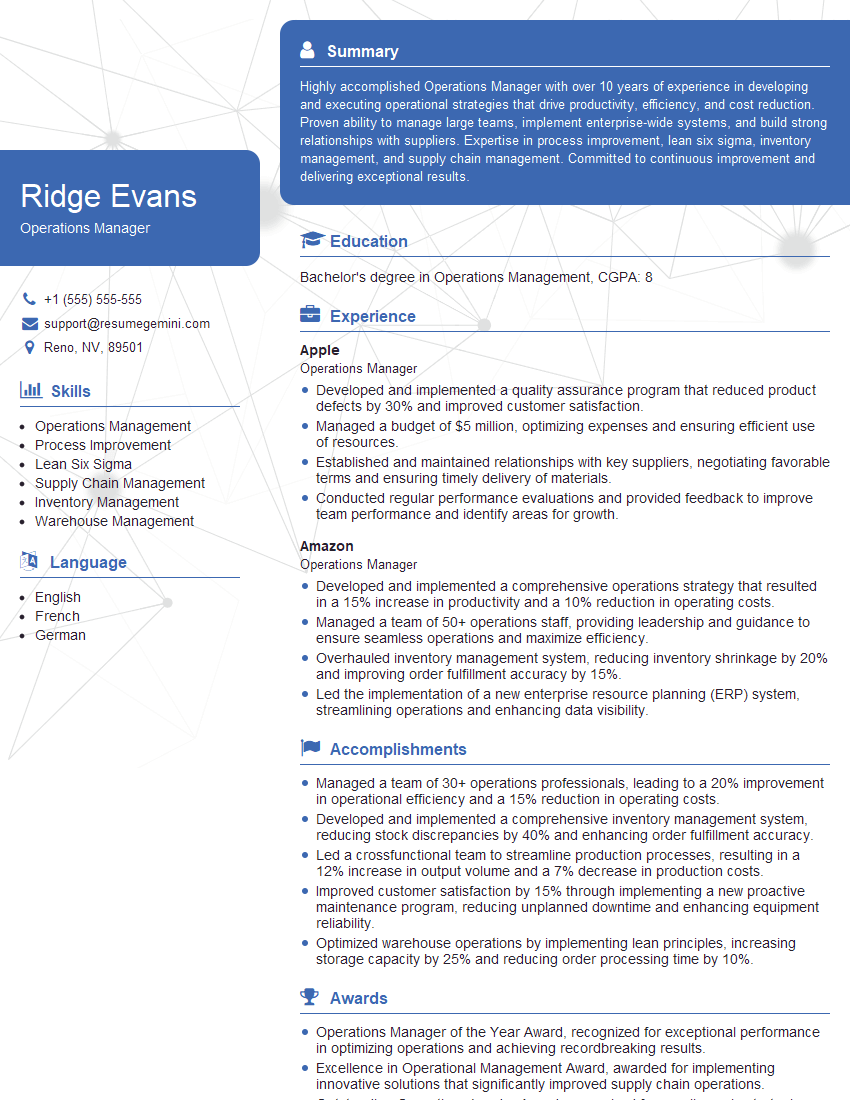
Operations Manager Resume Sample
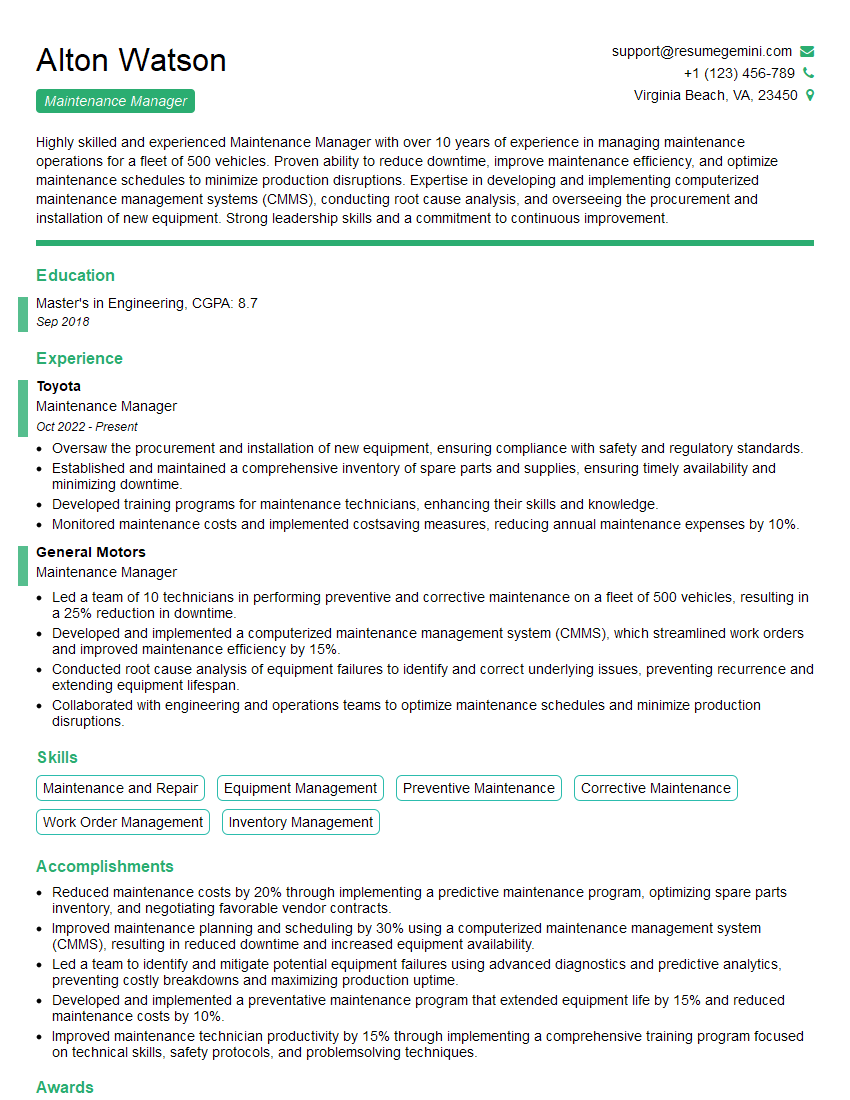
Maintenance Manager Resume Sample
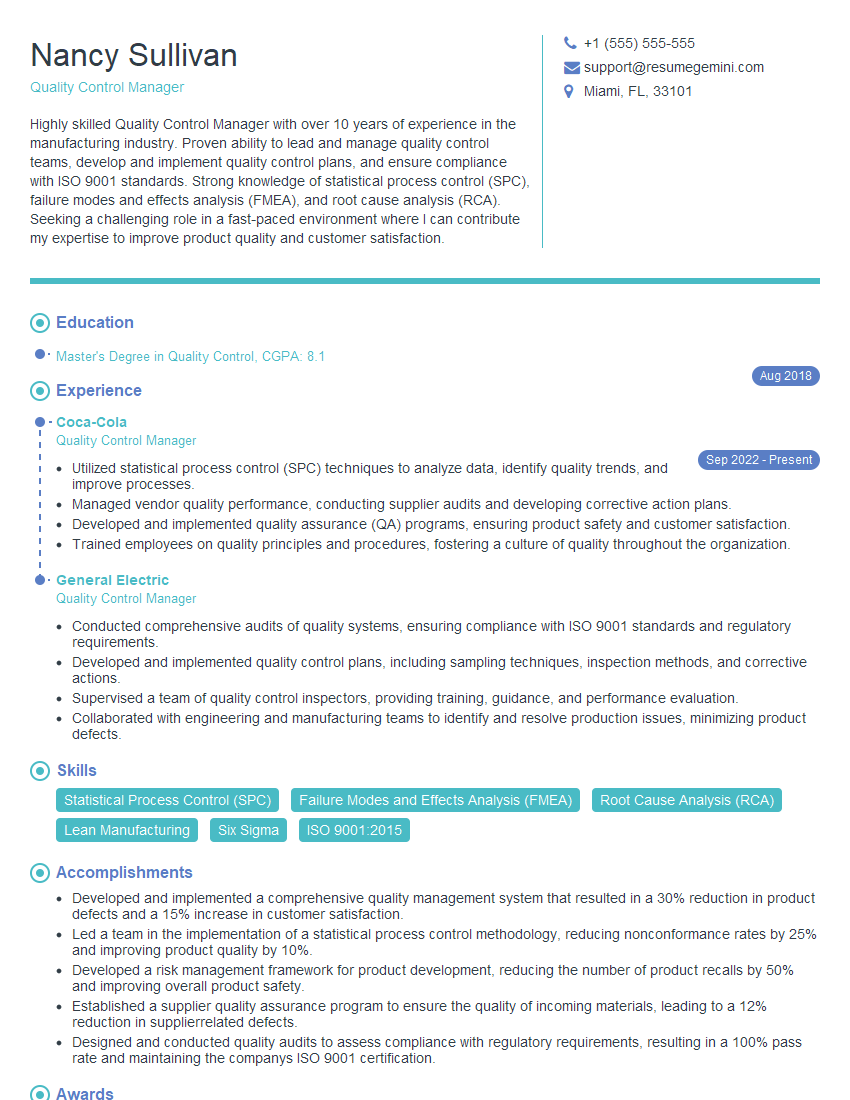
Quality Control Manager Resume Sample
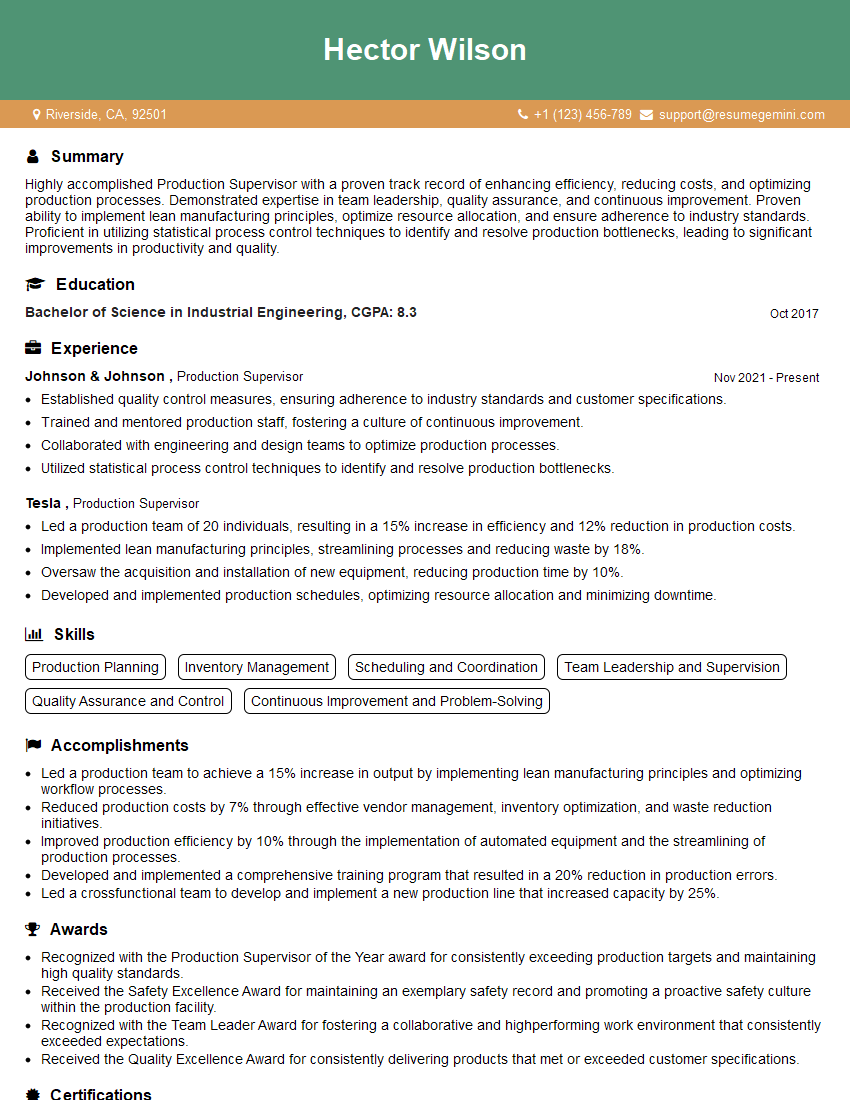
Production Supervisor Resume Sample

Project Manager Resume Sample

Project Engineer Resume Sample
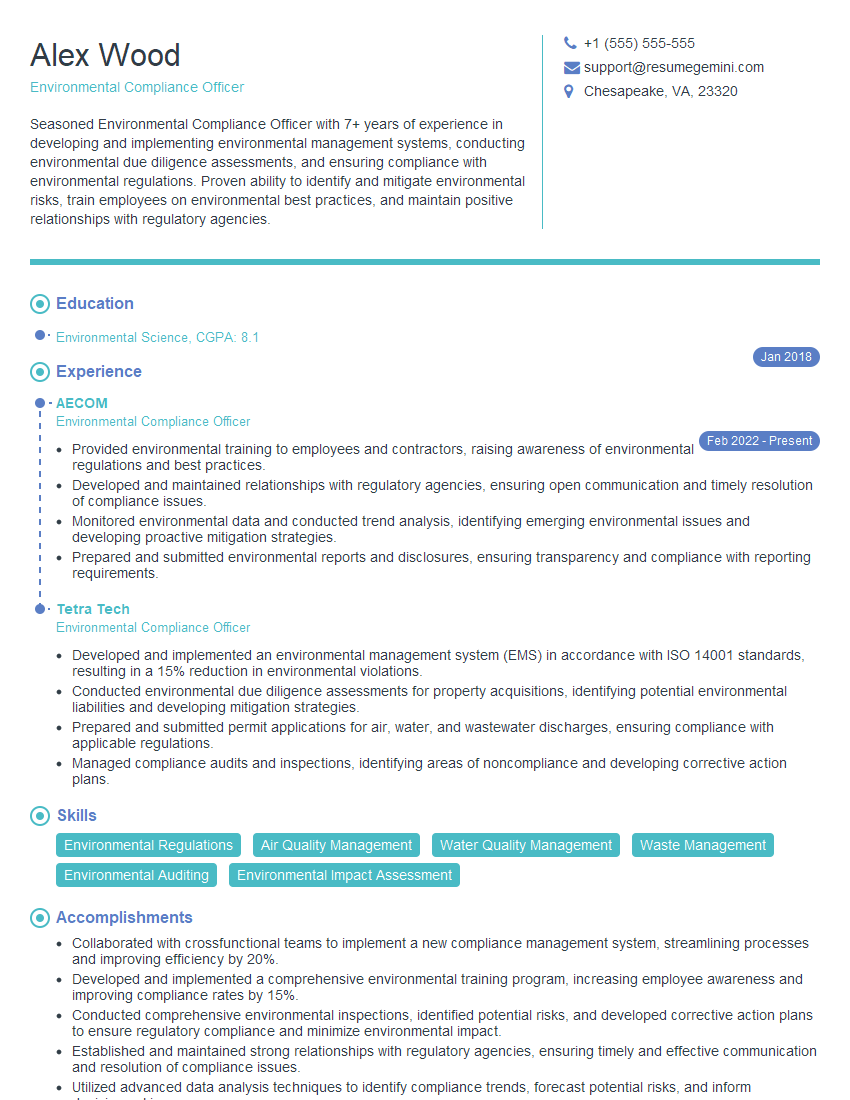
Environmental Compliance Officer Resume Sample
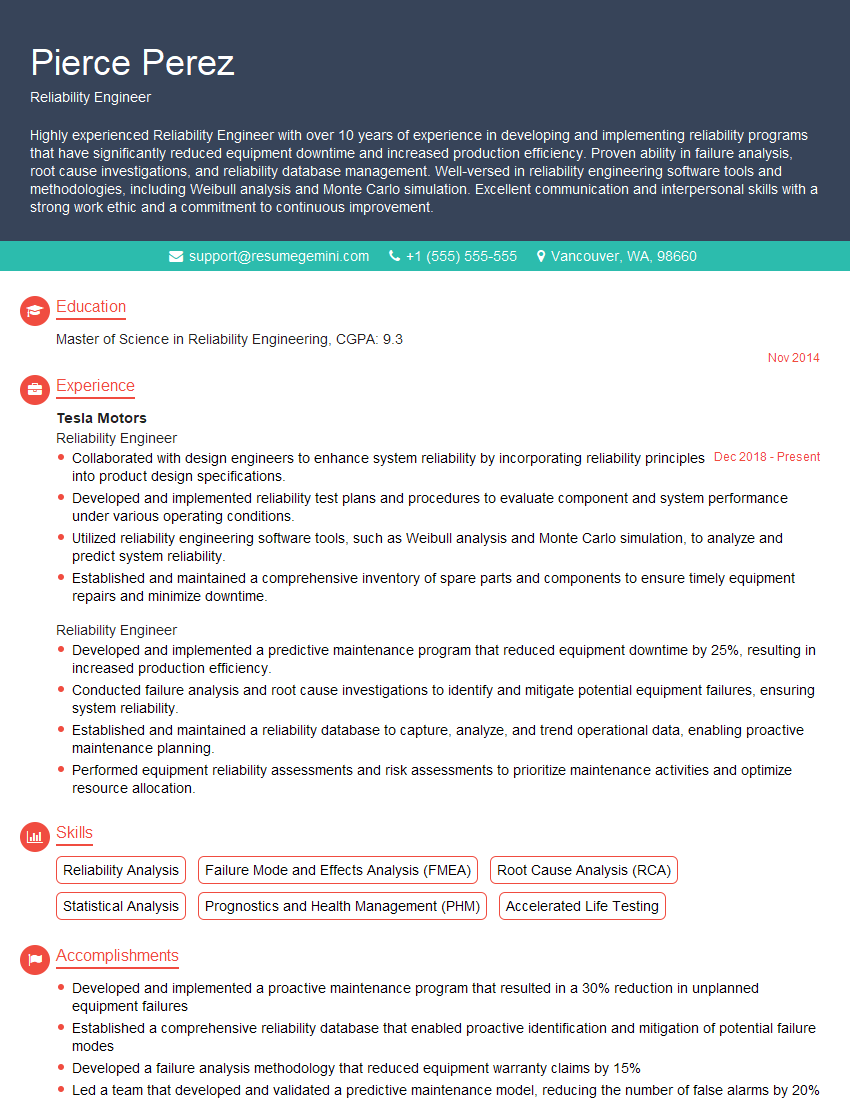
Reliability Engineer Resume Sample
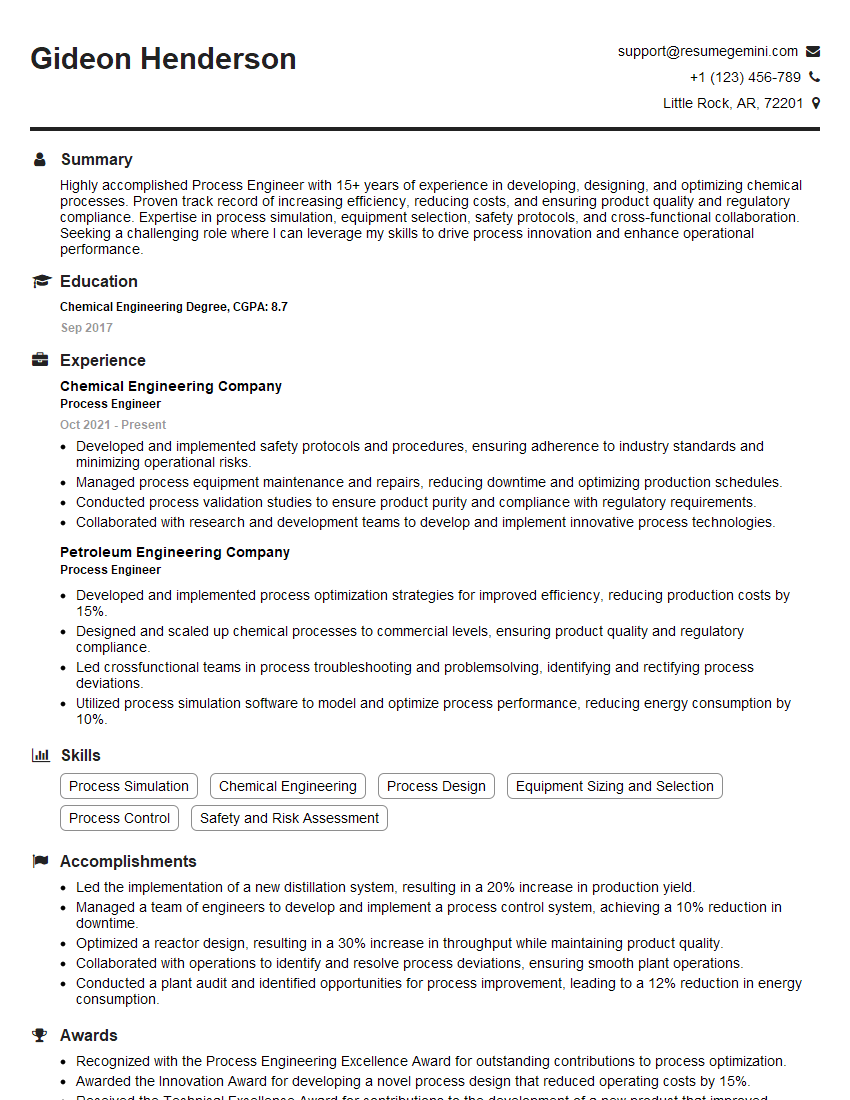
Process Engineer Resume Sample
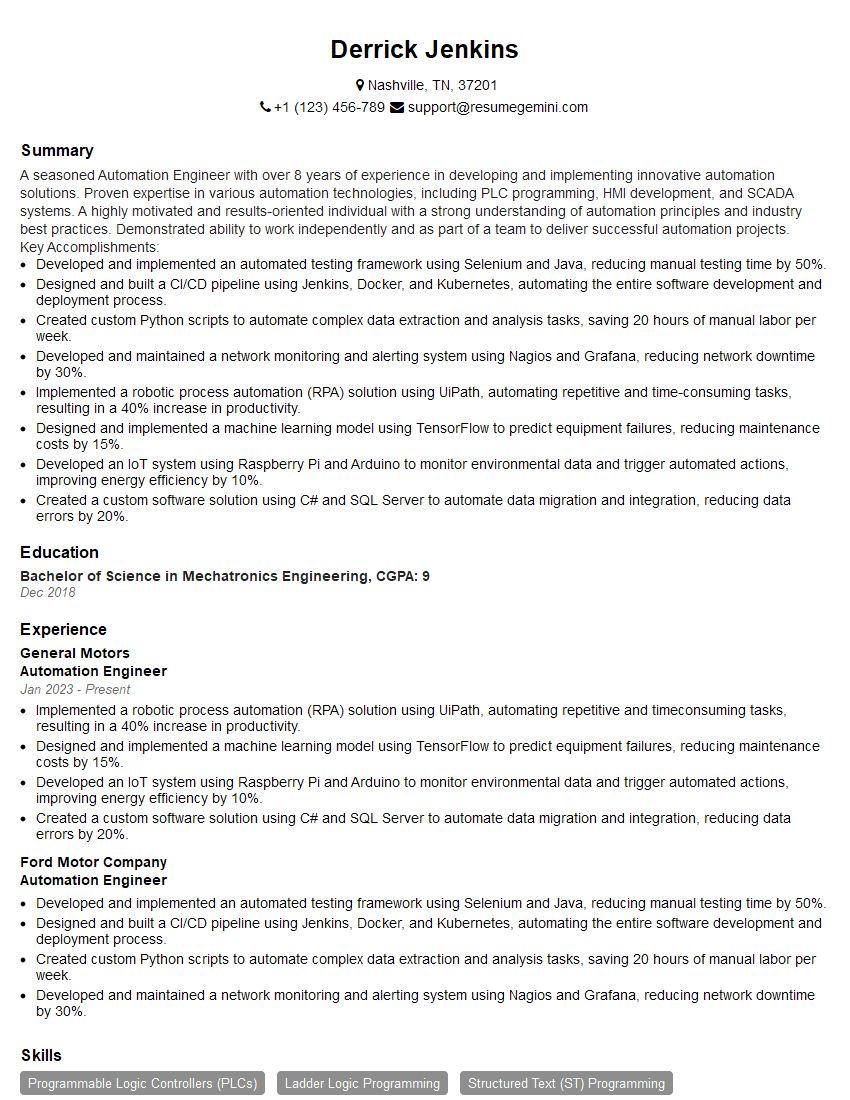
Automation Engineer Resume Sample
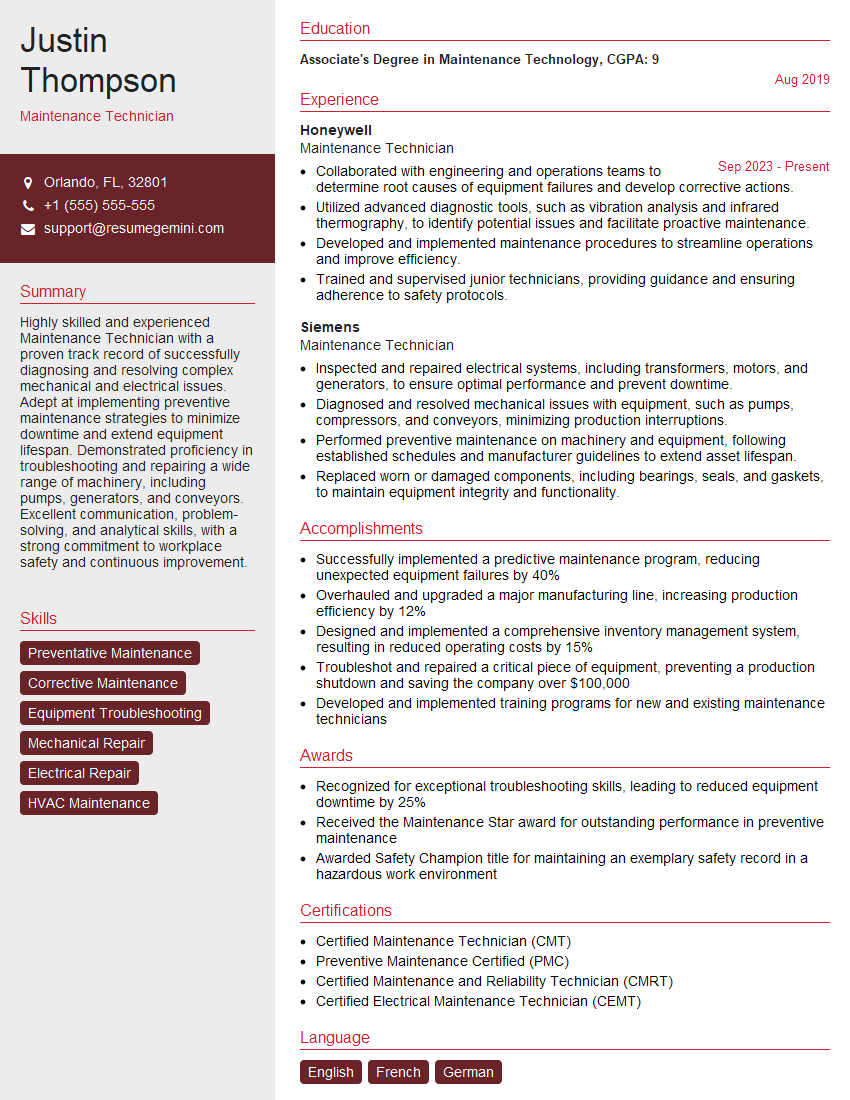
Maintenance Technician Resume Sample
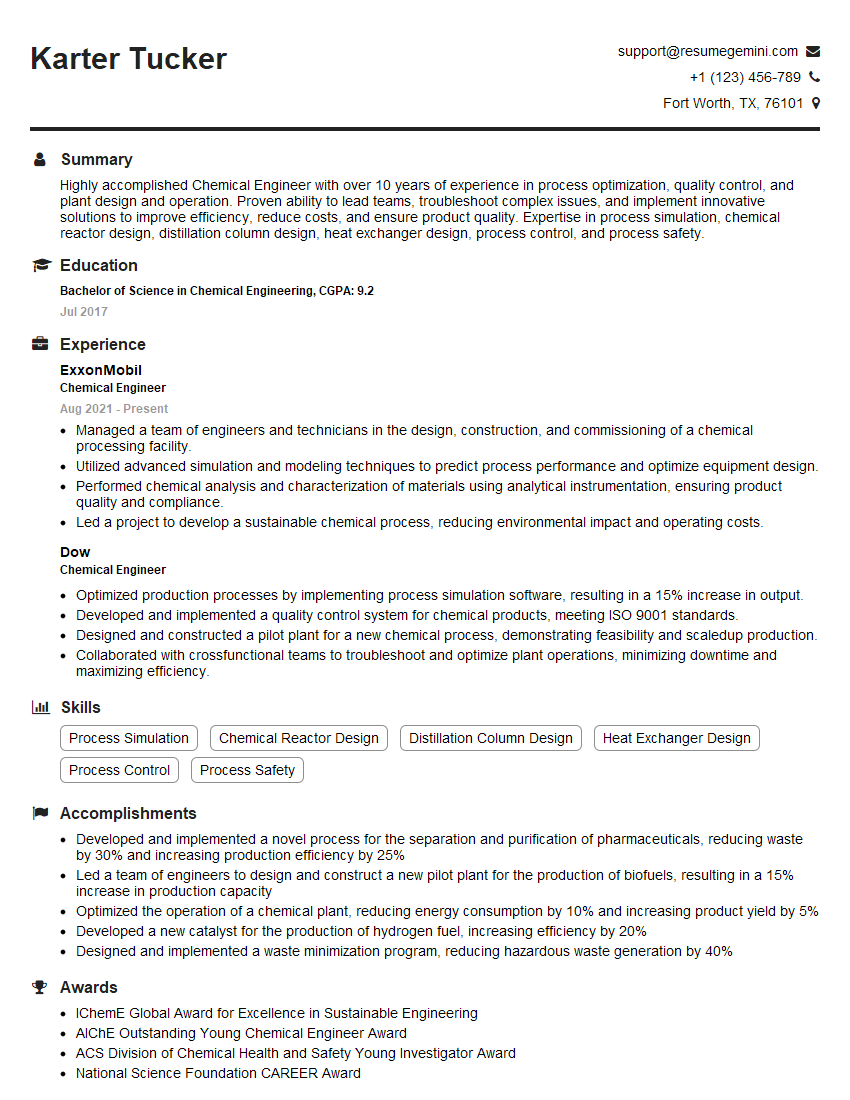
Chemical Engineer Resume Sample
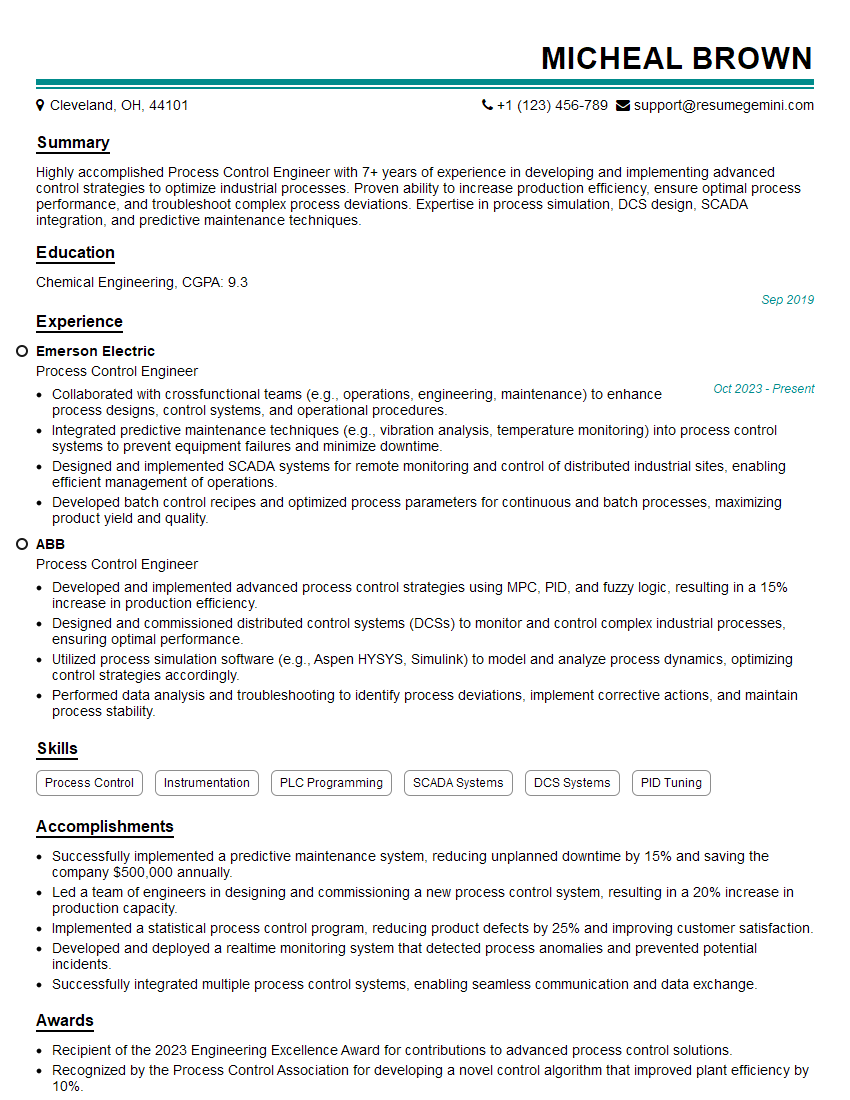
Process Control Engineer Resume Sample
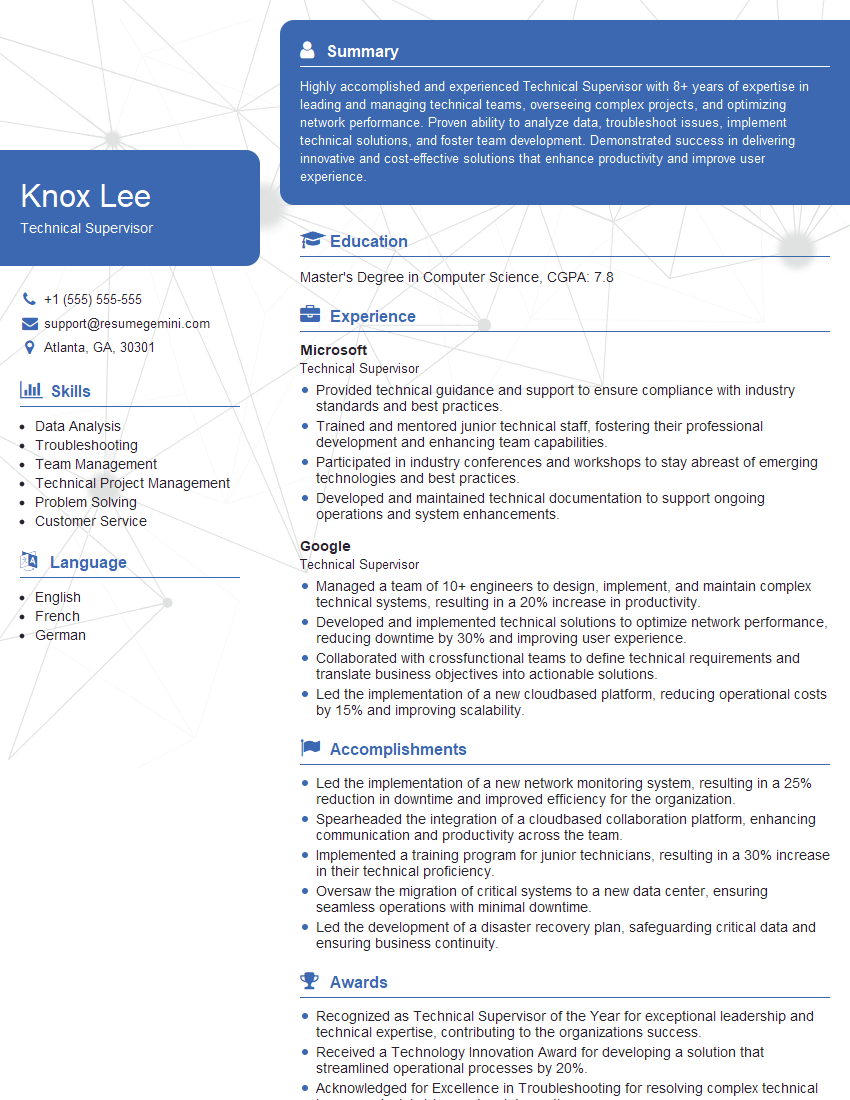
Technical Supervisor Resume Sample
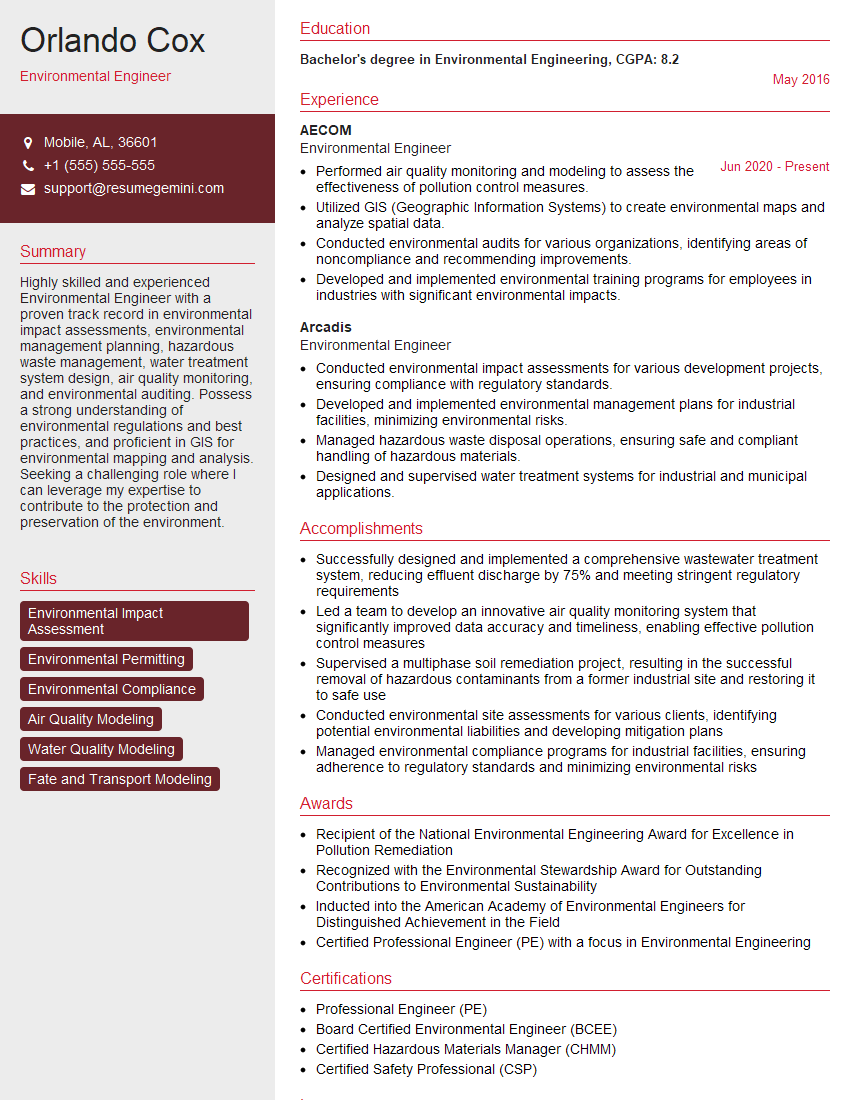
Environmental Engineer Resume Sample
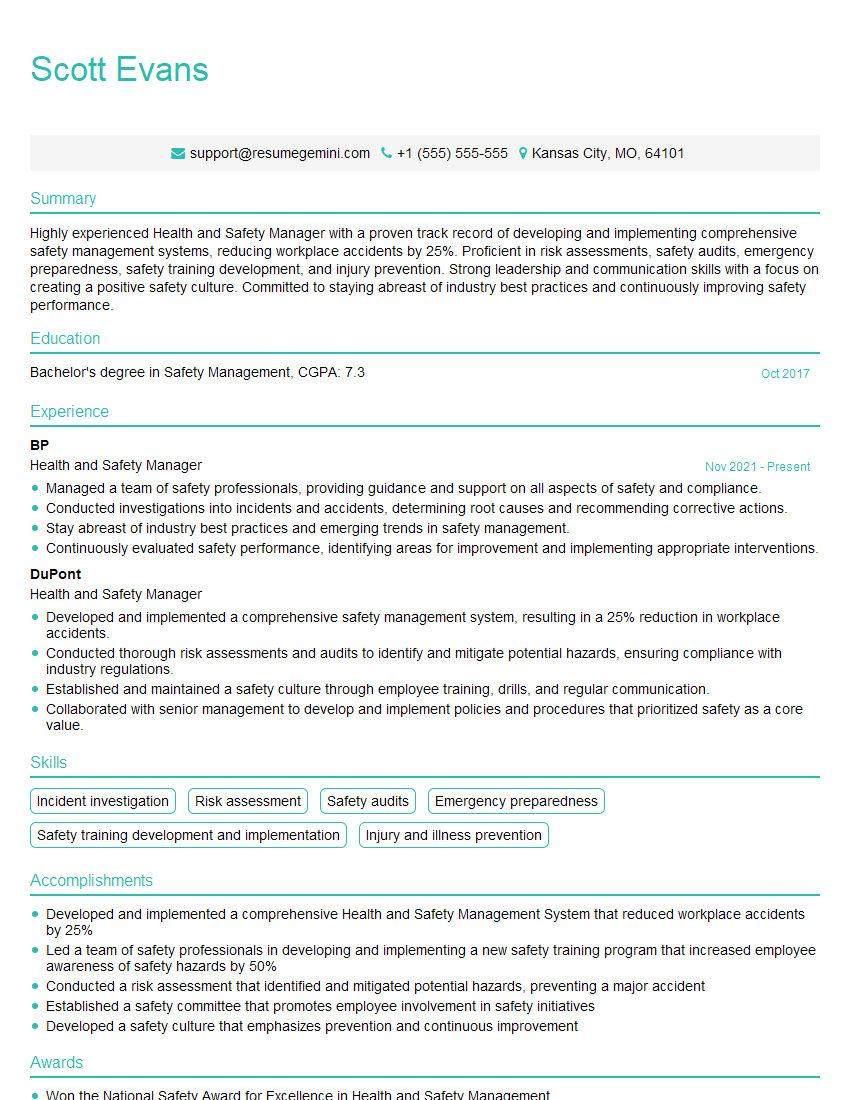
Health and Safety Manager Resume Sample
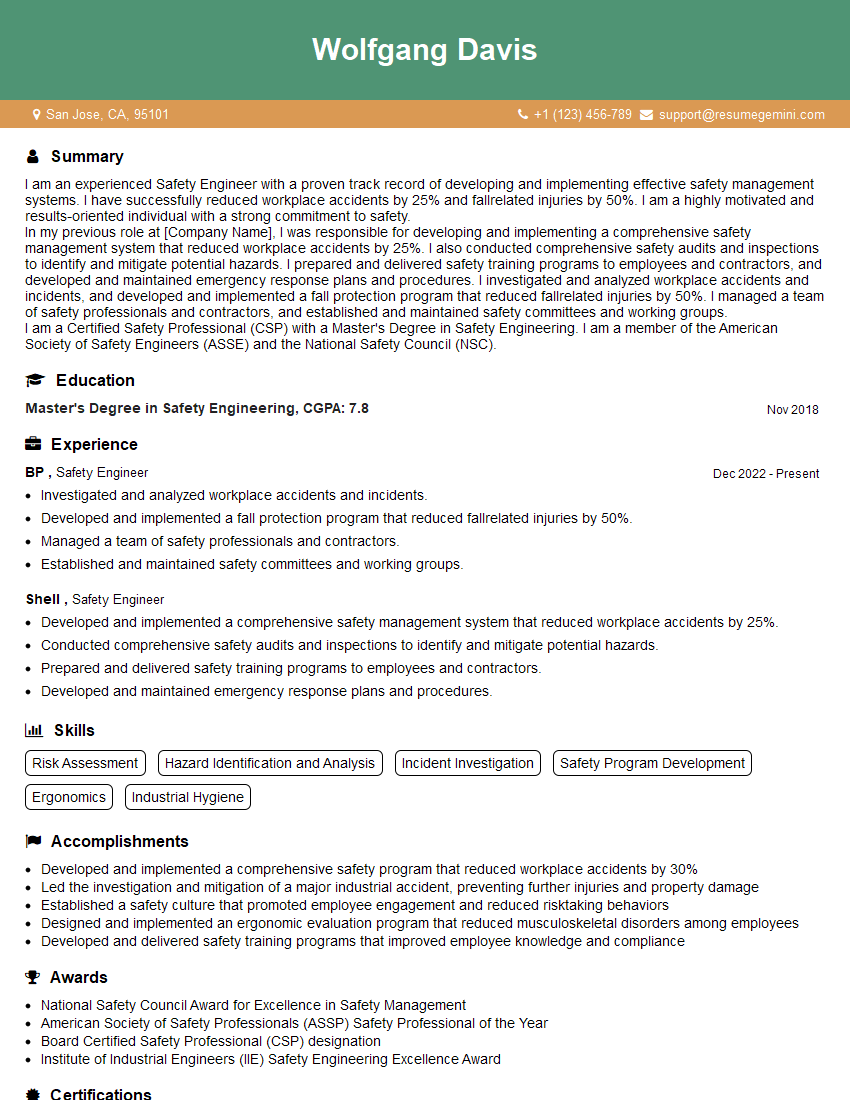
Safety Engineer Resume Sample
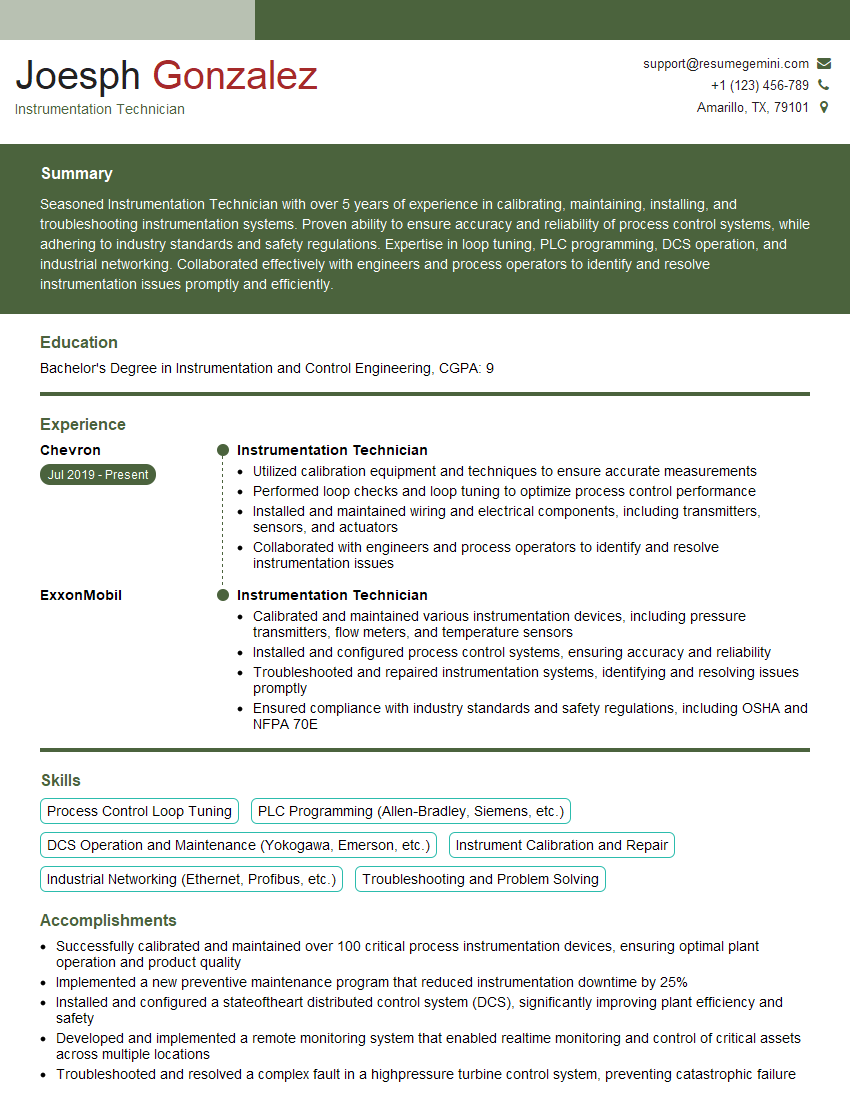
Instrumentation Technician Resume Sample
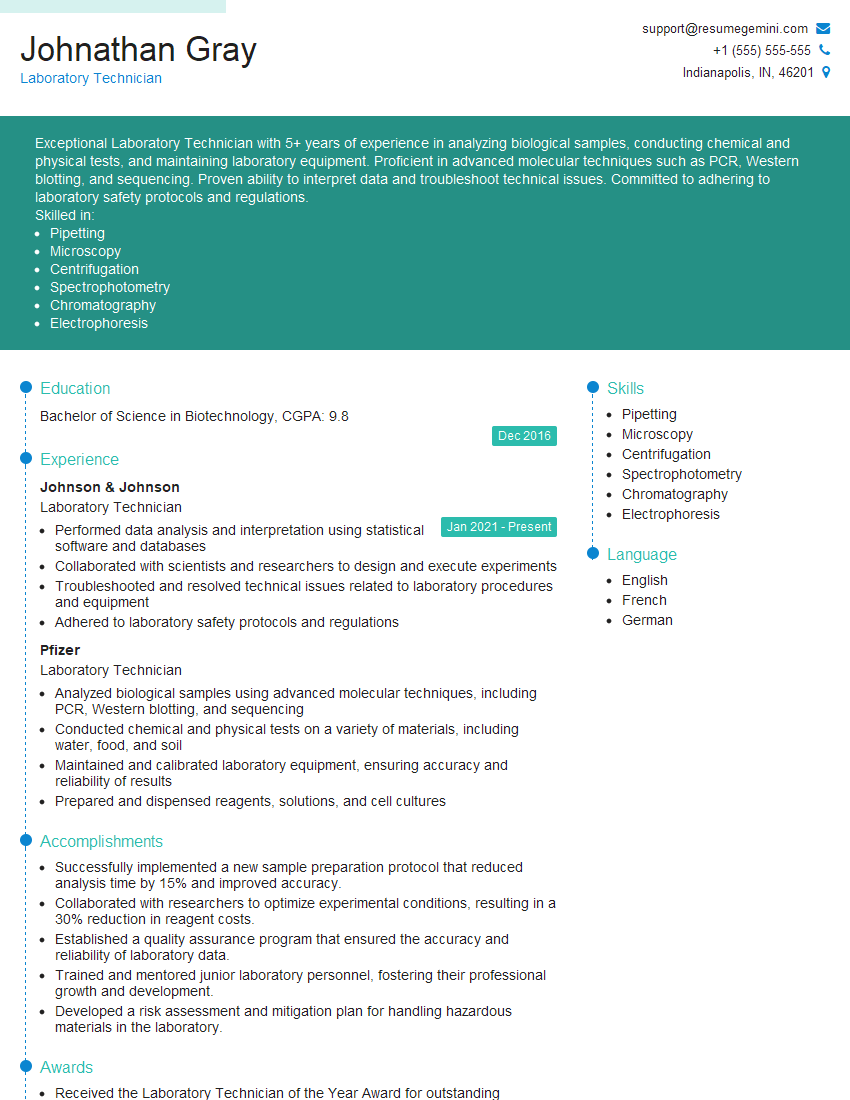
Laboratory Technician Resume Sample
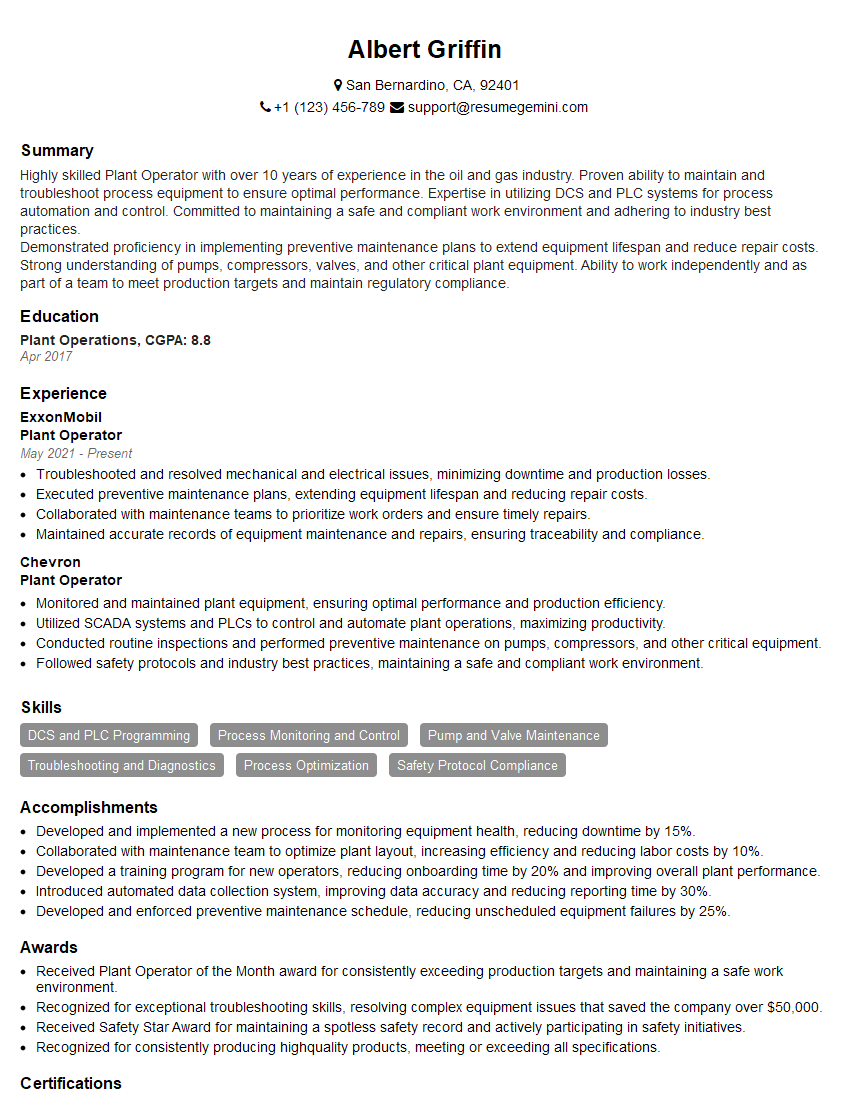
Plant Operator Resume Sample
- Operations Manager
- Maintenance Manager
- Quality Control Manager
- Production Supervisor
- Project Manager
- Project Engineer
- Environmental Compliance Officer
- Reliability Engineer
- Process Engineer
- Automation Engineer
- Maintenance Technician
- Chemical Engineer
- Process Control Engineer
- Technical Supervisor
- Environmental Engineer
- Health and Safety Manager
- Safety Engineer
- Instrumentation Technician
- Laboratory Technician
- Plant Operator
Explore more articles
Users Rating of Our Blogs
Share Your Experience
We value your feedback! Please rate our content and share your thoughts (optional).
What Readers Say About Our Blog
To the interviewgemini.com Webmaster.
Very helpful and content specific questions to help prepare me for my interview!
Thank you
To the interviewgemini.com Webmaster.
This was kind of a unique content I found around the specialized skills. Very helpful questions and good detailed answers.
Very Helpful blog, thank you Interviewgemini team.