Preparation is the key to success in any interview. In this post, we’ll explore crucial Work-Related Injury and Illness Prevention interview questions and equip you with strategies to craft impactful answers. Whether you’re a beginner or a pro, these tips will elevate your preparation.
Questions Asked in Work-Related Injury and Illness Prevention Interview
Q 1. Describe your experience conducting workplace hazard assessments.
Conducting a workplace hazard assessment is like a detective investigating a crime scene, but instead of a crime, we’re looking for potential dangers that could lead to injury or illness. It’s a systematic process of identifying hazards, evaluating risks, and determining control measures.
My approach involves a multi-faceted strategy. First, I conduct walkthrough inspections, physically observing the workplace and interacting with employees to understand their daily tasks and potential hazards they face. I then utilize checklists tailored to specific industries and work processes, ensuring a comprehensive review. For example, in a manufacturing facility, I’d focus on machine guarding, chemical handling, and proper lifting techniques. In an office setting, I’d assess workstation ergonomics, fire safety, and trip hazards. Finally, I interview employees at all levels – from management to frontline workers – as their perspectives are crucial in identifying overlooked hazards. The findings are documented in a detailed report, prioritizing hazards based on likelihood and severity of potential injury. This report then forms the basis for developing a comprehensive risk mitigation plan.
For example, in one manufacturing plant, our walkthrough inspection revealed a lack of proper machine guarding on a high-speed press, presenting a significant risk of amputation. By interviewing operators, we uncovered additional hazards including inadequate lighting and confusing emergency stop procedures. Our report detailed these findings, leading to immediate implementation of machine guarding, improved lighting, and revised safety procedures, thus drastically reducing the risk of serious injury.
Q 2. Explain your understanding of OSHA regulations (or relevant local regulations).
My understanding of OSHA regulations (and equivalent local regulations where applicable) is comprehensive. I’m intimately familiar with the General Duty Clause, which mandates employers to provide a workplace free from recognized hazards. I understand the specific requirements for various industries, focusing on hazard communication, personal protective equipment (PPE), machine guarding, lockout/tagout procedures, and emergency action plans. I regularly stay updated on new regulations and amendments through OSHA’s website, professional development courses, and industry publications.
For example, I know the detailed requirements for Hazard Communication, specifically the proper labeling and safety data sheet (SDS) management for chemicals. Understanding these regulations allows me to ensure that employers correctly label containers, provide easily accessible SDSs, and train employees on safe chemical handling procedures. Similarly, I’m versed in regulations regarding fall protection, ensuring compliance with standards for fall arrest systems, safety harnesses, and other appropriate equipment in high-risk environments.
Staying up-to-date is crucial. Regulatory changes are frequent, and keeping abreast of these ensures my recommendations remain compliant and effective. This is not just about avoiding penalties but, more importantly, ensuring employee well-being and a safe working environment.
Q 3. How do you develop and implement safety training programs?
Developing and implementing safety training programs is about more than just ticking boxes; it’s about fostering a safety culture. It begins with a needs assessment—identifying the specific hazards and the training gaps amongst employees. I then design training programs that are engaging, relevant, and tailored to the specific audience, utilizing various methods like interactive presentations, hands-on demonstrations, and scenario-based exercises.
My approach uses the ADDIE model (Analysis, Design, Development, Implementation, and Evaluation) to create effective training. The analysis phase pinpoints knowledge gaps; design creates the curriculum; development involves producing the materials; implementation is the actual training delivery; and evaluation measures the program’s effectiveness. For instance, if the hazard is improper lifting techniques, we’d demonstrate correct body mechanics, provide practical exercises with weighted objects, and follow up with on-the-job observation.
Post-training assessments, both written and practical, are essential to gauge employee understanding and competency. Furthermore, ongoing reinforcement is crucial through regular refresher courses, toolbox talks, and safety campaigns. This holistic approach ensures that safety training is not a one-time event, but an ongoing process reinforcing safe work practices. A good program considers varying learning styles, using visuals, demonstrations, and hands-on activities to ensure all employees understand and can apply the information.
Q 4. What methods do you use to investigate workplace accidents?
Investigating workplace accidents requires a systematic approach, akin to solving a complex puzzle. It begins with securing the scene, if possible, and preventing further incidents. Then, I gather information from multiple sources: interviewing witnesses (both involved and bystanders), reviewing incident reports, examining physical evidence (damaged equipment, tools, etc.), and analyzing the accident site. I meticulously document all findings, using photos, diagrams, and detailed notes.
My approach is data-driven and objective, aiming to identify the root cause of the accident, not just the proximate cause. The “5 Whys” technique helps to delve deeper into the causal chain. For instance, if an employee tripped on a loose cable, the first “why” might be “because the cable was loose.” The next “why” would be “because it wasn’t properly secured.” And so on, until we reach the root cause, which might be a lack of proper maintenance procedures or inadequate training on cable management.
The investigation concludes with a detailed report outlining the findings, root causes, and recommendations for corrective actions. These recommendations are not just for preventing recurrence of the specific accident, but for addressing the underlying systemic issues that may have contributed to it. This process isn’t about assigning blame but about learning from mistakes to improve workplace safety.
Q 5. Explain your approach to ergonomic risk assessment and mitigation.
Ergonomic risk assessment and mitigation involves analyzing how a work environment impacts the physical well-being of employees. This means evaluating workstations, tools, and work processes to identify factors that could cause musculoskeletal disorders (MSDs) like carpal tunnel syndrome, back pain, or repetitive strain injuries. My approach uses a combination of methods, including observation, interviews, and standardized questionnaires.
Observation involves watching employees perform their tasks to identify awkward postures, repetitive movements, and excessive force exertion. Interviews gather employee feedback regarding discomfort or pain experienced during work. Questionnaires help assess the risk factors present in specific tasks. This combined approach helps in identifying ergonomic hazards.
Mitigation focuses on implementing changes to reduce the risk of MSDs. This could involve adjusting workstation heights, providing ergonomic chairs and keyboards, implementing job rotation, providing tools that reduce force exertion, and promoting regular stretching and exercise breaks. For example, in an office setting, I might recommend adjustable desks, ergonomic chairs, and proper monitor placement to minimize strain. In a manufacturing setting, I’d focus on tool design, workstation layout, and the use of ergonomic assistive devices to reduce repetitive movements. After implementing changes, I’d monitor their effectiveness to ensure injury rates decrease and employee well-being is improved.
Q 6. How do you prioritize safety initiatives within a budget?
Prioritizing safety initiatives within a budget requires a strategic approach, balancing the cost of implementation with the potential cost of not implementing the necessary measures. I use a risk-based approach, prioritizing interventions based on the likelihood and severity of potential injuries or illnesses. This involves a cost-benefit analysis, calculating the potential costs of accidents (medical expenses, lost productivity, legal fees) against the cost of implementing safety measures.
For example, a high-risk hazard with a high probability of occurrence might warrant a larger budget allocation than a low-risk hazard, even if the potential cost of the latter is technically higher. This prioritization allows for the most effective allocation of resources. Furthermore, I explore cost-effective solutions, such as improving existing equipment rather than replacing it, implementing employee training programs instead of purchasing expensive equipment, and collaborating with vendors to find affordable safety solutions.
Phased implementation is another strategy I employ, focusing on high-impact interventions first, and then gradually addressing other hazards as budget allows. Transparent communication with stakeholders is essential to explain the rationale behind prioritization decisions. This collaborative approach helps build support for safety initiatives across the organization, increasing the likelihood of successful implementation, even with budget constraints.
Q 7. Describe your experience with incident reporting and record-keeping.
Incident reporting and record-keeping are vital for tracking safety performance, identifying trends, and improving workplace safety. My experience involves developing and implementing comprehensive incident reporting systems that are user-friendly and effective. These systems ensure consistent, accurate, and timely recording of all incidents, including near misses, injuries, and property damage. This data is crucial for understanding the root causes of incidents and for demonstrating compliance with regulatory requirements.
I use a combination of methods, including digital reporting platforms, paper-based forms (in some situations), and regular audits to ensure data accuracy and completeness. Confidential reporting mechanisms are crucial to encourage employees to report incidents without fear of retribution. Data analysis is performed regularly, identifying trends and patterns that highlight recurring hazards or areas needing attention. These analyses inform the development of new safety initiatives and help in evaluating the effectiveness of existing interventions.
Beyond simple record-keeping, I ensure that reports are meticulously detailed, including descriptions of the incident, contributing factors, injuries sustained, and corrective actions taken. This comprehensive approach facilitates effective investigations, meaningful data analysis, and informed decision-making in enhancing workplace safety. The data also serves as evidence of compliance and allows us to track progress over time in reducing workplace incidents.
Q 8. What are your strategies for promoting a safety-conscious culture?
Promoting a safety-conscious culture isn’t a one-time event; it’s an ongoing process requiring consistent effort and a multi-pronged approach. It’s about shifting the mindset from ‘safety is a rule’ to ‘safety is a value’.
- Leadership Commitment: Visible and vocal support from top management is paramount. Leaders must actively participate in safety initiatives, setting the tone and demonstrating commitment through their actions.
- Employee Involvement: Safety should be everyone’s responsibility. Encourage employees to identify hazards, participate in safety meetings, and contribute to solutions. Regular safety audits conducted by employee teams are very effective.
- Training and Education: Comprehensive and engaging safety training programs are essential. This includes both initial training and regular refresher courses, tailored to specific job roles and hazards.
- Recognition and Rewards: Acknowledge and reward safe behaviors. Publicly recognizing employees who demonstrate a commitment to safety boosts morale and reinforces positive actions. This could involve awards, certificates, or even simple verbal praise.
- Open Communication: Foster a culture where employees feel comfortable reporting near misses and incidents without fear of reprisal. Regular communication channels like newsletters, toolbox talks, and safety committees facilitate open dialogue.
- Incident Investigation: Thoroughly investigate every incident, regardless of severity. Use these events as learning opportunities to identify root causes and implement corrective actions to prevent recurrence. This should never feel like a blame game.
For example, in a previous role, we implemented a peer-to-peer safety observation program. Employees were trained to identify and report hazards, and those who reported significant hazards received a small reward and public recognition. This fostered a sense of shared responsibility and significantly improved safety reporting rates.
Q 9. How do you communicate safety information effectively to diverse workforces?
Effective communication in diverse workforces requires sensitivity to language barriers, literacy levels, and cultural differences. A ‘one-size-fits-all’ approach is rarely successful.
- Multilingual Materials: Provide safety information in multiple languages, ensuring accuracy and clarity in translation.
- Visual Aids: Use pictures, diagrams, and videos to supplement written materials, making information accessible to those with low literacy levels or language barriers. Think of pictograms instead of only text-heavy instructions.
- Interactive Training: Incorporate interactive elements into training sessions, such as role-playing, games, and hands-on activities, to enhance engagement and understanding. Make it memorable and easy to apply.
- Cultural Sensitivity: Adapt communication styles to be culturally appropriate. Consider cultural norms and communication preferences when designing and delivering safety messages. This shows respect and promotes trust.
- Different Communication Channels: Leverage a variety of communication channels to reach diverse audiences. This includes posters, emails, text messages, toolbox talks, and even informal conversations.
For example, in a construction site with a largely Spanish-speaking workforce, we used bilingual supervisors to translate safety briefings and also implemented a system of visual safety checklists that employees could easily follow.
Q 10. Explain your experience with developing and implementing safety policies and procedures.
Developing and implementing safety policies and procedures requires a systematic approach, starting with a comprehensive risk assessment.
- Risk Assessment: Identify potential hazards through job hazard analyses (JHAs), workplace inspections, and incident investigations. This forms the basis for determining necessary safety measures.
- Policy Development: Based on the risk assessment, develop clear, concise, and enforceable safety policies that address identified hazards. The policies should align with relevant regulations and best practices.
- Procedure Creation: Develop detailed step-by-step procedures outlining safe work practices for specific tasks. These procedures should be easy to understand and follow.
- Training and Communication: Ensure all employees receive training on the new policies and procedures. This training should be practical and focus on application rather than just theory.
- Implementation and Monitoring: Implement the policies and procedures consistently. Regularly monitor compliance, and make adjustments as needed. Regular auditing and inspections are crucial.
- Documentation: Maintain detailed records of risk assessments, policy revisions, training records, and incident investigations.
In a previous role, I led the development of a new safety policy for working at heights, which included detailed procedures for using fall protection equipment and performing pre-task inspections. This resulted in a significant reduction in near misses and incidents related to working at heights.
Q 11. How familiar are you with different types of Personal Protective Equipment (PPE)?
Familiarity with PPE is crucial for ensuring worker safety. Different types of PPE are required depending on the specific hazards present in the workplace.
- Head Protection: Hard hats are essential for protecting against falling objects.
- Eye and Face Protection: Safety glasses, goggles, face shields protect against flying debris, chemicals, and radiation.
- Hearing Protection: Earplugs and earmuffs reduce noise exposure to prevent hearing loss.
- Respiratory Protection: Respirators protect against inhaling hazardous dusts, fumes, gases, and vapors.
- Hand Protection: Gloves protect hands from cuts, abrasions, chemicals, and extreme temperatures.
- Foot Protection: Safety boots and shoes protect feet from falling objects, punctures, and crushing hazards.
- Body Protection: Protective clothing such as coveralls, aprons, and high-visibility vests provide protection against various hazards.
It’s essential to select the appropriate PPE for the specific hazard, ensure proper fit and training, and enforce consistent usage. I have experience with selecting, procuring, and training employees on a wide range of PPE, always emphasizing the correct use and maintenance for optimal protection.
Q 12. Describe a time you identified a safety hazard and implemented a solution.
In a previous role, I noticed that employees were frequently tripping over loose cables running across the warehouse floor. This was a clear trip hazard and potential cause of serious injury.
Hazard Identification: Through observation and discussions with employees, I identified the loose cables as a significant safety hazard.
Solution Implementation: I proposed and implemented a solution involving:
- Cable Management System: Implementing a cable management system using cable trays, conduits, and labels to organize and secure the cables.
- Employee Training: Training all warehouse staff on the proper use of the new cable management system and reminding them to be more attentive.
- Regular Inspections: Establishing a schedule for regular inspections to ensure the cable management system was maintained and to identify any new hazards.
The implementation of this solution resulted in a significant reduction in near misses and trip-related incidents. This showcases a proactive approach to safety, going beyond just reacting to incidents and focusing on prevention.
Q 13. How do you ensure compliance with safety regulations?
Ensuring compliance with safety regulations requires a proactive and multi-faceted approach.
- Stay Updated: Regularly review and update knowledge on all relevant safety regulations, standards, and best practices. Legislation changes, so staying informed is vital.
- Risk Assessments: Conduct thorough risk assessments to identify potential hazards and implement controls to meet regulatory requirements.
- Policy and Procedure Development: Develop and implement clear safety policies and procedures that comply with all relevant regulations.
- Training and Communication: Ensure that all employees receive appropriate training on safety regulations and procedures.
- Record Keeping: Maintain accurate and up-to-date records of all safety-related activities, including risk assessments, incident investigations, and training records.
- Inspections and Audits: Conduct regular workplace inspections and safety audits to identify non-compliance and take corrective actions.
- Incident Investigation: Investigate all incidents thoroughly to determine root causes and identify opportunities for improvement.
For example, I’ve been directly involved in conducting internal audits to ensure compliance with OSHA regulations, and developed a system to maintain documentation for easy access during external inspections.
Q 14. How do you handle disagreements with employees regarding safety protocols?
Disagreements regarding safety protocols should be addressed professionally and constructively, prioritizing safety and mutual respect.
- Active Listening: Listen carefully to the employee’s concerns and perspectives without interrupting. Understand their point of view fully.
- Explain Rationale: Clearly explain the rationale behind the safety protocol, emphasizing the importance of safety and the potential consequences of non-compliance. Use data or evidence to support your points.
- Collaborative Problem-Solving: If the disagreement stems from a perceived inconvenience or difficulty, work collaboratively to find alternative solutions that address both safety and practical concerns. This shows flexibility and respect.
- Documentation: Document all discussions, agreements, and any agreed-upon changes to the protocol. This keeps a record for accountability and ensures everyone is on the same page.
- Escalation: If the disagreement cannot be resolved, escalate the issue to a higher level of management for further review and resolution. Follow established procedures within the company for conflict resolution.
Remember, safety is a team effort. Addressing disagreements respectfully and collaboratively fosters a positive safety culture and a safe work environment for everyone.
Q 15. What is your experience with safety audits and inspections?
Safety audits and inspections are crucial for proactive risk management. My experience encompasses conducting comprehensive walkthroughs of facilities, identifying potential hazards, and verifying compliance with safety regulations and company policies. This involves meticulously reviewing existing safety documentation, interviewing employees to gather firsthand accounts of workplace conditions, and using checklists tailored to specific work environments (e.g., construction sites vs. office settings). I’ve been involved in audits ranging from small-scale office spaces to large manufacturing plants, using a methodical approach to ensure thorough coverage. For instance, in a recent audit of a manufacturing facility, I identified a lack of proper machine guarding, leading to immediate corrective actions and a reduction in potential injury risks. My reports provide detailed findings, prioritized recommendations for improvements, and a timeline for implementation.
Career Expert Tips:
- Ace those interviews! Prepare effectively by reviewing the Top 50 Most Common Interview Questions on ResumeGemini.
- Navigate your job search with confidence! Explore a wide range of Career Tips on ResumeGemini. Learn about common challenges and recommendations to overcome them.
- Craft the perfect resume! Master the Art of Resume Writing with ResumeGemini’s guide. Showcase your unique qualifications and achievements effectively.
- Don’t miss out on holiday savings! Build your dream resume with ResumeGemini’s ATS optimized templates.
Q 16. Describe your understanding of risk assessment methodologies.
Risk assessment methodologies form the backbone of any effective safety program. My understanding encompasses several approaches, including the widely-used HAZOP (Hazard and Operability Study) and FMEA (Failure Mode and Effects Analysis) methods. HAZOP uses a structured process to identify potential hazards by systematically examining deviations from intended operational parameters. FMEA, on the other hand, focuses on identifying potential failures in a system and their consequences. I also leverage qualitative risk assessments, where hazards are ranked based on likelihood and severity, and quantitative risk assessments involving numerical data and calculations for a more precise evaluation. For example, in assessing the risks associated with working at heights, I might combine a qualitative assessment of the likelihood of a fall with a quantitative assessment of the potential injury severity based on fall height and impact surfaces.
A critical part of risk assessment is involving employees from all levels. Their insight into the day-to-day challenges and potential hazards is invaluable. This collaborative approach fosters ownership and helps develop more effective and practical safety measures.
Q 17. How do you measure the effectiveness of your safety programs?
Measuring the effectiveness of safety programs requires a multi-faceted approach that goes beyond simply tracking accident rates. While the leading indicator (number of near misses, safety violations) and lagging indicators (number of accidents, lost-time injuries) are crucial, I also consider factors such as employee participation in safety training and programs, the number and quality of safety suggestions submitted by employees, and the results of safety audits and inspections.
For example, a decrease in the number of near misses indicates that the program is successful in raising awareness and promoting safe behavior. Similarly, high employee participation in safety training suggests a commitment to improving safety culture. I use data analysis and reporting tools to track these metrics and identify areas for improvement, allowing for a data-driven approach to refine safety initiatives.
Q 18. How do you adapt safety measures to different work environments?
Adapting safety measures to different work environments is paramount. A one-size-fits-all approach simply won’t work. I consider several factors including the type of work being performed, the specific hazards present, and the regulatory environment. For example, safety measures on a construction site will be drastically different from those in an office environment. Construction sites require extensive personal protective equipment (PPE) training and strict adherence to fall protection protocols, whereas an office setting might focus on ergonomic assessments and fire safety procedures. I use a risk-based approach, tailoring the safety measures to the specific hazards identified through thorough risk assessments for each environment. This involves working closely with employees to understand their specific needs and concerns and to ensure the safety measures are practical and effective.
Q 19. Explain your understanding of different types of workplace hazards (physical, chemical, biological, ergonomic).
Workplace hazards span various categories, each demanding specific control measures.
- Physical Hazards: These include things like noise, vibration, radiation, extreme temperatures, and slips, trips, and falls. For example, prolonged exposure to loud machinery can cause hearing loss, requiring the use of hearing protection and engineering controls to reduce noise levels.
- Chemical Hazards: These involve exposure to hazardous chemicals through inhalation, ingestion, or skin contact. Proper labeling, ventilation, and personal protective equipment (like gloves and respirators) are crucial. Handling solvents requires strict adherence to safety data sheets (SDS) and proper disposal procedures.
- Biological Hazards: These include exposure to bacteria, viruses, fungi, and other biological agents. Healthcare settings are particularly vulnerable, necessitating protocols for handling infectious materials, proper sanitation, and the use of appropriate PPE like gowns and masks.
- Ergonomic Hazards: These relate to the design of the workplace and how it affects the worker’s physical capabilities. Poor posture, repetitive motions, and improper lifting techniques can lead to musculoskeletal disorders (MSDs). Ergonomic assessments identify these risks and recommend changes like adjustable workstations, proper lifting techniques training, and the use of ergonomic tools.
Q 20. Describe your experience working with safety committees or representatives.
I have extensive experience collaborating with safety committees and representatives. I believe their involvement is critical for successful safety programs. These committees provide a platform for employees to voice their concerns, identify hazards, and contribute to the development and implementation of safety measures. My role often involves facilitating meetings, providing training on safety regulations and best practices, and ensuring that the committee’s recommendations are properly addressed and implemented. In one instance, a safety committee highlighted concerns about inadequate lighting in a particular work area. This led to an improvement plan that included installing better lighting, ultimately reducing slips, trips, and falls.
Q 21. How do you balance safety with productivity?
Balancing safety and productivity is not a trade-off but a synergistic relationship. A safe workplace is a productive workplace. I approach this by implementing safety measures that are not only effective but also efficient. This involves utilizing technologies to enhance safety without hindering production, and designing safety protocols that are integrated into the workflow, rather than being an afterthought. For example, implementing automated safety systems can prevent accidents and improve productivity simultaneously. Regular safety training that is relevant and engaging empowers employees to work safely and efficiently. It’s also crucial to foster a safety culture where employees feel comfortable reporting near misses without fear of reprisal. Open communication and collaboration are essential to build a culture where safety and productivity reinforce each other.
Q 22. What are your strategies for managing workplace stress and burnout?
Managing workplace stress and burnout requires a multi-faceted approach focusing on both individual well-being and organizational culture. It’s not just about addressing symptoms but proactively preventing them.
- Promote a healthy work-life balance: Encourage employees to take breaks, use their vacation time, and disconnect after work hours. This might involve flexible work arrangements or clear communication about expected work hours. Think of it like regularly servicing a car – you need to prevent breakdowns, not just fix them when they happen.
- Implement stress management programs: Offer resources like yoga classes, mindfulness workshops, or access to Employee Assistance Programs (EAPs). These programs provide confidential support and tools for coping with stress. Imagine offering a gym membership – investing in your employees’ health is an investment in the company’s success.
- Foster a positive and supportive work environment: A culture of respect, open communication, and teamwork can significantly reduce stress levels. Regular team-building activities and opportunities for social interaction can help build camaraderie and reduce feelings of isolation. It’s like building a strong team – you support each other and share the load.
- Provide adequate training and resources: Ensure employees have the skills and tools necessary to do their jobs effectively. This reduces frustration and stress related to feeling overwhelmed or incompetent. This is like providing a skilled carpenter with the right tools – they’ll be more efficient and less stressed.
- Recognize and address workload imbalances: Monitor employee workload and ensure it’s manageable. Address excessive workloads promptly, perhaps through delegation or additional staffing. This prevents burnout from creeping in slowly and unexpectedly. It’s like regularly checking the weight capacity of a bridge – ensuring it doesn’t collapse under excess load.
Q 23. How do you ensure effective communication during emergency situations?
Effective communication during emergencies relies on pre-planning, clear roles, and readily accessible communication channels. Think of it like a well-rehearsed fire drill – everyone knows what to do and where to go.
- Establish clear communication protocols: Define who is responsible for what, how information will be disseminated (e.g., text alerts, email, public address system), and how to escalate critical situations. We might use a communication matrix to outline who needs to be informed at each stage of an emergency.
- Regular drills and training: Conduct regular emergency drills to familiarize employees with protocols and identify any weaknesses in the system. This ensures everyone understands their role and feels confident in their ability to respond effectively. Consider different emergency scenarios and adjust drills accordingly.
- Utilize multiple communication channels: Relying on a single channel can lead to failures; diverse channels offer redundancy and ensure information reaches everyone. A combination of email, text alerts, and a public address system can be effective.
- Designated communication personnel: Identify key personnel responsible for communication during an emergency, ensuring clear lines of authority and efficient information flow. These individuals might be trained in crisis communication techniques.
- Post-incident review: After an emergency, conduct a thorough review of the communication process, identifying areas for improvement. This is crucial for refining protocols and ensuring the system adapts to emerging needs. Use feedback from employees to refine the process and improve communication effectiveness.
Q 24. Describe your familiarity with various safety management systems (e.g., ISO 45001).
I am very familiar with various safety management systems, including ISO 45001. ISO 45001 is an internationally recognized standard for occupational health and safety management systems (OHSMS). It provides a framework for organizations to proactively manage risks, improve safety performance, and demonstrate their commitment to employee well-being.
My familiarity extends to understanding its core principles, including:
- Leadership commitment: Top management plays a crucial role in setting the safety culture and ensuring resources are allocated appropriately.
- Risk assessment and control: Identifying hazards, assessing risks, and implementing appropriate controls are central to the standard.
- Worker participation: Engaging workers in safety processes is essential for fostering a culture of safety and improving effectiveness.
- Legal compliance: The standard emphasizes compliance with relevant occupational health and safety legislation.
- Continuous improvement: Regular monitoring, review, and improvement are vital for maintaining and enhancing the OHSMS.
I have practical experience in implementing and auditing ISO 45001, ensuring compliance and helping organizations achieve certification.
Q 25. Explain your understanding of the hierarchy of controls in safety management.
The hierarchy of controls is a fundamental principle in safety management. It prioritizes control measures based on their effectiveness in eliminating or reducing hazards. The goal is to eliminate hazards at the source whenever possible, progressing to less effective controls only when elimination is not feasible.
The hierarchy typically follows this order:
- Elimination: The most effective control; removing the hazard entirely. Example: Replacing a dangerous chemical with a safer alternative.
- Substitution: Replacing a hazardous substance or process with a less hazardous one. Example: Replacing a manual lifting task with a mechanical lift.
- Engineering controls: Implementing physical changes to the workplace to reduce or eliminate hazards. Example: Installing guarding on machinery or improving ventilation.
- Administrative controls: Changes to work practices, procedures, or training to reduce exposure to hazards. Example: Implementing a permit-to-work system or providing safety training.
- Personal Protective Equipment (PPE): The least effective control; provides protection to the worker but doesn’t address the hazard itself. Example: Providing workers with safety glasses, gloves, or hearing protection.
It’s crucial to remember that the hierarchy is not a rigid sequence; sometimes, a combination of controls is necessary. For instance, you might substitute a hazardous chemical, implement engineering controls to reduce exposure, and also provide PPE as a final layer of protection.
Q 26. How do you use data and analytics to improve safety performance?
Data and analytics are essential for improving safety performance. By collecting, analyzing, and interpreting data on incidents, near misses, and other safety-related metrics, we can identify trends, root causes, and areas needing improvement.
My approach involves:
- Collecting relevant data: This includes incident reports, near-miss reports, inspection data, worker surveys, and safety training records.
- Data analysis: Using statistical methods and visualization tools to identify patterns, trends, and correlations in the data. This might involve identifying high-risk areas, activities, or employee demographics.
- Root cause analysis: Applying techniques like the ‘5 Whys’ or fishbone diagrams to understand the underlying causes of incidents.
- Developing and implementing interventions: Using data-driven insights to develop and implement targeted interventions, such as new safety training programs, changes to work procedures, or improvements to engineering controls.
- Monitoring and evaluating effectiveness: Tracking key safety metrics over time to assess the effectiveness of interventions and make adjustments as needed.
For example, if data shows a high incidence of slips and falls in a particular area, we might analyze the contributing factors (e.g., poor lighting, wet floors, inadequate footwear) and implement interventions such as improved lighting, improved floor cleaning procedures, or mandatory safety footwear. Regular review of the data will show if these interventions were effective.
Q 27. Describe your experience with conducting root cause analysis of workplace incidents.
I have extensive experience conducting root cause analyses of workplace incidents using various methods, including the ‘5 Whys,’ fault tree analysis, and fishbone diagrams. The goal is not simply to assign blame but to understand the underlying systemic issues that contributed to the incident, preventing recurrence.
My approach involves:
- Gathering information: Collecting detailed information from various sources, including eyewitnesses, incident reports, investigation notes, and any relevant documentation.
- Identifying contributing factors: Using a systematic approach (like the 5 Whys) to drill down to the root causes, identifying not only immediate causes but also underlying systemic issues. For example, a fall from a ladder might be caused by a damaged ladder, but the root cause might be a lack of regular inspection and maintenance procedures.
- Developing corrective actions: Based on the root cause analysis, developing specific and measurable corrective actions to prevent similar incidents from occurring. This might involve replacing equipment, improving training, or changing work procedures.
- Implementing and monitoring corrective actions: Ensuring the corrective actions are implemented effectively and monitoring their effectiveness over time.
- Documenting the process: Maintaining a detailed record of the investigation, including the findings, conclusions, and corrective actions taken. This is crucial for learning from mistakes and improving safety performance.
Q 28. What is your experience with near-miss reporting and analysis?
Near-miss reporting and analysis is a proactive approach to safety management. By identifying and analyzing near misses—events that could have resulted in an injury or incident but did not—we can prevent future accidents. It’s like recognizing a crack in a dam before it bursts.
My experience includes:
- Encouraging a culture of reporting: Creating a safe and non-punitive environment where employees feel comfortable reporting near misses without fear of reprisal. This often involves emphasizing that near misses are learning opportunities, not blame-worthy events.
- Developing a near-miss reporting system: Implementing a simple and efficient system for employees to report near misses, possibly using online forms or dedicated reporting software.
- Analyzing near-miss data: Identifying trends and patterns in near-miss reports to pinpoint areas needing improvement. This might reveal underlying systemic issues or high-risk activities.
- Implementing corrective actions: Based on the analysis, developing and implementing corrective actions to address identified hazards and prevent future near misses.
- Regular review and improvement: Continuously reviewing the near-miss reporting and analysis process to ensure its effectiveness and make improvements as needed.
For example, a near miss involving a worker almost being struck by a falling object might reveal a lack of proper storage procedures for materials. Addressing this through improved storage practices would prevent a potentially serious incident.
Key Topics to Learn for Work-Related Injury and Illness Prevention Interview
- Hazard Identification and Risk Assessment: Understanding methods for identifying workplace hazards (e.g., ergonomic, chemical, biological) and conducting thorough risk assessments to prioritize mitigation strategies.
- Ergonomics and Musculoskeletal Disorders (MSDs): Applying ergonomic principles to design workstations and job tasks, reducing the risk of MSDs such as carpal tunnel syndrome and back injuries. Practical application includes analyzing workplace layouts and recommending adjustments.
- Safety Training and Employee Engagement: Developing and delivering effective safety training programs, fostering a safety-conscious culture, and promoting employee participation in safety initiatives. This includes understanding different learning styles and communication techniques.
- Injury Investigation and Reporting: Conducting thorough investigations of work-related injuries and illnesses, accurately documenting findings, and implementing corrective actions to prevent recurrence. This involves analyzing incident reports and identifying root causes.
- OSHA Regulations and Compliance: Demonstrating a comprehensive understanding of relevant OSHA (or equivalent agency) standards and regulations, and ensuring compliance within a workplace setting. This includes knowing how to interpret regulations and apply them to specific scenarios.
- Personal Protective Equipment (PPE): Selecting, fitting, and training employees on the proper use of PPE to minimize exposure to hazards. This includes understanding different types of PPE and their limitations.
- Return-to-Work Programs: Developing and implementing effective return-to-work programs to facilitate the safe and gradual return of injured employees to their jobs. This includes understanding modified duty assignments and reasonable accommodations.
- Data Analysis and Reporting: Analyzing safety data to identify trends, measure the effectiveness of safety programs, and inform future improvements. This involves using data to advocate for safety improvements and demonstrate ROI.
Next Steps
Mastering Work-Related Injury and Illness Prevention is crucial for career advancement in safety management and related fields. Demonstrating a strong understanding of these principles will significantly enhance your job prospects. To maximize your chances, create an ATS-friendly resume that showcases your skills and experience effectively. ResumeGemini is a trusted resource to help you build a professional and impactful resume. They provide examples of resumes tailored to Work-Related Injury and Illness Prevention to guide you in creating your own.
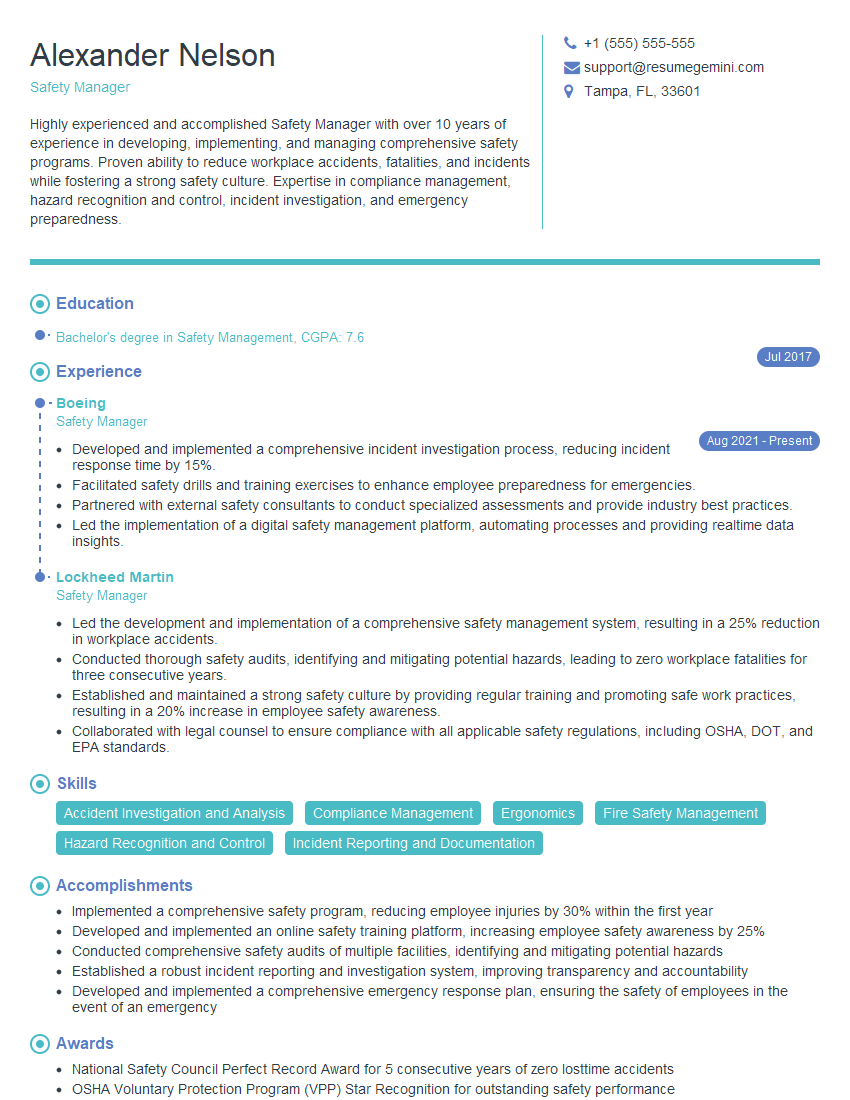
Safety Manager Resume Sample
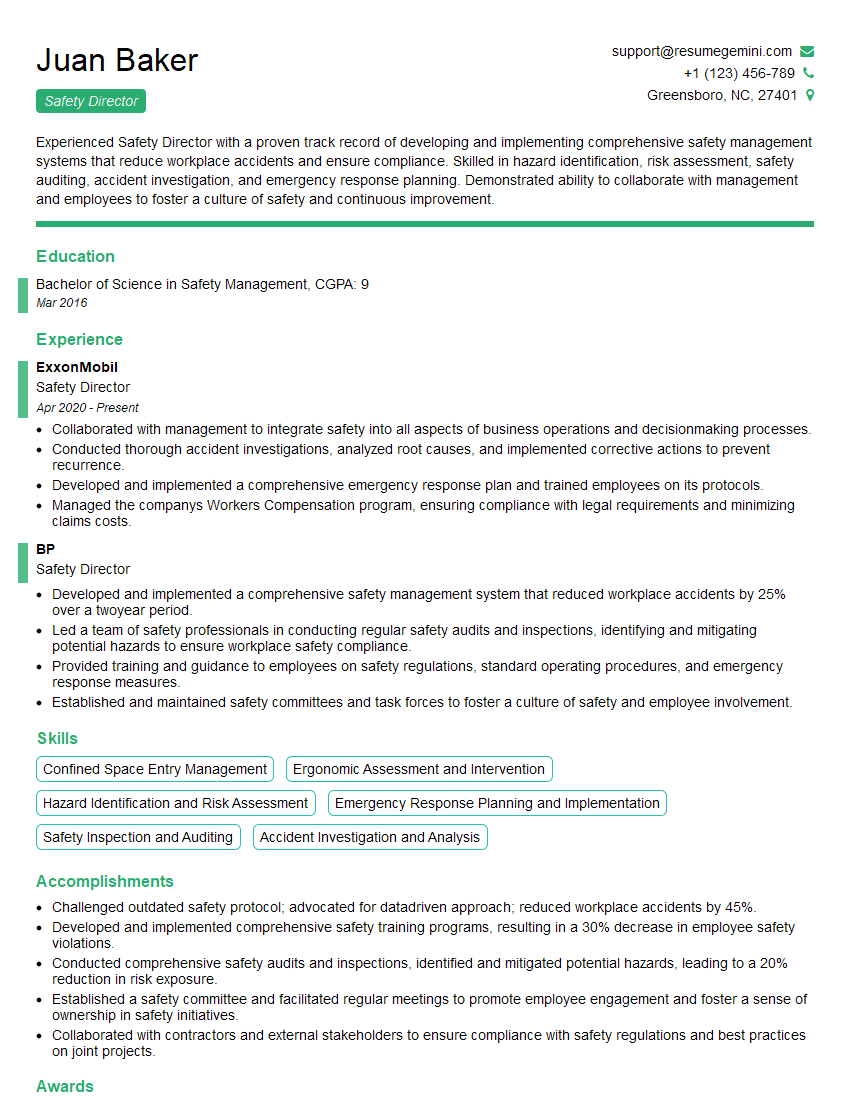
Safety Director Resume Sample
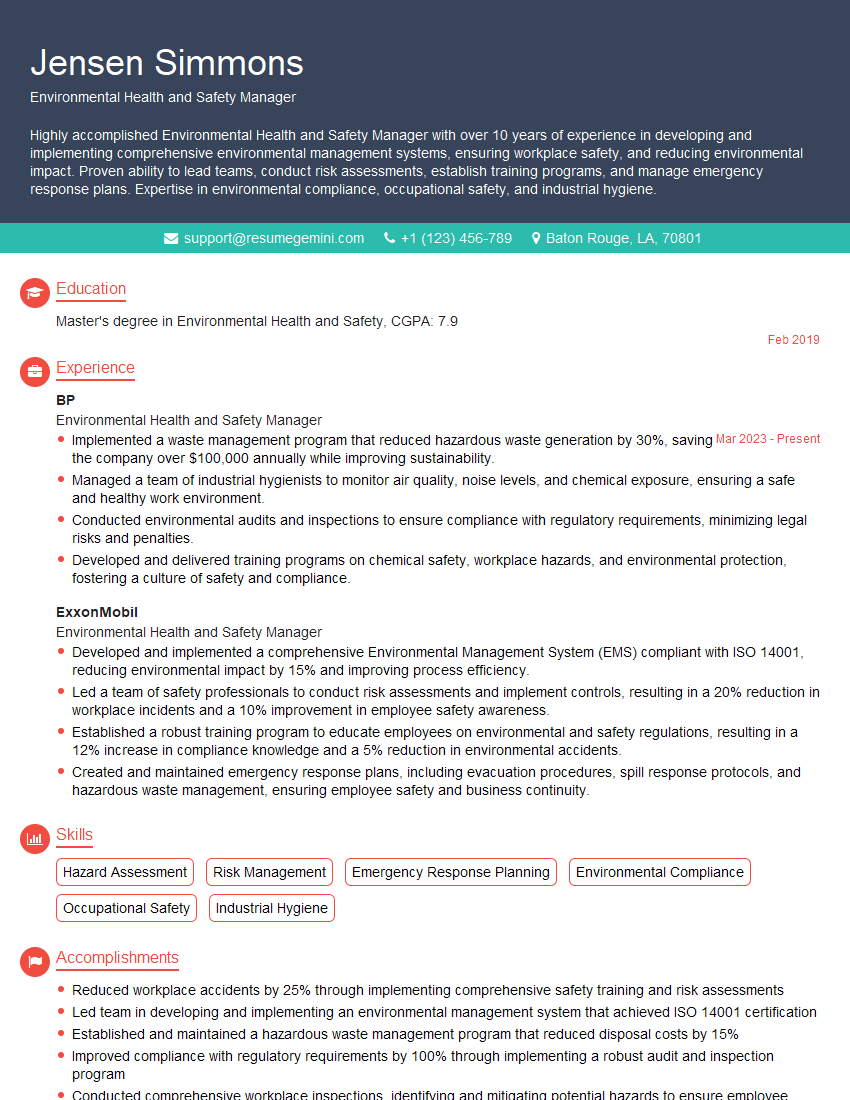
Environmental Health and Safety Manager Resume Sample
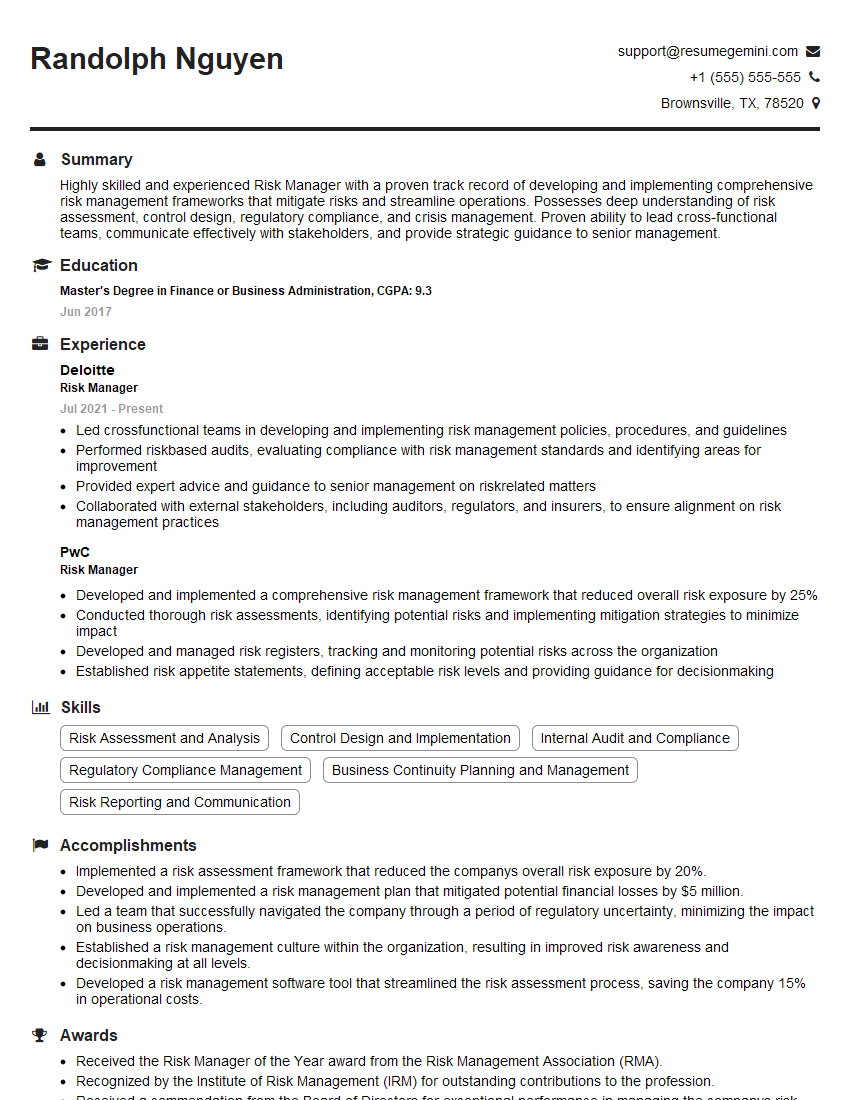
Risk Manager Resume Sample
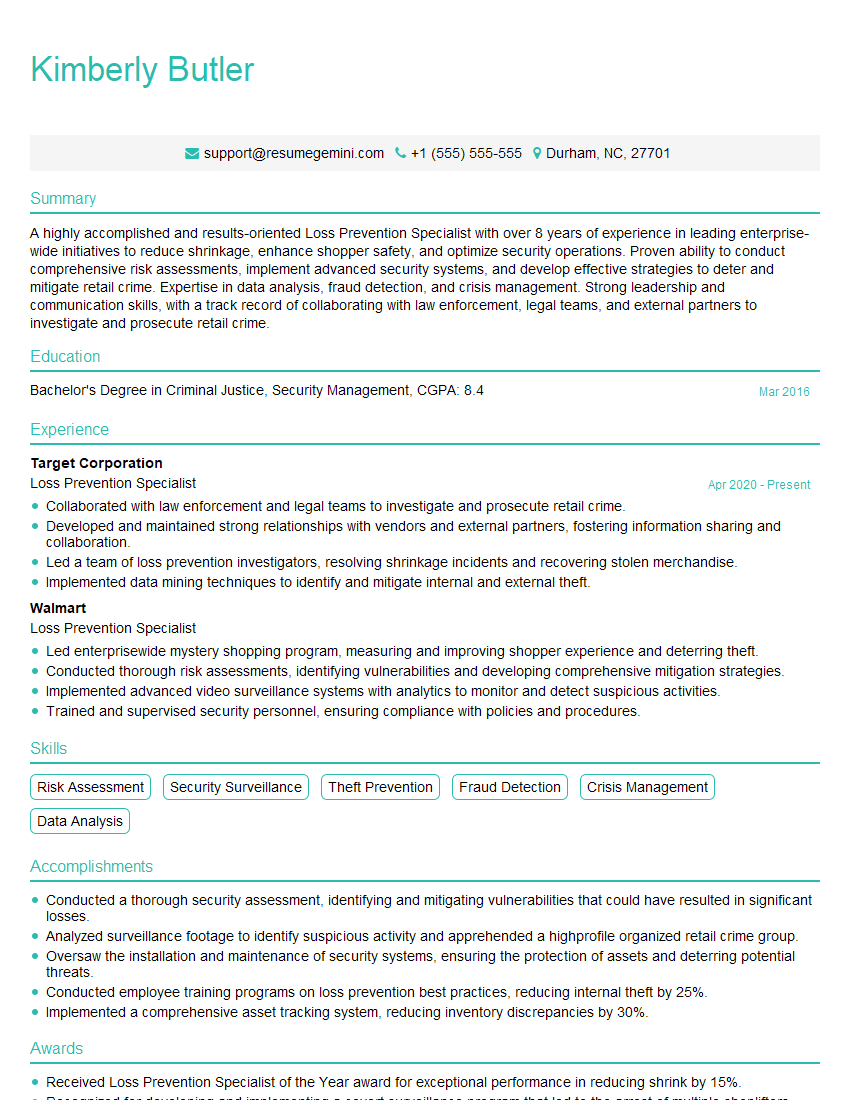
Loss Prevention Specialist Resume Sample
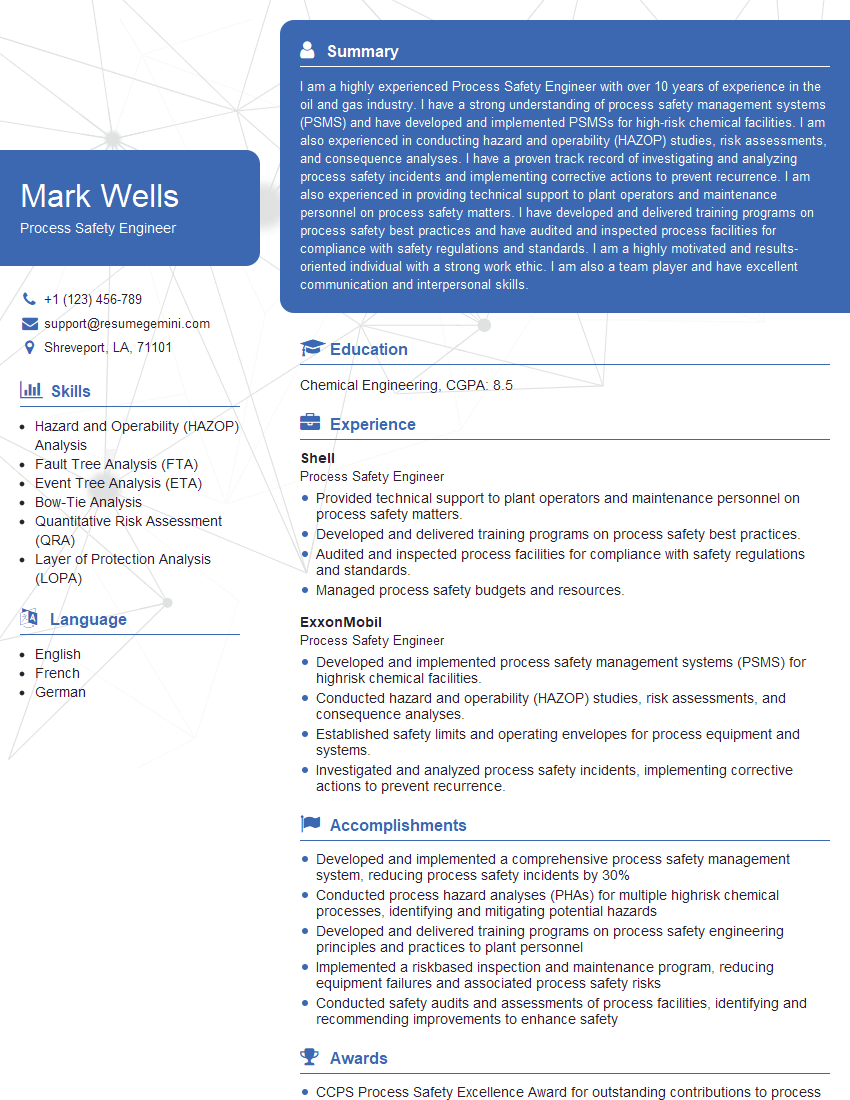
Process Safety Engineer Resume Sample
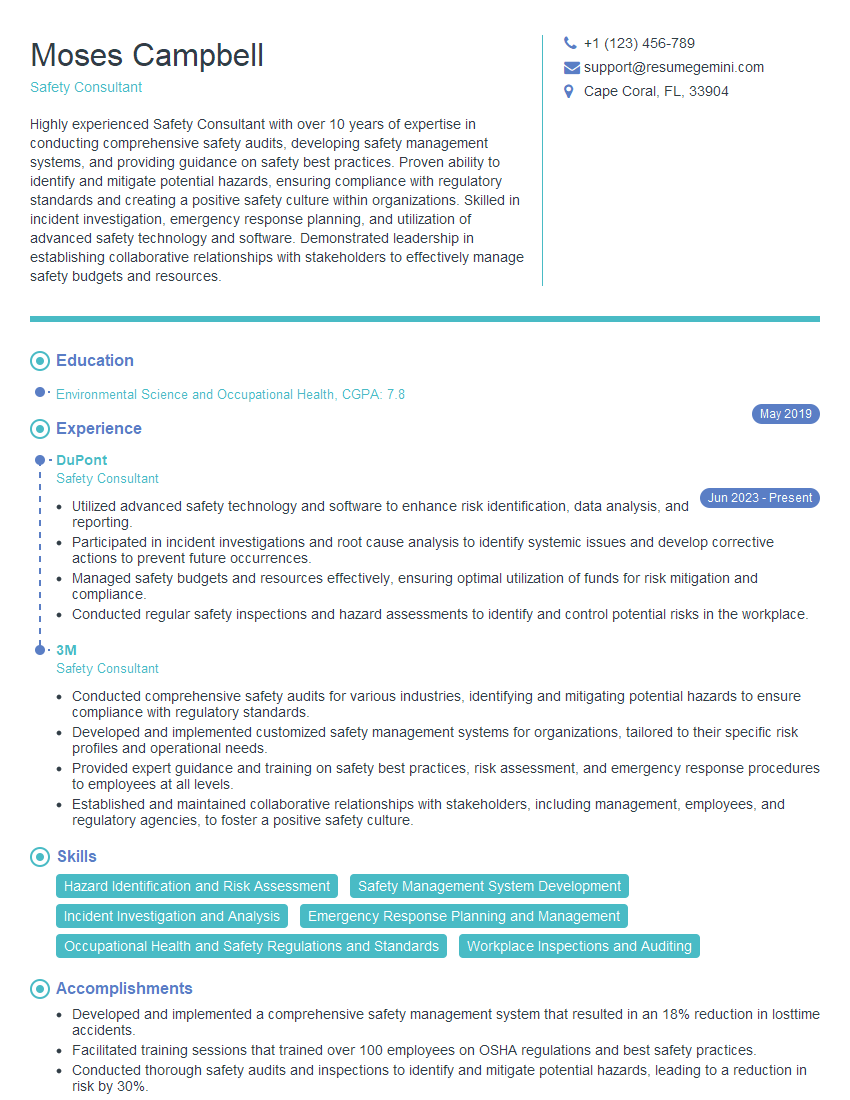
Safety Consultant Resume Sample
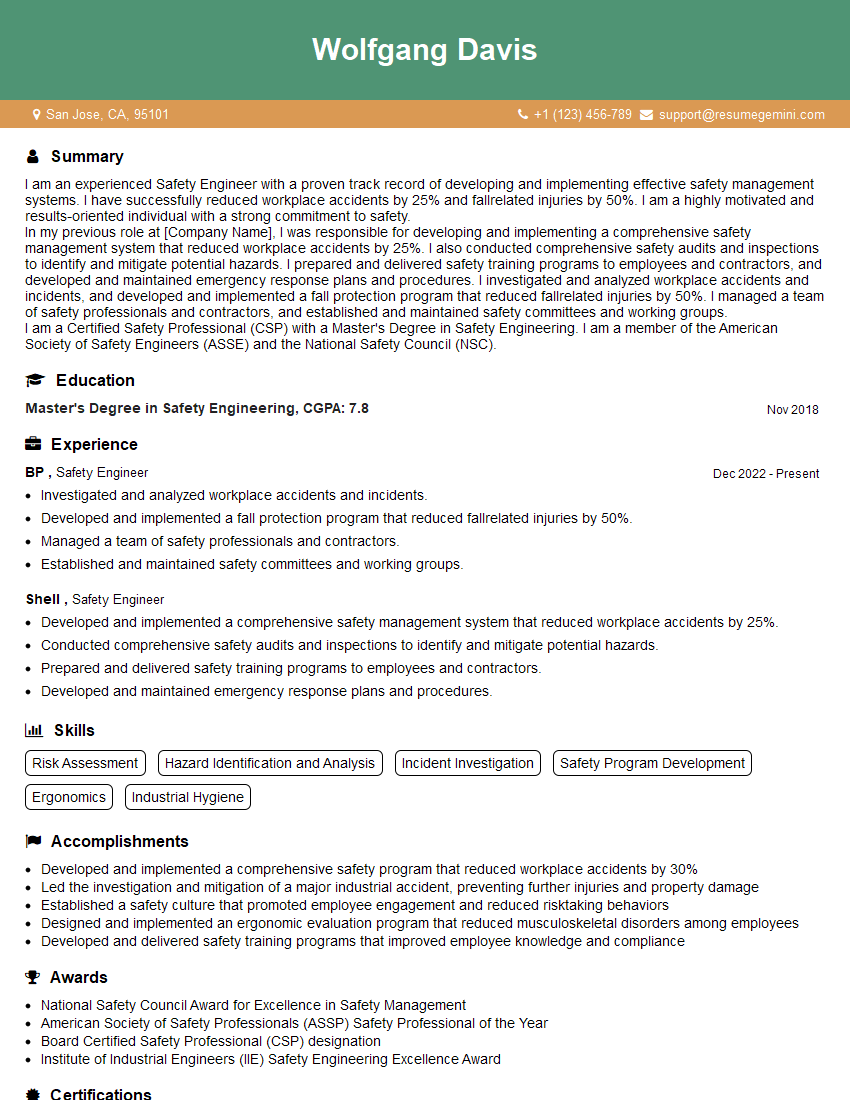
Safety Engineer Resume Sample
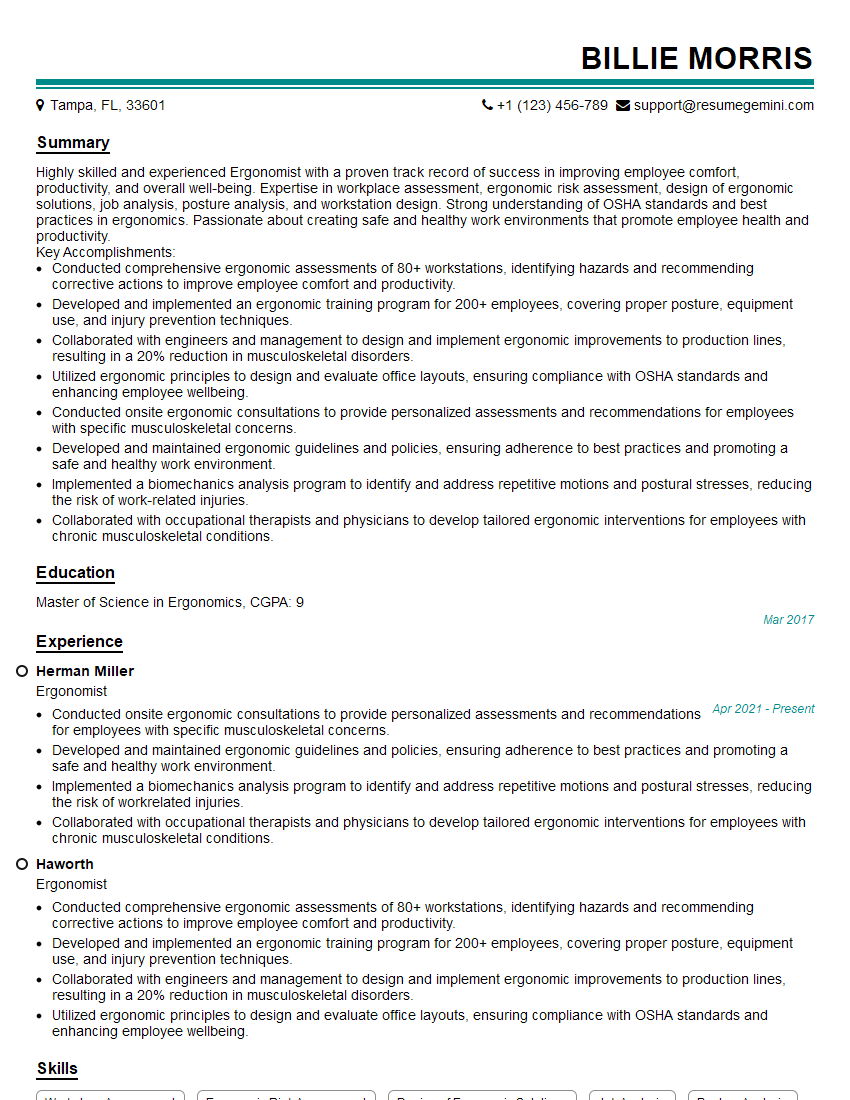
Ergonomist Resume Sample
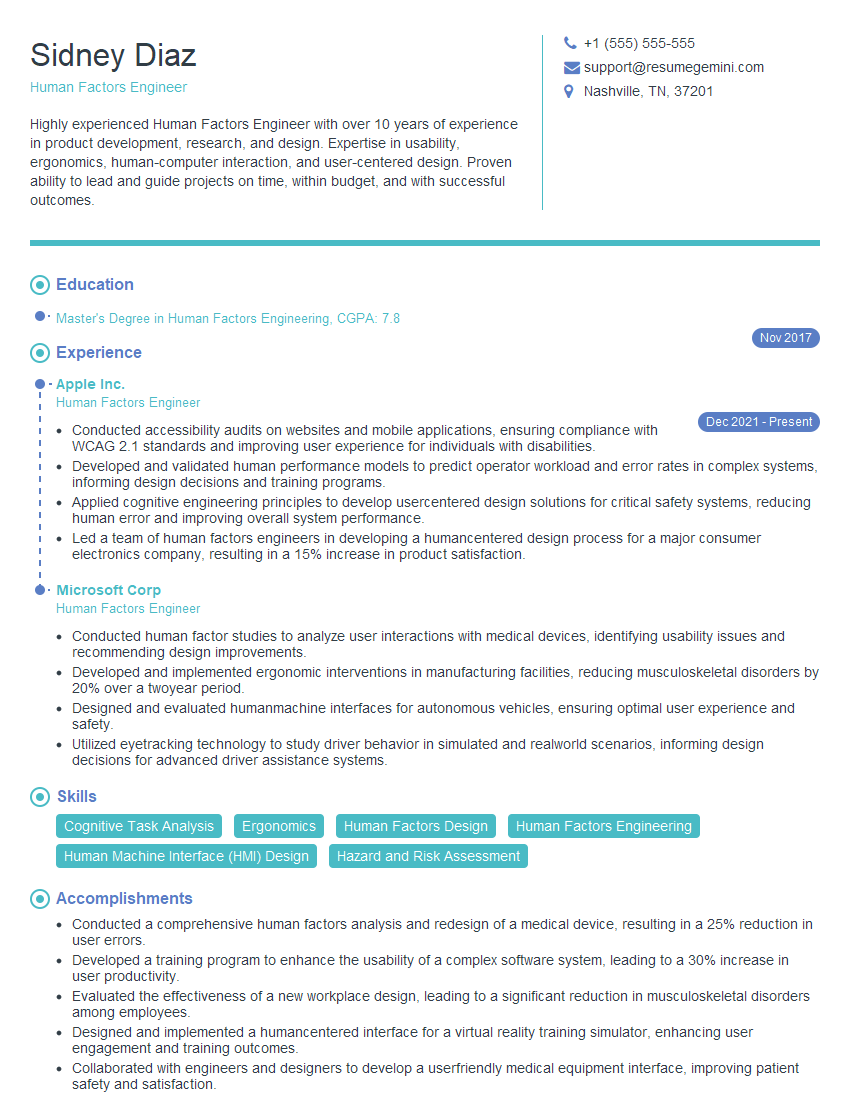
Human Factors Engineer Resume Sample
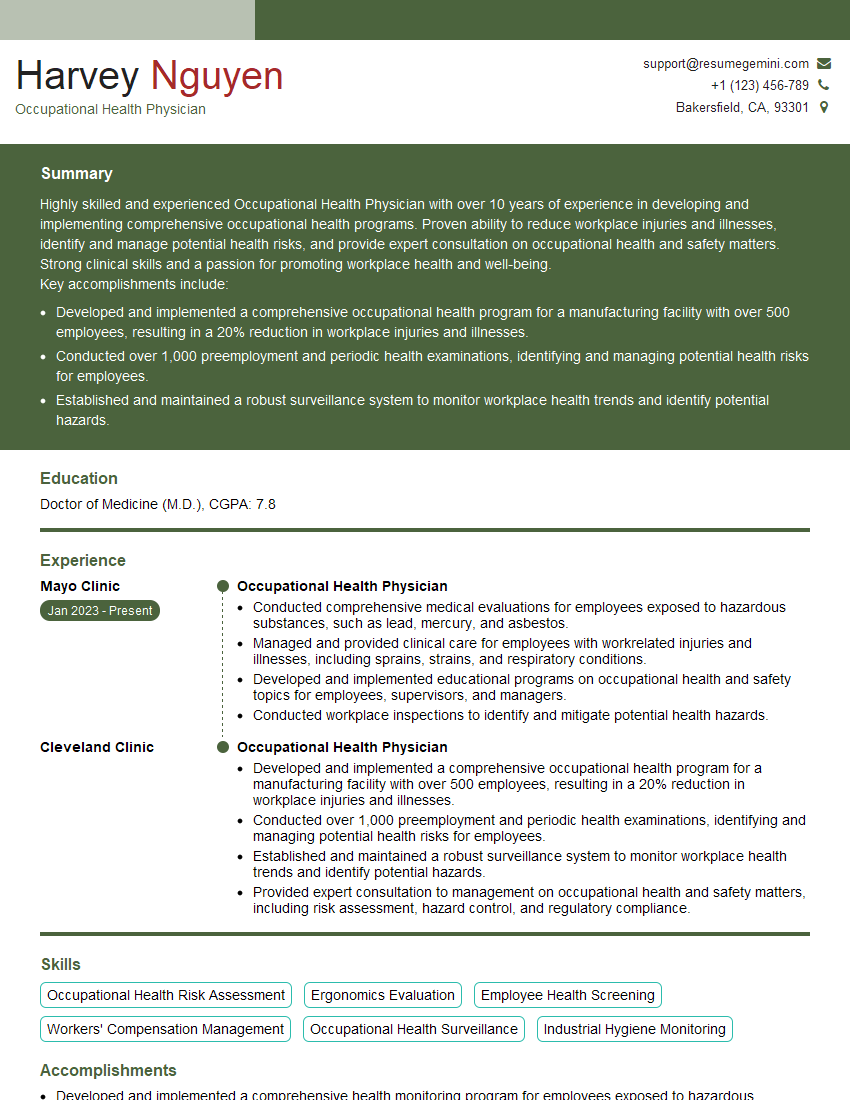
Occupational Health Physician Resume Sample
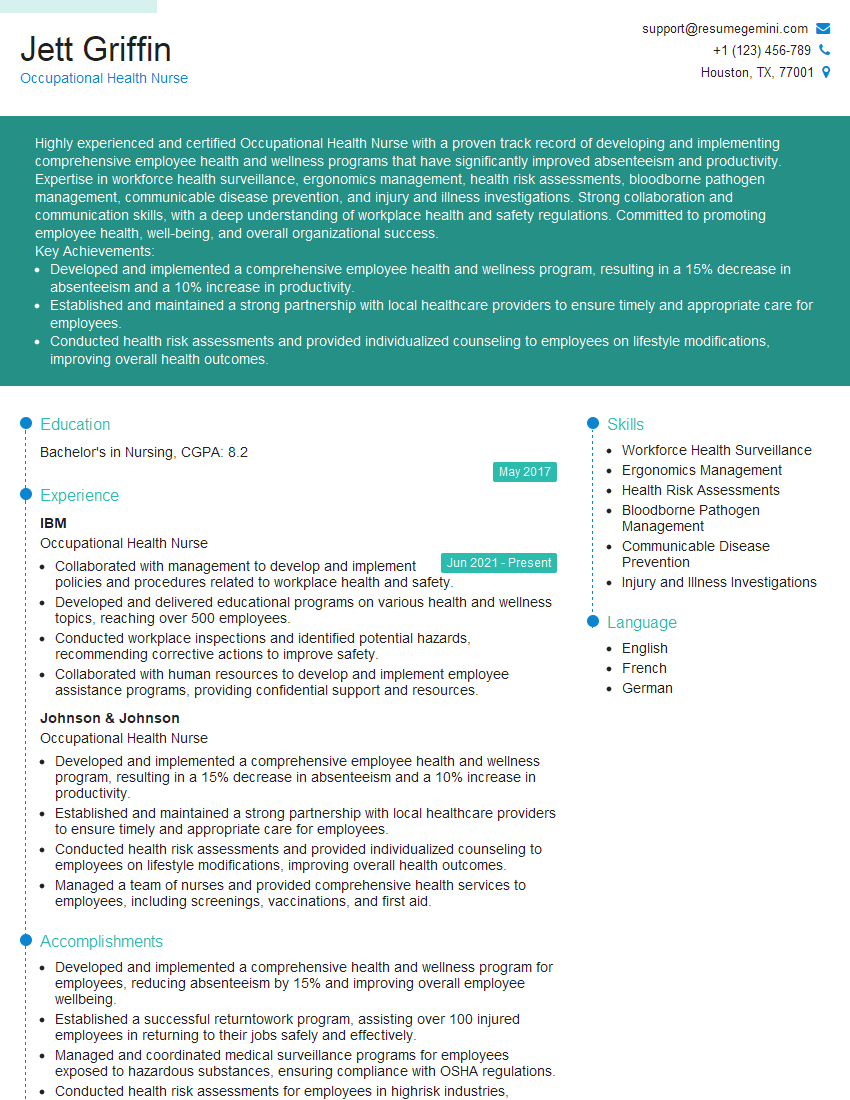
Occupational Health Nurse Resume Sample
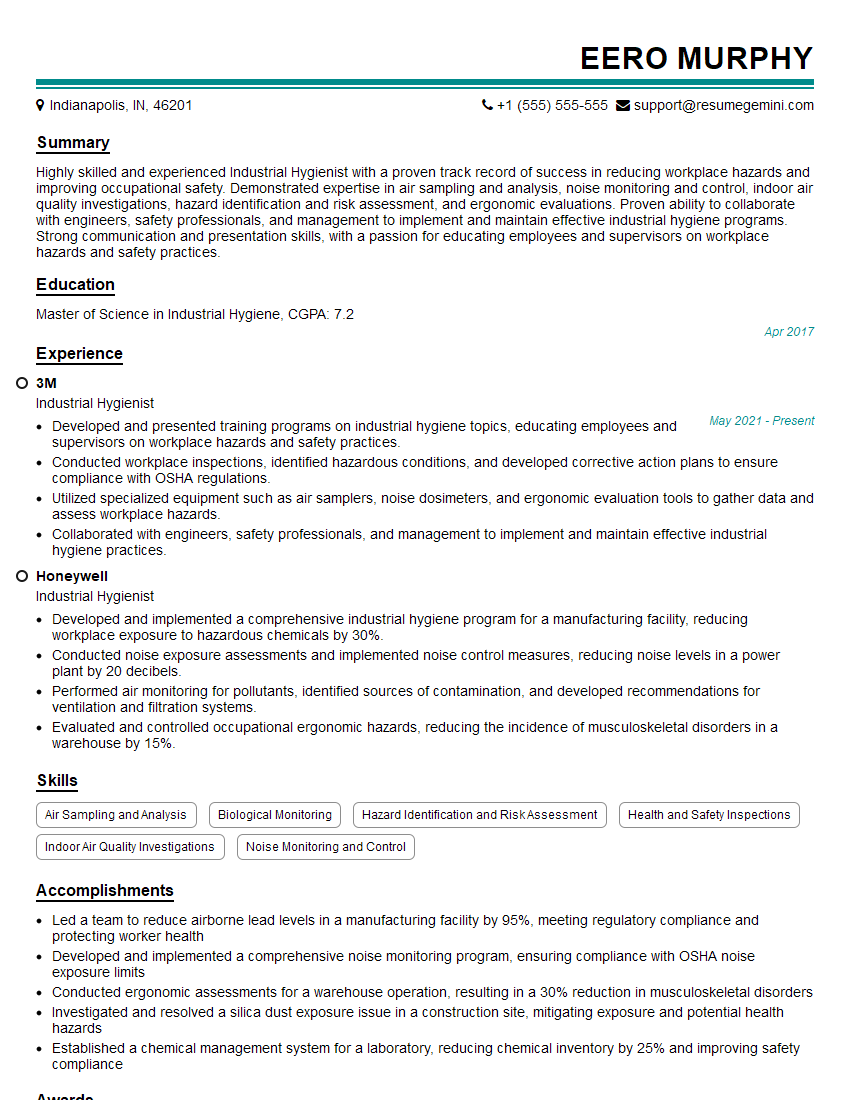
Industrial Hygienist Resume Sample
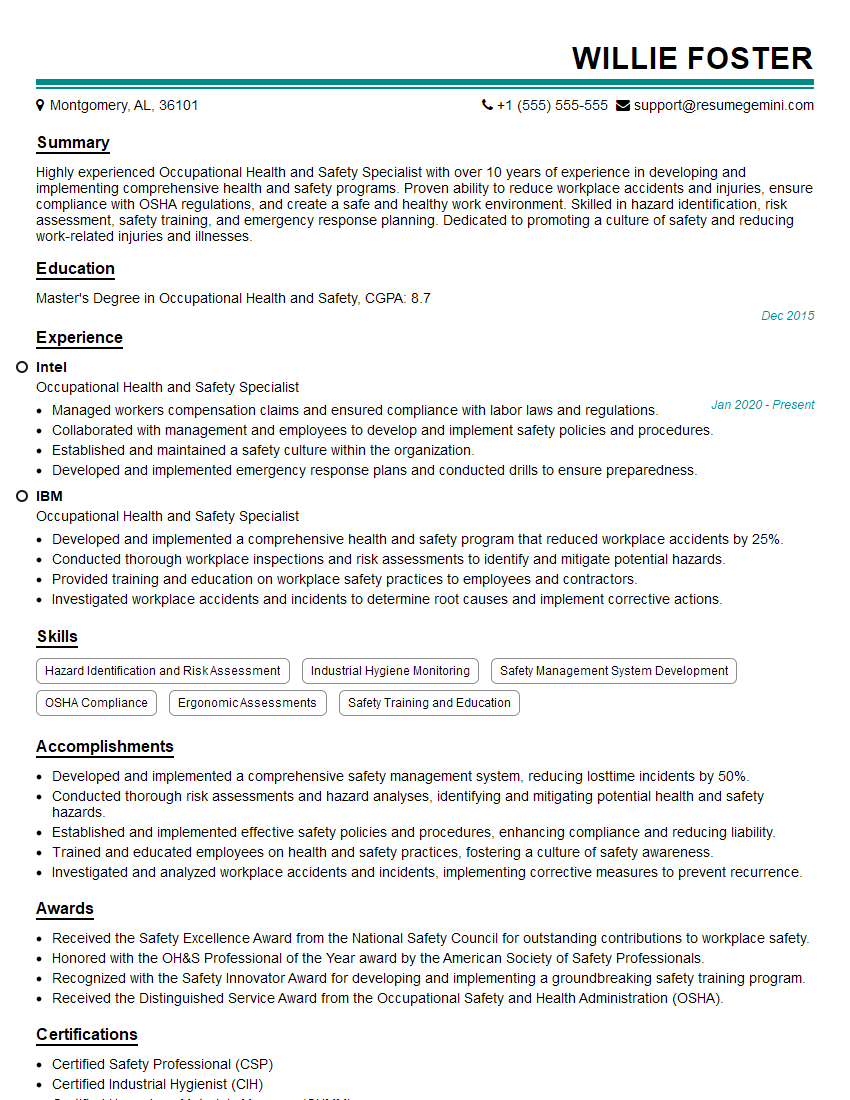
Occupational Health and Safety Specialist Resume Sample
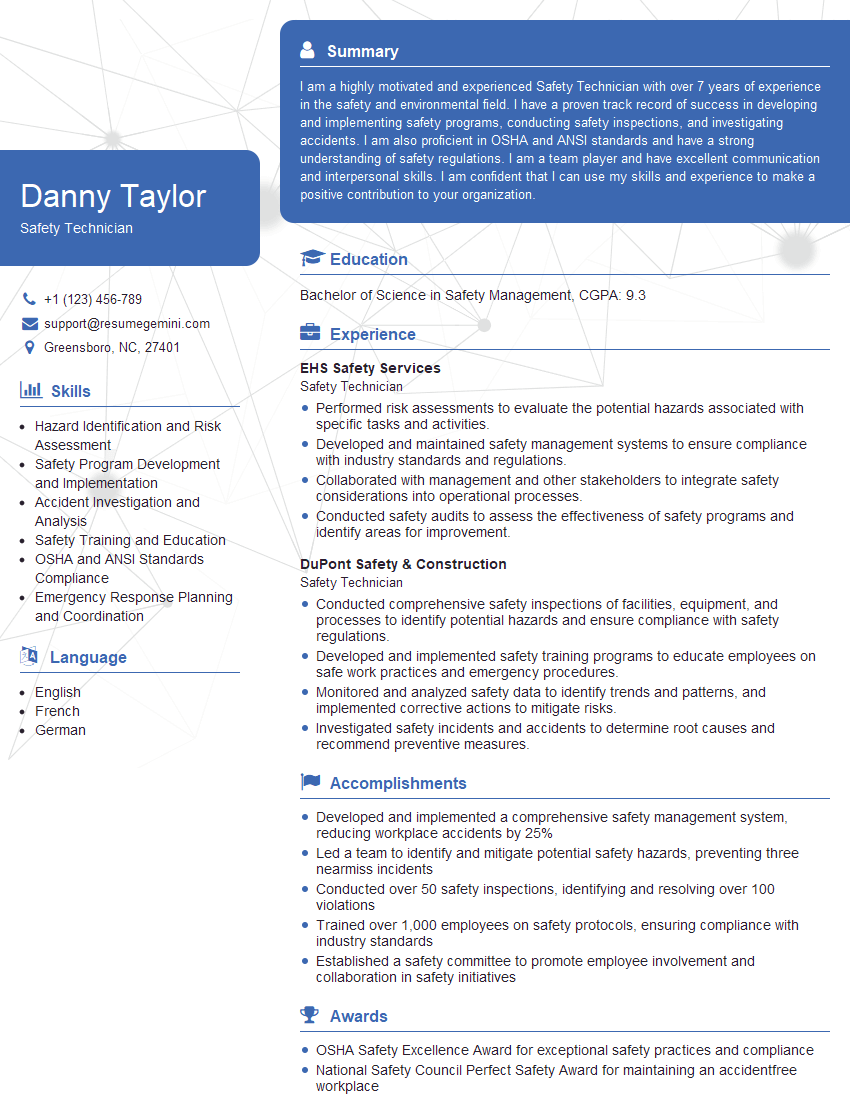
Safety Technician Resume Sample
- Safety Manager
- Safety Director
- Environmental Health and Safety Manager
- Risk Manager
- Loss Prevention Specialist
- Process Safety Engineer
- Safety Consultant
- Safety Engineer
- Ergonomist
- Human Factors Engineer
- Occupational Health Physician
- Occupational Health Nurse
- Industrial Hygienist
- Occupational Health and Safety Specialist
- Safety Technician
Explore more articles
Users Rating of Our Blogs
Share Your Experience
We value your feedback! Please rate our content and share your thoughts (optional).
What Readers Say About Our Blog
To the interviewgemini.com Webmaster.
Very helpful and content specific questions to help prepare me for my interview!
Thank you
To the interviewgemini.com Webmaster.
This was kind of a unique content I found around the specialized skills. Very helpful questions and good detailed answers.
Very Helpful blog, thank you Interviewgemini team.