Cracking a skill-specific interview, like one for Cognitive Communication Disorders Therapy, requires understanding the nuances of the role. In this blog, we present the questions you’re most likely to encounter, along with insights into how to answer them effectively. Let’s ensure you’re ready to make a strong impression.
Questions Asked in Cognitive Communication Disorders Therapy Interview
Q 1. Describe your experience assessing cognitive-linguistic deficits in patients with aphasia.
Assessing cognitive-linguistic deficits in aphasia requires a multi-faceted approach. Aphasia, a language disorder resulting from brain damage, often presents with various challenges beyond just spoken language. My assessment begins with a thorough case history, understanding the onset and progression of the condition. I then use standardized tests like the Western Aphasia Battery (WAB) or the Boston Diagnostic Aphasia Examination (BDAE) to objectively measure language abilities across different modalities (speaking, listening, reading, writing). These tests help pinpoint specific deficits like fluency, comprehension, naming, and repetition. Beyond standardized tests, I conduct informal assessments, observing spontaneous speech during conversation to gauge pragmatic skills (how effectively someone uses language in social contexts), and utilizing narrative tasks to evaluate discourse abilities. For example, I might ask a patient to describe a familiar event like a recent vacation to assess their ability to organize and express ideas coherently. Finally, I always consider the patient’s pre-morbid cognitive abilities – how they functioned before the stroke – to better understand the impact of the aphasia.
Q 2. Explain different treatment approaches for anomia.
Anomia, the difficulty retrieving words, is a common symptom treated using various approaches. One strategy is semantic feature analysis, where we analyze the target word’s characteristics (e.g., for ‘banana’, we’d discuss color, shape, taste, and function). This helps patients access the word via its associated features. Another method is phasic cueing, providing initial sounds or syllables to jump-start word retrieval. Imagine the patient struggling with ‘elephant’; I might say, ‘El…’ Confrontation naming therapy involves presenting pictures and asking for the names, providing feedback and cues as needed. I frequently use visual action therapy (VAT), which combines gestures and pictures, especially helpful for patients with severe anomia. The selection of treatment methods depends on the severity and type of anomia, and the patient’s strengths and weaknesses. For instance, a patient with relatively preserved semantic knowledge would benefit more from semantic feature analysis, whereas VAT would be more suitable for a patient with severe word-finding difficulties across different semantic categories.
Q 3. How do you differentiate between cognitive and linguistic impairments in patients with traumatic brain injury?
Differentiating cognitive and linguistic impairments after traumatic brain injury (TBI) is crucial for effective rehabilitation. Linguistic impairments directly affect language processing – problems with speech production, comprehension, reading, or writing. Cognitive impairments affect higher-level thinking skills, impacting attention, memory, executive function (planning, problem-solving), and processing speed. For instance, a patient might have intact grammatical structures but struggle to maintain attention during a conversation (cognitive impairment), or have difficulty understanding complex sentences despite good attention (linguistic impairment). I use a combination of assessments to disentangle these. Tests like the Rivermead Behavioural Memory Test assess memory, while the Controlled Oral Word Association Test (COWAT) measures verbal fluency. Informal assessments, such as observing their ability to follow multi-step instructions or engage in conversation, are equally valuable. The key is to look for patterns: does the difficulty stem primarily from language processing deficits or from underlying cognitive limitations that affect their ability to use language effectively?
Q 4. What are the key assessment tools you utilize for cognitive communication disorders?
My assessment toolbox includes a range of instruments, tailored to the individual patient’s needs. Standardized tests like the WAB, BDAE, and the Cognitive Linguistic Quick Test (CLQT) provide a comprehensive overview of cognitive-linguistic functioning. The CLQT, for instance, assesses multiple areas, including attention, memory, language, and executive functions, all within a shorter timeframe. In addition, I employ neuropsychological tests focusing on specific cognitive domains, such as the Trail Making Test for visual attention and executive function, or the Rey Auditory Verbal Learning Test for verbal memory. Informal measures, including observation of spontaneous speech and performance on functional tasks (e.g., following a recipe, managing finances), are equally critical to understand how deficits impact daily life. Ultimately, the choice of assessment tools depends on the specific suspected deficits and the referral question.
Q 5. Discuss your experience with cognitive-linguistic interventions for right hemisphere brain damage.
Right hemisphere brain damage (RHBD) often leads to cognitive-communication difficulties less obvious than those seen in aphasia but equally impactful. These might include difficulties with pragmatics (understanding social cues, maintaining conversational flow), attention, visual-spatial processing, and comprehension of figurative language. My interventions focus on improving these areas. I might use visual-perceptual tasks to enhance spatial awareness and visual scanning skills. I incorporate activities that improve attention, such as working memory training games, or tasks requiring sustained attention over extended periods. Pragmatic language training involves role-playing scenarios to improve social communication and interpretation of non-verbal cues. For example, I might use video clips to help the patient understand the nuances of facial expressions or tone of voice. The approach always considers individual needs, combining structured therapy with real-world functional training to promote generalization of learned skills.
Q 6. How do you adapt treatment strategies for patients with varying levels of cognitive impairment?
Adapting treatment for varying cognitive impairment levels is central to effective therapy. Patients with mild cognitive impairment might benefit from relatively complex tasks requiring problem-solving and independent thinking. For those with moderate impairment, I simplify tasks, provide more structured support, and break down complex tasks into smaller, manageable steps. Patients with severe impairment might require highly structured, repetitive practice, focusing on basic skills before gradually increasing complexity. I utilize errorless learning techniques, providing sufficient support to prevent errors and foster success, gradually reducing the amount of support as the patient’s skills improve. The key is to challenge the patient appropriately, avoiding frustration while promoting progress, adapting the level of difficulty based on their performance. Regular monitoring and flexible goal adjustments are essential.
Q 7. Explain your approach to incorporating family members in the rehabilitation process.
Family involvement is paramount in the rehabilitation journey. I actively include family members in the assessment process, gathering information about the patient’s pre-morbid personality, communication styles, and daily routines. During therapy sessions, I educate them about the patient’s deficits and strategies to facilitate communication at home. I often collaborate with family members in developing home-based therapy programs, providing them with specific exercises and strategies they can implement daily. Regular meetings and discussions are crucial to address family concerns, answer their questions, and offer practical advice on managing challenging behaviors or communication breakdowns. Treating the patient and their family as a unit, recognizing the significant impact the condition has on the entire family dynamic, is key to a successful rehabilitation outcome.
Q 8. Describe your experience with augmentative and alternative communication (AAC) strategies.
Augmentative and Alternative Communication (AAC) strategies are crucial for individuals with cognitive communication disorders who have difficulty expressing themselves through speech. My experience encompasses a wide range of AAC methods, from low-tech options like picture exchange systems (PECS) and communication boards to high-tech options like speech-generating devices (SGDs). I work collaboratively with patients and their families to assess their individual needs and communication strengths, then select and implement the most appropriate AAC system.
For instance, I recently worked with a young child with autism who had limited verbal skills. We started with PECS to help him initiate communication and then gradually transitioned to an SGD as his vocabulary and comprehension grew. Another example involved an adult with aphasia who benefited greatly from using a dedicated app on a tablet to express his needs and participate more fully in conversations.
The success of AAC relies heavily on consistent training and support. I provide thorough instruction to both patients and their caregivers, emphasizing strategies for maximizing effective communication within various contexts. This includes activities like practicing in familiar settings, integrating AAC into daily routines, and fostering natural communication opportunities. Furthermore, I advocate for technological advancements and accessibility to ensure that individuals have the resources they need to succeed.
Q 9. How do you measure treatment outcomes in cognitive communication therapy?
Measuring treatment outcomes in cognitive communication therapy is multifaceted and requires a combination of quantitative and qualitative measures. Quantitative measures often involve standardized assessments, such as tests of language comprehension, verbal fluency, memory, and attention. These tests provide objective data on patient progress and can track changes over time. For example, we might use the Boston Diagnostic Aphasia Examination (BDAE) or the Western Aphasia Battery (WAB) to assess language abilities in patients with aphasia.
Qualitative measures, however, are equally important. These focus on observing a patient’s functional communication skills in real-world settings. We consider factors like their ability to participate in conversations, their overall communication effectiveness, and their self-reported confidence in communication. Informal observations, caregiver reports, and participation in therapy tasks provide crucial insights.
The combination of standardized testing and functional observations allows us to create a comprehensive picture of a patient’s progress. A patient might show modest improvements on standardized tests but demonstrate significant gains in their ability to communicate effectively in everyday conversations – a crucial aspect of successful therapy.
Q 10. What are the ethical considerations in working with patients with cognitive communication disorders?
Ethical considerations in working with patients with cognitive communication disorders are paramount. Confidentiality is crucial; all patient information must be protected and handled with the utmost care. Informed consent is essential before initiating any intervention; patients, or their legal guardians, must understand the nature of the therapy, its potential benefits and risks, and have the right to refuse treatment.
Competence is another vital factor. Therapists must only provide services within their area of expertise and continually update their knowledge and skills. Cultural sensitivity is essential; therapy should be tailored to the patient’s cultural background, values, and communication preferences.
Beneficence and non-maleficence are central principles – we must strive to benefit the patient while avoiding harm. This includes regularly evaluating the effectiveness of interventions and adjusting the treatment plan as needed. Finally, maintaining professional boundaries and avoiding conflicts of interest are fundamental to ethical practice. For example, respecting a patient’s decision to discontinue therapy, even if it goes against clinical advice, is an important part of ethical practice.
Q 11. Describe your experience with swallowing disorders (dysphagia) and their management.
Dysphagia, or swallowing disorders, often co-occur with cognitive communication disorders, particularly after stroke or traumatic brain injury. My experience involves collaborating with speech-language pathologists specializing in dysphagia to provide comprehensive care. This often entails a thorough assessment to identify the nature and severity of the swallowing difficulty, using various techniques such as clinical bedside examinations and instrumental assessments like videofluoroscopy.
Management strategies can range from compensatory techniques, such as dietary modifications (e.g., changing food consistency) and postural adjustments, to rehabilitative exercises designed to improve swallowing strength and coordination. In some cases, referral to an otolaryngologist or gastroenterologist might be necessary for more advanced intervention, such as surgery or medication. Close monitoring is crucial, and frequent reassessments allow for adjustment of the treatment plan to reflect the patient’s progress and changing needs.
For example, I worked with a patient who had a stroke resulting in both aphasia and dysphagia. We worked in tandem with the dysphagia specialist to create a therapy plan that addressed both communication and swallowing difficulties. This included targeted exercises to improve oral-motor control, adjustments to their diet to prevent choking, and strategies to facilitate communication during meals. A collaborative approach is critical for optimal outcomes in these complex cases.
Q 12. Discuss your knowledge of different types of aphasia and their associated communication challenges.
Aphasia is a language disorder that affects the ability to communicate effectively. Different types of aphasia result from damage to different areas of the brain and manifest in diverse ways. For instance, Broca’s aphasia, often caused by damage to the frontal lobe, is characterized by non-fluent, effortful speech with relatively intact comprehension. Patients with Broca’s aphasia may struggle to produce grammatically correct sentences, although their understanding of language remains relatively good.
Wernicke’s aphasia, resulting from damage to the temporal lobe, is characterized by fluent but nonsensical speech with impaired comprehension. Patients with Wernicke’s aphasia may speak fluently, but their words may be jumbled or inappropriate, and they struggle to understand what is said to them. Global aphasia is a severe form involving widespread damage, resulting in significant impairments in both expressive and receptive language.
Conduction aphasia involves difficulty repeating spoken words, while anomic aphasia presents primarily as difficulty retrieving words. The communication challenges associated with each type of aphasia require different therapeutic approaches. Understanding these variations is crucial for developing effective individualized treatment plans.
Q 13. How would you manage a patient exhibiting both cognitive and motor speech impairments?
Managing a patient with both cognitive and motor speech impairments requires a holistic and integrated approach. The therapist needs to assess both the cognitive deficits (e.g., memory problems, attention difficulties, executive dysfunction) and the motor speech problems (e.g., dysarthria, apraxia of speech). A comprehensive evaluation is essential to understand the nature and severity of each impairment.
Therapy would involve a combination of strategies to address both cognitive and motor speech challenges. For the cognitive aspects, we might employ techniques such as memory strategies, attention training, and problem-solving exercises. For motor speech impairments, the focus might be on articulation drills, improving breath support, and using strategies to compensate for motor difficulties.
A multimodal approach is often beneficial, incorporating visual cues, gestures, and augmentative communication strategies. It is important to create a therapy plan that is adaptable to the patient’s strengths and weaknesses, and progress should be monitored closely to adjust strategies as needed. Collaboration with other professionals, such as occupational therapists and neuropsychologists, might be essential to ensure a comprehensive and coordinated plan of care.
Q 14. Explain your understanding of the connection between cognitive function and communication.
Cognitive function and communication are inextricably linked. Cognitive processes such as attention, memory, executive function, and processing speed are all essential for effective communication. For example, to understand a conversation, one needs sufficient attention to focus on the speaker, memory to retain information, and executive function to process the meaning and formulate a response.
Damage to cognitive functions can significantly impair communication abilities. A person with impaired memory might struggle to follow conversations, while someone with attention deficits might miss crucial information. Executive dysfunction can affect the ability to plan and organize speech, resulting in difficulty expressing thoughts and ideas coherently.
Therefore, addressing cognitive impairments is often crucial for improving communication skills. Cognitive rehabilitation techniques can target specific cognitive deficits and help patients improve their overall communication effectiveness. This integrated approach recognizes the fundamental relationship between cognitive function and the ability to communicate effectively and meaningfully.
Q 15. What is your experience working with patients with dementia and their communication needs?
My experience with patients with dementia and their communication needs is extensive. I’ve worked with individuals across various stages of dementia, from mild cognitive impairment to severe dementia, focusing on maintaining and improving their quality of life through communication strategies. This includes working with individuals experiencing communication difficulties such as aphasia, apraxia of speech, and dysarthria, which frequently co-occur with dementia.
My approach involves a thorough assessment of the individual’s cognitive and communication strengths and weaknesses. For example, I might assess their ability to understand simple instructions, their fluency of speech, their ability to name objects, and their comprehension of complex sentences. Based on this assessment, I tailor interventions to target specific deficits. This might involve strategies such as using visual aids, simplifying language, repeating instructions, and utilizing alternative communication methods like picture exchange systems (PECS) or augmentative and alternative communication (AAC) devices.
I also work closely with caregivers to provide education and support, teaching them effective communication techniques and strategies to manage challenging behaviors. For instance, I might teach caregivers how to use reminiscence therapy to stimulate communication and engagement, or how to modify the environment to promote communication and reduce frustration.
Career Expert Tips:
- Ace those interviews! Prepare effectively by reviewing the Top 50 Most Common Interview Questions on ResumeGemini.
- Navigate your job search with confidence! Explore a wide range of Career Tips on ResumeGemini. Learn about common challenges and recommendations to overcome them.
- Craft the perfect resume! Master the Art of Resume Writing with ResumeGemini’s guide. Showcase your unique qualifications and achievements effectively.
- Don’t miss out on holiday savings! Build your dream resume with ResumeGemini’s ATS optimized templates.
Q 16. How do you address challenging behaviors in patients with cognitive communication disorders?
Addressing challenging behaviors in patients with cognitive communication disorders requires a multifaceted approach rooted in understanding the underlying cause of the behavior. Often, challenging behaviors are a manifestation of unmet needs, frustration, or discomfort. It’s crucial to first conduct a thorough functional behavior assessment to identify the triggers, antecedents, and consequences of the behavior.
For instance, a patient exhibiting agitation might be reacting to an overwhelming environment or struggling to communicate a need. Once the underlying cause is identified, we can implement strategies to address it. This might involve environmental modifications (reducing noise, providing a calm space), communication strategies (using simpler language, visual supports), behavioral interventions (positive reinforcement, redirection), or medication management in consultation with the prescribing physician.
A key aspect is proactive behavior management. This involves anticipating potential triggers and implementing preventive strategies. For example, if a patient becomes agitated during mealtimes, we might adjust the meal schedule or provide smaller, more manageable portions. The goal is always to create a safe, supportive, and stimulating environment where the patient’s communication needs are met and challenging behaviors are reduced.
Q 17. Explain the importance of collaborative care in treating cognitive communication disorders.
Collaborative care is paramount in treating cognitive communication disorders. These disorders rarely exist in isolation; they often co-occur with other medical conditions, impacting multiple aspects of the patient’s life. Therefore, a collaborative team approach is essential for optimal outcomes.
This team typically includes the speech-language pathologist (SLP), neurologist, physician, occupational therapist, physical therapist, psychologist, social worker, and, crucially, the patient and their family or caregivers. The SLP plays a vital role in assessing and treating communication and cognitive deficits, while other team members address associated physical, psychological, and social needs. Regular team meetings facilitate effective communication, coordination of care, and the development of a comprehensive treatment plan tailored to the individual’s unique needs.
For example, an SLP might collaborate with an occupational therapist to adapt the patient’s living environment to improve communication and independence, or work with a psychologist to manage anxiety and depression, which can significantly impact communication abilities. This collaborative approach ensures a holistic and integrated treatment strategy that maximizes the patient’s potential for recovery and improvement.
Q 18. Describe your knowledge of evidence-based practice in cognitive communication therapy.
Evidence-based practice (EBP) is the cornerstone of my approach to cognitive communication therapy. EBP involves integrating the best available research evidence with clinical expertise and patient values to make informed decisions about assessment and treatment. This means staying current with the latest research findings in cognitive rehabilitation, aphasiology, and dementia care.
I regularly consult peer-reviewed journals, attend professional conferences, and participate in continuing education activities to maintain my knowledge of effective interventions. For example, I might utilize specific therapeutic techniques supported by robust research, such as constraint-induced language therapy (CILT) for aphasia or spaced retrieval training for memory deficits. Moreover, I critically evaluate the effectiveness of interventions for individual patients, adapting or modifying treatments based on their response and progress.
I ensure that all interventions are tailored to the patient’s specific needs, goals, and preferences, recognizing that a ‘one-size-fits-all’ approach is ineffective. This patient-centered approach ensures that the treatment plan respects the individual’s autonomy and promotes active participation in their rehabilitation.
Q 19. How do you tailor treatment plans to individual patient needs and goals?
Tailoring treatment plans to individual patient needs and goals is fundamental to effective cognitive communication therapy. This begins with a comprehensive assessment that identifies the patient’s strengths, weaknesses, and functional limitations. This assessment goes beyond standardized tests; it involves observing the patient in natural settings to understand their communication in real-life situations.
Following the assessment, I work collaboratively with the patient and their family to establish realistic and meaningful goals. These goals might focus on improving specific communication skills (e.g., improving comprehension, increasing verbal fluency, enhancing memory), improving functional communication (e.g., participating in conversations, reading, writing), or enhancing participation in daily activities. For example, a patient might aim to improve their ability to participate in family dinners, or a patient with aphasia might focus on ordering food independently.
The treatment plan is then designed to address these specific goals, employing a variety of techniques and strategies. Regular monitoring and progress evaluation are essential to ensure the plan’s effectiveness and make adjustments as needed. This iterative process guarantees that the treatment remains relevant and effective throughout the patient’s rehabilitation journey.
Q 20. What is your experience with computerized cognitive rehabilitation programs?
I have significant experience integrating computerized cognitive rehabilitation programs into my treatment plans. These programs offer many advantages, including personalized feedback, consistent practice opportunities, and the ability to track progress objectively. They are particularly useful for targeting specific cognitive skills, such as attention, memory, and executive functions.
Examples of programs I utilize include those focusing on memory training (e.g., using spaced retrieval techniques), language processing (e.g., verb generation exercises), and visual-spatial skills. However, it’s crucial to understand that computerized programs are a supplement, not a replacement, for personalized therapy. I carefully select programs based on the patient’s specific needs and cognitive abilities, integrating them into a broader treatment program.
For example, I might use a computerized program to supplement in-person therapy sessions, providing the patient with opportunities to practice skills learned in therapy at home. The key is to monitor the patient’s engagement and motivation, ensuring that the program remains a positive and effective tool in their rehabilitation.
Q 21. How do you incorporate family or caregiver training into your treatment plan?
Incorporating family or caregiver training is an integral component of my treatment approach. Caregivers play a vital role in supporting the patient’s communication and cognitive rehabilitation, both during and after therapy sessions. Therefore, educating and empowering caregivers is crucial for successful outcomes.
My training sessions typically cover effective communication strategies, behavior management techniques, and ways to adapt the environment to support communication. For instance, I might teach caregivers how to use visual aids, simplify language, or provide environmental cues to facilitate communication. I also provide them with resources and support to help manage challenging behaviors.
Furthermore, I encourage caregiver participation in therapy sessions whenever possible, allowing them to observe and learn firsthand how to implement strategies. This shared learning approach fosters a collaborative partnership, ensures consistency in the patient’s care, and empowers caregivers to become active participants in their loved one’s recovery journey. Regular follow-up consultations with caregivers are also vital to address their concerns, provide ongoing support, and ensure the continued effectiveness of the treatment plan.
Q 22. Describe your experience with documentation and reporting in a clinical setting.
Accurate and thorough documentation is paramount in a clinical setting for Cognitive Communication Disorders (CCD). My experience encompasses creating comprehensive patient charts including detailed assessments, treatment plans, progress notes, and discharge summaries. I meticulously document each session, noting the patient’s performance on specific tasks, their responses to interventions, and any observed changes in their cognitive-communicative abilities. This documentation adheres to HIPAA regulations and best practices, utilizing standardized terminology and coding systems (e.g., ICD-10, CPT codes) for clarity and efficient data retrieval. I regularly review and update documentation to reflect the patient’s ongoing progress and treatment adjustments. For example, if a patient shows difficulty with verbal fluency, I’d document the specific tasks used (e.g., category fluency, letter fluency), the number of items generated, and any strategies used to improve performance. This detailed record enables effective communication among the healthcare team and facilitates continuity of care.
Q 23. Explain your understanding of the impact of cognitive communication disorders on quality of life.
Cognitive communication disorders significantly impact quality of life, affecting various aspects of a person’s daily functioning. Difficulties with language, memory, attention, and executive function can lead to decreased independence in communication, social participation, and activities of daily living. This can result in frustration, isolation, decreased self-esteem, and increased caregiver burden. For instance, a person with aphasia might struggle to communicate their needs, leading to social isolation and reduced ability to participate in meaningful activities. Someone with a traumatic brain injury affecting executive functions might have difficulty managing their finances or making decisions, reducing their autonomy and independence. My approach to therapy aims to not only improve cognitive-communicative skills but also to enhance the overall quality of life by fostering independence, improving social participation, and reducing caregiver stress. This involves collaborating with patients and their families to set realistic goals, providing education and support, and connecting them with community resources.
Q 24. Discuss your experience using technology in assessment or intervention for cognitive communication disorders.
Technology plays an increasingly crucial role in both the assessment and intervention of CCD. I have extensive experience using various software and apps for assessment and therapy. For example, I utilize computerized language and cognitive assessments to obtain standardized measures of language skills, memory, attention, and executive functions. These digital tools often provide objective data and allow for efficient administration and scoring. In intervention, I utilize apps and software designed to target specific cognitive and communication deficits. These tools often incorporate gamified elements, making therapy more engaging and motivating for patients. For instance, I’ve used apps that target attention through visual search tasks, or language apps that incorporate interactive exercises to improve word retrieval and sentence construction. I also utilize telehealth platforms for remote therapy sessions, providing access to care for individuals with mobility limitations or geographical barriers. This technology allows for flexibility and increased convenience. Choosing appropriate technology requires careful consideration of the individual’s needs and cognitive abilities.
Q 25. What are some common challenges you face when working with patients with cognitive communication disorders, and how do you overcome them?
Working with patients with CCD presents unique challenges. One common challenge is the variability in cognitive abilities and the impact of co-occurring conditions. Patients may experience fluctuating attention spans, fatigue, or emotional lability, requiring adaptation in treatment approaches. For example, a patient with dementia might exhibit significant cognitive decline over time, necessitating frequent adjustments to the treatment plan. Another challenge is managing the frustration and emotional distress experienced by patients and their caregivers. I address this by creating a supportive and encouraging therapeutic environment, providing psychoeducation, and connecting patients and their families with appropriate support groups. Moreover, generalizing skills learned in therapy to real-world contexts can be difficult. To overcome this, I incorporate real-life scenarios and functional activities into treatment, involving family members in the therapy process as appropriate. I also focus on strategies that are applicable across various situations, and regularly review progress with patients and their families to ensure the therapy remains relevant and effective.
Q 26. Describe a situation where you had to adapt your treatment plan due to a patient’s unexpected response.
I recall a patient with aphasia who, despite demonstrating initial progress with a specific therapy technique focused on sentence construction, experienced unexpected frustration and anxiety during sessions. My initial treatment plan emphasized structured exercises and focused on grammatical accuracy. However, observing the patient’s response, it became clear that the level of structure was overwhelming and created anxiety, ultimately hindering progress. I adapted the treatment plan by incorporating more spontaneous communication opportunities, using conversational strategies and focusing on conveying meaning over perfect grammar. I introduced less structured activities like storytelling and conversational role-playing, prioritizing functional communication. The change in approach resulted in a significant improvement in the patient’s engagement, mood, and overall progress in communication. This experience reinforced the importance of ongoing assessment and flexibility in adapting treatment to meet the patient’s evolving needs and emotional state.
Q 27. How would you explain a complex diagnosis and treatment plan to a patient and their family?
Explaining a complex diagnosis and treatment plan requires careful consideration of the patient and family’s understanding and emotional state. I begin by using clear, simple language, avoiding jargon. I would start by explaining the diagnosis in a way that’s easily understood, using analogies or real-world examples to illustrate concepts. For example, I might explain aphasia as “difficulty finding the right words” or memory deficits as “problems remembering recent events.” The explanation is tailored to the specific cognitive abilities of the patient. For the treatment plan, I explain the goals, techniques and the expected duration of therapy, often using visual aids like diagrams or charts. I encourage questions throughout the explanation, creating an open dialogue. Following the explanation, I provide written materials summarizing the key information, ensuring the patient and family have resources to refer to later. Furthermore, I emphasize the importance of collaboration and ongoing communication, ensuring they feel comfortable sharing their concerns and questions throughout the therapeutic process. Regular follow-up meetings provide opportunities to review progress, adjust the treatment plan as needed, and address any emerging concerns.
Key Topics to Learn for Cognitive Communication Disorders Therapy Interview
- Neuroanatomy and Neurophysiology: Understanding the neural substrates of language and cognition is crucial. This includes knowledge of brain regions involved in language processing, memory, attention, and executive functions.
- Assessment Techniques: Mastering various assessment tools and methods for evaluating cognitive-communication deficits, such as standardized tests, informal assessments, and functional communication measures. Practice describing your approach to a comprehensive assessment.
- Intervention Strategies: Familiarize yourself with diverse therapeutic approaches, including cognitive rehabilitation techniques, compensatory strategies, and the principles of evidence-based practice. Be prepared to discuss specific techniques and their application.
- Specific Cognitive-Communication Disorders: Develop a strong understanding of common disorders such as aphasia, traumatic brain injury, dementia, and right hemisphere brain damage. Understand their unique presentations and appropriate treatment methodologies.
- Case Conceptualization and Treatment Planning: Demonstrate your ability to analyze patient data, formulate individualized treatment plans, and justify your therapeutic choices based on evidence and client needs.
- Collaboration and Teamwork: Highlight your experience and understanding of the importance of interdisciplinary collaboration with other healthcare professionals (e.g., physicians, occupational therapists, speech-language pathologists).
- Ethical Considerations: Be prepared to discuss ethical dilemmas encountered in clinical practice and your approach to resolving them, focusing on patient autonomy, confidentiality, and informed consent.
- Technology in Cognitive Communication Therapy: Demonstrate familiarity with the use of technology and assistive devices in therapy, such as AAC devices, apps, and software programs.
- Data Collection and Analysis: Understanding methods for documenting progress, analyzing treatment outcomes, and using data to inform clinical decision-making.
- Cultural Competence: Discuss your awareness of cultural diversity and its impact on communication and therapy approaches. Show understanding of culturally sensitive and appropriate interventions.
Next Steps
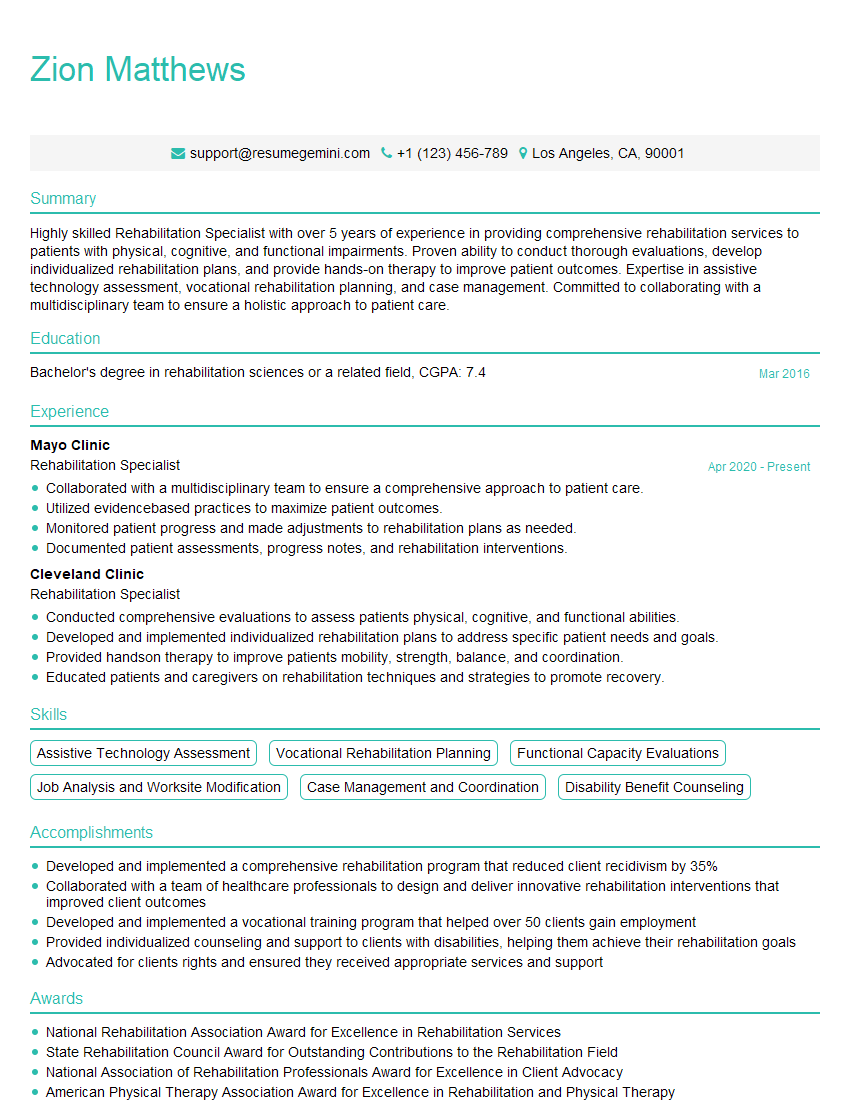
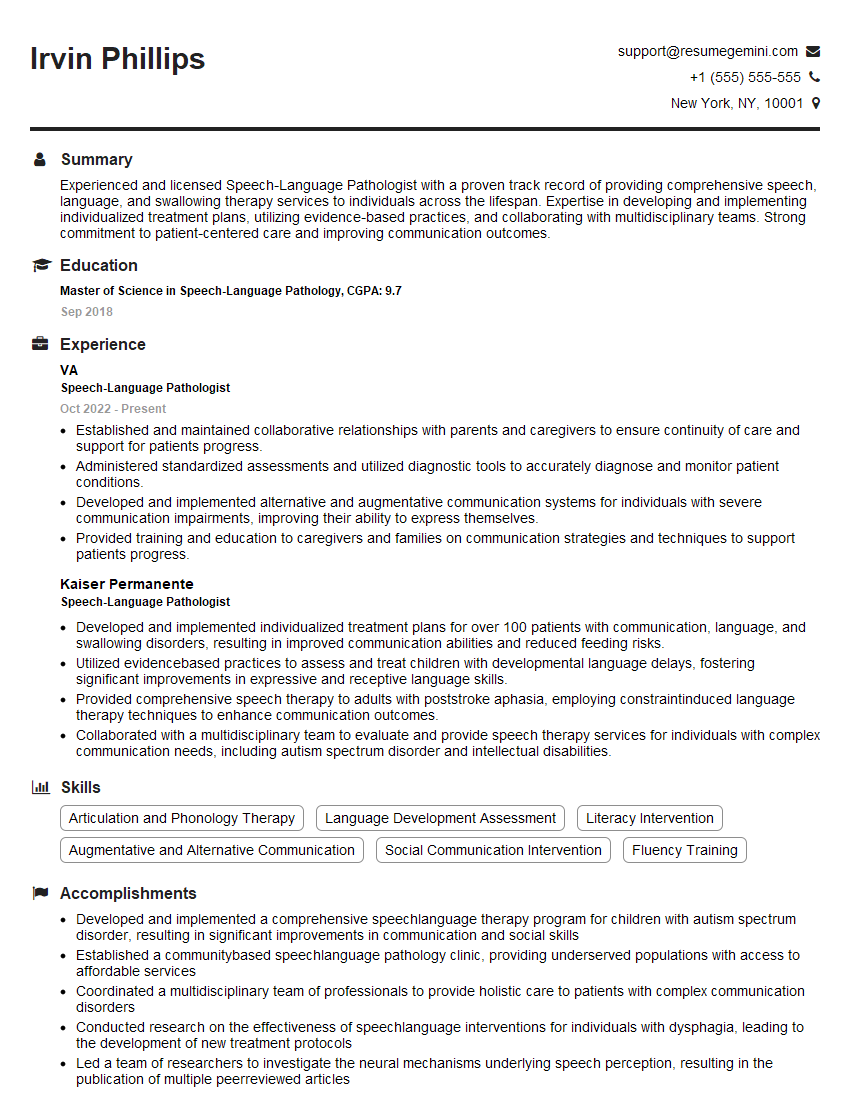
Mastering Cognitive Communication Disorders Therapy is essential for a successful and rewarding career. It opens doors to diverse settings and allows you to make a significant impact on the lives of your patients. To maximize your job prospects, it’s crucial to create an ATS-friendly resume that highlights your skills and experience effectively. We strongly encourage you to use ResumeGemini, a trusted resource for building professional resumes. ResumeGemini provides examples of resumes specifically tailored to Cognitive Communication Disorders Therapy to help you showcase your qualifications and land your dream job.
Explore more articles
Users Rating of Our Blogs
Share Your Experience
We value your feedback! Please rate our content and share your thoughts (optional).
What Readers Say About Our Blog
To the interviewgemini.com Webmaster.
Very helpful and content specific questions to help prepare me for my interview!
Thank you
To the interviewgemini.com Webmaster.
This was kind of a unique content I found around the specialized skills. Very helpful questions and good detailed answers.
Very Helpful blog, thank you Interviewgemini team.