Are you ready to stand out in your next interview? Understanding and preparing for Communication Networks and Protocols interview questions is a game-changer. In this blog, we’ve compiled key questions and expert advice to help you showcase your skills with confidence and precision. Let’s get started on your journey to acing the interview.
Questions Asked in Communication Networks and Protocols Interview
Q 1. Explain the difference between TCP and UDP.
TCP (Transmission Control Protocol) and UDP (User Datagram Protocol) are both fundamental protocols in the internet protocol suite (IP suite), responsible for transporting data between applications running on different hosts. However, they differ significantly in their approach to reliability and efficiency.
TCP is a connection-oriented protocol, meaning it establishes a dedicated connection between the sender and receiver before transmitting data. Think of it like making a phone call – you need to establish a connection first. This connection ensures reliable delivery of data through acknowledgments, retransmissions, and sequencing. TCP is slower but guarantees data integrity. It’s ideal for applications requiring reliable data delivery, like web browsing (HTTP), email (SMTP), and file transfer (FTP).
UDP, on the other hand, is a connectionless protocol. It’s like sending a postcard – you send it, but you don’t get confirmation of its arrival. Data is transmitted without establishing a connection, making it faster but less reliable. UDP doesn’t guarantee delivery or order. It’s more efficient for applications where speed is prioritized over reliability, such as online gaming, video streaming (often uses RTP over UDP), and DNS lookups.
- TCP: Reliable, ordered delivery, connection-oriented, slower, more overhead.
- UDP: Unreliable, unordered delivery, connectionless, faster, less overhead.
Imagine streaming a live video. Using TCP would lead to buffering and delays as the protocol ensures every packet arrives perfectly. UDP allows for a faster, albeit occasionally less perfect, streaming experience. The occasional packet loss is often imperceptible due to the high data rate.
Q 2. Describe the OSI model and its seven layers.
The OSI (Open Systems Interconnection) model is a conceptual framework that standardizes the functions of a telecommunication or computing system without regard to its underlying internal structure and technology. It divides network communication into seven distinct layers, each with specific responsibilities:
- Physical Layer: Deals with the physical cables, connectors, and signals that transmit data. Think of the actual wires and electricity.
- Data Link Layer: Provides reliable data transfer across a single link. It handles error detection and correction, framing, and MAC addressing (unique hardware address).
- Network Layer: Responsible for routing data packets between networks. This layer uses IP addresses to determine the path.
- Transport Layer: Provides end-to-end communication between applications. This is where TCP and UDP reside. It handles segmentation, reassembly, and flow control.
- Session Layer: Manages connections between applications. It establishes, manages, and terminates sessions.
- Presentation Layer: Handles data formatting, encryption, and decryption. It ensures data is presented in a consistent format.
- Application Layer: The layer closest to the end-user. It houses applications like web browsers, email clients, and file transfer programs. HTTP, SMTP, FTP, and DNS all reside here.
Each layer interacts with the layer above and below it, passing data up and down the stack. This layered approach allows for modularity, making it easier to develop, troubleshoot, and upgrade network systems. For example, if there’s a problem with a specific layer, you can troubleshoot without affecting other layers.
Q 3. What are the functions of routers and switches?
Routers and switches are essential networking devices that facilitate communication between different network segments. However, they operate at different layers of the OSI model and have distinct functions:
Routers operate at the Network Layer (Layer 3) of the OSI model. Their primary function is to forward data packets between different networks based on their IP addresses. They use routing tables to determine the best path for a packet to reach its destination. Think of routers as traffic controllers for the internet, directing data packets across different networks and even continents. They’re crucial for connecting different networks, like your home network to the internet.
Switches operate at the Data Link Layer (Layer 2) of the OSI model. They forward data frames within a single network based on their MAC addresses. They learn MAC addresses by observing the traffic on the network and building a MAC address table. Switches improve network performance by only sending data to the intended recipient, unlike hubs which broadcast data to all devices. Think of switches as traffic controllers within a single neighborhood, ensuring data packets arrive at the correct house (device) efficiently.
In essence, routers connect different networks, while switches improve communication within a single network.
Q 4. Explain the concept of subnetting and its benefits.
Subnetting is the process of dividing a larger network (IP address range) into smaller, logically separated subnetworks. Each subnetwork has its own network address and subnet mask. Imagine a large city divided into smaller neighborhoods for better organization and management.
Benefits of Subnetting:
- Improved Network Organization: Subnetting makes networks easier to manage and administer by segmenting them into smaller, more manageable units. This simplifies network troubleshooting and security management.
- Increased Security: By segmenting the network, subnetting enhances security by isolating different parts of the network. This limits the impact of security breaches and makes it easier to control access.
- Efficient IP Address Allocation: Subnetting allows for more efficient allocation of IP addresses, reducing address wastage and improving scalability. It helps avoid IP address exhaustion, a growing concern with the limited IPv4 address space.
- Improved Network Performance: Subnetting can improve network performance by reducing broadcast traffic and improving routing efficiency. This is especially beneficial in larger networks.
For example, a company might subnet their network to separate departments (e.g., sales, marketing, IT), allowing for better control over network traffic and security within each department.
Q 5. What is IP addressing (IPv4 and IPv6)?
IP addressing is a system for assigning unique numerical labels to devices on a computer network that uses the Internet Protocol for communication. There are two main versions:
IPv4 (Internet Protocol version 4): Uses 32-bit addresses represented in dotted decimal notation (e.g., 192.168.1.100). Each part represents 8 bits (an octet). However, the limited number of addresses (approximately 4.3 billion) is becoming a major issue with the growth of the internet.
IPv6 (Internet Protocol version 6): Uses 128-bit addresses represented in hexadecimal notation (e.g., 2001:0db8:85a3:0000:0000:8a2e:0370:7334). This provides a vastly larger address space, solving the address exhaustion problem of IPv4. IPv6 also includes improvements in security, routing, and autoconfiguration.
IP addresses are crucial for routing data packets across networks. They act like postal addresses, ensuring data reaches the intended recipient.
Q 6. How does DHCP work?
DHCP (Dynamic Host Configuration Protocol) is a network management protocol used to automatically assign IP addresses and other network configuration parameters to devices on a network. It simplifies network administration by eliminating the need for manual configuration of each device.
How DHCP Works:
- Discover: A device needing an IP address sends a DHCP Discover message to all available DHCP servers on the network.
- Offer: DHCP servers respond with a DHCP Offer message, suggesting an available IP address and other configuration parameters.
- Request: The device selects an offer and sends a DHCP Request message to the server to accept the offered configuration.
- Acknowledgement: The server responds with a DHCP ACK (Acknowledgement) message, confirming the IP address assignment and providing the other parameters.
DHCP servers maintain a pool of IP addresses and lease them to devices for a specific duration (lease time). After the lease expires, the device can renew the lease or obtain a new IP address. This dynamic allocation improves IP address utilization and reduces administrative overhead. Imagine a library lending out books – DHCP works similarly, lending out IP addresses to devices that need them.
Q 7. Describe different types of network topologies (star, bus, ring, mesh).
Network topologies describe the physical or logical layout of nodes (devices) and connections in a network. Here are some common types:
- Star Topology: All devices connect to a central hub or switch. It’s simple to manage, easy to troubleshoot, and adding or removing devices is straightforward. However, if the central device fails, the entire network goes down.
- Bus Topology: All devices connect to a single cable (the bus). It’s inexpensive and easy to implement, but performance degrades as more devices are added and a single cable failure can take down the entire network.
- Ring Topology: Devices connect to each other in a closed loop. Data travels in one direction around the ring. It’s efficient for local area networks, but a single device failure can disrupt the entire network. The failure of one device can interrupt the traffic.
- Mesh Topology: Devices connect to multiple other devices, creating multiple paths for data transmission. This increases redundancy and fault tolerance, but it’s complex and expensive to implement.
The choice of topology depends on factors like network size, cost, scalability requirements, and fault tolerance needs. For example, star topology is common in home and small office networks due to its simplicity, while mesh topologies are used in critical infrastructure networks to ensure high reliability.
Q 8. What is DNS and how does it work?
DNS, or the Domain Name System, is like the phonebook of the internet. Instead of memorizing complex IP addresses (like 192.168.1.1), we use human-readable domain names (like google.com). DNS translates these easily remembered names into the numerical IP addresses that computers understand.
Here’s how it works: When you type a domain name into your browser, your computer first contacts a recursive resolver, typically provided by your internet service provider (ISP). This resolver queries a series of DNS servers:
- Root Name Servers: These are the top-level servers that know the addresses of the Top-Level Domain (TLD) servers (like .com, .org, .net).
- TLD Servers: These servers know the addresses of the authoritative name servers for specific domains (like google.com).
- Authoritative Name Servers: These servers, managed by the domain owner (Google in this case), hold the final mapping of domain names to IP addresses.
The recursive resolver follows this chain, ultimately receiving the IP address. Your computer then uses this IP address to connect to the server hosting the website.
Example: When you type ‘www.example.com’, your computer’s resolver contacts the root servers, then the .com server, and finally the authoritative name server for example.com to get the IP address for www.example.com.
Q 9. Explain the concept of NAT (Network Address Translation).
NAT, or Network Address Translation, is a technique that allows multiple devices on a private network (like your home network) to share a single public IP address. This is crucial because public IP addresses are limited. Think of it like a shared mailbox: everyone in your house receives mail at the same address, but it’s sorted internally to reach the right person.
NAT works by assigning each device on the private network a private IP address (like 192.168.1.100). When a device wants to access the internet, the NAT router translates its private IP address and port number into the public IP address and a different port number. Incoming traffic is then translated back to the correct private IP address and port using the reverse process.
Types of NAT:
- Full Cone NAT: All incoming traffic destined for any port on the public IP address is forwarded to the internal device.
- Restricted Cone NAT: Only incoming traffic from the same source IP and port that initiated the outgoing connection is forwarded.
- Port Restricted Cone NAT: Similar to restricted cone, but only a single port can be used for each connection.
- Symmetric NAT: Incoming traffic uses a different port each time.
NAT improves security by hiding internal IP addresses from the internet, making it harder for external attackers to directly target devices on the private network.
Q 10. What are firewalls and how do they work?
Firewalls are security systems that monitor and control incoming and outgoing network traffic based on predefined security rules. They act like gatekeepers, allowing only authorized traffic to pass while blocking malicious or unwanted activity. Think of them as bouncers at a club, only letting in those on the guest list.
Firewalls can be implemented in hardware (a dedicated device) or software (a program running on a computer or server). They examine network packets, checking various factors like source and destination IP addresses, ports, and protocols. If a packet violates the firewall’s rules, it’s dropped or blocked.
How Firewalls Work:
- Packet Filtering: The firewall examines each packet’s header information and compares it to predefined rules. If it matches a rule allowing traffic, the packet is passed; otherwise, it’s blocked.
- Stateful Inspection: This goes beyond simple packet filtering. It tracks the state of network connections, allowing only expected return traffic related to established connections.
- Application-Level Gateway: This type of firewall acts as a proxy, inspecting the contents of application-level data (like HTTP traffic) for malicious code or unwanted content.
Example Rule: Allow inbound HTTPS traffic (port 443) from any IP address, but block all other inbound traffic on all other ports.
Q 11. Describe different types of network security threats.
Network security threats encompass a wide range of malicious activities aimed at compromising the confidentiality, integrity, or availability of network resources. Some common types include:
- Malware: This includes viruses, worms, trojans, ransomware, and spyware, all designed to damage, disable, or gain unauthorized access to systems.
- Phishing: Deceptive attempts to trick users into revealing sensitive information, like usernames, passwords, or credit card details.
- Denial-of-Service (DoS) attacks: Overwhelming a network or server with traffic, rendering it unavailable to legitimate users.
- Man-in-the-middle (MitM) attacks: Intercepting communication between two parties to eavesdrop or manipulate the data being exchanged.
- SQL Injection: Exploiting vulnerabilities in database applications to gain unauthorized access to sensitive data.
- Zero-day exploits: Attacks that leverage previously unknown vulnerabilities, making them difficult to defend against until a patch is released.
- Insider threats: Security breaches caused by malicious or negligent actions of authorized users within an organization.
Protecting against these threats requires a multi-layered approach involving firewalls, intrusion detection/prevention systems, security awareness training, strong passwords, and regular software updates.
Q 12. What are VPNs and their uses?
VPNs, or Virtual Private Networks, create secure, encrypted connections over a public network, like the internet. Imagine a secret tunnel through a crowded marketplace – your data travels through the tunnel, protected from prying eyes.
How VPNs work: A VPN client on your device encrypts your data before sending it over the internet. This encrypted data travels through a VPN server, which decrypts it and forwards it to its destination. All traffic is encrypted, protecting your data from eavesdropping and making it more difficult for attackers to intercept your communications.
Uses of VPNs:
- Enhanced Security: Protecting your data from snooping on public Wi-Fi networks.
- Bypass Geo-restrictions: Accessing content or services restricted in your location.
- Anonymity: Masking your IP address to protect your privacy.
- Secure Remote Access: Connecting to a company network securely from a remote location.
Example: When using a VPN to access your company’s network from home, your computer’s traffic is encrypted and routed through the VPN server, appearing to originate from the VPN server’s IP address, thus securing your connection.
Q 13. Explain the concept of VLANs (Virtual LANs).
VLANs, or Virtual LANs, are logical subdivisions of a physical network. They allow you to group computers and devices together based on their function or location, even if they are physically connected to different switches. Think of it as dividing a large office into separate departments, each with its own network, even though they’re all in the same building.
How VLANs work: VLANs use tagging to identify which VLAN a particular packet belongs to. This tag is added to the Ethernet frame header and is used by network switches to forward packets only within the designated VLAN. This segmentation isolates different network segments, improving security and performance.
Benefits of VLANs:
- Improved Security: Isolating sensitive data by placing it on a separate VLAN.
- Enhanced Performance: Reducing network congestion by separating different types of traffic.
- Flexible Network Management: Easily reorganize network segments without physical changes.
Example: A company might have separate VLANs for its marketing, sales, and IT departments, each with its own security policies and network settings.
Q 14. What is QoS (Quality of Service) and how is it implemented?
QoS, or Quality of Service, refers to mechanisms that prioritize certain types of network traffic over others. It’s like having an express lane on a highway, ensuring critical traffic (like video conferencing) gets priority over less critical traffic (like file downloads).
Implementing QoS: QoS is implemented using various techniques, including:
- Traffic Classification: Identifying different types of traffic (e.g., voice, video, data) based on IP addresses, ports, or protocol types.
- Traffic Policing: Limiting the bandwidth or rate of specific traffic types to prevent congestion.
- Traffic Shaping: Smoothing out bursts of traffic to prevent sudden drops in performance.
- Queue Management: Prioritizing traffic based on its importance using different queuing algorithms (e.g., priority queuing, weighted fair queuing).
QoS is crucial in networks where real-time applications (like video conferencing and VoIP) are used. By prioritizing these applications, you can ensure acceptable performance, even under heavy network load.
Example: In a VoIP network, QoS can be used to prioritize voice packets over other data packets, ensuring clear and uninterrupted voice calls even if the network is congested.
Q 15. Describe different routing protocols (RIP, OSPF, BGP).
Routing protocols are the backbone of internetworking, dictating how data packets travel across networks to reach their destination. Let’s explore three prominent ones: RIP, OSPF, and BGP.
- RIP (Routing Information Protocol): A distance-vector protocol, RIP uses hop count as its metric. It’s simple to implement and configure, making it suitable for small networks. However, its limited hop count (maximum 15) restricts its scalability. Think of it like a postman delivering mail – he knows the closest neighbor and keeps passing the mail until it reaches its destination. The limitation is that if the route is too long (more than 15 hops), the mail won’t arrive.
- OSPF (Open Shortest Path First): A link-state protocol, OSPF employs a more sophisticated approach. Each router shares its complete link-state information with its neighbors, allowing for the calculation of the shortest path using Dijkstra’s algorithm. OSPF is scalable and supports larger, more complex networks. Imagine a GPS navigation system – it has complete knowledge of the entire road network and can calculate the shortest route to your destination, even with many possible paths.
- BGP (Border Gateway Protocol): This is the routing protocol used between Autonomous Systems (ASes), essentially different internet providers. It’s a path-vector protocol and operates based on policy, considering factors beyond simple distance. BGP enables internet connectivity and ensures data can traverse between networks worldwide. This is like an international airline routing system – it considers political boundaries (ASes), cost, and agreements to determine the optimal routes for flights (data packets) across continents.
In summary, RIP is best for small networks due to its simplicity; OSPF is preferred for larger, internal networks needing scalability; and BGP is crucial for internet routing between networks and organizations.
Career Expert Tips:
- Ace those interviews! Prepare effectively by reviewing the Top 50 Most Common Interview Questions on ResumeGemini.
- Navigate your job search with confidence! Explore a wide range of Career Tips on ResumeGemini. Learn about common challenges and recommendations to overcome them.
- Craft the perfect resume! Master the Art of Resume Writing with ResumeGemini’s guide. Showcase your unique qualifications and achievements effectively.
- Don’t miss out on holiday savings! Build your dream resume with ResumeGemini’s ATS optimized templates.
Q 16. Explain the concept of network segmentation.
Network segmentation is the practice of dividing a large network into smaller, logically separated networks. This enhances security, performance, and manageability. Imagine a large office building. Instead of one giant open space, it’s segmented into departments, each with its own access and controls. Similarly, network segmentation separates sensitive data and resources, isolating them from potential threats.
This is achieved using devices like routers, firewalls, and VLANs (Virtual LANs). Each segment can have its own security policies, routing protocols, and traffic management rules. For example, a company might segment its network to separate the public website servers from the internal database servers, enhancing security. A breach in one segment is less likely to compromise the entire network.
Q 17. What is a load balancer and its purpose?
A load balancer distributes incoming network traffic across multiple servers. This prevents any single server from becoming overloaded, ensuring high availability and consistent performance. Think of a toll booth on a busy highway. Instead of one toll booth causing a massive backup, multiple booths distribute the traffic, making the process smoother and faster.
Load balancers enhance the reliability and scalability of web applications and other services. They can use various algorithms (round-robin, least connections, etc.) to distribute the load and handle sudden traffic spikes. In e-commerce websites experiencing peak traffic during sales events, load balancers are crucial for ensuring the website remains accessible and responsive.
Q 18. How does TCP ensure reliable data transmission?
TCP (Transmission Control Protocol) guarantees reliable data transmission through several mechanisms. Unlike UDP (User Datagram Protocol), which is connectionless and faster but less reliable, TCP offers features that ensure data integrity and delivery:
- Three-way Handshake: Establishes a connection between sender and receiver before data transmission. This ensures both ends are ready to communicate.
- Acknowledgement (ACK): The receiver sends an ACK packet to confirm successful data receipt. If no ACK is received within a certain time, the sender retransmits the data.
- Sequence Numbers: Data packets are numbered sequentially, allowing the receiver to reorder packets if they arrive out of order. This is important if packets take different routes and arrive at slightly different times.
- Checksums: Error detection mechanism to ensure data integrity. If errors are detected, the receiver can request retransmission.
- Flow Control: Prevents the sender from overwhelming the receiver by adjusting the transmission rate based on the receiver’s capacity.
- Congestion Control: Manages network congestion by adjusting transmission rates in response to network conditions.
Through these mechanisms, TCP ensures all data packets are delivered in order, without errors, and without overwhelming the receiving end, making it ideal for applications requiring reliable data transmission such as web browsing, email, and file transfer.
Q 19. What are the different types of network cables and their uses?
Network cables are crucial for physical data transmission. Several types exist, each with different characteristics and applications:
- Coaxial Cable: Older technology, used in cable TV and some older Ethernet networks. It’s relatively inexpensive but less flexible and offers lower bandwidth compared to newer options.
- Twisted-Pair Cable: The most common type used in Ethernet networks. The twisting helps reduce electromagnetic interference. It comes in different categories (Cat5e, Cat6, Cat6a, Cat8), with higher categories supporting greater bandwidth and speed. Cat6a and Cat8 are increasingly popular for high-speed networks and data centers.
- Fiber-Optic Cable: Uses light pulses to transmit data, offering very high bandwidth and long distances with minimal signal degradation. It’s more expensive than twisted-pair but essential for high-capacity backbone networks and long-haul communication.
The choice of cable depends on the speed, distance, and cost requirements. For example, a home network might use Cat5e, while a data center would likely opt for Cat6a or fiber optics.
Q 20. Explain the concept of bandwidth and throughput.
Bandwidth and throughput are often confused but represent different aspects of network performance.
- Bandwidth: Represents the capacity of a network connection, expressed in bits per second (bps). It’s the theoretical maximum amount of data that can be transferred over a given connection. Think of it as the width of a pipe; a wider pipe allows more water to flow through.
- Throughput: Represents the actual amount of data successfully transmitted over a network connection within a given time period. It’s influenced by various factors, such as network congestion, errors, and the efficiency of the protocols used. It’s the actual amount of water flowing through the pipe.
For instance, a network connection might have a bandwidth of 1 Gbps, but the actual throughput might be lower due to network congestion or other factors. Throughput is always less than or equal to bandwidth.
Q 21. What is network latency and how is it measured?
Network latency is the delay experienced in transmitting data across a network. It’s the time it takes for a data packet to travel from source to destination. It’s often measured in milliseconds (ms). Think of it as the travel time in a race. A higher latency implies slower transmission. A lower latency is better and signifies faster data transmission.
Latency can be measured using various tools such as ping (measuring round-trip time) and traceroute (identifying the path and latency at each hop). Factors contributing to latency include distance, network congestion, and processing delays at routers and servers. High latency can negatively impact the performance of applications such as online gaming and video conferencing.
Q 22. Describe the differences between wired and wireless networks.
Wired and wireless networks differ fundamentally in their physical medium for data transmission. Wired networks, like Ethernet, use physical cables (e.g., copper or fiber optic) to connect devices, offering high bandwidth, low latency, and greater security due to their physical isolation. Think of a wired network like a dedicated highway system – direct, fast, and secure. Wireless networks, on the other hand, utilize radio waves to transmit data, providing mobility and flexibility. Wi-Fi and cellular networks are prime examples. However, they are susceptible to interference, signal degradation, and security breaches. Imagine wireless networks as a shared airspace – convenient but potentially crowded and less secure.
- Wired Networks: High bandwidth, low latency, greater security, limited mobility, higher initial setup cost.
- Wireless Networks: Mobility, flexibility, lower initial setup cost, susceptible to interference, lower security, potentially lower bandwidth and higher latency.
For instance, a large enterprise might use a wired backbone for critical internal systems demanding high reliability and security, while providing wireless access points for employee laptops and mobile devices.
Q 23. What are the challenges of managing large networks?
Managing large networks presents numerous challenges. The scale alone introduces complexity in monitoring, troubleshooting, and security. Imagine trying to manage a city’s traffic flow versus a single street. Key challenges include:
- Scalability: Expanding the network to accommodate growth while maintaining performance is crucial.
- Security: Protecting the network from threats like intrusions and denial-of-service attacks is paramount.
- Performance Monitoring: Identifying bottlenecks and ensuring optimal performance across the network requires sophisticated tools and expertise.
- Troubleshooting: Isolating and resolving issues in a large, complex network can be time-consuming and challenging.
- Cost Management: Balancing performance, security, and cost-effectiveness is essential.
- Centralized Management: Coordinating configurations and updates across a large network is a major undertaking.
Effective solutions involve using network management systems (NMS), automation tools, and implementing robust security protocols. For example, a Distributed Denial of Service (DDoS) mitigation strategy would be essential for a large network.
Q 24. Explain the concept of network monitoring and troubleshooting.
Network monitoring and troubleshooting are integral to maintaining a healthy and efficient network. Network monitoring involves continuously observing network performance and health using various tools and techniques. This provides insights into real-time traffic patterns, device availability, and potential problems. Think of it as a network’s vital signs. Troubleshooting, on the other hand, is the process of identifying and resolving issues that affect network performance or availability. It’s the network’s doctor.
Monitoring tools might include SNMP (Simple Network Management Protocol) for collecting device statistics, packet analyzers (like Wireshark) for inspecting network traffic, and network performance monitoring (NPM) software for visualizing network performance. Troubleshooting involves analyzing network logs, examining network configurations, using ping and traceroute commands for connectivity testing, and potentially replacing faulty hardware.
For example, if users experience slowdowns, monitoring tools can pinpoint a bottleneck, perhaps a congested switch port, while troubleshooting might involve upgrading the switch or optimizing network traffic.
Q 25. What are some common network performance metrics?
Several key metrics are used to assess network performance. These metrics provide a quantitative measure of network health and efficiency. Some common ones include:
- Latency: The delay in data transmission (measured in milliseconds).
- Bandwidth: The amount of data that can be transmitted per unit of time (measured in bits per second or Mbps).
- Packet Loss: The percentage of data packets that fail to reach their destination.
- Jitter: Variations in latency.
- Throughput: The actual amount of data successfully transferred.
- CPU Utilization: The percentage of processing power utilized by network devices.
- Memory Utilization: The amount of memory used by network devices.
Analyzing these metrics helps identify performance bottlenecks and areas for optimization. For instance, high latency might indicate a congested link, while high packet loss could signal a faulty network interface card.
Q 26. Describe your experience with network automation tools.
I have extensive experience with various network automation tools, including Ansible, Puppet, and Chef. These tools allow for the efficient configuration, management, and monitoring of network devices. Instead of manually configuring each device, which is time-consuming and error-prone, automation streamlines the process. For example, Ansible can be used to configure hundreds of switches with a single playbook. This ensures consistency and reduces human error. My experience includes using these tools to automate tasks such as:
- Device configuration management: Applying consistent configurations across multiple devices.
- Network monitoring and alerting: Setting up automated alerts for potential problems.
- Software updates: Deploying software updates efficiently and reliably.
- Network security configuration: Implementing security policies and updates across the network.
In a recent project, I used Ansible to automate the deployment of a new virtual network, significantly reducing deployment time from several days to a few hours and improving accuracy.
Q 27. How would you handle a network outage?
My approach to handling a network outage is systematic and prioritized, focusing on minimizing downtime and ensuring a swift resolution. My steps would be:
- Identify the scope and impact: Determine the extent of the outage (e.g., affecting a single department or the entire network) and the affected services.
- Gather information: Collect data from monitoring tools, user reports, and network logs to understand the cause of the outage.
- Isolate the problem: Pinpoint the source of the problem by using diagnostic tools such as ping, traceroute, and packet analyzers.
- Implement a solution: Based on the root cause, implement the necessary fix, which might involve restarting devices, replacing faulty hardware, or reverting to a previous configuration.
- Monitor recovery: After implementing a solution, monitor the network to ensure the problem is resolved and that services are restored.
- Document the event: Document the cause, impact, and resolution of the outage to facilitate future problem resolution and preventative measures.
For example, if a critical server goes down, I’d immediately initiate a failover to a backup server, while concurrently investigating the root cause to prevent future occurrences. Effective communication with stakeholders throughout the process is also essential.
Q 28. Explain your experience with cloud networking platforms (AWS, Azure, GCP).
I possess significant experience with cloud networking platforms, including AWS (Amazon Web Services), Azure (Microsoft Azure), and GCP (Google Cloud Platform). My experience encompasses designing, implementing, and managing virtual networks, including VPCs (Virtual Private Clouds) and VNets (Virtual Networks) on these platforms. I’m proficient in configuring various networking components, such as:
- Virtual Routers and Firewalls: Establishing secure and controlled network access.
- Load Balancers: Distributing traffic across multiple servers for high availability and scalability.
- VPN connections: Establishing secure connections to on-premises networks.
- Cloud-based DNS and DHCP services: Managing IP addresses and name resolution.
In a recent project, I designed and implemented a highly available and scalable architecture on AWS using VPCs, load balancers, and auto-scaling groups to support a large e-commerce platform. I’m also experienced with using cloud networking tools and monitoring services to manage and optimize cloud network performance.
Key Topics to Learn for Communication Networks and Protocols Interview
- Network Topologies: Understanding different network structures (bus, star, ring, mesh) and their advantages/disadvantages. Consider scenarios where each topology might be preferred.
- OSI Model & TCP/IP Model: Deep dive into the layers, their functions, and how data flows through each. Be prepared to discuss protocols at each layer and their interactions.
- Routing Protocols: Familiarize yourself with common routing protocols (RIP, OSPF, BGP) and their mechanisms for finding optimal paths. Be ready to compare and contrast their strengths and weaknesses.
- IP Addressing & Subnetting: Mastering IP addressing schemes (IPv4, IPv6), subnetting techniques, and classless inter-domain routing (CIDR) is crucial. Practice subnet calculations.
- Network Security: Understand fundamental security concepts like firewalls, intrusion detection systems, VPNs, and common network attacks. Discuss security protocols and best practices.
- Network Performance & Optimization: Learn about network performance metrics (latency, bandwidth, throughput), common bottlenecks, and techniques for optimizing network performance. Be ready to discuss troubleshooting approaches.
- Wireless Networking: Understand the basics of Wi-Fi technologies (802.11 standards), access points, and security protocols like WPA2/3. Be prepared to discuss challenges and solutions in wireless network deployment.
- Software Defined Networking (SDN): Gain a basic understanding of SDN principles and its impact on network management and control. This is becoming increasingly important in modern network architectures.
Next Steps
Mastering Communication Networks and Protocols is essential for a thriving career in networking, cybersecurity, and related fields. A strong understanding of these concepts opens doors to exciting opportunities and allows you to contribute significantly to innovative technological advancements. To maximize your job prospects, create an ATS-friendly resume that highlights your skills and experience effectively. ResumeGemini is a valuable resource that can help you build a professional and impactful resume tailored to your specific needs. We provide examples of resumes tailored to Communication Networks and Protocols to help you get started. Invest the time to craft a compelling resume—it’s your first impression on potential employers.
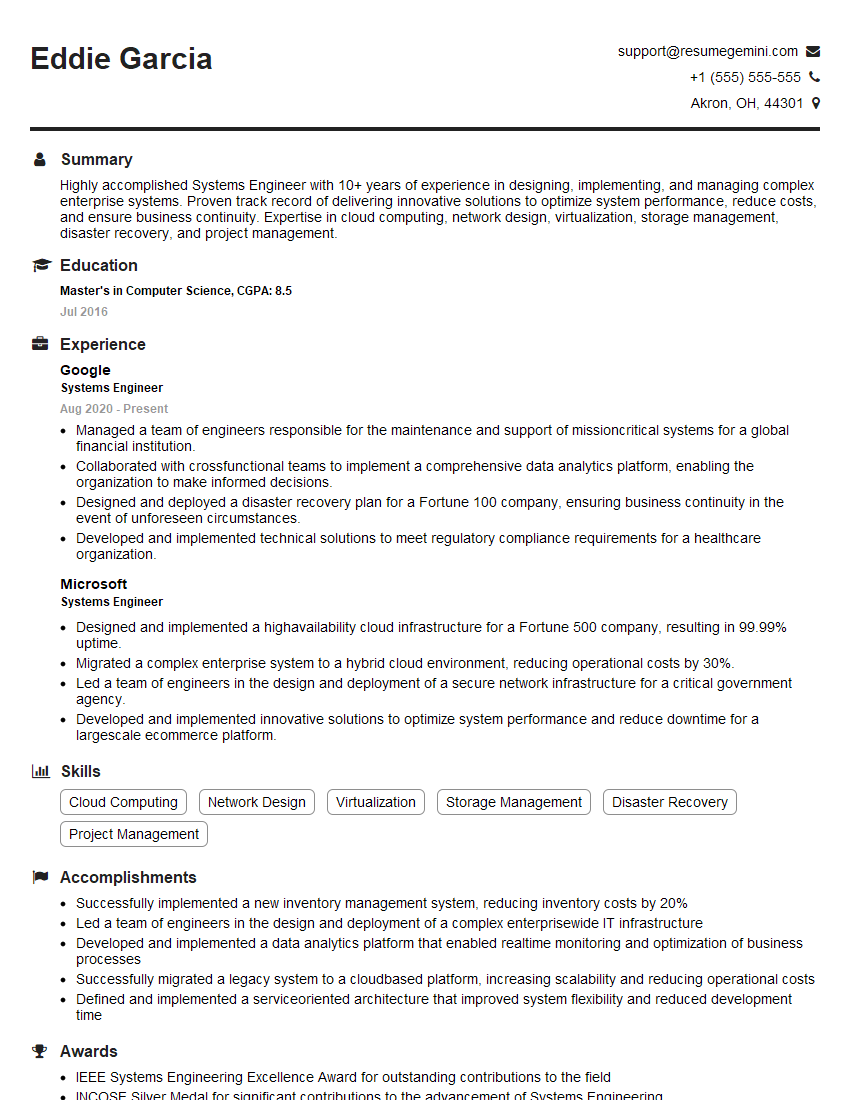
Systems Engineer Resume Sample
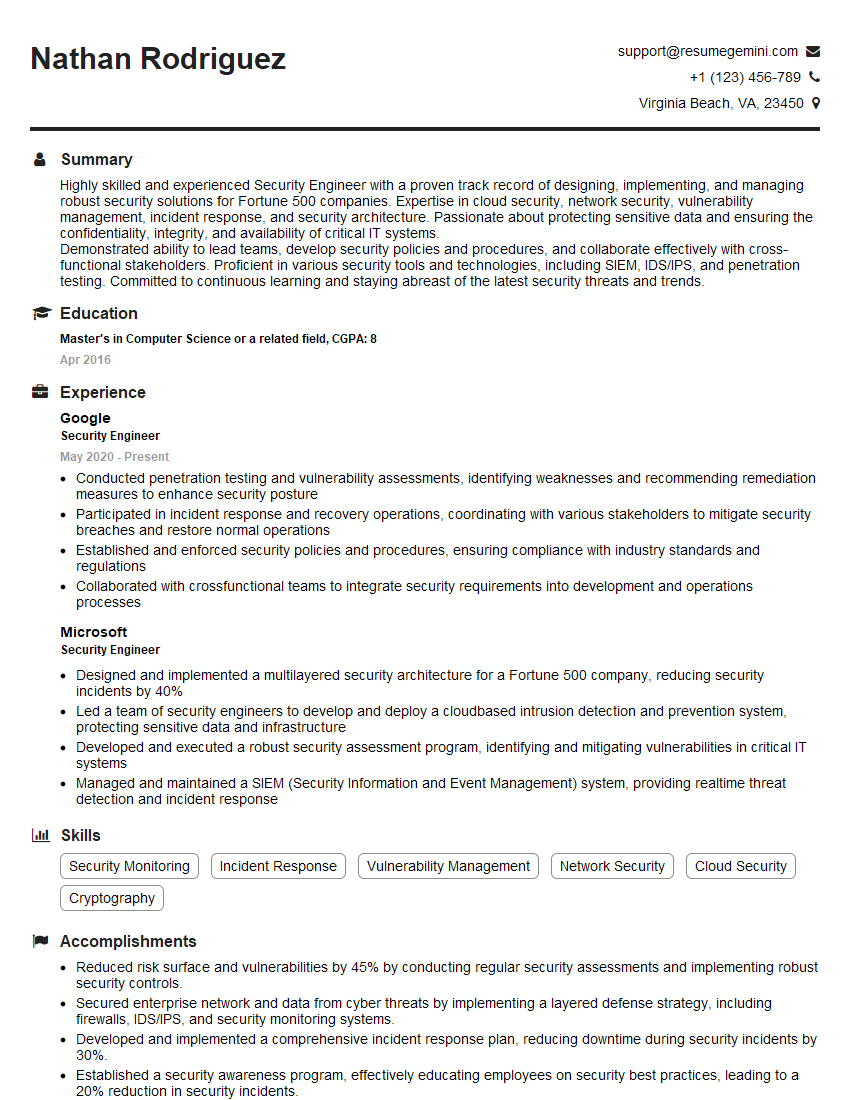
Security Engineer Resume Sample
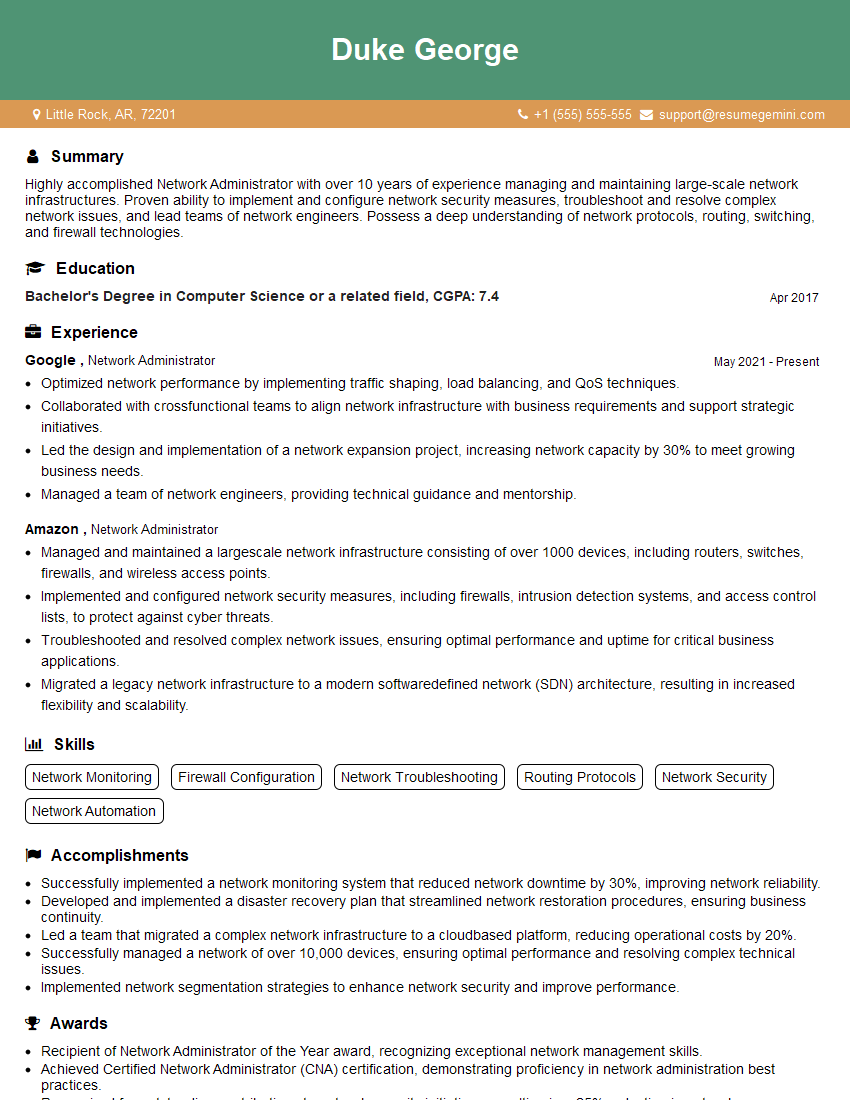
Network Administrator Resume Sample
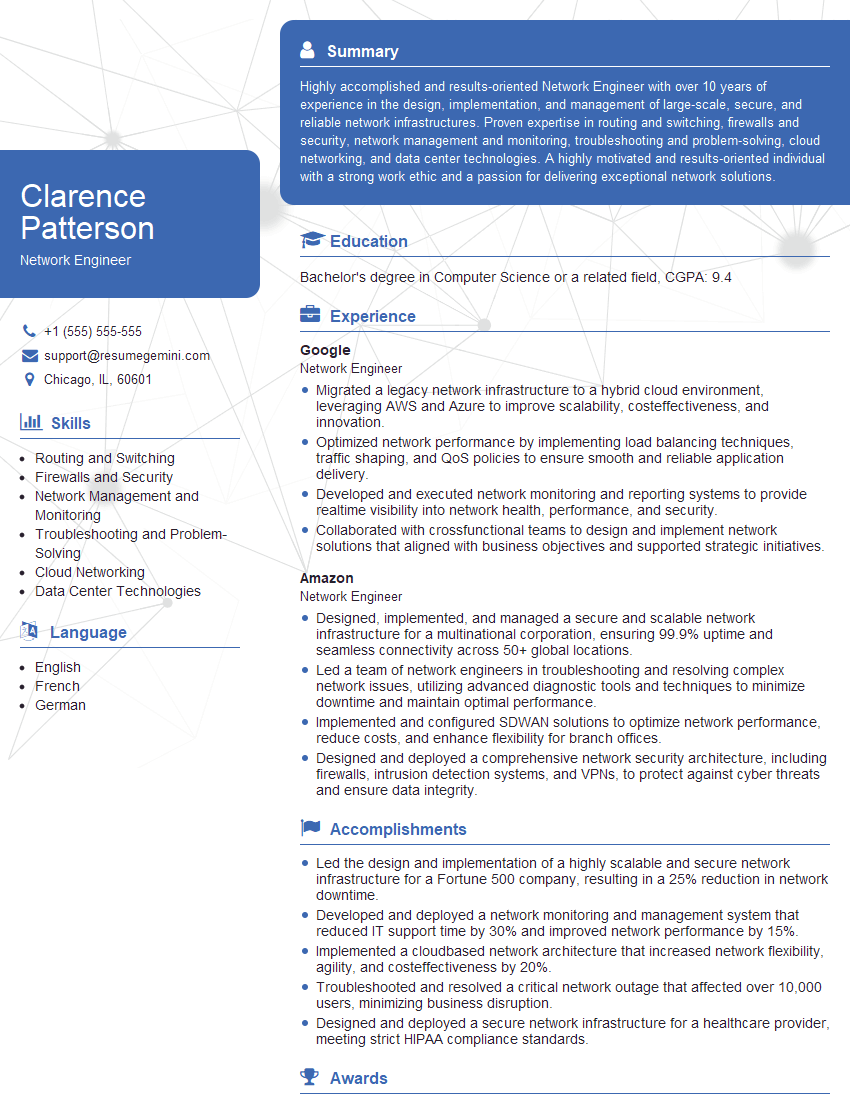
Network Engineer Resume Sample
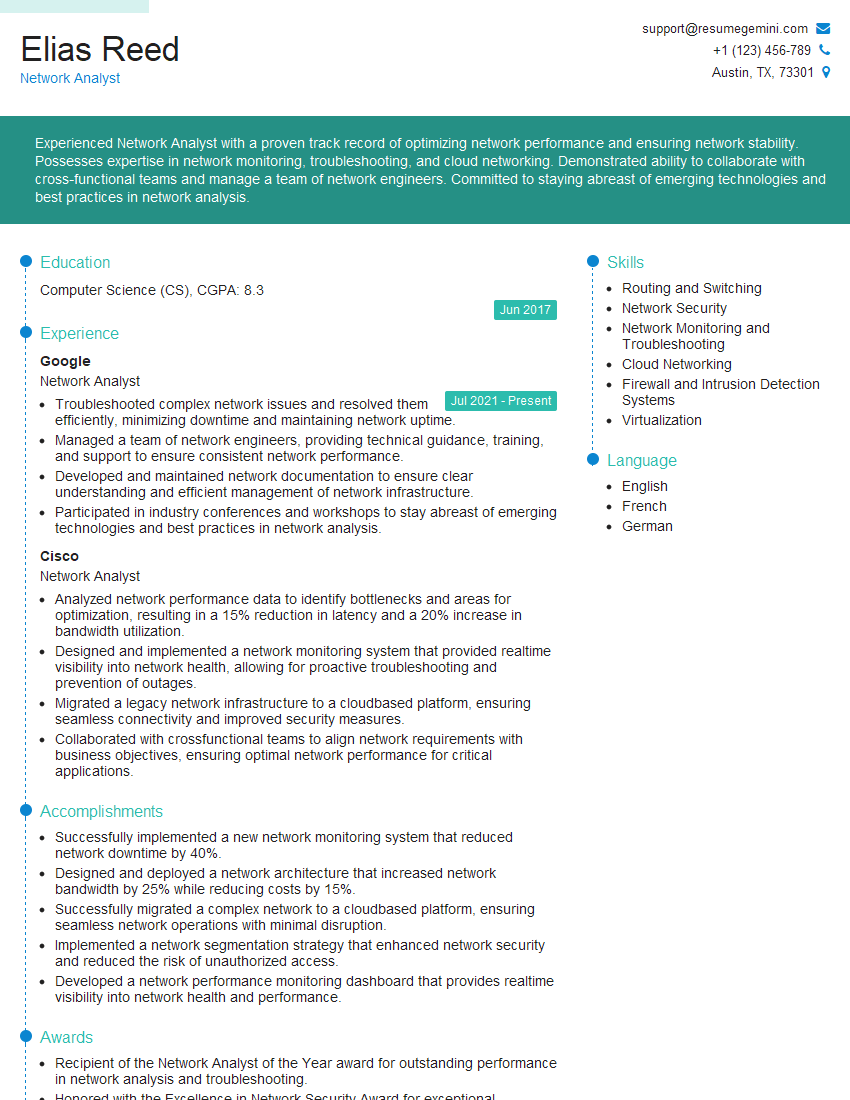
Network Analyst Resume Sample
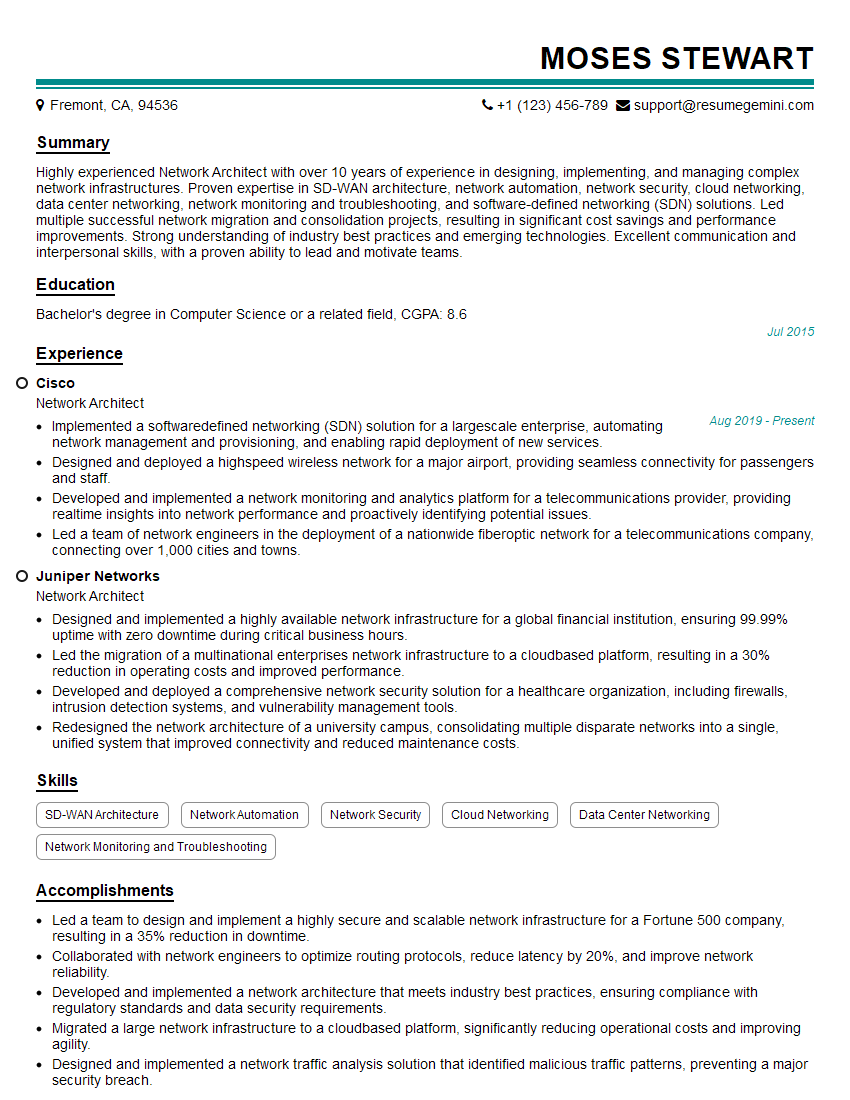
Network Architect Resume Sample
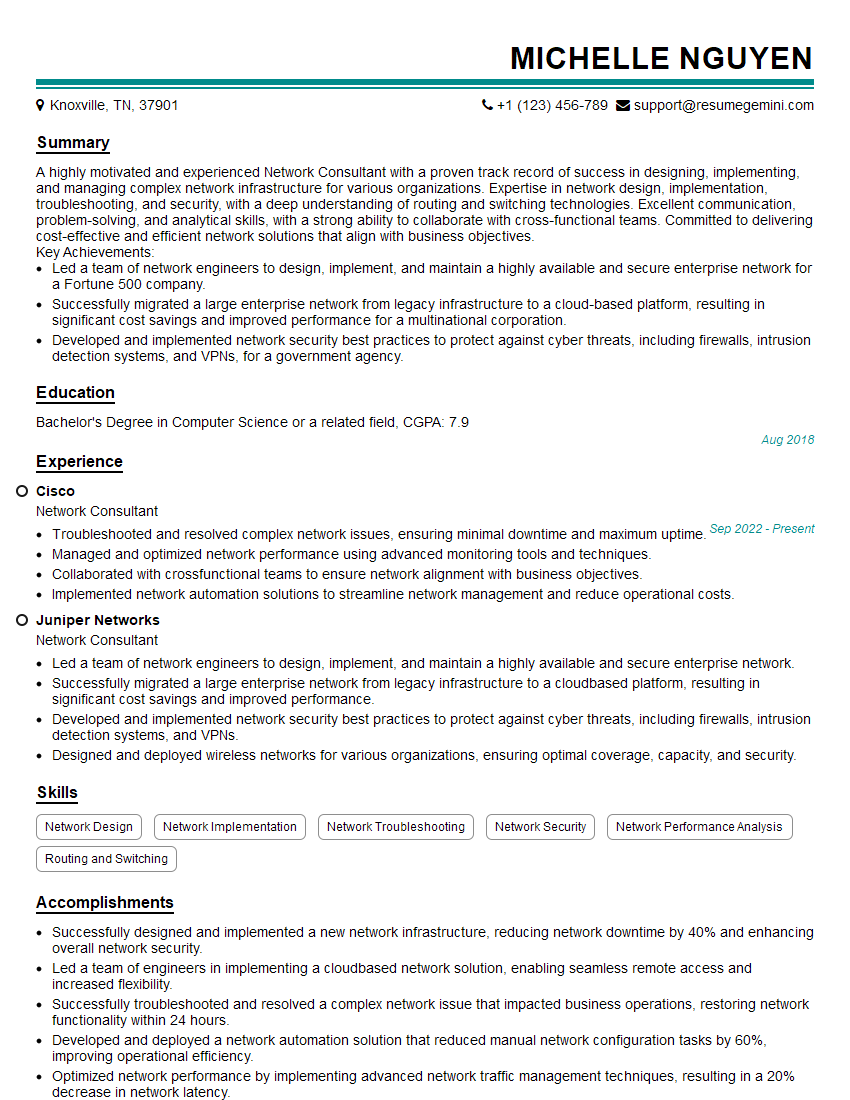
Network Consultant Resume Sample
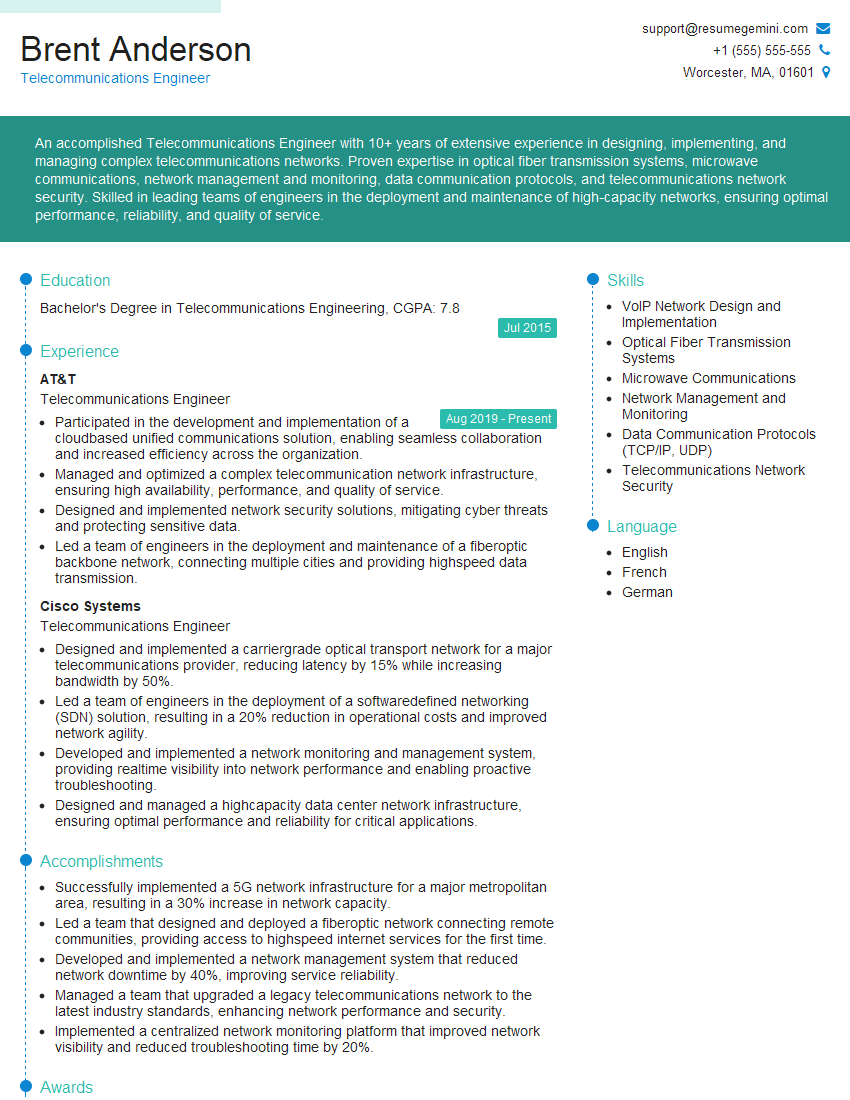
Telecommunications Engineer Resume Sample
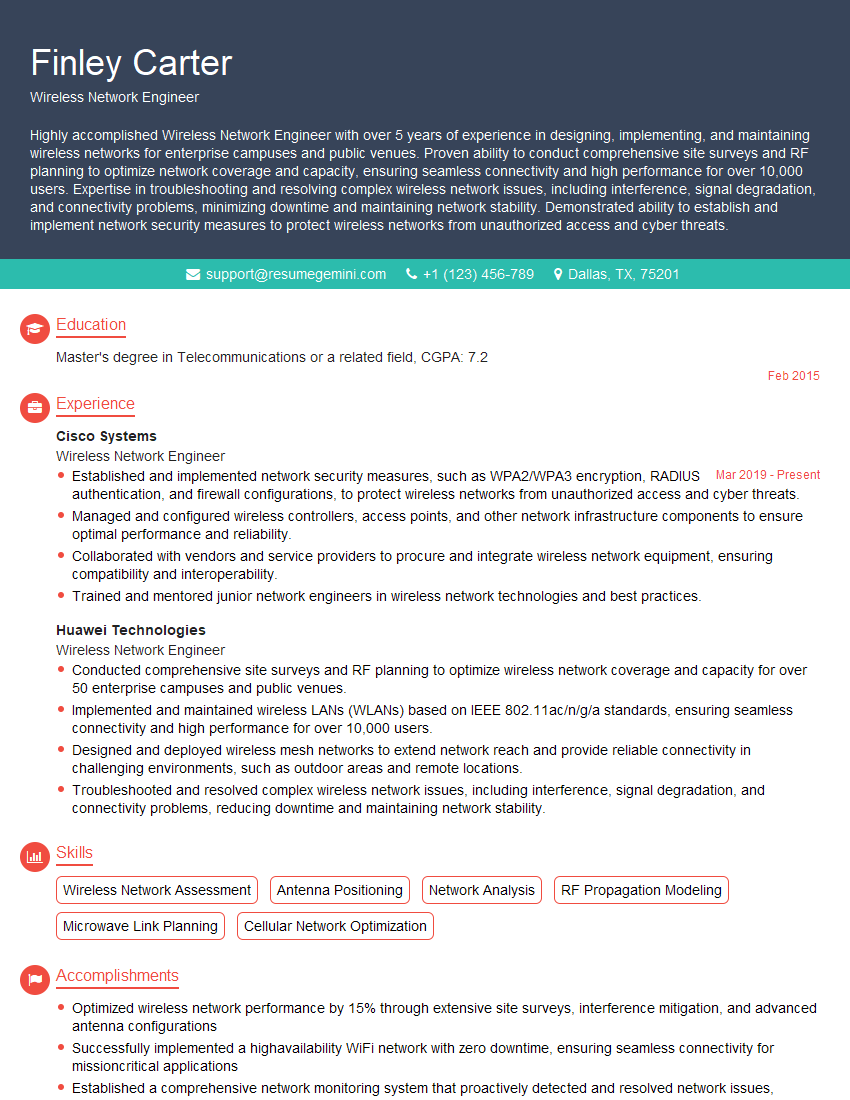
Wireless Network Engineer Resume Sample
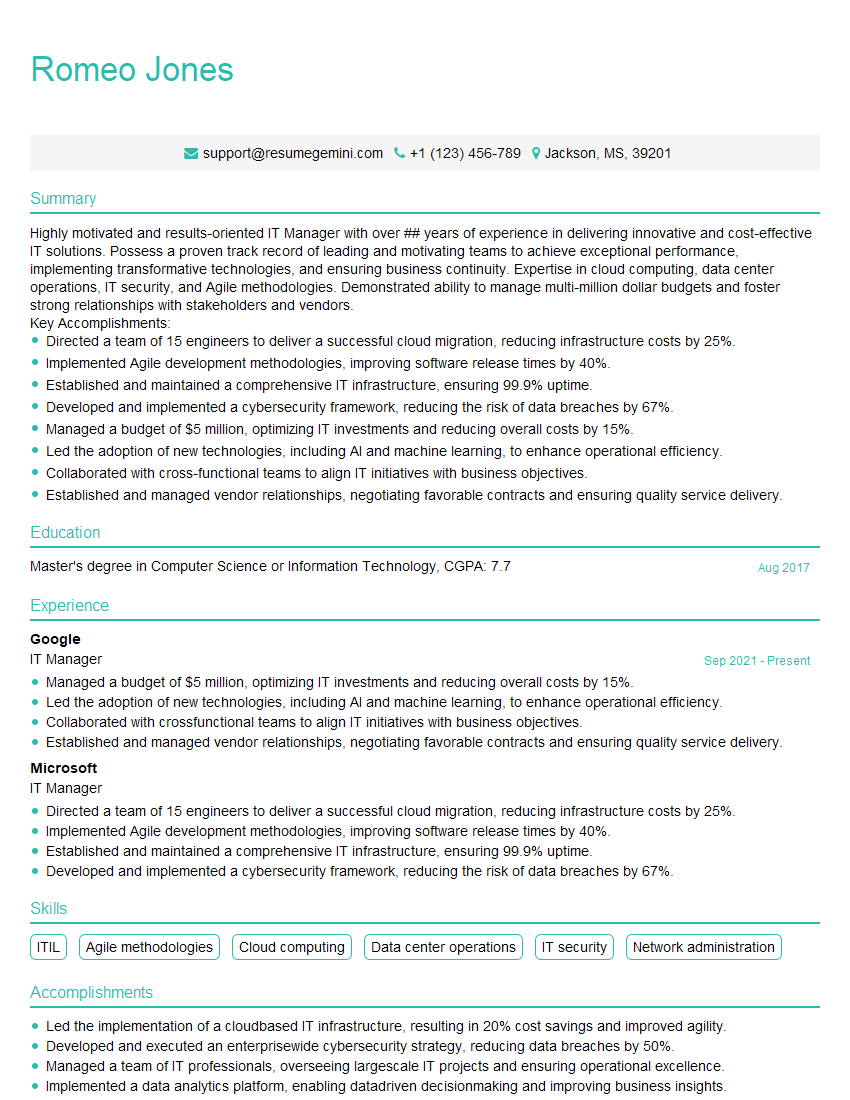
IT Manager Resume Sample
Explore more articles
Users Rating of Our Blogs
Share Your Experience
We value your feedback! Please rate our content and share your thoughts (optional).
What Readers Say About Our Blog
To the interviewgemini.com Webmaster.
Very helpful and content specific questions to help prepare me for my interview!
Thank you
To the interviewgemini.com Webmaster.
This was kind of a unique content I found around the specialized skills. Very helpful questions and good detailed answers.
Very Helpful blog, thank you Interviewgemini team.