Interviews are more than just a Q&A session—they’re a chance to prove your worth. This blog dives into essential Couple and Marital Therapy interview questions and expert tips to help you align your answers with what hiring managers are looking for. Start preparing to shine!
Questions Asked in Couple and Marital Therapy Interview
Q 1. Explain the theoretical foundation of your preferred approach to couples therapy.
My preferred approach to couples therapy is grounded in Emotionally Focused Therapy (EFT). EFT is a humanistic and experiential approach that views relationship problems as stemming from unmet emotional needs and insecure attachment patterns. It’s based on attachment theory, which posits that our early childhood experiences shape our adult relationships and emotional regulation.
The theoretical foundation rests on the idea that couples engage in negative cycles of interaction that escalate conflict and distance. These cycles are often attempts to fulfill attachment needs, but they are ineffective and damaging. EFT aims to help couples identify these cycles, understand the underlying emotions driving them, and create new, more secure ways of connecting and communicating.
For example, one partner might withdraw emotionally (fear of intimacy), triggering the other to pursue (fear of abandonment). EFT helps them recognize these underlying fears and access the vulnerability beneath the defensive behaviors. The therapist acts as a guide, helping the couple explore these deeper emotions and re-establish secure attachment.
Q 2. Describe your experience with Gottman Method Therapy. What are its strengths and limitations?
I have extensive experience using the Gottman Method. It’s a research-based approach emphasizing the importance of understanding and managing conflict constructively. Gottman’s work has identified key predictors of marital stability, including the ability to manage conflict, build friendship, create shared meaning, and maintain positive sentiment override (keeping positive interactions outweighing negative ones).
Strengths: The Gottman Method offers concrete and practical tools for improving communication and conflict resolution. Its emphasis on assessing and understanding individual personalities and their impact on the relationship is valuable. The sound theoretical foundation makes it easily understood and applied. Assessments like the Sound Relationship House provide a clear framework for understanding relationship strengths and weaknesses.
Limitations: It can be quite structured, which might feel rigid for some couples. It may not be as effective with couples dealing with serious issues like abuse, addiction, or severe trauma, which might require a more trauma-informed approach. Furthermore, it requires a substantial commitment from both partners to actively participate in exercises and homework assignments.
Q 3. How do you assess the presenting problem in a couple’s initial session?
My assessment of the presenting problem begins with a thorough intake process. I start by understanding the couple’s history, their individual backgrounds, and how their relationship has unfolded. This includes understanding their current challenges and what led them to seek therapy at this time.
I use a combination of techniques including open-ended questions, active listening, and genograms (family diagrams) to get a comprehensive picture of the relationship dynamics. I focus not just on the stated problem – for example, ‘We fight all the time’ – but also on the underlying issues driving this conflict, such as unmet needs or communication breakdowns. For instance, frequent fighting might stem from unresolved grief or differing values regarding finances.
I observe the couple’s interaction during the session, noting their communication patterns, body language, and emotional expression. This provides valuable insights into their interactional style and the emotional climate of their relationship.
Q 4. Outline your process for establishing therapeutic goals with a couple.
Establishing therapeutic goals is a collaborative process. I begin by exploring the couple’s expectations and aspirations for therapy. I help them identify what they want to achieve and what changes they hope to see in their relationship. I then use the information gathered during the assessment to help shape achievable, measurable, attainable, relevant, and time-bound (SMART) goals.
This process often involves identifying specific areas for improvement, such as communication skills, conflict resolution strategies, or emotional intimacy. For example, a goal might be ‘to improve active listening skills by practicing reflective listening during weekly conversations for the next 8 weeks’. I work with the couple to create a treatment plan that outlines these goals and the strategies we will use to achieve them.
Regularly reviewing and adjusting the goals is crucial. The initial goals might need modification as the therapy progresses and the couple gains insights into their dynamics.
Q 5. Describe your approach to working with couples experiencing infidelity.
Infidelity is a complex issue that necessitates a sensitive and nuanced approach. My primary focus is to create a safe and supportive space for both partners to process their emotions and experiences. This means acknowledging the pain and trauma caused by the betrayal and validating each partner’s feelings.
The process involves working with the betrayed partner to manage their grief, anger, and sense of betrayal. Simultaneously, I work with the offending partner to understand their motivations and take responsibility for their actions. It’s crucial to avoid assigning blame and focus instead on understanding the underlying issues that contributed to the infidelity.
The goal is not to assign fault but rather to help both individuals understand the systemic issues within the relationship that led to the affair and to rebuild trust and intimacy if possible. This is a long and challenging journey, often requiring individual therapy as well as couples’ sessions.
Q 6. How do you manage conflict effectively during couples therapy sessions?
Managing conflict effectively is central to couples therapy. I use various techniques to help couples navigate disagreements constructively. This includes teaching them skills like active listening, empathy, and identifying their own emotional responses. I create a structured environment in the session to encourage respectful communication.
I help couples learn to take turns speaking, avoid interrupting, and express themselves clearly and respectfully. I use reflective listening to ensure both partners feel heard and understood. Techniques like ‘I’ statements and focusing on behavioral descriptions rather than character attacks are often helpful.
When conflicts escalate, I might intervene to de-escalate the situation. This may involve helping the couple take breaks, re-framing their arguments, or redirecting the conversation towards a more productive direction. The ultimate goal is to help couples learn to resolve their conflicts in a way that strengthens their relationship rather than damaging it.
Q 7. What techniques do you utilize to improve communication patterns in couples?
Improving communication is a cornerstone of successful couples therapy. I use a range of techniques, tailored to each couple’s specific needs. Some common approaches include:
- Active Listening: Practicing reflective listening, where partners summarize each other’s perspectives to ensure understanding.
- ‘I’ Statements: Encouraging partners to express their feelings and needs using ‘I’ statements, focusing on their experience rather than blaming the other.
- Non-violent Communication (NVC): Teaching the four components of NVC: observations, feelings, needs, and requests to promote empathy and understanding.
- Identifying Communication Patterns: Helping couples recognize repetitive patterns of interaction that lead to conflict and finding more adaptive ways of communicating.
- Empathy Building Exercises: Engaging in exercises that promote empathy and perspective-taking.
The effectiveness of these techniques depends on the couple’s willingness to participate and practice them consistently both in and out of therapy. Homework assignments, such as daily check-ins or practicing specific communication skills, are integral to reinforcing these changes.
Q 8. Explain your approach to working with couples facing addiction issues.
My approach to working with couples facing addiction issues is multifaceted and prioritizes the health and well-being of everyone involved. It’s crucial to understand that addiction is a family disease, impacting not only the individual struggling but also their partner and the entire relational system. Therefore, my work involves several key components:
- Individual Therapy for the Addicted Partner: I strongly encourage and often require individual therapy for the person experiencing addiction. This allows for a safe space to address the root causes of their substance use, develop coping mechanisms, and work toward recovery. We explore underlying trauma, emotional regulation skills, and relapse prevention strategies.
- Couples Therapy Focused on Relational Repair: Simultaneously, we work together as a couple to address the relational damage caused by the addiction. This includes rebuilding trust, improving communication, and re-establishing intimacy. We explore the impact the addiction has had on the relationship dynamics, financial stability, and emotional well-being of both partners. It involves helping the non-addicted partner process feelings of betrayal, anger, and resentment, while teaching both partners healthy ways to communicate and support each other.
- Education and Support: I provide education about addiction, its effects, and recovery pathways to both partners. I collaborate with other professionals, such as substance abuse specialists, when appropriate. This ensures a holistic approach to healing, understanding, and ultimately recovery. Support groups and family therapy are also often incorporated.
- Setting Realistic Goals and Expectations: We collaboratively establish achievable goals that respect the complexities of addiction recovery. This includes setting milestones for both individual and relational progress. It acknowledges that setbacks may occur and establishes strategies for managing them effectively.
For example, I recently worked with a couple where the husband struggled with alcoholism. We started with individual therapy for him, focusing on identifying the triggers and coping mechanisms. Concurrently, we worked with the couple on rebuilding communication and addressing the wife’s feelings of neglect and abandonment. The success of this approach hinged on open communication, mutual support, and a commitment from both partners to the therapeutic process.
Q 9. How do you address power imbalances within a couple’s relationship?
Addressing power imbalances is crucial in couples therapy because they often fuel conflict and prevent healthy communication. My approach involves several strategies:
- Identifying the Imbalance: The first step involves carefully identifying the nature and extent of the power imbalance. This might manifest as controlling behavior, financial dependence, intimidation, or emotional manipulation. Observing communication patterns and power dynamics within the session is vital.
- Empowering the Less Powerful Partner: I focus on empowering the partner with less power. This includes helping them identify their strengths, set boundaries, and express their needs assertively. I use techniques such as role-playing and assertiveness training to build their confidence and self-advocacy skills. A common exercise involves practicing ‘I’ statements to better express feelings and needs without accusation.
- Holding the More Powerful Partner Accountable: The partner with more power needs to understand the impact of their behavior and take responsibility for their actions. This often involves challenging controlling behaviors and promoting empathy for their partner’s experiences. This might involve discussing the impact of their actions and helping them develop healthier communication styles.
- Promoting Equality and Mutual Respect: The ultimate goal is to create a relationship based on equality and mutual respect. This involves fostering open communication, shared decision-making, and a balanced distribution of responsibilities. This isn’t about achieving absolute equality but about ensuring a healthier balance of power.
For instance, in one case, the wife felt financially dependent on her husband, which limited her ability to make decisions. We worked on developing her financial literacy and empowering her to take control of her own finances. Concurrently, we addressed the husband’s controlling behaviors and encouraged him to foster a more collaborative decision-making process.
Q 10. Describe your experience with couples therapy involving trauma.
My experience working with couples involving trauma is extensive, and requires a trauma-informed approach that prioritizes safety, respect, and collaboration. Trauma significantly impacts relationships, often manifesting as emotional dysregulation, difficulty with intimacy, and communication challenges. My approach includes:
- Creating a Safe and Trusting Environment: Establishing a safe space where both partners feel comfortable sharing their experiences is paramount. This includes validating their experiences and avoiding any pressure to disclose details they’re not ready to share.
- Trauma-Focused Therapy: Depending on the nature and severity of the trauma, incorporating trauma-focused techniques such as EMDR (Eye Movement Desensitization and Reprocessing) or somatic experiencing may be beneficial. These help partners process and regulate their trauma responses.
- Addressing the Impact of Trauma on the Relationship: We examine how the trauma has impacted their relationship dynamics, intimacy, and communication. For example, we’ll explore how trauma has affected trust, attachment styles, and ability to regulate emotions within the relationship. It’s crucial to identify how trauma manifests in their interactions and understand the relational consequences.
- Strengthening Coping Mechanisms and Resilience: The work focuses on building coping mechanisms for managing stress, anxiety, and triggers related to the trauma. This may include mindfulness practices, emotional regulation techniques, and stress reduction strategies that benefit both individuals and the relationship as a whole.
It’s important to emphasize that a trauma-informed approach is crucial, and I prioritize ensuring the safety and comfort of each partner throughout the therapeutic process. Working with couples who have experienced trauma demands patience, understanding, and a deep commitment to creating a supportive and healing environment.
Q 11. How do you incorporate cultural sensitivity into your therapy practice?
Cultural sensitivity is crucial in couples therapy. My approach involves:
- Self-Reflection and Awareness: I actively engage in ongoing self-reflection and education to understand my own biases and assumptions. This includes acknowledging my cultural lens and how it might influence my interactions with clients from diverse backgrounds.
- Cultural Humility: I prioritize cultural humility rather than cultural competence. This approach acknowledges the inherent limitations of my knowledge and promotes a lifelong commitment to learning about different cultures.
- Client-Centered Approach: I prioritize understanding each couple’s unique cultural context and beliefs. This involves actively listening to their perspectives, avoiding generalizations, and adapting my therapeutic approach accordingly. I never impose my own cultural values or interpretations.
- Utilizing Culturally Relevant Interventions: When appropriate, I incorporate culturally relevant interventions that resonate with the couple’s background and values. This might include integrating family structures, spiritual beliefs, or traditional healing practices.
- Seeking Consultation: If I encounter significant cultural differences or barriers, I seek consultation from colleagues or experts with experience working with similar populations.
For example, when working with a Muslim couple, I might need to consider the importance of family involvement in decision-making. Understanding their cultural norms helps tailor my approach to ensure effective therapy while respecting their values.
Q 12. How do you maintain ethical boundaries in couples therapy?
Maintaining ethical boundaries in couples therapy is paramount. This involves:
- Informed Consent: At the beginning of therapy, I provide clear and comprehensive information about the process, including confidentiality, limits of confidentiality (e.g., child abuse, threat of harm), fees, and my professional roles. Written informed consent is obtained.
- Confidentiality: I adhere to strict confidentiality guidelines, ensuring that information shared in therapy remains confidential, unless mandated by law (e.g., child abuse, threat of harm).
- Dual Relationships: I avoid dual relationships, such as social relationships or business dealings with clients. If a potential conflict of interest arises, I address it transparently and ethically.
- Professional Boundaries: I maintain clear professional boundaries, avoiding any form of physical contact or inappropriate emotional involvement. My role is that of a therapist, not a friend or confidante.
- Referral: If I am unable to provide effective therapy due to a personal conflict or a lack of expertise in a specific area, I make appropriate referrals to other professionals.
For example, if a couple discloses a serious conflict that directly involves me, I would immediately address the conflict of interest and potentially refer the couple to another therapist to maintain objectivity and ethical practice.
Q 13. Describe your approach to working with high-conflict couples.
Working with high-conflict couples requires a structured and strategic approach focused on de-escalation, communication skills, and conflict resolution. My approach involves:
- Establishing Ground Rules: I begin by collaboratively establishing clear ground rules for respectful communication. This involves setting limits on verbal attacks, insults, and other forms of disrespectful behavior. These are agreed upon by both partners, creating a shared understanding of expected conduct.
- Communication Skills Training: I teach specific communication skills such as active listening, expressing emotions constructively, and finding mutually acceptable solutions. Techniques like ‘I’ statements and paraphrasing are taught and practiced within the session. This is often a foundational element of managing high conflict.
- Conflict Resolution Strategies: We explore and practice various conflict resolution strategies, such as compromise, negotiation, and collaborative problem-solving. This involves breaking down complex conflicts into smaller, manageable pieces to make progress more attainable.
- Managing Emotions: High conflict often involves intense emotions. We focus on developing strategies for managing emotions effectively, such as mindfulness, relaxation techniques, and emotional regulation exercises. Learning to self-soothe is crucial for managing conflict.
- Individual Sessions (when necessary): In some cases, I may recommend individual therapy sessions to address underlying issues contributing to the conflict, such as trauma, personality disorders, or unmet emotional needs. This allows a safe space for self-reflection and processing before returning to couples work.
For instance, one couple constantly interrupted and attacked each other. We established ground rules about respectful turn-taking and active listening. Then we practiced communication skills to help them express themselves constructively. This systematic approach gradually reduced the intensity of their conflicts and fostered a more collaborative approach to resolving disagreements.
Q 14. How do you determine the appropriate length of treatment for a couple?
Determining the appropriate length of treatment for a couple depends on several factors. It’s not a fixed timeframe but a collaborative decision-making process.
- Severity of Issues: The severity and complexity of the presenting problems significantly influence treatment duration. Couples with more severe issues like addiction, infidelity, or deep-seated trauma will likely require longer treatment than those dealing with more manageable conflicts.
- Client Progress: Regular progress assessments are critical. We track progress towards established goals. If consistent progress is observed, the therapy might conclude sooner. Conversely, if progress is slow or stalled, we adjust the treatment plan or consider other interventions.
- Couple’s Commitment: The couple’s commitment to the process significantly impacts the timeline. Active engagement and consistent effort contribute to faster progress. Lack of commitment can lengthen the process or necessitate its termination.
- Therapeutic Goals: The specific goals established in the initial sessions influence the timeline. Achieving simpler goals might take less time than more complex, multifaceted goals.
- Resource Considerations: Financial resources and time availability play a crucial role. Realistic planning considers these practical aspects.
There’s no magic number of sessions. Regular evaluation, open communication between therapist and couple, and a focus on achieving mutually agreed-upon goals guide the determination of appropriate treatment length. The process is collaborative and flexible, adjusting as needed based on progress and changing circumstances.
Q 15. What are some common challenges you encounter in couples therapy, and how do you overcome them?
Common challenges in couples therapy are diverse and often intertwined. Resistance to therapy, from one or both partners, is a frequent hurdle. This can manifest as missed sessions, defensiveness during sessions, or a lack of engagement in assigned tasks. Another significant challenge is differing expectations about the therapy process and outcomes. One partner might seek deep emotional exploration, while the other prefers a more problem-solving approach. Infidelity, addiction, and unresolved trauma also significantly complicate the therapeutic process. Finally, power imbalances within the relationship can make it difficult for one partner to feel heard and safe enough to share their experiences.
Overcoming these challenges involves a multifaceted approach. Firstly, I establish a strong therapeutic alliance with each partner individually, understanding their unique perspectives and concerns. Secondly, I collaboratively set clear, realistic goals that both partners agree upon. This involves open communication and negotiation, sometimes requiring separate sessions to address individual anxieties or resistance. Thirdly, I utilize appropriate therapeutic techniques, adapting my approach based on the couple’s needs and presenting issues. For instance, if trauma is a factor, I might incorporate elements of trauma-informed therapy. In cases of addiction, I may recommend or coordinate with specialized addiction treatment. If power imbalances exist, I carefully guide the conversation to empower the less dominant partner and encourage respectful communication between both.
Career Expert Tips:
- Ace those interviews! Prepare effectively by reviewing the Top 50 Most Common Interview Questions on ResumeGemini.
- Navigate your job search with confidence! Explore a wide range of Career Tips on ResumeGemini. Learn about common challenges and recommendations to overcome them.
- Craft the perfect resume! Master the Art of Resume Writing with ResumeGemini’s guide. Showcase your unique qualifications and achievements effectively.
- Don’t miss out on holiday savings! Build your dream resume with ResumeGemini’s ATS optimized templates.
Q 16. Explain your experience with Emotionally Focused Therapy (EFT).
Emotionally Focused Therapy (EFT) is a powerful approach that focuses on understanding and addressing the underlying emotional needs and attachment patterns within the relationship. My experience with EFT has been profoundly positive. It helps couples identify and understand their emotional responses, particularly in the context of their interaction cycles (patterns of interaction that perpetuate conflict). The core of EFT is re-establishing a secure attachment bond through increased empathy, vulnerability, and understanding of each partner’s emotional experience.
In practice, I guide couples to identify their emotional needs, using techniques such as reflecting feelings and softening harsh interactions. We explore the underlying fears and anxieties that drive their behavior. For example, a common pattern might involve one partner withdrawing emotionally, leading the other to feel ignored and criticized. Through EFT, we help them understand how their behaviors perpetuate this cycle. We work to help them access and express their primary emotions, such as fear or sadness, rather than getting stuck in secondary emotions like anger or resentment. The goal is to create a more secure and connected relationship where both partners feel seen, heard, and understood.
Q 17. How do you handle situations where one partner is more invested in therapy than the other?
When one partner is less invested in therapy than the other, it’s crucial to address the underlying reasons for their reluctance. I begin by validating their feelings and concerns, creating a safe space for them to express their hesitations. Sometimes, resistance stems from fear, feeling overwhelmed, or mistrust of the process. I explore these feelings, acknowledging that attending therapy doesn’t automatically solve all relationship problems. Often, simply providing a clearer explanation of the therapy’s process and goals can increase buy-in.
I may suggest individual sessions to address personal concerns or traumas that might be hindering their participation. It’s important to remember that progress requires both partners’ cooperation, but the less invested partner’s engagement should be facilitated, not forced. I avoid pressuring them but emphasize the potential benefits for their individual well-being and the relationship. Ultimately, I help both partners understand that therapy is about their growth and is not necessarily a ‘blame’ game. If the resistance persists despite these efforts, we might discuss alternative solutions, such as individual therapy for each partner or deciding to postpone couples therapy.
Q 18. Describe your process for termination of couples therapy.
The termination of couples therapy is a carefully planned process designed to ensure the couple has the tools and skills to continue their progress independently. I typically initiate the termination discussion several sessions in advance, giving the couple ample time to process the upcoming transition. We reflect on the progress made, highlighting the couple’s strengths and the skills they’ve developed. This may include improved communication strategies, conflict resolution techniques, and emotional regulation skills. We also discuss any remaining challenges and formulate plans for how to address them moving forward.
Furthermore, I provide them with resources and referrals if needed, such as recommendations for books, websites, or other therapists specializing in specific areas. The final session often includes summarizing key insights and reviewing their agreed-upon goals. I encourage them to maintain the positive patterns learned in therapy and offer follow-up contact if they need support or feel they’ve encountered significant challenges. The end of therapy is not necessarily the ‘end’ of the journey, but rather a point where they continue to build upon the foundation established during the sessions.
Q 19. How do you support couples in navigating major life transitions?
Major life transitions, such as having a child, changing careers, relocation, or dealing with illness or loss, can significantly impact a relationship. Supporting couples through these transitions requires understanding the unique stressors involved. We begin by helping them identify and articulate their individual and shared concerns related to the transition. It’s important to create a space where they can openly share their anxieties, fears, and expectations without judgment.
I use a collaborative approach, encouraging open communication and the development of shared strategies for navigating the challenges. We explore how the transition affects their roles, responsibilities, and emotional availability within the relationship. For example, a couple facing the stress of a new baby might benefit from strategies for managing sleep deprivation, dividing household chores, and maintaining intimacy amidst the chaos. We might also utilize tools to build resilience and cope with the stresses involved. It’s critical to help them redefine their relationship in light of the significant change, helping them maintain a sense of connection and intimacy despite the unavoidable upheaval.
Q 20. How do you ensure client confidentiality in a couples therapy setting?
Client confidentiality is paramount in couples therapy. I clearly explain the limits of confidentiality during the initial session, emphasizing that while I will strive to maintain confidentiality, certain exceptions exist. This includes instances where there is a serious threat of harm to self or others, mandated reporting requirements for child abuse or neglect, and court orders.
In the context of couples therapy, I am bound to protect the privacy of all participants to the best of my ability; however, the very nature of couples therapy requires transparency between partners. It’s essential that both partners understand the limits of confidentiality and agree to participate in the therapy. I encourage open communication and collaboration between them, but I emphasize that anything shared within the therapeutic context will remain confidential unless there are specific legal exceptions. Furthermore, I utilize appropriate safeguards to maintain records and manage session information in accordance with professional ethical guidelines and relevant legislation.
Q 21. Describe your experience with different types of family structures.
My experience encompasses working with diverse family structures, including traditional nuclear families, blended families, same-sex couples, single-parent families, and families with extended family members playing significant roles. Each structure presents unique dynamics and challenges. For instance, blended families often navigate complex step-parent/step-child relationships and the integration of multiple family systems. Same-sex couples might face specific societal challenges related to legal rights and social acceptance. Single-parent families often grapple with issues related to time constraints and potential role overload.
My approach is tailored to the specific family structure, acknowledging its unique characteristics and potential challenges. I focus on building empathy and understanding between family members and helping them navigate communication, boundaries, and conflict resolution in a way that respects the individuality of each person. My primary goal is to foster strong relationships and provide support for each member, thereby strengthening the overall family unit. I recognize that the definition of ‘family’ has broadened significantly, and I actively embrace this diversity in my practice, adapting my approach to meet the unique needs of each family I serve.
Q 22. What is your approach to working with couples from diverse backgrounds?
My approach to working with couples from diverse backgrounds centers on cultural humility and sensitivity. I understand that cultural values, beliefs, and communication styles significantly impact relationship dynamics. Instead of applying a one-size-fits-all approach, I begin by actively listening and learning about each couple’s unique cultural context. This includes exploring their family structures, communication norms, and religious or spiritual beliefs. I strive to understand how these factors shape their perceptions of relationships, conflict resolution, and expectations within their partnership. For example, a couple from a collectivist culture might approach conflict differently than a couple from an individualistic culture. Acknowledging and respecting these differences is crucial. I adapt my therapeutic techniques to be culturally appropriate and avoid imposing my own cultural biases. This might involve adjusting the pace of therapy, the types of interventions used, or even the language used during sessions. Collaboration and open communication are key; I always make sure to check in with the couple regularly to ensure they feel understood and respected.
Q 23. How do you use assessment tools in couples therapy?
Assessment tools in couples therapy are crucial for understanding the relationship’s strengths and challenges. I utilize a variety of methods, starting with thorough intake interviews to gather a comprehensive history of the relationship. This includes understanding the timeline of their relationship, significant life events, and the nature of their presenting problems. Beyond the interview, I may employ standardized questionnaires such as the Dyadic Adjustment Scale (DAS) to objectively measure relationship satisfaction and quality. The Gottman Relationship Scales are also valuable in assessing conflict styles and emotional responsiveness within the relationship. These tools provide quantifiable data that complements the qualitative information gathered during interviews. Finally, I often use genograms to visually map family history and patterns of relationships across generations. This provides insight into potential intergenerational influences on the couple’s dynamic. The data collected from these assessments informs my treatment plan, tailoring interventions to address the specific needs and issues identified. For instance, if the DAS reveals low levels of marital satisfaction and high levels of conflict, I might focus on teaching communication skills and conflict-resolution techniques.
Q 24. What are your strategies for managing difficult emotions during sessions?
Managing difficult emotions during sessions is a critical aspect of couples therapy. It’s essential to create a safe and validating space where both partners feel comfortable expressing themselves. I employ techniques such as emotional regulation exercises, helping partners identify and label their emotions. Deep breathing techniques and mindfulness practices can also help de-escalate tension. When emotions run high, I might use reflective listening to help partners understand each other’s perspectives. This involves summarizing their feelings and experiences, ensuring accurate understanding. If necessary, I might suggest taking a brief break to allow the couple time to calm down. I emphasize empathy, ensuring both individuals feel heard and understood, even when their viewpoints differ substantially. I work to validate each person’s emotional experience, which helps to foster trust and facilitate productive communication. For instance, if one partner expresses anger, I wouldn’t dismiss it but would help them explore the underlying reasons for that anger. The goal is not to suppress emotions but to help partners manage them constructively.
Q 25. How do you handle cases involving domestic violence or abuse?
Cases involving domestic violence or abuse require a highly specialized and cautious approach. My priority is the safety and well-being of the survivor. I would first conduct a thorough assessment to determine the nature and extent of the abuse. This involves asking direct questions about the abuse, paying close attention to both verbal and nonverbal cues. It’s crucial to establish a safety plan with the survivor, identifying immediate and long-term safety measures. This might involve finding a safe place to stay, creating a code word with trusted individuals, and removing potential weapons from the home. I would also provide resources and referrals to specialized agencies that can offer support, including domestic violence shelters and legal aid. I would not attempt to counsel the abusive partner without appropriate training and in conjunction with the survivor’s well-being as the top priority. In fact, I might decline to treat the couple together if abuse is present, focusing instead on individual therapy for the survivor. My ethical obligation is to ensure the safety and empowerment of the abused partner. Ethical considerations dictate that I prioritize the safety and well-being of the survivor above all else. My role is not to reconcile the relationship but to support the survivor’s journey towards safety and recovery.
Q 26. Describe your approach to incorporating technology into couples therapy.
Technology can enhance access to and effectiveness of couples therapy. I utilize secure video conferencing platforms to conduct sessions remotely, improving accessibility for couples who face geographical barriers or logistical challenges. Secure messaging platforms allow for asynchronous communication between sessions, facilitating ongoing support and processing of issues discussed in therapy. I also use apps that track relationship progress and offer self-guided exercises. However, it’s vital to prioritize confidentiality and security when using technology. I only utilize HIPAA-compliant platforms to protect sensitive information. I’m mindful of the potential limitations of technology, too, acknowledging that it cannot replace the nuances of in-person interaction. For example, subtle nonverbal cues might be lost through video conferencing, requiring additional awareness and attention from the therapist. My use of technology is always a complement to, not a replacement for, the core therapeutic relationship built on trust and open communication. I also address any technological barriers the clients might have and work with them to establish a platform that works effectively for their needs.
Q 27. What continuing education activities have you undertaken to stay current in the field?
Staying current in the field of couples therapy requires continuous professional development. I regularly attend workshops and conferences focused on evidence-based practices in couples therapy. Recent trainings have covered topics such as Gottman Method Couples Therapy, Emotionally Focused Therapy (EFT), and the impact of trauma on relationships. I also actively participate in peer supervision groups, providing and receiving feedback on cases. This allows for continuous learning and refinement of my therapeutic skills. Furthermore, I engage in ongoing reading of relevant professional journals and research articles to stay abreast of the latest advancements in the field. Maintaining licensure requirements also demands participation in continuing education activities focused on ethical practice and legal updates that directly impact my work with clients.
Q 28. Explain your understanding of the ethical considerations related to working with couples.
Ethical considerations are paramount in couples therapy. Maintaining confidentiality is crucial; information shared during sessions is kept private, with exceptions only made as required by law (e.g., reporting suspected child abuse or neglect). Informed consent is essential; couples must understand the therapy process, goals, and potential risks before proceeding. I’m mindful of potential power imbalances within the therapeutic relationship and strive to create a fair and equitable therapeutic environment. I avoid dual relationships, such as providing therapy to individuals I already know personally. Maintaining professional boundaries is essential to prevent conflicts of interest. When addressing difficult issues like domestic violence, my ethical obligations prioritize the safety and well-being of the survivor. Ongoing self-reflection and supervision are vital for ensuring ethical conduct and maintaining a high standard of care. I engage in regular supervision to discuss cases, identify potential ethical dilemmas, and seek guidance when necessary. Ethical decision-making is an ongoing process that requires diligence, reflection, and a commitment to upholding the highest professional standards.
Key Topics to Learn for Couple and Marital Therapy Interview
- Theoretical Foundations: Gain a strong understanding of major theoretical approaches (e.g., Systems Theory, Emotionally Focused Therapy (EFT), Gottman Method, Cognitive Behavioral Therapy (CBT) adaptations for couples) and their practical implications.
- Assessment and Diagnosis: Master techniques for assessing couple dynamics, identifying relationship distress, and formulating appropriate diagnoses using relevant diagnostic manuals (e.g., DSM-5).
- Communication Patterns and Conflict Resolution: Develop expertise in identifying and addressing dysfunctional communication styles, conflict resolution strategies, and building effective communication skills within couples.
- Attachment Theory and its Influence: Understand the role of attachment styles in shaping relationship dynamics and how to utilize this knowledge in therapeutic interventions.
- Working with Diverse Populations: Familiarize yourself with culturally sensitive approaches and ethical considerations when working with diverse couples, including those facing unique challenges (e.g., infidelity, trauma, substance abuse).
- Ethical and Legal Considerations: Thoroughly understand ethical guidelines, confidentiality, and legal implications relevant to couple and marital therapy.
- Treatment Planning and Intervention Strategies: Develop skills in creating individualized treatment plans, selecting appropriate interventions, and monitoring progress effectively.
- Case Conceptualization and Treatment: Practice developing comprehensive case conceptualizations and outlining specific treatment approaches based on individual couple needs.
- Practical Application: Be prepared to discuss how you would apply your theoretical knowledge to real-world scenarios and hypothetical case studies. Consider how different theoretical perspectives might inform your approach.
Next Steps
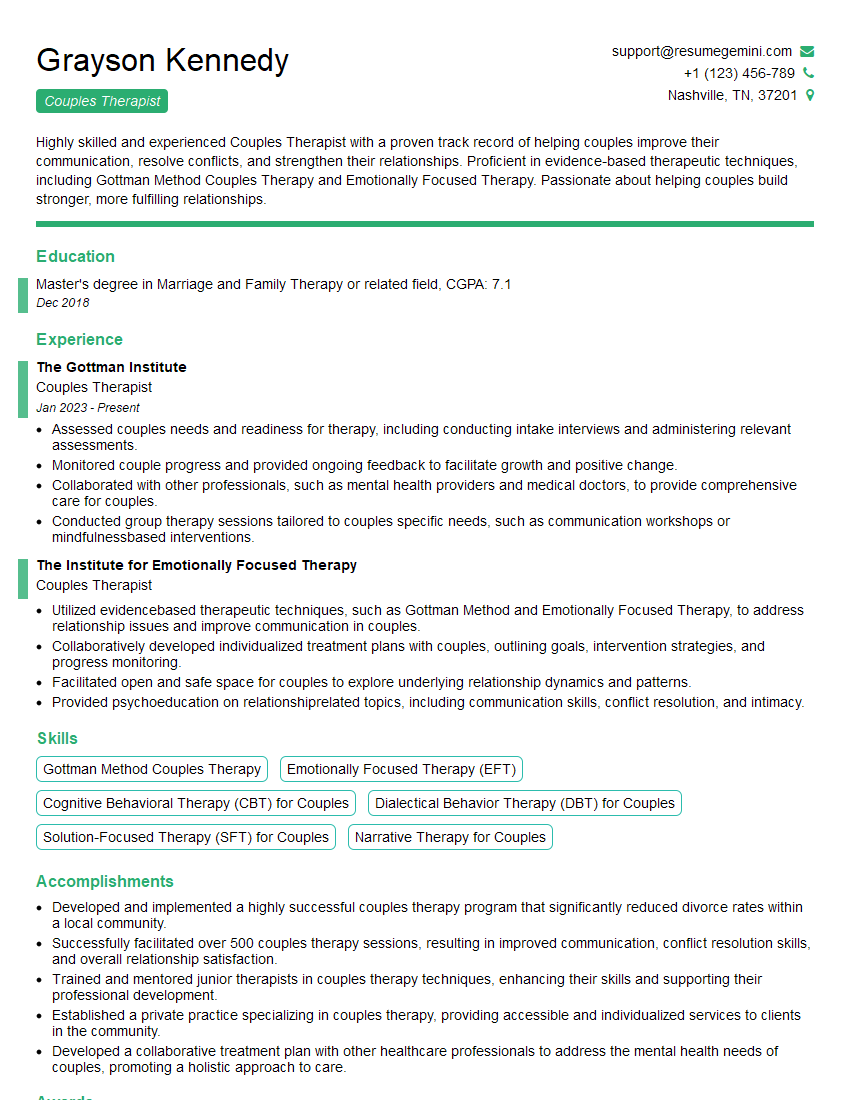
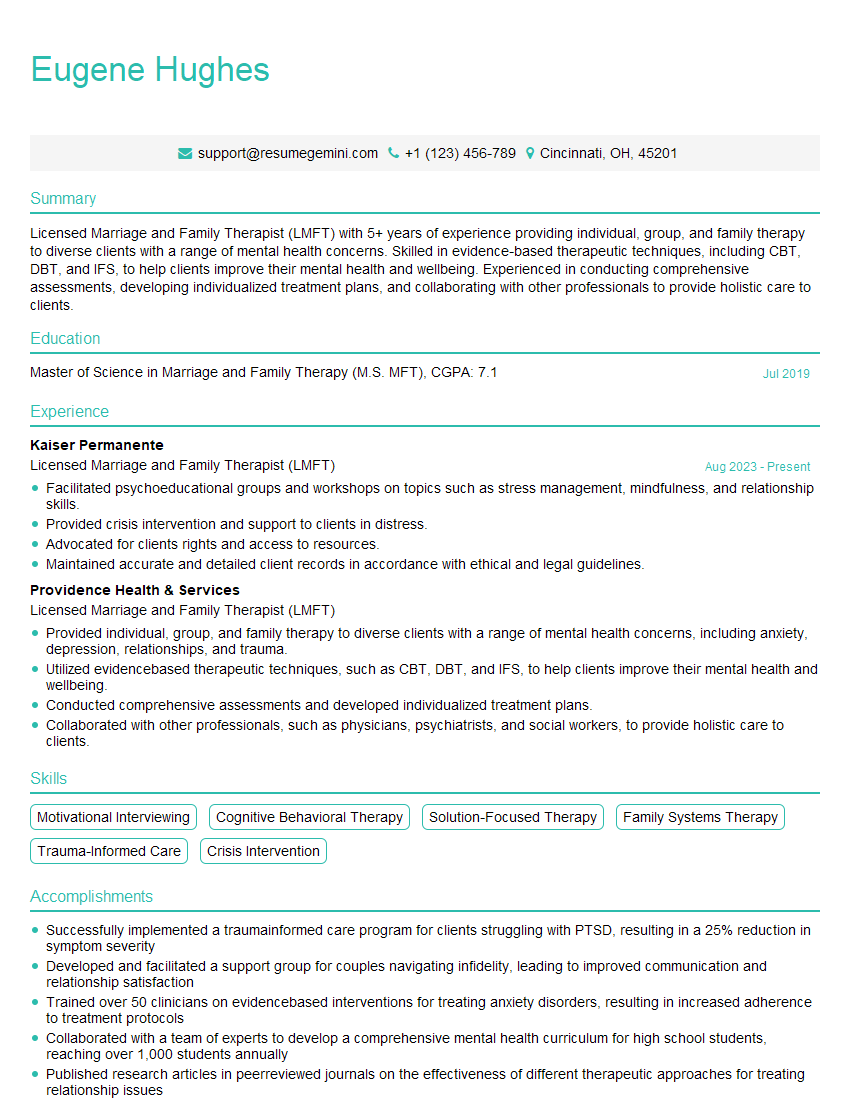
Mastering Couple and Marital Therapy opens doors to a fulfilling and impactful career, offering opportunities for growth within private practice, agencies, or hospitals. To maximize your job prospects, crafting a compelling and ATS-friendly resume is crucial. ResumeGemini is a trusted resource to help you build a professional resume that showcases your skills and experience effectively. They provide examples of resumes tailored specifically to Couple and Marital Therapy, ensuring your application stands out. Take the next step towards your dream career and explore the resume examples provided by ResumeGemini to elevate your job search.
Explore more articles
Users Rating of Our Blogs
Share Your Experience
We value your feedback! Please rate our content and share your thoughts (optional).
What Readers Say About Our Blog
To the interviewgemini.com Webmaster.
Very helpful and content specific questions to help prepare me for my interview!
Thank you
To the interviewgemini.com Webmaster.
This was kind of a unique content I found around the specialized skills. Very helpful questions and good detailed answers.
Very Helpful blog, thank you Interviewgemini team.