Unlock your full potential by mastering the most common DOT Supervision interview questions. This blog offers a deep dive into the critical topics, ensuring you’re not only prepared to answer but to excel. With these insights, you’ll approach your interview with clarity and confidence.
Questions Asked in DOT Supervision Interview
Q 1. Describe your experience with DOT regulations, specifically focusing on hours-of-service compliance.
Hours-of-service (HOS) compliance is paramount in DOT supervision. It dictates the maximum driving time, rest periods, and on-duty time for commercial drivers to prevent fatigue-related accidents. My experience encompasses years of ensuring adherence to these regulations, which include the 14-hour driving window, the 11-hour driving limit, the 30-minute break rule after 8 hours of driving, and the mandatory 10-hour off-duty period. I’ve worked with various electronic logging devices (ELDs) to monitor driver activity, analyzing data to identify potential violations and coaching drivers on proper usage and compliance. For example, I implemented a system where drivers receive automated alerts if they approach their HOS limits, prompting them to take necessary breaks. This proactive approach minimized violations and ensured driver safety and company compliance.
I’ve also been involved in conducting audits of driver logs to ensure accuracy and identify any discrepancies. This often involves comparing ELD data to other supporting documentation, like delivery receipts and fuel records, to create a complete picture of driver activities. Through this process, I’ve identified and addressed issues ranging from simple data entry errors to more serious violations requiring corrective action.
Q 2. How do you ensure drivers maintain accurate and up-to-date logbooks?
Maintaining accurate and up-to-date logbooks is crucial for HOS compliance. My approach is multi-pronged. First, we provide comprehensive training to all drivers on proper ELD usage, including accurate recording of all on-duty, driving, and off-duty time. This training includes practical exercises and Q&A sessions. We use a combination of regular in-person check-ins and remote monitoring of ELD data to verify the accuracy of logs. This remote monitoring helps us identify potential issues proactively and address them before they become violations. Second, we have implemented a robust system of random logbook audits, comparing the ELD data to other supporting documentation. Any discrepancies are thoroughly investigated and addressed with the driver, along with additional training if needed. Finally, I emphasize the importance of logbook accuracy during performance reviews, making it a clear component of driver evaluation and potential incentives. Think of it as a three-legged stool: training, monitoring and accountability—all critical for maintaining accurate logs.
Q 3. Explain your process for conducting vehicle inspections and addressing maintenance issues.
My vehicle inspection process follows a standardized checklist that complies with DOT regulations. This checklist covers critical components such as brakes, tires, lights, steering, and suspension. Inspections are conducted pre-trip and post-trip, with detailed records kept for each inspection. We utilize a mobile app that allows drivers to record and submit inspection reports electronically, making the process more efficient and reducing paperwork. Any identified maintenance issues are immediately reported and prioritized for repair. We have a preventative maintenance schedule to minimize unexpected downtime and ensure vehicles are roadworthy. For example, if a tire is found to be low on tread depth, it is immediately replaced. We work closely with our maintenance team to ensure repairs are completed promptly and correctly, generating documentation confirming the resolution of each issue. This proactive approach minimizes the risk of breakdowns and ensures vehicle safety.
Q 4. What are the key elements of a comprehensive DOT safety program?
A comprehensive DOT safety program is multifaceted, focusing on driver safety, vehicle maintenance, and regulatory compliance. Key elements include:
- Driver qualification files (DQFs): Maintaining complete and accurate driver files, ensuring all drivers meet the necessary qualifications.
- Safety training programs: Providing regular training on safe driving practices, HOS regulations, and hazard awareness.
- Vehicle maintenance program: Implementing a robust preventative maintenance schedule to minimize breakdowns and ensure vehicle roadworthiness.
- Drug and alcohol testing program: Conducting random drug and alcohol tests to ensure driver sobriety.
- Accident investigation process: Investigating all accidents to identify contributing factors and implement corrective actions.
- Safety monitoring and auditing: Regularly reviewing driver logs, vehicle inspection reports, and other data to identify potential safety issues.
- Communication and feedback: Establishing a system for drivers to report safety concerns and provide feedback.
Q 5. How do you handle driver violations and disciplinary actions?
Handling driver violations and disciplinary actions requires a fair and consistent approach. We follow a progressive discipline system, starting with verbal warnings for minor infractions, progressing to written warnings, suspension, and finally, termination for serious violations. Each case is reviewed individually, considering the severity of the violation, the driver’s history, and any mitigating circumstances. The process is documented thoroughly, ensuring transparency and fairness. For example, a first-time minor HOS violation might result in a verbal warning and additional training. However, repeated violations or more serious offenses like reckless driving would result in more severe penalties. We also emphasize retraining and remedial measures to help drivers improve their performance and prevent future violations. The goal is not solely punishment, but correction and improved safety.
Q 6. Describe your experience managing driver qualifications files (DQF).
Managing Driver Qualification Files (DQFs) involves maintaining complete and accurate records for each driver. This includes medical certificates, driving records, and employment history. I ensure all documents are current, verifying their authenticity and compliance with DOT regulations. We use a digital filing system to organize and access DQF information efficiently. This system allows for easy retrieval of documents during audits or when needed for regulatory compliance. Regular audits are conducted to ensure accuracy and completeness. Any missing or outdated documents are immediately flagged and addressed to maintain compliance and minimize risks associated with incomplete files. Think of it as a constantly updated, organized, and compliant ‘dossier’ for each driver ensuring regulatory compliance and company protection.
Q 7. How do you stay current with changes in DOT regulations?
Staying current with DOT regulations is critical for maintaining compliance. I subscribe to industry publications and attend webinars and conferences to stay informed about regulatory changes. I also actively monitor the Federal Motor Carrier Safety Administration (FMCSA) website for updates and announcements. This proactive approach ensures our company policies and procedures are always up-to-date and compliant. We also use software that provides updates and alerts for regulatory changes. Regular internal training sessions keep our team abreast of these updates and their implications for daily operations. This ensures everyone remains aware of and complies with the most current regulations, mitigating potential liabilities and ensuring ongoing compliance.
Q 8. Explain your approach to accident investigation and reporting.
My approach to accident investigation and reporting follows a systematic process adhering to FMCSA regulations. It begins with immediate response – securing the scene, ensuring the safety of all involved, and contacting emergency services if needed. Then, a thorough investigation commences. This involves collecting evidence such as police reports, witness statements, driver logs, vehicle inspection reports, and any relevant photos or videos. We reconstruct the events leading to the accident using available data, analyzing driver behavior, vehicle condition, road conditions, and external factors. The investigation aims to identify contributing factors, not to assign blame. Finally, a comprehensive report is generated, detailing the findings, root causes, and recommended corrective actions. This report is crucial for preventing similar accidents in the future. For instance, if driver fatigue is identified as a contributing factor, we might implement stricter hours-of-service monitoring or enhance driver wellness programs.
- Immediate Response: Secure the scene, aid injured, contact emergency services.
- Evidence Collection: Police reports, witness statements, driver logs, photos, vehicle inspection reports.
- Accident Reconstruction: Analyze driver behavior, vehicle condition, road conditions, external factors.
- Report Generation: Detail findings, root causes, and recommended corrective actions.
Q 9. How do you ensure compliance with drug and alcohol testing programs?
Ensuring compliance with drug and alcohol testing programs is paramount. We utilize a third-party Consortium/Third-Party Administrator (C/TPA) to manage our program, ensuring objectivity and adherence to all DOT regulations. This includes random testing, post-accident testing, reasonable suspicion testing, and return-to-duty testing. Our drivers receive comprehensive training on the program’s requirements, the consequences of violations, and the importance of maintaining a drug-free workplace. We maintain meticulous records of all tests conducted, results, and follow-up actions. For example, if a driver tests positive, immediate action is taken according to company policy and DOT regulations, involving suspension and participation in a return-to-duty program that includes substance abuse evaluation and treatment. Regular audits of our program are conducted to ensure we’re meeting all regulatory requirements.
Q 10. What is your experience with electronic logging devices (ELDs)?
My experience with Electronic Logging Devices (ELDs) is extensive. We’ve transitioned our entire fleet to ELDs and have integrated them seamlessly into our operations. This has improved our compliance with hours-of-service regulations, reduced paperwork, and provided valuable data for fleet management. We utilize the data to optimize routes, improve driver scheduling, and proactively address potential compliance issues. For example, if an ELD shows a driver consistently approaching their hours-of-service limits, we can intervene to prevent violations. Furthermore, ELD data assists in accident investigations, providing accurate records of a driver’s activities before an incident. We also regularly train drivers on proper ELD usage and troubleshoot any technical issues that may arise.
Q 11. Describe your experience with driver training and safety programs.
Driver training and safety programs are a cornerstone of our safety culture. Our programs encompass both initial training for new drivers and ongoing refresher courses for experienced drivers. The curriculum includes defensive driving techniques, hours-of-service regulations, vehicle inspection procedures, accident prevention strategies, and hazard recognition. We utilize both classroom instruction and behind-the-wheel training, providing personalized feedback and coaching. We also incorporate simulated scenarios to prepare drivers for real-world challenges. For example, we use driver simulator training to practice emergency braking and handling adverse weather conditions. Furthermore, we regularly conduct safety meetings, communicate best practices, and incentivize safe driving behaviors. A strong safety culture is crucial, and we reinforce it constantly.
Q 12. How do you manage driver fatigue and promote driver wellness?
Managing driver fatigue and promoting driver wellness are critical aspects of our operation. We strictly adhere to hours-of-service regulations and actively monitor driver logs using our ELDs. We encourage drivers to take adequate rest breaks and prioritize their sleep. We provide resources and education on sleep hygiene, healthy eating habits, and stress management techniques. We also offer wellness programs, such as employee assistance programs (EAPs), to address physical and mental health concerns. Implementing and enforcing a culture that prioritizes rest is vital. We recognize that a tired driver is a dangerous driver. For instance, we might provide incentives for drivers consistently adhering to rest regulations and using their breaks effectively. Open communication is vital; drivers are encouraged to report fatigue or any concerns without fear of reprisal.
Q 13. How do you address and resolve driver complaints?
Addressing and resolving driver complaints effectively is essential for maintaining positive employee relations and ensuring a safe working environment. We establish clear channels for drivers to voice concerns, such as open-door policies, suggestion boxes, and anonymous reporting systems. Each complaint is investigated thoroughly and promptly. We strive to understand the driver’s perspective and address the underlying issue, whether it’s related to equipment, scheduling, dispatching, or other operational aspects. Fair and consistent application of company policies is critical in resolving complaints. Documentation throughout the entire process ensures accountability and transparency. For example, a driver complaint regarding a malfunctioning vehicle would lead to immediate inspection and repair, with follow-up to ensure the driver’s satisfaction.
Q 14. What are the key performance indicators (KPIs) you use to monitor DOT compliance?
Key Performance Indicators (KPIs) are essential for monitoring DOT compliance. We track several metrics, including:
- Accident Rates: Number of accidents per million miles driven, categorized by severity.
- Hours-of-Service Compliance Rate: Percentage of drivers adhering to hours-of-service regulations, as monitored by ELDs.
- Vehicle Maintenance Compliance Rate: Percentage of vehicles receiving timely and proper maintenance, reducing mechanical failures.
- Drug and Alcohol Testing Compliance Rate: Percentage of required tests completed, and the absence of positive test results.
- Driver Violation Rate: Number of moving violations per driver, indicating driving behavior.
- CSA Scores (Compliance, Safety, Accountability): Monitoring our scores across various safety metrics as reported by the FMCSA.
Regularly reviewing these KPIs allows us to identify trends, proactively address potential problems, and continuously improve our safety program. Data-driven decision making helps ensure sustained DOT compliance and a safe operating environment.
Q 15. Explain your experience with pre-trip inspections.
Pre-trip inspections are crucial for ensuring the safety and operational readiness of commercial vehicles. They’re a systematic check of various vehicle components before each trip, mandated by the DOT to prevent accidents and breakdowns. My experience encompasses conducting thorough pre-trip inspections, meticulously documenting findings, and ensuring all identified issues are addressed before operation.
- Mechanical Inspection: I check tires (tread depth, pressure, and condition), brakes (fluid levels, responsiveness, and wear), lights (headlights, taillights, turn signals), steering mechanism, wipers, and mirrors. I also inspect the chassis for any damage or leaks.
- Documentation: I meticulously record all inspection findings using standardized forms, noting any defects or necessary repairs. This documentation serves as a crucial record for compliance and potential liability mitigation. For example, if a minor defect is noted and not repaired, the record provides evidence that I brought the issue to attention.
- Reporting: I report any significant defects that require immediate attention or prevent safe operation to the appropriate personnel, preventing the vehicle from operating until repairs are completed. This includes documenting the reason for taking the vehicle out of service.
For instance, during one inspection, I noticed a significant crack in a tire sidewall. This was immediately reported, and the vehicle was taken out of service until a replacement tire was installed. This prevented a potential blowout and serious accident.
Career Expert Tips:
- Ace those interviews! Prepare effectively by reviewing the Top 50 Most Common Interview Questions on ResumeGemini.
- Navigate your job search with confidence! Explore a wide range of Career Tips on ResumeGemini. Learn about common challenges and recommendations to overcome them.
- Craft the perfect resume! Master the Art of Resume Writing with ResumeGemini’s guide. Showcase your unique qualifications and achievements effectively.
- Don’t miss out on holiday savings! Build your dream resume with ResumeGemini’s ATS optimized templates.
Q 16. How do you handle unexpected maintenance issues or breakdowns?
Unexpected maintenance issues are inevitable in commercial trucking. My approach involves a structured, systematic response to minimize downtime and ensure safety.
- Immediate Assessment: I first assess the severity of the problem. Is it a minor issue that can be addressed on-site, or does it require professional assistance? Safety is paramount – if the issue compromises safety, the vehicle is immediately taken out of service.
- Emergency Repairs: For minor issues like a flat tire, I have the skills and equipment to perform temporary repairs, getting the vehicle back on the road safely and efficiently. I always adhere to safety protocols during this process.
- Professional Assistance: For major breakdowns, I immediately contact qualified roadside assistance or a repair shop. I clearly communicate the problem, location, and any potential hazards. I also ensure that the vehicle is safely secured, protecting it from further damage or compromising safety.
- Documentation: Every step, from the initial assessment to the resolution, is thoroughly documented, including the nature of the problem, the actions taken, and the repair costs. This documentation ensures compliance and facilitates efficient claims processing if needed.
In one instance, a vehicle experienced a significant engine malfunction. I promptly contacted roadside assistance, secured the vehicle, and communicated with dispatch to ensure a replacement vehicle was promptly dispatched, minimizing disruption to the shipping schedule while prioritizing safety.
Q 17. What is your experience with hazardous materials transportation regulations?
My experience with hazardous materials transportation regulations is extensive. I understand the complexities of handling, transporting, and documenting hazardous materials, including the specific requirements for packaging, labeling, and emergency response.
- Proper Classification: I’m adept at correctly identifying and classifying hazardous materials according to the Hazardous Materials Regulations (HMR), ensuring they are properly packaged and labeled according to the regulations.
- Emergency Response: I’m trained in emergency response procedures for hazardous materials incidents, knowing how to react safely and efficiently in various situations. This includes understanding the safety data sheets (SDS) for each material I handle.
- Documentation: I meticulously maintain accurate documentation throughout the transportation process, including shipping papers, manifests, and driver logs. This includes ensuring compliance with all required endorsements and certifications.
- Compliance Audits: I actively participate in internal audits to ensure consistent compliance with HMR regulations. I know the specific requirements for placards, emergency response plans, and driver training.
For example, I once oversaw the transportation of a load of flammable liquids. I ensured that every aspect, from the securement of the load to the driver’s thorough understanding of emergency procedures, was handled according to the strictest regulations.
Q 18. Explain your familiarity with the FMCSA regulations.
I possess a comprehensive understanding of Federal Motor Carrier Safety Administration (FMCSA) regulations, which govern the safety and operational aspects of commercial motor vehicles. My knowledge extends to various aspects, including Hours of Service (HOS) regulations, driver qualification requirements, vehicle maintenance, and record-keeping.
- Hours of Service (HOS): I’m fully conversant with the rules governing driver working hours, ensuring drivers comply with the limits to prevent fatigue-related accidents. This includes understanding the exceptions and special rules.
- Driver Qualification Files: I know how to maintain complete and accurate driver qualification files, ensuring all drivers meet the necessary requirements, such as medical certifications and driving records.
- Vehicle Maintenance: I’m familiar with the regulations pertaining to vehicle maintenance, including preventative maintenance schedules and repair documentation. I understand the importance of regular inspections and repairs.
- Drug and Alcohol Testing: I’m knowledgeable about the regulations concerning drug and alcohol testing, ensuring compliance with all requirements and procedures.
For instance, I implemented a new system for tracking driver hours of service, integrating it with our dispatch software to provide real-time monitoring and prevent violations.
Q 19. How do you ensure accurate record-keeping for DOT compliance?
Accurate record-keeping is paramount for DOT compliance. It serves as proof of compliance during audits and protects the company from potential penalties. My approach involves a combination of electronic and paper-based systems, emphasizing accuracy and organization.
- Electronic Systems: We utilize electronic logging devices (ELDs) to track driver hours of service, eliminating manual paperwork and reducing the risk of errors. Data is regularly backed up and secured.
- Paper Records: While ELDs have largely replaced paper logs, other records, such as vehicle maintenance records and driver qualification files, are meticulously maintained in a structured filing system for easy retrieval during audits.
- Data Verification: Regular verification of data ensures accuracy and identifies any discrepancies early. This includes cross-referencing data from different sources to identify inconsistencies.
- Secure Storage: Both electronic and paper records are stored securely, protecting them from damage, loss, or unauthorized access.
In practice, we regularly conduct internal audits to verify the accuracy and completeness of our records, ensuring consistent compliance.
Q 20. Describe your experience in conducting internal audits.
Conducting internal audits is a crucial component of our DOT compliance program. It allows us to proactively identify and correct potential issues before they result in violations or accidents.
- Audit Scope: Our internal audits cover all aspects of DOT compliance, from pre-trip inspections and maintenance records to driver qualifications and hazardous materials handling.
- Audit Methodology: We use a standardized checklist and procedures to ensure consistency and thoroughness. This includes reviewing documentation, conducting on-site inspections, and interviewing drivers and personnel.
- Issue Identification and Resolution: Any identified non-compliance issues are documented, with a clear plan for corrective actions and a timeline for implementation. Follow-up audits verify the effectiveness of corrective actions.
- Reporting: A comprehensive report is generated summarizing the audit findings, corrective actions, and recommendations for improvements to the compliance program.
For example, a recent internal audit revealed a minor inconsistency in our record-keeping related to vehicle maintenance. We immediately implemented a new system to ensure all maintenance records are properly updated and stored, preventing similar issues in the future.
Q 21. How do you effectively communicate DOT compliance expectations to drivers?
Effective communication is key to ensuring DOT compliance. My approach combines various methods to reinforce compliance expectations with drivers.
- Regular Training: Drivers receive regular training on DOT regulations, emphasizing the importance of compliance and the consequences of violations. This includes hands-on training and scenario-based exercises.
- Open Communication Channels: We encourage open communication between drivers and management, creating a safe environment for drivers to voice concerns or ask questions about DOT regulations without fear of retribution.
- Clear Expectations: We clearly communicate expectations related to DOT compliance, providing drivers with readily accessible resources, such as policy manuals and training materials.
- Incentives and Recognition: We implement incentives and recognition programs to reward drivers for consistent compliance with DOT regulations. This fosters a culture of safety and responsibility.
For example, we held a series of workshops and refresher courses for drivers focusing on Hours of Service regulations, ensuring everyone understood the updated rules and procedures. This proactive approach minimized the risk of violations and ensured driver safety.
Q 22. Explain your familiarity with the different types of vehicle inspections.
Vehicle inspections are crucial for DOT compliance and ensuring road safety. They fall into several categories, primarily focusing on the vehicle’s mechanical fitness and its ability to operate safely. These include:
- Pre-trip Inspections: Drivers conduct these before each trip, checking tires, lights, brakes, fluids, and other critical components. Think of it as a quick health check before a long journey. A thorough pre-trip inspection prevents roadside breakdowns and ensures the vehicle is roadworthy.
- Post-trip Inspections: These inspections, performed after a trip, focus on identifying any issues that may have developed during operation. This is akin to a post-workout cool-down for the vehicle; it allows for early detection of problems before they escalate.
- Periodic Inspections: These are more comprehensive checks, typically conducted at scheduled intervals (e.g., annually) by mechanics. This is like a comprehensive annual physical for the vehicle – checking everything from engine performance to chassis integrity. These often involve specialized equipment and often satisfy state or federal regulations.
- Random Inspections: These unscheduled inspections are conducted by DOT officers at roadside checkpoints or at company facilities. These are unexpected and serve as a critical measure to ensure overall compliance.
Effective management of these inspections involves using checklists, driver training programs, and electronic logging systems to ensure thoroughness and record-keeping. My experience involves developing and implementing such systems to optimize inspection processes and minimize potential risks.
Q 23. How do you manage and track driver medical certifications?
Managing driver medical certifications is critical for ensuring drivers meet the physical and mental health standards mandated by the DOT. My approach is multifaceted and involves:
- Centralized Database: I utilize a secure, electronic system to store and track all driver medical certificates, ensuring easy access and efficient management. Imagine it as a digital filing cabinet for all medical records.
- Automated Reminders: The system automatically generates reminders for upcoming medical certificate expirations, allowing proactive management and preventing lapses in compliance. This is similar to setting calendar alerts for important appointments, but for DOT regulations.
- Verification Processes: I employ a rigorous verification process to ensure the authenticity and validity of all submitted medical certificates. This involves checking against official databases and validating medical examiner information.
- Regular Audits: Periodic audits are conducted to ensure the accuracy and completeness of the database and to identify any potential compliance gaps. These regular checks maintain data quality and prevent issues.
This structured approach not only ensures compliance but also streamlines the process, reducing administrative burden and minimizing the risk of accidents resulting from driver health issues.
Q 24. Describe your process for reporting DOT violations to authorities.
Reporting DOT violations is a critical aspect of maintaining safety and compliance. My process is methodical and transparent, ensuring all necessary steps are followed promptly and accurately. It includes:
- Immediate Documentation: All violations, no matter how minor, are thoroughly documented with detailed descriptions, timestamps, and any supporting evidence (e.g., photos, videos). This meticulous record-keeping is vital for clear reporting.
- Internal Review: The violation is reviewed internally to determine the root cause and assess the severity of the non-compliance. Understanding ‘why’ it happened is just as important as reporting ‘what’ happened.
- Notification of Driver and Management: The driver involved and relevant management personnel are immediately notified, with clear explanations of the violation and its consequences. Transparency helps prevent future issues and improves driver awareness.
- Formal Reporting: A formal report is filed with the appropriate DOT authority, adhering strictly to the required format and timelines. This ensures the organization is legally compliant and actively contributing to safer roads.
- Follow-up and Corrective Actions: Following the report, corrective actions are implemented to prevent similar violations in the future. This may include driver retraining, vehicle maintenance, or process improvements. It’s a closed-loop system where lessons learned are applied.
This process not only ensures compliance but also demonstrates a commitment to safety and continuous improvement.
Q 25. What is your approach to identifying and mitigating safety risks?
Identifying and mitigating safety risks requires a proactive and multi-layered approach. My strategy involves:
- Hazard Identification and Risk Assessment: A systematic process to identify potential hazards (e.g., unsafe driving practices, vehicle malfunctions, environmental conditions) and assess their associated risks using a standardized risk matrix.
- Driver Training and Monitoring: Regular driver training on safe driving practices, defensive driving techniques, and DOT regulations is crucial. Ongoing monitoring of driver performance through vehicle telematics and performance reviews allows for early intervention.
- Vehicle Maintenance and Inspection Programs: Implementing a rigorous vehicle maintenance and inspection program helps prevent mechanical failures that could lead to accidents. This includes preventative maintenance schedules and thorough post-trip inspections.
- Safety Audits and Inspections: Conducting regular safety audits and inspections of vehicles, facilities, and driver records helps identify potential hazards and areas for improvement.
- Incident Reporting and Investigation: Establishing a system for promptly reporting and investigating accidents or near-miss incidents is crucial for learning from mistakes and preventing future occurrences. This is a vital feedback loop for improving safety.
This comprehensive approach ensures a proactive and dynamic safety culture, minimizing risks and maximizing safety.
Q 26. How do you work with external regulatory bodies during audits?
Working with external regulatory bodies during audits requires transparency, cooperation, and meticulous preparation. My approach involves:
- Maintaining Accurate Records: Ensuring all required records are meticulously maintained, organized, and readily accessible for auditors. This showcases commitment and simplifies the audit process.
- Open Communication: Maintaining open and honest communication with auditors throughout the audit process, promptly addressing any questions or concerns.
- Proactive Compliance: Demonstrating a proactive approach to compliance, identifying and addressing any potential issues before the audit begins.
- Professionalism and Respect: Maintaining a professional and respectful demeanor throughout the audit, treating auditors with courtesy and cooperation.
- Follow-up on Audit Findings: Following up on any audit findings, addressing any identified deficiencies promptly and effectively. This shows that the feedback is taken seriously.
By fostering a collaborative relationship with regulatory bodies, audits become opportunities for continuous improvement and reinforcement of safety standards.
Q 27. How do you handle situations where DOT compliance conflicts with operational deadlines?
Balancing DOT compliance with operational deadlines requires careful planning and prioritization. My approach is centered on:
- Prioritization of Safety: DOT compliance always takes precedence. Safety is non-negotiable, and shortcuts should never be taken.
- Proactive Planning: Implementing proactive scheduling and planning to avoid conflicts between compliance activities and operational deadlines. This might involve scheduling maintenance during low-traffic periods.
- Resource Allocation: Ensuring adequate resources (personnel, equipment, time) are allocated to both operational needs and compliance requirements. This includes having backup personnel or alternative strategies in place.
- Open Communication: Maintaining open and honest communication with all stakeholders (drivers, management, customers) to manage expectations and address potential conflicts proactively.
- Continuous Improvement: Continuously evaluating and improving processes to minimize conflicts between compliance and operational efficiency. This may involve process redesign or technological upgrades.
The key is to view compliance not as a constraint but as an integral part of efficient and safe operations. Addressing potential issues promptly and transparently minimizes operational disruptions.
Q 28. What is your experience with implementing and monitoring safety management systems (SMS)?
Implementing and monitoring Safety Management Systems (SMS) is critical for a proactive safety culture. My experience involves:
- Needs Assessment: Beginning with a thorough needs assessment to tailor the SMS to the specific operational context and identify key risks.
- Policy and Procedure Development: Developing clear, concise policies and procedures that align with DOT regulations and best practices. This ensures everyone understands the expectations.
- Training and Communication: Providing comprehensive training to all employees on the SMS, its processes, and their roles in its implementation. This includes regular communication and updates.
- Data Collection and Analysis: Establishing a system for collecting and analyzing safety data to identify trends, patterns, and areas for improvement. This is vital for identifying ‘hot spots’ and taking corrective actions.
- Auditing and Monitoring: Conducting regular audits and monitoring of the SMS to ensure ongoing effectiveness and identify areas needing adjustment. Regular monitoring ensures the system remains effective.
- Continuous Improvement: Continuously evaluating the SMS and making adjustments based on data analysis, audit findings, and evolving industry best practices. This proactive approach keeps the system dynamic and relevant.
A well-implemented SMS is not a static document; it’s a living system that constantly evolves to meet the needs of a dynamic and ever-changing operational environment. It’s a commitment to a culture of safety that minimizes risk and maximizes operational efficiency.
Key Topics to Learn for DOT Supervision Interview
- Federal Motor Carrier Safety Regulations (FMCSR): Understanding key regulations, compliance procedures, and their practical application in daily supervision.
- Driver Management and Training: Strategies for effective driver communication, performance monitoring, and compliance training programs; addressing driver behavior and safety concerns.
- Safety Audits and Compliance: Preparing for and conducting safety audits, identifying areas for improvement, and implementing corrective actions to maintain compliance.
- Vehicle Maintenance and Inspection: Overseeing vehicle maintenance schedules, conducting pre-trip and post-trip inspections, and ensuring compliance with DOT regulations.
- Accident Investigation and Reporting: Proper procedures for investigating accidents, gathering evidence, and submitting accurate reports to regulatory bodies.
- Record Keeping and Documentation: Maintaining accurate and complete driver and vehicle records, ensuring compliance with record-keeping regulations.
- Hours of Service (HOS) Compliance: Thorough understanding of HOS regulations and their application, including enforcement and exception management.
- Drug and Alcohol Testing Program: Knowledge of DOT drug and alcohol testing procedures, regulations, and responsibilities of supervisors.
- Problem-Solving and Decision-Making: Applying critical thinking skills to analyze situations, identify potential risks, and implement effective solutions within the regulatory framework.
- Leadership and Team Management: Demonstrating effective communication, conflict resolution, and motivational skills to manage a team effectively and promote a culture of safety.
Next Steps
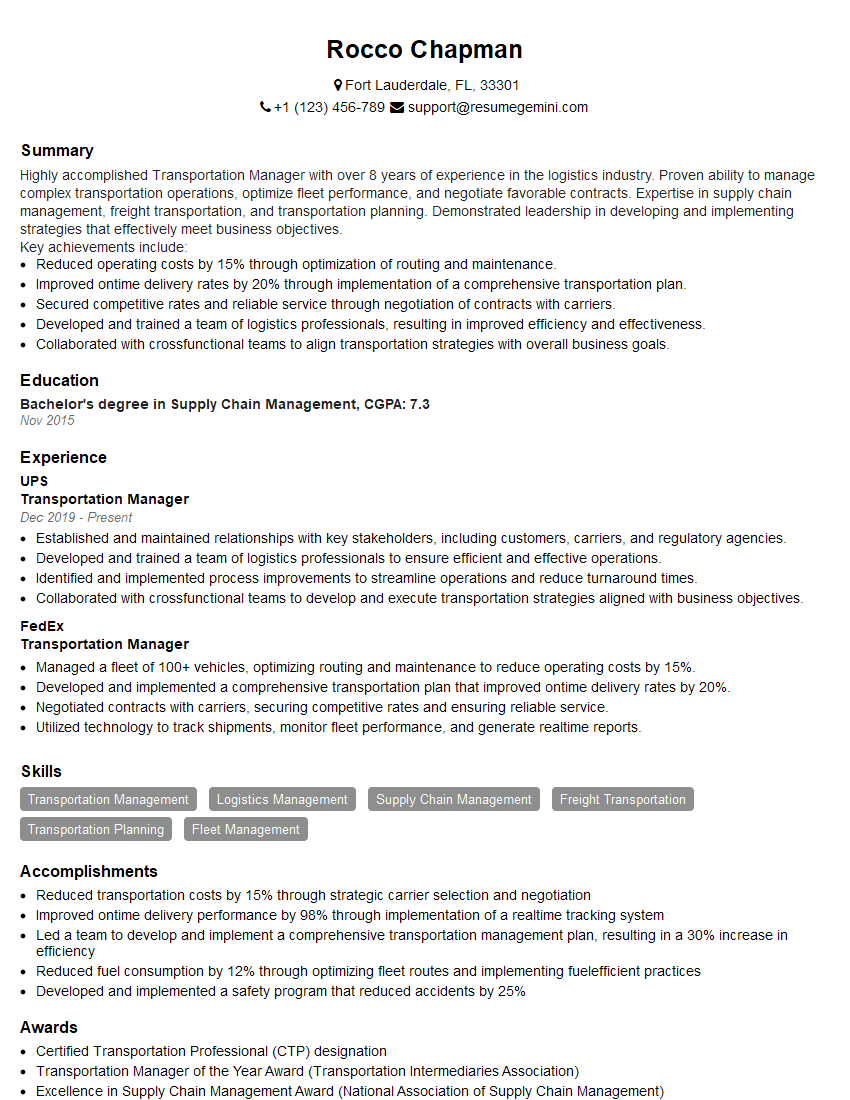
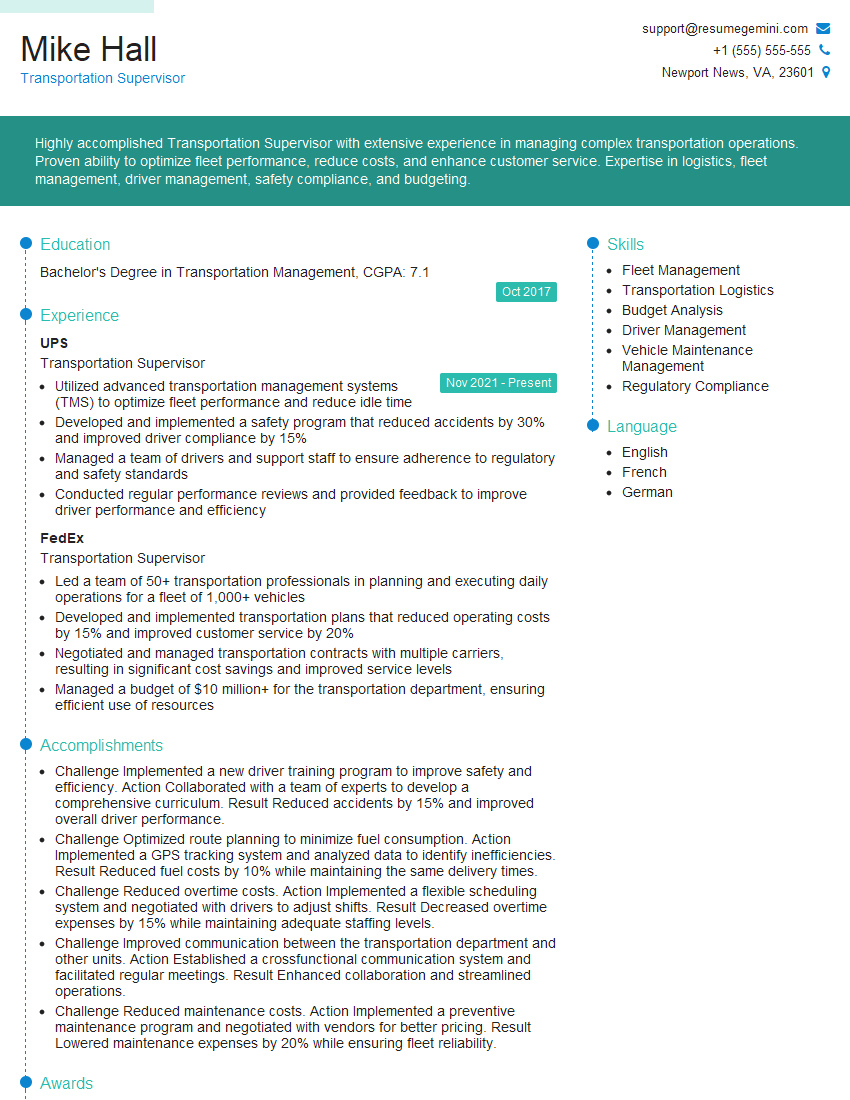
Mastering DOT Supervision principles significantly enhances your career prospects within the transportation industry, opening doors to leadership roles and increased earning potential. A well-crafted, ATS-friendly resume is crucial for showcasing your skills and experience to potential employers. To maximize your chances of landing your dream job, leverage the power of ResumeGemini to create a professional and impactful resume. ResumeGemini provides valuable tools and resources to help you build a compelling narrative, and we offer examples of resumes specifically tailored to DOT Supervision roles to guide you.
Explore more articles
Users Rating of Our Blogs
Share Your Experience
We value your feedback! Please rate our content and share your thoughts (optional).
What Readers Say About Our Blog
To the interviewgemini.com Webmaster.
Very helpful and content specific questions to help prepare me for my interview!
Thank you
To the interviewgemini.com Webmaster.
This was kind of a unique content I found around the specialized skills. Very helpful questions and good detailed answers.
Very Helpful blog, thank you Interviewgemini team.