Feeling uncertain about what to expect in your upcoming interview? We’ve got you covered! This blog highlights the most important Glass Caulking interview questions and provides actionable advice to help you stand out as the ideal candidate. Let’s pave the way for your success.
Questions Asked in Glass Caulking Interview
Q 1. What types of caulking are commonly used in glass installation?
Several types of caulking are suitable for glass installation, each with its own properties and applications. The most common include silicone, polyurethane, and butyl rubber caulks.
- Silicone caulk: This is a popular choice due to its flexibility, durability, and resistance to water, UV rays, and temperature fluctuations. It’s excellent for both interior and exterior applications, especially in areas prone to movement or expansion and contraction. It’s available in different formulations; some are paintable, while others aren’t.
- Polyurethane caulk: This type offers strong adhesion and excellent gap-filling capabilities. It’s often preferred for larger gaps and areas requiring high-strength bonds. Polyurethane caulk typically expands as it cures, creating a tight seal. However, it can be less flexible than silicone.
- Butyl rubber caulk: Known for its exceptional adhesion and sealing properties, especially in harsh weather conditions. Butyl is a durable, long-lasting option, particularly useful for exterior applications and areas with significant movement.
The choice often depends on specific project needs and environmental factors. For instance, while silicone might be best for a shower enclosure, butyl rubber could be more suitable for sealing a window frame in a coastal area.
Q 2. Explain the process of preparing a glass surface for caulking.
Proper surface preparation is crucial for a successful and long-lasting caulk application. Think of it like preparing a canvas before painting; a smooth, clean surface ensures optimal adhesion. The process generally includes these steps:
- Cleaning: Thoroughly clean the glass surface to remove any dirt, dust, grease, old caulk, or any other contaminants. Use a suitable cleaner – often a mild detergent and water solution is sufficient – and ensure complete drying. A clean, dry surface is paramount for adhesion.
- Priming (if necessary): For certain materials or surfaces, a primer might improve adhesion. Consult the caulk manufacturer’s instructions to determine if a primer is needed for your specific application. This step is especially important for porous substrates or when using specific caulks.
- Drying: Allow the glass to dry completely before applying the caulk. Moisture can prevent proper bonding. Ensure the surface is completely free of any moisture or condensation.
Ignoring these steps can lead to premature caulk failure, resulting in leaks or unsightly gaps.
Q 3. How do you choose the appropriate caulking for a specific application (e.g., interior vs. exterior)?
Caulk selection depends heavily on the application’s location and environmental conditions. Interior applications often require different properties than exterior ones.
- Interior Applications: For interior settings like bathrooms or kitchens, a paintable silicone caulk is often a good choice. Its flexibility allows for minor building movement, and paintability ensures aesthetic harmony with the surrounding décor. Look for mildew-resistant formulas in areas with high humidity.
- Exterior Applications: Exterior applications demand high-performance caulks that resist UV degradation, extreme temperatures, and moisture. Butyl rubber or a high-quality exterior-grade silicone are excellent choices. Ensure the caulk has a good UV resistance rating.
Consider factors like movement in the joint. For areas with significant expansion and contraction, a highly flexible silicone is best. If the gap is large, a high-fill polyurethane might be necessary.
Q 4. What are the common causes of caulking failure?
Caulk failure can stem from various issues, often related to improper preparation or application. Common causes include:
- Poor surface preparation: Dirt, grease, or moisture prevents proper adhesion.
- Inappropriate caulk selection: Using a caulk not suited for the environment or application (e.g., using interior caulk outdoors).
- Incorrect application technique: Inadequate tooling or incorrect bead size can weaken the seal.
- Excessive joint movement: Exceeding the caulk’s capacity to stretch or compress.
- Environmental factors: UV degradation, extreme temperatures, or constant moisture exposure.
- Low-quality caulk: Using inferior or expired caulk.
Addressing these issues through meticulous preparation and proper technique is crucial for a durable, long-lasting seal.
Q 5. Describe the proper techniques for applying caulking to ensure a watertight seal.
Applying caulk correctly is key to achieving a watertight seal. The process involves these steps:
- Prepare the surface: As discussed earlier, clean and dry the surface thoroughly.
- Apply the caulk: Use a caulking gun to apply a continuous, even bead of caulk into the joint. The bead size should be consistent with the gap width; too small a bead won’t fill the gap, and too large a bead will be difficult to smooth.
- Tool the caulk: Use a wet finger or a suitable caulking tool to smooth the bead, creating a neat, concave profile. This helps prevent cracking and improves aesthetics.
- Clean up excess: Immediately remove any excess caulk with a damp cloth or scraper.
- Allow to cure: Allow the caulk to cure completely according to the manufacturer’s instructions. Avoid exposure to water or extreme temperatures during curing.
Proper tooling is essential. Imagine sculpting clay; a smooth, even bead ensures optimal performance and a professional finish.
Q 6. How do you clean up excess caulking?
Cleaning up excess caulk is easiest when done immediately after application. For uncured caulk, a damp cloth or sponge is usually sufficient. Gently wipe away excess material before it sets.
For cured caulk, a plastic scraper or putty knife is often needed. Work carefully to avoid scratching the adjacent surfaces. A solvent designed for the specific type of caulk can assist with stubborn residue, but always test it in an inconspicuous area first to avoid damaging the surfaces.
Remember, prevention is key! Using masking tape along the edges of the glass before caulking can prevent accidental spills and make cleanup much simpler.
Q 7. What safety precautions are necessary when working with caulking materials?
Safety precautions are essential when working with caulking materials. Always follow these guidelines:
- Ventilation: Work in a well-ventilated area to minimize exposure to fumes. Some caulks release volatile organic compounds (VOCs).
- Gloves: Wear appropriate gloves to protect your skin from irritation or allergic reactions.
- Eye protection: Wear safety glasses to prevent accidental eye splashes.
- Skin protection: Avoid prolonged skin contact. Wash your hands thoroughly after use.
- Proper storage: Store caulking tubes upright in a cool, dry place.
- Disposal: Dispose of empty tubes and cleaning materials responsibly, according to local regulations.
- Read the SDS (Safety Data Sheet): Always consult the manufacturer’s safety data sheet for specific information regarding handling, storage, and disposal of the particular caulk being used.
By following these simple precautions, you can ensure a safe and successful glass caulking project.
Q 8. How do you determine the correct amount of caulking needed for a project?
Accurately estimating caulking needs is crucial for avoiding waste and ensuring a successful project. It’s not about filling the gap; it’s about creating a strong, weather-resistant seal. You need to consider the length and width of the joint, and the depth of the gap being filled.
Step-by-step approach:
- Measure: Carefully measure the length and width of all areas requiring caulking. For complex shapes, break them down into simpler sections.
- Depth Assessment: Determine the depth of the gap between the glass and the frame. This is vital because the caulking bead needs to fill the gap completely, ensuring adhesion to both surfaces.
- Caulk Bead Size: The recommended bead size typically varies between 1/4 inch and 3/8 inch. This varies depending on the manufacturer’s recommendations and the specific application. Smaller gaps require less caulk.
- Calculation: Multiply the length and width of the joint to get the surface area. Then, multiply by the required bead depth, and you’ll have the estimated volume of caulk needed. Add an extra 10-15% to account for waste.
- Manufacturer’s Guidelines: Always refer to the manufacturer’s instructions on the caulk tube for specific application rates and bead sizes. They usually offer estimates for linear footage per tube.
Example: Let’s say you have a 10ft long by 1/4 inch wide gap. With a bead size of 1/4 inch deep, that translates to 10ft * 1/4 inch * 1/4 inch = 0.625 cubic inches of caulk needed. Remember to account for waste.
Q 9. What are the differences between acrylic, silicone, and polyurethane caulking?
Choosing the right caulking type depends on the application, environmental conditions, and desired properties. Each type has its strengths and weaknesses.
- Acrylic Caulk: This is the most common and affordable type, ideal for interior applications and less demanding exterior projects. It’s paintable, easy to use, but less durable and water-resistant than silicone or polyurethane.
- Silicone Caulk: Provides superior water resistance and durability. It’s perfect for exterior projects, bathrooms, and areas subject to moisture. Silicone is harder to clean up than acrylic, and it’s not paintable without a specific primer.
- Polyurethane Caulk: Offers the highest strength and elasticity. It’s excellent for movement joints and applications where a strong, lasting seal is required. It cures slowly and is generally less forgiving for cleanup.
In summary:
- Acrylic: Interior use, paintable, budget-friendly.
- Silicone: Exterior use, high water resistance, not paintable.
- Polyurethane: High-strength, movement joints, excellent durability.
Q 10. How do you handle caulking in different weather conditions?
Weather significantly impacts caulking application and performance. Extreme temperatures affect the caulk’s cure time and adhesion. Here’s a guide:
- Hot Weather: Caulk can dry too quickly in hot, sunny conditions, making it harder to smooth and potentially leading to cracking. Apply caulk in the shade or during cooler parts of the day. Consider using a fast-curing caulk for quicker setting.
- Cold Weather: Cold temperatures slow down curing and can hinder adhesion. Ensure the surfaces and the caulking itself are above the manufacturer’s recommended temperature range for application. Work indoors if possible, or use a low-temperature caulk.
- Rain/Humidity: Moisture can prevent proper adhesion. Protect the area from rain for at least 24 hours (or as per manufacturer’s instructions) after caulking. Avoid application during periods of heavy rain or high humidity.
- Wind: Strong winds can dry out caulk prematurely or even blow the caulking away before it sets. Shield the application area if possible.
Always check the manufacturer’s recommendations for optimal temperature and weather conditions for specific caulk type.
Q 11. Explain the importance of backer rod in glass caulking.
Backer rod is a crucial element in glass caulking, offering significant benefits. It’s a closed-cell foam material used to fill the majority of the gap before applying the caulk.
Why use backer rod?
- Optimized Caulk Usage: Reduces the amount of caulk needed, saving money and material waste.
- Improved Adhesion: Creates a controlled depth for the caulk to adhere to, leading to better bonding between the glass and frame.
- Enhanced Durability: Minimizes the stress on the caulk joint caused by expansion and contraction. This prevents cracking and premature failure.
- Consistent Bead Size: Helps to achieve a neat and uniform caulk bead.
- Moisture Control: Provides a barrier against moisture penetration, reducing the likelihood of leaks and water damage.
Using backer rod isn’t just best practice; it’s essential for creating a durable, long-lasting seal. Don’t skip this step!
Q 12. What is the proper way to tool caulking?
Tooling caulking is the final step, essential for achieving a smooth, professional finish. Using the right tool and technique is key.
Steps for proper tooling:
- Use the right tool: A caulking tool (also known as a finishing tool) is specifically designed for this purpose. Choose one with a smooth, rounded edge to avoid tearing the caulking.
- Proper angle: Hold the tool at a 45-degree angle to the caulked joint.
- Smooth, even pressure: Apply consistent pressure while moving the tool along the bead, smoothing and shaping it into a neat, concave shape.
- Avoid over-tooling: Too much pressure can pull the caulk away from the joint, leading to an uneven finish.
- Clean-up: Immediately clean any excess caulking from the tool and the surrounding area with a clean, damp cloth.
Proper tooling prevents cracking, improves aesthetics, and ultimately ensures the durability of the sealant.
Q 13. How do you inspect caulked glass installations for defects?
Thorough inspection is crucial to ensure the caulked glass installation meets quality standards and prevents future problems. Here’s what to look for:
- Cracks: Check for any cracks in the caulk bead, indicating potential stress or poor adhesion.
- Gaps or voids: Examine the joint for any gaps or incomplete filling, which compromises the seal.
- Adhesion: Make sure the caulk is firmly adhered to both the glass and frame. Try gently pulling at the edge of the caulk.
- Consistency of bead: Verify that the bead is uniform and smooth, free from dips, lumps, or gaps.
- Uniform profile: The bead should be properly tooled, showing a consistently smooth, concave profile rather than a rough or irregular shape.
- Color: Check for color variations in the caulk that might indicate issues in curing.
- Evidence of moisture penetration: Look for signs of water staining or discoloration around the joints, suggesting leakage.
Remember, early detection of defects is key to preventing costly repairs later. A careful inspection is crucial for long-term success.
Q 14. How do you repair damaged or cracked caulking?
Repairing damaged or cracked caulking requires careful preparation and the right materials to ensure a durable fix.
Repair steps:
- Preparation: Remove all loose, cracked, or damaged caulk completely using a caulking tool or utility knife. Clean the area thoroughly to remove dust, debris, and any remaining old caulk. Allow the area to fully dry.
- Primer (if needed): If repairing silicone caulking, a primer may be necessary to enhance adhesion. Check the manufacturer’s recommendations.
- Caulk application: Apply a fresh bead of caulk, ensuring that it fills the gap completely. Use backer rod if needed.
- Tooling: Carefully tool the caulk using a caulking tool to create a smooth, even finish.
- Curing: Allow the caulk to cure fully according to the manufacturer’s instructions before exposing it to moisture or extreme temperatures.
The best repair involves using the same type of caulk as the original installation. For major damage, it may be more cost-effective to replace a whole section of caulk.
Q 15. What are the limitations of different types of caulking?
Different caulks have varying strengths and weaknesses. Their limitations often relate to temperature extremes, UV exposure, flexibility, and the type of substrate they’re applied to. For instance:
Silicone caulk is incredibly durable and weather-resistant, but it’s difficult to paint over and can be challenging to remove. It also may not adhere well to certain plastics.
Acrylic latex caulk is paintable and relatively easy to clean up, but it’s less durable than silicone and is not suitable for underwater or consistently wet applications. Its flexibility also has limitations, making it unsuitable for highly dynamic joints.
Polyurethane caulk offers excellent adhesion and flexibility, making it a good choice for expansion joints, but it can be messy to work with and has a longer curing time. Its expansion and contraction rates must be considered to avoid failure.
Butyl caulk provides excellent water resistance and adhesion, but it’s less flexible than polyurethane and is often used in applications requiring a strong, permanent seal, such as automotive applications. It’s generally not considered for glass work except in specialized cases.
Understanding these limitations is critical for selecting the right caulk for the job. Choosing the wrong type can lead to premature failure and costly repairs.
Career Expert Tips:
- Ace those interviews! Prepare effectively by reviewing the Top 50 Most Common Interview Questions on ResumeGemini.
- Navigate your job search with confidence! Explore a wide range of Career Tips on ResumeGemini. Learn about common challenges and recommendations to overcome them.
- Craft the perfect resume! Master the Art of Resume Writing with ResumeGemini’s guide. Showcase your unique qualifications and achievements effectively.
- Don’t miss out on holiday savings! Build your dream resume with ResumeGemini’s ATS optimized templates.
Q 16. What are some common challenges faced when caulking glass?
Caulking glass presents unique challenges. One major issue is ensuring proper adhesion to smooth surfaces. Glass is non-porous, so achieving a strong bond requires careful surface preparation. Another common problem is the risk of staining or discoloration of the glass from certain caulks, especially if not properly cleaned up immediately. Temperature fluctuations can also impact the caulk’s performance, leading to cracking or shrinkage. Moreover, maintaining a consistent bead size and ensuring complete filling of the gap can be difficult, especially in hard-to-reach areas. Finally, improper masking techniques can lead to a messy and unprofessional-looking finish.
Q 17. How do you maintain the longevity of caulked glass installations?
Maintaining the longevity of caulked glass installations involves several key steps. Firstly, proper surface preparation before application is paramount – clean surfaces ensure optimal adhesion. Regularly inspect the caulked joints for signs of cracking, shrinkage, or deterioration, particularly after extreme weather events. If you see any issues, prompt repair is crucial. Avoid exposing the caulk to unnecessary stress, such as impacts or excessive flexing. In harsh environments or areas with high levels of humidity, periodic resealing may be necessary. Finally, choosing the right type of caulk for the specific application significantly contributes to its lifespan. Think of it like preventative maintenance on your car – regular checks prevent major issues down the line.
Q 18. What tools and equipment are essential for glass caulking?
Essential tools for glass caulking include:
Caulk gun: A high-quality caulking gun with a smooth trigger mechanism is a must-have.
Utility knife or razor blade: For trimming and smoothing excess caulk.
Caulk smoothing tool: A specialized tool for creating a neat, professional-looking bead.
Painter’s tape: To mask off adjacent surfaces and create clean lines.
Cleaning rags or paper towels: To clean up spills and excess caulk immediately.
Primer (if needed): To enhance adhesion on certain surfaces.
Isopropyl alcohol or mineral spirits: To clean the glass and remove any residue.
Investing in quality tools makes the process much easier and ensures a better result. I always recommend a good-quality smoothing tool – it makes all the difference in the final appearance.
Q 19. Describe your experience with different caulking gun types.
I’ve used various caulking gun types throughout my career, from basic manual guns to pneumatic and battery-powered options. Manual guns are great for smaller projects and provide good control, but they can be tiring for larger jobs. Pneumatic guns offer significantly more power and speed, ideal for large-scale projects, but require a compressor. Battery-powered guns offer a good balance – power and convenience without the need for a compressor. They are my preferred choice for most projects due to their portability and ease of use. However, their performance can depend heavily on battery charge and the quality of the mechanism. The choice often comes down to the size of the job and personal preference. I’ve found that a good quality pneumatic gun consistently performs best on large glass installations due to its effortless bead application.
Q 20. How do you ensure proper adhesion of caulking to different substrates?
Ensuring proper adhesion starts with thorough surface preparation. Clean the surfaces to be caulked with isopropyl alcohol or a suitable cleaner to remove dirt, grease, dust, or any other contaminants. For glass, ensuring it’s free from any residue is key. For porous substrates, a primer may be necessary to improve adhesion and prevent absorption of the caulk. The correct type of caulk for the specific substrates is also crucial. For example, silicone caulk works well with many substrates, but acrylic latex may be better for paintable areas. Applying the caulk to the right temperature also affects adherence. It’s important to read and follow the manufacturer’s instructions carefully, paying close attention to recommendations for surface preparation and application temperature. Remember that a clean, dry surface and the right caulk are the foundation of a lasting bond.
Q 21. What is the difference between glazing and caulking?
While both glazing and caulking are used to seal gaps and create weather-resistant barriers, they differ significantly in their application and purpose. Glazing refers to the process of installing glass into a frame, typically using glazing compounds or putty to create a secure and watertight seal. It’s usually more involved and precise, often involving specialized tools and techniques. Caulking, on the other hand, is a broader term encompassing the application of sealant materials to fill gaps and joints to prevent air and water infiltration. It’s used in a wider variety of applications and can be applied in various ways. Essentially, glazing is a specialized form of caulking focused on securing glass panes, often using dedicated glazing compounds, whereas caulking covers a broader range of sealant applications across different materials.
Q 22. How do you handle difficult-to-reach areas when caulking?
Reaching those tricky spots when caulking glass requires a bit of ingenuity. It’s not just about getting the caulk in; it’s about ensuring a clean, professional-looking, and weather-tight seal. My approach is multifaceted.
Specialized Tools: I utilize a variety of tools designed for hard-to-reach areas, including caulking guns with extended nozzles, flexible caulking tubes, and even small, angled brushes for precision application in tight corners. For example, a caulking gun with a flexible nozzle is invaluable when sealing around intricate window mullions.
Strategic Application: I carefully plan my approach, often starting with the most challenging areas first. I might use masking tape to protect adjacent surfaces and then employ a ‘back-and-forth’ technique to ensure complete coverage, gradually working my way out from the most difficult-to-access points. This method minimizes waste and maximizes precision.
Patience and Precision: This is where experience truly counts. It takes patience and a steady hand to perfectly caulk in tight spaces. I take my time, ensuring a smooth, continuous bead without any gaps or excess material. Rushing the job can lead to unsightly imperfections and compromised sealing.
Q 23. Describe your experience with various types of glass (e.g., tempered, laminated).
My experience spans a wide range of glass types, each demanding a slightly different caulking approach. The key is understanding the properties of each type to select the appropriate caulk and ensure a durable, safe seal.
Tempered Glass: This is incredibly strong but prone to shattering if stressed incorrectly. Therefore, it’s crucial to use a flexible, high-quality caulk that can accommodate expansion and contraction without putting undue pressure on the glass. I often prefer a silicone-based sealant for its elasticity and durability.
Laminated Glass: This consists of multiple layers bonded together, offering superior safety. Caulking here focuses on creating a watertight seal around the edges. The choice of caulk depends on the surrounding materials, but I prioritize durability and UV resistance to prevent degradation over time.
In both cases, proper surface preparation is paramount. The glass must be clean and free from any debris before caulking to ensure proper adhesion. I’ve found that using a high-quality primer specifically designed for glass can significantly enhance the bond.
Q 24. How do you work with different types of frames (e.g., aluminum, wood, vinyl)?
Frame material significantly impacts the selection of caulk and the caulking technique. The goal is always to ensure a long-lasting, weather-resistant seal while maintaining the aesthetic integrity of the window or door.
Aluminum Frames: These are generally durable and require a caulk that’s compatible with metal surfaces and resists corrosion. I often use a neutral cure silicone or polyurethane caulk.
Wood Frames: These can be more porous and require a caulk that adheres well to wood and prevents moisture penetration. I generally prefer a paintable caulk for wood frames to allow for a seamless, finished look.
Vinyl Frames: Vinyl is flexible, so the caulk needs to be compatible and flexible enough to accommodate expansion and contraction without cracking. A high-quality acrylic latex caulk is often a good choice here.
In any scenario, I always pre-clean the frame to remove any loose debris or old caulk for optimal adhesion.
Q 25. What is your experience with high-rise glass installation?
While I haven’t personally worked on high-rise glass installations, my expertise in glass caulking and my understanding of safety regulations directly translate to such projects. I understand the stringent safety protocols, specialized equipment, and heightened awareness required for working at great heights. The caulking itself may involve different techniques due to the scale of the project, likely utilizing specialized access equipment and potentially employing rope access techniques for certain areas. I’m confident in my ability to adapt my skills to such an environment, provided adequate training and safety measures are in place. My focus would remain consistent: creating high-quality, durable, and weatherproof seals.
Q 26. What is your understanding of building codes related to glass installation and caulking?
Building codes related to glass installation and caulking are paramount for ensuring structural integrity, safety, and energy efficiency. My understanding of these codes is comprehensive. I know that they vary by region and often dictate specific requirements for caulk type, application methods, and testing procedures. For example, the International Building Code (IBC) often sets standards for water resistance, air leakage, and thermal performance that must be met, and I always ensure my work adheres to the current applicable codes.
This includes familiarity with accessibility regulations and compliance to ensure the work is not only functional and structurally sound but also meets ADA compliance standards where appropriate.
Q 27. Describe your troubleshooting experience with caulking problems.
Troubleshooting caulking problems is a significant part of my expertise. I approach these issues systematically. For example, if I encounter leaks after caulking, I don’t simply re-caulk. I investigate the cause. I examine the surface for any cracks or defects, check for proper adhesion of the previous caulk, look for movement in the frame or glass that could be creating stress points, and inspect for underlying water damage.
Cracked Caulk: This usually indicates poor material choice, inadequate surface preparation, or excessive movement in the frame. The solution might be to remove the old caulk, address the underlying issue, and re-caulk using an appropriate, more flexible sealant.
Incomplete Seal: This often points to improper application or gaps in the caulk bead. Careful reapplication with a thorough cleaning of the surface is typically the solution.
Caulk Failure: This points to using the wrong type of caulk for the application. Again, proper removal, surface preparation, and a suitable caulk selection are necessary.
My experience allows me to quickly identify the root cause and implement the correct solution, often saving time and resources.
Q 28. What are your salary expectations?
My salary expectations are commensurate with my experience and expertise in glass caulking. Considering my proven track record of providing high-quality, reliable work, my understanding of building codes and safety regulations, and my ability to troubleshoot complex issues, I am seeking a salary in the range of [Insert Salary Range]. I am open to discussing this further based on the specific details of the position and the associated benefits package.
Key Topics to Learn for Glass Caulking Interview
- Types of Glass and Sealants: Understanding the properties of different glass types (e.g., annealed, tempered, laminated) and the compatibility with various caulking materials is crucial. This includes knowing the advantages and disadvantages of each.
- Caulk Selection and Application: Learn about different caulking materials (silicone, acrylic, polyurethane), their uses, and appropriate application techniques for various glass installations (windows, shower doors, etc.). Consider factors like curing time and adhesion.
- Surface Preparation: Proper surface preparation is key to successful caulking. Master techniques for cleaning, priming, and ensuring a clean, dry surface for optimal adhesion. This includes understanding the importance of removing old caulk completely.
- Tooling and Techniques: Familiarize yourself with the necessary tools (caulk guns, smoothing tools, masking tape) and proper techniques for applying, smoothing, and finishing caulking to achieve a professional, watertight seal.
- Troubleshooting and Repair: Learn to identify common caulking problems (gaps, cracks, shrinkage) and how to effectively repair them. Understanding the causes of these issues is crucial for preventative maintenance.
- Safety Procedures: Review safety protocols related to working at heights, using chemicals, and handling tools. This demonstrates responsibility and professionalism.
- Industry Standards and Codes: Be familiar with relevant building codes and industry best practices for glass caulking. This shows your commitment to quality workmanship.
Next Steps
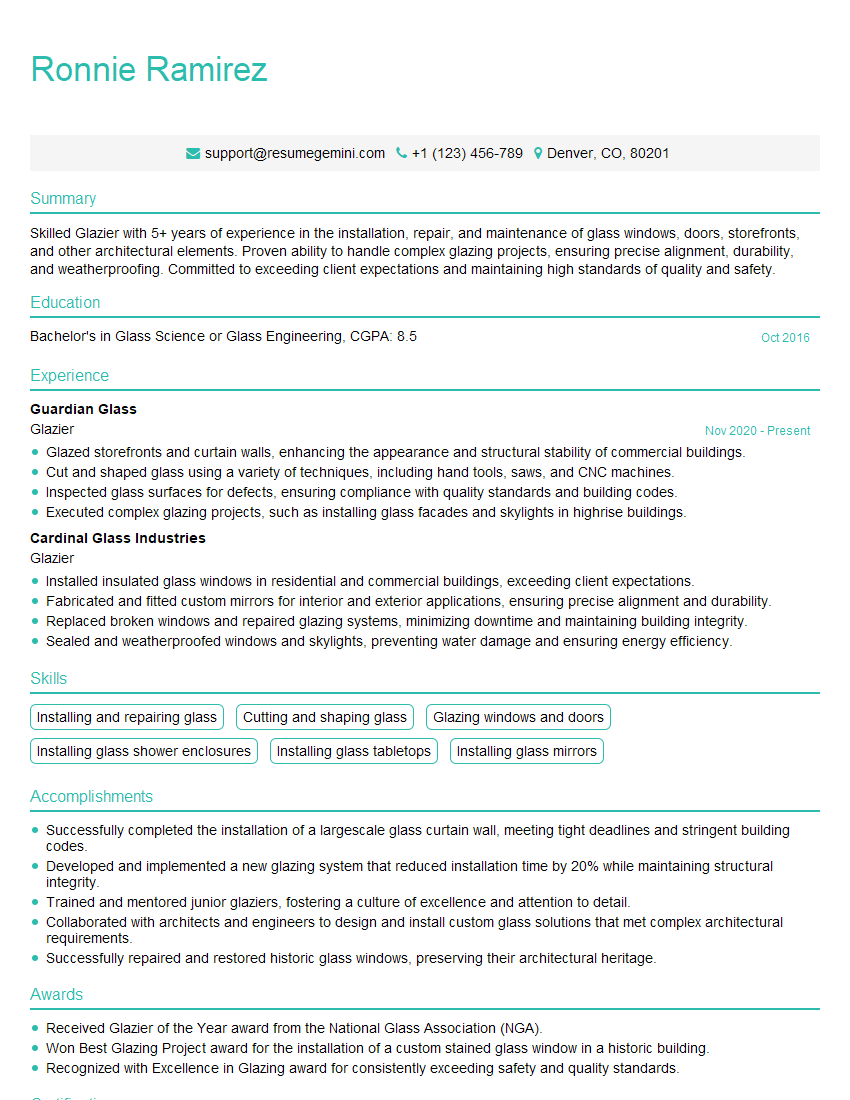
Mastering glass caulking opens doors to rewarding opportunities in construction, glazing, and home improvement. A strong understanding of these techniques showcases valuable practical skills and attention to detail, highly sought after by employers. To maximize your job prospects, invest time in creating an ATS-friendly resume that highlights your skills and experience effectively. ResumeGemini is a trusted resource to help you build a professional and impactful resume. Examples of resumes tailored to the Glass Caulking field are available to help guide you.



Explore more articles
Users Rating of Our Blogs
Share Your Experience
We value your feedback! Please rate our content and share your thoughts (optional).
What Readers Say About Our Blog
To the interviewgemini.com Webmaster.
Very helpful and content specific questions to help prepare me for my interview!
Thank you
To the interviewgemini.com Webmaster.
This was kind of a unique content I found around the specialized skills. Very helpful questions and good detailed answers.
Very Helpful blog, thank you Interviewgemini team.