Interviews are opportunities to demonstrate your expertise, and this guide is here to help you shine. Explore the essential Drilling Program Planning and Implementation interview questions that employers frequently ask, paired with strategies for crafting responses that set you apart from the competition.
Questions Asked in Drilling Program Planning and Implementation Interview
Q 1. Explain the key stages involved in a typical drilling program.
A typical drilling program is a meticulously planned operation, broken down into several key stages. Think of it like building a skyscraper – you wouldn’t just start laying bricks; you need a blueprint and a phased approach.
- Pre-Drilling Phase: This involves geological studies, well planning (including trajectory design and reservoir modeling), securing permits, procuring equipment, and assembling the drilling team. This stage is critical for success and significantly impacts the efficiency and safety of the entire operation. Imagine this as the architect designing and getting approvals for the skyscraper.
- Spudding and Drilling: This is the actual drilling phase, where the bit penetrates the earth’s layers. We carefully monitor drilling parameters like weight on bit, rotary speed, and mud properties to optimize penetration rate and wellbore stability. We use sophisticated directional drilling techniques to reach the target reservoir if necessary. Think of this as the construction crews building the skyscraper floor by floor.
- Casing and Cementing: Once a certain depth is reached, we install steel casing (a pipe) to protect the wellbore and provide stability. We then cement the annulus (the space between the casing and the borehole wall) to prevent fluid flow between layers and ensure well integrity. This is similar to constructing the structural supports and fireproofing of the skyscraper.
- Completion: After drilling to the target depth, we prepare the well for production. This involves installing production tubing, perforating the casing to create pathways for hydrocarbons to flow, and running downhole equipment like packers and gravel packs. This is akin to adding the building services (electricity, water, etc) in the skyscraper.
- Post-Drilling Operations: This encompasses well testing, production startup, and data analysis to evaluate the well’s performance and gather insights for future operations. It’s like the final inspection and handover of the completed skyscraper.
Each stage is carefully documented and monitored, adhering to strict safety protocols and regulatory compliance.
Q 2. Describe your experience with well planning software.
I’ve extensive experience using various well planning software packages, including Petrel, Landmark’s DecisionSpace, and Schlumberger’s Petrel. My expertise spans across data input, geosteering, wellbore stability analysis, and drilling optimization. I’m proficient in building detailed well plans, including trajectory design, casing and cement programs, and risk assessment workflows. For instance, in a recent project, I utilized Petrel to optimize a horizontal well trajectory in a challenging geological formation, successfully avoiding critical fault zones and maximizing reservoir contact. This resulted in significant improvements in the project’s economics and a reduction in drilling time. The software allowed for precise visualization and detailed analysis of the subsurface, allowing for data-driven decision-making throughout the planning process.
Q 3. How do you determine the optimal drilling mud type for a specific well?
Selecting the optimal drilling mud type is crucial for a successful drilling operation; it’s not a one-size-fits-all scenario. The choice depends on many factors, acting like a tailored suit rather than an off-the-rack one. We consider:
- Formation type and pressure: Different formations have varying properties; some are more prone to instability, requiring specialized muds to maintain wellbore integrity. High-pressure formations require mud with higher density to prevent formation fracturing.
- Reservoir protection: The mud must be compatible with the reservoir fluids to prevent damage to the reservoir rock. Water-based muds are preferred when protecting sensitive formations.
- Environmental regulations: Environmental considerations play a significant role. We need to minimize environmental impact by selecting environmentally friendly muds.
- Drilling challenges: Specific drilling challenges like shale instability or hole erosion could require specialized mud additives to address them.
For example, in a recent project involving a shale formation prone to swelling, we opted for a polymer-based mud system with enhanced shale inhibition properties. This prevented wellbore instability and ensured efficient drilling. We always conduct thorough laboratory testing to determine the optimal mud properties and ensure its compatibility with the expected subsurface conditions.
Q 4. What are the common challenges in drilling program implementation, and how do you address them?
Drilling program implementation is fraught with challenges. Think of it as navigating a complex maze with unexpected turns. Common challenges include:
- Unexpected geological formations: Encountering unforeseen geological conditions can disrupt the drilling program and cause costly delays and changes to the plan. We use advanced geological modeling and real-time data monitoring to mitigate this risk.
- Equipment failures: Downtime caused by equipment malfunctions can drastically impact project timelines and budgets. Preventive maintenance, robust quality control, and backup equipment minimize this risk.
- HSE incidents: Maintaining a safe work environment is paramount. Comprehensive safety protocols, regular safety training, and emergency response plans are essential.
- Cost overruns: Accurate budgeting and cost monitoring are vital. We use sophisticated cost-control software and regularly review budgets to identify and address potential overruns.
To address these, we leverage a robust risk management plan, employing proactive measures and contingency planning. For example, we may simulate various scenarios using modeling software to predict potential problems and create alternative solutions. We also emphasize open communication and collaboration among the drilling team, ensuring quick adaptation to changing circumstances.
Q 5. Explain your understanding of directional drilling techniques.
Directional drilling allows us to deviate from a vertical path, enabling access to reservoirs that are not directly beneath the drilling rig, or to navigate around obstacles. Think of it as precision surgery for subsurface access. Key techniques include:
- Rotary Steerable Systems (RSS): These systems use downhole motors to steer the drill bit, allowing for precise control of the wellbore trajectory. Data is transmitted in real-time to surface, enabling adjustments as needed.
- Measurement While Drilling (MWD): MWD tools provide real-time data on wellbore inclination, azimuth, and depth, crucial for accurate geosteering.
- Logging While Drilling (LWD): LWD tools measure formation properties while drilling, providing valuable data for reservoir evaluation and optimization of the well trajectory.
I’ve personally overseen many directional drilling projects, utilizing RSS and MWD technology to reach target reservoirs effectively and efficiently. For example, in a recent project, we used an RSS system to drill a highly deviated horizontal well, successfully navigating around a complex fault zone and maximizing reservoir contact. Real-time MWD data ensured precise geosteering, minimizing potential risks and optimizing the well’s productivity.
Q 6. How do you manage drilling risks and HSE compliance?
Drilling operations inherently involve risks. Safety is not just a priority—it’s a cornerstone of our operations. We manage these risks through a comprehensive HSE (Health, Safety, and Environment) management system. This system comprises:
- Hazard identification and risk assessment: We thoroughly identify potential hazards and assess the associated risks. We also consider environmental aspects.
- Risk mitigation strategies: We implement control measures such as safety procedures, equipment safeguards, and emergency response plans.
- Regular safety training: All personnel receive comprehensive safety training tailored to their roles and responsibilities.
- Compliance with regulations: We strictly adhere to all relevant HSE regulations and guidelines.
- Incident reporting and investigation: We have a system in place to report, investigate, and analyze all incidents. This helps prevent similar incidents in the future.
For instance, our site safety meetings reinforce the importance of safe work practices and address specific issues. We regularly conduct safety audits to ensure compliance with our standards. Our commitment to HSE is not just a checklist; it is deeply embedded in our company culture.
Q 7. Describe your experience with wellbore stability analysis.
Wellbore stability analysis is crucial in predicting and mitigating wellbore instability issues. Think of it as predicting potential structural weaknesses in a building before they cause collapse. It involves analyzing the stresses acting on the wellbore, such as those caused by the formation pressure, mud pressure, and tectonic stresses, to predict the likelihood of problems such as wellbore collapse, fracturing, or shale instability. We use specialized software and geological models to predict this.
My experience includes using various software packages to analyze stress states, pore pressure, and formation strength properties. We use this information to recommend appropriate drilling parameters, mud weights, and casing designs to ensure wellbore stability. For instance, in a challenging high-pressure/low-pressure formation, a detailed wellbore stability analysis identified a specific pressure window where the wellbore would be stable. This allowed us to optimize our mud weight and drilling parameters, preventing wellbore collapse and ensuring a safe and efficient drilling operation. This predictive analysis saved significant costs and avoided potential delays or even catastrophic wellbore failure.
Q 8. How do you optimize drilling parameters to minimize non-productive time (NPT)?
Minimizing Non-Productive Time (NPT) is crucial for efficient drilling operations. It involves optimizing various parameters to ensure continuous drilling and avoid delays. My approach focuses on proactive planning and real-time monitoring.
Proactive Planning: This includes detailed pre-job planning, selecting the right drilling equipment and tools based on anticipated formations, and meticulous well planning to account for potential challenges. For instance, we’d analyze geological data thoroughly to predict potential drilling issues and preemptively plan for solutions, such as pre-running casing or adjusting drilling parameters.
Real-time Monitoring and Adjustments: We constantly monitor parameters like weight on bit (WOB), rotary speed (RPM), and pump pressure to identify early warning signs of problems. For example, if we see an increase in torque without a corresponding increase in rate of penetration (ROP), it suggests a potential downhole issue, requiring immediate attention before it becomes a major NPT event.
Data Analytics: Using advanced drilling data analytics helps identify trends and patterns related to NPT events. This allows us to predict potential problems and implement preventative measures. For instance, through data analysis we can identify specific drill bits that consistently perform better in specific formations allowing for optimized bit selection, thus reducing the need for bit changes.
Efficient Crew Management and Training: Highly trained and efficient crews are paramount. This ensures tasks are executed swiftly and safely, minimizing downtime. Regular training sessions focusing on best practices and emergency procedures helps achieve this.
Q 9. What are your strategies for cost reduction in a drilling program?
Cost reduction in drilling programs requires a holistic approach encompassing planning, execution, and post-operation analysis. My strategies center around efficiency, optimization, and risk mitigation.
Optimized Well Design: Designing wells efficiently, using advanced technologies such as directional drilling and horizontal drilling can lead to cost savings by reducing well length and improving reservoir access. This can shorten the drilling timeline and reduce the overall project expense.
Efficient Drilling Fluids Management: Utilizing advanced drilling fluids reduces friction, improves ROP, and minimizes formation damage, thus reducing costs associated with slower drilling rates and potential wellbore instability.
Rig Selection and Contract Negotiation: Carefully selecting the right rig based on the job scope and negotiating favorable contracts with vendors and service providers is key to controlling costs. We rigorously evaluate various rig options, considering capabilities, day rates and potential mobilization costs before finalizing our selection.
Supply Chain Optimization: Ensuring efficient logistics and streamlined supply chain management minimizes material costs and downtime associated with delays. Implementing robust inventory tracking systems, and leveraging digital tools for procurement reduces unnecessary expenses.
Data-driven Decision Making: Real-time data analysis assists in optimizing operational decisions and minimizing unexpected costs by identifying areas for improvement and making proactive adjustments. This continuous monitoring allows for cost-effective operational decisions during the drilling process.
Q 10. Explain your experience with real-time drilling data analysis and interpretation.
Real-time drilling data analysis and interpretation is essential for effective drilling operations. I have extensive experience using various software and technologies to monitor and interpret data from drilling sensors in real-time. This allows us to make informed, data-driven decisions and optimize the drilling process dynamically.
Software & Tools: I am proficient with industry-standard software such as Drilling Information Systems (DIS), and other real-time monitoring platforms. These tools provide a comprehensive view of various drilling parameters, including WOB, RPM, torque, flow rate, and mud properties.
Data Interpretation & Decision Making: My experience involves using this data to identify potential problems, optimize drilling parameters, and make decisions that enhance safety and efficiency. For instance, a sudden increase in torque might indicate a problem with the drill string, while a decline in ROP might suggest the need for a change in the drilling parameters or a change in bit.
Predictive Modeling: We employ predictive modeling to anticipate potential issues and proactively adjust the drilling plan. For example, by analyzing past drilling data and geological information, we can predict the probability of encountering challenging formations and adjust our approach accordingly, minimizing the impact on the overall drilling schedule.
Q 11. How do you handle unexpected geological formations during drilling?
Encountering unexpected geological formations during drilling is a common challenge. Our response involves a combination of immediate action, risk assessment, and adaptive planning.
Immediate Response: Upon encountering unexpected formations, we immediately halt drilling operations to assess the situation. We analyze the available data (e.g., drilling parameters, mud properties, cuttings analysis) to understand the nature of the formation.
Risk Assessment: We conduct a thorough risk assessment to identify potential hazards associated with the unexpected formation, such as wellbore instability or increased formation pressure. This assessment guides our subsequent decisions.
Adaptive Planning: Based on the assessment, we adapt the drilling plan. This may involve changing the drilling parameters (WOB, RPM), utilizing different drilling fluids, or implementing specialized drilling techniques to successfully drill through the formation. For example, we might switch to a different type of drill bit designed for harder formations, or modify the drilling mud properties to improve lubricity or provide better wellbore stability.
Communication: Open and clear communication is vital. We share information with all relevant stakeholders (geologists, engineers, rig crew) to ensure everyone understands the situation and the plan of action.
Q 12. Describe your experience with well control procedures and emergency response.
Well control is paramount in drilling operations. My experience includes extensive training and practical application of well control procedures, particularly during emergency response situations.
Well Control Procedures: I am fully conversant with standard well control procedures, including the use of various equipment such as blowout preventers (BOPs) and choke manifolds. We conduct regular well control drills and training exercises to ensure the entire drilling team is proficient in responding to well control scenarios.
Emergency Response: In emergency situations, I have experience in leading the response team. This includes taking charge, utilizing the correct well control equipment, implementing established procedures, and following best practices. This ensures the safety of personnel, prevents environmental damage, and minimizes the impact on the drilling operation.
Post-Incident Analysis: After any well control incident, a thorough post-incident analysis is conducted to identify contributing factors and implement measures to prevent similar incidents in the future. This analysis involves reviewing operational data, conducting interviews with the drilling crew, and utilizing lessons learned to improve safety procedures.
Q 13. How do you ensure efficient communication and coordination among drilling teams?
Efficient communication and coordination are vital for successful drilling operations. My approach focuses on establishing clear communication channels, fostering teamwork, and utilizing technology.
Clear Communication Channels: We establish clear communication channels using daily reports, shift-change handovers, and regular meetings. These ensure that everyone is informed about the current status and any changes to the plan.
Teamwork and Collaboration: We foster teamwork by encouraging open communication and collaboration between different team members (e.g., drilling engineers, geologists, mud engineers, rig crew). Regular team meetings and training exercises foster camaraderie and efficient problem solving.
Technology: We leverage technology to enhance communication and coordination. This involves utilizing communication platforms for instant messaging, sharing documents and data, as well as using specialized software for real-time monitoring and data analysis.
Regular Briefings: Holding regular safety briefings and toolbox talks address specific risks and reinforce safety awareness. This creates a culture of safety and proactive problem-solving.
Q 14. What are your methods for monitoring and controlling drilling fluid properties?
Monitoring and controlling drilling fluid properties are critical to efficient and safe drilling. Drilling mud properties directly impact wellbore stability, ROP, and overall well integrity.
Regular Testing: We conduct regular testing of the drilling fluid, analyzing parameters like viscosity, density, pH, and filtration rate. These tests ensure the fluid is within the required specifications for the specific geological conditions.
Mud Logging: Mud logging provides real-time information about the drilling fluid and the formations being drilled. This information is crucial for making decisions on adjustments to mud properties as needed.
Real-time Monitoring and Adjustments: Any deviations from the desired parameters are addressed immediately. This may involve adding additives, adjusting the water content, or changing the type of mud altogether. For instance, if we are encountering unstable formations, we may need to increase the density of the mud to prevent wellbore collapse. Conversely, in highly permeable formations we may need to manage the fluid loss to prevent formation damage.
Waste Management: We strictly adhere to environmental regulations for the proper disposal of drilling fluids and cuttings, ensuring environmental protection and compliance.
Q 15. Explain your understanding of drilling fluid rheology.
Drilling fluid rheology is the study of how drilling fluids flow and behave under different conditions. It’s crucial because the properties of the drilling fluid directly impact the efficiency and safety of the drilling operation. Think of it like this: the drilling fluid is like the blood of the wellbore – it needs to be just the right consistency to perform all its vital functions.
Key rheological properties include:
- Viscosity: This measures the fluid’s resistance to flow. Too low, and it won’t effectively carry cuttings to the surface; too high, and it requires excessive pumping pressure, increasing costs and potentially damaging the wellbore.
- Yield Point: This is the minimum shear stress required to initiate flow. A higher yield point helps suspend cuttings when the pump is off, preventing settling and potential wellbore instability.
- Plastic Viscosity: This represents the fluid’s resistance to flow once it’s already moving. It’s important for maintaining a balance between efficient cuttings removal and minimizing pressure loss.
- Gel Strength: This measures the fluid’s ability to form a gel when the pump is stopped, preventing cuttings from settling and maintaining wellbore stability.
Understanding and controlling these properties is achieved through careful selection and blending of drilling fluid components, regular testing with rheometers, and adjusting the mud weight based on formation pressure and other factors. For example, in a high-pressure, high-temperature (HPHT) well, we’d select a drilling fluid with higher thermal stability and viscosity modifiers to maintain its properties under extreme conditions.
Career Expert Tips:
- Ace those interviews! Prepare effectively by reviewing the Top 50 Most Common Interview Questions on ResumeGemini.
- Navigate your job search with confidence! Explore a wide range of Career Tips on ResumeGemini. Learn about common challenges and recommendations to overcome them.
- Craft the perfect resume! Master the Art of Resume Writing with ResumeGemini’s guide. Showcase your unique qualifications and achievements effectively.
- Don’t miss out on holiday savings! Build your dream resume with ResumeGemini’s ATS optimized templates.
Q 16. How do you develop and manage drilling program budgets?
Developing and managing drilling program budgets requires a meticulous, multi-stage approach. It starts with a thorough understanding of the project scope, including the target depth, well design, anticipated geological challenges, and the required equipment. We then use this information to create a detailed breakdown of all anticipated costs.
This budget typically includes:
- Rig Costs: Daily rig rate, mobilization/demobilization, and potential overtime.
- Drilling Fluids: The cost of materials, mixing, and disposal.
- Logging and Testing: Costs associated with wireline logging, formation testing, and other wellbore evaluations.
- Personnel: Salaries and benefits for the drilling crew, engineers, and support staff.
- Services: Costs of directional drilling services, cementing, casing, and other specialized services.
- Contingency: A crucial buffer for unforeseen expenses and potential delays.
Throughout the drilling process, we closely monitor actual spending against the budget. Regular progress meetings and variance analyses are crucial for identifying potential overruns and implementing corrective measures. We may need to re-forecast based on the encountered conditions. For example, if we hit unexpected geological formations, we may need to adjust the program by adding more time, different drilling tools, or specialized fluids—all of which are reflected in updated budget projections.
Q 17. Describe your experience with performance monitoring and reporting in drilling operations.
Performance monitoring and reporting in drilling operations is essential for efficiency and safety. It involves tracking key performance indicators (KPIs) throughout the drilling process and using the data to make informed decisions. We typically use specialized drilling software to collect and analyze data in real-time.
Key KPIs include:
- Rate of Penetration (ROP): This measures how quickly the drill bit is penetrating the formation. A slow ROP might indicate problems with the bit, drilling parameters, or the formation itself.
- Trip Time: The time taken to pull the drill string out of and back into the well. Reducing trip time improves overall drilling efficiency.
- Non-Productive Time (NPT): This encompasses all downtime, including equipment failures, unexpected events, and logistical delays. Minimizing NPT is a primary focus for any effective drilling operation.
- Mud Weight and Rheology: Continuous monitoring ensures optimal drilling fluid properties are maintained throughout the operation.
- Torque and Drag: These measurements reveal potential problems with the drill string, such as sticking points or downhole complications.
Regular reports, often daily, are prepared highlighting performance against targets, cost analysis, and identifying potential risks. These reports are crucial for communication between the drilling team, management, and other stakeholders. For example, if NPT is consistently high due to equipment failure, the data will prompt a discussion about necessary maintenance procedures or equipment upgrades.
Q 18. How do you evaluate the success of a drilling program?
Evaluating the success of a drilling program involves considering several factors that go beyond simply reaching the target depth. It’s a holistic assessment of safety, efficiency, and cost-effectiveness.
Key success factors include:
- Safety Record: A successful program has a flawless safety record, with zero lost-time incidents.
- Achieving Target Depth and Objectives: Reaching the planned depth within the allocated time frame and meeting all well objectives is critical.
- Cost-Effectiveness: The program should be completed within or under the approved budget.
- Time Efficiency: Meeting or exceeding planned drilling speed and minimizing NPT demonstrates efficiency.
- Wellbore Quality: The well should be constructed to the required specifications and integrity, minimizing potential issues during completion and production.
- Environmental Compliance: The drilling operation should be conducted without any environmental violations.
A post-drilling analysis is crucial. We review the entire operation, identify areas of improvement, and document lessons learned for future projects. This might involve detailed cost breakdown, comparison of actual versus planned parameters, and a thorough safety audit. For example, a thorough review of a successful well could identify best practices in bit selection, leading to improved ROP in future similar wells.
Q 19. Explain your experience with different drilling rigs and their capabilities.
My experience encompasses various drilling rigs, from land-based rigs like top drives and conventional rotary rigs to offshore jack-up and platform rigs. Each rig type offers unique capabilities and limitations, dictated by factors like location, well depth, and environmental conditions.
Here are a few examples:
- Top Drive Rigs: These are highly efficient for land drilling, offering improved control over the drill string, faster tripping operations, and better handling of complex wells.
- Conventional Rotary Rigs: These are versatile and commonly used for various drilling applications, but might be less efficient than top drives for complex wells.
- Jack-up Rigs: These are used in shallow waters and offer stability through legs resting on the seabed. They are cost-effective for offshore drilling in suitable water depths.
- Floating Rigs (Semi-submersibles and Drill Ships): These are used in deeper waters and provide stability through dynamic positioning systems. They are highly adaptable but also significantly more expensive to operate.
My understanding extends beyond basic operation to include their limitations. For instance, while top drives excel in many areas, they might not be suitable for very deep wells or specific geological formations. Selecting the right rig is critical for optimizing the drilling program’s success and aligning with safety, budget, and well design constraints.
Q 20. What are the key factors to consider when selecting drilling equipment?
Selecting drilling equipment is a critical decision, involving a detailed evaluation of several interconnected factors. The wrong choice can lead to costly delays, safety issues, and ultimately, project failure.
Key factors include:
- Wellbore Design: The target depth, well trajectory (vertical, directional, horizontal), and the expected geological formations heavily influence the necessary rig capacity and equipment specifications.
- Geological Conditions: Formation characteristics such as hardness, pressure, temperature, and potential presence of hazardous materials (e.g., H2S) impact the selection of drill bits, drilling fluids, and other downhole tools.
- Budgetary Constraints: The cost of renting or owning the rig and associated equipment needs to be carefully considered.
- Environmental Regulations: Compliance with local environmental regulations is paramount, impacting rig selection and operational practices.
- Safety Standards: Equipment should meet all applicable safety regulations and standards to ensure a safe working environment.
- Availability and Logistics: The availability of the desired equipment and its mobilization time are significant factors.
- Operational Efficiency: The choice of equipment should be optimized for drilling efficiency, minimizing NPT and maximizing ROP.
A thorough cost-benefit analysis is performed to evaluate various options and select the most suitable combination of equipment for each specific drilling program. This process frequently involves consulting with rig owners, equipment suppliers, and drilling experts.
Q 21. How do you address environmental concerns related to drilling operations?
Addressing environmental concerns is an integral part of modern drilling operations. We must proactively minimize the impact on the environment through careful planning, stringent operational practices, and robust waste management strategies.
Key considerations include:
- Wastewater Management: Drilling fluids and produced water require proper treatment and disposal to minimize the release of pollutants into the environment. This usually involves using specialized treatment facilities to remove solids and contaminants before disposal or recycling.
- Air Emissions: Rig engines and equipment generate emissions that must be managed through regular maintenance, emission controls, and the use of cleaner fuel sources.
- Spill Prevention and Response: Implementing robust measures to prevent spills and leaks of drilling fluids, fuels, and other chemicals is vital. This involves regular inspections, leak detection systems, and well-defined spill response plans.
- Noise Pollution: Mitigation measures for noise pollution include using noise-reducing equipment, implementing operational controls, and potentially using noise barriers.
- Land Reclamation: After drilling operations are completed, the site must be restored to its original condition or better. This involves removing equipment, remediating the land, and revegetating the area.
- Compliance with Regulations: Adhering to all applicable environmental regulations and obtaining necessary permits before starting drilling operations is critical. This often involves regular environmental monitoring and reporting.
Regular environmental audits and compliance checks are essential to ensure responsible operations and minimize our environmental footprint. We prioritize sustainable drilling practices and continuously seek to improve our environmental performance.
Q 22. Explain your understanding of regulatory compliance in drilling operations.
Regulatory compliance in drilling operations is paramount, ensuring safety, environmental protection, and adherence to all applicable laws and regulations. It’s not just about avoiding penalties; it’s about responsible resource extraction. This involves meticulous planning and execution, beginning with obtaining the necessary permits and licenses from relevant governmental agencies. We need to continually monitor and ensure compliance with environmental regulations, including waste management, discharge permits, and spill prevention control and countermeasures (SPCC) plans. Safety regulations, such as those defined by OSHA (Occupational Safety and Health Administration) and specific industry standards, are strictly followed, requiring regular safety audits and employee training. For example, a well plan must demonstrate adherence to regulations regarding well casing and cementing to prevent groundwater contamination. Failure to comply can result in significant fines, operational shutdowns, and damage to a company’s reputation.
Specific regulations vary by location (e.g., different rules in the Gulf of Mexico versus the North Sea) and by the type of drilling operation (onshore vs. offshore). Maintaining up-to-date knowledge of all applicable regulations and incorporating them into all phases of drilling operations – from planning and design to execution and decommissioning – is a continuous process requiring dedicated personnel and robust documentation.
Q 23. How do you incorporate lessons learned from previous drilling programs?
Incorporating lessons learned from previous drilling programs is critical for continuous improvement and preventing costly mistakes. This process involves a structured approach, usually incorporating post-project reviews and detailed analysis of project data. We meticulously document both successes and failures, identifying areas for improvement in various aspects of the operation. For example, if a previous project experienced delays due to equipment malfunctions, we might invest in upgraded equipment or implement a more robust preventative maintenance schedule for the next program.
This data is not just passively stored; it’s actively analyzed to understand root causes of problems. We use techniques like root cause analysis (RCA) and fault tree analysis (FTA) to identify the underlying issues. For instance, if a well deviated significantly from the planned trajectory, we might analyze factors such as formation characteristics, drilling parameters, and mud properties to prevent similar deviations in future projects. The insights gleaned then inform our planning for future operations, leading to enhanced efficiency, improved safety, and reduced costs. This is a collaborative process, where lessons learned are shared across teams and projects to ensure widespread benefit.
Q 24. Describe your experience with drilling optimization techniques.
Drilling optimization techniques focus on maximizing efficiency and minimizing costs while maintaining safety and environmental protection. My experience includes the implementation and monitoring of several techniques. For example, I’ve used advanced drilling parameters like real-time data analysis from downhole sensors (MWD, LWD) to optimize drilling rates and reduce non-productive time (NPT). This data provides insight into the formation properties and allows for adjustments to weight on bit (WOB), rotational speed (RPM), and mud properties to optimize drilling performance.
Another key technique is the use of predictive modeling. We use software to forecast drilling performance based on historical data and geological models. This allows us to proactively address potential problems and optimize the drilling plan. Furthermore, implementing managed pressure drilling (MPD) techniques in challenging well conditions has helped to mitigate risks associated with pressure control, resulting in enhanced safety and efficiency. Finally, the optimization of the drilling fluid (mud) system is crucial. Correct mud selection and maintenance drastically impact drilling rates, formation stability, and wellbore integrity.
Q 25. What is your approach to problem-solving in a high-pressure drilling environment?
Problem-solving in a high-pressure drilling environment requires a structured approach and a calm, decisive demeanor. My approach emphasizes a systematic process: First, I thoroughly assess the situation, gathering all available data and information. This might involve reviewing real-time data from downhole sensors, examining well logs, and consulting with experts from different disciplines (e.g., mud engineers, geologists). Second, I identify the root cause of the problem using analytical techniques like RCA. Third, I develop and evaluate potential solutions, considering safety, cost, and time constraints. This often involves brainstorming sessions with the team. Fourth, I implement the chosen solution, ensuring thorough communication and coordination among all involved parties. Finally, I monitor the effectiveness of the solution and make adjustments as needed. Communication is crucial throughout the process, especially in high-pressure situations.
For example, if we encounter an unexpected influx of formation fluids (a kick), my immediate response would be to shut down the drilling operations, and then follow established emergency procedures, focusing on safety and well control. This would entail a controlled shut-in procedure and an assessment of the situation followed by a response plan to mitigate the situation.
Q 26. How do you manage conflicts and disagreements within a drilling team?
Managing conflicts and disagreements within a drilling team requires strong leadership, communication, and conflict resolution skills. My approach focuses on fostering a collaborative environment where open communication is encouraged. I aim to facilitate discussions where all team members feel comfortable expressing their opinions and concerns. I emphasize active listening and ensure all perspectives are understood. I encourage a focus on solutions, not blame. When conflicts arise, I facilitate mediation, guiding the team toward a mutually acceptable resolution that aligns with project goals and safety standards. If the conflict is significant or cannot be resolved within the team, I escalate the issue to the appropriate management level.
For example, if disagreements arise regarding the optimal drilling parameters, I would initiate a discussion involving all relevant parties, such as the drilling engineer, mud engineer, and geologist. We’d analyze the available data and discuss the pros and cons of different approaches. The decision would be made collaboratively, based on data-driven arguments and a shared understanding of the project objectives.
Q 27. Explain your experience with project management methodologies applied to drilling projects.
My experience encompasses various project management methodologies applied to drilling projects, most notably Agile and PRINCE2. Agile methodologies, with their iterative approach and emphasis on flexibility, are well-suited to the dynamic nature of drilling projects. This allows for adjustments based on real-time data and unforeseen challenges. Using Agile, we break down the project into smaller, manageable sprints, allowing for continuous feedback and adaptation. PRINCE2 (Projects IN Controlled Environments) provides a structured framework for planning, executing, and monitoring drilling projects, particularly large-scale ones. Its clear roles and responsibilities ensure accountability and control throughout the project lifecycle.
I leverage aspects of both, adapting my approach to fit the specific needs of each project. For instance, a smaller, less complex project might benefit from a more Agile approach, while a large, multi-well campaign would require the more structured approach of PRINCE2. The key is to select the methodology that best balances flexibility and control, maximizing efficiency and minimizing risks.
Q 28. Describe your proficiency with relevant software and technologies used in drilling program planning and implementation.
My proficiency includes various software and technologies commonly used in drilling program planning and implementation. I’m experienced in using specialized drilling engineering software packages such as Petrel, Landmark, and Drilling Simulator to model wells, plan drilling trajectories, and optimize drilling parameters. I’m also proficient in using data management and analysis tools to process and interpret real-time data from downhole sensors (MWD/LWD) and other sources. These tools help to identify potential problems and optimize drilling operations. My experience extends to the utilization of cloud-based platforms for data storage, sharing, and collaboration among project team members. This allows for real-time data access and remote monitoring of drilling operations. Finally, I have a solid understanding of various communication technologies used for communication and data transfer during offshore operations, including satellite communication systems.
For example, I routinely use Petrel to design and optimize well trajectories, considering factors such as formation pressure, drilling hazards, and equipment limitations. This software helps to minimize risks and maximize the efficiency of drilling operations.
Key Topics to Learn for Drilling Program Planning and Implementation Interview
- Well Planning & Design: Understanding well trajectories, casing design, drilling fluid selection, and bit selection based on geological formations and project objectives. Practical application: Analyzing wellbore stability issues and proposing mitigation strategies.
- Drilling Operations & Execution: Mastering the intricacies of drilling procedures, including directional drilling, mud engineering, and well control techniques. Practical application: Optimizing drilling parameters to minimize non-productive time (NPT).
- Cost & Time Estimation: Developing accurate budgets and timelines for drilling projects, considering various cost drivers and potential risks. Practical application: Creating contingency plans for budget overruns and schedule delays.
- Risk Management & Mitigation: Identifying and assessing potential hazards and developing strategies to mitigate them throughout the drilling process. Practical application: Developing a comprehensive well control plan and emergency response procedures.
- Drilling Data Analysis & Reporting: Interpreting drilling data to monitor performance, identify issues, and make informed decisions. Practical application: Utilizing drilling data to optimize drilling parameters and improve efficiency.
- Health, Safety, and Environment (HSE): Understanding and implementing HSE regulations and best practices to ensure a safe and environmentally responsible drilling operation. Practical application: Conducting risk assessments and implementing safety protocols.
- Regulatory Compliance: Navigating and adhering to relevant regulatory frameworks governing drilling operations. Practical application: Ensuring all drilling activities comply with local and international regulations.
- Project Management Principles: Applying project management methodologies to plan, execute, monitor, and control drilling projects effectively. Practical application: Utilizing project management software and techniques to track progress and manage resources.
Next Steps
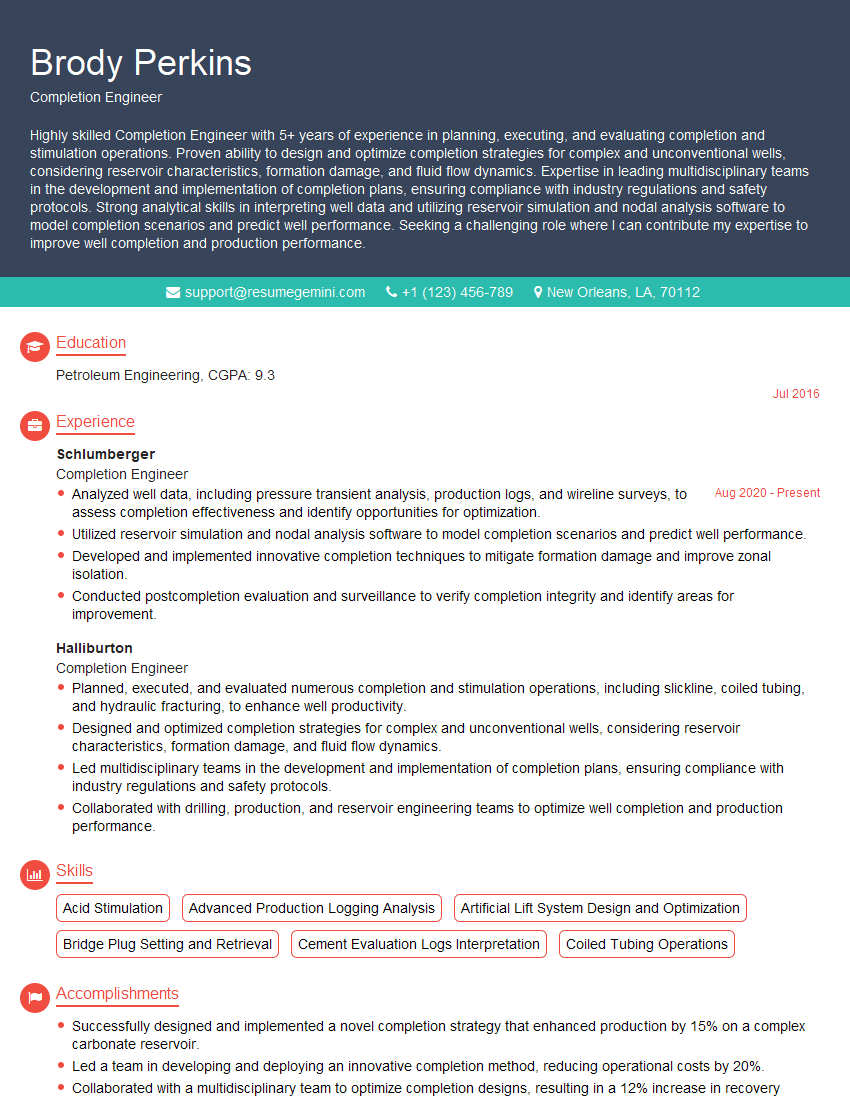
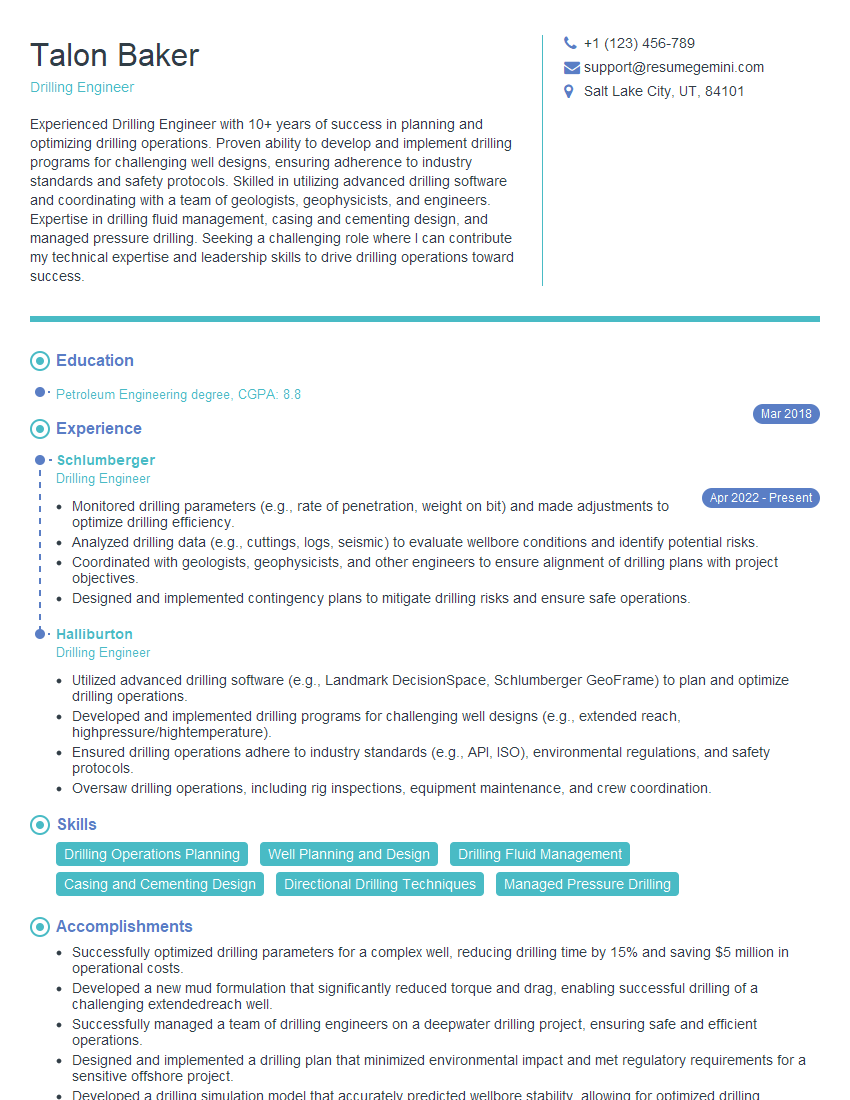
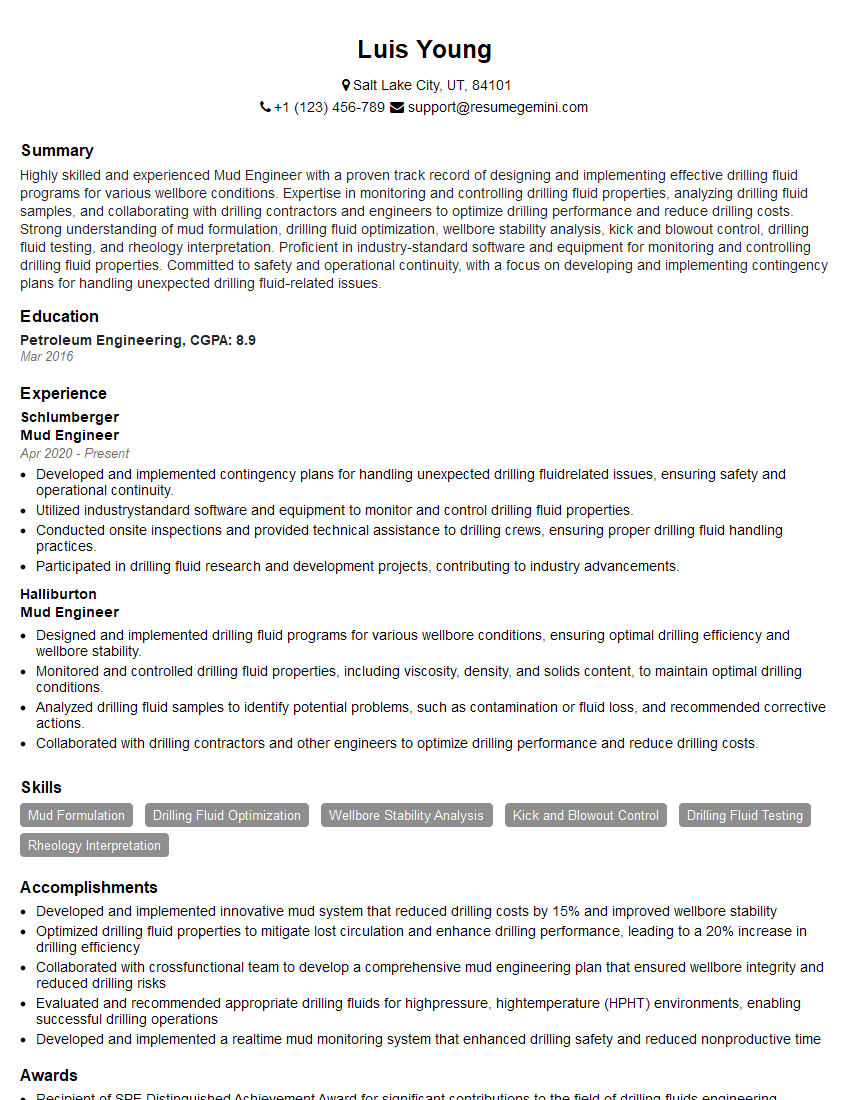
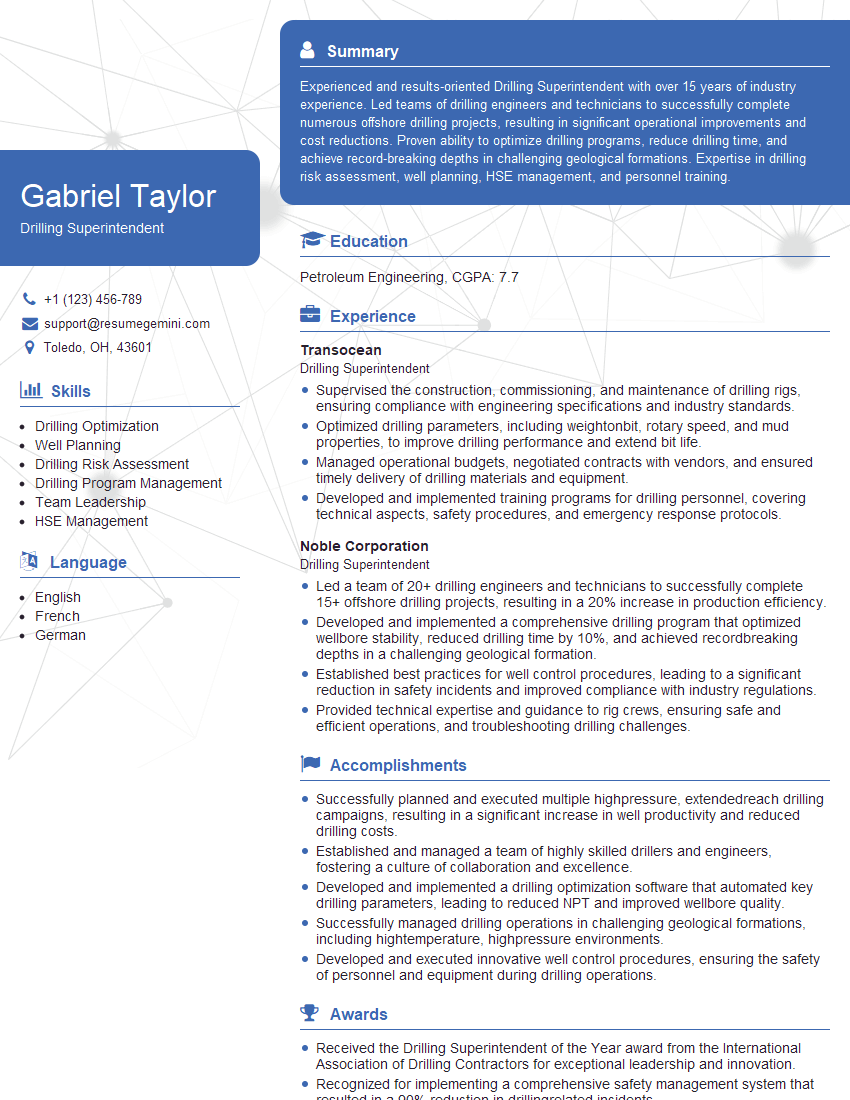
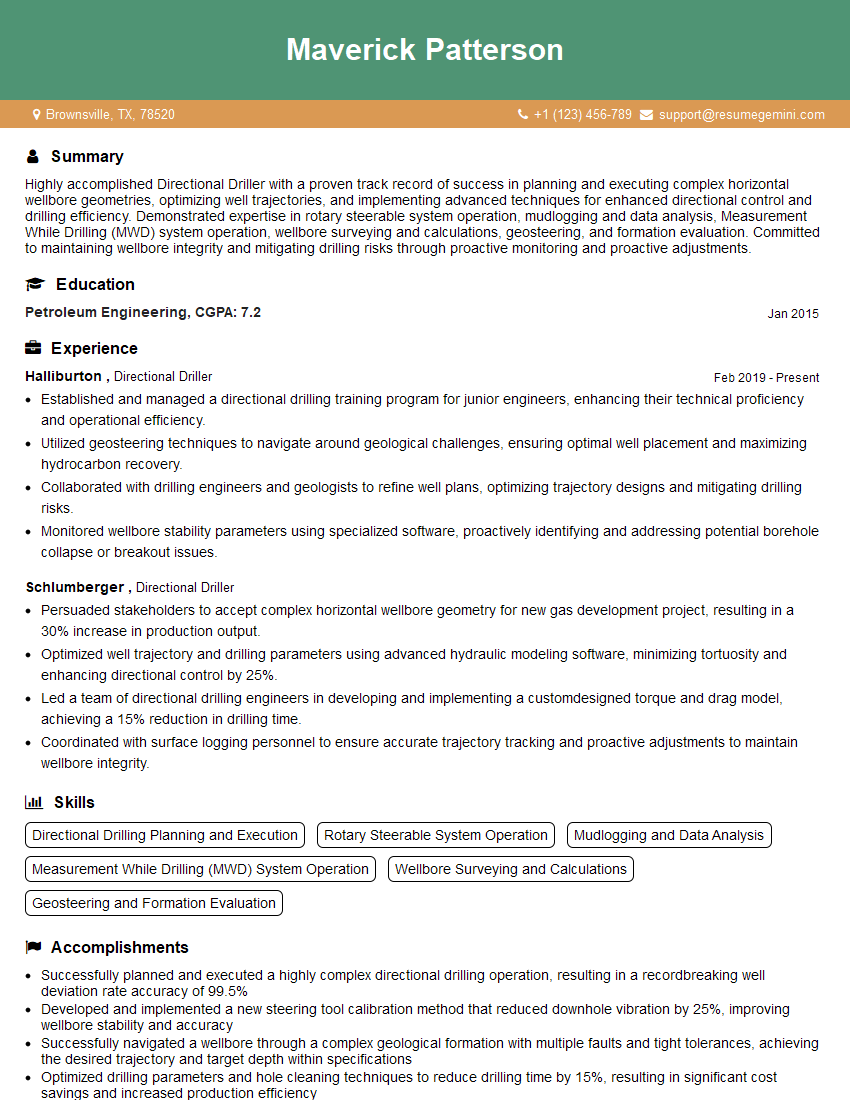
Mastering Drilling Program Planning and Implementation is crucial for career advancement in the energy sector, opening doors to leadership roles and higher earning potential. A strong resume is your key to unlocking these opportunities. Building an ATS-friendly resume significantly increases your chances of getting noticed by recruiters. We highly recommend leveraging ResumeGemini to craft a compelling and effective resume that showcases your skills and experience. ResumeGemini offers resume examples tailored to Drilling Program Planning and Implementation roles, providing you with valuable templates and insights to help you present yourself as the ideal candidate.
Explore more articles
Users Rating of Our Blogs
Share Your Experience
We value your feedback! Please rate our content and share your thoughts (optional).
What Readers Say About Our Blog
To the interviewgemini.com Webmaster.
Very helpful and content specific questions to help prepare me for my interview!
Thank you
To the interviewgemini.com Webmaster.
This was kind of a unique content I found around the specialized skills. Very helpful questions and good detailed answers.
Very Helpful blog, thank you Interviewgemini team.