Feeling uncertain about what to expect in your upcoming interview? We’ve got you covered! This blog highlights the most important Dysarthria Therapy interview questions and provides actionable advice to help you stand out as the ideal candidate. Let’s pave the way for your success.
Questions Asked in Dysarthria Therapy Interview
Q 1. Describe your experience assessing patients with dysarthria.
Assessing a patient with dysarthria is a multi-faceted process requiring a thorough understanding of speech production mechanisms. It begins with a comprehensive case history, exploring the patient’s medical background, onset and progression of speech difficulties, and any associated neurological conditions. This helps establish a preliminary diagnosis and guide the subsequent assessment.
Next, I conduct a perceptual assessment, carefully listening to the patient’s speech and noting any deviations in articulation, phonation, respiration, resonance, and prosody. I use standardized scales like the Frenchay Dysarthria Assessment (FDA) to objectively quantify the severity of these impairments. This involves tasks such as reading passages aloud, repeating sentences, and counting to assess various aspects of speech production. For example, I might observe strained-strangled voice quality indicative of spastic dysarthria or irregular articulatory breakdowns suggesting ataxic dysarthria.
Instrumental assessments, such as acoustic analysis or videofluoroscopy, may be used to gain a more detailed understanding of the underlying physiological mechanisms contributing to the dysarthria. Acoustic analysis can measure parameters like jitter and shimmer (variations in vocal fold vibration) while videofluoroscopy allows for visualization of the oral structures during speech, helping to identify subtle motor incoordinations. The combination of perceptual and instrumental findings provides a comprehensive picture of the patient’s dysarthria, guiding the development of an individualized treatment plan.
Q 2. What are the different types of dysarthria, and how do you differentiate them?
Dysarthria is classified into several types based on the underlying neurological damage and resulting speech characteristics. These include:
- Flaccid Dysarthria: Characterized by weakness and hypotonia in the muscles involved in speech production, resulting in breathy voice, hypernasality, and imprecise articulation. This often stems from damage to lower motor neurons.
- Spastic Dysarthria: Presents with muscle spasticity and weakness, leading to strained-strangled voice, slow speech rate, and monotonous intonation. It is associated with damage to upper motor neurons.
- Ataxic Dysarthria: Marked by incoordination and inaccurate movements of the speech musculature, causing irregular articulatory breakdowns, slurred speech, and variable rate and rhythm. This results from cerebellar damage.
- Hypokinetic Dysarthria: Characterized by reduced range and speed of movement, resulting in monotone voice, reduced loudness, and rapid, monotonous speech. Commonly associated with Parkinson’s disease.
- Hyperkinetic Dysarthria: Features involuntary movements which disrupt speech production, leading to unpredictable variations in speech rate, rhythm, and loudness. This can be seen in conditions like Huntington’s disease.
- Mixed Dysarthria: A combination of features from two or more types of dysarthria, reflecting the complexity of neurological damage.
Differentiating between these types relies heavily on the comprehensive assessment described earlier. The pattern of speech errors, muscle tone, presence of involuntary movements, and the patient’s medical history are crucial factors in making a differential diagnosis. For instance, the presence of harsh voice and slow, effortful speech strongly suggests spastic dysarthria, while irregular articulatory errors and scanning speech points towards ataxic dysarthria.
Q 3. Explain your approach to developing a treatment plan for a patient with ataxic dysarthria.
My approach to developing a treatment plan for a patient with ataxic dysarthria centers on improving the accuracy and coordination of speech movements. This is often a challenging type of dysarthria to treat, and progress may be slow.
The plan would begin with a thorough assessment to identify the specific speech production deficits (e.g., articulation, prosody, respiration). Then, I would select evidence-based interventions targeting these weaknesses. This might include:
- Articulation drills: Focusing on precise placement and movement of articulators using visual and tactile cues. For example, I might use mirror therapy to help the patient visually monitor their articulatory movements.
- Intonation and rhythm exercises: Using rhythmic cues, such as metronomes or rhythmic tapping, to improve prosodic aspects of speech. Practicing stress patterns and intonation contours in sentences and phrases is crucial.
- Respiratory exercises: Improving breath support and control to improve the power and coordination of phonation.
- Augmentative and alternative communication (AAC): Depending on the severity of the dysarthria, AAC strategies might be considered to improve overall communication effectiveness.
Regular monitoring of progress is essential. I would track improvements using objective measures from standardized tests and subjective feedback from the patient and caregivers. Treatment plans for ataxic dysarthria often require intensive practice and may need adjustments over time based on the patient’s progress and response to therapy.
Q 4. How do you incorporate evidence-based practices into your dysarthria therapy?
Evidence-based practice (EBP) is fundamental to my approach. I integrate findings from peer-reviewed research into every aspect of my therapy, ensuring that my interventions are supported by scientific evidence. This means selecting treatment techniques with demonstrated efficacy for specific types of dysarthria and monitoring the impact of these techniques using reliable and valid outcome measures.
For example, when designing exercises for articulation, I draw upon research demonstrating the benefits of specific techniques like phonetic placement or sensory feedback. I also stay updated on the latest research on dysarthria therapy through professional journals, conferences, and continuing education courses. This ensures I remain current with the latest findings and adapt my practice accordingly. EBP ensures that my patients receive the most effective and appropriate interventions available.
Q 5. Describe your experience using different therapeutic techniques for dysarthria (e.g., Lee Silverman Voice Treatment (LSVT), respiratory exercises).
My experience spans a range of therapeutic techniques for dysarthria. I frequently use:
- Lee Silverman Voice Treatment (LSVT): LSVT is a highly effective technique, particularly for individuals with hypokinetic dysarthria, often associated with Parkinson’s disease. It emphasizes high-intensity exercises to improve vocal loudness, clarity, and overall speech quality. The core principle is to maximize effort and vocal intensity during speech tasks.
- Respiratory exercises: These exercises are essential in addressing respiratory impairments that contribute to dysarthria. They focus on improving breath support, control, and coordination during speech. Examples include diaphragmatic breathing, controlled exhalation, and breath-grouping techniques.
- Articulation exercises: These are tailored to the specific articulation errors observed in the patient. They may involve phonetic placement cues (using mirrors, visual aids, and tactile feedback), oral motor exercises, or practice with increasingly complex words and sentences.
- Prosodic exercises: These address impaired intonation and rhythm, crucial aspects of natural speech. They may involve using visual aids to depict intonation contours, practicing stress patterns, and using rhythmic cues, such as metronomes.
The choice of technique depends heavily on the type of dysarthria, the patient’s specific deficits, and their overall capabilities. The techniques are often used in combination to address multiple aspects of speech production.
Q 6. How do you measure the effectiveness of your dysarthria therapy interventions?
Measuring the effectiveness of dysarthria therapy relies on a combination of objective and subjective measures. Objective measures provide quantifiable data on speech improvements, while subjective measures capture the patient’s and caregiver’s perceptions of change.
Objective measures include standardized assessment tools like the FDA, assessing various aspects of speech production. I also use acoustic analysis to measure parameters like jitter, shimmer, and voice intensity. Pre- and post-therapy scores on these measures provide a quantitative indication of progress.
Subjective measures involve gathering feedback from the patient and their caregivers using questionnaires or interviews. This helps assess their perceived improvements in communication abilities and quality of life. For example, a questionnaire might assess how easily they can communicate with others or their satisfaction with their overall communication.
Combining objective and subjective data creates a comprehensive picture of the therapy’s impact and guides adjustments to the treatment plan as needed. Regular monitoring using these measures ensures that therapy remains effective and targeted to the patient’s evolving needs.
Q 7. Explain how you would modify your treatment approach based on a patient’s cognitive abilities.
Cognitive abilities significantly influence a patient’s capacity to learn and retain new motor skills in dysarthria therapy. Therefore, adapting my treatment approach based on a patient’s cognitive status is critical.
For patients with intact cognitive function, I can use complex strategies like errorless learning or self-monitoring techniques. However, for patients with cognitive impairments, simplification and modification of therapeutic techniques are essential. This might involve:
- Breaking down tasks into smaller, more manageable steps: Instead of focusing on whole sentences, I may start with single words or syllables.
- Using visual aids and gestures extensively: This can help improve comprehension and task completion.
- Providing frequent positive reinforcement and feedback: Maintaining motivation and engagement is particularly important for patients with cognitive challenges.
- Focusing on functional communication goals: Prioritizing improvements in everyday communication rather than striving for perfect articulation.
- Utilizing compensatory strategies: Incorporating AAC or other communication aids to enhance overall communication effectiveness.
Regular assessment of cognitive function and ongoing adaptation of the therapy plan are essential to ensure the effectiveness and feasibility of treatment for patients with cognitive impairments. A collaborative approach, involving the patient, caregivers, and other healthcare professionals, is invaluable in adapting the treatment to meet the individual’s unique needs.
Q 8. How do you collaborate with other healthcare professionals (e.g., neurologists, occupational therapists) in the management of dysarthria?
Collaboration is paramount in dysarthria management. I regularly engage in interdisciplinary teamwork with neurologists, occupational therapists, and speech-language pathologists. The neurologist provides crucial diagnostic information about the underlying neurological condition causing the dysarthria, such as stroke, Parkinson’s disease, or multiple sclerosis. This informs our therapy goals and approach. Occupational therapists often address the patient’s physical limitations, such as weakness or incoordination, that may impact speech production. For example, if a patient struggles with hand tremors that affect their ability to use augmentative communication devices, the OT can help develop strategies to improve fine motor control. My role focuses on improving speech intelligibility and communication effectiveness through targeted exercises and techniques. We regularly meet to discuss progress, adjust treatment plans, and ensure a holistic and coordinated approach to patient care. This shared understanding prevents conflicting therapies and ensures optimal outcomes. We use a shared electronic health record to track progress and communicate effectively.
Q 9. Describe your experience working with patients who have co-occurring speech and swallowing disorders.
Many patients with dysarthria also experience dysphagia (swallowing difficulties). These conditions frequently co-occur, particularly after stroke or neurological trauma. My experience involves carefully assessing both speech and swallowing function, utilizing standardized tools like the Frenchay Dysarthria Assessment and the Mann Assessment of Swallowing Ability. The treatment approach must be integrated. For instance, exercises improving tongue strength and coordination may benefit both speech and swallowing. I collaborate closely with speech-language pathologists specializing in dysphagia, sharing information and coordinating therapy sessions. A common scenario involves a patient with reduced lingual strength leading to both imprecise articulation and aspiration risk. We’d then collaboratively design a therapy program focusing on strengthening the tongue muscles through exercises that are safe for swallowing and beneficial for speech articulation. Safety is always our primary concern, so close monitoring and adaptation of the therapy plan is crucial.
Q 10. How do you adapt your therapy techniques for patients with different cultural backgrounds?
Cultural sensitivity is crucial. I adapt my therapy approach by considering the patient’s preferred communication style, cultural values, and beliefs. For example, some cultures may prioritize nonverbal communication or have different levels of comfort with direct feedback. I actively engage in conversation with the patient and their family to understand their perspectives and preferences. I might modify the types of exercises, using familiar examples from their lives and culture to make therapy relevant and engaging. If there’s a language barrier, I utilize interpreters to ensure clear communication. Furthermore, I adapt my materials and resources accordingly; making sure visuals and examples resonate with the patient’s cultural background. I avoid using idioms or culturally specific references that might not be understood. For instance, when working with a patient from a specific cultural background, I might replace a common English tongue twister with a phrase from their native language or a song that is familiar to them.
Q 11. Describe a challenging case of dysarthria you encountered and how you addressed it.
One challenging case involved a young adult with severe ataxic dysarthria secondary to a brainstem stroke. His speech was highly unintelligible, characterized by irregular articulatory breakdowns and prosodic abnormalities. Traditional approaches yielded limited progress. To address this, I incorporated several strategies. Firstly, I utilized augmentative and alternative communication (AAC) techniques immediately, providing him with a low-tech communication board and gradually introducing high-tech options like speech-generating devices. Secondly, I incorporated intensive motor learning principles, focusing on repetitive practice with immediate feedback in a structured and consistent manner. I also targeted specific articulatory targets using visual cues and tactile feedback. I collaborated with an occupational therapist to improve his postural stability, as this directly impacted his speech production. The therapy was long and required patience. We celebrated even small victories. Through consistent and individualized intervention, we saw significant improvements in his intelligibility and communicative competence. This successful outcome highlighted the importance of integrating technology, evidence-based practices, and collaborative care.
Q 12. What are the common challenges faced in treating patients with dysarthria?
Treating dysarthria presents several challenges. One major hurdle is the wide variability in severity and the impact of co-morbid conditions. Patients’ motivations and adherence to therapy can also vary significantly, impacting outcomes. Measuring progress can be subjective, requiring reliance on both objective measures like speech intelligibility tests and subjective reports from the patient and their family. Furthermore, funding limitations and access to specialized therapies can pose significant barriers. Lastly, the emotional burden of dysarthria, impacting self-esteem and social interaction, often requires additional support.
Q 13. How do you address the emotional impact of dysarthria on patients and their families?
Dysarthria profoundly impacts not only the patient but also their family and caregivers. Addressing the emotional impact is an essential part of therapy. I create a safe space for patients to express their feelings, frustrations, and anxieties. I connect patients with support groups and resources to help them cope with the challenges of communication difficulties. I also educate families about the condition and equip them with communication strategies to help them better support their loved ones. The goal is to improve the quality of life for both the patient and their support network. A simple technique involves setting realistic goals and celebrating even small progress to build confidence and resilience.
Q 14. What are your views on the use of technology in dysarthria therapy?
Technology plays a transformative role in dysarthria therapy. Speech-generating devices (SGDs), AAC apps, and teletherapy platforms dramatically improve accessibility and effectiveness. SGDs empower patients to communicate more effectively, enhancing their participation in daily life. AAC apps offer flexible and personalized communication support. Teletherapy expands access to specialized care, particularly beneficial for individuals in rural or underserved areas. Moreover, technology facilitates data collection and objective outcome measures, allowing for more accurate tracking of progress. However, careful consideration of device selection and training is crucial to ensure its effective use and appropriate integration into a patient’s communication system. Technology is a valuable tool, but it must be used purposefully, considering patient needs and goals.
Q 15. Explain your understanding of the neurological basis of dysarthria.
Dysarthria stems from neurological damage affecting the muscles responsible for speech production. Think of it like this: your brain sends signals to your mouth, tongue, and throat muscles to create speech. Dysarthria occurs when these signals are disrupted or weakened, leading to slurred, slow, or unclear speech. The specific neurological basis depends on the location and extent of the damage. For instance, a stroke affecting the brainstem could result in a different type of dysarthria compared to damage from a traumatic brain injury affecting the cerebellum. Common neurological conditions associated with dysarthria include stroke, multiple sclerosis, Parkinson’s disease, cerebral palsy, and traumatic brain injury. The specific type of dysarthria – such as spastic, flaccid, ataxic, hypokinetic, or hyperkinetic – depends on which part of the neuromuscular system is affected.
Damage can affect different aspects of speech production, including respiration (breathing), phonation (voice production), articulation (producing sounds), and resonance (quality of sound). A comprehensive understanding of the neurological pathways involved allows us to tailor therapeutic interventions to the specific deficits of each individual.
Career Expert Tips:
- Ace those interviews! Prepare effectively by reviewing the Top 50 Most Common Interview Questions on ResumeGemini.
- Navigate your job search with confidence! Explore a wide range of Career Tips on ResumeGemini. Learn about common challenges and recommendations to overcome them.
- Craft the perfect resume! Master the Art of Resume Writing with ResumeGemini’s guide. Showcase your unique qualifications and achievements effectively.
- Don’t miss out on holiday savings! Build your dream resume with ResumeGemini’s ATS optimized templates.
Q 16. How would you explain the diagnosis of dysarthria to a patient and their family?
Explaining a dysarthria diagnosis requires sensitivity and patience. I begin by acknowledging that the diagnosis can be challenging to hear. I would then explain, in simple terms, that dysarthria is a speech disorder caused by weakness or incoordination in the muscles used for speaking. I use analogies to help the patient and family understand. For example, I might say, “Imagine trying to play the piano with weak or shaky fingers – the music wouldn’t sound right.” I would clearly explain that dysarthria doesn’t affect intelligence; it only affects the ability to produce clear speech. I’d emphasize that therapy can significantly improve communication and often uses a multi-faceted approach, improving breath support, vocal quality, and articulation.
I would then outline the specific type of dysarthria the individual has, explaining any observed symptoms such as weakness, tremor, or slowness of speech. I also emphasize the importance of a collaborative approach and answer any questions they might have, focusing on realistic expectations for improvement. Providing educational materials and contact information for support groups can significantly aid in coping and managing the condition.
Q 17. What are the different assessment tools you use for evaluating dysarthria?
Assessing dysarthria involves a multifaceted approach using a variety of tools. A thorough clinical evaluation is the cornerstone. This involves observing the patient’s speech during conversation, reading, and repetition tasks. I assess aspects like breath support, voice quality, articulation precision, and rate of speech. Formal assessments are critical, and I often utilize standardized tools such as the Frenchay Dysarthria Assessment (FDA), the Assessment of Intelligibility of Dysarthric Speech (AIDS), and the Speech Intelligibility Test (SIT).
These tools allow for objective measurement of intelligibility, articulation, and other speech characteristics. I also employ instrumental measures such as acoustic analysis (measuring voice characteristics) and visual imaging (e.g., videofluoroscopy to assess swallowing and articulation). The choice of assessment tools depends on the suspected type of dysarthria and the patient’s specific needs.
Q 18. What are your strategies for improving intelligibility in patients with dysarthria?
Improving intelligibility in dysarthria involves a comprehensive strategy targeting various aspects of speech production. We focus on improving respiratory support through breathing exercises and techniques to increase lung capacity and control. For voice issues, we address vocal hygiene, practice resonance exercises, and potentially explore voice therapy techniques like resonant voice therapy or Lee Silverman Voice Treatment (LSVT).
Articulation therapy focuses on precise muscle movements using exercises to improve strength, coordination, and accuracy. We use strategies like exaggerating lip and tongue movements, practicing specific sound combinations, and employing pacing techniques to slow down speech. We might also incorporate alternative and augmentative communication (AAC) strategies for severe cases. Throughout the therapy, we work closely with the patient to develop personalized strategies that best address their specific needs and preferences. We encourage consistent practice at home and provide feedback on progress.
Q 19. How do you address respiratory and phonatory issues in patients with dysarthria?
Addressing respiratory and phonatory issues is crucial in managing dysarthria. Respiratory problems often manifest as weak breath support, leading to short phrases and reduced loudness. We use techniques to strengthen respiratory muscles, such as diaphragmatic breathing exercises, and postural adjustments to optimize breathing patterns. We might also use visual biofeedback to enhance awareness of breathing patterns. Phonatory problems include breathiness, hoarseness, and reduced vocal intensity. We use exercises to improve vocal fold adduction (closing) and increase vocal intensity. We might employ techniques like LSVT, which focuses on maximizing vocal effort and improving vocal loudness and clarity.
Often, the respiratory and phonatory aspects are interconnected. For example, weak respiratory support can negatively affect vocal loudness and quality. Therefore, a holistic approach targeting both simultaneously is essential for optimal outcomes.
Q 20. Describe your experience with augmentative and alternative communication (AAC) strategies for patients with severe dysarthria.
My experience with AAC for patients with severe dysarthria highlights its vital role in ensuring communication. I’ve worked with patients using various AAC methods, including picture exchange systems (PECS), speech-generating devices (SGDs), and sign language. The choice of AAC strategy depends on the individual’s cognitive abilities, physical limitations, and communication needs. For instance, a patient with good cognitive abilities but severe motor impairments might benefit from an SGD with eye-gaze control. A patient with limited cognitive abilities might benefit from a PECS system.
Integrating AAC requires careful assessment, training, and ongoing support. It’s crucial to involve family members and caregivers in the learning process. I emphasize that AAC is a supplement, not a replacement, for speech therapy. It enhances communication while also providing opportunities to improve existing speech abilities. The goal is to empower patients to communicate effectively and participate more fully in their lives.
Q 21. What is your understanding of the role of family members in the rehabilitation process?
Family members play a crucial role in the rehabilitation process. They are essential partners who provide support and encouragement to the patient. Their involvement in therapy sessions can be incredibly beneficial, enabling them to learn communication strategies and how to best support the patient at home. Family education is vital; I explain the nature of dysarthria, its impact on communication, and the rationale behind various therapy techniques. This helps them understand the patient’s communication challenges and how to respond appropriately.
I encourage active participation in home practice. Family members can work with the patient to practice exercises, reinforce learned strategies, and maintain consistency. Providing ongoing support and understanding at home is just as important as the therapy sessions themselves. A strong support system from family can significantly increase the likelihood of successful outcomes and improve the patient’s quality of life.
Q 22. How do you ensure the safety of your patients during therapy sessions?
Patient safety is paramount in my practice. Before each session, I carefully assess the patient’s physical and cognitive status, noting any potential risks or limitations. For example, if a patient has reduced endurance, I adjust session length and frequency to prevent fatigue. If a patient exhibits swallowing difficulties (dysphagia), often associated with dysarthria, I closely monitor for signs of aspiration and may collaborate with a speech-language pathologist specializing in swallowing disorders. The therapy environment is designed to be safe and comfortable, minimizing the risk of falls or other accidents. I utilize adaptive equipment as needed, such as specialized seating or assistive devices. I also continuously monitor the patient’s comfort level and modify activities as necessary. Regular communication with caregivers and family members is essential to ensure a cohesive approach to safety. Finally, emergency procedures and contact information are readily available during every session.
Q 23. Describe your experience documenting patient progress and treatment plans.
Thorough documentation is crucial for effective dysarthria therapy. My documentation meticulously outlines the initial assessment, including the type of dysarthria diagnosed, the severity of speech impairments, and the patient’s strengths and weaknesses. I then create a personalized treatment plan that includes specific goals, targeted exercises, and a timeline for progress. I use standardized assessment tools such as the Frenchay Dysarthria Assessment to objectively track improvements. Patient progress is documented in detail after each session, with specific examples of successes and challenges. For instance, I might note the number of repetitions a patient could successfully perform of a particular speech exercise, any changes in articulation or prosody, and any observed challenges or frustrations. These detailed records allow me to effectively monitor progress, adjust treatment strategies as needed, and demonstrate the effectiveness of the therapy to insurance providers or other healthcare professionals. Regular progress reports are shared with the patient and their caregivers. This collaborative approach ensures transparency and shared understanding of the therapy journey.
Q 24. How do you stay updated on the latest research and advancements in dysarthria therapy?
Staying current with the latest research is vital in this ever-evolving field. I regularly subscribe to and read peer-reviewed journals such as the Journal of Speech, Language, and Hearing Research and attend professional conferences, like those offered by the American Speech-Language-Hearing Association (ASHA). I actively participate in continuing education courses and workshops focused on new techniques and technologies in dysarthria therapy. For example, I recently completed a course on using technology-assisted interventions, such as speech-generating devices and computer-based speech therapy programs. Online resources and professional organizations provide valuable updates on the latest research findings, new treatment approaches, and best practices. I also maintain connections with other speech-language pathologists and researchers in the field to exchange knowledge and collaborate on projects.
Q 25. How do you handle ethical dilemmas that might arise in your practice?
Ethical dilemmas can arise in various contexts. For example, a patient may request a treatment I deem ineffective or unsafe. In such situations, I would engage in open and honest communication, explaining the scientific basis for my recommendation and exploring alternative approaches that are both ethical and effective. I prioritize patient autonomy, ensuring they understand their options and make informed decisions. Confidentiality is another crucial aspect. All patient information is handled with utmost discretion and adheres to HIPAA guidelines. If faced with a conflict of interest, I would immediately disclose it and seek guidance from my supervisor or ethics committee. I believe in maintaining transparency and integrity in all interactions, ensuring that the patient’s best interests remain at the forefront of my decision-making. Maintaining clear boundaries and adhering to professional codes of conduct are essential in navigating such situations.
Q 26. Describe your experience with different types of dysarthria in various age groups (pediatrics, adults, geriatrics).
My experience encompasses a wide range of dysarthria types and age groups. In pediatrics, I’ve worked with children with cerebral palsy exhibiting spastic dysarthria, requiring interventions focused on improving muscle tone and coordination. Adult patients have presented with various dysarthrias stemming from stroke, traumatic brain injury, or neurological diseases like Parkinson’s or multiple sclerosis. For example, I’ve helped adults with ataxic dysarthria improve their speech intelligibility through exercises targeting coordination and balance. Working with geriatric patients often involves adapting therapies to account for age-related physical limitations and cognitive changes. For instance, I might modify exercises to accommodate reduced strength or stamina. The approach differs based on age and specific type of dysarthria, but the core principles remain the same: careful assessment, individualized treatment, and a focus on functional communication skills.
Q 27. What are your strengths and weaknesses as a Dysarthria therapist?
My strengths lie in my ability to build strong rapport with patients and their families, creating a supportive and motivating therapeutic environment. I am highly skilled in adapting therapy techniques to meet individual needs and possess excellent communication and interpersonal skills. I am proficient in using various assessment tools and documenting progress meticulously. One area for ongoing development is enhancing my expertise in the application of advanced technological interventions in dysarthria therapy. While I am familiar with several technologies, further training in this area would enhance my therapeutic effectiveness. I am actively pursuing continuing education opportunities to address this.
Q 28. Why are you interested in this specific Dysarthria Therapy position?
I am deeply interested in this position because of the opportunity to contribute to a team with a strong reputation for providing high-quality dysarthria care. I am particularly drawn to [mention specific aspects of the position or team that appeal to you, e.g., the clinic’s focus on innovative treatment approaches, its commitment to patient-centered care, the opportunity to work with a diverse patient population]. My skills and experience align perfectly with the requirements of this role, and I am confident that I can make a significant contribution to the team’s success. The prospect of working alongside experienced colleagues and continuously expanding my professional knowledge within this esteemed institution is incredibly exciting.
Key Topics to Learn for Dysarthria Therapy Interview
- Types of Dysarthria: Understand the different types (flaccid, spastic, ataxic, etc.), their underlying neurological mechanisms, and how they manifest clinically. Prepare to discuss diagnostic criteria and differential diagnosis.
- Assessment Techniques: Be prepared to discuss various assessment methods, including perceptual assessment, instrumental assessment (e.g., acoustic analysis, kinematic analysis), and standardized tests. Know how to interpret assessment results and develop individualized treatment plans.
- Intervention Strategies: Master a range of therapeutic approaches, including articulation exercises, respiratory training, prosodic training, and augmentative and alternative communication (AAC) strategies. Be ready to explain your rationale for choosing specific interventions based on patient needs and assessment findings.
- Evidence-Based Practice: Demonstrate familiarity with current research and evidence-based practices in dysarthria therapy. Be ready to discuss the efficacy of different treatment approaches and the importance of outcome measurement.
- Teamwork and Collaboration: Highlight your understanding of the importance of interprofessional collaboration (e.g., with SLPs, neurologists, physiatrists) in managing dysarthria. Discuss how you would contribute effectively to a multidisciplinary team.
- Ethical Considerations: Be prepared to discuss ethical considerations in the provision of dysarthria therapy, including informed consent, confidentiality, and cultural sensitivity.
- Case Study Analysis: Practice analyzing hypothetical case studies to demonstrate your problem-solving skills and ability to apply theoretical knowledge to practical situations.
Next Steps
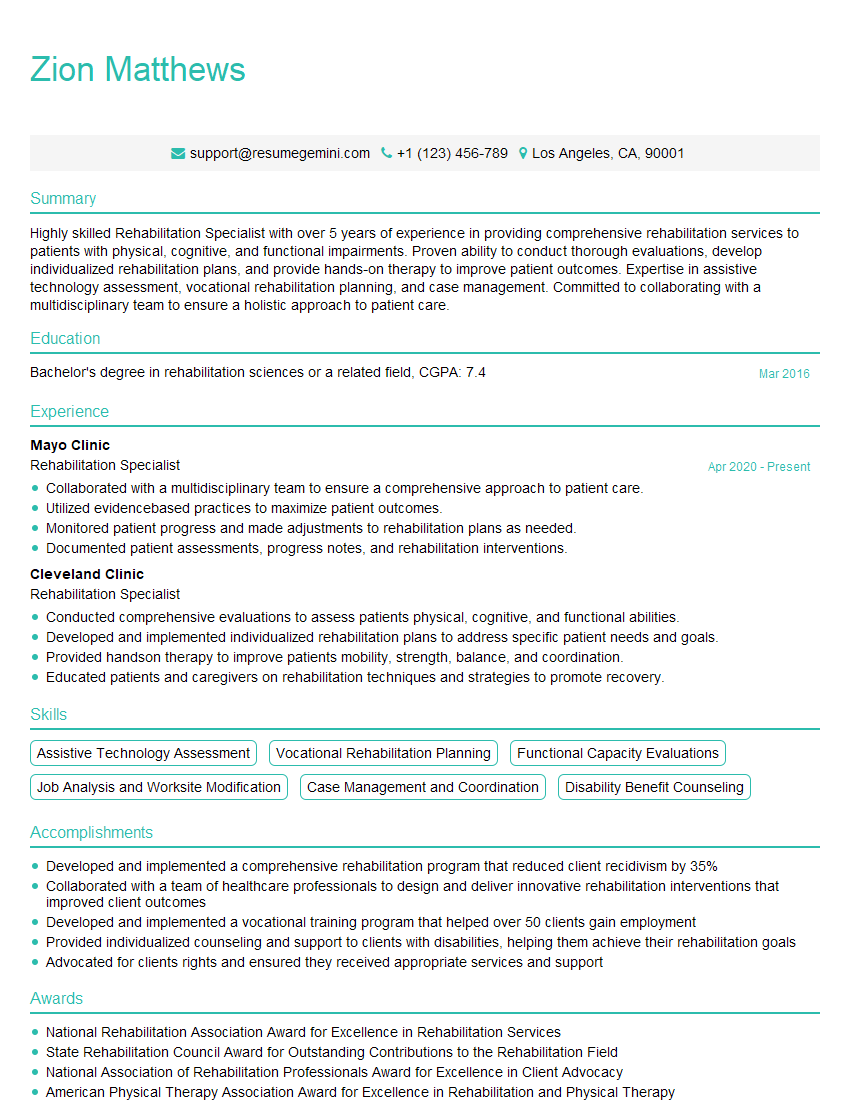
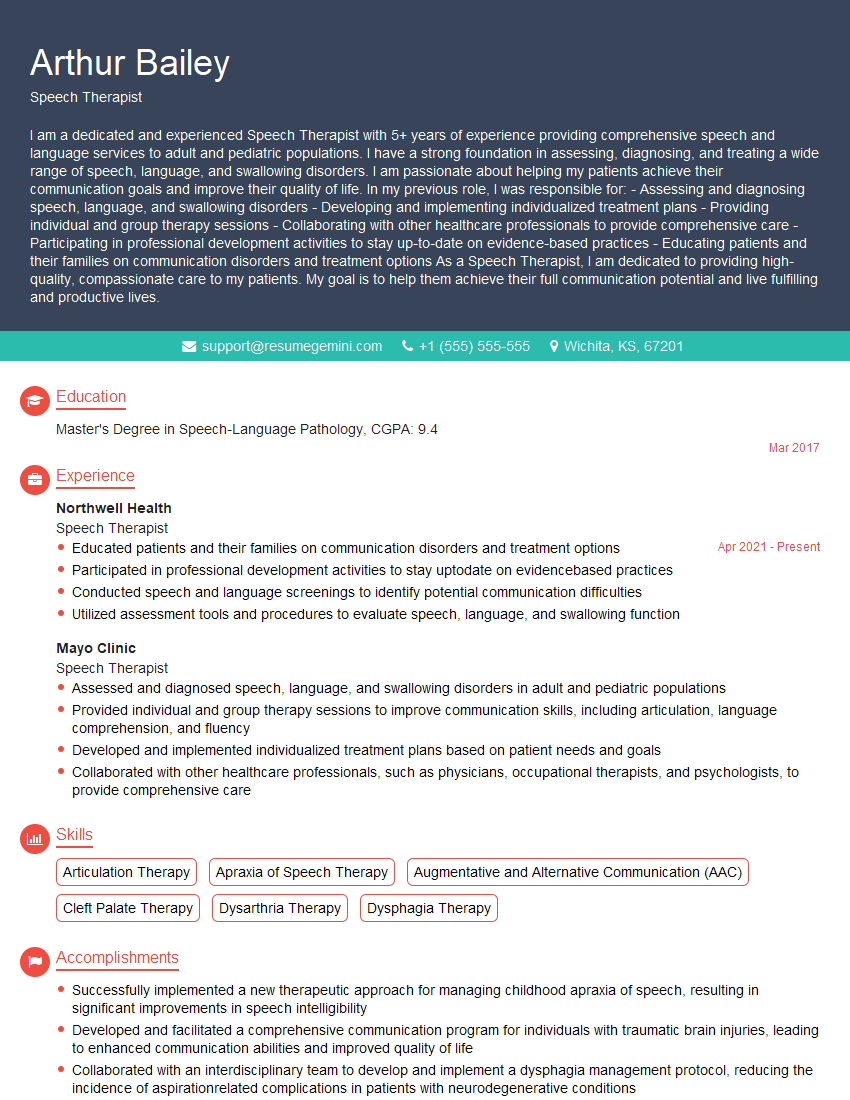
Mastering Dysarthria Therapy opens doors to a rewarding career with significant impact on patients’ lives. A strong foundation in the key concepts outlined above will significantly enhance your interview performance and career prospects. To increase your chances of securing your dream role, creating an ATS-friendly resume is crucial. ResumeGemini is a trusted resource that can help you build a professional and impactful resume tailored to the specific requirements of Dysarthria Therapy positions. Examples of resumes tailored to this field are available through ResumeGemini to help you create a compelling application.
Explore more articles
Users Rating of Our Blogs
Share Your Experience
We value your feedback! Please rate our content and share your thoughts (optional).
What Readers Say About Our Blog
To the interviewgemini.com Webmaster.
Very helpful and content specific questions to help prepare me for my interview!
Thank you
To the interviewgemini.com Webmaster.
This was kind of a unique content I found around the specialized skills. Very helpful questions and good detailed answers.
Very Helpful blog, thank you Interviewgemini team.