Unlock your full potential by mastering the most common Editing and Writing interview questions. This blog offers a deep dive into the critical topics, ensuring you’re not only prepared to answer but to excel. With these insights, you’ll approach your interview with clarity and confidence.
Questions Asked in Editing and Writing Interview
Q 1. Explain the difference between copy editing and proofreading.
Copy editing and proofreading are both crucial stages in the editing process, but they focus on different aspects. Think of it like building a house: copy editing is the structural work, ensuring the foundation is solid and the walls are straight; proofreading is the final touch-up, making sure the paint is even and there are no loose nails.
Copy editing is a more in-depth process that focuses on improving the clarity, accuracy, consistency, and style of a text. This includes checking for factual errors, ensuring consistency in tone and style, correcting grammatical errors, and improving sentence structure and flow. It often involves restructuring sentences, paragraphs, or even entire sections to enhance readability and coherence. For example, a copy editor might rewrite a confusing sentence, clarify ambiguous phrasing, or ensure consistent use of terminology throughout a document.
Proofreading, on the other hand, is a more superficial process that focuses primarily on catching typographical errors, spelling mistakes, punctuation errors, and formatting inconsistencies. It’s the final check before publication or distribution. A proofreader might correct a misspelled word, fix a misplaced comma, or ensure that the page numbers are correct. While a copy editor might suggest changing a sentence to improve its clarity, a proofreader would only correct errors within the existing sentence structure.
Q 2. Describe your experience with style guides (e.g., AP, Chicago).
I have extensive experience working with various style guides, most notably the Associated Press (AP) Stylebook and the Chicago Manual of Style. My familiarity extends beyond simply knowing the rules; I understand their underlying principles and how to apply them effectively in different contexts. I’ve consistently adapted my editing to meet the specific requirements of each style guide, ensuring accuracy and consistency in all my work.
For instance, when working with the AP Stylebook, I pay close attention to its concise and journalistic style, prioritizing brevity and clarity. This often involves simplifying complex sentences and using active voice. Conversely, when adhering to the Chicago Manual of Style, I am meticulous about note formatting, citation styles, and the handling of bibliographic information. I am proficient in applying both styles simultaneously when a project requires it, ensuring seamless integration of elements from both guides.
Beyond AP and Chicago, I’m also adept at using other style guides, including those specific to particular organizations or publications. I approach each project by carefully reviewing the provided style guide and tailoring my editing approach accordingly. Adaptability is key, and I pride myself on my ability to quickly master and accurately apply new style guide requirements.
Q 3. How do you handle conflicting deadlines?
Conflicting deadlines are a common reality in this field. My approach involves a combination of proactive planning, effective communication, and prioritizing tasks strategically. I start by assessing all deadlines and identifying the most critical ones. I then create a detailed schedule, breaking down large tasks into smaller, manageable chunks to optimize workflow. This allows me to allocate time effectively, ensuring all projects are completed to the highest standard.
Open communication is vital. If I anticipate difficulties in meeting a deadline, I proactively inform my clients or supervisors, suggesting potential solutions or explaining any constraints. I find that transparent communication helps to mitigate potential problems and build trust. Finally, I prioritize tasks based on urgency and impact, focusing on deliverables with the shortest deadlines and highest significance first. This approach helps me manage my workload efficiently and ensures that the most important projects are always completed on time.
Q 4. What software are you proficient in (e.g., MS Word, InDesign, Grammarly)?
I am proficient in a variety of software applications crucial for editing and writing. My core skills lie within Microsoft Word, where I’m adept at using its advanced features like track changes, comments, and various formatting options. I also have extensive experience with Adobe InDesign, a powerful tool for designing and laying out complex documents, including brochures, newsletters, and books. I leverage Grammarly to assist with grammar and style checking, ensuring accuracy and consistency. Beyond these, I possess experience with other editing tools such as ProWritingAid and Hemingway Editor.
Q 5. How do you ensure accuracy in your writing and editing?
Accuracy is paramount in my work. I employ a multi-layered approach to ensure precision in both writing and editing. Firstly, I meticulously research and verify all facts and figures, utilizing credible sources and cross-referencing information whenever possible. This diligence minimizes the risk of factual errors.
Secondly, I employ a thorough editing process, utilizing a combination of automated tools (like Grammarly) and manual checks. I carefully review my work multiple times, looking for inconsistencies in style, tone, grammar, and punctuation. Sometimes, I even read my work aloud to catch errors that might be missed during silent reading. Finally, I often seek feedback from others, including colleagues or beta readers, to identify potential oversights or areas needing improvement. This collaborative approach ensures that my work is consistently accurate and error-free.
Q 6. Describe your process for editing a complex technical document.
Editing a complex technical document requires a systematic and phased approach. My process typically begins with a thorough understanding of the document’s purpose, target audience, and any specific style guidelines. I then perform a comprehensive review, focusing on clarity, accuracy, and consistency. This often involves careful examination of technical terminology, equations, diagrams, and tables to ensure their correctness and alignment with the overall narrative.
Next, I structure the document for optimal readability. This may involve reorganizing sections, rewriting complex sentences for better clarity, adding headings and subheadings to improve navigation, and incorporating visual aids like diagrams and flowcharts to simplify complex concepts. Throughout this process, I maintain meticulous track changes, allowing authors to easily review and accept or reject my suggestions.
Finally, I conduct a thorough proofread, checking for any remaining grammatical errors, typographical errors, formatting inconsistencies, and ensuring adherence to style guidelines. The process is iterative; I may cycle through these steps multiple times to refine the document until it meets the highest standards of clarity, accuracy, and accessibility.
Q 7. How do you adapt your writing style to different audiences?
Adapting my writing style to different audiences is crucial for effective communication. I consider factors such as the audience’s level of expertise, their background, and their primary interests. For example, when writing for a technical audience, I might use precise and specialized jargon, employing technical terminology without extensive explanation. However, when writing for a general audience, I prioritize simplicity and clarity, avoiding jargon and using accessible language. I aim to create relatable content that resonates with each specific audience.
The tone also shifts depending on the audience. A scientific report will require a formal and objective tone, whereas a marketing brochure might utilize a more engaging and persuasive style. I actively analyze the context of the project and tailor my approach accordingly, ensuring that the writing style is not only clear and accurate but also appropriately matches the intended recipient and communicative purpose.
Q 8. What are your preferred methods for fact-checking?
Fact-checking is the cornerstone of credible writing. My approach is multi-faceted and relies on a combination of primary and secondary sources. I begin by identifying the claims needing verification. Then, I utilize a range of methods:
Primary Source Verification: If possible, I directly consult primary sources like original documents, interviews, or official reports. This ensures accuracy from the source itself.
Reputable Secondary Sources: I cross-reference information from multiple reputable secondary sources, such as peer-reviewed journals, established news organizations, and government websites. I avoid relying on a single source, especially if it lacks established credibility.
Cross-Referencing and Triangulation: I compare information from different sources to identify inconsistencies or biases. This ‘triangulation’ method helps to confirm accuracy and identify potential misinformation.
Fact-Checking Websites and Databases: I leverage established fact-checking websites and databases like Snopes or PolitiFact to verify claims, especially those that are widely circulated or controversial.
Contextual Understanding: I pay close attention to the context in which a fact is presented. Misinterpretations or out-of-context information can lead to inaccuracies. I always strive to understand the broader picture before verifying individual claims.
For example, if a claim about a historical event is made, I wouldn’t solely rely on a single website’s account. Instead, I would consult multiple historical texts, biographies, and potentially archival materials to build a comprehensive and accurate understanding.
Q 9. How familiar are you with SEO best practices?
I’m very familiar with SEO best practices and actively incorporate them into my writing process. Understanding SEO isn’t just about keyword stuffing; it’s about creating high-quality, relevant content that both search engines and readers will appreciate. My approach involves:
Keyword Research: I conduct thorough keyword research to identify relevant terms and phrases that readers are searching for. I use tools like Google Keyword Planner and SEMrush to discover high-volume, low-competition keywords.
Strategic Keyword Placement: I integrate keywords naturally within the text, focusing on page titles, headings (H1, H2, etc.), meta descriptions, and image alt text. I avoid keyword stuffing, which can harm SEO ranking.
On-Page Optimization: I optimize on-page elements like meta descriptions, title tags, and URL structures to improve search engine visibility. A clear and concise meta description is essential to attract clicks from search results.
Content Structure and Readability: I create well-structured content using headings, subheadings, bullet points, and short paragraphs to enhance readability for both readers and search engines. Readability is key for user experience and thus ranking.
Link Building (Off-Page SEO): While not directly part of my writing process, I understand the importance of building high-quality backlinks to the content, which helps enhance its authority and ranking.
For instance, if I’m writing about ‘organic dog food,’ I wouldn’t just sprinkle the phrase throughout the text. Instead, I’d research related keywords like ‘best organic dog food brands’ or ‘healthy organic dog food recipes’ and naturally weave them into the content, enhancing both readability and SEO.
Q 10. How do you identify and correct grammatical errors?
Identifying and correcting grammatical errors is a systematic process. I use a combination of techniques:
Proofreading: I meticulously read through the text, paying close attention to sentence structure, subject-verb agreement, punctuation, and tense consistency.
Grammar and Style Checkers: I utilize grammar and style checkers like Grammarly or ProWritingAid as a first pass, but I treat them as supportive tools, not replacements for careful proofreading. These tools often miss nuances and context.
Understanding Grammatical Rules: I possess a strong foundational understanding of grammar rules, including parts of speech, sentence structure, and punctuation. This allows me to identify and correct errors independently.
Multiple Readings: I typically read the text multiple times, each time focusing on different aspects (e.g., one for grammar, another for style). Reading aloud can often help identify awkward phrasing or grammatical errors that might be missed when reading silently.
For example, a common error I often catch is subject-verb disagreement, such as ‘The dogs chases the ball’ (incorrect) versus ‘The dogs chase the ball’ (correct). My understanding of grammatical rules allows me to quickly identify and correct these types of errors.
Q 11. Describe your approach to working with feedback.
I approach feedback as an opportunity for improvement. My process involves:
Active Listening and Understanding: I carefully read and understand the feedback provided, taking note of both the specific points raised and the overall tone.
Asking Clarifying Questions: If any feedback is unclear or ambiguous, I ask clarifying questions to ensure a shared understanding of the concerns.
Objective Assessment: I objectively evaluate the feedback, determining which suggestions are valuable and how they can be incorporated. Not all feedback is equally relevant or constructive.
Implementation and Iteration: I implement the accepted feedback, making necessary revisions and edits to the document. If significant changes are needed, I may present a revised draft for further review.
Professionalism and Respect: I maintain a professional and respectful attitude throughout the feedback process, acknowledging the reviewer’s expertise and experience.
For instance, if feedback indicates a section lacks clarity, I wouldn’t simply dismiss it. I would carefully analyze the section, possibly re-write it for better flow and clarity, and then resubmit it for review. I see feedback as a collaborative effort to achieve the highest quality product.
Q 12. How do you maintain consistency in style and tone across multiple documents?
Maintaining consistent style and tone across multiple documents is crucial for professional writing. My approach relies on:
Style Guides: I adhere to established style guides like the Chicago Manual of Style or the Associated Press Stylebook, depending on the project’s requirements. Consistency in style, formatting, and terminology is essential.
Style Sheets: I create or utilize style sheets to establish consistent formatting conventions, including font type, size, headings, and spacing across all documents. A style sheet acts as a centralized reference point.
Templates: Using pre-designed templates ensures consistency in layout and formatting from document to document.
Review and Comparison: I regularly review and compare different documents to ensure consistency in style and tone, looking for any discrepancies in terminology, sentence structure, or formatting.
Glossary of Terms: Creating a glossary of frequently used terms ensures consistent usage of terminology across all documents.
For example, if I’m working on a series of reports for a company, I would make sure to use consistent terminology related to their products and services. A style sheet would ensure that headings, paragraph styles, and other formatting elements were identical throughout the reports.
Q 13. How do you manage large-scale editing projects?
Managing large-scale editing projects requires a structured and organized approach. My strategy includes:
Project Planning and Breakdown: I begin by breaking down the project into smaller, manageable tasks. This involves defining clear objectives, deadlines, and responsibilities for each phase.
Team Coordination (if applicable): If the project involves a team, I ensure clear communication and collaboration, using project management tools to track progress and deadlines. Regular meetings and progress reports are essential.
Version Control: I utilize version control systems to track changes and revisions, ensuring that all team members are working on the most current version of the documents.
Workflow Optimization: I establish efficient workflows to streamline the editing process, such as creating standardized checklists for each editing phase.
Quality Control: I implement rigorous quality control measures to ensure the final product meets the required standards of accuracy, style, and consistency.
For instance, if managing the editing of a large textbook, I would divide the project into chapters, assign them to different editors, and utilize a version control system to manage revisions and ensure everyone is working on the latest draft. Regular check-ins and a detailed style guide would maintain consistency.
Q 14. Describe a time you had to make a difficult editorial decision.
In a previous project, I faced a challenging editorial decision regarding the inclusion of a potentially controversial statistic in a research paper. The statistic, while technically accurate, could be easily misinterpreted and misused to support a biased narrative.
My approach was:
Thorough Investigation: I first investigated the origin and methodology behind the statistic, verifying its accuracy and limitations. I consulted with subject matter experts to understand its broader implications.
Contextualization: Instead of removing the statistic entirely, I opted to contextualize it by providing a detailed explanation of its limitations and potential for misinterpretation. I added qualifiers and carefully crafted the surrounding text to avoid bias.
Transparency: I ensured full transparency by clearly acknowledging the potential for misinterpretation and emphasized the need for careful consideration of the data.
The final decision aimed for accuracy and responsible reporting. By providing context and acknowledging potential bias, I prevented the statistic from being misused while maintaining the integrity of the research paper. This highlighted the importance of balancing accuracy with responsible communication in my editorial choices.
Q 15. How do you handle ambiguous instructions?
Ambiguous instructions are a common challenge in writing and editing. My approach involves a multi-step process aimed at clarification and proactive communication. First, I carefully reread the instructions, looking for keywords and underlying meaning. I often highlight key phrases to ensure I understand the core request. If ambiguity persists, I create a list of clarifying questions. These are formulated to address specific uncertainties and ensure I’m on the right track. For example, if a project asks for ‘engaging content,’ I might ask about the target audience, desired tone, and platform where this content will be used. I then proactively contact the client or manager to discuss these questions and confirm my understanding. This collaborative approach avoids costly misunderstandings and ensures the final product meets expectations.
Imagine receiving an instruction to write a blog post about ‘healthy eating.’ Is this a post on nutrition for athletes, weight loss tips, or perhaps recipes for a specific diet? By asking clarifying questions, I ensure the final product aligns with the client’s vision, thus maximizing efficiency and quality.
Career Expert Tips:
- Ace those interviews! Prepare effectively by reviewing the Top 50 Most Common Interview Questions on ResumeGemini.
- Navigate your job search with confidence! Explore a wide range of Career Tips on ResumeGemini. Learn about common challenges and recommendations to overcome them.
- Craft the perfect resume! Master the Art of Resume Writing with ResumeGemini’s guide. Showcase your unique qualifications and achievements effectively.
- Don’t miss out on holiday savings! Build your dream resume with ResumeGemini’s ATS optimized templates.
Q 16. What is your experience with plagiarism detection tools?
I have extensive experience using various plagiarism detection tools, including Turnitin, Grammarly, and Copyscape. My proficiency extends beyond simply running a document through these programs. I understand their limitations and know how to interpret the results critically. A high similarity score doesn’t automatically equate to plagiarism; it might indicate the use of commonly cited sources or similar phrasing in widely-used concepts. Therefore, I meticulously review flagged sections to determine if actual plagiarism exists. If so, I implement appropriate strategies such as paraphrasing, quoting correctly, and citing all sources meticulously according to a specified style guide (e.g., APA, MLA, Chicago).
For example, I recently used Turnitin to check a student’s research paper. While the initial report showed a high similarity score, a closer examination revealed that the high percentage was due to extensive quoting of primary sources, all properly cited. My understanding of the tool allowed me to identify the correct interpretation and avoid a false positive.
Q 17. How do you prioritize tasks when faced with multiple deadlines?
Prioritizing tasks with multiple deadlines requires a structured approach. I generally employ a combination of time management techniques and prioritization frameworks. I begin by listing all tasks with their corresponding deadlines. Then, I use a matrix to categorize them based on urgency and importance (Eisenhower Matrix). Urgent and important tasks take immediate priority. Important but not urgent tasks are scheduled strategically. Less important tasks are delegated or, if necessary, deferred. This matrix allows for a clear visual representation of what needs attention immediately and what can be handled later.
Furthermore, I use tools like project management software (Asana, Trello, etc.) to track progress, set reminders, and maintain a clear overview of deadlines. Breaking down large tasks into smaller, manageable chunks also improves efficiency and reduces feelings of being overwhelmed. This strategy promotes a sense of accomplishment, increasing productivity and maintaining focus.
Q 18. How do you ensure accessibility in your writing?
Ensuring accessibility in writing means making my content understandable and usable by everyone, including people with disabilities. This involves considering various accessibility needs, such as those of visually impaired readers, users of screen readers, and individuals with cognitive impairments. I achieve this through several strategies.
- Clear and concise language: I avoid jargon and complex sentence structures. I use plain language principles to ensure that information is easily understood.
- Proper heading structure: I use descriptive headings and subheadings to logically organize the content and aid navigation. Screen readers rely on this structure.
- Alt text for images: Every image has descriptive alt text, explaining its purpose and content for screen readers.
- Color contrast: I ensure sufficient contrast between text and background colors to make it easily readable for individuals with visual impairments.
- Structured data: Using appropriate HTML tags (
<h1>,<p>,<img>, etc.) ensures proper interpretation by assistive technologies.
For example, instead of writing ‘The aforementioned data suggests…’, I would write ‘The data shows…’ This simple change makes the information clearer and easier to understand for everyone.
Q 19. Describe your process for reviewing and revising your own work.
My review and revision process is iterative and rigorous. It’s not a single pass, but rather a series of steps designed to progressively improve the quality of my work. It usually starts with a break from the writing. A fresh perspective is critical. I then reread the entire piece, focusing first on the overall structure and flow. Does the argument make sense? Are transitions smooth? Next, I look for clarity, precision, and conciseness. Are sentences clear? Are words used correctly? Then, I focus on style, tone, and grammar. Finally, I perform a thorough proofread, checking for typos, grammatical errors, and inconsistencies.
Throughout this process, I often use tools like Grammarly to assist with grammar and style checks, but I also rely heavily on my own editing skills to identify nuances and style issues that automated tools may miss. I might even read the piece aloud to catch awkward phrasing or sentence structure. This multi-stage approach guarantees a polished and high-quality final product.
Q 20. What is your understanding of different writing styles (e.g., narrative, persuasive, expository)?
Understanding different writing styles is fundamental to effective communication. Each style serves a distinct purpose and employs specific techniques.
- Narrative writing: Tells a story. It uses descriptive language, characters, and a plot to engage the reader. Think novels or memoirs.
- Persuasive writing: Aims to convince the reader of a specific viewpoint. It uses logical arguments, evidence, and rhetorical devices. Examples include advertisements or opinion pieces.
- Expository writing: Explains or informs the reader about a topic. It uses clear and concise language, facts, and evidence to present information objectively. Think textbooks or scientific reports.
The ability to adapt my writing style to suit the context and purpose is crucial. For instance, a technical report requires an expository style, while a marketing campaign requires a persuasive style.
Q 21. How would you edit this sentence (provide a sample sentence with errors)?
Let’s consider the sentence: ‘Me and my friend went to the store, we bought some milk and apples and then we went home quick.’
This sentence contains several errors. Here’s the corrected version:
My friend and I went to the store, where we bought some milk and apples. Then, we quickly went home.
The changes made are:
- Pronoun correction: ‘Me and my friend’ is grammatically incorrect. It should be ‘My friend and I’.
- Comma usage: A comma is added after ‘store’ to separate the introductory clause from the main clause. A comma is also added after ‘apples’ to separate the two independent clauses. A comma before ‘then’ is also grammatically correct, and used here for clarity.
- Conciseness: ‘and then we went home quick’ is changed to ‘Then, we quickly went home’ for improved flow and word choice.
- Word Choice: ‘quick’ is replaced with the adverb ‘quickly’ to correctly modify the verb ‘went’.
These seemingly small changes significantly enhance the sentence’s clarity, grammar, and style. My approach to editing always focuses on creating precise, clear, and engaging prose.
Q 22. How do you identify and correct inconsistencies in formatting?
Identifying and correcting formatting inconsistencies requires a systematic approach. Think of it like cleaning a messy room – you need a plan to ensure everything ends up in its proper place. I begin by establishing a style guide, either a pre-existing one provided by the client or one I create based on best practices and the project’s needs. This style guide acts as my roadmap, detailing specifications for headings, fonts, spacing, citations, and other elements.
Then, I use a combination of manual review and tools. Manual review allows for a deeper understanding of the text’s flow and context, catching subtle inconsistencies that automated tools might miss. For instance, I might notice that some section headings use sentence case while others use title case. For larger documents, I utilize tools like Microsoft Word’s ‘Find and Replace’ function or dedicated style checkers like Grammarly or ProWritingAid to identify and correct widespread inconsistencies. These tools can be especially helpful in flagging inconsistent use of spacing, font sizes, or bullet points.
Once inconsistencies are identified, I carefully correct them, ensuring consistency throughout the document. This might involve changing font sizes, adjusting margins, standardizing headings, or ensuring consistent use of italics or bold text. The goal is not simply to achieve consistency but to create a polished and professional document that’s easy to read and visually appealing. A final review is always essential to catch any remaining inconsistencies.
Q 23. Describe your experience with content management systems (CMS).
I have extensive experience with various Content Management Systems (CMS), including WordPress, Drupal, and Joomla. My experience encompasses not only content creation and editing within these systems but also managing user permissions, customizing templates, and troubleshooting technical issues. For example, during a recent project using WordPress, I worked with a client to optimize their website’s content structure for better SEO, improving page load times, and enhancing user experience. This involved integrating plugins to enhance functionality, ensuring the site was fully responsive across different devices, and meticulously organizing content using custom taxonomies.
Beyond simple content entry, I’m comfortable with more advanced CMS functions like creating custom post types, implementing advanced search functionalities, and managing multiple users and their roles within a CMS environment. My proficiency with CMS allows for efficient workflow management and collaborative content editing, making it easier to manage large volumes of content while maintaining consistency and quality.
Q 24. How do you collaborate effectively with writers and other editors?
Effective collaboration is crucial in editing and writing. I believe in open communication and active listening. My approach involves regular check-ins with writers and other editors to discuss project progress, address any concerns, and ensure everyone is on the same page. This is often done through project management tools like Asana or Trello, using communication channels such as Slack or email for quick updates and questions.
I provide clear and constructive feedback, focusing on both the strengths and areas for improvement in the work. This involves providing specific examples, explaining the rationale behind my suggestions, and making sure feedback is delivered in a supportive and non-judgmental manner. I also actively solicit feedback from my colleagues, understanding that a fresh perspective can help improve the final product. For instance, during a recent collaborative project, I used a shared Google Doc to track revisions, allowing for real-time feedback and seamless version control. Through consistent communication and a collaborative spirit, I ensure projects are completed efficiently and to a high standard.
Q 25. What strategies do you use to improve the clarity and conciseness of your writing?
Improving clarity and conciseness is central to my editing process. Think of it like sculpting – you start with a large block and carefully remove unnecessary elements to reveal the core essence. I utilize several strategies. First, I actively look for wordiness and eliminate unnecessary jargon. Often, a simpler word or phrase can convey the same meaning more effectively.
Secondly, I focus on sentence structure. Short, direct sentences are often more impactful than long, convoluted ones. I break down complex sentences, ensuring each sentence focuses on one main idea. Thirdly, I employ techniques like active voice, which makes writing more dynamic and engaging. Active voice also tends to be more concise. For example, instead of writing ‘The report was written by the team,’ I’d write ‘The team wrote the report.’ Finally, I often read my work aloud to catch awkward phrasing or repetitive language, a technique that helps me identify areas needing improvement in flow and conciseness. This multi-faceted approach guarantees clarity and directness in the final product.
Q 26. How do you identify and address potential biases in your writing?
Identifying and addressing potential biases is crucial for ethical and responsible writing. This requires constant self-awareness and a critical eye. I start by acknowledging that biases are inherent and can influence our perception unconsciously. To mitigate this, I employ a few key strategies.
Firstly, I actively seek diverse perspectives throughout the writing and editing process. Consulting with colleagues from different backgrounds helps identify potential blind spots and challenges assumptions. Secondly, I meticulously examine the language I use. I look for loaded words or phrases that might convey implicit biases and strive for neutral and objective language. For instance, I would avoid gendered language or stereotypes. Thirdly, I rigorously fact-check and verify information from multiple reliable sources to avoid perpetuating misinformation or biased narratives. Finally, I carefully consider the overall representation of different groups and strive for a balanced and inclusive portrayal in the final product. This multi-layered process aims to create writing that is fair, unbiased, and representative.
Q 27. Describe your experience working under pressure.
I thrive under pressure and have a proven track record of successfully managing tight deadlines and demanding projects. My approach involves prioritizing tasks, breaking down large projects into smaller, manageable steps, and utilizing time management techniques. For example, I often employ the Pomodoro Technique, working in focused bursts with short breaks in between. This helps maintain concentration and avoid burnout.
In high-pressure situations, clear communication is key. I keep stakeholders informed of my progress and any potential challenges, ensuring transparency and proactive problem-solving. I am also adept at adapting quickly to changing circumstances and prioritizing tasks effectively to meet deadlines, even when unexpected challenges arise. My experience has taught me the importance of remaining calm under pressure, maintaining focus, and drawing on my problem-solving skills to deliver quality work even under tight deadlines.
Q 28. How do you stay up-to-date with industry trends and best practices?
Staying updated with industry trends and best practices is an ongoing process. I actively participate in professional development activities, including attending webinars and workshops, participating in online courses, and engaging with relevant professional organizations. I follow industry leaders and influencers on social media and subscribe to newsletters and publications covering editing, writing, and publishing trends.
I also actively seek out feedback on my work and regularly review my own processes to identify areas for improvement. I actively engage with online communities and forums, discussing best practices with other editors. Staying informed about new technologies, such as AI writing tools and evolving style guides, allows me to maintain a competitive edge and adapt my skills to meet the ever-changing demands of the industry. This continuous learning ensures that my work reflects the latest standards and best practices.
Key Topics to Learn for Editing and Writing Interviews
- Grammar and Mechanics: Mastering grammar rules, punctuation, and style guides (AP, Chicago, etc.) is fundamental. Practical application includes flawlessly editing written content for grammatical accuracy and consistency.
- Style and Tone: Understanding how to adapt writing style and tone to suit different audiences and purposes. Consider practical applications like adapting a formal research paper into a more accessible blog post.
- Copyediting and Proofreading: Develop sharp proofreading skills to identify and correct errors. Practice with diverse types of documents to build speed and accuracy.
- Content Strategy and Development: Understand the principles of creating compelling and engaging content tailored to a specific target audience and goal. Practical application includes planning and executing content calendars or developing content pillars for a brand.
- SEO and Keyword Optimization (for applicable roles): Learn how to incorporate relevant keywords naturally to improve content visibility in search engine results. Practical application involves analyzing keyword search volume and competitiveness.
- Fact-Checking and Research: Develop robust fact-checking methodologies to ensure accuracy and credibility. This includes verifying information from various sources and identifying potential biases.
- Understanding Different Content Formats: Become familiar with various content formats, including blog posts, articles, website copy, social media posts, and marketing materials, and how to adapt your writing style accordingly.
- Collaboration and Communication: Effective communication and collaboration with colleagues, clients, and other stakeholders is crucial. Practice articulating your edits and revisions clearly and professionally.
Next Steps
Mastering editing and writing skills opens doors to diverse and rewarding career paths, offering opportunities for growth and impact. To maximize your job prospects, a strong, ATS-friendly resume is essential. This is where ResumeGemini can be a valuable tool. ResumeGemini helps you craft a compelling narrative that highlights your skills and experience effectively. Leverage ResumeGemini’s resources and create a resume that showcases your expertise in Editing and Writing. Examples of resumes tailored to this field are available to help guide you.
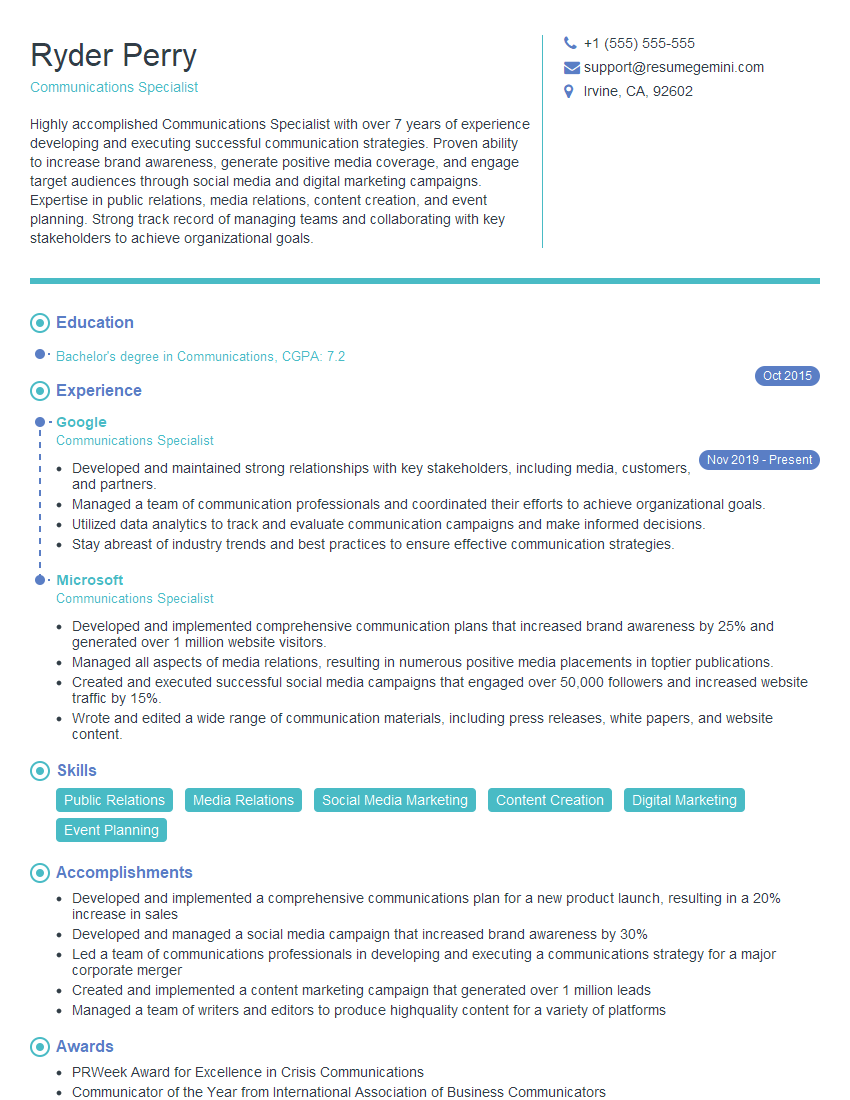
Communications Specialist Resume Sample

Content Strategist Resume Sample
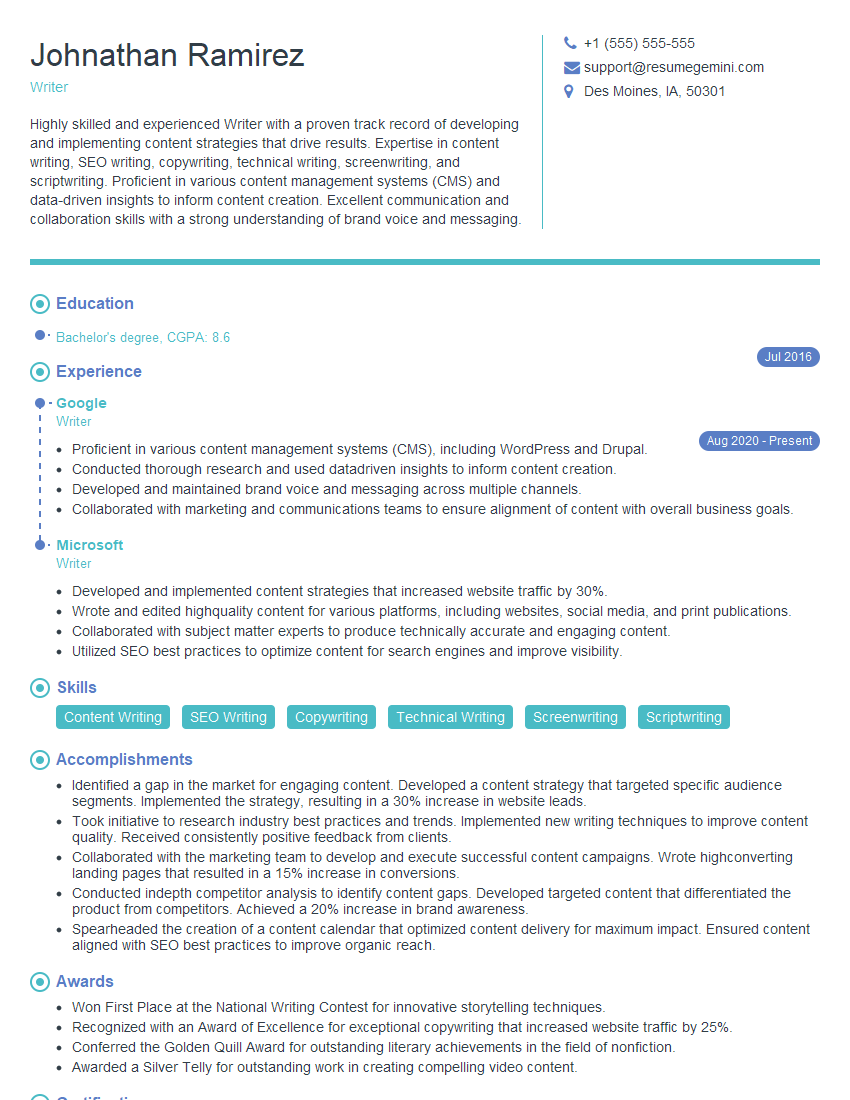
Writer Resume Sample
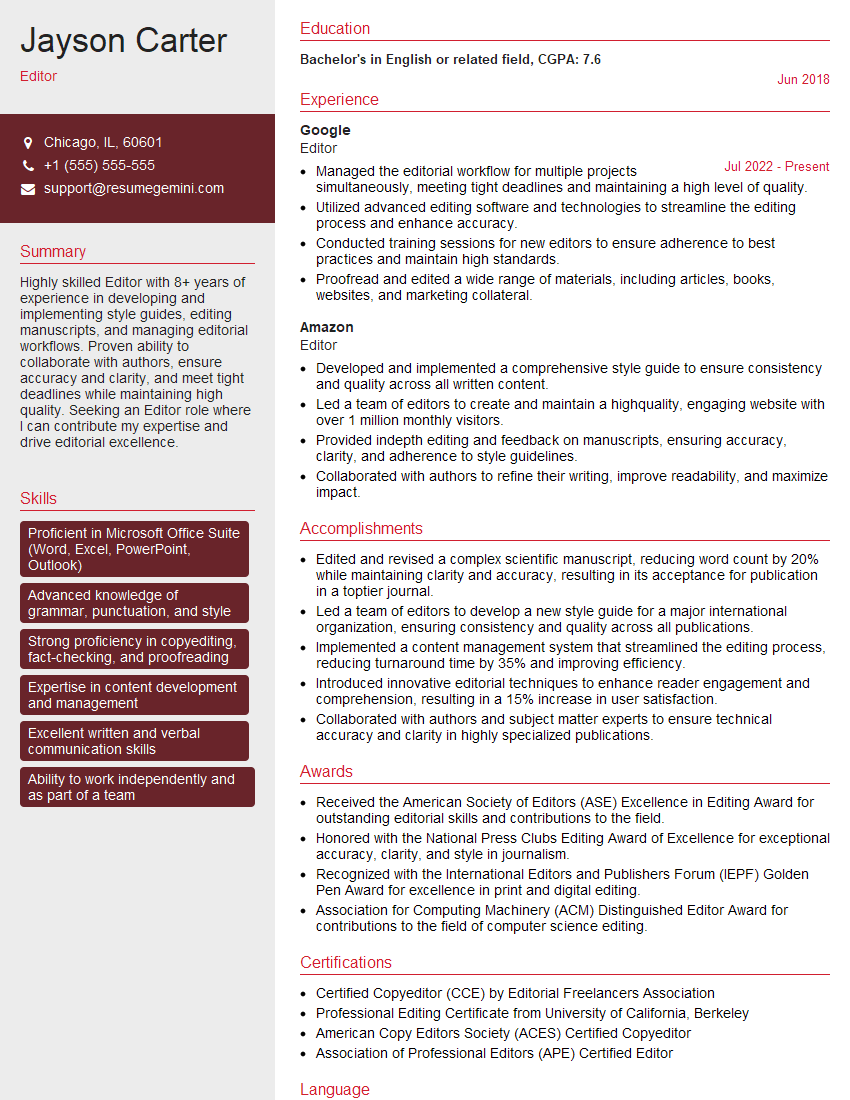
Editor Resume Sample
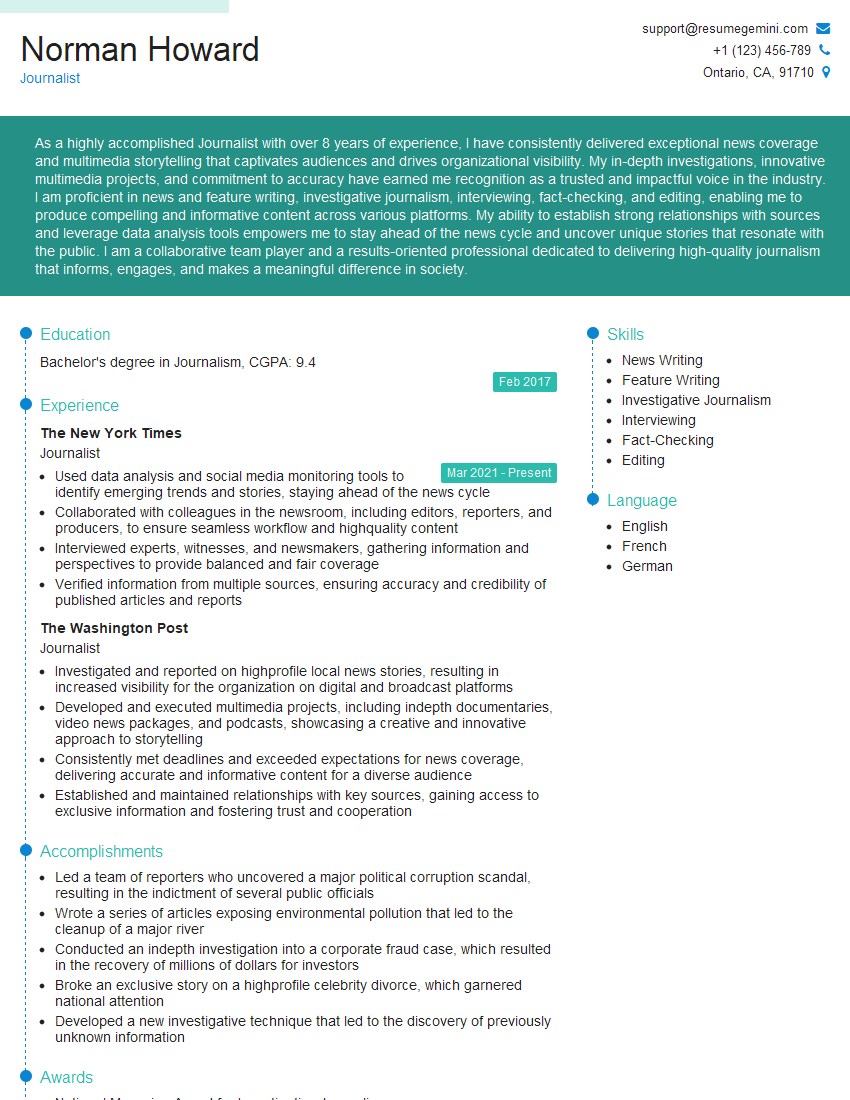
Journalist Resume Sample
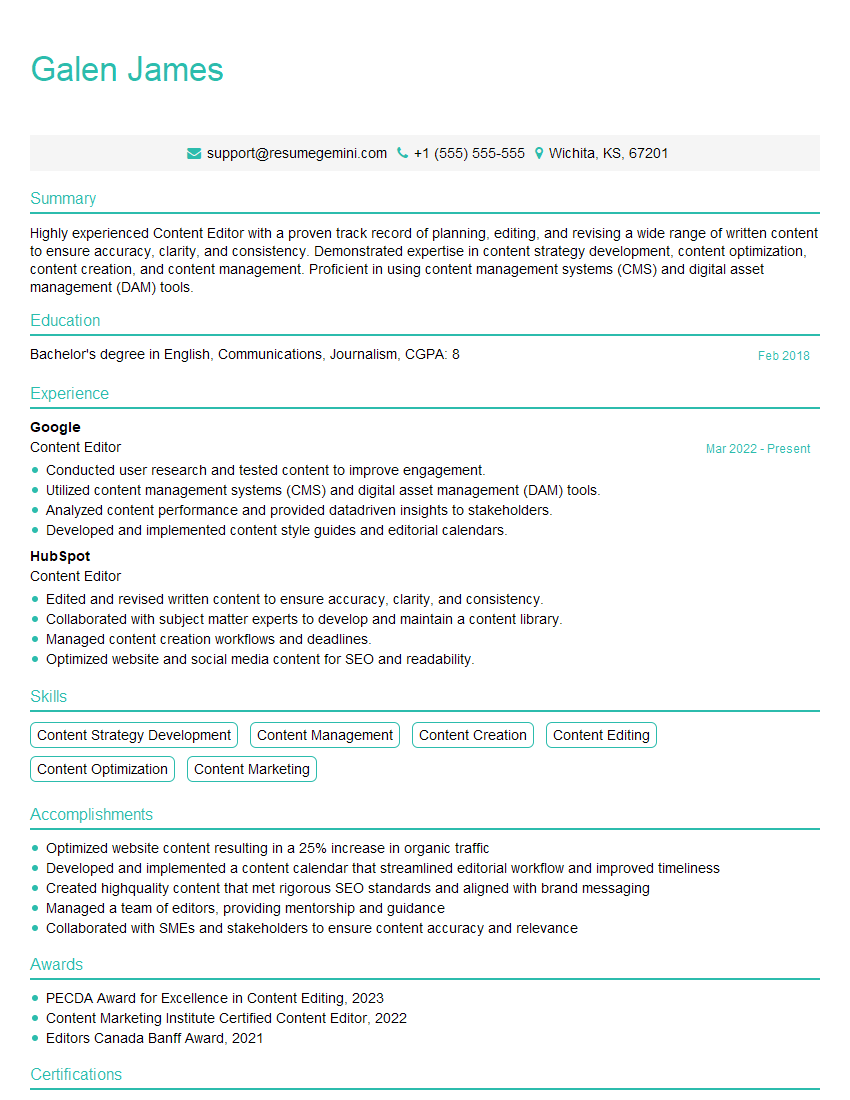
Content Editor Resume Sample
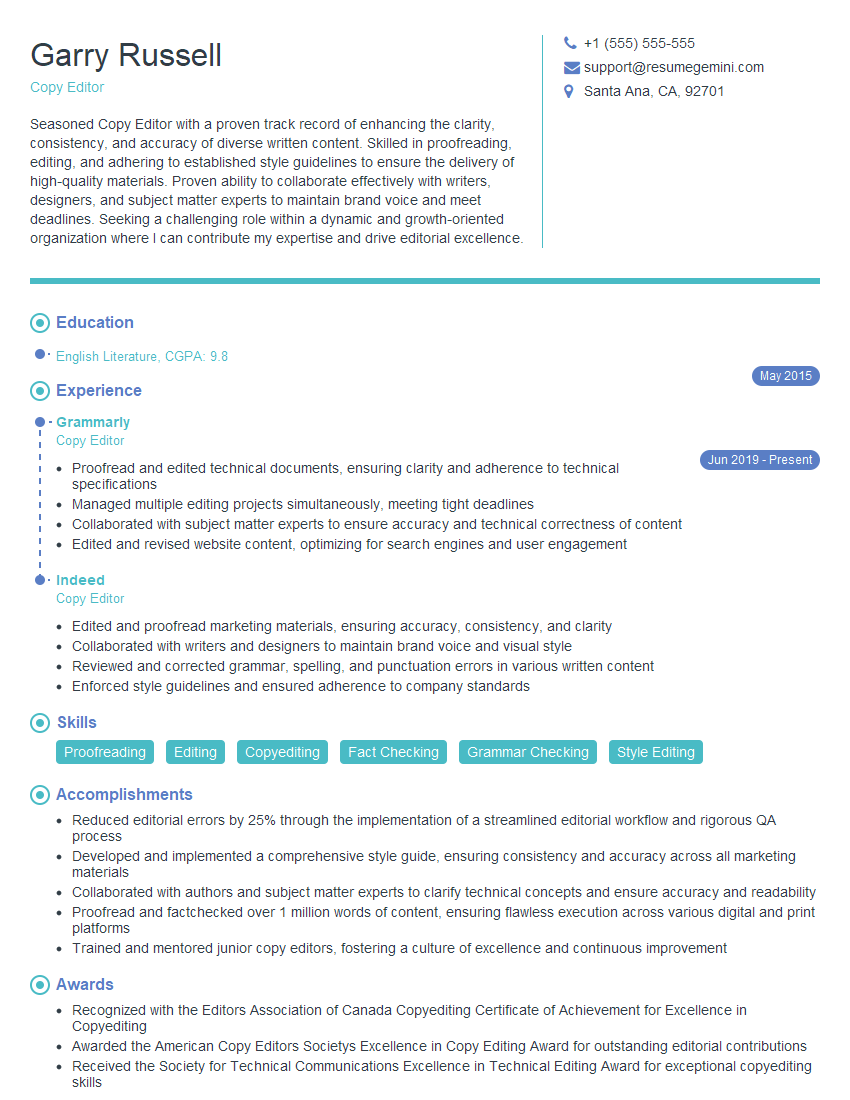
Copy Editor Resume Sample
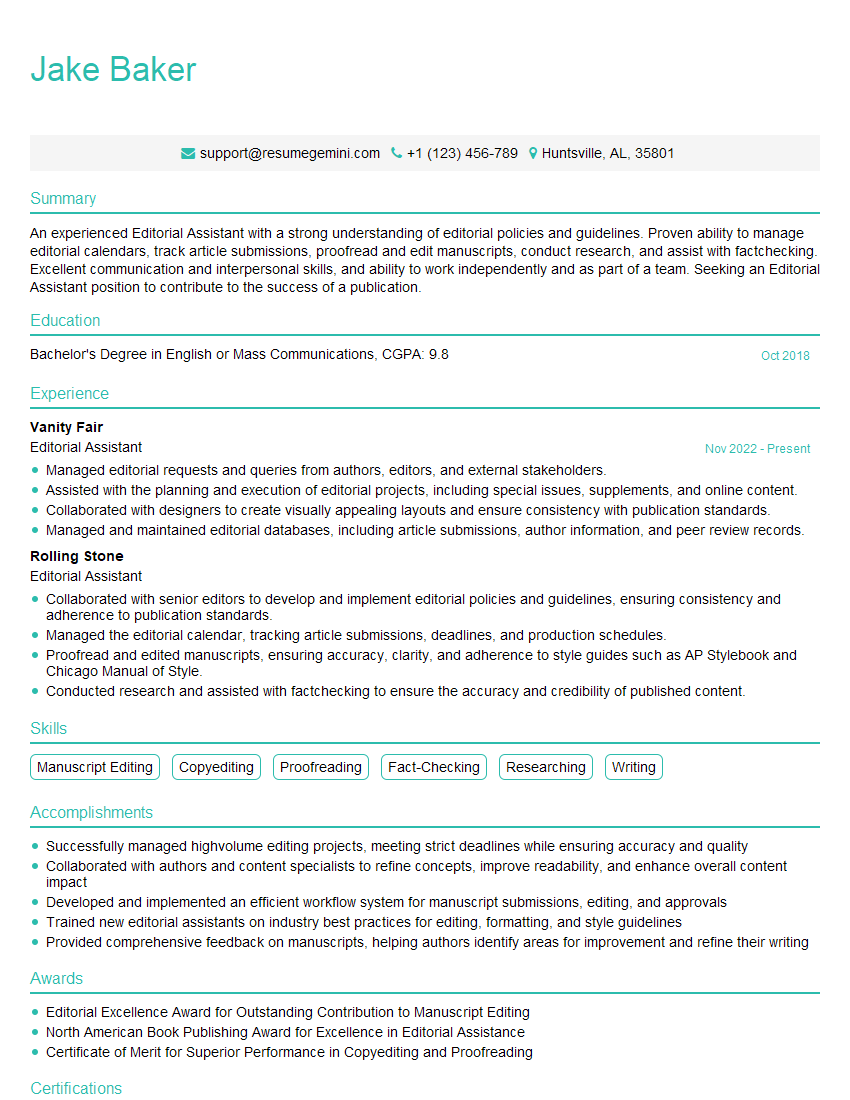
Editorial Assistant Resume Sample
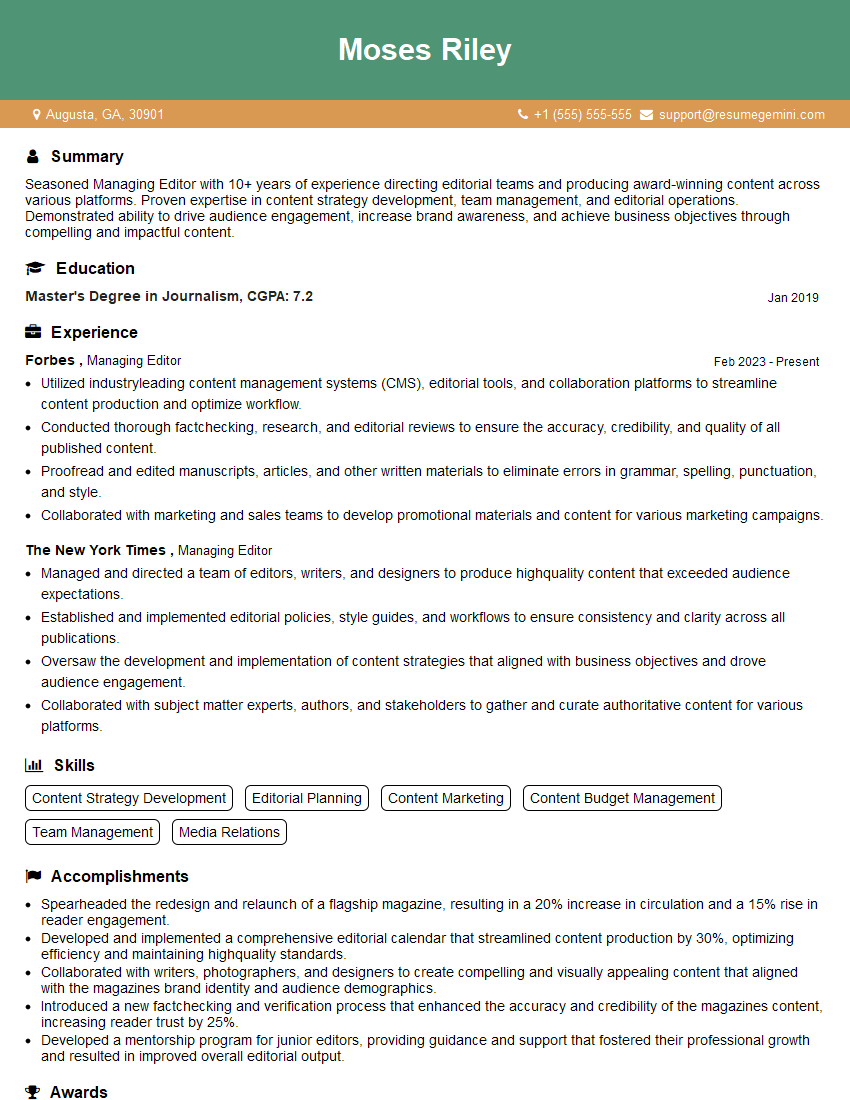
Managing Editor Resume Sample
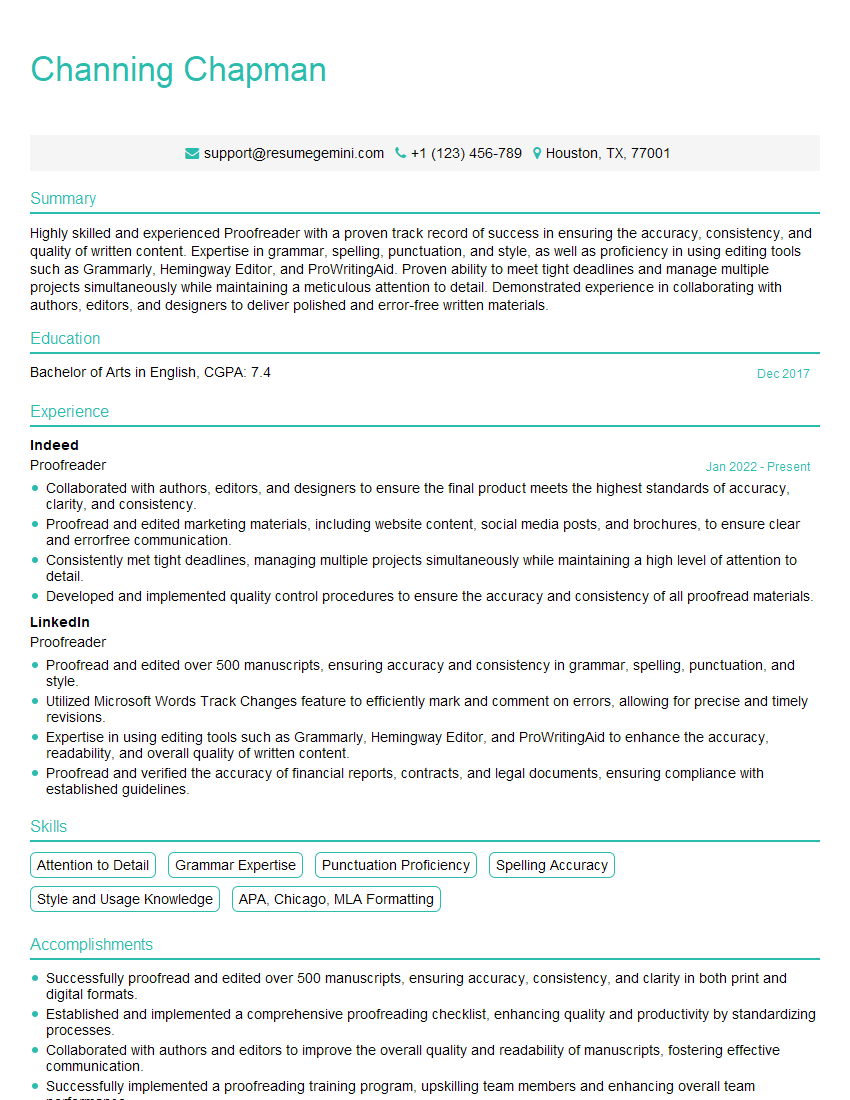
Proofreader Resume Sample
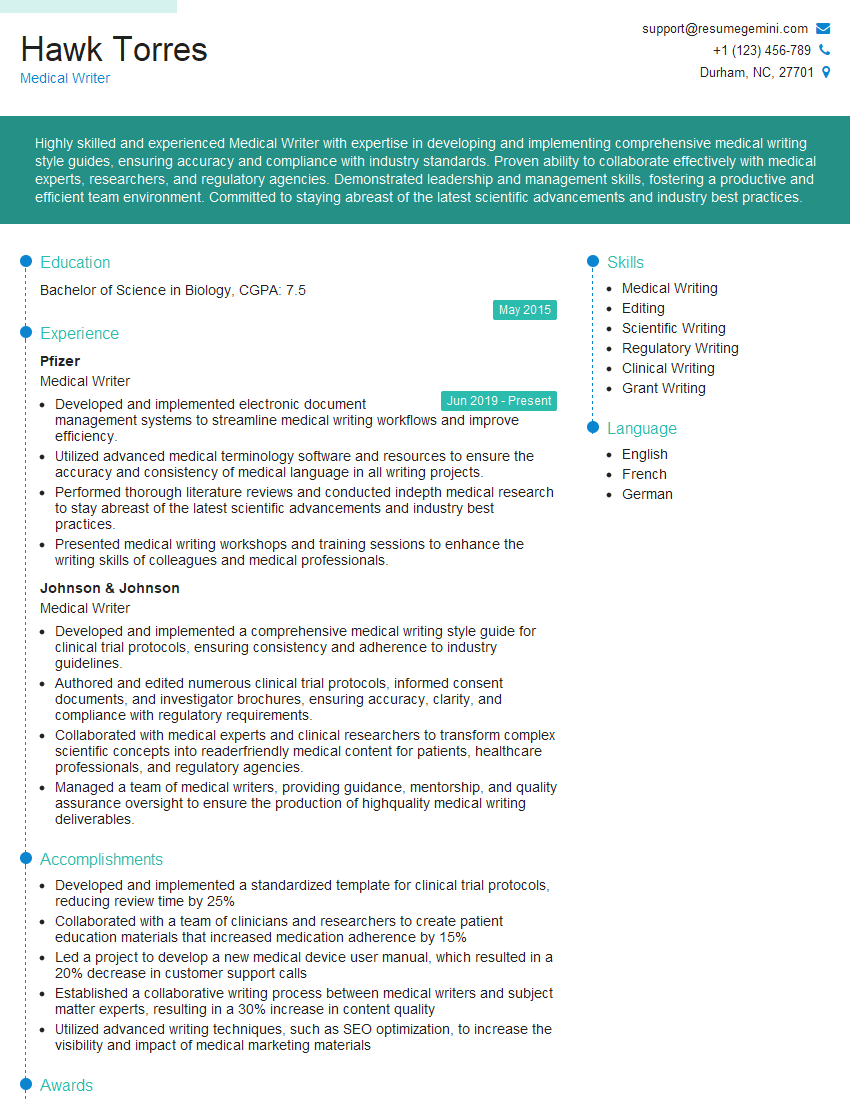
Medical Writer Resume Sample

Technical Writer Resume Sample

Copywriter Resume Sample
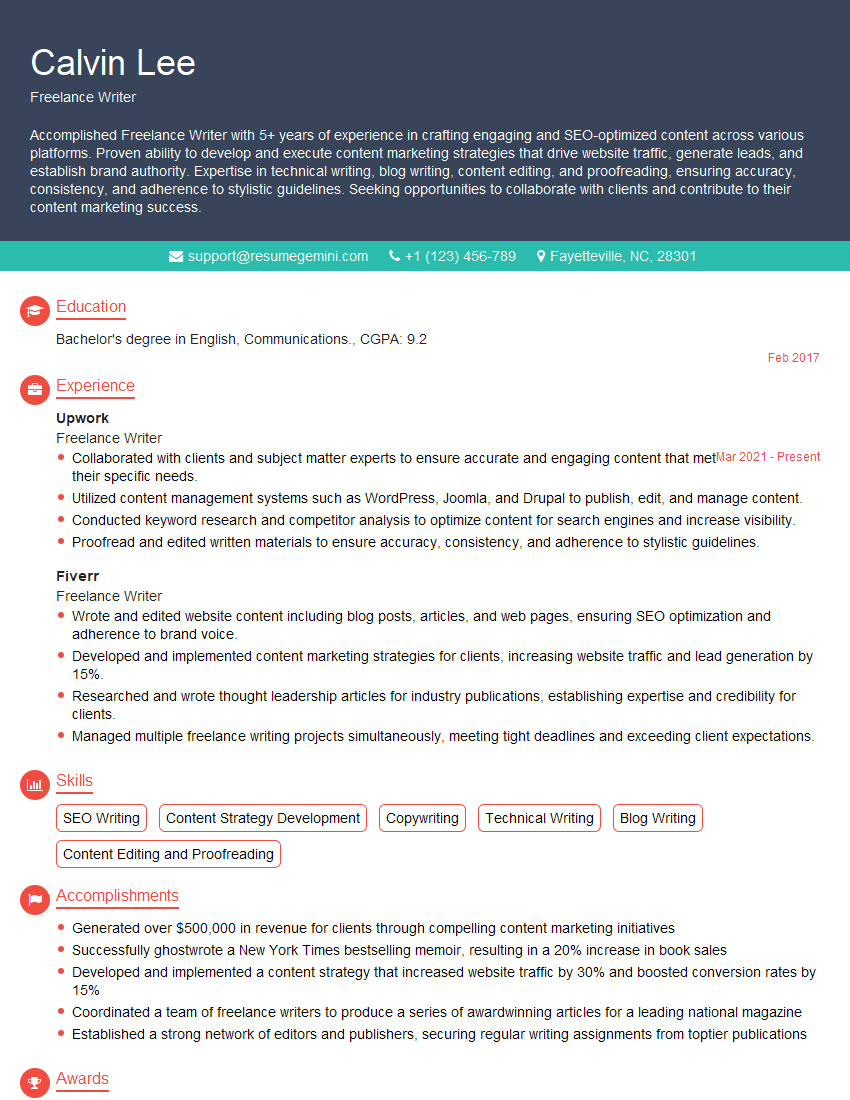
Freelance Writer Resume Sample
Explore more articles
Users Rating of Our Blogs
Share Your Experience
We value your feedback! Please rate our content and share your thoughts (optional).
What Readers Say About Our Blog
To the interviewgemini.com Webmaster.
Very helpful and content specific questions to help prepare me for my interview!
Thank you
To the interviewgemini.com Webmaster.
This was kind of a unique content I found around the specialized skills. Very helpful questions and good detailed answers.
Very Helpful blog, thank you Interviewgemini team.