Cracking a skill-specific interview, like one for Wilderness and Backcountry Skills, requires understanding the nuances of the role. In this blog, we present the questions you’re most likely to encounter, along with insights into how to answer them effectively. Let’s ensure you’re ready to make a strong impression.
Questions Asked in Wilderness and Backcountry Skills Interview
Q 1. Describe your experience with Leave No Trace principles.
Leave No Trace (LNT) principles are fundamental to minimizing human impact on the wilderness. It’s more than just cleaning up after yourself; it’s about planning ahead to avoid causing disturbance in the first place. My experience with LNT is extensive, encompassing years of guiding and independent backcountry travel. I consistently apply the seven principles:
- Plan ahead and prepare: This includes researching the area, obtaining necessary permits, and packing appropriate gear to minimize waste and impact. For example, before a trip, I carefully plan my meals to avoid excess packaging. I’ll often use reusable containers and plan my menu around minimal waste items.
- Travel and camp on durable surfaces: I stick to established trails and campsites to avoid damaging vegetation. If I need to find a suitable spot away from a trail, I’ll carefully select an area that shows minimal signs of past impact, like compacted soil or rock.
- Dispose of waste properly: Pack out everything you pack in, including toilet paper. I always utilize a wag bag or similar system for human waste disposal and bury it properly according to regulations. Never leave any trace of your presence behind.
- Leave what you find: This includes plants, rocks, artifacts, and even fallen trees. Resist the urge to take anything ‘souvenir’ – the natural beauty is there for everyone to enjoy.
- Minimize campfire impacts: I prefer to use a lightweight stove rather than building a fire whenever possible. If a fire is necessary, I ensure it is built in an existing fire ring or on a durable surface and completely extinguished before leaving.
- Respect wildlife: Observe wildlife from a distance, never feed or approach animals, and properly store food and scented items to avoid attracting them.
- Be considerate of other visitors: Respect other visitors’ experiences by keeping noise levels down, yielding the trail, and leaving campsites clean.
I integrate LNT principles into every aspect of my wilderness travels, acting as a role model and educating others on the importance of responsible stewardship.
Q 2. Explain your approach to risk assessment in backcountry settings.
Risk assessment in the backcountry is a continuous process, not a one-time event. My approach involves a systematic evaluation of potential hazards and mitigation strategies. I use a framework that considers several key factors:
- Weather: Checking forecasts before and during a trip is crucial. I always carry appropriate clothing and gear for unexpected changes and am prepared to alter plans accordingly. For example, if a severe thunderstorm is predicted, I might postpone a high-elevation hike.
- Terrain: I thoroughly study maps and topographic profiles to identify potential challenges like steep slopes, river crossings, and unstable terrain. This allows me to choose routes appropriate for my skill level and the group’s abilities.
- Personal Skills and Experience: Honest self-assessment is critical. I only undertake trips that align with my and my group’s skills and experience. For example, I wouldn’t attempt a challenging mountaineering climb if I didn’t have appropriate training and equipment.
- Group Dynamics: If leading a group, I ensure everyone understands the risks and is comfortable with the planned route and activities. Clear communication is vital.
- Emergency Preparedness: I always carry a comprehensive first-aid kit, satellite communication device (or personal locator beacon), map and compass, and extra food and water. I also inform someone of my plans and expected return time.
I continuously monitor the situation throughout my trip, adapting my plans as needed based on changing conditions or emerging risks. It’s about making informed decisions to mitigate risks, not avoiding them altogether. The goal is to accept calculated risks, knowing the possibilities and managing them effectively.
Q 3. How would you handle a hypothermia emergency in the wilderness?
Hypothermia is a serious and potentially life-threatening condition. My response to a hypothermia emergency follows a sequence of prioritized actions:
- Recognize the signs: Shivering, slurred speech, confusion, drowsiness, and loss of coordination are all indicators. Early recognition is key.
- Get the victim out of the cold and wet: Move the victim to a sheltered location, remove wet clothing, and replace it with dry layers. If possible, use insulating materials like blankets or emergency bivy sacks.
- Provide warmth: Body-to-body contact is incredibly effective. If available, use warming packs or heat sources (carefully, to avoid burns). Warm fluids (if conscious and able to swallow) can help.
- Give high-energy food: Sugary foods or something high in calories can help improve energy levels.
- Monitor vital signs: Keep checking for responsiveness and breathing. If the victim is unresponsive or not breathing, begin CPR.
- Evacuate if necessary: If the victim’s condition doesn’t improve or worsens, immediate evacuation is essential. Utilize available means like satellite communication or a personal locator beacon.
Preventing hypothermia is far easier than treating it. This involves proper clothing, appropriate layering, staying dry, and consuming enough food and fluids to maintain core body temperature. Always bring extra layers, even on seemingly warm days.
Q 4. What navigation tools are you proficient with, and how would you use them in low-visibility conditions?
I am proficient with map and compass navigation, GPS devices, and altimeters. In low-visibility conditions, reliance on electronic devices is risky, as batteries can fail. My primary method in such situations would be map and compass navigation.
Here’s how I’d utilize them:
- Take frequent bearings: I would regularly take compass bearings to features identified on the map, such as peaks, ridges, or valleys. This provides a series of points that I can use to triangulate my location.
- Relate bearings to the map: I would orient my map to the compass and match the compass bearing to features on the map to confirm my location.
- Pace counting: Knowing my average stride length helps me estimate distances between points.
- Use terrain association: I would use any visible terrain features to verify my location on the map.
- GPS as backup: I would use a GPS as a backup, but only if it is reliable, with fresh batteries.
Practicing map and compass navigation in various conditions is crucial. Regular training ensures proficiency even in challenging circumstances. A reliable backup like a GPS with fresh batteries is useful, though not a primary tool in challenging conditions.
Q 5. Describe your experience with wilderness first aid and rescue techniques.
I hold a Wilderness First Responder (WFR) certification and have extensive experience in wilderness first aid and rescue. My training equips me to handle a wide range of injuries and medical emergencies, including trauma, environmental illnesses (like hypothermia and heat stroke), and medical conditions.
My experience includes:
- Trauma management: Assessing and stabilizing injuries such as fractures, lacerations, and spinal injuries using appropriate techniques and splinting materials.
- Environmental emergency management: Addressing hypothermia, heat stroke, altitude sickness, and other environmental-related conditions.
- Medical emergencies: Managing conditions such as allergic reactions, asthma attacks, and diabetic emergencies.
- Search and rescue techniques: I’m familiar with SAR protocols and techniques such as basic search patterns, and working within established SAR teams.
- Evacuation procedures: I’m experienced in making appropriate evacuation decisions and implementing them using various methods.
The WFR certification is just the foundation; regular practice and continuing education are crucial for maintaining proficiency. My skills are constantly honed through real-world experience and ongoing training.
Q 6. How do you plan for and execute a multi-day backpacking trip?
Planning and executing a multi-day backpacking trip requires meticulous attention to detail. My approach involves several steps:
- Trip Planning: This begins with choosing a destination, researching permits, understanding the terrain and weather conditions, and outlining a detailed itinerary. I always study topographic maps and consult weather forecasts.
- Gear Selection: I carefully select lightweight, durable, and appropriate gear for the specific conditions. This involves reviewing my backpack, clothing, sleeping system, cooking equipment, first-aid kit, navigation tools, and water filtration/purification system.
- Food Planning: I carefully plan meals to minimize weight and maximize nutrition, utilizing lightweight and non-perishable foods.
- Itinerary and Route Planning: I determine daily distances, campsites, water sources, and potential challenges along the route. I include contingency plans for unexpected delays or changes in weather conditions.
- Safety Considerations: This includes informing someone of my plans, including my itinerary, expected return date, and emergency contact information. I assess potential risks and implement appropriate mitigation strategies.
- Trip Execution: Following the planned itinerary, monitoring weather and environmental conditions, and adapting to changing conditions as needed. I regularly check my supplies and adjust my pace as necessary. Communication within the group is vital.
Thorough planning minimizes risks and maximizes enjoyment. Regular review and adaptation are essential to deal with the unexpected, a hallmark of backcountry travel.
Q 7. Explain your understanding of different types of terrain and their associated hazards.
Understanding different terrain types and their associated hazards is paramount for safe and successful backcountry travel. My knowledge encompasses a wide range, including:
- Mountains: Steep slopes, unstable scree fields, exposure to weather, and potential for falls or rockfalls. I understand the importance of route selection and awareness of avalanche hazards.
- Forests: Potential for navigation challenges, downed trees, dense vegetation, and encounters with wildlife. I understand the importance of trail awareness and navigation skills.
- Deserts: Extreme temperatures, water scarcity, navigation challenges, and potential for getting lost. I understand the importance of hydration strategies and sun protection.
- Rivers and Lakes: Risks include swift currents, cold water, unstable riverbanks, and hazardous crossings. I understand the importance of water safety and crossing techniques.
- Glaciers and Snowfields: Significant risks include crevasses, icefalls, and whiteouts. Expertise in glacier travel techniques and ice axe and crampon use is essential.
I am familiar with the use of topographic maps and aerial imagery to assess terrain, identify potential hazards, and plan safe and efficient routes. Understanding terrain is a crucial element of risk management in the backcountry.
Q 8. How do you identify and mitigate potential risks associated with wildlife encounters?
Wildlife encounters in the backcountry can range from mildly unsettling to life-threatening. Successfully navigating these situations requires a proactive approach that blends awareness, preparedness, and respect for wildlife.
Identification: Identifying potential risks begins before you even enter the wilderness. Researching the area’s common wildlife, understanding their behavior (mating seasons, food scarcity), and knowing their typical habitats is crucial. Look for tracks, scat, and other signs of animal presence. For instance, seeing fresh bear scat near a trail might indicate the need to increase vigilance and carry bear spray.
Mitigation: Mitigation strategies involve minimizing the chances of an encounter and knowing how to respond if one occurs. This includes traveling in groups, making noise (talking, singing) to avoid surprising animals, storing food properly (using bear canisters or hanging food from trees), and carrying bear spray or other appropriate deterrents. In a direct encounter, slowly back away, never run (this triggers a predator response), and make yourself appear large. If attacked, fight back aggressively. It’s vital to practice these techniques before entering the wilderness. For example, practicing bear spray deployment before a trip is paramount, as it requires a specific technique to be effective.
Q 9. What is your experience with map and compass navigation?
Map and compass navigation is a fundamental backcountry skill, allowing you to maintain your bearings and navigate safely, even without technology. My experience includes years of practical application in diverse terrains, ranging from dense forests to mountainous regions.
I’m proficient in using topographic maps to interpret terrain features, such as contour lines, elevation changes, and water sources. I can accurately orient a map using a compass, take bearings, and follow a route precisely. Furthermore, I can perform various navigational tasks, including triangulation, resection, and dead reckoning. For instance, on a recent trip, I navigated through a dense fog using compass bearings and map interpretation, successfully reaching our destination despite zero visibility. I always carry a backup compass and map, along with the knowledge of how to create a sun compass in case of emergencies.
Q 10. How do you determine safe water sources in the backcountry?
Determining safe water sources in the backcountry requires a cautious and methodical approach. Simply put, you should never drink untreated water.
Identification of Potential Sources: Look for free-flowing streams and springs, as these are generally cleaner than stagnant water sources like ponds or lakes. Avoid water that is murky, discolored, or smells unusual. The presence of animal carcasses or human waste nearby should immediately rule out a water source as unsafe.
Water Treatment: Even seemingly clean water can contain harmful pathogens. Reliable water treatment is essential. This includes boiling water for at least one minute, using water purification tablets, or utilizing a water filter rated for the appropriate pore size to remove bacteria and protozoa. I always carry multiple methods of water treatment as a backup. For example, I might combine boiling with a filter to ensure a high level of safety and efficiency.
Q 11. Explain your understanding of weather patterns and their impact on outdoor activities.
Understanding weather patterns is vital for safe and enjoyable backcountry experiences. It dictates your clothing choices, shelter needs, and overall route planning.
Predicting Weather: I utilize various resources to predict weather patterns, including weather forecasts from reliable sources (national meteorological services), observing current conditions (cloud cover, wind direction, temperature), and understanding local weather phenomena specific to the region. I also incorporate knowledge of microclimates—how weather patterns change in different pockets of the landscape. A mountain summit will often have drastically different weather conditions than a sheltered valley.
Weather Impact: Weather can significantly impact outdoor activities. Unexpected storms can lead to hypothermia, heatstroke, lightning strikes, and flash floods. Changing weather conditions can also obscure visibility, making navigation challenging. I always prepare for potential weather changes, carrying appropriate layers of clothing, emergency shelter, and remaining flexible with my plans. I’d never set out on a trip without a clear understanding of the forecast and the ability to anticipate possible shifts.
Q 12. Describe your experience with fire starting and fire safety in the backcountry.
Fire starting and fire safety are essential skills for warmth, cooking, and signaling in the backcountry. But they should only be done in designated areas or when absolutely necessary for survival and safety.
Starting a Fire: I’m proficient in various fire-starting methods, including using matches, lighters, ferro rods, and fire pistons. I always carry multiple methods and practice regularly. A successful fire requires three elements—tinder, kindling, and fuelwood—organized in a way to produce gradual ignition.
Fire Safety: Safety is paramount. I always clear a large area around the fire, use existing fire rings when available, and never leave a fire unattended. Before leaving a campsite, I ensure the fire is completely extinguished. I always check fire regulations for the area and adapt my practices accordingly. Improper fire management is a major cause of wildfires, so responsible practices are crucial.
Q 13. How do you maintain situational awareness in a wilderness environment?
Maintaining situational awareness is crucial for safety in a wilderness environment. It’s about constantly assessing your surroundings and anticipating potential problems.
Methods: I use several techniques. I constantly scan my surroundings, paying attention to the terrain, weather conditions, and potential hazards (wildlife, falling rocks, etc.). I regularly check my compass and map to confirm my location and planned route. I communicate frequently with my group, sharing observations and any concerns. I actively listen for unusual sounds. A sudden change in the soundscape can indicate a change in environment or alert me to an approaching danger.
Example: During a solo hike, I noticed a darkening sky and a sudden increase in wind. My situational awareness enabled me to find shelter quickly and avoid being caught in a dangerous thunderstorm. This proactive approach and constant vigilance are what make the difference between a pleasant excursion and a potentially life-threatening situation.
Q 14. What are your strategies for preventing and treating injuries in the backcountry?
Preventing and treating injuries is a key component of backcountry safety. Prevention is always the best approach.
Prevention: This starts with proper physical preparation—training and conditioning before the trip—wearing appropriate clothing and footwear, using trekking poles for stability, and taking breaks as needed. I always pack appropriate gear for the planned activity and the potential challenges of the terrain.
Treatment: Despite preventative measures, injuries can happen. I’m trained in wilderness first aid, including how to assess injuries, provide immediate care (such as cleaning wounds, stabilizing fractures, and controlling bleeding), and ultimately, effectively extracting the injured individual, perhaps using a litter and utilizing a communication device to contact emergency services. Having a well-stocked first-aid kit is essential, and understanding how to use its contents in a wilderness setting is equally important. Knowing your limitations is crucial; if the injury is severe, my training emphasizes the importance of requesting an appropriate rescue.
Q 15. Describe your experience with shelter building and selection.
Shelter selection and building is paramount to survival and comfort in the backcountry. My approach prioritizes a layered strategy, considering both pre-existing structures and natural materials. This starts with assessing the environment – terrain, weather, and available resources.
For example, if I’m in a forested area with sufficient downed timber, I’d prioritize constructing a lean-to for its simplicity and effectiveness. This involves finding a sturdy, angled piece of wood or rock face as a back wall, then layering smaller branches and boughs against it to create a windbreak. A tarp or bivy sack would then be used as the roof.
In harsher conditions or with less available materials, I might utilize a pre-fabricated shelter like a tent, focusing on proper site selection – a flat, well-drained area away from potential hazards like deadfalls or avalanche paths. If encountering truly severe weather, natural shelters like rock overhangs or caves can be lifesavers, however careful evaluation is key to ensure stability and safety. In all instances, fire building considerations are incorporated into shelter site selection to ensure effective heat retention.
Career Expert Tips:
- Ace those interviews! Prepare effectively by reviewing the Top 50 Most Common Interview Questions on ResumeGemini.
- Navigate your job search with confidence! Explore a wide range of Career Tips on ResumeGemini. Learn about common challenges and recommendations to overcome them.
- Craft the perfect resume! Master the Art of Resume Writing with ResumeGemini’s guide. Showcase your unique qualifications and achievements effectively.
- Don’t miss out on holiday savings! Build your dream resume with ResumeGemini’s ATS optimized templates.
Q 16. How do you manage food and water resources on a multi-day trip?
Managing food and water on a multi-day trip requires meticulous planning and execution. Water is often the limiting factor. I always carry a reliable water filter or purification tablets, estimating water needs based on activity level and climate. I’ll also plan water sources along the route, noting them on my map. For example, on a recent trip across the Sierra Nevada, I planned my daily itinerary around reliable streams and springs to minimize the weight of water I had to carry.
Food planning involves calorie-dense, lightweight meals that are easy to prepare. I always pack a little extra food for emergencies. I might pack dehydrated meals, energy bars, nuts, and dried fruit; prioritizing nutrition over gourmet dining. Portion control and food storage, including bear canisters in bear country, is critical to maintain efficient weight management and prevent attracting unwanted wildlife.
Q 17. Explain your approach to communicating with a team during challenging wilderness situations.
Clear and concise communication is essential, particularly in challenging situations. My approach involves establishing a communication plan before any expedition. This includes defining roles and responsibilities, and establishing clear signals for distress, such as three whistle blasts or a pre-agreed upon hand signal.
During a difficult situation, like a sudden storm or injury, I’ll focus on maintaining calm and using a structured approach. I’ll assess the situation, prioritize immediate needs, and assign tasks to team members clearly and concisely. Regular check-ins and open dialogue are vital, ensuring everyone understands the plan and feels heard. Active listening and a focus on mutual support are essential for managing stress and conflict.
Q 18. How do you prepare for and respond to unexpected weather changes?
Preparing for unexpected weather changes involves multiple layers. Pre-trip planning includes checking weather forecasts and being prepared for a wide range of conditions, even if the forecast appears favorable. Packing appropriate clothing, rain gear, extra layers for warmth, and even emergency shelter are critical.
Responding to unexpected changes involves adapting on the fly. This might mean seeking shelter, altering the route to avoid hazards, or adjusting clothing layers to maintain proper body temperature. Regular weather monitoring throughout the trip, using a weather radio or satellite communication device if available, helps to make informed decisions in real-time. The key is awareness, layered preparedness, and adaptability.
Q 19. Describe your experience with route planning and navigation using GPS technology.
Route planning and navigation using GPS technology is an integral part of my work. I use GPS devices and mapping software to create detailed routes, considering terrain, elevation, water sources, and potential hazards. This often involves incorporating contour lines, trail markings, and potential alternative routes into the plan.
In the field, I regularly check my position against the planned route, accounting for potential errors or deviations. I also use other navigational tools as backups—map and compass—to avoid solely relying on technology, which can fail. I teach my clients to interpret topographic maps and use a compass as essential skills, independent of technology. For instance, on a recent expedition, a GPS malfunction occurred, but the team successfully navigated using a map and compass as a backup, demonstrating the importance of layered navigation techniques.
Q 20. How do you ensure the safety and well-being of your clients or team members?
Ensuring safety and well-being is my top priority. This begins with thorough pre-trip planning and risk assessment, identifying potential hazards and mitigating them where possible. It also involves conducting thorough gear checks, emphasizing the importance of each piece of equipment.
During the trip, I continuously monitor the group’s physical and mental state, adjusting the pace and itinerary as needed. I prioritize first aid and wilderness medicine knowledge, carrying a comprehensive kit and providing appropriate treatment for injuries or illnesses. Finally, consistent communication, emphasizing the importance of risk awareness and responsible decision-making among the team members, is key to creating a safe and positive experience.
Q 21. Explain your knowledge of various knots and their applications in the backcountry.
Knowledge of various knots is crucial in the backcountry. I’m proficient in many knots, including the bowline (a strong loop that won’t slip), the clove hitch (used for attaching a rope to a post or ring), the figure-eight follow-through (for securing a rope to a harness), and the prusik knot (used for ascending or descending ropes).
The applications are diverse; I might use a bowline to secure a tarp to a tree branch, a clove hitch to attach a rope to a pack, a figure-eight for safety purposes during rappelling, or a prusik knot for emergency rope ascents. The selection depends on the specific task and the conditions. Thorough understanding of knot tying, including proper tension and safety measures, prevents accidents and increases efficiency. I always emphasize practicing knot-tying skills before any backcountry adventure.
Q 22. How do you handle conflicts or disagreements within a team in a wilderness setting?
Handling conflict in a wilderness setting requires a delicate balance of diplomacy and decisive action. It’s crucial to remember that safety and the mission’s success depend on team cohesion. My approach prioritizes open communication, active listening, and collaborative problem-solving.
- Identify the root cause: I start by facilitating a calm discussion to understand the source of the disagreement. Are there differing opinions on route selection, pace, or risk tolerance? Are personal issues affecting team dynamics?
- Focus on shared goals: Reminding the team of our collective objectives (e.g., reaching a destination safely, completing a challenging task) often helps refocus energy on shared priorities.
- Mediate, don’t judge: I act as a neutral mediator, encouraging everyone to express their perspectives without interruption. The goal is understanding, not assigning blame.
- Compromise and consensus-building: Where possible, I guide the team toward a mutually acceptable solution. Sometimes this involves compromise, and other times it means finding a way to accommodate different approaches.
- Establish clear expectations: If the conflict persists despite efforts to resolve it, I might need to establish clearer expectations and roles to prevent future disagreements. In extreme cases, separation might be necessary for the safety and well-being of the team.
For instance, on a recent expedition, a disagreement arose regarding the choice of campsite. One member preferred a less exposed but less appealing location, while another desired a picturesque but potentially riskier site. I facilitated a discussion, weighing the pros and cons of each location, and ultimately, we chose a compromise site that satisfied most team members, mitigating risks while still offering an enjoyable experience.
Q 23. What is your experience with wilderness survival techniques?
My wilderness survival experience encompasses a wide range of skills, honed through years of training and practical application. I’m proficient in shelter building using natural materials, fire starting with various methods (friction, flint and steel, ferro rod), water purification techniques (boiling, filtration, chemical treatment), and finding and identifying edible plants. I’ve extensively studied navigation using map and compass, and GPS devices, recognizing the limitations of each in diverse environments. I understand how to signal for help using mirrors, whistles, and building ground-to-air signals. Furthermore, I have expertise in first aid and wilderness medicine, capable of stabilizing injuries and providing basic care until professional help arrives.
Beyond technical skills, a critical component of my survival expertise is risk assessment and mitigation. I’ve learned to anticipate challenges, prepare accordingly, and adapt my strategies when unexpected events occur. A recent incident involved navigating a sudden, unexpected blizzard. Using my knowledge of weather patterns and shelter construction, I successfully sheltered my group and prevented exposure injuries until the storm subsided.
Q 24. Describe your understanding of various types of wilderness emergencies.
Wilderness emergencies can range from minor injuries to life-threatening situations. Understanding the diverse types is crucial for effective response. My experience includes encounters with:
- Injuries: Fractures, sprains, cuts, hypothermia, and hyperthermia are common. The severity and required response vary widely depending on the injury and location.
- Illnesses: Altitude sickness, dehydration, and infections can incapacitate individuals and require immediate attention. Proper hydration and hygiene practices are crucial for prevention.
- Environmental hazards: Exposure to extreme weather (blizzards, heat waves, flash floods), wildlife encounters (bears, snakes, etc.), and falls are significant threats requiring specific knowledge and preparation.
- Lost or disoriented individuals: Search and rescue operations often involve extensive knowledge of land navigation and survival techniques.
- Equipment failure: Malfunction of essential gear (navigation, cooking, shelter) can quickly escalate a situation into a crisis.
Each emergency requires a tailored response based on the specific circumstances, the resources available, and the severity of the threat. My training emphasizes a systematic approach to assessment and prioritization, ensuring the most critical needs are addressed first.
Q 25. How do you adapt your skills and strategies to different types of backcountry environments?
Adaptability is paramount in backcountry environments. The strategies I employ in a desert setting differ significantly from those in a mountainous or forested area. My approach involves considering several factors:
- Terrain: Navigating steep slopes requires different skills than traversing flat terrain. I adjust my pace, route selection, and gear accordingly.
- Climate: Extreme heat, cold, or humidity require changes to clothing, hydration strategies, and pacing to avoid heatstroke, hypothermia, or dehydration.
- Vegetation: Dense forests demand different navigation techniques and route planning than open plains or alpine environments.
- Wildlife: I adapt my camping strategies and food storage based on the prevalent wildlife. For example, I use bear canisters in bear country and practice safe distancing from other wildlife.
- Water sources: Availability and purity of water influence my route planning and water purification strategies.
For example, on a recent trip through the Rocky Mountains, I needed to modify our planned route due to unforeseen snow accumulation. By assessing the conditions and utilizing my avalanche awareness training, we altered our approach to ensure safety.
Q 26. What is your experience with wilderness leadership and decision-making?
My wilderness leadership approach centers on shared decision-making, risk mitigation, and fostering a positive and collaborative team environment. I believe in empowering team members to contribute their expertise and fostering a culture of open communication. I prioritize thorough planning, contingency planning, and regular risk assessments. My decision-making process is data-driven, incorporating input from team members and carefully considering all factors impacting safety and success.
I’ve led numerous expeditions, from day hikes to multi-day backcountry trips, and have consistently demonstrated the ability to adapt my leadership style to the specific needs of the group and the environment. A crucial aspect of my leadership is providing clear instructions, establishing protocols, and delegating tasks effectively. I’m also adept at managing stress, maintaining morale, and resolving conflicts to ensure a safe and successful outcome for everyone involved.
Q 27. Describe your experience with using a satellite messenger or other communication devices.
I’m experienced in utilizing satellite messengers (e.g., Garmin inReach, SPOT) and other communication devices, recognizing their importance in remote areas. These devices offer a critical link to emergency services in situations where cellular service is unavailable. I understand their limitations, including the need for clear line of sight to the satellite, potential for battery failure, and the importance of concise and accurate messaging.
Beyond satellite messengers, I also have experience with two-way radios (for short-range communication within a group), and personal locator beacons (PLBs), which transmit a distress signal to emergency responders. I’m proficient in using these devices effectively and understand when and how to deploy them appropriately. For example, during a recent expedition, we used a satellite messenger to inform our support team about an unexpected weather delay and confirm our safety. Knowing how to effectively communicate via these devices can be critical in preventing a minor incident from escalating into a major emergency.
Q 28. How would you assess and respond to a lost or injured hiker?
Responding to a lost or injured hiker involves a systematic approach prioritizing safety and efficiency. My actions would be guided by the following steps:
- Assess the situation: Gather information on the hiker’s location, injuries, and condition. This may involve contacting park rangers or other emergency services.
- Prioritize immediate needs: If the hiker is severely injured, providing immediate first aid is paramount. Stabilize injuries, control bleeding, and prevent further harm.
- Call for help: Contact emergency services (911, park rangers) to dispatch a search and rescue team. Provide them with accurate details about the hiker’s location and condition.
- Shelter and warmth: Ensure the hiker is protected from the elements; provide appropriate shelter and warmth, depending on environmental conditions.
- Hydration and sustenance: Provide fluids and food as appropriate, ensuring proper hydration and energy replenishment.
- Maintain communication: If the hiker is conscious and able, maintain regular communication to monitor their condition and update rescue personnel.
- Assist rescue efforts: Collaborate with rescue personnel to facilitate a smooth and efficient rescue operation. This may involve assisting with navigation, providing directions, or helping to carry equipment.
In cases where immediate rescue isn’t possible, I’ll utilize wilderness survival techniques to maintain the hiker’s safety and well-being until rescue arrives. This might involve creating a makeshift shelter, purifying water, signaling for help, and maintaining morale. Prioritizing the hiker’s physical and psychological well-being is paramount throughout the entire process.
Key Topics to Learn for Wilderness and Backcountry Skills Interview
- Navigation: Understanding map and compass use, GPS navigation, and route planning in challenging terrain. Practical application includes demonstrating the ability to plan a safe route and navigate effectively in various conditions.
- Leave No Trace Principles: Deep understanding and practical application of minimizing environmental impact, including waste disposal, campsite selection, and fire safety. This demonstrates respect for the environment and responsible outdoor practices.
- First Aid and Wilderness Medicine: Knowledge of common wilderness injuries and illnesses, administering first aid, and making critical decisions in remote settings. Practical application involves demonstrating proficiency in basic first aid and understanding of evacuation procedures.
- Shelter Building and Campcraft: Skills in constructing various types of shelters, selecting appropriate campsites, and managing campfires safely and efficiently. This showcases resourcefulness and practical survival skills.
- Risk Assessment and Management: Understanding how to identify and assess potential hazards in the wilderness, and implementing strategies to mitigate risks. This highlights decision-making skills and preparedness.
- Survival Skills: Knowledge of basic survival techniques, including water procurement, fire starting, and signaling for help. This demonstrates resourcefulness and preparedness for unforeseen circumstances.
- Wildlife Awareness and Safety: Understanding wildlife behavior, identifying potential dangers, and practicing safe interaction strategies. This emphasizes knowledge and responsible conduct in the outdoors.
- Environmental Awareness & Conservation: Understanding ecological principles, impact of human activities, and conservation strategies for responsible wilderness engagement.
Next Steps
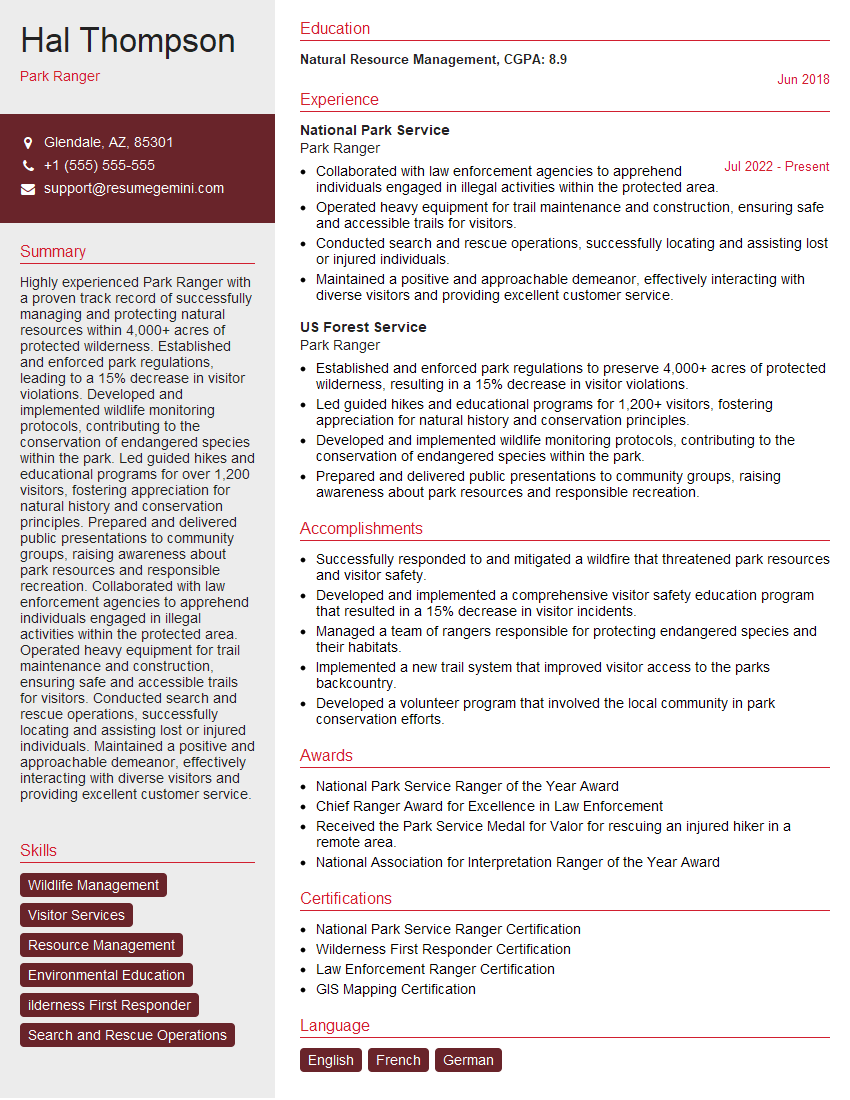
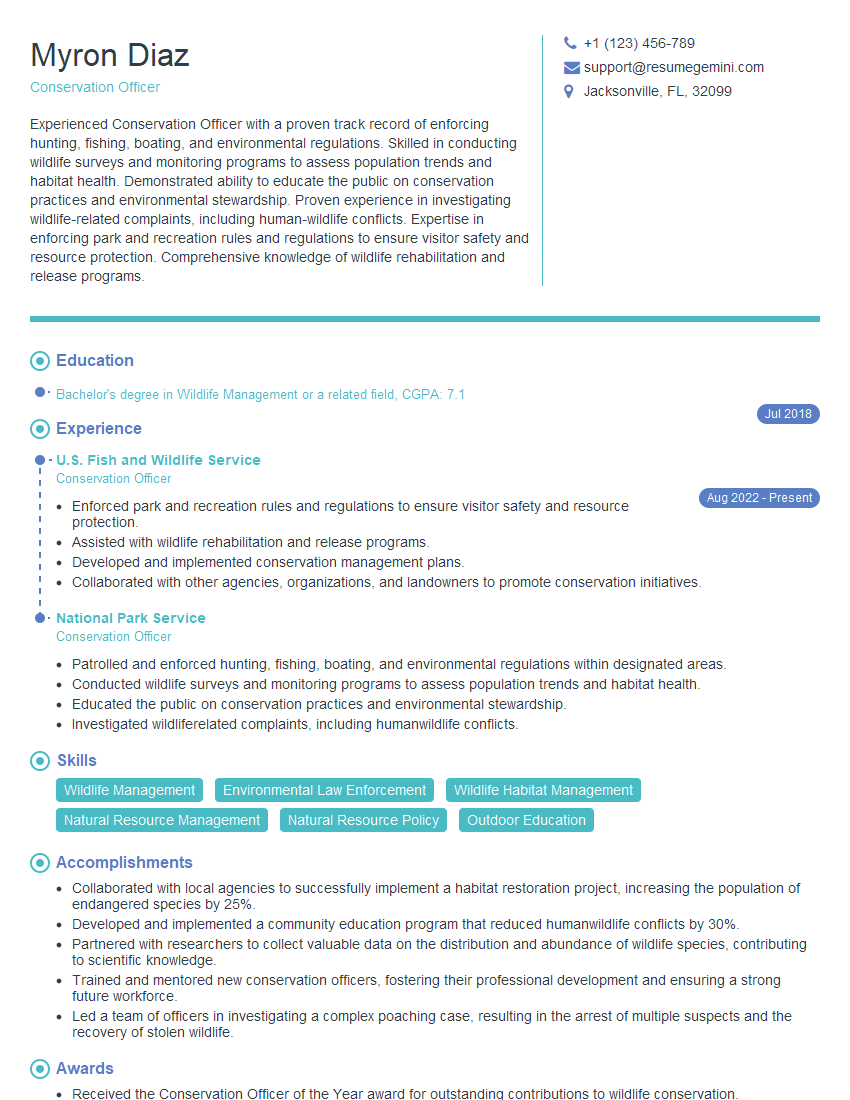
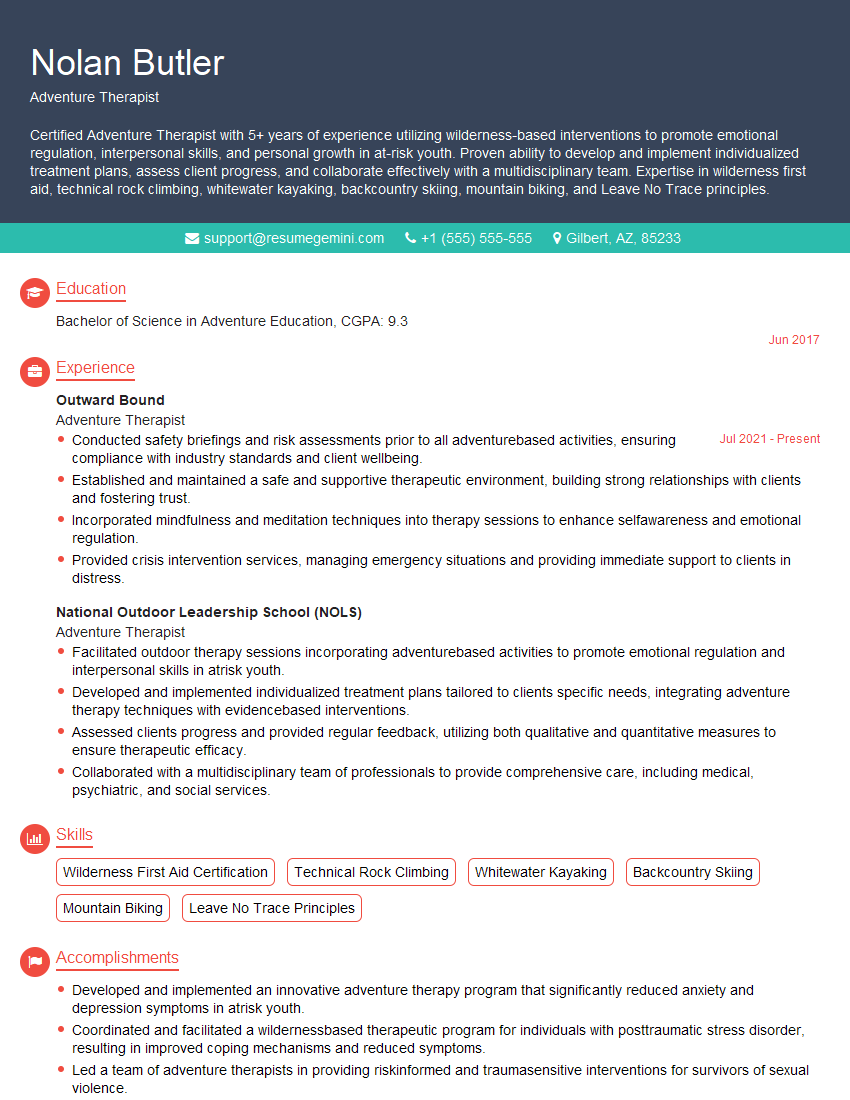
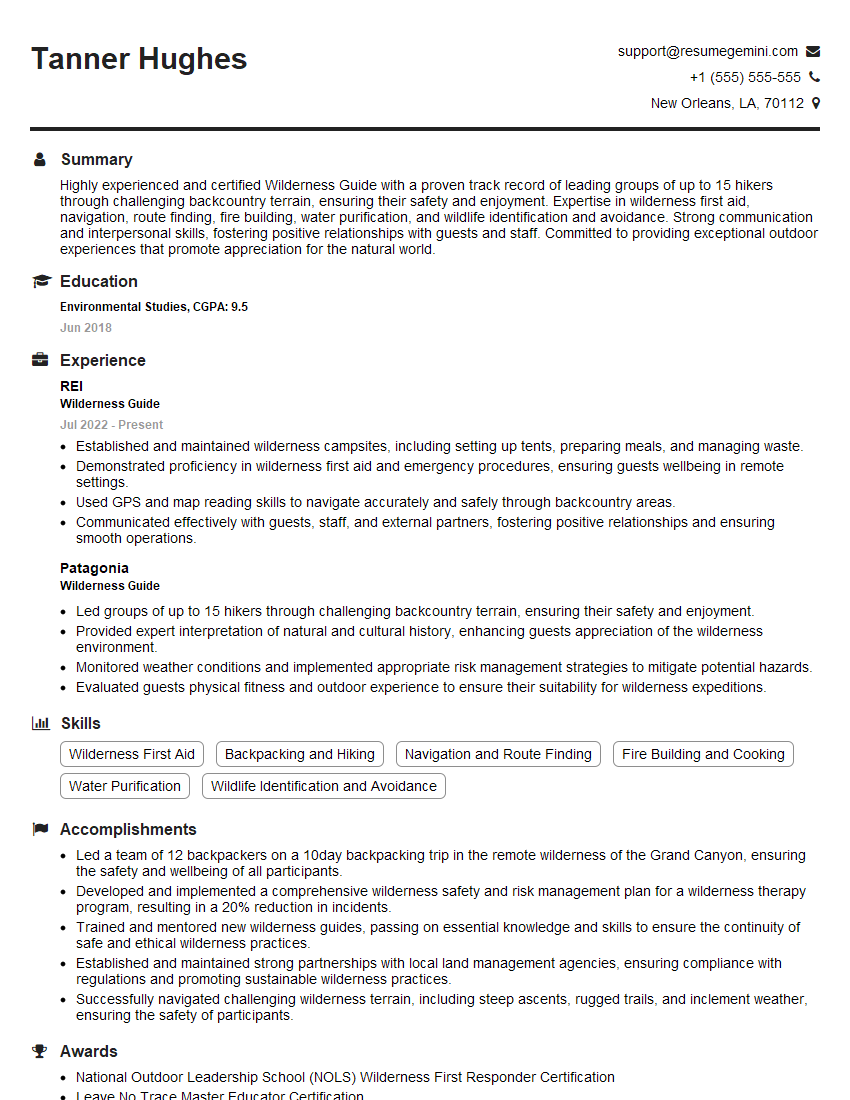
Mastering Wilderness and Backcountry Skills is crucial for career advancement in fields like outdoor guiding, park management, search and rescue, and environmental conservation. A strong resume is your first impression – make it count! Crafting an ATS-friendly resume is vital for getting noticed by potential employers. ResumeGemini is a trusted resource to help you build a professional and impactful resume that highlights your skills and experience effectively. Examples of resumes tailored to Wilderness and Backcountry Skills are available to guide you. Take the next step towards your dream career today!

Explore more articles
Users Rating of Our Blogs
Share Your Experience
We value your feedback! Please rate our content and share your thoughts (optional).
What Readers Say About Our Blog
To the interviewgemini.com Webmaster.
Very helpful and content specific questions to help prepare me for my interview!
Thank you
To the interviewgemini.com Webmaster.
This was kind of a unique content I found around the specialized skills. Very helpful questions and good detailed answers.
Very Helpful blog, thank you Interviewgemini team.