Interviews are more than just a Q&A session—they’re a chance to prove your worth. This blog dives into essential Electrical Cables and Wiring interview questions and expert tips to help you align your answers with what hiring managers are looking for. Start preparing to shine!
Questions Asked in Electrical Cables and Wiring Interview
Q 1. Explain the difference between stranded and solid core cables.
The core difference between stranded and solid core cables lies in the construction of their conductors. Solid core cables have a single, solid wire, while stranded core cables are composed of multiple smaller wires twisted together.
- Solid Core Cables: These are simpler, cheaper, and offer lower resistance at lower frequencies. They are however less flexible and more prone to breaking with repeated bending, making them unsuitable for applications where movement is expected.
- Stranded Core Cables: Their flexibility is their biggest advantage. The multiple strands allow the cable to bend easily without breaking, ideal for applications where the cable needs to be moved or flexed frequently, such as automotive wiring or appliance cords. The flexibility comes at a slight cost; they generally have slightly higher resistance than equivalent gauge solid core cables due to the increased surface area.
Think of it like this: a single, thick rope (solid core) versus a braided rope (stranded core) – the braided rope is more flexible and less likely to snap.
Q 2. What are the common types of cable insulation and their applications?
Cable insulation protects the conductors from damage and prevents short circuits. Various materials are used depending on the application’s voltage, temperature, and environmental conditions.
- PVC (Polyvinyl Chloride): Common, cost-effective, and suitable for low to medium voltage applications. It’s widely used in household wiring.
- XLPE (Cross-Linked Polyethylene): Offers superior heat resistance and is often used in higher voltage power cables and applications with elevated temperatures.
- Teflon (PTFE): Excellent heat resistance and chemical inertness. Ideal for high-temperature applications or environments with corrosive chemicals.
- Rubber: Good flexibility and resistance to abrasion, often used in industrial settings or in cables exposed to harsh weather conditions.
- Silicone Rubber: Excellent heat and cold resistance, used in high-temperature applications and places with extreme temperature fluctuations.
For instance, you’ll find PVC insulation in your home’s wiring, while XLPE is more likely to be used in underground power lines.
Q 3. Describe the different types of cable connectors and their uses.
Cable connectors establish secure electrical connections between cables and devices. Many types exist, each designed for specific applications and cable types.
- Crimp Connectors: These use a crimping tool to secure a wire to a terminal, creating a mechanically and electrically robust connection. Commonly used in automotive and appliance wiring.
- Screw Terminals: Simple, versatile, and allow for easy connection and disconnection. Widely used in industrial and building wiring.
- Banana Plugs: Easy to connect and disconnect, often used in test equipment and laboratory settings.
- Coaxial Connectors (e.g., BNC, F-type): Designed for high-frequency applications such as RF and video signals, providing impedance matching and signal integrity.
- Fiber Optic Connectors (e.g., SC, ST, LC): Used to connect fiber optic cables for high-speed data transmission.
Choosing the right connector depends heavily on the application. A simple screw terminal works well for low-voltage household wiring, while a coaxial connector is crucial for maintaining signal quality in a cable TV installation.
Q 4. How do you identify different cable sizes and ratings?
Cable sizing and ratings are crucial for safety and proper operation. They are typically indicated on the cable’s outer sheath or in its documentation.
- Size: Usually expressed in American Wire Gauge (AWG) or in millimeters squared (mm²). Lower AWG numbers or higher mm² values indicate larger and thicker cables which carry more current.
- Voltage Rating: This denotes the maximum voltage the cable can safely handle without insulation breakdown. It’s essential to choose a cable with a voltage rating that exceeds the system’s operating voltage.
- Current Rating (Ampacity): This refers to the maximum current a cable can carry continuously without overheating. This depends on the cable’s size, insulation type, and installation method.
For example, a 12 AWG cable is smaller than an 8 AWG cable and will have a lower current rating. You always need to match cable sizing to the amperage draw of the connected device.
Q 5. Explain the importance of cable grounding and earthing.
Cable grounding and earthing are essential for safety, providing a path for fault currents to flow to the earth, preventing electrical shocks and protecting equipment.
- Grounding: Connecting the non-current-carrying metal parts of equipment to the earth. It protects against electrical shocks if a fault occurs.
- Earthing: Connecting the neutral point of the electrical system to the earth. It provides a reference point for the voltage and helps to stabilize the system voltage.
Imagine grounding as a safety net. If a live wire touches the metal casing of a device, the grounding provides a low-resistance path for the current to flow to the earth, preventing a dangerous electrical shock. Proper earthing ensures the system operates at the intended voltage.
Q 6. What are the safety precautions when working with high voltage cables?
Working with high-voltage cables presents significant risks. Strict safety precautions are crucial to prevent electrical shock, burns, and other injuries.
- Lockout/Tagout Procedures: Always de-energize the cables before working on them. Use lockout/tagout procedures to prevent accidental energization.
- Personal Protective Equipment (PPE): Wear appropriate PPE including insulated gloves, safety glasses, and arc flash protective clothing (depending on the voltage).
- Proper Tools: Use insulated tools specifically designed for high-voltage applications.
- Training and Supervision: Always receive proper training before working with high-voltage cables. Work under the supervision of a qualified electrician.
- Awareness of Surroundings: Be aware of your surroundings and potential hazards. Never work alone.
High voltage isn’t something to be taken lightly. Always prioritize safety, and don’t hesitate to seek professional help if you’re unsure about any aspect of the task.
Q 7. How do you troubleshoot a faulty cable connection?
Troubleshooting a faulty cable connection requires a systematic approach.
- Visual Inspection: Start with a thorough visual inspection of the cable, connectors, and terminations. Look for any obvious signs of damage such as cuts, burns, or loose connections.
- Continuity Testing: Use a multimeter to check for continuity in the cable. This verifies if there’s a complete electrical path.
- Voltage Testing: Carefully check for voltage presence at various points along the cable using an appropriately rated multimeter. This helps to isolate the faulty section.
- Insulation Resistance Testing (Megger Test): For higher voltage applications, use a Megger to measure the insulation resistance between the conductor and ground. Low resistance indicates insulation damage.
- Signal Tracing: For signal cables, signal tracing techniques can be used to identify breaks or faults in the cable.
If a fault is identified, the appropriate repair or replacement should be undertaken by a qualified technician following established safety procedures.
Q 8. What are the common causes of cable damage and how to prevent them?
Cable damage is a significant concern in electrical systems, leading to malfunctions, safety hazards, and costly repairs. Common causes include physical damage from construction activities, rodents, or accidental impacts; environmental factors like exposure to moisture, chemicals, or extreme temperatures; and improper installation or maintenance. Preventing damage requires a multi-pronged approach.
- Careful Handling and Installation: Employing proper cable handling techniques during installation, using appropriate protective sleeves and conduits, and avoiding sharp bends or kinks minimizes physical damage.
- Environmental Protection: Using weatherproof cable jackets or conduits in outdoor applications protects cables from moisture and UV degradation. Installing cables away from potential chemical spills or sources of extreme heat further enhances protection.
- Rodent Control: Implementing rodent control measures, such as using rodent repellent sprays or physical barriers, helps prevent damage caused by gnawing.
- Regular Inspection and Maintenance: Routine inspections help identify early signs of damage, such as cuts, abrasions, or exposed conductors. This allows for timely repairs, preventing escalating problems.
- Proper Grounding and Bonding: Ensuring proper grounding and bonding reduces the risk of electrical surges that can damage cables and equipment.
For instance, I once worked on a project where a seemingly minor rodent bite on a control cable caused a significant production downtime. This highlighted the importance of preventative measures.
Q 9. Describe the process of installing conduit and pulling cables.
Installing conduit and pulling cables involves several crucial steps, ensuring safe and effective cable routing. Conduit, typically PVC or metallic, provides physical protection and route organization for cables.
- Planning and Design: Determine the cable routes, considering factors like cable length, bends, and accessibility for future maintenance. This often involves using blueprints and plans.
- Conduit Installation: Conduit is installed, often using various fittings, ensuring a secure and continuous pathway. This may involve drilling holes, attaching conduit to walls or structures, and using appropriate fasteners.
- Cable Preparation: Cables are prepared for pulling, often involving measuring and cutting to length. Termination ends may also be prepared at this stage.
- Cable Pulling: A cable puller, either hand-operated or motorized, is used to pull cables through the conduit. Lubricants, like cable pulling lubricant, can reduce friction and prevent damage. Multiple cables can be pulled together, bundled using appropriate methods.
- Inspection and Testing: After installation, the cables are inspected for any damage and tested for continuity and proper grounding.
Consider the example of a large commercial building. Careful conduit planning and installation are critical to ensure efficient cable routing and prevent congestion or future difficulties accessing cables for maintenance or upgrades.
Q 10. Explain the concept of voltage drop and its implications.
Voltage drop is the reduction in voltage between the source and the load in an electrical circuit. It’s caused by the resistance of the conductors (cables) carrying the current. A significant voltage drop leads to several implications.
- Reduced Equipment Performance: Insufficient voltage can cause motors to run slower, lights to dim, and other equipment to malfunction.
- Overheating: Increased current due to voltage drop can lead to excessive heat generation in cables, potentially causing fire hazards.
- Equipment Damage: Consistent low voltage can damage sensitive electronic equipment.
The formula for voltage drop (ΔV) is: ΔV = 2 * I * R * L / 1000 where I is the current (amperes), R is the resistance of the cable (ohms per 1000 feet), and L is the cable length (feet). Choosing appropriate cable size based on current, voltage, and length is crucial to minimize voltage drop. For example, a long run of small-gauge wire supplying a high-current motor might experience an unacceptable voltage drop, requiring a larger-gauge wire to be used.
Q 11. What are the different types of cable terminations?
Cable terminations are crucial for ensuring electrical safety and performance. They provide a safe and reliable connection to equipment and other components. Various termination types exist, each suited for specific applications and cable types.
- Crimping: Crimping connectors securely attach to cable conductors using specialized tools. This is common for low-voltage applications.
- Soldering: Soldering creates a strong electrical connection by melting solder around the wire and terminal. Suitable for some low- and medium-voltage applications but requires careful execution to avoid damage.
- Wire Nuts: Wire nuts provide a simple and quick connection for joining wires of the same gauge, generally used in low-voltage household wiring.
- Splices: Used to join cables in the field; these can be mechanical or soldered, depending on the application. Proper insulation and protection are crucial.
- Connectors: Specialized connectors, such as those used for industrial control systems, provide reliable and often quick-disconnect options.
Proper termination is paramount. Improperly terminated cables can lead to loose connections, arcing, and ultimately, fire hazards. Always use the correct connectors and tools for the specific cable and application.
Q 12. How do you select the appropriate cable for a specific application?
Selecting the appropriate cable for a specific application requires considering multiple factors. A wrong choice can lead to equipment malfunction, safety hazards, and increased costs.
- Voltage and Current Rating: The cable must handle the expected voltage and current without overheating or voltage drop.
- Ampacity: The cable’s ampacity rating is its ability to carry current without exceeding its temperature limits. This is crucial for preventing fire hazards.
- Conductor Material: Copper is the most common, offering good conductivity. Aluminum is lighter but has higher resistance.
- Insulation Type: The insulation material must withstand the expected voltage and environmental conditions. Examples include PVC, XLPE (cross-linked polyethylene), and EPR (ethylene propylene rubber).
- Sheathing Material: The outer jacket protects the cable from environmental factors (moisture, chemicals, UV radiation).
- Installation Environment: Consider if the installation will be indoors or outdoors, buried underground, in a conduit, or exposed.
For instance, selecting a low-voltage cable for a high-voltage application would be disastrous. Likewise, using a cable with insufficient ampacity could lead to overheating and a potential fire. The NEC (National Electrical Code) provides valuable guidance in cable selection.
Q 13. Explain the NEC code requirements for cable installation.
The National Electrical Code (NEC) provides a comprehensive set of regulations for safe electrical installations. Adherence to the NEC is crucial for ensuring safety and preventing electrical hazards. Regarding cable installation, the NEC covers aspects such as:
- Cable Type and Selection: The NEC specifies appropriate cable types for different applications and environments (e.g., wiring methods, locations, and environmental conditions).
- Installation Methods: Regulations specify proper installation methods, including cable routing, securing, and support. This often includes requirements for conduit use, cable spacing, and bending radius limitations.
- Grounding and Bonding: The NEC emphasizes proper grounding and bonding to protect against electrical shocks and prevent equipment damage.
- Overcurrent Protection: Correct sizing of overcurrent protection devices (circuit breakers or fuses) is essential to prevent cable overheating and fires.
- Marking and Identification: Cables must be properly marked to indicate their type, voltage rating, and other relevant information.
Failure to comply with the NEC can lead to serious consequences, including fines, insurance issues, and potential legal liability. Electricians must stay up-to-date with the latest NEC code revisions to ensure compliance.
Q 14. What are the different types of cable sheathing materials?
Cable sheathing materials are crucial for protecting the internal conductors from environmental factors and damage. Different materials provide varying levels of protection.
- PVC (Polyvinyl Chloride): A common, cost-effective material offering good resistance to moisture, abrasion, and chemicals. However, it has lower temperature resistance than some alternatives.
- XLPE (Cross-Linked Polyethylene): Provides superior temperature resistance, making it suitable for higher-temperature applications. It’s also resistant to moisture and chemicals.
- EPR (Ethylene Propylene Rubber): Offers excellent resistance to heat, chemicals, and ozone, making it ideal for harsh environments.
- Thermoplastic Elastomers (TPE): Often used in more flexible cable applications offering good mechanical strength and environmental resistance.
- Lead Sheathing (Less common now): Traditionally used for its excellent moisture and chemical resistance, but is being phased out due to environmental concerns.
The choice of sheathing material depends on the specific application requirements. A cable intended for underground burial requires a more robust and moisture-resistant sheathing compared to one used indoors in a controlled environment.
Q 15. Describe the process of cable splicing.
Cable splicing is the process of joining two or more cable sections together to create a continuous electrical circuit. It’s crucial for extending cable runs, repairing damaged cables, or adding new segments to an existing system. The process requires meticulous attention to detail to ensure electrical continuity, mechanical strength, and safety.
The steps involved generally include:
- Preparation: Stripping the outer sheath and insulation from the cable ends, carefully exposing the conductors. The amount of exposed conductor will depend on the type of splice and connector used.
- Connecting Conductors: This can involve various techniques depending on the cable type and size. Common methods include crimping, soldering, or using compression connectors. Crimping uses specialized tools to mechanically secure the conductors, while soldering uses heat to melt a metal alloy that bonds the conductors together. Compression connectors rely on the pressure applied during installation to create a good electrical contact.
- Insulation and Protection: After the conductors are joined, they need to be properly insulated to prevent shorts and maintain the integrity of the splice. Insulating tape, heat-shrink tubing, or specialized splice kits are commonly used. The entire splice is then often further protected with a waterproof sealant or protective covering to prevent environmental damage.
- Testing: Finally, the splice needs to be rigorously tested for continuity and insulation resistance to verify the connection’s integrity.
Example: Imagine needing to extend a power cable across a large building. Instead of purchasing an extremely long cable, splicing allows you to connect several shorter, more manageable lengths together, saving both material costs and installation difficulties.
Career Expert Tips:
- Ace those interviews! Prepare effectively by reviewing the Top 50 Most Common Interview Questions on ResumeGemini.
- Navigate your job search with confidence! Explore a wide range of Career Tips on ResumeGemini. Learn about common challenges and recommendations to overcome them.
- Craft the perfect resume! Master the Art of Resume Writing with ResumeGemini’s guide. Showcase your unique qualifications and achievements effectively.
- Don’t miss out on holiday savings! Build your dream resume with ResumeGemini’s ATS optimized templates.
Q 16. What are the benefits and drawbacks of using different cable materials (e.g., copper, aluminum)?
The choice between copper and aluminum conductors depends heavily on the application, considering both advantages and disadvantages:
Copper:
- Advantages: Higher conductivity, better flexibility, superior corrosion resistance in most environments, and easier to work with (especially for smaller gauge cables).
- Disadvantages: More expensive than aluminum, heavier, and can be more prone to work hardening (making it difficult to bend repeatedly).
Aluminum:
- Advantages: Lighter, less expensive than copper, suitable for large-gauge cables used in high-voltage transmission lines.
- Disadvantages: Lower conductivity (requires larger gauge for the same current carrying capacity), prone to oxidation and corrosion (requires special connectors and handling), and harder to work with than copper.
Real-world example: Copper is generally preferred for building wiring due to its superior conductivity and ease of use, while aluminum is often used in high-voltage power transmission due to its lightweight and cost-effective nature. However, the use of aluminum in building wiring is becoming less common due to its higher risk of connection issues and related safety concerns if not installed correctly.
Q 17. How do you test the continuity and insulation resistance of a cable?
Testing cable continuity and insulation resistance is crucial for ensuring safety and functionality. This is typically done using a multimeter, a device used to measure various electrical properties.
Continuity Test: This checks for unbroken electrical paths within the conductors. The multimeter is set to the continuity mode (usually represented by a diode symbol or ‘continuity’). The probes are placed on either end of the conductor; a continuous beep or near-zero resistance reading indicates a good connection. A lack of beep or a high resistance reading suggests a break in the conductor.
Insulation Resistance Test: This measures the electrical resistance of the cable’s insulation. This test uses a megohmmeter (or insulation tester), which applies a high voltage to the cable and measures the leakage current. A high insulation resistance reading indicates good insulation that prevents current leakage to ground. A low reading indicates insulation damage or degradation, posing a significant safety risk.
Example: Before connecting a new cable to a power source, both continuity and insulation resistance tests are performed. Continuity verifies that all conductors are unbroken, and insulation resistance checks for any potential leakage to ground, helping prevent electric shock and short circuits.
Q 18. Explain the concept of cable ampacity and its importance.
Cable ampacity refers to the maximum current a cable can safely carry continuously without exceeding its temperature rating. This is a crucial safety factor as excessive current can cause overheating, leading to cable damage, fires, and potential hazards. Ampacity depends on several factors:
- Cable size (gauge): Larger cables have higher ampacity.
- Insulation type: Different insulation materials have different temperature ratings.
- Ambient temperature: Higher ambient temperatures reduce ampacity.
- Installation method: How the cable is installed (e.g., buried, in conduit, in free air) affects its ability to dissipate heat.
Importance: Selecting a cable with an appropriate ampacity for a given load is paramount for safety. If a cable is overloaded (carrying more current than its ampacity), it will overheat, potentially causing a fire or equipment malfunction. Therefore, accurate ampacity calculations are crucial in electrical design and installation.
Example: A circuit powering an electric heater requires a cable with sufficiently high ampacity to handle the heater’s current draw. Choosing a cable with insufficient ampacity can lead to overheating and potentially a fire.
Q 19. What are the different methods for cable routing and management?
Proper cable routing and management are crucial for safety, aesthetics, and efficient operation of electrical systems. Methods include:
- Conduit: Cables are run through protective metal or plastic pipes, providing mechanical protection and preventing damage.
- Cable trays: Metal or plastic trays support and organize cables, facilitating installation and maintenance.
- Trunking: Larger enclosures that can house numerous cables, often used in industrial settings.
- Wireways: Similar to cable trays, but designed to accommodate larger cables.
- Direct burial: For outdoor applications, cables can be buried directly underground, requiring appropriate cable types.
- Labeling and identification: Clearly labeling cables is crucial for easy identification and maintenance.
Example: In a commercial building, cables might be routed through conduit within walls and ceilings for fire protection, while larger cables in a data center might use cable trays for easier access and organization.
Q 20. Describe the difference between single-core and multi-core cables.
The key difference lies in the number of conductors within a single cable sheath:
Single-core cables: Contain a single conductor surrounded by insulation and possibly an outer sheath. They are typically used for high-voltage applications or where individual conductors need to be routed separately. They often require more robust protection and installation methods compared to multi-core.
Multi-core cables: Contain multiple conductors bundled together under a common outer sheath. Each conductor is individually insulated. This type is commonly used in low-voltage applications like household wiring, offering convenience and improved installation time compared to using many single core cables.
Example: High-voltage power lines often use single-core cables to manage the high current and potential hazards associated with these voltages. Whereas, house wiring typically uses multi-core cables, where several conductors (for various circuits) are housed within a single cable jacket for ease of installation and management.
Q 21. What are the safety considerations for working at heights with electrical cables?
Working at heights with electrical cables poses significant safety risks. Precautions must be taken to minimize hazards:
- Fall protection: Harnesses, safety lines, and appropriate anchorage points are essential to prevent falls.
- Proper access equipment: Using scaffolding, lifts, or other equipment appropriate for the height and task, ensuring stability and safety.
- Electrical safety measures: Before commencing any work, ensure power is de-energized or that proper lockout/tagout procedures are in place. If live cable work is unavoidable, qualified personnel with appropriate personal protective equipment (PPE) must perform the task following strict safety guidelines.
- Weather conditions: Avoid work in adverse weather conditions like rain or high winds, which can increase fall risks or create electrical hazards.
- Communication: Establish clear communication channels with ground personnel.
- Training and competency: Only trained and competent personnel should perform work at heights involving electrical cables.
Example: When working on overhead power lines, a comprehensive risk assessment must be completed, including considerations for fall protection, electrical safety, and weather conditions. Workers should be trained and equipped with appropriate PPE such as insulated gloves, safety helmets, and harnesses.
Q 22. Explain the importance of cable labeling and identification.
Proper cable labeling and identification are paramount for safety, maintenance, and troubleshooting. Imagine a building’s electrical system – thousands of wires running everywhere. Without clear labeling, tracing a circuit, identifying a fault, or performing maintenance becomes a nightmare. It’s akin to trying to find a specific book in a library without a cataloging system!
- Safety: Clear labels instantly identify voltage levels, circuit functions, and potential hazards, preventing accidental shocks or damage.
- Maintenance: Easy identification allows for quick and efficient repairs or upgrades. Technicians know exactly what each cable does without time-consuming tracing.
- Troubleshooting: Locating faults becomes significantly easier. A labeled cable instantly points to the specific circuit or component in question.
Labels should include information like circuit number, voltage, cable type, and potentially even the date of installation. Consistent labeling practices using standardized color codes or numbering systems are crucial for large-scale projects.
Q 23. How do you determine the correct size of conduit for a given cable bundle?
Determining the correct conduit size for a cable bundle involves considering several factors. It’s not just about fitting the cables inside; sufficient space must be allowed for air circulation to prevent overheating and to make pulling cables easier. We use fill percentages and tables to ensure proper sizing.
First, we need to know the total cross-sectional area of the cables. This is usually obtained from manufacturer specifications. Next, we need to determine the conduit’s fill percentage, which is usually provided in standards and manufacturer’s datasheets. This fill percentage takes into account the physical characteristics of the conduit and the cables, considering factors like the type of cables (e.g., solid or stranded) and whether they are installed individually or bundled.
For example, if the total cross-sectional area of the cables is 10 square centimeters and the maximum fill percentage for the selected conduit type is 40%, then we need to find a conduit that has a cross-sectional area that meets or exceeds 10 sq cm / 0.40 = 25 sq cm. We will typically select a conduit size larger than what the calculations indicate to provide additional space.
Using tables or online calculators provided by manufacturers or in electrical codes is critical. These tables factor in different conduit types, cable types and arrangements, providing accurate conduit sizing based on fill percentages. Ignoring this step can lead to overheating, cable damage, and potential fire hazards.
Q 24. Describe the process of cable termination using crimping and heat shrink tubing.
Crimping and heat shrink tubing are essential in cable termination. Crimping creates a secure mechanical connection, while heat shrink tubing provides insulation and strain relief. Think of it like building a strong, weatherproof joint.
- Stripping: Carefully strip the outer jacket and insulation of the cable to expose the required length of conductors. Be mindful of not nicking the conductors.
- Crimping: Use the appropriate crimping tool and connector for the cable size and type. Ensure a complete and proper crimp, making sure the connector is fully seated on the conductor. A poorly crimped connection can lead to loose connections and potential fire hazards.
- Insulation: Apply heat shrink tubing over the crimped connection. The tubing’s diameter should be slightly smaller than the final assembly to ensure a tight fit after shrinking.
- Heat Application: Using a heat gun, carefully apply heat to the heat shrink tubing until it shrinks and tightly adheres to the connector, providing strain relief and insulation. Ensure that the tubing is not overheated, as this may damage the connector or the cable.
- Testing: After termination, always test the connection to ensure continuity and proper insulation resistance. This is crucial to confirming the reliability of your work and avoiding potential issues in the future.
Proper tooling and techniques are key for success. Improper crimping or heat shrinking can result in loose connections, creating a fire hazard or equipment malfunction. Always follow the manufacturer’s instructions for both the connectors and heat shrink tubing.
Q 25. What are the potential hazards associated with damaged or improperly installed cables?
Damaged or improperly installed cables pose several significant hazards:
- Electrical Shock: Exposed conductors can cause severe or even fatal electric shocks.
- Fire Hazards: Overheated cables due to improper sizing or installation can ignite insulation and surrounding materials, potentially causing widespread damage and injuries.
- Equipment Malfunction: Loose connections or damaged insulation can lead to intermittent operation or complete failure of connected equipment. Imagine a critical industrial process grinding to a halt due to a faulty cable.
- System Instability: Damaged cables can introduce noise or impedance mismatches, destabilizing the electrical system and affecting the performance of connected devices.
- Data Corruption: In data communication systems, damaged cables can lead to data loss or corruption, resulting in costly downtime and potential financial losses.
Regular inspections, proper installation techniques, and adherence to safety standards are crucial to mitigate these risks. This isn’t just about following rules; it’s about protecting people and ensuring the reliable operation of electrical systems.
Q 26. How do you ensure the proper bending radius of cables during installation?
Maintaining the proper bending radius is crucial to prevent cable damage. Think of it like bending a garden hose – bend it too sharply, and you’ll kink it, restricting the flow. Similarly, excessive bending of a cable can damage conductors, insulation, and shielding, potentially leading to signal degradation, increased resistance, or failure.
The minimum bending radius is specified by the cable manufacturer and is usually printed on the cable jacket or available in the manufacturer’s specifications. It varies depending on cable type, size, and construction. Failing to adhere to the minimum bending radius can lead to internal conductor damage, insulation cracking, and ultimately, cable failure.
During installation, we utilize cable bending tools or strategically plan cable routing to avoid sharp bends. We also ensure that conduits are properly sized and free of obstructions to allow for gentle cable bending. Using too small a conduit will force excessive bending and risk cable damage.
Regular inspections during and after installation are vital to ensure cables are not subjected to excessive bending. This careful attention to detail is essential for ensuring the long-term reliability and safety of the electrical system.
Q 27. Explain your experience with different cable installation techniques.
My experience encompasses a variety of cable installation techniques, from traditional methods to more modern approaches. I’m proficient in:
- Direct Burial: Installing cables directly underground, requiring careful consideration of soil conditions, cable protection (e.g., conduits), and depth to meet regulations and prevent damage. This is common for underground power lines and telecom cables.
- Conduit Installation: Running cables within protective conduits, offering superior protection against environmental factors and physical damage. This is a popular method in buildings and industrial settings.
- Tray and Ladder Systems: Utilizing cable trays and ladders for organized and accessible cable routing. These systems allow for easy additions, maintenance, and future expansion. We often see this in data centers and industrial facilities.
- Aerial Installation: Running cables overhead on poles or support structures, typically used for overhead power lines and telecommunication infrastructure. This requires attention to safety and wind-loading considerations.
I’m also familiar with specialized techniques, such as the use of pulling compounds and lubricants to reduce friction during cable pulling in conduits and the importance of proper grounding and bonding practices to ensure safety.
Q 28. Describe a time you had to troubleshoot a complex cable-related problem.
In a large industrial facility, we experienced intermittent equipment malfunctions on a critical production line. Initial diagnostics pointed to electrical issues, but pinpointing the exact problem within the extensive cable network was challenging. It was like trying to find a needle in a haystack!
After systematically checking connections and eliminating likely causes, we noticed subtle voltage drops across a particular section of the cable run. Upon further inspection, we discovered a damaged cable inside a conduit that had been previously damaged by a construction crew. The damage was internal and not immediately visible externally, making it difficult to detect.
Our solution involved using a cable fault locator to precisely pinpoint the location of the break within the conduit. After excavation and replacement of the damaged cable section, the production line was restored, minimizing downtime and ensuring consistent production. This experience highlighted the importance of thorough investigation, proper diagnostic tools, and the necessity of well-documented cable routing and labeling.
Key Topics to Learn for Electrical Cables and Wiring Interview
- Cable Construction and Materials: Understanding conductor types (copper, aluminum), insulation materials (PVC, XLPE, EPR), and shielding techniques is crucial. Consider the impact of material choices on performance and safety.
- Cable Rating and Selection: Learn to interpret cable specifications (voltage rating, current carrying capacity, temperature rating) and select appropriate cables for different applications based on load calculations and environmental conditions.
- Wiring Methods and Techniques: Familiarize yourself with various wiring methods (conduit, cable tray, direct burial), their applications, and the relevant safety regulations and best practices. Be prepared to discuss termination techniques and splicing.
- Electrical Codes and Standards: A strong understanding of relevant electrical codes (e.g., NEC in the US) and international standards is essential for safe and compliant installations. Knowing how to apply these codes in practical scenarios is key.
- Fault Finding and Troubleshooting: Develop your ability to diagnose common cable and wiring faults, understand the use of testing equipment (multimeters, cable testers), and describe systematic troubleshooting approaches.
- Power System Protection: Understand the role of cables and wiring in overall power system protection, including overcurrent protection devices (fuses, circuit breakers) and their coordination.
- Specialised Cable Types: Research different cable types used in specific applications such as control circuits, instrumentation, high-voltage systems, and data communication networks.
- Safety Regulations and Practices: Demonstrate a strong understanding of safety regulations and practices related to electrical cable installation and maintenance, including lockout/tagout procedures and personal protective equipment (PPE).
Next Steps
Mastering Electrical Cables and Wiring is paramount for career advancement in this vital field. A strong foundation in these concepts opens doors to diverse roles with increasing responsibility and earning potential. To maximize your job prospects, focus on creating a compelling and ATS-friendly resume that highlights your skills and experience effectively. ResumeGemini is a trusted resource to help you build a professional and impactful resume. We provide examples of resumes tailored to the Electrical Cables and Wiring industry to guide you in crafting your own.
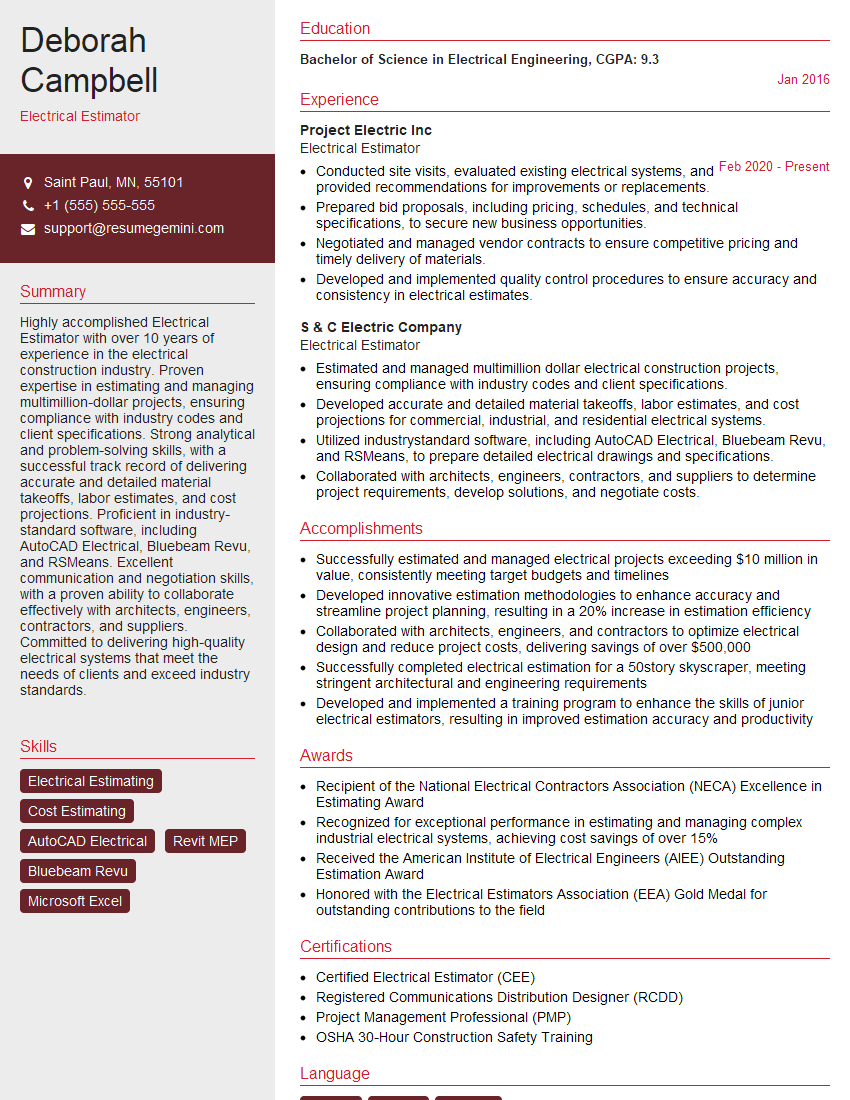
Electrical Estimator Resume Sample
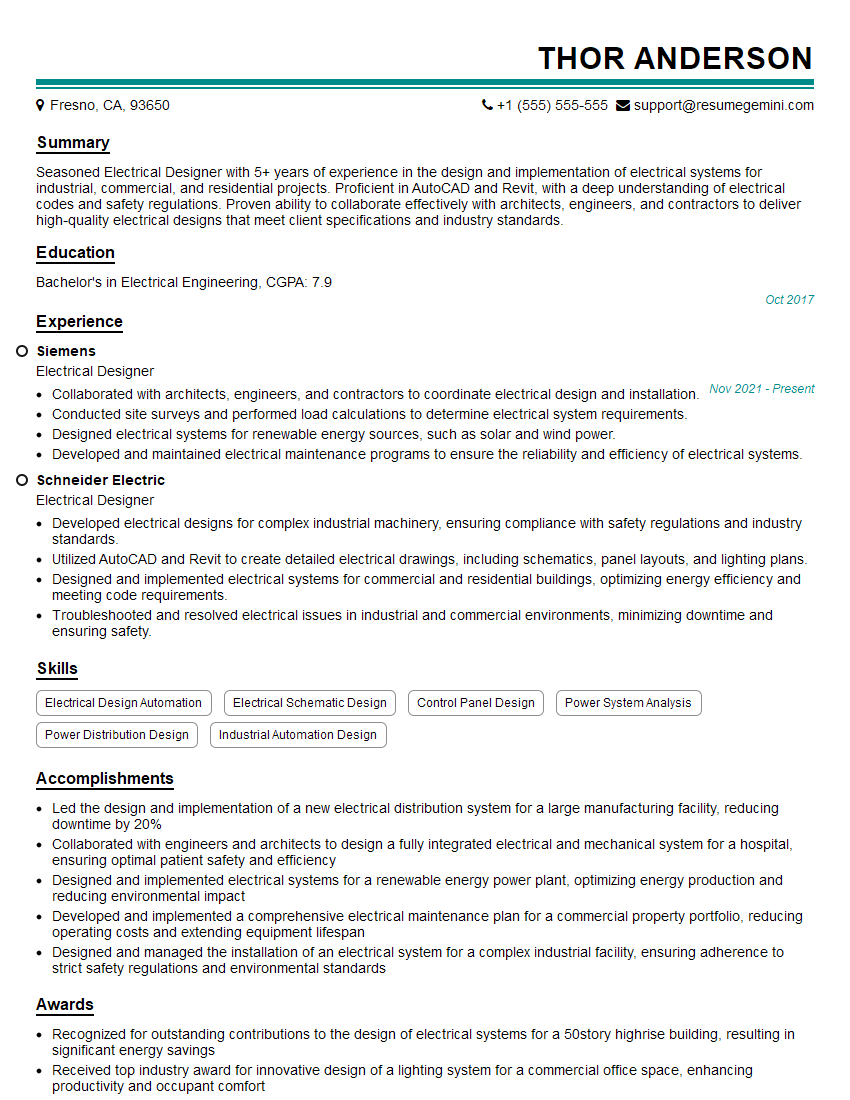
Electrical Designer Resume Sample
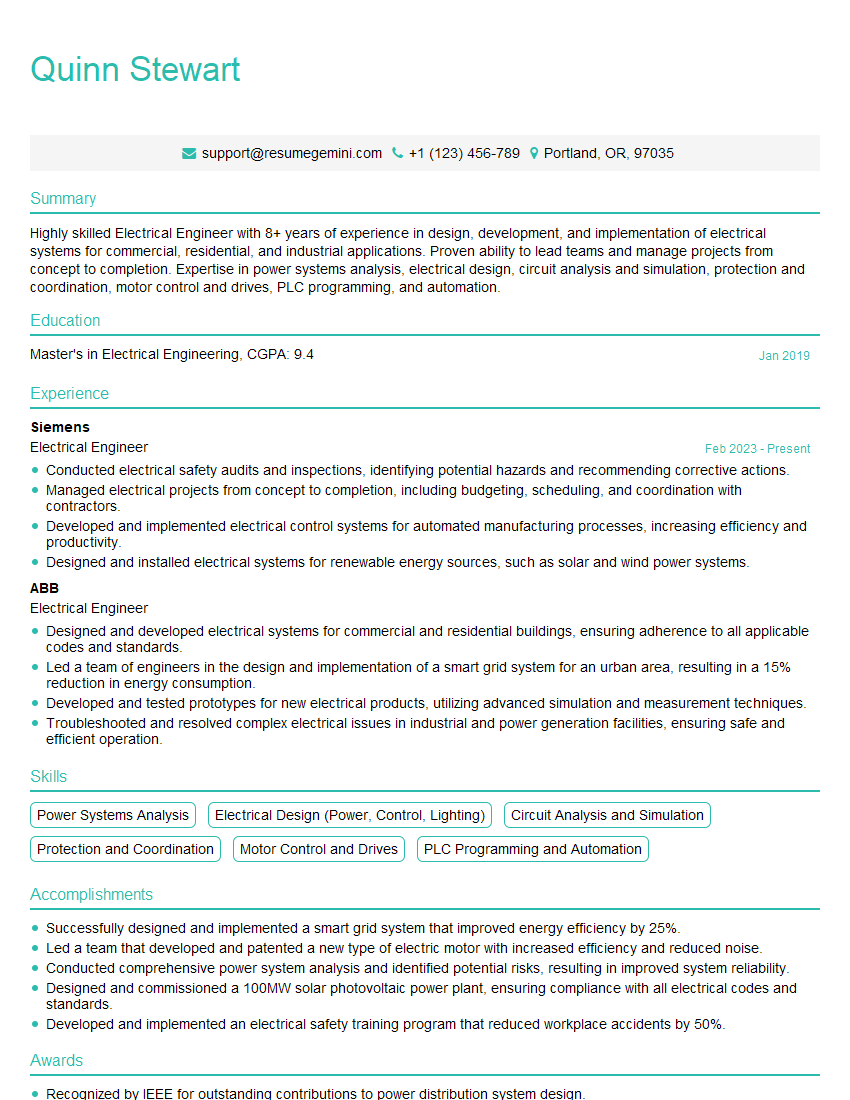
Electrical Engineer Resume Sample
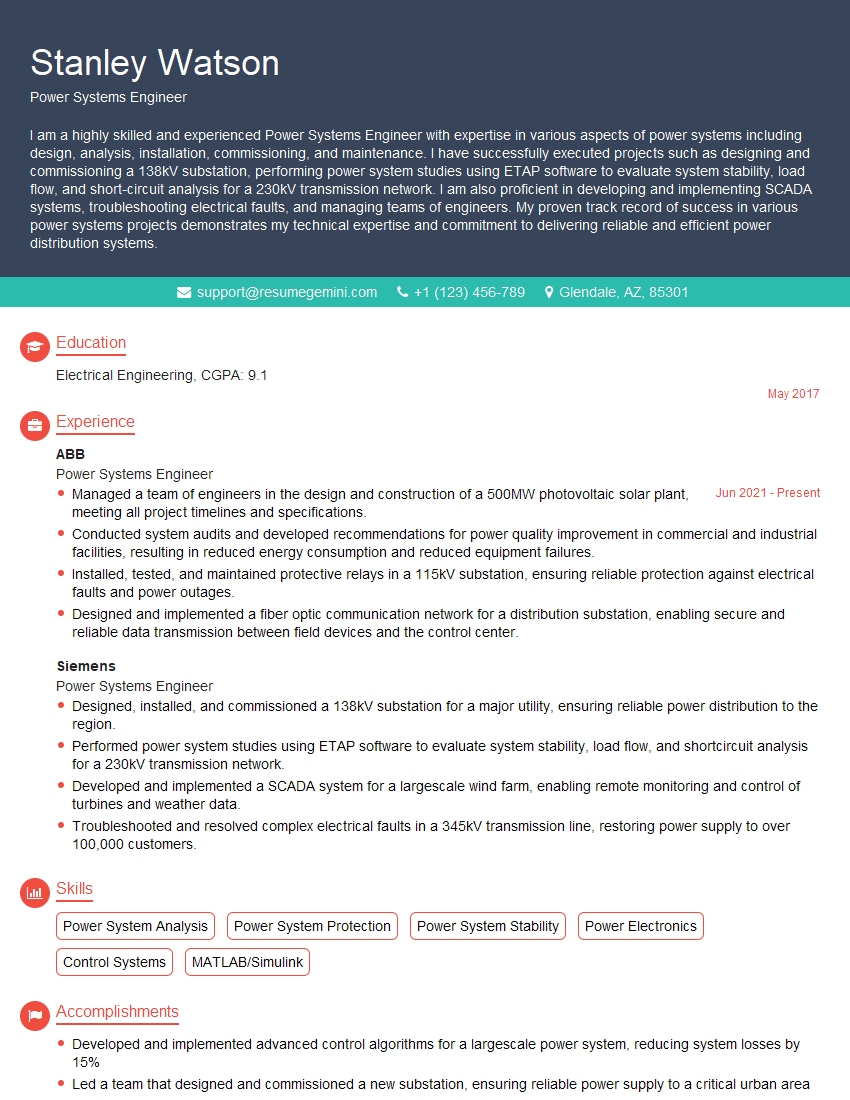
Power Systems Engineer Resume Sample

Control Systems Engineer Resume Sample
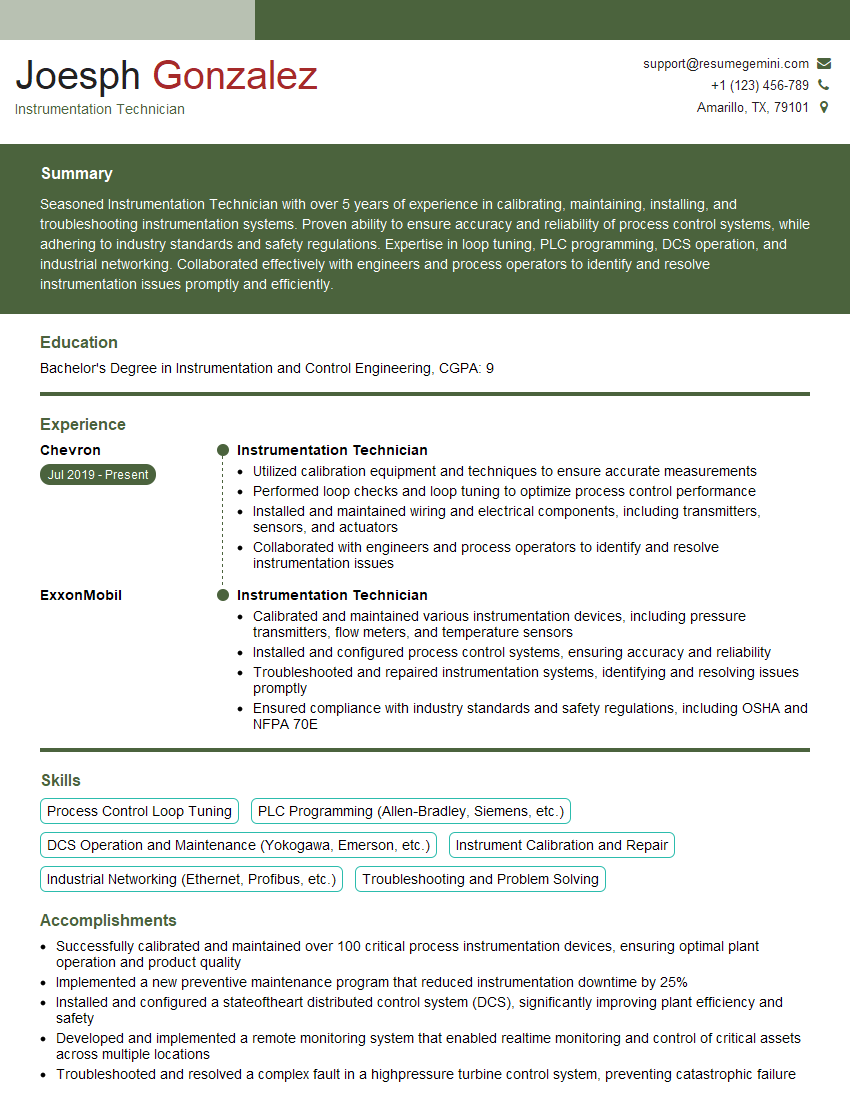
Instrumentation Technician Resume Sample
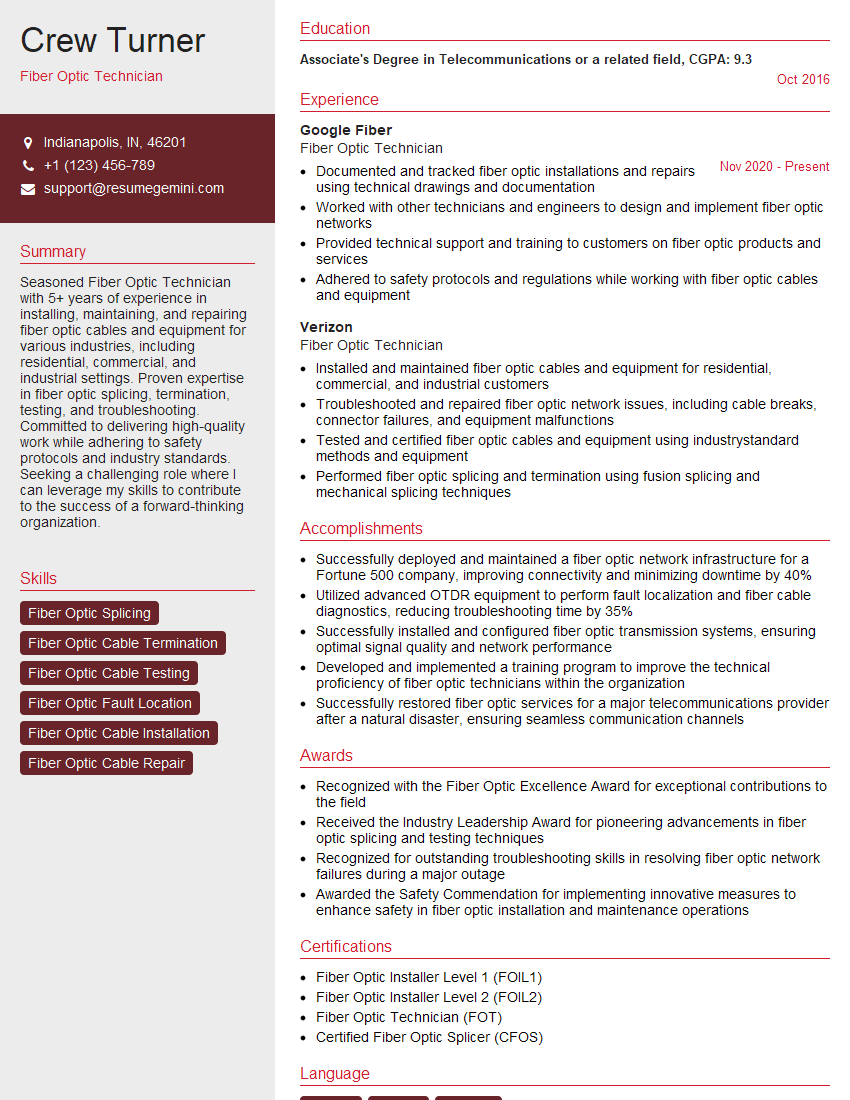
Fiber Optic Technician Resume Sample
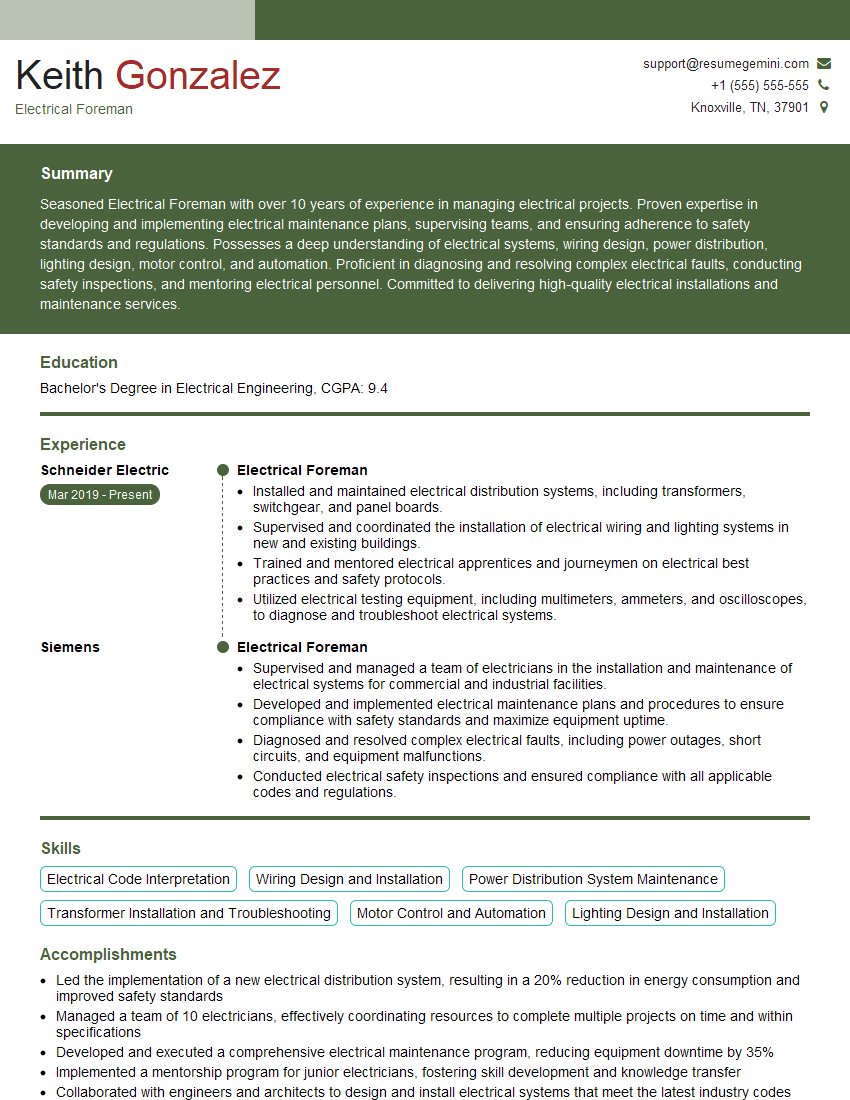
Electrical Foreman Resume Sample
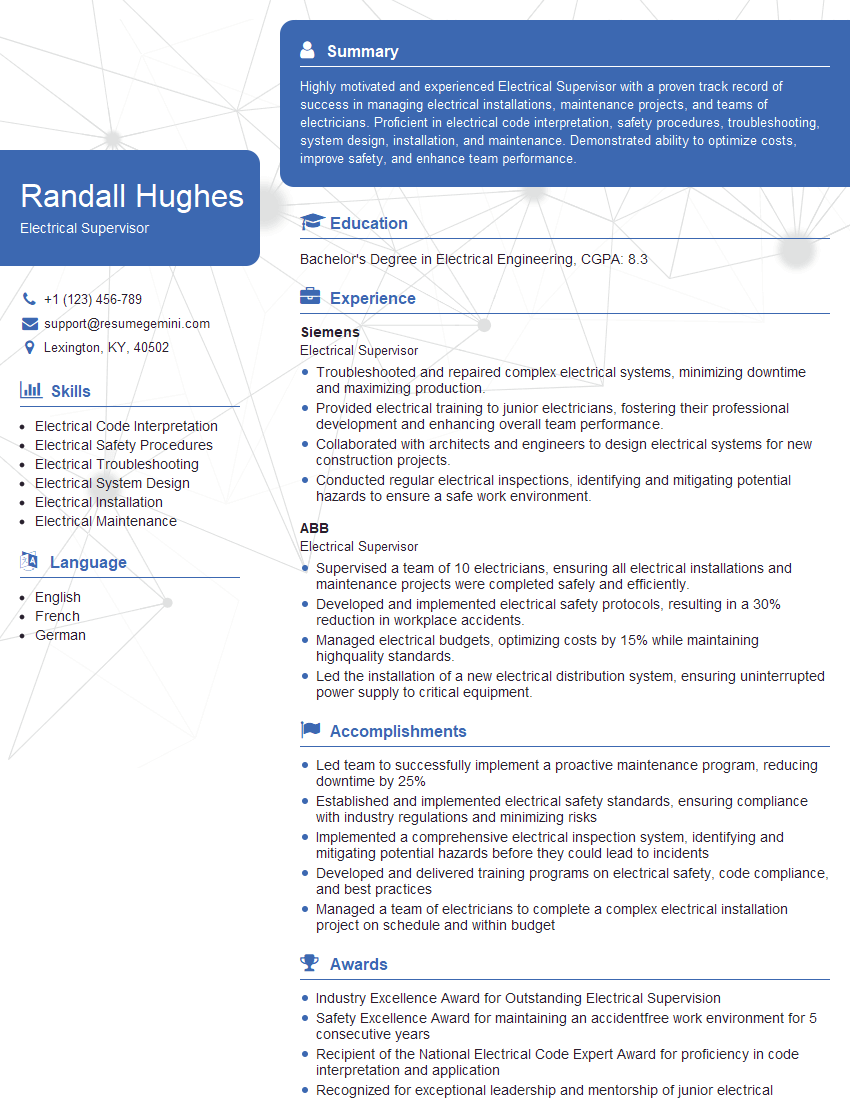
Electrical Supervisor Resume Sample

Construction Electrician Resume Sample
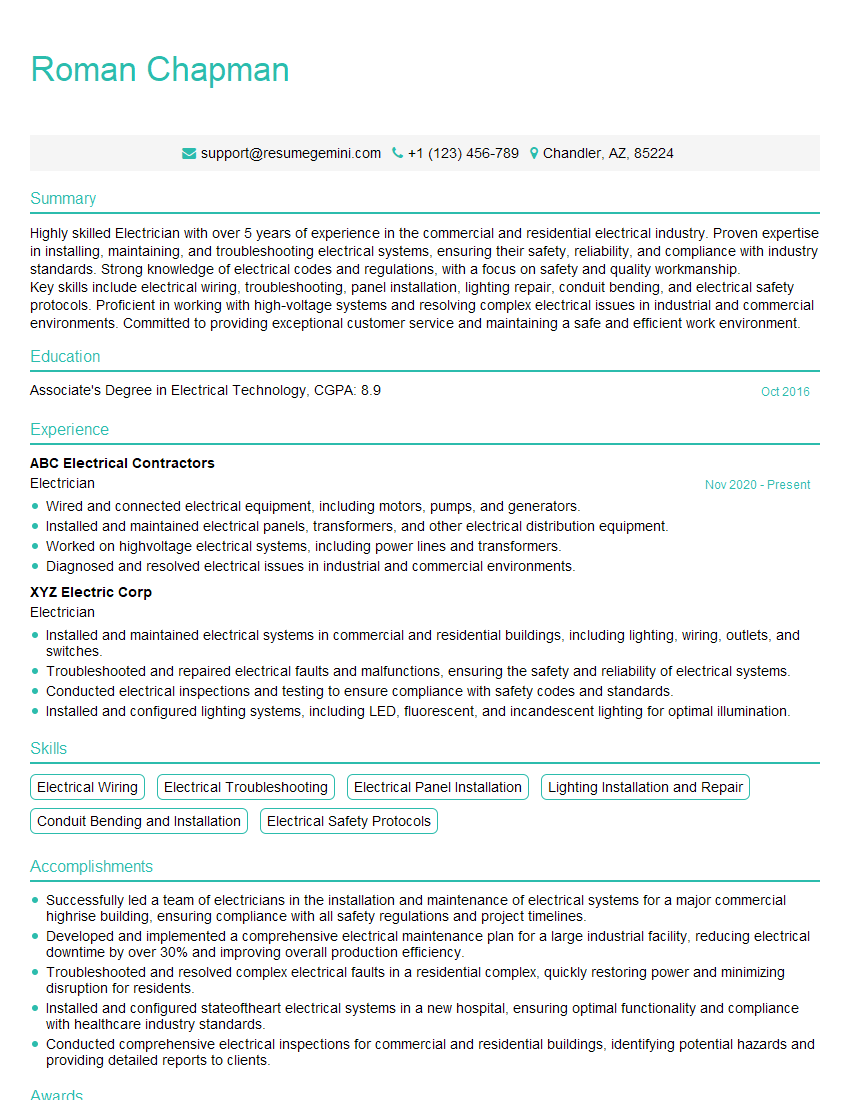
Electrician Resume Sample
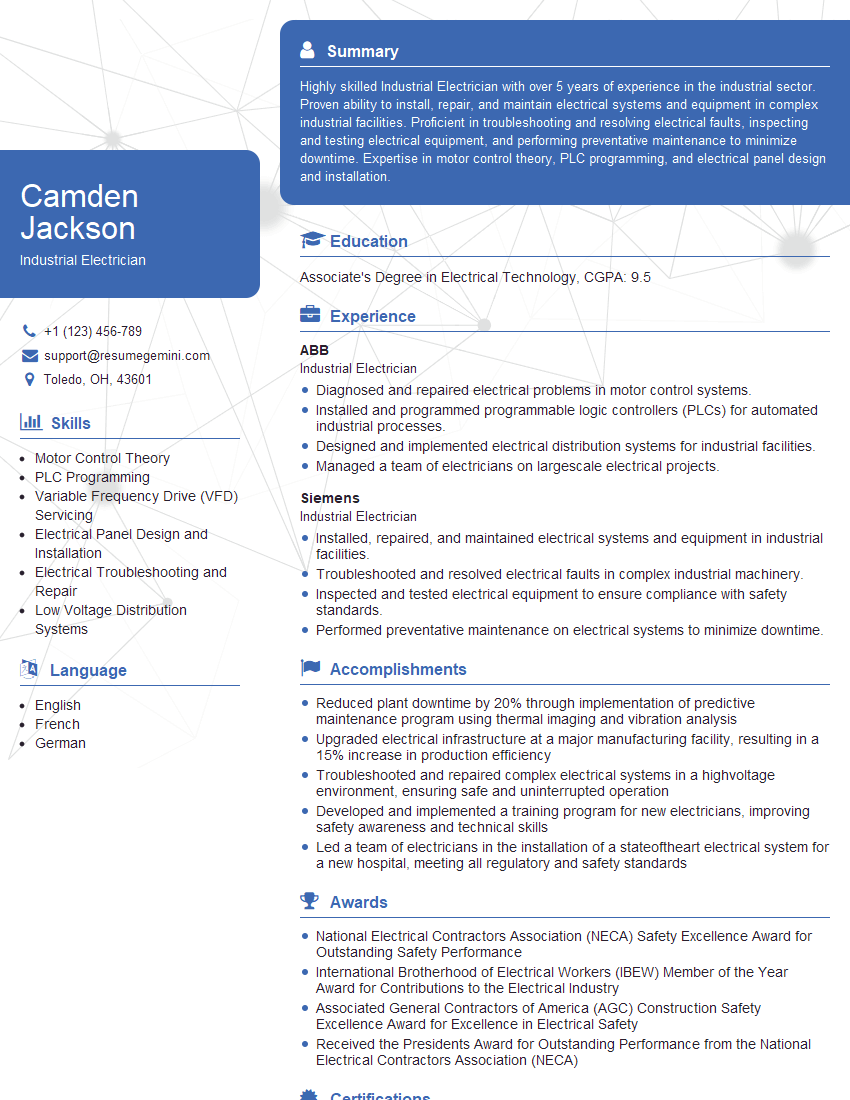
Industrial Electrician Resume Sample

Maintenance Electrician Resume Sample
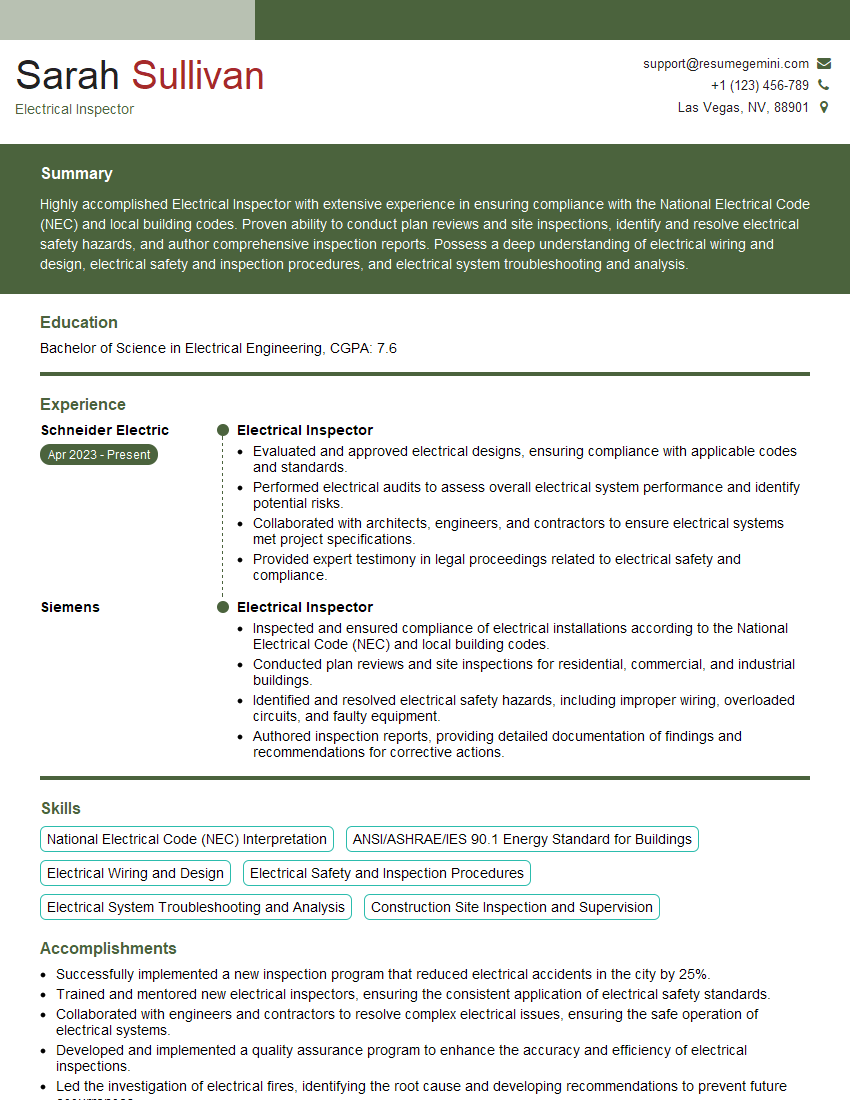
Electrical Inspector Resume Sample
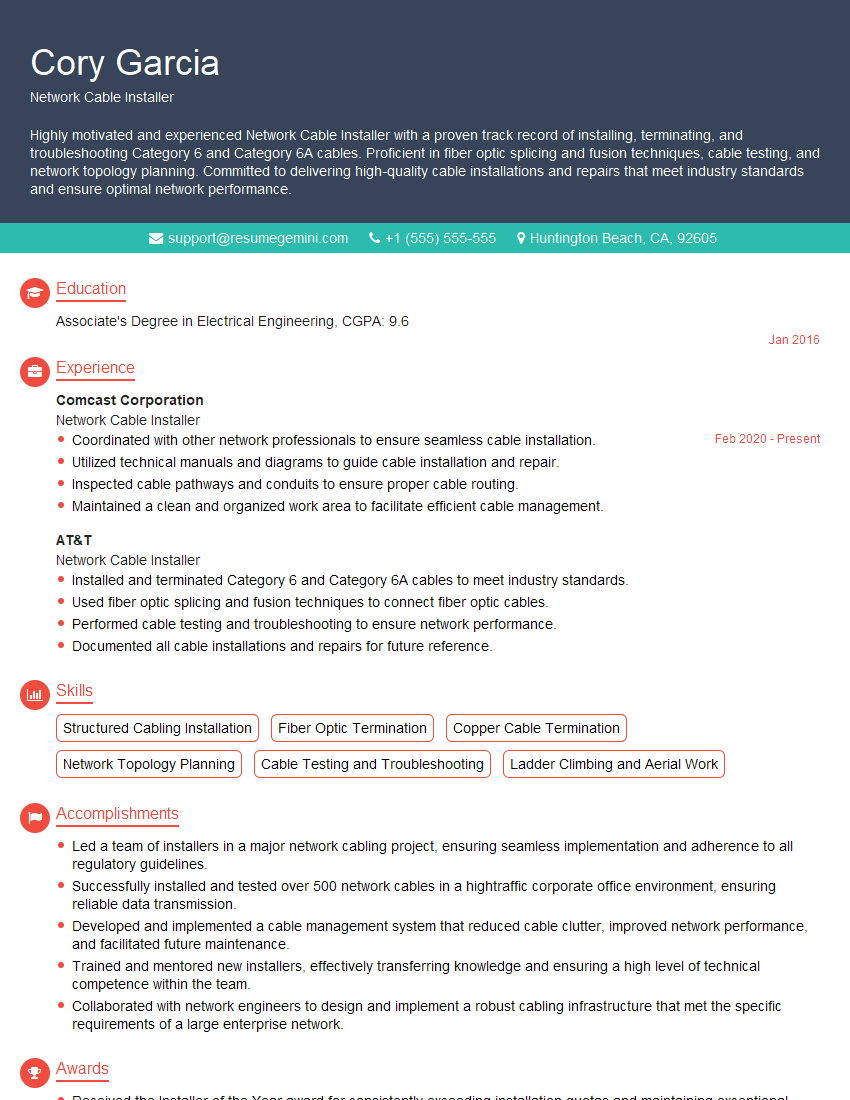
Network Cable Installer Resume Sample
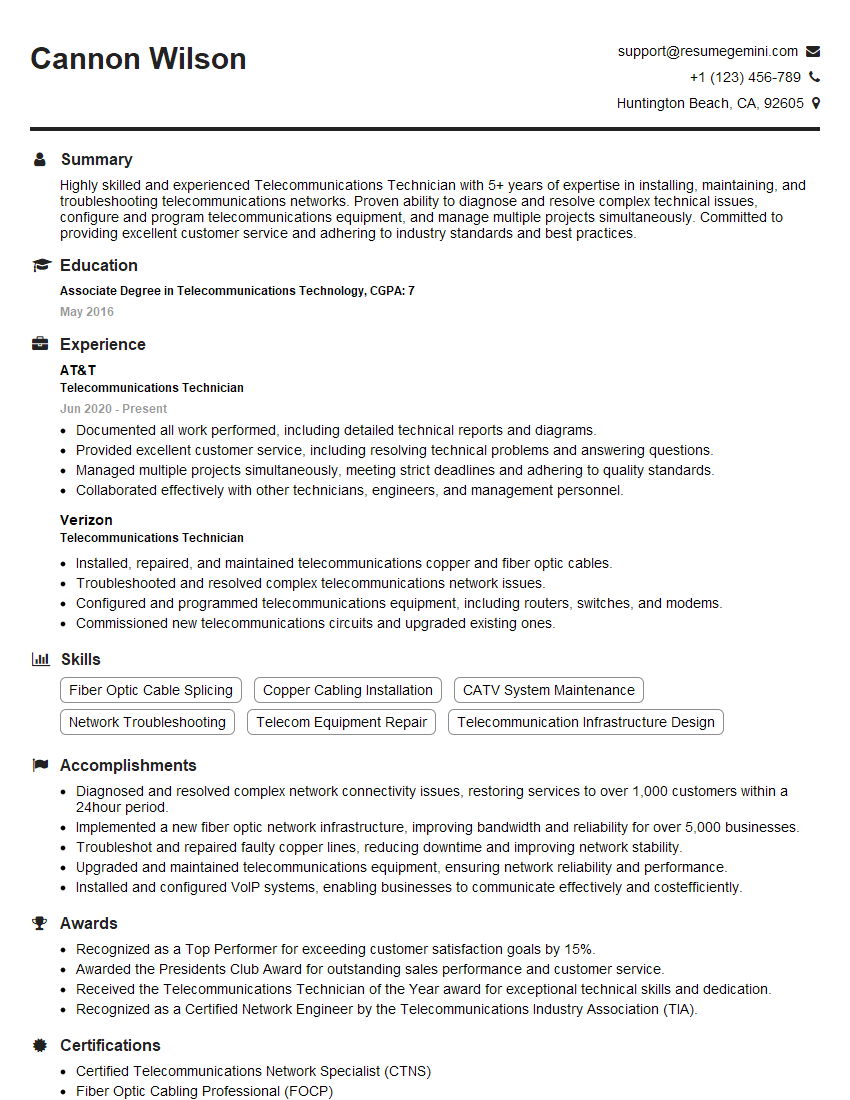
Telecommunications Technician Resume Sample
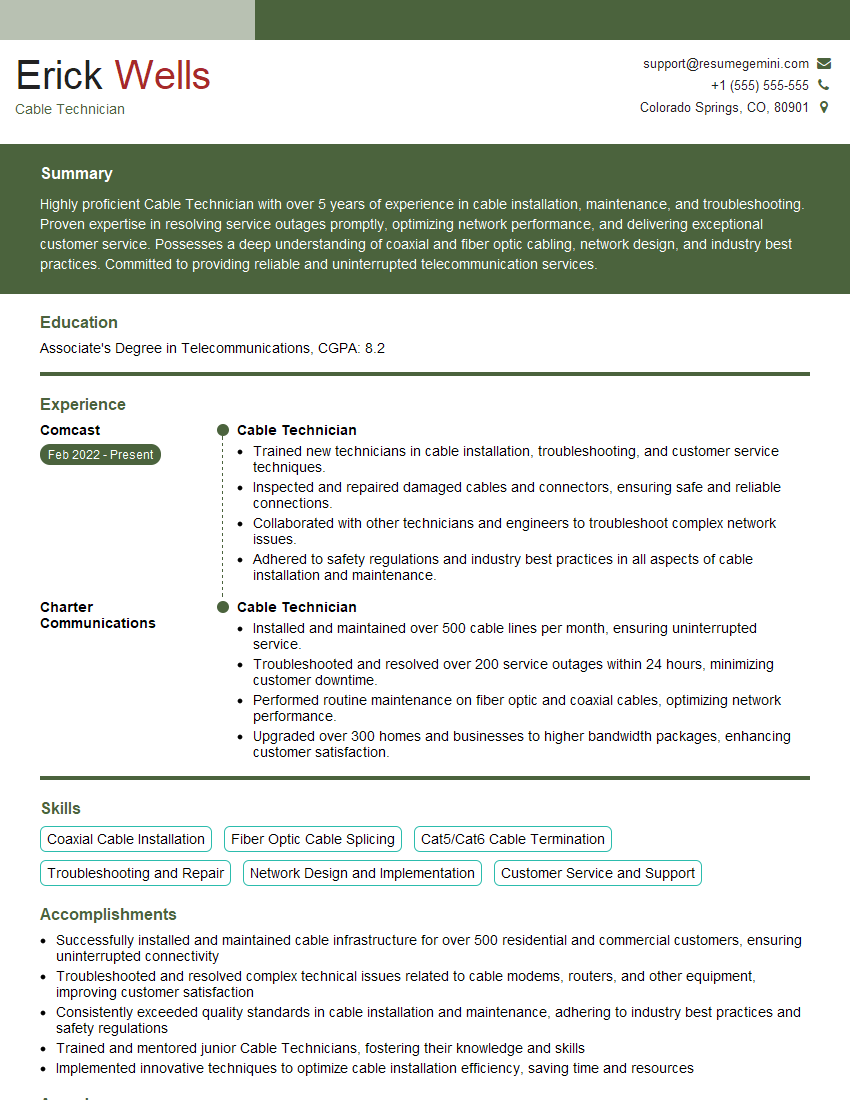
Cable Technician Resume Sample
- Electrical Estimator
- Electrical Designer
- Electrical Engineer
- Power Systems Engineer
- Control Systems Engineer
- Instrumentation Technician
- Fiber Optic Technician
- Electrical Foreman
- Electrical Supervisor
- Construction Electrician
- Electrician
- Industrial Electrician
- Maintenance Electrician
- Electrical Inspector
- Network Cable Installer
- Telecommunications Technician
- Cable Technician
Explore more articles
Users Rating of Our Blogs
Share Your Experience
We value your feedback! Please rate our content and share your thoughts (optional).
What Readers Say About Our Blog
To the interviewgemini.com Webmaster.
Very helpful and content specific questions to help prepare me for my interview!
Thank you
To the interviewgemini.com Webmaster.
This was kind of a unique content I found around the specialized skills. Very helpful questions and good detailed answers.
Very Helpful blog, thank you Interviewgemini team.