Are you ready to stand out in your next interview? Understanding and preparing for Electrical Hazard Assessment interview questions is a game-changer. In this blog, we’ve compiled key questions and expert advice to help you showcase your skills with confidence and precision. Let’s get started on your journey to acing the interview.
Questions Asked in Electrical Hazard Assessment Interview
Q 1. Explain the hierarchy of controls for managing electrical hazards.
The hierarchy of controls for managing electrical hazards follows a prioritized approach, aiming to eliminate hazards entirely before relying on personal protective equipment (PPE). This is often referred to as the ‘hierarchy of risk control’. It’s a fundamental principle in occupational safety and health.
- Elimination: The most effective control. This involves removing the hazard completely, such as replacing a dangerous piece of equipment with a safer alternative or redesigning a process to eliminate electrical exposure. Example: Replacing a high-voltage power line with a low-voltage system.
- Substitution: Replacing a hazardous material or process with a less hazardous one. Example: Replacing a hand-held electric drill with a pneumatic drill in a wet environment.
- Engineering Controls: Implementing physical changes to the workplace to reduce exposure. This includes things like safety interlocks, insulation, guarding, and proper grounding. Example: Installing a safety enclosure around a high-voltage transformer.
- Administrative Controls: Changes to work practices, training, or procedures to minimize risk. Example: Implementing a permit-to-work system for electrical maintenance, or providing comprehensive electrical safety training.
- Personal Protective Equipment (PPE): The last line of defense. PPE protects individuals from hazards when other controls aren’t feasible or sufficient. This includes things like insulated gloves, arc flash suits, and safety glasses. Example: Using insulated tools when working on energized equipment.
It’s crucial to remember that PPE should only be used as a supplemental layer of protection, not a primary method of hazard control. A well-designed electrical safety program will prioritize the upper levels of the hierarchy.
Q 2. Describe the difference between arc flash and shock hazards.
Arc flash and electric shock are both serious electrical hazards, but they differ significantly in their mechanism and effects.
- Electric Shock: Occurs when a person becomes part of an electrical circuit, resulting in the flow of current through their body. The severity depends on the voltage, current, path of the current, and duration of contact. Symptoms can range from a mild tingling sensation to severe burns, cardiac arrest, and death.
- Arc Flash: A high-temperature, high-pressure explosion of vaporized metal and air that occurs when an electrical fault creates a sudden, high-current arc. It produces intense light, heat, and pressure, causing severe burns, hearing damage, and eye injuries. The intense heat can quickly ignite nearby flammable materials, resulting in a fire.
Think of it this way: a shock is like a small electric current running through you, while an arc flash is like a massive explosion of electrical energy. Both are incredibly dangerous, but the arc flash hazard presents a much wider threat range and is often more catastrophic.
Q 3. How do you calculate arc flash boundary distances?
Calculating arc flash boundary distances requires specialized software and a thorough understanding of electrical system characteristics. It’s not something that can be accurately done with a simple formula. Professional arc flash risk assessments are essential.
The process generally involves these steps:
- System analysis: Determining the available fault current, system impedance, and other relevant parameters of the electrical system.
- Incident energy calculation: Using software to calculate the incident energy (in calories/cm²) at various distances from the equipment.
- Risk assessment: Determining the appropriate personal protective equipment (PPE) required based on the calculated incident energy levels.
- Boundary establishment: Establishing the arc flash boundary, the distance within which workers require specific PPE to prevent severe injury.
The software used for these calculations takes into account several factors, including the system voltage, fault current, and the equipment’s configuration. These calculations should only be performed by qualified electrical professionals who are experienced in arc flash hazard analysis.
Improper calculation can lead to underestimation of the risks, exposing workers to unnecessary danger. Always rely on professional assessments.
Q 4. What are the key components of a lockout/tagout procedure?
A lockout/tagout (LOTO) procedure is a critical safety protocol designed to prevent the accidental energization or start-up of equipment during maintenance or repair. It ensures that hazardous energy sources are isolated and rendered safe before any work begins. The key components include:
- Preparation: Identify the energy sources (electrical, mechanical, hydraulic, pneumatic, etc.) that need to be controlled and the equipment to be locked out. This also includes gathering the necessary LOTO devices and reviewing relevant procedures and diagrams.
- Lockout: Disconnecting and physically locking out the energy sources. This usually involves turning off breakers, disconnecting switches, and using lockable devices to prevent re-energization.
- Tagout: Attaching a tag to the lockout device, clearly identifying the worker who performed the lockout and the reason for the lockout. This serves as a warning to others not to energize the equipment.
- Verification: After lockout and tagout, verifying that the energy source is truly de-energized using appropriate testing equipment (e.g., voltage testers). This step is crucial to confirm the safety of the equipment before any work commences.
- Release: After the work is completed, the worker who performed the lockout removes their lock and tag, verifying the area is safe for re-energization. This is often done with a second person observing for additional safety.
A proper LOTO program is essential to prevent serious accidents. It’s not just a set of procedures; it’s a safety culture that necessitates thorough training and commitment from all personnel.
Q 5. Explain the importance of proper grounding and bonding in electrical safety.
Proper grounding and bonding are critical for electrical safety, forming a fundamental part of preventing electric shock and other electrical hazards. They provide a safe path for fault currents to flow, preventing dangerous voltages from appearing on conductive surfaces.
- Grounding: Connecting non-current-carrying metallic parts of equipment to the earth (ground). This provides a low-resistance path for fault currents to flow to the earth, effectively protecting individuals from electric shock if a fault occurs. Imagine a lightning rod: it safely channels the current to ground instead of into your home.
- Bonding: Connecting non-current-carrying metallic parts of equipment to each other. This equalizes the electrical potential between the parts, preventing voltage differences that could cause electric shock or initiate an arc flash. Think of it as creating a unified safety net.
Without proper grounding and bonding, stray voltages can appear on exposed metallic surfaces, creating a shock hazard. Grounding and bonding are often considered the first and most crucial safety mechanisms. They are crucial safety measures particularly in environments with high risk of fault currents.
Q 6. What are the common causes of electrical fires?
Electrical fires are a significant concern and can result from several factors, often stemming from a combination of circumstances.
- Overloaded circuits: When too many devices draw power from a single circuit, it can overheat the wiring and ignite nearby materials. Think of it like overloading a fuse—too much current flows, exceeding the design limits.
- Faulty wiring: Damaged, deteriorated, or improperly installed wiring can create short circuits, which cause excessive heat and potentially start a fire. Think of bare wires touching – a direct path for current to flow causing a short circuit.
- Overheating equipment: Motors, transformers, and other electrical equipment can overheat due to various factors, such as improper ventilation or mechanical issues. This excess heat can ignite flammable materials nearby.
- Appliance malfunctions: Faulty appliances such as space heaters, cooking appliances, or extension cords can initiate a fire, usually due to internal electrical failure.
- Arcing: Unintentional arcing (a spark) from faulty connections can also ignite flammable materials. Think of the sparks you might see from a loose wire in a device.
Regular electrical inspections, proper maintenance of equipment, and adherence to electrical codes are vital in preventing electrical fires.
Q 7. Describe the different types of personal protective equipment (PPE) used for electrical work.
The type of personal protective equipment (PPE) used for electrical work varies greatly depending on the specific hazards and voltage levels involved. It’s crucial to select appropriate PPE based on a professional risk assessment.
- Insulated tools: Tools with insulated handles to prevent electric shock when working on energized equipment. These tools are rated for specific voltage levels.
- Insulated gloves: Gloves made from dielectric materials to prevent electric shock. They also have voltage ratings which must be selected according to the voltage of the equipment being handled.
- Arc flash suits: Flame-resistant clothing designed to protect against the thermal hazards of an arc flash. These suits are rigorously tested to meet specific arc flash protection standards.
- Arc flash face shields or hoods: Protective gear to safeguard the face and eyes from the intense light and heat of an arc flash.
- Safety glasses or goggles: Provide eye protection from flying debris and sparks.
- Hearing protection: Ear plugs or muffs to protect against the loud noise of an arc flash.
- Safety footwear: Insulating footwear to protect against electrical shock.
Remember, PPE is the last line of defense. It’s crucial to implement other controls in the hierarchy of controls to minimize the need for PPE to the greatest extent possible.
Q 8. How do you conduct a risk assessment for an electrical installation?
An electrical installation risk assessment systematically identifies potential hazards and evaluates their likelihood and severity, ultimately determining the necessary control measures. Think of it like a detective investigating a crime scene, but instead of a crime, we’re looking for potential electrical dangers.
The process typically involves these steps:
- Identifying Hazards: This involves a thorough site survey, reviewing existing documentation (like schematics and maintenance records), and considering the intended use of the installation. We look for things like damaged wiring, overloaded circuits, improper grounding, exposed live parts, and lack of appropriate safety devices (e.g., RCDs).
- Assessing Risks: For each identified hazard, we evaluate the likelihood of it causing harm (probability) and the severity of the potential harm (consequences). This might involve using risk matrices or scoring systems to quantify the risk.
- Implementing Controls: Based on the risk assessment, appropriate control measures are implemented. These could include replacing damaged equipment, improving earthing, installing safety devices (e.g., circuit breakers, GFCIs), providing personal protective equipment (PPE), improving worker training, or implementing lockout/tagout procedures.
- Review and Monitoring: The assessment isn’t a one-time event. Regular reviews and monitoring are critical to ensure controls remain effective and to identify any new hazards that might emerge.
Example: Imagine a construction site with exposed wiring. The hazard is the exposed wiring. The risk is high because of the probability of contact and the severe consequences (electric shock). A control measure would be to immediately cover or protect the wiring until it is properly installed.
Q 9. What are the relevant standards and regulations for electrical safety in your region?
The specific standards and regulations vary by region. However, many jurisdictions adopt or adapt international standards like those from the IEC (International Electrotechnical Commission) and national standards. In many countries, these regulations are enforced by government agencies. For instance, the National Electrical Code (NEC) in the United States, the IEE Wiring Regulations (BS 7671) in the United Kingdom, and similar codes in other countries provide comprehensive guidelines for safe electrical installations.
These standards cover various aspects of electrical safety, including:
- Installation requirements: Specifications for wiring methods, cable sizes, protective devices, and earthing systems.
- Testing and inspection procedures: Guidelines for verifying the safety of electrical installations.
- Safety regulations for specific environments: Special considerations for hazardous locations (e.g., areas with flammable materials) and for particular equipment (e.g., medical devices).
Staying updated on the latest versions of these standards and regulations is crucial for any electrical safety professional. Failure to comply can lead to serious legal consequences and safety risks.
Q 10. Explain the concept of fault current and its significance in electrical safety.
Fault current is the current that flows when a fault occurs in an electrical system, such as a short circuit or ground fault. Think of it like a sudden surge of water in a pipe when a hole is created.
Its significance in electrical safety is paramount because it can cause:
- Electric shock: High fault currents can deliver a potentially lethal electric shock to anyone touching the affected part of the system.
- Fire: The heat generated by a high fault current can ignite flammable materials, leading to fires and significant damage.
- Equipment damage: Excessive fault currents can damage electrical equipment and components, leading to system failure and costly repairs.
Protective devices, such as circuit breakers and fuses, are designed to interrupt fault currents before they cause these problems. The correct sizing and selection of these devices is based on the expected fault current levels in the system, which is a critical part of electrical safety design.
Example: A short circuit between two live wires in a poorly maintained system can result in a very high fault current. If not quickly interrupted by a circuit breaker, this fault current could cause a fire or a dangerous electric shock.
Q 11. How do you identify and mitigate potential electrical hazards during a site inspection?
A site inspection for electrical hazards is a systematic visual examination of the electrical installation to identify potential dangers. It’s akin to a medical check-up for your electrical system.
During a site inspection, I would look for:
- Damaged Wiring: Look for frayed, brittle, or otherwise damaged wires, which could expose live parts.
- Overloaded Circuits: Check for signs of excessive heat near electrical outlets or switchboards which indicates an overloaded circuit.
- Improper Grounding: Verify that grounding systems are in place and properly connected to prevent electric shocks.
- Exposed Live Parts: Look for any exposed live parts of electrical equipment or wiring.
- Lack of Safety Devices: Check for the presence and proper operation of safety devices, like circuit breakers, RCDs, and GFCIs.
- Improper Cable Management: Poorly routed or un-secured cables present a significant tripping hazard and can be damaged easily.
Mitigation: Once hazards are identified, mitigation strategies are put in place. These could range from simple repairs (e.g., replacing a damaged outlet) to more extensive work (e.g., rewiring a section of the installation). Documentation of findings and corrective actions is essential.
Example: If I find an overloaded circuit during an inspection, I might recommend installing additional circuits to distribute the load more evenly, reducing the risk of overheating and fire.
Q 12. Describe the process of performing an electrical safety audit.
An electrical safety audit is a more comprehensive and systematic assessment than a site inspection. It’s a thorough evaluation of all aspects of an electrical system, including design, installation, operation, and maintenance. Think of it as a complete health evaluation instead of just a check-up.
The process usually involves:
- Document Review: Reviewing design drawings, specifications, maintenance records, and test certificates to ensure compliance with relevant standards.
- Visual Inspection: Conducting a thorough visual inspection of the entire electrical system, similar to the site inspection process described earlier.
- Testing and Measurement: Performing various electrical tests, such as insulation resistance tests, earth continuity tests, and testing of protective devices.
- Interviewing Personnel: Speaking with electrical personnel to gain insights into the day-to-day operation and maintenance of the system.
- Report Preparation: Producing a comprehensive report that details the findings, identifies any non-compliances or potential hazards, and provides recommendations for corrective actions.
Example: During an audit of a manufacturing facility, we might discover that their earth leakage protection devices are not properly calibrated, putting the workers at risk. The audit report would highlight this issue and recommend recalibration or replacement.
Q 13. What is the difference between a ground fault and an arc fault?
Both ground faults and arc faults are types of electrical faults, but they differ significantly in their nature and the hazards they pose.
Ground Fault: This occurs when a live conductor makes unintended contact with earth or a grounded metal surface. Think of it as electricity taking an unintended shortcut to the ground. This usually involves a relatively low current but can still be dangerous. Ground Fault Circuit Interrupters (GFCIs) are designed to detect these small current imbalances and trip to prevent shock.
Arc Fault: This involves a high-temperature electrical arc that occurs when electricity jumps across a gap, often caused by damaged insulation, loose connections, or arcing in equipment. Arc faults are usually high-current events and are significantly more likely to cause fires. Arc Fault Circuit Interrupters (AFCIs) are designed to detect these dangerous arcs and trip the circuit before a fire starts.
In short, a ground fault is more about shock hazard while an arc fault is primarily a fire hazard. While both are serious, they require different types of protection.
Q 14. How do you interpret electrical schematics and wiring diagrams in relation to safety?
Electrical schematics and wiring diagrams are essential for understanding the layout and functionality of an electrical system. They are like maps that show the pathways of electrical current. Interpreting them correctly is crucial for ensuring safety.
When reviewing these documents for safety, I look for:
- Proper Wiring Methods: Checking to ensure that wiring methods comply with relevant standards (e.g., correct cable types, insulation, and routing).
- Protective Devices: Identifying the location and type of protective devices (e.g., circuit breakers, fuses, RCDs) to confirm sufficient protection is provided.
- Grounding and Bonding: Verifying the proper grounding and bonding of equipment and metal enclosures to ensure safety from electric shock.
- Overcurrent Protection: Ensuring that appropriate overcurrent protection is provided for circuits and equipment to prevent overheating and fire hazards.
- Clear Labeling and Identification: Confirming that the drawings accurately represent the installed system and that components are clearly labelled. Inconsistencies can point towards potential hazards.
Example: A schematic might show a high-amperage load connected to a low-capacity circuit. This would indicate a safety risk due to potential overheating and the need for corrective action like increasing the circuit capacity or splitting the load into separate circuits.
Q 15. Explain the use of various electrical testing instruments (e.g., multimeters, clamp meters).
Various electrical testing instruments are crucial for ensuring workplace safety and identifying potential hazards. They allow us to measure different electrical parameters, providing vital information for effective hazard assessment and mitigation.
Multimeters: These versatile devices measure voltage (AC and DC), current (AC and DC), resistance, and often capacitance and continuity. Think of a multimeter as a comprehensive diagnostic tool. For instance, we might use it to check the voltage at an outlet to ensure it’s within the expected range, or measure the resistance of a circuit to identify potential short circuits. A reading of 0 ohms indicates a short circuit, a dangerously low resistance.
Clamp Meters: These are specialized for measuring current without breaking the circuit. This is incredibly important for safety reasons, as it eliminates the need to disconnect wires. We use clamp meters to measure the current draw of equipment, checking if it exceeds safe operational limits and identifying overloaded circuits. For example, a clamp meter can quickly determine if a motor is drawing excessive current, indicating potential overheating or a failing component.
Other Instruments: Beyond multimeters and clamp meters, other instruments like insulation testers (measuring resistance of insulation to detect deterioration), earth ground resistance testers (checking the effectiveness of grounding), and power quality analyzers (measuring voltage fluctuations and harmonics) play significant roles in comprehensive electrical safety assessments.
Proper selection and use of these instruments is paramount for accurate measurements and a safe working environment. Incorrect usage can lead to inaccurate readings and even injury. Always follow manufacturer’s instructions and adhere to relevant safety regulations.
Career Expert Tips:
- Ace those interviews! Prepare effectively by reviewing the Top 50 Most Common Interview Questions on ResumeGemini.
- Navigate your job search with confidence! Explore a wide range of Career Tips on ResumeGemini. Learn about common challenges and recommendations to overcome them.
- Craft the perfect resume! Master the Art of Resume Writing with ResumeGemini’s guide. Showcase your unique qualifications and achievements effectively.
- Don’t miss out on holiday savings! Build your dream resume with ResumeGemini’s ATS optimized templates.
Q 16. How do you determine the appropriate level of PPE based on the risk assessment?
Determining the appropriate level of Personal Protective Equipment (PPE) is a critical step in managing electrical hazards. It’s directly linked to the risk assessment, which should thoroughly evaluate the potential dangers involved.
A higher risk assessment necessitates more protective PPE. For example:
Low Risk (e.g., working with low-voltage circuits in a well-maintained environment): Might only require insulated gloves and safety glasses.
Medium Risk (e.g., working near higher voltage equipment or in less-than-ideal conditions): May require insulated gloves, safety glasses, arc-flash rated clothing, and potentially a safety harness.
High Risk (e.g., working on high-voltage systems or in confined spaces): Requires specialized PPE, including arc-flash suits, insulated tools, and possibly respiratory protection. A detailed risk assessment would dictate the exact level and type of PPE.
Remember, PPE is a last line of defense. The primary focus should always be on engineering controls (like proper lockout/tagout procedures) and administrative controls (like safe work practices and training) to minimize the risk in the first place.
Q 17. Describe your experience with electrical safety training programs.
I’ve been extensively involved in developing and delivering electrical safety training programs for various levels of personnel, from entry-level technicians to experienced engineers. My experience encompasses both theoretical knowledge and practical, hands-on training.
These programs typically cover:
Electrical Safety Fundamentals: Ohm’s law, circuit principles, and hazard identification.
Lockout/Tagout Procedures: The critical steps for safely de-energizing equipment.
Arc Flash Hazard Awareness: Understanding the potential for severe burns from arc flashes and how to mitigate the risks.
Working Safely with Different Voltage Levels: Emphasis on specific safety precautions for low, medium, and high voltage systems.
PPE Selection and Use: Proper selection and donning of PPE tailored to specific tasks.
Emergency Response Procedures: What to do in the event of an electrical accident.
In addition to formal training, I often incorporate practical demonstrations, case studies of real-world incidents, and interactive exercises to enhance learning and knowledge retention. I believe that a combination of theory and hands-on experience fosters a deeper understanding of electrical safety and promotes a safety-conscious work culture.
Q 18. Explain the importance of regular electrical safety inspections and maintenance.
Regular electrical safety inspections and maintenance are crucial for preventing accidents, ensuring compliance with regulations, and extending the lifespan of electrical equipment. Neglecting these can lead to catastrophic consequences.
Inspections: Regular visual inspections identify potential hazards like frayed wiring, loose connections, damaged insulation, and overloaded circuits. These can be scheduled inspections, or triggered by events like a power surge or equipment malfunction. A thorough inspection is key.
Maintenance: Preventative maintenance involves tasks such as cleaning electrical panels, tightening connections, replacing worn parts, and testing insulation resistance. This proactive approach prevents minor problems from escalating into major failures.
Benefits of Regular Inspections and Maintenance:
Reduced risk of electrical shocks, fires, and arc flashes.
Increased equipment lifespan and reliability.
Compliance with safety regulations and avoiding potential penalties.
Enhanced productivity and reduced downtime.
A well-defined inspection and maintenance schedule, tailored to the specific needs of the facility and equipment, is essential for effective electrical safety management.
Q 19. How do you manage electrical hazards in confined spaces?
Managing electrical hazards in confined spaces presents unique challenges due to limited access, restricted movement, and potential for oxygen deficiency or accumulation of flammable gases. Additional precautions are necessary to ensure worker safety.
My approach involves:
Permit-to-Work System: A rigorous permit system is implemented before any electrical work commences. This includes assessing the space’s atmospheric conditions, identifying potential hazards, and defining the necessary safety precautions.
Enhanced PPE: In addition to standard PPE, workers may require specialized breathing apparatus or fall protection gear depending on the confined space’s characteristics.
Gas Monitoring: Before entering, the confined space must be thoroughly checked for hazardous gases or oxygen deficiency. Continuous monitoring is also crucial during the work.
Ventilation: Ensuring adequate ventilation to remove any hazardous gases and maintain a safe oxygen level.
Emergency Procedures: Detailed emergency evacuation plans must be established and workers trained on appropriate procedures.
Trained Personnel: Only trained and authorized personnel should be allowed to work in confined spaces with electrical hazards.
The key is a layered safety approach, integrating multiple strategies to mitigate all potential hazards within the confined space.
Q 20. Describe your experience working with high-voltage systems.
My experience with high-voltage systems is extensive, involving both maintenance and troubleshooting activities. I have worked on systems ranging from several kilovolts to hundreds of kilovolts. This work requires a deep understanding of safety protocols and specialized equipment.
Key aspects of my experience include:
Lockout/Tagout Procedures: Strict adherence to lockout/tagout procedures is paramount for de-energizing high-voltage equipment safely. This often involves multiple steps and verifications to ensure complete de-energization before any work can begin.
Specialized PPE: Working on high-voltage systems necessitates highly specialized PPE, including arc flash suits, insulated gloves, and specialized tools designed for high-voltage environments.
Testing and Measurement: Specialized testing equipment is employed to verify the absence of voltage before working on the system and to perform safety checks during maintenance.
Safety Training: Extensive safety training is required before any work is permitted. This includes theoretical knowledge, practical demonstrations, and simulated scenarios to prepare workers for potential emergencies.
Safety is not just a priority when working with high-voltage systems; it’s an absolute necessity. Any lapse in safety protocols can have extremely serious and potentially fatal consequences.
Q 21. What is your experience with incident investigation related to electrical hazards?
I have significant experience investigating incidents involving electrical hazards. My approach is methodical and follows a structured investigation process.
My investigation typically involves:
Secure the Scene: First and foremost, ensuring the safety of all personnel and securing the area to prevent further incidents or damage to evidence.
Gather Information: Collecting information from witnesses, reviewing relevant documentation (e.g., safety permits, maintenance logs), and examining physical evidence.
Analyze the Evidence: Analyzing the physical evidence to determine the root cause of the incident and identify any contributing factors.
Determine Root Cause: Through a systematic investigation, determining the root cause(s) of the incident is crucial. This often involves analyzing electrical diagrams, testing equipment, and interviewing personnel. Identifying the root cause helps prevent future incidents.
Report Writing: Preparing a comprehensive report detailing the findings, root causes, and recommendations for preventative measures.
I approach incident investigations with a focus on both preventing future occurrences and improving safety procedures. Every incident represents a valuable learning opportunity to enhance electrical safety practices.
Q 22. How do you ensure compliance with relevant safety regulations?
Ensuring compliance with electrical safety regulations is paramount. It’s a multifaceted process involving a thorough understanding of the applicable codes and standards, diligent implementation of safety procedures, and meticulous record-keeping. This starts with identifying all relevant regulations – this might include national standards like the NEC (National Electrical Code) in the US, or equivalent regulations in other countries. We then conduct regular audits to verify that our practices align with these standards. This includes inspections of equipment, installations, and work practices to identify any non-compliance. We also maintain detailed records of inspections, testing, and training, ensuring traceability and accountability. Any non-compliance is documented, investigated, and rectified promptly, with preventative measures implemented to avoid recurrence. For example, if an inspection reveals outdated equipment, we would immediately initiate a replacement process, ensuring the new equipment meets current safety standards.
Furthermore, we proactively stay updated on any changes or amendments to the safety regulations through professional development, industry publications, and participation in relevant workshops and training sessions. This ensures our practices are constantly aligned with the latest best practices and technological advancements in electrical safety.
Q 23. Explain your understanding of NFPA 70E (or equivalent local standard).
NFPA 70E, Standard for Electrical Safety in the Workplace, is the cornerstone of electrical safety in many regions. It provides a comprehensive framework for minimizing the risk of electrical hazards. My understanding encompasses its key elements, including the establishment of arc flash hazard boundaries, the use of appropriate personal protective equipment (PPE) based on risk assessment calculations, and the implementation of safe work practices. The standard emphasizes the importance of a robust electrical safety program, which includes regular training, risk assessments, and the development of energy control procedures (lockout/tagout).
For instance, NFPA 70E details how to calculate incident energy levels using software or online calculators based on system voltage, fault current, and working distance to determine the necessary PPE, such as arc flash suits and face shields. It also stresses the importance of de-energizing equipment before working on it whenever possible, and if not possible, employing appropriate procedures and PPE to mitigate risks. Understanding arc flash hazard analysis is crucial; we use software to model electrical systems and determine the potential energy released during an arc flash event, this allows us to implement appropriate safety measures. Compliance isn’t simply about following the rules; it’s about understanding the rationale behind them and applying them effectively in real-world situations.
Q 24. Describe your experience with electrical safety management systems.
My experience with electrical safety management systems is extensive. I’ve been involved in designing, implementing, and auditing safety programs across various industries. A typical system incorporates several key components: a comprehensive risk assessment process, detailed safety procedures (including lockout/tagout), regular training programs for all personnel, documented preventative maintenance schedules for electrical equipment, and a system for incident reporting and investigation. I have personally implemented safety programs using software solutions that facilitate risk assessment, training record-keeping, and work permit generation.
For example, in a previous role, I developed a system that integrated a computerized maintenance management system (CMMS) with an arc flash analysis software to automatically update PPE requirements based on maintenance tasks and system modifications. This enhanced efficiency and improved safety by ensuring personnel always had the correct PPE for the task at hand. The focus is always on continuous improvement; regular audits and reviews of the safety management system identify areas for enhancement and allow us to adapt to evolving workplace needs and regulatory changes.
Q 25. How do you communicate electrical safety risks and procedures to non-technical personnel?
Communicating electrical safety risks to non-technical personnel requires clear, concise, and relatable language. Avoid technical jargon; instead, use analogies and visual aids to explain concepts. For example, explaining arc flash using a visual representation of an explosion to illustrate the danger is far more effective than explaining fault currents and incident energy. I often use simple terms and avoid overly technical language.
We rely heavily on visual aids like posters, videos, and interactive training sessions to ensure understanding. For example, a simple infographic demonstrating the proper lockout/tagout procedure is more impactful than a lengthy written instruction. Training sessions usually involve hands-on demonstrations and practical exercises to reinforce learning. Regular refresher training ensures that the message remains current and relevant to their roles. Feedback mechanisms are crucial to assess understanding and adapt the communication strategy accordingly. Making the information accessible, understandable, and relevant ensures everyone is empowered to work safely.
Q 26. Explain your process for identifying and controlling potential hazards during new electrical installations.
Identifying and controlling hazards during new electrical installations is a systematic process. It starts with a thorough review of the project specifications and relevant safety standards. A detailed risk assessment is then conducted, identifying potential hazards associated with each stage of the installation. This assessment considers factors such as voltage levels, proximity to hazardous areas, and the potential for human error.
Based on this assessment, we develop a comprehensive safety plan that includes specific control measures. This might involve the use of appropriate PPE, implementing safe work practices, employing lockout/tagout procedures, and conducting regular testing and inspections. For example, before commencing work, we might specify a designated safe work area, clearly demarcated and isolated from other activities. All personnel involved must receive appropriate training on safe work procedures and the use of PPE before starting the work. The safety plan is regularly reviewed and updated throughout the project, adapting to changing circumstances and ensuring the controls remain effective. Final testing and inspections are crucial to ensure the installation is safe and complies with all relevant standards before energization.
Q 27. Describe a time you had to make a critical decision related to electrical safety.
During a large-scale industrial upgrade, we discovered a significant discrepancy between the as-built drawings and the actual electrical system. This created a hazardous condition, as the drawings didn’t accurately reflect the existing wiring configuration. This meant that planned maintenance work posed a much higher risk of electric shock than initially anticipated.
My critical decision was to immediately halt all work on that section of the system, rather than proceeding with the maintenance tasks as originally planned. We then initiated a comprehensive investigation to verify the actual wiring and update the drawings. This resulted in a short-term delay, but it prevented a potentially serious accident. The project timeline was adjusted, and additional safety measures were implemented to compensate for the delay. This incident emphasized the importance of accurate documentation and the critical role of thorough risk assessments in preventing electrical accidents. Following this, I also implemented a program to regularly review and validate all electrical drawings to prevent similar situations in the future. The incident led to improvements in our processes and stronger emphasis on continuous verification of system documentation.
Key Topics to Learn for Electrical Hazard Assessment Interview
- Fundamental Electrical Principles: Understanding Ohm’s Law, Kirchhoff’s Laws, and basic circuit analysis is crucial for assessing potential hazards.
- Hazard Identification and Risk Assessment: Learn methodologies for identifying electrical hazards in various environments (industrial, residential, commercial), and techniques for quantifying associated risks using risk matrices.
- Arc Flash Hazard Analysis: Master the concepts of arc flash, including incident energy calculations, arc flash boundary determination, and appropriate personal protective equipment (PPE) selection.
- Lockout/Tagout (LOTO) Procedures: Understand the principles and practical application of LOTO procedures to ensure electrical safety during maintenance and repair work.
- Grounding and Bonding: Explore the importance of proper grounding and bonding techniques in mitigating electrical hazards and ensuring system safety.
- Electrical Safety Regulations and Standards: Familiarize yourself with relevant national and international electrical safety standards and regulations (e.g., NFPA 70E).
- Electrical Testing and Inspection Methods: Understand various testing methods used to ensure electrical systems’ safety and compliance, including insulation resistance testing and ground continuity testing.
- Practical Problem-Solving: Develop your ability to analyze electrical schematics, identify potential hazards, and propose effective mitigation strategies.
- Case Studies and Real-World Examples: Review real-world case studies of electrical accidents to understand the consequences of neglecting safety procedures and best practices.
Next Steps
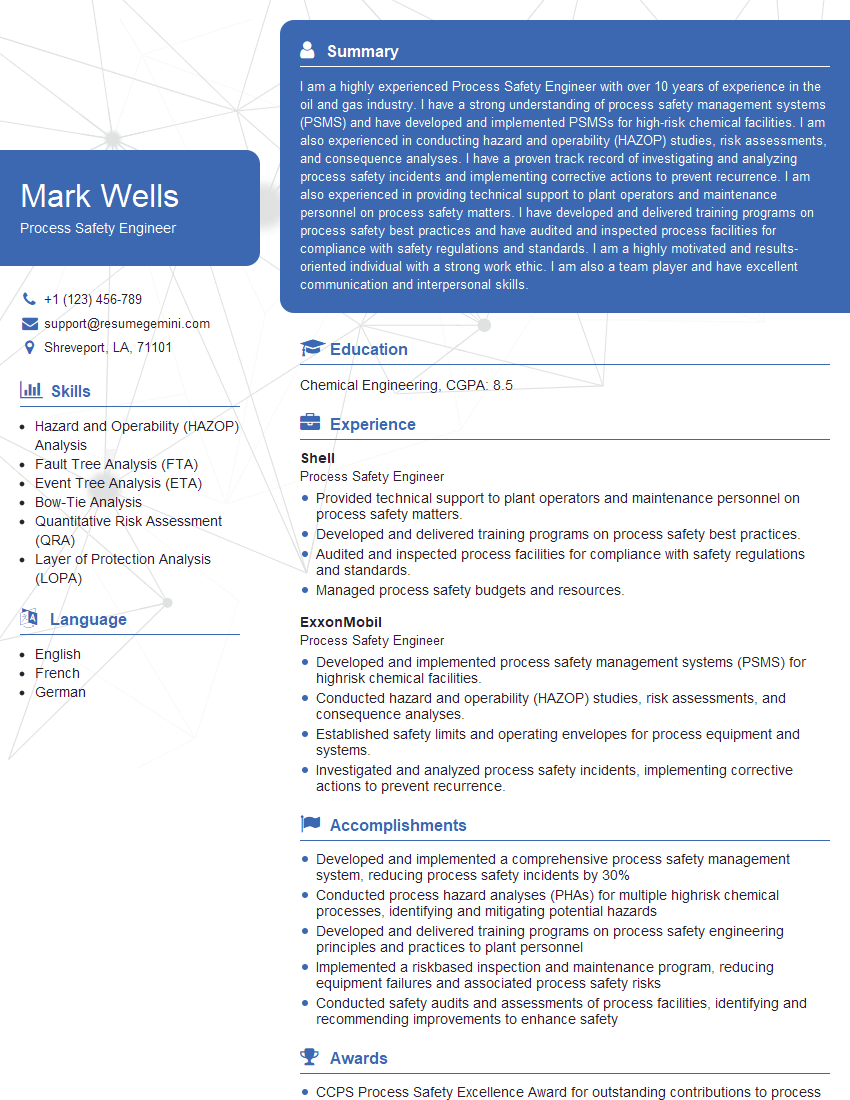
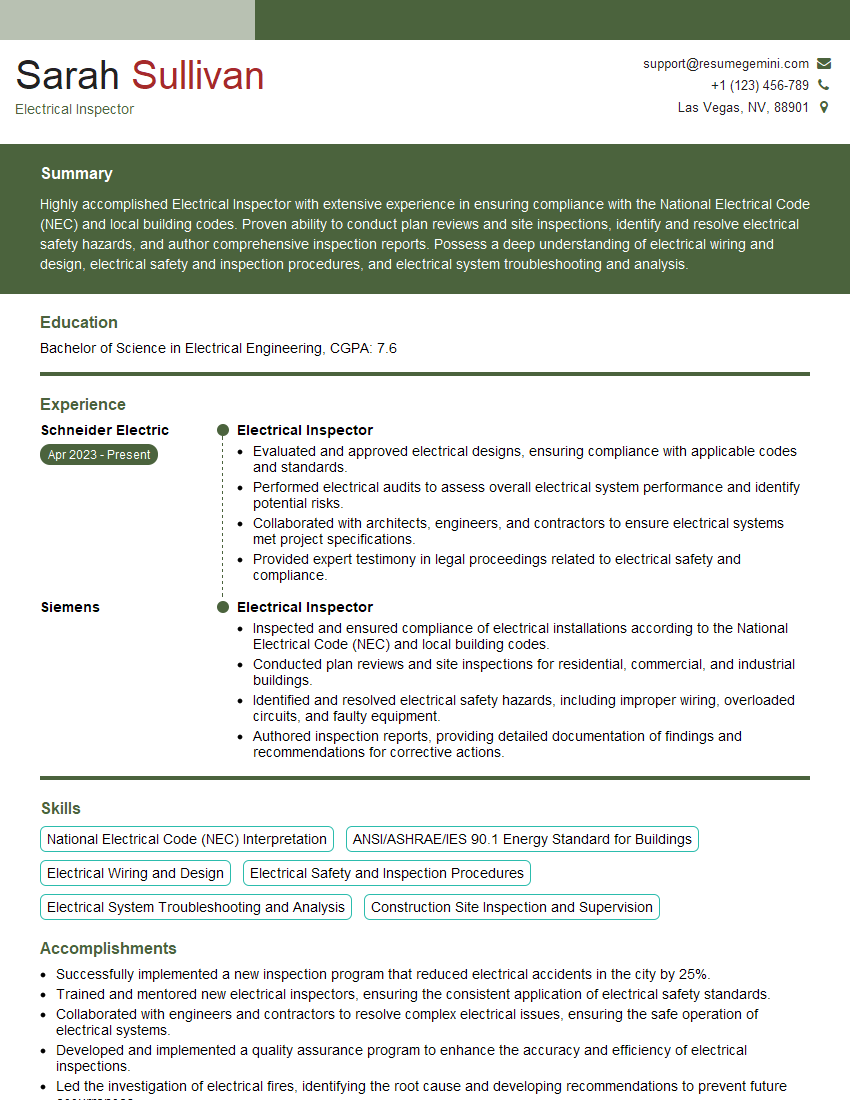
Mastering Electrical Hazard Assessment is vital for career advancement in the electrical industry, opening doors to specialized roles and increased earning potential. A strong resume is your key to unlocking these opportunities. Building an ATS-friendly resume is crucial for getting your application noticed by recruiters. To make your resume shine, leverage the power of ResumeGemini. ResumeGemini provides a streamlined platform for creating professional, impactful resumes. Examples of resumes tailored specifically to Electrical Hazard Assessment professionals are available to guide you through the process. Take the next step towards your dream career – craft a standout resume with ResumeGemini today!


Explore more articles
Users Rating of Our Blogs
Share Your Experience
We value your feedback! Please rate our content and share your thoughts (optional).
What Readers Say About Our Blog
To the interviewgemini.com Webmaster.
Very helpful and content specific questions to help prepare me for my interview!
Thank you
To the interviewgemini.com Webmaster.
This was kind of a unique content I found around the specialized skills. Very helpful questions and good detailed answers.
Very Helpful blog, thank you Interviewgemini team.