Unlock your full potential by mastering the most common Electrical Predictive Maintenance interview questions. This blog offers a deep dive into the critical topics, ensuring you’re not only prepared to answer but to excel. With these insights, you’ll approach your interview with clarity and confidence.
Questions Asked in Electrical Predictive Maintenance Interview
Q 1. Explain the difference between predictive, preventative, and corrective maintenance.
The three maintenance strategies – corrective, preventative, and predictive – differ significantly in their approach to equipment upkeep. Corrective maintenance is reactive; repairs only happen after a failure occurs. Think of it like waiting for your car to break down before fixing it. This is the most costly approach, often leading to production downtime and safety hazards. Preventative maintenance is proactive; it involves scheduled inspections and servicing at predetermined intervals, regardless of the equipment’s current condition. This is akin to changing your car’s oil every 3,000 miles, even if it seems to be running fine. While better than corrective maintenance, it can be inefficient, as some components might not need servicing yet. Predictive maintenance, in contrast, is data-driven. It utilizes sensors and data analytics to anticipate potential failures *before* they happen, allowing for timely interventions. Imagine having a sensor in your car that predicts engine trouble before it actually fails, giving you time to schedule a repair and avoid a breakdown. It’s the most efficient and cost-effective approach, minimizing downtime and maximizing equipment lifespan.
Q 2. Describe various electrical predictive maintenance techniques.
Electrical predictive maintenance employs several techniques to forecast equipment failures. These include:
- Vibration Analysis: Detects mechanical anomalies in motors and other rotating equipment by analyzing vibration patterns.
- Infrared Thermography: Uses thermal imaging to identify overheating components, which can indicate impending failures.
- Motor Current Signature Analysis (MCSA): Analyzes motor current waveforms to detect internal faults.
- Oil Analysis: Examines lubricant properties for signs of contamination or degradation, indicating wear and tear in machinery.
- Partial Discharge (PD) Detection: Measures electrical discharges within insulation to pinpoint potential insulation breakdown.
- Ultrasonic Testing: Detects high-frequency sounds to identify problems like arcing, corona discharge, and bearing wear.
- Data Analytics and Machine Learning: Processes data from various sensors to build predictive models that forecast equipment health and remaining useful life.
The choice of technique depends on the specific equipment and the potential failure modes being monitored.
Q 3. How does vibration analysis contribute to predictive maintenance?
Vibration analysis plays a crucial role in predictive maintenance by detecting subtle changes in the vibrational patterns of rotating equipment like motors, pumps, and fans. These changes, often imperceptible to the human ear, can indicate developing problems such as imbalances, misalignments, bearing wear, or looseness. Sensors attached to the equipment measure vibrations in different directions (axial, radial, and vertical) and these measurements are analyzed to identify characteristic frequencies. For example, a high frequency might suggest bearing wear, while a low frequency could point to imbalance. Sophisticated algorithms then process this data, often comparing it to baseline measurements, to diagnose the problem and predict when a failure might occur, enabling proactive repairs.
Q 4. Explain the use of infrared thermography in electrical systems.
Infrared thermography, or thermal imaging, is a non-contact method used to detect overheating in electrical systems. An infrared camera captures thermal radiation emitted by components, creating an image representing their temperature distribution. Overheating components, such as loose connections, faulty insulators, or overloaded circuits, exhibit higher temperatures than their surroundings. These hotspots are visually identifiable on the thermal image, allowing for early detection of potential failures. Early identification prevents more severe issues like fires, equipment damage, and downtime. For example, a thermal image might reveal a connector with unusually high temperature, indicating a loose connection that could lead to arcing and a fire if left unaddressed.
Q 5. What are the benefits of using data analytics in predictive maintenance?
Data analytics significantly enhances predictive maintenance by extracting valuable insights from sensor data. By processing data from multiple sources – vibration sensors, temperature sensors, current sensors, etc. – data analytics algorithms can identify patterns and correlations indicative of potential failures. This allows for more accurate predictions of when maintenance is required, optimizing maintenance schedules and reducing downtime. Machine learning models can further improve predictions by learning from historical data and adjusting to changing conditions. This helps to move beyond simple threshold-based alerts to more sophisticated predictions of equipment failure probabilities and their potential impact on the overall system.
Q 6. Describe different types of sensors used in electrical predictive maintenance.
A wide variety of sensors are used in electrical predictive maintenance, each tailored to measure specific parameters. These include:
- Temperature Sensors: Thermocouples, RTDs, and infrared sensors measure temperature to detect overheating.
- Vibration Sensors: Accelerometers and velocity sensors measure vibrations to detect mechanical problems.
- Current Sensors: Current transformers (CTs) and current shunts measure electrical current to detect anomalies.
- Voltage Sensors: Potential transformers (PTs) measure voltage to detect voltage imbalances or surges.
- Acoustic Emission Sensors: Detect high-frequency sounds to identify problems like arcing or partial discharges.
- Partial Discharge Sensors: Detect small electrical discharges in insulation to pinpoint weaknesses.
- Oil Condition Sensors: Analyze lubricant properties for signs of contamination or degradation.
The choice of sensor depends on the specific application and the type of equipment being monitored.
Q 7. How do you interpret motor current signature analysis (MCSA) data?
Motor Current Signature Analysis (MCSA) involves analyzing the electrical current waveform drawn by a motor to identify internal faults. A healthy motor will have a relatively smooth and predictable current waveform. However, developing faults such as bearing wear, rotor imbalances, or stator winding problems introduce characteristic changes in this waveform. These changes often manifest as additional frequency components or harmonics superimposed on the fundamental frequency. MCSA software then analyzes these changes by using Fast Fourier Transforms (FFTs) to identify the frequencies and amplitudes of these components and comparing them against baseline data or established fault signatures. Specific frequency components can be indicative of specific faults. For instance, certain harmonic frequencies might correlate with bearing defects, while others might suggest winding problems. By identifying these changes, technicians can diagnose the developing problem and plan for maintenance before a catastrophic failure occurs.
Q 8. Explain the concept of partial discharge detection and its significance.
Partial discharge (PD) detection is a crucial technique in predictive maintenance for high-voltage electrical equipment. PD refers to localized electrical discharges that occur in insulation due to imperfections or stresses. These discharges, while not necessarily leading to immediate failure, are indicative of insulation degradation and signify an impending risk. Think of it like tiny sparks within a cable – each spark weakens the insulation, making a catastrophic failure more likely.
The significance lies in its ability to detect these problems before a complete breakdown occurs, allowing for proactive maintenance and preventing costly downtime and potential safety hazards. Detection methods typically involve sophisticated sensors that monitor the high-frequency signals associated with PD activity. These signals are analyzed to identify the location, magnitude, and type of discharge, providing valuable insights into the health of the equipment.
For example, in a power transformer, PD detection can reveal the presence of voids or cracks in the insulation oil or solid insulation, alerting maintenance personnel to take preventative action such as oil filtration or winding repair, well in advance of a major failure that could cause a power outage.
Q 9. How do you assess the health of a motor using online monitoring techniques?
Assessing motor health using online monitoring involves continuously collecting and analyzing various parameters. This provides a real-time view of the motor’s operating condition, allowing for early detection of anomalies. Key parameters include:
- Vibration Analysis: Detects imbalances, bearing wear, and misalignment. Increased vibration levels often precede catastrophic bearing failure.
- Temperature Monitoring: Elevated temperatures indicate winding problems, bearing friction, or overloaded conditions. Infrared thermography is often employed.
- Current Monitoring: Analyzing motor current helps detect imbalances, winding faults, and overloading. Harmonic analysis can identify specific types of faults.
- Power Factor Monitoring: A significant drop in power factor may indicate winding issues or other internal problems.
Data from these sensors are fed into a monitoring system, often employing advanced algorithms for trend analysis, pattern recognition, and anomaly detection. This system flags any deviations from normal operating conditions, enabling predictive maintenance actions like scheduled lubrication or rewinding.
For instance, a gradual increase in motor vibration and temperature might indicate impending bearing failure. This early warning allows for a planned shutdown and bearing replacement, preventing unexpected downtime and potential damage to the motor or connected equipment.
Q 10. What are some common failure modes of electrical equipment and how can they be predicted?
Electrical equipment failure modes are diverse, but some common ones include:
- Insulation Breakdown: Caused by aging, overheating, moisture ingress, or mechanical stress. Predictive maintenance involves monitoring insulation resistance, partial discharges, and dielectric strength.
- Bearing Failure: Wear, lubrication issues, or contamination can lead to bearing failure. Vibration analysis and temperature monitoring are crucial for prediction.
- Winding Faults: Turns-to-ground faults, short circuits, or open circuits within windings. Monitoring motor currents, impedance, and temperature can help detect these faults.
- Overheating: Due to overloading, poor ventilation, or faulty components. Temperature monitoring and thermal imaging are essential for prediction.
Predictive methods employ various techniques like those described above: vibration analysis, thermal imaging, motor current signature analysis (MCSA), and partial discharge detection. These techniques provide early warnings before a failure becomes catastrophic. For example, regularly scheduled oil analysis in a transformer can detect the presence of contaminants and help prevent insulation breakdown.
Q 11. Explain the role of CMMS software in electrical predictive maintenance.
A Computerized Maintenance Management System (CMMS) is the backbone of an effective electrical predictive maintenance program. It centralizes data from various sources, including sensors, inspection reports, and maintenance history. This allows for efficient scheduling, tracking, and analysis of maintenance activities.
Specifically, a CMMS helps with:
- Work Order Management: Generating work orders based on predictive analysis, scheduling preventive maintenance, and tracking completion.
- Inventory Management: Tracking spare parts and ensuring availability for timely repairs.
- Data Analysis: Analyzing historical data to identify trends, predict future failures, and optimize maintenance strategies.
- Reporting and Dashboards: Providing management with key performance indicators (KPIs) to assess the effectiveness of the maintenance program.
Imagine a scenario where the CMMS alerts you of a motor showing increased vibration based on real-time data from sensors. This would trigger a work order for inspection, allowing for timely maintenance before the motor fails. The system also tracks the history of maintenance performed on that motor, helping to optimize maintenance intervals.
Q 12. Describe your experience with different data acquisition systems.
My experience encompasses a wide range of data acquisition systems, from simple handheld devices for vibration and temperature measurements to sophisticated network-based systems for monitoring numerous assets across a facility. I’ve worked with systems utilizing various communication protocols including Modbus, Profibus, and Ethernet/IP. This experience includes both wired and wireless sensor networks.
Specifically, I’m proficient in configuring and troubleshooting these systems, ensuring data integrity and reliability. This includes calibrating sensors, setting up data logging parameters, and integrating data into various analysis platforms. I’m also familiar with various sensor technologies, including accelerometers, thermocouples, current transformers, and specialized sensors for partial discharge detection.
One notable project involved the implementation of a wireless sensor network for monitoring the condition of high-voltage switchgear across a large substation. This system provided real-time data on temperature, vibration, and partial discharges, enabling proactive maintenance and significantly reducing the risk of unplanned outages.
Q 13. How do you prioritize maintenance tasks based on risk assessment?
Prioritizing maintenance tasks based on risk assessment involves a structured approach. It’s not simply a matter of fixing the most broken thing first. A risk matrix is often employed, considering the likelihood of failure and the potential consequences. For example, a high-voltage circuit breaker failure is far more critical than a lighting fixture failure.
The process generally involves:
- Identifying critical assets: These are equipment whose failure would have the most significant impact on operations or safety.
- Assessing failure likelihood: Based on historical data, predictive analysis, and expert judgment.
- Assessing consequences of failure: Considering factors like downtime costs, safety risks, and environmental impact.
- Developing a risk matrix: Plotting likelihood versus consequence to assign risk scores to each asset.
- Prioritizing maintenance tasks: Focusing on high-risk assets first, scheduling maintenance based on their risk score and predicted failure time.
Software tools and algorithms often assist in this process, providing a quantitative basis for decision-making. For instance, a risk assessment might reveal that a specific motor has a high probability of failure in the next quarter, and its failure would cause significant production losses. This would justify prioritizing its maintenance above other tasks with lower risk scores.
Q 14. Explain your experience with root cause analysis in electrical failures.
Root cause analysis (RCA) is critical in preventing future electrical failures. It’s more than just fixing the immediate problem; it’s about understanding why the failure occurred. I typically use a structured methodology like the 5 Whys, fault tree analysis, or fishbone diagrams.
My experience involves thoroughly investigating failure events, interviewing personnel, reviewing maintenance records, and examining the failed equipment. For example, if a motor burned out, a typical RCA might start with asking “Why did the motor burn out?” The answers may reveal an overloaded circuit, a failing bearing, or a design flaw. Each answer is then investigated with further “why” questions until the root cause is identified.
The outcome of the RCA is a comprehensive report detailing the root cause, contributing factors, and recommended corrective actions to prevent similar failures in the future. This might involve replacing faulty components, improving operating procedures, upgrading equipment, or modifying designs. Implementing these corrective actions is just as important as identifying the root cause itself.
Q 15. Describe your experience with developing and implementing a predictive maintenance program.
Developing and implementing a predictive maintenance program involves a systematic approach, starting with identifying critical assets and defining maintenance goals. I begin by thoroughly assessing the equipment, understanding its operational characteristics, and identifying potential failure modes. This often involves collaborating with operations teams to understand the actual usage and constraints of the equipment. Next, I select appropriate sensors and data acquisition systems, ensuring they capture the right data with adequate sampling rates and accuracy. The data is then transferred to a suitable platform for analysis, where we use advanced analytics – machine learning algorithms, statistical modeling, and signal processing techniques – to create predictive models. These models forecast equipment health and predict potential failures, triggering timely maintenance interventions. For instance, in a recent project involving wind turbine gearboxes, we used vibration analysis and oil analysis to predict bearing failures, leading to proactive replacements and preventing costly downtime. Finally, implementing the program involves establishing clear workflows, training personnel on the new system, and integrating the predictive maintenance strategy into the overall maintenance management system. Regular review and refinement of the models based on actual performance and feedback loops are crucial for long-term success.
Career Expert Tips:
- Ace those interviews! Prepare effectively by reviewing the Top 50 Most Common Interview Questions on ResumeGemini.
- Navigate your job search with confidence! Explore a wide range of Career Tips on ResumeGemini. Learn about common challenges and recommendations to overcome them.
- Craft the perfect resume! Master the Art of Resume Writing with ResumeGemini’s guide. Showcase your unique qualifications and achievements effectively.
- Don’t miss out on holiday savings! Build your dream resume with ResumeGemini’s ATS optimized templates.
Q 16. How do you ensure data integrity in a predictive maintenance program?
Data integrity is paramount in predictive maintenance. Compromised data can lead to inaccurate predictions and costly consequences. To ensure data integrity, I employ a multi-layered approach. This includes rigorous data validation checks at every stage – from sensor calibration and data acquisition to data cleaning and preprocessing. We use techniques such as outlier detection, data smoothing, and data imputation to handle missing or erroneous data. Implementing robust data security measures, including access control and encryption, is also essential. For example, we might use digital signatures to verify the authenticity of data and prevent tampering. Furthermore, regular audits and quality control checks are performed to ensure the ongoing reliability and accuracy of the data. Finally, maintaining a comprehensive data lineage – tracking the data’s journey from acquisition to analysis – helps in identifying and resolving data quality issues quickly. Think of it like building a solid foundation for a house; without it, the whole structure is at risk.
Q 17. What are the challenges in implementing predictive maintenance?
Implementing predictive maintenance presents several challenges. One major hurdle is the initial investment in sensors, software, and skilled personnel. The cost of implementing a sophisticated predictive maintenance program can be significant, particularly for organizations with extensive equipment inventories. Another challenge lies in integrating the program into existing maintenance processes and workflows. Resistance to change from maintenance personnel accustomed to traditional methods can hinder adoption. Furthermore, the complexity of data analysis and the need for specialized skills can be a significant barrier. Not all organizations possess the necessary expertise in-house. Data scarcity or poor data quality is also a common problem, making it difficult to develop accurate predictive models. Finally, the continuous evolution of technology requires ongoing investment in training and upgrades to maintain the effectiveness of the program.
Q 18. How do you handle unexpected equipment failures despite predictive measures?
While predictive maintenance aims to minimize unexpected failures, they can still occur. A robust plan should include strategies for handling these situations. This involves having a well-defined escalation procedure, including clear communication channels and protocols for emergency response. We also maintain a readily available inventory of critical spare parts to reduce downtime. Root cause analysis is performed after any unexpected failure to identify underlying issues and improve the predictive models. This involves gathering data from various sources, such as maintenance logs, sensor data, and operator feedback, to understand the circumstances surrounding the failure. Moreover, having contingency plans for backup equipment or alternative operating procedures can minimize the impact of unexpected outages. It’s like having a fire escape plan – you hope you’ll never need it, but having one is crucial.
Q 19. What are the key performance indicators (KPIs) you use to evaluate the effectiveness of a predictive maintenance program?
Key performance indicators (KPIs) are crucial for evaluating the effectiveness of a predictive maintenance program. These include metrics such as Mean Time Between Failures (MTBF), Mean Time To Repair (MTTR), and overall equipment effectiveness (OEE). We also monitor the reduction in unplanned downtime and maintenance costs. Furthermore, we track the accuracy of the predictive models by comparing predicted failures with actual failures. Other important KPIs include the return on investment (ROI) of the predictive maintenance program and the reduction in safety incidents. By monitoring these KPIs regularly, we can identify areas for improvement and optimize the program’s performance. A dashboard providing a clear visualization of these metrics is extremely helpful for management review.
Q 20. How do you stay up-to-date with the latest technologies and best practices in predictive maintenance?
Staying up-to-date in the rapidly evolving field of predictive maintenance requires a proactive approach. I actively participate in industry conferences and workshops, attending seminars and webinars to learn about the latest advancements in sensor technology, data analytics, and machine learning techniques. I regularly read industry publications and journals, staying abreast of new research and best practices. Engaging in online professional communities and forums allows me to share knowledge and learn from other experts in the field. I also actively pursue professional development opportunities, such as certifications and advanced training courses, to enhance my skills and knowledge. Continuous learning is essential to remain competitive and provide cutting-edge solutions.
Q 21. Describe your experience with different types of motor protection relays.
My experience encompasses various types of motor protection relays, each designed for specific applications and protection needs. These include thermal relays, which protect motors from overheating by monitoring the motor’s temperature; overcurrent relays, which detect excessive current draw indicating potential short circuits or overload conditions; ground fault relays, which detect ground faults to prevent damage and ensure personnel safety; and differential relays, which compare the current entering and leaving the motor to detect internal faults. More advanced relays incorporate sophisticated algorithms for detecting various motor faults, such as locked rotor, phase unbalance, and stalling conditions. In addition to these traditional relays, I’ve worked with numerical relays, which offer advanced features such as self-diagnostics, communication capabilities, and sophisticated protection schemes. The selection of an appropriate relay depends on factors like motor size, application, and the level of protection required. For example, a high-precision numerical relay might be preferred for critical applications, while a simpler thermal relay might suffice for less critical ones.
Q 22. Explain how you would troubleshoot a power quality issue affecting production.
Troubleshooting power quality issues affecting production requires a systematic approach. It starts with understanding the symptoms – are we seeing voltage sags, swells, harmonics, or transients? These manifest in different ways: inconsistent production output, equipment malfunctions, premature equipment failure, or even complete shutdowns.
My process involves:
- Data Acquisition: First, I’d gather data from various sources – power meters, SCADA systems, and even production logs showing times of malfunctions. This helps pinpoint when and where the issues occur.
- Root Cause Analysis: Analyzing the data will reveal patterns. Is the issue intermittent or continuous? Is it affecting specific areas of the facility? This points towards potential causes – faulty wiring, inadequate grounding, overloaded circuits, problematic equipment (e.g., faulty motor drives), or even external power grid issues. I might use power quality analyzers to get a more detailed view of the waveforms.
- Corrective Actions: Based on my analysis, corrective actions range from simple fixes (tightening loose connections) to more involved solutions, such as replacing faulty equipment, upgrading the power system infrastructure, installing power conditioning equipment (e.g., uninterruptible power supplies or power filters), or working with the utility company to address external grid issues.
- Verification and Monitoring: After implementing the solution, continuous monitoring is crucial. We’d track power quality parameters to confirm the effectiveness of our actions and prevent future recurrences. I frequently use data visualization tools to track key metrics and identify anomalies quickly.
For example, I once investigated a production line slowdown due to frequent voltage sags. Data analysis revealed the sags coincided with the operation of a large induction motor. This led us to discover a problem with the motor’s starting capacitor; replacing it solved the issue.
Q 23. How familiar are you with various types of circuit breakers and their applications?
I’m very familiar with various circuit breakers and their applications. They are critical components in electrical systems, providing overcurrent protection and preventing equipment damage and fire hazards. The choice of circuit breaker depends on factors like voltage level, current rating, interrupting capacity, and the specific application.
- Molded Case Circuit Breakers (MCCBs): These are commonly used in industrial and commercial settings for branch circuit protection. They’re compact and offer thermal and magnetic tripping mechanisms for overload and short-circuit protection.
- Air Circuit Breakers (ACBs): ACBs handle higher currents and voltages than MCCBs and are often found in switchboards and distribution systems. They are more robust and offer greater interrupting capacity. Their operation is based on the interruption of the electric arc.
- Vacuum Circuit Breakers (VCBs): VCBs are known for their high reliability and long life due to the lack of wear in the vacuum environment. They are used where frequent switching is required or in applications with high fault currents.
- SF6 Circuit Breakers: These use sulfur hexafluoride gas as an arc-quenching medium. SF6 circuit breakers are capable of handling exceptionally high voltages and currents, commonly used in high-voltage transmission and substation applications. Note, there is increasing concern regarding environmental impact due to SF6 being a potent greenhouse gas.
For instance, in a data center, you’d likely see MCCBs for individual server racks and ACBs or VCBs for the main power distribution. The selection process considers the specific load requirements and safety standards.
Q 24. Explain your understanding of arc flash hazard analysis.
Arc flash hazard analysis is crucial for the safety of electrical workers. An arc flash is a dangerous event resulting from a short circuit or equipment failure, creating a powerful arc that releases intense heat, light, and pressure. This analysis quantifies the potential severity of an arc flash incident.
The process typically involves:
- System Modeling: Creating a detailed model of the electrical system, including equipment ratings, fault currents, and protection settings.
- Fault Current Calculations: Calculating the available fault current at various points in the system. This involves using software based on industry standards like IEEE 1584.
- Incident Energy Calculation: Determining the incident energy (in calories/cm²) that a worker would be exposed to in case of an arc flash. This is directly related to the severity of the burn.
- Arc Flash Boundary Determination: Establishing a safe working distance around energized equipment based on the calculated incident energy. This distance is determined by the PPE (Personal Protective Equipment) required.
- Risk Assessment and Mitigation: Developing a risk assessment based on the incident energy and the likelihood of an arc flash event. This includes implementing mitigation strategies such as installing arc flash relays, using appropriate PPE, and implementing lockout/tagout procedures.
The results of this analysis are documented in arc flash labels affixed to electrical equipment, warning personnel of the potential hazards and required PPE.
Q 25. How do you handle the analysis of large datasets from various sensors?
Analyzing large datasets from various sensors in predictive maintenance requires expertise in data science techniques. Simply storing and displaying the data is insufficient; the goal is to extract valuable insights that predict equipment failures.
My approach involves:
- Data Preprocessing: This is a crucial first step. It involves cleaning the data (handling missing values, outliers, and inconsistencies), transforming data into suitable formats, and feature engineering (creating new features from existing ones to improve model accuracy). For example, I might calculate vibration frequency bands from raw vibration sensor data.
- Data Visualization and Exploratory Data Analysis (EDA): Visualizing the data through charts and graphs allows me to identify trends, patterns, and anomalies. EDA helps in understanding the data better and forming hypotheses.
- Machine Learning Model Selection: Selecting appropriate machine learning algorithms is crucial. Depending on the type of data and the prediction task (e.g., classifying equipment health or predicting remaining useful life), I might use algorithms such as:
- Regression models (e.g., linear regression, support vector regression) for predicting continuous values like remaining useful life.
- Classification models (e.g., Support Vector Machines (SVM), Random Forests) for classifying equipment health into categories (e.g., good, fair, poor).
- Time series analysis techniques (e.g., ARIMA, LSTM) for analyzing data with time dependencies.
- Model Training and Evaluation: The chosen model is trained using the processed data, and its performance is evaluated using appropriate metrics (e.g., accuracy, precision, recall, RMSE). Cross-validation is essential to ensure the model generalizes well to unseen data.
- Deployment and Monitoring: The trained model is deployed to a production environment, often integrated into a monitoring system, providing real-time predictions and alerts.
I’ve used tools like Python libraries (pandas, scikit-learn, TensorFlow, PyTorch) and cloud-based platforms (AWS SageMaker, Azure Machine Learning) to handle and analyze large sensor datasets effectively.
Q 26. What software and tools are you proficient in for predictive maintenance?
My proficiency in software and tools for predictive maintenance is extensive. The choice of tools depends on the task and data. I am adept at using a variety of software packages.
- Programming Languages: Python (with libraries like NumPy, Pandas, Scikit-learn, TensorFlow, PyTorch), R.
- Data Visualization Tools: Tableau, Power BI, Matplotlib, Seaborn.
- Database Management Systems (DBMS): SQL Server, MySQL, PostgreSQL.
- Cloud Platforms: AWS, Azure, GCP, for data storage, processing, and model deployment.
- Specialized Predictive Maintenance Software: I have experience with various commercial software packages offering features like condition monitoring, data acquisition, and automated reporting. These often provide pre-built models and dashboards for specific equipment types.
- SCADA and other industrial automation software: I have hands-on experience in integrating with various SCADA systems for real-time data acquisition and system control.
For example, I recently developed a predictive model in Python using TensorFlow to predict bearing failures in industrial pumps using vibration data from accelerometers. This model is now integrated into the plant’s monitoring system, providing early warnings of potential failures.
Q 27. Describe your experience with different types of insulation testing.
Insulation testing is crucial for ensuring the safety and reliability of electrical equipment. It helps detect degradation and potential failures in insulation systems, preventing catastrophic events like electrical shocks or fires.
I have experience with several types of insulation testing:
- Megger Testing (DC High Potential Test): This is a common method applying a high DC voltage to the insulation to detect insulation resistance. Low resistance indicates insulation breakdown or degradation.
- Dielectric Absorption Ratio (DAR) Test: This measures the absorption and polarization characteristics of insulation. Abnormal DAR values can indicate moisture ingress or other insulation problems.
- Partial Discharge (PD) Testing: This advanced technique detects partial discharges within the insulation, often indicating incipient defects before they become significant problems. PD testing is crucial for high-voltage equipment.
- Tan Delta (Dissipation Factor) Test: Measures the power loss in the insulation, which increases with insulation degradation due to aging, moisture, or contamination.
The choice of test depends on the equipment type, voltage level, and the desired level of detail. For example, Megger testing is suitable for routine checks on low-voltage motors, while PD testing might be necessary for high-voltage power transformers. I always adhere to relevant safety procedures and standards when performing these tests.
Q 28. How do you balance the cost of predictive maintenance with the risk of equipment failure?
Balancing the cost of predictive maintenance with the risk of equipment failure is a critical aspect of optimizing maintenance strategies. A purely reactive approach (fixing things only when they break) can lead to costly downtime and production losses, while excessive predictive maintenance can be financially wasteful.
My approach involves:
- Risk Assessment: Identifying critical equipment whose failure would have a significant impact on production. These are prioritized for more frequent and rigorous predictive maintenance.
- Cost-Benefit Analysis: Evaluating the cost of implementing various predictive maintenance strategies (e.g., sensor installation, data analysis, and model development) against the potential cost of equipment failure (including repair costs, downtime, and potential safety hazards).
- Return on Investment (ROI) Calculation: Assessing the return on investment of different predictive maintenance techniques, focusing on those with the best potential to prevent costly failures.
- Prioritization based on Criticality and Reliability: Utilizing a combination of data-driven analysis and engineering judgment to determine the optimal maintenance schedules for various assets. Critical assets often justify more sophisticated predictive maintenance strategies.
- Continuous Monitoring and Improvement: Regularly reviewing the performance of the predictive maintenance program, adjusting strategies as needed based on the observed effectiveness and costs.
For instance, we might choose to implement advanced condition monitoring for a critical compressor, but use a simpler, less expensive approach for less critical equipment. The key is to tailor the maintenance strategy to the specific risks and financial implications.
Key Topics to Learn for Electrical Predictive Maintenance Interview
- Sensor Technologies: Understanding various sensor types (vibration, temperature, current, etc.) and their applications in predictive maintenance. Consider exploring signal processing techniques used with these sensors.
- Data Acquisition and Analysis: Familiarize yourself with methods of collecting data from sensors, data cleaning, and using statistical methods (e.g., regression analysis) to identify trends and anomalies.
- Machine Learning for Predictive Maintenance: Explore the application of algorithms like regression, classification, and time series analysis to predict equipment failures. Understanding model evaluation metrics is crucial.
- Vibration Analysis: Learn to interpret vibration signatures to identify bearing faults, imbalance, misalignment, and other mechanical issues. Practical experience or simulation work will be beneficial.
- Thermal Imaging and Infrared Thermography: Understand how infrared cameras detect heat signatures to identify potential electrical problems like overheating connections or faulty components.
- Motor Current Signature Analysis (MCSA): Learn about analyzing motor current waveforms to detect stator winding faults, bearing defects, and other motor-related issues.
- Predictive Maintenance Software and Platforms: Gain familiarity with common software and platforms used for data analysis, visualization, and reporting in predictive maintenance.
- Root Cause Analysis and Problem Solving: Develop your ability to effectively analyze failures, identify root causes, and propose preventative measures.
- Lifecycle Cost Analysis: Understand the financial benefits and return on investment associated with implementing predictive maintenance strategies.
- Safety Regulations and Best Practices: Familiarize yourself with safety protocols and best practices related to working with electrical equipment and handling hazardous materials.
Next Steps
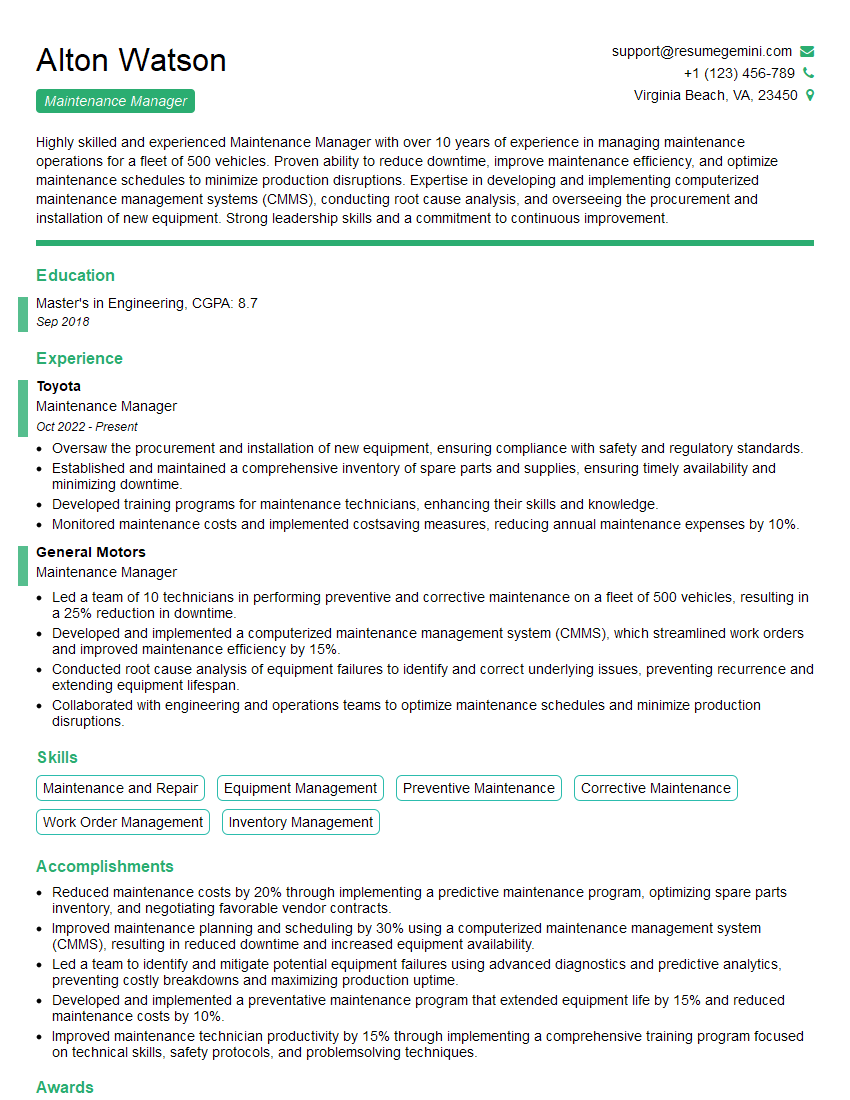
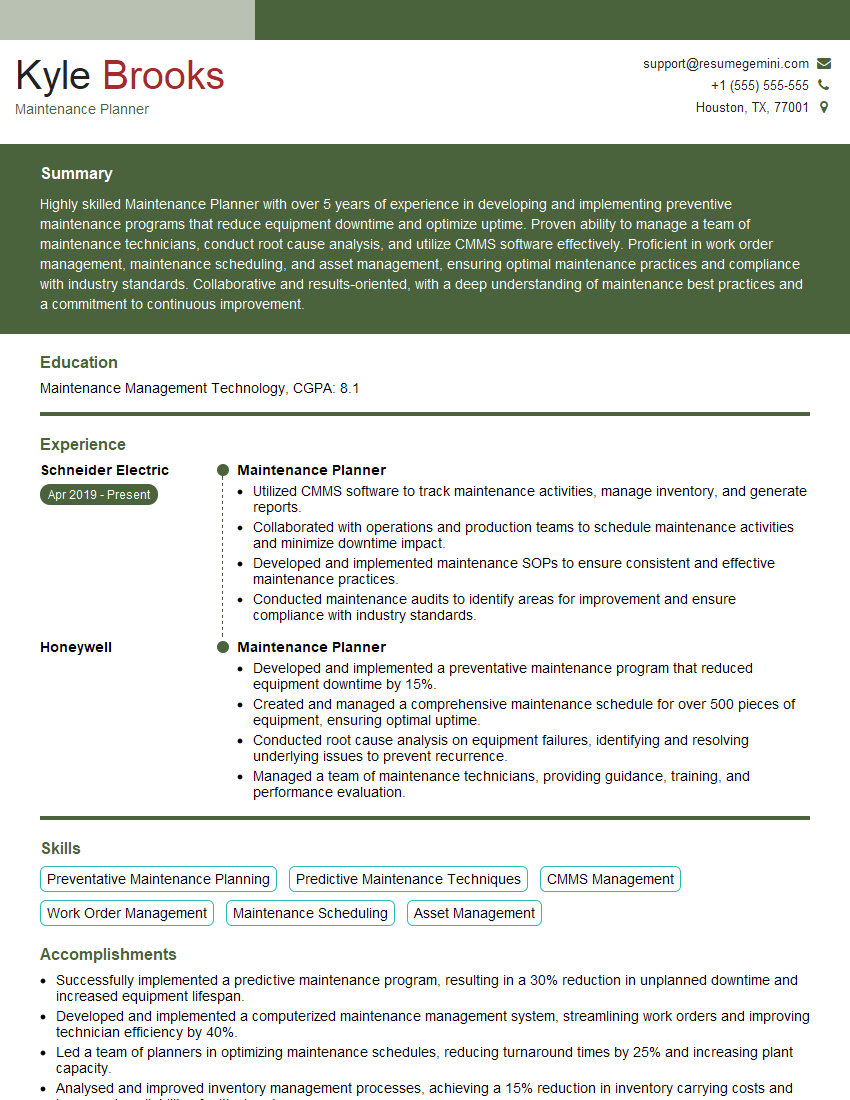
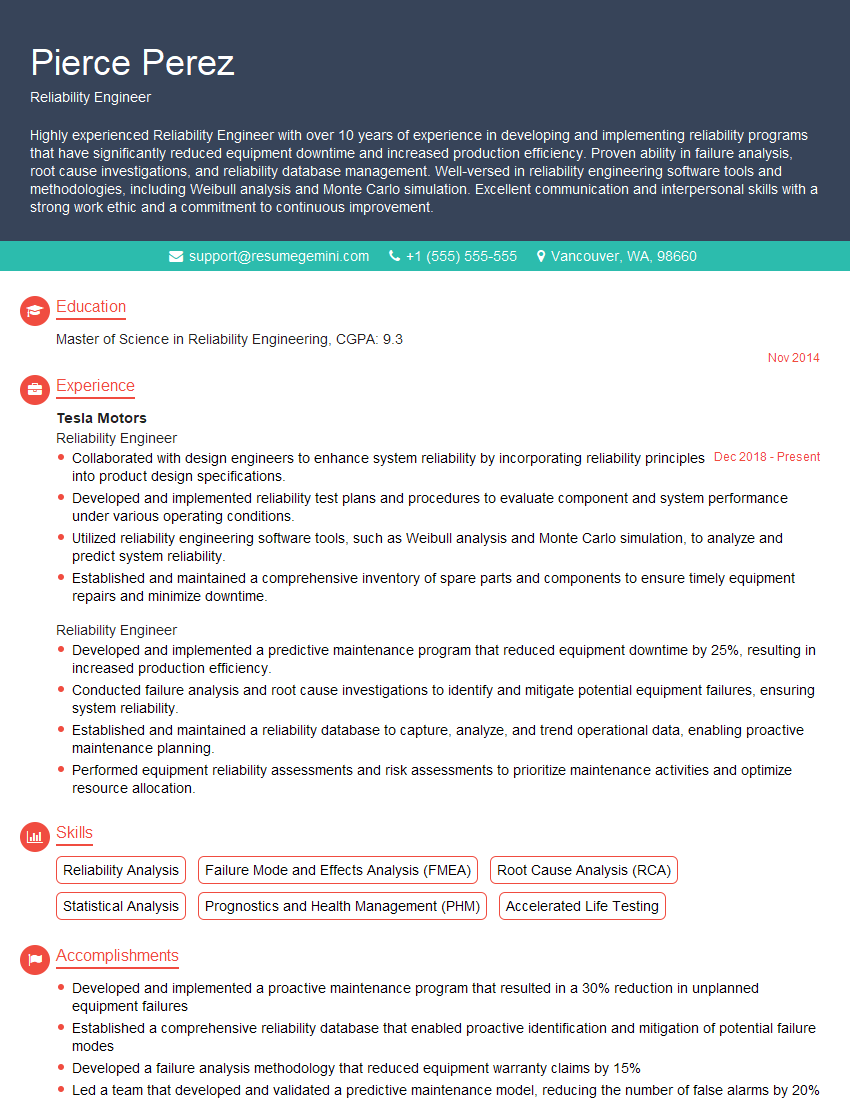
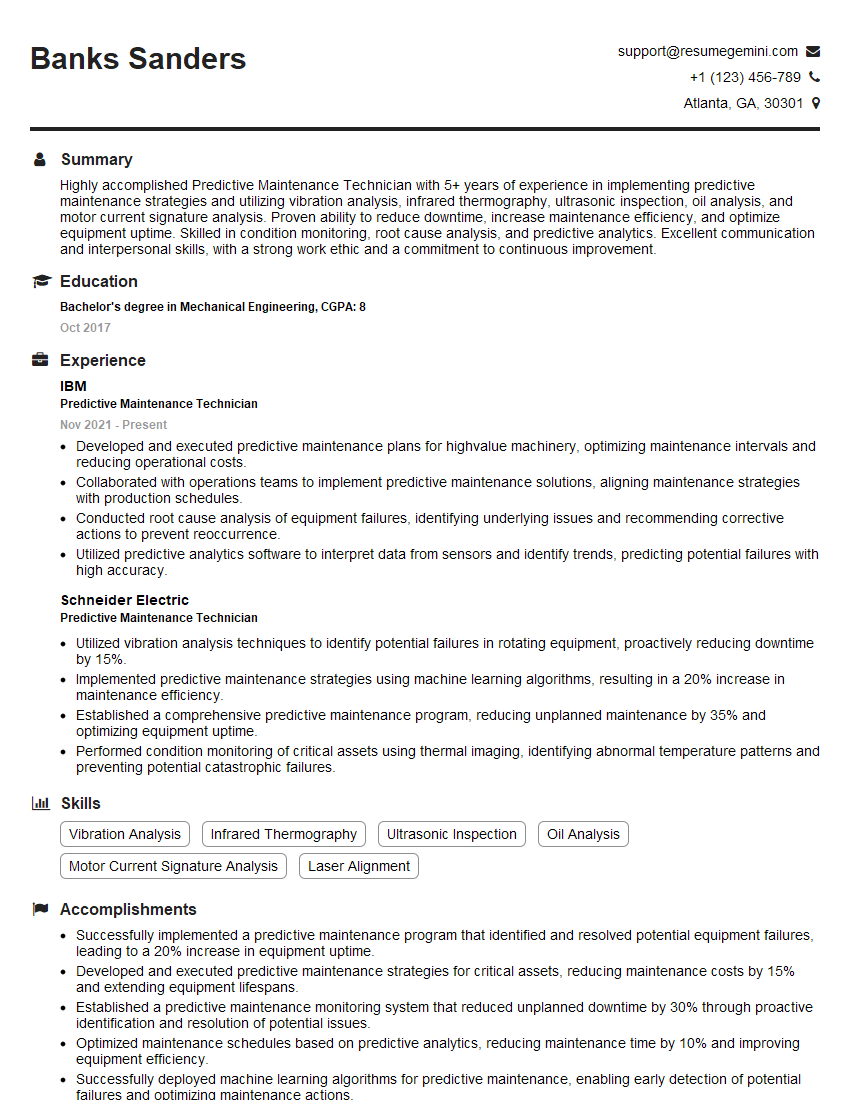
Mastering Electrical Predictive Maintenance opens doors to exciting career opportunities with significant growth potential in a rapidly evolving field. To maximize your job prospects, crafting a compelling and ATS-friendly resume is essential. ResumeGemini is a trusted resource that can help you build a professional resume that highlights your skills and experience effectively. Examples of resumes tailored to Electrical Predictive Maintenance professionals are available to guide you. Invest time in refining your resume – it’s your first impression on potential employers.
Explore more articles
Users Rating of Our Blogs
Share Your Experience
We value your feedback! Please rate our content and share your thoughts (optional).
What Readers Say About Our Blog
To the interviewgemini.com Webmaster.
Very helpful and content specific questions to help prepare me for my interview!
Thank you
To the interviewgemini.com Webmaster.
This was kind of a unique content I found around the specialized skills. Very helpful questions and good detailed answers.
Very Helpful blog, thank you Interviewgemini team.