Every successful interview starts with knowing what to expect. In this blog, we’ll take you through the top Erection of steel structures interview questions, breaking them down with expert tips to help you deliver impactful answers. Step into your next interview fully prepared and ready to succeed.
Questions Asked in Erection of steel structures Interview
Q 1. Explain the different types of steel connections used in erection.
Steel connections are the heart of any steel structure, dictating its strength and stability. The choice of connection depends on factors like load, accessibility, and aesthetic requirements. Common types include:
- Bolted Connections: These are prevalent due to their ease of installation and adaptability. We use high-strength bolts, often pretensioned, for superior strength and resistance to fatigue. Different bolt types like A325 and A490 are chosen based on the load requirements. Think of them as strong screws holding the steel members together.
- Welded Connections: Welding offers a strong, permanent, and often aesthetically pleasing joint. Different welding techniques – like fillet welds, groove welds, and plug welds – are selected based on the design. The quality of the weld is paramount and is rigorously inspected. Imagine this as welding two pieces of metal into a single, continuous structure.
- Riveted Connections: Though less common now due to the prevalence of welding and bolting, riveted connections are still found in older structures. They involve driving rivets into holes to create a permanent joint. This is a robust connection, but it requires specialized equipment and skilled labor.
- Shear Connections: These connections are designed to transfer shear forces, often used in beam-to-column connections. They use various components like shear studs or plates to distribute the load effectively.
The selection process involves careful consideration of the structural design, fabrication constraints, and cost-effectiveness. For example, in a high-rise building, where seismic resistance is vital, we would likely prefer welded connections for their superior strength and rigidity compared to bolted connections.
Q 2. Describe your experience with various lifting and rigging techniques.
My experience encompasses a wide range of lifting and rigging techniques, tailored to the specific project and steel component. Safety is always paramount. I’ve worked with various methods, including:
- Conventional Lifting: Using cranes, slings, shackles, and other lifting equipment to lift and place steel members. This requires meticulous planning, ensuring proper weight distribution and load balancing. Incorrect sling angles can lead to catastrophic failures.
- Specialized Lifting: This includes techniques like using spreader beams to lift large, unwieldy sections, or employing vacuum lifters for certain types of steel. We use specialized lifting equipment to handle odd-shaped or heavy components, particularly those that are difficult to sling.
- Rigging Calculations: I’m proficient in calculating lifting capacities, considering factors like the weight of the steel, the sling angles, and the capacity of the lifting equipment. I always utilize proper rigging software and double-check the calculations.
- Advanced Lifting Systems: In certain situations, particularly for complex geometries, specialized lifting systems involving multiple cranes or temporary support structures are utilized. The planning and coordination for these involve extensive simulations and risk assessments.
One memorable project involved lifting a massive, pre-fabricated steel truss weighing over 100 tons. We employed a multiple crane lift with extensive ground support and precise coordination to place the truss onto its designated location without incident. Accurate calculations and coordinated teamwork were key to the success.
Q 3. How do you ensure the safety of workers during steel erection?
Worker safety is my top priority. A robust safety plan is developed and implemented for every project, adhering strictly to OSHA regulations and best practices. Key aspects include:
- Pre-construction Safety Planning: Detailed risk assessments are carried out, identifying potential hazards, and implementing control measures. This includes thorough site inspections and equipment checks.
- Personal Protective Equipment (PPE): Ensuring all workers are equipped with and properly using appropriate PPE, such as hard hats, safety harnesses, steel-toed boots, and safety glasses.
- Fall Protection: Implementing stringent fall protection measures, including safety nets, guardrails, and harnesses with lifelines, particularly at heights. Workers are trained and regularly monitored on the proper use of such equipment.
- Crane Safety: Strict adherence to crane operating procedures, regular crane inspections, and ensuring properly trained crane operators are employed.
- Communication and Training: Clear communication channels and thorough training programs are essential for all workers, ensuring they understand safety procedures and their responsibilities.
We also conduct regular safety meetings and toolbox talks to reinforce best practices and address any emerging concerns. A culture of safety, where every worker feels empowered to report potential hazards, is paramount.
Q 4. What are the common challenges faced during steel erection, and how do you overcome them?
Steel erection presents numerous challenges, but with experience and careful planning, they can be overcome. Common challenges include:
- Weather Conditions: High winds, rain, snow, and extreme temperatures can significantly impact progress and safety. We use weather monitoring and implement contingency plans to mitigate weather-related delays and hazards.
- Site Constraints: Limited access, congested workspaces, and proximity to other structures can complicate erection procedures. Careful planning, including detailed sequencing and coordination, is crucial. We may employ specialized lifting techniques or temporary support structures to navigate these constraints.
- Material Handling: Precise handling of steel members is vital to avoid damage and ensure proper alignment. Rigorous quality control and well-trained personnel are key to address potential issues.
- Tolerance Issues: Minor discrepancies in fabrication can lead to significant erection challenges. Careful field adjustments and proactive communication with the fabrication team are necessary.
- Coordination: Erection often involves multiple trades, necessitating excellent communication and coordination to maintain a safe and efficient workflow.
We overcome these challenges through meticulous planning, proactive problem-solving, and strong communication among all stakeholders. Utilizing advanced modeling software and simulating the erection process helps identify potential issues and develop proactive solutions.
Q 5. Describe your experience with different types of cranes used in steel erection.
My experience includes working with various types of cranes, each suited for specific tasks and project requirements. These include:
- Tower Cranes: These are commonly used in high-rise construction, offering high lifting capacity and reach. The selection of tower crane capacity depends on the project’s structural parameters. They’re like the giants of the construction world, reaching impressive heights.
- Mobile Cranes: Highly versatile, mobile cranes offer flexibility and are suitable for various projects. They are used in projects where mobility is necessary. Their portability makes them suitable for various jobsites.
- Crawler Cranes: Known for their stability and high lifting capacity, crawler cranes are used for very heavy lifts, typically those requiring exceptional stability. They are like the workhorses, capable of handling the heaviest loads.
- Overhead Cranes: Used in enclosed fabrication shops, overhead cranes facilitate the efficient movement and handling of steel members prior to erection. These ensure precise placement of pre-fabricated sections.
Selecting the appropriate crane type involves considering factors like lifting capacity, reach, site access, and cost-effectiveness. Rigorous inspections and maintenance of cranes are critical for ensuring safety and operational efficiency. For instance, when erecting a bridge, a crawler crane’s stability makes it the preferred choice for the main span erection.
Q 6. Explain your understanding of load-bearing capacity and structural stability.
Understanding load-bearing capacity and structural stability is fundamental to safe and efficient steel erection. Load-bearing capacity refers to the maximum load a structural member can withstand before failure, while structural stability refers to the ability of the structure to resist collapse under various loads. These are interconnected and essential for a safe building:
- Load Calculations: Accurate load calculations, considering dead loads (weight of the structure), live loads (occupancy loads), wind loads, and seismic loads, are crucial. These calculations are performed using engineering software and must comply with relevant building codes.
- Member Selection: Steel members are selected based on their capacity to withstand calculated loads, ensuring sufficient strength and safety factors are incorporated.
- Stability Analysis: Structural analysis software is used to assess the overall stability of the structure under various load conditions, ensuring the structure is resistant to buckling, overturning, or other forms of instability. This often involves considerations for lateral stability.
- Connection Design: Connections must be designed to transfer loads effectively from one member to another, ensuring the overall strength and stability of the structure. The connections are designed to distribute loads effectively.
A good understanding of these concepts is vital for ensuring a safe and structurally sound steel structure. For example, overlooking wind loads in a high-rise building could have catastrophic consequences.
Q 7. How do you interpret and follow blueprints and erection drawings?
Interpreting and following blueprints and erection drawings is a critical skill. These documents provide detailed information on the structure’s geometry, member sizes, connection details, and erection sequence:
- Blueprint Review: A thorough review of the blueprints, including general arrangement drawings, structural details, and connection details, is crucial before starting the erection process. This ensures full understanding of the structure’s design.
- Erection Drawings: These drawings provide specific instructions on the sequence of erection, including the order of member placement, lifting points, and connection procedures. These drawings are like the step-by-step manual for the assembly process.
- Dimension Verification: Careful verification of dimensions, locations, and alignments is essential to ensure proper fitting and accurate placement of steel members. Any discrepancies must be addressed before proceeding.
- Symbol Recognition: Proficiency in understanding industry symbols and notations used in structural drawings is critical for accurate interpretation. For example, understanding weld symbols and notations for bolted connections is crucial.
- Coordination with Drawings: Coordination between different drawings (structural, architectural, MEP) is crucial to prevent clashes and ensure compatibility.
Accurate interpretation prevents errors and ensures the structure is erected as intended. I’ve often found that a thorough understanding of the drawings prevents errors on site that would otherwise be costly and time-consuming to correct.
Q 8. What are your methods for ensuring quality control during steel erection?
Ensuring quality control during steel erection is paramount for structural integrity and safety. My approach is multifaceted, starting even before the first steel arrives on-site. It involves rigorous checks at every stage, from material inspection to final assembly.
- Material Verification: Before erection begins, we meticulously check all steel components against the approved shop drawings and specifications. This includes verifying dimensions, grades of steel, and surface quality. Any discrepancies are immediately flagged and addressed.
- Welding Inspection: All welding is performed by certified welders and subject to stringent non-destructive testing (NDT) methods. This could involve visual inspection, magnetic particle testing, or radiographic testing, depending on the weld type and criticality. We maintain detailed records of all NDT procedures and results.
- Dimensional Control: Precise measurements are taken throughout the erection process to ensure that the structure is being assembled according to the design specifications. This includes using laser instruments for precise alignment and plumbness verification.
- Bolt Tightening Control: We use calibrated torque wrenches and strictly adhere to specified torque values for each bolt. This is crucial to prevent loosening and maintain the structural integrity. A regular inspection routine ensures all bolts are properly torqued.
- Regular Site Inspections: Daily site inspections are conducted by experienced supervisors to identify and rectify any potential issues immediately. These inspections check for alignment errors, damaged components, and unsafe working practices.
- Documentation: Meticulous documentation is maintained throughout the entire process, including inspection reports, welding records, material certificates, and any non-conformances and their resolutions. This allows for complete traceability and assists in future projects.
For example, on a recent high-rise project, a minor dimensional discrepancy was detected during the erection of a critical column. By promptly identifying and correcting this issue, we prevented a potential major problem later in the project.
Q 9. Describe your experience with pre-fabricated steel components.
I have extensive experience with pre-fabricated steel components, having worked on numerous projects where significant portions of the structure were assembled off-site. This method offers several advantages, including increased speed, improved quality control in a controlled environment, and reduced on-site labor.
My experience includes managing the transportation, handling, and erection of pre-fabricated modules, such as columns, beams, and entire wall sections. This requires careful planning and coordination to ensure that components arrive undamaged and are correctly positioned during assembly. This is different from constructing a structure with individual components that are all welded on-site. The pre-fabrication method reduces the need for complex on-site welding and increases precision.
I’m proficient in using 3D modeling software to simulate the assembly process and identify any potential clashes or interference issues before fabrication. This proactive approach minimizes delays and rework on-site. One particular project involved erecting a large industrial building using pre-fabricated modules. The use of pre-fabrication shaved months off the project timeline compared to traditional methods.
Q 10. How do you handle unexpected issues or delays during erection?
Handling unexpected issues and delays is an inevitable part of large-scale construction projects. My approach focuses on proactive risk management, contingency planning, and effective communication.
- Problem Identification and Assessment: The first step is to quickly and accurately identify the nature and extent of the problem. This involves gathering information from the site team, reviewing drawings and specifications, and consulting with relevant stakeholders.
- Contingency Planning: We develop contingency plans for foreseeable risks, like material delays or equipment malfunctions. This ensures that we have alternative solutions ready to implement if needed.
- Risk Mitigation Strategies: Depending on the nature of the issue, we’ll implement appropriate risk mitigation strategies, such as expediting material delivery, bringing in extra resources, or revising the erection sequence.
- Communication: Open and transparent communication with all stakeholders – the client, subcontractors, and the project team – is vital during unexpected events. Keeping everyone informed and engaged helps to maintain momentum and resolve issues effectively.
- Documentation: All changes, deviations, and resolutions are meticulously documented to maintain transparency and avoid future repetitions.
For instance, on a recent project, a critical component arrived late due to a shipping delay. By promptly communicating this to the client and adjusting the erection sequence, we were able to minimize the overall project delay. We then updated the project plan and analyzed what caused the delay to prevent future issues of this nature.
Q 11. Explain your knowledge of different types of welding used in steel structures.
My knowledge of welding encompasses various types commonly used in steel structures, each suited to different applications and materials.
- Shielded Metal Arc Welding (SMAW): This is a versatile process suitable for a wide range of steel thicknesses and environments. It’s commonly used for field welding where access may be limited.
- Gas Metal Arc Welding (GMAW): Also known as MIG welding, GMAW is highly productive and produces high-quality welds, particularly for thinner sections. It’s commonly used in shop fabrication.
- Gas Tungsten Arc Welding (GTAW): Also known as TIG welding, GTAW offers excellent control and produces very clean welds, ideal for critical applications and stainless steel. It’s often used for smaller, intricate joints.
- Flux-Cored Arc Welding (FCAW): Similar to GMAW, FCAW is efficient and suitable for outdoor use. The flux core provides shielding, making it less sensitive to wind.
Selecting the right welding process depends on factors such as material thickness, joint design, accessibility, and required weld quality. We always ensure that welders are qualified for the specific process and materials being used and that all welding is done according to relevant codes and standards.
Q 12. How do you ensure compliance with safety regulations and building codes?
Compliance with safety regulations and building codes is non-negotiable. My approach integrates safety considerations into every aspect of the erection process.
- Risk Assessments: We conduct thorough risk assessments before commencing any work, identifying potential hazards and developing control measures to mitigate them.
- Safe Work Procedures: Detailed safe work procedures are established for all tasks, covering aspects such as fall protection, crane operations, and handling of materials. These procedures are followed strictly by all personnel.
- Personal Protective Equipment (PPE): The appropriate PPE is provided and used by all personnel, including hard hats, safety glasses, high-visibility clothing, and fall arrest systems.
- Training and Certifications: All workers are properly trained and hold the necessary certifications for the tasks they perform. This ensures everyone is competent and aware of safety procedures.
- Regular Inspections: Regular inspections of the worksite, equipment, and scaffolding are conducted to identify and address any safety hazards.
- Compliance with Codes: We strictly adhere to all applicable building codes and regulations, including those related to structural design, welding, and erection procedures. This includes staying updated on all current safety regulations.
We maintain thorough documentation of all safety procedures, training records, and inspections. This allows us to demonstrate our commitment to safety and comply with any audits or inspections.
Q 13. Describe your experience with bolt tightening procedures and torque specifications.
Bolt tightening procedures and torque specifications are critical for ensuring the structural integrity of steel structures. We use calibrated torque wrenches to achieve the correct tension on each bolt, preventing premature loosening and failure.
The specific torque value for each bolt is determined by the bolt size, material, and the design requirements. We use detailed bolt tightening sequences, ensuring that bolts are tightened evenly to avoid overstressing any part of the connection. For high-strength bolts, we may utilize tension control bolts, which provide direct measurement of the clamping force.
Our procedures also include regular inspections of bolted connections to verify that they remain tight throughout the project lifecycle. Any loosening is addressed promptly to maintain the integrity of the structure. Failing to follow proper bolt tightening procedures can lead to serious structural issues, putting lives at risk. Therefore, careful and precise work is essential here.
Q 14. What are your skills in troubleshooting erection problems on-site?
Troubleshooting erection problems on-site requires a systematic approach that combines practical experience, technical knowledge, and problem-solving skills.
- Identify the Problem: The first step is to accurately define the problem. This may involve gathering information from the site crew, reviewing drawings, and conducting physical inspections.
- Analyze the Cause: Once the problem is identified, we investigate the potential causes. This may involve checking for errors in the design, fabrication, or erection process.
- Develop Solutions: Based on the analysis, we develop potential solutions. This may involve adjusting the erection sequence, making minor modifications to components, or engaging specialists.
- Implement and Verify: The chosen solution is implemented, and the results are carefully monitored to verify its effectiveness. This step may involve re-measurements, re-alignments, or additional inspections.
- Document the Resolution: The problem, its cause, and the implemented solution are thoroughly documented. This allows for learning from mistakes and improving future projects.
For example, I once encountered a situation where a column was slightly out of plumb. By carefully analyzing the situation, we identified a minor error in the base plate installation. We rectified the issue by adjusting the base plate shims, ensuring the column was correctly aligned and safe. This demonstrated my ability to quickly assess and solve unexpected problems on the job site.
Q 15. How do you manage a team during steel erection, ensuring productivity and safety?
Managing a steel erection team effectively requires a blend of strong leadership, meticulous planning, and a relentless focus on safety. I prioritize open communication, fostering a collaborative environment where every team member feels valued and empowered. This starts with clearly defined roles and responsibilities, ensuring everyone understands their tasks and how they contribute to the overall project goals.
Productivity is enhanced through proactive planning, including detailed sequencing of tasks, efficient material management, and the use of appropriate technology like BIM (Building Information Modeling) for real-time progress tracking. Regular toolbox talks are crucial for addressing safety concerns, reviewing procedures, and reinforcing best practices. I also implement a robust system for reporting and addressing near misses, fostering a culture where safety is not just a priority but a shared responsibility. For example, on a recent high-rise project, implementing a pre-task checklist significantly reduced the number of incidents involving dropped objects, improving both safety and efficiency.
Ultimately, success hinges on building trust and mutual respect within the team. Recognizing and rewarding good work boosts morale and productivity, leading to a more engaged and efficient workforce. Addressing conflicts promptly and fairly is essential to maintaining a positive and productive work environment.
Career Expert Tips:
- Ace those interviews! Prepare effectively by reviewing the Top 50 Most Common Interview Questions on ResumeGemini.
- Navigate your job search with confidence! Explore a wide range of Career Tips on ResumeGemini. Learn about common challenges and recommendations to overcome them.
- Craft the perfect resume! Master the Art of Resume Writing with ResumeGemini’s guide. Showcase your unique qualifications and achievements effectively.
- Don’t miss out on holiday savings! Build your dream resume with ResumeGemini’s ATS optimized templates.
Q 16. What are your experience with different types of foundation for steel structures?
My experience encompasses a wide range of foundation types for steel structures, each chosen based on factors like soil conditions, structural loads, and budget considerations. These include shallow foundations like spread footings and strip footings, often used for smaller structures on stable soil. For heavier loads or less stable soil, I’ve worked extensively with deep foundations such as piles (driven, bored, or auger cast) and caissons. The selection process is always data-driven, incorporating soil investigations and geotechnical reports to ensure the foundation’s stability and longevity.
For example, on a recent bridge project, we utilized driven piles due to the proximity to a river and the soft soil conditions. The pile design was meticulously calculated to accommodate the anticipated loads and ensure adequate settlement control. In contrast, a recent warehouse project utilized a simpler spread footing system as the soil was well-compacted and the structural loads relatively low. My expertise allows me to assess site-specific conditions and recommend the most appropriate and cost-effective foundation solution.
Q 17. How do you handle variations between design drawings and site conditions?
Discrepancies between design drawings and site conditions are a common challenge in steel erection. My approach involves a systematic process of identifying and resolving these variations through careful documentation, communication, and collaboration with the design team. The first step is meticulous site surveying to accurately document existing conditions, comparing them to the design drawings to identify any discrepancies.
Depending on the nature of the variation, several solutions may be implemented. Minor discrepancies can often be accommodated through minor field adjustments, properly documented with change orders. For significant variations, a revised design may be necessary, requiring consultation with structural engineers to ensure the structural integrity of the building. Open communication with the design team, construction management, and the client is crucial throughout this process, ensuring everyone is informed and agrees on the best course of action. Detailed records of all changes and modifications are meticulously maintained to ensure compliance and prevent future conflicts.
For example, on a recent project, we discovered an underground utility line not indicated on the original drawings. This necessitated a redesign of the foundation layout to avoid the line, which was efficiently resolved through proactive communication and collaboration with the engineers.
Q 18. Explain your familiarity with different steel grades and their properties.
I have extensive experience with various steel grades, understanding their properties is critical for selecting the right material for each application. Common grades include A36, A572 Grade 50, and A992. A36 is a general-purpose structural steel, offering a good balance of strength and weldability. A572 Grade 50 provides higher yield strength, suitable for situations requiring greater load-bearing capacity. A992 is a high-strength low-alloy steel used where weight reduction is a priority, like in tall buildings.
Beyond yield strength, other key properties include tensile strength, ductility, and weldability. These properties influence the steel’s behavior under stress, its ability to deform before failure, and its suitability for various welding processes. The choice of steel grade is always guided by the specific requirements of the project, considering factors like load capacity, structural integrity, fabrication methods, and budget constraints. Understanding the nuances of these grades ensures selecting the most suitable and cost-effective material for the task.
For instance, on a high-rise building, the use of A992 allowed for a reduction in the overall weight of the steel structure, leading to cost savings on foundation design and construction.
Q 19. How do you coordinate with other trades during the steel erection process?
Coordination with other trades is paramount for a smooth and efficient steel erection process. This starts with pre-construction planning meetings where the scope of work for each trade is defined and a detailed construction schedule is established, highlighting key interfaces and potential conflicts. Regular progress meetings, involving representatives from all relevant trades, are crucial for monitoring progress and proactively addressing any coordination challenges.
Specific examples of coordination include working with concrete crews to ensure the foundation is completed on time and to specifications, coordinating with the mechanical, electrical, and plumbing (MEP) teams to ensure adequate clearances for piping and ductwork, and collaborating with the cladding team to ensure seamless integration with the steel structure. Tools like 4D BIM modelling aid in visualization and resolving conflicts before they arise on site. A clear communication protocol, involving regular updates and prompt responses to queries, is essential for maintaining a collaborative work environment.
For example, on a recent project, coordinating with the MEP team early in the design phase helped to avoid conflicts between steel columns and ductwork, resulting in significant cost and time savings during construction.
Q 20. Describe your experience with the use of specialized erection tools and equipment.
My experience encompasses a wide range of specialized erection tools and equipment, enhancing both efficiency and safety on the job site. This includes cranes of varying capacities selected to accommodate the weight and dimensions of steel components. I’m proficient in using various lifting devices like shackles, slings, and spreader beams, ensuring safe and controlled lifting operations. I also have experience with specialized equipment like:
- High-strength bolting tools for precise tensioning of connections
- Automated guided vehicles (AGVs) for efficient material handling
- Magnetic lifters for safer handling of steel plates
- Temporary bracing and shoring systems to ensure structural stability during construction
Proficiency with these tools and equipment directly impacts the speed, precision, and safety of steel erection. I understand the importance of regular maintenance and inspection of all equipment to prevent malfunctions and ensure operator safety. Moreover, I ensure that all operators are properly trained and certified to use the equipment according to manufacturer’s specifications and safety regulations.
Q 21. How do you perform a pre-erection site assessment?
A thorough pre-erection site assessment is crucial for ensuring a safe and efficient erection process. This involves several key steps:
- Site survey: A detailed survey to accurately determine site dimensions, elevations, and existing conditions, identifying any potential obstructions or hazards.
- Access assessment: Evaluating access routes for equipment and materials, ensuring sufficient space for crane operations and material handling.
- Ground conditions assessment: Evaluating soil conditions to determine the suitability for supporting the weight of the steel structure and temporary works, often utilizing geotechnical reports.
- Utility location: Identifying the location of underground utilities, such as water, gas, and electricity lines, to prevent accidental damage.
- Safety hazard identification: Identifying potential safety hazards, such as overhead power lines, existing structures, and environmental factors, developing mitigation plans accordingly.
- Logistics planning: Planning the sequencing of material delivery and storage to minimize on-site congestion and ensure efficient workflow.
This comprehensive assessment allows for proactive problem-solving and prevents delays and accidents during construction. The findings are documented in a detailed report, shared with relevant stakeholders to inform planning and execution of the steel erection process. For example, identifying a weak ground area during a site assessment allowed us to modify the foundation design, preventing potential settlement issues later on in the project.
Q 22. Explain your experience with temporary bracing and shoring systems.
Temporary bracing and shoring systems are crucial for ensuring the stability of a steel structure during erection. They act as a safety net, preventing collapse before the structure is fully connected and self-supporting. My experience encompasses designing, selecting, and implementing various systems depending on the project’s specifics – factors like the structure’s size, geometry, and environmental conditions heavily influence the choices made.
For instance, on a recent high-rise project, we used a combination of steel tube and coupler bracing for the initial stages, transitioning to more robust shoring towers as the structure gained height. We also utilized outrigger systems to stabilize the base of the columns against lateral forces. The design process involved detailed calculations to determine the required strength and stability of each component, always considering worst-case scenarios like wind load and potential ground movement.
Another project involved a complex bridge structure, requiring a more sophisticated shoring system using hydraulic jacks to precisely level the individual components and counter the varying loads across different sections. Proper documentation, including detailed drawings and calculations, is critical to ensure safety and compliance with regulations. Regular inspections throughout the erection process were vital to identify and address any potential issues.
Q 23. What are your skills in risk assessment and hazard identification in steel erection?
Risk assessment and hazard identification are paramount in steel erection. My approach involves a multi-stage process, starting with a thorough review of the project plans and specifications. I identify potential hazards using established methodologies like HAZOP (Hazard and Operability Study) and Job Safety Analysis (JSA). This includes identifying potential risks associated with working at heights, handling heavy materials, using machinery, and environmental factors.
For example, working on a high-rise project meant addressing the risk of falling objects by implementing strict controlled lifting procedures and designated zones. This also involved providing all personnel with the proper fall arrest equipment and training. For each identified hazard, we develop specific control measures, including engineering controls (e.g., scaffolding, fall protection systems), administrative controls (e.g., permits-to-work, safety meetings), and personal protective equipment (PPE). We also carefully consider the environmental impact, including ensuring proper waste management and adherence to site-specific regulations.
Regular inspections, both pre-work and during the erection process, are crucial for spotting emerging hazards. Documentation of these risk assessments and the implemented controls is essential, contributing to a culture of safety and accountability. A crucial part of this is ongoing communication and training for all team members.
Q 24. Describe your familiarity with different types of steel beams and columns.
My familiarity with steel beams and columns extends across various shapes, grades, and sizes. I’m proficient in identifying and specifying different types, including:
- Wide Flange Beams (W-shapes): Commonly used for beams and columns due to their high strength-to-weight ratio.
- American Standard Beams (S-shapes): Used for beams, with a smaller depth compared to W-shapes.
- Hollow Structural Sections (HSS): Offer superior resistance to torsion and are ideal for columns and bracing members.
- Parallel Flange Channels (C-shapes): Often used as purlins or supporting members in roofing systems.
- Angle sections (L-shapes): Used as bracing elements and for connecting components.
Understanding the structural properties of each type, such as yield strength, moment of inertia, and section modulus, is critical for selecting the appropriate members based on load calculations and design specifications. The steel grade also significantly impacts the structural performance, and I have experience working with various grades, including A36, A572 Grade 50, and A992. I can identify the markings on steel sections to confirm their grade and dimensions, ensuring that the right materials are used for the intended purpose.
Q 25. How do you ensure the accuracy of steel placement and alignment during erection?
Accuracy in steel placement and alignment is fundamental for structural integrity. We employ several methods to ensure precision:
- Laser instruments: Used for establishing precise reference points and checking the alignment of beams and columns.
- Total Stations: Provide high-accuracy measurements for distance and angle, verifying alignment in three dimensions.
- Plumb bobs and levels: Used for checking vertical and horizontal alignment during the initial stages of erection.
- Steel templates and jigs: Customized templates ensure precise placement and bolt hole alignment for complex connections.
For example, during the erection of a large warehouse structure, we used a laser level to establish a precise reference line for the main columns. This line guided the crane operator in positioning the columns, and total stations were then used to verify the column’s plumbness and alignment to within the specified tolerances. Any deviations were corrected using adjustable base plates or shims. Regular inspections were performed at each stage to ensure alignment remained accurate throughout the erection process. Thorough planning and precision in the initial stages drastically minimize costly corrections later on.
Q 26. What are your skills in using various measuring and leveling instruments?
Proficiency in using various measuring and leveling instruments is essential. My expertise includes:
- Levels (optical and digital): For precise measurements of vertical and horizontal alignments.
- Theodolites: For measuring angles with high accuracy.
- Total Stations: Integrating distance, angle, and elevation measurements.
- Tape measures: For general measurements and verification of dimensions.
- Laser distance meters: For quick and accurate distance measurements.
I’m adept at selecting the appropriate instrument for a specific task, ensuring that measurements are accurate and reliable. For instance, when working on precise connections, a digital level is crucial to ensure the correct inclination. For large-scale alignments, a total station offers the accuracy and efficiency needed. Understanding the limitations and calibration procedures of these instruments is just as important as using them properly – avoiding systematic errors is a priority.
Q 27. How do you manage waste materials during and after the steel erection process?
Managing waste materials is a crucial aspect of responsible steel erection. We follow a comprehensive plan that begins even before the project starts. This involves careful material take-offs to minimize excess ordering. During the erection process, we separate waste materials into different categories (steel scrap, wood, packaging) for efficient recycling and disposal.
Steel scrap, a significant byproduct, is carefully collected and segregated according to its grade and composition. This ensures that it can be recycled efficiently without compromising the quality of the recycled material. Non-metallic waste like wood and packaging is disposed of according to local environmental regulations. We maintain detailed records of waste generation and disposal to track progress and ensure compliance with all applicable rules.
Sustainable practices are prioritized wherever possible. For example, we work closely with scrap metal recyclers to ensure that materials are processed responsibly and that the project’s environmental impact is minimized. Proper planning and efficient waste management reduces the project’s environmental footprint and saves valuable resources.
Q 28. Describe your experience in working at heights and using fall protection equipment.
Working at heights is an integral part of steel erection, and safety is always my top priority. I possess extensive experience in using various fall protection systems and equipment, including:
- Full body harnesses: To securely attach workers to safety lines.
- Safety nets: To catch workers in the event of a fall.
- Fall arrest systems: Including anchor points, lifelines, and shock absorbers.
- Scaffolding and elevated work platforms: To provide safe access to working areas.
Before any work at height begins, a comprehensive risk assessment is conducted, identifying specific hazards and determining the appropriate fall protection measures. Regular inspections of the equipment are done to ensure it’s in good working order and that it’s being used correctly. Regular safety briefings and training refresh everyone’s understanding of safe work procedures, and any near misses or incidents are thoroughly investigated to identify areas for improvement.
On a recent project, a complex steel framework required a combination of fall arrest systems and safety nets. Each worker received training on the proper use of the equipment and the emergency procedures. The implementation of these measures contributed to a project with zero incidents related to work at heights.
Key Topics to Learn for Erection of Steel Structures Interview
- Planning & Design: Understanding shop drawings, erection plans, and sequence of operations. Consider factors like lifting capacity, rigging techniques, and site constraints.
- Safety Procedures & Regulations: Thorough knowledge of OSHA regulations, fall protection, crane safety, and risk assessment methodologies specific to steel erection.
- Steel Connection Types & Fabrication: Familiarity with various bolt types, welding techniques, and the implications of different connection methods on structural integrity and erection procedures.
- Lifting & Rigging Techniques: Understanding different lifting methods (cranes, derricks), load calculations, sling selection, and safe rigging practices to prevent accidents.
- Erection Sequencing & Methodology: Developing efficient and safe erection sequences, considering logistical challenges, weather conditions, and coordination with other trades.
- Troubleshooting & Problem Solving: Developing skills to identify and resolve on-site issues, such as dimensional discrepancies, damaged materials, or unforeseen site challenges.
- Quality Control & Inspection: Understanding quality control procedures, inspection methods, and documentation requirements to ensure structural integrity and compliance with specifications.
- Material Handling & Storage: Safe and efficient management of steel materials on-site, including proper storage, handling, and protection from damage.
- Teamwork & Communication: Effective communication with engineers, supervisors, and other crew members to ensure smooth and safe operation.
Next Steps
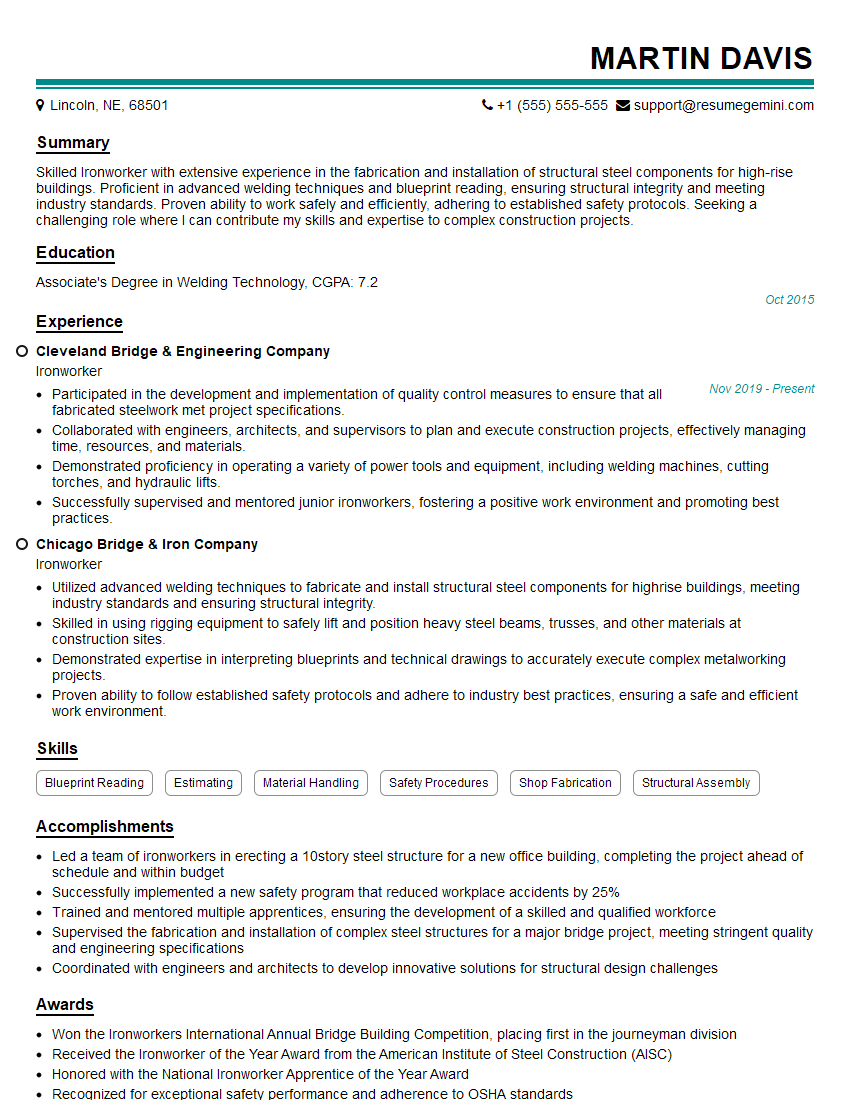
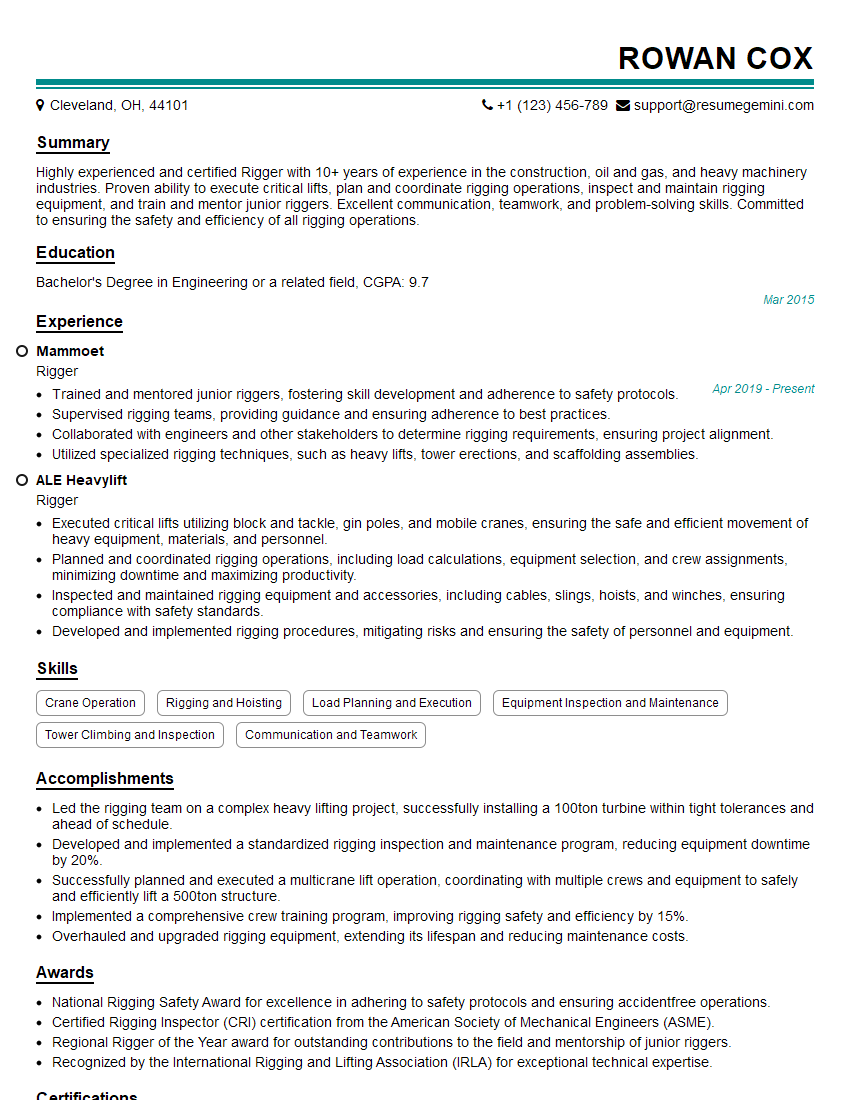
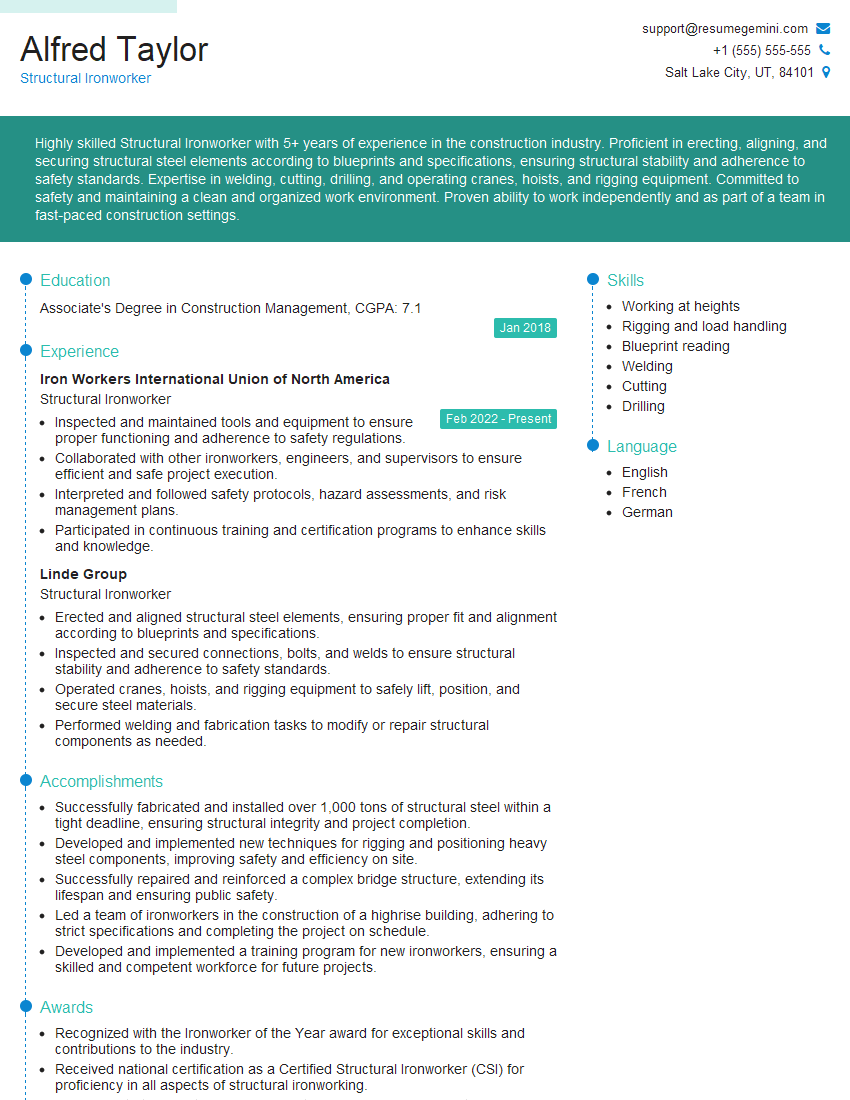
Mastering the erection of steel structures opens doors to rewarding and challenging careers in the construction industry. Your expertise in this area is highly sought after, leading to increased job opportunities and higher earning potential. To maximize your chances of securing your dream role, it’s crucial to present your skills effectively. Creating an ATS-friendly resume is paramount in today’s competitive job market. ResumeGemini is a trusted resource that can help you build a professional resume that highlights your expertise in steel erection. They provide examples of resumes tailored specifically to this field, allowing you to craft a compelling document that grabs the attention of recruiters and hiring managers. Take the next step in advancing your career – build a standout resume with ResumeGemini.
Explore more articles
Users Rating of Our Blogs
Share Your Experience
We value your feedback! Please rate our content and share your thoughts (optional).
What Readers Say About Our Blog
To the interviewgemini.com Webmaster.
Very helpful and content specific questions to help prepare me for my interview!
Thank you
To the interviewgemini.com Webmaster.
This was kind of a unique content I found around the specialized skills. Very helpful questions and good detailed answers.
Very Helpful blog, thank you Interviewgemini team.