Interviews are opportunities to demonstrate your expertise, and this guide is here to help you shine. Explore the essential Ethical and Legal Considerations in Art Therapy interview questions that employers frequently ask, paired with strategies for crafting responses that set you apart from the competition.
Questions Asked in Ethical and Legal Considerations in Art Therapy Interview
Q 1. Explain the ethical implications of maintaining client confidentiality in art therapy.
Maintaining client confidentiality is paramount in art therapy, as it forms the cornerstone of the therapeutic relationship. It’s ethically crucial because sharing a client’s personal information, even seemingly insignificant details revealed through their artwork, can severely damage trust and hinder the therapeutic process. This trust allows clients to feel safe exploring vulnerable aspects of themselves, knowing their disclosures are protected.
Breaching confidentiality can lead to significant consequences, including legal repercussions and irreparable damage to the client-therapist relationship. For example, revealing details about a client’s struggles with self-harm or suicidal ideation, even without explicit mention of their identity, could have dire outcomes. Exceptions to confidentiality exist, primarily when there’s a clear and imminent risk of harm to the client or others (discussed further in question 3).
Ethical guidelines emphasize the importance of obtaining informed consent regarding the limits of confidentiality from the outset, and any exceptions to this must be fully transparent. Think of it like a locked box – the client entrusts their deepest thoughts and feelings to you, and it’s your ethical and professional responsibility to keep that box securely locked.
Q 2. Describe your understanding of informed consent within the context of art therapy.
Informed consent in art therapy is a process, not a single event. It ensures clients understand the therapeutic process, their rights, and the therapist’s responsibilities before engaging in treatment. It’s about empowering clients to make autonomous decisions about their care.
This process typically involves:
- Explaining the nature of art therapy: Clearly outlining what to expect during sessions, the role of art materials, and how the creative process will be used to address their concerns.
- Discussing confidentiality: Specifying the limits of confidentiality, including exceptions for mandated reporting (e.g., child abuse), and potential risks associated with disclosure.
- Describing the therapist’s qualifications and experience: Ensuring transparency regarding professional credentials and scope of practice.
- Providing information about fees and payment policies: Making sure the client understands the financial aspects of therapy.
- Addressing questions and concerns: Allowing ample time for the client to ask questions and voice any concerns.
Informed consent isn’t just a form to sign; it’s an ongoing conversation that ensures the client feels informed and in control throughout the therapeutic journey. For example, if a new technique is introduced, the client should be informed about it beforehand.
Q 3. How would you handle a situation where a client’s artwork reveals potential harm to themselves or others?
When a client’s artwork reveals potential self-harm or harm to others, it necessitates a careful and ethical response. It requires balancing the client’s confidentiality with the duty to protect them and others.
My approach would involve:
- Careful Assessment: I would carefully examine the artwork, considering its context within the therapeutic relationship and the client’s verbal communication. Is the depiction a fleeting thought, a long-standing concern, or an immediate threat?
- Direct Communication: I would engage in a gentle, non-judgmental conversation with the client, exploring the meaning and significance of the artwork. The goal is not to interpret their artwork definitively but to understand the client’s experience and concerns better.
- Risk Assessment: Based on the conversation and the artwork, I would assess the level of risk. Is there an immediate and credible threat to self or others?
- Consultation: If the risk is high, I would consult with a supervisor or other mental health professional for guidance. This collaborative approach provides additional support and perspectives.
- Mandated Reporting (if applicable): If the artwork reveals potential child abuse or neglect, I would follow mandated reporting procedures specific to my jurisdiction (as outlined in question 4).
- Seeking Further Help: Depending on the situation, I might recommend the client seek additional support, such as hospitalization or referral to other specialized services.
Throughout this process, maintaining a therapeutic relationship is vital. The client should feel heard, understood, and supported, even while appropriate steps are taken to address their safety and the safety of others. This is a delicate balance between protecting confidentiality and ensuring safety.
Q 4. What are the legal requirements for reporting suspected child abuse or neglect in your jurisdiction?
Legal requirements for reporting suspected child abuse or neglect vary by jurisdiction. It’s crucial for art therapists to understand the specific laws in their state or country. Generally, these laws mandate reporting any reasonable suspicion of abuse or neglect to the appropriate child protective services agency. This includes physical, sexual, or emotional abuse, as well as neglect.
Failure to report suspected child abuse can have serious legal consequences, including fines and potential loss of professional license. The legal threshold for reporting usually involves a reasonable suspicion, not proof. If I have concerns based on a client’s artwork or verbal communication, even if the evidence isn’t conclusive, I’m legally obligated to report it. This includes situations where a child’s artwork depicts violent or abusive situations even without explicit identification of the perpetrator.
In my jurisdiction [replace with specific jurisdiction and details], the reporting process involves [insert specific details about reporting process, contact information, etc.]. It is essential to document all interactions, including the artwork that triggered the suspicion and all steps taken in the reporting process.
Q 5. Discuss the ethical considerations of using technology (e.g., telehealth) in art therapy.
Using technology in art therapy, particularly telehealth, presents both opportunities and challenges from an ethical perspective. While telehealth expands access to care, it also raises concerns about confidentiality, security, and the therapeutic relationship.
Ethical considerations include:
- Confidentiality and Data Security: Ensuring the platform used meets HIPAA or equivalent standards for protecting sensitive client data. This includes secure video conferencing, encrypted email, and secure storage of artwork images.
- Informed Consent: Clearly outlining the risks and limitations of telehealth, including potential technology failures and the possibility of interruptions to the therapeutic process.
- Client’s Technology Access and Competency: Confirming the client has reliable internet access and the technological skills to participate effectively. Addressing digital literacy disparities is also important.
- Maintaining a Therapeutic Relationship: Recognizing that the virtual environment may affect the therapeutic connection. Adapting therapeutic techniques to effectively engage clients remotely.
- Jurisdictional Issues: Being mindful of licensing and practice regulations concerning telehealth across state or international boundaries.
A detailed informed consent process specifically addressing these technological aspects is crucial for ethical practice in telehealth art therapy. Think of it as adapting the ‘locked box’ analogy to a digital space – ensuring the digital ‘box’ is just as secure as its physical counterpart.
Q 6. How do you ensure cultural sensitivity and competence in your art therapy practice?
Cultural sensitivity and competence are essential for ethical and effective art therapy practice. It’s about recognizing that clients come from diverse backgrounds with unique cultural values, beliefs, and experiences that can significantly impact their art-making and their therapeutic process.
My approach involves:
- Self-Reflection and Awareness: Continuously examining my own biases and cultural assumptions to avoid imposing my worldview on clients.
- Cultural Humility: Approaching each client with a willingness to learn about their culture and avoid making generalizations or stereotypes.
- Seeking Consultation: Consulting with colleagues or supervisors when encountering cultural situations I am unfamiliar with.
- Utilizing Culturally Appropriate Materials and Techniques: Selecting art materials and therapeutic techniques that resonate with the client’s cultural background and preferences.
- Respecting Client Preferences: Allowing clients to choose art materials and styles they feel comfortable with.
- Ongoing Education: Continuously engaging in professional development to enhance my cultural sensitivity and competence.
For example, I might modify my approach to consider the significance of certain colors or symbols in a client’s culture. Understanding these nuances can deeply enrich the therapeutic experience and enhance its effectiveness.
Q 7. Describe your process for documenting art therapy sessions and maintaining client records.
Documenting art therapy sessions and maintaining client records is critical for ethical practice and legal protection. It ensures accuracy, accountability, and continuity of care.
My documentation process includes:
- Session Notes: Detailed written notes summarizing each session, including the client’s verbal and nonverbal communication, the art-making process, significant themes explored, and the client’s emotional responses. These notes avoid subjective interpretations and focus on observable behaviors.
- Artwork Documentation: Photographing or scanning artwork created during sessions. This preserves a visual record of the client’s creative process, offering valuable insights into their therapeutic journey. Client consent is essential for photographing and storing their artwork.
- Storage and Security: Storing both session notes and artwork images securely, adhering to HIPAA or other relevant regulations for maintaining client confidentiality.
- Client Access: Ensuring clients have access to their records as per their rights and preferences.
- Retention Policy: Following a clear retention policy for client records, abiding by legal and ethical guidelines for how long records are kept.
This comprehensive documentation serves as a record of the therapeutic journey, allowing me to track the client’s progress, maintain continuity of care, and provide essential information to other professionals as needed, always ensuring client consent and maintaining confidentiality.
Q 8. What are the legal and ethical boundaries of the art therapist-client relationship?
The art therapist-client relationship, like all therapeutic relationships, rests on a foundation of ethical and legal boundaries designed to protect client well-being and confidentiality. These boundaries are primarily defined by professional codes of ethics (like those from the American Art Therapy Association) and relevant laws (e.g., HIPAA in the US). Legally, these boundaries ensure client rights are upheld, while ethically, they foster a safe and trusting therapeutic space. Key aspects include:
- Confidentiality: Information shared by the client is privileged and must be protected, with limited exceptions (e.g., mandated reporting of child abuse or threats of harm to self or others).
- Informed Consent: Clients must be fully informed about the therapy process, including its goals, methods, limitations, and potential risks before beginning treatment. This includes understanding their rights to privacy and the limits of confidentiality.
- Dual Relationships: Avoiding any professional relationships outside of the art therapy context. This means refraining from social interactions, business dealings, or other relationships that could compromise the therapeutic alliance. For example, I would not treat a family member or a close friend.
- Professional Boundaries: Maintaining clear physical and emotional boundaries. This includes appropriate physical touch (generally limited or avoided), appropriate language, and setting clear expectations for communication outside of sessions. This means avoiding blurring the lines between therapist and friend.
- Competence: Providing services only within the scope of one’s training and expertise. This entails referring clients to other specialists if their needs are beyond my capabilities.
These boundaries are not merely rules but a framework for building trust and ensuring ethical practice, ultimately promoting healing and well-being.
Q 9. How would you address a conflict of interest in your art therapy practice?
Conflicts of interest can significantly compromise the therapeutic relationship. Addressing them requires careful consideration and transparency. Let’s say I am approached by a client who owns an art supply store and wants me to exclusively recommend and utilize their products in therapy. This presents a conflict because my professional obligation is to choose materials best suited to the client’s needs, not to promote a particular business. I would:
- Recognize the conflict: Clearly identify the potential conflict between my professional responsibilities and the client’s business interests.
- Document the situation: Record the details of the conflict in my clinical notes to ensure transparency and accountability.
- Discuss with the client: Openly and honestly discuss the conflict with the client, explaining my ethical obligations and the potential impact on the therapeutic process. I would explain that choosing art supplies is based on therapeutic goals, not business interests.
- Develop a plan: If possible, we could explore alternative solutions that preserve the integrity of the therapeutic process, such as using a diverse range of materials without favoring their store specifically. Or, we can find a suitable referral to another art therapist if the client feels the conflict is unavoidable.
- Seek supervision if needed: Consult with a supervisor or mentor to discuss the situation and ensure my approach aligns with ethical standards.
The goal is to prioritize client welfare and uphold the integrity of the therapeutic relationship, even if it means making difficult decisions.
Q 10. Explain your understanding of HIPAA regulations and their relevance to art therapy.
HIPAA (Health Insurance Portability and Accountability Act) is a US federal law designed to protect the privacy and security of individuals’ health information. In art therapy, this is incredibly relevant as we handle sensitive personal information during the course of treatment. HIPAA’s key provisions concerning art therapy include:
- Protected Health Information (PHI): Any information that could identify a client and relates to their physical or mental health, including artwork created during therapy sessions, notes, and discussions.
- Privacy Rule: Art therapists must adhere to strict guidelines regarding the use, disclosure, and safeguarding of PHI. This covers how information is stored, accessed, and transmitted. For example, artwork would need to be securely stored and only accessed by those with authorized need-to-know.
- Security Rule: This outlines administrative, physical, and technical safeguards to protect PHI from unauthorized access, use, or disclosure. This could include measures like password protection on electronic files, secure storage of physical files, and use of encrypted email for communication.
- Breach Notification: In the event of a HIPAA violation or a breach of client confidentiality, there are specific reporting requirements.
Essentially, HIPAA ensures client confidentiality and security, which is paramount in creating a trusting therapeutic environment. Failure to comply with HIPAA can lead to significant legal penalties.
Q 11. Describe a situation where you had to navigate an ethical dilemma in your art therapy practice.
I once worked with a young adolescent who expressed self-harm ideations through their art. While I was legally obligated to report this to the appropriate authorities due to the risk of harm, I also recognized the potential for trauma if the disclosure was poorly managed. This was an ethical dilemma because of the fine balance between client confidentiality and safety. My solution involved:
- Careful documentation: I meticulously documented the client’s statements and their artistic expressions, recording their specific words and the contextual details within the session.
- Consultative approach: I sought supervision from my supervisor and consulted with other professionals, such as a child psychologist, to discuss the best course of action that prioritized the client’s well-being and safety. We collaboratively developed a plan that prioritized safety while minimizing further distress for the adolescent.
- Transparent communication: I talked to the client about my ethical obligation to report the information, explaining why it was necessary for their safety. I emphasized my commitment to helping them and that this action was intended to support them, not to punish them.
- Collaboration: I worked collaboratively with their parents and other professionals involved in their care to ensure a coordinated approach to address their needs.
This situation highlighted the importance of considering both legal mandates and ethical principles when addressing serious client issues. A balance had to be struck to protect both the client’s safety and their dignity.
Q 12. How would you handle a situation where a client requests to take home their artwork?
The decision of whether a client can take home their artwork depends on several factors, primarily client safety and the therapeutic goals. Some artwork might contain emotionally charged content, and taking it home prematurely could be detrimental. I would:
- Discuss the client’s request: I would initiate a discussion with the client to understand their motivations and reasons for wanting to take their artwork home.
- Assess the artwork’s content: I would evaluate the content and potential impact of the artwork on the client. If the artwork contains potentially triggering or disturbing content, I would discuss the risks and explore alternative solutions.
- Collaborate on a plan: If it is deemed appropriate, we could create a plan for the artwork to go home, such as allowing the client to photograph it, taking it home at a later date, or making a copy for them.
- Document the decision: I would meticulously document my assessment, the discussion with the client, and the agreed-upon plan in my clinical notes.
The emphasis is on collaboration and what is therapeutically beneficial for the client. The artwork itself is a product of the therapeutic process and its handling should always be considered within the context of the client’s overall well-being.
Q 13. What steps would you take to ensure the safety of your clients and yourself during art therapy sessions?
Ensuring the safety of both myself and my clients is paramount. This involves multiple layers of preparation and awareness:
- Risk assessment: At the start of therapy, I would conduct a risk assessment to understand any potential safety concerns, particularly with clients who have a history of violence, self-harm, or other concerning behaviors.
- Secure environment: The therapy setting should be safe and well-lit. Sharp objects or materials that could be used for self-harm should be restricted or carefully monitored.
- Crisis plan: I would develop and regularly review a crisis plan in consultation with supervisors or colleagues, outlining steps to manage emergencies or situations where safety is compromised.
- Professional boundaries: Maintaining professional boundaries helps to mitigate risks associated with power imbalances or inappropriate interactions. It is vital to have clear communication and set expectations with the client early on.
- Self-care: Art therapy can be emotionally demanding. Practicing self-care, including seeking supervision and debriefing after challenging sessions, is essential to prevent burnout and maintain personal well-being. This ensures that I’m capable of providing safe and effective care to my clients.
Safety is not just about managing immediate risks, it’s about proactively building a therapeutic environment that promotes emotional and physical well-being for everyone involved.
Q 14. Discuss the ethical considerations surrounding the use of art therapy with vulnerable populations (e.g., the elderly, individuals with disabilities).
Working with vulnerable populations, such as the elderly or individuals with disabilities, requires heightened ethical awareness and sensitivity. Adaptations must be made based on individual needs and capabilities, while always respecting autonomy and dignity:
- Informed consent: Obtaining informed consent requires extra care with these populations. This might involve using simplified language, involving caregivers or support staff if necessary, and ensuring comprehension. For example, if working with someone with cognitive impairments, I would need to ensure their legal guardian understood the process and the therapy goals.
- Accessibility: Adapting materials and techniques to suit the individual’s physical and cognitive abilities is crucial. This might involve using larger brushes, alternative art forms, or assistive technology.
- Cultural competence: Understanding and respecting the cultural background, values, and beliefs of each client is paramount, and may involve seeking additional cultural education or consultation.
- Power dynamics: Being mindful of potential power imbalances is crucial and requires ensuring the client feels empowered, safe, and respected.
- Collaboration with caregivers: If appropriate and with the client’s consent, collaboration with caregivers or family members can provide support and insight. This is important to avoid any ethical concerns about exploitation or undue influence.
Working with vulnerable populations necessitates a cautious approach that prioritizes safeguarding their rights and well-being above all else. The focus remains on client-centered care, respecting individual differences, and empowering clients to participate fully in their own healing process.
Q 15. Explain your understanding of malpractice insurance and its importance for art therapists.
Malpractice insurance is a crucial safety net for art therapists, protecting them from financial and legal repercussions resulting from claims of negligence or professional misconduct. Think of it as an insurance policy for your professional practice. It covers costs associated with defending yourself in a lawsuit and potentially paying damages awarded to a client if a claim is found to be valid.
Its importance cannot be overstated. A single claim of malpractice, even if unfounded, can be incredibly expensive to defend. The cost of legal representation, expert witnesses, and potential settlements can quickly bankrupt an individual practitioner. Malpractice insurance provides the financial security needed to confidently offer services while mitigating potential risks.
For example, if a client alleges that you mishandled a sensitive situation, leading to emotional distress, malpractice insurance would cover the legal costs of addressing this claim. Without it, you would be personally responsible for all expenses.
Career Expert Tips:
- Ace those interviews! Prepare effectively by reviewing the Top 50 Most Common Interview Questions on ResumeGemini.
- Navigate your job search with confidence! Explore a wide range of Career Tips on ResumeGemini. Learn about common challenges and recommendations to overcome them.
- Craft the perfect resume! Master the Art of Resume Writing with ResumeGemini’s guide. Showcase your unique qualifications and achievements effectively.
- Don’t miss out on holiday savings! Build your dream resume with ResumeGemini’s ATS optimized templates.
Q 16. How do you ensure the accuracy of your billing and documentation in art therapy?
Accurate billing and documentation are the cornerstones of ethical and legal compliance in art therapy. They serve to protect both the client and the therapist. I ensure accuracy through a multi-step process.
- Detailed Session Notes: I meticulously document each session, including the client’s presenting concerns, the art-making process, the client’s emotional state, and any significant interventions or insights. This isn’t just about jotting down notes; it’s about creating a comprehensive record of the therapeutic journey.
- Consistent Coding: I use appropriate and accurate diagnostic codes (e.g., ICD-10 codes) to ensure that billing reflects the services rendered and the client’s diagnosis. This is crucial for insurance reimbursement.
- Regular Review: I regularly review my billing and documentation to identify and correct any errors or inconsistencies. This proactive approach prevents potential problems.
- Secure Storage: I maintain secure storage of all client records, both physical and electronic, adhering to HIPAA regulations and other relevant privacy laws.
For example, if a client’s insurance company questions a particular billing code, I can readily access my detailed session notes to justify the claim. This clear documentation protects both myself and the client.
Q 17. How would you address a situation where a client expresses a desire to end art therapy prematurely?
When a client expresses a desire to end therapy prematurely, my priority is to understand their reasoning and to facilitate a responsible and ethical termination. I would engage in a thoughtful conversation to explore their reasons for wanting to stop, ensuring a safe and supportive environment.
- Active Listening: I would listen carefully and empathetically, validating their feelings without judgment.
- Collaboration: I would work collaboratively with the client to determine if there are any unmet needs or concerns that can be addressed to help them continue. Perhaps there are adjustments we can make to the therapy approach.
- Summarization and Planning: I would summarize the progress made, identify key achievements, and collaboratively develop a plan for managing the transition. This might involve providing resources or referrals as needed.
- Documentation: I would thoroughly document the client’s decision, the reasons provided, and the steps taken to facilitate a smooth transition.
For example, a client might feel they’ve reached their goals or might be experiencing financial constraints. In these cases, my role is to help them navigate this decision constructively, respecting their autonomy while ensuring a safe conclusion to the therapeutic process.
Q 18. What resources do you utilize to stay informed about ethical and legal updates in the field?
Staying abreast of ethical and legal updates is an ongoing professional responsibility. I utilize several key resources to achieve this:
- Professional Organizations: I am an active member of the American Art Therapy Association (AATA) and regularly review their publications, newsletters, and continuing education opportunities. These organizations often provide updates on legal and ethical guidelines.
- Journals and Publications: I subscribe to professional journals focusing on art therapy and mental health, ensuring I stay informed on current research and best practices. These publications often discuss emerging ethical dilemmas and legal precedents.
- Continuing Education: I actively participate in continuing education workshops and conferences that address legal and ethical issues within art therapy. This allows for direct engagement with experts and the opportunity to network with colleagues.
- Legal Consultation: When facing complex ethical or legal situations, I don’t hesitate to seek advice from legal counsel specializing in healthcare and mental health. This ensures I am making informed decisions.
These combined resources offer a robust system for maintaining my knowledge and ensuring responsible practice.
Q 19. Describe your understanding of professional boundaries in art therapy.
Professional boundaries are essential to maintain the integrity of the therapeutic relationship and to protect both the client and the therapist. These boundaries are established to ensure a safe, ethical, and effective therapeutic environment.
Key aspects of professional boundaries in art therapy include:
- Confidentiality: Maintaining the strictest confidentiality regarding client information, sharing only what is absolutely necessary with appropriate parties (e.g., supervisors, in cases of mandated reporting).
- Dual Relationships: Avoiding dual relationships, such as social interactions, business relationships, or romantic relationships with clients. This maintains professional objectivity.
- Physical Touch: Avoiding physical touch unless it’s clinically indicated and discussed openly and consensually with the client. Even then, extreme caution is necessary.
- Gift Giving: Having clear guidelines regarding the acceptance or rejection of gifts from clients, considering potential power imbalances. It’s often best to politely decline.
- Time Boundaries: Adhering strictly to scheduled session times and avoiding extending sessions beyond what is agreed upon.
Establishing clear boundaries from the outset and consistently upholding them is crucial for creating a safe and effective therapeutic environment. Blurring these lines can damage the therapeutic relationship and open the door to ethical violations.
Q 20. How would you handle a situation where a colleague is exhibiting unethical behavior?
Witnessing unethical behavior from a colleague is a serious matter requiring careful consideration. My response would depend on the severity and nature of the unethical conduct.
- Informal Discussion: For minor infractions, a private, informal conversation with the colleague might be appropriate. This approach allows for clarification and a chance for the colleague to address the behavior.
- Formal Complaint: For serious violations, I would follow the appropriate reporting procedures outlined by the AATA or other relevant professional organizations. This might involve submitting a formal complaint to a licensing board or ethics committee.
- Documentation: In all cases, I would meticulously document the event, including dates, times, specifics of the observed behavior, and any actions taken. This is crucial for protecting myself and ensuring accountability.
- Self-Reflection: Witnessing unethical behavior can be emotionally taxing. I would engage in self-reflection to ensure my own well-being and to process the situation.
The goal is not to engage in personal attacks but to uphold professional standards and ensure client safety. The choice of approach depends on the context, the severity of the issue, and the potential risk to clients.
Q 21. Explain your understanding of duty to warn and its application in art therapy.
Duty to warn is a legal and ethical obligation that requires mental health professionals to disclose confidential information when a client poses a credible threat of harm to themselves or others. This concept, while complex, is vital in protecting vulnerable individuals.
In art therapy, duty to warn applies when a client makes a credible threat of violence towards a specific person or group, or when there is a serious risk of self-harm. For example, if a client expresses explicit intentions to harm another person and provides details about how they plan to do so, the duty to warn would require notification of the potential victim and/or relevant authorities. Similarly, if a client expresses clear intentions to self-harm and has the means to do so (e.g., has access to weapons or medications), a duty to warn might necessitate intervention, potentially involving hospitalisation.
It’s crucial to note that the duty to warn is not a blanket obligation to report every concerning statement. The threat must be specific, credible, and imminent. Determining this threshold requires careful professional judgment, potentially involving consultation with colleagues or supervisors.
Q 22. Describe your experience with informed consent for minors in art therapy.
Informed consent for minors in art therapy requires a nuanced approach, prioritizing the child’s best interests while acknowledging parental/guardian rights. It’s not simply a signature on a form; it’s an ongoing process of communication and understanding.
I begin by explaining the therapy process in age-appropriate language, focusing on what the child can expect. For example, with a younger child, I might use play-based explanations and visual aids. With older children, I engage in more detailed discussions about confidentiality, limits to confidentiality (e.g., mandated reporting of abuse), and their right to refuse participation at any time.
Crucially, I involve the parents or guardians in the process. This involves a separate discussion explaining the therapeutic approach, confidentiality parameters, and their role in supporting the child’s participation. I obtain written consent from the parent/guardian, but also ensure the child understands and agrees to participate, to the extent they are capable. This assent, while not legally binding like parental consent, is ethically crucial. Documentation of these conversations is paramount.
For example, I once worked with a 10-year-old who was hesitant to share her feelings. I spent time building rapport, using art to help her express herself non-verbally. Before beginning sessions, I explained to both her and her parents that she had the right to stop at any time, and that her artwork would be treated confidentially unless there was a legal mandate to disclose it (like suspected abuse).
Q 23. How would you obtain and maintain appropriate professional licensure and certifications?
Maintaining appropriate licensure and certifications is an ongoing commitment. It’s not a one-time achievement. It requires continuous professional development and adherence to strict ethical guidelines.
- Initial Licensure: I earned my Master’s degree in Art Therapy from an approved program, fulfilling all required coursework and supervised practicum hours. Then, I passed the national Art Therapy Credentials Board (ATR) exam, which demonstrated my competence in the field.
- State Licensure: I am also licensed by my state’s board of social work, marriage and family therapy, or a relevant regulatory body. The requirements vary by state, but typically include background checks, continuing education, and adherence to their specific ethical codes.
- Continuing Education: My professional development is sustained through participation in workshops, conferences, and ongoing training focused on ethical practice, specialized treatment modalities, and relevant legal updates. Maintaining my licensure necessitates a specific number of continuing education credits annually.
- Professional Organizations: Membership in professional organizations like the American Art Therapy Association (AATA) provides access to resources, ethical guidelines, and networking opportunities that enhance professional competence and ethical awareness.
Think of it like maintaining a driver’s license – you need to renew it regularly, stay informed about traffic laws, and practice safe driving to keep it valid. Similarly, professional licensure requires continued learning and adherence to ethical standards.
Q 24. Discuss your experience with crisis intervention and safety planning in art therapy.
Crisis intervention and safety planning are essential skills in art therapy. It’s about recognizing warning signs, responding effectively, and collaborating with clients and other professionals to create a secure environment.
My approach involves immediately assessing the client’s level of distress and risk. This might involve direct questioning, observation of their nonverbal cues, and reviewing their artwork for any indicators of harm. If the client is expressing suicidal or homicidal ideation, or exhibiting self-harming behaviors, my immediate priority is ensuring their safety. This might involve contacting emergency services, hospitalizing the client (with their consent or as legally required), or providing immediate emotional support.
Safety planning is a collaborative process. Together with the client, we identify potential triggers, coping mechanisms, and support systems. This is documented meticulously, with clear steps for what to do if the client experiences a crisis. It might include contact numbers for support services, friends, family, or other professionals. The plan is regularly reviewed and updated to reflect the client’s changing needs.
For instance, I once had a client experiencing intense anxiety related to a traumatic event. We used art to process these feelings and develop a safety plan that included relaxation techniques, identifying supportive people in their life, and steps to take if their anxiety became overwhelming.
Q 25. Describe your understanding of the legal ramifications of sharing client artwork.
Sharing client artwork has significant legal and ethical implications. Generally, client artwork is considered confidential and protected by client privilege under similar laws that protect client information obtained verbally. Without explicit, informed consent from the client, sharing their artwork is a breach of confidentiality and could potentially lead to legal repercussions.
There are limited exceptions. For example, I might use anonymized artwork in presentations or publications for educational purposes – however, this only applies when it is impossible to identify the client. Even then, careful consideration of ethical implications is paramount.
I always discuss the use of artwork within the therapeutic relationship. If a client wishes to share their artwork publicly, I support them in doing so, but only after obtaining explicit written consent. Failure to follow these guidelines could result in legal action for breach of confidentiality, potentially leading to professional sanctions or even civil lawsuits.
Q 26. How would you respond to a subpoena requesting client information?
Responding to a subpoena requesting client information requires careful navigation of legal and ethical responsibilities. My first step is to consult with my legal counsel.
I would not automatically release client information. I will assert the privilege protecting the confidentiality of client communications, unless there is a compelling legal reason to disclose. This might include situations involving a court order, a threat to the client or others, or evidence of illegal activity. If the court requires disclosure, I’d only release the minimum necessary information and obtain legal advice regarding the process.
It’s crucial to balance legal obligations with the ethical duty of protecting client confidentiality. Maintaining thorough and accurate records is vital in these situations. This documentation will be crucial in supporting my actions in responding to the subpoena.
Q 27. How do you maintain your own ethical awareness and professional development in art therapy?
Maintaining ethical awareness and professional development is not a passive process; it requires active engagement and commitment. It’s like staying fit – you can’t expect to be healthy without regular exercise.
- Continuing Education: I regularly attend workshops, conferences, and online courses to stay updated on ethical guidelines, legal changes, and best practices in art therapy. This helps me refine my skills and address any knowledge gaps.
- Supervision: I participate in regular supervision with experienced art therapists to discuss ethical dilemmas, case complexities, and refine my clinical decision-making. This provides a safe space for reflection and critical analysis.
- Ethical Review Boards: I am aware of the existence and function of Institutional Review Boards (IRBs), and seek their guidance where appropriate, especially when conducting research involving human subjects.
- Self-Reflection: I engage in regular self-reflection to identify potential biases, limitations, and areas for improvement in my practice. This helps me maintain objectivity and uphold ethical standards. This could include journaling about sessions, or engaging in peer supervision.
- Professional Organizations: Membership in professional organizations keeps me informed about ethical guidelines, legal updates, and best practices in art therapy. Accessing these resources enables continuous improvement.
Ethical awareness is a continuous learning process. It’s about being self-aware, seeking guidance when needed, and committing to lifelong learning to provide the best possible care for my clients while upholding the highest professional standards.
Key Topics to Learn for Ethical and Legal Considerations in Art Therapy Interview
- Professional Boundaries and Dual Relationships: Understanding and navigating the complexities of maintaining appropriate professional boundaries with clients, avoiding conflicts of interest, and addressing potential dual relationships.
- Confidentiality and HIPAA Compliance: Applying the principles of confidentiality in art therapy practice, ensuring compliance with HIPAA regulations (or equivalent in your region), and managing sensitive client information responsibly. Practical application includes understanding release of information procedures and limitations.
- Informed Consent and Client Autonomy: Obtaining informed consent from clients, respecting their autonomy in treatment decisions, and understanding the implications of capacity and competence in decision-making.
- Mandatory Reporting and Ethical Dilemmas: Recognizing situations requiring mandatory reporting (e.g., child abuse, elder abuse), navigating ethical dilemmas using established ethical frameworks, and seeking appropriate supervision when needed.
- Cultural Competence and Diversity: Understanding and addressing cultural differences in therapeutic approaches, ensuring culturally sensitive practice, and working effectively with diverse populations.
- Record Keeping and Documentation: Maintaining accurate and comprehensive client records that comply with legal and ethical standards, understanding the importance of proper documentation for liability protection.
- Scope of Practice and Referrals: Clearly defining your professional scope of practice, recognizing limitations, and making appropriate referrals to other professionals when necessary.
- Legal Liability and Malpractice: Understanding potential legal liabilities in art therapy, taking steps to mitigate risk, and the importance of professional liability insurance.
- Ethical Decision-Making Models: Applying ethical decision-making models (e.g., the ACA Code of Ethics) to analyze and resolve complex ethical challenges faced in practice.
Next Steps
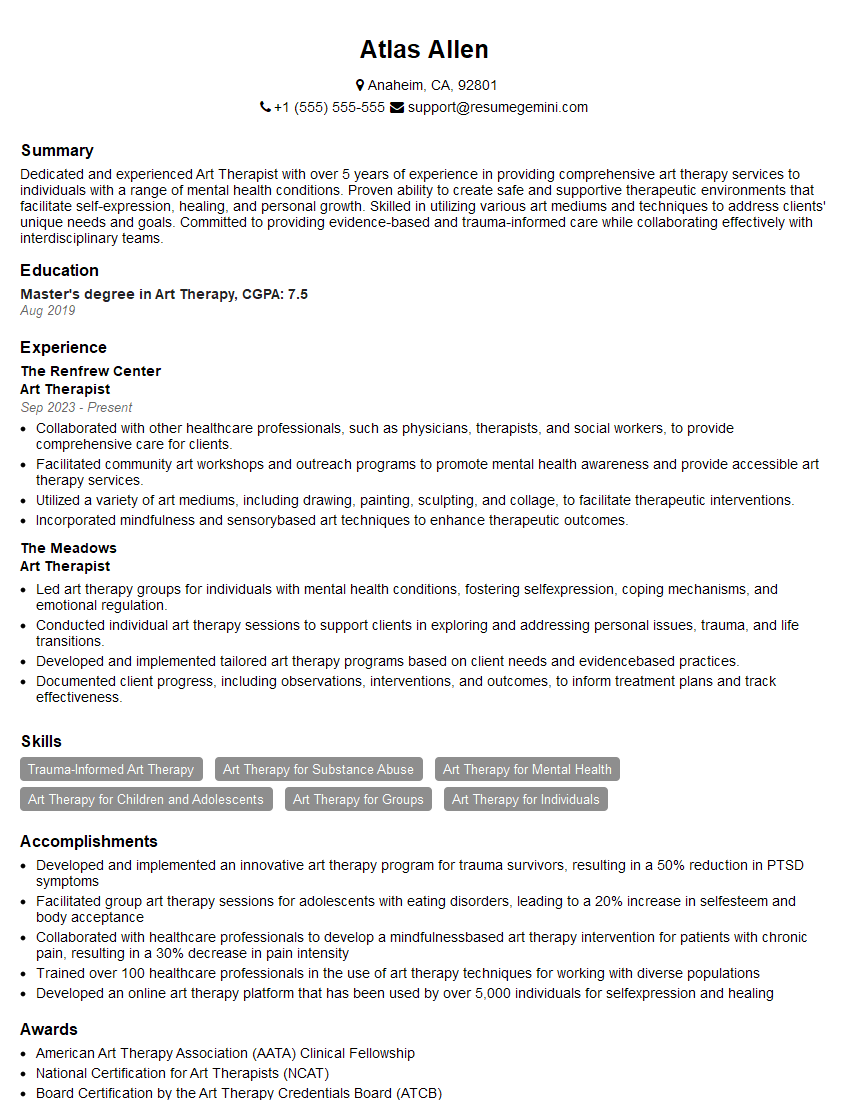
Mastering Ethical and Legal Considerations in Art Therapy is crucial for building a successful and sustainable career. A strong understanding of these principles demonstrates professionalism, competence, and a commitment to client well-being – all highly valued qualities in prospective art therapists. To significantly enhance your job prospects, create an ATS-friendly resume that effectively highlights your skills and experience. ResumeGemini is a trusted resource for building compelling and effective resumes tailored to the specific requirements of the job market. We provide examples of resumes specifically designed for candidates in Ethical and Legal Considerations in Art Therapy, helping you showcase your expertise and land your dream job. Take the next step toward building your professional presence today.
Explore more articles
Users Rating of Our Blogs
Share Your Experience
We value your feedback! Please rate our content and share your thoughts (optional).
What Readers Say About Our Blog
To the interviewgemini.com Webmaster.
Very helpful and content specific questions to help prepare me for my interview!
Thank you
To the interviewgemini.com Webmaster.
This was kind of a unique content I found around the specialized skills. Very helpful questions and good detailed answers.
Very Helpful blog, thank you Interviewgemini team.