Interviews are more than just a Q&A session—they’re a chance to prove your worth. This blog dives into essential Exercise Prescription Software (ACSM’s Exercise Standards for Testing and Prescription 10th Edition) interview questions and expert tips to help you align your answers with what hiring managers are looking for. Start preparing to shine!
Questions Asked in Exercise Prescription Software (ACSM’s Exercise Standards for Testing and Prescription 10th Edition) Interview
Q 1. Explain the FITT-VP principle and its application in exercise prescription.
The FITT-VP principle is a cornerstone of exercise prescription, providing a framework for designing effective workout programs. It stands for Frequency, Intensity, Time, Type, Volume, and Progression. Each component is crucial for achieving specific fitness goals.
- Frequency: How often you exercise per week. For example, a cardiovascular program might recommend 3-5 sessions per week.
- Intensity: How hard you exercise. This can be measured in various ways, such as percentage of maximum heart rate (%HRmax), percentage of VO2 max (%VO2max), or Rating of Perceived Exertion (RPE).
- Time: The duration of each exercise session. This might be 30-60 minutes for a cardio session, or a specific number of sets and repetitions for strength training.
- Type: The mode of exercise. This could be running, swimming, cycling, weight training, or a combination.
- Volume: The total amount of exercise performed over a given period. This is often calculated as the product of frequency, intensity, and time (e.g., total kilocalories expended).
- Progression: Gradually increasing the demands of the exercise program over time to continue challenging the body and promoting adaptations. This might involve increasing frequency, intensity, time, or type.
For example, a beginner’s running program might start with 3 sessions per week (Frequency) at a moderate intensity (Intensity, perhaps 60% HRmax) for 20 minutes (Time), using a jogging type (Type). The volume would be relatively low. Over time, the program would progress by increasing the duration of runs, then perhaps the frequency or the intensity, ensuring the progression is gradual to avoid injury.
Q 2. Describe the different methods for assessing cardiorespiratory fitness.
Cardiorespiratory fitness assessment involves determining an individual’s ability to perform large muscle, dynamic, endurance exercise. Several methods exist:
- Graded Exercise Test (GXT): This involves a progressive increase in exercise intensity on a treadmill or cycle ergometer, while continuously monitoring heart rate, blood pressure, and ECG. It’s the gold standard but requires specialized equipment and trained personnel. It directly measures VO2 max.
- Submaximal Exercise Tests: These tests estimate VO2 max based on heart rate response to a submaximal workload. They’re less expensive and less time-consuming than GXTs but less accurate.
- Field Tests: These are less precise but convenient options for large groups or field settings. Examples include the 1.5-mile run, 1-mile walk test, and step tests.
- Resting Heart Rate: While not a direct measure, a consistently low resting heart rate can suggest good cardiorespiratory fitness. However, it needs to be considered in context of other factors.
The choice of method depends on factors such as the individual’s health status, resources available, and the required level of accuracy.
Q 3. What are the key considerations for prescribing exercise to individuals with hypertension?
Prescribing exercise for individuals with hypertension requires careful consideration. The primary goal is to lower blood pressure while minimizing risks. Key considerations include:
- Aerobic Exercise: Regular aerobic exercise is crucial, aiming for at least 150 minutes per week of moderate-intensity or 75 minutes per week of vigorous-intensity activity. Activities like brisk walking, swimming, and cycling are generally well-tolerated.
- Resistance Training: Strength training is also beneficial, but it should be performed with caution. Low-to-moderate intensity is recommended, focusing on multiple muscle groups. Avoid Valsalva maneuver (holding breath during exertion).
- Intensity Monitoring: Intensity should be carefully monitored to avoid excessive increases in blood pressure. RPE and %HRmax (using a lower percentage than for healthy individuals) are suitable methods. Individuals should be advised to stop if they experience dizziness, chest pain, or severe shortness of breath.
- Medication Considerations: Exercise prescription should be coordinated with medication management. It is important to understand what medications the individual takes and potential interactions or contraindications.
- Gradual Progression: Start slowly and gradually increase the frequency, intensity, and duration of exercise to allow the body to adapt.
- Regular Monitoring: Regular monitoring of blood pressure is essential, both before and after exercise sessions.
It is crucial to always consult with the individual’s physician before initiating any exercise program for individuals with hypertension.
Q 4. How do you determine appropriate exercise intensity using various methods (e.g., %HRmax, %VO2max, RPE)?
Determining appropriate exercise intensity is crucial for safety and effectiveness. Several methods exist:
- %HRmax: This involves calculating the maximum heart rate (typically 220-age) and prescribing exercise at a percentage of this value. For example, 60-80% HRmax is commonly recommended for moderate-intensity cardio.
Example: 220 - 40 years = 180 bpm (HRmax); 60% of 180 = 108 bpm; 80% of 180 = 144 bpm. - %VO2max: This method uses the individual’s maximal oxygen consumption (VO2max), obtained through a GXT. It’s a more precise measure of intensity but requires a GXT.
- RPE (Rating of Perceived Exertion): This subjective method assesses the individual’s feeling of exertion during exercise, typically using a scale of 1-10 (Borg Scale). A value of 3-4 represents light exertion, 5-6 moderate, and 7-8 vigorous. This is useful for those without HR monitors and helps in self-regulation of intensity.
The choice of method depends on factors such as the availability of equipment, the individual’s understanding of the methods, and the required precision.
Q 5. Explain the role of flexibility training in a comprehensive exercise program.
Flexibility training plays a vital role in a comprehensive exercise program, improving range of motion, reducing muscle soreness, and preventing injuries. It improves posture and contributes to overall physical function. Flexibility training is often overlooked, but it’s crucial for improving and maintaining optimal mobility and reducing the risk of muscular imbalances. It enhances performance in various activities of daily living, including bending, reaching, and lifting.
Several types of flexibility exercises can be incorporated, including static stretches (holding a stretch for 15-30 seconds), dynamic stretches (controlled movements through a range of motion), and PNF (proprioceptive neuromuscular facilitation) techniques (involving alternating contractions and relaxations of muscles).
For instance, including static stretches like hamstring stretches, quadriceps stretches, and shoulder stretches at the end of a workout routine can improve flexibility and reduce post-exercise soreness. Integrating dynamic stretches like arm circles, leg swings, and torso twists before a workout can help warm up muscles, improving range of motion and reducing the risk of injuries.
Q 6. Describe the progression of exercise intensity and duration over time.
Progression of exercise intensity and duration is fundamental to achieving long-term fitness goals and preventing plateaus. It’s a gradual increase in the demands placed on the body, allowing for adaptations without causing undue stress or injury. The principle of progressive overload should guide this process.
Initially, the focus is on establishing a baseline level of fitness and building a foundation of consistency. Once this is achieved, the intensity, duration, or both can be gradually increased. This can be done through several strategies:
- Increasing Duration: For example, gradually extending the duration of a cardio workout, such as increasing running time from 20 minutes to 30 minutes after a few weeks.
- Increasing Intensity: Increasing the intensity of exercise by increasing the speed, resistance, or incline. For instance, increasing the incline on a treadmill or adding weight to resistance exercises.
- Increasing Frequency: Adding more exercise sessions to the weekly schedule, but only after a proper foundation has been established.
- Varying the Exercise Mode: Incorporating different types of exercise to challenge the body in new ways. This prevents boredom and helps to improve overall fitness.
The rate of progression should be individualized, considering factors such as the individual’s fitness level, age, and health status. It’s crucial to listen to your body and adjust the progression as needed. A crucial aspect of safe and effective progression is to allow for adequate rest and recovery between workouts.
Q 7. How would you modify an exercise program for a client with osteoarthritis?
Modifying an exercise program for a client with osteoarthritis requires careful consideration of the affected joints and the individual’s pain levels. The focus is on maintaining function, improving range of motion, and managing pain, not pushing the body to extremes.
- Low-Impact Activities: Prioritize low-impact activities such as swimming, cycling, or water aerobics that minimize stress on the affected joints. Walking can also be beneficial, but on even surfaces.
- Range of Motion Exercises: Incorporate exercises that maintain or improve joint range of motion without causing pain. Gentle stretching and range of motion exercises specific to the affected joints are key.
- Strengthening Exercises: Include exercises to strengthen the muscles surrounding the affected joints to provide stability and support. Focus on isometrics (static contractions) or low-weight resistance training. Avoid high-impact exercises or exercises that cause pain.
- Pain Management: Work within the client’s pain tolerance. Modifying exercises to reduce joint stress might be necessary. They may need to reduce intensity or modify positions to reduce stress on the joints.
- Proper Warm-up and Cool-down: Ensure proper warm-up before exercise to prepare the joints and a cool-down to reduce stiffness.
- Consult with Professionals: Close collaboration with a physical therapist is highly recommended to design a safe and effective program tailored to the individual’s specific condition.
It’s vital to ensure that exercises do not exacerbate the client’s pain. Regular monitoring of pain levels and adjustments to the program are critical components of exercise prescription for individuals with osteoarthritis.
Q 8. What are the contraindications for exercise?
Contraindications to exercise are factors that make it unsafe or inadvisable for an individual to participate in physical activity. These can be absolute, meaning exercise should be avoided completely, or relative, meaning exercise should be modified or avoided depending on the circumstances.
- Absolute Contraindications: These include unstable angina (chest pain), uncontrolled hypertension (high blood pressure) significantly above normal values, and acute myocardial infarction (heart attack) or stroke. In these cases, exercise could be life-threatening.
- Relative Contraindications: These are conditions that may require modification of the exercise program or even temporary cessation. Examples include severe aortic stenosis (narrowing of the aorta), uncorrected arrhythmias (irregular heartbeats), and uncontrolled diabetes. For these, a physician’s clearance is crucial and the intensity and type of exercise must be carefully considered.
Think of it like this: absolute contraindications are like a ‘stop’ sign – you must stop. Relative contraindications are more like a ‘caution’ sign – proceed with caution and expert guidance.
Q 9. What are the signs and symptoms of exercise intolerance?
Signs and symptoms of exercise intolerance indicate that the body is struggling to cope with the demands of physical activity. These can be broadly categorized into cardiovascular, respiratory, and musculoskeletal issues.
- Cardiovascular: Angina (chest pain), shortness of breath (dyspnea), dizziness, lightheadedness, excessive fatigue, palpitations (irregular heartbeats), and unusual leg pain.
- Respiratory: Shortness of breath (dyspnea) even at rest, wheezing, persistent cough, and excessive fatigue.
- Musculoskeletal: Muscle cramps, pain in joints or muscles, and weakness.
It’s important to remember that these signs and symptoms can vary in severity and presentation. Any individual experiencing these during or after exercise should immediately stop and seek medical attention if necessary.
For example, a client experiencing chest pain during a treadmill test should immediately cease the activity and be assessed for potential cardiac issues. Similarly, sudden dizziness warrants immediate cessation of activity.
Q 10. How do you assess muscular strength and endurance?
Muscular strength and endurance are assessed using various tests, depending on the individual’s abilities and goals.
- Muscular Strength: This refers to the maximum force a muscle or muscle group can generate in a single effort. Common assessments include:
- 1-repetition maximum (1RM): This involves determining the maximum weight an individual can lift for one repetition. This is typically performed for major muscle groups.
- Isometric testing: This involves measuring the force generated while maintaining a static position (e.g., handgrip dynamometry).
- Muscular Endurance: This refers to a muscle’s ability to sustain repeated contractions over time. Assessments include:
- Repetition maximum tests: Performing as many repetitions as possible (e.g., push-ups, sit-ups) with a given weight or resistance.
- Timed tests: Performing a specific exercise (e.g., wall sits, plank) for as long as possible.
For example, a client’s muscular strength might be assessed using a 1RM bench press, while their endurance could be evaluated by a timed plank test. It’s crucial to select appropriate tests based on the client’s fitness level and potential limitations.
Q 11. Explain the importance of warm-up and cool-down in exercise programs.
Warm-up and cool-down are crucial components of any exercise program, enhancing performance and reducing the risk of injury. They prepare the body for and help it recover from exercise.
- Warm-up: This involves gradually increasing heart rate, blood flow, and muscle temperature. It improves flexibility, reduces muscle stiffness, and prepares the neuromuscular system for exercise. A typical warm-up may include 5-10 minutes of light cardio, such as jogging or cycling, followed by dynamic stretching (e.g., arm circles, leg swings).
- Cool-down: This involves gradually decreasing heart rate and blood flow, helping the body return to a resting state. It aids in reducing muscle soreness and promotes recovery. A typical cool-down may include 5-10 minutes of light cardio and static stretching (holding a stretch for 15-30 seconds).
Think of a warm-up as preparing your car engine before a long drive, and a cool-down as allowing the engine to cool down gradually after the journey. This helps prevent overheating and damage.
Q 12. Describe different training methods (e.g., interval training, circuit training).
Various training methods exist to target different fitness components and achieve specific goals. Here are a few examples:
- Interval Training: This involves alternating periods of high-intensity exercise with periods of rest or low-intensity exercise. It improves cardiovascular fitness and can be used for both aerobic and strength training. Example: 30 seconds of sprinting followed by 60 seconds of jogging, repeated for 20 minutes.
- Circuit Training: This involves performing a series of exercises, one after another, with minimal rest between exercises. It improves cardiovascular fitness and muscular strength and endurance. Example: A circuit could include squats, push-ups, lunges, and rows, each performed for 30 seconds with 15 seconds rest between exercises.
- Continuous Training: This involves performing exercise at a steady state intensity for a sustained period. It’s great for improving aerobic base and endurance. Example: 30 minutes of jogging at a moderate pace.
The choice of training method depends on the client’s goals, fitness level, and preferences. A well-designed program may incorporate multiple methods to optimize results.
Q 13. How do you monitor client progress and make adjustments to their program?
Monitoring client progress and making program adjustments are vital for ensuring safety and achieving desired outcomes. This involves a combination of subjective and objective measures.
- Subjective Measures: These include client feedback, self-reported exercise adherence, and perceived exertion levels. Regular check-ins help assess motivation and identify potential barriers.
- Objective Measures: These involve objective assessments such as body composition analysis (measuring body fat percentage), strength testing (1RM), cardiovascular fitness tests (VO2 max), and progress tracking via wearable fitness devices and exercise logs.
Based on these measurements, program adjustments may include increasing or decreasing the intensity, duration, or frequency of exercise; modifying exercise selection; and adjusting the training method. For example, if a client isn’t progressing as expected in strength training, you might increase the weight or change the exercise to better target the muscles.
Regular review and adjustments are paramount to achieving client goals and preventing plateauing or injuries. Remember flexibility in programming is key.
Q 14. What are the benefits and risks of resistance training?
Resistance training, often referred to as strength training, offers numerous benefits but also carries some risks.
- Benefits:
- Increased muscular strength and endurance.
- Improved bone density, reducing the risk of osteoporosis.
- Enhanced metabolism and fat loss.
- Improved functional fitness and balance.
- Positive impact on mental health.
- Risks:
- Muscle strains or tears.
- Joint pain or injury.
- Overtraining syndrome.
- Elevated blood pressure (in susceptible individuals).
To minimize risks, proper form, gradual progression, and adequate rest and recovery are vital. Client education and careful exercise prescription are essential to maximize benefits and mitigate potential risks. For instance, starting with lighter weights and gradually increasing resistance is crucial for preventing injuries. Always prioritize proper technique over lifting heavy weights.
Q 15. What are the key components of a well-designed exercise program?
A well-designed exercise program is built on several key pillars, all crucial for achieving client goals and ensuring safety. Think of it as a carefully constructed house; each component is essential for a strong, stable structure.
Needs Analysis: This is the foundation. It involves a thorough assessment of the client’s current fitness level, goals (weight loss, muscle gain, improved endurance, etc.), medical history, and preferences. For example, a client aiming for weight loss might need a different program than a client aiming to improve marathon times.
Warm-up: Essential for preparing the body for exercise. A dynamic warm-up, involving movements like arm circles and leg swings, is preferable to static stretching beforehand. Think of this as warming up your engine before driving.
Workout: The main component, designed based on the needs analysis. This includes specifying exercises, sets, reps, rest periods, and intensity. For instance, a program might incorporate resistance training for strength, cardiovascular exercise for endurance, and flexibility exercises.
Cool-down: Just as important as the warm-up, the cool-down helps gradually return the body to a resting state. Static stretching (holding a stretch for a period of time) is beneficial here. It’s like gently cooling down your engine after a drive.
Progression: The program should gradually increase in intensity, duration, or frequency over time to avoid plateaus and maximize results. This could be achieved through increasing weight lifted, running distance, or the number of training sessions per week. Think of it as gradually increasing the load on your engine to improve performance.
Monitoring and Evaluation: Regular checks on progress are essential, adjusting the program as needed. This might involve reassessing goals, tracking progress on key metrics (weight, strength, endurance), or noting any client feedback. This continuous improvement aspect is critical.
Career Expert Tips:
- Ace those interviews! Prepare effectively by reviewing the Top 50 Most Common Interview Questions on ResumeGemini.
- Navigate your job search with confidence! Explore a wide range of Career Tips on ResumeGemini. Learn about common challenges and recommendations to overcome them.
- Craft the perfect resume! Master the Art of Resume Writing with ResumeGemini’s guide. Showcase your unique qualifications and achievements effectively.
- Don’t miss out on holiday savings! Build your dream resume with ResumeGemini’s ATS optimized templates.
Q 16. Explain the importance of obtaining informed consent before starting an exercise program.
Informed consent is paramount; it’s the ethical cornerstone of any exercise program. It ensures clients understand the risks and benefits involved, empowering them to make an informed decision about participation. Without it, you risk legal and ethical ramifications.
Obtaining informed consent involves a clear, understandable explanation of the program’s purpose, procedures, potential benefits, and risks. Clients should understand that participation is voluntary and they can withdraw at any time. This explanation should be documented, ideally with a signed consent form. For instance, a client should be aware of the potential for muscle soreness, injury, or other adverse effects.
Consider using plain language, avoiding jargon, and answering any questions the client may have. It’s about building trust and fostering a collaborative relationship.
Q 17. How would you address client adherence challenges?
Adherence is a significant challenge. Clients often start with enthusiasm but lose motivation. Addressing this requires a multifaceted approach that goes beyond simply prescribing exercises.
Goal Setting: Collaboratively set realistic, achievable, and client-centered goals. Breaking down large goals into smaller, manageable steps boosts motivation. For example, instead of aiming for drastic weight loss, focus on weekly weight loss milestones.
Personalized Programming: Tailor exercises to the client’s interests and abilities. Engaging activities increase adherence. If someone loves dancing, incorporate dance classes instead of solely focusing on weightlifting.
Social Support: Encourage group exercise or pair clients with buddies to foster accountability and support. This builds a sense of community, improving motivation.
Regular Feedback and Communication: Consistent feedback and open communication keep clients engaged and help you address any concerns promptly. Regular check-ins and adjustments to the plan show you are invested in their success.
Motivation Strategies: Explore strategies like reward systems, tracking progress visually (charts, apps), and setting up small, consistent rewards for achieving milestones.
Q 18. Describe the role of nutrition in exercise performance and recovery.
Nutrition plays a vital role, supporting exercise performance and recovery. It fuels the body, providing energy for workouts and essential nutrients for muscle repair and growth. Think of it as providing the right fuel for your car’s engine.
Pre-exercise nutrition should focus on easily digestible carbohydrates and moderate protein. This provides energy without causing digestive distress. For example, a banana or a small bowl of oatmeal.
Post-exercise nutrition focuses on replenishing glycogen stores (carbohydrates) and repairing muscle tissue (protein). A combination of carbohydrates and protein, such as a protein shake or a meal with lean protein and whole grains is ideal.
Proper hydration is also crucial throughout the day, especially during and after exercise, to prevent dehydration and maintain optimal bodily functions.
Ignoring nutrition undermines the effectiveness of any exercise program. It’s like trying to build a house without the necessary bricks and cement.
Q 19. What are the guidelines for prescribing exercise during pregnancy and postpartum?
Exercise during pregnancy and postpartum requires a careful approach, prioritizing both maternal and fetal health. Guidelines emphasize individualized plans based on pre-pregnancy fitness levels and any existing health conditions.
During Pregnancy: Moderate-intensity aerobic exercise (e.g., brisk walking, swimming) is generally recommended for most healthy pregnant women. Exercise intensity should be adjusted based on individual tolerance. Avoid supine positions (lying flat on the back) after the first trimester. Strength training can be beneficial but should focus on proper form and avoid excessive strain.
Postpartum: Gradual return to exercise is crucial. The initial focus is on restoring core strength and pelvic floor function. Progression should be gradual, considering factors such as delivery method (vaginal vs. Cesarean) and any postpartum complications.
Always consult with a healthcare professional before starting any exercise program during pregnancy or postpartum.
Q 20. How do you screen for potential health risks before starting an exercise program?
Screening for health risks is a critical first step, minimizing the risk of adverse events during exercise. This involves collecting information through several methods.
Health History Questionnaire: A detailed questionnaire gathers information on medical conditions, medications, surgeries, and family history. This is the cornerstone of identifying potential issues.
Physical Examination: A brief physical exam assesses vital signs (blood pressure, heart rate, resting oxygen saturation, etc.) and identifies any immediate concerns.
Risk Stratification: Based on the gathered information, clients are categorized into risk strata (low, moderate, or high risk) to guide exercise prescription. A high-risk individual requires more careful supervision and might need medical clearance before beginning an exercise program.
Par-Q (Physical Activity Readiness Questionnaire): A simple, standardized questionnaire that helps identify individuals who may need further medical evaluation before starting an exercise program.
For higher-risk clients, referral to a physician or other healthcare professional is necessary.
Q 21. Explain the different stages of exercise progression.
Exercise progression is a systematic approach to gradually increasing the demands placed on the body, maximizing results and minimizing risk of injury. It’s not about pushing too hard too soon.
The stages are typically:
Initial Stage (Phase 1): Focuses on building a base level of fitness. Low intensity and short durations are used, emphasizing proper form and technique. This phase prepares the body for increased demands.
Improvement Stage (Phase 2): Gradually increases intensity, duration, or frequency of exercise. This stage helps the body adapt and improve fitness levels. Progressive overload is key, continually increasing the challenge.
Maintenance Stage (Phase 3): Once the desired fitness level is reached, this stage aims to maintain it. The program can be modified to prevent plateaus and maintain motivation. This stage is about long-term adherence.
Progression should be individualized, considering the client’s response and any limitations. It’s about smart, steady progress, not reckless intensity.
Q 22. What are the considerations for prescribing exercise to older adults?
Prescribing exercise for older adults requires a nuanced approach, prioritizing safety and individual needs above all else. We must consider their functional capacity, pre-existing health conditions, and medication usage. A thorough health screening, including a physician’s clearance, is crucial before starting any program. The exercises should be tailored to their specific physical limitations and functional goals, focusing on maintaining or improving balance, strength, flexibility, and endurance.
- Reduced Intensity and Progression: Start with lower intensity and shorter durations than for younger adults, gradually increasing the load (intensity, duration, or frequency) to avoid injury. Think of it like gently coaxing a flower to bloom, rather than forcing it open.
- Focus on Functional Fitness: Prioritize activities that improve daily living skills like walking, climbing stairs, and lifting objects. This makes the exercise relevant and motivating.
- Multimodal Approach: Incorporate a blend of aerobic exercise, strength training, flexibility exercises (like yoga or Tai Chi), and balance training to promote holistic well-being.
- Proper Warm-up and Cool-down: Always include a thorough warm-up and cool-down to prepare the body for exercise and aid in recovery. Ignoring these can significantly increase the risk of injury.
- Monitoring and Modification: Regular monitoring of vital signs during exercise is necessary, and the program should be modified as needed based on the individual’s response and progress. If pain or discomfort arises, we always immediately stop the activity.
For example, a 70-year-old with osteoarthritis might benefit from a program focused on low-impact aerobic exercises like walking in a pool, combined with strength training using light weights or resistance bands, and balance exercises like Tai Chi. This approach directly addresses their mobility concerns and helps improve their quality of life.
Q 23. Describe the principles of exercise program design based on ACSM guidelines.
ACSM guidelines emphasize a systematic approach to exercise program design built around the FITT-VP principle: Frequency, Intensity, Time, Type, Volume, and Progression.
- Frequency: How often the exercise is performed per week. This varies based on fitness goals and the type of exercise. For example, for cardiovascular health, the recommendation is generally at least 5 days per week of moderate-intensity aerobic exercise or 3 days per week of vigorous intensity aerobic exercise.
- Intensity: How hard the individual is working during exercise. It can be measured using heart rate, perceived exertion (Borg scale), or metabolic equivalents (METs).
- Time (Duration): How long each exercise session lasts. This depends on the intensity; higher-intensity sessions are usually shorter.
- Type (Mode): The kind of exercise performed. This can range from aerobic exercise (running, swimming) to resistance training (weightlifting, bodyweight exercises) to flexibility exercises (stretching, yoga).
- Volume: The overall amount of exercise performed (Frequency x Intensity x Time). This is a cumulative measure of the total exercise workload.
- Progression: Gradually increasing the frequency, intensity, time, or type of exercise over time. This is crucial to prevent plateaus and promote continued adaptation.
For instance, a beginner might start with 30 minutes of moderate-intensity walking three times a week, gradually increasing to 45 minutes four times a week over several weeks. They could also increase the intensity by adding inclines or a faster pace. This demonstrates the progressive overload principle in action.
Q 24. What are the limitations of using self-reported physical activity data?
Self-reported physical activity data, while convenient and cost-effective, suffers from several limitations. Recall bias, social desirability bias, and a lack of objective measurement significantly impact accuracy.
- Recall Bias: Individuals may struggle to accurately remember the intensity, duration, and frequency of their physical activity. Our memories are fallible, especially over extended periods.
- Social Desirability Bias: Participants may overreport or underreport their activity levels to present themselves in a positive or negative light, depending on the context and their motivations.
- Lack of Objective Measurement: Self-reported data lacks the precision and objectivity of objective measurements like accelerometry or heart rate monitoring. It’s simply a subjective estimate.
For example, someone may genuinely believe they walk for 30 minutes daily, but upon using a pedometer, it’s revealed they only walk for 15 minutes. This highlights the inaccuracy of relying solely on self-reported data. It’s best used in conjunction with more objective assessments.
Q 25. How do you utilize technology (e.g., wearable devices, software) in exercise prescription?
Technology plays a crucial role in modern exercise prescription. Wearable devices and software enhance adherence, provide personalized feedback, and facilitate objective data collection.
- Wearable Devices (Smartwatches, Fitness Trackers): These devices capture objective data on steps taken, heart rate, sleep patterns, and calories burned. This information provides valuable insights into an individual’s physical activity levels and sleep quality, enabling more tailored exercise prescription.
- Exercise Prescription Software: Software applications streamline the exercise prescription process, allowing for individualized program creation based on client characteristics, goals, and available resources. They can track progress, adjust programs based on feedback, and provide motivational support.
- Telehealth Platforms: These platforms enable remote monitoring and coaching, particularly beneficial for individuals with limited mobility or those residing in remote areas. Remote monitoring ensures progress is tracked consistently and allows the health professional to provide timely support and modifications to the exercise program.
For instance, I might use a fitness tracker’s data to show a client their actual activity levels, highlighting areas where they can increase physical activity gradually. Then, I use exercise prescription software to generate a personalized plan that’s visually engaging and keeps them accountable and motivated.
Q 26. Explain the concept of overload and progression in exercise training.
Overload and progression are fundamental principles in exercise training. Overload refers to systematically increasing the demands placed on the body to stimulate adaptation, while progression ensures this increase is gradual and safe.
- Overload: To improve fitness, the body must be challenged beyond its current capabilities. This can involve increasing the intensity, duration, frequency, or type of exercise. It’s about pushing the body just outside its comfort zone, but not exceeding its capacity.
- Progression: Gradually increasing the overload over time prevents plateaus and injury. This involves making incremental changes to the exercise program, allowing the body time to adapt to each increase in demand. The progression should be tailored to the individual’s response and tolerance.
Think of it like climbing a mountain. Overload is taking each step upward, pushing yourself to reach the next level. Progression is choosing a route that is challenging but manageable, ensuring you don’t exhaust yourself too quickly, and have enough energy to continue upward.
Q 27. How do you calculate training heart rate zones based on different methods?
Training heart rate zones define the intensity ranges for different training goals. Several methods exist for calculating these zones, each with its own merits and limitations.
- Maximal Heart Rate (MHR) Method: This traditional method estimates MHR using the formula
220 - age. Training zones are then calculated as percentages of this MHR. This is a simple method, but it can be inaccurate due to individual variability. - Karvonen Method (Heart Rate Reserve): This method considers resting heart rate (RHR) for a more accurate estimation. The formula is
[(MHR - RHR) x % intensity] + RHR. This provides a more personalized approach. - Submaximal Exercise Tests: These tests, often conducted in a clinical or laboratory setting, more directly measure an individual’s maximal oxygen uptake (VO2 max), providing the most accurate basis for calculating heart rate zones. These are more time-consuming and resource-intensive, but offer enhanced accuracy.
For example, using the Karvonen method for a 40-year-old with a resting heart rate of 60 bpm and a maximal heart rate of 180 bpm (220 – 40): Their target heart rate for 70% intensity would be [(180 - 60) x 0.7] + 60 = 138 bpm. This means that during training, maintaining a heart rate between 138 bpm and 151 bpm (for 80%) would fall within their target zone for improving cardiorespiratory fitness.
Q 28. Describe the different types of muscle contractions and their application in resistance training.
Muscle contractions are classified based on their role in movement and changes in muscle length. These different types are strategically applied in resistance training to achieve specific goals.
- Isometric Contractions: Muscle tension increases without changes in muscle length. These are useful for maintaining postural stability and strengthening muscles at specific joint angles. Think of holding a plank or isometrically squeezing a stress ball.
- Isotonic Contractions: Muscle tension remains relatively constant while muscle length changes. These are further categorized as:
- Concentric: Muscle shortens while generating force. This is the lifting phase in weight training. For example, the biceps shortening during a bicep curl.
- Eccentric: Muscle lengthens while generating force. This is the lowering phase in weight training, often leading to greater muscle damage and subsequent growth. For example, slowly lowering the weight back down in a bicep curl.
- Isokinetic Contractions: Muscle contractions at a constant speed regardless of force exerted. This requires specialized equipment found in rehabilitation and athletic training settings.
In a resistance training program, we might use a combination of these contractions. For example, a bicep curl involves a concentric contraction during the lifting phase and an eccentric contraction during the lowering phase. Isometric exercises can be added to target specific muscle groups at particular joint angles or to improve stabilization.
Key Topics to Learn for Exercise Prescription Software (ACSM’s Exercise Standards for Testing and Prescription 10th Edition) Interview
- Risk Stratification and Pre-Participation Screening: Understand the importance of accurately assessing a client’s health status and identifying potential risks before prescribing exercise.
- Exercise Testing and Measurement: Master the procedures and interpretations of various fitness assessments (e.g., VO2 max testing, body composition analysis) and their application in exercise prescription.
- Exercise Prescription Principles: Develop a strong grasp of the FITT-VP principle (Frequency, Intensity, Time, Type, Volume, Progression) and how to apply it to diverse populations and goals.
- Designing Individualized Exercise Programs: Learn how to create safe and effective exercise programs tailored to specific client needs, considering their goals, limitations, and preferences. This includes understanding program design for various populations (e.g., older adults, individuals with chronic conditions).
- Program Progression and Monitoring: Understand the principles of progressive overload and how to monitor client progress and adjust programs accordingly. This includes knowledge of appropriate assessment tools and strategies.
- Understanding Special Populations: Gain a thorough understanding of exercise prescription modifications for individuals with specific health conditions (e.g., cardiovascular disease, diabetes, obesity).
- Program Adherence and Motivation: Explore techniques and strategies to improve client adherence and motivation, fostering long-term success.
- Legal and Ethical Considerations: Familiarize yourself with the legal and ethical responsibilities associated with exercise prescription and client safety.
- Technology Integration: Demonstrate understanding of how technology (including exercise prescription software) can enhance the efficiency and effectiveness of program design and delivery.
- Communication and Client Interaction: Practice effectively communicating program details, providing client education, and building a strong rapport.
Next Steps
Mastering the concepts within ACSM’s Exercise Standards for Testing and Prescription, 10th Edition, is crucial for career advancement in the fitness and health professions. It demonstrates a commitment to evidence-based practice and client safety, making you a highly competitive candidate. To maximize your job prospects, create an ATS-friendly resume that effectively highlights your skills and experience. ResumeGemini is a trusted resource for building professional resumes that grab recruiters’ attention. They even provide examples of resumes tailored to roles utilizing Exercise Prescription Software based on the ACSM guidelines. Take advantage of these resources to create a compelling resume and showcase your expertise!

Wellness Coordinator Resume Sample

Rehabilitation Specialist Resume Sample
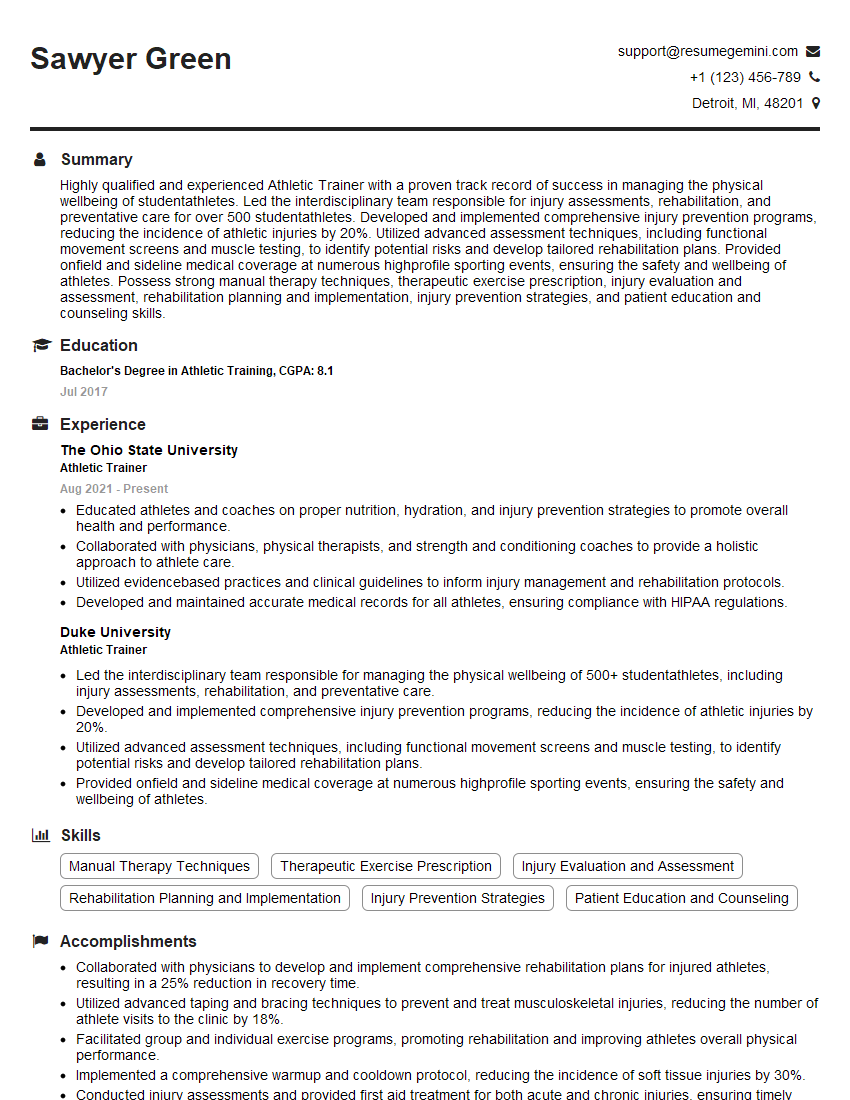
Athletic Trainer Resume Sample
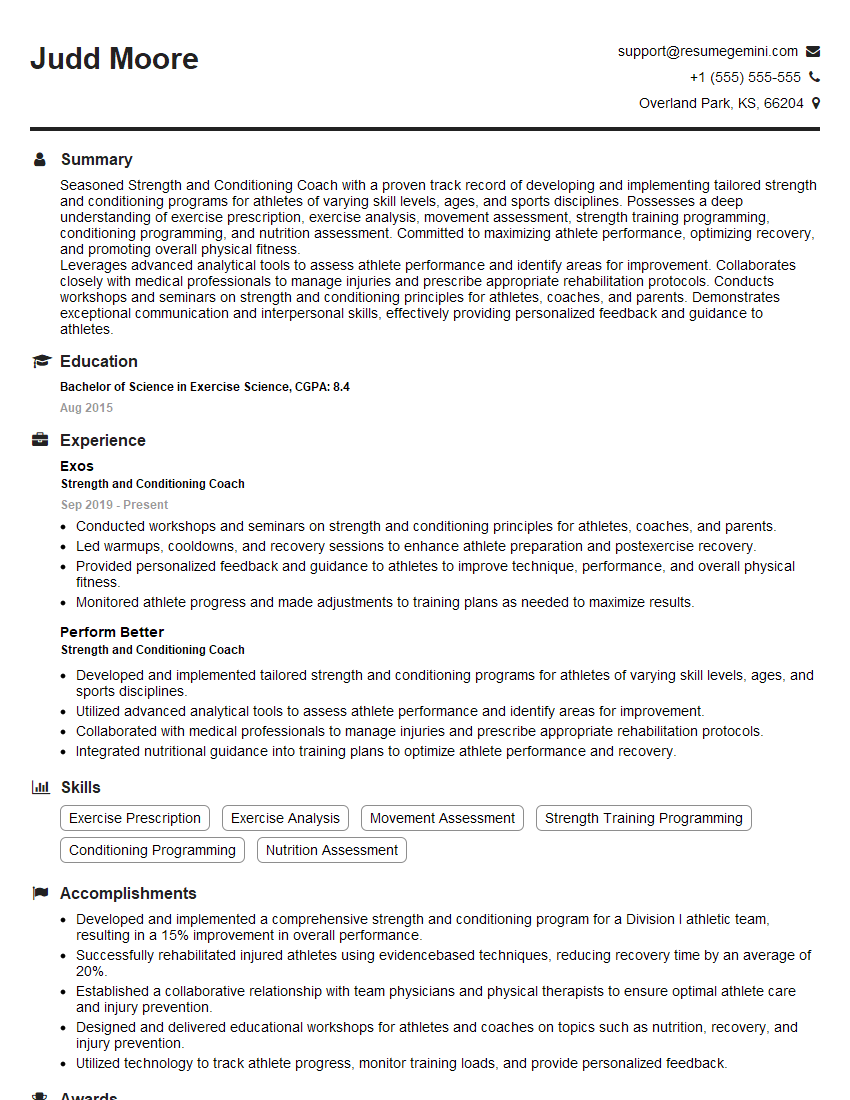
Strength and Conditioning Coach Resume Sample
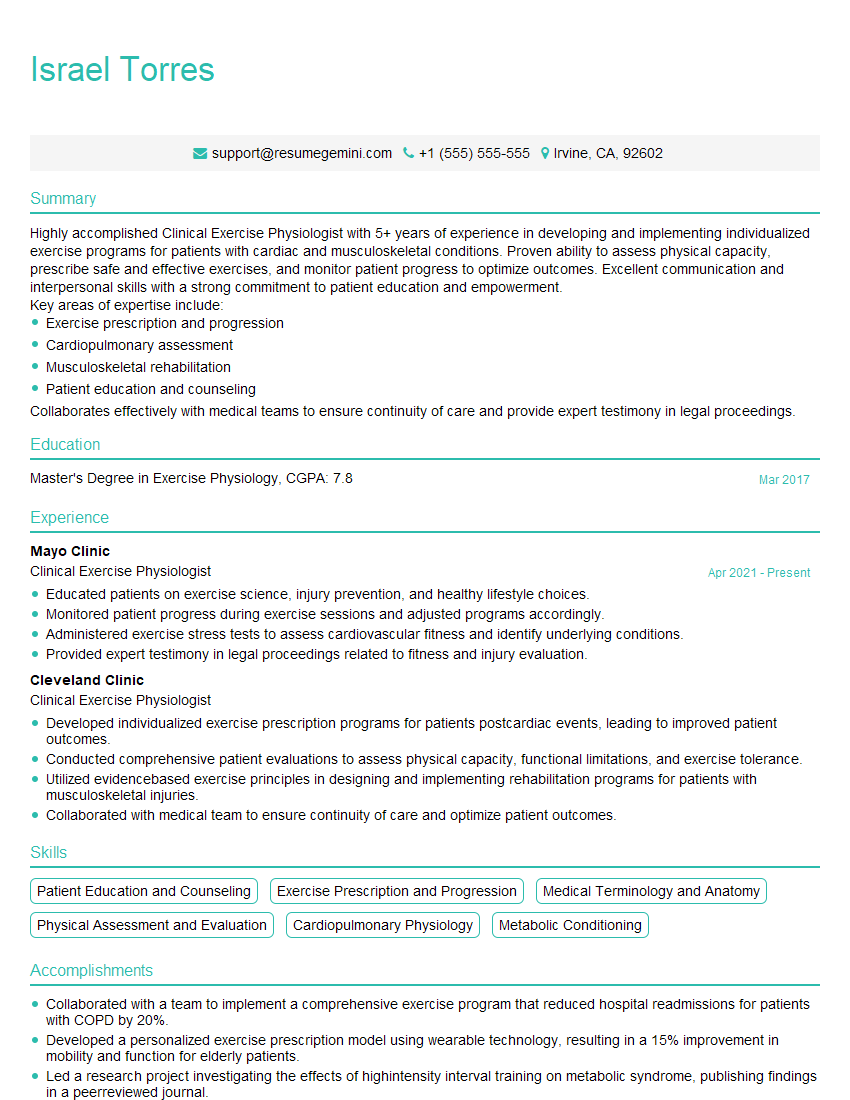
Clinical Exercise Physiologist Resume Sample
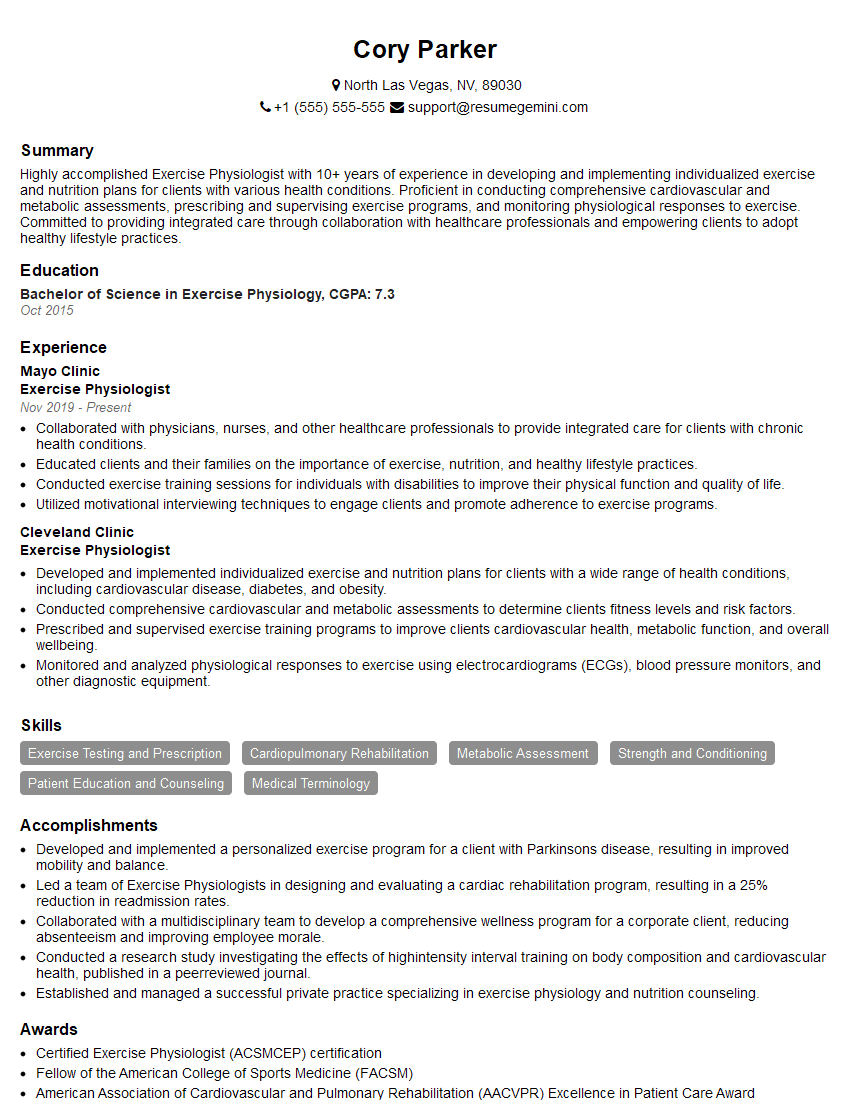
Exercise Physiologist Resume Sample
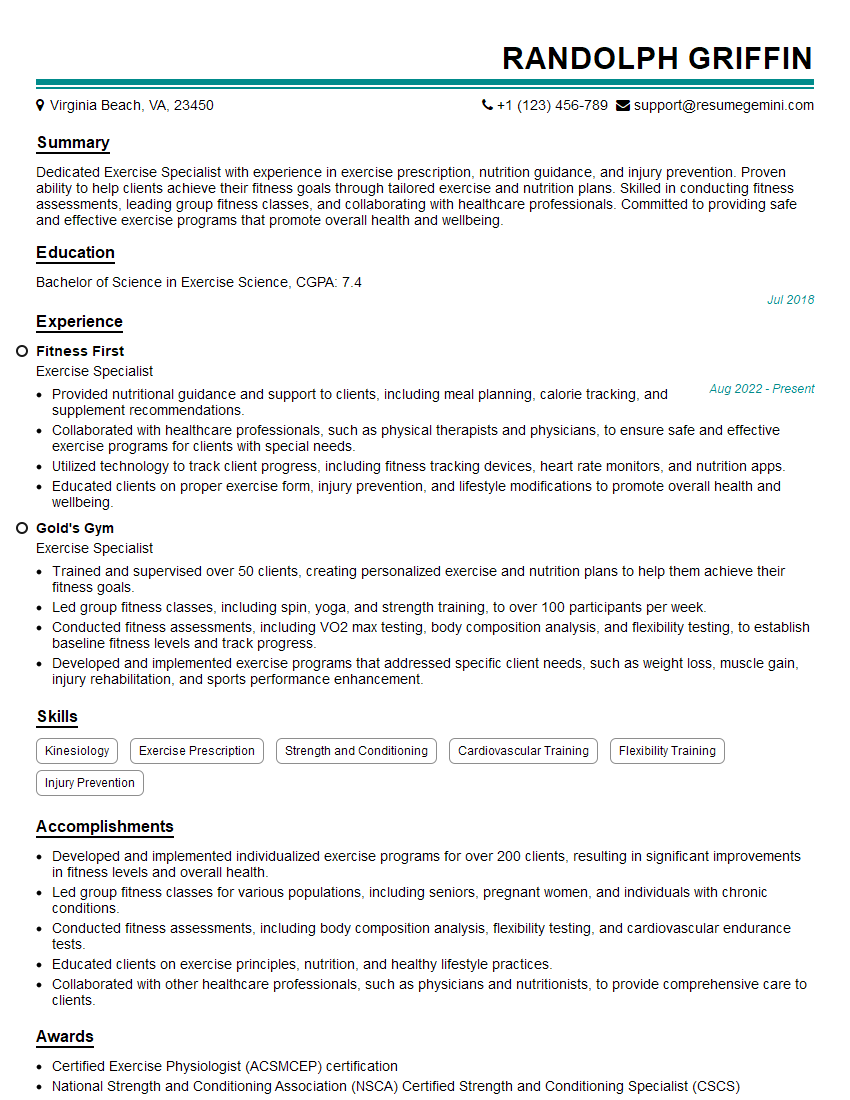
Exercise Specialist Resume Sample
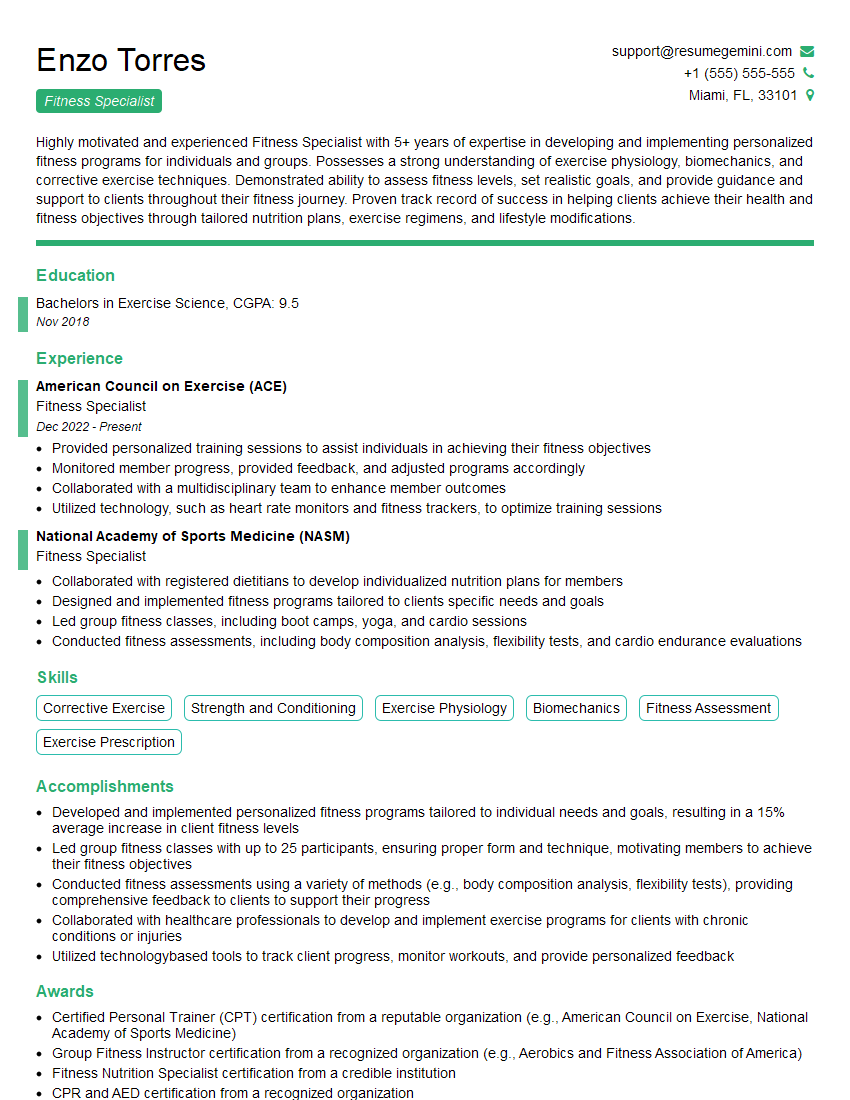
Fitness Specialist Resume Sample
Explore more articles
Users Rating of Our Blogs
Share Your Experience
We value your feedback! Please rate our content and share your thoughts (optional).
What Readers Say About Our Blog
To the interviewgemini.com Webmaster.
Very helpful and content specific questions to help prepare me for my interview!
Thank you
To the interviewgemini.com Webmaster.
This was kind of a unique content I found around the specialized skills. Very helpful questions and good detailed answers.
Very Helpful blog, thank you Interviewgemini team.