The thought of an interview can be nerve-wracking, but the right preparation can make all the difference. Explore this comprehensive guide to Experience in Research and Evaluation interview questions and gain the confidence you need to showcase your abilities and secure the role.
Questions Asked in Experience in Research and Evaluation Interview
Q 1. Explain the difference between qualitative and quantitative research methods.
Qualitative and quantitative research methods represent two distinct approaches to understanding the world. Think of it like this: qualitative research is about exploring the why behind phenomena, while quantitative research focuses on measuring the how much.
Qualitative research uses non-numerical data like interviews, observations, and text analysis to explore complex social phenomena. It’s excellent for gaining in-depth understanding of experiences, perspectives, and meanings. For example, conducting in-depth interviews with patients to understand their experience with a new medical device would be qualitative research. The goal isn’t to get a number representing satisfaction, but rather rich descriptions and interpretations.
Quantitative research uses numerical data and statistical analysis to test hypotheses and establish relationships between variables. Surveys with multiple-choice questions, experiments measuring outcomes, and analysis of large datasets are common examples. A clinical trial testing the efficacy of a new drug, measuring success rates based on numerical data, would be quantitative research. Here, the focus is on statistical significance and generalizability.
In practice, many research projects benefit from a mixed-methods approach, combining both qualitative and quantitative methods to gain a more comprehensive understanding.
Q 2. Describe your experience with various data collection methods (e.g., surveys, interviews, focus groups).
My experience spans a wide range of data collection methods. I’ve extensively used surveys – both online and paper-based – to gather large-scale quantitative data. For instance, I designed and administered a survey to assess customer satisfaction with a new software application, resulting in quantifiable data on different aspects of user experience.
I’m also proficient in conducting semi-structured interviews, allowing for more in-depth exploration of individual experiences and perspectives. In one project, I interviewed teachers to understand the challenges they faced implementing a new curriculum; these interviews provided qualitative insights crucial for program improvement.
Furthermore, I have facilitated numerous focus groups to gather collective perspectives and identify common themes. For example, I conducted focus groups with community members to gather input on the design of a new public park, facilitating discussions and capturing group dynamics.
Beyond these, I’ve employed observation methods in various contexts, from observing classroom interactions to studying customer behavior in retail settings. The choice of method always depends on the research question and the nature of the data needed.
Q 3. How do you ensure the validity and reliability of your research findings?
Ensuring validity and reliability is paramount in research. Validity refers to the extent to which a study measures what it intends to measure, while reliability refers to the consistency and stability of the measurements. Think of it like hitting a target: validity means hitting the bullseye, while reliability means consistently hitting the same spot, even if it’s not the bullseye.
To ensure validity, I employ various strategies, including:
- Triangulation: Using multiple data sources (e.g., surveys and interviews) to corroborate findings.
- Member checking: Sharing findings with participants to ensure accuracy and resonance.
- Peer review: Seeking feedback from other researchers to identify potential biases or flaws.
To ensure reliability, I:
- Use standardized instruments: Employing pre-tested surveys or interview protocols to minimize variations in data collection.
- Pilot testing: Conducting a small-scale test run to identify and address potential issues before full-scale data collection.
- Inter-rater reliability checks: (for qualitative data) multiple coders independently analyze data to assess consistency.
Careful attention to these measures enhances the credibility and trustworthiness of research findings.
Q 4. What statistical software are you proficient in? Provide examples of your application.
I’m proficient in several statistical software packages, including R and SPSS. My experience with R includes data manipulation using dplyr, statistical modeling with lm and glm, and data visualization with ggplot2. For instance, in a recent project, I used R to analyze survey data, performing regression analysis to identify factors influencing customer loyalty and creating visualizations to communicate the results effectively. The ggplot2 library allowed me to present complex data in easily understandable graphs and charts.
In SPSS, I have extensive experience performing various statistical tests, including t-tests, ANOVA, and chi-square tests. In one project, I used SPSS to analyze experimental data, comparing the effectiveness of two different teaching methods using ANOVA. The software’s built-in capabilities for data management and statistical analysis were invaluable.
Q 5. Describe your experience with data cleaning and preprocessing techniques.
Data cleaning and preprocessing are crucial steps in any research project. I have considerable experience with techniques such as:
- Handling missing data: Employing appropriate methods like imputation or exclusion, depending on the nature and extent of missing data (discussed further in the next answer).
- Identifying and correcting outliers: Using visual inspection and statistical methods to identify and handle outliers, ensuring they don’t unduly influence results.
- Data transformation: Applying transformations (e.g., log transformation) to meet the assumptions of statistical tests.
- Data coding: Creating consistent codes for qualitative data to facilitate analysis.
For instance, in a recent study, I encountered a large dataset with inconsistent data entry. I used R to identify and correct inconsistencies, standardize variable names, and create new variables to facilitate analysis, ultimately ensuring data quality.
Q 6. How do you handle missing data in your research?
Missing data is a common challenge in research. The best approach depends on the pattern of missing data, the amount of missing data, and the nature of the variables involved. There is no one-size-fits-all solution.
I typically consider several methods:
- Listwise deletion: Removing participants with missing data on any variable. This is simple but can lead to significant loss of data and bias if data is not missing completely at random.
- Pairwise deletion: Using all available data for each analysis. This is less prone to bias than listwise deletion but can lead to different sample sizes for different analyses.
- Imputation: Replacing missing data with estimated values. Common methods include mean imputation, regression imputation, and multiple imputation. Multiple imputation is generally preferred as it accounts for the uncertainty associated with imputed values.
The choice of method requires careful consideration. For example, if missing data is non-random (e.g., participants with low incomes are less likely to complete the survey), then more sophisticated imputation methods or alternative analysis strategies (e.g., weighting) might be needed. Always document and justify the chosen method.
Q 7. Explain your experience with different sampling techniques.
Sampling techniques are crucial for selecting a representative subset of a population for study. The choice of technique depends on the research question, resources, and the nature of the population. I have experience with several methods:
- Simple random sampling: Each member of the population has an equal chance of being selected. This is straightforward but can be impractical for large populations.
- Stratified random sampling: The population is divided into strata (e.g., age groups, gender), and random samples are drawn from each stratum. This ensures representation from different subgroups.
- Cluster sampling: The population is divided into clusters (e.g., schools, neighborhoods), and a random sample of clusters is selected, with all members within the selected clusters included in the sample. This is useful when accessing the entire population is difficult.
- Convenience sampling: Selecting participants who are readily available. While convenient, this method is prone to bias and should be used cautiously.
For example, in a study on student attitudes toward online learning, I used stratified random sampling to ensure that the sample accurately represented different academic majors and year levels. The choice of sampling technique directly influences the generalizability of the findings.
Q 8. How do you determine the appropriate sample size for a research study?
Determining the appropriate sample size is crucial for the validity and reliability of research findings. A sample size that’s too small may lead to inaccurate conclusions due to high sampling error, while a sample that’s too large is wasteful of resources. The ideal size depends on several factors.
- Power analysis: This statistical method helps determine the minimum sample size needed to detect a statistically significant effect, given a specific effect size, alpha level (typically 0.05), and desired power (typically 0.80). Software packages like G*Power can assist in this calculation.
- Population size: For smaller populations, a larger proportion of the population might be needed in the sample compared to studies with larger populations. Formulas like the Yamane formula can be used to estimate sample size considering the population size.
- Type of study: Different research designs have different sample size requirements. For instance, experimental studies often require larger samples than qualitative studies.
- Variability of the data: Higher variability in the data necessitates a larger sample size to achieve the desired precision.
Example: In a study evaluating the effectiveness of a new teaching method, a power analysis might reveal that a sample size of 100 students is needed to detect a medium effect size with 80% power and a significance level of 0.05. If the population of students is significantly smaller (say, only 200), a larger proportion of that population would need to be included in the sample.
Q 9. Describe your experience with different research designs (e.g., experimental, quasi-experimental, correlational).
My experience encompasses a range of research designs. I’ve worked extensively with:
- Experimental designs: These designs involve manipulating an independent variable to observe its effect on a dependent variable while controlling for extraneous factors. For example, I conducted a randomized controlled trial (RCT) comparing the effectiveness of two different therapies for anxiety. Random assignment to treatment groups helped minimize bias and strengthen causal inferences.
- Quasi-experimental designs: These are used when random assignment isn’t feasible. For instance, I evaluated the impact of a new school policy on student achievement by comparing students in schools that adopted the policy to students in schools that did not. Statistical techniques are used to control for pre-existing differences between groups.
- Correlational designs: These explore relationships between variables without manipulating any of them. I have used correlational designs to examine the relationship between social media use and self-esteem among adolescents, identifying potential associations without claiming causality.
My experience includes selecting the most appropriate design based on the research question, available resources, and ethical considerations. I’m proficient in analyzing data from each of these designs using appropriate statistical methods.
Q 10. How do you develop a research plan or evaluation framework?
Developing a research plan or evaluation framework is a systematic process. It begins with clearly defining the research problem or evaluation question. A robust framework typically includes:
- Research questions/evaluation objectives: Clearly articulated questions that guide the study.
- Literature review: A comprehensive review of existing research to inform the study and identify gaps in knowledge.
- Methodology: This section specifies the research design, data collection methods (e.g., surveys, interviews, observations), data analysis techniques, and sampling strategy.
- Timeline and budget: A realistic timeline and budget are essential for project management.
- Ethical considerations: Addressing ethical issues such as informed consent, confidentiality, and data security.
- Dissemination plan: A plan for sharing research findings, which might include presentations, publications, or reports.
Example: In an evaluation of a community health program, the framework would specify the program’s goals, the evaluation design (e.g., pre-post test with a control group), data collection instruments (surveys and interviews), and the statistical methods to assess changes in health outcomes. The timeline would include phases for data collection, analysis, and report writing.
Q 11. Explain your experience with conducting literature reviews.
Conducting literature reviews is a critical step in any research project. My approach is methodical and ensures a comprehensive understanding of the existing research landscape. I start by identifying relevant keywords and databases, such as PubMed, PsycINFO, ERIC, and Web of Science. I then use systematic search strategies to identify relevant articles and systematically screen titles, abstracts, and full texts based on pre-defined inclusion and exclusion criteria. This ensures that only relevant and high-quality studies are included in the review.
I synthesize the findings from selected studies using thematic analysis or narrative synthesis, depending on the nature of the research question and the types of studies included. I critically evaluate the quality of each study, considering its methodology, sample size, and potential biases. The final literature review provides a comprehensive overview of the current state of knowledge, identifies gaps in research, and informs the development of new research questions or hypotheses.
Example: When researching the effectiveness of mindfulness-based interventions for stress reduction, my literature review would systematically examine RCTs, quasi-experimental studies, and correlational studies, critically evaluating their methodological rigor and synthesizing the findings to identify the most effective intervention approaches and gaps in existing research.
Q 12. How do you interpret and present your research findings?
Interpreting and presenting research findings requires careful consideration of the study’s design, data analysis, and the target audience. The interpretation process involves analyzing the results in the context of the research question and existing literature. It’s crucial to avoid overgeneralizations or drawing conclusions that are not supported by the data. Transparency is paramount; all analyses, including those that yielded null findings, should be reported honestly.
Presentation involves conveying the findings clearly and concisely using various formats: written reports, presentations, or infographics. The choice of format depends on the target audience and the nature of the findings. For example, a technical report would include detailed methodological descriptions and statistical analyses, whereas a presentation for a non-technical audience would focus on key findings and their implications.
Example: In a study examining the effectiveness of an educational intervention, the interpretation section would explain the statistical significance of the findings, discussing the magnitude of the effect size and its practical implications for educational practices. The presentation of these findings could then be tailored to educators, policymakers, or the general public.
Q 13. Describe your experience with creating visualizations for research data.
Creating visualizations for research data is essential for effective communication. I utilize various tools and techniques to create clear, accurate, and engaging visualizations. My experience includes using software packages such as SPSS, R, and Tableau to generate different types of visualizations, including:
- Bar charts and histograms: For displaying frequencies and distributions.
- Line graphs: For showing trends over time.
- Scatter plots: For illustrating relationships between two variables.
- Box plots: For displaying the distribution of data and identifying outliers.
- Maps: For visualizing geographical data.
The choice of visualization depends on the type of data and the message being conveyed. I emphasize data integrity, avoiding misleading or inaccurate representations. All visualizations are clearly labeled with appropriate titles, axes labels, and legends.
Example: To illustrate the impact of a public health intervention on disease prevalence across different regions, I might use a map showing the changes in prevalence rates over time. To show the relationship between two variables, a scatter plot with a trend line would be appropriate. Careful consideration of color schemes, font sizes, and overall aesthetics ensures clarity and impact.
Q 14. How do you ensure ethical considerations are addressed in your research?
Ethical considerations are paramount in my research practice. I adhere to strict ethical guidelines, ensuring that all research activities are conducted responsibly and with respect for participants’ rights and welfare. Key considerations include:
- Informed consent: Participants must be fully informed about the study’s purpose, procedures, risks, and benefits before providing consent to participate.
- Confidentiality and anonymity: Data must be handled securely and confidentially, protecting participants’ identities and privacy.
- Data security: Appropriate measures are taken to secure data from unauthorized access or disclosure.
- Institutional review board (IRB) approval: All research involving human participants must be reviewed and approved by an IRB to ensure ethical compliance.
- Avoiding bias: I strive to minimize bias in all aspects of research, from study design to data analysis and interpretation.
Example: In a study investigating sensitive topics, I would ensure anonymity by using codes instead of names and storing data securely. I would obtain informed consent from all participants and ensure that they understand their rights to withdraw from the study at any time. I would also clearly outline the procedures for handling any unexpected events or adverse effects.
Q 15. Explain your experience in writing research reports or evaluation summaries.
Throughout my career, I’ve crafted numerous research reports and evaluation summaries, ranging from concise executive summaries to detailed technical reports. My approach always prioritizes clarity and actionable insights. For instance, in a recent evaluation of a community health program, I structured the report with a clear executive summary highlighting key findings and recommendations, followed by detailed sections on methodology, data analysis, and conclusions. Each section included tables, charts, and graphs to present complex data in a digestible format. Another example involved evaluating the effectiveness of a new educational software; the report detailed the quantitative and qualitative data, including student test scores and feedback, to assess the program’s impact. I’m proficient in various reporting software and adept at tailoring the style and content to the specific audience and purpose.
Career Expert Tips:
- Ace those interviews! Prepare effectively by reviewing the Top 50 Most Common Interview Questions on ResumeGemini.
- Navigate your job search with confidence! Explore a wide range of Career Tips on ResumeGemini. Learn about common challenges and recommendations to overcome them.
- Craft the perfect resume! Master the Art of Resume Writing with ResumeGemini’s guide. Showcase your unique qualifications and achievements effectively.
- Don’t miss out on holiday savings! Build your dream resume with ResumeGemini’s ATS optimized templates.
Q 16. How do you communicate complex research findings to a non-technical audience?
Communicating complex research findings to a non-technical audience requires translating technical jargon into plain language and employing visual aids. Instead of saying “The p-value was below 0.05, indicating statistical significance,” I’d say something like, “Our results show a strong likelihood that the program is having a real, positive effect.” I use analogies and real-world examples to illustrate concepts. For example, when explaining regression analysis, I might use the analogy of predicting a house’s price based on its size and location. Visualizations like charts, graphs, and infographics are crucial. A picture is truly worth a thousand words, especially when conveying intricate data patterns. Finally, I always tailor the language and level of detail to my audience, ensuring the message resonates and is easily understood.
Q 17. Describe your experience with program evaluation methodologies.
My experience encompasses a wide range of program evaluation methodologies, including both quantitative and qualitative approaches. I’m skilled in designing and implementing evaluations using various methods such as randomized controlled trials (RCTs), quasi-experimental designs, and mixed-methods approaches. For example, in an evaluation of a job training program, I utilized an RCT to compare the employment outcomes of participants who received the training to a control group who did not. Another project involved a mixed-methods approach, combining quantitative data on program participation and outcomes with qualitative data gathered through interviews and focus groups to gain a deeper understanding of participants’ experiences. I am also familiar with cost-benefit analysis and cost-effectiveness analysis techniques.
- Quantitative Methods: Surveys, statistical analysis, experimental designs
- Qualitative Methods: Interviews, focus groups, case studies, document reviews
- Mixed Methods: Combining quantitative and qualitative data for a comprehensive understanding
Q 18. How do you measure the impact of a program or intervention?
Measuring program impact requires a robust evaluation design and the selection of appropriate outcome measures. This involves identifying clear, measurable indicators linked to the program’s objectives. For example, if a program aims to improve literacy rates, the impact could be measured by changes in standardized test scores or reading comprehension levels. It’s crucial to account for confounding factors that might influence the outcome, employing appropriate statistical analysis to determine the program’s true effect. We might use regression analysis to control for pre-existing differences between participants and a control group. Attributing changes solely to the program requires rigorous analysis and careful consideration of alternative explanations. Furthermore, establishing a strong baseline before program implementation helps monitor changes more accurately.
Q 19. Explain your understanding of different evaluation models (e.g., logic model, theory of change).
Understanding evaluation models is fundamental to effective program evaluation. A logic model visually represents the program’s theory of change, outlining inputs, activities, outputs, outcomes, and overall impact. It provides a roadmap for the evaluation, guiding the selection of appropriate indicators and data collection methods. The theory of change, on the other hand, describes the causal pathway through which a program is expected to achieve its intended outcomes. It articulates the underlying assumptions and mechanisms of change. Other models, like participatory evaluation and realist evaluation, offer alternative frameworks, each with its strengths and limitations. The choice of model depends on the specific context, goals, and resources available for the evaluation.
Q 20. How do you use evaluation findings to improve program effectiveness?
Evaluation findings are not simply reports; they are tools for improvement. By analyzing the data, we can identify program strengths and weaknesses. For example, if an evaluation reveals that a particular component of a program is ineffective, we can revise that component or eliminate it entirely. Furthermore, we can use the findings to adjust implementation strategies, optimize resource allocation, and enhance program sustainability. This iterative process of evaluation and improvement is crucial for maximizing program impact. For example, if participant feedback suggests a need for more personalized support, we can adjust the program’s delivery method accordingly.
Q 21. Describe your experience with using evaluation findings to inform decision-making.
I’ve extensively used evaluation findings to directly inform decision-making at various levels. In one instance, an evaluation of a community development program revealed that certain outreach strategies were ineffective, leading to low participation among the target population. This information was used to modify the outreach strategy, resulting in a significant increase in participation rates. In another project, cost-benefit analysis showed a certain program’s high cost relative to its impact. This evidence informed the decision to reallocate resources toward more effective interventions. My experience demonstrates the value of clear, data-driven recommendations that influence policy, program design, and funding decisions.
Q 22. What challenges have you faced in conducting research or evaluation, and how did you overcome them?
One of the biggest challenges in research and evaluation is gaining access to a representative and sufficiently large sample size. In a study on the effectiveness of a new literacy program, for example, we initially struggled to recruit enough participants from diverse socioeconomic backgrounds. We overcame this by partnering with community organizations that had established trust within those communities. This broadened our reach and ensured a more accurate representation of the target population. Another challenge is dealing with missing data. In a longitudinal study tracking student performance, some students inevitably drop out or miss assessments. We addressed this by employing multiple imputation techniques, statistically replacing missing values based on patterns in the available data, allowing us to maintain the integrity of our analysis without losing too many data points. Finally, unforeseen circumstances can significantly impact data collection. For instance, a natural disaster could disrupt fieldwork. To mitigate this, we always build in contingency plans, such as alternative data collection methods and extended timelines, allowing for flexibility in our research design.
Q 23. How do you stay current with best practices in research and evaluation?
Staying current in research and evaluation requires a multifaceted approach. I regularly read peer-reviewed journals like the American Journal of Evaluation and Evaluation Review, focusing on articles relevant to my specific areas of expertise. I also actively participate in professional development activities, attending conferences like the American Evaluation Association’s annual meeting and webinars offered by organizations like the National Council on Measurement in Education. Further, I maintain a network of colleagues across various disciplines, engaging in discussions about best practices and emerging trends. This allows me to learn from others’ experiences and stay informed about methodological advancements. Finally, I regularly review methodological guidelines and best practices documents published by relevant government agencies and research institutions to stay compliant and current.
Q 24. Describe your experience with working collaboratively with research teams.
Collaboration is integral to effective research. I thrive in team environments, leveraging the diverse skills and perspectives of my colleagues. For example, in a recent project evaluating a new online learning platform, our team consisted of instructional designers, educational psychologists, data analysts, and technology specialists. My role focused on developing the evaluation framework and analyzing the quantitative data, but I worked closely with the instructional designers to ensure the evaluation aligned with the platform’s learning objectives. We used project management software to track progress, facilitate communication, and ensure everyone remained aligned on goals. Open communication, active listening, and a clear division of labor were key to our success. We held regular meetings to discuss challenges, share insights, and refine our approaches. This collaborative spirit not only enhanced the quality of our work but also fostered a positive and productive team environment. Ultimately, the collaborative nature of the project led to a more comprehensive and impactful evaluation.
Q 25. What is your preferred style of data analysis and why?
My preferred style of data analysis is a mixed-methods approach, combining both quantitative and qualitative data. While I’m proficient in various statistical techniques (like regression analysis, ANOVA, and structural equation modeling), using quantitative data alone often provides an incomplete picture. Qualitative data, such as interview transcripts or focus group notes, offers rich contextual information that can illuminate the ‘why’ behind the quantitative findings. For instance, in evaluating a new employee training program, quantitative data might show improved performance scores, but qualitative data from interviews with employees could reveal the specific aspects of the training that were most effective or aspects that need improvement. This integrated approach provides a more nuanced and comprehensive understanding of the program’s effectiveness.
Q 26. How do you handle conflicting data findings?
Conflicting data findings are common in research, and handling them requires careful consideration. First, I meticulously review the data collection methods and analysis procedures to identify potential sources of error or bias. This might involve examining sampling techniques, instrument reliability, and the assumptions underlying statistical analyses. Then, I explore potential explanations for the discrepancies. Could there be subgroups within the sample that respond differently? Are there contextual factors that might influence the results? Often, qualitative data can help unravel these inconsistencies. For instance, if quantitative data show a lack of effectiveness but qualitative data reveals strong positive feedback, further investigation might be needed to understand this discrepancy. Ultimately, the approach involves transparently reporting all findings, acknowledging the limitations, and suggesting areas for future research.
Q 27. Describe your experience with data security and privacy in research.
Data security and privacy are paramount in research. I adhere to all relevant regulations and ethical guidelines, such as HIPAA and FERPA, when dealing with sensitive information. This includes obtaining informed consent from participants, anonymizing data whenever possible, using secure data storage and transmission methods, and limiting access to data to authorized personnel only. For instance, we would encrypt all identifying information before analysis and store it on password-protected servers. Furthermore, all research protocols are reviewed by Institutional Review Boards (IRBs) before commencing any data collection. This commitment to data security and privacy ensures the confidentiality of participants and the integrity of the research process.
Q 28. How do you approach the development of research questions or evaluation objectives?
Developing strong research questions or evaluation objectives is crucial for a successful study. I begin by clearly defining the purpose of the research or evaluation, identifying the specific problem or issue to be addressed. Then, I conduct a thorough literature review to understand the existing knowledge and identify any research gaps. Next, I work collaboratively with stakeholders to ensure the research questions are relevant and address their needs. This participatory approach ensures alignment and buy-in from all involved parties. Finally, I formulate research questions that are specific, measurable, achievable, relevant, and time-bound (SMART). These questions guide the entire research process, ensuring that the study is focused, efficient, and yields meaningful results. For example, instead of a broad question like ‘Is this program effective?’, a SMART question would be: ‘Will students participating in the literacy program show a statistically significant improvement of at least 10 points on standardized reading tests compared to a control group after 6 months?’
Key Topics to Learn for Experience in Research and Evaluation Interview
- Research Design: Understanding various research methodologies (qualitative, quantitative, mixed methods), their strengths and weaknesses, and selecting the appropriate design for specific research questions. Consider practical applications like choosing between surveys and focus groups for a particular project.
- Data Collection & Analysis: Mastering data collection techniques (e.g., surveys, interviews, observations), data cleaning, and appropriate statistical analysis methods depending on the data type (e.g., regression analysis, t-tests). Explore case studies demonstrating effective data handling and interpretation.
- Evaluation Frameworks: Familiarity with different evaluation models (e.g., logic models, outcome mapping) and their application in program planning, implementation, and assessment. Practice applying these frameworks to hypothetical scenarios.
- Reporting & Communication: Developing clear and concise reports that effectively communicate research findings to diverse audiences, including technical and non-technical stakeholders. Consider how to visually present data to enhance understanding.
- Ethical Considerations: Understanding and applying ethical principles in research, including informed consent, data privacy, and responsible data use. Explore real-world examples of ethical dilemmas and their resolution.
- Problem-Solving & Critical Thinking: Demonstrate your ability to analyze complex problems, identify research gaps, and develop innovative solutions. Practice answering hypothetical scenarios requiring critical evaluation and data interpretation.
Next Steps
Mastering research and evaluation skills is crucial for career advancement in many fields, opening doors to leadership roles and impactful contributions. An ATS-friendly resume is your key to unlocking these opportunities. To make your application stand out, leverage the power of ResumeGemini to craft a compelling and effective resume that highlights your expertise. ResumeGemini provides you with the tools and resources to build a professional resume, and we offer examples of resumes tailored to Experience in Research and Evaluation to guide you.
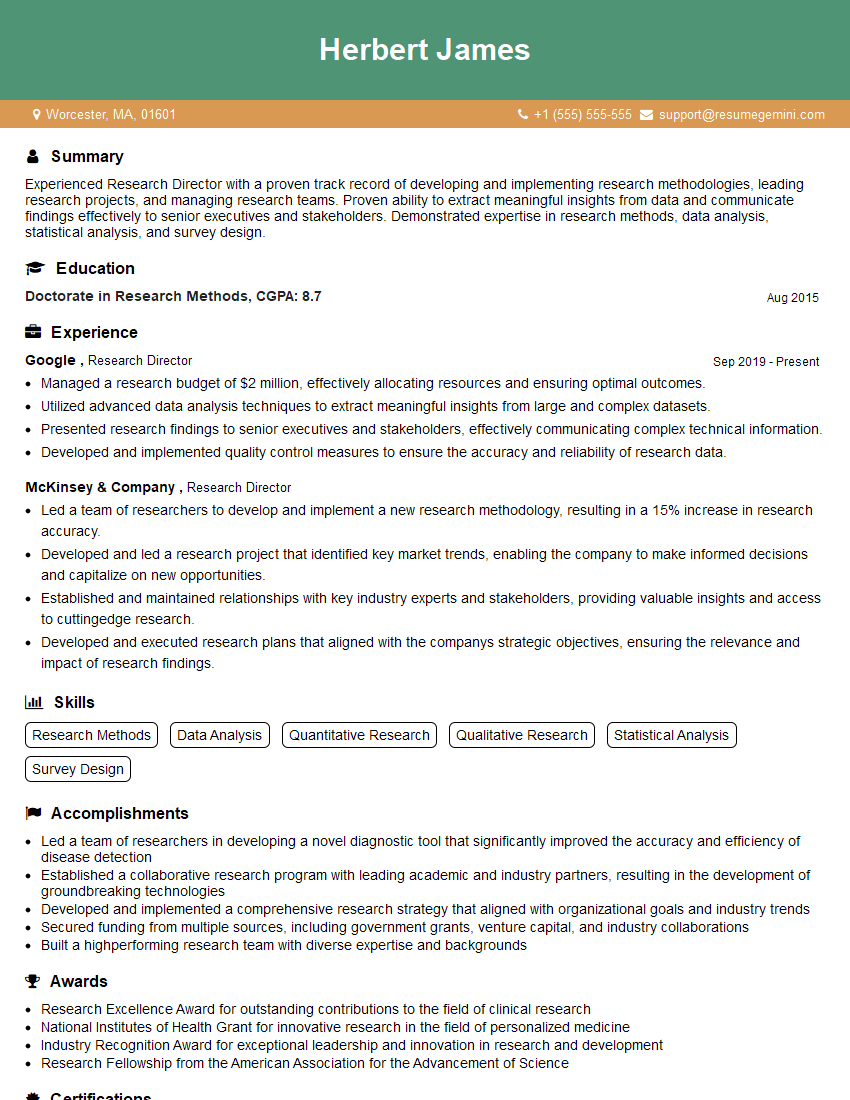
Research Director Resume Sample
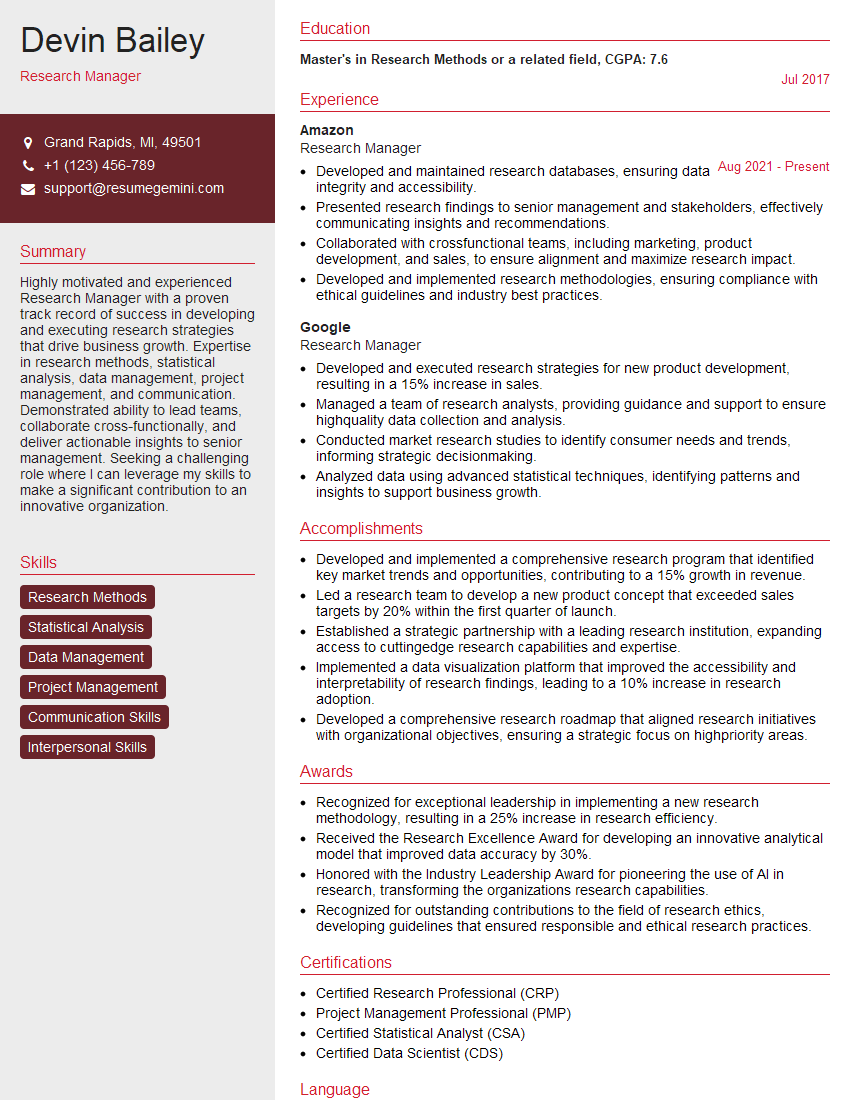
Research Manager Resume Sample
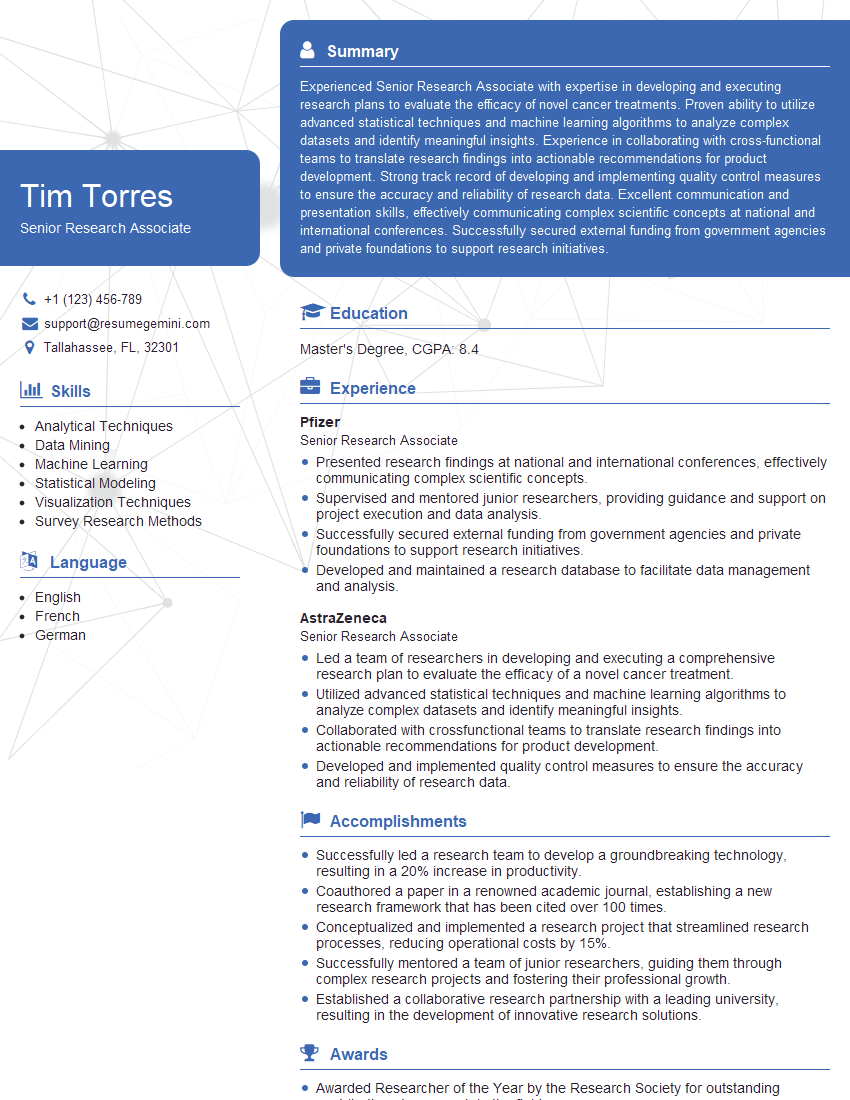
Senior Research Associate Resume Sample
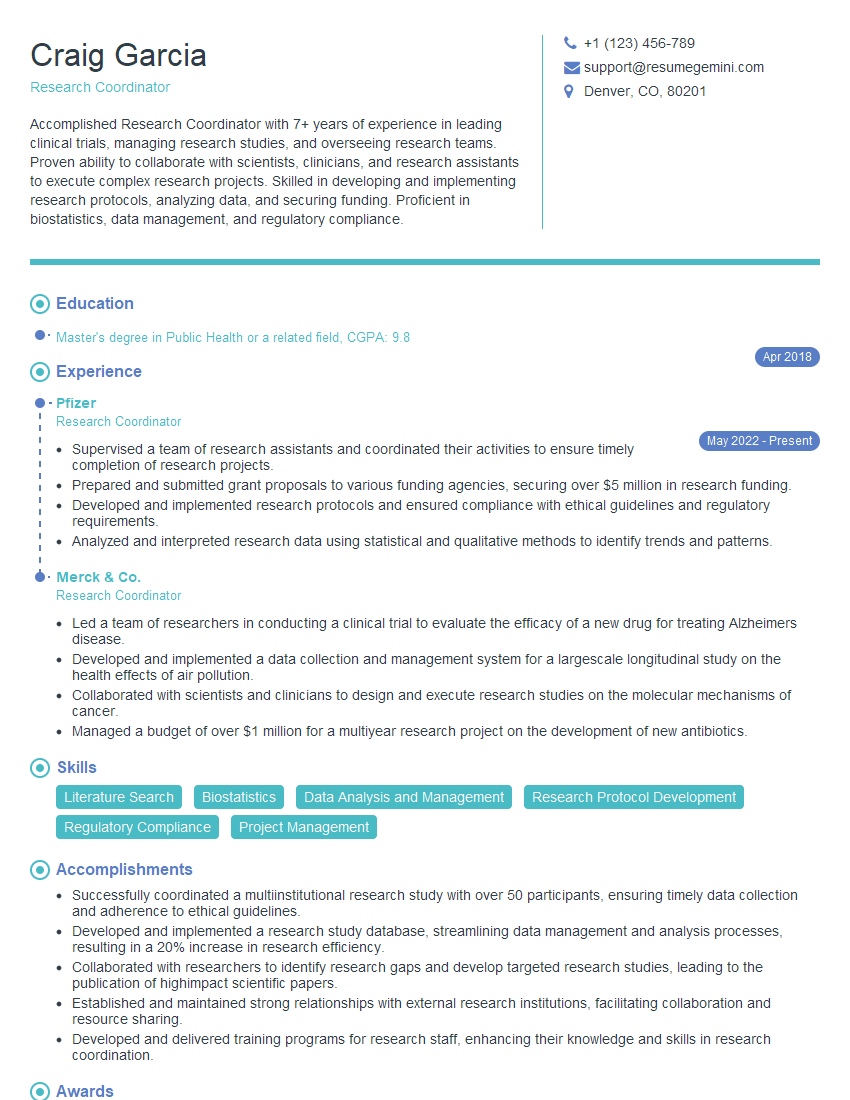
Research Coordinator Resume Sample
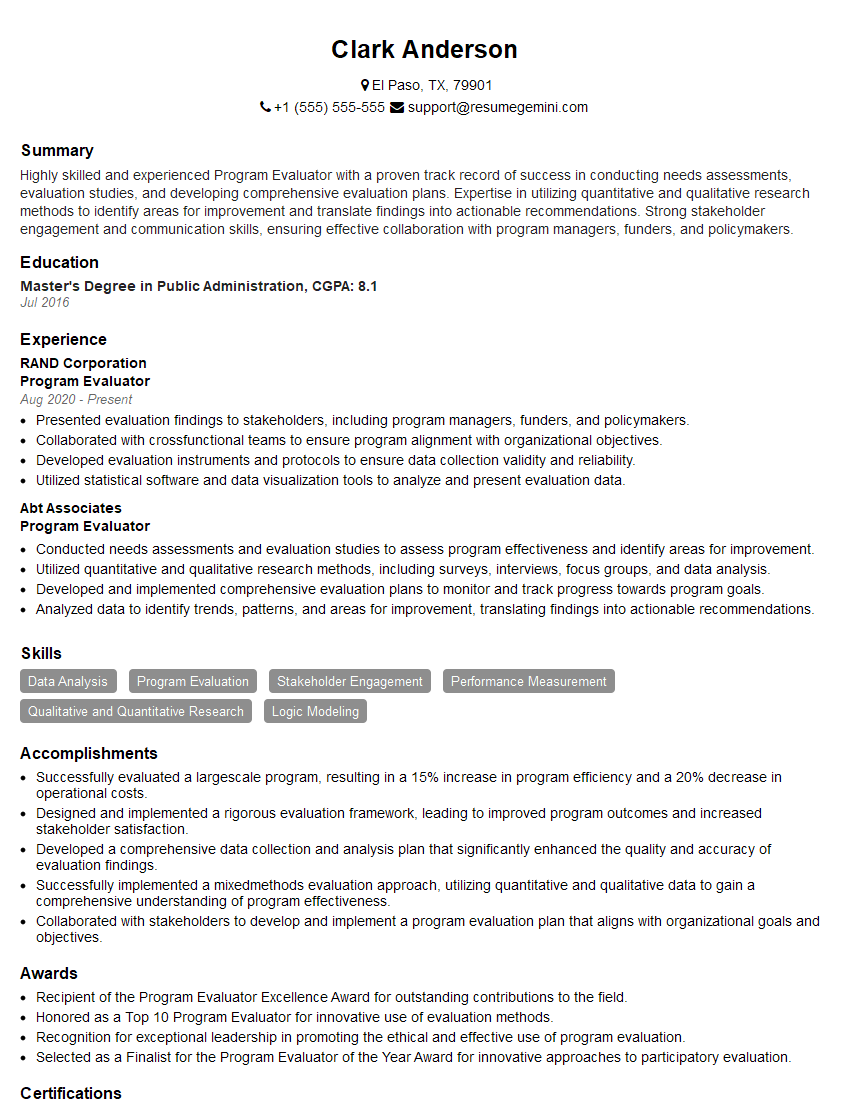
Program Evaluator Resume Sample
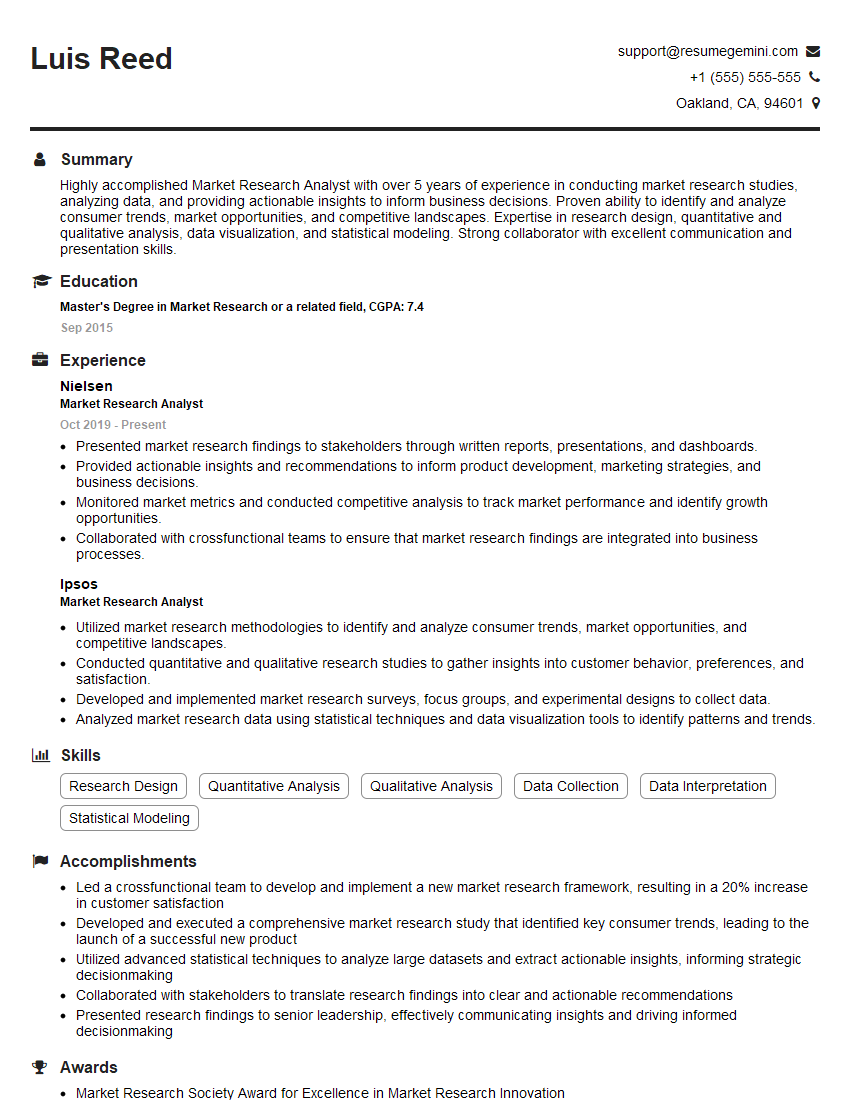
Market Research Analyst Resume Sample
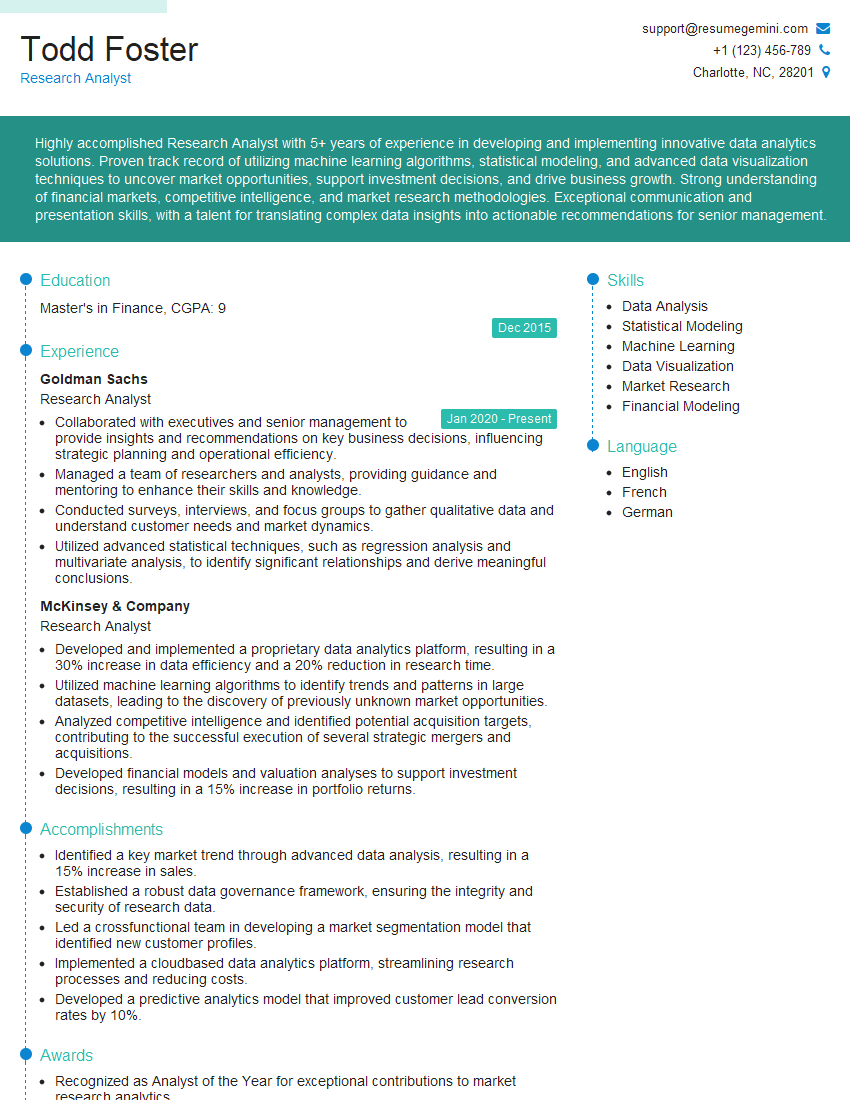
Research Analyst Resume Sample
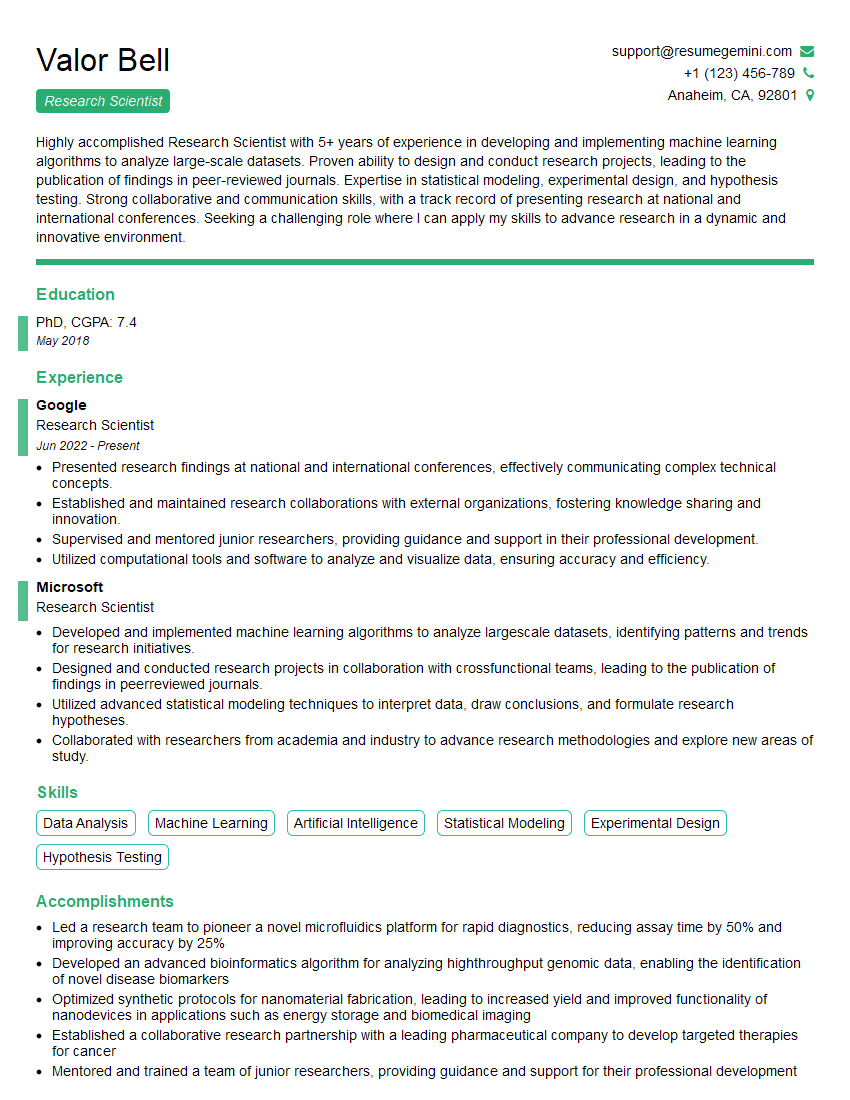
Research Scientist Resume Sample
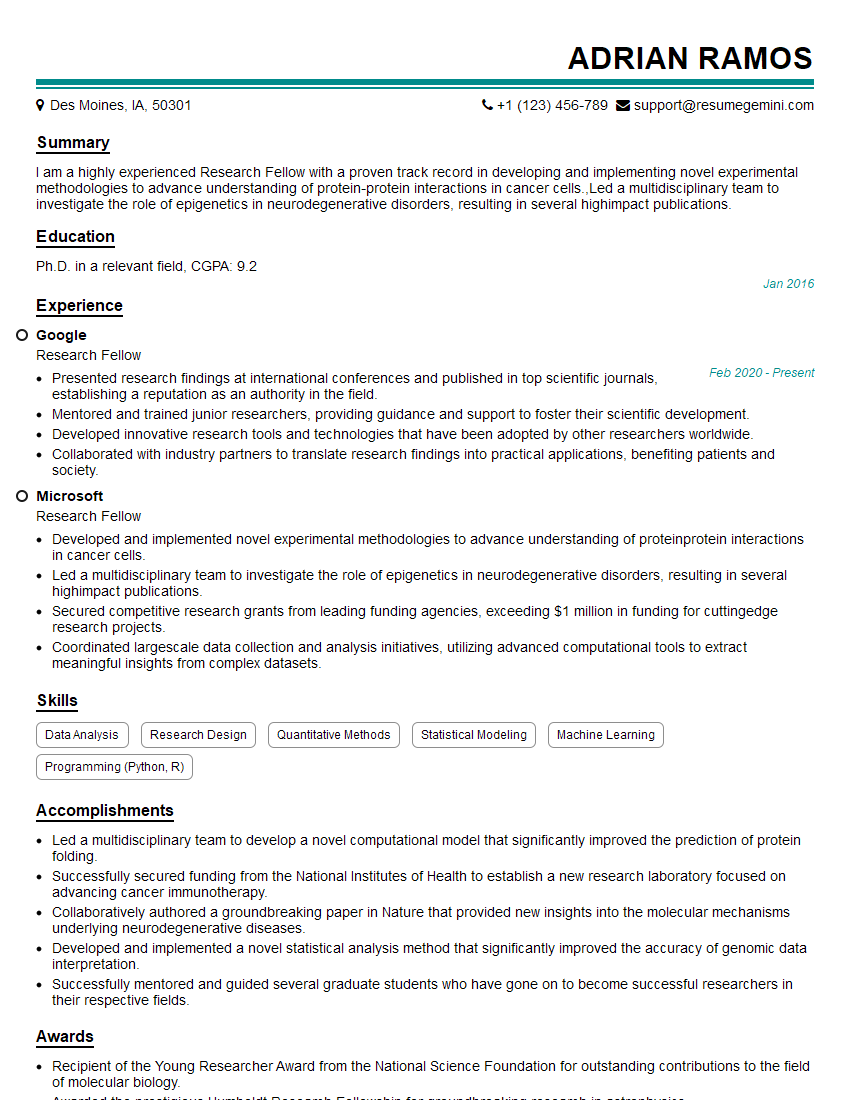
Research Fellow Resume Sample
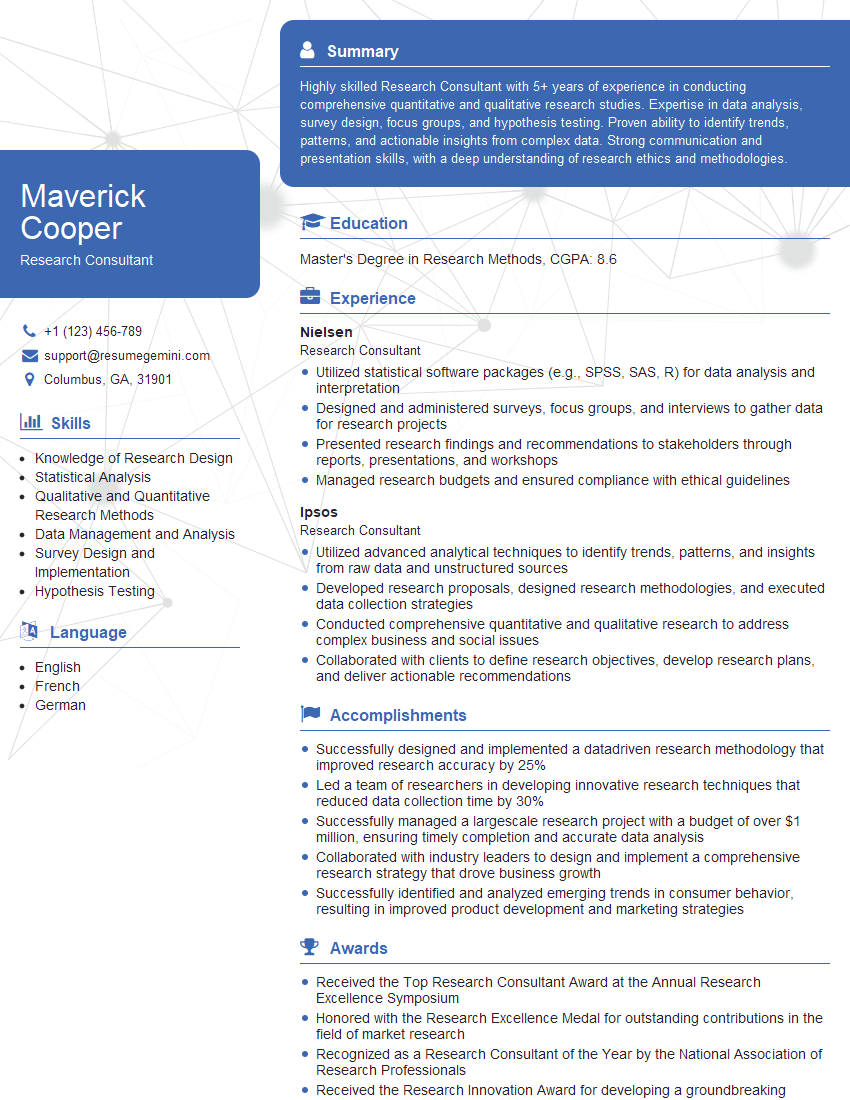
Research Consultant Resume Sample
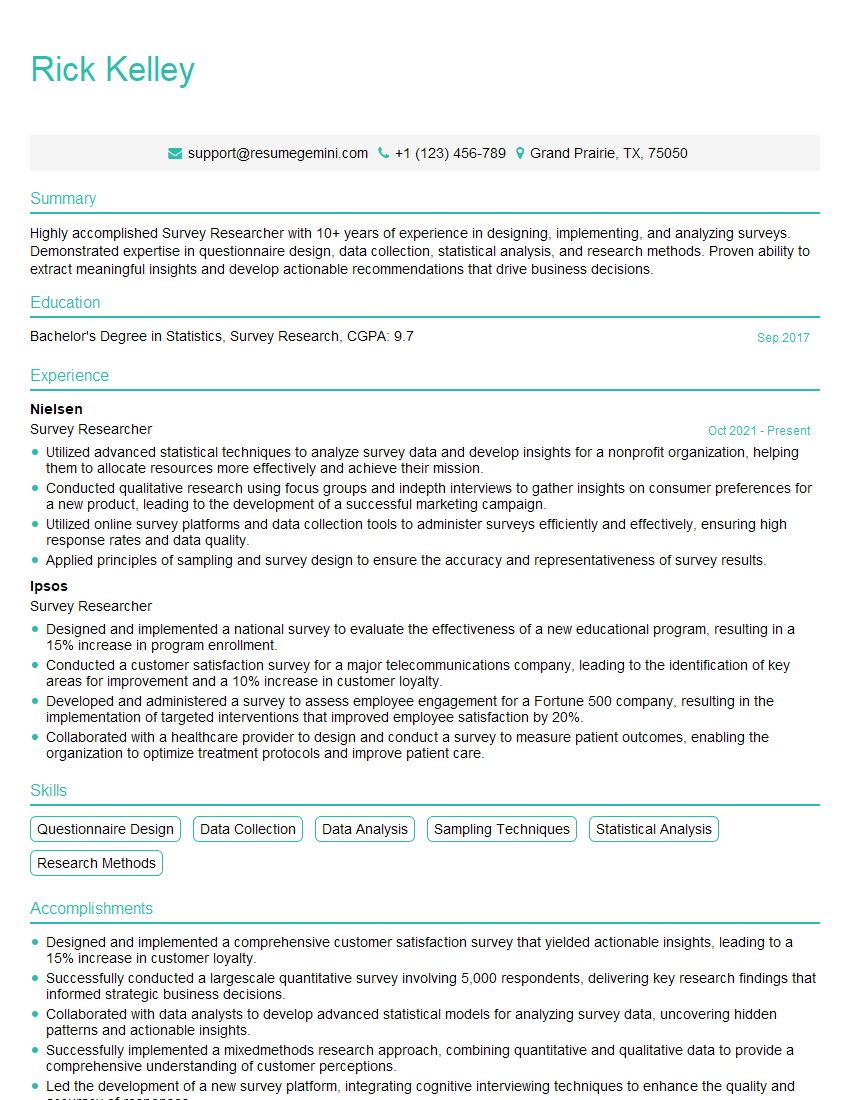
Survey Researcher Resume Sample
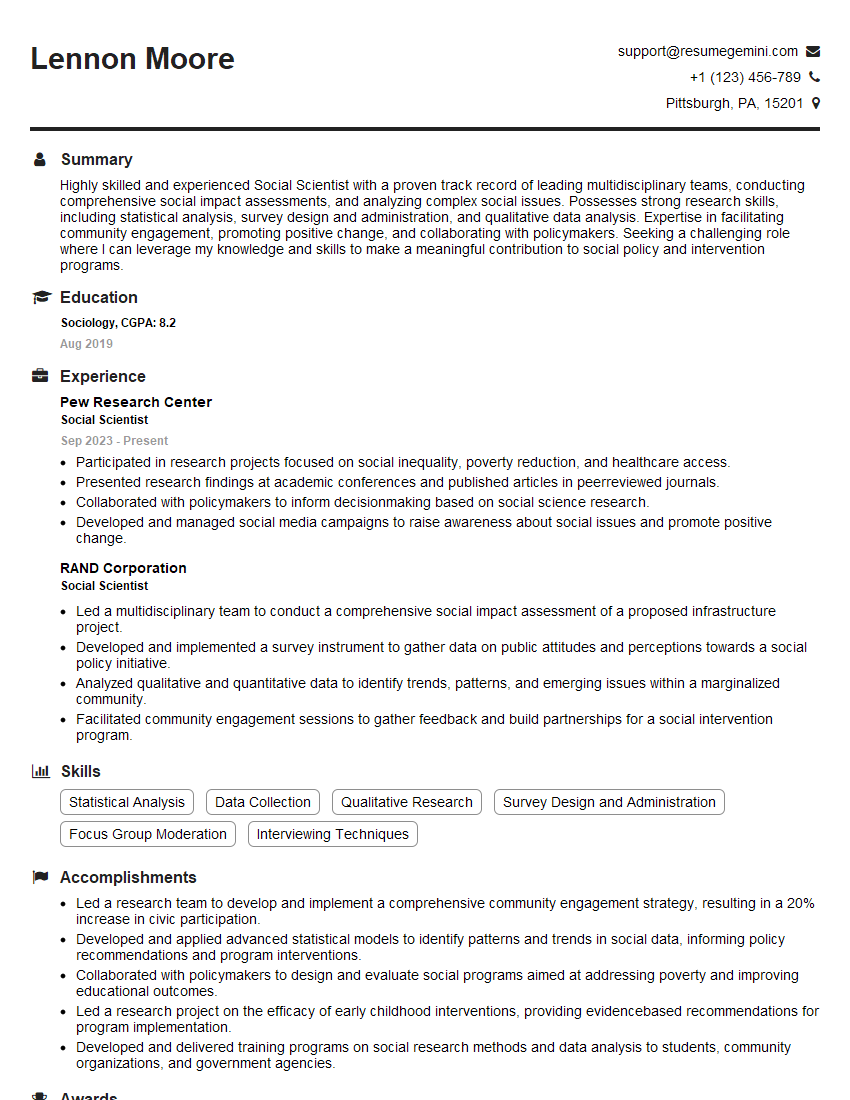
Social Scientist Resume Sample
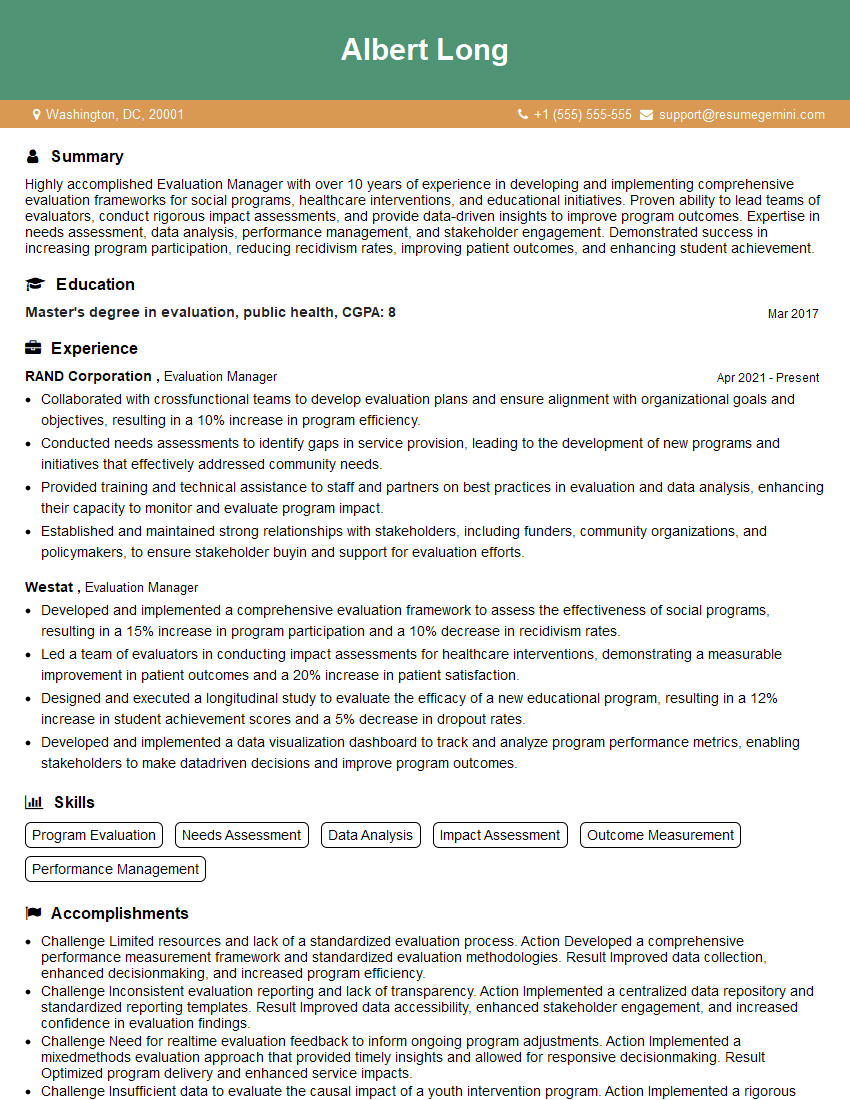
Evaluation Manager Resume Sample
Explore more articles
Users Rating of Our Blogs
Share Your Experience
We value your feedback! Please rate our content and share your thoughts (optional).
What Readers Say About Our Blog
To the interviewgemini.com Webmaster.
Very helpful and content specific questions to help prepare me for my interview!
Thank you
To the interviewgemini.com Webmaster.
This was kind of a unique content I found around the specialized skills. Very helpful questions and good detailed answers.
Very Helpful blog, thank you Interviewgemini team.