Preparation is the key to success in any interview. In this post, we’ll explore crucial Basic Math and Statistics interview questions and equip you with strategies to craft impactful answers. Whether you’re a beginner or a pro, these tips will elevate your preparation.
Questions Asked in Basic Math and Statistics Interview
Q 1. What is the difference between a population and a sample?
In statistics, a population refers to the entire group you want to draw conclusions about. A sample is a smaller, representative subset of that population. Think of it like this: if you want to understand the average height of all adults in a country (the population), you wouldn’t measure everyone. Instead, you’d measure a sample of, say, 1000 adults, and use their average height to estimate the average height of the entire population. The key is that the sample needs to accurately reflect the characteristics of the larger population to avoid bias.
For example, if you’re studying the effectiveness of a new drug, the population would be all individuals with the condition the drug aims to treat. The sample would be the group of individuals who actually participate in the clinical trial.
Q 2. Explain the central limit theorem.
The Central Limit Theorem (CLT) is a cornerstone of statistics. It states that, regardless of the shape of the population distribution, the distribution of sample means will approximate a normal distribution as the sample size increases. This is incredibly useful because many statistical tests rely on the assumption of normality.
Imagine you’re repeatedly taking samples from a population and calculating the mean of each sample. Even if the population itself is skewed or irregular, the distribution of these sample means will tend towards a bell curve (normal distribution) as the sample size gets larger (generally considered to be at least 30). This allows us to make inferences about the population mean using the sample mean, even with limited information about the population’s actual distribution.
Q 3. What are the different types of sampling methods?
Several sampling methods exist, each with its own strengths and weaknesses. Choosing the right method is crucial for obtaining a representative sample:
- Simple Random Sampling: Every member of the population has an equal chance of being selected. Think of drawing names out of a hat.
- Stratified Sampling: The population is divided into subgroups (strata), and random samples are taken from each stratum. This ensures representation from all subgroups. For example, when surveying customer satisfaction, you might stratify by age group or location.
- Cluster Sampling: The population is divided into clusters, and then a random sample of clusters is selected. All members within the selected clusters are included in the sample. This is efficient for large, geographically dispersed populations.
- Systematic Sampling: Every kth member of the population is selected after a random starting point. This is simple to implement but can be problematic if there’s a pattern in the population.
- Convenience Sampling: Sampling individuals readily available. This is easy but often leads to biased results.
The choice of sampling method depends heavily on the research question, resources available, and the nature of the population.
Q 4. How do you calculate the mean, median, and mode of a dataset?
Let’s consider a dataset: {2, 4, 6, 6, 8}
- Mean: The average value. Calculated by summing all values and dividing by the number of values.
(2 + 4 + 6 + 6 + 8) / 5 = 5.2 - Median: The middle value when the data is ordered. First, order the data:
{2, 4, 6, 6, 8}. The median is 6. - Mode: The value that appears most frequently. In this dataset, the mode is 6.
In datasets with an even number of values, the median is the average of the two middle values. The mode can be more than one value or non-existent if all values are unique.
Q 5. What is standard deviation and how is it calculated?
The standard deviation measures the spread or dispersion of a dataset around its mean. A low standard deviation indicates that the data points are clustered closely around the mean, while a high standard deviation indicates that the data points are spread out over a wider range.
Calculation involves several steps:
- Calculate the mean (average) of the dataset.
- For each data point, find the squared difference between the data point and the mean.
- Sum up all the squared differences.
- Divide the sum by (n-1), where ‘n’ is the number of data points (this is the sample variance). Using (n-1) gives an unbiased estimate of the population variance.
- Take the square root of the result. This is the sample standard deviation.
For example, with the dataset {2, 4, 6, 6, 8}, the standard deviation would be approximately 2.28.
Q 6. What is the difference between descriptive and inferential statistics?
Descriptive statistics summarize and describe the main features of a dataset. They use measures like mean, median, mode, standard deviation, and range to provide a clear picture of the data. They describe *what is* in the data. Think of creating a summary table or graph to represent your data.
Inferential statistics, on the other hand, uses sample data to make inferences or predictions about a larger population. This involves hypothesis testing, confidence intervals, and regression analysis. Inferential statistics tries to answer *what could be* based on the sample data.
For example, calculating the average age of students in a classroom is descriptive statistics. Using that average to estimate the average age of all students in the school is inferential statistics.
Q 7. Explain the concept of correlation and regression.
Correlation measures the strength and direction of the linear relationship between two variables. A correlation coefficient, often denoted as ‘r’, ranges from -1 to +1. +1 indicates a perfect positive correlation (as one variable increases, the other increases), -1 indicates a perfect negative correlation (as one variable increases, the other decreases), and 0 indicates no linear correlation.
Regression goes a step further; it aims to model the relationship between variables, typically to predict one variable (dependent variable) based on the values of another (independent variable). Linear regression, for instance, finds the best-fitting straight line through the data points to represent the relationship. This line can then be used to make predictions.
For example, you might find a positive correlation between hours of study and exam scores (more study time tends to lead to higher scores). Regression analysis could then create a model predicting the exam score based on the number of study hours.
Q 8. What is a p-value and how is it used in hypothesis testing?
The p-value is a crucial concept in hypothesis testing. It represents the probability of obtaining results as extreme as, or more extreme than, the observed results, assuming the null hypothesis is true. In simpler terms, it tells us how likely it is that we saw our data if there’s actually no real effect. A small p-value (typically below a significance level of 0.05) suggests that the observed results are unlikely to have occurred by chance alone, leading us to reject the null hypothesis in favor of the alternative hypothesis.
For example, let’s say we’re testing a new drug’s effectiveness. Our null hypothesis is that the drug has no effect. We conduct a trial and find a significant improvement in the treatment group. A p-value of 0.01 means there’s only a 1% chance of observing this improvement if the drug is actually ineffective. This low p-value provides strong evidence to reject the null hypothesis and conclude that the drug is effective.
Q 9. What are Type I and Type II errors?
Type I and Type II errors are potential mistakes in hypothesis testing. A Type I error, also known as a false positive, occurs when we reject a true null hypothesis. Think of it as concluding there’s a significant effect when there isn’t one. For instance, in our drug trial example, a Type I error would be declaring the drug effective when it’s actually not.
A Type II error, or false negative, occurs when we fail to reject a false null hypothesis. This means we miss a real effect. In our drug trial, a Type II error would be concluding the drug is ineffective when it actually is effective.
The probability of committing a Type I error is denoted by α (alpha), often set at 0.05. The probability of committing a Type II error is denoted by β (beta). Balancing these errors is crucial in research design.
Q 10. Explain the difference between a t-test and a z-test.
Both t-tests and z-tests are used to compare means, but they differ in how they handle the population standard deviation. A z-test requires knowing the population standard deviation. This is rarely the case in practice, making it less frequently used.
A t-test, on the other hand, estimates the population standard deviation from the sample standard deviation. This makes it more practical and commonly used when the population standard deviation is unknown. The t-distribution accounts for the added uncertainty due to estimating the standard deviation from the sample.
In essence: use a z-test when you know the population standard deviation; use a t-test when you only know the sample standard deviation.
Q 11. What is ANOVA and when would you use it?
ANOVA (Analysis of Variance) is a statistical test used to compare the means of three or more groups. It assesses whether there’s a statistically significant difference between the means of these groups. Unlike t-tests which compare only two groups, ANOVA can handle multiple groups simultaneously, making it more efficient.
For example, imagine we’re comparing the average yields of corn using three different fertilizers. ANOVA would help determine if there’s a statistically significant difference in yield among the three fertilizer groups. If ANOVA shows a significant difference, further tests (like post-hoc tests) would be needed to pinpoint which specific groups differ from each other.
Q 12. What is a confidence interval and how is it calculated?
A confidence interval provides a range of values within which we are confident the true population parameter lies. For example, a 95% confidence interval for the mean suggests that if we were to repeatedly sample from the population and calculate confidence intervals, 95% of those intervals would contain the true population mean.
The calculation involves the sample statistic (e.g., sample mean), the standard error, and a critical value from the appropriate distribution (z or t, depending on whether the population standard deviation is known). The formula for a 95% confidence interval for the mean is generally: Sample Mean ± (1.96 * Standard Error). The 1.96 comes from the z-distribution for a 95% confidence level.
Q 13. Explain the concept of statistical significance.
Statistical significance indicates whether an observed effect is likely due to a real effect rather than random chance. It’s usually determined by comparing the p-value to a pre-determined significance level (often 0.05). If the p-value is less than the significance level, the result is considered statistically significant, meaning we reject the null hypothesis.
It’s crucial to remember that statistical significance doesn’t necessarily imply practical significance. A statistically significant result might be too small to be practically relevant. For example, we might find a statistically significant difference in average test scores between two teaching methods, but the difference might be only 0.1 points – a negligible difference in real-world terms.
Q 14. What are the assumptions of linear regression?
Linear regression models the relationship between a dependent variable and one or more independent variables. Several assumptions underpin the validity of linear regression analysis:
- Linearity: The relationship between the dependent and independent variables should be linear.
- Independence: Observations should be independent of each other. This means one data point shouldn’t influence another.
- Homoscedasticity: The variance of the errors should be constant across all levels of the independent variable(s). In simpler terms, the spread of the data points around the regression line should be roughly uniform.
- Normality: The errors should be normally distributed. This means the residuals (the differences between the observed and predicted values) should follow a normal distribution.
- No multicollinearity: In multiple linear regression, the independent variables should not be highly correlated with each other. High multicollinearity can make it difficult to estimate the individual effects of the independent variables.
Violations of these assumptions can lead to biased or inefficient estimates, and impact the reliability of inferences drawn from the regression model.
Q 15. How do you handle missing data in a dataset?
Missing data is a common problem in datasets. Handling it effectively is crucial for accurate analysis. The best approach depends on the nature of the data, the extent of missingness, and the goals of the analysis. Common strategies include:
- Deletion: This involves removing rows or columns with missing values. This is simple but can lead to significant information loss, especially if missingness is not random. It’s best suited for small amounts of missing data and when the missing data is truly inconsequential.
- Imputation: This replaces missing values with estimated values. Several methods exist:
- Mean/Median/Mode Imputation: Replace missing values with the mean (average), median (middle value), or mode (most frequent value) of the respective variable. Simple but can distort the distribution if missingness is not random.
- Regression Imputation: Predict missing values using a regression model based on other variables in the dataset. More sophisticated, but assumes a relationship between the variable with missing values and other variables.
- K-Nearest Neighbors (KNN) Imputation: Uses the values of the ‘k’ nearest data points to estimate missing values. Works well when there are patterns within the data.
- Multiple Imputation: Creates multiple plausible imputed datasets, then combines the results of analyses performed on each dataset. This addresses uncertainty introduced by imputation.
- Model-Based Approaches: Some statistical models can handle missing data directly, such as maximum likelihood estimation or multiple imputation.
Choosing the right method requires careful consideration. For example, if missingness is related to the value itself (e.g., high earners are less likely to report their income), simple imputation methods can be misleading. In such cases, more sophisticated techniques like multiple imputation are preferred.
Career Expert Tips:
- Ace those interviews! Prepare effectively by reviewing the Top 50 Most Common Interview Questions on ResumeGemini.
- Navigate your job search with confidence! Explore a wide range of Career Tips on ResumeGemini. Learn about common challenges and recommendations to overcome them.
- Craft the perfect resume! Master the Art of Resume Writing with ResumeGemini’s guide. Showcase your unique qualifications and achievements effectively.
- Don’t miss out on holiday savings! Build your dream resume with ResumeGemini’s ATS optimized templates.
Q 16. What are some common data visualization techniques?
Data visualization is crucial for understanding patterns and trends in data. Some common techniques include:
- Histograms: Show the distribution of a single numerical variable.
- Scatter plots: Show the relationship between two numerical variables.
- Box plots: Display the distribution of a numerical variable, highlighting key summary statistics (explained further in answer 3).
- Bar charts: Compare the values of different categories of a categorical variable.
- Pie charts: Show the proportion of different categories of a categorical variable (use cautiously; can be difficult to compare segments accurately).
- Line charts: Show trends in data over time or other continuous variable.
- Heatmaps: Visualize the correlation between multiple variables or data across matrices.
The choice of visualization depends on the type of data and the message you want to convey. Effective visualizations are clear, concise, and avoid misleading interpretations.
Q 17. How do you interpret a box plot?
A box plot (or box-and-whisker plot) provides a visual summary of the distribution of a numerical dataset. It shows:
- Median: The middle value of the data, represented by a line inside the box.
- First Quartile (Q1): The 25th percentile, the value below which 25% of the data falls. It’s the bottom edge of the box.
- Third Quartile (Q3): The 75th percentile, the value below which 75% of the data falls. It’s the top edge of the box.
- Interquartile Range (IQR): The difference between Q3 and Q1 (Q3 – Q1), representing the spread of the middle 50% of the data. The box itself represents the IQR.
- Whiskers: Extend from the box to the most extreme data points within 1.5 * IQR of the box. Points outside these whiskers are considered outliers and are often plotted individually.
By looking at a box plot, you can quickly assess the central tendency, spread, and potential outliers in the data. For instance, a long whisker might indicate a skewed distribution.
Q 18. What are some common probability distributions?
Many probability distributions are used in statistics, each with its own properties and applications. Some common ones include:
- Normal (Gaussian) Distribution: A bell-shaped symmetrical distribution; widely used in many statistical applications due to the Central Limit Theorem. Characterized by its mean and standard deviation.
- Binomial Distribution: Models the probability of a certain number of successes in a fixed number of independent Bernoulli trials (e.g., coin flips). Characterized by the number of trials and the probability of success in each trial.
- Poisson Distribution: Models the probability of a given number of events occurring in a fixed interval of time or space, given a known average rate of occurrence (e.g., number of cars passing a point per hour).
- Uniform Distribution: All outcomes are equally likely within a specified range.
- Exponential Distribution: Models the time between events in a Poisson process (e.g., time until a machine breaks down).
- Chi-squared Distribution: Used in hypothesis testing and analysis of variance.
Understanding the characteristics of these distributions helps select appropriate statistical methods for analysis.
Q 19. Explain Bayes’ theorem.
Bayes’ theorem describes the probability of an event based on prior knowledge of conditions that might be related to the event. It’s a cornerstone of Bayesian statistics. The formula is:
P(A|B) = [P(B|A) * P(A)] / P(B)Where:
P(A|B)is the posterior probability of event A occurring given that event B has occurred.P(B|A)is the likelihood of event B occurring given that event A has occurred.P(A)is the prior probability of event A occurring.P(B)is the prior probability of event B occurring (often calculated asP(B) = P(B|A)P(A) + P(B|¬A)P(¬A)).
Imagine you have a test for a disease. Bayes’ theorem allows you to calculate the probability that someone actually has the disease given that they tested positive, considering the test’s accuracy (likelihood) and the prevalence of the disease (prior probability). It’s powerful because it allows updating beliefs (prior probabilities) in light of new evidence (likelihood).
Q 20. What is the difference between discrete and continuous data?
The difference between discrete and continuous data lies in the nature of the values they can take:
- Discrete Data: Can only take on a finite number of values or a countably infinite number of values. These values are often whole numbers and represent distinct categories. Examples: Number of students in a class, the number of cars in a parking lot. Discrete data cannot be meaningfully broken down into smaller units.
- Continuous Data: Can take on any value within a given range. Often involves measurements. Examples: Height, weight, temperature, time. Continuous data is measured, not counted.
The distinction is important because different statistical methods are appropriate for each type of data. For instance, you would use different tools to analyze the number of defects (discrete) versus the weight of a product (continuous).
Q 21. How do you calculate the variance of a dataset?
Variance measures how spread out a dataset is. A high variance indicates data points are far from the mean, while a low variance suggests data points are clustered closely around the mean.
The calculation is done in these steps:
- Calculate the mean (average) of the dataset.
- For each data point, subtract the mean and square the result. This is known as calculating the squared deviation from the mean.
- Sum up all the squared deviations.
- Divide the sum of squared deviations by the number of data points minus 1 (n-1) for sample variance. If it’s the population variance, divide by n (the population size).
Formula for sample variance:
s² = Σ(xi - x̄)² / (n - 1)Where:
s²is the sample variance.xirepresents each individual data point.x̄is the sample mean.nis the number of data points in the sample.
Using (n-1) in the denominator gives an unbiased estimate of the population variance. The square root of the variance gives the standard deviation, which is a more interpretable measure of spread expressed in the same units as the original data.
Q 22. Explain the concept of outliers and how to detect them.
Outliers are data points that significantly deviate from the other observations in a dataset. They can be caused by errors in data collection, measurement inaccuracies, or simply represent genuinely unusual occurrences. Detecting outliers is crucial because they can skew statistical analyses and lead to inaccurate conclusions.
Several methods can be used to detect outliers:
- Visual Inspection: A simple scatter plot or box plot can often reveal outliers as points far removed from the main cluster of data. This is a great first step.
- Z-score Method: The Z-score measures how many standard deviations a data point is from the mean. A common threshold is to consider data points with a Z-score greater than 3 or less than -3 as outliers. For example, if the mean of a dataset is 50 and the standard deviation is 5, a data point of 65 would have a Z-score of (65-50)/5 = 3, indicating a potential outlier.
- Interquartile Range (IQR) Method: The IQR is the difference between the 75th percentile (Q3) and the 25th percentile (Q1) of the data. Outliers are often defined as data points below Q1 – 1.5*IQR or above Q3 + 1.5*IQR.
- Box Plots: Box plots visually represent the distribution of data, including the median, quartiles, and potential outliers. Points outside the ‘whiskers’ are often considered outliers.
Real-world example: Imagine analyzing customer purchase data. An outlier might be a single customer who purchased an unusually high quantity of a product compared to others, potentially indicating a bulk order, a data entry error, or unusual buying behavior.
Q 23. What are some common measures of central tendency?
Measures of central tendency describe the center or typical value of a dataset. The most common are:
- Mean: The average of all values. Calculated by summing all values and dividing by the number of values. It’s sensitive to outliers.
- Median: The middle value when data is ordered. It’s less sensitive to outliers than the mean.
- Mode: The value that appears most frequently. A dataset can have multiple modes or no mode at all.
Example: Consider the dataset {2, 4, 6, 8, 10}. The mean is 6, the median is 6, and the mode is not applicable (all values appear once).
Choosing the appropriate measure depends on the data’s distribution and the presence of outliers. If outliers are present, the median is often preferred to the mean.
Q 24. What is a normal distribution?
The normal distribution, also known as the Gaussian distribution, is a probability distribution that is symmetric around its mean. It’s bell-shaped, with most data points clustered around the mean and fewer data points further away. Many natural phenomena, such as human height or IQ scores, approximately follow a normal distribution.
Key characteristics:
- Symmetrical: The distribution is perfectly balanced around the mean.
- Mean, Median, and Mode are equal: The mean, median, and mode are the same value.
- Defined by mean (μ) and standard deviation (σ): These parameters determine the shape and spread of the distribution.
The empirical rule states that approximately 68% of the data falls within one standard deviation of the mean, 95% within two standard deviations, and 99.7% within three standard deviations.
Real-world example: In manufacturing, the weight of products might follow a normal distribution. Understanding this distribution helps determine quality control parameters and predict the number of defective products.
Q 25. How do you calculate the probability of an event?
The probability of an event is a measure of the likelihood that the event will occur. It’s a number between 0 and 1, where 0 indicates impossibility and 1 indicates certainty.
The probability is calculated as:
P(A) = Number of favorable outcomes / Total number of possible outcomes
Example: If you have a bag with 5 red balls and 3 blue balls, the probability of drawing a red ball is 5/8 (5 favorable outcomes – red balls / 8 total possible outcomes – total number of balls).
In more complex scenarios, probabilities might be calculated using various techniques such as conditional probability, Bayes’ theorem, or simulations.
Q 26. Explain the concept of conditional probability.
Conditional probability refers to the probability of an event occurring given that another event has already occurred. It’s expressed as P(A|B), which reads as ‘the probability of A given B’.
The formula for conditional probability is:
P(A|B) = P(A and B) / P(B)
where P(A and B) is the probability of both A and B occurring, and P(B) is the probability of B occurring.
Example: Suppose we have a bag with 5 red balls and 3 blue balls. The probability of drawing a red ball (event A) given that you’ve already drawn a blue ball (event B) and not replaced it is different from the probability of drawing a red ball without any prior information. The conditional probability is affected by the fact that the total number of balls has decreased, and the number of blue balls has also decreased.
Q 27. What is a binomial distribution?
A binomial distribution describes the probability of getting a certain number of successes in a fixed number of independent Bernoulli trials. A Bernoulli trial is an experiment with only two possible outcomes (success or failure), each with a fixed probability of occurrence.
Key characteristics:
- Fixed number of trials (n): The experiment is repeated a specific number of times.
- Independent trials: The outcome of one trial doesn’t affect the outcome of another.
- Two possible outcomes for each trial: Success or failure.
- Constant probability of success (p): The probability of success remains the same for each trial.
The probability of getting exactly k successes in n trials is given by the binomial probability formula:
P(X = k) = (n choose k) * p^k * (1-p)^(n-k)
where (n choose k) is the binomial coefficient, calculated as n! / (k! * (n-k)!).
Example: Flipping a fair coin 10 times and counting the number of heads. Here, n=10, p=0.5 (probability of heads), and k is the number of heads you observe.
Q 28. How do you interpret a scatter plot?
A scatter plot displays the relationship between two variables. Each point represents a data point with its x-coordinate and y-coordinate corresponding to the values of the two variables.
Interpreting a scatter plot involves looking for patterns and trends:
- Correlation: Is there a positive correlation (as one variable increases, the other increases), a negative correlation (as one variable increases, the other decreases), or no correlation?
- Strength of correlation: How closely do the points cluster around a line? A tight cluster indicates a strong correlation, while a scattered pattern suggests a weak or no correlation.
- Linearity: Does the relationship appear to be linear (can be approximated by a straight line), or is it non-linear (curved)?
- Outliers: Are there any points that deviate significantly from the overall pattern?
Example: A scatter plot showing the relationship between hours studied and exam scores might reveal a positive linear correlation: as study time increases, exam scores tend to increase. Outliers could be students who performed exceptionally well or poorly despite their study time.
Scatter plots are valuable tools for exploratory data analysis and identifying potential relationships between variables. They can inform further statistical analyses such as regression analysis.
Key Topics to Learn for Basic Math and Statistics Interview
- Descriptive Statistics: Understanding mean, median, mode, variance, and standard deviation. Practical application: Analyzing datasets to identify trends and outliers in business data.
- Inferential Statistics: Concepts of hypothesis testing, confidence intervals, and p-values. Practical application: Drawing conclusions about a population based on sample data in market research.
- Probability: Basic probability rules, conditional probability, and Bayes’ theorem. Practical application: Risk assessment and decision-making in finance or insurance.
- Regression Analysis: Linear regression models and their interpretation. Practical application: Forecasting sales trends or predicting customer behavior.
- Algebraic Foundations: Solving equations, inequalities, and working with functions. Practical application: Essential for understanding and manipulating statistical formulas.
- Data Visualization: Creating and interpreting charts and graphs (histograms, scatter plots, etc.). Practical application: Effectively communicating data insights to stakeholders.
- Discrete and Continuous Distributions: Understanding common probability distributions like binomial, Poisson, and normal distributions. Practical application: Modeling real-world phenomena.
Next Steps
Mastering basic math and statistics is crucial for success in many analytical and data-driven roles. A strong foundation in these areas demonstrates your problem-solving skills and analytical abilities, opening doors to exciting career opportunities. To further enhance your job prospects, invest time in crafting an ATS-friendly resume that highlights your relevant skills and experience. ResumeGemini is a trusted resource to help you build a professional and impactful resume that gets noticed by recruiters. We offer examples of resumes tailored specifically to Basic Math and Statistics roles, to help you present yourself effectively. Take the next step and create a resume that showcases your talents!

Business Analyst Resume Sample

Management Consultant Resume Sample
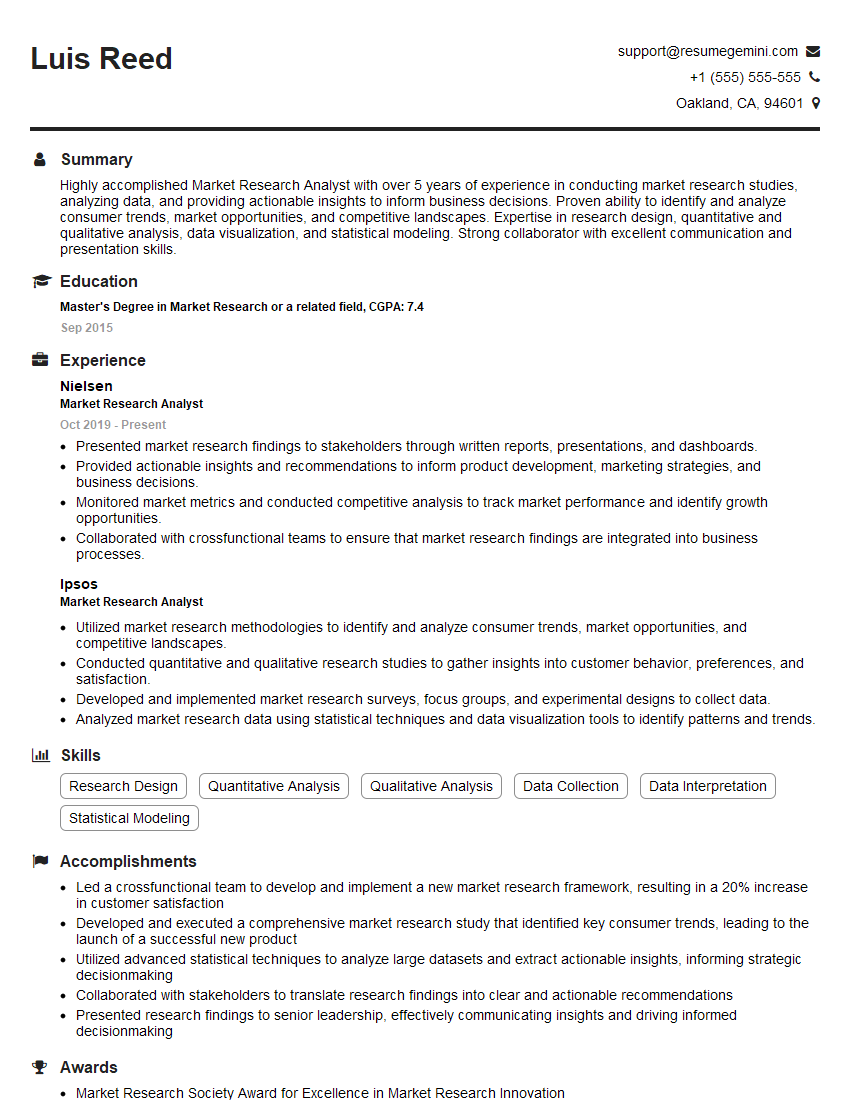
Market Research Analyst Resume Sample

Financial Analyst Resume Sample

Data Analyst Resume Sample

Data Scientist Resume Sample

Research Scientist Resume Sample
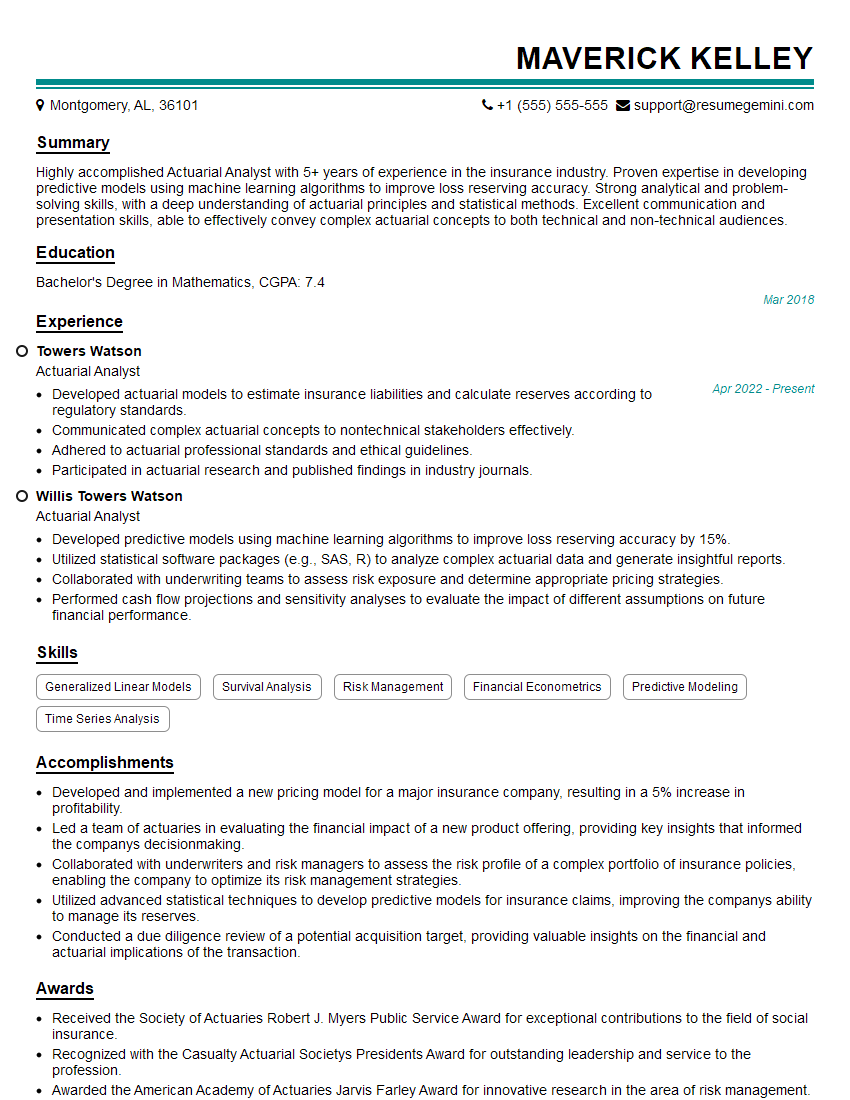
Actuarial Analyst Resume Sample

Actuary Resume Sample
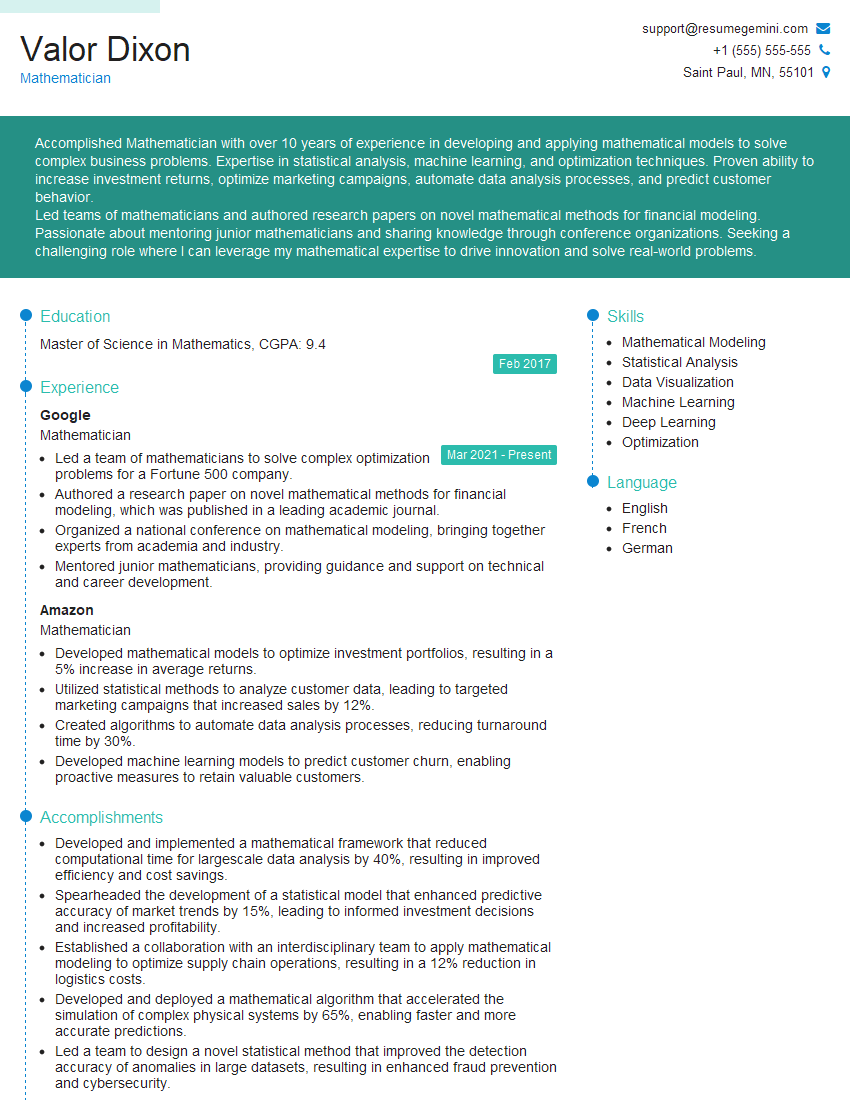
Mathematician Resume Sample
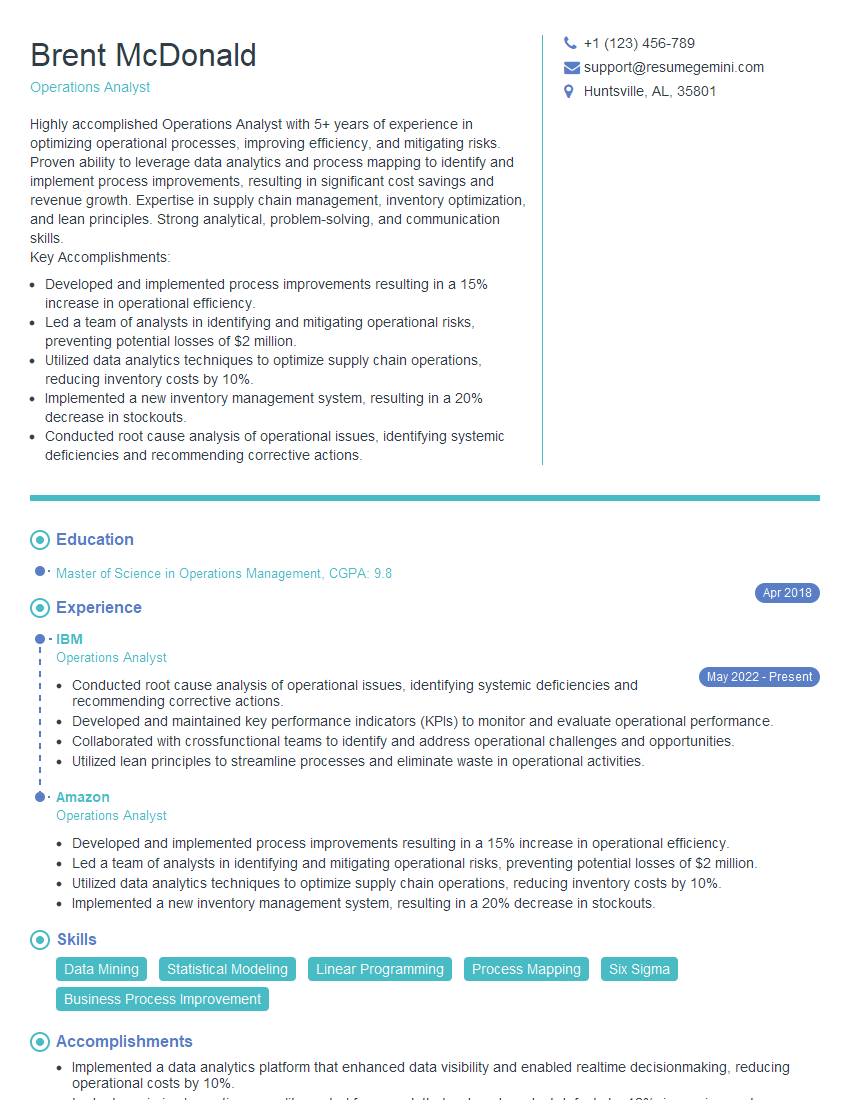
Operations Analyst Resume Sample

Operations Research Analyst Resume Sample
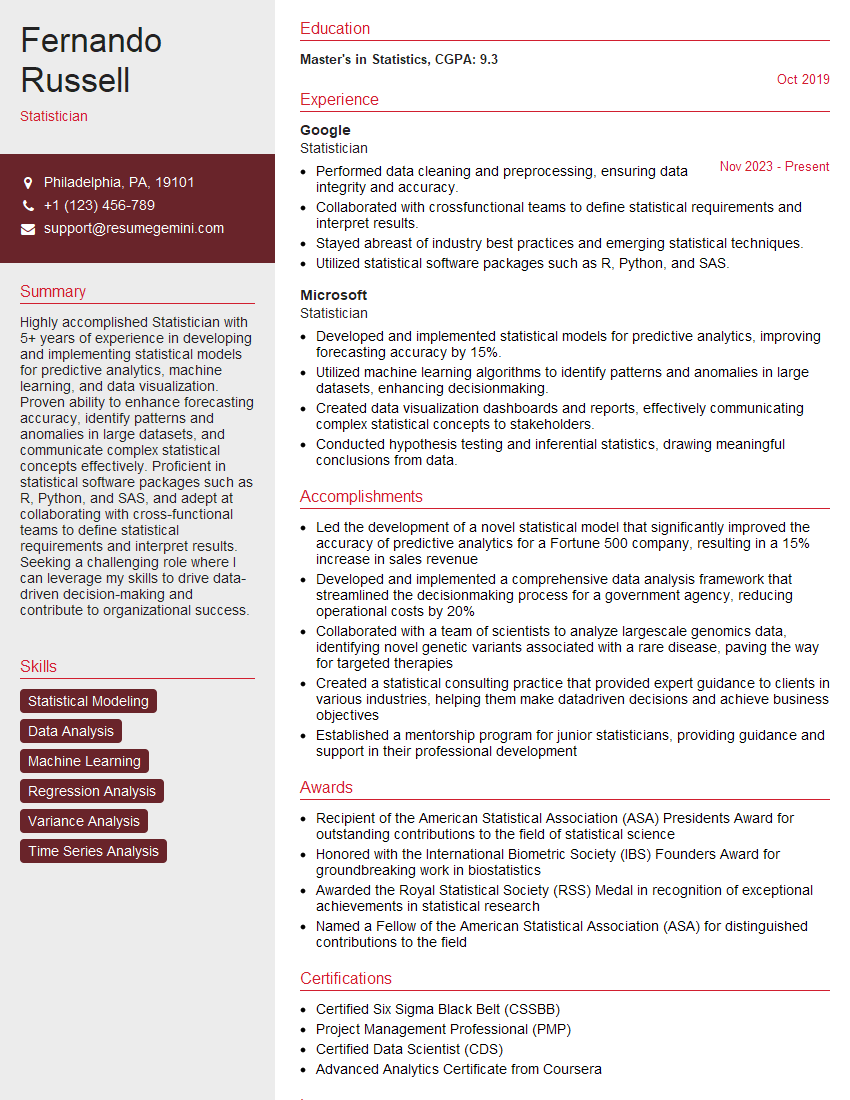
Statistician Resume Sample
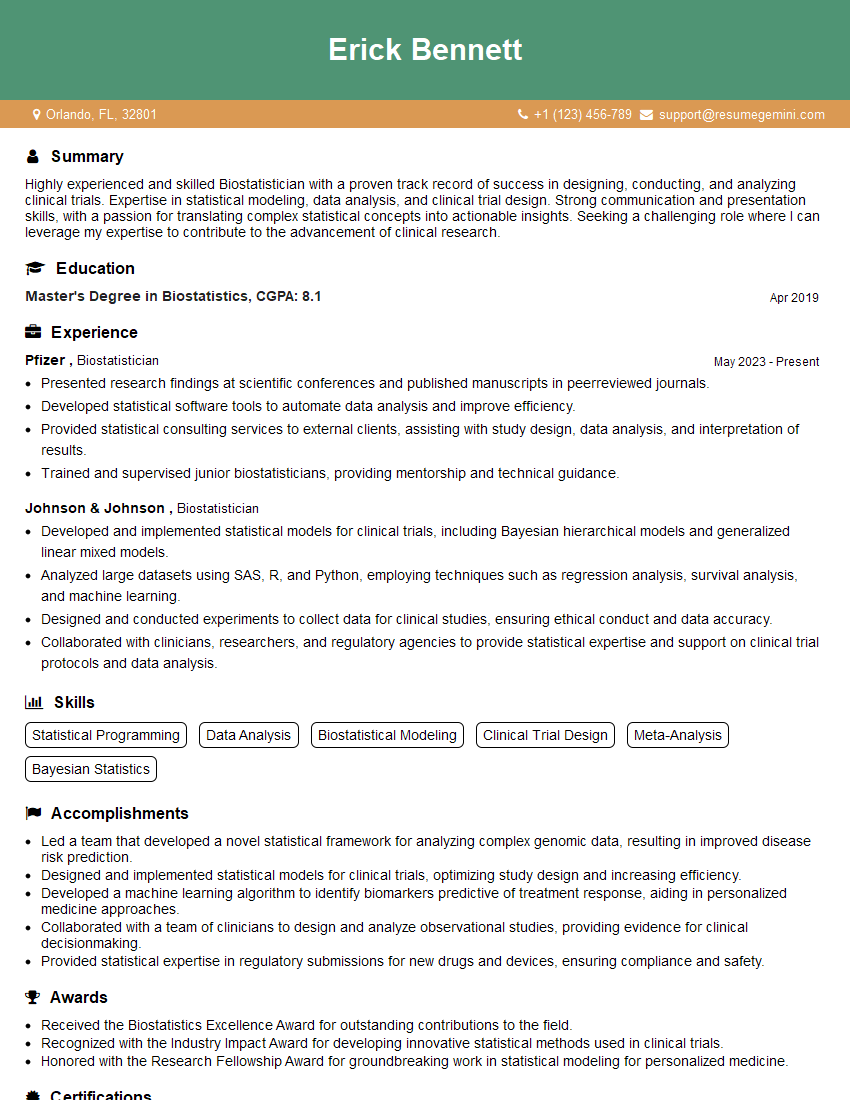
Biostatistician Resume Sample
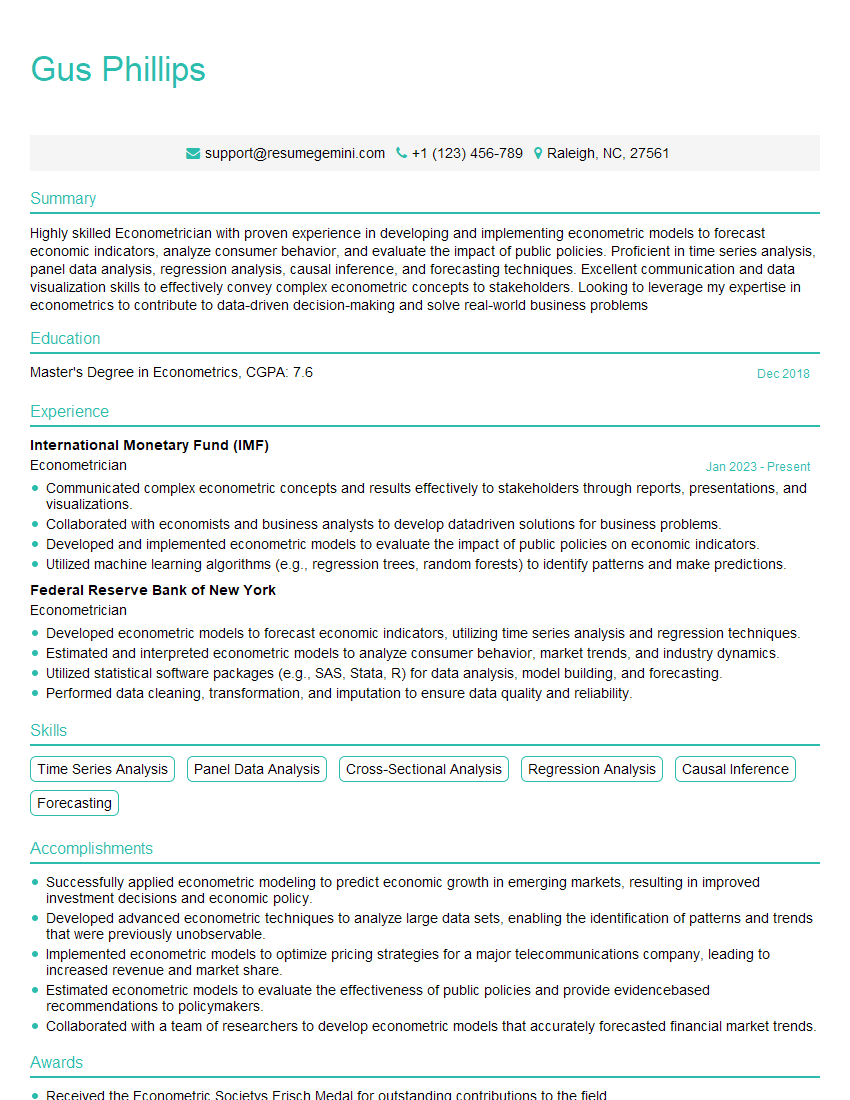
Econometrician Resume Sample

Survey Researcher Resume Sample
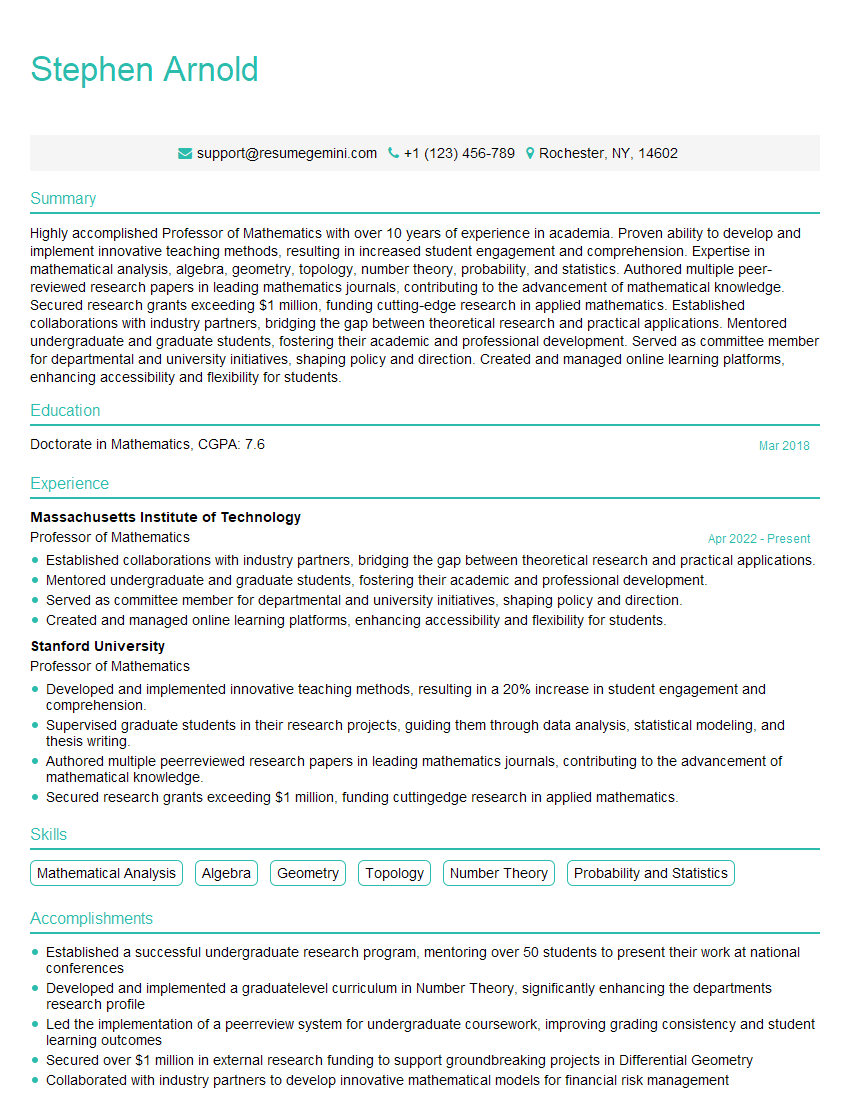
Professor of Mathematics Resume Sample

Machine Learning Engineer Resume Sample
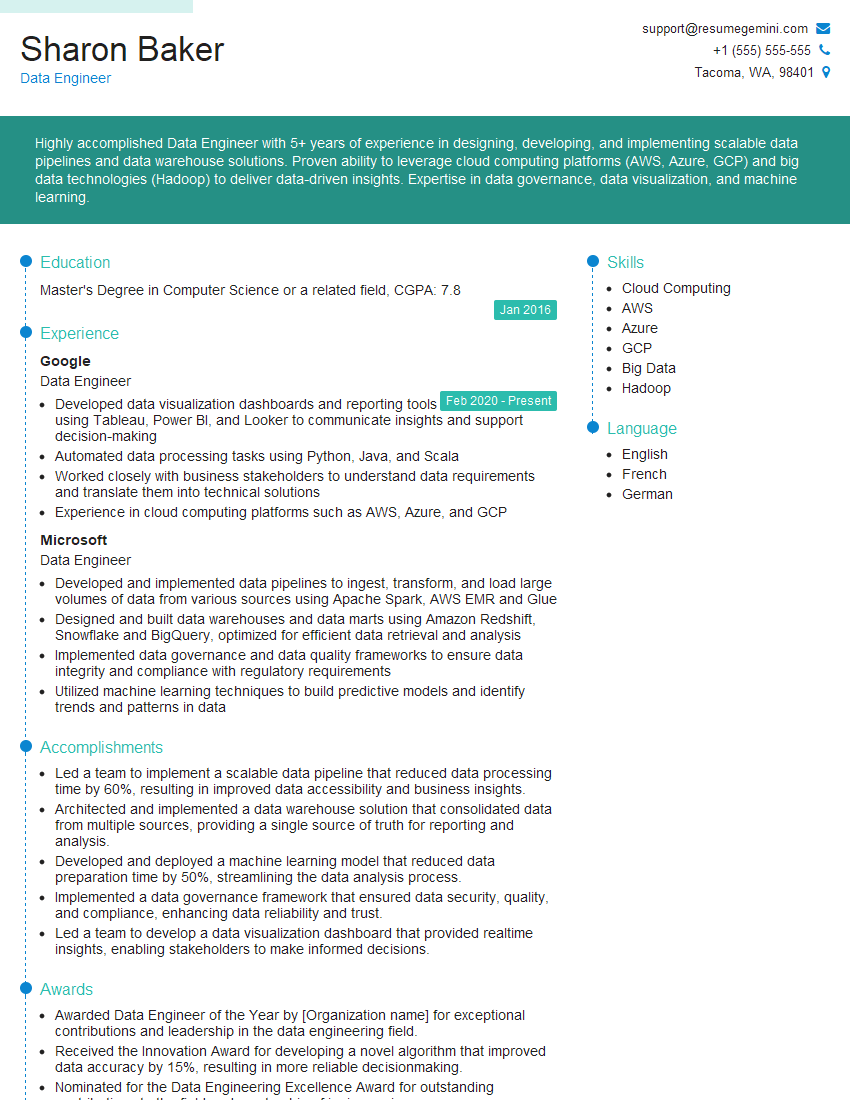
Data Engineer Resume Sample
- Business Analyst
- Management Consultant
- Market Research Analyst
- Financial Analyst
- Data Analyst
- Data Scientist
- Research Scientist
- Actuarial Analyst
- Actuary
- Mathematician
- Operations Analyst
- Operations Research Analyst
- Statistician
- Biostatistician
- Econometrician
- Survey Researcher
- Professor of Mathematics
- Machine Learning Engineer
- Data Engineer
Explore more articles
Users Rating of Our Blogs
Share Your Experience
We value your feedback! Please rate our content and share your thoughts (optional).
What Readers Say About Our Blog
To the interviewgemini.com Webmaster.
Very helpful and content specific questions to help prepare me for my interview!
Thank you
To the interviewgemini.com Webmaster.
This was kind of a unique content I found around the specialized skills. Very helpful questions and good detailed answers.
Very Helpful blog, thank you Interviewgemini team.