The thought of an interview can be nerve-wracking, but the right preparation can make all the difference. Explore this comprehensive guide to Experience in working with renewable energy systems interview questions and gain the confidence you need to showcase your abilities and secure the role.
Questions Asked in Experience in working with renewable energy systems Interview
Q 1. Explain the difference between photovoltaic and concentrating solar power.
Photovoltaic (PV) and Concentrating Solar Power (CSP) are both solar technologies, but they differ significantly in how they harness sunlight to generate electricity. PV systems use photovoltaic cells – essentially semiconductors – that directly convert sunlight into direct current (DC) electricity. Think of it like a leaf performing photosynthesis, but instead of creating sugars, it creates electricity. CSP systems, on the other hand, use mirrors or lenses to concentrate sunlight onto a receiver, heating a fluid (often molten salt) to high temperatures. This heated fluid then drives a conventional turbine-generator to produce electricity, similar to a traditional power plant but powered by the sun. In short, PV is direct conversion, while CSP is indirect conversion via heat.
Analogy: Imagine you’re trying to boil water. PV is like placing a pot directly in sunlight – slow but steady. CSP is like using a magnifying glass to focus sunlight onto a single point, rapidly heating the water.
Practical Application: PV is ideal for distributed generation – rooftop solar panels on homes or businesses. CSP is better suited for large-scale power plants in areas with abundant direct sunlight, often incorporating thermal energy storage to provide electricity even at night.
Q 2. Describe the different types of wind turbines and their applications.
Wind turbines are broadly classified into two main types based on the orientation of their axis of rotation: horizontal-axis wind turbines (HAWTs) and vertical-axis wind turbines (VAWTs).
- Horizontal-Axis Wind Turbines (HAWTs): These are the most common type, resembling giant windmills. They have a horizontal axis of rotation and are typically mounted on a tall tower. HAWTs have higher efficiency at higher wind speeds and are more common in large-scale wind farms. The blades are designed to capture the kinetic energy of the wind, converting it into rotational energy.
- Vertical-Axis Wind Turbines (VAWTs): These have a vertical axis of rotation and can capture wind from any direction, eliminating the need for yaw mechanisms (systems that orient the turbine into the wind). They are generally smaller and are often used in urban environments or areas with limited space. However, their efficiency is generally lower than HAWTs, particularly at higher wind speeds. Different types of VAWTs exist, such as Darrieus and Savonius rotors, each with its own design characteristics and performance trade-offs.
Applications: HAWTs dominate large-scale wind power generation, while VAWTs find niche applications in urban settings, small-scale installations, and specialized environments where space is constrained or wind direction is unpredictable.
Q 3. What are the main challenges in integrating renewable energy sources into the grid?
Integrating renewable energy sources into the grid presents several significant challenges:
- Intermittency: Solar and wind power are intermittent; their output fluctuates depending on weather conditions. This unpredictability makes it difficult to maintain a stable grid frequency and voltage.
- Geographic Distribution: Renewable energy resources are not evenly distributed geographically. This requires extensive transmission infrastructure to transport electricity from remote areas with abundant resources to load centers.
- Grid Stability: The fluctuating nature of renewables can destabilize the grid, potentially leading to blackouts if not managed effectively. Advanced grid management systems and energy storage are crucial for addressing this.
- Ramp Rate Limitations: Renewables can sometimes struggle to quickly increase or decrease their power output in response to changing grid demand. This can hinder grid stability and require flexible backup power sources.
- Cost: Upgrading grid infrastructure to accommodate renewable energy sources requires substantial investment.
Solutions: These challenges are being addressed through advancements in grid technologies such as smart grids, sophisticated forecasting models, energy storage systems (batteries, pumped hydro), demand-side management, and improved grid control systems.
Q 4. How do you calculate the energy output of a solar panel system?
Calculating the energy output of a solar panel system involves several factors:
- Panel Power Rating (Wp): The peak power output of a single solar panel, usually expressed in Watts (W).
- Number of Panels: The total number of panels in the system.
- System Efficiency: The overall efficiency of the system, accounting for losses in wiring, inverters, and other components (typically around 75-85%).
- Solar Irradiance (kWh/m²/day): The amount of solar energy received at a particular location, measured in kilowatt-hours per square meter per day. This varies with location, time of year, and weather conditions.
- Hours of Peak Sun (HP): The number of hours per day during which the solar panels receive peak sunlight.
Formula: A simplified calculation is:
Total Energy Output (kWh/day) ≈ (Panel Power Rating (Wp) * Number of Panels * System Efficiency * Solar Irradiance (kWh/m²/day) * HP)/1000Example: A 5kW system (20 panels of 250Wp each) with 85% efficiency in a location receiving 5 kWh/m²/day with 5 HP would generate approximately: (250 * 20 * 0.85 * 5 * 5)/1000 = 106.25 kWh/day.
Note: This is a simplified calculation. More sophisticated models consider factors such as panel tilt angle, shading, and temperature effects for more accurate predictions.
Q 5. Explain the concept of net metering.
Net metering is a billing mechanism that allows homeowners and businesses with renewable energy systems, such as solar panels, to sell excess electricity they generate back to the utility grid. Essentially, you get credit on your electricity bill for the energy you produce but don’t use. The utility’s meter runs backward when you’re generating more energy than you’re consuming.
How it works: At the end of the billing period, the net amount of energy consumed (what you used minus what you exported) is what you are billed for. If you generated more energy than you used, your bill will be reduced, or you might even receive a credit.
Example: If you generate 1000 kWh of solar energy in a month and use 800 kWh, you would receive credit for the remaining 200 kWh. This credit can offset future electricity bills.
Benefits: Net metering incentivizes renewable energy adoption by allowing consumers to directly benefit from the excess energy they produce, fostering a more sustainable and decentralized energy system.
Q 6. What are the environmental impacts of different renewable energy sources?
The environmental impacts of renewable energy sources are significantly less severe than those of fossil fuels, but they’re not entirely without consequence:
- Solar Power: Manufacturing solar panels requires energy and materials, and some components contain hazardous substances. However, the environmental impact over the lifecycle of a solar panel is considerably lower than that of a fossil fuel power plant. Proper end-of-life recycling is crucial for minimizing environmental impact.
- Wind Power: Wind turbines can impact wildlife, particularly birds and bats. The manufacturing process requires energy and materials, but the operational emissions are negligible. Careful site selection and turbine design can mitigate wildlife impacts.
- Hydropower: Dams can alter river ecosystems, affecting fish migration and water quality. They can also release greenhouse gases from submerged vegetation. However, hydropower generally produces little to no greenhouse gas emissions during operation.
- Geothermal Power: Geothermal energy has a relatively small environmental footprint, but there can be concerns about induced seismicity (small earthquakes) in some cases. The release of some gases can also occur. Careful site selection and monitoring are important.
Overall: While each renewable energy source has some environmental impacts, these are generally far less significant than the impacts of fossil fuel-based energy production. Continual improvements in technology and sustainable practices help minimize these effects further.
Q 7. Describe the different types of energy storage systems used with renewables.
Energy storage is crucial for integrating renewable energy sources due to their intermittency. Several types of energy storage systems are used with renewables:
- Batteries: Lithium-ion batteries are currently the most common type used for energy storage in residential and grid-scale applications. They offer high energy density and relatively fast charge and discharge rates. Other battery chemistries are also being developed.
- Pumped Hydroelectric Storage (PHS): PHS utilizes excess energy to pump water uphill to a reservoir. When electricity is needed, the water is released to generate electricity through hydropower turbines. This is a mature and cost-effective technology for large-scale storage, but requires suitable geography.
- Compressed Air Energy Storage (CAES): This involves compressing air during periods of low energy demand and releasing it through turbines to generate electricity when needed. It is suitable for large-scale applications.
- Thermal Energy Storage (TES): Used primarily with CSP plants, TES involves storing heat energy in molten salt or other materials. This heat can be used to generate electricity even when the sun is not shining.
- Flywheels: Flywheels store energy as kinetic energy in a rotating mass. They have fast response times but generally lower energy density compared to other storage options.
The choice of energy storage system depends on various factors, including cost, energy capacity, power output, lifespan, and environmental impact.
Q 8. What are the key factors to consider when siting a wind farm?
Siting a wind farm requires careful consideration of various factors to maximize energy production and minimize environmental impact. Think of it like choosing the perfect spot to build a house – you need the right conditions for it to thrive.
- Wind Resource Assessment: This is paramount. We use sophisticated meteorological data, including wind speed, direction, and turbulence, often gathered from anemometer towers placed at the proposed site for at least a year. The higher and more consistent the wind speeds, the better the energy yield.
- Terrain and Topography: Flat, open areas are ideal as they minimize wind shear (changes in wind speed). Hilly or mountainous terrain can create complex wind patterns, impacting turbine efficiency and potentially increasing structural loads.
- Environmental Impact: We must assess the impact on bird and bat populations, local ecosystems, and visual aesthetics. This often involves ecological surveys, noise impact studies, and consultations with environmental agencies. Mitigation strategies, like bird-deterrent systems, may be necessary.
- Grid Connection: Proximity to the electricity grid is crucial for cost-effectiveness. Long transmission lines can increase costs and energy losses.
- Land Use and Zoning Regulations: We need to ensure the project complies with all local, regional, and national regulations, including land ownership, zoning permits, and environmental approvals. This often involves extensive negotiations with landowners and government agencies.
- Infrastructure and Accessibility: Easy access for construction, maintenance, and repair is essential. Good road networks, and sufficient space for construction activities are important factors.
For example, a poorly sited wind farm in a region with inconsistent winds or near a major bird migration route would lead to low energy output and potential ecological damage, rendering the project economically unviable.
Q 9. How do you assess the economic viability of a renewable energy project?
Assessing the economic viability of a renewable energy project involves a thorough financial analysis considering various factors. Think of it like a detailed business plan, but for a power plant.
- Capital Costs: This includes the costs of land acquisition, equipment procurement, construction, and permitting.
- Operating Costs: These are ongoing costs like maintenance, insurance, grid connection charges, and personnel costs.
- Energy Production: We use sophisticated models to estimate the amount of energy the project will generate based on resource availability (wind speed, solar irradiance, etc.) and system efficiency.
- Electricity Price Forecasts: The price we receive for the electricity generated is crucial. Future price predictions are often based on market analysis and government policies.
- Incentives and Subsidies: Government policies can significantly impact project economics. Tax credits, production tax credits, and renewable energy mandates can dramatically reduce project costs and increase profitability.
- Financing and Debt Servicing: We need to determine how the project will be financed (loans, equity) and calculate debt repayment schedules.
- Risk Assessment: We must identify and quantify potential risks, including construction delays, equipment failures, changes in energy prices, and policy changes. Risk mitigation strategies need to be outlined.
A detailed financial model, including cash flow projections and discounted cash flow (DCF) analysis, is essential to determine the project’s net present value (NPV) and internal rate of return (IRR). A positive NPV and an IRR exceeding the cost of capital indicate economic viability.
Q 10. What are the different types of biomass energy and their uses?
Biomass energy is derived from organic matter, essentially anything that was once alive. There are many different types, each with specific uses.
- Wood Biomass: This is the most common type, encompassing wood chips, pellets, and logs. It’s primarily used for heating and electricity generation in power plants or dedicated biomass boilers.
- Agricultural Residues: These are leftover materials from agricultural production like corn stover, rice husks, and wheat straw. They can be used for biofuel production (e.g., ethanol) or direct combustion for heat and power.
- Energy Crops: Plants specifically grown for energy production, such as switchgrass and miscanthus, offer a sustainable source of biomass. They can be used similarly to agricultural residues.
- Municipal Solid Waste (MSW): This includes household and commercial waste that can be processed and used for energy recovery through incineration or anaerobic digestion (producing biogas).
- Sewage Sludge: Waste from wastewater treatment plants can be processed and used for biogas production or as a soil amendment.
The use of biomass energy varies significantly depending on the type of biomass and the available technology. It offers a renewable alternative to fossil fuels, but sustainable harvesting and processing practices are crucial to avoid environmental problems such as deforestation or soil erosion. The life cycle assessment of biomass energy is crucial for determining its overall sustainability.
Q 11. Explain the principle of hydropower generation.
Hydropower generation utilizes the potential energy of water stored at a height (potential energy) to generate electricity. Think of it like a water slide converting gravitational potential to kinetic energy.
Water is stored behind a dam, creating a reservoir. The water then flows through a penstock (a large pipe) to a turbine. The force of the water spins the turbine, which is connected to a generator. The generator converts the mechanical energy of the spinning turbine into electrical energy, which is then fed into the electricity grid.
The higher the water head (the difference in height between the reservoir and the turbine), and the greater the flow rate, the more electricity can be generated. Run-of-river hydropower systems don’t require large dams, utilizing the natural flow of a river to generate electricity. Pumped storage hydropower systems pump water uphill during off-peak hours and release it to generate power during peak demand. This is like a giant battery.
Q 12. What are the safety precautions when working with high-voltage solar systems?
Working with high-voltage solar systems requires strict adherence to safety protocols to prevent electric shock, arc flash, and other hazards. Safety is paramount! Consider it like handling explosives – proper training and precautions are essential.
- Lockout/Tagout (LOTO) Procedures: Before any work on the system, we must implement LOTO procedures to isolate the circuits and prevent accidental energization. This involves physically locking out circuit breakers and tagging them to indicate that work is being performed.
- Personal Protective Equipment (PPE): Appropriate PPE, including insulated gloves, safety glasses, arc flash suits (for higher voltages), and safety shoes, must be worn at all times.
- Grounding and Bonding: All tools and equipment must be properly grounded to prevent the buildup of static electricity and provide a safe path for fault currents.
- Arc Flash Hazard Analysis: For high-voltage systems, a thorough arc flash hazard analysis must be performed to determine the potential risks and select appropriate PPE. This analysis considers the system voltage, short-circuit current, and other factors.
- Training and Certification: All personnel working with high-voltage solar systems must receive appropriate training and certification to understand the risks and safety procedures.
- Emergency Response Plan: A clear emergency response plan must be in place to handle accidents or emergencies, including procedures for first aid, rescue, and emergency services notification.
Ignoring these precautions can lead to serious injury or death. Regular safety inspections and training are essential to maintain a safe working environment.
Q 13. Describe the process of commissioning a renewable energy system.
Commissioning a renewable energy system is a systematic process of verifying that the system is installed correctly, operates as intended, and meets all performance requirements. Think of it as a final check before handing over the keys to a newly built house.
- Pre-Commissioning: This involves inspecting all components and connections, verifying the wiring diagrams, and checking the functionality of individual pieces of equipment.
- System Integration Testing: Once the system is installed, individual components are tested and integrated to ensure they work together correctly. This includes testing the inverters, the balance-of-system components, and the metering equipment.
- Performance Testing: The system’s performance is assessed under various operating conditions to verify that it meets the expected energy output and efficiency levels. This often involves monitoring the system’s performance over several days or weeks.
- Safety Testing: Safety checks are performed to ensure the system’s compliance with relevant safety standards and regulations. This can include ground fault detection testing, insulation resistance testing, and other safety checks.
- Documentation: A comprehensive set of documents is created, including inspection reports, test results, and operation manuals. These documents will be crucial for future maintenance and repairs.
- Handover: Once all tests and inspections are completed, the system is handed over to the owner or operator, along with complete documentation and training on operation and maintenance.
Thorough commissioning is crucial to ensure that the renewable energy system operates efficiently and reliably over its lifetime. It is a critical stage that can avoid problems and ensures the long-term success of the investment.
Q 14. How do you troubleshoot problems in a solar PV system?
Troubleshooting a solar PV system involves a systematic approach to identify and resolve problems. Think of it like a detective investigating a crime scene, systematically eliminating possibilities.
- Visual Inspection: Start with a visual inspection of the entire system, checking for any obvious signs of damage, such as loose connections, broken panels, or damaged wiring.
- Check the Metering Data: Examine the production data from the inverter and the system’s overall energy output. Compare this data to historical data and expected production levels to identify anomalies. Low production could indicate shading, faulty panels, or inverter issues.
- Test Individual Components: Use specialized tools like multimeters and IR cameras to test individual components, including panels, inverters, and strings. This will help to pinpoint the source of any problems.
- Check for Shading and Soiling: Shade from trees or buildings can significantly reduce energy production. Soiling (dust or dirt) on the panels can also decrease performance. Cleaning panels or addressing shade issues can often improve production.
- Inspect Wiring and Connections: Check all wiring connections and look for corrosion, loose connections, or damaged insulation.
- Monitor the Inverter: Check the inverter for any error codes or fault messages. The inverter’s display or manual can provide clues about the problem.
- Consult System Documentation: Review the system’s design documents and wiring diagrams to aid in troubleshooting. Understanding the system’s configuration is crucial for effective problem-solving.
Systematic troubleshooting ensures efficient diagnosis and minimizes downtime. Having access to system monitoring data greatly assists in identifying and resolving issues proactively. Using infrared cameras to identify hotspots on panels or in the wiring can prevent further damage and improve system performance.
Q 15. What are the common causes of wind turbine failure?
Wind turbine failures, unfortunately, are a reality in the renewable energy sector. They can stem from a variety of sources, broadly categorized as mechanical, electrical, or environmental.
- Mechanical Failures: These often involve the gearbox, bearings, blades, and the main shaft. Gearbox failures, for instance, are common due to the high loads and stress involved in converting rotational energy. Blade damage can occur from lightning strikes, bird impacts, or material fatigue over time. Improper maintenance contributes significantly to these issues.
- Electrical Failures: Problems in the generator, transformer, or control systems can cause significant downtime. These can be triggered by voltage surges, insulation failures, or overheating due to inadequate cooling.
- Environmental Factors: Extreme weather events like hurricanes, ice buildup, and strong winds can cause considerable damage. Corrosion from saltwater environments near coastal installations is another major factor.
For example, I once worked on a project where a turbine experienced a catastrophic gearbox failure due to insufficient lubrication during a routine inspection. This highlighted the crucial role of preventative maintenance in minimizing downtime and maximizing the lifespan of wind turbines.
Career Expert Tips:
- Ace those interviews! Prepare effectively by reviewing the Top 50 Most Common Interview Questions on ResumeGemini.
- Navigate your job search with confidence! Explore a wide range of Career Tips on ResumeGemini. Learn about common challenges and recommendations to overcome them.
- Craft the perfect resume! Master the Art of Resume Writing with ResumeGemini’s guide. Showcase your unique qualifications and achievements effectively.
- Don’t miss out on holiday savings! Build your dream resume with ResumeGemini’s ATS optimized templates.
Q 16. Explain the concept of capacity factor for renewable energy systems.
The capacity factor of a renewable energy system is a crucial metric indicating its actual power output compared to its maximum possible output over a specific period. In simpler terms, it represents the efficiency of a renewable energy resource in generating electricity. A higher capacity factor implies better utilization of the installed capacity.
It’s calculated as the ratio of the actual energy generated to the maximum possible energy that could have been generated if the system operated at its full capacity throughout the entire period. The formula is:
Capacity Factor = (Actual energy generated) / (Maximum possible energy) * 100%For example, a solar PV system with a 1 MW capacity that generates 2,000 MWh of electricity in a year has a capacity factor of 22.8% (2000 MWh / (1 MW * 8760 hours) * 100%). Wind turbines typically have lower capacity factors than solar PV due to the intermittent nature of wind resources. Factors influencing capacity factors include resource availability, system design, maintenance, and grid limitations.
Q 17. What are the different types of inverters used in solar PV systems?
Solar PV systems utilize inverters to convert the direct current (DC) electricity generated by solar panels into alternating current (AC) electricity compatible with the grid and household appliances.
- String Inverters: These are the most common and cost-effective type. They connect multiple solar panels in series (a string) and convert the DC output into AC. They’re relatively simple and easy to install, but if one panel in the string fails, it affects the entire string’s output.
- Microinverters: Each solar panel has its own microinverter, optimizing energy production at the individual panel level. They offer higher efficiency and improved performance under partial shading, but are more expensive than string inverters.
- Power Optimizers: These devices are placed between the solar panels and the string inverter, maximizing the energy production of each panel independently. They are a good compromise between the simplicity of string inverters and the performance of microinverters.
The choice of inverter type depends on factors like system size, budget, shading conditions, and desired performance levels. For example, in a large commercial PV system with significant shading, microinverters or power optimizers might be preferred to maximize the energy yield.
Q 18. How do you perform a load flow analysis for a microgrid?
Load flow analysis for a microgrid is crucial for understanding its operational characteristics under different load conditions. It determines the power flow within the microgrid, ensuring grid stability and efficient power distribution. It’s more complex than traditional grid analysis due to the presence of distributed generation (DG) sources and the potential for islanding operation.
The process usually involves:
- Microgrid Modeling: Creating a detailed model of the microgrid, including all components like generators, loads, lines, and storage devices. Software packages such as PowerWorld Simulator or OpenDSS are commonly used.
- Load Profile Definition: Establishing realistic load profiles for different times of day and seasons. This often requires historical data and load forecasting techniques.
- Power Flow Calculation: Using iterative algorithms to solve the power flow equations and determine the voltage magnitudes, phase angles, and power flows throughout the microgrid under different loading scenarios.
- Sensitivity Analysis: Evaluating the system’s response to changes in load, generation, or line parameters. This assists in identifying potential vulnerabilities and improving system resilience.
For example, a load flow analysis might reveal that during peak demand, a particular section of the microgrid experiences voltage sags. This information enables targeted upgrades, such as adding extra lines or distributed generation, to maintain grid stability.
Q 19. What are the benefits and drawbacks of using geothermal energy?
Geothermal energy harnesses heat from the Earth’s interior, offering a sustainable and baseload renewable energy source. However, like all energy sources, it presents both advantages and disadvantages.
- Benefits:
- Reliable Baseload Power: Unlike solar and wind, geothermal energy is relatively consistent and available 24/7, providing reliable baseload power.
- Reduced Greenhouse Gas Emissions: Geothermal energy is a clean energy source with significantly lower greenhouse gas emissions compared to fossil fuels.
- High Energy Density: Geothermal resources have high energy density compared to other renewable energy sources.
- Drawbacks:
- Geographic Limitations: Geothermal resources are not evenly distributed globally, limiting its accessibility.
- High Initial Costs: The upfront investment for drilling and infrastructure development can be significant.
- Environmental Concerns: There can be potential environmental impacts associated with geothermal power plant operations, including induced seismicity and emissions of greenhouse gases in some cases.
For example, Iceland leverages its abundant geothermal resources effectively to produce significant amounts of clean energy. However, a project in a less geothermally active region may face high initial capital costs and uncertainties regarding resource availability. Careful site selection and environmental impact assessments are crucial.
Q 20. Describe the different types of energy efficiency measures.
Energy efficiency measures aim to reduce energy consumption while maintaining or improving the quality of services. They span various sectors and technologies.
- Building Efficiency: Improving insulation, using energy-efficient windows, employing smart thermostats, and optimizing building design to reduce heating and cooling needs.
- Industrial Efficiency: Implementing process optimization techniques, upgrading equipment with high-efficiency motors and drives, improving waste heat recovery, and adopting energy management systems.
- Transportation Efficiency: Promoting the use of electric vehicles, improving fuel efficiency standards for automobiles, enhancing public transportation, and developing smart traffic management systems.
- Lighting Efficiency: Replacing incandescent bulbs with LEDs, using smart lighting controls to reduce energy consumption based on occupancy and daylight availability.
- Appliance Efficiency: Choosing energy-efficient appliances with high energy star ratings, and upgrading outdated equipment.
For example, the installation of LED lighting in a commercial building can significantly reduce its electricity consumption and operating costs. Likewise, improved insulation in homes minimizes the energy needed for heating and cooling, translating to both financial and environmental benefits.
Q 21. What are the regulatory requirements for installing renewable energy systems?
Regulatory requirements for installing renewable energy systems vary significantly depending on location, system size, and type. It’s crucial to check with the local authorities and relevant agencies. Generally, these regulations encompass:
- Permits and Approvals: Obtaining necessary building permits, interconnection agreements with the utility company, and environmental impact assessments.
- Safety Standards: Adherence to safety codes and standards for electrical installations, structural integrity, and fire protection.
- Grid Connection Requirements: Meeting the utility’s technical requirements for interconnection to ensure grid stability and safety.
- Incentives and Subsidies: Availability of financial incentives, tax credits, or rebates at the national or regional level.
- Net Metering Policies: Policies that allow renewable energy system owners to sell excess electricity generated to the grid.
For example, in many regions, there are specific requirements for the spacing of solar panels, grounding procedures, and the type of inverters allowed. These regulations are designed to ensure safety and compatibility with the existing grid infrastructure. Failure to comply can lead to delays, fines, or even project rejection.
Q 22. How do you calculate the levelized cost of energy (LCOE)?
Levelized Cost of Energy (LCOE) is a crucial metric for evaluating the long-term cost-effectiveness of energy projects, especially renewable energy systems. It represents the average cost per unit of electricity generated over the entire lifetime of a project, considering all capital, operational, and maintenance expenses.
Calculating LCOE involves summing the discounted cash flows of all costs and dividing by the total discounted electricity generated. The formula is often expressed as:
LCOE = (Total Discounted Capital Costs + Total Discounted Operating and Maintenance Costs) / Total Discounted Electricity GenerationLet’s break down each component:
- Total Discounted Capital Costs: This encompasses all upfront investments like land acquisition, equipment purchase, installation, and permitting. Each cost is discounted to its present value using a specified discount rate reflecting the project’s risk and the time value of money.
- Total Discounted Operating and Maintenance Costs: These include recurring expenses such as labor, repairs, insurance, and fuel (though minimal or nonexistent for many renewables). These costs are also discounted to their present value.
- Total Discounted Electricity Generation: This is the total amount of electricity expected to be produced over the project’s lifetime, discounted to its present value.
For example, a solar farm with a 25-year lifespan will require the projection of yearly energy production and costs over that period, all discounted back to the present. A higher discount rate will increase the LCOE, making the project appear less attractive. Software tools and spreadsheets are frequently used to perform these calculations. Understanding sensitivity analysis is crucial, as variations in key assumptions (e.g., energy yield, maintenance costs) significantly influence the LCOE.
Q 23. What is your experience with different renewable energy modeling software?
My experience encompasses a variety of renewable energy modeling software, each with its strengths and weaknesses. I’ve extensively used HOMER Pro for microgrid optimization and sizing, assessing various renewable energy sources like solar PV, wind, and biomass in both grid-connected and off-grid scenarios. I’ve also worked with PVSyst for detailed solar resource assessment and PV system performance simulation, providing precise estimations of energy yield based on location-specific parameters. Furthermore, I am proficient in using SAM (System Advisor Model), a powerful tool developed by NREL that allows for comprehensive analysis of various renewable energy technologies, including wind, solar, and geothermal. Finally, I have some experience with open-source tools like OpenModelica for specific modeling tasks. The choice of software depends greatly on the project’s scope and requirements.
Q 24. Explain the concept of power curve for wind turbines.
A wind turbine’s power curve illustrates the relationship between wind speed and the power output of the turbine. It’s a critical tool for assessing a turbine’s performance and predicting its energy production. The curve typically starts at a cut-in speed, the minimum wind speed at which the turbine begins generating power. As wind speed increases, power output rises until it reaches its rated power, the maximum power the turbine can produce. Further increases in wind speed might lead to a slight increase in power or a plateau, until a cut-out speed is reached, causing the turbine to shut down to prevent damage from excessively high winds.
The shape of the power curve depends on several factors, including turbine design, blade geometry, and control systems. A well-designed turbine will exhibit a smooth, efficient curve with a rapid increase in power output within the optimal wind speed range. Analyzing the power curve allows for the estimation of annual energy production (AEP) given the wind resource at a specific site. This analysis is paramount when deciding the suitability of a specific wind turbine model for a given location. We often overlay historical wind data on the power curve to estimate the actual energy output of the turbine. Deviations from the expected power curve can indicate operational issues that require immediate attention.
Q 25. Describe your experience with different types of renewable energy monitoring systems.
My experience with renewable energy monitoring systems includes working with both SCADA (Supervisory Control and Data Acquisition) systems and more localized, sensor-based solutions. SCADA systems, such as those offered by various vendors in the industrial automation sector, allow for centralized monitoring and control of large-scale renewable energy plants, providing real-time data on power output, efficiency, and equipment performance. This data is invaluable for optimizing operations, performing predictive maintenance, and identifying potential issues. For smaller installations, we often use sensor networks that collect data on variables like voltage, current, temperature, and irradiance. This data is then transmitted to a central data logger or cloud platform for analysis. I have experience integrating various communication protocols (e.g., Modbus, Profibus) to collect and analyze data from diverse sources, ensuring data accuracy and reliability. I also have experience with the implementation of advanced data analytics to improve decision-making. For example, machine learning models can assist in predicting equipment failures and optimize energy output based on weather patterns and other environmental factors.
Q 26. What are the different types of grid-connected and off-grid renewable energy systems?
Renewable energy systems can be broadly categorized as grid-connected or off-grid, depending on their connection to the main electricity grid.
- Grid-connected systems are connected to the utility grid, allowing them to export excess energy to the grid and draw power from the grid when needed. Examples include grid-tied solar PV systems, wind turbines connected to transmission lines, and large-scale solar farms. These systems usually require inverters to convert DC power to AC power compatible with the grid.
- Off-grid systems are independent of the main grid and operate autonomously. They typically include batteries for energy storage, managing power fluctuations. Common examples include standalone solar PV systems for remote areas, small wind turbines coupled with batteries, and hybrid systems combining various renewable sources with storage.
Within each category, we can further differentiate systems based on the renewable energy source employed. For instance, a grid-connected system can utilize solar PV, wind, or hydropower, while an off-grid system may use a combination of solar, wind, and potentially biogas generators to meet energy demands. The optimal choice depends heavily on factors such as location, energy demand, grid availability, and economic considerations. For example, a remote village might opt for an off-grid hybrid system while a large industrial facility may opt for a grid-connected system supplemented by energy storage to enhance grid stability.
Q 27. How do you ensure the safety and security of renewable energy installations?
Ensuring the safety and security of renewable energy installations is paramount. This encompasses several key aspects:
- Electrical Safety: Implementing proper grounding, overcurrent protection, and insulation to prevent electrical hazards. Adherence to relevant electrical codes and standards is crucial. Regular inspections and maintenance are necessary to mitigate risks.
- Structural Integrity: Designing and constructing robust structures capable of withstanding environmental stressors like wind, snow, and seismic activity. This is especially critical for wind turbines and large-scale solar farms.
- Fire Safety: Implementing fire prevention measures, including fire suppression systems, fire-resistant materials, and regular fire safety drills. The risk of fire is particularly significant in battery storage systems.
- Cybersecurity: Protecting renewable energy systems from cyberattacks that could compromise operations or cause damage. This includes securing control systems, implementing intrusion detection systems, and establishing robust data security protocols.
- Environmental Impact: Minimizing the environmental impact of the installation and its operation. This includes proper disposal of decommissioned equipment and implementation of measures to protect wildlife and sensitive ecosystems.
A comprehensive safety and security plan should be developed and implemented at each stage of a project’s lifecycle, from design to operation and decommissioning. This plan should clearly outline procedures and responsibilities, ensuring compliance with all relevant regulations and standards.
Q 28. What are your thoughts on the future of renewable energy technologies?
The future of renewable energy technologies is incredibly promising. I anticipate several key trends:
- Increased Efficiency and Lower Costs: Ongoing advancements in materials science and manufacturing processes will lead to further improvements in the efficiency of solar PV panels, wind turbines, and other renewable energy technologies, alongside significant cost reductions, making renewable energy even more competitive with fossil fuels.
- Smart Grid Integration: Smart grid technologies will play a crucial role in optimizing the integration of renewable energy sources into the electricity grid, enhancing grid stability and reliability. Advanced energy storage solutions will be essential to address the intermittency of renewable sources.
- Decentralized Energy Systems: We’ll see a greater emphasis on distributed generation, with more homeowners and businesses generating their own renewable energy. Microgrids will become increasingly prevalent, offering resilience and energy independence.
- Technological Innovation: Emerging technologies like floating offshore wind farms, advanced energy storage solutions (e.g., flow batteries, advanced pumped hydro), and improved geothermal energy extraction will further expand the possibilities of renewable energy.
- Policy and Regulatory Support: Continued supportive policies and regulations will be vital to accelerate the transition to a renewable energy-based economy. Carbon pricing mechanisms and renewable energy mandates will incentivize investment and deployment.
Overcoming challenges related to grid integration, energy storage, and intermittency will be crucial to realizing the full potential of renewable energy. However, with ongoing innovation and collaborative efforts, I’m confident that renewable energy will play an increasingly dominant role in meeting global energy needs in the years to come.
Key Topics to Learn for Renewable Energy Systems Interviews
- Solar Energy Systems: Understanding photovoltaic (PV) systems, solar thermal technologies, system design considerations (e.g., sizing, orientation, shading), and maintenance procedures. Practical application: Describing your experience with troubleshooting a PV system malfunction.
- Wind Energy Systems: Knowledge of wind turbine types (horizontal-axis, vertical-axis), energy conversion principles, grid integration challenges, and environmental impact assessment. Practical application: Explaining your involvement in a wind farm project, highlighting your contributions to its success.
- Hydropower Systems: Familiarity with different hydropower plant types (run-of-river, impoundment), energy generation mechanisms, environmental considerations (e.g., fish migration), and operational efficiency. Practical application: Detailing your experience with optimizing hydropower generation based on water flow and demand.
- Energy Storage Systems: Understanding various energy storage technologies (batteries, pumped hydro, compressed air), their applications in renewable energy integration, and their limitations. Practical application: Discussing your experience with integrating battery storage into a renewable energy microgrid.
- Grid Integration and Smart Grids: Knowledge of power electronics, grid stability, demand-side management, and the role of renewable energy sources in a smart grid infrastructure. Practical application: Explaining how you’ve addressed challenges related to intermittency of renewable energy sources on the grid.
- Renewable Energy Policy and Regulations: Familiarity with relevant policies, incentives, and regulations impacting the renewable energy sector. Practical application: Describing how you’ve navigated permitting processes or utilized government incentives for renewable energy projects.
- Sustainability and Environmental Impact: Understanding the environmental benefits and potential drawbacks of different renewable energy technologies, lifecycle assessments, and carbon footprint calculations. Practical application: Detailing your experience with conducting environmental impact assessments for renewable energy projects.
- Data Analysis and Monitoring: Experience with using data analytics tools to monitor system performance, identify inefficiencies, and optimize renewable energy system operation. Practical application: Describing how you’ve utilized data to improve the efficiency of a renewable energy system.
Next Steps
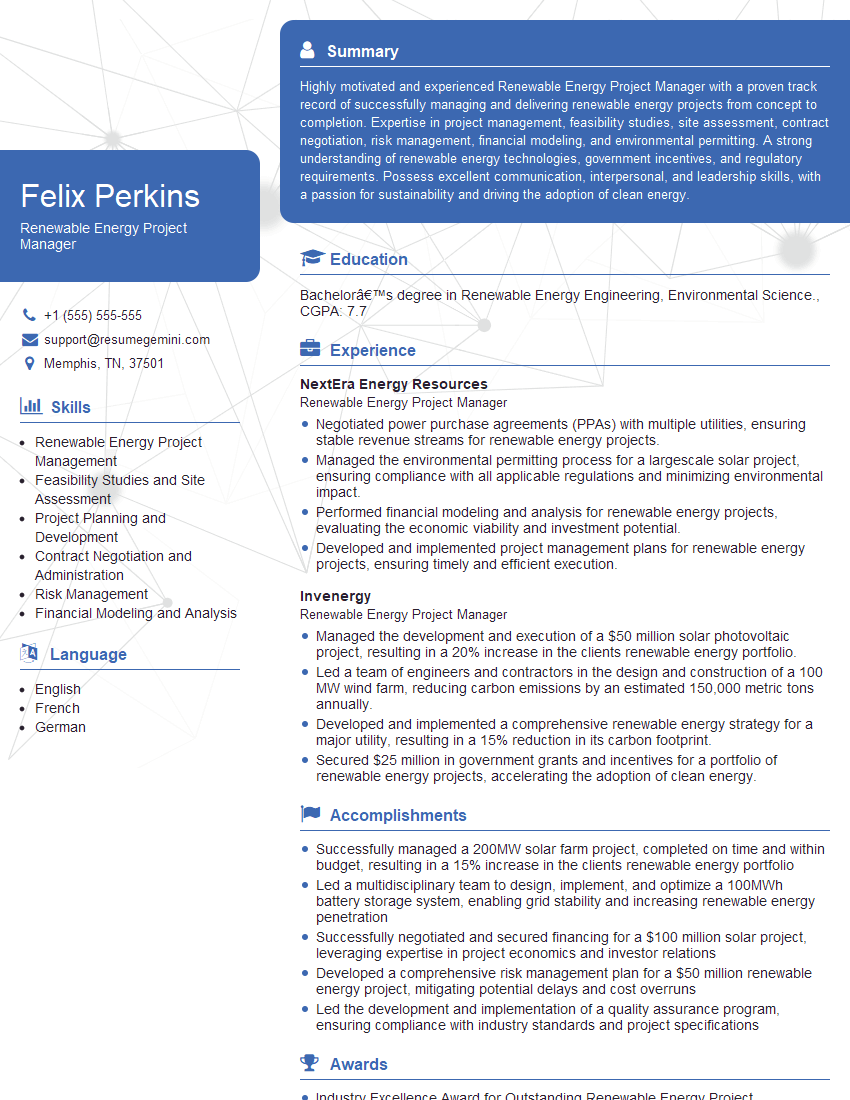
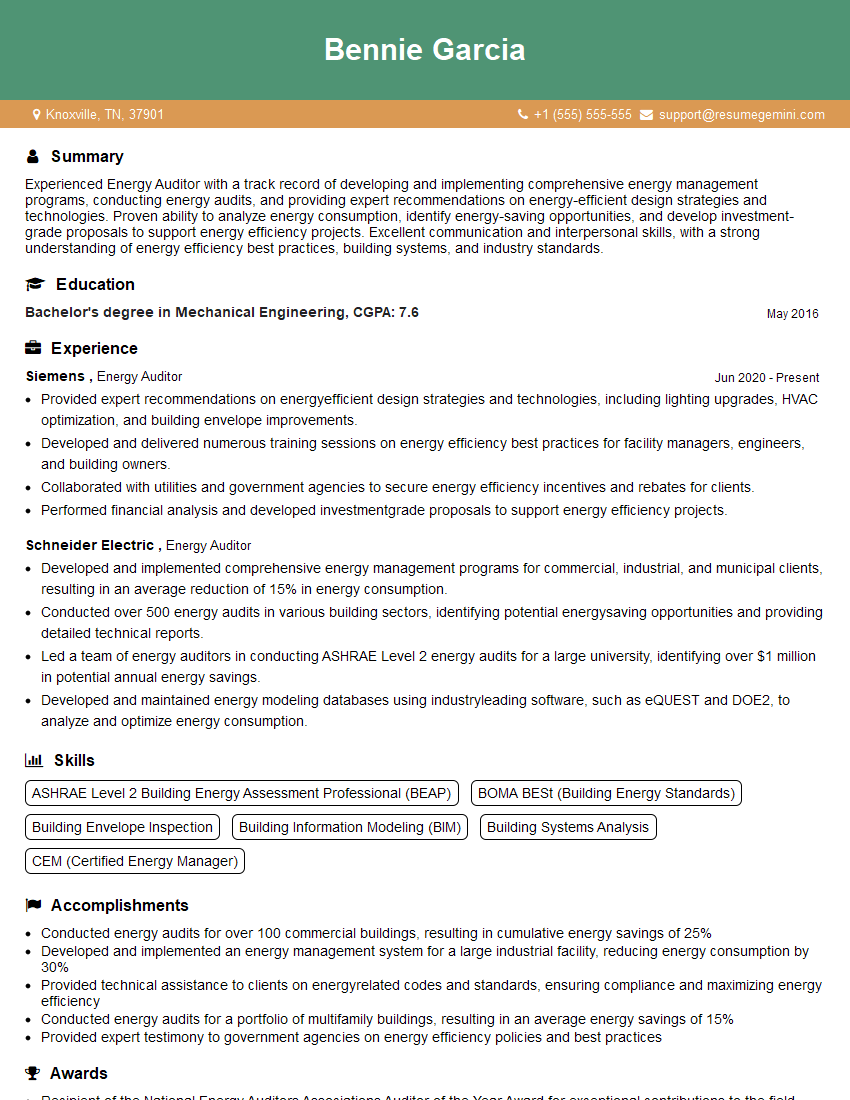
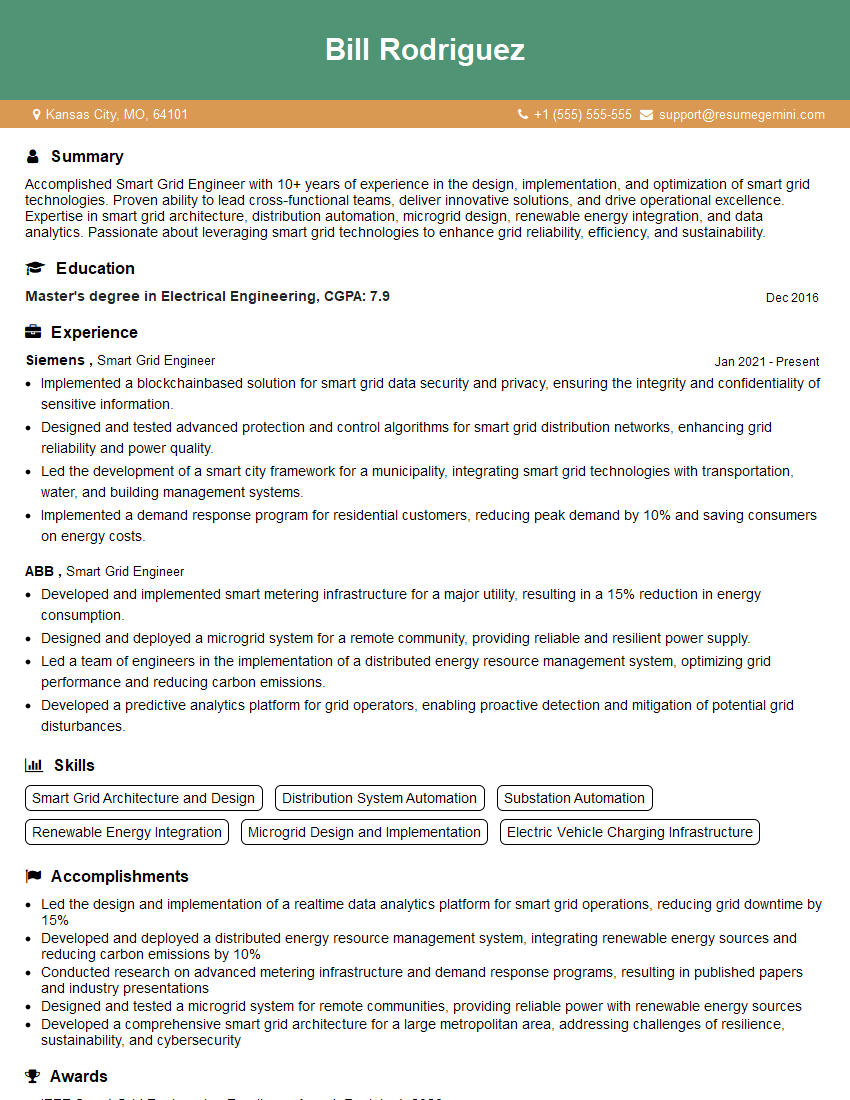
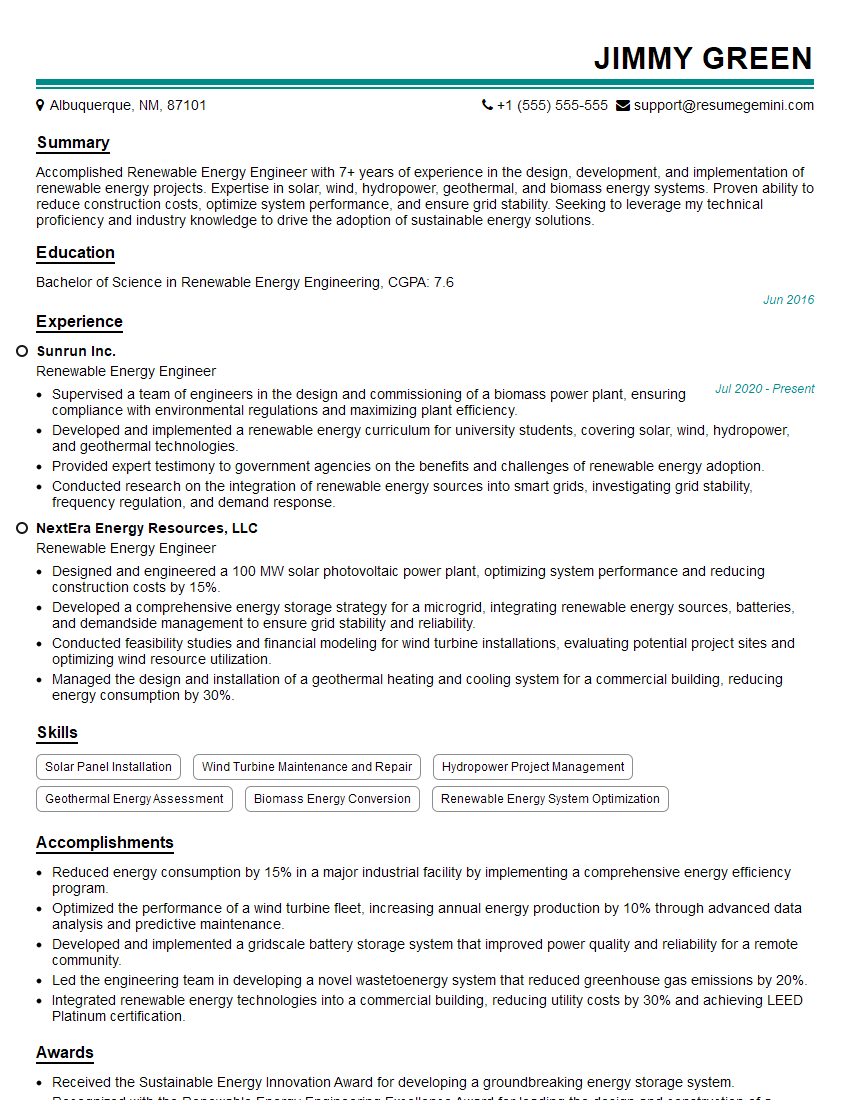
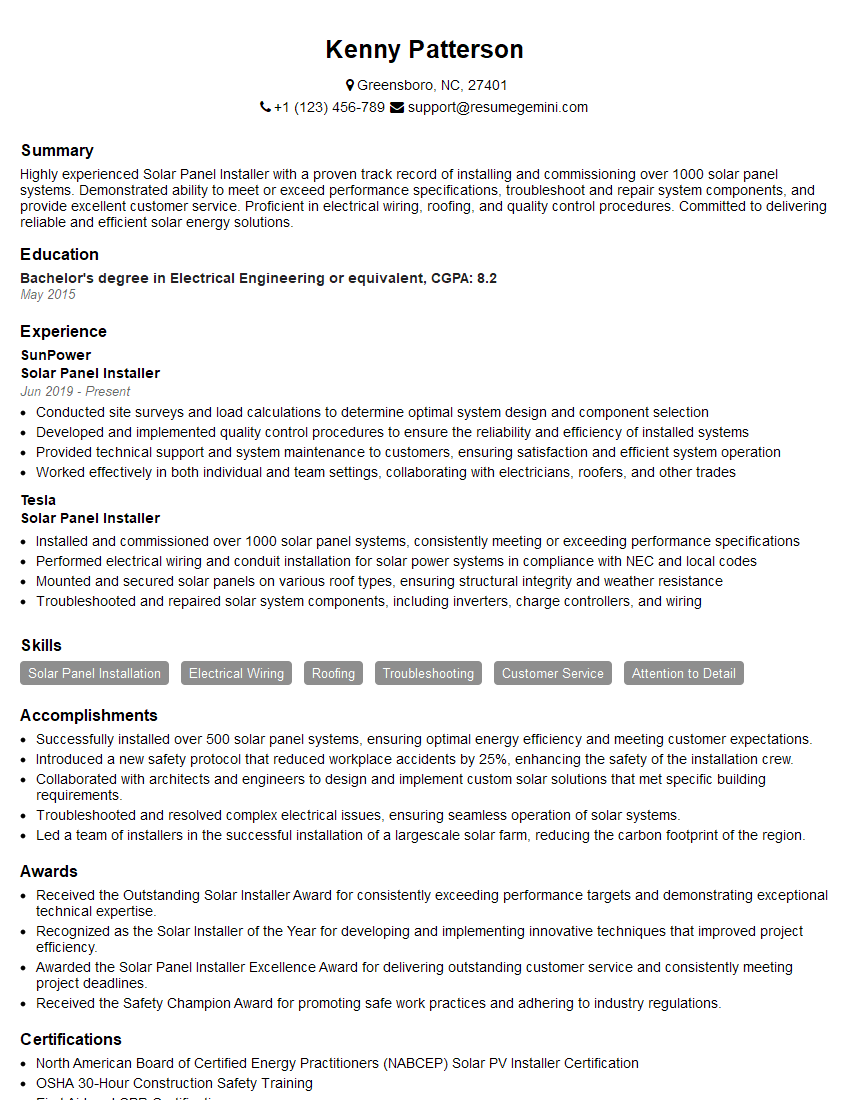
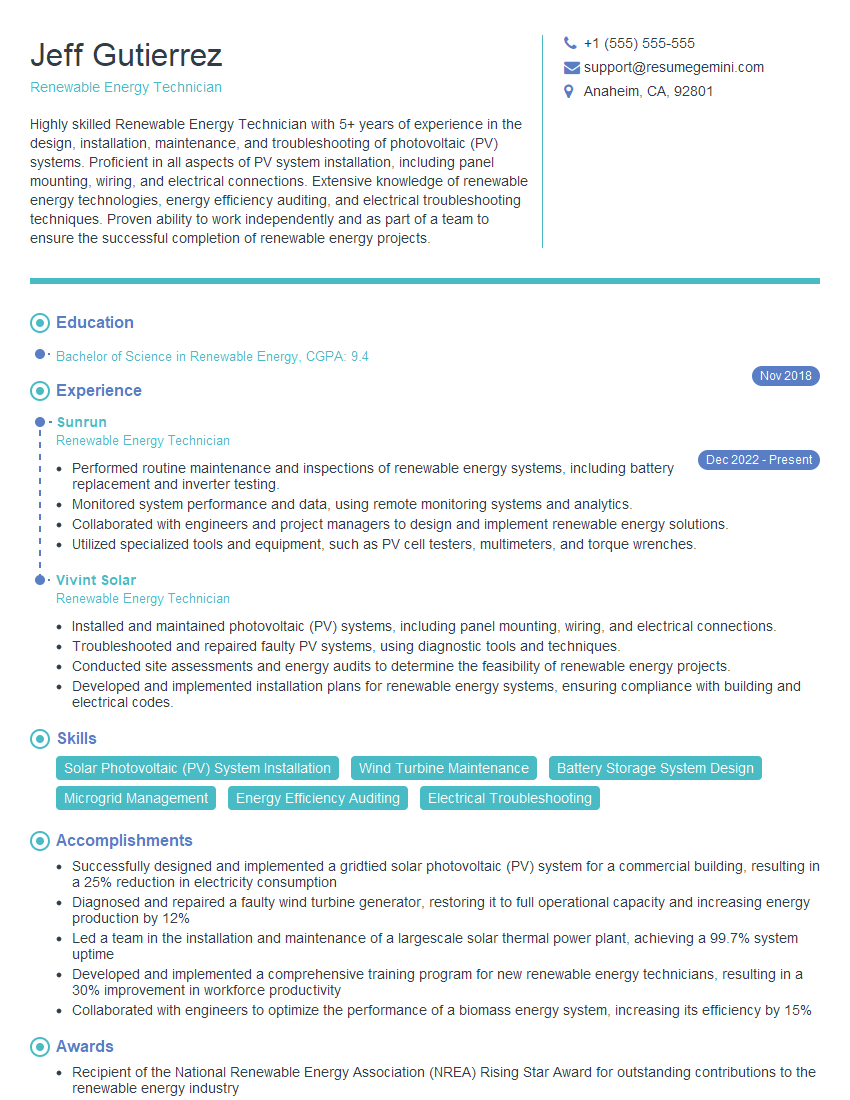
Mastering these concepts significantly enhances your career prospects in the rapidly growing renewable energy sector. A strong, ATS-friendly resume is crucial for showcasing your skills and experience to potential employers. ResumeGemini is a trusted resource to help you build a professional and effective resume that highlights your expertise in renewable energy systems. Examples of resumes tailored to this field are available to guide your preparation. Invest time in crafting a compelling resume – it’s your first impression!

Explore more articles
Users Rating of Our Blogs
Share Your Experience
We value your feedback! Please rate our content and share your thoughts (optional).
What Readers Say About Our Blog
To the interviewgemini.com Webmaster.
Very helpful and content specific questions to help prepare me for my interview!
Thank you
To the interviewgemini.com Webmaster.
This was kind of a unique content I found around the specialized skills. Very helpful questions and good detailed answers.
Very Helpful blog, thank you Interviewgemini team.