The right preparation can turn an interview into an opportunity to showcase your expertise. This guide to Experience with using music to support students with cognitive impairments interview questions is your ultimate resource, providing key insights and tips to help you ace your responses and stand out as a top candidate.
Questions Asked in Experience with using music to support students with cognitive impairments Interview
Q 1. Describe your experience adapting musical activities to meet the diverse needs of students with cognitive impairments.
Adapting musical activities for students with cognitive impairments requires a deep understanding of their individual strengths, weaknesses, and learning styles. It’s not a one-size-fits-all approach. I begin by observing the student’s responses to different musical stimuli – sounds, rhythms, melodies. For instance, a student might respond strongly to rhythmic percussion but struggle with complex melodies. I would then tailor activities to emphasize rhythm, perhaps using simple instruments like shakers or drums, gradually introducing more complex rhythmic patterns. For a student who struggles with motor skills, I might use adapted instruments like oversized bongos or switch-activated electronic instruments. Visual aids, such as color-coded charts for note patterns or movement cues, are also frequently employed. It’s all about breaking down complex musical concepts into smaller, manageable steps and using positive reinforcement throughout the process.
For example, a student with Down syndrome might benefit from repetitive, predictable musical structures, while a student with autism might respond better to sensory-rich activities involving specific instruments or sounds. The key is flexibility and constant assessment to ensure the activities remain engaging and effective. I always involve the student in the process, choosing music and instruments they seem interested in and building their confidence and engagement.
Q 2. Explain how you assess a student’s musical abilities and preferences before developing an intervention plan.
Assessing a student’s musical abilities and preferences is a crucial first step. I utilize a multifaceted approach that incorporates observation, informal assessments, and, when appropriate, standardized tests. Observation is key – I watch how the student responds to music passively and actively, noting their engagement level, attention span, and any preferences for specific types of music, instruments, or activities. Informal assessments involve simple tasks, such as identifying different instruments by sound, matching rhythms, or singing simple songs. Standardized assessments, such as the Music Therapy Assessment Profile (MTAP), can offer more structured information about their musical abilities. However, I always prioritize informal observations and direct interaction, as they provide valuable insights into the student’s individual needs and preferences. The goal is to create a personalized profile that guides the development of a tailored intervention plan.
For example, I might observe a student who is highly responsive to rhythmic music but struggles with melodic tasks. This would inform my choice of activities and instruments and how I structure the sessions. A student’s preference for specific instruments also guides my approach.
Q 3. What methods do you use to measure the effectiveness of music-based interventions for cognitive impairments?
Measuring the effectiveness of music-based interventions requires a combination of quantitative and qualitative methods. Quantitative data might include tracking improvements in specific cognitive skills, such as attention span, memory, or language development, through standardized assessments or teacher observation reports. For example, I might track the number of times a student correctly identifies a musical note or rhythm pattern over time. Qualitative data focuses on the student’s engagement, enjoyment, and overall progress in the musical activities. I might use observations, interviews with parents and teachers, and anecdotal records to gather qualitative information. These would show any changes in their behavior and participation that may not be reflected in a formal test.
It’s important to remember that progress might not always be linear. It’s essential to celebrate small victories and adapt the intervention plan as needed. The overall goal is to improve the student’s quality of life through music, not just to achieve specific measurable outcomes.
Q 4. How do you incorporate assistive technology in your music therapy sessions for students with cognitive disabilities?
Assistive technology plays a significant role in enhancing the musical experiences of students with cognitive disabilities. Adaptive instruments, such as switch-activated keyboards or drum machines, allow students with limited motor skills to participate fully in music-making. Software programs with visual cues and simplified interfaces can aid in learning music theory or composing music. For instance, I have used iPads loaded with apps that allow students to create music using simple touch gestures or visual representations of musical notes. Augmentative and alternative communication (AAC) devices can also help students communicate their musical preferences or express themselves creatively during sessions. The selection and use of assistive technology are highly individualized, depending on the student’s specific needs and preferences.
For example, a student with cerebral palsy might use a switch-activated xylophone to create melodies, while a student with autism might benefit from using a visual scheduling app to anticipate and participate in session activities.
Q 5. Describe your experience working with students who have autism spectrum disorder using music therapy techniques.
Working with students on the autism spectrum using music therapy techniques requires a sensitive and individualized approach. Music can be particularly effective in addressing sensory sensitivities, communication challenges, and social interaction difficulties common in autism. For example, I might use calming, repetitive music to reduce anxiety or sensory overload. Structured musical activities, like rhythmic drumming or singing familiar songs, can promote self-regulation and improve focus. Improvisational music-making, where students can freely express themselves without the pressure of strict rules, can be a powerful tool for communication and emotional release. Creating and performing music in groups can also help build social skills. I always focus on building rapport, understanding the student’s unique sensory preferences and communication styles, and adapting the therapy to suit their specific needs.
For example, I might use weighted blankets, calming sounds, and repetitive rhythms to create a therapeutic environment for a student who is easily overwhelmed by sensory stimuli. With careful choice of materials and strategies, I support positive outcomes.
Q 6. How do you address challenging behaviors that may arise during music therapy sessions with cognitively impaired students?
Challenging behaviors during music therapy sessions are addressed using a proactive and positive approach. Understanding the underlying cause of the behavior is crucial – is it related to sensory overload, frustration, communication difficulties, or something else? Once the cause is identified, strategies can be implemented to prevent or manage the behavior. This might include creating a calm and predictable environment, using visual cues or schedules, incorporating breaks as needed, or adjusting the activity to meet the student’s current abilities and tolerance levels. Positive reinforcement, such as praise, rewards, and encouragement, plays a vital role in shaping positive behaviors. In some cases, collaboration with other professionals, such as behavior specialists or occupational therapists, may be beneficial.
For example, if a student becomes agitated during a particularly challenging musical activity, I might pause the activity, offer a break, and then return to it later using a simplified approach. The key is to maintain a calm and supportive atmosphere, and to adapt the session as necessary to meet the student’s needs.
Q 7. Explain your approach to collaborating with parents and other professionals involved in a student’s educational team.
Collaboration with parents and other professionals is essential for successful music therapy interventions. I maintain open and regular communication with parents, providing updates on the student’s progress, sharing strategies for supporting their musical development at home, and seeking their input on the student’s preferences and goals. With other professionals, such as teachers, special education staff, and therapists, I participate in team meetings, share assessment data, and collaborate on developing a holistic intervention plan. A collaborative approach ensures that the music therapy aligns with the student’s overall educational and therapeutic goals, and that consistent strategies are used across all settings to maximize the impact of the interventions. Regular communication helps to tailor the sessions to meet all the needs and wishes of the involved parties.
For example, I regularly share progress reports with the student’s teacher and adjust the music therapy plan based on their feedback on the student’s classroom performance. This ensures that the work is tailored to the needs and desires of all participants.
Q 8. What musical approaches are most effective for students with Down syndrome, and why?
For students with Down syndrome, music therapy approaches focusing on repetition, sensory engagement, and structured activities are highly effective. This is because individuals with Down syndrome often thrive in predictable environments and benefit from repetitive learning experiences.
Repetitive Songs and Rhythms: Simple, repetitive songs with clear melodies and rhythms help build familiarity and improve memory. Think of songs with predictable patterns, like nursery rhymes or children’s songs with actions.
Sensory Integration: Incorporating various sensory elements like instruments with different textures (shakers, drums, xylophones), visual aids (colored scarves, flashing lights synced with music), and movement activities enhances engagement and improves sensory processing.
Structured Activities: Activities with clear steps and predictable outcomes, such as playing simple instruments along to a song or following a structured musical game, provide a sense of security and encourage participation. For example, a step-by-step process for playing a tambourine along to a song.
The effectiveness stems from these methods’ ability to cater to the learning styles often associated with Down syndrome, promoting cognitive development, motor skills, and social interaction in a supportive and engaging way.
Q 9. How do you adapt music therapy for students with varying levels of cognitive impairment within the same group session?
Adapting music therapy for diverse cognitive levels requires careful planning and flexible delivery. I use a differentiated instruction approach. This involves offering various levels of engagement and complexity within the same session.
Tiered Activities: I design activities with multiple layers. For instance, a simple song can have a basic rhythmic clapping component for less cognitively advanced students, while more advanced students might play instruments along to the song, adding rhythmic variations or improvising melodies.
Individualized Support: I provide individual attention and adapt instructions according to each student’s needs. This might involve one-on-one support, simplified instructions, or modified tasks. For example, one student might need physical assistance in playing an instrument, while another may need help understanding the musical instructions.
Visual and Auditory Cues: I integrate a variety of visual and auditory cues to support comprehension and participation. Color-coded charts for instrument choices or visual beat cues can significantly aid students with cognitive impairments.
Positive Reinforcement: Consistent positive feedback and encouragement is crucial for all students but especially those with cognitive impairments, keeping them engaged and motivated. Even small successes should be acknowledged.
By utilizing these methods, I ensure that every student, regardless of their cognitive level, feels successful and included in the group music therapy session.
Q 10. Describe a time you had to modify a music therapy plan due to a student’s unexpected response or progress.
During a session focused on improving vocal expression, a student unexpectedly became agitated and overwhelmed when asked to sing solo. Initially, the plan involved individual vocal exercises progressing to group singing. Recognizing her distress, I immediately modified the plan.
Instead of forcing her to sing solo, I shifted the focus to group activities. We started with simple rhythmic movements, gradually incorporating call-and-response singing where she could participate comfortably within the group without the pressure of a solo performance. We also incorporated instruments, allowing her to express herself through rhythmic playing, which she found less anxiety-provoking. Over the following weeks, we slowly reintroduced solo singing, starting with very short phrases and offering lots of encouragement and positive reinforcement. This eventually helped her overcome her initial apprehension and build confidence.
This experience reinforced the importance of flexibility and responsiveness in music therapy. It showed that sometimes the best-laid plans need adjustments based on a student’s unique needs and responses in the moment. The key was recognizing her discomfort, adapting accordingly, and gradually reintroducing the original goal in a way that felt safe and supportive.
Q 11. What are the ethical considerations when working with students with cognitive impairments using music therapy?
Ethical considerations when working with students with cognitive impairments using music therapy are paramount. They include:
Informed Consent: Obtaining informed consent from parents or guardians is essential, ensuring they fully understand the therapy’s goals, methods, and potential risks and benefits.
Confidentiality: Maintaining student confidentiality is vital, protecting sensitive information shared during sessions.
Beneficence and Non-Maleficence: Prioritizing the student’s well-being is paramount. The therapy should aim to benefit the student and avoid causing harm, both physically and emotionally. Careful observation and sensitivity are crucial to avoid any potential negative responses to the music or activities.
Justice and Fairness: Ensuring equitable access to music therapy services, regardless of a student’s disability or background, is crucial. All students should have the opportunity to benefit from these services.
Professional Boundaries: Maintaining clear professional boundaries is important to ensure a safe and therapeutic relationship.
These ethical considerations guide my practice, ensuring that the therapy is conducted responsibly and ethically, always putting the student’s best interests first.
Q 12. How do you ensure the safety and well-being of your students during music therapy sessions?
Safety and well-being are my top priorities. I create a safe and supportive environment by:
Risk Assessment: I conduct a thorough assessment of each student’s physical and cognitive abilities before planning activities, adapting them to minimize risks. For instance, I’d adapt instrument choices for students with limited fine motor skills or ensure the space is free of tripping hazards.
Supervision: I provide adequate supervision during sessions, especially with students who might have challenging behaviors or require assistance with specific activities. This includes monitoring their emotional state and providing support as needed.
Appropriate Instruments: I select age-appropriate and safe instruments that are sturdy and easy to handle, avoiding those with sharp edges or small parts that could be a choking hazard.
Emergency Preparedness: I have a plan in place for handling emergencies, including knowing the location of first-aid supplies and knowing how to contact emergency services if necessary.
Communication: Open communication with parents and school staff about any concerns related to the student’s safety or well-being is essential.
By taking these precautions, I strive to create a safe and nurturing space where students can fully participate in music therapy without fear of harm.
Q 13. Explain how you use music to improve communication skills in students with cognitive impairments.
Music is a powerful tool for enhancing communication skills. I use various techniques to improve communication in students with cognitive impairments:
Singing and Vocalization: Singing songs together helps develop vocal skills and expression. Call-and-response songs encourage turn-taking and improve communication reciprocity.
Musical Storytelling: Creating stories through music and improvisation helps students express themselves nonverbally and develop narrative skills. This encourages creative expression and communication of emotions.
Instrument Play: Playing instruments together promotes collaboration and communication through shared musical experiences. Students learn to listen to and respond to others during musical interactions.
Music and Movement: Activities combining music and movement enhance nonverbal communication and expression. Students can communicate emotions and ideas through dance or rhythmic movements.
These approaches offer alternative avenues for communication, bridging the gap for students who might struggle with traditional verbal communication methods.
Q 14. What are some of the common cognitive and emotional benefits you’ve observed using music therapy?
Music therapy consistently yields remarkable cognitive and emotional benefits for students with cognitive impairments. I’ve observed improvements in:
Cognitive Skills: Enhanced memory, attention span, and problem-solving abilities through repetitive musical patterns, structured activities, and musical games.
Emotional Regulation: Improved mood, reduced anxiety, and increased self-esteem through the calming and uplifting effects of music. Music can be incredibly soothing and help manage challenging behaviors.
Social Skills: Increased social interaction and cooperation through group music activities that promote teamwork and collaborative musical experiences.
Motor Skills: Development of fine and gross motor skills through playing instruments and participating in music and movement activities.
Language Development: Enhanced receptive and expressive language skills through singing, rhythm activities, and musical storytelling. Even non-verbal communication improves through musical expression.
These benefits are observed across different cognitive levels, emphasizing music therapy’s versatility and effectiveness in supporting the holistic development of students with cognitive impairments.
Q 15. How do you differentiate your approach based on different types of cognitive impairments (e.g., intellectual disability, traumatic brain injury)?
My approach to music therapy is highly individualized, adapting to the specific needs of each student. While the core principles remain consistent—using music to improve cognitive function and well-being—the implementation varies greatly depending on the type of cognitive impairment.
For example, a student with an intellectual disability might benefit from repetitive, structured musical activities focusing on rhythm and melody to enhance memory and attention span. We might use simple songs with clear, predictable patterns and incorporate movement to improve motor skills and engagement. I’d focus on building foundational musical skills and using positive reinforcement to encourage participation.
Conversely, a student recovering from a traumatic brain injury (TBI) might require a more adaptive approach. Their cognitive abilities might fluctuate, and certain areas may be more affected than others. In this case, I would assess their current strengths and weaknesses, tailoring the sessions to focus on areas needing improvement. This might involve using music improvisation to encourage flexibility and creative problem-solving, or working on memory tasks using familiar songs and lyrics. I would prioritize relaxation techniques and stress reduction through calming music and guided imagery.
Each session is carefully planned and adjusted based on the student’s response and progress. Regular assessment is crucial to monitor the effectiveness of the chosen methods and make necessary changes.
Career Expert Tips:
- Ace those interviews! Prepare effectively by reviewing the Top 50 Most Common Interview Questions on ResumeGemini.
- Navigate your job search with confidence! Explore a wide range of Career Tips on ResumeGemini. Learn about common challenges and recommendations to overcome them.
- Craft the perfect resume! Master the Art of Resume Writing with ResumeGemini’s guide. Showcase your unique qualifications and achievements effectively.
- Don’t miss out on holiday savings! Build your dream resume with ResumeGemini’s ATS optimized templates.
Q 16. What are the key differences between music therapy and other therapeutic approaches for cognitive impairments?
While both music therapy and other therapeutic approaches aim to improve cognitive function, their methods and philosophies differ significantly. Music therapy uses music as the primary intervention modality; it’s not just a background element but the core of the therapeutic process. It leverages the multi-faceted nature of music to access and stimulate different cognitive pathways simultaneously.
Other therapies, like occupational therapy or speech therapy, may incorporate music, but it’s often supplementary rather than central. For instance, an occupational therapist might use music to motivate a student during fine motor skill exercises, but the main focus remains on improving physical dexterity. Music therapy, on the other hand, directly uses musical elements like rhythm, melody, and harmony to achieve specific therapeutic goals.
The key difference lies in the intentional and structured way music is used within the therapeutic framework. Music therapy utilizes music’s inherent properties to address cognitive deficits, enhance communication skills, regulate emotions, and improve overall quality of life. It’s a holistic approach focusing on the cognitive, emotional, and social benefits of musical interaction.
Q 17. How do you maintain accurate records and documentation of your music therapy sessions and student progress?
Maintaining accurate records is paramount. I use a combination of electronic and paper-based documentation to ensure thorough and detailed recording of each session. For each student, I maintain a comprehensive file including:
- Session notes: Detailed descriptions of activities, student responses, progress, and any challenges encountered.
- Assessment results: Data from standardized assessments and informal observations measuring cognitive skills, musical abilities, and emotional responses.
- Individualized music therapy plan (ITP): The ITP outlines the goals, objectives, methods, and evaluation criteria for the therapy. This is a living document, regularly reviewed and updated based on student progress.
- Progress reports: Regular updates for parents and other professionals, summarizing the student’s achievements, challenges, and recommendations for continued support.
Electronic health record (EHR) systems are increasingly used to facilitate secure storage, sharing, and analysis of data. However, I also maintain a hard copy file for reference and backup purposes. Confidentiality is always a priority, and I strictly adhere to all relevant privacy regulations.
Q 18. Explain your familiarity with relevant assessment tools used in music therapy for cognitive impairments.
My familiarity with assessment tools is extensive. I use a variety of standardized and informal assessment methods tailored to the student’s specific needs and cognitive profile. Examples include:
- The Profile of Music Perception Skills (PMPS): Assesses various musical perceptual skills, like rhythm discrimination, melodic contour identification, and harmony recognition. This provides valuable insights into the student’s musical strengths and weaknesses, informing the design of appropriate interventions.
- The Test of Auditory Perception (TAP): Assesses auditory processing skills, which often influence cognitive and linguistic abilities. This can help pinpoint specific challenges and guide music therapy goals.
- Informal assessments: Observations of student engagement, response to musical stimuli, and progress in specific skills during sessions. These offer valuable qualitative data.
The choice of assessment tools is driven by the individual student’s needs and the specific goals of the music therapy program. It’s crucial to select tools that are reliable, valid, and appropriate for the student’s cognitive capabilities. A comprehensive assessment provides the groundwork for effective intervention.
Q 19. Describe your experience in creating and implementing individualized music therapy plans.
Creating and implementing individualized music therapy plans is a cornerstone of my practice. The process involves a collaborative approach, starting with a thorough assessment to understand the student’s strengths, weaknesses, interests, and goals. I then work with the student, parents, and other professionals to collaboratively develop an ITP that addresses their specific needs.
For instance, a student struggling with attention and memory might have an ITP that incorporates rhythmic activities to improve focus, memory games using familiar songs to enhance recall, and improvisation exercises to boost creativity and problem-solving. A student experiencing emotional regulation difficulties might have an ITP focusing on relaxation techniques through calming music, songwriting as a creative outlet, and listening to music that evokes positive emotions.
Each ITP is a dynamic document, regularly reviewed and modified based on the student’s response and progress. Regular data collection and feedback loops ensure that the interventions remain relevant and effective.
Q 20. How do you incorporate feedback from parents and other professionals into your music therapy plans?
Collaboration with parents and other professionals is integral to the success of music therapy. I actively seek their input throughout the process, starting from the initial assessment to the ongoing monitoring of progress. I schedule regular meetings to discuss the student’s progress, challenges, and any adjustments needed to the ITP.
I use various communication methods, including written progress reports, phone calls, and face-to-face meetings, to share information and seek feedback. Parents provide valuable insights into the student’s behavior, preferences, and learning style outside of the therapy sessions, while other professionals offer complementary perspectives based on their expertise (e.g., teacher, speech therapist, occupational therapist). Their input helps create a holistic and comprehensive approach to the student’s care.
For example, a teacher might provide feedback on improvements in classroom behavior or attention span, enabling us to reinforce these positive changes through music therapy activities. Parents may suggest incorporating the student’s favorite songs or musical styles, thereby improving engagement and motivation.
Q 21. What resources and materials do you typically utilize in your music therapy sessions?
The resources and materials I utilize are diverse and depend on the specific needs and goals of each student. However, some commonly used items include:
- Musical instruments: A variety of instruments—percussion instruments, keyboards, guitars, and others—to stimulate different cognitive skills and sensory experiences.
- Music software and technology: Software programs for music creation, composition, and playback, offering interactive and engaging experiences.
- Songs and recordings: A library of songs selected to address specific therapeutic needs, such as improving memory, regulating emotions, or enhancing communication skills.
- Movement and props: Items to encourage physical activity and engagement, such as scarves, beanbags, and visual aids.
- Adaptive equipment: If necessary, I use adaptive equipment to ensure inclusivity and accessibility for students with physical limitations.
The selection of resources is always thoughtful and intentional, aiming to maximize the therapeutic potential of each session. I prioritize age-appropriateness, student interests, and the specific cognitive goals being addressed.
Q 22. How do you handle situations where a student is resistant or uncooperative during a music therapy session?
Resistance or uncooperativeness in music therapy sessions with students with cognitive impairments is often a sign of unmet needs or discomfort. It’s crucial to remember that these students communicate differently, and their resistance isn’t necessarily defiance. My approach is always to understand the underlying cause before implementing strategies.
Observation and Assessment: First, I carefully observe the student’s behavior to identify triggers. Is it a specific instrument, activity, or even a sensory issue? For example, bright lights or loud sounds could be overwhelming.
Adjusting the Approach: Based on my observation, I adapt my approach. This could involve changing the music style, using quieter instruments, or modifying the activity. If the student dislikes group activities, I might try one-on-one sessions.
Positive Reinforcement and Choice: I utilize positive reinforcement to motivate the student. For instance, I might offer choices within the session, such as “Do you want to play the xylophone or the tambourine?” Providing a sense of control can significantly reduce resistance.
Collaboration with Teachers and Parents: Effective communication with the student’s teachers and parents is vital. Understanding the student’s overall behavior patterns helps identify triggers and develop consistent strategies across different settings.
Gradual Introduction: If the resistance is severe, I might begin with very short sessions, gradually increasing the duration as the student’s comfort level improves. I might also start with passive listening before introducing active participation.
For example, I once had a student who was initially resistant to singing. Through careful observation, we discovered she was sensitive to loud sounds. By using quieter instruments like a hand drum and incorporating gentle singing games, we gradually built her confidence and participation.
Q 23. Explain your understanding of the role of music in promoting social and emotional development for students with cognitive impairments.
Music plays a profound role in promoting social and emotional development for students with cognitive impairments. It provides a non-threatening avenue for self-expression, emotional regulation, and social interaction.
Emotional Expression: Music offers a powerful outlet for emotions that may be difficult to articulate verbally. Students can express feelings through singing, playing instruments, or even simply listening to music that resonates with their emotional state. This can be particularly helpful for students who struggle with communication.
Social Interaction: Group music activities, such as singing songs or playing rhythm games together, foster social skills like collaboration, turn-taking, and communication. Students learn to cooperate with peers, listen to others, and participate in shared experiences.
Emotional Regulation: Certain types of music can be calming and soothing, helping students regulate their emotions and manage stress. For instance, slow, melodic music can help reduce anxiety, while upbeat music can boost mood and energy levels. I use music to create a therapeutic atmosphere, reducing anxiety during sessions.
Self-Esteem and Confidence: Successfully mastering a musical skill, however simple, can significantly boost a student’s self-esteem and confidence. The sense of accomplishment can translate to other areas of their life.
For instance, I’ve seen students who were initially withdrawn and shy become more confident and engaged after participating in music therapy. They were able to express their feelings through music and build relationships with their peers.
Q 24. Describe your experience working within an IEP or similar educational plan.
My experience working within IEPs (Individualized Education Programs) and similar educational plans is extensive. I actively collaborate with the IEP team—teachers, special education specialists, parents, and administrators—to ensure the music therapy goals align with the student’s overall educational plan.
Goal Setting: I contribute to the development of measurable goals that address the student’s specific cognitive, social, and emotional needs. These goals are incorporated into the IEP, making music therapy a structured and integral part of the student’s learning experience.
Data Collection and Assessment: I track the student’s progress regularly using various assessment methods such as observation, informal testing, and documenting responses to different musical interventions. This data is then shared with the IEP team to inform decision-making and demonstrate the effectiveness of the music therapy.
Adaptation and Modification: IEPs often involve students with diverse needs. I readily adapt my teaching strategies and the music therapy techniques to meet the unique requirements of each student, ensuring the interventions are effective and accessible.
Collaboration and Communication: Open communication with the IEP team is paramount. Regular meetings ensure we’re all on the same page and that the music therapy aligns with the student’s holistic educational plan.
For example, in one IEP, a student’s goal was to improve communication skills. We incorporated songs with simple vocabulary and actions into the therapy sessions, and I regularly shared progress reports with the team, showing improvements in the student’s verbal and nonverbal communication.
Q 25. What are your professional development goals related to music therapy and cognitive impairments?
My professional development goals focus on enhancing my expertise in using music therapy to support students with cognitive impairments. I’m particularly interested in deepening my knowledge of:
Neurological Music Therapy: Understanding the neurological underpinnings of music’s impact on cognitive function will enable me to design more targeted and effective interventions.
Assistive Technology: Integrating assistive technology into music therapy sessions can provide new possibilities for engaging students with diverse needs. This could include using adaptive instruments or music software.
Specific Cognitive Impairments: I aim to expand my knowledge of various cognitive impairments, including autism spectrum disorder, Down syndrome, and other developmental disabilities, to tailor my approach to the unique challenges and strengths of each student.
Research-Based Practices: Staying current with research in music therapy and cognitive impairments will help me ensure my practices are evidence-based and effective.
I plan to achieve these goals by attending workshops and conferences, participating in continuing education courses, and actively engaging with relevant research literature. Continuous learning is crucial in this field to stay abreast of new developments and best practices.
Q 26. Describe your understanding of different musical approaches such as improvisational music therapy or receptive music therapy.
My understanding of musical approaches in music therapy for cognitive impairments encompasses a range of techniques, each with its unique benefits.
Improvisational Music Therapy: This approach uses spontaneous music-making as a means of fostering communication, self-expression, and emotional regulation. Students might improvise melodies, rhythms, or sounds using various instruments, allowing for a flexible and creative outlet. The therapist provides structure and guidance but also allows for spontaneity and exploration.
Receptive Music Therapy: In receptive music therapy, the focus is on listening to and responding to pre-composed music. This approach can be particularly beneficial for students who may not be ready or able to actively participate in music-making. It can facilitate relaxation, emotional regulation, and sensory integration. The selection of music is crucial, considering the student’s preferences and the desired therapeutic outcome.
In practice, I often integrate both approaches, using improvisation to encourage active participation and receptive techniques to create a calming atmosphere or target specific therapeutic goals. The choice of approach is always tailored to the student’s individual needs and preferences.
Q 27. How do you adapt your teaching strategies to engage students with a wide range of attention spans and sensory sensitivities?
Adapting teaching strategies to accommodate diverse attention spans and sensory sensitivities is crucial when working with students with cognitive impairments. My approach involves flexibility, creativity, and a deep understanding of each student’s unique needs.
Differentiated Instruction: I provide differentiated instruction by offering varying levels of complexity in musical activities. For students with shorter attention spans, I might break down tasks into smaller, manageable steps, using frequent breaks and changes in activity.
Sensory Considerations: I pay close attention to sensory sensitivities. For students who are easily overstimulated, I might use quieter instruments, dim the lights, or minimize visual distractions. For students who need more sensory input, I might incorporate movement, tactile instruments, or varied textures.
Multi-Sensory Approach: I use a multi-sensory approach, combining auditory, visual, and kinesthetic elements in music therapy sessions to engage various learning styles and cater to different sensory preferences.
Individualized Activities: I design individualized activities based on the student’s strengths, interests, and challenges. Some students might excel at rhythm, while others might be more drawn to melodic patterns. Tailoring activities to individual strengths fosters engagement and success.
Frequent Positive Reinforcement: Frequent positive feedback and encouragement are vital to maintain engagement and motivation, particularly for students with shorter attention spans or difficulties with self-regulation.
For example, a student with autism might be easily overwhelmed by bright lights and loud sounds. I would adapt the session by using softer lighting, quieter instruments, and incorporating activities that promote self-regulation, like deep breathing exercises accompanied by calming music.
Q 28. What are some common challenges in using music therapy with cognitively impaired students, and how do you overcome them?
Working with cognitively impaired students presents unique challenges, but these can be effectively addressed with careful planning and adaptation.
Communication Barriers: Students may have difficulty communicating their needs or preferences. I address this through observation, nonverbal cues, and collaboration with the IEP team to understand the student’s communication style.
Limited Attention Spans: Short attention spans can make it challenging to maintain engagement. I use short, varied activities, frequent positive reinforcement, and breaks as needed.
Sensory Sensitivities: Sensory sensitivities can lead to anxiety or discomfort. I create a sensory-friendly environment, using appropriate lighting, sounds, and materials. I also carefully select instruments and activities considering the student’s sensory needs.
Behavioral Challenges: Some students might exhibit challenging behaviors. I address these by collaborating with the IEP team to develop consistent strategies and modify the therapeutic environment as needed. Positive reinforcement and redirecting behaviors are vital strategies.
Measuring Progress: Assessing progress can be challenging. I use a variety of methods, including observations, informal assessments, and documentation of student responses to music and interventions.
Overcoming these challenges requires flexibility, creativity, and a deep understanding of the student’s individual needs. By adapting my approach and consistently collaborating with the IEP team, I ensure that music therapy is a positive and effective experience for each student.
Key Topics to Learn for Experience with using music to support students with cognitive impairments Interview
- Music Therapy Principles and Techniques: Understanding the theoretical foundations of music therapy and its application to cognitive impairments. This includes knowledge of different therapeutic approaches and their suitability for various cognitive needs.
- Assessment and Goal Setting: Learning how to assess the musical abilities and cognitive strengths/weaknesses of students with cognitive impairments to establish appropriate and measurable goals for music therapy interventions.
- Curriculum Development and Implementation: Designing and delivering engaging music therapy sessions tailored to the individual needs and learning styles of students. This involves selecting appropriate musical materials and adapting activities for optimal engagement.
- Adaptive Music Techniques: Exploring methods for modifying musical activities and materials to accommodate the unique challenges faced by students with various cognitive impairments (e.g., autism, Down syndrome, intellectual disabilities).
- Collaboration and Communication: Understanding the importance of collaborating with other professionals (teachers, parents, specialists) and effectively communicating progress and challenges to relevant stakeholders.
- Data Collection and Evaluation: Learning to track student progress, document outcomes, and use data to inform treatment plans and demonstrate the effectiveness of music therapy interventions.
- Ethical Considerations: Understanding the ethical implications of working with vulnerable populations and maintaining professional boundaries within the therapeutic relationship.
- Technological Applications: Exploring the use of assistive technology and digital tools to enhance music therapy sessions for students with cognitive impairments.
Next Steps
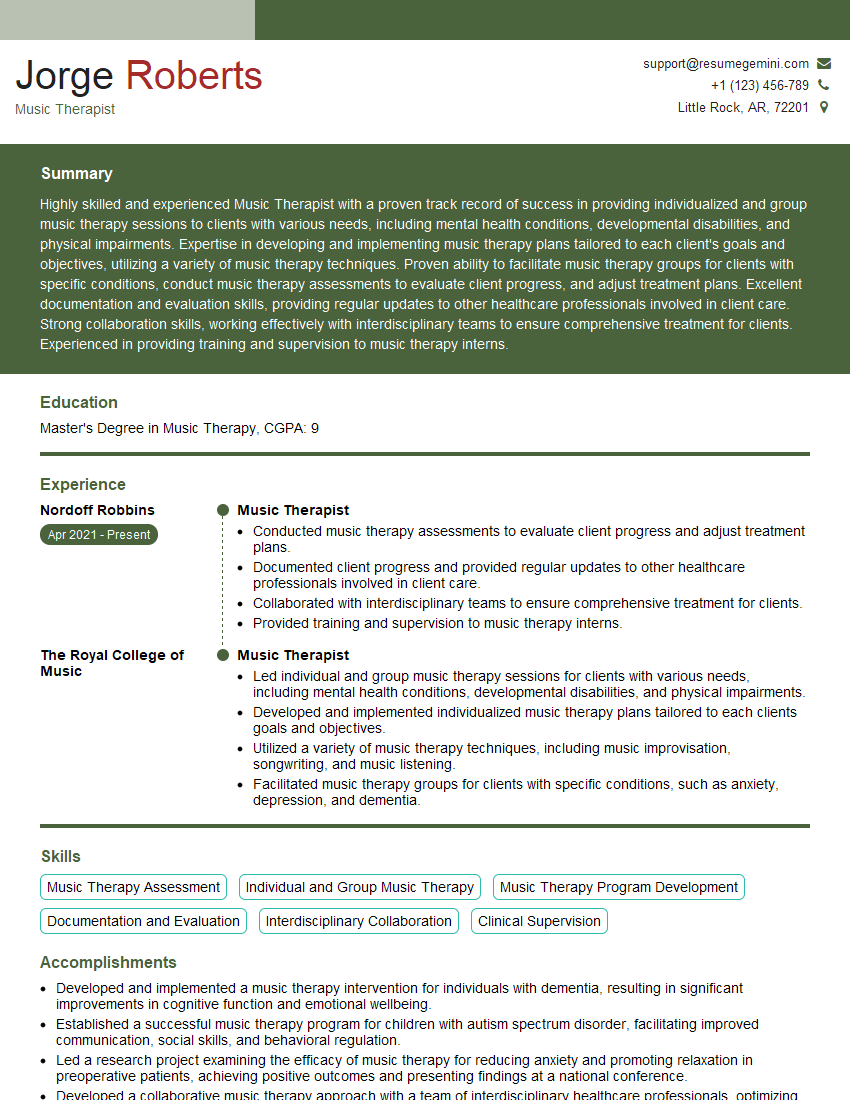
Mastering your experience with using music to support students with cognitive impairments is crucial for career advancement in this rewarding field. A strong resume is essential for showcasing your skills and experience to potential employers. Crafting an ATS-friendly resume significantly increases your chances of getting noticed by recruiters. We highly recommend using ResumeGemini to build a professional and effective resume that highlights your unique abilities and accomplishments. ResumeGemini provides helpful resources and examples of resumes tailored to showcasing experience with music therapy for students with cognitive impairments, ensuring your application stands out from the competition.
Explore more articles
Users Rating of Our Blogs
Share Your Experience
We value your feedback! Please rate our content and share your thoughts (optional).
What Readers Say About Our Blog
To the interviewgemini.com Webmaster.
Very helpful and content specific questions to help prepare me for my interview!
Thank you
To the interviewgemini.com Webmaster.
This was kind of a unique content I found around the specialized skills. Very helpful questions and good detailed answers.
Very Helpful blog, thank you Interviewgemini team.