Preparation is the key to success in any interview. In this post, we’ll explore crucial Experimental Brewing and Product Development interview questions and equip you with strategies to craft impactful answers. Whether you’re a beginner or a pro, these tips will elevate your preparation.
Questions Asked in Experimental Brewing and Product Development Interview
Q 1. Explain the process of designing and executing a pilot brewery experiment.
Designing and executing a pilot brewery experiment is a crucial step in experimental brewing and product development. It allows for controlled testing of new recipes or brewing techniques on a smaller scale before committing resources to a full-scale production. The process typically involves several key phases:
- Defining the Objective: Clearly state the goal. Are you testing a new hop variety? Optimizing mash temperature? Investigating a novel yeast strain? A well-defined objective guides the entire process.
- Recipe Formulation: Based on the objective, create a detailed recipe, including grain bill, hop schedule, yeast strain, and fermentation parameters. This might involve slight modifications to existing recipes or completely new formulations.
- Pilot Brewing: Brew the recipe on a smaller system, typically a 1- to 5-barrel system. Meticulous record-keeping is essential at this stage. Document all process parameters: mash temperature, pH, boil time, hop additions, fermentation temperature, etc.
- Sampling and Analysis: Collect samples at various stages of the brewing process (mash, wort, fermentation) for analysis. This could include measuring gravity, pH, and conducting sensory evaluations.
- Data Analysis and Interpretation: Analyze the collected data to determine the outcome of the experiment. Did the new hop variety achieve the desired aroma profile? Did optimizing mash temperature improve efficiency? This phase might involve statistical analysis if multiple variations are tested.
- Report and Documentation: Document the entire process, including the objective, methodology, results, and conclusions. This information serves as a valuable reference for future experiments and informs scaling up to full production.
Example: In a recent pilot brew, we experimented with adding lactose to a stout recipe to enhance its creamy mouthfeel. We brewed three batches with varying amounts of lactose, meticulously tracking the gravity and sensory characteristics of each. The results showed that a specific lactose addition level significantly improved mouthfeel without sacrificing the overall flavor profile.
Q 2. Describe your experience with different yeast strains and their impact on beer flavor.
Yeast selection is paramount in beer brewing, dramatically impacting flavor, aroma, and overall character. My experience encompasses a wide range of yeast strains, from classic ale yeasts like Saccharomyces cerevisiae (various strains, including English, American, and Belgian) to lager yeasts (Saccharomyces pastorianus) and wild yeasts (e.g., Brettanomyces, Lactobacillus).
- Ale Yeasts: Different strains produce vastly different esters (fruity notes) and phenols (spicy or clove-like notes). English ale yeasts tend to produce more malty and less fruity beers, while American ale yeasts can deliver more citrusy and fruity flavors. Belgian yeasts often contribute complex ester profiles with notes of banana, pear, and clove.
- Lager Yeasts: Known for their clean fermentation profiles, lager yeasts produce beers with crispness and malt-forward characteristics. Different strains can still impart subtle variations in flavor.
- Wild Yeasts: These introduce complexities, often resulting in sour, barnyard-like, or earthy notes. They require careful control and are best suited for specific styles like sours or lambics.
Impact on Flavor: For instance, using a Belgian yeast strain in a Belgian Tripel will contribute fruity esters and phenolic compounds, integral to the style. Conversely, using a clean-fermenting lager yeast in a Pilsner will result in a crisp, clean beer lacking the complexity of other strains.
Q 3. How do you approach troubleshooting a brewing process issue?
Troubleshooting brewing process issues requires a systematic approach. I generally follow these steps:
- Identify the Problem: Clearly define the issue. Is the beer off-flavor? Is there a problem with fermentation? Is the yield low?
- Gather Information: Review brewing logs, process parameters, and sensory notes. Talk to the team involved in the brewing process.
- Formulate Hypotheses: Based on the gathered information, generate potential explanations for the problem. For example, an off-flavor might be caused by infection, improper sanitation, or a flaw in the recipe.
- Test Hypotheses: Design and conduct experiments to confirm or refute the hypotheses. This might involve laboratory tests, sensory analysis, or repeating parts of the brewing process under controlled conditions.
- Implement Solutions: Based on the results, implement corrective actions to address the issue. This might involve adjusting the recipe, improving sanitation procedures, or replacing faulty equipment.
- Document Findings: Record the troubleshooting process, including the problem, hypotheses, testing methods, results, and solutions implemented. This provides valuable knowledge for future brewing operations.
Example: If a beer exhibits a sour taste, I would investigate potential causes like bacterial infection, improper pH control during mashing, or the use of wild yeast. Testing for bacteria, measuring mash pH, and reviewing the recipe would help pinpoint the root cause.
Q 4. What are your techniques for sensory evaluation of beer?
Sensory evaluation is crucial for quality control and product development in brewing. It involves systematically assessing the beer’s appearance, aroma, flavor, and mouthfeel using trained senses. My techniques involve:
- Appearance: Evaluating clarity, color, and head retention. Standardized color scales can be used for objective comparison.
- Aroma: Assessing the volatility of the beer’s aromas. Using a standardized approach, with a clean glass and controlled environment helps for consistency.
- Flavor: Identifying and assessing the beer’s taste characteristics, such as sweetness, bitterness, sourness, and the presence of esters, phenols, or other flavor compounds. A scoring sheet or flavor wheel can be used for detailed recording.
- Mouthfeel: Evaluating the texture and body of the beer, including carbonation, viscosity, and astringency. This involves evaluating how it feels in your mouth.
- Overall Impression: A holistic assessment of the beer’s balance, complexity, and drinkability.
These sensory evaluations are often conducted in a controlled environment to minimize distractions and ensure consistent results. Panel testing, using a group of trained sensory evaluators, can provide more objective and reliable assessments.
Q 5. Explain your understanding of hop utilization and aroma contribution.
Hop utilization and aroma contribution are intimately linked. Hop utilization refers to the efficiency with which hop bittering acids and aroma compounds are extracted during the brewing process. Aroma contribution refers to the specific aromas the hops impart to the beer.
Factors affecting hop utilization:
- Boiling Time: Longer boil times generally lead to higher bittering acid utilization but can reduce aroma compound retention.
- Hop Variety: Different hop varieties have different concentrations of alpha acids (bittering) and aroma compounds.
- Hop Addition Time: Bittering hops are usually added early in the boil, while aroma hops are typically added later or during dry-hopping. This optimizes the preservation of delicate aroma compounds.
- Wort Composition: Factors like wort pH and boil gravity can affect hop utilization.
Aroma Contribution: Aroma compounds are more volatile and are best retained by using late additions during the boil or dry-hopping, which is adding hops directly to the fermenter or finished beer. The choice of hop variety significantly impacts aroma. For example, Citra hops provide citrusy notes, while Cascade hops offer floral and slightly spicy aromas.
Example: To achieve a strong, citrusy aroma in an IPA, I would choose a high-alpha-acid hop for bittering, added early in the boil, and then a late addition of Citra hops to maximize the desired aroma profile. Dry-hopping could further intensify those aromas.
Q 6. How do you maintain quality control throughout the brewing process?
Maintaining quality control throughout the brewing process is critical for consistent product quality. This involves a multi-faceted approach:
- Ingredient Quality Control: Regularly testing incoming ingredients (grains, hops, yeast) for quality and consistency using appropriate methods. This includes ensuring freshness and freedom from contaminants.
- Process Monitoring: Meticulously documenting and tracking all process parameters (temperatures, times, pH levels) throughout the brewing process. This ensures repeatability and identifies deviations from standards.
- Sanitation: Rigorous sanitation protocols are essential to prevent microbial contamination. This involves cleaning and sanitizing all equipment and surfaces that come into contact with the beer.
- Sensory Evaluation: Regular sensory assessments of the beer at various stages to detect potential off-flavors or quality issues early on. This requires trained sensory panelists.
- Laboratory Testing: Employing laboratory techniques to ensure consistent gravity, pH, and other critical parameters. This involves using calibrated instruments and following standard procedures.
- Statistical Process Control (SPC): Implementing SPC techniques to monitor process variability and identify potential problems before they impact product quality. This will allow for early adjustments to be made.
By combining these techniques, a robust quality control system can be established which ensures that every batch of beer meets the required quality standards.
Q 7. Describe your experience with various brewing techniques (e.g., mashing, lautering).
My experience encompasses various brewing techniques. Here’s a summary:
- Mashing: This is the process of converting starches in grains to fermentable sugars. I’m proficient in various mashing techniques: infusion mashing (single temperature), decoction mashing (multiple temperature steps), and step mashing (a combination of infusion and decoction). Each technique impacts the final beer’s flavor, body, and color. I can adapt mash techniques to achieve specific results, like enhancing fermentability or producing a malt-forward profile.
- Lautering: This is the separation of the sweet wort from the spent grain. I’m experienced with both batch lautering (a single batch of wort) and continuous lautering (a continuous flow of wort). Efficient lautering is crucial for maximizing wort yield and extracting maximum sugars. I understand the importance of proper bed formation and the avoidance of channeling.
- Boiling: I’m skilled in optimizing boil times and hop additions to achieve desired bitterness and aroma profiles. I understand the impact of boil gravity on extraction efficiency.
- Fermentation: I’m familiar with various fermentation techniques, including open fermentation, closed fermentation, and temperature-controlled fermentation. I understand the effects of temperature, oxygen levels, and yeast strain selection on the fermentation process and the final beer characteristics.
Each of these techniques requires a deep understanding of chemistry, microbiology, and thermodynamics. It’s essential to adapt these techniques based on the specific beer style and the desired characteristics.
Q 8. What methods do you use to optimize beer recipes for scale-up?
Scaling up a beer recipe requires meticulous attention to detail to maintain consistency in flavor and quality. It’s not simply multiplying ingredient quantities; it’s about understanding how different aspects of the brewing process change with increased volume. My approach involves a multi-stage process.
- Pilot Brewing: I always start with pilot batches, usually on a 5-gallon or 10-gallon scale. This allows me to fine-tune the recipe and assess its potential before committing to larger production runs. This stage helps identify potential problems early.
- Ingredient Scaling: Simply multiplying ingredient quantities can lead to inconsistencies. For example, the ratio of grain to water might need adjustment for optimal mash efficiency at a larger scale. I use spreadsheets and brewing software to precisely calculate ingredient amounts while considering factors like mash thickness, boil-off rate, and target gravity.
- Process Optimization: Scaling up often necessitates modifying the brewing process. For instance, the boil time might need to be adjusted to maintain consistent bitterness and hop utilization. Larger fermentation vessels might require longer fermentation times or different temperature profiles. I carefully monitor and adjust variables like wort density, pH, and oxygen levels to ensure consistency.
- Sensory Evaluation at Each Stage: Throughout the scaling process, I conduct rigorous sensory evaluations of the pilot batch and subsequent scale-ups to identify any deviations from the desired flavor profile. These evaluations involve multiple tasters and standardized tasting sheets.
For example, I once scaled up a Belgian Tripel recipe. The pilot batch had a beautiful, complex fruity ester profile. However, during the scale-up to a 100-gallon batch, the fermentation became sluggish, resulting in a less-pronounced ester profile. We identified the issue as insufficient oxygenation during the wort chilling process and adjusted our aeration technique to correct the problem.
Q 9. How do you evaluate the sensory characteristics of a beer sample?
Sensory evaluation is crucial for assessing the quality and overall appeal of a beer. It involves a structured approach to objectively analyze the beer’s characteristics. We typically use a standardized tasting protocol that covers the following aspects:
- Appearance: Color, clarity, head retention, and head character (e.g., creamy, foamy).
- Aroma: Aromas are assessed both before and after swirling the beer. We document specific aroma notes, such as fruity esters, spicy phenols, or hop characteristics (e.g., citrus, pine, floral).
- Flavor: The taste is analyzed for maltiness, bitterness, sweetness, acidity, and hop character. We also look for other flavor components, like fruitiness, spice, or roasted notes.
- Mouthfeel: This refers to the tactile sensations in the mouth, including body (light, medium, full), carbonation, and astringency.
- Overall Impression: A holistic assessment summarizing the beer’s balance, harmony, and drinkability.
We employ trained sensory panelists who are familiar with beer styles and evaluation techniques. They use standardized scorecards to record their observations, facilitating quantitative and qualitative analysis. This data is then analyzed to identify any potential issues or areas for improvement.
Q 10. Describe your experience with different fermentation vessels and their effects on beer.
My experience encompasses a range of fermentation vessels, each with its unique impact on the beer’s final characteristics.
- Stainless Steel Tanks: These are ubiquitous in modern brewing, providing excellent sanitation and temperature control. They offer consistent fermentation conditions and are ideal for larger-scale production. However, they can sometimes lack the nuance that some brewers prefer.
- Wooden Tanks (Foudres): Wooden vessels, particularly oak, impart unique flavors and aromas to the beer, contributing complexity and subtle notes. The porous nature of wood can lead to variations in oxygen uptake, influencing the fermentation and aging process. They are typically used for specialty beers and require significant expertise for proper sanitation.
- Conical Fermenters: These are becoming increasingly popular, allowing for easy yeast harvesting and trub removal. Their conical shape promotes better yeast settling, simplifying the racking process.
- Small-scale vessels (glass carboys, plastic buckets): These are useful for homebrewing and pilot batches but aren’t suitable for large-scale production due to potential limitations in temperature control and sanitation.
For example, I’ve observed that fermenting a sour beer in oak foudres yielded a more robust, complex sourness compared to stainless steel, likely due to the interaction between the beer, the wood, and resident bacteria. The choice of fermentation vessel is a critical decision, influencing both the technical aspects of brewing and the final sensory profile of the beer.
Q 11. How do you measure and control fermentation temperature?
Precise temperature control is paramount during fermentation, significantly influencing yeast activity, flavor development, and overall beer quality. My approach uses a combination of techniques:
- Temperature-Controlled Fermentation Chambers: For large-scale production, we utilize temperature-controlled rooms or chambers to maintain consistent temperatures throughout the fermentation process. These chambers often feature refrigeration and heating systems to precisely regulate the temperature.
- Glycol Jackets or Chiller Systems: Fermentation tanks are often equipped with glycol jackets or are connected to chilling systems. These circulate cooled glycol through the jacket, allowing for precise temperature control and preventing excessive temperature fluctuations. We can program specific temperature profiles to match the needs of different yeast strains and beer styles.
- Temperature Sensors and Monitoring Systems: We employ digital thermometers and data loggers to continuously monitor the temperature inside the fermentation tanks. This data is recorded to track temperature changes over time, ensuring consistent fermentation conditions and documenting the process for quality control purposes.
- Insulation: Proper insulation of fermentation tanks minimizes temperature variations and reduces energy consumption. This is particularly important in environments with fluctuating ambient temperatures.
In one instance, we had to fine-tune the temperature profile for a lager fermentation, adjusting the temperature gradually over time to optimize the production of desirable lager characteristics while avoiding off-flavors.
Q 12. Explain your understanding of beer stability and shelf life.
Beer stability and shelf life are critical for maintaining product quality and preventing spoilage. Several factors influence these aspects:
- Yeast Management: Complete fermentation and proper yeast removal are crucial. Residual yeast can produce unwanted byproducts during storage, impacting flavor and clarity.
- Oxygen Control: Minimizing oxygen exposure during brewing, packaging, and storage is vital. Oxygen can cause oxidation, leading to staling, off-flavors, and reduced shelf life.
- Pasteurization: Heat treatment inactivates microorganisms, significantly extending shelf life. However, pasteurization can sometimes affect the beer’s flavor and aroma.
- Packaging: The type of packaging influences beer stability. Brown bottles offer better protection against light-struck flavors than clear bottles. Proper sealing is also essential for maintaining product quality.
- Cold Storage: Maintaining consistent low temperatures during storage slows down enzymatic reactions and microbial growth, extending shelf life.
- Addition of Stabilizers: In some cases, we add stabilizers (e.g., PVPP) to improve beer clarity and stability by binding proteins that might cause haze or cloudiness.
For example, we experienced a problem with a specific batch of IPA exhibiting haze after a few weeks of storage. We analyzed the beer and found excessive protein levels. By implementing a better filtration process and adding a clarifying agent (PVPP), we successfully solved this stability issue.
Q 13. How do you approach the development of a new beer style or flavor profile?
Developing a new beer style or flavor profile is a creative and iterative process combining art and science. My approach involves the following steps:
- Concept and Research: I start by defining the desired style or flavor profile. This often involves researching existing styles, analyzing successful examples, and identifying any gaps in the market. Inspiration can come from various sources, such as culinary trends or historical brewing practices.
- Ingredient Selection: The choice of ingredients is fundamental. I consider the type of malt, hops, yeast, and other adjuncts to achieve the desired flavor characteristics. I might experiment with different hop varieties, malt profiles, or unusual adjuncts to explore unique flavor combinations.
- Recipe Formulation: I develop a preliminary recipe based on my research and experience. This involves calculating the correct proportions of ingredients to balance the desired flavor elements.
- Experimental Brewing: I brew small-scale batches to test the recipe and fine-tune the parameters. This involves modifying the mash, boil, and fermentation procedures to optimize the final product. Sensory evaluation is critical at this stage.
- Iterative Refinement: Based on the sensory evaluation results, I iterate the recipe, adjusting the ingredients, processes, or parameters until I achieve the desired flavor profile and quality. This often involves multiple rounds of brewing and refinement.
- Scale-up: Once the recipe is refined, I scale it up for larger production.
For example, when creating a new sour ale, I started by researching different types of lactic acid bacteria and experimented with different temperature and time profiles during fermentation to achieve the desired tartness and complexity. The process involved multiple rounds of small-batch brewing and rigorous sensory evaluations before we achieved the perfect balance of flavors.
Q 14. What is your experience with using statistical analysis in brewing?
Statistical analysis plays a significant role in optimizing brewing processes and improving product quality. It allows us to systematically analyze data, identify patterns, and make data-driven decisions.
- Design of Experiments (DOE): DOE methodologies help identify the most critical process parameters affecting beer quality. By systematically varying parameters like mash temperature, hop additions, or fermentation temperature, we can determine their impact on sensory attributes like bitterness, aroma, or mouthfeel. This approach is more efficient than a trial-and-error approach.
- Data Analysis: We collect data throughout the brewing process (e.g., pH, gravity readings, fermentation temperature). Statistical software packages (like R or Minitab) are used to analyze this data, identify trends, and draw meaningful conclusions.
- Sensory Data Analysis: Statistical methods, like analysis of variance (ANOVA), are applied to sensory evaluation data to determine the significance of differences between treatments or beers. This helps us objectively assess the impact of process changes on the beer’s sensory characteristics.
- Predictive Modeling: By analyzing historical data, we can build predictive models to forecast quality parameters based on input variables. This helps optimize the brewing process and reduce variability.
For example, using DOE, I once identified the optimal mash temperature and hop isomerization time to maximize bitterness and hop aroma in a particular IPA recipe. This approach reduced experimental brewing time and resulted in a more consistent and high-quality product.
Q 15. How do you manage project timelines and resources in a product development setting?
Managing project timelines and resources in product development, especially in experimental brewing, requires a structured approach. I utilize a combination of Agile methodologies and Gantt charts. First, I break down the project into smaller, manageable tasks, assigning realistic timeframes to each. This involves considering all aspects – from grain procurement and fermentation to packaging and quality control. A Gantt chart visually represents these tasks, their dependencies, and deadlines. Resource allocation is crucial; I create a resource matrix, considering personnel, equipment availability (fermenters, sensory analysis equipment, etc.), and ingredient supply chain. Regular progress meetings and contingency planning are essential to address delays or resource shortages. For example, if a specific hop variety is unavailable, I have backup options already identified, ensuring minimal disruption. This proactive approach allows for flexibility and efficient resource management, minimizing project slippage.
Career Expert Tips:
- Ace those interviews! Prepare effectively by reviewing the Top 50 Most Common Interview Questions on ResumeGemini.
- Navigate your job search with confidence! Explore a wide range of Career Tips on ResumeGemini. Learn about common challenges and recommendations to overcome them.
- Craft the perfect resume! Master the Art of Resume Writing with ResumeGemini’s guide. Showcase your unique qualifications and achievements effectively.
- Don’t miss out on holiday savings! Build your dream resume with ResumeGemini’s ATS optimized templates.
Q 16. Describe your experience with working in a collaborative team environment.
My experience in collaborative team environments has been extensive. In past roles, I’ve worked closely with brewers, sensory scientists, marketers, and packaging engineers. Effective communication is paramount. I actively foster open dialogue through regular team meetings, leveraging tools like shared project management software (e.g., Asana, Trello) for task assignment and progress tracking. I believe in a transparent process where everyone understands their roles and responsibilities. Constructive feedback is highly valued, creating an environment where team members feel empowered to share ideas and contribute to problem-solving. For instance, during the development of a new hazy IPA, collaboration with the sensory panel led to adjustments in the hop profile, resulting in a more desirable aroma and mouthfeel. This collaborative process ensured a product aligned with both the technical feasibility and market demand.
Q 17. How do you handle unexpected challenges or setbacks in a brewing process?
Unexpected challenges are inevitable in brewing. My approach emphasizes systematic troubleshooting. When faced with a setback, such as an off-flavor in a batch, I follow a structured process. First, I meticulously document the entire brewing process, analyzing each step for potential deviations from the recipe or established procedures. Then, I use sensory analysis tools and laboratory techniques (e.g., microbiological testing) to pinpoint the problem’s source. Once identified, I research potential solutions, drawing upon my knowledge base and peer-reviewed literature. For example, if an infection is suspected, I would review sanitation protocols and potentially adjust them. Finally, I implement the solution and carefully monitor the results to validate its effectiveness. This methodical, data-driven approach minimizes the impact of setbacks and ensures continuous improvement in our processes.
Q 18. Explain your understanding of the different stages of beer production.
Beer production unfolds in several distinct stages: 1. Milling: Crushing the malted barley to release the starches. 2. Mashing: Converting starches into fermentable sugars through enzymatic reactions. 3. Lautering: Separating the sugary wort from the spent grain. 4. Boiling: Sterilizing the wort, isomerizing hops for bitterness, and concentrating flavors. 5. Fermentation: Converting sugars into alcohol and carbon dioxide by yeast. 6. Maturation/Conditioning: Allowing the beer to clarify and develop flavors. 7. Packaging: Filling and sealing the beer into containers. 8. Quality Control: Testing and ensuring the beer meets the desired quality standards throughout the process.
Q 19. Describe your experience with various water chemistry profiles and their influence on beer.
Water chemistry significantly impacts beer flavor and quality. Different water profiles lend themselves to specific beer styles. For example, high sulfate waters are ideal for creating crisp, bitter beers like pale ales, while high carbonate waters are better suited for darker, maltier beers like stouts. My experience encompasses adjusting water profiles through treatments like adding gypsum (calcium sulfate) for sulfate enhancement or calcium chloride for balancing bitterness. I use water analysis reports and brewing software to calculate adjustments needed to achieve the desired water chemistry for each beer style. I understand the influence of various ions (calcium, magnesium, sulfate, chloride, bicarbonate) on pH, yeast health, and flavor development, tailoring the water accordingly to ensure the beer meets the intended specifications.
Q 20. What is your familiarity with different brewing software and data management systems?
I am proficient with several brewing software packages, including BeerSmith, Brewtarget, and ProMash. These programs aid in recipe formulation, scaling, and process simulation. They also facilitate precise calculations related to water chemistry, fermentation temperature control, and ingredient usage. Beyond recipe creation, I’m experienced with data management systems for tracking experimental brews. This includes using spreadsheets (Excel, Google Sheets) for detailed recording of brewing parameters, sensory evaluation scores, and analytical data (e.g., gravity readings, pH, color). This data is crucial for analyzing results, identifying trends, and making informed decisions for future brews. Furthermore, I’m familiar with database software (e.g., Access, SQL) which is vital for managing large datasets and conducting complex analyses over time.
Q 21. How do you document and interpret the results of experimental brews?
Documenting and interpreting experimental brew results is fundamental to product development. I maintain detailed records, including brewing parameters (e.g., temperature profiles, fermentation times, hop additions), analytical data (e.g., gravity readings, pH, color), and sensory evaluation scores. These records are meticulously documented using a combination of laboratory notebooks and digital databases. Statistical analysis is employed to interpret the data, identifying significant differences and trends between different experimental brews. For instance, comparing two versions of a recipe with varied hop additions, a t-test could assess if the difference in bitterness is statistically significant. This data-driven approach allows for objective analysis, guiding future brewing decisions and fostering the development of improved recipes. Graphical representation of results (charts, graphs) aids in easy visualization and communication of findings to the team.
Q 22. Explain your approach to managing costs and budgets in a brewing setting.
Managing costs in brewing requires a multifaceted approach, focusing on both raw material procurement and operational efficiency. It begins with meticulous recipe costing. I use spreadsheet software to meticulously track the cost of each ingredient – malt, hops, yeast, and adjuncts – per batch, factoring in seasonal price fluctuations and bulk purchasing discounts. This allows me to accurately project brewing costs and adjust recipes to optimize profitability without sacrificing quality.
Beyond raw materials, operational efficiency is paramount. This includes careful monitoring of energy consumption (water heating, cooling, etc.), minimizing waste (spent grain, cleaning solutions), and optimizing brewing processes to reduce production time. For example, I’ve implemented a system for tracking cleaning solution usage, which led to a 15% reduction in chemical costs within six months. Regular equipment maintenance is also crucial to prevent costly breakdowns and optimize output. Ultimately, budgeting involves creating a detailed financial plan, projecting revenue based on sales forecasts, and consistently monitoring actual spending against the budget to identify and address variances.
For instance, during the development of a new flagship IPA, I initially underestimated the cost of a specific high-alpha hop variety. By carefully reviewing the ingredient list and exploring alternative hop blends, we managed to keep the final product cost within the target range without impacting the beer’s desired aroma and bitterness profile.
Q 23. How do you ensure the safety and sanitation of brewing equipment and processes?
Sanitation is paramount in brewing, as any contamination can ruin a batch and potentially compromise consumer safety. My approach to ensuring safety and sanitation follows a strict protocol encompassing all stages from ingredient handling to packaging. This starts with thorough cleaning and sanitization of all equipment – from mash tuns and fermenters to kegs and bottling lines – using appropriate chemicals at the correct concentrations. I employ a combination of cleaning-in-place (CIP) systems and manual cleaning methods for different parts of the brewery. Regular testing of our sanitation protocols using ATP testing kits ensures effectiveness and prevents hidden microbial contamination.
Beyond equipment, strict hygiene practices are implemented throughout the brewing process. Brewers wear clean clothing and gloves, and the environment is maintained to minimize dust and airborne particles. Water quality is consistently monitored and treated to ensure it’s free from contaminants. Documentation is key, so we maintain detailed records of all cleaning and sanitation procedures, including chemical usage, temperatures, and test results. This traceability helps us identify and address any potential sanitation issues promptly.
For example, after experiencing a minor yeast contamination incident, we implemented a more rigorous CIP process with increased dwell times and adjusted chemical concentrations, leading to a significant improvement in batch consistency and safety.
Q 24. Describe your experience with different packaging options for beer and their impact on product quality.
Packaging significantly impacts beer quality and shelf life. I have extensive experience with various options, each with its advantages and disadvantages. Bottles offer a traditional aesthetic but can be susceptible to lightstrike (degradation of flavor and aroma caused by light exposure) if not properly protected with amber or green glass. Cans, on the other hand, are superior at light protection and are lighter, more economical to ship, and often preferred by consumers for their convenience. However, improper sealing can lead to oxygen ingress, affecting flavor.
Kegs are ideal for draught beer, providing consistent quality and minimizing oxidation. However, they require specialized handling and cleaning procedures. Recently, I’ve been exploring sustainable packaging alternatives like recyclable aluminum cans and bottles made from recycled glass. The choice of packaging always depends on factors like target market, distribution method, beer style (e.g., light-sensitive beers need amber bottles or cans), and budget. In each case, rigorous quality checks are performed to ensure the chosen packaging maintains the integrity of the beer during storage and transit.
For instance, during the launch of our seasonal sour ale, we decided on a dark brown bottle due to its aesthetic appeal and protection against light exposure, which preserved the beer’s delicate, complex flavors for an extended period.
Q 25. What are your methods for ensuring consistent beer quality across multiple batches?
Maintaining consistent beer quality across multiple batches hinges on meticulous process control and documentation. This begins with precise recipe adherence, using standardized ingredient measurements and consistent brewing techniques. I use a brewery management system (BMS) to track all aspects of the brewing process, from ingredient additions to fermentation temperatures and timings. This allows us to replicate successful batches reliably.
Regular equipment calibration and maintenance are critical. We calibrate instruments like thermometers, pH meters, and refractometers to ensure accuracy in measurements. Proper cleaning and sanitation procedures prevent contamination and ensure consistent fermentation. Quality control (QC) checks are performed at various stages of production, including sensory evaluations, chemical analysis (e.g., alcohol content, bitterness), and microbiological testing. Data analysis from the BMS and QC tests enables us to identify and address any deviations promptly, preventing quality issues from escalating. This feedback loop is vital in maintaining long-term consistency.
For example, we noticed a slight variation in hop aroma across batches of our pale ale. By analyzing the BMS data and QC reports, we pinpointed a minor discrepancy in hop addition timing. Adjusting this timing resolved the inconsistency, resulting in more uniform aroma profiles across batches.
Q 26. How do you maintain up-to-date knowledge of industry trends and innovations?
Staying current in the brewing industry requires continuous learning and engagement with industry trends. I achieve this through a multi-pronged approach. I regularly attend industry conferences and trade shows, networking with fellow brewers and suppliers to learn about new technologies, ingredients, and best practices. This provides a fantastic platform to witness live demonstrations and hear presentations on topics such as advanced fermentation techniques or sustainable brewing practices. Moreover, I actively subscribe to industry publications, journals, and online resources, keeping abreast of research findings and emerging trends.
I actively participate in online forums and communities to interact with other brewers, sharing ideas and discussing challenges. This collaborative environment is invaluable for gaining different perspectives and troubleshooting issues. Further, I regularly engage with suppliers and distributors to stay informed about new products and technologies, from innovative yeast strains to advanced automation systems. Continuously seeking feedback from consumers helps us understand their evolving preferences and allows us to adjust our product portfolio accordingly. This continuous learning cycle helps ensure that our brewing operations remain cutting-edge and our products are innovative and appealing.
Q 27. Describe your experience with regulatory compliance in the brewing industry.
Regulatory compliance is a critical aspect of operating a brewery. I have extensive experience navigating the complex legal landscape of the brewing industry, ensuring adherence to all relevant federal, state, and local regulations. This involves meticulous record-keeping, including maintaining accurate inventory records, tracking production details, and complying with labeling requirements. We adhere to all food safety regulations, implementing rigorous sanitation and quality control measures to meet or exceed regulatory standards. This includes regular testing to ensure our beer meets the specifications for alcohol content, pH, and other critical parameters.
Furthermore, we are compliant with all environmental regulations related to waste disposal and water usage. We work closely with regulatory agencies to ensure we have the necessary permits and licenses and promptly address any compliance issues that arise. We also stay updated on changes in regulations and actively seek legal counsel when necessary to ensure our operations remain compliant. Proactive compliance helps to avoid costly penalties and ensures the long-term sustainability of our business.
For instance, when new labeling regulations were implemented, we proactively updated our labeling processes and consulted with legal counsel to ensure compliance before the deadline, avoiding any potential disruptions or penalties.
Key Topics to Learn for Experimental Brewing and Product Development Interview
- Malt and Grain Selection: Understanding different malt types, their impact on beer characteristics (color, flavor, body), and the practical application of grain bills in experimental brewing.
- Hop Utilization and Aroma Development: Exploring various hop varieties, bittering, aroma, and their contribution to beer flavor profiles. Practical application includes understanding alpha and beta acid content and their impact on brewing process choices.
- Yeast Selection and Fermentation Control: Knowledge of different yeast strains, their fermentation characteristics (attenuation, flocculation), and their influence on beer flavor and style. Practical application includes troubleshooting fermentation issues and optimizing fermentation conditions.
- Sensory Evaluation and Quality Control: Mastering techniques for evaluating beer sensory attributes (appearance, aroma, flavor, mouthfeel). Practical application includes using standardized scoring systems and identifying off-flavors.
- Process Optimization and Scale-up: Understanding the principles of scaling up brewing processes from pilot to production scale, considering factors like efficiency, consistency, and cost-effectiveness. Practical application includes troubleshooting issues related to scaling and maintaining quality across different scales.
- Innovation and Trend Analysis: Staying current with emerging trends in the brewing industry and applying creative problem-solving to develop new and exciting products.
- Brewhouse Technology and Equipment: A foundational understanding of various brewing equipment, their functionalities, and troubleshooting potential issues.
- Food Safety and Sanitation: Comprehensive knowledge of food safety regulations and best practices for maintaining a sanitary brewing environment.
- Data Analysis and Interpretation: Using data collected during the brewing process to optimize efficiency and improve product quality.
Next Steps
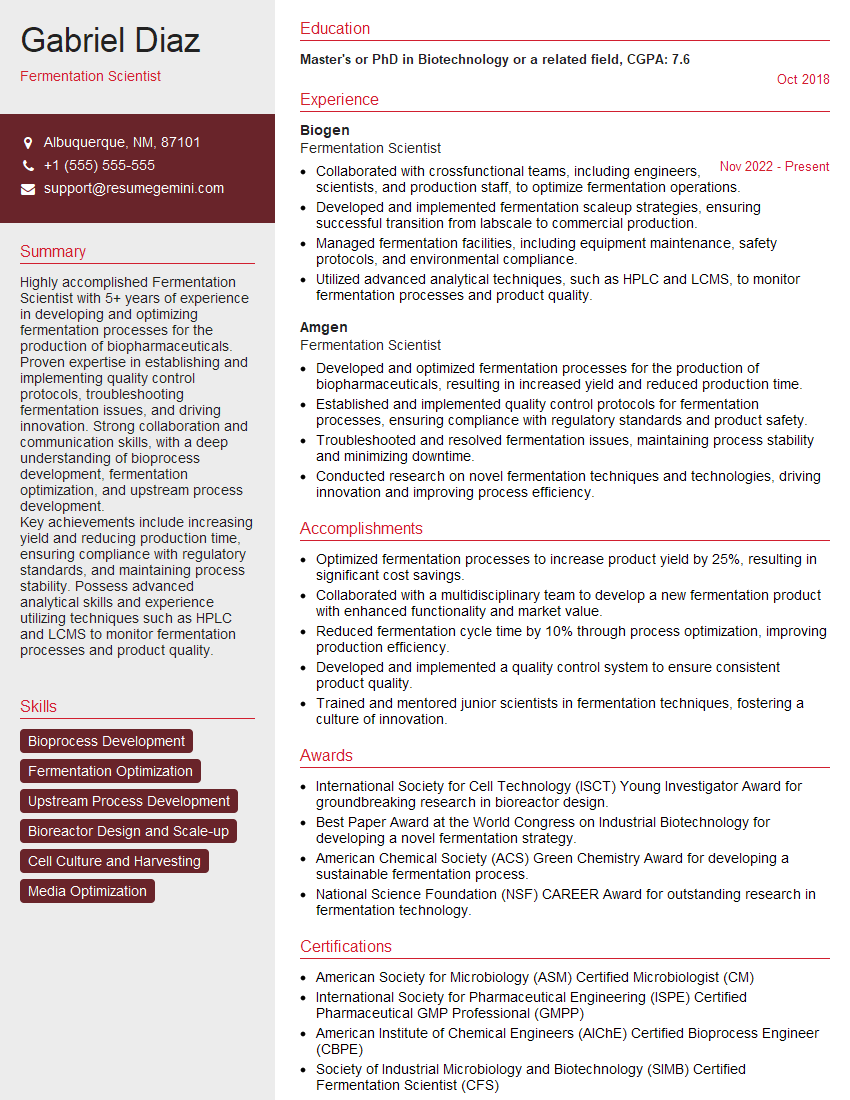
Mastering Experimental Brewing and Product Development opens doors to exciting career opportunities within the craft brewing industry and beyond. A strong understanding of these areas demonstrates your technical expertise and innovative thinking, making you a highly desirable candidate. To maximize your job prospects, focus on creating an ATS-friendly resume that effectively showcases your skills and experience. ResumeGemini is a trusted resource to help you build a professional and impactful resume that stands out from the competition. Examples of resumes tailored to Experimental Brewing and Product Development are available to guide your resume creation process.
Explore more articles
Users Rating of Our Blogs
Share Your Experience
We value your feedback! Please rate our content and share your thoughts (optional).
What Readers Say About Our Blog
To the interviewgemini.com Webmaster.
Very helpful and content specific questions to help prepare me for my interview!
Thank you
To the interviewgemini.com Webmaster.
This was kind of a unique content I found around the specialized skills. Very helpful questions and good detailed answers.
Very Helpful blog, thank you Interviewgemini team.