Are you ready to stand out in your next interview? Understanding and preparing for Family Interviewing interview questions is a game-changer. In this blog, we’ve compiled key questions and expert advice to help you showcase your skills with confidence and precision. Let’s get started on your journey to acing the interview.
Questions Asked in Family Interviewing Interview
Q 1. Describe your approach to building rapport with families during an interview.
Building rapport is crucial for successful family interviews. It’s about creating a safe and trusting environment where family members feel comfortable sharing their experiences and perspectives. My approach involves several key steps:
- Active Listening: I pay close attention to both verbal and nonverbal cues, showing genuine interest in what each family member has to say. This includes maintaining eye contact, nodding, and using verbal affirmations like “I understand” or “That’s helpful.”
- Empathy and Validation: I strive to understand each family member’s unique perspective, acknowledging their feelings and experiences without judgment. This might involve saying something like, “That sounds incredibly challenging,” or “I can see why you feel that way.”
- Respectful Communication: I use respectful language, avoiding jargon or technical terms that might be confusing. I make sure to address each family member by their preferred name and use inclusive language.
- Setting the Tone: From the beginning, I aim to create a relaxed and informal atmosphere. This might involve starting with some light conversation or offering refreshments before diving into the interview questions.
- Flexibility: Family dynamics are complex. I’m prepared to adapt my approach depending on the family’s comfort level and communication styles. Sometimes, a more structured interview is appropriate, while other times a more conversational approach works better.
For example, in one interview with a family dealing with a child’s illness, I began by acknowledging the stress they were under, offering them tissues, and then gently transitioning to questions about their coping mechanisms.
Q 2. Explain your method for identifying the key informant in a family interview.
Identifying the key informant is not about picking a “favorite” but rather identifying the individual most likely to provide comprehensive and accurate information about the family’s situation. This person often possesses strong communication skills and a deep understanding of the family’s history, relationships, and current challenges. My method involves:
- Initial Observation: During the initial stages of the interview, I observe family dynamics, paying attention to who speaks most frequently, who seems most knowledgeable, and who holds apparent influence within the group.
- Open-ended Questions: I use open-ended questions to encourage family members to speak freely about their experiences. For example, “Can you tell me a bit about your family’s history?” or “What are some of the biggest challenges you’re facing as a family?”
- Nonverbal Cues: I pay close attention to nonverbal cues, such as eye contact, body language, and facial expressions, to gain insights into who feels most comfortable and confident in sharing information.
- Confirmation: After identifying a potential key informant, I don’t explicitly label them as such, but rather, I subtly steer the conversation toward them when asking specific, clarifying questions. This is often done naturally as the interview progresses.
It’s important to note that the key informant may change throughout the interview depending on the topic discussed. Sometimes multiple key informants emerge, which is completely fine. The goal is to gather comprehensive information from various perspectives.
Q 3. How do you handle conflicting information from different family members?
Conflicting information is common in family interviews, reflecting the complexity of family relationships and individual perspectives. My approach focuses on exploring these differences rather than dismissing them:
- Neutral Facilitation: I create a space where family members can express their different perspectives without interruption or judgment. I might say something like, “I hear two different accounts of this event. Could each of you share your experience again, so I can understand it fully?”
- Clarifying Questions: I ask clarifying questions to understand the context of each family member’s account. This helps to identify potential misunderstandings or differing interpretations of events.
- Summarizing and Paraphrasing: I summarize and paraphrase what each family member has said to ensure that I understand accurately and that they feel heard. This also helps to identify inconsistencies.
- Focus on Underlying Themes: Even with conflicting information, I look for underlying themes or patterns that emerge from the different accounts. These themes can often provide a richer understanding of the family’s situation.
- Documentation: I meticulously document all perspectives, acknowledging differences in accounts. I don’t try to impose a resolution; rather, I aim for a balanced and nuanced representation of the family’s experience.
For instance, if siblings give differing accounts of a past event, I would note both versions in my notes, focusing on the emotions each sibling expressed and the potential reasons for the discrepancies. This approach avoids bias and reflects the complexity of family narratives.
Q 4. What strategies do you use to ensure confidentiality during family interviews?
Confidentiality is paramount in family interviewing. I adhere to strict ethical guidelines to protect the privacy of all family members. My strategies include:
- Informed Consent: Before starting the interview, I obtain informed consent from all participants, clearly explaining the purpose of the interview, how the information will be used, and the limitations of confidentiality (e.g., mandatory reporting requirements for child abuse or neglect).
- Anonymization: I use pseudonyms or identifiers to protect the family’s identity in any written reports or presentations. I avoid using identifying information like addresses or specific dates unless absolutely necessary and with explicit consent.
- Secure Data Storage: All interview data is stored securely, either electronically with password protection and encryption or physically in locked cabinets. I follow all relevant data protection regulations and institutional policies.
- Limited Access: Access to interview transcripts and data is limited to authorized individuals only. I clearly outline who will have access and for what purpose.
- Transparency: I am transparent with families about the limitations of confidentiality. For example, I would explain that if they reveal information about child abuse or neglect, I’m legally obligated to report it.
By prioritizing these measures, I aim to build trust and ensure the family feels safe and respected.
Q 5. How do you adapt your interviewing style to accommodate different family dynamics?
Adapting my interviewing style to different family dynamics is essential for effective family interviewing. My approach involves:
- Observing Communication Styles: Before asking direct questions, I observe how family members interact with each other. Are they formal or informal? Are they direct or indirect in their communication? Are there power imbalances immediately apparent?
- Flexibility in Questioning: I adjust my questioning style to match the family’s communication patterns. With more formal families, I might adopt a more structured approach. With less formal families, a more conversational style is appropriate.
- Considering Cultural Factors: I’m aware of how cultural differences influence communication styles and family dynamics. I avoid imposing my own cultural framework and instead try to understand the family’s perspective within its own cultural context.
- Involving All Members: I ensure that all family members have opportunities to participate, even if some are more hesitant or less vocal than others. I might use techniques like drawing or storytelling to engage those who struggle with verbal communication.
- Building on Strengths: I identify and leverage the family’s strengths and resources. For example, if one family member shows strong leadership skills, I might involve them more in guiding the conversation.
For instance, with a family where the children were reluctant to speak directly, I employed a storytelling technique, prompting them to draw pictures to illustrate their daily routines, which sparked conversation and helped me understand their experiences more effectively.
Q 6. Explain how you address power imbalances within a family interview.
Addressing power imbalances is critical for conducting ethical and effective family interviews. Power imbalances can manifest in various forms, such as age, gender, cultural status, or family role. My strategies include:
- Creating a Safe Space: I prioritize creating a safe and inclusive environment where all members feel comfortable expressing their views, regardless of their perceived status within the family.
- Equal Opportunity to Speak: I actively work to ensure that all family members have equal opportunity to share their experiences. This may involve consciously addressing less vocal members and limiting the dominance of more assertive members.
- Neutral Language: I use neutral and non-judgmental language, avoiding terms or phrases that might reinforce existing power dynamics. For example, I avoid labeling family members with pejorative terms or minimizing their experiences.
- Individual Interviews: In cases of significant power imbalances, separate interviews with individual family members might be necessary to ensure that everyone can speak freely without the influence of other members.
- Empowerment Techniques: I might employ techniques that help empower less dominant members, such as explicitly acknowledging their contributions and validating their feelings.
For example, when interviewing a family where the father consistently dominated the conversation, I would gently redirect the discussion to the mother and children, making sure their voices were heard and their perspectives valued.
Q 7. Describe your process for documenting family interviews accurately and ethically.
Accurate and ethical documentation is fundamental to responsible family interviewing. My process involves:
- Detailed Note-Taking: During the interview, I take comprehensive notes, including both verbal and nonverbal observations. I record key themes, conflicts, and individual perspectives, making sure to note any discrepancies in accounts.
- Immediate Transcription or Summary: As soon as possible after the interview, I either transcribe the entire interview verbatim or create a detailed summary, ensuring accuracy and completeness.
- Verification with Participants (if appropriate): In some cases, particularly if the interview deals with sensitive or potentially controversial information, I might share a summary of my notes with the family for verification or clarification. This step needs careful consideration and should respect the family’s autonomy.
- Ethical Considerations: Throughout the documentation process, I prioritize ethical considerations, ensuring confidentiality, anonymity, and respectful representation of the family’s experience.
- Data Storage and Security: I follow strict guidelines for data storage and security, protecting the family’s information from unauthorized access.
For example, I might anonymize all identifying information before storing interview notes, and I would always store sensitive data securely. It is important that all my documentation practices adhere to the highest ethical standards and comply with relevant legal and professional guidelines.
Q 8. How do you handle emotional outbursts during a family interview?
Emotional outbursts in family interviews are common and often reflect underlying tensions or unresolved issues. My approach focuses on validating feelings and de-escalating the situation while maintaining a safe and therapeutic space.
- Validate Emotions: I acknowledge the emotion expressed, for example, “I can see you’re feeling very frustrated right now.” This shows empathy and helps the individual feel heard.
- Create Space: If the outburst is intense, I might suggest a brief pause. “Perhaps we can take a short break to allow everyone to collect their thoughts.” This avoids escalating the conflict further.
- Reframe the Narrative: Once calmer, I gently redirect the conversation towards the underlying issue, often using reflective listening techniques. For example, “It sounds like the disagreement about [topic] is causing significant stress.”
- Maintain Neutrality: I strive to remain neutral and avoid taking sides. My role is to facilitate communication and problem-solving, not to judge or mediate.
- Self-Care: Managing my own emotional responses is crucial. If I feel overwhelmed, I may need to reschedule the session to ensure I provide the best possible support.
For instance, in a session with a family experiencing conflict over caregiving for an elderly parent, a son might have an outburst due to feeling overwhelmed. I would acknowledge his feelings, suggest a break, and then help the family reframe the discussion to focus on collaboratively developing a realistic care plan.
Q 9. What ethical considerations are paramount in family interviewing?
Ethical considerations are paramount in family interviewing. My practice is guided by principles of confidentiality, informed consent, beneficence, non-maleficence, and justice.
- Confidentiality: I explain the limits of confidentiality at the outset, clarifying what information might need to be shared (e.g., mandated reporting of child abuse).
- Informed Consent: Each family member capable of providing consent must understand the purpose of the interview, their right to withdraw, and how the information will be used. I obtain separate consent from each member whenever possible.
- Beneficence and Non-maleficence: I aim to do good and avoid harm. This includes being mindful of power dynamics within the family and ensuring the process is empowering rather than exploitative.
- Justice: I strive for fairness and equity in my interactions, recognizing that families come from diverse backgrounds and experiences.
For example, I might need to address power imbalances in a family where the father traditionally makes all decisions. I would encourage participation from all family members, emphasizing their equal rights to voice their opinions and needs.
Q 10. How do you navigate cultural differences during family interviews?
Navigating cultural differences is essential for effective family interviewing. This requires cultural humility and sensitivity.
- Cultural Humility: I approach each family with an open mind, acknowledging my own cultural biases and limitations. I actively seek to understand the family’s unique cultural context rather than assuming I understand it.
- Language Access: If needed, I use interpreters or bilingual staff to ensure effective communication. I also adapt my communication style to be culturally appropriate.
- Family Structures: I am aware that family structures and roles vary significantly across cultures. I adapt my questions to understand their specific family dynamics.
- Communication Styles: Some cultures favor direct communication while others prefer indirect or more nuanced approaches. I adapt my interviewing style to be respectful of these differences.
- Cultural Consultation: When dealing with significant cultural differences or unfamiliar practices, I consult with cultural experts or community resources to inform my work.
For instance, when working with a family from a collectivist culture, I might pay close attention to nonverbal communication and group dynamics, understanding that individual expression might be less prominent than the family’s collective concerns.
Q 11. Describe your method for obtaining informed consent in family interviews.
Obtaining informed consent is a crucial ethical step. It ensures individuals understand the interview process and willingly participate.
- Explanation: I begin by clearly explaining the purpose of the interview, who will be involved, how long it will last, and how the information will be used. I use plain language, avoiding jargon.
- Voluntary Participation: I emphasize that participation is entirely voluntary and that they can withdraw at any time without penalty.
- Confidentiality: I clearly outline the limits of confidentiality, explaining what information may need to be shared (e.g., child abuse or neglect).
- Benefits and Risks: I explain potential benefits (e.g., improved communication, problem-solving) and risks (e.g., emotional distress).
- Written Consent: I obtain written consent from each adult participant who is legally capable of consenting. For minors, I obtain consent from parents or legal guardians.
- Assent: For children and adolescents, I obtain their assent, meaning they agree to participate after I explain the process in a developmentally appropriate way.
I ensure everyone understands the process before signing any documentation, providing an opportunity to ask questions. I provide written materials in their preferred language and format.
Q 12. How do you assess family strengths and resources during an interview?
Assessing family strengths and resources is crucial for effective intervention. It shifts the focus from deficits to capabilities.
- Circular Questioning: I use questions that explore the family’s interactions and relationships, such as “How does your spouse support you when you’re feeling stressed?” This unveils patterns of support and cooperation.
- Genogram: A visual representation of the family’s history and relationships can reveal patterns of resilience and strength across generations.
- Ecomap: This diagram shows the family’s connections to external systems (school, work, community) identifying potential sources of support.
- Direct Observation: Observing family interactions during the interview provides insights into their communication styles, problem-solving abilities, and emotional regulation.
- Strengths-Based Questions: I ask explicit questions about their strengths and resources, such as “What are you most proud of as a family?” or “What are some things you do well together?”
For example, if a family is struggling with a child’s behavioral issues, I might identify the parents’ strong commitment to their child and their existing supportive network of friends and family as significant strengths that can be leveraged in developing a solution.
Q 13. Explain your process for identifying family needs and goals.
Identifying family needs and goals involves a collaborative process that empowers the family to define their own direction.
- Open-Ended Questions: I use open-ended questions to encourage the family to express their concerns and aspirations. For example, “What are the biggest challenges you’re facing as a family?”
- Problem-Solving Techniques: I guide the family through problem-solving exercises, such as brainstorming potential solutions and evaluating their feasibility.
- Goal Setting: Together, we define specific, measurable, achievable, relevant, and time-bound (SMART) goals. This ensures clarity and progress.
- Family Meetings: If appropriate, I might facilitate family meetings to discuss needs and goals in a structured way, promoting collaboration and shared responsibility.
- Prioritization: We prioritize needs and goals based on their urgency and impact on the family’s well-being.
For example, a family struggling with financial difficulties might identify improved budgeting skills and securing additional income as key goals. We could then work together to develop strategies to achieve those goals.
Q 14. How do you utilize active listening techniques in family interviews?
Active listening is fundamental to effective family interviewing. It conveys empathy, builds rapport, and facilitates open communication.
- Verbal and Nonverbal Cues: I pay close attention to both verbal and nonverbal cues, such as body language, tone of voice, and facial expressions.
- Reflective Listening: I regularly summarize and paraphrase what family members say to ensure understanding. For example, “So, it sounds like you’re feeling overwhelmed by the demands of caring for your aging parent.”
- Open-Ended Questions: I use open-ended questions to encourage elaboration and deeper understanding.
- Minimal Encouragers: I use minimal encouragers, such as “Uh-huh” or “Tell me more,” to show I’m engaged and attentive.
- Summarization: At intervals, I summarize key points to ensure everyone is on the same page and to highlight areas of agreement or disagreement.
Imagine a family discussing conflict around sibling rivalry. By actively listening, I can understand each sibling’s perspective, identify patterns of interaction, and help them develop strategies for more constructive communication.
Q 15. Describe how you facilitate communication and collaboration among family members.
Facilitating communication and collaboration within families requires a nuanced approach that acknowledges the unique dynamics present in each family system. My strategy centers around creating a safe and respectful environment where every member feels comfortable expressing their thoughts and feelings.
Active Listening: I pay close attention not only to the content of what’s being said but also to the nonverbal cues – body language, tone of voice, and facial expressions – to gain a holistic understanding. For example, if a child seems hesitant to speak, I might gently encourage them by saying, “I see you’re thinking about this. Take your time.”
Circular Questioning: Instead of directly confronting individuals, I employ circular questioning to explore the relationships between family members. This involves asking questions like, “How do you think your sister feels about this situation?” or “What would it mean for you if your brother were able to…” This encourages dialogue and reveals the interplay of perspectives.
Reframing: I help families reframe negative interactions or perceptions. For instance, if conflict is framed as blaming, I help to reframe it as a difference in needs or perspectives, thus creating space for negotiation and problem-solving.
Structuring the Conversation: I use clear and concise language, ensuring everyone understands the purpose and structure of the interview. This provides a framework and reduces anxiety.
Ultimately, my goal is to empower family members to communicate with each other directly and collaboratively, fostering a sense of mutual understanding and respect.
Career Expert Tips:
- Ace those interviews! Prepare effectively by reviewing the Top 50 Most Common Interview Questions on ResumeGemini.
- Navigate your job search with confidence! Explore a wide range of Career Tips on ResumeGemini. Learn about common challenges and recommendations to overcome them.
- Craft the perfect resume! Master the Art of Resume Writing with ResumeGemini’s guide. Showcase your unique qualifications and achievements effectively.
- Don’t miss out on holiday savings! Build your dream resume with ResumeGemini’s ATS optimized templates.
Q 16. What are the limitations of family interviewing, and how do you address them?
Family interviewing, while powerful, has inherent limitations. One significant challenge is the potential for bias. Family members may present a skewed version of events to protect themselves or others, or due to underlying family dynamics. Power imbalances within the family can also significantly impact the honesty and openness of the interview.
Furthermore, emotional reactivity can derail the process. Intense emotions such as anger, grief, or shame can interfere with clear communication. Finally, logistical limitations, like time constraints, scheduling conflicts, and varying levels of family member cooperation, can complicate the process.
To mitigate these limitations, I employ several strategies:
Maintaining Neutrality: I strive to remain unbiased, acknowledging diverse perspectives without judgment. I focus on understanding the family’s narrative, rather than imposing my own interpretations.
Addressing Power Dynamics: I create space for all voices to be heard, being particularly mindful of those who may be marginalized within the family structure. I might use techniques like giving quieter family members more time to speak, or directly asking for their perspectives.
Managing Emotions: I use active listening and validation techniques to help families manage their emotions. I might say, “I understand that this is a difficult topic,” or “It sounds like you’re feeling very frustrated right now.” If emotions become overwhelming, I might suggest a break.
Flexibility and Adaptation: I remain flexible and adapt my approach based on the family’s unique circumstances and needs. This might mean shortening the interview, scheduling multiple shorter sessions, or using alternative communication methods.
Q 17. How do you ensure the safety and well-being of family members during an interview?
Ensuring the safety and well-being of family members is paramount. This involves creating a physically and emotionally safe environment. My approach begins before the interview even commences.
Confidentiality: I clearly explain the limits of confidentiality at the outset and obtain informed consent. I let them know what information will be shared and with whom.
Safe Space: I choose a neutral, comfortable location for the interview. This might be an office, but could also be their home (as long as it is a safe environment).
Recognizing Risk Factors: I actively listen for signs of abuse, neglect, or other safety concerns. If I detect such signs, I have a protocol for reporting to the relevant authorities while ensuring I follow proper legal guidelines.
Trauma-Informed Approach: I am mindful of the possibility of past trauma and adapt my questioning accordingly. I avoid pressuring or pushing anyone to disclose information they’re not ready to share. I would start with lighter questions and gradually move to more challenging topics.
Empowerment: I empower family members by validating their feelings and experiences, helping them to regain a sense of control and agency in their lives.
My goal is not just to gather information but to help create an environment where family members feel heard, understood, and safe.
Q 18. Describe a time when you had to modify your interview approach due to a family’s unique circumstances.
I once worked with a family where the parents were separated and involved in a highly contentious custody battle. The children, aged 10 and 12, were caught in the middle, exhibiting significant anxiety and emotional distress. Initially, I planned a joint family interview, but it quickly became apparent that this approach was counterproductive. The parents immediately began arguing, and the children were visibly upset by the conflict.
I realized I needed to modify my approach. I scheduled separate interviews with each parent and then conducted individual sessions with each child. This allowed for a safer and more open environment where each family member could express their concerns and perspectives without the pressure of immediate conflict. After these initial sessions, I was able to facilitate a mediated session where parents could discuss the children’s well-being without their presence. The focus shifted from blame to collaboration, resulting in a more constructive outcome.
Q 19. How do you incorporate reflective practice in your family interviewing approach?
Reflective practice is crucial in family interviewing. It involves continuously reviewing my actions, thoughts, and feelings to improve my effectiveness. This is an ongoing process, not a one-time event.
Self-Reflection: After each interview, I take time to reflect on my own performance. Did I communicate clearly? Were all voices heard? Were there any power imbalances I failed to address? This self-reflection helps me to identify areas for improvement.
Supervision: I regularly meet with colleagues and supervisors to discuss challenging cases and receive feedback on my techniques. This provides an external perspective and helps me refine my approaches.
Continuing Education: I engage in ongoing professional development to stay abreast of best practices and new techniques in family interviewing. This ensures that I am always sharpening my skills and staying up to date.
Journaling: I keep a journal where I document my reflections and insights from each interview. This helps to build a repository of experiences that inform my future practice.
Reflective practice ensures that I am constantly learning and growing as a family interviewer, providing the best possible service to my clients.
Q 20. What techniques do you use to manage your own emotional responses during intense interviews?
Family interviews can be emotionally charged, and it’s essential to manage my own responses effectively to avoid burnout and maintain objectivity. My strategies include:
Self-Awareness: Recognizing my own emotional triggers and reactions is crucial. This awareness allows me to anticipate potentially difficult situations and prepare myself accordingly.
Maintaining Professional Boundaries: It’s vital to maintain professional boundaries. While empathy is essential, I avoid becoming overly involved emotionally. I remember my role is to facilitate communication, not to take on the family’s problems as my own.
Self-Care: I prioritize self-care activities such as exercise, meditation, and spending time with loved ones. This helps to prevent emotional exhaustion and maintain a balanced perspective.
Debriefing: I debrief with colleagues or supervisors after particularly intense interviews. This provides an opportunity to process my emotions and gain valuable feedback.
Mindfulness: Practicing mindfulness techniques helps me stay present and grounded during challenging interviews. It enables me to focus on the family’s needs and respond calmly and effectively.
Q 21. How do you utilize open-ended and closed-ended questions effectively?
Both open-ended and closed-ended questions are valuable tools in family interviewing, but they serve different purposes. The key is knowing when to use each type effectively.
Open-ended Questions: These questions encourage detailed responses and provide rich qualitative data. They typically begin with words like “how,” “what,” “tell me about,” or “describe.” Example: “What are your thoughts about the recent changes in the family?” Open-ended questions are ideal for eliciting in-depth information, exploring emotions, and understanding the family’s perspective.
Closed-ended Questions: These questions elicit specific information and often require short, concise answers. They frequently use words like “yes,” “no,” “when,” or “where.” Example: “Have you experienced any recent changes in your sleep patterns?” Closed-ended questions are useful for gathering factual information, clarifying details, and focusing the conversation when needed.
I use open-ended questions to begin conversations and explore the family’s experiences, then use closed-ended questions to clarify points or gather specific details. I seamlessly integrate both types of questions to get a comprehensive understanding of the family’s situation, shifting between open and closed as the situation calls for it.
Q 22. Describe your understanding of systemic family therapy principles.
Systemic family therapy views the family as a whole system, where each member’s behavior influences and is influenced by the others. It emphasizes circular causality, meaning problems aren’t caused by one person but arise from the interaction patterns within the family. Key principles include:
- Circular Causality: Instead of a linear cause-and-effect (A causes B), systemic therapy sees a cycle of influence (A influences B, which influences C, which influences A). For example, a child’s acting out might be a response to parental conflict, which in turn is exacerbated by the child’s behavior.
- Homeostasis: Families tend to maintain stable patterns of interaction, even if those patterns are dysfunctional. Change is resisted because it disrupts the familiar, even if that familiar is problematic. Imagine a family where conflict is a constant; even if they want to improve, a period of peace might feel unsettling and lead them back to their usual arguing.
- Feedback Loops: These are the processes that maintain or change the family system. Positive feedback amplifies deviations from the norm (like escalating arguments), while negative feedback corrects deviations and returns the system to its equilibrium (a parent intervening to calm things down).
- Boundaries: These define the roles and relationships within the family. Clear boundaries are healthy, while rigid or diffuse boundaries can create problems. A rigid boundary might be a parent who is emotionally unavailable, while a diffuse boundary might be a parent who over-involves themselves in their adult child’s life.
Understanding these principles helps therapists see the family’s dynamic and intervene effectively, focusing on changing the interactions rather than blaming individuals.
Q 23. How do you maintain objectivity while conducting a family interview?
Maintaining objectivity in family interviews is crucial for accurate assessment and effective intervention. It requires conscious effort and several strategies:
- Self-Awareness: Recognizing my own biases, values, and experiences is the first step. I reflect on how my personal history might influence my perceptions of the family’s interactions.
- Active Listening and Observation: Focusing on what the family says and how they interact, rather than jumping to conclusions or imposing my own interpretations. I pay attention to nonverbal cues like body language and tone of voice.
- Neutral Language: Using objective language, avoiding judgmental terms, and refraining from expressing personal opinions. For instance, instead of saying “That’s a terrible parenting strategy,” I might ask, “Can you tell me more about your approach to discipline?”
- Seeking Clarification: Asking open-ended questions to understand the family’s perspectives from their point of view. I avoid leading questions that might push them towards a particular answer.
- Supervision and Consultation: Regularly discussing cases with colleagues or supervisors to gain external perspectives and ensure objectivity. A second pair of eyes can help identify potential biases that I might have overlooked.
By consistently applying these techniques, I strive to create a safe and non-judgmental environment where the family feels comfortable sharing their experiences honestly.
Q 24. How do you use the information gathered in a family interview to inform service planning?
Information gathered during a family interview is essential for developing a tailored service plan. I use a structured approach:
- Identifying Strengths and Resources: First, I highlight the family’s strengths, coping mechanisms, and available support systems. This forms the foundation for building on existing capabilities.
- Defining Problems and Goals: The interview helps define the specific problems the family is facing and collaboratively establish clear, measurable, achievable, relevant, and time-bound (SMART) goals. For instance, instead of “improve family communication,” a SMART goal might be “to have one family dinner per week with respectful conversation for 30 minutes by the end of the month.”
- Assessing Family Dynamics: I analyze the family’s interaction patterns, communication styles, and power dynamics to understand the root causes of their challenges. This informs the choice of interventions.
- Matching Interventions to Needs: Based on the assessment, I recommend specific interventions, such as family therapy, parenting skills training, or referral to other services. This is collaborative, with the family actively participating in decision-making.
- Monitoring Progress: Regular follow-up sessions assess the effectiveness of the service plan and make necessary adjustments. The service plan is a dynamic document, constantly evolving based on family needs and progress.
The goal is to empower the family to build their own solutions and promote lasting positive change.
Q 25. What is your experience with using technology to support family interviews?
Technology plays an increasingly important role in supporting family interviews. My experience includes:
- Video Conferencing: Platforms like Zoom or Skype allow for remote interviews, expanding access for families who face geographical barriers or mobility challenges. This has been particularly helpful during the pandemic.
- Secure Messaging: Encrypted messaging platforms facilitate communication outside of formal sessions, providing ongoing support and allowing families to share updates or ask quick questions. This increases accessibility and promotes a sense of ongoing connection.
- Online Assessment Tools: Several platforms offer standardized questionnaires and assessments that can be completed remotely, streamlining data collection and allowing for a more efficient analysis of family dynamics.
- Data Management Systems: Electronic health record (EHR) systems allow for secure storage and management of interview notes, assessments, and service plans. This improves organizational efficiency and ensures confidentiality.
While technology offers numerous benefits, it’s crucial to address potential challenges such as ensuring technological access for all family members, maintaining data security and privacy, and being mindful of digital literacy.
Q 26. Explain your understanding of different family structures and their implications for interviewing.
Understanding different family structures is vital for conducting effective interviews. Each structure presents unique challenges and opportunities:
- Nuclear Families: Traditional two-parent families with biological children. Interviews focus on parental dynamics, sibling relationships, and communication patterns within this unit.
- Extended Families: Families involving multiple generations living together or in close proximity. Interviews may need to incorporate the perspectives and roles of grandparents, aunts, uncles, etc., considering their influence on family dynamics.
- Single-Parent Families: Families headed by one parent. Interviews consider the challenges of single parenting and the roles of extended family or support systems.
- Blended Families: Families formed through remarriage, involving step-parents and step-siblings. Interviews address potential complexities related to step-family dynamics and establishing new family norms.
- Same-Sex Parent Families: Families with same-sex parents. The interview process is adapted to account for unique aspects of their family structure and potential societal challenges they face. The focus is entirely on family functioning and dynamics rather than any perceived differences.
- Adoptive Families: Families with adopted children. Interviews need sensitivity toward issues of adoption, attachment, and identity formation.
Adapting the interview approach to the specific family structure ensures inclusivity and allows for a more nuanced understanding of their unique challenges and strengths.
Q 27. How do you handle situations where a family member is reluctant to participate?
Reluctance to participate is common in family interviews. My approach involves:
- Understanding the Reasons: First, I try to understand *why* a family member is reluctant. Is it fear, mistrust, past negative experiences, or something else? Open communication is key.
- Building Rapport and Trust: Creating a safe and non-judgmental environment is crucial. I emphasize confidentiality and explain the purpose of the interview clearly, highlighting how it can benefit the family.
- Offering Choices and Flexibility: Providing options, such as allowing individual interviews before a family session, can help ease anxiety. The family may feel more comfortable sharing details one-on-one first.
- Respecting Boundaries: If a family member chooses not to participate, I respect their decision while still acknowledging their presence and the potential impact of their absence on the family system. I might still attempt to understand their perspective indirectly through other family members, while respecting their privacy.
- Involving the Reluctant Member Indirectly: Sometimes, focusing the conversation on a neutral topic that still allows the family to share relevant information can be effective. For instance, discussing family traditions or memories can provide insights without directly confronting the conflict or reason for reluctance.
The goal is to make the experience as comfortable and empowering as possible, recognizing that participation is a choice and should be respected.
Q 28. How do you ensure the interview process is trauma-informed?
A trauma-informed approach to family interviews is paramount. It acknowledges the potential impact of trauma on individuals and families and adapts the interview process accordingly:
- Safety and Control: Creating a safe and empowering environment where family members feel in control. This involves providing choices, respecting boundaries, and allowing them to set the pace of the conversation.
- Trauma-Sensitive Language: Avoiding language that might trigger or retraumatize. Instead of saying “What happened to you?” I might ask “Can you tell me about your experiences in a way that feels comfortable?”
- Collaboration and Empowerment: Empowering family members by focusing on their strengths and resources, rather than solely on their problems. The emphasis shifts to what they have already overcome and what support they can leverage.
- Understanding the Impact of Trauma: Recognizing how trauma might affect communication patterns, emotional regulation, and relationships within the family. This understanding informs the interpretation of behaviors observed during the interview.
- Collaboration with Other Professionals: If necessary, coordinating care with trauma specialists, therapists, or other professionals who can provide specialized support.
By prioritizing safety, respect, and collaboration, the trauma-informed approach creates a healing-centered interview process that promotes well-being and recovery.
Key Topics to Learn for Family Interviewing Interview
- Systems Theory in Family Interviewing: Understanding family dynamics as interconnected systems, including boundaries, roles, and hierarchies. Practical application: Analyzing family interactions during the interview to identify patterns and potential sources of conflict.
- Ethical Considerations: Navigating confidentiality, informed consent, and cultural sensitivity in family interviews. Practical application: Developing strategies for handling sensitive information and ensuring ethical practice in diverse family contexts.
- Communication Techniques: Mastering active listening, reflective questioning, and empathy-building skills. Practical application: Employing effective communication to build rapport, encourage open communication, and elicit meaningful information from family members.
- Genogram Construction and Interpretation: Utilizing genograms as visual tools to understand family history, relationships, and patterns of behavior. Practical application: Integrating genogram information into the interview process to gain a comprehensive understanding of the family system.
- Problem-Solving and Intervention Strategies: Applying appropriate therapeutic approaches to address family challenges and facilitate positive change. Practical application: Developing and implementing strategies to support families in resolving conflicts and achieving their goals.
- Assessing Family Strengths and Resources: Identifying and leveraging family strengths and available community resources. Practical application: Collaborating with families to develop effective coping mechanisms and build resilience.
- Cultural Competency and Sensitivity: Understanding and adapting to the diverse cultural backgrounds and beliefs of families. Practical application: Demonstrating cultural humility and tailoring interview approaches to respect family values and traditions.
Next Steps
Mastering Family Interviewing is crucial for advancing your career in social work, counseling, or related fields. It demonstrates your ability to build rapport, elicit valuable information, and effectively support families facing complex challenges. To stand out in your job search, create an ATS-friendly resume that highlights your relevant skills and experience. We strongly recommend using ResumeGemini, a trusted resource, to craft a professional resume that showcases your expertise in Family Interviewing. ResumeGemini provides examples of resumes tailored to this specific area to help you create a compelling application.
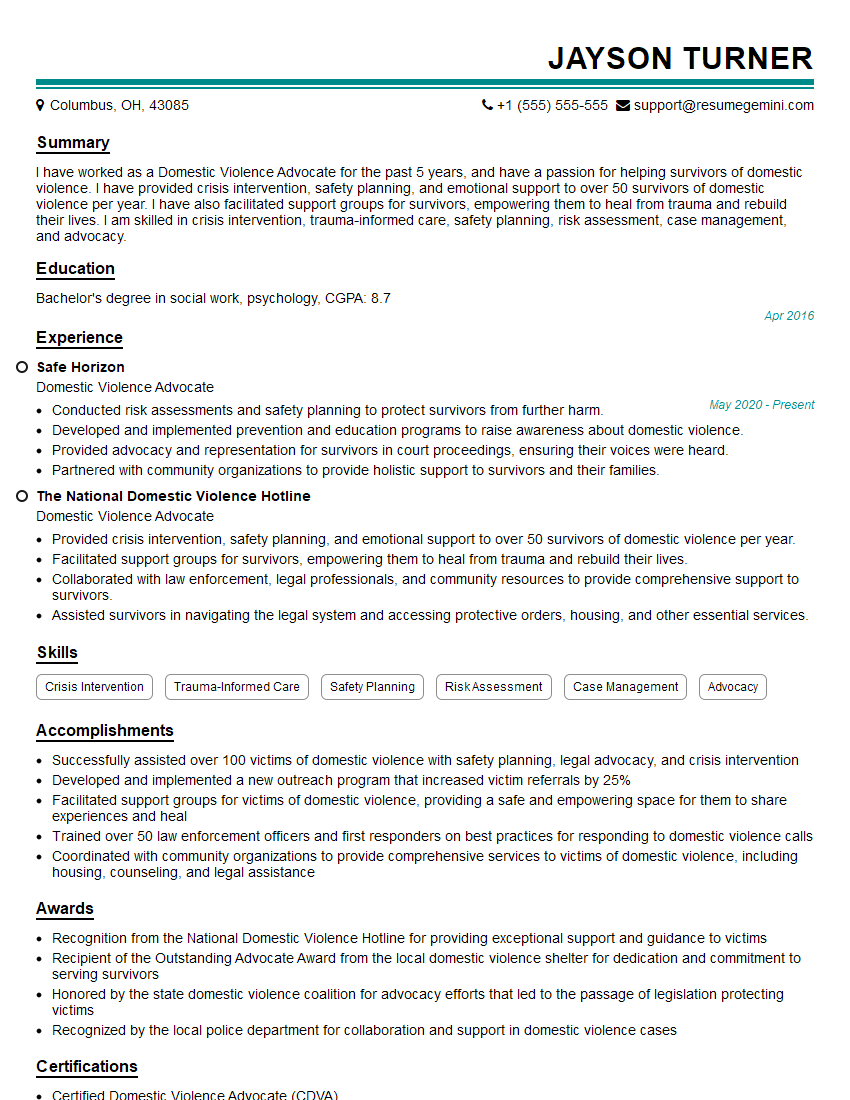
Domestic Violence Advocate Resume Sample
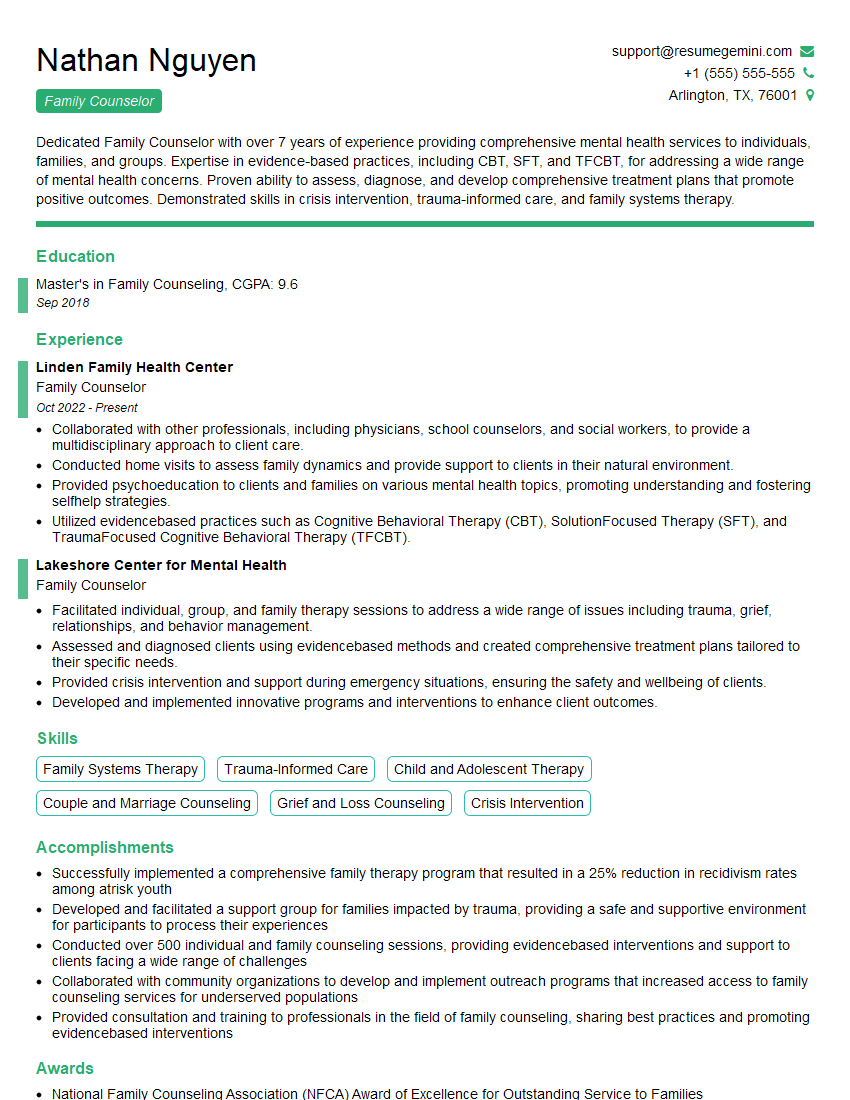
Family Counselor Resume Sample
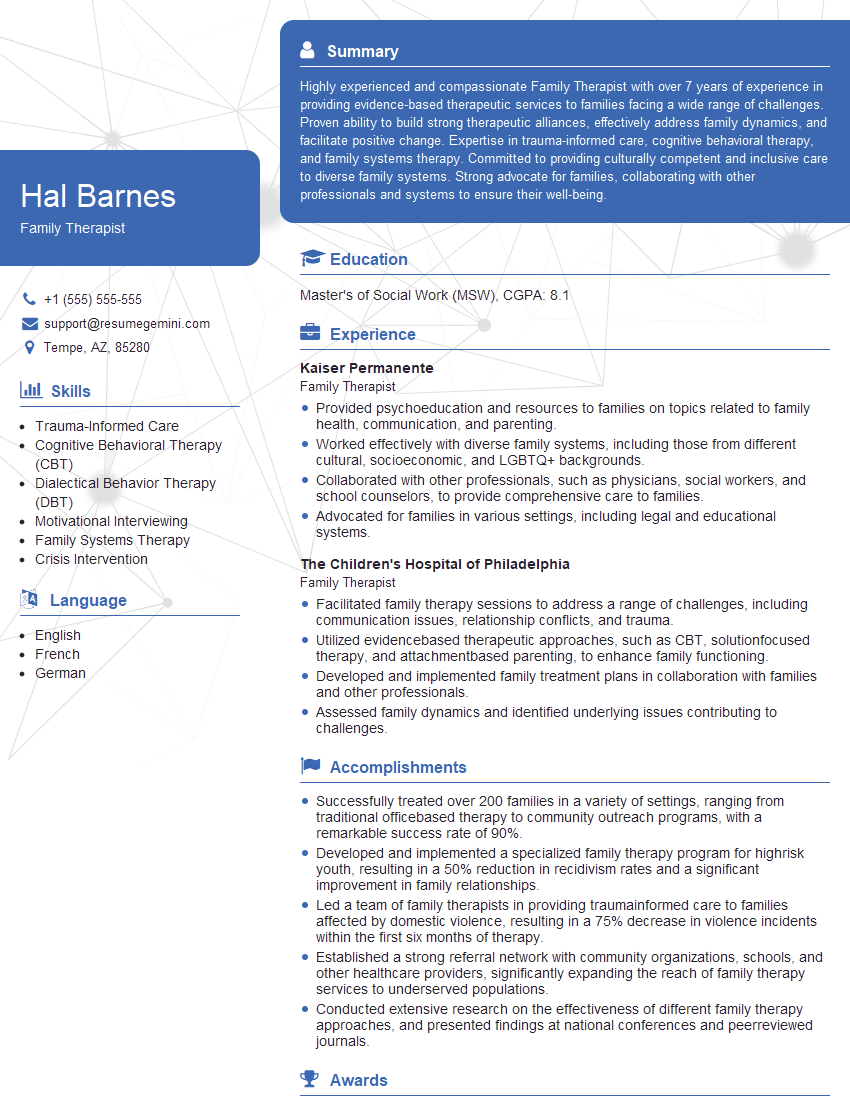
Family Therapist Resume Sample
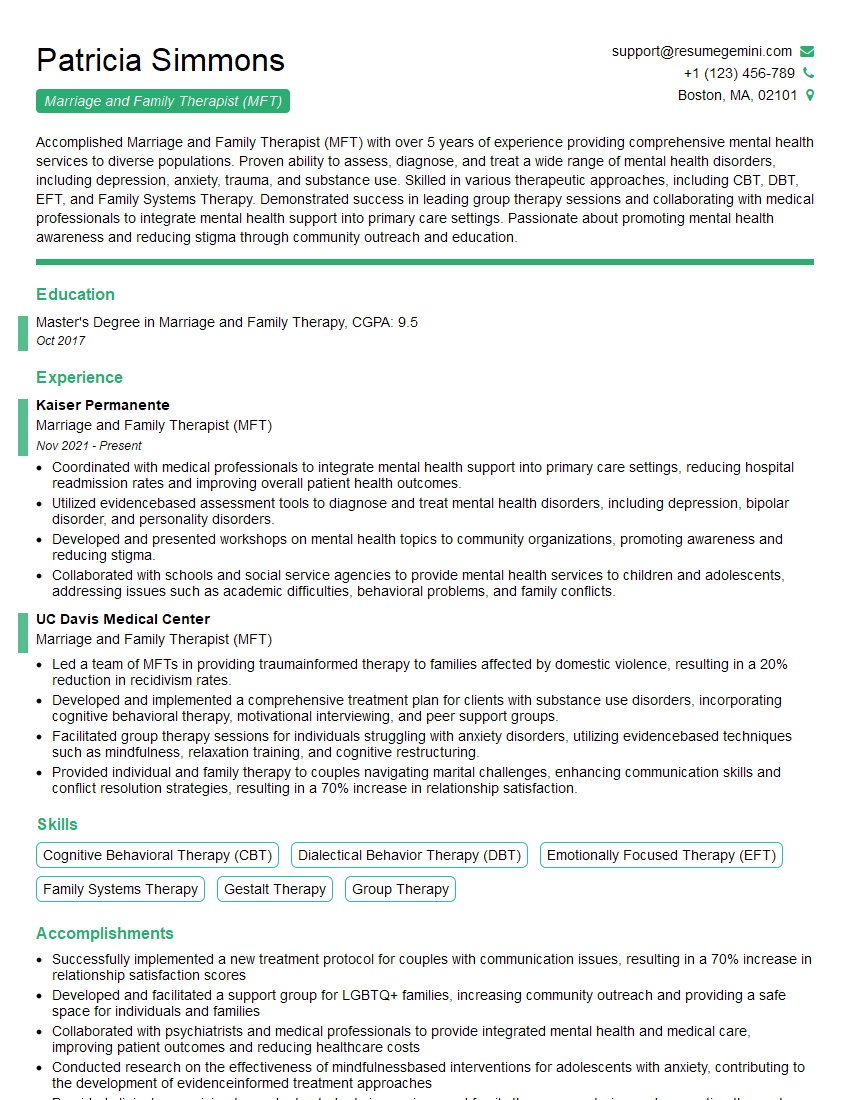
Marriage and Family Therapist (MFT) Resume Sample
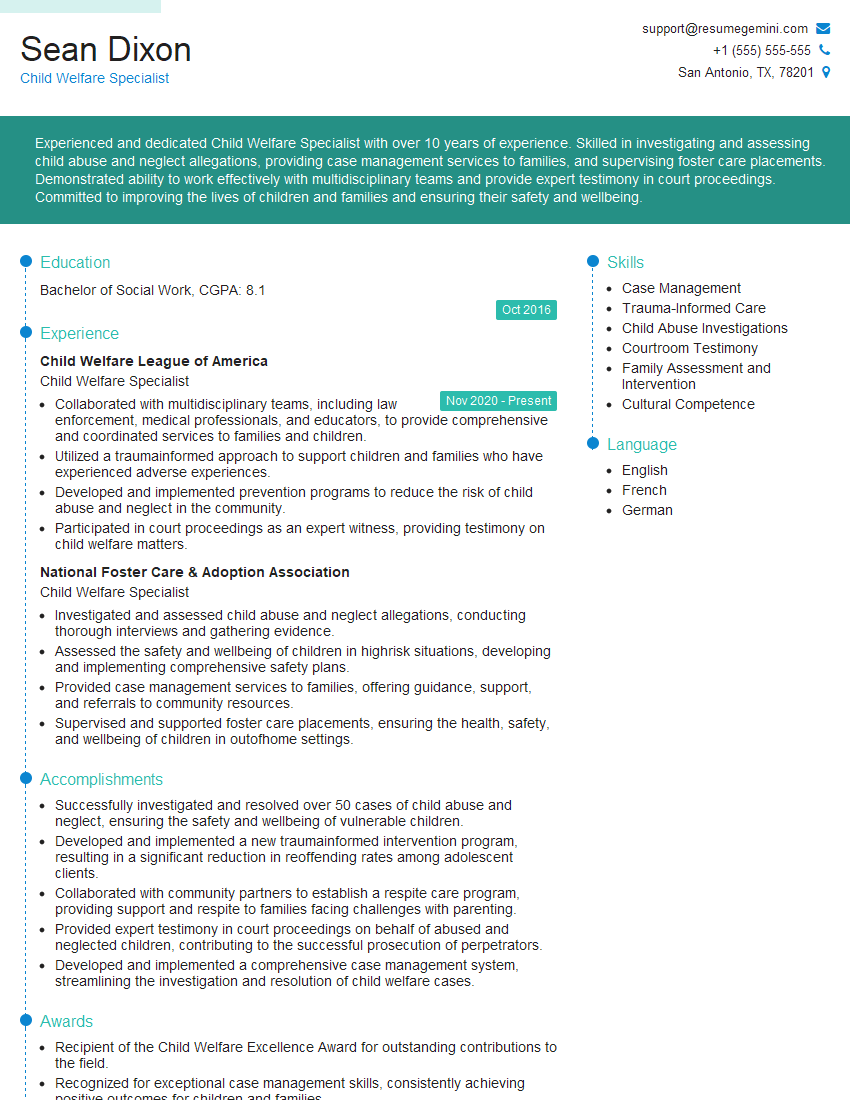
Child Welfare Specialist Resume Sample
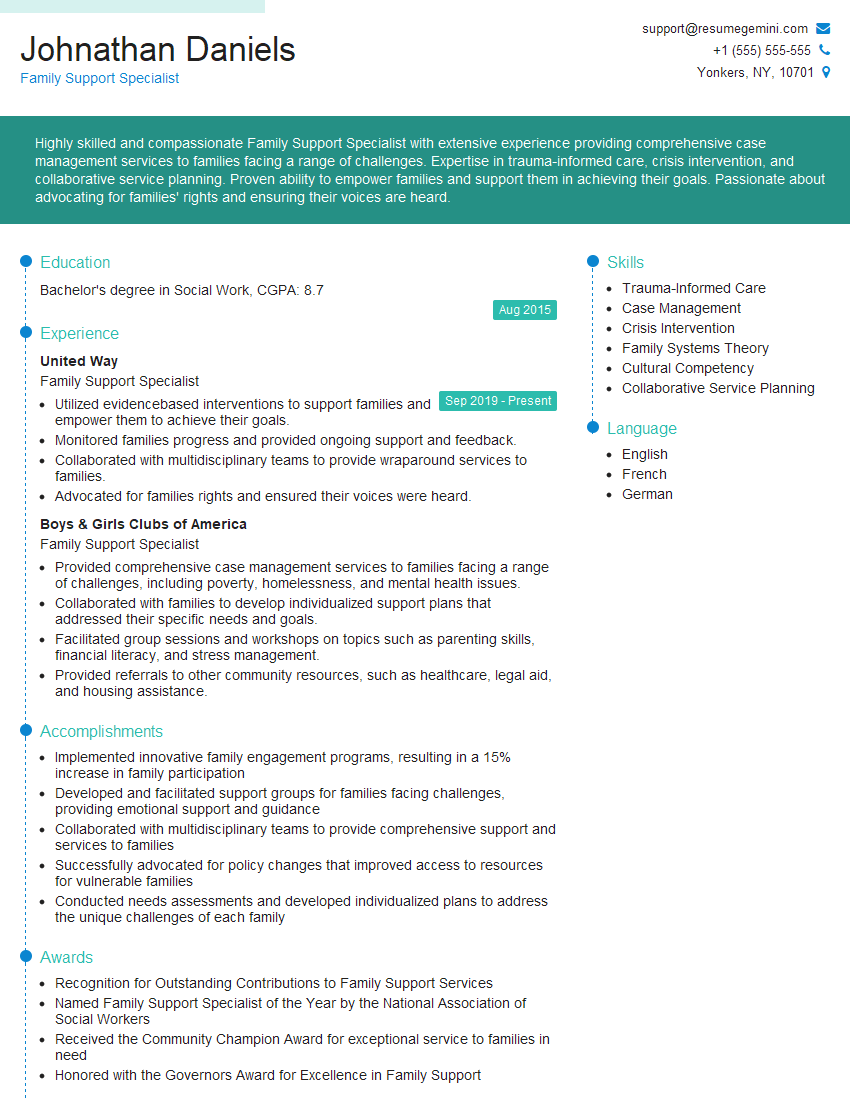
Family Support Specialist Resume Sample
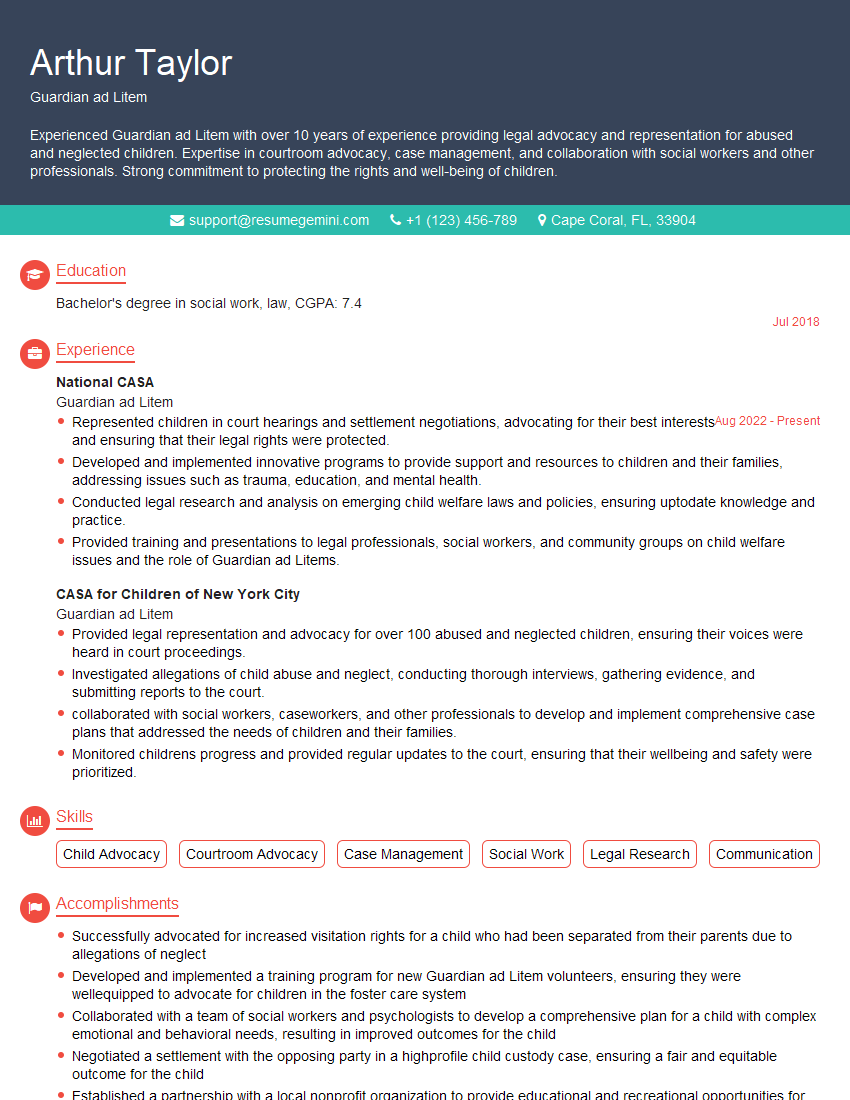
Guardian ad Litem Resume Sample
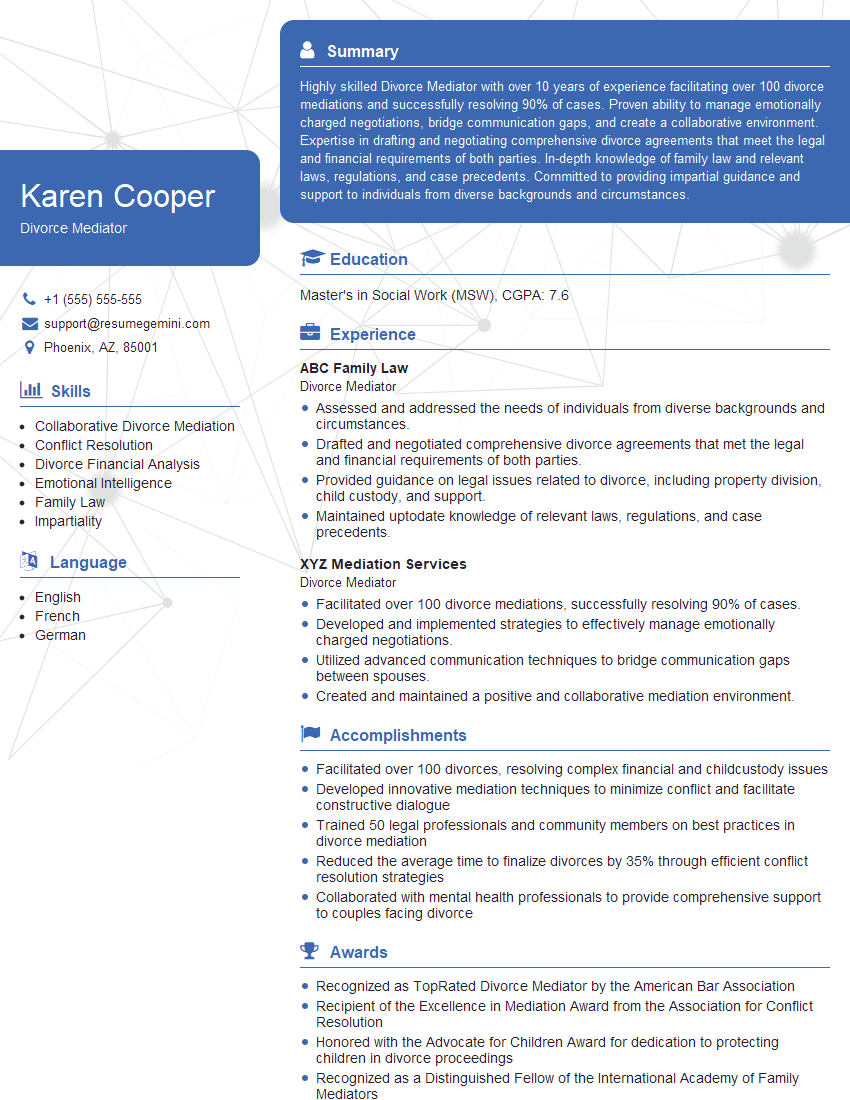
Divorce Mediator Resume Sample
Explore more articles
Users Rating of Our Blogs
Share Your Experience
We value your feedback! Please rate our content and share your thoughts (optional).
What Readers Say About Our Blog
To the interviewgemini.com Webmaster.
Very helpful and content specific questions to help prepare me for my interview!
Thank you
To the interviewgemini.com Webmaster.
This was kind of a unique content I found around the specialized skills. Very helpful questions and good detailed answers.
Very Helpful blog, thank you Interviewgemini team.