Interviews are opportunities to demonstrate your expertise, and this guide is here to help you shine. Explore the essential Farm Epidemiology and Outbreak Investigation interview questions that employers frequently ask, paired with strategies for crafting responses that set you apart from the competition.
Questions Asked in Farm Epidemiology and Outbreak Investigation Interview
Q 1. Describe the different types of epidemiological study designs used in farm animal health.
Epidemiological study designs in farm animal health aim to understand disease patterns and risk factors. Several designs are commonly employed, each with its strengths and weaknesses:
- Descriptive studies: These studies describe the occurrence of disease in terms of time, place, and person (or animal). Think of them as creating a detailed picture of the problem before investigating further. For example, a descriptive study might map the geographic distribution of a disease outbreak on a farm to identify potential sources of infection.
- Analytical studies: These studies explore the association between a risk factor and disease. They move beyond description to look for causes.
- Cohort studies: These follow a group of animals over time to observe the development of disease. For instance, you might track the incidence of mastitis in a herd after implementing a new milking hygiene protocol.
- Case-control studies: These compare animals with the disease (cases) to animals without the disease (controls) to identify risk factors. A case-control study could investigate whether exposure to a specific feed ingredient is linked to an outbreak of salmonellosis.
- Cross-sectional studies: These assess the prevalence of disease and risk factors at a single point in time. A cross-sectional study might survey several farms to determine the prevalence of avian influenza within a specific region.
- Experimental studies: These studies involve manipulating exposures to test the effect on the outcome. These are less common in farm settings due to ethical and practical limitations but might be used in controlled laboratory settings to evaluate vaccine efficacy.
The choice of study design depends on the research question, available resources, and ethical considerations.
Q 2. Explain the steps involved in investigating a disease outbreak on a farm.
Investigating a disease outbreak on a farm is a systematic process that typically involves these steps:
- Prepare for fieldwork: Gather necessary equipment (PPE, sampling materials), review existing farm records, and assemble your investigation team.
- Confirm the diagnosis: Collect samples (blood, faeces, tissue) for laboratory testing to confirm the suspected disease agent. This is crucial for accurate outbreak management.
- Define the case definition: Establish clear criteria for identifying affected animals to ensure consistency and accuracy in data collection (discussed in more detail in the next question).
- Identify cases: Systematically record details about all animals meeting the case definition, including their location, age, breed, clinical signs, and date of onset of illness.
- Describe the outbreak: Characterize the outbreak in terms of time, place, and person (animal). Use epidemiological curves to visualize the progression of the outbreak.
- Develop a hypothesis: Based on the information gathered, formulate testable hypotheses about the source and mode of transmission of the disease.
- Test the hypothesis: Conduct further investigations to validate or refute the hypotheses. This might involve environmental sampling, tracing animal movements, interviewing farm staff, or analysing management practices.
- Implement control measures: Based on the findings, develop and implement appropriate control measures to stop the spread of the disease and prevent further cases. This could involve vaccination, isolation, treatment, or culling.
- Evaluate control measures: Monitor the effectiveness of the implemented measures and adjust them as needed. A follow-up analysis is key to evaluating the success and lessons learned.
- Communicate findings: Share the results of the investigation with stakeholders, including the farmer, veterinary authorities, and other relevant parties.
Imagine a scenario with a sudden increase in respiratory illness in a pig herd. Following these steps will ensure a thorough investigation, leading to effective control and preventing future outbreaks.
Q 3. What are the key factors to consider when defining a case in a disease outbreak investigation?
Defining a case is critical for accurate epidemiological analysis. A well-defined case definition ensures consistency in identifying affected animals, preventing bias, and enabling accurate comparison across different populations. Key factors to consider include:
- Clinical signs: Specify the characteristic symptoms of the disease. For example, for avian influenza, this might include respiratory distress, decreased egg production, and mortality.
- Laboratory confirmation: Specify the diagnostic tests used to confirm the diagnosis. This might involve serological tests, virus isolation, or PCR.
- Time criteria: Define the period during which the disease occurred, such as an onset date or a period of illness. Consider incubation periods.
- Geographic location: Specify the location of affected animals to aid in identifying clusters or sources of infection.
- Species/breed: Sometimes, certain species or breeds are more susceptible. This might influence the case definition and the inclusion criteria.
A clearly defined case definition – for example, ‘a pig exhibiting respiratory signs (coughing, sneezing) confirmed positive for Porcine Reproductive and Respiratory Syndrome Virus (PRRSV) by PCR within the last 7 days’ – is crucial for a reliable outbreak investigation.
Q 4. How do you calculate and interpret the attack rate in a farm outbreak?
The attack rate measures the proportion of susceptible individuals who develop a disease during an outbreak. On a farm, it helps to assess the speed and intensity of the disease spread. It’s calculated as:
Attack Rate = (Number of animals that developed the disease / Number of susceptible animals at risk) x 100
For example, if 20 out of 100 susceptible pigs develop a disease, the attack rate is (20/100) x 100 = 20%. A high attack rate suggests a highly contagious disease or a significant breakdown in biosecurity. A low attack rate might indicate a less contagious disease or effective control measures.
Interpreting the attack rate requires considering factors such as the herd’s inherent susceptibility, the virulence of the pathogen, and the environmental conditions. Comparing attack rates across different groups (age, location) can help identify risk factors and inform control strategies.
Q 5. What are the major biosecurity measures to prevent disease outbreaks on farms?
Biosecurity measures are critical for preventing disease outbreaks on farms. They aim to reduce the risk of introduction and spread of pathogens. Key measures include:
- Traffic control: Restrict access to the farm by unauthorized personnel and vehicles. Implement a vehicle disinfection protocol.
- Hygiene practices: Maintain high hygiene standards in animal housing and equipment. Implement regular cleaning and disinfection protocols.
- Waste management: Dispose of animal waste and carcasses properly to prevent pathogen spread.
- Quarantine: Isolate newly introduced animals for a period of time to observe for disease signs.
- Rodent and pest control: Implement effective measures to prevent pest access to the farm.
- Personnel hygiene: Ensure that farm staff wear appropriate protective clothing and footwear and follow good hygiene practices.
- Vector control: Manage insect and other vectors that can transmit diseases.
- Vaccination: Vaccinate animals against important diseases to reduce their susceptibility.
- Record keeping: Maintain accurate records of animal health, movements, and biosecurity procedures.
Implementing a comprehensive biosecurity plan, tailored to the specific risks faced by the farm, is crucial for minimizing the likelihood of disease outbreaks.
Q 6. Explain the difference between direct and indirect transmission of diseases in livestock.
Disease transmission in livestock can be direct or indirect:
- Direct transmission: This occurs when the pathogen is transmitted directly from an infected animal to a susceptible animal through close contact. Examples include aerosol spread of respiratory viruses during coughing or direct contact transmission of sexually transmitted diseases.
- Indirect transmission: This occurs when the pathogen is transmitted indirectly through a vector or intermediary. Examples include contaminated feed or water (vehicle transmission), insect vectors (biological transmission), or contaminated equipment (fomites).
Understanding the mode of transmission is crucial for implementing effective control measures. For example, if a disease is spread directly through close contact, measures such as isolation of affected animals would be appropriate. If it’s spread indirectly, measures such as disinfection of equipment would be necessary.
Q 7. What are the common statistical methods used in analyzing epidemiological data from farms?
Analyzing epidemiological data from farms often involves various statistical methods to identify patterns, quantify risks, and test hypotheses. Common methods include:
- Descriptive statistics: Calculating measures of central tendency (mean, median, mode), variability (standard deviation, range), and frequency distributions to summarize data.
- Attack rate calculations: As discussed earlier, calculating and interpreting attack rates to quantify disease spread within a population.
- Regression analysis: Used to examine the relationship between risk factors and disease occurrence. Logistic regression is particularly useful for modelling binary outcomes (disease or no disease).
- Survival analysis: Useful for analyzing time-to-event data, such as time until death or recovery. This helps determine the prognosis for affected animals.
- Spatial analysis: Mapping the spatial distribution of cases to identify clusters or potential sources of infection.
- Time series analysis: Examining disease trends over time to identify patterns and predict future outbreaks.
Statistical software packages like R, SAS, and Stata are commonly used for analysing farm epidemiological data. The choice of method depends on the specific research question and the nature of the data.
Q 8. How do you determine the source of an outbreak on a farm?
Tracing the source of a farm outbreak is like solving a detective mystery. We use a systematic approach combining epidemiological investigation with on-the-ground observations. It begins with defining the outbreak – what disease, how many animals affected, when did it start? Then we move to:
- Descriptive epidemiology: We meticulously record case details – age, breed, location within the farm, symptoms, etc. This helps identify patterns and potential risk factors.
- Hypothesis generation: Based on the descriptive data, we formulate hypotheses about the source (e.g., contaminated feed, infected animals introduced, water source).
- Analytical epidemiology: We test our hypotheses using statistical methods (e.g., calculating risk ratios for exposure to potential sources) and comparing affected and unaffected groups.
- Trace-back investigations: This crucial step involves tracing the origin of potential sources: feed suppliers, animal movement records, farm visitors, etc. For example, if contaminated feed is suspected, we analyze feed samples and trace the batch back to the mill.
- Environmental sampling: Water, soil, and feed samples are collected and analyzed for pathogens. For example, we might test water sources for the presence of Salmonella.
Finally, we synthesize our findings, often using a diagram to visually represent the likely source and transmission pathways. For instance, a diagram might show how infected feed led to the outbreak in a specific barn.
Q 9. Describe different methods for sampling animals or specimens for disease surveillance.
Sampling methods for disease surveillance depend on the disease, the species, and the objectives. We aim for representative samples that accurately reflect the farm’s health status. Common methods include:
- Blood sampling: Venous blood provides serum for antibody tests (detecting previous exposure) and PCR (detecting current infection). Samples might be taken from a representative subset of the herd or from all animals, depending on the circumstances.
- Fecal sampling: Fecal samples are vital for detecting many enteric pathogens through culture or PCR. We often employ stratified random sampling to ensure all areas of the farm are represented.
- Swab sampling: Nasal, oral, or rectal swabs are used to collect samples for detecting respiratory or other localized infections, using methods like PCR or virus isolation.
- Milk sampling: In dairy farms, milk samples can detect mastitis-causing pathogens and other infectious agents.
- Tissue sampling: In cases of animal death or during necropsy, tissue samples allow for the identification of pathogens and determination of cause of death via histopathology and microbial culture.
Sampling strategies involve considering herd size, disease prevalence, and the desired level of accuracy. Statistical sampling techniques ensure a representative sample, even with large populations.
Q 10. How would you interpret a relative risk (RR) and odds ratio (OR) in a farm animal study?
Relative risk (RR) and odds ratio (OR) are measures of association in epidemiological studies. They help us understand how much more likely an outcome (e.g., disease) is in an exposed group compared to an unexposed group. Let’s consider a simple example of a study evaluating the association between exposure to a specific feed and the occurrence of a disease:
Relative Risk (RR): The RR is the ratio of the incidence of disease in the exposed group to the incidence of disease in the unexposed group. An RR of 2 means the disease is twice as likely in the exposed group. RR = [a/(a+b)] / [c/(c+d)], where ‘a’ is the number of diseased animals exposed, ‘b’ is the number of healthy animals exposed, ‘c’ is the number of diseased animals unexposed, and ‘d’ is the number of healthy animals unexposed.
Odds Ratio (OR): The OR is the ratio of the odds of disease in the exposed group to the odds of disease in the unexposed group. The OR is often used when the incidence rate is not available. OR = (a/b) / (c/d) using the same notation as above.
Interpretation:
- RR/OR = 1: No association between exposure and disease.
- RR/OR > 1: Positive association; exposure increases risk of disease.
- RR/OR < 1: Negative association; exposure decreases risk of disease.
It’s crucial to note that while RR and OR estimate associations, they don’t necessarily prove causality. Other factors could be influencing the results. Confidence intervals around RR and OR estimates provide insight into the precision of the estimates and the statistical significance of the findings.
Q 11. What are the ethical considerations in conducting epidemiological studies on farms?
Ethical considerations in farm animal epidemiology are paramount. We must prioritize the welfare of the animals, transparency with farmers, and data privacy. Key aspects include:
- Animal welfare: All sampling and experimental procedures must minimize stress and pain. We must adhere to relevant guidelines and regulations, potentially involving veterinary oversight.
- Informed consent: Farmers must be fully informed about the study’s purpose, procedures, potential benefits and risks, and their rights to withdraw participation at any time. This is crucial for maintaining trust and collaboration.
- Data confidentiality: Data collected must be anonymized and stored securely to protect the farmer’s privacy and prevent any potential misuse of information.
- Beneficence and non-maleficence: Studies should aim to benefit the animals and the farming community while avoiding causing harm. For example, any intervention must be carefully weighed against potential risks.
- Justice and equity: Research should benefit all stakeholders fairly, avoiding bias in study design and selection of participants.
Ethical review boards play a vital role in ensuring that studies adhere to the highest ethical standards. It is important to maintain transparency and open communication with the farmers throughout the project.
Q 12. Explain the concept of herd immunity and its relevance to farm animal health.
Herd immunity is the protection of a population (a herd in this case) from an infectious disease because a large proportion of its members are immune to the disease. Think of it like a protective shield. The greater the percentage of immune animals, the less likely the disease is to spread.
Relevance to farm animal health: Herd immunity is vital for preventing and controlling disease outbreaks on farms. Achieving a high level of immunity can prevent the disease from establishing itself within the herd, even if some susceptible animals are present. This is especially important for highly contagious diseases.
Methods for achieving herd immunity:
- Vaccination: This is the most common and effective way to achieve herd immunity. Mass vaccination programs can significantly reduce disease prevalence.
- Natural infection: Animals that recover from an infection often develop immunity. However, this is a risky method and is not ethically or practically justifiable in many cases. The disease could spread widely within the herd before generating substantial immunity.
The threshold level of immunity needed to achieve herd immunity varies depending on the disease and its transmission dynamics. Factors influencing the effectiveness of herd immunity include vaccine efficacy, vaccination coverage, and the contagiousness of the pathogen.
Q 13. How do you manage and interpret data from a farm’s surveillance system?
Managing and interpreting data from a farm’s surveillance system requires a structured approach. The system itself will likely involve regularly collected data (e.g., daily temperature readings, milk yield, morbidity rates, mortality rates). It often utilizes software or databases for efficient storage and retrieval.
Data Management:
- Data cleaning: This involves identifying and correcting errors or inconsistencies in the data. For example, checking for outliers or missing values.
- Data visualization: Graphical representations (charts, graphs) are crucial for visualizing trends and patterns, e.g., a line graph showing daily mortality rates.
- Data analysis: Statistical methods are used to analyze the data. This might involve calculating average values, standard deviations, correlation coefficients, or running regression models to identify risk factors.
Data Interpretation:
- Identifying trends: We look for any unusual patterns or changes that might indicate a disease outbreak or other problems. A sudden spike in mortality rates, for example, is a warning sign.
- Assessing risk factors: Analyzing data helps identify factors associated with increased disease risk (e.g., high stocking density, poor ventilation).
- Evaluating intervention effectiveness: If interventions (like vaccination) were implemented, data analysis helps assess their impact on disease prevalence.
Regular review of the data – perhaps monthly or quarterly, alongside veterinary advice – informs proactive management decisions to maintain optimal farm health and prevent potential outbreaks.
Q 14. What are the major zoonotic diseases of concern in farm animals and their public health implications?
Zoonotic diseases – diseases that can be transmitted from animals to humans – pose a significant public health concern. Several are prevalent in farm animals:
- Salmonellosis: Caused by Salmonella bacteria, it can lead to gastroenteritis in humans through contaminated food products like poultry or eggs. Proper hygiene and food safety practices are crucial for prevention.
- Campylobacteriosis: Similar to Salmonellosis, Campylobacter infection often causes diarrheal illness. Contaminated poultry is a major source of human infection.
- Brucellosis: This bacterial infection can cause fever, fatigue, and joint pain in humans. It’s prevalent in cattle, sheep, and goats and can be transmitted through contact with infected animals or their products (e.g., unpasteurized milk).
- Influenza A viruses (avian influenza): Avian influenza viruses can spread from infected birds to humans, although transmission is typically limited. However, some strains can be highly pathogenic to both birds and humans. Biosecurity measures in poultry farms are crucial for prevention.
- African swine fever (ASF): This viral disease only affects pigs but has devastating consequences for pig populations. Although not directly transmissible to humans, it can affect livelihoods and food security.
- Rabies: Although less common in farm animals than in wildlife, rabies is a fatal viral disease that can infect humans through contact with infected animals.
Public health implications: These zoonotic diseases can cause significant illness and even death in humans, leading to increased healthcare costs and economic losses. Effective surveillance, biosecurity measures, and public health education are essential for minimizing the risk of transmission.
Q 15. Explain the role of GIS in farm epidemiology.
Geographic Information Systems (GIS) are invaluable in farm epidemiology, essentially acting as a powerful map-based tool for visualizing and analyzing disease data. Imagine trying to track a disease outbreak across a large agricultural region – GIS allows us to pinpoint affected farms, visualize spatial patterns of the disease spread, and identify potential risk factors with unprecedented accuracy.
For instance, overlaying farm locations with environmental data (soil type, water sources, proximity to wildlife) helps identify clusters of cases and pinpoint common risk factors. We can use this information to develop targeted interventions, such as improving biosecurity measures in high-risk areas or implementing specific control strategies where the disease is most concentrated. This spatial analysis is crucial for effective outbreak management and prevention.
GIS also aids in resource allocation. By identifying hotspots of disease activity, we can optimize the deployment of veterinary resources, focusing our efforts where they are most needed. This efficient use of resources is especially critical during large-scale outbreaks.
Career Expert Tips:
- Ace those interviews! Prepare effectively by reviewing the Top 50 Most Common Interview Questions on ResumeGemini.
- Navigate your job search with confidence! Explore a wide range of Career Tips on ResumeGemini. Learn about common challenges and recommendations to overcome them.
- Craft the perfect resume! Master the Art of Resume Writing with ResumeGemini’s guide. Showcase your unique qualifications and achievements effectively.
- Don’t miss out on holiday savings! Build your dream resume with ResumeGemini’s ATS optimized templates.
Q 16. Describe the various methods of disease control and prevention in livestock.
Controlling and preventing livestock diseases requires a multi-pronged approach. Think of it like building a strong fortress against invaders: you need strong walls (biosecurity), vigilant guards (surveillance), and a well-trained army (disease control measures).
- Biosecurity: This is the cornerstone – measures to prevent the introduction and spread of disease, including strict hygiene protocols, quarantine procedures, rodent and pest control, and limiting farm access. Imagine a farm implementing strict cleaning and disinfection procedures between animal movements, preventing the spread of infection.
- Vaccination: Prophylactic vaccination is crucial for many diseases, providing herd immunity and significantly reducing the impact of outbreaks. For example, vaccinating against foot-and-mouth disease is vital in preventing its devastating spread.
- Treatment and Medication: Treating infected animals with appropriate antimicrobials is necessary, but crucial considerations must be given to the responsible use of antimicrobials to prevent antibiotic resistance.
- Surveillance: Regular monitoring of animal health, through clinical examination and diagnostic testing, is critical for early detection of disease outbreaks. Think of it as regular health check-ups for your herd.
- Movement Control: Restricting the movement of infected or potentially exposed animals prevents the spread of disease to new areas. This is often crucial in containing outbreaks and protecting healthy herds.
- Culling: In some instances, culling infected animals may be necessary to control the spread of highly contagious or severe diseases. This is a last resort, often used in situations where other control measures have failed.
Effective disease control necessitates a combination of these methods, tailored to the specific disease, the farming system, and the local context.
Q 17. How do you assess the effectiveness of a disease control program?
Assessing the effectiveness of a disease control program is crucial to ensure its success and justify its ongoing implementation. We do this by tracking a range of indicators before, during and after implementation of the program. Think of it like measuring the effectiveness of a new medicine – we need to see concrete evidence that it works.
- Disease incidence and prevalence: We monitor the number of new cases (incidence) and the total number of cases (prevalence) over time. A significant decrease indicates effectiveness.
- Mortality rate: The proportion of animals dying from the disease should decrease.
- Economic impact: The financial losses associated with the disease (treatment costs, loss of production, etc.) should decline.
- Seroprevalence (for some diseases): Measuring the percentage of animals with antibodies to the disease provides insights into the extent of exposure and the impact of vaccination campaigns.
- Farm-level compliance: Assessing the degree to which farmers adhere to biosecurity measures is key to evaluating the program’s effectiveness. Compliance is usually measured through observation, surveys, and record keeping.
We often use statistical methods to compare the disease situation before and after intervention, establishing whether the observed changes are statistically significant and likely due to the control program, rather than natural fluctuations.
Q 18. Discuss the use of mathematical modeling in predicting disease outbreaks.
Mathematical modeling plays a vital role in predicting disease outbreaks. It allows us to simulate the spread of disease under different scenarios, helping us understand the dynamics of transmission and evaluate the effectiveness of potential control strategies. Imagine it like a weather forecast, but instead of rain, we’re predicting the spread of a disease.
Compartmental models (e.g., susceptible-infected-recovered (SIR) models) are commonly used. These models divide the population into different compartments (susceptible, infected, recovered) and use differential equations to describe the flow of individuals between compartments. By inputting parameters like transmission rate, recovery rate, and population size, we can simulate the progression of an outbreak. dS/dt = -βSI, dI/dt = βSI - γI, dR/dt = γI is a simplified example of an SIR model.
These models can predict the peak of an outbreak, the total number of infected animals, and the duration of the epidemic. This predictive power enables us to allocate resources effectively and implement timely interventions to mitigate the impact of an outbreak.
However, it’s important to remember that models are simplifications of reality, and their accuracy depends on the quality of the input data and the appropriateness of the model used. Therefore, model outputs should be interpreted cautiously and considered alongside other evidence.
Q 19. What are the reporting requirements for notifiable animal diseases?
Reporting requirements for notifiable animal diseases vary by country and by the specific disease. Generally, veterinarians, farmers, and other stakeholders have a legal obligation to report suspected cases of notifiable diseases to the relevant animal health authorities. Think of it like mandatory reporting of certain human diseases; the prompt reporting of animal diseases is crucial for rapid response and containment.
Notifiable diseases are typically those that pose a significant threat to animal health, public health, or trade. The reporting process usually involves providing details about the affected animals (species, number, location), clinical signs, and any potential exposure history. Failure to report can result in penalties.
The information received is used to trigger rapid investigations, including on-farm inspections, diagnostic testing, and implementation of control measures to prevent wider spread. International organizations like the World Organisation for Animal Health (WOAH) play a crucial role in coordinating global reporting and response efforts.
Q 20. How do you investigate and manage antimicrobial resistance in farm animals?
Antimicrobial resistance (AMR) in farm animals is a serious threat to both animal and human health. It occurs when bacteria evolve and become less susceptible to the antibiotics used to treat them. This reduces the effectiveness of treatments, making infections harder and more costly to manage.
Managing AMR requires a multifaceted strategy:
- Responsible Antimicrobial Use: This is paramount. Antibiotics should only be used when necessary and as directed by a veterinarian. This includes avoiding unnecessary prophylactic use in healthy animals. Veterinary oversight is crucial in minimizing antibiotic use while effectively managing animal health.
- Improved Biosecurity: Strong biosecurity measures can reduce the need for antimicrobials by preventing infection in the first place. Think of biosecurity as the first line of defense against antimicrobial resistance.
- Surveillance: Monitoring the prevalence of AMR bacteria in farm animals is crucial to track resistance trends and inform control strategies. This involves testing samples from both healthy and sick animals.
- Alternative Treatments: Exploring and implementing alternative treatments, such as vaccines, probiotics, and phage therapy, can reduce reliance on antibiotics.
- Hygiene and Sanitation: Maintaining high standards of hygiene and sanitation on farms can reduce the spread of bacteria and thus minimize antibiotic use.
- Education and Training: Educating farmers and veterinarians on responsible antimicrobial use is critical for fostering a culture of stewardship.
Addressing AMR requires a collaborative approach involving farmers, veterinarians, policymakers, and researchers. It is a global challenge that demands coordinated action across multiple sectors.
Q 21. What is the role of vaccination in preventing and controlling disease outbreaks?
Vaccination is a cornerstone of disease prevention and control in livestock. It works by stimulating the immune system to develop immunity against specific diseases, protecting animals from infection or reducing the severity of illness. Imagine it like giving your animals a protective shield against disease.
Vaccination programs can achieve herd immunity, a state where a large proportion of the population is immune, making it difficult for a disease to spread within the population. This protection not only benefits the vaccinated animals but also the unvaccinated ones, protecting vulnerable animals and reducing the overall risk of outbreaks. For example, widespread vaccination against Newcastle disease in poultry has dramatically reduced the occurrence and severity of outbreaks globally.
The effectiveness of vaccination programs depends on factors such as vaccine efficacy, vaccination coverage, and the maintenance of cold chain integrity. Careful planning and implementation, along with regular monitoring of vaccination outcomes, are crucial to ensure program success. In addition to preventing infection and reducing severity, vaccination can also minimize the need for antimicrobial treatments reducing pressure on antibiotic resistance.
Q 22. Describe different types of diagnostic tests used in animal health and their limitations.
Diagnostic tests in animal health are crucial for identifying and managing disease outbreaks. They range from simple, rapid tests to sophisticated laboratory analyses. Common types include:
- Serological tests: These detect antibodies in the animal’s blood, indicating past exposure to a pathogen. Examples include ELISA (Enzyme-Linked Immunosorbent Assay) and AGID (Agar Gel Immunodiffusion). Limitations include the inability to distinguish between active infection and past exposure, and potential for cross-reactivity with other pathogens.
- Molecular tests: These detect the pathogen’s genetic material (DNA or RNA) directly. PCR (Polymerase Chain Reaction) is a widely used molecular test, offering high sensitivity and specificity. However, it can be expensive and requires specialized equipment. False negatives can occur due to low pathogen loads or poor sample quality.
- Microscopic examination: This involves visually inspecting samples (e.g., blood smears, tissue sections) under a microscope to identify pathogens. It’s relatively inexpensive but less sensitive than molecular tests and requires expertise in microscopy.
- Bacteriological culture: This involves growing bacteria from a sample in a laboratory setting to identify the specific species. It’s a gold standard for bacterial identification but can be time-consuming and requires specific culture media.
- Histopathology: This involves examining tissue samples under a microscope to detect characteristic pathological changes caused by disease. It’s invaluable for identifying certain diseases but is destructive, and the results can be subjective.
Each test has its strengths and weaknesses. The choice of test depends on factors such as the suspected disease, the available resources, and the urgency of the situation. For example, a rapid ELISA might be used in the field for initial screening, followed by more sensitive PCR confirmation in a laboratory.
Q 23. Explain the concept of sensitivity and specificity of a diagnostic test.
Sensitivity and specificity are crucial metrics for evaluating the performance of a diagnostic test. Imagine a test for a specific disease:
- Sensitivity refers to the test’s ability to correctly identify animals with the disease. A highly sensitive test will have very few false negatives (animals with the disease that test negative). A high sensitivity is critical for early detection and preventing further spread of the disease.
- Specificity refers to the test’s ability to correctly identify animals without the disease. A highly specific test will have very few false positives (animals without the disease that test positive). High specificity is crucial to avoid unnecessary treatment and reduce economic losses associated with false alarms.
Ideally, a good diagnostic test will have both high sensitivity and high specificity. However, there is often a trade-off between the two. For example, increasing the sensitivity might increase the number of false positives. The choice of test depends on the clinical context and the relative costs of false positives versus false negatives.
Example: A test with 95% sensitivity and 90% specificity means that 5% of infected animals will test negative (false negative), and 10% of uninfected animals will test positive (false positive).
Q 24. How do you communicate epidemiological findings to farmers and stakeholders?
Communicating epidemiological findings effectively to farmers and stakeholders is essential for implementing control measures and preventing further outbreaks. This requires clear, concise, and relatable language, avoiding technical jargon. Key strategies include:
- Use simple language and visuals: Avoid technical terms and instead use clear, plain language. Graphs, charts, and maps can effectively convey complex data.
- Tailor the message to the audience: The level of detail and technical language should be adjusted according to the audience’s understanding. Farmers might need a simpler explanation compared to veterinary professionals.
- Focus on practical implications: Emphasize the practical implications of the findings, such as the risk to their animals, potential economic losses, and available control measures.
- Be transparent and honest: Acknowledge uncertainties and limitations of the investigation. Open communication builds trust and encourages cooperation.
- Engage in two-way communication: Allow farmers and stakeholders to ask questions and express concerns. This ensures that the message is understood and addresses their specific needs.
- Provide recommendations and support: Offer clear, actionable recommendations for preventing future outbreaks and provide support in implementing them.
For example, instead of saying, “The seroprevalence of Salmonella Typhimurium was 25%,” you could say, “One in four of your animals showed evidence of previous exposure to Salmonella, indicating a need for improved biosecurity measures.”
Q 25. How do you handle data confidentiality and privacy in farm epidemiology investigations?
Data confidentiality and privacy are paramount in farm epidemiology investigations. This involves adhering to strict ethical guidelines and regulations to protect the identity and information of farmers and their animals. Key strategies include:
- Anonymize data: Remove any identifying information from data sets before analysis and reporting.
- Secure data storage: Use password-protected computers and secure servers to store data. Follow data encryption protocols.
- Limited access: Restrict access to data to only authorized personnel involved in the investigation.
- Informed consent: Obtain informed consent from farmers before collecting any data. Explain the purpose of the investigation and how the data will be used.
- Compliance with regulations: Adhere to all relevant data privacy regulations and guidelines, such as GDPR (General Data Protection Regulation).
Consider using pseudonyms or codes instead of farm names to protect anonymity. Data should only be used for the stated purpose of the investigation and should not be shared with unauthorized parties.
Q 26. Describe the role of international collaboration in addressing global animal health challenges.
International collaboration is crucial for addressing global animal health challenges. Many animal diseases transcend national borders, requiring coordinated efforts to prevent and control their spread. Key benefits of international collaboration include:
- Early warning systems: Sharing information about disease outbreaks across countries allows for early detection and rapid response.
- Joint research and development: Collaborative research efforts can lead to the development of new diagnostic tools, vaccines, and control strategies.
- Capacity building: Developed countries can provide technical assistance and training to developing countries to improve their animal health infrastructure.
- Standardized surveillance and reporting: Consistent data collection and reporting procedures improve the accuracy and comparability of epidemiological data.
- Joint responses to outbreaks: International organizations and governments can work together to provide resources and expertise during outbreaks.
Organizations like the World Organisation for Animal Health (WOAH, formerly OIE) play a pivotal role in facilitating international collaboration. They provide guidance on disease control, coordinate information sharing, and assist countries in building their capacity to respond to outbreaks.
Q 27. Discuss the impact of climate change on animal disease outbreaks.
Climate change significantly impacts animal disease outbreaks. Changes in temperature, rainfall patterns, and humidity affect the distribution, survival, and transmission of pathogens. Key impacts include:
- Altered vector distribution: Changes in temperature and rainfall can expand the geographic range of disease vectors like mosquitoes and ticks, leading to the spread of vector-borne diseases into new areas.
- Increased pathogen survival: Warmer temperatures can prolong the survival of pathogens in the environment, increasing the risk of infection.
- Changes in animal behavior and physiology: Heat stress and other climate-related stressors can weaken animals’ immune systems, making them more susceptible to disease.
- Increased frequency and intensity of extreme weather events: Floods, droughts, and heat waves can disrupt animal husbandry practices, increase stress on animals, and facilitate the spread of disease.
For example, the geographical range of bluetongue virus, a vector-borne disease affecting ruminants, is expanding due to climate change. Similarly, changes in rainfall patterns can impact the spread of foot-and-mouth disease.
Q 28. What are the limitations of epidemiological studies in farm animal health?
Epidemiological studies in farm animal health, while invaluable, have limitations. These limitations can affect the accuracy and generalizability of findings:
- Data limitations: Accurate and complete data on animal populations, disease incidence, and risk factors can be challenging to obtain, especially in low-resource settings. Incomplete data can lead to biased results.
- Confounding factors: Many factors can simultaneously influence disease occurrence, making it difficult to isolate the effects of specific risk factors. For example, genetic susceptibility, management practices, and environmental conditions can all contribute to disease outbreaks.
- Study design limitations: The choice of study design (e.g., cohort, case-control) can affect the results. Observational studies are prone to biases that can be difficult to control.
- Generalizability: Findings from one farm or region might not be generalizable to other settings due to differences in animal populations, management practices, and environmental conditions.
- Long latency periods: Some diseases have long incubation periods, making it difficult to establish a clear link between exposure and disease outcome.
Careful study design, rigorous data collection, and robust statistical analysis are crucial to mitigate these limitations. Acknowledging the limitations of any study is vital for interpreting results and making informed decisions.
Key Topics to Learn for Farm Epidemiology and Outbreak Investigation Interview
- Descriptive Epidemiology: Understanding disease patterns, including incidence, prevalence, and distribution within farm populations. Practical application: Analyzing farm data to identify risk factors for disease outbreaks.
- Analytical Epidemiology: Investigating the causes of outbreaks using observational studies (cohort, case-control) and experimental studies. Practical application: Designing and conducting studies to determine the source of a disease outbreak.
- Outbreak Investigation Methodology: Mastering the steps involved in investigating an outbreak, from initial detection to control and prevention. Practical application: Developing and implementing effective outbreak response plans.
- Disease Surveillance Systems: Understanding the role of surveillance in early detection and prevention of outbreaks. Practical application: Evaluating the effectiveness of different surveillance systems.
- Statistical Methods in Epidemiology: Applying statistical techniques to analyze epidemiological data and draw meaningful conclusions. Practical application: Using statistical software to analyze data from an outbreak investigation.
- Risk Factor Identification and Assessment: Identifying and evaluating factors that contribute to disease outbreaks. Practical application: Implementing biosecurity measures to mitigate identified risks.
- Data Management and Analysis: Proficiently handling and analyzing large datasets relevant to farm epidemiology. Practical application: Utilizing GIS mapping techniques for spatial analysis of disease outbreaks.
- Communication and Collaboration: Effectively communicating findings to stakeholders, including farmers, veterinarians, and public health officials. Practical application: Presenting results clearly and concisely in written reports and presentations.
- Regulatory Frameworks: Understanding relevant regulations and guidelines related to disease reporting and control. Practical application: Applying relevant regulations during an outbreak investigation.
Next Steps
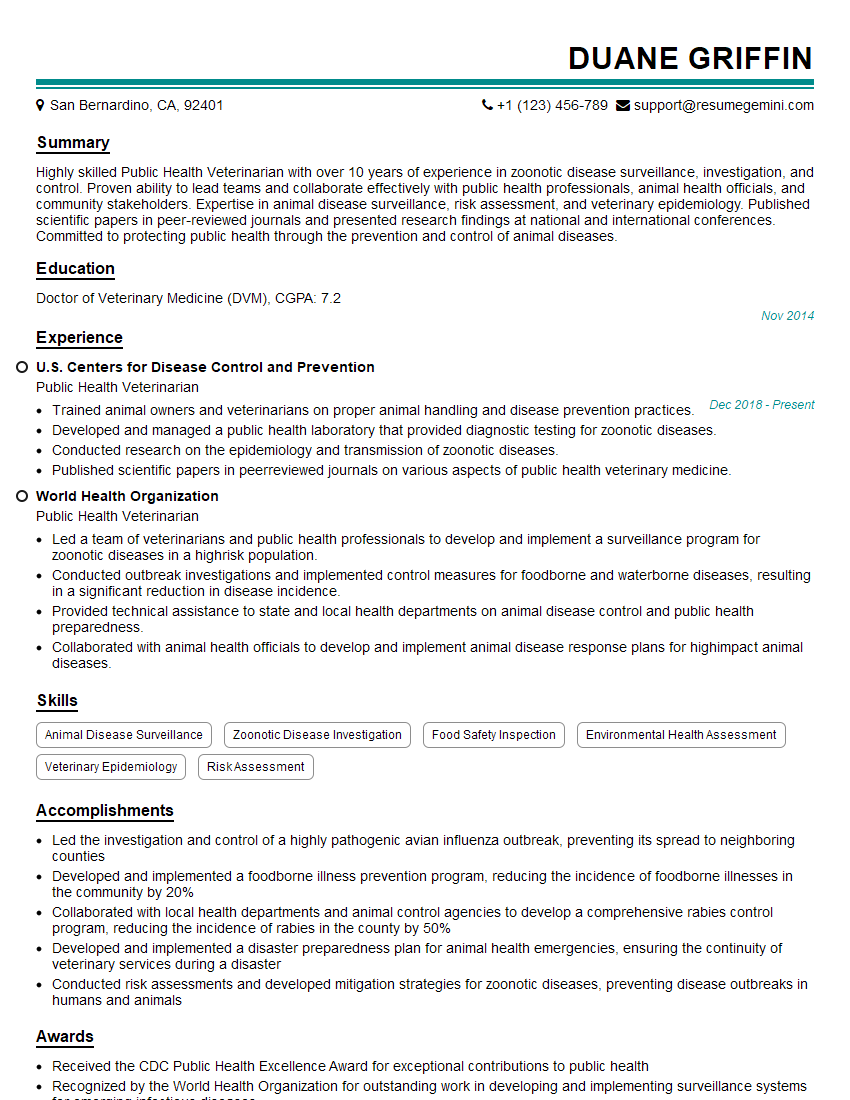
Mastering Farm Epidemiology and Outbreak Investigation opens doors to exciting career opportunities in animal health, public health, and research. To maximize your job prospects, a strong, ATS-friendly resume is crucial. ResumeGemini can help you craft a compelling and effective resume that highlights your skills and experience. ResumeGemini provides examples of resumes tailored to Farm Epidemiology and Outbreak Investigation, ensuring you present yourself in the best possible light to potential employers. Take the next step towards your dream career – build a powerful resume with ResumeGemini today.
Explore more articles
Users Rating of Our Blogs
Share Your Experience
We value your feedback! Please rate our content and share your thoughts (optional).
What Readers Say About Our Blog
To the interviewgemini.com Webmaster.
Very helpful and content specific questions to help prepare me for my interview!
Thank you
To the interviewgemini.com Webmaster.
This was kind of a unique content I found around the specialized skills. Very helpful questions and good detailed answers.
Very Helpful blog, thank you Interviewgemini team.