Cracking a skill-specific interview, like one for Vinyl Wallcovering, requires understanding the nuances of the role. In this blog, we present the questions you’re most likely to encounter, along with insights into how to answer them effectively. Let’s ensure you’re ready to make a strong impression.
Questions Asked in Vinyl Wallcovering Interview
Q 1. Describe your experience with different types of vinyl wallcovering materials.
My experience encompasses a wide range of vinyl wallcovering materials, each with unique properties and applications. I’ve worked extensively with:
- Solid Vinyl: This is a durable, washable option ideal for high-traffic areas like hallways or kitchens. Its smooth surface is easy to clean and maintain. I’ve used it in numerous commercial projects where durability was paramount.
- Fabric-Backed Vinyl: Offering a softer, more textured feel, this type is excellent for creating a luxurious look in bedrooms or living rooms. The fabric backing provides better dimensional stability and hides minor wall imperfections. I once used a beautiful linen-textured fabric-backed vinyl in a high-end residential project.
- Peel-and-Stick Vinyl: A convenient option for DIY projects or smaller spaces, peel-and-stick vinyl is easy to install and remove. It’s great for renters or those looking for a temporary solution. However, I typically recommend it only for smaller projects and not for large areas.
- Vinyl Murals: These offer a dramatic, personalized touch. I’ve had the pleasure of installing several custom-designed murals, transforming plain walls into stunning focal points. Careful planning and precise installation are key to success with murals.
- Vinyl with Embossing: This adds depth and texture to the wall, creating visual interest. I’ve used embossed vinyl to great effect in projects where a more three-dimensional surface was desired.
Understanding the specific properties of each type—durability, washability, texture, and ease of installation—is crucial for selecting the appropriate material for each project.
Q 2. Explain the process of preparing a wall for vinyl wallcovering installation.
Proper wall preparation is the foundation of a successful vinyl wallcovering installation. Neglecting this step often leads to problems like bubbling, peeling, and uneven application. My process involves several key steps:
- Cleaning: The wall must be thoroughly cleaned to remove dust, dirt, grease, and any loose paint or wallpaper. I typically use a clean cloth and a mild detergent solution, rinsing thoroughly and allowing the wall to dry completely.
- Repairing: Any holes, cracks, or imperfections in the wall need to be repaired and smoothed using spackle or patching compound. Once dry, these areas should be sanded smooth and primed.
- Priming: Priming the wall ensures proper adhesion of the adhesive to the wall surface. I select a primer suitable for the wall material and the type of vinyl being installed. This step is particularly important for porous surfaces or previously painted walls.
- Sizing (optional): Depending on the wall’s condition and the vinyl type, a sizing agent might be applied to improve adhesion and create a more uniform surface. This is particularly helpful with older walls or those with a slightly absorbent surface.
A well-prepared wall ensures a smooth, even application of the vinyl, resulting in a professional-looking finish that will last.
Q 3. How do you ensure proper alignment and matching of patterns in vinyl wallcovering?
Achieving proper alignment and pattern matching is essential for a visually appealing installation. For patterned vinyl, I start by carefully measuring and cutting the first strip, ensuring it’s perfectly plumb and level. Then, I follow these steps:
- Bookmatching: Most patterns are designed to be bookmatched, with the pattern flowing seamlessly between adjacent strips. I meticulously align the pattern on each subsequent strip, ensuring a continuous flow. I often use a pencil to mark the pattern alignment on the wall before applying the next strip.
- Overlapping: I create a slight overlap between strips to allow for adjustments and ensure the pattern matches perfectly. Once the alignment is confirmed, the excess vinyl is trimmed away.
- Using a plumb bob or laser level: These tools help maintain a consistent vertical alignment and are particularly important with large, bold patterns.
- Careful Measurement and Cutting: Precise measuring and cutting of each strip is crucial for accurate pattern matching. A sharp utility knife is a must for clean cuts.
Failing to properly match patterns can result in a disjointed and unprofessional look. Attention to detail and patience are key to success in this process.
Q 4. What tools and equipment are essential for efficient vinyl wallcovering installation?
Efficient vinyl wallcovering installation requires a range of specialized tools and equipment:
- Measuring Tape and Pencil: For accurate measurements and marking.
- Utility Knife: A sharp blade is crucial for clean cuts.
- Seam Roller: To smooth out seams and remove air bubbles.
- Straight Edge: For accurate cutting and trimming.
- Putty Knife or Smoothing Tool: For removing excess adhesive and smoothing the vinyl.
- Paste Brush or Roller: For applying adhesive evenly.
- Drop Cloths: To protect the floor and furniture.
- Ladder or Scaffolding: For reaching higher areas safely.
- Plumb Bob or Laser Level: For ensuring vertical alignment.
- Scissors or Shears: For trimming and cutting vinyl.
The right tools make all the difference in creating a clean, professional finish. Investing in quality equipment is an investment in the success of the project.
Q 5. How do you handle seams and edges during vinyl wallcovering installation?
Handling seams and edges correctly is vital for a flawless finish. Here’s how I approach it:
- Seams: I ensure the edges of adjacent strips are butted together tightly, using a seam roller to press them firmly and remove any air bubbles. This creates a seamless transition between strips. A slightly overlapping seam is best, allowing for small adjustments.
- Edges: For edges against doors, windows, and corners, I carefully trim the excess vinyl, leaving a small gap to allow for expansion and contraction of the material. This prevents wrinkles or buckling. Clean cuts are crucial for a professional look.
- Using Caulk: Applying matching caulk to seams and edges offers additional protection and completes the look, seamlessly integrating the edges with other elements of the room.
- Corner techniques: Corners require special attention. Different techniques like ‘butt’ joints or ‘lap’ joints, carefully measured and executed, result in neat, crisp corners.
Proper seam and edge treatment significantly impacts the overall appearance and longevity of the installation. It’s a detail-oriented process that requires patience and precision.
Q 6. Describe your experience with various vinyl wallcovering adhesives.
My experience with vinyl wallcovering adhesives includes various types, each with its own advantages and disadvantages:
- Pre-pasted Adhesives: Convenient for smaller projects, pre-pasted adhesives are activated by water. They require less cleanup but might not be as strong as other options.
- Powder Adhesives: Mixed with water, these provide a strong bond suitable for larger projects or challenging surfaces. They offer better control over adhesive application but require more preparation and cleanup.
- Ready-Mixed Adhesives: These are convenient, requiring no mixing, but may not be suitable for all surfaces. The strength of the bond varies between brands.
- Specialized Adhesives: Certain vinyl types require specialized adhesives designed to match the material and provide optimal adhesion.
Choosing the right adhesive is crucial for a successful installation. The type of vinyl, the wall material, and the project’s size all influence the appropriate adhesive selection. I always carefully review the adhesive’s manufacturer’s instructions for compatibility before use.
Q 7. What are the common challenges you encounter during vinyl wallcovering installation?
Several common challenges arise during vinyl wallcovering installation. These include:
- Uneven Walls: Uneven walls are problematic; they can cause bubbling or wrinkling of the vinyl. Thorough preparation and potentially the use of special adhesive techniques are essential to overcome this.
- Improper Pattern Matching: Requires meticulous planning and precise cutting. Errors in pattern matching result in a visually unappealing finish.
- Air Bubbles: Proper smoothing techniques are necessary to prevent air bubbles. Seam rollers and smoothing tools are used to eliminate air pockets.
- Seam Separation: This can occur due to improper application of adhesive or poor seam rolling. It is avoided with careful application and thorough pressure.
- Difficult Wall Surfaces: Some walls (textured surfaces or previously wallpapered walls) may require additional preparation or specialized adhesives for optimal adhesion.
- Material Defects: Occasionally, I encounter problems with the vinyl itself, such as tears or imperfections. This requires careful attention during installation to prevent issues from becoming larger problems.
Experience and meticulous attention to detail are vital in anticipating and addressing these challenges effectively.
Q 8. How do you troubleshoot issues such as bubbling or peeling?
Bubbling and peeling in vinyl wallcovering are common issues, often stemming from improper installation or substrate problems. Troubleshooting involves careful investigation to pinpoint the root cause.
- Insufficient Adhesive: This is the most frequent culprit. Bubbling usually appears soon after installation. The solution is to carefully pierce the bubble with a pin, then gently press out the air, ensuring good adhesion. For larger areas, you might need to carefully lift a section, reapply adhesive, and smooth it back down.
- Moisture: Excessive moisture behind the wallcovering can cause bubbling and peeling. Check for leaks or dampness in the wall. Sometimes this requires addressing a plumbing issue before fixing the wallcovering.
- Improper Surface Preparation: Uneven surfaces or unclean walls prevent proper adhesion. Thorough cleaning and possibly skim-coating are needed before re-installation or repair.
- Poor Adhesive Quality: Using low-quality or unsuitable adhesive is a major cause. Using the correct adhesive for the type of vinyl and wall surface is crucial.
- Temperature and Humidity: Extreme temperatures or humidity fluctuations can impact adhesion. Proper acclimation of the material before installation is key.
Remember to always test a small inconspicuous area before undertaking extensive repairs. For instance, if you suspect moisture, you might test the wall with a moisture meter before proceeding.
Q 9. Explain your process for measuring and estimating material needs for a vinyl wallcovering project.
Accurate measurement is paramount in vinyl wallcovering projects to avoid material waste and ensure a seamless installation. My process involves several steps:
- Detailed Room Measurements: I meticulously measure the height and width of each wall, noting any windows, doors, or other obstructions. It’s helpful to create a simple sketch of the room.
- Calculating Wall Area: For each wall, I subtract the area of windows and doors from the total wall area (Height x Width).
- Accounting for Waste: Vinyl wallcovering is sold in rolls. I always add a percentage (typically 10-15%, depending on the pattern match and complexity of the design) to compensate for cuts, pattern matching, and inevitable waste.
- Matching Patterns (if applicable): With patterned vinyl, precise calculation is crucial to ensure consistent pattern matching across the walls. I carefully analyze the pattern repeat length, ensuring I have enough material to avoid noticeable pattern shifts.
- Considering Multiple Rolls: It is rarely advisable to attempt to cover a large area with only one roll, especially with busy patterns that need matching. Rolls are better cut into strips and joined smoothly.
For example, if a wall measures 10ft x 8ft, the area is 80 sq ft. Adding a 10% waste factor, the required material would be approximately 88 sq ft. I then convert this to the number of rolls required based on the roll width and length provided by the manufacturer.
Q 10. How do you maintain a clean and organized work area during installation?
Maintaining a clean and organized workspace is vital for efficient and successful vinyl wallcovering installation. My approach involves:
- Designated Workspace: I establish a clear workspace, keeping the area free from clutter and debris.
- Material Organization: Wallcovering rolls and tools are strategically placed within easy reach, preventing unnecessary movement and maintaining a smooth workflow. I use drop cloths to protect the floor and furniture.
- Waste Disposal: Regularly dispose of waste such as scraps and packaging to prevent tripping hazards and maintain a clean environment.
- Tool Organization: I ensure my tools are kept tidy and readily accessible. I use tool belts or designated tool trays to avoid searching for tools.
- Clean-up During Process: Cleaning as I go prevents larger clean-up efforts at the end, ensuring the workspace remains efficient and safe throughout the project. This reduces chances of mishaps like slipping on scraps.
For example, I dedicate a specific area for cutting and pasting, and another area for waste disposal. This prevents mix-up and ensures safety.
Q 11. What safety precautions do you follow while working with vinyl wallcovering materials and tools?
Safety is my top priority. Working with vinyl wallcovering involves several precautions:
- Proper Ventilation: Adequate ventilation is crucial to minimize exposure to potential fumes from adhesives. I ensure the work area is well-ventilated or use appropriate respiratory protection.
- Protective Gear: I consistently wear gloves to protect my hands from adhesive and sharp tools, and eye protection to safeguard against debris. A dust mask might be required depending on the task.
- Sharp Tools Handling: Utility knives and other sharp tools are handled with extreme care to avoid cuts and injuries. I always store these out of reach when not in use.
- Ladder Safety: When working at heights, I use a stable and properly positioned ladder and adhere to all safety guidelines. A spotter can help too.
- Electrical Safety: If electrical work is involved, I ensure the power is turned off before working near electrical outlets or wiring.
For example, when dealing with older buildings, I always inspect the wiring to rule out any electrical hazards before the installation begins.
Q 12. Describe your experience with different wall surface types and their preparation needs.
I have extensive experience working with diverse wall surface types, each demanding specific preparation:
- Drywall: The most common surface, requiring thorough cleaning to remove dust, grease, or loose particles before installation. Any imperfections might need patching and sanding.
- Plaster: Plaster walls often need more preparation. Cracks or loose areas must be repaired, and the surface thoroughly cleaned. A primer is often required to ensure adhesion.
- Wood Paneling: Wood paneling requires a clean surface and often the filling of gaps or holes. The type of adhesive may also be affected by the finish on the wood.
- Concrete: Concrete requires a special primer suitable for adhesion to this porous surface. Any cracks or damage must be filled and repaired.
- Wallpaper: Existing wallpaper must be removed completely; otherwise, the new wallcovering might peel. This involves carefully scoring and then soaking the wallpaper before scraping it away.
Each surface requires a tailored approach. For instance, porous surfaces may need a primer to create a uniform surface and ensure better adhesion for the vinyl.
Q 13. How do you handle difficult wall conditions, such as uneven surfaces or textured walls?
Handling difficult wall conditions requires patience and specialized techniques:
- Uneven Surfaces: Severe imperfections might necessitate skim-coating or applying a joint compound to create a smooth surface. This requires sanding and preparation before installation.
- Textured Walls: Textured walls require the right type of adhesive to ensure adhesion. The texture might affect pattern matching, so more material might be needed to ensure no visible misalignments. In extreme cases, a liner might be necessary to create a smoother base.
- Cracks and Holes: Cracks and holes must be filled and repaired using suitable patching compounds and allow for sufficient drying time before installation.
For example, on heavily textured walls, I might use a heavier adhesive and take extra care with pattern matching. Sometimes using a thin liner is necessary. A pre-test in a small section is always wise.
Q 14. What is your experience with removing existing wallcovering?
Removing existing wallcovering is a crucial preparatory step and often the most labor-intensive part of the job. My approach is systematic and efficient:
- Assessment: I first assess the type of wallcovering and its adherence to the wall. Some wallpapers are easier to remove than others.
- Scoring (if needed): I score the surface of the wallcovering with a scoring tool to help penetrate the wallpaper’s backing.
- Soaking: I apply a wallpaper-removing solution or warm water to saturate the wallcovering, allowing it to soften and loosen its bond with the wall.
- Scraping: I use a scraper or putty knife to carefully remove the softened wallcovering, taking care not to damage the underlying wall. This is a delicate and time-consuming part of the job.
- Residue Removal: I thoroughly remove any remaining adhesive residue using a scraper, a damp sponge, and possibly a specialized adhesive remover. This is crucial to ensure proper adhesion of the new vinyl wallcovering.
The process can vary depending on the type of wallcovering and its condition. Sometimes, multiple applications of soaking solution and multiple scraping passes are required. Safety glasses are essential for this task to protect your eyes from debris and chemicals.
Q 15. Explain your knowledge of different vinyl wallcovering patterns and styles.
Vinyl wallcovering boasts an incredible variety of patterns and styles, offering endless design possibilities. Think of it like choosing fabric for a garment – there’s a perfect match for every taste and setting.
- Solid Colors: These provide a clean, minimalist backdrop, perfect for modern or contemporary spaces. They come in a vast array of shades, from subtle pastels to bold jewel tones, allowing for easy color coordination with furniture and accessories.
- Geometric Patterns: Stripes, checks, and other geometric designs offer a structured, sophisticated look. These can add visual interest and create a sense of order, fitting well in traditional or transitional designs.
- Floral and Botanical Prints: These patterns bring a touch of nature and elegance to a room. From delicate watercolor florals to bold, oversized blooms, they create a romantic or whimsical atmosphere, often preferred in bedrooms or living rooms.
- Textured Designs: These offer visual and tactile interest. Think subtle linen weaves, embossed damasks, or even wood-grain imitations. They add depth and dimension to the walls, enhancing the room’s overall ambiance. Many mimic natural materials like grasscloth or suede for a more luxurious feel.
- Specialty Prints: This category encompasses unique and creative designs like photographic murals, abstract art, or even custom designs. They can transform a space into a personal statement piece and are ideal for creating focal points.
The choice ultimately depends on the desired aesthetic and the functionality of the space. For instance, a busy geometric pattern might be overwhelming in a small bedroom, while a subtle textured design might get lost in a large, open-plan living area.
Career Expert Tips:
- Ace those interviews! Prepare effectively by reviewing the Top 50 Most Common Interview Questions on ResumeGemini.
- Navigate your job search with confidence! Explore a wide range of Career Tips on ResumeGemini. Learn about common challenges and recommendations to overcome them.
- Craft the perfect resume! Master the Art of Resume Writing with ResumeGemini’s guide. Showcase your unique qualifications and achievements effectively.
- Don’t miss out on holiday savings! Build your dream resume with ResumeGemini’s ATS optimized templates.
Q 16. How do you determine the best type of vinyl wallcovering for a given project?
Selecting the right vinyl wallcovering requires careful consideration of several factors. It’s like choosing the right tool for a specific job – the wrong choice can lead to frustration and poor results.
- Location and Use: High-traffic areas like hallways or children’s rooms need durable, washable vinyl. Bathrooms and kitchens require moisture-resistant options. A quiet study might suit a more delicate, textured vinyl.
- Budget: Vinyl wallcovering price points vary widely, from budget-friendly options to luxury designer lines. The budget dictates the material quality and features available.
- Aesthetic Preferences: The style, color, and pattern of the vinyl should complement the existing décor and the overall mood desired in the space. This involves considering furniture, flooring, and lighting.
- Wall Condition: The condition of the existing walls significantly impacts the vinyl selection. Damaged walls require a heavier vinyl that can hide imperfections, while smooth, well-prepared walls allow for a wider range of choices.
- Installation Method: Paste-the-wall and paste-the-paper vinyls have different application methods and requirements. The choice depends on experience and the project’s complexity. Some vinyls are easier to install than others, especially important for DIY projects.
I always discuss these factors with the client before making a recommendation. For example, I’d steer a client with young children towards a scrubbable, vinyl-coated fabric, while a client seeking a sophisticated look for their dining room might appreciate a high-end embossed vinyl.
Q 17. Describe your experience working from blueprints or specifications.
Working from blueprints and specifications is crucial for ensuring a successful project. It’s like having a detailed map before embarking on a journey – you know precisely where you’re going and what you need to get there.
I meticulously review blueprints to determine the total wall surface area, identify any obstacles like windows, doors, or electrical outlets, and understand the layout of the space. Specifications help me choose the correct vinyl type and ensure I have all the necessary materials. I’m adept at interpreting architectural drawings, understanding scaling, and deciphering symbols representing wall finishes and other building features.
For instance, on a recent project, the blueprint showed a recessed area that required custom cutting of the vinyl. By carefully studying the dimensions and angles, I was able to precisely measure and cut the vinyl to fit, ensuring a seamless finish.
Q 18. What is your understanding of building codes and regulations related to wallcovering installation?
Understanding building codes and regulations related to wallcovering is paramount. This guarantees safety, longevity, and adherence to legal standards – similar to following traffic laws to ensure a safe drive. My knowledge extends to fire codes (especially concerning flame-retardant materials), accessibility requirements (for example, ensuring sufficient contrast between wallcovering and surrounding features for visually impaired individuals), and health regulations (regarding volatile organic compounds (VOCs) released by certain adhesives and wallcoverings). I’m aware of local and regional variations in building codes. Before starting any project, I carefully research and comply with all relevant regulations to avoid potential problems and ensure a safe and legally compliant installation.
Q 19. How do you manage time and resources effectively on a wallcovering project?
Effective time and resource management is vital for successful project completion. It’s like orchestrating a symphony – each instrument (resource) must play its part at the right time to create a harmonious whole.
My approach involves detailed planning: I create a project timeline, factoring in material procurement, surface preparation, installation, and cleanup. This includes buffer time to account for unexpected delays. I carefully estimate material needs, avoiding waste and unnecessary expenses. I use project management tools to track progress, manage inventory, and communicate with the team. I prioritize tasks and allocate resources efficiently, ensuring the project stays on schedule and within budget. For example, if a delay is anticipated in material delivery, I may adjust the project schedule accordingly or explore alternative materials without compromising quality.
Q 20. How do you communicate with clients or supervisors regarding project updates and progress?
Clear and consistent communication is crucial for maintaining client satisfaction and project success. It’s like keeping the captain and the crew informed during a voyage – everyone needs to know their role and the vessel’s direction.
I establish clear lines of communication from the outset, discussing project details, timelines, and potential challenges. I provide regular updates through various channels—email, phone calls, or project management software—providing progress reports, highlighting milestones achieved, and addressing any concerns promptly. I actively listen to client feedback and adapt to their needs, keeping them informed about potential changes. For instance, if an unexpected issue arises during installation, I immediately notify the client, explain the situation, and provide possible solutions, ensuring transparency and proactive problem-solving.
Q 21. Explain your approach to quality control during and after vinyl wallcovering installation.
Quality control is my top priority, ensuring a flawless, long-lasting installation. Think of it as building a house – attention to detail in every step ensures a strong and beautiful structure.
My quality control measures begin with careful surface preparation: ensuring walls are clean, smooth, and properly primed. During installation, I meticulously check for consistent pattern matching, proper seam alignment, and the absence of bubbles or wrinkles. Regular checks throughout the process prevent minor issues from escalating into major problems. After completion, I perform a final inspection, verifying the overall look, feel, and adherence to the chosen design. Any minor imperfections are addressed immediately. Client satisfaction is paramount, and I always offer follow-up services to address any future concerns, demonstrating my commitment to quality and long-term customer relationship.
Q 22. Describe your experience with large-scale commercial wallcovering projects.
My experience with large-scale commercial wallcovering projects spans over 15 years, encompassing diverse settings like corporate offices, hotels, and retail spaces. I’ve managed projects ranging from hundreds to thousands of square feet, often involving tight deadlines and complex designs. I’m proficient in coordinating large teams, managing material procurement, and ensuring seamless execution while adhering to strict quality control measures. For example, on a recent hotel renovation project, we installed over 5000 square feet of vinyl wallcovering within a two-week timeframe, successfully meeting the client’s deadline without compromising quality. This involved meticulous planning, including pre-measuring, precise cutting, and effective team management to ensure efficient installation and a consistent finish across all areas.
My expertise extends to managing logistical challenges, such as coordinating deliveries and ensuring the availability of specialized tools and materials. I also have a strong understanding of different vinyl wallcovering types and their suitability for various commercial applications. This allows me to advise clients on the best product choice based on factors such as durability, cost-effectiveness, and the overall aesthetic design goals.
Q 23. How do you handle customer complaints or concerns?
Handling customer complaints and concerns is a crucial aspect of my work. I approach each situation with empathy and professionalism, actively listening to the client’s concerns and thoroughly investigating the issue. My first step is to assess the situation, documenting the problem with photos and notes. This allows for a clear understanding of the nature and extent of the issue. Then, I work collaboratively with the client to find a suitable solution, whether it involves repairing the damaged area, replacing sections of the wallcovering, or offering a partial refund depending on the specifics.
For example, if a client expresses dissatisfaction with the color match, I will review the original order and installation process to identify if there was a discrepancy. If a manufacturing defect is discovered, I will work with the supplier to secure replacement materials. Open communication and a willingness to find a fair and effective resolution are paramount to maintaining positive client relationships. I believe in proactively addressing any concerns, striving for complete customer satisfaction.
Q 24. What is your experience with different types of seams (e.g., butt seams, bookmatched seams)?
I have extensive experience with various seam types, including butt seams, bookmatched seams, and pattern matching seams. Each type requires different techniques and attention to detail. Butt seams, where the edges of the wallcovering meet directly, require precise cutting and careful rolling to create an almost invisible join. This is commonly used with solid color vinyl wallcoverings. Bookmatched seams, on the other hand, involve mirroring the pattern across the seam line, creating a visually appealing and seamless transition, particularly effective with wood-grain or other patterned vinyl. Pattern matching seams demand meticulous planning and precise measuring to align the pattern across multiple panels.
The choice of seam type depends largely on the wallcovering’s pattern and the desired aesthetic outcome. For instance, a large-scale floral design will almost always necessitate a pattern-matched seam, while solid-color commercial wallcovering might allow for a more practical butt seam. My proficiency in various techniques allows me to recommend and implement the most suitable seam type for any given project, ensuring a high-quality and professional finish.
Q 25. Describe your experience with using different types of seam rollers and other tools.
My experience encompasses the use of a wide range of seam rollers and other tools crucial for successful vinyl wallcovering installation. I’m familiar with different types of seam rollers, including those with varying degrees of pressure and surface textures, tailored to different wallcovering materials and seam types. I use specialized seam rollers for delicate vinyl and heavier-duty rollers for thicker, more resilient materials. Furthermore, my tool kit includes utility knives, measuring tapes, plumb bobs, straight edges, smoothing brushes, and seam sealing tapes.
I am adept at using these tools to achieve a clean, precise, and professional finish. For example, the use of a smoothing brush is critical for eliminating air bubbles and ensuring proper adhesion. Choosing the right roller and applying the correct pressure are key to preventing damage to the wallcovering and achieving that perfect, seamless finish. I understand that each tool serves a specific purpose, and using the correct tool is vital to ensure both the efficiency and quality of the installation.
Q 26. What is your understanding of the different types of adhesives used for Vinyl Wallcovering, and when to use each type?
Several adhesive types are used for vinyl wallcovering, each suited to specific situations. Paste-the-wall adhesives are commonly used for lighter vinyl wallcoverings, offering a good balance of ease of application and strength. Pre-pasted vinyl wallcoverings come with a pre-applied adhesive that is activated with water, making them quicker to install but potentially less forgiving of mistakes. Paste-the-paper adhesives, applied directly to the back of the vinyl, require more experience as precise application is key to avoid excess adhesive showing through. Finally, heavy-duty adhesives are used for thicker, more robust vinyl wallcoverings or challenging substrates like textured walls.
The choice of adhesive depends heavily on the type of vinyl wallcovering, the condition of the substrate (the wall’s surface), and the environment. For example, a lightweight vinyl in a dry environment would be suitable for a paste-the-wall adhesive, whereas a heavier vinyl in a humid environment may need a heavy-duty adhesive to ensure proper adhesion and prevent peeling. Incorrect adhesive selection can lead to issues like bubbling, peeling, or inadequate adhesion, therefore a thorough understanding of the various options is crucial for success.
Q 27. How do you determine the correct amount of adhesive to use for different vinyl wallcovering types and substrates?
Determining the correct amount of adhesive is crucial; too little leads to poor adhesion, and too much can cause bubbling or seepage. The ideal amount depends on several factors: the type of vinyl wallcovering (weight and texture), the type of adhesive, and the surface of the substrate (smooth, textured, etc.). For paste-the-wall adhesives, manufacturers typically recommend a specific application method, often involving a thin, even coat. With paste-the-paper adhesives, applying a consistent bead along the edges and a thin layer in the center of the back is typical.
Experience plays a vital role in accurately judging the amount of adhesive needed. I often apply a test patch before starting the main installation to ensure proper adhesion and adjust the amount as needed. Understanding the properties of different adhesives – their drying time, tackiness, and viscosity – is essential to controlling the amount applied. For example, a fast-drying adhesive will require quicker and more precise application than a slower drying one. Over time, I’ve developed a keen eye for judging the appropriate amount based on the visual cues of the adhesive and the wallcovering’s response.
Q 28. How would you handle a situation where the wallcovering is damaged during installation?
Damage to wallcovering during installation is a potential risk. My immediate response would be to assess the extent of the damage. Minor scratches or tears can often be repaired using specialized vinyl repair kits, ensuring a seamless finish. For more significant damage, replacing the affected section is necessary. This involves carefully measuring the damaged area, cutting a new piece of wallcovering with precise matching (particularly important for patterned vinyl), and applying the replacement carefully to achieve a perfect blend.
For example, if a large section is damaged, I would first attempt to salvage as much of the existing work as possible. I might use a seam roller to carefully smooth the damaged area before considering a replacement. If replacement is necessary, I ensure I source a replacement roll matching the batch number of the existing material to guarantee the color and pattern match perfectly. Open communication with the client is vital throughout this process to explain the repair or replacement procedure and ensure they’re comfortable with the chosen solution. Prevention is key: utilizing proper handling techniques and employing the right tools minimizes the risk of damage.
Key Topics to Learn for Your Vinyl Wallcovering Interview
- Types of Vinyl Wallcovering: Understanding the differences between various types like vinyl-coated fabrics, solid vinyl, and peel-and-stick options, including their respective advantages and limitations in different applications.
- Installation Techniques: Mastering the practical aspects of installation, including surface preparation, pattern matching, trimming, and dealing with common challenges like seams and corners. This includes knowledge of different adhesives and tools.
- Material Properties and Handling: Familiarize yourself with the physical properties of vinyl wallcovering – its durability, washability, lightfastness, and maintenance requirements. Understanding how these properties influence its suitability for different environments (e.g., high-traffic areas, bathrooms).
- Design and Aesthetics: Explore the role of vinyl wallcovering in interior design. Learn about different design trends, color palettes, and how to select appropriate patterns and textures to complement various interior styles.
- Health and Safety: Understand relevant health and safety regulations and best practices related to handling and installation, including proper ventilation and the use of personal protective equipment (PPE).
- Estimating and Costing: Develop your ability to accurately estimate material requirements, labor costs, and total project costs for various wallcovering projects.
- Troubleshooting and Problem Solving: Be prepared to discuss common installation issues and how you would approach troubleshooting and resolving problems on-site, such as bubbling, wrinkles, or damage.
- Sustainability and Environmental Impact: Gain an understanding of the environmental aspects of vinyl wallcovering, including its manufacturing processes, disposal, and sustainable alternatives.
Next Steps
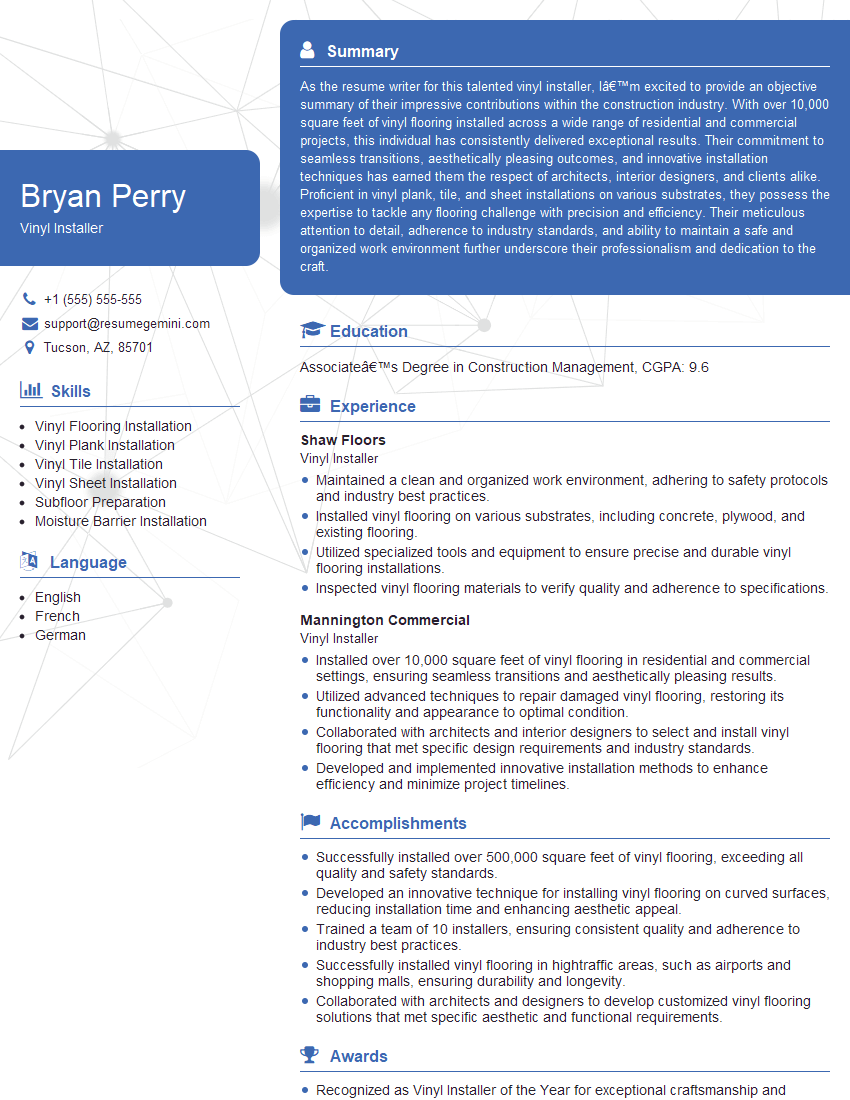
Mastering the intricacies of vinyl wallcovering positions you for exciting career opportunities in interior design, construction, and related fields. A strong understanding of this material is highly valued by employers and showcases your practical skills and attention to detail. To maximize your job prospects, focus on creating an ATS-friendly resume that highlights your relevant experience and skills. ResumeGemini is a trusted resource that can help you build a professional and effective resume. They even provide examples of resumes tailored to the Vinyl Wallcovering industry to give you a head start. Make your resume stand out – invest the time and effort to showcase your expertise effectively.
Explore more articles
Users Rating of Our Blogs
Share Your Experience
We value your feedback! Please rate our content and share your thoughts (optional).
What Readers Say About Our Blog
To the interviewgemini.com Webmaster.
Very helpful and content specific questions to help prepare me for my interview!
Thank you
To the interviewgemini.com Webmaster.
This was kind of a unique content I found around the specialized skills. Very helpful questions and good detailed answers.
Very Helpful blog, thank you Interviewgemini team.