The thought of an interview can be nerve-wracking, but the right preparation can make all the difference. Explore this comprehensive guide to Fat Grafting interview questions and gain the confidence you need to showcase your abilities and secure the role.
Questions Asked in Fat Grafting Interview
Q 1. Describe the process of harvesting fat for grafting.
Fat harvesting for grafting typically involves liposuction, a minimally invasive procedure. The process begins with marking the areas from which fat will be harvested, usually areas with excess fat, like the abdomen, thighs, or hips. Local anesthesia is typically administered, although general anesthesia may be used in some cases depending on the patient and the amount of fat being harvested. A small cannula (a thin, hollow tube) is then inserted through small incisions to gently break up and suction the fat.
The fat is then collected in a sterile container and prepared for processing. It’s crucial to minimize trauma to the fat cells during this step, as this minimizes cell damage and increases the likelihood of successful grafting.
Think of it like carefully picking ripe berries from a bush – you want to harvest them gently to maintain their integrity.
Q 2. Explain the different fat processing techniques.
Several techniques exist for processing harvested fat, each with its advantages and disadvantages. The simplest involves washing the harvested fat with saline solution to remove blood, debris, and local anesthetic. This is known as wet processing. More advanced techniques, often employed for larger grafting volumes, include centrifugation to separate the fat from other components. This yields a higher concentration of viable fat cells. Another sophisticated method is using specialized filtration systems to refine the fat further. The goal of all processing techniques is to obtain a fat concentrate rich in viable adipocytes (fat cells) for optimal graft survival.
The choice of processing technique depends on factors such as the volume of fat being processed and the surgeon’s preferences. For instance, wet processing is often sufficient for smaller grafts, whereas centrifugation is preferred for larger, more demanding procedures.
Q 3. What are the indications and contraindications for fat grafting?
Fat grafting, also known as lipotransfer or autologous fat grafting, finds applications in various cosmetic and reconstructive surgeries. Indications include facial rejuvenation (cheek augmentation, lip augmentation, tear trough correction), breast augmentation, hand rejuvenation, and the treatment of scars and other soft-tissue defects. It’s also used for restoring volume loss in areas affected by trauma or disease.
Contraindications include active infections, uncontrolled systemic diseases (such as diabetes or autoimmune disorders), significant bleeding disorders, and certain medications that might hinder healing. Patients with a low body mass index might not have sufficient fat for harvesting. A thorough medical history and physical examination are essential to determine suitability for fat grafting.
For example, a patient with a large, unsightly scar on their knee might benefit greatly from fat grafting to improve both appearance and function, while a patient with an active infection would need to address that infection before considering this procedure.
Q 4. Discuss the potential complications of fat grafting.
While generally safe, fat grafting carries potential complications. Fat necrosis (fat cell death) is a common complication, manifesting as lumps or nodules. Infection can occur, though it’s less frequent with proper sterile technique. Fluid collections (seromas) may form post-operatively, requiring drainage. Asymmetrical results are a possibility, particularly in facial grafting, requiring revisions. Fat resorption is inevitable to some degree; the body naturally reabsorbs some of the grafted fat. Calcification, although rare, is another possible complication.
Minimizing these risks involves meticulous surgical technique, careful fat processing, and proper post-operative care. Patient selection also plays a crucial role.
Q 5. How do you assess the viability of harvested fat?
Assessing the viability of harvested fat is critical for maximizing graft success. Visual inspection is the first step; viable fat has a creamy, homogenous appearance. Microscopic examination can assess the percentage of viable adipocytes. The presence of significant blood or debris suggests poor-quality fat, increasing the risk of complications. Some surgeons employ specialized techniques to quantify the number of viable cells, although this isn’t routinely done in all clinics. The goal is to use only the highest-quality fat for grafting to maximize survival and optimize aesthetic outcomes.
Imagine comparing two batches of freshly baked bread – one is evenly risen and golden brown, while the other is pale, dense, and uneven. You’d use the better batch for serving your guests, right? It’s the same principle with fat grafting; you want the best possible fat for the most successful result.
Q 6. What are the different injection techniques used in fat grafting?
Different injection techniques are employed depending on the targeted area and desired result. Superficial injections are used for subtle volume enhancement, often in the face. Deep plane injections deliver the fat beneath the dermis to minimize visible irregularities and encourage better integration with surrounding tissues. The multi-layered technique, a more advanced approach, involves injecting fat in multiple layers to create a more natural and durable result.
The choice of technique influences the final appearance and longevity of the graft. The injection pressure, the volume injected, and needle gauge also affect the outcomes. The surgeon’s experience and precision are key to successful fat grafting using the appropriate techniques.
Q 7. How do you manage fat grafting complications like fat necrosis or infection?
Management of fat grafting complications depends on their severity. Fat necrosis often resolves spontaneously, but in cases of significant lump formation, surgical excision may be necessary. Infection requires prompt treatment with antibiotics and, in severe cases, surgical drainage. Seromas (fluid collections) usually resolve with conservative management, such as needle aspiration or drainage. Asymmetrical results may require revision surgery to achieve balance. Pain management and supportive care are essential throughout the healing process.
Early detection and proactive management are crucial in minimizing long-term consequences. Close monitoring of the patient post-operatively and timely intervention can often prevent minor complications from developing into more significant problems.
Q 8. What are the pre-operative and post-operative instructions for patients undergoing fat grafting?
Pre- and post-operative instructions for fat grafting are crucial for optimal results and patient safety. Pre-operatively, patients undergo a thorough consultation including medical history review, assessment of suitability, and discussion of risks and benefits. We discuss lifestyle modifications, like avoiding blood-thinning medications and alcohol prior to surgery. Detailed instructions are given regarding fasting before the procedure. Post-operatively, patients are instructed on pain management using prescribed medications, compression garments to minimize swelling, and gentle lymphatic massage to aid drainage and reduce bruising. Regular follow-up appointments are scheduled to monitor healing and address any concerns. Patients are advised on appropriate activity levels and skincare routines to support healing. For example, vigorous exercise is generally discouraged for several weeks following the procedure. We also emphasize the importance of adhering to any prescribed medication and reporting any unusual symptoms such as excessive swelling or pain immediately.
- Pre-operative: Medical history review, blood tests, medication adjustments, fasting instructions, skin preparation.
- Post-operative: Pain management, compression garments, lymphatic massage, follow-up appointments, activity restrictions, skincare recommendations.
Q 9. Describe your experience with fat grafting for facial rejuvenation.
My experience with fat grafting for facial rejuvenation has been incredibly rewarding. I’ve seen remarkable improvements in patients’ facial volume, reducing the appearance of wrinkles and hollows. The technique allows for a natural-looking rejuvenation, avoiding the harsh appearance sometimes associated with fillers or other procedures. For instance, I recently treated a patient with significant age-related volume loss in the cheeks and temples. Using fat grafting, we were able to restore youthful contours, resulting in a refreshed, more balanced appearance. The procedure is particularly effective in addressing tear troughs, nasolabial folds, and marionette lines, providing a holistic approach to facial rejuvenation. The key to success lies in meticulous harvesting, processing, and precise injection techniques. Patient selection is also crucial—individuals with sufficient donor fat are ideal candidates.
Q 10. How do you tailor your fat grafting approach to different body areas?
Tailoring the fat grafting approach to different body areas requires a nuanced understanding of anatomy and tissue characteristics. For example, facial fat grafting necessitates smaller cannulas and precise injection techniques to achieve natural-looking results, avoiding any visible irregularities. Breast augmentation requires larger volumes of fat and a different injection strategy to achieve the desired breast shape and projection. Similarly, hand rejuvenation might utilize a smaller volume and focus on restoring volume loss in the dorsal aspect of the hand. The processing of the harvested fat may also vary; sometimes we use a more purified concentration for delicate areas like the face, while other areas may tolerate a slightly less refined graft. The overall goal is to achieve optimal graft survival and a natural aesthetic outcome in each area.
Q 11. Discuss your experience with fat grafting in breast augmentation.
Fat grafting in breast augmentation offers a unique approach, using the patient’s own tissue for augmentation. It’s a valuable alternative to silicone implants, appealing to those who desire a natural feel and avoid the potential risks associated with implants. Success depends on several factors including the patient’s body habitus, the quality of the harvested fat, and the precision of the injection technique. While it may not achieve the same level of augmentation as implants in a single procedure, multiple procedures can be performed to gradually achieve the desired volume. It’s important to manage patient expectations, emphasizing that it’s a gradual process, and not all grafted fat will survive. We meticulously plan the injection sites, ensuring even distribution and avoiding lumpiness.
Q 12. Explain the concept of volume retention in fat grafting.
Volume retention in fat grafting refers to the percentage of transplanted fat that survives and integrates into the recipient site. Several factors influence this, including the quality of the harvested fat, the processing technique used, and the handling of the graft during transfer. Ideally, a high percentage of the transplanted fat should survive, but significant resorption is expected, typically ranging from 30-70% in the initial months. Careful attention to the harvesting, processing, and injection techniques can optimize volume retention. Patients should understand that multiple procedures might be necessary to achieve the desired final volume, as survival varies between sites and procedures.
Q 13. What are the factors affecting fat graft survival?
Fat graft survival is a complex interplay of various factors. The quality of the harvested fat is paramount—healthy fat cells are more likely to survive. The processing technique influences cell viability; gentler processing methods tend to result in higher survival rates. The injection technique—precise placement with minimal trauma—is also crucial. The recipient site’s vascularity plays a key role; well-vascularized areas allow for better integration and survival of the grafted fat. Post-operative care, including minimizing trauma and inflammation, also impacts survival. Other factors like patient-specific characteristics (age, overall health) also influence outcomes.
Q 14. How do you counsel patients about the realistic expectations of fat grafting?
Counseling patients about realistic expectations is a critical part of the process. I always begin by clearly explaining the procedure, including its potential benefits and limitations. We discuss the possibility of uneven fat distribution, incomplete volume restoration, and the need for potential touch-up procedures. I emphasize the importance of realistic expectations about the final outcome; it is a gradual process with some fat resorption occurring naturally. Showing before-and-after photos of similar patients helps to illustrate realistic results. Open and honest communication builds trust and ensures patients are fully informed before proceeding, allowing for more realistic and satisfying results.
Q 15. What are the advantages and disadvantages of using fat grafting versus other fillers?
Fat grafting, also known as autologous fat transplantation, uses a patient’s own fat to augment or fill areas of the body. Compared to other fillers like hyaluronic acid or collagen, it offers several advantages and disadvantages.
- Advantages:
- Long-lasting results: Because it’s the patient’s own tissue, the body is less likely to reject it, leading to longer-lasting results than temporary fillers. We often see significant volume retention for several years.
- Natural look and feel: The transplanted fat integrates naturally with the surrounding tissue, producing a more subtle and natural aesthetic outcome compared to some synthetic fillers.
- Multiple applications: Fat grafting can be used for facial rejuvenation (cheek augmentation, lip augmentation, tear trough correction), breast augmentation, body contouring, and scar treatment.
- Disadvantages:
- Variable graft survival: Not all transplanted fat cells survive. The percentage of survival varies depending on various factors, including processing technique, injection technique, and the recipient site. This necessitates harvesting a larger volume of fat than ultimately needed.
- Multiple procedures may be necessary: To achieve optimal results, multiple procedures might be needed to account for fat absorption.
- Longer recovery time: Compared to some less invasive filler injections, the recovery time with fat grafting is generally longer.
- Donor site morbidity: While usually minimal, liposuction of the donor site can result in bruising, swelling, and discomfort.
Career Expert Tips:
- Ace those interviews! Prepare effectively by reviewing the Top 50 Most Common Interview Questions on ResumeGemini.
- Navigate your job search with confidence! Explore a wide range of Career Tips on ResumeGemini. Learn about common challenges and recommendations to overcome them.
- Craft the perfect resume! Master the Art of Resume Writing with ResumeGemini’s guide. Showcase your unique qualifications and achievements effectively.
- Don’t miss out on holiday savings! Build your dream resume with ResumeGemini’s ATS optimized templates.
Q 16. What is your experience with different fat grafting cannulas?
My experience encompasses a wide range of cannulas, each with specific advantages depending on the fat grafting technique and target area. For example, I utilize smaller caliber cannulas (e.g., 2mm or less) for delicate areas like the face, prioritizing precise placement and minimizing trauma. For larger areas, such as the breasts or buttocks, I might use larger cannulas (e.g., 3-4mm) to harvest and inject larger volumes more efficiently. I also have experience with various tip designs – blunt-tipped cannulas reduce the risk of perforations in delicate areas, while some designs incorporate aspiration ports for simultaneous harvesting and processing. The choice of cannula is highly individualized, guided by the patient’s anatomy and the specific goals of the procedure. For instance, using a blunt tip reduces the risk of perforating the delicate tissues of the face during fat transfer.
Q 17. How do you address patient concerns about uneven results after fat grafting?
Addressing uneven results is a crucial aspect of fat grafting. Open communication with the patient is paramount. First, I meticulously explain the natural variability inherent in the procedure due to the unpredictable survival of the grafted fat cells. We typically have a pre-operative discussion that includes realistic expectations. If minor asymmetries develop, which is sometimes expected, we carefully assess the cause. Sometimes, simple massage techniques can help redistribute the fat. In other cases, we might consider touch-up procedures, strategically injecting additional fat to the areas requiring more volume. It’s also important to differentiate between immediate post-operative swelling and true unevenness. We frequently use time-lapse photography as a part of a detailed post-operative assessment.
Q 18. Explain your understanding of the different types of fat grafting (e.g., nano-fat, micro-fat).
Fat grafting techniques have evolved, incorporating different processing methods that influence graft survival and aesthetic outcomes.
- Traditional fat grafting: This involves harvesting fat through liposuction, washing it to remove unwanted components, and then injecting it into the recipient site. This is a cost-effective approach.
- Micro-fat grafting: This technique processes the harvested fat to isolate smaller fat clusters, potentially increasing the graft survival rate due to improved blood supply.
- Nano-fat grafting: This represents an even more refined approach, involving the separation of stromal vascular fraction (SVF), which contains regenerative cells, in addition to very small fat droplets. The rationale is that these smaller droplets are more readily integrated into the recipient site and, due to the inclusion of SVF, could promote tissue regeneration.
The choice of technique is often dependent on the area being treated and the patient’s specific goals. For example, nano-fat grafting is often chosen for facial rejuvenation due to its potential for superior integration and natural results.
Q 19. Describe your experience with using imaging techniques to guide fat grafting.
Imaging techniques, such as ultrasound and sometimes even CT, play an increasingly important role in guiding fat grafting. Ultrasound allows for real-time visualization of the fat layers during liposuction, ensuring efficient harvesting and minimizing trauma. It can also help in the precise placement of fat injections, avoiding critical structures and ensuring optimal distribution of the fat graft. For larger volume procedures or when treating specific anatomical areas, CT scanning may offer additional anatomical details. I always emphasize that imaging techniques are supplementary, not replacing my clinical expertise and experience, as it only shows the anatomy and not the underlying tissue characteristics.
Q 20. How do you determine the appropriate amount of fat to harvest for a given procedure?
Determining the appropriate amount of fat to harvest is a crucial aspect of fat grafting. It involves a comprehensive assessment that considers several factors including:
- The recipient site volume: The size and desired augmentation of the area to be treated dictates the minimum fat needed.
- Expected fat absorption: Because not all fat will survive, we must harvest more than the projected final volume to compensate for absorption rates that usually range from 30-70% depending on many factors.
- Patient’s body composition: The amount of harvestable fat varies based on the patient’s body fat percentage and areas suitable for liposuction.
- Fat grafting technique: The processing method employed can impact the required volume.
This detailed assessment allows me to create a personalized treatment plan for each patient, ensuring that we harvest sufficient fat for optimal results.
Q 21. What are the safety precautions you take during fat harvesting and injection?
Safety is my top priority during fat harvesting and injection. My procedures adhere strictly to all sterile techniques and infection control protocols. This includes:
- Sterile preparation: Thorough sterilization of the donor and recipient sites using antiseptic solutions.
- Use of sterile instruments and cannulas: Employing only single-use, sterile equipment to prevent cross-contamination.
- Careful liposuction technique: Using gentle aspiration to prevent damage to surrounding tissues.
- Meticulous fat processing: Employing sterile processing methods to separate and refine the fat to reduce the risk of infection.
- Layered injection technique: Injecting fat in small aliquots (small amounts) in multiple layers to enhance integration and optimize graft survival.
- Post-operative instructions: Providing specific instructions to patients regarding post-operative care to reduce the risk of complications, including infection and hematoma formation.
Regular monitoring and follow-up appointments are part of our post-operative care. By combining advanced techniques with rigorous safety measures, we aim to achieve successful fat grafting procedures with minimal risk.
Q 22. What is your approach to managing hematoma or seroma formation after fat grafting?
Managing hematoma or seroma formation after fat grafting is crucial for optimal patient outcomes. These fluid collections can cause pain, swelling, and potentially lead to infection or fat graft resorption. My approach is multi-pronged and begins pre-operatively.
- Careful Harvesting and Injection Technique: Gentle liposuction and precise injection techniques minimize trauma to the tissues, reducing the risk of bleeding and fluid accumulation. I avoid overfilling the recipient site, which can increase pressure and impede drainage.
- Pressure Dressing: Post-operatively, I apply a compression garment to the recipient site to help control swelling and promote lymphatic drainage. This pressure helps to prevent seroma formation.
- Early Detection and Intervention: I meticulously monitor patients for signs of hematoma or seroma formation, including increased swelling, pain, and skin discoloration. If detected early, I may employ aspiration using a small needle to remove the fluid under sterile conditions. This is done under local anesthesia and typically relieves symptoms effectively.
- Drainage Systems: In select cases, especially with larger grafting volumes, I might consider placing a small, closed suction drain to facilitate fluid removal. This reduces the risk of collection and infection, leading to better graft survival rates.
- Antibiotics: While not routinely used, I might prescribe prophylactic antibiotics, particularly if there is a high risk of infection (e.g., immunocompromised patients or extensive grafting).
For example, I recently managed a patient with a small seroma after facial fat grafting. Simple aspiration under local anesthesia completely resolved the issue, and the patient experienced no further complications. The key is early detection and proactive management.
Q 23. How do you address patient concerns regarding donor site morbidity?
Donor site morbidity is a valid patient concern, and addressing it openly and honestly is crucial for establishing trust. I explain the procedure thoroughly, emphasizing the minimally invasive nature of the harvesting process and the use of small incisions placed in inconspicuous areas.
- Pre-operative Counseling: I discuss potential side effects, including bruising, swelling, discomfort, and possible numbness or temporary changes in skin sensation. I show patients photographs of potential donor site healing to manage expectations.
- Minimally Invasive Techniques: I utilize tumescent liposuction, which involves injecting a fluid mixture containing lidocaine and epinephrine, to minimize bleeding and discomfort during harvesting. This reduces both the visible and the sensory side effects.
- Pain Management: I prescribe appropriate pain medication post-procedure and provide instructions on ice application and elevation of the affected area to minimize discomfort.
- Post-operative Care: I emphasize the importance of following post-operative instructions meticulously, including wound care, and provide readily available support for any concerns.
- Realistic Expectations: I’m transparent about the possibility of slight scarring, and I explain that the scars are usually small, fade over time, and can often be easily concealed.
For instance, I recently had a patient concerned about donor site scarring from a thigh harvest. After the procedure, I meticulously documented the location of the incisions and provided detailed instructions for proper care. Regular follow-up appointments ensured we caught any minor issues early and addressed the patient’s anxieties, leading to a positive outcome and minimal scarring.
Q 24. Describe your experience with the use of centrifugation in fat processing.
Centrifugation is an integral part of my fat processing protocol. It allows us to separate the fat cells (adipocytes) from the oil, blood, and other undesirable components, resulting in a higher concentration of viable fat cells for grafting.
- Technique: I typically use a centrifuge with a low-speed setting to avoid damaging the delicate fat cells. The process involves spinning the harvested fat in sterile tubes for a specific amount of time. The desired layer containing the concentrated fat cells is then carefully collected and prepared for injection.
- Advantages: Centrifugation improves the graft’s viability and survival rate by removing detrimental elements that could hinder the survival and integration of the transplanted fat cells into the recipient site. This leads to improved aesthetic results and reduces the risk of complications.
- Variations: Different centrifugation protocols exist, and the optimal parameters can depend on factors such as the harvesting technique and the desired graft consistency. I adapt my technique based on the patient’s individual needs and the specific anatomical location being treated.
- Limitations: While centrifugation is beneficial, excessive centrifugation or prolonged spin times can damage the fat cells, reducing their viability. Careful control of the process is critical.
I consistently monitor the quality of the processed fat before injection. This includes assessing the volume, color, and consistency of the fat. My experience has shown that properly processed fat leads to superior aesthetic outcomes and significantly improved patient satisfaction.
Q 25. What is your understanding of the role of platelet-rich plasma (PRP) in fat grafting?
Platelet-rich plasma (PRP) is increasingly used in conjunction with fat grafting to enhance the survival and integration of the grafted fat. PRP contains high concentrations of growth factors that promote tissue regeneration and angiogenesis (the formation of new blood vessels).
- Mechanism of Action: The growth factors in PRP stimulate cell proliferation and differentiation, enhancing the survival and integration of transplanted fat cells. This improved vascularization improves the overall graft survival.
- Preparation and Application: PRP is typically prepared from the patient’s own blood through a centrifugation process. The concentrated PRP is then mixed with the processed fat before injection into the recipient site.
- Benefits: The addition of PRP to fat grafting has been shown to increase the volume retention and improve the overall aesthetic outcome. It can reduce the amount of fat needed for the procedure and minimize the risk of fat resorption.
- Clinical Experience: In my practice, I routinely use PRP with fat grafting for facial rejuvenation and breast augmentation. I’ve found it beneficial for patients who require a greater degree of volume restoration, resulting in more predictable and longer-lasting results.
For instance, I observed a significant improvement in volume retention in patients undergoing breast augmentation when PRP was incorporated into the fat grafting process, compared to similar cases without PRP.
Q 26. Explain your understanding of the various regulatory aspects related to fat grafting procedures.
Fat grafting, while a relatively established procedure, is still subject to various regulatory aspects. It’s important to be thoroughly informed and compliant.
- Facility Accreditation: The facility where the procedure is performed must meet specific standards of safety and hygiene, such as those set by relevant governing bodies.
- Consent Forms: Comprehensive and informed consent must be obtained from the patient, detailing the risks, benefits, and alternatives of the procedure.
- Sterility and Infection Control: Meticulous adherence to sterile techniques is crucial throughout the entire process, from fat harvesting to injection. Proper documentation of sterilization procedures is also necessary.
- Specific Regulations: Each region might have its own regulations or guidelines regarding fat grafting, including requirements for training and qualifications of the practitioners.
- Adverse Event Reporting: Any adverse events, complications, or unexpected outcomes must be documented and reported according to established guidelines.
For example, thorough documentation is crucial. My records include details about the patient, the procedure, anesthesia used, fat processing techniques, volume grafted, post-operative care, and any complications encountered. This ensures complete compliance with medical regulations.
Q 27. Describe your experience with using different types of anesthesia in fat grafting procedures.
The choice of anesthesia for fat grafting depends on several factors, including the extent of the procedure, the patient’s medical history, and their personal preferences. I offer several options.
- Local Anesthesia: For smaller procedures, local anesthesia with tumescent infiltration is sufficient. This involves injecting a mixture of local anesthetic and vasoconstrictors into the harvest and recipient sites. The patient is awake but comfortable.
- Regional Anesthesia: For more extensive procedures, regional anesthesia (e.g., nerve block) might be used to numb a larger area. This allows for a more comfortable experience with minimal sedation.
- General Anesthesia: In some situations, such as for larger procedures or patients with high anxiety, general anesthesia may be necessary. This requires the services of a qualified anesthesiologist.
- Sedation: Moderate sedation might be used to enhance patient comfort, especially with regional anesthesia, keeping the patient relaxed and reducing anxiety.
The choice is always made in consultation with the patient to ensure optimal safety and comfort throughout the procedure. For instance, a patient undergoing facial fat grafting would likely be comfortable with local anesthesia with tumescent infiltration, whereas a patient undergoing significant body contouring might require general anesthesia.
Q 28. How do you document your fat grafting procedures to ensure compliance with medical regulations?
Meticulous documentation is crucial for maintaining compliance with medical regulations and ensuring patient safety. My documentation practices encompass several key elements.
- Pre-operative Documentation: This includes the patient’s medical history, allergies, current medications, and informed consent. Preoperative photography is also crucial for comparing with postoperative results.
- Intraoperative Documentation: This details the procedure itself, including the type of anesthesia used, the donor and recipient sites, the volume of fat harvested and processed, the centrifugation parameters (if used), and the technique employed for fat injection. All details about the materials, disposables, and instruments used should also be precisely recorded.
- Post-operative Documentation: This includes post-operative instructions provided to the patient, observations made during follow-up appointments, any complications encountered, and the course of treatment provided to address those complications.
- Imaging: Before and after photographs are an integral part of the documentation, providing visual evidence of the procedure’s outcome and allowing for comparison and assessment of results.
- Electronic Health Records (EHR): I use a robust EHR system to securely store and manage all patient records, ensuring easy access and efficient record-keeping.
This comprehensive approach to documentation not only ensures compliance but also allows for efficient tracking of outcomes, evaluation of techniques, and continuous improvement in my practice.
Key Topics to Learn for Fat Grafting Interview
- Harvesting Techniques: Understand the various methods for harvesting fat, including tumescent liposuction, and their respective advantages and disadvantages. Consider the impact of different cannula sizes and techniques on fat viability.
- Fat Processing: Master the different fat processing techniques, such as washing and centrifugation. Be prepared to discuss the impact of these processes on graft survival and volume retention. Explore the use of different processing devices and their implications.
- Injection Techniques: Familiarize yourself with various injection techniques, including blunt cannulas, microcannulas, and layer-by-layer approaches. Discuss the importance of precise placement for optimal aesthetic outcomes and minimizing complications.
- Graft Viability and Survival: Discuss factors affecting fat graft survival, such as cell viability, vascularity, and inflammation. Explain how to optimize techniques to maximize graft take.
- Complications and Management: Be prepared to discuss potential complications such as fat necrosis, infection, and asymmetry. Outline preventative measures and management strategies for these complications.
- Patient Selection and Consultation: Understand the criteria for selecting appropriate candidates for fat grafting. Discuss the importance of realistic patient expectations and managing potential disappointments.
- Aesthetic Applications: Be familiar with various applications of fat grafting, including facial rejuvenation, breast augmentation, and body contouring. Discuss the anatomical considerations for each application.
- Ancillary Procedures: Understand how fat grafting can be combined with other surgical and non-surgical procedures to achieve optimal results.
- Post-Operative Care: Detail the essential aspects of post-operative care, including pain management, compression garments, and patient education.
Next Steps
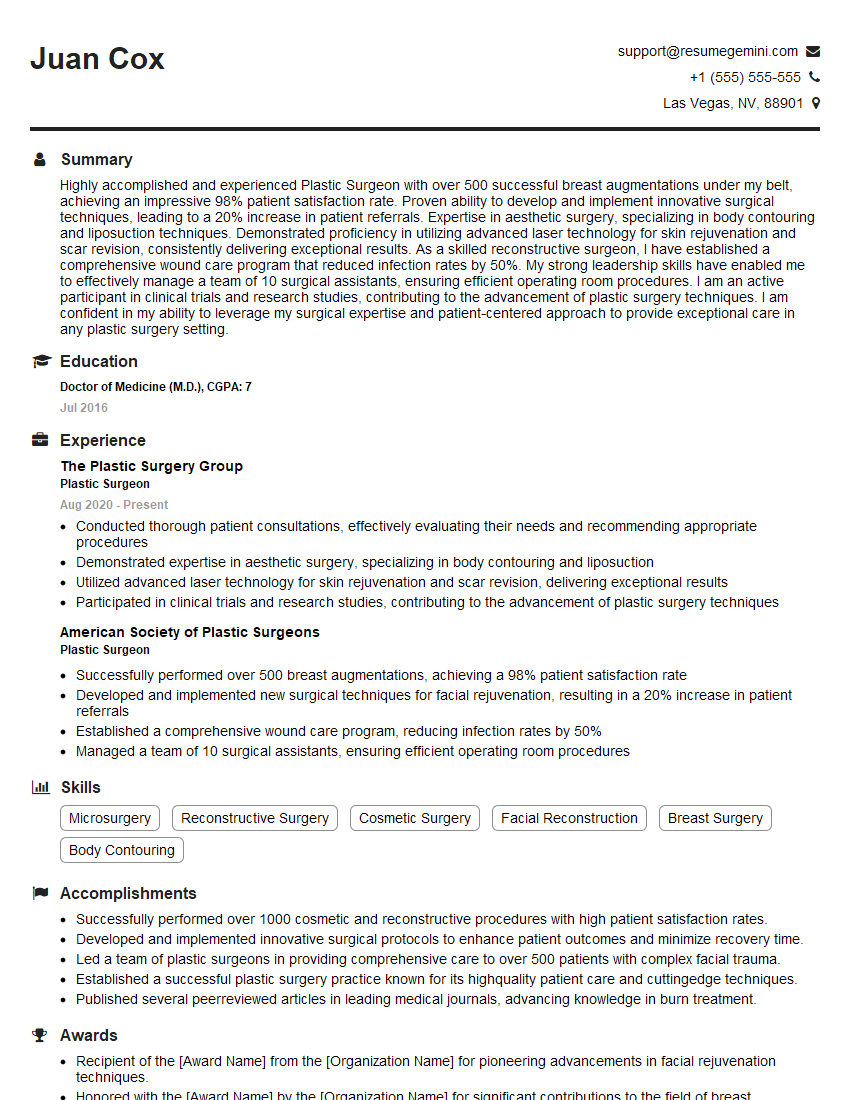
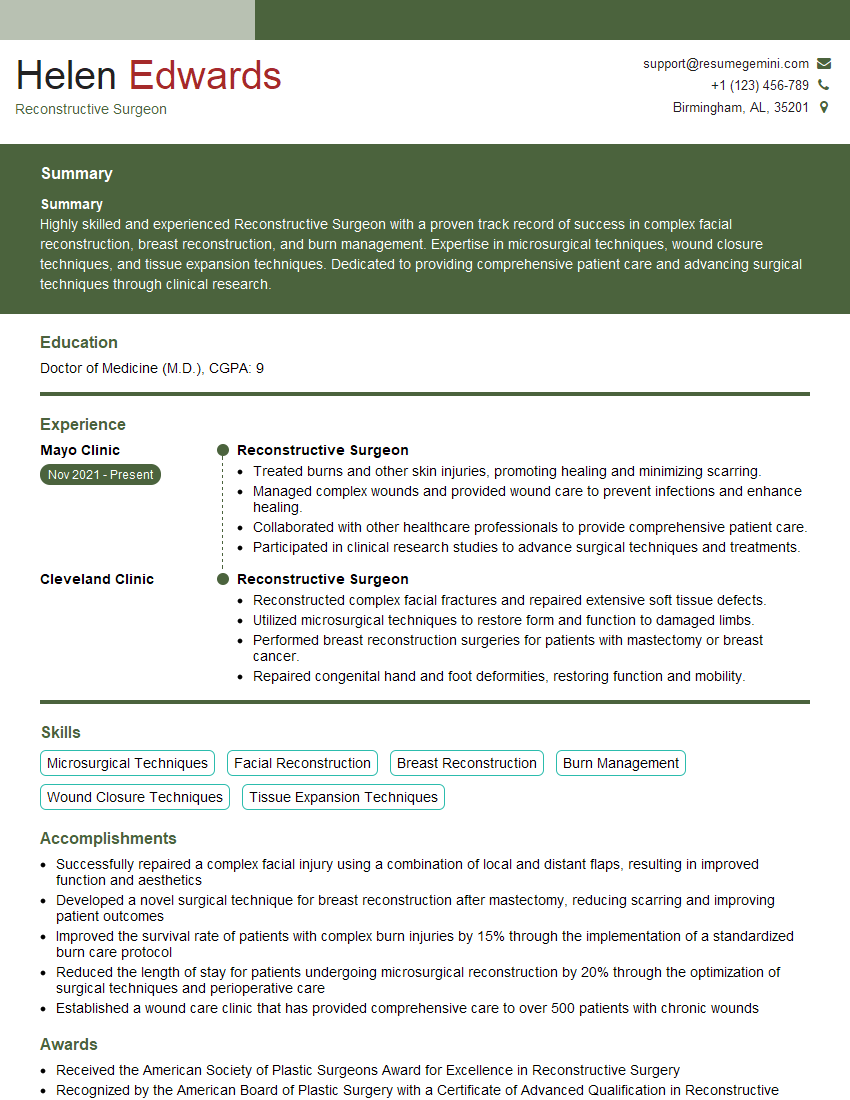
Mastering fat grafting techniques significantly enhances your career prospects in aesthetic and reconstructive surgery, opening doors to advanced positions and specialized practices. To stand out from other candidates, a well-crafted, ATS-friendly resume is crucial. ResumeGemini offers a powerful tool to create a professional resume that highlights your skills and experience effectively. ResumeGemini provides examples of resumes tailored specifically to the Fat Grafting field, ensuring your qualifications are presented in the most impactful way. Invest in your future—build a compelling resume today with ResumeGemini.

Explore more articles
Users Rating of Our Blogs
Share Your Experience
We value your feedback! Please rate our content and share your thoughts (optional).
What Readers Say About Our Blog
To the interviewgemini.com Webmaster.
Very helpful and content specific questions to help prepare me for my interview!
Thank you
To the interviewgemini.com Webmaster.
This was kind of a unique content I found around the specialized skills. Very helpful questions and good detailed answers.
Very Helpful blog, thank you Interviewgemini team.