Preparation is the key to success in any interview. In this post, we’ll explore crucial Fluency Disorders Treatment interview questions and equip you with strategies to craft impactful answers. Whether you’re a beginner or a pro, these tips will elevate your preparation.
Questions Asked in Fluency Disorders Treatment Interview
Q 1. Describe the difference between developmental and neurogenic stuttering.
Developmental stuttering and neurogenic stuttering are both fluency disorders characterized by disruptions in the flow of speech, but they differ significantly in their underlying causes and onset.
Developmental stuttering typically begins in early childhood (between ages 2 and 5) and is considered a childhood-onset fluency disorder. Its cause isn’t fully understood but is believed to be a complex interplay of genetic predisposition, neurological factors, and environmental influences. It often presents with repetitions of sounds, syllables, or words, as well as prolongations of sounds and blocks (interruptions in airflow).
Neurogenic stuttering, on the other hand, emerges later in life, often as a result of neurological damage or disease such as stroke, head trauma, or brain tumors. This type of stuttering is typically characterized by different features than developmental stuttering. It may involve less tension and struggle, and the disfluencies might be less varied, often with more whole-word repetitions. The underlying neurological damage is the key differentiator.
Think of it this way: developmental stuttering is like a car that starts having trouble with its engine early on, possibly due to a manufacturing defect or wear and tear; neurogenic stuttering is like a car that suddenly breaks down due to an accident.
Q 2. Explain the Lidcombe Program and its application.
The Lidcombe Program is a parent-administered behavioral therapy specifically designed for young children who stutter. It’s a highly effective and widely-used treatment approach. The core of the program involves parents providing frequent, positive feedback and gentle corrections for fluent speech and immediate, brief, and positive feedback for stutters.
Application: Parents are trained to identify and respond to their child’s speech in real-time. When the child stutters, the parent provides a simple verbal prompt, such as “Slowly,” or “Take your time.” When the child speaks fluently, the parent gives positive reinforcement, such as praise or a smile. Regular monitoring by a speech-language pathologist ensures the program is implemented effectively and adjustments are made as needed. The goal is to reduce stuttering severity, increase the child’s confidence and overall fluency naturally.
For instance, if a child stutters while saying “I want… want… want a cookie,” the parent might say “Slowly,” and then praise the child for saying “cookie” fluently when they retry it. It’s a subtle yet powerful approach, empowering parents to play an active role in their child’s therapy.
Q 3. What are the key components of a comprehensive fluency assessment?
A comprehensive fluency assessment involves a multifaceted approach to understand the nature and severity of a person’s speech disfluencies. It goes beyond simply noting the frequency of stutters; it aims to paint a complete picture of the individual’s communication skills and challenges.
- Case History: Gathering information about the onset, development, and impact of the fluency disorder, family history of speech problems, and the individual’s overall communication experiences.
- Speech Sample Analysis: Analyzing a sample of spontaneous speech to quantify the frequency and types of disfluencies (repetitions, prolongations, blocks, etc.). This helps determine the severity and characteristics of the stuttering.
- Assessment of Associated Behaviors: Observing and documenting any secondary behaviors often associated with stuttering (e.g., eye blinks, head movements, facial tension). These secondary behaviors, sometimes developed subconsciously, can worsen the stuttering.
- Assessment of Feelings and Attitudes: Exploring the individual’s feelings, thoughts, and beliefs about their speech. These emotional and cognitive aspects greatly impact the fluency disorder’s overall management and can worsen its impacts.
- Language and Articulation Evaluation: Assessing language skills and articulation abilities to rule out other potential contributing factors to communication difficulties. Sometimes, underlying language problems might co-occur and influence stuttering.
A thorough assessment helps determine the appropriate treatment plan and strategies, tailoring the intervention to the individual’s specific needs.
Q 4. Discuss various therapeutic approaches for managing cluttering.
Cluttering is a fluency disorder characterized by rapid, irregular, and often unintelligible speech. It involves a fast rate of speech, excessive disfluencies, and poor articulation. Managing cluttering requires a multi-pronged therapeutic approach:
- Rate Control Techniques: Techniques like slowed speech, pausing, and phrasing help improve the clarity and intelligibility of speech.
- Auditory Feedback Techniques: Using techniques like delayed auditory feedback (DAF) or masking can help individuals become more aware of their speech rate and rhythm. DAF causes a slight delay in hearing one’s voice, which can help regulate speech rate.
- Articulation Therapy: Addressing any articulation problems, often co-occurring with cluttering, can enhance the intelligibility of speech.
- Cognitive-Behavioral Therapy (CBT): Helping the individual understand and manage the underlying anxiety or cognitive issues that may contribute to their fast speaking style.
- Self-Monitoring Strategies: Training clients to monitor their speech rate, pauses and articulation independently improves their self-awareness and ability to identify and correct disfluencies.
Successful cluttering therapy is collaborative. It relies on the individual’s active participation and commitment to consistent practice outside of therapy sessions.
Q 5. How do you differentiate between stuttering and normal disfluencies in children?
Differentiating between normal disfluencies and stuttering in children can be challenging but crucial for early intervention. While all children experience some disfluencies in their speech, certain characteristics distinguish stuttering from typical developmental variations.
Normal Disfluencies: These are typically brief, infrequent, and often involve whole-word repetitions (e.g., “I I I want a cookie”), interjections (“uh,” “um”), or revisions (“I want…I need a drink”). They don’t usually cause the child significant frustration or anxiety.
Stuttering: Stuttering typically involves more frequent and complex disfluencies, such as sound repetitions (“C-c-c-cookie”), syllable repetitions (“Coo-coo-cookie”), prolongations (holding a sound out too long), or blocks (struggling to initiate a sound). Stuttering may also be accompanied by secondary behaviors (e.g., eye blinking, head movements, tension) and negative emotional reactions like frustration or anxiety. The child might also exhibit avoidance behaviors, avoiding particular words or situations that trigger stuttering.
The key is to look at the frequency, type, and context of the disfluencies, as well as the child’s overall reaction to them. If disfluencies are frequent, include multiple disfluency types, cause the child distress or avoidance, or are accompanied by secondary behaviors, it is essential to seek professional evaluation.
Q 6. Outline the stages of stuttering development.
The development of stuttering isn’t always linear, but we can outline general stages:
- Borderline Stuttering (2-3.5 years): This early stage is characterized by relatively mild disfluencies, often including whole-word repetitions and some interjections. The child may not exhibit any noticeable tension or frustration.
- Beginning Stuttering (3.5-6 years): Stuttering becomes more frequent and noticeable. Sound and syllable repetitions become common, and there may be some prolongations and blocks. Secondary behaviors, such as eye blinks or head nods, may begin to emerge.
- Intermediate Stuttering (6-13 years): Stuttering becomes more complex, with an increase in the frequency and severity of disfluencies. Secondary behaviors are more frequent and pronounced, and the child may begin to experience fear and avoidance of speech situations.
- Advanced Stuttering (13+ years): Stuttering is often well-established, with a high frequency and intensity of disfluencies. Significant secondary behaviors are present. The individual may experience fear and avoidance of speaking, significant emotional distress, and negative attitudes towards speech.
It’s important to remember that not all individuals with stuttering progress through all of these stages, and the severity and progression can vary considerably.
Q 7. Explain the role of behavioral therapy in fluency disorders.
Behavioral therapy plays a significant role in the management of fluency disorders. It focuses on modifying the overt behaviors associated with stuttering and reducing any negative emotional responses. Various behavioral techniques are used.
- Slowed Speech Rate: Teaching individuals to speak at a slower, more controlled pace. This can significantly reduce disfluencies.
- Easy Onset of Phonation: Techniques to reduce laryngeal tension and start sounds smoothly.
- Prolonged Speech: Stretching out sounds and syllables to reduce the occurrence of blocks and repetitions.
- Response Cost Procedures: A method where a small penalty is applied for each stutter, often paired with positive reinforcement for fluent speech.
- Positive Reinforcement: Praising and rewarding fluent speech to reinforce desirable behaviors.
- Habit Reversal Training: This method involves awareness training of the stuttering behaviors, followed by practicing strategies that reduce them.
Behavioral therapy, often combined with other approaches, helps individuals gain greater control over their speech, manage associated anxiety, and ultimately improve their communication effectiveness. It is particularly effective with children but can also benefit adults.
Q 8. Describe the use of fluency shaping techniques.
Fluency shaping techniques aim to directly modify the speech production mechanism to reduce stuttering. Instead of addressing the underlying emotional or psychological aspects, these techniques focus on changing the *how* of speaking. They teach specific strategies to produce smoother speech.
Several techniques fall under this umbrella. Slow speech, for example, involves deliberately slowing the rate of speech, often incorporating pauses between words or syllables. Think of it like learning to play a musical instrument – slow and deliberate practice helps perfect the technique. Gentle onset focuses on initiating sounds with less force, reducing the hard glottal attacks often associated with stuttering. Imagine starting a car smoothly instead of revving the engine aggressively. Continuous phonation encourages the speaker to connect sounds smoothly, avoiding abrupt stops and starts. It’s like drawing a continuous line rather than a series of disconnected dots. Prolonged speech extends the duration of sounds and syllables, breaking the tension that often leads to stuttering. Finally, techniques like airflow management focus on controlling the breath support for speech.
These techniques are often combined and tailored to the individual’s needs. For example, a child might benefit from a combination of slow speech and gentle onset, while an adult might focus on airflow management and continuous phonation. Consistent practice is key to success with fluency shaping. The goal isn’t perfection, but rather noticeable improvement in fluency, which then increases confidence and self-esteem.
Q 9. How do you incorporate family involvement in fluency therapy?
Family involvement is absolutely crucial in fluency therapy, especially for younger clients. Parents or caregivers are often the first to notice stuttering and play a vital role in creating a supportive environment at home. My approach involves educating family members about stuttering, dispelling misconceptions, and teaching them strategies to support the child’s speech.
This includes explaining the therapy techniques being used and how they can reinforce them at home. For instance, I might teach parents how to use slow speech when talking to the child or model gentle onset techniques in their own speech. We also discuss how to manage potentially triggering situations, such as pressure to speak quickly or demanding conversational settings. The family becomes an active part of the therapy team, helping to generalize the skills learned in therapy to real-life situations. Regular communication and feedback sessions with family members are key to this collaborative approach. I find that when families understand the process and actively participate, the child’s progress is significantly enhanced.
For older clients, family involvement might focus more on creating understanding and support, rather than direct participation in therapy exercises. However, even in these cases, family education and collaboration remains vital for overall success. I’ll often encourage family members to actively listen without interrupting or pressuring the client to speak fluently.
Q 10. What are the ethical considerations in treating fluency disorders?
Ethical considerations in treating fluency disorders are paramount. The foremost ethical responsibility is to prioritize the client’s well-being and autonomy. This means respecting their choices regarding treatment goals and methods. It’s crucial to avoid promising unrealistic outcomes and to ensure that the client understands the potential risks and benefits of any intervention. For example, it’s vital to emphasize that while fluency shaping can significantly improve speech flow, it might not eliminate stuttering entirely.
Another crucial ethical aspect is maintaining confidentiality. All information shared during therapy sessions must be kept strictly private, unless there is a legal obligation to disclose it (e.g., suspected child abuse). Moreover, it’s essential to be culturally sensitive and to tailor treatment approaches to the client’s background and preferences. This includes considering factors such as language, communication styles, and family dynamics. Informed consent is essential before starting therapy and should be reviewed periodically as treatment progresses. Finally, therapists must adhere to professional guidelines and maintain ongoing professional development to ensure competence and ethical practice.
Q 11. How do you adapt your therapy approach for different age groups?
Adapting therapy to different age groups is vital for effectiveness. Young children (preschool-aged) benefit from play-based therapy that integrates fluency techniques into fun activities. For example, using puppets or storytelling to practice slow speech or gentle onset. The focus is often on building foundational skills and fostering a positive attitude towards speech.
School-aged children might be ready for more structured therapy involving specific exercises and goal setting. Collaboration with educators is crucial to ensure consistency and generalization of skills across different environments. With adolescents and adults, the therapy focuses on more advanced techniques, addressing not only the speech mechanics but also the emotional and social aspects associated with stuttering. These might include cognitive behavioral therapy (CBT) to manage anxieties related to speaking, and support strategies to handle challenging social situations. For adults, therapy may also focus on addressing the long-term impact of stuttering on their life, including career and social aspects. The core principle is always to adapt the approach to meet the client’s developmental stage, cognitive abilities, and individual needs.
Q 12. Discuss the use of technology in fluency therapy.
Technology has significantly advanced fluency therapy. Speech-generating apps can be used for practicing slow speech, providing immediate feedback on rate and rhythm. Virtual reality (VR) environments offer immersive settings to practice speech in simulated social situations, reducing anxiety and promoting generalization of skills. Computer-assisted assessment tools provide objective measures of fluency, enabling accurate monitoring of progress.
Teletherapy, facilitated through video conferencing platforms, has expanded accessibility to therapy services, particularly beneficial for individuals in remote areas or with mobility challenges. Digital recording and playback allow clients to review their own speech, fostering self-awareness and identification of areas for improvement. While technology offers remarkable advancements, it’s crucial to use these tools judiciously and integrate them into a holistic therapy plan that addresses the client’s individual needs. Technology should be a supporting tool, not a replacement for the essential human connection and expertise provided by a qualified speech-language pathologist.
Q 13. Explain the importance of monitoring treatment progress.
Monitoring treatment progress is essential to ensure therapy’s effectiveness and to make necessary adjustments. This involves regular assessment using both quantitative and qualitative measures. Quantitative measures include objective data such as speech rate, percentage of stuttered syllables, and the frequency of specific stuttering behaviors. This can be obtained through recordings and standardized assessments.
Qualitative measures involve subjective evaluations of the client’s confidence, self-perception, and overall communication effectiveness in various contexts. Regular client feedback is crucial, allowing the therapist to understand the client’s experiences and challenges, and to tailor the approach accordingly. I typically use a combination of standardized fluency assessments, client self-report measures, and informal observation during therapy sessions. This data informs modifications to the therapy plan, ensuring the client remains engaged and progress continues to be made. The overall goal is not just to improve fluency numbers, but to enhance the client’s overall communication skills and well-being.
Q 14. Describe your experience with various assessment tools for fluency disorders.
My experience includes utilizing a wide range of assessment tools, chosen carefully based on the client’s age, communication skills, and the specific information needed. For younger children, I often use play-based assessments to observe their natural speech patterns and identify potential stuttering behaviors. Standardized tests like the Stuttering Severity Instrument-Fourth Edition (SSI-4) provide quantitative measures of stuttering severity, allowing objective comparison across time and across individuals.
For older children and adults, I often incorporate the Test of Childhood Stuttering (TOCS) or other clinical observation scales to assess the frequency, type, and severity of stuttering behaviors. I also use questionnaires and interviews to understand the client’s perceptions of their stuttering, its impact on their life, and their expectations for therapy. These tools provide a comprehensive view, including the emotional and psychosocial aspects of stuttering. Beyond these, various other assessments such as the Overall Assessment of the Speaker's Experience of Stuttering (OASES) provide a more holistic view of a person’s experiences with stuttering. The selection and interpretation of assessment data are essential aspects of delivering effective and ethical fluency therapy.
Q 15. How do you address the emotional and psychological impact of stuttering on clients?
Addressing the emotional and psychological impact of stuttering is crucial for successful therapy. Stuttering isn’t just a speech problem; it significantly impacts self-esteem, confidence, and social interactions. Many clients experience anxiety, frustration, and even depression related to their speech.
My approach involves a multi-faceted strategy. Firstly, I create a safe and empathetic therapeutic environment where clients feel comfortable sharing their feelings without judgment. We openly discuss the emotional burden of stuttering, validating their experiences. Secondly, I incorporate relaxation techniques like deep breathing and progressive muscle relaxation to manage anxiety associated with speaking. Thirdly, I work collaboratively with the client to develop coping mechanisms for challenging situations, such as public speaking or job interviews. This may involve cognitive restructuring to challenge negative self-talk and develop more positive self-perceptions. Finally, I might refer clients to a psychologist or counselor if the emotional impact is severe or requires specialized mental health support. For example, I recently worked with a young adult who experienced significant social anxiety due to stuttering. Through a combination of fluency shaping techniques and cognitive behavioral therapy (CBT) principles, we addressed both the speech and emotional aspects, resulting in improved fluency and increased confidence in social settings.
Career Expert Tips:
- Ace those interviews! Prepare effectively by reviewing the Top 50 Most Common Interview Questions on ResumeGemini.
- Navigate your job search with confidence! Explore a wide range of Career Tips on ResumeGemini. Learn about common challenges and recommendations to overcome them.
- Craft the perfect resume! Master the Art of Resume Writing with ResumeGemini’s guide. Showcase your unique qualifications and achievements effectively.
- Don’t miss out on holiday savings! Build your dream resume with ResumeGemini’s ATS optimized templates.
Q 16. Discuss different types of fluency disorders and their characteristics.
Fluency disorders encompass a range of conditions characterized by disruptions in the normal flow and rhythm of speech. The most common is developmental stuttering, which typically begins in early childhood (between 2 and 7 years old). It’s characterized by repetitions of sounds, syllables, or words; prolongations of sounds; and blocks (interruptions in airflow). The severity and characteristics can vary greatly. Some children may only stutter occasionally, while others experience significant disruptions that impact their communication and daily life.
Neurogenic stuttering, on the other hand, results from neurological damage or disease affecting the brain areas responsible for speech production. It can occur at any age and often presents with different characteristics than developmental stuttering, potentially including more frequent and less rhythmic disruptions.
Psychogenic stuttering is less common and believed to be related to psychological trauma or stress. It often has a sudden onset and can be characterized by variable stuttering patterns that may improve or worsen depending on the emotional state.
Finally, cluttering is a fluency disorder characterized by rapid, irregular speech with frequent disruptions in articulation, rhythm, and phrasing. It often co-occurs with other communication difficulties.
Q 17. How would you manage a client who shows resistance to therapy?
Resistance to therapy is common and needs a thoughtful approach. It’s crucial to understand the underlying reasons for the resistance. This might be fear of failure, a lack of trust, perceived lack of progress, or simply a mismatch in therapeutic styles.
My strategy begins with building rapport and establishing a strong therapeutic alliance. I actively listen to the client’s concerns and address them openly and honestly. I adjust my approach based on their individual needs and preferences, offering choices whenever possible to increase their sense of control. For example, if a client resists a specific technique, I might explore alternatives or modify the technique to make it more comfortable. I might also incorporate elements of motivational interviewing to help them identify their own reasons for seeking therapy and set realistic goals. Positive reinforcement and celebrating small successes are vital to maintain motivation and demonstrate progress. In some cases, involving family members in the therapeutic process can be helpful, especially with younger clients.
If resistance persists despite these efforts, I might consider a referral to another therapist who might have a different approach that better suits the client’s needs. The goal is to ensure the client feels supported and empowered throughout their journey.
Q 18. Explain the principles of operant conditioning in fluency therapy.
Operant conditioning is a cornerstone of many fluency therapy techniques. It’s based on the principle that behaviors are influenced by their consequences. In fluency therapy, we use this to increase fluent speech and decrease stuttering behaviors.
Positive reinforcement involves rewarding fluent speech with praise, tokens, or other positive feedback. This increases the likelihood of fluent speech occurring again. For example, praising a child for a long, fluent sentence reinforces that behavior.
Negative reinforcement involves removing an aversive stimulus after fluent speech. This might involve removing a pressure to speak or reducing the level of anxiety surrounding speaking. The removal of the negative stimulus reinforces fluent speech.
Punishment is generally avoided in fluency therapy, as it can increase anxiety and negatively impact the therapeutic relationship. It’s far more effective to focus on reinforcing desired behaviors rather than punishing undesired ones. The overall aim is to create a learning environment where fluency is positively rewarded and stuttering is not directly punished, but gradually reduced through shaping techniques. For instance, instead of criticizing a stutter, we might model smooth speech or use techniques like easy onset to encourage fluency.
Q 19. What is your experience with evidence-based practices in fluency disorder treatment?
My practice is grounded in evidence-based practices. This means I utilize interventions supported by rigorous scientific research. For developmental stuttering, I incorporate techniques such as fluency shaping (e.g., prolonged speech, gentle onset) and stuttering modification (e.g., cancellations, pull-outs). For neurogenic stuttering, the approach may differ, focusing on compensatory strategies and adaptive techniques tailored to the specific neurological condition.
I regularly review the latest research in fluency disorders to ensure I’m providing the most effective and up-to-date treatment. I also track client progress carefully using standardized assessment tools to measure the effectiveness of the interventions and make necessary adjustments. For example, I regularly use the Stuttering Severity Instrument (SSI) to monitor changes in stuttering frequency, duration, and severity. Continuous evaluation ensures that the therapy is tailored to the individual needs of each client, maximizing the chances of success.
Q 20. Describe your approach to collaborating with other professionals (e.g., psychologists, educators).
Collaboration is key to providing comprehensive care for clients with fluency disorders. I frequently work with psychologists, educators, and other professionals to ensure holistic support. With psychologists, we coordinate efforts to address the emotional and psychological aspects of stuttering, ensuring a cohesive approach to treatment. This often includes shared care plans and regular communication to monitor progress and address any arising concerns.
Collaboration with educators is equally important, especially for children. I might work with teachers and school counselors to create supportive classroom environments that minimize pressure on the child’s speech. This could involve providing strategies for the classroom, modifying assignments to reduce speaking demands, or advocating for accommodations. Regular communication helps to ensure consistency between the therapy sessions and the school environment. In many cases, I find that open communication and teamwork are essential for achieving optimal outcomes for my clients.
Q 21. How do you handle challenging cases with severe or complex fluency disorders?
Challenging cases require a tailored approach and often involve a multidisciplinary team. For severe or complex fluency disorders, a thorough assessment is crucial to understand the underlying factors contributing to the severity. This might involve neurological evaluations, psychological assessments, and detailed speech-language evaluations. Based on the assessment, I develop a personalized treatment plan, possibly incorporating techniques from multiple approaches. This could involve a combination of fluency shaping, stuttering modification, and other therapeutic interventions, such as cognitive-behavioral therapy (CBT) to address anxieties associated with speaking.
In some cases, technological aids, such as speech-generating devices or augmentative and alternative communication (AAC) strategies, may be integrated to support communication. Regular monitoring and adjustments to the treatment plan are essential to ensure ongoing effectiveness. Close collaboration with the client, family, and other professionals ensures everyone is informed and actively participates in the treatment process. Furthermore, accessing resources and specialist support through a network of other professionals is critical for providing the highest standard of care in such complex situations.
Q 22. How do you determine the appropriate treatment intensity and duration?
Determining the appropriate intensity and duration of fluency disorder treatment is crucial for effective outcomes. It’s not a one-size-fits-all approach; it’s highly individualized. We consider several factors:
- Severity of the disorder: A client with mild stuttering may require less intensive therapy than someone with severe, chronic stuttering.
- Client’s age and developmental stage: Younger children might benefit from shorter, more frequent sessions, while adults might prefer longer, less frequent ones.
- Client’s goals and motivation: A client highly motivated to reduce stuttering might engage in more intensive therapy, while someone with less motivation might benefit from a slower, more gradual approach.
- Response to treatment: We continuously monitor progress and adjust the intensity and duration accordingly. If a client isn’t responding well to a particular approach, we may need to alter the frequency, duration, or techniques used.
- Comorbid conditions: The presence of anxiety or other psychological conditions can impact treatment and may require a more comprehensive approach involving additional support.
For example, a young child with mild stuttering might receive weekly 30-minute sessions for several months, while an adult with severe stuttering might participate in more intensive, longer sessions over a longer period, possibly incorporating home practice assignments.
Q 23. Explain your understanding of the role of self-monitoring in fluency therapy.
Self-monitoring plays a vital role in fluency therapy. It empowers clients to become active participants in their own recovery. By teaching clients to observe their own speech patterns, identify triggers, and track their progress, we foster self-awareness and facilitate generalization of learned skills beyond therapy sessions.
For example, clients might keep a journal documenting their speech fluency in different settings. This helps them identify situations where stuttering is more or less prominent, enabling us to tailor strategies to address specific challenges. We may also use audio or video recordings for self-assessment, allowing clients to visually and aurally observe their speech patterns and refine their techniques. The goal is to build their confidence and independence, transforming them from passive recipients of therapy to active agents in their own improvement.
Q 24. Discuss your approach to counseling and support for clients with fluency disorders.
Counseling and support are integral to fluency therapy. Many clients experience significant emotional distress related to their fluency disorder, including anxiety, frustration, and social isolation. Addressing these emotional aspects is crucial for successful treatment.
My approach involves creating a safe and empathetic therapeutic environment where clients feel comfortable sharing their feelings and experiences. I use a variety of techniques, including cognitive behavioral therapy (CBT) to help clients manage negative thoughts and beliefs about their stuttering. I also incorporate relaxation techniques to reduce anxiety and improve overall well-being. For example, I might help a client challenge the thought ‘I’ll always stutter,’ replacing it with more realistic and positive affirmations. Collaboration with other professionals, such as psychologists or social workers, may be necessary in cases of significant emotional or psychological distress.
Q 25. What are some common misconceptions about fluency disorders?
Several common misconceptions surround fluency disorders. One prevalent misconception is that stuttering is simply a nervous habit or a sign of low intelligence. This is untrue; stuttering is a neurological communication disorder with complex causes that are not fully understood.
- Misconception 1: Stuttering is caused by nervousness or anxiety. While anxiety can exacerbate stuttering, it’s not the root cause.
- Misconception 2: Stuttering is a sign of low intelligence or poor upbringing. This is completely unfounded.
- Misconception 3: Stuttering can be cured with willpower. While clients can learn coping strategies, stuttering is not simply a matter of self-control.
- Misconception 4: There is only one type of stuttering. In reality, stuttering manifests differently in individuals.
Educating clients, families, and the public about the true nature of fluency disorders is a critical part of my work. This helps reduce stigma and promotes a more supportive and understanding environment for those who stutter.
Q 26. Describe your experience with different types of fluency disorders in adults.
My experience with adult fluency disorders encompasses various types, including neurogenic stuttering (resulting from neurological damage), psychogenic stuttering (linked to psychological trauma), and persistent developmental stuttering (originating in childhood and continuing into adulthood). Each type requires a unique therapeutic approach.
For example, neurogenic stuttering often necessitates different strategies than developmental stuttering. Neurogenic stuttering may involve medication or other medical interventions in conjunction with speech therapy, while developmental stuttering focuses more on modifying speech behaviors and managing emotional responses.
Understanding the specific etiology of the disorder – the underlying cause – is crucial for effective treatment planning and intervention selection in adults. A comprehensive assessment, which may involve medical evaluations and psychological assessments, helps to differentiate between the types of fluency disorders and ensure the most appropriate course of treatment.
Q 27. How do you measure the effectiveness of your fluency therapy interventions?
Measuring the effectiveness of fluency therapy interventions involves a multi-faceted approach. We don’t solely rely on subjective measures. Objective and subjective data are combined to give a comprehensive picture of the client’s progress.
- Objective measures: These include quantitative data such as frequency and duration of stuttering, speech rate, and percentage of syllables stuttered, often obtained through recordings and analysis.
- Subjective measures: These include questionnaires, self-ratings, and clinician ratings assessing perceived fluency, communication confidence, and overall quality of life. We consider the client’s own perception of improvement as crucial.
We use standardized assessment tools at the start and throughout the therapy process to track changes. A significant improvement in objective measures, coupled with the client’s report of increased fluency and confidence, indicates successful intervention. Regular monitoring allows for adjustments to the therapy plan, ensuring it remains tailored to the client’s needs and progress.
Q 28. Explain your understanding of the impact of cultural factors on fluency disorders.
Cultural factors significantly influence the experience and treatment of fluency disorders. Cultural norms surrounding communication styles and expectations of fluency vary widely across different communities. What might be considered acceptable disfluencies in one culture could be stigmatized in another.
For instance, some cultures may have more tolerance for pauses or repetitions in speech, while others may hold higher expectations for completely fluent communication. These cultural variations need to be considered during assessment and treatment. Therapists must be sensitive to cultural differences and avoid imposing values that may conflict with the client’s cultural background. A culturally sensitive approach involves tailoring treatment to fit the client’s cultural context, and also ensuring that the client’s family and community understand and support the therapy process.
Key Topics to Learn for Fluency Disorders Treatment Interview
- Core Fluency Disorders: Understanding the diagnostic criteria and differentiating between stuttering, cluttering, and neurogenic stuttering. This includes exploring developmental and acquired etiologies.
- Assessment Techniques: Mastering various assessment methods, including standardized and informal measures, to accurately diagnose and characterize fluency disorders in diverse populations.
- Treatment Approaches: Familiarity with a range of evidence-based therapeutic interventions, such as fluency shaping techniques, stuttering modification, and the use of technology in treatment.
- Behavioral Therapy: Deep understanding of the principles and application of behavioral therapies, including operant conditioning and classical conditioning, in managing fluency disorders.
- Multidisciplinary Collaboration: Knowledge of collaborating effectively with other professionals, like speech-language pathologists, psychologists, and educators, to create holistic treatment plans.
- Ethical Considerations: Awareness of ethical implications in assessing and treating individuals with fluency disorders, including informed consent and client confidentiality.
- Research and Evidence-Based Practice: Ability to critically evaluate research literature and apply evidence-based practices to inform clinical decision-making.
- Case Conceptualization and Treatment Planning: Developing individualized treatment plans based on thorough assessment findings and considering client factors, including age, culture, and communication needs.
- Technology in Fluency Disorder Treatment: Understanding and applying technologies like apps, software and telehealth platforms in assessment and treatment.
- Data Collection and Analysis: Competence in tracking client progress, analyzing data, and modifying treatment plans based on outcomes.
Next Steps
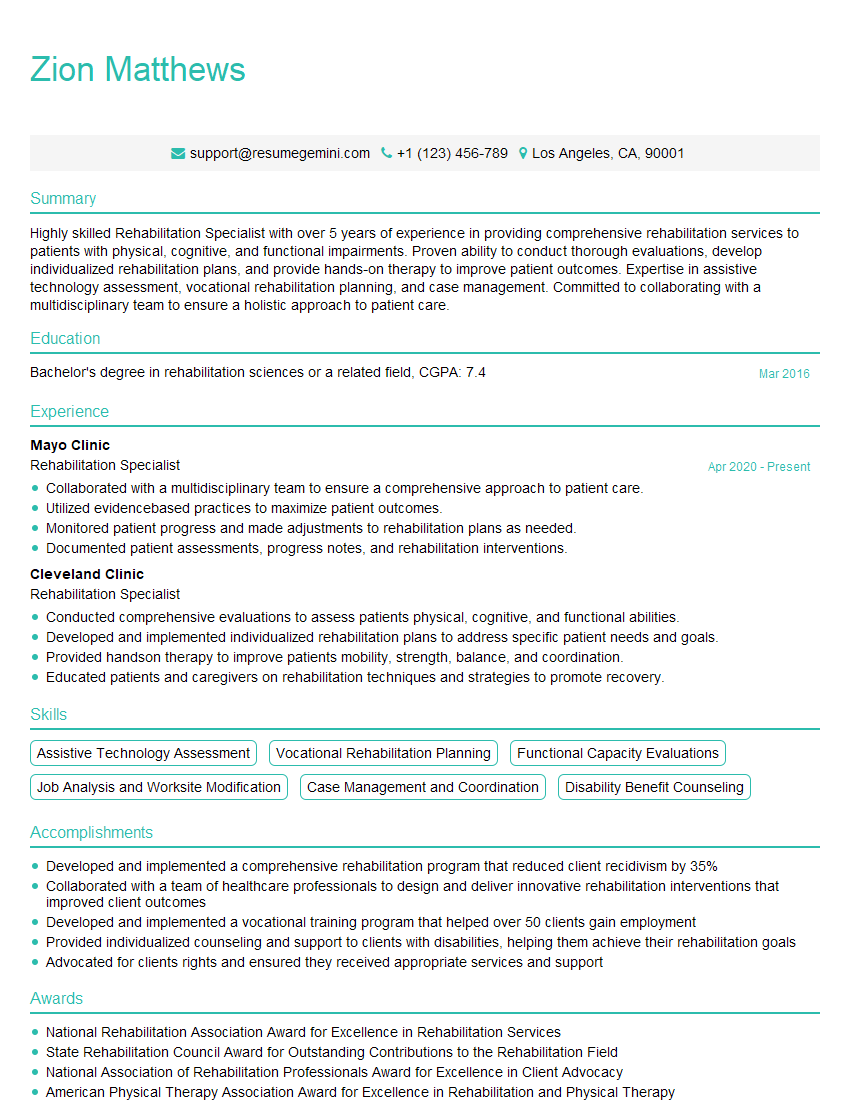
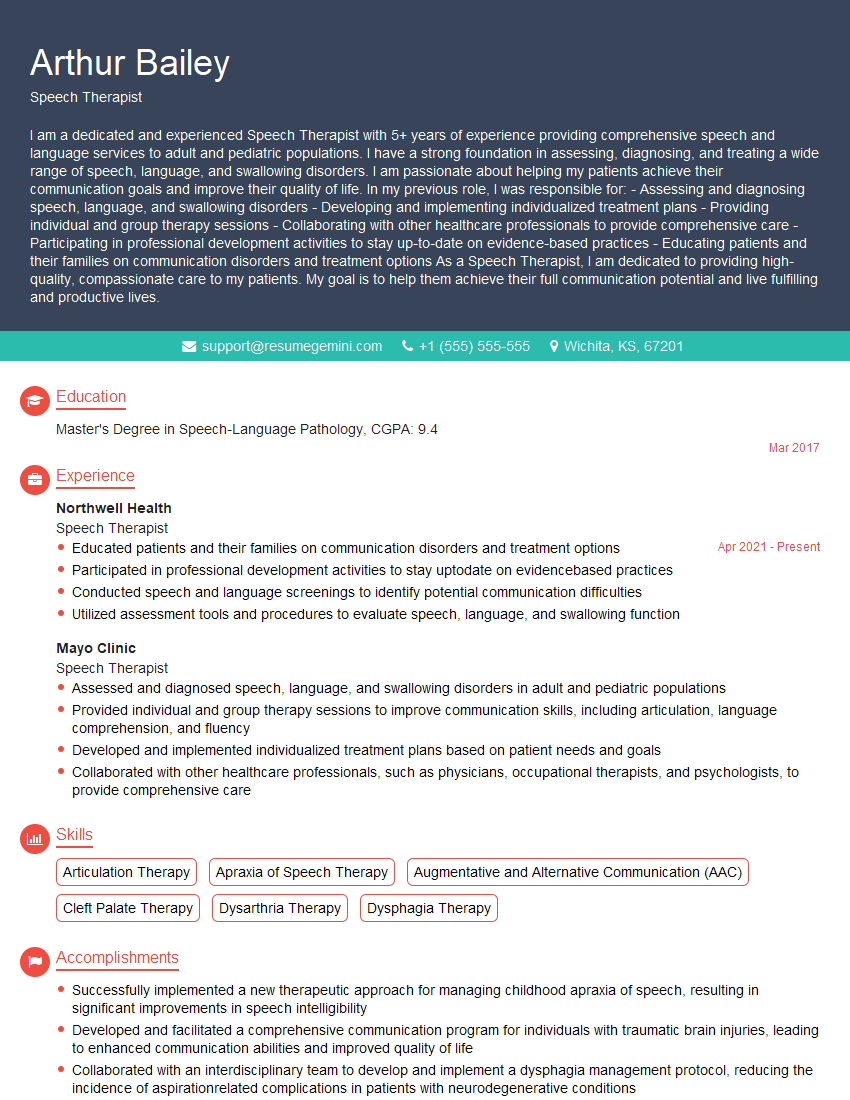
Mastering Fluency Disorders Treatment is crucial for a successful and rewarding career in speech-language pathology. A strong understanding of these core concepts will significantly enhance your interview performance and open doors to exciting opportunities. To maximize your job prospects, it’s vital to present your skills and experience effectively through a well-crafted, ATS-friendly resume. ResumeGemini is a trusted resource that can help you build a professional and impactful resume tailored to the specific demands of the Fluency Disorders Treatment field. Examples of resumes specifically designed for this area are available to help you get started. Invest in your future and craft a resume that showcases your expertise.
Explore more articles
Users Rating of Our Blogs
Share Your Experience
We value your feedback! Please rate our content and share your thoughts (optional).
What Readers Say About Our Blog
To the interviewgemini.com Webmaster.
Very helpful and content specific questions to help prepare me for my interview!
Thank you
To the interviewgemini.com Webmaster.
This was kind of a unique content I found around the specialized skills. Very helpful questions and good detailed answers.
Very Helpful blog, thank you Interviewgemini team.