Cracking a skill-specific interview, like one for SSOPs (Sanitation Standard Operating Procedures), requires understanding the nuances of the role. In this blog, we present the questions you’re most likely to encounter, along with insights into how to answer them effectively. Let’s ensure you’re ready to make a strong impression.
Questions Asked in SSOPs (Sanitation Standard Operating Procedures) Interview
Q 1. Describe your experience developing and implementing SSOPs.
My experience in developing and implementing SSOPs spans over ten years, encompassing various roles within the food processing industry. I’ve been involved in every stage, from initial risk assessments and hazard analysis critical control points (HACCP) plan development to the creation, documentation, and training of sanitation staff on SSOPs. For example, at my previous company, I led the development of a new SSOP for our retort processing line after identifying a recurring Bacillus cereus contamination issue. This involved a thorough review of the existing process, identifying critical control points, and designing a robust sanitation procedure targeting spore reduction, including specific cleaning and sanitizing agents, contact times, and monitoring parameters. The implementation involved comprehensive staff training, visual aids, and regular audits to ensure consistent execution. The result was a significant reduction in contamination incidents and improved product safety.
In another instance, I worked with a team to create a modular SSOP system for a multi-product facility. This involved breaking down the sanitation procedures into smaller, task-specific SSOPs, allowing for greater flexibility and adaptability to production changes. This modular approach also streamlined training and improved overall efficiency.
Q 2. Explain the importance of preventative sanitation in food processing.
Preventative sanitation in food processing is paramount to ensuring food safety and preventing costly product recalls. Think of it as proactive healthcare for your facility – preventing illness rather than treating it. It’s far more effective and cost-efficient to prevent contamination than to react to it after it’s occurred. Contamination can lead to product spoilage, microbial growth, and the potential for foodborne illnesses, resulting in significant financial losses, reputational damage, and legal repercussions. A strong preventative sanitation program minimizes these risks by implementing procedures that eliminate or reduce the presence of potential hazards at every stage of the production process, from raw materials to finished product.
- Reduced microbial load: Regular cleaning and sanitizing drastically reduce the number of microorganisms, preventing the buildup of pathogens that could cause illness.
- Improved product quality: Clean equipment and facilities contribute to superior product quality and extended shelf life.
- Enhanced employee safety: A clean environment reduces the risk of worker injuries and illnesses associated with slips, trips, and falls due to spills or unclean surfaces.
- Regulatory compliance: Robust SSOPs demonstrate adherence to regulatory requirements, minimizing the risk of non-compliance penalties.
Q 3. How do you ensure compliance with SSOPs in a production environment?
Ensuring SSOP compliance in a production environment requires a multi-faceted approach. It’s not just about having the procedures written; it’s about implementing them effectively and consistently. I employ a strategy that involves the following:
- Comprehensive training: All personnel involved in sanitation must receive thorough training on the specific SSOPs relevant to their roles, emphasizing the importance of each step and the consequences of non-compliance.
- Regular audits and inspections: Scheduled and unscheduled inspections are crucial for verifying compliance. These should include visual inspections, environmental monitoring (ATP testing, swabbing), and verification of cleaning and sanitizing agent concentrations.
- Documented procedures and records: Maintaining accurate records of sanitation activities is essential for traceability and accountability. This includes logs of cleaning, sanitizing, and monitoring data. These records help identify trends and areas needing improvement.
- Corrective actions: Any deviations from the SSOPs must be investigated and corrective actions implemented to prevent recurrence. Root cause analysis is used to identify the underlying issues and fix them permanently.
- Employee engagement: Promoting a culture of safety and hygiene is key. This includes providing employees with the necessary resources, feedback mechanisms, and incentives to maintain compliance. Open communication and a reward system for compliance promote engagement.
Q 4. What are the key elements of a well-written SSOP?
A well-written SSOP is more than just a list of tasks; it’s a clear, concise, and easily understandable guide to achieving consistent sanitation. Key elements include:
- Objective: Clearly stating the purpose of the SSOP (e.g., to sanitize the production line to prevent Salmonella contamination).
- Scope: Defining the specific equipment, areas, or processes covered by the SSOP.
- Responsibilities: Clearly assigning responsibility for each task to specific individuals or teams.
- Procedure: A step-by-step description of the sanitation process, including detailed instructions, times, temperatures, and concentrations of cleaning and sanitizing agents. Visual aids are helpful.
- Monitoring and verification: Methods for verifying the effectiveness of the sanitation process, such as visual inspection, ATP bioluminescence testing, or microbial sampling.
- Corrective actions: Procedures to be followed if non-conformances are detected.
- Frequency: Specifying how often the SSOP should be performed (e.g., daily, weekly).
- Documentation requirements: Clearly defining the records that need to be kept.
- Approval and review: Signatures indicating approval and schedule for regular review and updates.
Q 5. Describe your experience with sanitation validation.
Sanitation validation is a crucial step to ensure our SSOPs are effective. My experience includes designing and executing validation studies to verify the efficacy of sanitation procedures in removing microbial contamination. This involves a three-stage process:
- Development: Developing a robust sanitation protocol. We identify critical control points and develop a protocol tailored to target those. For example, we might utilize a combination of different cleaning agents and techniques to effectively address biofilm formation in particular areas.
- Execution: Performing validation runs. We inoculate test surfaces with relevant microorganisms (Spores, vegetative cells) followed by the application of the sanitation process. Subsequently, we analyze the resulting microbial load through microbiological testing.
- Documentation & Review: Maintaining thorough documentation including SOPs, monitoring results, and analysis. The data from the validation study is rigorously analyzed to demonstrate the effectiveness of the sanitation procedure. We will show the reduction achieved and ensure all parameters are correctly followed. This includes a review of the data to ensure the study complies with industry standards and regulatory requirements.
For instance, in validating a new CIP (Clean-in-Place) system, we conducted multiple validation runs using different levels of soil load to determine the system’s efficacy under various conditions. This data helps to establish the effectiveness and robustness of our sanitation procedures.
Q 6. How do you monitor and control sanitation effectiveness?
Monitoring and controlling sanitation effectiveness is an ongoing process. We use a combination of methods to assess the effectiveness of our SSOPs and take prompt action where improvement is needed:
- Visual inspections: Regular visual inspections are conducted to check for cleanliness, evidence of contamination, or any equipment malfunction.
- Environmental monitoring: We use various methods, such as ATP bioluminescence testing, to quickly assess surface cleanliness. This provides a quantitative measure of microbial contamination. Swab testing is also used, particularly for confirming the elimination of specific pathogens.
- Microbial sampling: Regular microbiological sampling of environmental surfaces and products is performed to verify the effectiveness of the sanitation procedures. These results are compared to acceptable limits to ensure that the SSOPs are adequately controlling microbial populations.
- Data analysis: We continuously analyze sanitation data to identify trends, areas of concern, and any opportunities for improvement in our procedures. For example, if we see a pattern of higher microbial loads in a specific area, we investigate the potential root causes (poor cleaning practices, equipment malfunction, etc.) and adjust the SSOP accordingly.
- Corrective action procedures: In case of deviations from the established standards, a systematic corrective action procedure is followed to investigate the root cause, address immediate problems, and implement preventative measures to avoid recurrence.
Q 7. What are the common sanitation challenges in your industry, and how do you address them?
Common sanitation challenges in the food processing industry often involve:
- Biofilm formation: Biofilms are difficult to remove and can harbor significant microbial contamination. Addressing this involves using appropriate cleaning agents and techniques targeting biofilm removal.
- Equipment design: Equipment with hard-to-reach or poorly designed areas can hinder effective cleaning and sanitizing. Addressing this may involve modifying equipment or investing in better designs to allow for complete cleaning.
- Staff training and compliance: Inconsistency in the application of SSOPs is a major challenge. Regular retraining and reinforcement of procedures are crucial. Using visual aids and gamification can improve training effectiveness.
- Water quality and supply: Maintaining adequate water pressure and temperature are essential for effective cleaning. Using purified water can further enhance the sanitation process.
- Cost optimization: Balancing effective sanitation with cost considerations can be challenging. Careful selection of cleaning and sanitizing agents, and efficient usage, is key.
We address these challenges through a combination of improved training programs, meticulous equipment design review, use of advanced cleaning technologies, careful selection of chemicals and sanitation agents, and continuous monitoring and improvement of our SSOPs. We view these challenges as opportunities to further refine our processes and enhance our food safety program.
Q 8. Explain the difference between cleaning and sanitizing.
Cleaning and sanitizing are distinct but sequential steps in maintaining hygiene. Cleaning removes visible dirt, food residue, and other organic matter, while sanitizing reduces the number of microorganisms to a safe level. Think of it like this: cleaning is like tidying your room, removing all the clutter; sanitizing is like disinfecting surfaces to kill any lingering germs. Cleaning is crucial *before* sanitizing because sanitizer won’t be effective if it’s applied to a dirty surface; the dirt can shield the microbes from the sanitizer.
For example, cleaning a kitchen counter involves wiping it with soap and water to remove food spills and crumbs. Sanitizing follows this by applying a sanitizer to kill any remaining bacteria or viruses that could cause illness. In a food processing facility, this could involve a detailed cleaning of equipment, followed by a sanitizing rinse using a chlorine-based solution.
Q 9. What are the different types of sanitizers and their applications?
Several types of sanitizers exist, each with specific applications:
- Chlorine-based sanitizers: These are very effective and widely used in food processing, healthcare, and other industries. They’re usually inexpensive and readily available. However, they can be corrosive and require careful handling and proper concentration control.
- Iodine-based sanitizers: These are broad-spectrum sanitizers effective against various microorganisms. They are less corrosive than chlorine but can stain surfaces and may be less effective in hard water.
- Quaternary ammonium compounds (Quats): These are often used in hospitals and food service establishments. They’re generally less corrosive than chlorine and iodine, but their effectiveness can be reduced by hard water and organic matter.
- Acid-based sanitizers: Often used in specific applications like dairy processing, they’re effective against certain types of bacteria.
- Ozone: A powerful sanitizer used in water treatment and some food processing settings. It’s environmentally friendly but requires specialized equipment.
The choice depends on factors such as the surface material, the type of microorganisms to be controlled, and regulatory requirements.
Q 10. How do you select the appropriate sanitizer for a specific application?
Selecting the right sanitizer involves careful consideration of several factors:
- Target microorganisms: Identify the specific bacteria, viruses, or fungi you need to control. Some sanitizers are more effective against certain types of microorganisms than others.
- Surface material: Certain sanitizers can damage or corrode specific materials. For instance, chlorine-based sanitizers shouldn’t be used on aluminum surfaces.
- Water hardness: Hard water can reduce the effectiveness of some sanitizers, especially quats. Water quality testing is essential.
- Food contact: If the sanitizer will come into contact with food, it must be approved for food-contact use and meet regulatory standards.
- Environmental impact: Consider the environmental implications of different sanitizers and select the most sustainable option where possible.
- Cost-effectiveness: Compare the cost of different sanitizers, including the cost of application and disposal.
For instance, a food processing facility handling dairy products might opt for an acid-based sanitizer, while a hospital might prefer quats for their broader efficacy and compatibility with various surfaces.
Q 11. Describe your experience with allergen control and sanitation.
My experience with allergen control and sanitation is extensive. I’ve worked in facilities where stringent allergen control protocols are critical, such as those producing food products for individuals with allergies or intolerances. Effective sanitation is paramount in preventing cross-contamination. This involves implementing dedicated cleaning and sanitizing procedures for different product lines, ensuring thorough cleaning of equipment between runs, and employing color-coded cleaning tools to avoid cross-contamination.
For example, in a facility processing nuts and wheat, we would have completely separate production lines and dedicated cleaning and sanitizing equipment for each. We’d use specific procedures to avoid transferring even microscopic amounts of allergens. Employee training focused heavily on allergen awareness, hygiene practices, and proper sanitation techniques. Maintaining meticulous documentation and rigorous auditing are essential aspects of ensuring our procedures are consistently followed and effective.
Q 12. How do you manage sanitation records and documentation?
Sanitation records are managed using a comprehensive system that combines physical and digital documentation. We maintain detailed logs of all cleaning and sanitizing activities, including the date, time, location, personnel involved, sanitizing agents used, and concentration levels. This data is often recorded electronically using specialized software. The software typically features automated data logging, alert generation, and reporting capabilities, making data analysis and auditing more efficient.
This documentation serves as proof of compliance with regulatory standards (like HACCP) and internal quality control procedures. Regular audits are performed to ensure records are accurate, complete, and compliant. This documentation provides traceability in case of contamination incidents, helping to quickly identify the source and prevent future occurrences. It also enables us to monitor the effectiveness of the sanitation program over time.
Q 13. How do you train employees on proper sanitation procedures?
Employee training on proper sanitation procedures is crucial. Our training program is multifaceted and includes:
- Initial training: New employees receive comprehensive training on all aspects of sanitation, including the importance of hygiene, proper cleaning and sanitizing techniques, and the use of personal protective equipment (PPE).
- Ongoing training: Regular refresher courses ensure that employees remain updated on best practices and new regulations. This includes hands-on training and practical demonstrations.
- Supervisory oversight: Supervisors regularly monitor employee performance and provide feedback. They conduct spot checks and ensure compliance with established procedures.
- Documentation: All training is documented, and employees sign off to confirm their understanding of the procedures. We conduct regular assessments of employee knowledge and skills through quizzes and practical demonstrations.
Using a combination of lectures, demonstrations, and hands-on practice, we ensure employees can perform the tasks correctly and understand the rationale behind each step. Interactive training sessions and the use of visual aids like videos and infographics significantly enhance knowledge retention and ensure all employees are confident in carrying out sanitation procedures effectively.
Q 14. What are the critical control points for sanitation in your area of expertise?
Critical control points (CCPs) for sanitation vary depending on the specific context but some universally important ones include:
- Pre-operational sanitation: Thorough cleaning and sanitizing of all equipment and surfaces *before* production begins is critical to prevent contamination from the start.
- In-process sanitation: During production, regular cleaning and sanitizing of equipment and work surfaces are necessary to prevent cross-contamination.
- Post-operational sanitation: A thorough cleaning and sanitizing procedure at the end of each production run is vital to remove all residue and prevent microbial growth.
- Sanitizer concentration and contact time: Using the correct concentration of sanitizer and ensuring adequate contact time are critical to ensure effective microbial kill.
- Personnel hygiene: Handwashing, use of gloves, and proper clothing are crucial to prevent contamination by personnel.
- Water quality: Using clean, potable water for cleaning and sanitizing is essential. Hard water can impact sanitizer effectiveness.
Regular monitoring and verification of these CCPs are vital to maintaining a safe and hygienic environment. Any deviations from the established procedures must be immediately addressed.
Q 15. How do you investigate and resolve sanitation-related deviations or non-conformances?
Investigating and resolving sanitation deviations starts with a thorough root cause analysis. Think of it like detective work – we need to find the ‘who, what, when, where, and why’ of the non-conformity. This involves reviewing documentation, interviewing personnel, and physically inspecting the affected area. For example, if we find excessive bacterial growth in a processing area, we wouldn’t just clean it; we’d investigate if the cleaning procedure was followed correctly, if the cleaning agents were effective, if equipment was properly maintained, or if there was an environmental factor like a leak contributing to the problem.
Once the root cause is identified, corrective actions are implemented. These might include retraining staff on proper sanitation procedures, adjusting cleaning protocols (e.g., changing cleaning agents or increasing contact time), repairing or replacing faulty equipment, or improving environmental controls. We then verify the effectiveness of these corrective actions through follow-up inspections and monitoring. Crucially, we document the entire process, from the initial deviation to the final verification, ensuring continuous improvement and preventing recurrence.
- Example: If a deviation shows inadequate handwashing, we’d investigate if the handwashing sinks are properly stocked with soap and sanitizer, if training on proper handwashing technique is effective, and if there are enough sinks to accommodate the workforce. Corrective actions could then include restocking supplies, additional training sessions, or installing more handwashing stations.
Career Expert Tips:
- Ace those interviews! Prepare effectively by reviewing the Top 50 Most Common Interview Questions on ResumeGemini.
- Navigate your job search with confidence! Explore a wide range of Career Tips on ResumeGemini. Learn about common challenges and recommendations to overcome them.
- Craft the perfect resume! Master the Art of Resume Writing with ResumeGemini’s guide. Showcase your unique qualifications and achievements effectively.
- Don’t miss out on holiday savings! Build your dream resume with ResumeGemini’s ATS optimized templates.
Q 16. How do you conduct a sanitation audit?
A sanitation audit is a systematic and independent examination of the sanitation program’s effectiveness. It’s like a health check for your sanitation system. We use checklists to assess compliance with established SSOPs and regulatory requirements. This includes a visual inspection of facilities, equipment, and processes, reviewing sanitation records, and interviewing personnel. The audit covers all aspects of the sanitation program, from personnel hygiene to cleaning procedures, equipment maintenance, and pest control.
For example, we’d check the cleanliness of surfaces, the condition of equipment, the proper use of cleaning agents and disinfectants, the effectiveness of pest control measures, and compliance with hygiene protocols. We also review documentation such as training records, cleaning logs, and pest control reports. Findings are then documented, and any non-conformances are reported with recommendations for corrective actions.
Think of it as a ‘gap analysis’ – identifying the gap between the ideal sanitation practices and the current reality. This helps in identifying areas for improvement and strengthening the overall sanitation program.
Q 17. What are the key performance indicators (KPIs) for sanitation effectiveness?
Key Performance Indicators (KPIs) for sanitation effectiveness depend on the specific context, but some common ones include:
- Microbiological counts: This measures the number of bacteria or other microorganisms on surfaces or in products. Low counts indicate effective sanitation.
- ATP bioluminescence testing: This rapid test measures the amount of adenosine triphosphate (ATP), an indicator of organic matter. Low ATP levels indicate effective cleaning.
- Environmental monitoring: This includes monitoring parameters like temperature, humidity, and air quality, which can impact sanitation effectiveness.
- Compliance rate: This measures the percentage of sanitation procedures followed correctly according to the SSOPs.
- Pest control effectiveness: This measures the reduction in pest activity through trapping or visual inspections.
- Training and competency levels: This assesses the knowledge and skills of personnel related to sanitation practices.
- Number of sanitation-related deviations: Tracking the number of non-conformances helps identify trends and areas needing attention.
These KPIs, when tracked and analyzed, provide valuable insights into the effectiveness of the sanitation program and guide continuous improvement efforts. They allow for data-driven decision-making and the identification of areas requiring more attention.
Q 18. Describe your experience with equipment sanitation.
My experience with equipment sanitation encompasses various types of equipment, including processing equipment, packaging machinery, and utensils. I’m familiar with different sanitation methods, such as CIP (Clean-in-Place) and COP (Clean-out-of-Place) systems. I understand the importance of selecting the right cleaning agents and disinfectants based on the type of equipment and the nature of the soiling. For example, CIP systems are commonly used for cleaning tanks and pipelines in the food industry, while COP is used for equipment that can be disassembled.
I have experience developing and implementing equipment sanitation procedures that adhere to regulatory requirements and industry best practices. This includes preparing sanitation validation reports which demonstrate the effectiveness of our cleaning processes. I’m also experienced in training personnel on proper equipment sanitation techniques and ensuring the correct usage of cleaning agents and Personal Protective Equipment (PPE).
Q 19. How do you ensure the effectiveness of sanitation equipment?
Ensuring sanitation equipment effectiveness involves a multi-pronged approach. Firstly, we must validate the cleaning process. This involves scientifically demonstrating that the equipment effectively removes soil and microorganisms. We use microbiological testing and other validation techniques to prove our cleaning process meets the required standards. This validation must be repeated periodically or whenever changes are made to the process or equipment.
Secondly, proper maintenance is crucial. This includes regular inspection and cleaning of the equipment itself. Any malfunctioning equipment needs to be promptly repaired or replaced to prevent contamination. For instance, ensuring proper functioning of spray nozzles in a CIP system is paramount to the effectiveness of the cleaning process.
Thirdly, operator training is vital. Operators need thorough training on the proper use and maintenance of the equipment, as well as the correct procedures for cleaning and sanitizing. This ensures the cleaning protocols are correctly followed every time.
Lastly, we need to regularly monitor and calibrate equipment used for sanitation, such as measuring devices for cleaning agent concentrations and temperature monitoring equipment.
Q 20. What are some common sanitation hazards and how do you mitigate them?
Common sanitation hazards include:
- Cross-contamination: The transfer of microorganisms from one surface to another, often resulting from improper cleaning or handling of food.
- Improper cleaning and sanitizing: Using inappropriate cleaning agents or not following proper procedures can lead to residual contamination.
- Inadequate pest control: Pests can contaminate food and surfaces, carrying disease-causing organisms.
- Poor hygiene practices: Unsanitary behaviors by personnel, such as inadequate handwashing, can lead to contamination.
- Equipment malfunction: Faulty equipment can hinder effective cleaning and sanitizing, causing contamination.
Mitigation strategies include implementing comprehensive SSOPs, providing thorough employee training, conducting regular sanitation audits, maintaining equipment, implementing effective pest control measures, and regularly monitoring environmental parameters.
Example: To mitigate cross-contamination risk, we might implement color-coded cutting boards, designate separate areas for raw and cooked foods, and ensure thorough cleaning and sanitizing of all surfaces between tasks. To control pests, we use a combination of sanitation practices, physical barriers, and where necessary, chemical pest control measures, all implemented according to a carefully monitored integrated pest management plan.
Q 21. What is your experience with pest control and its relationship to sanitation?
Pest control is intrinsically linked to sanitation. Pests, such as rodents, insects, and birds, can contaminate food and surfaces, spreading pathogens and compromising the integrity of the sanitation program. An effective pest control program is an essential component of a robust sanitation system. My experience includes implementing and monitoring Integrated Pest Management (IPM) programs, which combine sanitation, exclusion (physical barriers), and targeted pesticide use to minimize pest populations.
IPM focuses on preventing infestations rather than just reacting to them. This involves identifying potential pest entry points, implementing sanitation procedures to eliminate food sources and harborages, and using monitoring tools to detect and track pest activity. Only targeted pesticide application is used when other methods prove insufficient, and always in adherence to relevant regulations and safety protocols. Effective documentation and record keeping are key to demonstrating the effectiveness of the IPM program.
Example: We might seal cracks and holes to prevent rodent entry, regularly clean and maintain equipment to eliminate food sources, and use traps and monitoring devices to detect rodent activity. If rodent activity is detected, we will investigate the root cause, address it, and implement corrective actions.
Q 22. How do you maintain a sanitary environment in a high-risk area?
Maintaining a sanitary environment in a high-risk area, like a food processing plant or pharmaceutical facility, requires a multi-layered approach. It’s not just about cleaning; it’s about preventing contamination from the outset.
- Strict SSOP Adherence: We begin with meticulously developed and rigorously followed SSOPs. These procedures detail every step, from pre-operational sanitation checks to post-operational cleaning and sanitization. For example, a specific SSOP might outline the exact procedure for cleaning and sanitizing a specific piece of equipment, including chemical type, concentration, contact time, and rinsing procedures.
- Environmental Monitoring: Regular monitoring is crucial. This includes swabbing surfaces for microbial contamination and environmental monitoring for pest activity. Results are documented and any deviations from acceptable limits trigger immediate corrective actions.
- Personnel Hygiene: Employees are trained on proper hand hygiene, gowning procedures, and the importance of preventing cross-contamination. This could include mandatory handwashing before and after tasks, the use of protective clothing, and the appropriate disposal of waste.
- Equipment Design and Maintenance: Equipment should be designed for easy cleaning and sanitation. Regular maintenance and repair are critical to prevent the buildup of food debris or other contaminants that harbor microorganisms. Think about easily accessible components, smooth surfaces, and self-draining designs.
- Pest Control: Implementing a robust pest control program is essential. This includes preventative measures such as sealing cracks and crevices, using traps, and engaging a professional pest control service to prevent infestation.
In a high-risk area, a proactive and preventative approach is far more effective and economical than reactive cleanup. Think of it like regular car maintenance – preventing a breakdown is much simpler and cheaper than dealing with a major engine failure.
Q 23. Explain your understanding of GMPs and their relation to SSOPs.
Good Manufacturing Practices (GMPs) are a comprehensive set of guidelines that ensure the quality and safety of manufactured products. SSOPs are a critical component of GMPs, specifically addressing the sanitation aspect. GMPs provide the overarching framework, while SSOPs offer the detailed, step-by-step instructions for achieving and maintaining sanitation.
Imagine GMPs as the blueprint for a house, encompassing all aspects of construction. SSOPs would be the detailed instructions for plumbing – specifying materials, connections, and testing procedures. Without proper plumbing (sanitation), the house (the manufacturing process) won’t function properly and could be unsafe.
In simpler terms, GMPs establish the overall standards for hygiene and quality, while SSOPs provide the practical, operational procedures to meet those standards.
Q 24. What are the legal and regulatory requirements for sanitation in your industry?
Legal and regulatory requirements for sanitation vary greatly depending on the industry and location. However, commonalities exist across sectors. For example, the Food and Drug Administration (FDA) in the United States sets stringent sanitation requirements for food manufacturing facilities, outlining requirements for equipment sanitation, personnel hygiene, pest control, and record-keeping. Similarly, pharmaceutical companies are subject to strict regulations from agencies like the FDA and the European Medicines Agency (EMA), emphasizing sterility and contamination prevention.
These regulations often involve:
- Hazard Analysis and Critical Control Points (HACCP) principles: Identifying and controlling potential hazards throughout the manufacturing process.
- Specific microbiological limits: Establishing acceptable levels of microbial contamination on surfaces and in products.
- Detailed documentation and record-keeping: Maintaining comprehensive records of sanitation procedures, monitoring results, and corrective actions.
- Regular inspections and audits: Undergoing periodic inspections by regulatory agencies to ensure compliance.
Non-compliance can result in significant fines, product recalls, and damage to a company’s reputation. Understanding and adhering to these regulations is paramount.
Q 25. How do you stay updated on the latest sanitation regulations and best practices?
Staying updated on sanitation regulations and best practices is an ongoing process. I utilize several methods:
- Regulatory Agency Websites: Regularly reviewing the websites of relevant regulatory agencies (e.g., FDA, EMA) for updates on regulations, guidance documents, and announcements.
- Industry Publications and Journals: Subscribing to and reading industry publications and journals that cover sanitation, food safety, and related topics. This ensures I’m aware of the latest research and best practices.
- Professional Organizations: Participating in professional organizations related to food safety and sanitation. These organizations often offer training, conferences, and networking opportunities to share knowledge and stay informed.
- Industry Conferences and Workshops: Attending conferences and workshops to learn from experts and stay abreast of the latest developments and technologies in sanitation.
- Training Courses and Certifications: Actively pursuing relevant training courses and certifications to demonstrate proficiency and stay updated.
Continual learning is crucial in this field, as regulations and best practices are constantly evolving.
Q 26. How do you handle sanitation issues that require immediate attention?
When a sanitation issue requires immediate attention, a swift and decisive response is vital. Our procedures involve:
- Immediate Isolation: The affected area is immediately isolated to prevent cross-contamination. This might involve shutting down a section of a production line or cordoning off a contaminated area.
- Rapid Assessment: A thorough assessment is conducted to determine the extent of the contamination, the potential causes, and the risks involved.
- Corrective Actions: Immediate corrective actions are taken based on the assessment. This could include intensified cleaning and sanitization, equipment repairs, or changes to operational procedures.
- Root Cause Analysis: A thorough investigation is conducted to identify the root cause of the issue to prevent recurrence. This often involves reviewing sanitation records, interviewing personnel, and analyzing potential process failures.
- Documentation: All actions taken are meticulously documented, including the nature of the problem, the actions taken, and the outcomes.
Effective communication is essential throughout this process to ensure everyone involved understands the situation and their roles in resolving it. Speed and precision are critical to minimizing potential risks and economic losses.
Q 27. Describe your experience with developing and implementing a sanitation improvement plan.
I have extensive experience in developing and implementing sanitation improvement plans. A recent example involves a food processing plant experiencing higher-than-acceptable microbial counts on certain equipment. My approach involved:
- Data Analysis: We first analyzed historical sanitation data to pinpoint recurring issues and identify trends. This involved reviewing microbial testing results, cleaning logs, and maintenance records.
- Gap Analysis: We compared our existing sanitation procedures to best practices and regulatory requirements, identifying gaps and areas for improvement.
- Plan Development: Based on the data analysis and gap analysis, we developed a comprehensive improvement plan. This included specific, measurable, achievable, relevant, and time-bound (SMART) goals. For instance, one goal was to reduce microbial counts on a specific piece of equipment by 50% within three months.
- Implementation: We implemented the plan through staff training, updated SSOPs, improved cleaning methods (e.g., introducing new cleaning agents or equipment), and enhanced monitoring procedures.
- Evaluation: We regularly monitored progress toward our goals, making adjustments to the plan as needed based on performance data. This involved tracking microbial counts, observing cleaning procedures, and reviewing employee feedback.
The result was a significant reduction in microbial counts, improved sanitation scores during audits, and reduced product recalls – resulting in significant cost savings and improved brand reputation.
Q 28. How do you measure the return on investment (ROI) for sanitation improvements?
Measuring the ROI of sanitation improvements requires a comprehensive approach. We consider both direct and indirect benefits.
- Direct Cost Savings: This includes reduced costs associated with product recalls, regulatory fines, and waste disposal. We calculate the savings by comparing costs before and after the sanitation improvement plan.
- Indirect Cost Savings: This encompasses improved product quality, increased production efficiency, and reduced downtime due to contamination issues. Quantifying these requires careful analysis, possibly through statistical modeling or comparing production metrics before and after the improvement plan.
- Improved Brand Reputation: Enhancements to sanitation practices can result in a stronger brand reputation, increasing consumer confidence and potentially leading to increased sales. Measuring this is more qualitative and could involve surveys or monitoring brand perception.
- Employee Morale and Safety: A cleaner and safer work environment contributes to improved employee morale, reducing absenteeism and turnover. This positive impact on employee productivity can be quantified through analysis of employee metrics.
The total ROI is calculated by summing up all the cost savings and benefits, and comparing this to the investment made in implementing the sanitation improvement plan. A strong ROI demonstrates the economic value of investing in sanitation.
Key Topics to Learn for SSOPs (Sanitation Standard Operating Procedures) Interview
- Understanding SSOP Development: Learn the principles behind creating effective and compliant SSOPs, including hazard analysis and critical control points (HACCP) principles.
- Cleaning and Sanitizing Procedures: Master the practical application of different cleaning and sanitizing methods, including chemical selection, concentration, contact time, and verification techniques.
- Equipment Sanitation: Understand the specific sanitation procedures for various food processing equipment, including disassembly, cleaning, sanitizing, and reassembly.
- Personal Hygiene and GMPs: Familiarize yourself with Good Manufacturing Practices (GMPs) and their role in maintaining sanitation standards, including handwashing procedures and proper attire.
- Pest Control and Prevention: Learn about strategies for preventing pest infestations and managing potential pest contamination risks.
- Sanitation Monitoring and Validation: Understand methods for monitoring sanitation effectiveness, including ATP bioluminescence testing and environmental monitoring programs.
- Documentation and Record Keeping: Learn the importance of accurate and complete documentation of all sanitation procedures and results, including deviation reports and corrective actions.
- Troubleshooting Sanitation Issues: Develop problem-solving skills to identify and resolve sanitation issues efficiently and effectively. This includes understanding root cause analysis techniques.
- Regulatory Compliance: Understand relevant regulations and standards impacting sanitation procedures within your industry.
- Sanitation Training and Supervision: Explore the principles of effective sanitation training and the role of supervision in maintaining consistent sanitation practices.
Next Steps
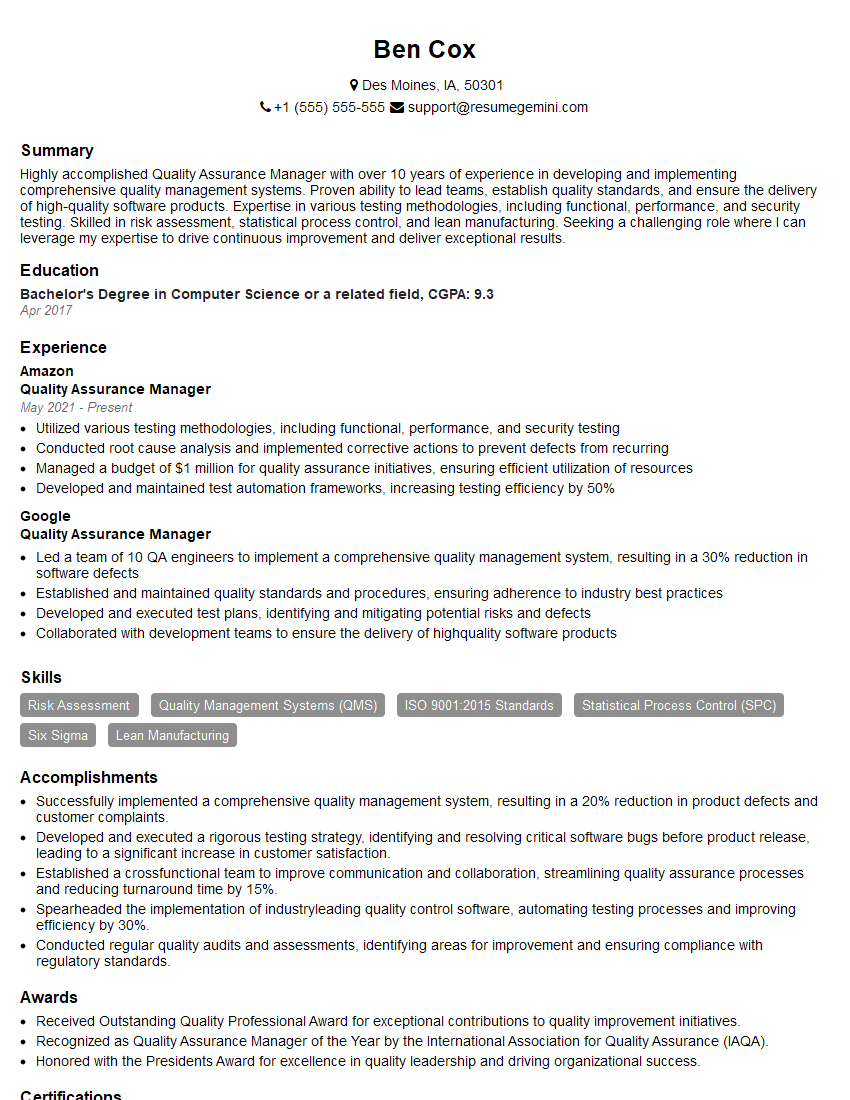
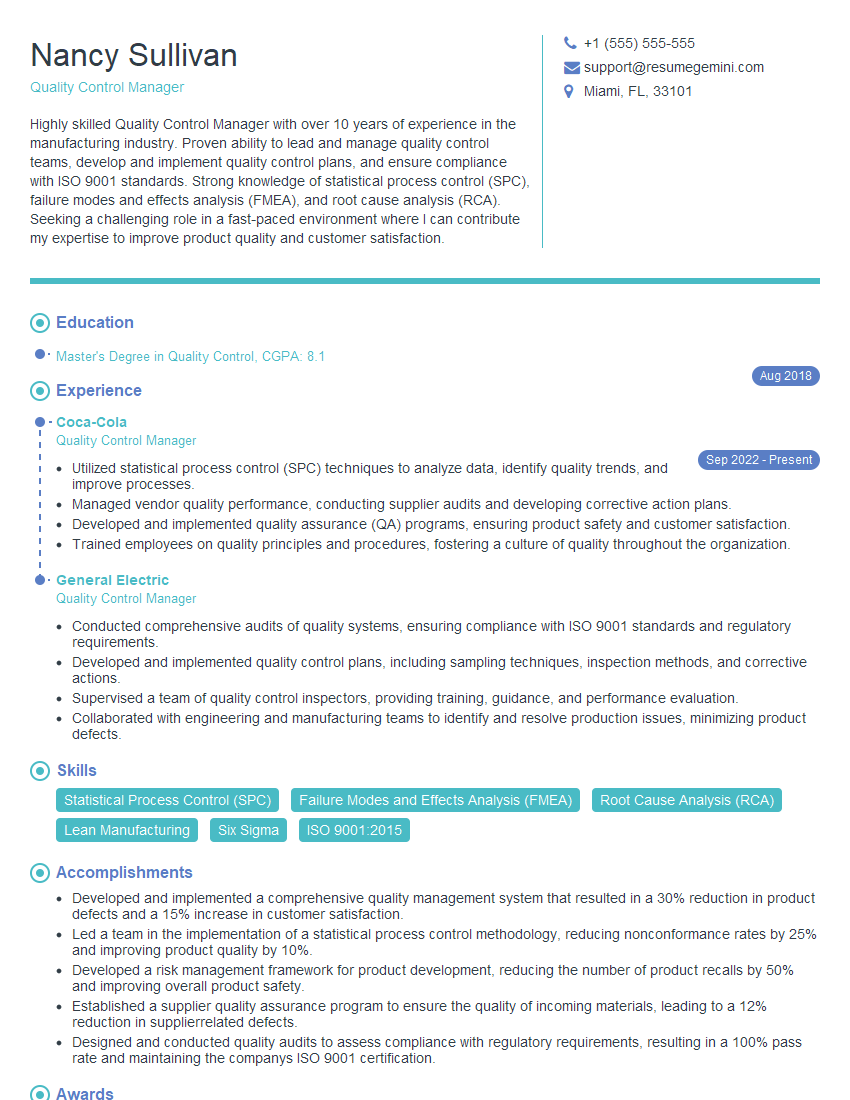
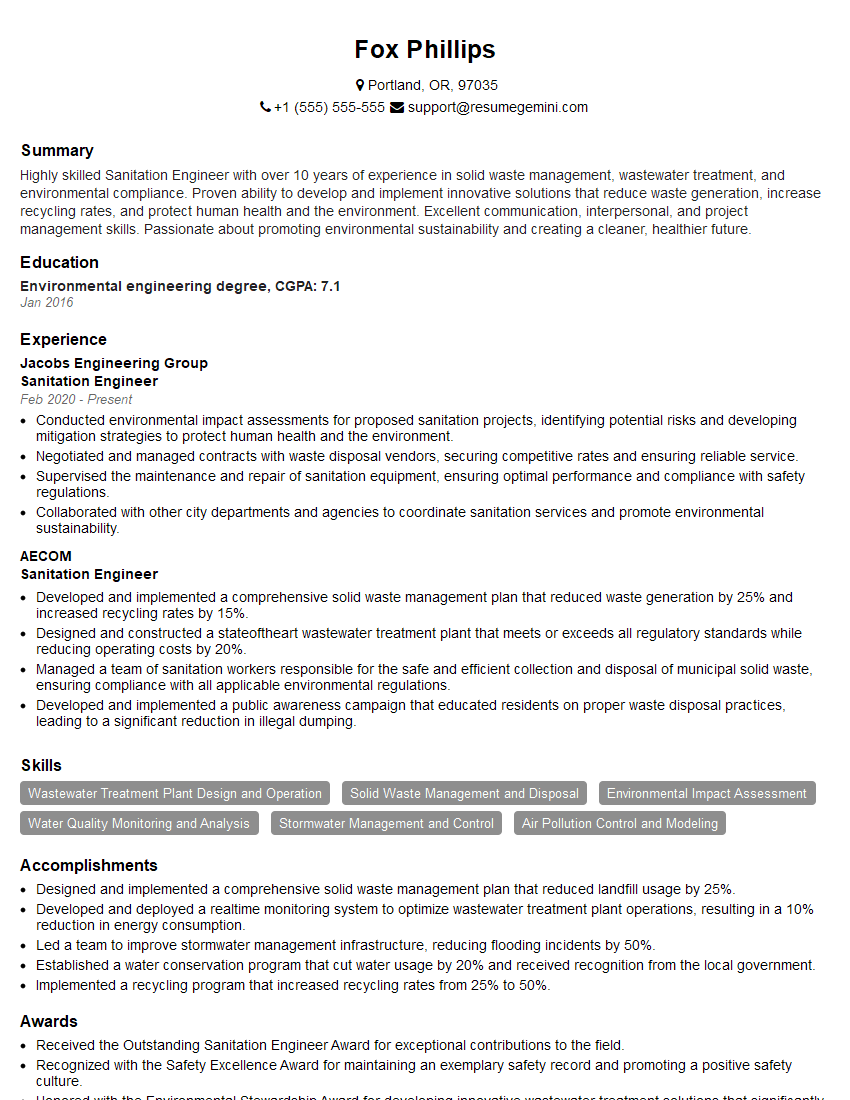
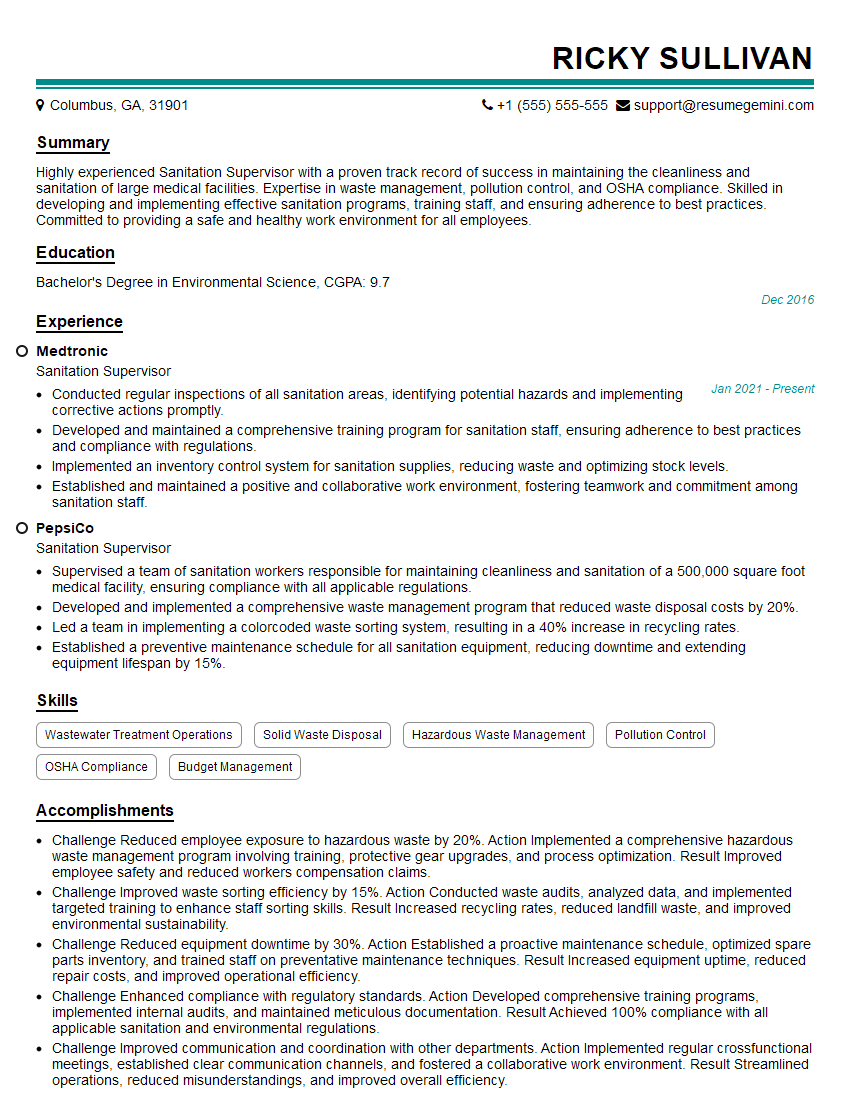
Mastering SSOPs is crucial for advancing your career in food safety and quality assurance. A strong understanding of sanitation procedures demonstrates commitment to safety and efficiency, opening doors to greater responsibility and higher earning potential. To maximize your job prospects, creating an ATS-friendly resume is essential. ResumeGemini is a trusted resource to help you build a professional and impactful resume that highlights your SSOP expertise. Examples of resumes tailored to SSOPs are available to guide you. Invest in your future; invest in your resume.
Explore more articles
Users Rating of Our Blogs
Share Your Experience
We value your feedback! Please rate our content and share your thoughts (optional).
What Readers Say About Our Blog
To the interviewgemini.com Webmaster.
Very helpful and content specific questions to help prepare me for my interview!
Thank you
To the interviewgemini.com Webmaster.
This was kind of a unique content I found around the specialized skills. Very helpful questions and good detailed answers.
Very Helpful blog, thank you Interviewgemini team.