Interviews are opportunities to demonstrate your expertise, and this guide is here to help you shine. Explore the essential Fluency in Multiple Languages (e.g., English, Spanish) interview questions that employers frequently ask, paired with strategies for crafting responses that set you apart from the competition.
Questions Asked in Fluency in Multiple Languages (e.g., English, Spanish) Interview
Q 1. Describe your experience interpreting between English and Spanish in a professional setting.
My experience interpreting between English and Spanish in professional settings spans several years, encompassing diverse fields like healthcare, legal proceedings, and business negotiations. I’ve worked extensively with medical professionals ensuring accurate communication between English and Spanish-speaking patients and doctors. This involved interpreting complex medical terminology, ensuring patient understanding and accurate record-keeping. Similarly, in legal settings, I’ve facilitated clear communication between lawyers and Spanish-speaking clients during depositions and consultations, paying close attention to legal nuances and ensuring accurate translations.
In business, I’ve assisted during international negotiations, facilitating smooth communication between English and Spanish-speaking parties. I’ve translated contracts, presentations, and other vital business documents, requiring a strong understanding of both languages and the cultural contexts relevant to each business negotiation. In each of these contexts, accuracy and cultural sensitivity were paramount to successful outcomes.
Q 2. How would you handle a situation where a client or colleague doesn’t understand a complex concept you’re explaining in Spanish?
If a client or colleague doesn’t understand a complex concept I’m explaining in Spanish, I employ a multi-pronged approach. Firstly, I’d simplify the language, using more basic vocabulary and shorter sentences. If necessary, I would break down the concept into smaller, more manageable parts. Visual aids, such as diagrams or charts, can significantly enhance comprehension. I would actively seek feedback, asking clarifying questions like ‘¿Entiende hasta aquí?’ (Do you understand so far?) to gauge their comprehension level.
If the concept remains challenging, I might switch to English, ensuring I maintain the integrity of the original message. Alternatively, I might use a different explanation or analogy more relatable to their cultural background or professional expertise. Finally, if the concept is extremely complex and requires detailed explanation, I might prepare a written summary in Spanish, enabling the individual to review it at their own pace.
Q 3. Translate the phrase ‘time is money’ into Spanish, and explain the cultural nuances.
The phrase ‘time is money’ translates to Spanish as ‘el tiempo es oro’ (literally, ‘time is gold’) or, more colloquially, ‘el tiempo es dinero’ (time is money). While both convey the same basic meaning, ‘el tiempo es oro’ carries a stronger cultural nuance.
In many Spanish-speaking cultures, the value placed on time, while important, can differ from that in some Anglo-Saxon cultures. ‘El tiempo es oro’ emphasizes the precious and irreplaceable nature of time, highlighting a sense of urgency and the potential loss associated with wasting it. It suggests a deeper appreciation for efficiency and productivity, drawing a parallel to the intrinsic value of gold rather than simply a monetary equivalent. Using ‘el tiempo es dinero’, while accurate, might not fully capture this cultural undertone.
Q 4. How proficient are you in both written and spoken English and Spanish (specify levels)?
My proficiency in both English and Spanish is native-level in spoken and written forms. I’m completely fluent in both languages, possessing a deep understanding of their respective idioms, nuances, and cultural contexts. My command of both languages allows me to seamlessly adapt my communication style depending on the audience and context.
Q 5. What strategies do you use to maintain fluency in multiple languages?
Maintaining fluency in multiple languages requires consistent effort and engagement. I employ several strategies, including:
- Immersion: Actively engaging with media (movies, news, books) in both English and Spanish.
- Conversation Practice: Regular conversations with native speakers in both languages through informal settings or language exchange programs.
- Continuous Learning: Regularly reading literature and articles, and engaging with educational resources to expand my vocabulary and understanding of grammatical structures in both languages.
- Professional Development: Staying updated with professional translation resources and participating in continuing education relevant to my work as a translator and interpreter.
Q 6. How do you adapt your communication style to different cultural contexts?
Adapting my communication style to different cultural contexts involves understanding and respecting cultural norms. For example, direct communication styles common in some cultures might be perceived as rude or aggressive in others. I adjust my communication style to be more indirect and relationship-focused when interacting with cultures that value harmony and politeness. I also adapt my language to be more formal or informal depending on the context and relationship with the individuals I’m interacting with.
Understanding non-verbal cues is crucial; body language, eye contact, and personal space vary greatly across cultures. Being mindful of these differences ensures effective and respectful communication. I actively listen, ensuring to grasp the underlying message beyond the literal words.
Q 7. Have you ever encountered translation challenges due to idiomatic expressions? How did you overcome them?
Yes, I have encountered translation challenges with idiomatic expressions, which often lack a direct equivalent in the target language. For example, the English idiom ‘to beat around the bush’ doesn’t have a direct translation that perfectly captures the nuance in Spanish. Instead, I use the most appropriate equivalent based on the context, maybe ‘andar con rodeos’ (to go around in circles) or ‘hablar por las ramas’ (to talk around the subject).
To overcome such challenges, I rely on my extensive knowledge of both languages and their cultural backgrounds. I consider the overall message and the context to find the most accurate and natural-sounding equivalent. When unsure, I might research and consult dictionaries and linguistic resources to ensure I’m using the correct idiom or phrase. Contextual understanding and research are key to successful interpretation and translation.
Q 8. Explain a time when your multilingual skills helped resolve a conflict or misunderstanding.
My multilingual skills have proven invaluable in conflict resolution. During a project involving a Spanish-speaking client and an English-speaking development team, a significant misunderstanding arose regarding project deadlines. The client believed the deadlines were flexible, based on their interpretation of a loosely worded email, while the team interpreted the email as strictly binding.
I intervened by facilitating a conversation, translating nuanced expressions and clarifying the subtle differences in communication styles. I explained the client’s perspective in detail to the team, highlighting cultural factors influencing their interpretation, and conversely, articulated the team’s concerns and deadlines to the client, ensuring they understood the potential consequences of delays. This careful translation and explanation led to a compromise, preventing a potential breach of contract and solidifying a strong client relationship. The key was not just accurate translation, but understanding the underlying cultural context and communicating that effectively to both sides.
Q 9. Describe your experience working with translation software or tools.
I have extensive experience with various translation software and tools, including Google Translate, DeepL, and SDL Trados Studio. While these tools can be helpful for basic translations, I recognize their limitations, particularly when it comes to nuanced language and specialized terminology. I primarily utilize these tools for initial drafts or quick translations of simple texts, always ensuring to meticulously review and edit the output.
For example, I recently used DeepL to translate a marketing brochure from English to Spanish. While the initial translation provided a good foundation, I spent considerable time editing for accuracy, natural language flow, and cultural appropriateness, checking for inaccuracies and inconsistencies.
I also value the ability to use CAT (Computer-Assisted Translation) tools like SDL Trados Studio to maintain consistency in terminology and style across larger projects, particularly crucial when dealing with multiple documents or a single large document.
Q 10. How would you handle a situation where you need to translate a document with specialized terminology?
Handling documents with specialized terminology requires a multi-pronged approach. First, I identify the specific field (e.g., medical, legal, technical). Then, I research relevant glossaries, dictionaries, and specialized resources for accurate terminology. This may involve consulting subject matter experts to ensure precision.
For instance, translating a medical document necessitates consulting medical dictionaries and potentially reaching out to a medical professional for clarification on ambiguous terms. In legal translation, meticulous accuracy is paramount; I would rely on legal dictionaries, case law, and potentially consult with a legal professional to maintain accuracy and avoid misinterpretations that could have serious consequences.
The strategy always involves verifying the translation against multiple sources, comparing translated terms with original source materials, and paying careful attention to contextual meaning to avoid pitfalls.
Q 11. Describe your approach to ensuring accuracy in translation and interpretation.
Accuracy in translation and interpretation is paramount. My approach is based on several key principles: thorough research, context analysis, and rigorous review. Before translating, I thoroughly research the subject matter to familiarize myself with the context and any specialized terminology. I then analyze the text carefully, paying attention to not just the literal meaning of words, but also the nuances of tone, style, and cultural context.
After completing the translation, I rigorously review my work, checking for accuracy, consistency, and natural language flow. I often employ a second-pair-of-eyes approach, asking a colleague fluent in both languages to review my translation. I use specific quality assurance checklists, verifying against the source material and confirming that the intent is conveyed accurately in the target language.
Q 12. How familiar are you with different Spanish dialects?
My familiarity with Spanish dialects extends beyond Castilian Spanish (Spain) to include various Latin American dialects, such as Mexican Spanish, Colombian Spanish, and Argentinian Spanish. While I don’t claim complete mastery of every regional variation, I’m aware of the significant phonetic, grammatical, and lexical differences.
For example, I understand that the vocabulary used for certain everyday objects can vary widely across different regions. I also understand the importance of considering these variations when creating a translation that resonates with the target audience and avoids appearing unnatural or even offensive. I always try to adapt my style to the specific dialect indicated, or, when unsure, I would clarify with the client the desired target audience and the relevant dialect.
Q 13. How do you stay current with changes in language and terminology?
Staying current in language and terminology is an ongoing process. I regularly read Spanish and English language publications, newspapers, and online articles from a wide range of sources to stay abreast of current linguistic trends. I actively participate in professional language associations and attend webinars and conferences. I also actively engage with native speakers, including those from various regions to refine my grasp of their language variations.
Furthermore, I utilize online language resources and tools, such as dictionaries, thesauruses, and specialized glossaries, regularly updating my knowledge and ensuring my understanding of technical jargon remains current and accurate.
Q 14. What are your strengths and weaknesses in using both English and Spanish professionally?
In English, my strengths lie in written communication, particularly technical writing and clear, concise articulation of complex ideas. I’m confident in various writing styles and am adept at adapting my writing to suit the audience and purpose. However, I strive to continue developing my fluency in informal spoken English, particularly in contexts with fast-paced, colloquial conversation.
In Spanish, my strengths lie in both written and spoken communication. I’m comfortable across a range of formal and informal settings and possess a strong grasp of various dialects. A potential area for further development is expanding my professional vocabulary in specific technical fields, such as finance or engineering. Continuous learning is a key factor in improving skills in both languages.
Q 15. Give an example of a time you had to adapt your language skills to a specific audience.
Adapting language skills to a specific audience involves understanding their background, level of education, and cultural context. It’s about choosing the right words and tone to ensure effective communication. For example, while working on a bilingual marketing campaign targeting both Spanish-speaking and English-speaking audiences in the US, I adjusted my language. For the English-speaking segment, I used standard American English. However, for the Spanish-speaking audience, I employed more colloquial expressions and idioms common in the specific region targeted by the campaign to resonate better with them. This ensured the message landed correctly, avoiding confusion or misinterpretations. I also modified the complexity of the vocabulary and sentence structure according to the assumed level of education within each target group.
Career Expert Tips:
- Ace those interviews! Prepare effectively by reviewing the Top 50 Most Common Interview Questions on ResumeGemini.
- Navigate your job search with confidence! Explore a wide range of Career Tips on ResumeGemini. Learn about common challenges and recommendations to overcome them.
- Craft the perfect resume! Master the Art of Resume Writing with ResumeGemini’s guide. Showcase your unique qualifications and achievements effectively.
- Don’t miss out on holiday savings! Build your dream resume with ResumeGemini’s ATS optimized templates.
Q 16. How do you deal with accents or dialects that are difficult to understand?
Dealing with difficult accents or dialects requires patience, active listening, and a willingness to clarify. I employ several strategies: First, I focus on understanding the overall message, even if I don’t catch every word. Second, I use clarification techniques like paraphrasing (“So, if I understand correctly, you’re saying…”) to confirm my understanding. Third, I don’t hesitate to politely ask the speaker to repeat or rephrase something. For instance, while interpreting a legal discussion involving someone with a strong regional Spanish accent, I actively listened and used summarizing techniques to ensure I accurately understood their position. If unclear, I politely requested clarification. I believe open communication about language barriers builds trust and improves understanding.
Q 17. How do you ensure confidentiality when handling sensitive information in different languages?
Confidentiality is paramount when handling sensitive information in any language. My approach includes several key elements: First, I only access information on a need-to-know basis. Second, I utilize secure communication channels, such as encrypted email and secure file-sharing platforms. Third, I adhere to strict company policies regarding data protection and privacy. Fourth, I am extremely careful about the location where I discuss sensitive information, particularly when working remotely. For example, when translating confidential medical records, I ensured I was in a secure, private space and used encryption for electronic transfer and storage. I strictly adhere to HIPAA regulations in such cases.
Q 18. Explain a time you had to explain a complex idea using simpler language in a different language.
Explaining complex ideas simply in a different language requires a shift in perspective and a focus on clarity. Once, I had to explain a complex financial model to a client who primarily spoke Spanish. The model involved intricate calculations and technical jargon. To simplify, I started with a visual analogy, using a simple pie chart to represent the different components. I then broke down the complex calculations into smaller, easily digestible steps, using simple Spanish vocabulary. I avoided technical terms whenever possible, opting for everyday language that was easy to comprehend. I also checked for understanding frequently, ensuring the client grasped each step before moving on. By using this step-by-step approach and relatable analogies, I effectively communicated a complex financial model in clear, understandable Spanish.
Q 19. What are some common errors that non-native speakers of Spanish make, and how would you help them avoid them?
Common errors non-native Spanish speakers make include incorrect verb conjugation, gender agreement, and pronoun usage. For example, confusing the use of “ser” and “estar” (to be), incorrectly using the subjunctive mood, or failing to match the gender of adjectives with nouns are frequent issues. To help them avoid these mistakes, I suggest focusing on consistent practice, including immersion in Spanish-language media. Formal grammar lessons are valuable, and utilizing online tools and language exchange partners enhances learning. I also emphasize the importance of understanding the nuances of the language, which goes beyond rote memorization of rules. Practical application through conversation and writing helps solidify their understanding and pinpoint areas needing improvement.
Q 20. Describe your experience using language to build rapport with diverse clients or colleagues.
Language is a powerful tool for building rapport. By speaking a client’s native language, I demonstrate respect and build trust. For instance, while working with a diverse team, I proactively learned key phrases in their respective languages (French, Portuguese and Mandarin). These small gestures of cultural sensitivity fostered a warmer, more collaborative work environment. It created a sense of connection, demonstrating my dedication to understanding and respecting their cultural backgrounds, ultimately improving team dynamics and overall project success. The ability to communicate effectively on a personal level, beyond the professional, is vital for building strong, lasting relationships.
Q 21. How would you explain a technical concept in simple terms in Spanish?
Let’s say I need to explain “cloud computing” in simple Spanish. I would say something like: “Imagina la nube como un gran almacén de información en internet. En vez de guardar tus archivos en tu computadora, los guardas en este almacén. Puedes acceder a ellos desde cualquier lugar con internet, como si fueran tus propias cosas.” (Imagine the cloud as a large storage space for information on the internet. Instead of saving your files on your computer, you save them in this warehouse. You can access them from anywhere with internet, as if they were your own things.) I would avoid technical terms like “virtualization” or “distributed systems,” opting for everyday analogies to make the concept easily accessible.
Q 22. How do you prioritize tasks when dealing with multiple language projects?
Prioritizing tasks in multilingual projects requires a strategic approach. I utilize a system combining urgency, importance, and language-specific complexities. I start by identifying deadlines and project criticality. For instance, a website launch needing translation into multiple languages (Spanish, English, French) would have tighter deadlines than a long-term research report. Then, I assess the linguistic challenges – translating technical jargon in Spanish might take longer than adapting marketing copy to English. I use project management tools to visualize tasks, assign priorities (using methods like MoSCoW – Must have, Should have, Could have, Won’t have), and track progress. This allows me to efficiently allocate time and resources, ensuring timely completion of all projects.
For example, if a website launch (high urgency, high importance) requires translations into English and Spanish, I might prioritize the core content in Spanish first, knowing that a Spanish-speaking audience might be larger or more important for the client. Simultaneously, I could delegate simpler tasks like proofreading the English version to another team member, ensuring parallel progress.
Q 23. Have you ever experienced language-related misunderstandings in the workplace? How did you resolve them?
Yes, I once experienced a misunderstanding regarding a client’s instructions for a marketing campaign. The client, a native Spanish speaker, provided instructions in Spanish that I interpreted slightly differently than intended. This resulted in a marketing piece that, while grammatically correct, missed some key nuances in its message. To resolve this, I proactively engaged with the client, using a combination of clarifying questions and translating his feedback into English for internal discussions. Crucially, I also asked the client to review my English translation of the Spanish instruction to ensure complete comprehension. We had a follow-up video call where we walked through the text, addressing any ambiguity and collaboratively refining the Spanish copy. This highlighted the importance of constant communication and feedback loops to prevent similar misunderstandings in future projects.
Q 24. Explain how you would translate a marketing slogan to maintain its effectiveness in Spanish.
Translating a marketing slogan requires more than a direct word-for-word translation; it necessitates capturing the original intent and emotional impact in the target language. I would use a process of back-translation to maintain its effectiveness. First, I would deeply analyze the original slogan’s meaning, considering its target audience and cultural context. Then, I would create several possible translations, keeping in mind the connotations and cultural relevance in Spanish. A direct translation might not capture the essence; for example, a play on words in English might not have an equivalent in Spanish. Therefore, I would explore alternative ways to convey the message, maintaining its punch and appeal. Finally, I would get a native Spanish speaker to back-translate the chosen option back to English to ensure the original meaning is retained.
For example, if the slogan is “Just Do It,” a direct translation (“Solo Hazlo”) might not carry the same energy. We might instead explore options like “Hazlo Ya” (Do it Now) or another option that captures the sense of urgency and motivation in Spanish. The back-translation step allows me to assess whether the message remains true to the original intent.
Q 25. What are the ethical considerations involved in translation and interpretation?
Ethical considerations in translation and interpretation are paramount. Accuracy and fidelity to the source text are essential. This includes avoiding any personal biases or interpretations that alter the original message. Confidentiality is another critical aspect; I would never disclose sensitive information shared by clients or during interpreting sessions. Integrity mandates that I only undertake projects within my linguistic expertise, and openly admit to any limitations. Transparency regarding any potential conflicts of interest is also crucial. For example, if I had a previous business relationship with a client, I would disclose this before accepting the project. Finally, cultural sensitivity is vital; I must ensure that my translations are respectful of the cultural values and norms of both the source and target audiences. Ignoring cultural nuances can lead to misunderstandings and even offense.
Q 26. How would you ensure accurate and effective communication in a multi-lingual team?
Ensuring accurate and effective communication in a multilingual team necessitates adopting a clear and structured approach. First, establishing a common working language is essential, though this should be carefully considered to be fair and inclusive to all team members. Next, I advocate for the use of clear and concise communication channels, perhaps utilizing translation software for important documents to be shared by all team members regardless of their native tongue. In meetings, clear agendas and minutes should be provided in all languages, allowing everyone to follow along comfortably. Regular team meetings should include time to explicitly address any language barriers, promoting a culture of open communication where questions can be asked without hesitation. I’d also suggest utilizing various communication formats (written, verbal, visual) to cater to different learning styles. Above all, fostering a culture of respect for diverse linguistic backgrounds and actively promoting mutual understanding is key to effective teamwork in multilingual settings.
Q 27. Describe a time when you had to quickly learn new vocabulary or terminology in a different language.
During a project involving the translation of a technical manual for a new type of medical device, I had to quickly acquire new vocabulary related to its specific functions and components. The manual used highly specialized terminology that I wasn’t familiar with, even in my native English. I tackled this by using a combination of strategies. First, I created a glossary of terms, defining each new word and its technical application within the context of the device. I then consulted technical dictionaries and online resources specialized in the medical field. I also reached out to colleagues with expertise in the medical devices sector, asking for clarification on specific terms and concepts. This collaborative learning approach allowed me to rapidly expand my vocabulary and accurately translate the technical manual.
Q 28. How would you assess the language proficiency of a candidate in Spanish for a job opening?
Assessing a candidate’s Spanish proficiency for a job opening requires a multi-faceted approach, going beyond simply looking at their resume. I would employ a combination of methods. First, a written test would assess their grammar, vocabulary, and comprehension skills. The test would cover a range of topics relevant to the job’s demands. Second, a conversational interview conducted entirely in Spanish would evaluate their fluency, pronunciation, and ability to express ideas clearly and effectively. This would also assess their ability to handle different conversational styles and answer questions impromptu. Third, I’d incorporate a practical task – for example, translating a short passage or summarizing a Spanish-language document – to gauge their ability to apply their skills in a real-world scenario. Finally, I would consider requesting references or checking their professional experience with Spanish-speaking clients, if possible. This comprehensive evaluation would provide a holistic picture of the candidate’s Spanish language skills and their suitability for the role.
Key Topics to Learn for Fluency in Multiple Languages (e.g., English, Spanish) Interview
- Conversational Fluency: Demonstrate natural and effective communication in both English and Spanish. Practice nuanced vocabulary and idiomatic expressions.
- Professional Communication: Prepare to discuss your experience using these languages in professional settings, such as presentations, meetings, or client interactions. Highlight your ability to adapt your communication style to different audiences.
- Interpreting and Translating: If applicable to the role, showcase your skills in interpreting or translating between English and Spanish. Be ready to discuss your approach to ensuring accuracy and cultural sensitivity.
- Cultural Nuances: Understand and articulate the cultural contexts and implications associated with using each language. This demonstrates cultural sensitivity and adaptability.
- Written Fluency: Be prepared to discuss your proficiency in writing professional communications in both languages, including emails, reports, and proposals.
- Problem-Solving with Language: Consider scenarios where language barriers might arise and how you would effectively overcome them. This shows your proactive and resourceful approach to communication.
- Specific Industry Vocabulary: Research the industry-specific terminology in both English and Spanish relevant to the target job. This demonstrates your commitment and preparedness.
Next Steps
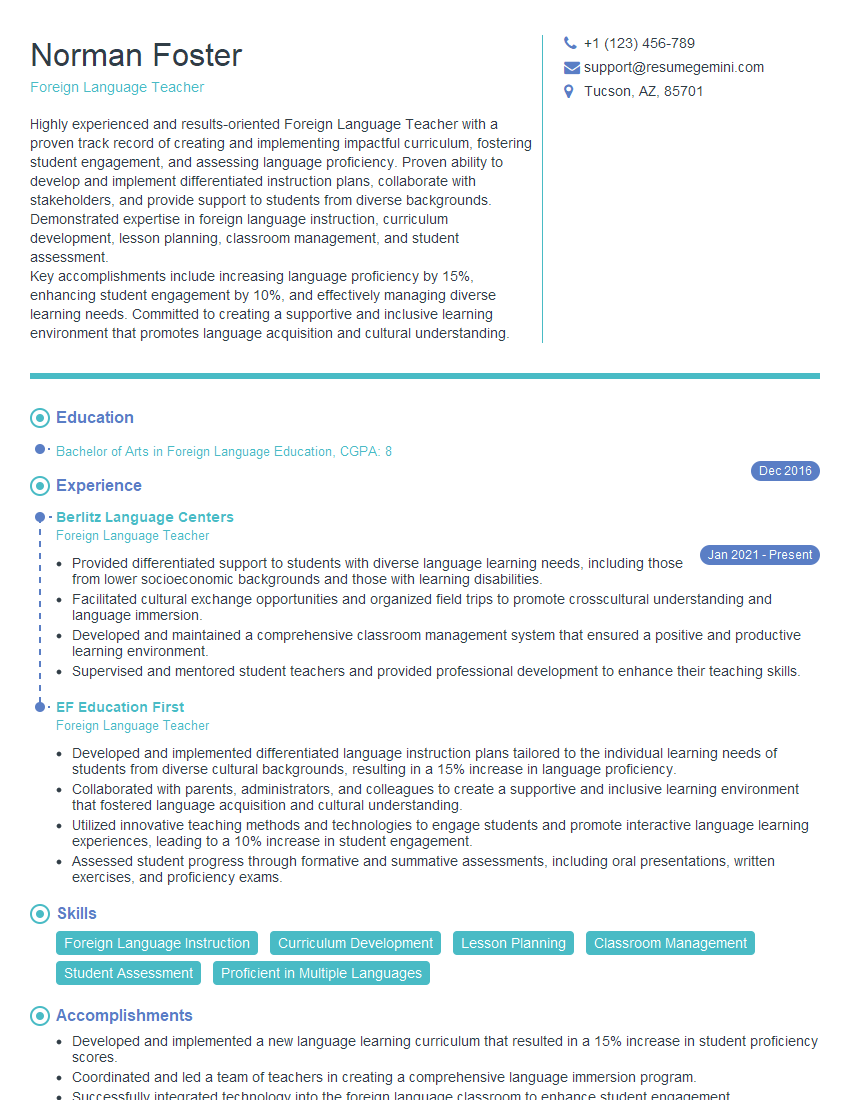
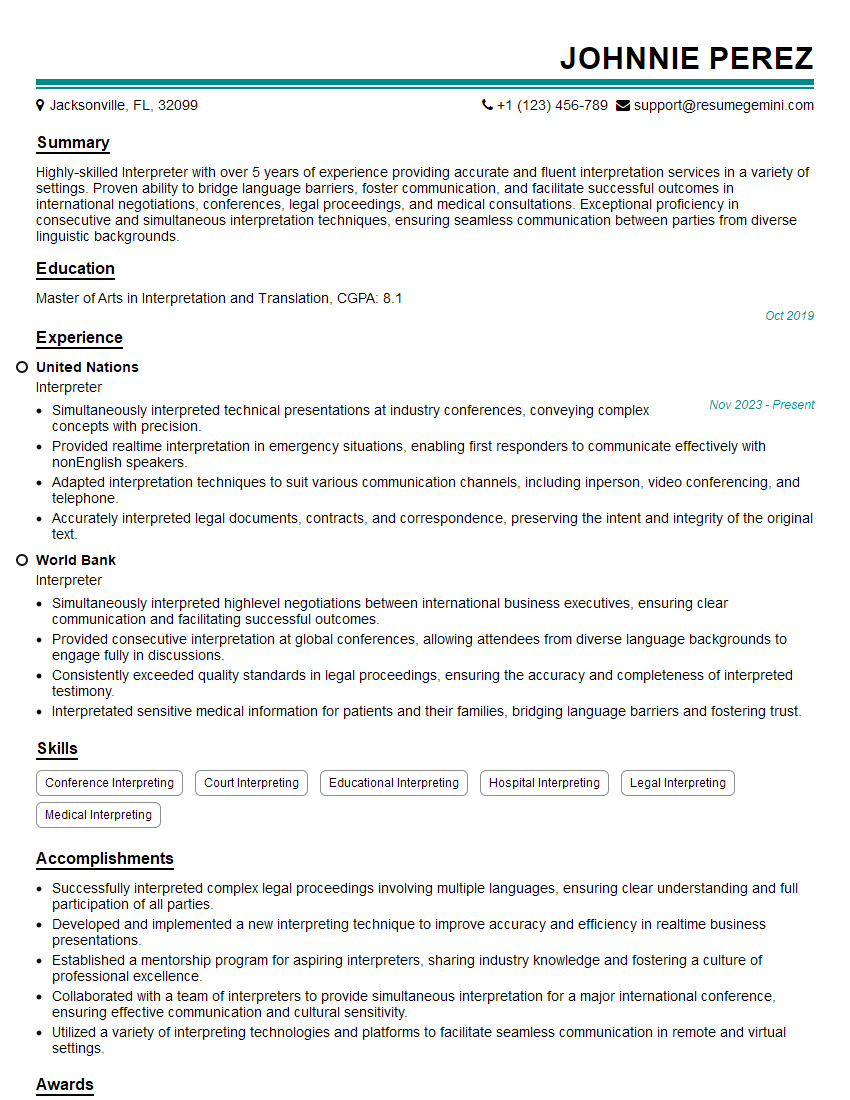
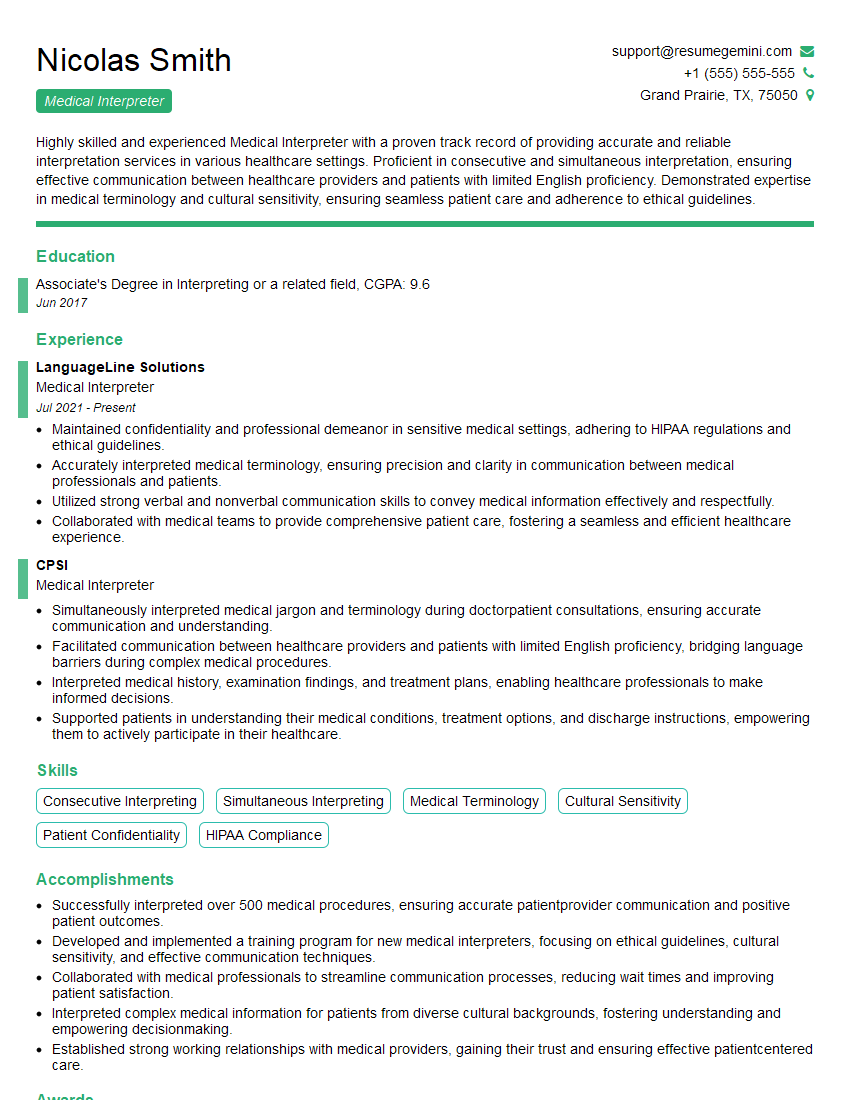
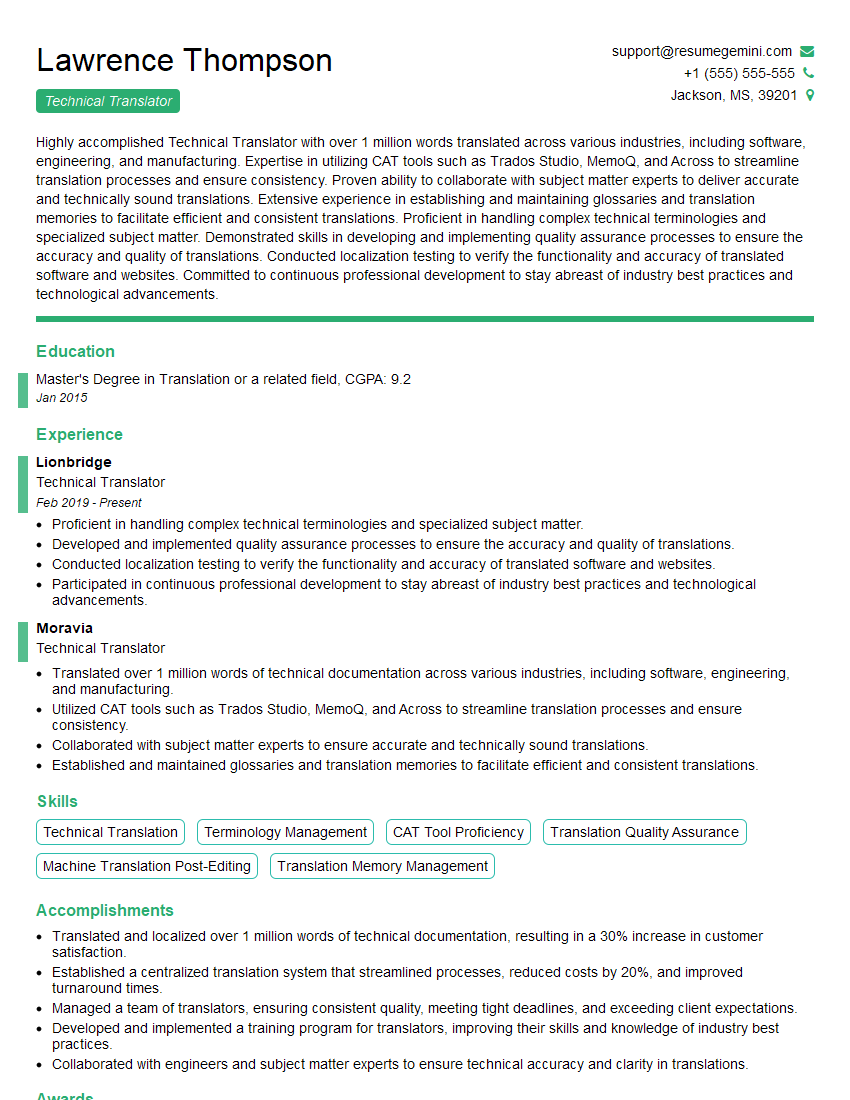
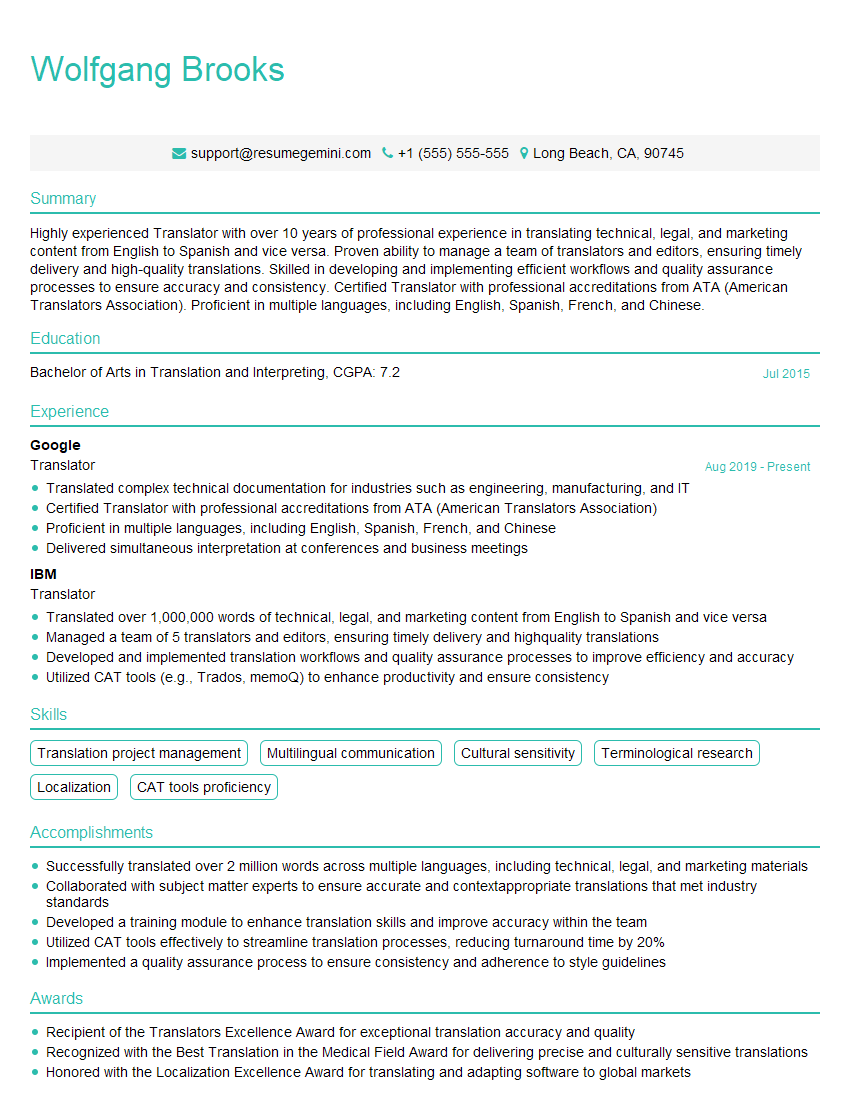
Mastering fluency in multiple languages like English and Spanish significantly expands your career opportunities, opening doors to diverse roles and international collaborations. A strong, ATS-friendly resume is crucial for showcasing these skills effectively to potential employers. To help you create a compelling resume that highlights your bilingual capabilities, we recommend using ResumeGemini. ResumeGemini provides tools and resources to build a professional and impactful resume, increasing your chances of landing your dream job. Examples of resumes tailored to showcasing Fluency in Multiple Languages (e.g., English, Spanish) are available within the ResumeGemini platform.
Explore more articles
Users Rating of Our Blogs
Share Your Experience
We value your feedback! Please rate our content and share your thoughts (optional).
What Readers Say About Our Blog
To the interviewgemini.com Webmaster.
Very helpful and content specific questions to help prepare me for my interview!
Thank you
To the interviewgemini.com Webmaster.
This was kind of a unique content I found around the specialized skills. Very helpful questions and good detailed answers.
Very Helpful blog, thank you Interviewgemini team.