Interviews are more than just a Q&A session—they’re a chance to prove your worth. This blog dives into essential Yoga/Pilates/Tai Chi interview questions and expert tips to help you align your answers with what hiring managers are looking for. Start preparing to shine!
Questions Asked in Yoga/Pilates/Tai Chi Interview
Q 1. Explain the difference between Hatha and Vinyasa yoga.
Hatha and Vinyasa yoga are both styles of yoga, but they differ significantly in their approach. Hatha yoga is a more general term encompassing various physical postures (asanas) and breathing techniques (pranayama) held for extended periods. Think of it as the foundation, focusing on strength, flexibility, and balance through static poses. A typical Hatha class might involve holding a warrior pose for 30-60 seconds, allowing for deep stretching and mindful engagement.
Vinyasa yoga, on the other hand, is a more dynamic and flowing style. It links movement with breath, creating a continuous sequence of poses. The transitions between poses are just as important as the poses themselves. Think of it as a dance, where you move gracefully from one asana to the next, synchronizing your breath with each transition. A Vinyasa class often feels more like a cardiovascular workout, building heat and improving stamina.
In essence, Hatha is static and emphasizes holding poses, while Vinyasa is dynamic and emphasizes the flow between poses. Both styles offer immense benefits, depending on individual preferences and goals.
Q 2. Describe the benefits of Pilates for core strength.
Pilates is renowned for its incredible ability to build core strength. This isn’t just about superficial abdominal muscles; it involves the entire core, encompassing the deep abdominal muscles (transversus abdominis), obliques, pelvic floor muscles, and back muscles. Pilates exercises are designed to engage these muscles simultaneously, creating a stable and powerful center.
The benefits extend beyond aesthetics. A strong core provides improved posture, increased stability, reduced risk of back pain, enhanced athletic performance, and better overall body awareness. Pilates achieves this through controlled movements, emphasizing precision and proper form over speed or repetition. Exercises like the plank, roll-up, and hundred directly target and strengthen the core, improving its ability to stabilize the spine and support the body’s movement.
Imagine trying to balance on one leg. A weak core will make this difficult, whereas a strong core will provide the stability needed to maintain balance. This translates to everyday activities like lifting objects, maintaining good posture while sitting at a desk, and improving athletic movements.
Q 3. What are the key principles of Tai Chi Chuan?
Tai Chi Chuan, often referred to as Tai Chi, is a gentle yet powerful form of moving meditation. Its key principles revolve around:
- Slow, deliberate movements: Each movement is performed smoothly and intentionally, focusing on quality over quantity.
- Mindfulness and awareness: Practitioners pay close attention to their body, breath, and the flow of energy (Qi) within their body.
- Relaxation and ease: Tension is released throughout the body, allowing for fluid and effortless movement.
- Balance and coordination: Tai Chi enhances balance and coordination through a series of weight shifts and coordinated movements.
- Proper alignment: Maintaining correct posture and alignment is crucial for preventing injury and maximizing the benefits.
- Circular motions: Many movements involve circular patterns, promoting joint flexibility and the free flow of energy.
Practicing these principles cultivates internal harmony, improves physical health, and enhances mental well-being. It’s often described as ‘meditation in motion’, blending physical exercise with mental focus.
Q 4. How do you modify poses for students with different levels of experience?
Modifying poses for students of different experience levels is crucial for safety and effectiveness. I use a tiered approach, providing variations that accommodate beginners, intermediate, and advanced practitioners.
For beginners, I often suggest modifications that simplify the pose, reducing the range of motion or providing additional support. For example, in a downward-facing dog, a beginner might bend their knees slightly to reduce strain on the hamstrings. In a standing forward bend, they could bend their knees to lessen the stretch. Using props like blocks or straps can also make poses more accessible.
Intermediate students may be ready for more challenging variations of the pose. For example, they might extend their legs further in downward-facing dog or deepen the stretch in a forward bend. I encourage them to explore the pose’s full range of motion while maintaining proper alignment.
Advanced students can explore more complex variations that increase the level of challenge and deepen the practice. This might involve arm balances, inversions, or more nuanced adjustments to the pose. I always emphasize mindful movement and the importance of listening to their body.
This approach ensures that everyone can participate safely and effectively, fostering a sense of accomplishment and progress irrespective of their experience level.
Q 5. Explain the importance of proper alignment in Pilates.
Proper alignment in Pilates is paramount for maximizing the benefits and minimizing the risk of injury. It ensures that the correct muscles are engaged, the spine is protected, and the movements are performed efficiently. Poor alignment can lead to strain, pain, and ineffective exercise.
Proper alignment involves maintaining the natural curves of the spine, engaging the deep abdominal muscles, and stabilizing the pelvis. Imagine a stack of perfectly aligned blocks: this is the ideal alignment we strive for in Pilates. The head should be balanced atop the spine, the shoulders relaxed and away from the ears, the ribcage gently drawn down towards the pelvis, and the pelvis in a neutral position.
I emphasize proper alignment through precise instruction, hands-on adjustments, and the use of mirrors to help students visualize their posture. By focusing on alignment, students develop a greater body awareness and a stronger, more efficient core.
Q 6. What are some common injuries associated with Yoga and how can they be prevented?
Common injuries associated with Yoga and Pilates include:
- Hamstring strains: Often occur from forcing stretches beyond one’s capacity. Prevention involves gradual stretching and proper warm-up.
- Lower back pain: Can result from improper alignment or overextension. Prevention involves focusing on proper form and engaging core muscles.
- Wrist injuries: Common in poses that put weight on the wrists. Prevention involves using modifications, such as forearm planks instead of plank poses, and strengthening wrist muscles.
- Knee injuries: Can occur from improper alignment in poses like lunges or warrior poses. Prevention involves proper alignment, using modifications, and strengthening surrounding muscles.
- Neck pain: Can result from improper head alignment in forward bends or inversions. Prevention involves focusing on neck alignment and avoiding forceful movements.
Prevention strategies include proper warm-up and cool-down, listening to your body and avoiding pushing through pain, gradual progression, proper alignment, utilizing modifications when needed, and seeking guidance from qualified instructors.
Q 7. Describe the different types of Pilates equipment and their uses.
Pilates utilizes various equipment to enhance the workout and challenge the body in new ways:
- Reformer: A sliding carriage system with springs providing resistance. It allows for a wide range of exercises, improving strength, flexibility, and coordination.
- Cadillac (Trapeze Table): A large frame with various attachments, offering support and resistance for a variety of exercises, including stretches and strengthening movements.
- Chair: A smaller piece of equipment with a spring-loaded resistance system, ideal for strengthening and improving posture.
- Barrels: Curved pieces of equipment that help develop spinal mobility and core strength.
- Small props: These include magic circles (resistance rings), foam rollers, and balls, all enhancing the workout intensity and providing variation.
The choice of equipment depends on the individual’s needs and the goals of the session. For example, the reformer is excellent for building strength and improving coordination, while the Cadillac is ideal for improving flexibility and spinal mobility. Small props are versatile and can be incorporated into many exercises to add resistance or support.
Q 8. What are the health benefits of regular Tai Chi practice?
Tai Chi, a gentle yet powerful mind-body practice, offers a multitude of health benefits. Regular practice significantly improves both physical and mental well-being.
- Improved Balance and Coordination: The slow, deliberate movements enhance proprioception (body awareness), reducing the risk of falls, particularly beneficial for older adults.
- Increased Strength and Flexibility: Tai Chi strengthens muscles without the jarring impact of other exercises. The flowing movements improve joint flexibility and range of motion.
- Cardiovascular Health: While not a high-intensity workout, Tai Chi improves cardiovascular function by increasing heart rate and blood flow.
- Stress Reduction and Mental Clarity: The meditative aspects of Tai Chi calm the nervous system, reducing stress hormones and improving mental clarity and focus.
- Improved Respiratory Function: The emphasis on deep, controlled breathing improves lung capacity and oxygen intake.
- Pain Management: Studies suggest Tai Chi can help manage chronic pain conditions like arthritis and fibromyalgia by improving mobility and reducing inflammation.
For example, I’ve seen clients with osteoarthritis experience significant pain reduction and improved mobility after just a few weeks of consistent Tai Chi practice. It’s a testament to the practice’s holistic approach to health.
Q 9. How would you address a student who is struggling with a particular pose?
Addressing a student’s struggle with a pose requires a patient, individualized approach. I would first observe the student carefully to identify the specific area of difficulty.
Is it a lack of flexibility? Strength? Balance? Understanding the root cause is key. Then, I’d modify the pose to make it accessible. This might involve:
- Offering modifications: Using props like blocks or chairs to support the body and allow for a more comfortable range of motion.
- Breaking down the pose: Teaching the pose in smaller, manageable segments, focusing on proper alignment and muscle activation for each part.
- Providing verbal cues and hands-on assistance: Offering precise instructions and gentle adjustments to guide the student into the correct position. I would always ensure the student feels comfortable and respected, asking for their consent before any hands-on adjustments.
- Focusing on breathwork: Encouraging deep, controlled breathing can help relax muscles and improve body awareness.
- Building strength and flexibility gradually: Suggesting supplemental exercises to improve the student’s overall strength, flexibility, and balance, tailored to their individual needs and physical capabilities.
For instance, if a student struggles with a warrior pose due to tight hips, I might suggest a modified version with their front knee bent less or the use of a block for support, while also incorporating hip-opening stretches into their practice. Building a relationship based on trust and understanding is vital in this process.
Q 10. Explain the concept of breathwork in yoga and its physiological effects.
Breathwork, or pranayama, is an integral part of yoga. It’s not merely about inhaling and exhaling; it’s a conscious and controlled practice of manipulating the breath to influence physiological processes.
- Physiological Effects: Deep, diaphragmatic breathing (belly breathing) stimulates the parasympathetic nervous system, which slows the heart rate, lowers blood pressure, and reduces stress. It also increases oxygen intake, improves lung function, and can even impact digestion.
- Impact on the nervous system: Certain breathing techniques, such as alternate nostril breathing (Nadi Shodhana), can balance the sympathetic and parasympathetic nervous systems, promoting a state of calm and equilibrium.
- Energy flow: In yoga, breath is often linked to the flow of prana (vital energy) through the body. Specific breathing patterns are believed to influence the flow of prana and enhance overall energy levels.
For example, Ujjayi breath (victorious breath) – a gentle constriction in the throat – is often used during asanas (yoga postures) to warm and stabilize the body, while Kapalabhati (skull shining breath) – a forceful exhalation – is a cleansing breath that energizes the system. Understanding these techniques and their application helps students to deepen their practice and experience the full benefits of yoga.
Q 11. Describe the different styles of Pilates and their characteristics.
Pilates encompasses various styles, each with unique characteristics. They share a common foundation of core strengthening, body awareness, and controlled movements, but differ in their approach and emphasis:
- Classical Pilates: This method strictly adheres to Joseph Pilates’ original techniques, using specialized equipment like the Reformer, Cadillac, Chair, and Barrels. It emphasizes precise movements and a strong connection between mind and body.
- Contemporary Pilates: This style incorporates variations and modifications of the classical methods, often using mats and less specialized equipment. It may adapt exercises to suit different fitness levels and body types.
- Stott Pilates: This approach emphasizes safety and injury prevention, incorporating modifications for individuals with back problems or other limitations. It often incorporates more mobility exercises.
- Power Pilates: This style is more dynamic and incorporates elements of athletic conditioning, using faster-paced movements and more challenging exercises.
The choice of Pilates style depends on individual needs and goals. A client recovering from injury would benefit from the safety focus of Stott Pilates, while an athlete seeking enhanced performance might prefer the intensity of Power Pilates. I always conduct a thorough assessment to determine the most appropriate style for each client.
Q 12. What are the potential contraindications for Tai Chi practice?
While Tai Chi is generally safe, certain conditions may necessitate modifications or contraindications. It’s crucial to consult a physician before beginning any new exercise program, especially if you have:
- Severe cardiovascular disease: Individuals with unstable angina or severe heart conditions should approach Tai Chi cautiously and possibly with modifications.
- Recent surgery or injury: Those recovering from surgery or injury should avoid movements that aggravate their condition until they’ve received clearance from their doctor.
- Severe osteoporosis: While Tai Chi is beneficial for bone density, individuals with severe osteoporosis might need to modify or avoid certain poses that put stress on the spine.
- Severe Vertigo or Balance Issues: Some poses might exacerbate balance problems, requiring modifications or expert supervision.
- Acute illness or infection: It’s best to avoid Tai Chi if you’re acutely ill to prevent further strain on the body.
In my practice, I always screen clients for these conditions and work collaboratively with their doctors to ensure a safe and effective practice tailored to their individual circumstances.
Q 13. How do you adapt your teaching style to different age groups?
Adapting my teaching style to different age groups is paramount to ensuring safety and engagement. My approach varies based on physical capabilities and cognitive abilities:
- Children: Classes for children focus on fun and playful movement. I incorporate games, storytelling, and shorter sessions to maintain their interest and attention. Emphasis is on building fundamental movement skills and body awareness.
- Adults: Adult classes offer a more diverse range of exercises catering to different fitness levels. Clear instruction, anatomical cues, and attention to proper alignment are crucial. I encourage self-listening and adjust based on individual needs.
- Seniors: For seniors, I emphasize safety and modifications to accommodate limited mobility or joint issues. The pace is slower, and exercises are adapted to improve balance, flexibility, and strength without causing strain. I also incorporate chair-based exercises if needed.
For example, I might use softer, more yielding props for seniors and incorporate longer rest periods between movements. With children, I use visual aids, interactive games, and positive reinforcement to create an engaging and enjoyable experience. This individualized approach ensures everyone can participate safely and benefit from the practice.
Q 14. What is your experience with designing and implementing yoga sequences?
Designing and implementing yoga sequences requires a deep understanding of anatomy, physiology, and the therapeutic effects of different asanas. My process involves:
- Identifying the goal: What are the intended benefits of the sequence? Is it for stress reduction, flexibility improvement, or strength building?
- Assessing the students’ level: The sequence needs to be appropriate for the students’ experience and physical limitations. I always assess their current fitness levels and any potential injuries or limitations before crafting a sequence.
- Choosing appropriate asanas: I select poses based on the desired outcome, ensuring a progression of difficulty and a balance of postures targeting different muscle groups.
- Creating a flow: The sequence needs to flow smoothly from one pose to the next, creating a rhythmic and cohesive practice. Transitions should be smooth and mindful, minimizing strain.
- Incorporating breathwork: I integrate specific breathing techniques to enhance the effects of each pose and to regulate the flow of energy throughout the body.
- Sequencing for balance: A well-designed sequence incorporates a variety of postures (standing, seated, supine, inverted) for balanced practice. I also include counterposes to prevent imbalances and reduce muscle tension.
- Ending with relaxation: The sequence always ends with a period of relaxation (Savasana) to allow the body to integrate the effects of the practice.
For example, a sequence designed for stress reduction might include calming seated forward bends, gentle twists, and restorative poses followed by a prolonged period of Savasana. This ensures a mindful and relaxing experience, promoting stress relief and relaxation. I regularly update my sequences to incorporate new techniques and modifications based on student feedback and my continued professional development.
Q 15. Describe your understanding of the energy flow in Tai Chi.
In Tai Chi, energy flow, or Qi (pronounced ‘chee’), is considered the life force that circulates throughout the body. It’s not just about physical movement; it’s about cultivating and harmonizing this internal energy. We visualize this flow moving along meridians, pathways in the body similar to veins and arteries, but for energy rather than blood.
Practicing Tai Chi involves slow, deliberate movements that are designed to unblock and encourage the smooth flow of Qi. For example, the slow, circular movements of the ‘brush knee’ exercise are thought to stimulate the flow of Qi in the legs and lower abdomen. The gentle, flowing transitions between postures prevent any stagnation or blockages, allowing for a continuous, harmonious energy flow throughout the entire body.
Imagine a river: when the flow is smooth, the river is healthy and vibrant. If there are blockages, the flow is disrupted, leading to stagnation and potential problems. Tai Chi aims to maintain a smooth, uninterrupted flow of Qi, promoting balance, health, and well-being.
Career Expert Tips:
- Ace those interviews! Prepare effectively by reviewing the Top 50 Most Common Interview Questions on ResumeGemini.
- Navigate your job search with confidence! Explore a wide range of Career Tips on ResumeGemini. Learn about common challenges and recommendations to overcome them.
- Craft the perfect resume! Master the Art of Resume Writing with ResumeGemini’s guide. Showcase your unique qualifications and achievements effectively.
- Don’t miss out on holiday savings! Build your dream resume with ResumeGemini’s ATS optimized templates.
Q 16. How would you handle a student with a medical condition during a class?
Handling students with medical conditions requires a careful and individualized approach. Before class begins, I always encourage students to inform me of any medical conditions, injuries, or limitations they may have. This information is crucial for tailoring the class to their needs and ensuring their safety.
For example, a student with arthritis might need modifications to certain poses to reduce joint stress. I might suggest using props like chairs or blocks to support their body weight and lessen the strain on their joints. Similarly, a student with a heart condition might need adjustments to the pace and intensity of the exercises to avoid overexertion. I would encourage frequent breaks and monitor their heart rate closely.
In cases of significant or serious medical conditions, I always recommend that students consult with their doctor or physical therapist before participating in my classes. If a student’s condition requires it, I might suggest alternative exercises or modifications, or, in some cases, advise them not to participate in certain activities until their condition improves.
Open communication and collaboration with the student and, if necessary, their healthcare provider are key to ensuring a safe and beneficial practice for everyone.
Q 17. What is your philosophy on teaching movement and mindfulness?
My philosophy centers on the holistic integration of movement and mindfulness. I believe movement is not just physical; it’s a pathway to cultivate self-awareness, deepen our connection to our bodies, and enhance our mental and emotional well-being. Mindfulness, in turn, enhances our experience of movement, allowing us to become more present, focused, and attuned to the subtle sensations within our bodies.
In my classes, I emphasize the importance of mindful movement – paying close attention to body posture, alignment, and breath. This mindful approach helps students to connect with their bodies more deeply, developing body awareness and proprioception. By focusing on the present moment during movement, students learn to observe and understand the sensations in their bodies without judgment, promoting a sense of self-compassion and acceptance.
For instance, in a Pilates class, I might guide students to notice the subtle engagement of their core muscles during each exercise, deepening their connection to their body’s strength and stability. Similarly, in a yoga class, I would encourage students to focus on their breath, using it as an anchor to stay present and grounded during challenging poses.
Q 18. How do you create a safe and supportive learning environment?
Creating a safe and supportive learning environment is paramount. I achieve this through several key strategies:
- Clear communication: I provide clear instructions and demonstrations, ensuring everyone understands the exercises and modifications available.
- Individualized attention: I observe each student closely, offering adjustments and modifications as needed to ensure proper alignment and safety.
- Positive reinforcement: I focus on positive encouragement and celebrate individual progress, fostering a supportive and inclusive atmosphere.
- Respectful boundaries: I create a space where students feel comfortable expressing their limits and needs without judgment.
- Appropriate modifications: I provide various modifications for different levels of experience and physical abilities, allowing everyone to participate safely and effectively.
- Safe physical environment: I ensure the class space is well-organized, free of clutter, and has adequate space for movement.
By prioritizing these aspects, I aim to create a comfortable and encouraging environment where students feel confident and empowered to explore their movement practice.
Q 19. What are your strategies for maintaining student engagement and motivation?
Maintaining student engagement and motivation involves a multi-faceted approach:
- Varied class content: I incorporate diverse exercises and sequences to prevent monotony and keep classes fresh and stimulating.
- Progress tracking: I encourage students to track their progress, celebrating their achievements and milestones.
- Setting achievable goals: I help students set realistic and attainable goals, fostering a sense of accomplishment.
- Interactive learning: I encourage interaction and feedback, creating a collaborative learning experience.
- Building a community: I foster a sense of community among students, promoting support and camaraderie.
- Feedback and adjustments: I provide regular feedback and adjust my teaching style to meet individual student needs.
- Theme-based classes: Introducing themed classes focusing on specific areas like flexibility, strength, or stress reduction can maintain interest.
By making classes engaging and rewarding, I help students stay motivated and committed to their practice.
Q 20. Explain the role of proper breathing in Pilates.
Proper breathing is fundamental to Pilates, acting as the engine that drives movement and enhances its effectiveness. It’s not merely about inhaling and exhaling; it’s about coordinating the breath with the movement to create efficient, controlled movement and to engage the deep core muscles.
In Pilates, we often use diaphragmatic breathing, also known as belly breathing. This involves expanding the abdomen on the inhale and drawing it back in on the exhale. This type of breathing helps to engage the transverse abdominis, a deep core muscle crucial for stabilizing the spine and supporting movement. This coordinated breathing mechanism helps to improve core strength, stability, and posture.
For example, during a Pilates roll-up exercise, the inhale expands the rib cage and prepares for the controlled spinal articulation. The exhale facilitates the controlled movement, drawing the navel towards the spine to support and protect the back. This coordination optimizes movement efficiency, maximizing the benefits of the exercise.
Q 21. Describe the benefits of using props in yoga and Pilates.
Props in yoga and Pilates are invaluable tools that enhance the practice for students of all levels. They offer modifications for various body types, abilities, and limitations, increasing accessibility and safety.
In yoga, blocks can help students reach poses that might otherwise be out of reach, supporting their balance and alignment. Straps can extend the reach in forward bends, improving flexibility. Blankets provide comfort and support, allowing students to modify poses based on their individual needs. Bolsters can be used for restorative poses, providing support for the spine and promoting relaxation. These aids make the practice more accessible to students with limited mobility or flexibility.
Similarly, in Pilates, reformers, chairs, and other equipment provide resistance and support, aiding in strengthening and stretching. Small props like resistance bands, balls, or rings add intensity and focus to exercises. For example, using a bolster in Pilates can assist in maintaining a neutral spine during back extensions or support the hips for better pelvic stability. These tools enable the instructor to offer more modifications and adjustments while assisting students in achieving proper alignment and building strength.
By utilizing props effectively, practitioners can create a safer, more inclusive, and ultimately more beneficial practice for all.
Q 22. How do you assess a student’s physical limitations and adjust your instruction?
Assessing a student’s physical limitations is crucial for safe and effective instruction in Yoga, Pilates, and Tai Chi. My approach begins with a thorough intake process, including a conversation about their medical history, current physical condition, and any injuries or limitations. This might involve questions about previous surgeries, chronic pain, or limitations in range of motion.
I then observe the student during a basic movement assessment. This allows me to see firsthand their posture, balance, strength, flexibility, and coordination. For example, I might observe their ability to stand with feet hip-width apart, noting any asymmetry or instability. I also assess their range of motion in key joints, such as the hips, shoulders, and spine. This visual assessment is augmented by asking the student to perform simple movements, allowing me to gauge their current capabilities and potential limitations.
Based on this initial assessment, I tailor my instruction. This might involve modifying poses or exercises, providing alternative variations, or suggesting props like blocks, straps, or chairs to support the student. For example, if a student has limited shoulder mobility, I might suggest modifications to arm balances or forward folds. If a student has knee problems, I would modify poses that put stress on the knee joints by adjusting the foot placement or utilizing props. Throughout the class, I remain attentive to the student’s body language and verbal cues, adjusting my instructions as needed to ensure they are practicing safely and effectively. This ongoing process ensures the student feels comfortable and progresses safely at their own pace.
Q 23. What is your approach to cueing and providing feedback during a class?
My approach to cueing and providing feedback emphasizes clarity, precision, and individualized instruction. I believe in a multi-sensory approach, using verbal cues, visual demonstrations, and hands-on adjustments (with consent) to guide students. Verbal cues should be concise, easy to understand, and relevant to the anatomical action being performed. For instance, instead of saying “do your best,” I might say, “lengthen your spine, engage your core, and lift from your chest.” Visual demonstrations are crucial – I show students the correct alignment and form before they attempt the movement.
Hands-on adjustments, when appropriate and welcomed by the student, are used to provide immediate feedback and facilitate correct alignment. This is done with sensitivity and respect, ensuring that students feel safe and supported. Feedback should be specific and positive, focusing on what the student is doing well and offering suggestions for improvement. For instance, instead of saying “that’s wrong,” I might say “imagine your tailbone lengthening towards the floor, creating more space in your lower back.” I also encourage students to listen to their bodies and to stop if they feel any pain. This creates a safe environment for learning and growth.
Q 24. What are your methods for teaching students about anatomical alignment?
Teaching anatomical alignment is fundamental in Yoga, Pilates, and Tai Chi. My methods involve a combination of visual aids, hands-on adjustments, and clear verbal explanations. I start with foundational concepts, such as the neutral spine, proper hip alignment, and the engagement of core muscles. We break down complex movements into smaller, manageable components. I use anatomical terminology sparingly, focusing instead on relatable language that students can easily grasp.
For example, when teaching a forward fold, instead of simply saying “extend your spine,” I might say “imagine lengthening your spine from the crown of your head to your tailbone, while maintaining a natural curve in your lower back”. I use visual aids such as diagrams or anatomical models to enhance understanding. I encourage students to explore their own bodies, paying attention to how different movements feel in their bodies. Hands-on assists, when permitted, allow for immediate feedback on alignment, providing tactile cues. I often use analogies to help students understand complex concepts – for example, comparing the core to a corset, strengthening the body from the inside out. Regular self-assessments and mirror work help students internalize correct alignment.
Q 25. How do you ensure the safety and effectiveness of your classes?
Safety and effectiveness are paramount. My classes prioritize a safe and inclusive environment for all levels. This starts with a thorough intake process, as mentioned previously, identifying any potential risks or contraindications. I always encourage students to listen to their bodies and to modify or rest when needed. I clearly explain the purpose, benefits, and potential risks of each exercise or pose, emphasizing proper form and technique.
I incorporate modifications and variations for different skill levels and physical limitations. I provide detailed instructions and demonstrations, ensuring that students understand the proper techniques before attempting the exercises. My classes emphasize mindful movement, encouraging students to connect their breath with their movements. This promotes relaxation, reduces injury risk, and enhances the overall effectiveness of the practice. I also maintain a safe environment by ensuring the class space is clear of obstacles, and the appropriate equipment is used correctly. Providing clear communication channels where students can ask questions and receive individualized attention is a critical factor in guaranteeing both safety and the efficacy of the lessons.
Q 26. Describe your experience with using technology to enhance your teaching.
Technology plays a vital role in enhancing my teaching. I use online platforms to deliver virtual classes, allowing me to reach a wider audience. I record classes for students who miss sessions or want to review material, and use video conferencing software for real-time interactions and feedback. The recordings can then be reviewed in detail by the students. Online resources, such as anatomical diagrams and instructional videos, supplement the learning experience. These resources often help visualize the alignment or provide a different view of the movements involved.
I also use apps to track student progress and provide personalized feedback. For example, I might use an app to track student attendance, assignment completion, and postural improvements. The data collected helps in building a comprehensive overview of the students’ performance. These tools enable me to tailor my instruction to individual needs and goals more effectively. Furthermore, using online platforms allows for broader communication between myself and the students, whether it is for reminders, announcements or simple queries.
Q 27. What are some resources you would recommend to students for further learning?
I recommend several resources for continued learning, depending on the student’s learning style and goals. For anatomical knowledge, I suggest books on human anatomy and kinesiology. For a deeper understanding of Yoga, I recommend books on the history and philosophy of yoga, as well as detailed guides on specific styles like Iyengar or Ashtanga yoga. Similar recommendations can be made for Pilates and Tai Chi, focusing on authoritative books and educational materials related to these specific disciplines.
I also encourage students to explore reputable online resources, such as educational websites and videos from qualified instructors. Participating in workshops and continuing education courses can offer additional insights and opportunities for hands-on learning. Finally, I advocate for a mindful approach to learning; listening to one’s body, paying attention to sensations, and adjusting practice accordingly is paramount. This ensures the learning process aligns with the individual’s needs and capabilities, avoiding unnecessary strain or injuries.
Q 28. How do you adapt your teaching to accommodate various learning styles?
Adapting to various learning styles is a key component of effective teaching. I use a multi-sensory approach, catering to visual, auditory, and kinesthetic learners. Visual learners benefit from demonstrations, diagrams, and videos. Auditory learners respond well to clear verbal instructions and explanations. Kinesthetic learners learn best through hands-on experiences and movement practice.
I incorporate diverse teaching methods to engage all learning styles. I use a mix of lectures, discussions, demonstrations, and hands-on practice. I provide written materials, such as handouts or summaries, for visual learners. I use analogies and relatable stories to make abstract concepts more understandable. I encourage questions and discussions to cater to auditory learners. I offer individualized feedback and hands-on adjustments for kinesthetic learners. Moreover, I adapt my pace and teaching strategies based on the group’s energy levels and attentiveness. Creating a flexible environment ensures that all learners have equal opportunities for comprehension and practice.
Key Topics to Learn for Yoga/Pilates/Tai Chi Interview
- Philosophical Foundations: Understanding the core principles and history of your chosen discipline (Yoga, Pilates, or Tai Chi). Consider the differences in philosophies and how they inform practice.
- Anatomy and Physiology: Demonstrate a solid grasp of relevant musculoskeletal anatomy, including major muscle groups, joints, and their movements. Be prepared to discuss how these relate to posture, alignment, and injury prevention.
- Teaching Methodology: Explain your approach to teaching, including lesson planning, modifications for different levels, and adapting to individual needs and limitations. Discuss different teaching styles and their effectiveness.
- Sequencing and Progressions: Showcase your ability to design safe and effective sequences for various skill levels. Be able to articulate the rationale behind your choices and how you build upon foundational poses/movements.
- Modifications and Adaptations: Discuss how you modify poses/exercises for students with injuries, limitations, or different body types. Highlight your creativity and problem-solving skills in this area.
- Safety and Injury Prevention: Demonstrate a thorough understanding of common injuries and how to avoid them. This includes proper alignment cues, contraindications, and emergency procedures.
- Biomechanics and Movement Principles: Explain the underlying mechanics of movement in your chosen discipline. Discuss concepts like leverage, stability, mobility, and the kinetic chain.
- Client Communication and Relationship Building: Articulate your ability to build rapport with clients, understand their goals, and provide effective feedback and encouragement. Discuss your approach to addressing client concerns and challenges.
- Business Acumen (if applicable): If applying for a position involving business aspects (e.g., studio management), be prepared to discuss marketing, client retention, scheduling, and financial management.
Next Steps
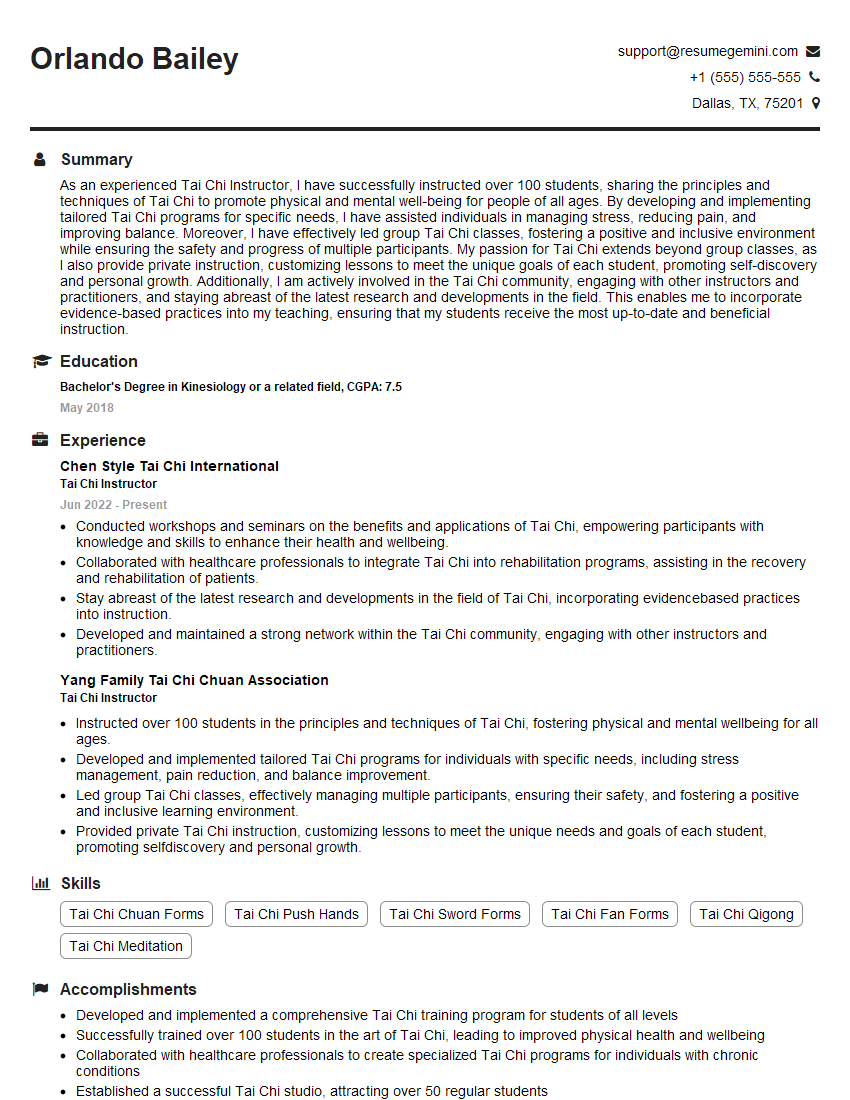
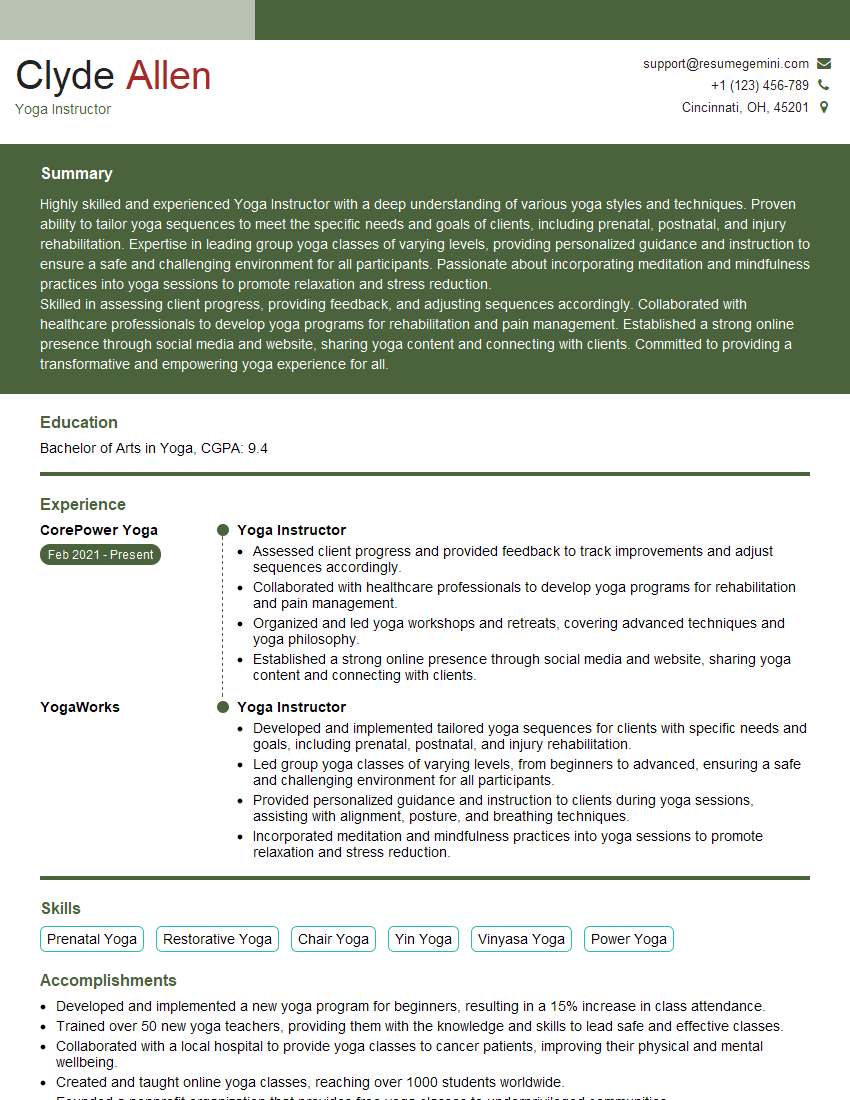
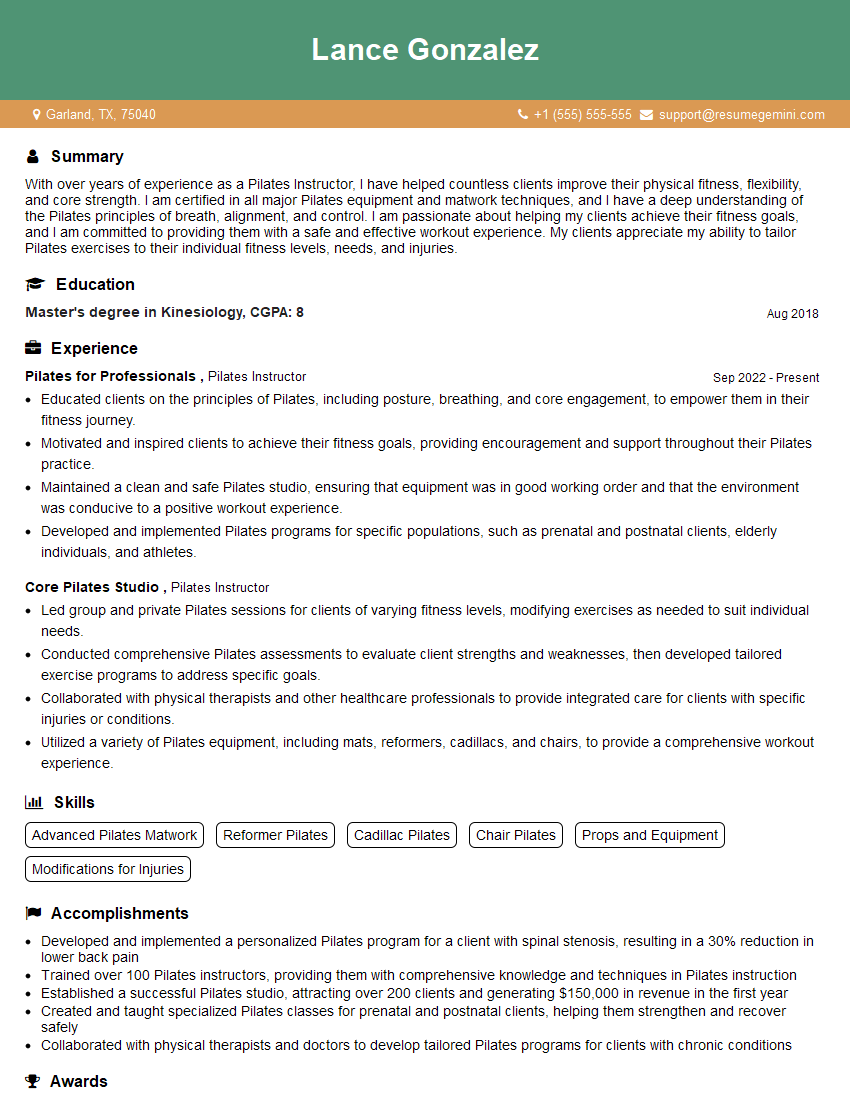
Mastering Yoga, Pilates, or Tai Chi and effectively communicating your expertise is crucial for career advancement in this growing field. A well-crafted resume is your first impression on potential employers. Creating an ATS-friendly resume significantly increases your chances of getting your application noticed. ResumeGemini is a trusted resource to help you build a professional and impactful resume that highlights your skills and experience. Examples of resumes tailored to Yoga, Pilates, and Tai Chi are available to guide you through the process.
Explore more articles
Users Rating of Our Blogs
Share Your Experience
We value your feedback! Please rate our content and share your thoughts (optional).
What Readers Say About Our Blog
To the interviewgemini.com Webmaster.
Very helpful and content specific questions to help prepare me for my interview!
Thank you
To the interviewgemini.com Webmaster.
This was kind of a unique content I found around the specialized skills. Very helpful questions and good detailed answers.
Very Helpful blog, thank you Interviewgemini team.