Preparation is the key to success in any interview. In this post, we’ll explore crucial Food Chemistry Knowledge interview questions and equip you with strategies to craft impactful answers. Whether you’re a beginner or a pro, these tips will elevate your preparation.
Questions Asked in Food Chemistry Knowledge Interview
Q 1. Explain the Maillard reaction and its impact on food flavor and color.
The Maillard reaction is a chemical reaction between amino acids and reducing sugars that gives browned food its distinctive flavor. Think of the delicious crust on bread, the rich color of roasted coffee beans, or the savory notes in seared steak – these are all thanks to the Maillard reaction. It occurs under high temperatures, typically above 140°C (284°F), and involves a complex series of reactions leading to the formation of hundreds of different flavor and aroma compounds, collectively known as melanoidins.
Impact on Flavor and Color: The reaction’s impact on flavor is multifaceted. It generates a wide array of volatile compounds responsible for the characteristic aromas we associate with browned food. For example, the nutty, roasted flavor of bread is due to specific volatile compounds produced during this reaction. Simultaneously, the non-volatile melanoidins contribute to the brown color, ranging from light golden brown to deep reddish-brown, depending on the reaction conditions and the food’s components.
Example: Consider baking a cake. The interaction of sugars and amino acids in the batter, coupled with the heat of the oven, triggers the Maillard reaction, contributing both to the cake’s rich brown crust and its complex, slightly sweet and nutty flavor.
Q 2. Describe the role of lipids in food texture and stability.
Lipids, or fats, play a crucial role in food texture and stability. Their influence is mainly determined by their type (saturated, unsaturated, etc.), degree of saturation, and physical state (solid or liquid).
Role in Texture: Lipids contribute to the tenderness, juiciness, and mouthfeel of food. In baked goods, fats tenderize the gluten network, leading to a softer crumb. In meat, lipids contribute to its juiciness and tenderness, while in dairy products, they influence creaminess. The melting point of the fat also impacts texture; fats with low melting points create a smoother, more tender texture, while those with high melting points provide firmness and crispness.
Role in Stability: Lipids play a significant role in food stability, primarily through their impact on oxidation and rancidity. Unsaturated fats are more susceptible to oxidation, leading to the formation of off-flavors and rancidity. This oxidation process is slowed down by antioxidants or by using appropriate packaging and storage methods. Lipids also affect food’s water activity, influencing microbial growth and shelf life.
Example: The creamy texture of ice cream is largely due to the presence of milk fat. The crispness of a fried potato chip comes from the fat’s ability to create a solid, exterior layer. The rancid taste of old peanut butter is a result of lipid oxidation.
Q 3. What are the common methods for determining the moisture content of food?
Determining the moisture content of food is critical for quality control, shelf-life prediction, and process optimization. Several methods are commonly used, each with its advantages and limitations.
- Oven Drying Method: This is a straightforward method involving weighing the sample before and after drying in an oven at a specific temperature (usually 105°C) until a constant weight is achieved. The difference in weight represents the moisture content. It’s simple but can lead to volatile compound loss and potential over-drying.
- Karl Fischer Titration: A highly precise method, particularly useful for low moisture content samples. It’s based on the reaction of water with a reagent, and the amount of reagent consumed is directly proportional to the water content. This is a more sophisticated and accurate method but requires specialized equipment.
- Near Infrared (NIR) Spectroscopy: A rapid and non-destructive method based on analyzing the absorption of near-infrared light by water molecules. It’s quick and requires minimal sample preparation but may need calibration against other methods for specific food matrices.
The choice of method depends on the required accuracy, available resources, and the nature of the food sample.
Q 4. Explain the principles of food preservation techniques, such as canning, freezing, and irradiation.
Food preservation aims to extend shelf life and prevent spoilage by inhibiting microbial growth and enzymatic activity. Various techniques are employed:
- Canning: This involves heating food in sealed containers to destroy microorganisms and enzymes. The heat treatment creates a vacuum seal preventing re-contamination. The success depends on achieving sufficient heat penetration to all parts of the container.
- Freezing: Low temperatures inhibit microbial growth and enzyme activity by lowering the water activity. The slower the freezing rate, the larger the ice crystals formed, which can damage cell structures and reduce quality upon thawing. Rapid freezing methods like blast freezing minimize ice crystal formation.
- Irradiation: This method uses ionizing radiation to destroy microorganisms and insects. It does not significantly affect the food’s nutritional value or sensory properties, but consumer perception remains a major challenge for widespread adoption.
Each technique has its own benefits and limitations, and the optimal choice depends on factors such as food type, desired shelf life, and cost considerations.
Q 5. How do you determine the shelf life of a food product?
Determining a food product’s shelf life is a complex process involving various factors and analyses. It’s not simply about how long a product remains safe to eat but also about maintaining its quality, such as texture, flavor, and appearance. This is usually done using a combination of methods:
- Microbial analysis: Monitoring microbial growth over time under various storage conditions to determine the time it takes for microbial counts to reach unsafe levels.
- Sensory evaluation: Assessing changes in appearance, texture, aroma, and flavor through trained panels to determine the point at which the product is no longer acceptable to consumers.
- Chemical analysis: Measuring changes in key chemical components such as fat oxidation, pH, and moisture content to track quality deterioration.
- Accelerated shelf-life testing: Exposing the product to elevated temperatures or other stress conditions to accelerate degradation processes, allowing for quicker determination of shelf life.
The final shelf life is determined by the shortest timeframe resulting from these analyses, ensuring both safety and quality are maintained.
Q 6. What are the major components of carbohydrates and their functional properties in food?
Carbohydrates are essential components of food, providing energy and contributing to texture and other functional properties. They are broadly classified into monosaccharides, disaccharides, and polysaccharides.
- Monosaccharides: Simple sugars like glucose, fructose, and galactose, providing sweetness.
- Disaccharides: Sugars formed by the combination of two monosaccharides, such as sucrose (glucose + fructose), lactose (glucose + galactose), and maltose (glucose + glucose).
- Polysaccharides: Complex carbohydrates composed of long chains of monosaccharides. Examples include starch (amylose and amylopectin), cellulose, and pectin.
Functional Properties: Carbohydrates contribute several functions:
- Sweetness: Monosaccharides and disaccharides provide sweetness, impacting flavor.
- Texture: Starch contributes to the texture of bread and other baked goods; pectin forms gels in jams and jellies; cellulose provides fiber.
- Water binding: Some carbohydrates, like starch and gums, bind water, contributing to moistness.
- Thickening and gelling: Starch, pectin, and gums thicken sauces and create gels.
Understanding these properties is crucial in food formulation and processing.
Q 7. Discuss the role of enzymes in food processing and spoilage.
Enzymes are biological catalysts that significantly influence both food processing and spoilage. They accelerate biochemical reactions, impacting both desirable and undesirable outcomes.
Role in Food Processing: Enzymes are used extensively in food processing to improve quality, efficiency, or add functionality. For example:
- Amylases: Used in bread making to break down starch, improving texture.
- Proteases: Used in meat tenderization to break down proteins.
- Pectinases: Used in juice clarification to break down pectin, improving clarity.
Role in Food Spoilage: Enzymes naturally present in food can contribute to spoilage by degrading quality attributes. For instance, polyphenol oxidases (PPOs) cause enzymatic browning in fruits and vegetables, affecting their appearance and flavor. Lipases hydrolyze fats, leading to rancidity. Control of enzymatic activity is crucial in preservation techniques.
Example: The use of bromelain (a protease) in tenderizing meat is a classic example of beneficial enzymatic activity in food processing. Conversely, the browning of cut apples due to PPO activity demonstrates how enzymes can negatively affect quality.
Q 8. Explain the concept of food safety and hazard analysis critical control points (HACCP).
Food safety ensures food is free from harmful bacteria, viruses, parasites, or chemical contaminants that can cause illness. Hazard Analysis and Critical Control Points (HACCP) is a preventative system for ensuring food safety. Instead of reacting to contamination, HACCP identifies potential hazards throughout the food production process and establishes critical control points (CCPs) where control measures are implemented to prevent or eliminate these hazards.
Think of it like building a house. Food safety is ensuring the house is structurally sound and habitable. HACCP is the blueprint that identifies potential weaknesses (hazards) and establishes checkpoints (CCPs) to guarantee the house’s safety. For example, a CCP in a meat processing plant could be the cooking temperature to eliminate harmful bacteria like Salmonella. Failure to reach the required temperature at this CCP would signal a food safety issue.
- Hazard Analysis: Identifying potential biological, chemical, and physical hazards.
- Critical Control Points (CCPs): Stages in food production where control can prevent or eliminate hazards.
- Critical Limits: Measurable parameters at each CCP (e.g., temperature, time).
- Monitoring: Regularly checking CCPs to ensure they’re within critical limits.
- Corrective Actions: Procedures to follow if a CCP is not met.
- Verification: Regular checks to confirm the HACCP system is effective.
- Record-Keeping: Detailed documentation of all aspects of the HACCP plan.
Q 9. Describe various methods for analyzing food composition (e.g., chromatography, spectroscopy).
Analyzing food composition involves various techniques, primarily chromatography and spectroscopy. These methods help determine the qualitative and quantitative composition of food components like proteins, carbohydrates, lipids, vitamins, and minerals.
- Chromatography: Separates different components of a mixture based on their differing affinities for a stationary and mobile phase. Think of it like a race; different components ‘run’ at different speeds based on their interactions with the ‘track’ (stationary phase) and the ‘wind’ (mobile phase). Common types include:
- High-Performance Liquid Chromatography (HPLC): Separates components based on their polarity and is widely used to analyze vitamins, antioxidants, and other bioactive compounds.
- Gas Chromatography (GC): Separates volatile compounds and is often coupled with mass spectrometry (GC-MS) for identifying specific compounds in fats and oils.
- Spectroscopy: Measures the interaction of electromagnetic radiation with a food sample. Different types provide different information:
- UV-Vis Spectroscopy: Measures absorbance of ultraviolet and visible light to quantify compounds like pigments or preservatives.
- Infrared (IR) Spectroscopy: Measures absorbance of infrared light to identify functional groups and is used for characterizing carbohydrates and fats.
- Nuclear Magnetic Resonance (NMR) Spectroscopy: Uses magnetic fields to analyze molecular structure and is powerful for characterizing proteins and carbohydrates.
For example, HPLC might be used to analyze the caffeine content in coffee, while GC-MS could be used to determine the fatty acid profile of olive oil. The choice of method depends on the specific component being analyzed and the desired level of detail.
Q 10. What are the different types of food additives and their regulatory considerations?
Food additives are substances intentionally added to food to improve its quality, safety, or appeal. They’re strictly regulated to ensure safety and prevent fraud.
- Preservatives: Extend shelf life (e.g., sodium benzoate, potassium sorbate).
- Antioxidants: Prevent oxidation and rancidity (e.g., Vitamin E, BHA).
- Color Additives: Enhance or restore color (e.g., carotenoids, synthetic dyes).
- Flavor Enhancers: Intensify flavor (e.g., monosodium glutamate (MSG)).
- Sweeteners: Add sweetness (e.g., sucrose, aspartame).
- Emulsifiers: Stabilize mixtures of oil and water (e.g., lecithin).
- Thickening Agents: Increase viscosity (e.g., pectin, guar gum).
Regulatory considerations vary by country but typically involve:
- Safety Assessment: Thorough testing to demonstrate the additive is safe at intended levels.
- Approval Process: Strict procedures for approval before an additive can be used in food.
- Labeling Requirements: Additives must be listed on food labels, often with a designated code (e.g., E-numbers in Europe).
- Maximum Use Levels: Limits are set for the amount of each additive that can be used in a food product.
For example, the use of artificial sweeteners is a subject of ongoing debate regarding their long-term health effects, prompting regulatory bodies to carefully monitor their use and set acceptable daily intake (ADI) values.
Q 11. Explain the concept of food rheology and its importance in food quality.
Food rheology is the study of the flow and deformation of food materials. It involves understanding how foods behave under various forces, such as stirring, chewing, or extrusion. The rheological properties of a food dramatically impact its texture, mouthfeel, and overall quality. Imagine trying to spread a thick, viscous jam versus a thin, runny jam – the difference in rheology profoundly influences the eating experience.
Factors affecting food rheology include:
- Viscosity: Resistance to flow.
- Elasticity: Ability to return to original shape after deformation.
- Plasticity: Ability to deform permanently.
- Yield Stress: Minimum force needed to initiate flow.
Understanding rheology is critical for:
- Food processing: Designing efficient processing equipment (e.g., extruders, mixers).
- Product development: Creating foods with desired textures (e.g., creamy yogurt, crispy chips).
- Quality control: Monitoring consistency and stability during storage.
For instance, the rheology of a sauce needs to be carefully controlled to ensure smooth flow and desirable mouthfeel. An overly viscous sauce would be unpleasant to eat. Rheological measurements allow food scientists to optimize processing parameters and formulate products with ideal textural characteristics.
Q 12. How do you assess the nutritional value of food products?
Assessing the nutritional value of food involves analyzing its content of macronutrients (carbohydrates, proteins, lipids), micronutrients (vitamins, minerals), and bioactive compounds. This is done through a combination of laboratory analysis and data compilation from food composition databases.
Methods include:
- Laboratory Analysis: Techniques like chromatography and spectroscopy (as discussed earlier) determine the levels of specific nutrients.
- Food Composition Databases: Comprehensive databases like USDA FoodData Central provide nutrient content information for a wide range of foods.
- Nutrient Labeling: Food labels provide information on macronutrients, some micronutrients, and often information on daily values (%DV).
A complete nutritional assessment also considers:
- Bioavailability: The extent to which nutrients are absorbed and utilized by the body.
- Nutrient Interactions: How the presence of one nutrient influences the absorption or utilization of another.
- Anti-nutrients: Substances that inhibit nutrient absorption (e.g., phytates).
For example, assessing the nutritional value of a cereal would involve analyzing its carbohydrate, protein, and fat content, as well as its levels of vitamins and minerals, while considering the presence of any fiber or anti-nutrients and their impact on overall bioavailability.
Q 13. Discuss the impact of processing on the nutritional content of food.
Food processing significantly impacts nutritional content. While processing can enhance safety and shelf-life, it can also lead to nutrient losses.
Examples of processing impacts:
- Heating (e.g., boiling, frying): Can degrade heat-sensitive vitamins (e.g., vitamin C, thiamine) and reduce protein quality.
- Blanching: Inactivation of enzymes before freezing helps retain quality but can cause minor nutrient loss.
- Freezing: Generally preserves nutrient content well, if properly done, but some water-soluble vitamins can be lost during thawing.
- Drying: Removes water, concentrating nutrients, but can lead to oxidation and degradation of certain vitamins.
- Extrusion: High temperatures and shear forces can lead to vitamin degradation.
- Refining (e.g., milling): Removes bran and germ layers from grains, leading to loss of fiber, vitamins, and minerals.
However, processing can also enhance nutrient bioavailability in some cases. For example, processing tomatoes increases the bioavailability of lycopene. Understanding the effects of processing on different nutrients is essential to designing optimal processing methods that minimize losses and maximize nutritional value.
Q 14. What are the challenges associated with food packaging and preservation?
Food packaging and preservation aim to extend shelf life and maintain food quality. However, challenges exist in balancing safety, cost, sustainability, and consumer preferences.
Challenges include:
- Maintaining food quality: Preventing deterioration due to oxidation, microbial growth, and physical damage.
- Ensuring food safety: Preventing contamination and ensuring the package material is safe for food contact.
- Meeting consumer demands: Providing convenient and appealing packaging while minimizing environmental impact.
- Cost-effectiveness: Finding packaging solutions that are economically viable for both producers and consumers.
- Sustainability: Reducing environmental impact through the use of biodegradable or recyclable materials.
- Barrier properties: Maintaining the necessary barrier against oxygen, moisture, and other contaminants.
- Interactions with food: Preventing unwanted interactions between the packaging material and the food itself.
Examples of challenges:
- Plastic pollution: The widespread use of non-biodegradable plastic packaging.
- Migration of chemicals: The potential for chemicals from packaging to leach into food.
- Maintaining freshness: Preventing loss of flavor, aroma, and texture during storage.
Addressing these challenges requires innovative approaches, such as the development of active and intelligent packaging, improved recycling infrastructure, and the use of sustainable packaging materials.
Q 15. How do you identify and quantify food contaminants?
Identifying and quantifying food contaminants is crucial for ensuring food safety. This involves a multi-step process, starting with a thorough understanding of potential contaminants. These can range from biological hazards like bacteria (Salmonella, E. coli), viruses (Norovirus), and parasites (Toxoplasma gondii) to chemical contaminants such as pesticides, heavy metals (lead, mercury), mycotoxins (aflatoxins), and additives exceeding permissible limits. Physical contaminants include glass shards, plastic pieces, and insect fragments.
Identification often begins with visual inspection, followed by more sophisticated techniques. Microscopic analysis identifies biological contaminants. Chromatography (e.g., HPLC, GC) and mass spectrometry (MS) are powerful tools for identifying and quantifying chemical contaminants. Enzyme-linked immunosorbent assays (ELISA) are commonly used for detecting specific toxins or pathogens. For physical contaminants, sieving and other physical separation methods are employed.
Quantification follows identification. For biological contaminants, this might involve counting colony-forming units (CFUs) after culturing. For chemical contaminants, chromatographic techniques provide quantitative data, with the concentration reported in parts per million (ppm) or parts per billion (ppb). The choice of method depends on the suspected contaminant and the required sensitivity and specificity. For instance, detecting trace amounts of pesticides requires highly sensitive techniques like GC-MS.
Imagine a scenario where a food processing plant suspects pesticide residues in their produce. They’d use GC-MS to identify and quantify specific pesticide types and their concentrations. If the levels exceed regulatory limits, corrective actions must be taken.
Career Expert Tips:
- Ace those interviews! Prepare effectively by reviewing the Top 50 Most Common Interview Questions on ResumeGemini.
- Navigate your job search with confidence! Explore a wide range of Career Tips on ResumeGemini. Learn about common challenges and recommendations to overcome them.
- Craft the perfect resume! Master the Art of Resume Writing with ResumeGemini’s guide. Showcase your unique qualifications and achievements effectively.
- Don’t miss out on holiday savings! Build your dream resume with ResumeGemini’s ATS optimized templates.
Q 16. Explain the principles of sensory evaluation in food science.
Sensory evaluation in food science relies on human senses (sight, smell, taste, touch, and hearing) to assess food quality. It’s a systematic way to measure the subjective characteristics of food that influence consumer acceptance. This is critical because consumer preferences drive market success.
There are several methods, including:
- Hedonic scaling: Consumers rate their liking of a product on a numerical scale (e.g., 1-9, where 9 is ‘like extremely’).
- Difference testing: Consumers determine if a difference exists between two samples (e.g., triangle test, duo-trio test).
- Descriptive analysis: Trained panelists use standardized vocabulary to describe the sensory attributes of a food (e.g., aroma, texture, flavor). This creates a detailed sensory profile.
These methods need careful design to minimize bias. Factors like sample presentation, environment, and panel training are critical. Imagine a company launching a new yogurt. They’d use hedonic scaling to assess consumer liking and difference testing to compare it to a competitor’s product. Descriptive analysis might help them identify specific flavor notes or texture characteristics.
Q 17. Describe the different types of food spoilage microorganisms and their control.
Food spoilage is caused by microorganisms like bacteria, yeasts, and molds. These organisms utilize the food’s nutrients, leading to changes in appearance, texture, odor, and flavor, rendering it unacceptable for consumption. The type of spoilage depends on factors such as food composition, temperature, and water activity.
Bacteria: Pseudomonas spp. cause spoilage in meat and dairy products, producing off-odors. Clostridium botulinum is a serious pathogen causing botulism.
Yeasts: These are common in fruits and juices, leading to fermentation and alcohol production. Saccharomyces cerevisiae is used in brewing and baking, while other yeasts cause undesirable spoilage.
Molds: Penicillium and Aspergillus are prevalent on many foods, producing visible mycelia and altering taste and texture. Some molds produce mycotoxins, which are hazardous.
Control methods include:
- Low temperature storage (refrigeration, freezing): Slows microbial growth.
- High temperature processing (pasteurization, sterilization): Kills microorganisms.
- Water activity reduction (drying, dehydration): Reduces the availability of water for microbial growth.
- Modified atmosphere packaging (MAP): Alters gas composition to inhibit growth.
- Use of preservatives (acids, salts, antimicrobials): Inhibits microbial growth.
- Irradiation: Uses ionizing radiation to kill microorganisms.
For example, refrigeration effectively slows bacterial growth in milk, while pasteurization eliminates pathogens, ensuring safety. Canned goods undergo sterilization, destroying all microorganisms, offering a long shelf life.
Q 18. What are the legal requirements and regulations related to food labeling and claims?
Food labeling regulations are crucial for consumer protection and fair trade practices. These regulations vary by country but generally mandate information such as:
- Product name: Clearly identifying the food.
- Net contents: The weight or volume.
- Ingredient list: Listed in descending order by weight.
- Nutrient information: Calories, fat, protein, carbohydrates, etc.
- Manufacturer’s information: Name and address.
- Allergen information: Declaration of common allergens (e.g., milk, soy, nuts).
Claims made on food labels (e.g., ‘low fat,’ ‘organic,’ ‘gluten-free’) must meet specific criteria defined by regulatory bodies. For instance, ‘low fat’ has a specific fat content limit. False or misleading claims are illegal. Agencies like the Food and Drug Administration (FDA) in the US or the European Food Safety Authority (EFSA) in the EU enforce these regulations. Non-compliance leads to penalties, including product recalls and fines.
Let’s consider a company making ‘organic’ granola bars. They need to adhere to strict organic certification standards and clearly label their product accordingly. Any misleading claim about the product’s health benefits requires scientific substantiation to avoid regulatory action.
Q 19. Explain the principles of food toxicology.
Food toxicology studies the harmful effects of food and food components on living organisms. It focuses on the identification, detection, and assessment of hazards posed by foodborne toxins, contaminants, and naturally occurring toxic substances. The goal is to understand the mechanisms of toxicity, establish safe levels of exposure, and develop strategies to minimize risks.
Key aspects include:
- Hazard identification: Identifying potential toxins in food.
- Dose-response assessment: Determining the relationship between exposure and the severity of adverse effects.
- Exposure assessment: Estimating the amount of toxin an individual is likely to ingest.
- Risk characterization: Combining information from the previous steps to estimate the probability of adverse health effects.
For example, aflatoxins produced by molds in peanuts are potent carcinogens. Food toxicologists study their occurrence, toxicity, and develop strategies for prevention and mitigation, such as setting maximum permissible levels in food products.
Q 20. Discuss the role of antioxidants in food preservation.
Antioxidants are substances that prevent or delay oxidation, a chemical reaction that can damage food and reduce its quality and shelf life. Oxidation causes rancidity in fats and oils, discoloration in fruits and vegetables, and loss of nutritional value. Antioxidants work by neutralizing free radicals, unstable molecules that initiate oxidation chains.
Types of antioxidants:
- Synthetic antioxidants: Butylated hydroxyanisole (BHA) and butylated hydroxytoluene (BHT) are commonly used as food preservatives.
- Natural antioxidants: Vitamins E and C, carotenoids (beta-carotene), and phenolic compounds (found in many fruits, vegetables, and spices) are natural antioxidants.
Mechanism: Antioxidants donate electrons to free radicals, stabilizing them and preventing further oxidation. This protects food from rancidity, discoloration, and nutrient loss, extending its shelf life.
For example, adding vitamin E to vegetable oil prevents rancidity, maintaining its quality and extending its shelf life. The use of rosemary extract, rich in phenolic antioxidants, in meat products can prevent oxidative rancidity and improve color stability.
Q 21. How do you design and conduct a food chemistry experiment?
Designing and conducting a food chemistry experiment involves several steps. It starts with a clear research question or hypothesis. The design must be robust and reproducible to provide reliable results.
Steps:
- Define the objective: What specific aspect of food chemistry will be investigated? (e.g., Effect of pH on enzyme activity)
- Formulate a hypothesis: A testable prediction based on existing knowledge. (e.g., Increasing pH will decrease enzyme activity)
- Design the experimental plan: This includes the independent variable (what is manipulated), the dependent variable (what is measured), and the controlled variables (factors kept constant). Consider sample size and replication for statistical analysis.
- Select appropriate methods and equipment: Choose analytical techniques for data collection. (e.g., spectrophotometry to measure enzyme activity)
- Collect and analyze data: Perform the experiment carefully, recording all observations. Analyze data using statistical methods to determine significance.
- Interpret results and draw conclusions: Do the results support the hypothesis? What are the implications of the findings?
- Report the findings: Write a scientific report detailing the methodology, results, and conclusions.
Imagine investigating the effect of different cooking methods on the vitamin C content of broccoli. You’d design an experiment with different cooking methods (boiling, steaming, microwaving) as the independent variable and vitamin C content (measured using titration or HPLC) as the dependent variable. Careful control of cooking time and other factors is essential.
Q 22. Interpret the results of a food analysis report.
Interpreting a food analysis report involves understanding the context of the analysis, the methods used, and the reported values. It’s not simply about reading numbers; it’s about understanding what those numbers mean in relation to food quality, safety, and regulatory compliance.
For example, a report might show the protein content of a sample. A high protein content is generally desirable in many foods, but the specific value needs to be considered within the context of the product’s claims and expectations. A protein bar advertised as high protein should have a considerably higher protein content than a cracker. Similarly, analyzing fat content requires careful consideration of the types of fats present – saturated versus unsaturated – as this impacts the nutritional profile and shelf life.
Beyond macronutrients (protein, fat, carbohydrates), a report may include information on micronutrients (vitamins, minerals), moisture content, pH, water activity, and the presence of contaminants or potential allergens. Each parameter requires expert interpretation. For instance, high moisture content could indicate a higher risk of microbial growth, affecting shelf life, whereas a specific pH might be crucial for the stability of certain enzymes or color pigments. A thorough analysis of the report will identify whether the food meets quality standards, labeling claims, and relevant regulations. Inconsistencies may highlight issues in processing, storage, or ingredient sourcing.
Q 23. Explain the concept of water activity and its relation to food stability.
Water activity (aw) is a measure of the unbound water available for chemical and biological reactions in a food. It’s expressed as the ratio of the partial vapor pressure of water in the food to the partial vapor pressure of pure water at the same temperature. It’s a crucial indicator of food stability because microbial growth, enzymatic activity, and chemical reactions (like oxidation and lipid hydrolysis) are all dependent on the availability of free water.
A lower aw generally means a longer shelf life. For instance, dried foods have a low aw, which inhibits microbial growth and slows down chemical reactions, extending their shelf life considerably. Conversely, foods with high aw, such as fresh produce, are susceptible to rapid spoilage. Many preservation techniques aim to reduce aw; methods include drying, freezing, and the addition of humectants or preservatives that bind water molecules.
Understanding aw is essential in food product development and quality control. For example, a manufacturer might aim for a specific aw range to achieve a balance between maintaining product quality (e.g., texture) and inhibiting spoilage. Regular monitoring of aw during storage can help predict shelf-life and identify potential problems.
Q 24. Discuss the impact of pH on food stability and quality.
pH, a measure of acidity or alkalinity, significantly impacts food stability and quality. It influences many chemical and biological reactions in food, affecting its color, texture, flavor, and nutritional value.
For example, pH affects the activity of enzymes. Many enzymatic reactions, such as browning in fruits and vegetables, are pH-dependent. Optimizing pH can either enhance or inhibit these reactions. In some cases, controlled pH adjustment through the use of acids (like citric acid) or bases is employed to prolong shelf life or prevent undesirable changes.
pH also impacts microbial growth. Most microorganisms have optimal pH ranges for growth; therefore, controlling pH can be a critical method to inhibit microbial spoilage. For instance, the low pH of acidic foods like pickles prevents the growth of many spoilage bacteria. Changes in pH during food processing or storage can lead to undesirable changes in sensory attributes. For instance, a pH shift can lead to discoloration or altered flavor profiles.
Furthermore, pH affects the solubility and stability of various food components, including proteins and vitamins. Changes in pH could lead to protein denaturation, affecting texture, and reduced bioavailability of certain nutrients. Understanding pH and its effect is essential for the development of stable and high-quality food products.
Q 25. Describe different methods used to measure food color and texture.
Measuring food color and texture involves a range of techniques, both objective and subjective. Objective methods use instruments to quantify these properties, while subjective methods rely on human sensory evaluation.
Color: Objective color measurement uses instruments like spectrophotometers or colorimeters. These instruments measure the reflectance or transmittance of light at different wavelengths, providing numerical data that describes the color in terms of parameters like L*a*b* (lightness, redness/greenness, yellowness/blueness) or Hunter color values. These objective measurements are crucial for quality control and consistency in food processing, particularly for products where color is a critical quality attribute (e.g., processed meats, fruit juices).
Texture: Texture analysis is more complex and involves multiple instrumental techniques depending on the type of food. These include:
- Texturometer: Measures the force required to deform a food sample, providing data on parameters like hardness, firmness, chewiness, and springiness.
- Rheometer: Measures the flow and deformation properties of viscous or semi-solid foods, revealing information about viscosity, elasticity, and yield stress.
- Particle size analysis: Determines the size distribution of particles in food, which relates to texture attributes like mouthfeel (e.g., for powdered foods or emulsions).
Subjective texture evaluation relies on trained sensory panelists who assess texture attributes using standardized scales or descriptive analysis. This is vital to understanding the consumer perception of texture.
Q 26. How can you apply your knowledge of food chemistry to solve a real-world problem in the food industry?
My knowledge of food chemistry has been invaluable in addressing real-world problems. For instance, I was involved in a project addressing the issue of enzymatic browning in fresh-cut fruits. Enzymatic browning, caused by polyphenol oxidases (PPO), significantly reduces the shelf life and visual appeal of many fruits. Our solution involved a multi-pronged approach:
- pH control: Lowering the pH using citric acid inhibited PPO activity.
- Blanching: Briefly heating the fruit deactivated PPO enzymes.
- Antioxidant addition: Incorporating natural antioxidants (e.g., ascorbic acid) further reduced browning by scavenging reactive oxygen species.
This resulted in a significant extension of the shelf life of the fresh-cut fruit and improved its quality. This is just one example. My skills have also been useful in developing novel food preservation techniques, optimizing food processing parameters, improving nutritional value of foods, and ensuring food safety and quality through appropriate chemical analysis and interpretation.
Q 27. Describe your experience with different analytical instruments used in food chemistry.
My experience with analytical instruments in food chemistry is extensive. I am proficient in using a wide array of techniques and instruments, including:
- High-Performance Liquid Chromatography (HPLC): For separating and quantifying various components in food, such as vitamins, antioxidants, and preservatives.
- Gas Chromatography-Mass Spectrometry (GC-MS): For identifying and quantifying volatile compounds in food, including flavors and aromas.
- Spectrophotometry (UV-Vis and NIR): For measuring color, determining concentration of certain components, and assessing food quality.
- Water activity meter: To measure water activity (aw) in foods, critical for shelf life prediction.
- pH meter: For measuring acidity or alkalinity in foods.
- Texturometer: For measuring the texture properties of various food products.
I am also familiar with advanced techniques like inductively coupled plasma mass spectrometry (ICP-MS) for trace metal analysis and nuclear magnetic resonance (NMR) for detailed structural elucidation of food components. Proficiency in these instruments is essential for accurate and reliable food analysis.
Q 28. What are the ethical considerations in food chemistry research and practice?
Ethical considerations in food chemistry research and practice are paramount. They encompass several aspects:
- Data integrity and transparency: Ensuring accurate and unbiased data reporting, transparency in methodology, and avoiding data manipulation are crucial for maintaining the integrity of research findings and public trust.
- Food safety and consumer protection: Prioritizing food safety through careful analysis, testing, and adherence to safety regulations is vital. Accurate labeling and the avoidance of deceptive practices are crucial to protect consumers.
- Environmental sustainability: Considering the environmental impact of food production, processing, and packaging is becoming increasingly important. Minimizing waste, reducing energy consumption, and employing environmentally friendly methods are ethical obligations.
- Animal welfare: In research involving animal products, adherence to ethical guidelines for animal care and humane treatment is non-negotiable.
- Conflict of interest: Maintaining transparency and avoiding conflicts of interest in research and consulting, especially those involving industry collaborations, is critical.
Ethical conduct builds trust and ensures the responsible application of food chemistry knowledge to benefit society.
Key Topics to Learn for Food Chemistry Knowledge Interview
- Food Preservation Techniques: Understand the chemical principles behind methods like canning, freezing, drying, and irradiation. Consider the impact on nutrient retention and sensory attributes.
- Food Safety and Microbiology: Explore the role of food chemistry in preventing foodborne illnesses. This includes understanding pathogen growth, the use of preservatives, and the chemistry of sanitation.
- Nutrient Chemistry and Biochemistry: Gain a solid understanding of carbohydrates, lipids, proteins, vitamins, and minerals – their structures, functions, and interactions within food systems.
- Food Processing and Technology: Learn about the chemical changes that occur during food processing, including unit operations like mixing, heating, and extrusion. Analyze their impact on food quality and safety.
- Sensory Evaluation and Flavor Chemistry: Understand the chemical compounds responsible for different flavors and aromas. Explore methods used to evaluate the sensory properties of food products.
- Food Packaging and Shelf Life: Investigate the chemical interactions between food and packaging materials, and how these interactions affect shelf life and product quality.
- Analytical Techniques in Food Chemistry: Familiarize yourself with common analytical methods used to analyze food composition, such as chromatography, spectroscopy, and mass spectrometry.
- Food Additives and Regulations: Learn about the chemistry and functionality of various food additives and the regulatory framework governing their use.
- Enzymology in Food Processing: Understand the role of enzymes in food processing, including their applications and limitations.
- Problem-Solving and Critical Thinking: Practice applying your knowledge to solve practical problems related to food chemistry, such as optimizing a food processing method or troubleshooting a quality issue.
Next Steps
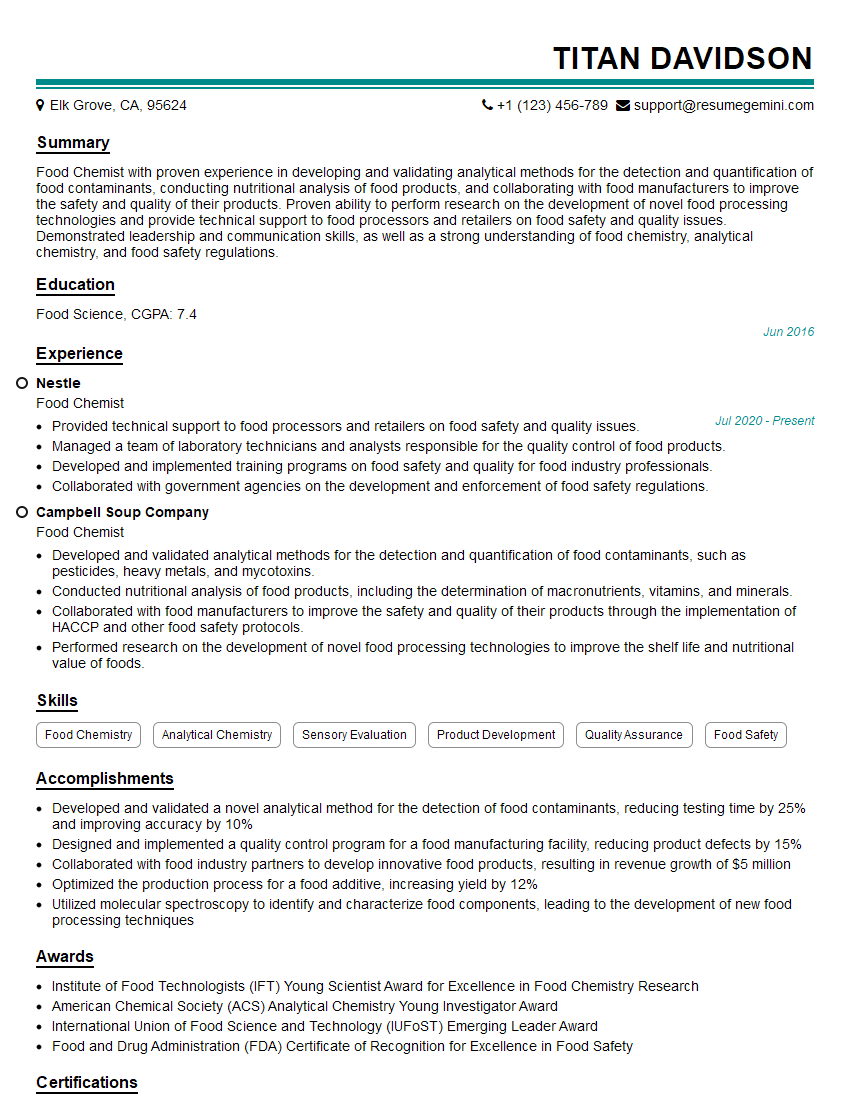
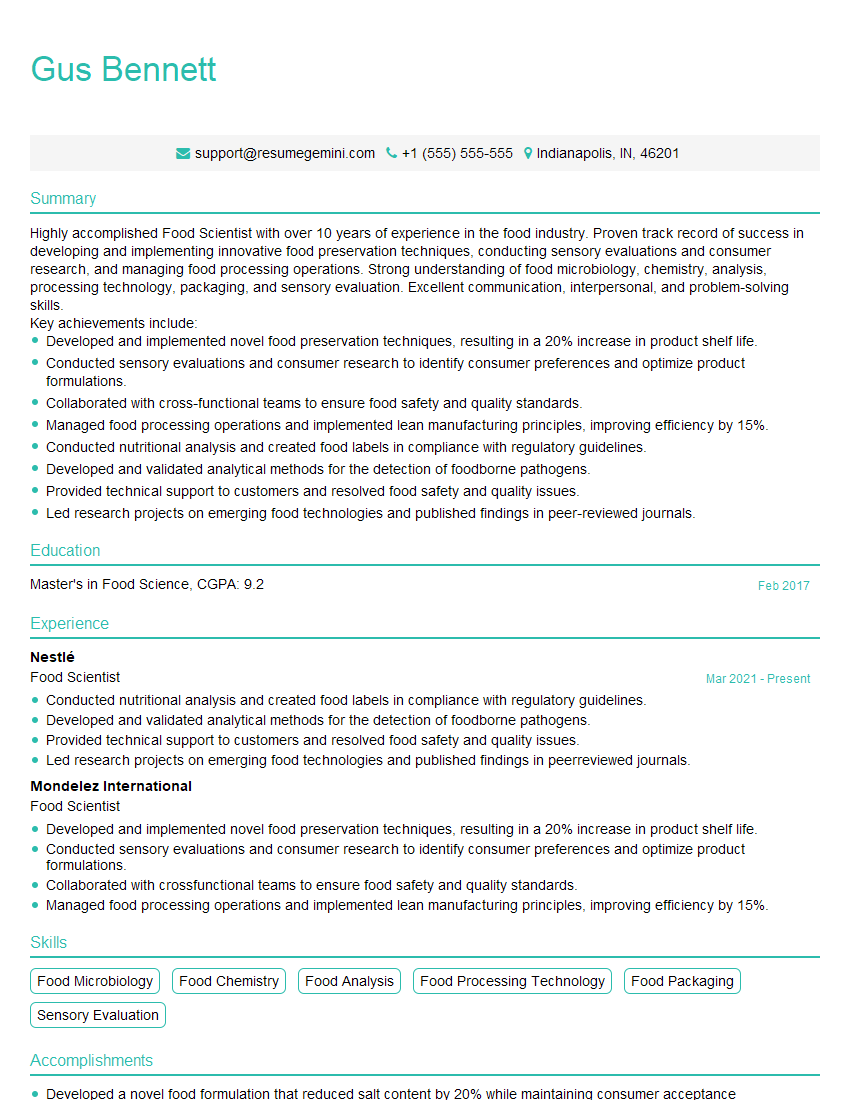
Mastering Food Chemistry Knowledge is crucial for advancing your career in the food industry, opening doors to exciting roles in research, development, quality control, and production. A well-crafted resume is your key to unlocking these opportunities. Creating an ATS-friendly resume, optimized for applicant tracking systems, significantly increases your chances of getting noticed by recruiters. ResumeGemini is a trusted resource to help you build a professional and effective resume tailored to the food chemistry field. Examples of resumes tailored to Food Chemistry Knowledge are available to guide you. Invest the time to build a strong resume – it’s an investment in your future.

Explore more articles
Users Rating of Our Blogs
Share Your Experience
We value your feedback! Please rate our content and share your thoughts (optional).
What Readers Say About Our Blog
To the interviewgemini.com Webmaster.
Very helpful and content specific questions to help prepare me for my interview!
Thank you
To the interviewgemini.com Webmaster.
This was kind of a unique content I found around the specialized skills. Very helpful questions and good detailed answers.
Very Helpful blog, thank you Interviewgemini team.