Unlock your full potential by mastering the most common Framing and hanging pictures and artwork interview questions. This blog offers a deep dive into the critical topics, ensuring you’re not only prepared to answer but to excel. With these insights, you’ll approach your interview with clarity and confidence.
Questions Asked in Framing and hanging pictures and artwork Interview
Q 1. What types of framing materials are you familiar with?
Choosing the right framing materials is crucial for protecting and enhancing artwork. I’m familiar with a wide range, categorized by their frame material, mat board, and glazing options.
- Frame Materials: Wood (ranging from simple pine to ornate hardwoods like mahogany and walnut), metal (aluminum, steel, even reclaimed materials), and plastic (polystyrene or acrylic for budget-friendly or modern options). The choice depends on the art style, budget, and desired aesthetic. For example, a delicate watercolor might suit a slim, elegant wood frame, while a bold modern piece might pair well with a sleek metal frame.
- Matting: Mat boards come in various colors, textures (e.g., linen, cotton), and thicknesses, providing a buffer between the artwork and the glass, enhancing presentation and preventing damage. Acid-free mats are essential to prevent discoloration over time.
- Glazing: Standard glass, UV-protective glass (blocks harmful UV rays that fade artwork), acrylic (lighter and safer than glass, though it can scratch more easily), and museum glass (high-quality, UV protective, and anti-reflective) are all options I use frequently, selecting based on the piece’s value and light sensitivity.
Q 2. Describe your experience with different matting techniques.
Matting is more than just a decorative element; it’s a crucial part of protecting and enhancing the artwork. My experience encompasses various techniques, including:
- Window Matting: Creates a single opening for the artwork, offering a clean, classic look. The size and color of the mat are carefully chosen to complement the piece.
- Double Matting: Uses two mats of different colors and/or textures, creating visual depth and contrast, particularly effective for highlighting specific elements within a piece.
- Multi-Matting: Employs three or more mats for a layered, complex, and visually rich effect, often used for high-end or dramatic pieces.
- Custom Cuts: I often create custom mat cuts with beveled edges or unusual shapes to match the artwork’s unique characteristics. A recent example was cutting a mat in the shape of a heart to frame a child’s drawing.
Precision is key. I use a professional mat cutter to ensure clean, straight lines and accurate measurements, preventing damage to the artwork and ensuring a professional finish.
Q 3. How do you determine the appropriate size and style of frame for a piece of art?
Determining the right frame is a balance of art and science. I consider several factors:
- Artwork Size and Style: A large, bold painting might need a substantial frame, while a delicate miniature might be overwhelmed by a wide one. The frame style should complement the artwork’s artistic style (e.g., a minimalist frame for a modern piece, an ornate frame for a classical painting).
- Color Palette: The frame’s color should either complement or contrast the artwork’s colors without overpowering it. For example, a neutral frame can be highly versatile, while a bolder frame color makes a more striking statement.
- Room Décor: The frame should also harmonize with the room’s existing décor and style to create a cohesive look. A modern piece might look out of place in a traditional setting.
- Personal Preference: Ultimately, the client’s personal taste plays a significant role in making the final selection. I guide them through the options, explaining the various factors but always prioritizing their aesthetic preferences.
I often show clients a selection of frames with different sizes and styles before making a final decision. This ensures the client feels involved in the framing process.
Q 4. Explain your process for safely handling and transporting artwork.
Safe handling and transportation are paramount. My process involves:
- Careful Packaging: I use acid-free tissue paper or archival-quality materials to wrap the artwork, preventing scratches and abrasions. Fragile pieces may require additional protection, such as foam board or corrugated cardboard.
- Appropriate Containers: Artwork is placed in sturdy, appropriately sized boxes or crates, ensuring there is minimal movement during transit. Custom-fit boxes are ideal for preventing damage.
- Secure Transportation: I transport artwork in my climate-controlled vehicle to protect it from temperature fluctuations and humidity. For large or exceptionally valuable pieces, specialized art handlers may be engaged.
- Insurance: I always advise clients to consider insurance to cover any potential damage during transport.
I once transported a very large and delicate tapestry for a museum. This involved creating a custom-built crate with internal supports and climate controls to ensure its safe arrival.
Q 5. What are the common methods for hanging pictures on various wall surfaces (e.g., drywall, brick)?
Hanging methods vary depending on the wall type and the artwork’s weight. Here are common techniques:
- Drywall: Picture hooks (for lightweight pieces), screw-in hooks (for heavier pieces), or picture hanging systems are commonly used. Using a stud finder helps ensure the hook is securely fastened.
- Brick: Requires masonry anchors or specialized wall plugs designed for brick. These are drilled into the mortar between bricks and provide a secure mounting point for heavier artwork. Pre-drilling pilot holes reduces the risk of cracking the brick.
- Concrete: Similar to brick, concrete requires specialized wall anchors designed to grip the material effectively.
- Plaster: Depending on the strength of the plaster, picture hooks or small screws could work, always testing the stability before hanging valuable artwork.
Before hanging, I always assess the wall’s structural integrity and choose the appropriate hanging method to ensure the artwork remains securely in place.
Q 6. How do you ensure artwork is properly aligned and level when hanging?
Precise alignment and leveling are essential. My approach involves:
- Measuring and Marking: I carefully measure the desired height and position for the artwork, marking the wall with a pencil to ensure accuracy.
- Leveling Tool: A level is used to verify the horizontal alignment of the artwork before and after it is hung, preventing crooked displays. I use both a standard bubble level and a laser level depending on the complexity of the project.
- Hanging System: Some picture hanging systems include adjustable components that allow for fine-tuning the alignment after the artwork is hung.
- Multiple Points of Reference: When dealing with multiple pieces, ensuring each one is aligned relative to the others creates a harmonious display. For galleries and museum displays, using a laser level to create a grid is essential.
A seemingly minor misalignment can significantly detract from the overall aesthetic. Meticulous attention to detail is crucial to achieving a professional result.
Q 7. What safety precautions do you take when working at heights?
Safety is my top priority when working at heights. My practices include:
- Proper Equipment: I use sturdy stepladders or scaffolding that are in good condition and appropriately sized for the task. Never overreach or use unstable equipment.
- Appropriate Clothing and Footwear: I wear non-slip shoes and clothing that will not get caught on the ladder or the artwork.
- Spotter: For projects requiring extended work at heights, I ensure I have a spotter to assist and maintain safety.
- Assessment of Surroundings: I carefully assess the area to ensure it is free of obstacles and potential hazards before commencing work.
- Never Work Alone at Heights: This is a vital aspect of safety and greatly reduces the risk of accidents.
Once, I was hanging a very large mirror and realized the ladder wasn’t stable enough. I immediately stopped and chose to use a different method to ensure both the safety of the mirror and my safety.
Q 8. How do you handle fragile or valuable artwork?
Handling fragile or valuable artwork requires meticulous care and specialized techniques. Think of it like handling a newborn – gentle and with utmost respect. The first step is a thorough assessment. I examine the piece for any existing damage, noting its weight, dimensions, and material fragility. For paintings, I check for loose paint or canvas areas. For sculptures, I look for cracks or weak points.
Next, I select appropriate materials. This often includes acid-free archival materials like foam core and conservation-grade mat boards to prevent chemical reactions that could damage the artwork. I use soft, acid-free tissue paper to prevent abrasion. Gloves are always worn to avoid transferring oils from my hands. The artwork might be supported by custom-made cradles or supports tailored to its unique shape and condition. For transport, I use sturdy, climate-controlled cases. During framing, I avoid pressure, using gentle pressure-sensitive tape where absolutely necessary. The entire process is designed to minimize stress and risk. For extremely valuable pieces, I might consult with a conservator before proceeding.
Q 9. Describe your experience with conservation-grade framing materials and techniques.
Conservation-grade framing is paramount for preserving artwork’s longevity. This isn’t just about aesthetics; it’s about protecting the piece from light damage, humidity fluctuations, and physical stress. I extensively use UV-filtering glazing, which blocks harmful ultraviolet rays that can fade colors. The matting used is always acid-free, lignin-free, and buffered, meaning it won’t off-gas harmful chemicals that can damage the artwork over time. I avoid using any materials containing wood pulp or adhesives that might release chemicals. Spacers are carefully positioned to ensure proper air circulation, preventing trapped moisture. The frame itself must be constructed from materials that are stable and inert, such as museum-quality wood or archival-quality metal. One memorable project involved a delicate watercolor painting – using conservation-grade materials ensured its vibrant colors remained untouched for generations.
Q 10. What are your preferred methods for securing artwork to prevent damage or theft?
Securing artwork involves both preventing damage and theft. The methods depend on the piece’s size, weight, and value. For smaller, lighter pieces, I typically use strong, picture-hanging wire and appropriate hooks, ensuring the wire is evenly distributed to avoid stress points. For heavier or more valuable pieces, I use specialized hanging systems like French cleats or gallery hanging systems which provide increased stability and security. These systems distribute the weight effectively and prevent sagging. In addition to secure hanging, I strongly advocate for theft prevention. For high-value artwork, I recommend using security systems, such as alarms or UV-sensitive tags, in conjunction with a secure location.
I always assess the wall type; weak plaster requires careful consideration of the hanging method to avoid damaging the wall. For exceptionally valuable pieces, I may even recommend professional security consultation.
Q 11. How do you address uneven or damaged frames?
Uneven or damaged frames require a delicate touch and often specialized skills. Minor imperfections may be addressed with careful repair techniques; this might involve wood filler for cracks and careful sanding followed by repainting to match the original finish. For more significant damage, such as broken joints, I might need to use wood glue and clamps for a secure repair and then re-gilding or refinishing as needed. The process is very similar to restoring a piece of furniture – precision and patience are key. Sometimes, replacement of the frame is the most appropriate solution, particularly if the damage is extensive or compromises the structural integrity of the frame.
Q 12. How do you deal with challenging wall conditions (e.g., uneven surfaces, weak plaster)?
Challenging wall conditions call for creative solutions. Uneven surfaces require using shims or other leveling devices to ensure the frame hangs straight. Weak plaster or drywall demands using specialized fasteners designed to penetrate effectively without damaging the wall. I might use heavier-duty picture hooks, toggle bolts (which expand behind the wall for superior holding power), or even install French cleats for added security. Before installing anything, I thoroughly assess the wall to determine its structural integrity and choose the most appropriate and least-damaging approach. It’s akin to finding the sturdiest support for a heavy plant – the method chosen depends entirely on the plant’s size and the soil’s strength.
Q 13. Have you experience with installing large-scale or heavy artwork?
Yes, I have extensive experience installing large-scale and heavy artwork. This involves a collaborative approach. It typically begins with a thorough assessment of the artwork’s weight and dimensions and carefully considering the wall’s structural capability. I employ professional-grade lifting equipment and/or additional personnel when needed. Secure hanging systems like French cleats, specialized wall anchors, or even custom-built support structures might be necessary. Safety is the paramount concern; I use appropriate safety measures and always ensure the artwork is handled and installed securely and safely. I’ve hung oversized canvases, heavy mirrors and sculptures, paying meticulous attention to weight distribution and security to avoid any accidents or damage.
Q 14. What tools and equipment are essential for your work?
My toolkit is comprehensive and tailored for precision and safety. Essential tools include:
- Various types of hammers and mallets
- Screwdrivers (Phillips and flathead)
- Measuring tapes and levels
- Different types of pliers
- A selection of high-quality screwdrivers for various screw sizes
- Utility knives and precision cutters
- Different types of saw for cutting frames
- Clamps (various sizes)
- Shims and leveling devices
- Assorted wall anchors and picture-hanging hardware
- Safety glasses and gloves
- Articulating arm hangers
- French cleats and other specialized hanging systems
Depending on the project, I might also utilize specialized equipment such as lift systems, cranes or scaffolding for large or unusually-shaped pieces. My choice of tools is informed by both the artwork’s characteristics and the specific installation requirements.
Q 15. How do you maintain a clean and organized workspace?
Maintaining a clean and organized workspace is paramount for efficiency and preventing damage to artwork. My approach is systematic and involves several key steps. First, I designate specific areas for different tools and materials – measuring tapes and levels in one spot, hanging hardware in another, and cleaning supplies readily accessible. Second, I use clearly labeled containers for screws, nails, and other small parts to avoid confusion and misplacement. This prevents delays and frustration during installations. Third, I clean up after each job, removing debris, wiping down surfaces, and properly storing all tools. This not only maintains a professional image but also prevents accidental damage to future artwork or injury to myself. For example, I always carefully dispose of used masking tape to avoid sticky residue on surfaces. Finally, regular preventative maintenance of my tools ensures their longevity and precision, crucial for accurate and damage-free artwork installation.
Career Expert Tips:
- Ace those interviews! Prepare effectively by reviewing the Top 50 Most Common Interview Questions on ResumeGemini.
- Navigate your job search with confidence! Explore a wide range of Career Tips on ResumeGemini. Learn about common challenges and recommendations to overcome them.
- Craft the perfect resume! Master the Art of Resume Writing with ResumeGemini’s guide. Showcase your unique qualifications and achievements effectively.
- Don’t miss out on holiday savings! Build your dream resume with ResumeGemini’s ATS optimized templates.
Q 16. What are the common causes of artwork damage during handling and installation?
Artwork damage during handling and installation stems from several common causes. Improper handling is a major culprit – dropping or bumping the artwork can lead to cracks, scratches, or even complete destruction. Using excessive force during hanging, especially with delicate pieces, can cause damage to the frame or artwork itself. Incorrect use of hanging hardware—using too small a nail or improperly aligning the hardware, for instance—can also cause damage. Environmental factors play a role too. Exposure to extreme temperatures, humidity, or direct sunlight can cause warping, fading, or deterioration of the artwork or frame. Finally, neglecting protective measures like using gloves and soft cloths while handling can lead to smudges, fingerprints, or scratches on delicate surfaces. I mitigate these risks through careful planning, using appropriate materials, and always employing meticulous technique. For example, I always use acid-free gloves when working with sensitive prints or canvases.
Q 17. Describe your experience with different types of hanging hardware (e.g., wire, D-rings, sawtooth hangers)?
I have extensive experience with various hanging hardware, each suited to different artwork and wall types. Sawtooth hangers are common and convenient for lighter framed pieces, providing a simple hanging point. However, they can sometimes be unreliable for heavier pieces. D-rings offer more control over the hanging wire’s position, allowing for better adjustment and balance, especially beneficial for larger, heavier artworks. Picture wire is versatile and adaptable, but requires careful measurement and adjustment to achieve perfect balance. I’ve worked with more specialized hardware, including French cleats for extremely heavy pieces or museum-quality hanging systems that provide exceptional stability and security. Selecting the right hardware is crucial and depends entirely on the weight, size, and material of the artwork and the type of wall it is being hung on. In one instance, I had to use a specialized hanging system for a large and unusually heavy tapestry to prevent it from stressing the wall or causing damage.
Q 18. How do you calculate the appropriate placement of hanging hardware for balanced display?
Calculating the appropriate hardware placement for balanced display requires precision. First, I carefully measure the artwork’s height and width. Then, I locate the artwork’s center point. This point will be crucial in determining the optimal hardware placement. For wire or D-rings, I ensure the wire is attached so that the center point of the wire aligns with the center point of the artwork. This ensures even weight distribution, preventing tilting. If using sawtooth hangers, I find the center point and ensure the sawtooth is positioned centrally. Finally, I measure from this center point to determine where the nail or hook should be placed on the wall. This approach ensures the artwork hangs straight and balanced. For example, with a large landscape painting, the center point becomes the focal point, allowing the picture to hang straight and true. Incorrect placement can lead to a crooked image or even damage to the hanging hardware.
Q 19. What is your experience with UV protective glazing?
UV protective glazing is essential for preserving artwork, especially those susceptible to fading from light exposure. My experience encompasses working with various types of UV protective glass and acrylic. I’ve seen firsthand how UV glazing significantly extends the lifespan of delicate pieces like watercolors, pastels, and photographs. The difference between artwork protected with UV glazing and unprotected artwork is stark, with the protected artwork maintaining its vibrancy and color accuracy for a much longer period. I always recommend UV protective glazing when possible, particularly for valuable or irreplaceable artwork. This is a crucial aspect of professional art handling and preservation. Choosing the right glazing is important and can impact cost, longevity and visual quality; I have experience working with a range of products to match individual artwork needs.
Q 20. How do you determine the best method for displaying three-dimensional artwork?
Displaying three-dimensional artwork requires a different approach compared to two-dimensional pieces. The method depends on the size, weight, and material of the sculpture or object. For smaller, lighter pieces, I might use small pedestals, shelves, or custom-made stands. Larger or heavier sculptures may need more robust support, potentially requiring wall-mounted systems or freestanding display cases. The environment is also a crucial consideration; the display needs to protect the art from damage, theft, and unsuitable environmental conditions. I assess each piece individually to determine the best method that emphasizes its aesthetic qualities while ensuring its safety and preservation. Consideration should also be given to lighting and surroundings; the goal is to enhance and not detract from the artwork. For example, a delicate ceramic sculpture might be best displayed on a cushioned pedestal in a controlled climate setting.
Q 21. Describe your problem-solving approach when encountering unexpected challenges during installation?
My problem-solving approach is systematic and adaptable. When faced with unexpected challenges, I first assess the situation calmly, identifying the specific problem. Then, I gather information – checking the artwork’s condition, examining the wall surface, and reviewing the hanging hardware. I leverage my experience to brainstorm solutions, considering alternative techniques or materials if necessary. If the problem requires specialized knowledge or tools, I’m not afraid to consult colleagues or resources. For example, encountering an unexpectedly brittle wall during a hanging job prompted me to find an alternative method involving stronger mounting hardware and a different installation approach. Documentation is key to prevent recurrence; I always make note of solutions for future reference. I believe in prioritizing safety; if a solution feels unsafe, I explore alternative approaches.
Q 22. What is your experience with working from detailed installation plans or specifications?
Working from detailed installation plans is crucial for successful projects. My experience encompasses interpreting architectural drawings, specifying the placement of artwork based on scale and wall space, and understanding any unique challenges presented by the environment (e.g., high ceilings, awkward corners). I’m proficient in reading plans that detail hanging hardware requirements, including the type of anchors needed for different wall materials. For instance, I’ve worked on projects where the specifications detailed the precise positioning of multiple pieces within a gallery installation, ensuring symmetry and visual flow. Each piece’s dimensions, weight, and desired hanging height were meticulously documented, allowing for seamless execution. I’ve also adapted plans on the fly, accommodating unexpected on-site discoveries, such as discovering weaker-than-expected wall materials, and modifying my approach accordingly.
Q 23. How familiar are you with industry best practices for art handling and installation?
Industry best practices for art handling are paramount in preserving the artwork’s integrity. This includes using appropriate handling techniques to avoid damage – employing soft gloves, acid-free materials, and supportive cradling for fragile pieces. I’m meticulous about using the correct hanging hardware for weight capacity and wall type, preventing damage and ensuring safe installation. I understand the importance of climate control for certain artworks, especially those sensitive to humidity and light. This is especially important when dealing with delicate paintings, sculptures, or antique frames. My familiarity extends to understanding the ethical implications of handling historical or valuable pieces – this includes proper documentation and cautious handling throughout the entire process. I always prioritize the preservation and protection of the artwork above all else. For example, I recently handled a collection of antique maps that required specialized acid-free matting and framing materials to prevent deterioration.
Q 24. Describe your experience with working independently and as part of a team.
I’m comfortable working both independently and collaboratively. When working independently, I’m adept at managing my time effectively, prioritizing tasks, and solving problems on my own initiative. A recent solo project involved the installation of artwork in a private residence; I handled every aspect from the initial assessment to the final clean-up. Conversely, I thrive in team settings. I believe in clear communication and collaboration. On large-scale installations (such as museum exhibits), teamwork is essential, requiring expertise in scheduling, task delegation, and coordinating efforts with other professionals like electricians or designers. In these situations, effective communication and a shared understanding of the project goals are key. For instance, in a recent museum project, I worked with a team of installers, conservators, and curators, ensuring a smooth and successful exhibition opening.
Q 25. How do you stay current with the latest trends and techniques in framing and art handling?
Staying updated is crucial in this field. I achieve this through a variety of methods: attending industry conferences and workshops, reading professional journals and publications, participating in online forums and communities, and networking with colleagues. This constant learning helps me stay abreast of new materials, techniques, and safety regulations. I also actively seek out continuing education opportunities, focusing on areas such as conservation techniques and new methods of hanging systems. For instance, recently I completed a course on the use of innovative, low-impact hanging systems that minimize wall damage. It is crucial to adapt and grow to better serve clients and ensure the long-term care of the artwork.
Q 26. What is your process for estimating the time and materials required for a framing and hanging project?
My estimation process involves a careful assessment of several factors. First, I examine the artwork’s dimensions, weight, and fragility, as these directly impact handling time and material requirements. Next, I assess the wall type and condition to determine the appropriate hanging hardware and installation method. This also impacts the time required for preparation and installation. Finally, I consider the complexity of the project, including the number of pieces, overall arrangement, and any special requirements. I create a detailed breakdown of the anticipated time and materials, including labor hours, hardware costs, and any additional expenses, such as custom framing if required. I typically provide clients with a detailed, itemized estimate to ensure transparency and manage expectations. For example, a small-scale project might involve a simple calculation, while a museum installation would require a more extensive breakdown across multiple areas.
Q 27. How do you handle client communication and manage expectations regarding timelines and costs?
Client communication is essential. I start by actively listening to their needs and preferences, asking clarifying questions to ensure I understand their vision for the project. I then provide clear, concise, and realistic estimates, outlining timelines, costs, and potential challenges. I keep clients informed throughout the process, providing regular updates and addressing any questions or concerns promptly. Transparency is key to managing expectations. If unforeseen issues arise, I communicate them openly and proactively, offering solutions and adjusting timelines as needed. For example, if a wall proves unsuitable for the planned hanging method, I’d immediately inform the client, propose alternative solutions, and work with them to decide on the best course of action.
Q 28. Describe your experience dealing with customer complaints or issues during or after a project.
Handling customer complaints requires a professional and empathetic approach. I first listen carefully to understand their concerns. Then, I work to identify the root cause of the problem, whether it’s a misunderstanding, an unexpected issue during installation, or a genuine error on my part. I apologize for any inconvenience caused, and I work collaboratively with the client to find a mutually acceptable solution, which might involve adjustments to the installation, a partial refund, or other forms of compensation. My goal is to restore client trust and ensure their satisfaction, even in difficult situations. Documenting every step of the process, including initial consultations, estimates, and any subsequent modifications, helps in resolving disputes effectively and fairly. For instance, I once faced a complaint regarding a slightly misaligned artwork. Through open communication and a willingness to rectify the situation, I resolved the issue to the client’s satisfaction.
Key Topics to Learn for Framing and Hanging Pictures and Artwork Interview
- Understanding Picture Frames: Types of frames (wood, metal, plastic), frame sizes and profiles, matting techniques, and glass/acrylic options. Practical application: Discussing the appropriate frame selection for different artwork and interior design styles.
- Hanging Methods: Wire hanging, D-rings and sawtooth hangers, different hook types and their suitability for various wall materials (drywall, plaster, brick). Practical application: Explaining the process of choosing the correct hanging method based on the artwork’s weight and the wall type. Problem-solving: Troubleshooting common hanging issues like uneven hanging or damage to walls.
- Artwork Preparation: Proper handling of artwork, assessing condition and potential damage, cleaning and preservation techniques. Practical application: Describing procedures for safely preparing artwork for framing and hanging, including techniques to prevent damage during transport and installation.
- Tools and Equipment: Familiarity with essential tools (hammer, level, measuring tape, picture hangers, wire cutters), their proper usage, and safety precautions. Practical application: Demonstrating knowledge of efficient and safe tool use for various hanging scenarios.
- Safety Procedures: Understanding and adhering to safety regulations when working at heights, using ladders, and handling sharp objects. Practical application: Describing safety procedures to minimize risk of injury and damage to artwork.
- Client Communication: Effective communication with clients to understand their needs, offer professional advice, and manage expectations. Practical application: Describing how to address client concerns regarding framing choices, hanging locations, and potential problems.
- Estimating and Pricing: Developing accurate estimates based on project scope, materials costs, and labor. Practical application: Explaining the process of creating a detailed and transparent quote for clients.
Next Steps
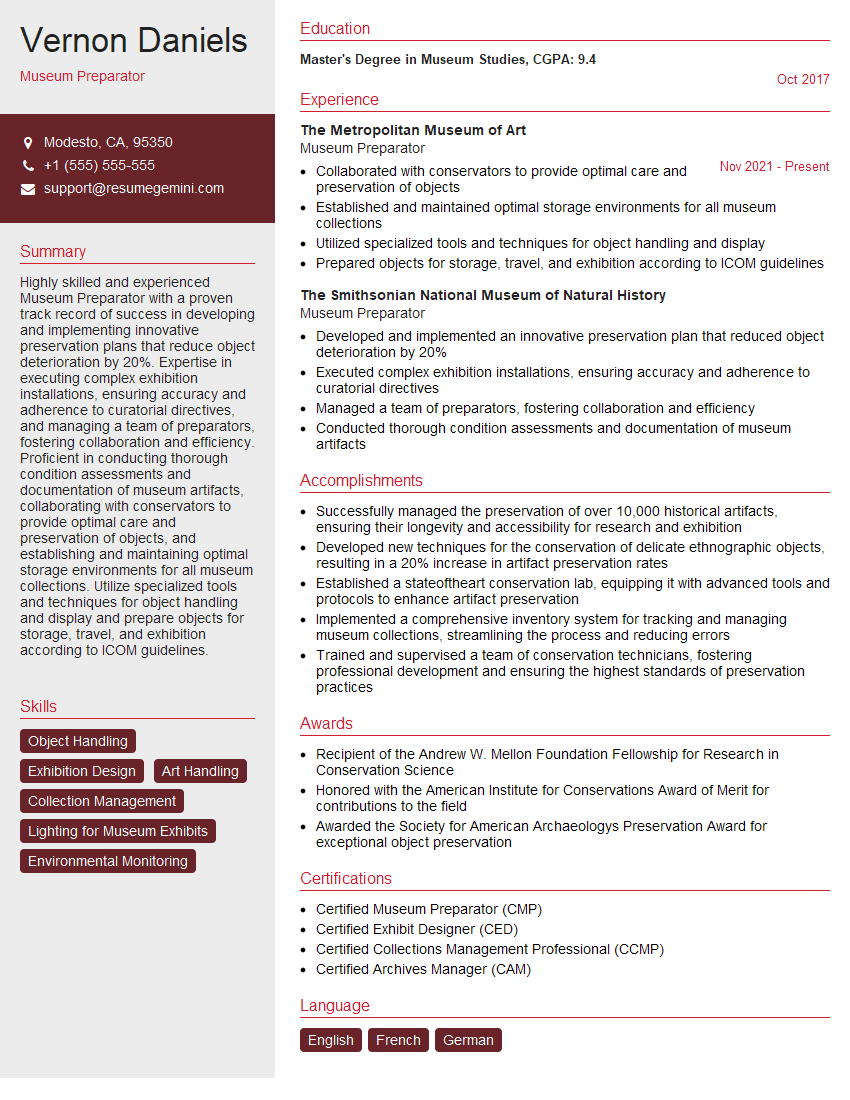
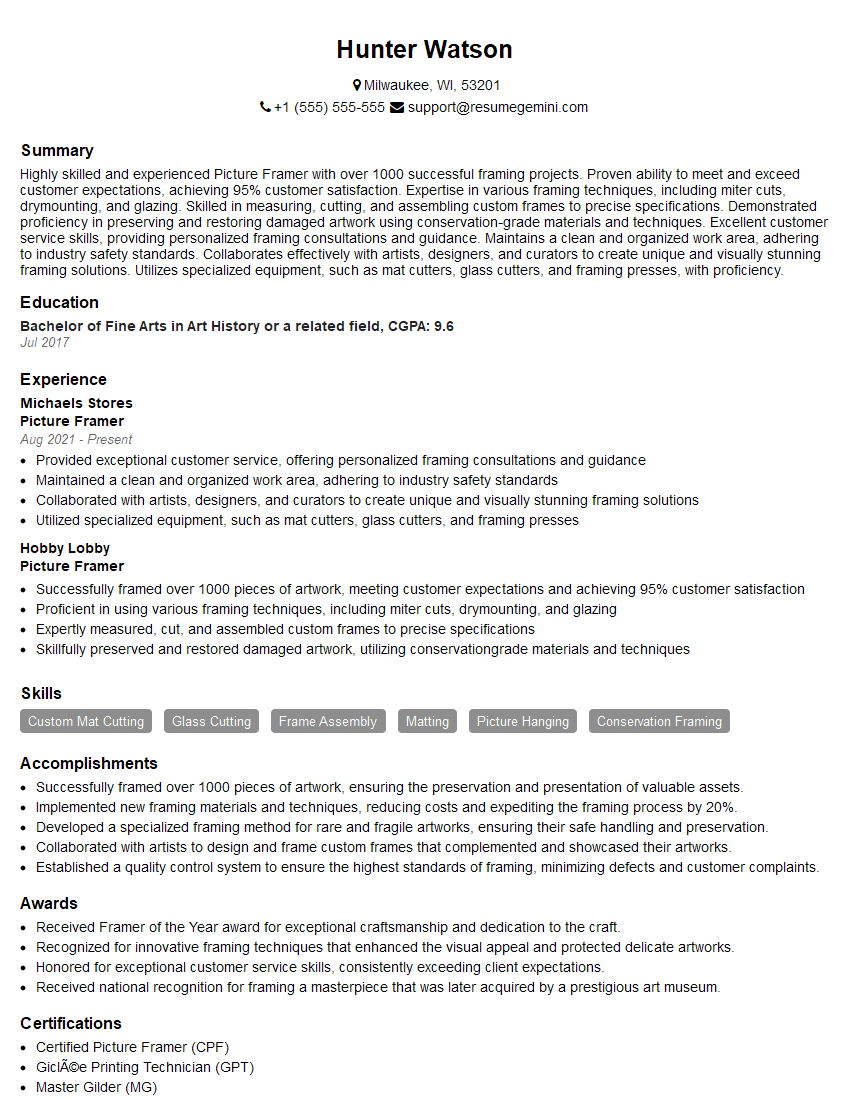
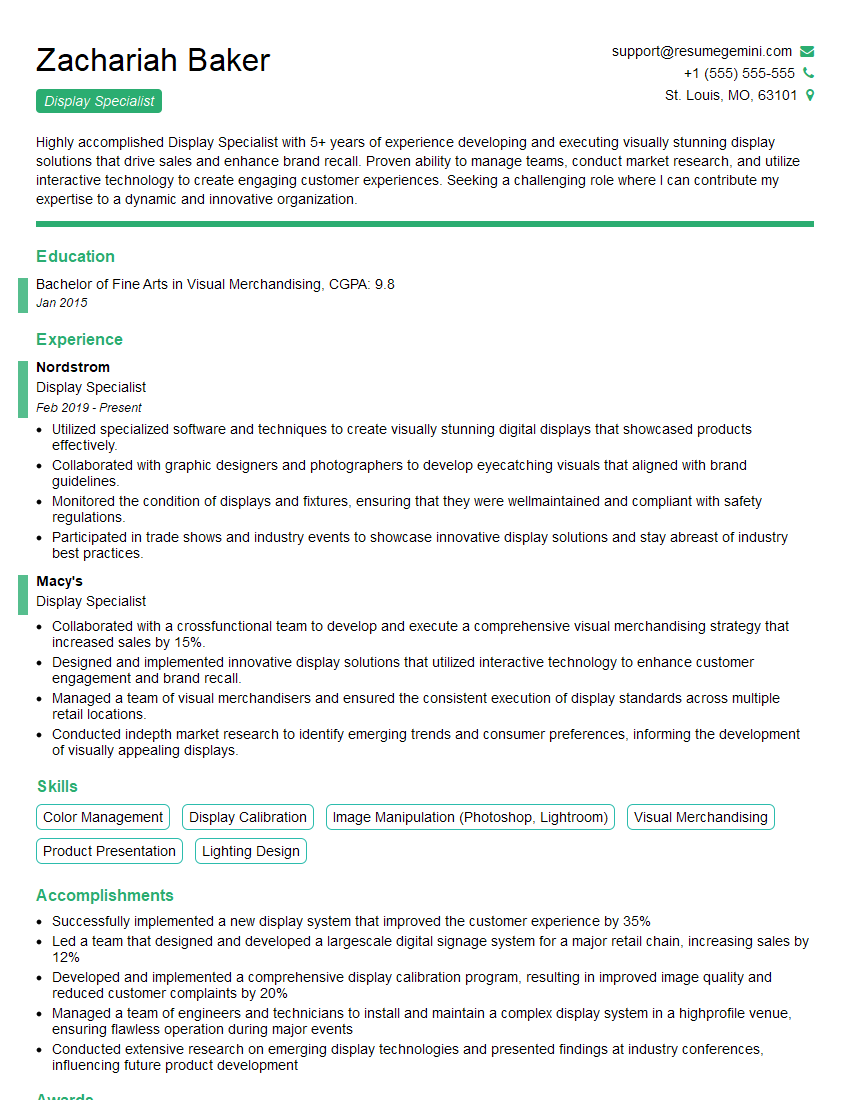
Mastering the art of framing and hanging pictures and artwork opens doors to diverse career opportunities, from freelance work to roles in galleries, interior design firms, or home improvement businesses. Building a strong, ATS-friendly resume is crucial for showcasing your skills and experience effectively to potential employers. ResumeGemini is a trusted resource to help you create a professional and impactful resume that highlights your abilities in this field. Examples of resumes tailored to framing and hanging pictures and artwork are available to guide you through the process.
Explore more articles
Users Rating of Our Blogs
Share Your Experience
We value your feedback! Please rate our content and share your thoughts (optional).
What Readers Say About Our Blog
To the interviewgemini.com Webmaster.
Very helpful and content specific questions to help prepare me for my interview!
Thank you
To the interviewgemini.com Webmaster.
This was kind of a unique content I found around the specialized skills. Very helpful questions and good detailed answers.
Very Helpful blog, thank you Interviewgemini team.