The thought of an interview can be nerve-wracking, but the right preparation can make all the difference. Explore this comprehensive guide to Freight Cost Negotiation interview questions and gain the confidence you need to showcase your abilities and secure the role.
Questions Asked in Freight Cost Negotiation Interview
Q 1. Explain your experience in negotiating freight rates with carriers.
Negotiating freight rates effectively requires a deep understanding of the market, carrier operations, and your own company’s needs. My experience spans over a decade, encompassing diverse sectors including manufacturing, retail, and e-commerce. I’ve successfully negotiated rates with a wide range of carriers, from small regional trucking companies to major international shipping lines. My approach is always data-driven, leveraging historical shipment data, market analysis, and competitive benchmarking to establish a realistic target rate. For instance, in one negotiation with a major LTL (Less-than-Truckload) carrier, I was able to secure a 15% reduction by demonstrating our consistent high volume and presenting a detailed analysis of their competitors’ pricing in the region. This involved not just focusing on the base rate but also carefully examining fuel surcharges, accessorial charges, and minimum weight thresholds.
Furthermore, I understand the importance of building strong relationships with carriers. Open communication and mutual respect are crucial for long-term partnerships. I consistently strive for win-win outcomes, ensuring that the agreed rates are sustainable and fair for both parties. This collaborative approach has led to secure and reliable transportation services even during market fluctuations.
Q 2. Describe your process for identifying cost-saving opportunities in freight transportation.
Identifying cost-saving opportunities in freight transportation is a systematic process that begins with a comprehensive audit of current shipping practices. This involves analyzing shipment data to pinpoint areas for improvement. For example, are we consolidating shipments effectively? Are we using the most efficient mode of transport for each shipment? Are there unnecessary accessorial charges?
- Shipment Consolidation: Combining smaller shipments into larger ones often results in significant cost savings through economies of scale. I’ve successfully implemented consolidation strategies that reduced our LTL costs by as much as 20%.
- Route Optimization: Analyzing shipment routes using mapping software and considering factors like traffic patterns and fuel prices can help identify more efficient routes, minimizing transit times and fuel costs. One example involved optimizing our delivery routes to a specific region and cutting down travel distance by 10%, directly impacting fuel consumption and driver labor costs.
- Carrier Negotiation: As mentioned previously, actively negotiating rates with multiple carriers, utilizing their competitive bids, is vital. We regularly solicit bids from several carriers to ensure we obtain the best possible rates.
- Mode Optimization: Evaluating different transportation modes (sea, air, rail, truck) based on factors like speed, cost, and reliability is crucial. For example, shifting from air freight to ocean freight for less time-sensitive shipments can offer substantial savings.
This audit, followed by a strategic implementation of identified solutions, provides a clear path towards optimizing freight costs.
Q 3. How do you evaluate different modes of transportation (e.g., sea, air, rail, truck) to optimize cost?
Evaluating different transportation modes requires a multi-faceted approach considering several crucial factors. It’s not just about the initial cost but also the total landed cost, which includes all expenses associated with moving the goods from origin to destination.
- Cost: Each mode has varying costs per unit (e.g., per kilogram or per container). Ocean freight is generally the cheapest for large volumes, while air freight is the fastest but most expensive. Truck transport provides flexibility for smaller, less time-sensitive shipments.
- Speed: Air freight is the quickest, followed by truck, rail, and then ocean freight. Transit time is a key consideration – faster delivery might offset higher transportation costs if it leads to faster inventory turnover and reduced warehousing expenses.
- Reliability: Factors like weather conditions and port congestion can impact reliability. Ocean freight, for instance, is susceptible to delays due to port congestion.
- Capacity: Ocean freight and rail have high capacity, suitable for large volumes, while air freight and truck transport have lower capacity but greater flexibility.
- Security: Each mode has inherent security considerations. Risk assessment is a crucial part of the decision-making process.
I use a decision matrix to weigh these factors, assigning weights based on their importance to our specific needs for each shipment. This ensures a data-driven approach to choosing the most cost-effective mode of transport while also meeting delivery timelines and other requirements.
Q 4. What strategies do you employ to negotiate favorable contract terms with carriers?
Negotiating favorable contract terms with carriers requires a proactive and strategic approach. It’s crucial to approach negotiations with a clear understanding of your own business needs and the current market conditions. Building a strong relationship with the carrier is key. I’ve found that a collaborative, mutually beneficial approach fosters trust and leads to better outcomes.
- Volume Commitments: Offering guaranteed shipment volumes often secures better rates. Presenting a clear forecast of future shipments demonstrates commitment and provides carriers with predictability.
- Payment Terms: Negotiating favorable payment terms, such as extended payment periods, can improve cash flow.
- Service Level Agreements (SLAs): Establishing clear SLAs regarding delivery times, damage claims, and tracking transparency is important. This ensures accountability and minimizes disruptions.
- Fuel Surcharges: Carefully examine the fuel surcharge calculation methods. Some carriers include a ‘fuel hedging’ component that can inflate costs during periods of low fuel prices.
- Contract Length: Negotiating longer-term contracts can often lead to lower rates due to the reduced risk for carriers. However, it’s essential to include clauses for renegotiation or adjustments based on market conditions.
I use a combination of these strategies, tailoring the approach to individual carriers and market dynamics. Each negotiation is unique and requires flexibility and adaptability.
Q 5. How do you handle unexpected increases in fuel surcharges or other transportation costs?
Unexpected increases in fuel surcharges or other transportation costs can significantly impact budgets. My approach focuses on proactive mitigation and responsive adaptation.
- Contractual Clauses: Contracts should include provisions addressing fuel price fluctuations. For example, a price adjustment clause that specifies how fuel surcharges are calculated and capped can limit the impact of sudden increases.
- Carrier Communication: Open communication with carriers is vital. Understanding the reasons for the increase and exploring potential alternative solutions, such as route optimization or shipment consolidation, is crucial.
- Hedging Strategies: For long-term contracts, hedging strategies (e.g., using fuel derivatives) can be employed to mitigate the risk of price volatility.
- Renegotiation: If the increase is substantial and outside the bounds of the agreed-upon contract, I initiate renegotiation with the carrier, presenting data on competitor pricing and market conditions to support my case.
- Mode Switching: If costs become unsustainable, switching to an alternative transportation mode (e.g., rail instead of truck) could be a viable solution.
A flexible approach, combined with strong communication and data analysis, is crucial to handling these unexpected cost changes.
Q 6. Describe your experience using different freight payment methods (e.g., prepaid, collect, etc.)
My experience encompasses various freight payment methods, each with its own advantages and disadvantages. The choice depends on factors like risk management, cash flow, and the relationship with the carrier.
- Prepaid: The shipper pays the carrier upfront. This method provides greater control and predictability for the shipper but requires sufficient working capital. It also minimizes the risk of the carrier not being paid.
- Collect: The consignee (receiver) pays the carrier upon delivery. This shifts the financial burden to the consignee but requires trust and efficient communication between all parties. It can also lead to potential delays in payment if the consignee has issues.
- Third-Party Payment Processors: Utilizing a third-party logistics provider (3PL) or freight payment service streamlines payment processes, providing improved visibility and often better rates. They handle payment reconciliation and dispute resolution, improving efficiency.
I’ve successfully used all these methods, selecting the most appropriate one based on the specific transaction and overall risk assessment. For example, for high-value shipments or less established relationships, prepaid is preferred to minimize financial risk. For regular shipments with reliable consignees, collect is often used to optimize cash flow.
Q 7. What are some common negotiation tactics used by carriers, and how do you counter them?
Carriers employ various negotiation tactics, some of which can be less than transparent. Understanding these tactics and having counter-strategies is vital.
- Lowball Offers: Carriers might initially offer unrealistically low rates to gain the contract, then increase prices later. I counter this by thoroughly researching market rates and ensuring the contract has clear escalation clauses or a price review mechanism.
- Hidden Fees: Carriers sometimes bury accessorial charges (e.g., fuel surcharges, residential delivery fees) within the contract. I carefully examine all terms and conditions and ask for clear itemized pricing.
- Unrealistic Deadlines: Carriers might impose tight deadlines to pressure shippers into accepting less favorable terms. I address this by setting realistic deadlines, considering lead times and potential disruptions, and clearly communicating my priorities.
- Limited Capacity Claims: Carriers might claim limited capacity to justify higher rates. I verify this claim by checking with other carriers and analyzing market demand.
- Lack of Transparency: Some carriers lack transparency regarding their processes and cost structure. I address this by demanding clear and detailed explanations of their pricing and contractual terms.
By being proactive, conducting thorough due diligence, and building strong relationships, I can mitigate the impact of these tactics and negotiate fair and mutually beneficial agreements.
Q 8. How do you build and maintain strong relationships with freight carriers?
Building and maintaining strong relationships with freight carriers is crucial for securing favorable rates and reliable service. It’s not just about negotiating the lowest price; it’s about fostering a partnership built on mutual trust and respect.
- Open Communication: Regular, transparent communication is key. This includes proactively sharing shipment information, providing accurate forecasts, and promptly addressing any issues that arise. I always make sure to keep carriers updated on potential changes in volume or shipping needs.
- Fair and Timely Payments: Consistent and on-time payments demonstrate professionalism and build confidence. I ensure we pay invoices promptly according to agreed-upon terms.
- Mutual Respect and Understanding: I recognize that carriers have their own operational challenges. I strive to understand their perspectives and work collaboratively to find solutions that benefit both parties. For example, if a carrier faces unexpected delays, I work with them to find alternative solutions, rather than simply complaining about the lateness.
- Performance Feedback: Providing constructive feedback on carrier performance helps them improve their services. This includes both positive reinforcement for exceeding expectations and constructive criticism for areas needing improvement, delivered professionally and focusing on specific instances.
- Relationship Building: Attending industry events, building personal connections with key personnel, and demonstrating a commitment to long-term collaboration strengthens the relationship. I believe in getting to know the people behind the companies, building rapport and establishing trust beyond just transactional business.
For example, I once built a strong relationship with a smaller carrier by consistently giving them business, even during slower periods. This loyalty proved invaluable when a major unexpected surge in demand hit; they prioritized our shipments, securing our deliveries despite industry-wide congestion.
Q 9. Explain your understanding of Incoterms and their impact on freight costs.
Incoterms (International Commercial Terms) are a set of standardized trade terms published by the International Chamber of Commerce (ICC). They define the responsibilities of buyers and sellers for the delivery of goods, including who is responsible for freight costs and insurance. Understanding Incoterms is critical for accurate freight cost negotiation because they directly impact who bears the cost of transportation at each stage of the shipping process.
- Impact on Freight Costs: Different Incoterms allocate responsibility for freight costs differently. For example, under FOB (Free On Board), the seller is responsible for delivering the goods to the port of shipment, while the buyer is responsible for the main carriage and insurance. Conversely, under CIF (Cost, Insurance, and Freight), the seller covers the cost of transportation to the port of destination, including insurance. This shift in responsibility significantly impacts the freight costs negotiated and borne by each party.
- Examples:
FOB: Seller’s costs are lower; buyer’s costs are higher.CIF: Seller’s costs are higher; buyer’s costs are lower.EXW(Ex Works): The buyer bears all costs and risks from the seller’s premises.DDP(Delivered Duty Paid): The seller bears all costs and risks up to delivery at the buyer’s premises.
- Negotiation Considerations: When negotiating freight costs, clearly specifying the Incoterm being used is essential to avoid disputes. Misunderstandings about Incoterm responsibilities can lead to costly disagreements.
I always make sure to clearly define the Incoterm in every contract to ensure everyone understands who’s responsible for which costs and avoids potential future conflicts.
Q 10. How do you use freight auditing to identify and recover overcharges?
Freight auditing is a systematic process of reviewing freight invoices to identify errors, overcharges, and discrepancies. It’s a vital tool for cost control and recovering lost funds.
- Process: The process involves comparing the carrier’s invoice with the original shipping documents (bill of lading, packing list, etc.), contracts, and tariffs. I use dedicated freight audit software that automates much of this comparison process.
- Identifying Overcharges: Common overcharges include incorrect accessorial charges (e.g., fuel surcharges, residential delivery fees), incorrect weight or volume calculations, duplicate charges, and application of the wrong rate. Software highlights potential discrepancies by comparing data against predetermined parameters and benchmarks.
- Recovery: Once overcharges are identified, I contact the carrier, providing detailed documentation and requesting a refund or credit. Persistence is key, and often requires a structured follow-up approach, escalating to higher management if necessary. Clear communication and presenting a strong documented case are vital.
For instance, using our freight audit software, we recently discovered a consistent pattern of overcharges related to fuel surcharges on a particular carrier’s invoices. By systematically reviewing all invoices for the past year and presenting a comprehensive report, we were able to recoup over $15,000.
Q 11. What are some key performance indicators (KPIs) you track to measure the effectiveness of freight cost negotiations?
Several key performance indicators (KPIs) help measure the effectiveness of freight cost negotiations. These KPIs offer quantitative insights into the success of negotiation strategies.
- Freight Cost per Unit: Tracks the cost of freight per unit of goods shipped. A decreasing trend indicates successful cost reduction efforts. We track this metric monthly, comparing it to the previous year’s data and establishing quarterly goals.
- Cost per Shipment: Tracks the total cost per shipment, useful for identifying variances between similar shipments. This helps to uncover inconsistencies and potential negotiation leverage points.
- On-Time Delivery Rate: While not directly a cost metric, it’s crucial. Delays often translate into increased costs, and negotiating for reliable service is part of successful freight management. We aim for an on-time delivery rate of above 95%.
- Carrier Performance: This includes metrics like damage rates, claims processing times, and on-time performance. Consistent carrier performance minimizes delays and potential cost increases. We regularly rate our carriers based on performance data.
- Negotiated Rate vs. Spot Rate: This KPI compares the negotiated contract rate with the prevailing spot market rate. It indicates the financial benefits gained from contract negotiations, showing how effective we’ve been at securing long-term favorable rates.
By consistently monitoring these KPIs, I can identify areas for improvement and refine my negotiation strategies to achieve better outcomes. For example, a rising cost per unit would prompt an analysis of the supply chain and renegotiation with carriers.
Q 12. How do you handle disputes with carriers regarding freight charges or service issues?
Handling disputes with carriers requires a systematic and professional approach. The goal is to find a mutually acceptable resolution.
- Documentation: Thorough documentation is essential. I ensure all communication, contracts, invoices, and supporting documents are meticulously maintained. This provides a solid foundation for any dispute resolution.
- Communication: I begin by initiating clear, concise communication with the carrier’s designated contact, outlining the issue and requesting a timely response. I emphasize finding a collaborative solution.
- Mediation: If direct communication doesn’t resolve the dispute, I may involve a neutral third party mediator familiar with the freight industry to facilitate a mutually beneficial agreement.
- Escalation: If mediation fails, I will escalate the issue through formal channels, such as invoking clauses in the contract or engaging legal counsel as a last resort.
- Relationship Preservation: Even during disputes, I prioritize maintaining a professional relationship with the carrier. A long-term, mutually beneficial relationship is more valuable than winning a single dispute.
For instance, we recently had a dispute over a damaged shipment. By presenting clear documentation of the damage and referencing the contract’s terms regarding liability, we were able to negotiate a fair settlement without damaging the ongoing relationship with the carrier.
Q 13. Describe your experience with different types of freight contracts (e.g., spot, contract, dedicated).
My experience encompasses various freight contract types, each with its own advantages and disadvantages.
- Spot Contracts: These are short-term contracts for single shipments, offering flexibility but potentially higher costs due to market fluctuations. I use spot contracts for urgent shipments or when capacity is tight and securing a contract is not possible.
- Contract Contracts: These are long-term agreements offering price stability and volume discounts. They provide more predictability and are ideal for consistent shipping volumes. Negotiating favorable rates for long-term contracts requires careful market analysis and strong relationships with carriers.
- Dedicated Contracts: These involve a dedicated fleet or equipment assigned exclusively to a shipper. This provides ultimate control and reliability, but carries higher upfront costs and is best suited for high-volume, time-sensitive operations.
The choice of contract depends on various factors such as shipping volume, frequency, required delivery speed, and budget. For a high-volume, regular shipper, a contract contract offers the best cost savings and predictability. For a smaller shipper with occasional larger shipments, a mix of contract and spot contracts might be a suitable strategy.
Q 14. How do you analyze historical freight data to identify trends and predict future costs?
Analyzing historical freight data is crucial for identifying trends, predicting future costs, and optimizing shipping strategies. I use a combination of data analysis techniques and forecasting models.
- Data Collection: I gather data on various aspects including shipment volume, mode of transport, origin and destination, carrier used, freight costs, fuel surcharges, and any accessorial charges.
- Trend Identification: I use data visualization tools and statistical analysis to identify trends in freight costs over time. This may include seasonality, fuel price fluctuations, and overall market trends.
- Forecasting: I employ forecasting models, such as time series analysis or regression analysis, to predict future freight costs based on historical data and anticipated market conditions. These forecasts help in budgeting and contract negotiations.
- Identifying Anomalies: Data analysis can also pinpoint unexpected spikes or dips in costs, enabling investigation into root causes and opportunities for improvement.
For example, by analyzing historical data, we identified a seasonal increase in freight costs during the peak holiday shipping season. This insight allowed us to proactively negotiate better rates with carriers well in advance, mitigating the impact of seasonal price increases.
Q 15. What software or tools do you use to manage and analyze freight costs?
Managing and analyzing freight costs effectively requires a suite of tools. I primarily utilize Transportation Management Systems (TMS) such as Oracle Transportation Management or SAP TM. These systems provide comprehensive visibility into shipment data, allowing for detailed cost analysis by carrier, lane, and commodity. Beyond TMS, I leverage spreadsheet software like Microsoft Excel or Google Sheets for detailed cost breakdowns, scenario modeling, and creating insightful dashboards. Furthermore, specialized freight rate benchmarking and analytics platforms, such as FreightWaves or DAT iQ, provide market intelligence and help identify cost-saving opportunities. For example, a TMS allows me to track historical shipping data to identify patterns in cost fluctuations and proactively negotiate better rates based on volume discounts and seasonal changes.
For visual representation of data and trend analysis, I also utilize data visualization tools like Tableau or Power BI. These are crucial in presenting complex freight cost data to stakeholders in an easily understandable format, ensuring buy-in for proposed cost reduction strategies.
Career Expert Tips:
- Ace those interviews! Prepare effectively by reviewing the Top 50 Most Common Interview Questions on ResumeGemini.
- Navigate your job search with confidence! Explore a wide range of Career Tips on ResumeGemini. Learn about common challenges and recommendations to overcome them.
- Craft the perfect resume! Master the Art of Resume Writing with ResumeGemini’s guide. Showcase your unique qualifications and achievements effectively.
- Don’t miss out on holiday savings! Build your dream resume with ResumeGemini’s ATS optimized templates.
Q 16. How do you incorporate sustainability considerations into your freight cost negotiations?
Sustainability is no longer a ‘nice-to-have’ but a key consideration in freight cost negotiations. I incorporate this by prioritizing carriers committed to reducing their carbon footprint. This involves evaluating their use of fuel-efficient vehicles, their adoption of alternative fuels (e.g., biofuels, LNG), and their overall commitment to sustainability initiatives. For example, I actively seek out and negotiate with carriers who participate in carbon offset programs or utilize technologies aimed at minimizing emissions. I also negotiate contracts that incentivize the use of less polluting modes of transportation, such as rail over trucking for long-haul shipments, whenever feasible. Building this into the negotiation process not only aligns with ethical and environmental responsibilities but can also create positive public image for the company.
The cost-benefit analysis must always be done. While sustainable options might initially have a slightly higher price tag, the long-term benefits, such as reduced fuel costs due to efficiency improvements and potentially improved brand reputation, often outweigh the initial investment. The negotiation process needs to be carefully planned, emphasizing the long-term value proposition rather than focusing solely on immediate savings.
Q 17. Explain your experience negotiating with multiple carriers simultaneously.
Negotiating with multiple carriers simultaneously is a strategic approach that maximizes leverage and secures the best possible rates. I begin by thoroughly understanding the market landscape, including the strengths and weaknesses of each carrier, their capacity, and their historical performance. I then develop a clear Request for Proposal (RFP) outlining our specific requirements and providing a transparent comparison framework for carriers to submit their bids. This ensures a fair and equitable process. I also emphasize building strong relationships with carriers, fostering transparency and collaboration rather than an adversarial approach. This allows for open communication and negotiation.
Using a structured approach, I compare bids, not just focusing on price, but also on service reliability, on-time delivery rates, and their track record of handling our specific type of cargo. Ultimately, my decision might involve selecting multiple carriers, each specializing in different lanes or cargo types, to optimize cost and efficiency. For example, if you have multiple plants and shipping to several customers, each carrier can have a different lane optimized for their individual routes.
Q 18. How do you handle the challenges of negotiating freight costs in a volatile market?
Negotiating in a volatile market requires adaptability and a proactive approach. I start by closely monitoring market trends using industry reports, market intelligence platforms, and maintaining consistent communication with carriers. This helps me anticipate potential price fluctuations and adjust our strategies accordingly. I incorporate fuel surcharges and other market adjustments into contracts to mitigate exposure to unexpected price hikes. I also focus on securing long-term contracts with volume commitments that provide pricing stability, even if the market fluctuates. This approach helps insulate us from the worst market swings.
Furthermore, I explore alternative transportation modes or optimize routes to reduce reliance on specific carriers or lanes prone to volatility. For example, during peak seasons, I may shift some volume to less-congested lanes or utilize alternative modes, such as rail transportation, to lessen the impact of higher trucking costs. Diversification of carriers and transportation methods is key to mitigating risk in a volatile environment.
Q 19. Describe your experience with international freight forwarding and customs brokerage.
My experience with international freight forwarding and customs brokerage is extensive. I’ve managed shipments across various modes of transport – ocean, air, and rail – across diverse global regions. This involves coordinating with freight forwarders to handle documentation, customs clearance, and international regulations. A key aspect is understanding the Incoterms (International Commercial Terms) and ensuring they are clearly defined in contracts to allocate responsibilities and costs effectively. For instance, I need to understand the difference between FOB (Free On Board) and CIF (Cost, Insurance, and Freight) and their implications for cost and liability.
I also collaborate with customs brokers to ensure smooth and timely clearance of shipments, minimizing delays and potential penalties. This involves staying updated on import/export regulations, tariff classifications, and security protocols. My expertise ensures regulatory compliance and efficient handling of international logistics, ultimately reducing delays and hidden costs.
Q 20. How do you manage risk associated with freight transportation (e.g., damage, delays, theft)?
Risk management in freight transportation is paramount. I implement a multi-layered approach. First, I meticulously select carriers based on their safety records, insurance coverage, and track record. I negotiate contracts that clearly outline liability for damage, loss, or delay, including detailed claims procedures. I insist on cargo insurance to protect against unforeseen events. Second, I utilize tracking and monitoring systems to maintain real-time visibility of shipments, allowing for proactive intervention in case of delays or potential problems.
Third, I incorporate preventative measures like proper packaging and labeling to minimize damage during transit. For high-value or sensitive cargo, I utilize specialized handling and secure transportation methods. Finally, I maintain detailed records of all shipments, including documentation and insurance policies, to facilitate efficient claim processing should issues arise. This proactive, multi-faceted approach helps mitigate risks and protects the company from financial loss.
Q 21. What is your approach to building a business case for proposed freight cost reductions?
Building a business case for proposed freight cost reductions requires a structured approach. I begin by quantifying current freight costs and analyzing cost drivers. This involves detailed data analysis to identify areas for potential savings, such as negotiating better rates with carriers, optimizing routes, consolidating shipments, or improving logistics processes. I then develop specific proposals outlining the proposed changes and their anticipated cost reductions. These proposals must clearly demonstrate the return on investment (ROI).
For example, if I propose switching to a different carrier with lower rates, I’ll present data comparing the previous carrier’s costs with the proposed carrier’s rates, taking into account potential risks and service level changes. I use visual aids like charts and graphs to present the data clearly and concisely. Finally, I present the business case to stakeholders, highlighting the financial benefits, operational efficiencies, and overall impact on the company’s bottom line. The focus is on demonstrating a clear path to savings, with measurable results, justifying the investment in change.
Q 22. How do you ensure compliance with relevant regulations and laws regarding freight transportation?
Ensuring compliance in freight transportation is paramount. It involves a deep understanding of and adherence to numerous regulations, varying by location and the type of goods being transported. This includes, but isn’t limited to, knowing and following the rules set by agencies like the Department of Transportation (DOT) in the US, or equivalent bodies in other countries. These regulations cover driver hours of service, vehicle maintenance, hazardous materials handling, and customs declarations.
My approach to compliance is multi-faceted. Firstly, I stay updated on all relevant regulations through continuous professional development and subscriptions to regulatory updates. Secondly, I meticulously document every step of the shipping process, ensuring all paperwork is accurate and complete. This includes bills of lading, customs declarations, and proof of insurance. Thirdly, I work closely with our legal team and freight carriers to understand and address any potential compliance risks proactively. For instance, if we’re shipping hazardous materials, I ensure the carrier has the necessary certifications and we follow the stringent protocols to prevent accidents and fines.
Finally, I use compliance management software to track and manage documentation and ensure audits are performed regularly to identify and address any potential non-compliance issues immediately. This proactive approach helps minimize risks and maintain a strong reputation for ethical and legal operation.
Q 23. Explain your understanding of different types of freight insurance and its impact on costs.
Freight insurance is crucial for protecting against financial losses during shipment. Several types exist, each offering different levels of coverage. Think of it like buying different levels of car insurance – you can choose basic coverage or more comprehensive protection depending on the value of your goods and your risk tolerance.
- Cargo Insurance: This is the most common type, covering damage or loss of goods during transit due to various perils like accidents, theft, or natural disasters. The cost depends on the declared value of the goods and the chosen coverage level (e.g., all-risks, named perils).
- Marine Cargo Insurance: Specifically designed for goods transported by sea, it covers similar risks as cargo insurance but may also include additional coverage for events unique to maritime transportation, such as piracy or sinking. Again, the cost varies with value and coverage.
- Inland Marine Insurance: Covers goods transported over land, but often includes specific items not traditionally covered under cargo insurance, such as bridges or tunnels.
The impact of freight insurance on costs is direct – higher coverage levels translate to higher premiums. However, the potential cost of uninsured losses (e.g., a full truckload of damaged goods) far outweighs the cost of insurance. It’s a risk mitigation strategy. Finding the right balance requires careful consideration of the value of the goods, the risk profile of the route, and the company’s risk tolerance.
Q 24. How do you prioritize cost reduction initiatives when faced with competing priorities?
Prioritizing cost reduction initiatives when facing competing priorities requires a strategic approach. I utilize a framework that combines data analysis with a clear understanding of business objectives.
- Identify Key Objectives: First, I clearly define the overarching business goals. This might be improving profit margins, increasing market share, or enhancing customer satisfaction.
- Data-Driven Analysis: I then analyze freight cost data to identify the areas with the greatest potential for savings. This often involves examining historical shipping data, identifying peak seasons, analyzing carrier performance, and assessing the cost of different shipping modes.
- Cost-Benefit Analysis: I perform a cost-benefit analysis for each potential cost-reduction initiative. This involves calculating the potential savings, the investment required (time, resources, technology), and any potential risks. For instance, switching to a cheaper carrier might initially save money but could result in longer transit times, impacting customer satisfaction.
- Prioritization Matrix: I use a prioritization matrix (such as a Value vs. Effort matrix) to rank the initiatives based on their potential impact and implementation effort. High-impact, low-effort initiatives are prioritized first.
- Implementation & Monitoring: Once prioritized, I implement the chosen initiatives, closely monitor their effectiveness, and make necessary adjustments along the way. This iterative approach ensures we’re constantly optimizing our freight costs.
For example, I might prioritize consolidating LTL shipments to reduce the overall cost of shipping multiple smaller orders, rather than implementing a complex new routing software immediately.
Q 25. Describe your experience with implementing technology to optimize freight costs.
Technology plays a pivotal role in optimizing freight costs. I have extensive experience implementing Transportation Management Systems (TMS) and other freight optimization software. A good TMS can automate many manual processes, reducing errors and improving efficiency.
In a previous role, we implemented a TMS that integrated our ERP system with various carriers’ systems. This enabled real-time tracking of shipments, automated route optimization, and improved visibility into our entire supply chain. The result was a significant reduction in transportation costs, a decrease in delivery times, and improved communication with carriers. For instance, the automated route optimization feature alone saved us an estimated 15% on fuel costs annually.
Beyond TMS, we leveraged data analytics tools to identify patterns in our shipping data, such as identifying slow-moving shipments or high-cost routes. This allowed us to make data-driven decisions about carrier selection, routing, and shipment consolidation. We also implemented a system that automatically alerts us to potential delays, allowing for proactive intervention and minimizing disruptions to our operations.
Q 26. What are the key factors you consider when choosing a freight carrier?
Selecting the right freight carrier is a critical decision that directly impacts cost and service levels. My process involves evaluating several key factors:
- Reliability & On-Time Performance: I review their historical on-time delivery rates and track record for handling potential issues. Carrier reputation is paramount.
- Pricing & Contract Terms: I analyze their pricing structures, negotiating favorable rates and contract terms while understanding the implications of different pricing models (e.g., per-mile, per-shipment).
- Coverage Area & Network: A carrier’s network should adequately cover my required shipping routes and provide efficient connections across the required transportation modes.
- Technology & Communication: I evaluate their technology capabilities, such as their TMS integration and real-time tracking systems. Clear and effective communication channels are essential.
- Insurance & Liability: I verify they possess adequate insurance coverage to protect against potential losses and ensure they meet the required liability standards.
- Capacity & Flexibility: Choosing a carrier with sufficient capacity to handle peak demand and offering flexibility to adapt to fluctuating shipping volumes is vital.
- Customer Service & Support: A responsive and helpful customer service team can quickly resolve any unexpected issues.
I often use a weighted scoring system to compare different carriers, assigning weights to each factor based on their relative importance to my specific needs.
Q 27. How do you manage the relationship between freight costs and service levels?
Balancing freight costs and service levels is a constant negotiation. It’s not a simple equation of choosing the cheapest option; it’s about finding the optimal balance that meets business requirements.
My approach involves understanding the trade-offs between cost and speed, reliability, and other service attributes. For example, using expedited shipping will significantly increase cost but ensure faster delivery. Conversely, choosing slower ground transportation lowers cost but extends delivery times. Understanding the true cost of delays (lost sales, dissatisfied customers) is critical in making these trade-offs.
To manage this balance, I regularly analyze the relationship between freight costs, delivery times, and customer satisfaction metrics. This might involve examining the cost of late deliveries versus the cost of expedited shipping. I then use this data to inform decisions about carrier selection, routing, and shipment prioritization. For instance, we might prioritize expedited shipping for high-value, time-sensitive goods while using slower, more cost-effective options for less critical items. Setting clear service level agreements (SLAs) with carriers is also key to managing expectations and ensuring accountability.
Q 28. Describe your experience with analyzing and optimizing LTL (Less than Truckload) shipments.
Optimizing LTL (Less than Truckload) shipments requires a strategic approach focused on maximizing space utilization and leveraging technology. LTL shipping, where multiple shippers share a truck, can be cost-effective but also presents challenges in terms of efficiency.
My experience includes developing strategies for shipment consolidation, where multiple smaller shipments from a single company are combined into larger, more cost-effective shipments. This often involves coordinating shipments from different locations or adjusting shipping schedules to allow for consolidation. We also actively use LTL shipment optimization software to find the best possible routes, carriers, and consolidation options, often identifying significant savings by simply altering the timing and method of consolidation.
Another key strategy is negotiating favorable rates with LTL carriers. We leverage our shipping volume and consistent business to negotiate discounted rates and volume-based pricing agreements. Regularly analyzing carrier performance and identifying any underperforming carriers is also essential for controlling costs and maintaining acceptable service levels. Finally, I track key metrics, like shipment density and cube utilization, to ensure we’re using space effectively and minimizing wasted capacity.
Key Topics to Learn for Freight Cost Negotiation Interview
- Understanding Freight Pricing Structures: Learn the intricacies of various pricing models (e.g., FOB, CIF, DDP), their implications on cost, and how to identify the most favorable terms for your organization.
- Market Analysis & Rate Benchmarking: Develop skills in researching current market rates, identifying industry trends, and using this data to justify your negotiation positions. Understand how to leverage market fluctuations to your advantage.
- Contract Negotiation Strategies: Master techniques for effective negotiation, including identifying key leverage points, building rapport with carriers, and crafting mutually beneficial agreements. Practice different negotiation styles and understand when to apply each.
- Carrier Selection & Relationship Management: Learn how to evaluate different carriers based on reliability, cost, and service offerings. Understand the value of building strong relationships with key carriers to secure favorable rates and service.
- Risk Management & Contingency Planning: Identify potential risks associated with freight transportation (e.g., fuel surcharges, delays, damage) and develop strategies to mitigate these risks through your negotiations.
- Cost Optimization Techniques: Explore strategies for minimizing freight costs without compromising service quality. This includes route optimization, load consolidation, and exploring alternative transportation modes.
- Data Analysis & Reporting: Learn how to analyze freight cost data to identify areas for improvement, track cost savings, and present your findings effectively to stakeholders. Develop proficiency in relevant software and tools.
- Legal & Regulatory Compliance: Understand relevant transportation regulations and ensure your negotiations comply with all applicable laws and industry best practices.
Next Steps
Mastering freight cost negotiation is crucial for career advancement in logistics and supply chain management. It demonstrates strategic thinking, strong communication skills, and the ability to significantly impact a company’s bottom line. To enhance your job prospects, create an ATS-friendly resume that highlights your relevant skills and experience. We recommend using ResumeGemini, a trusted resource for building professional resumes. ResumeGemini provides examples of resumes tailored to Freight Cost Negotiation to help you create a compelling application that stands out from the competition.
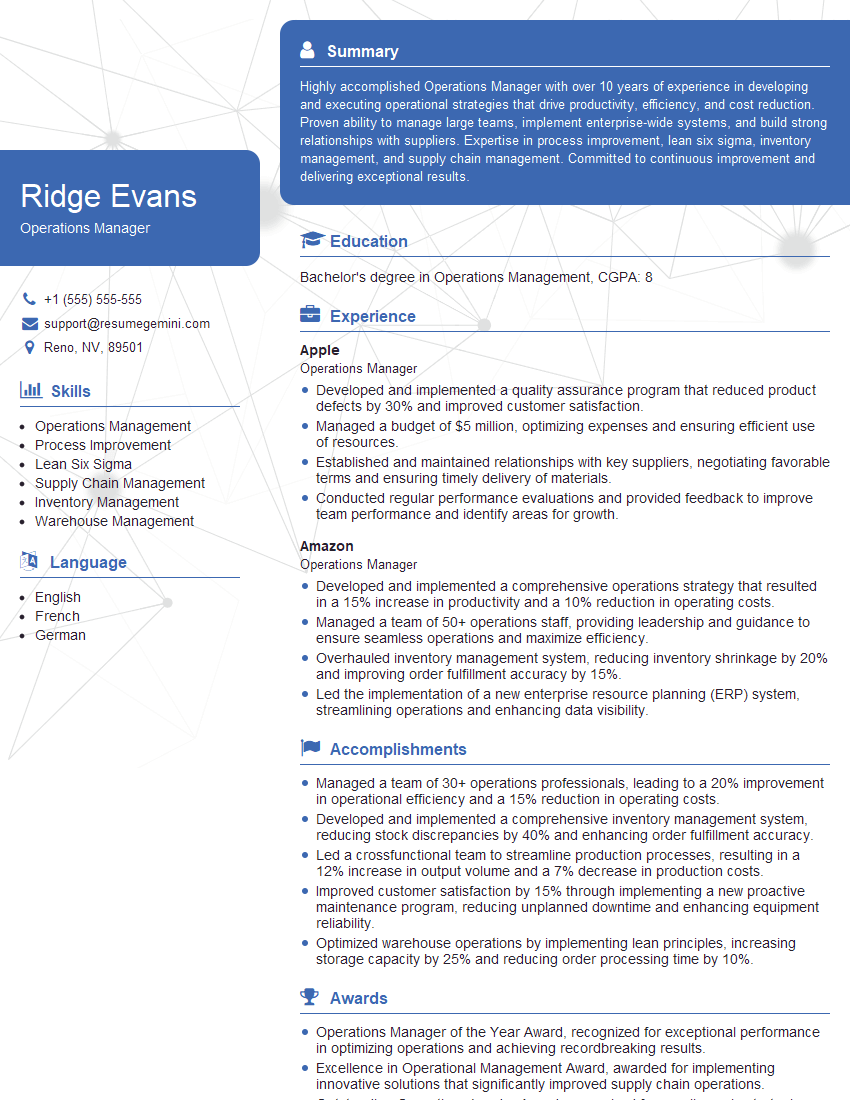
Operations Manager Resume Sample
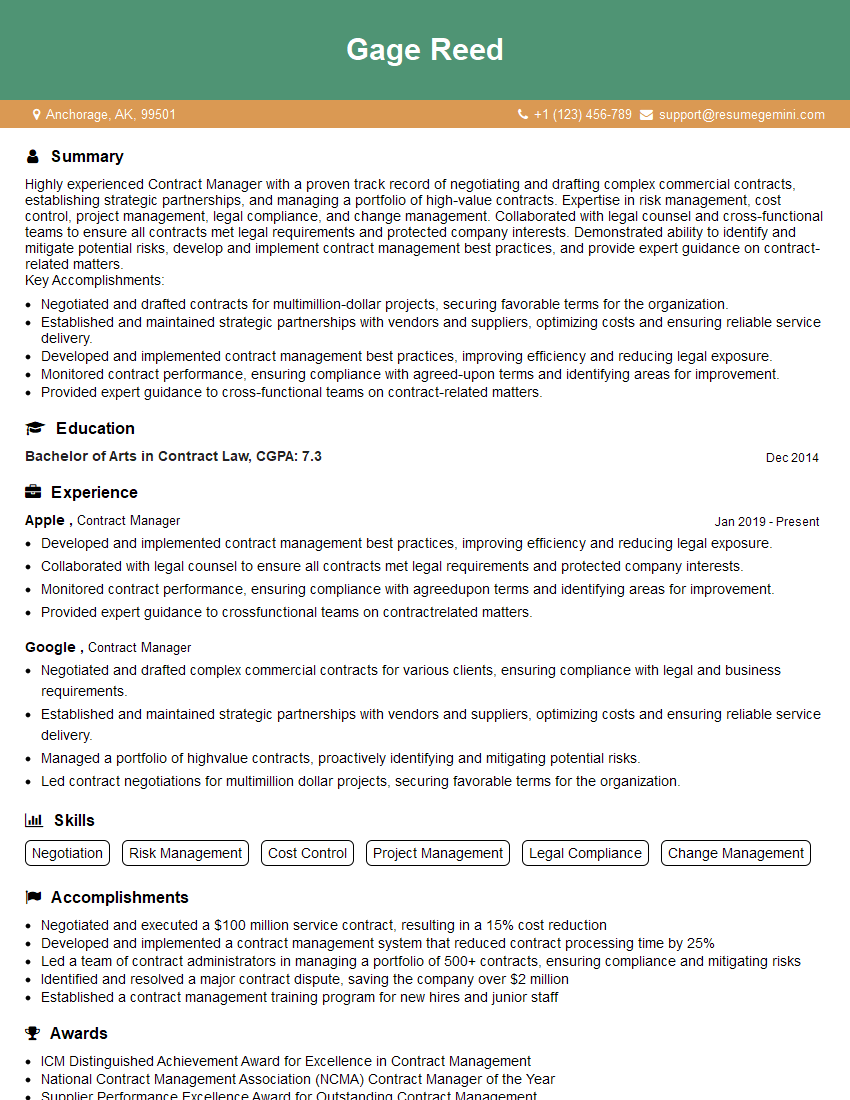
Contract Manager Resume Sample

Procurement Manager Resume Sample
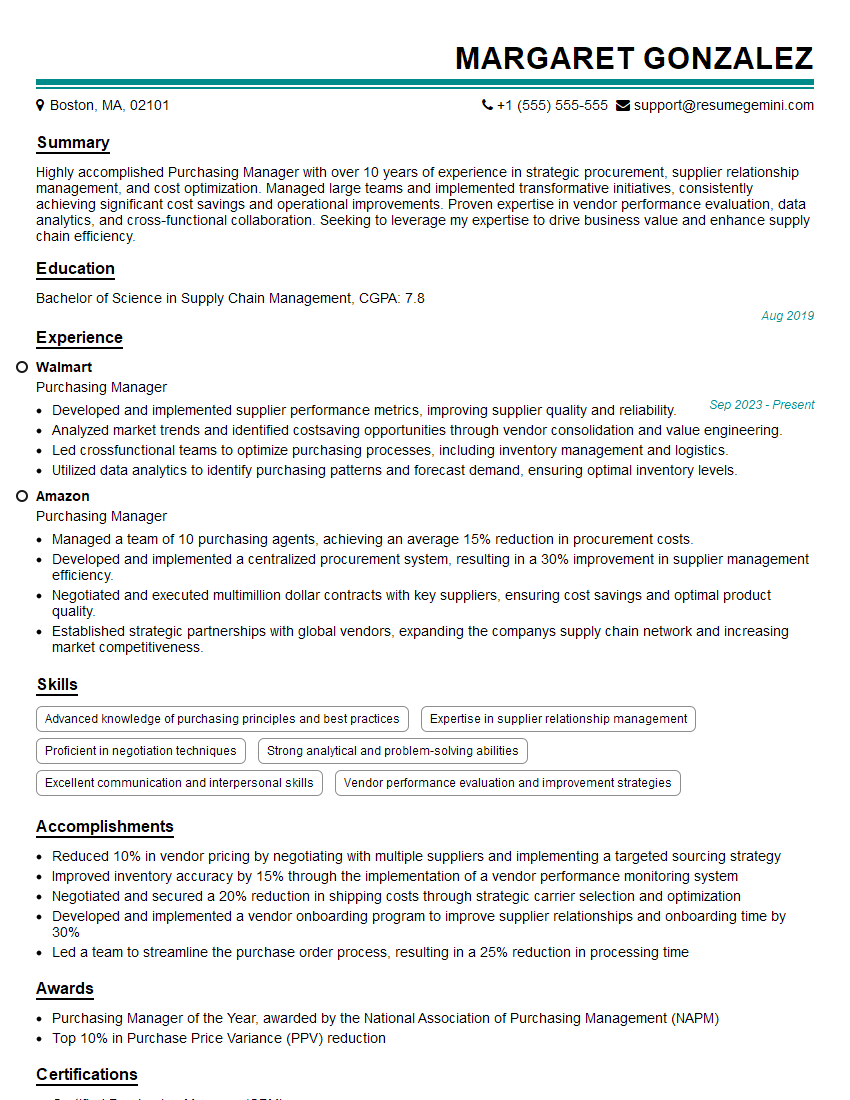
Purchasing Manager Resume Sample
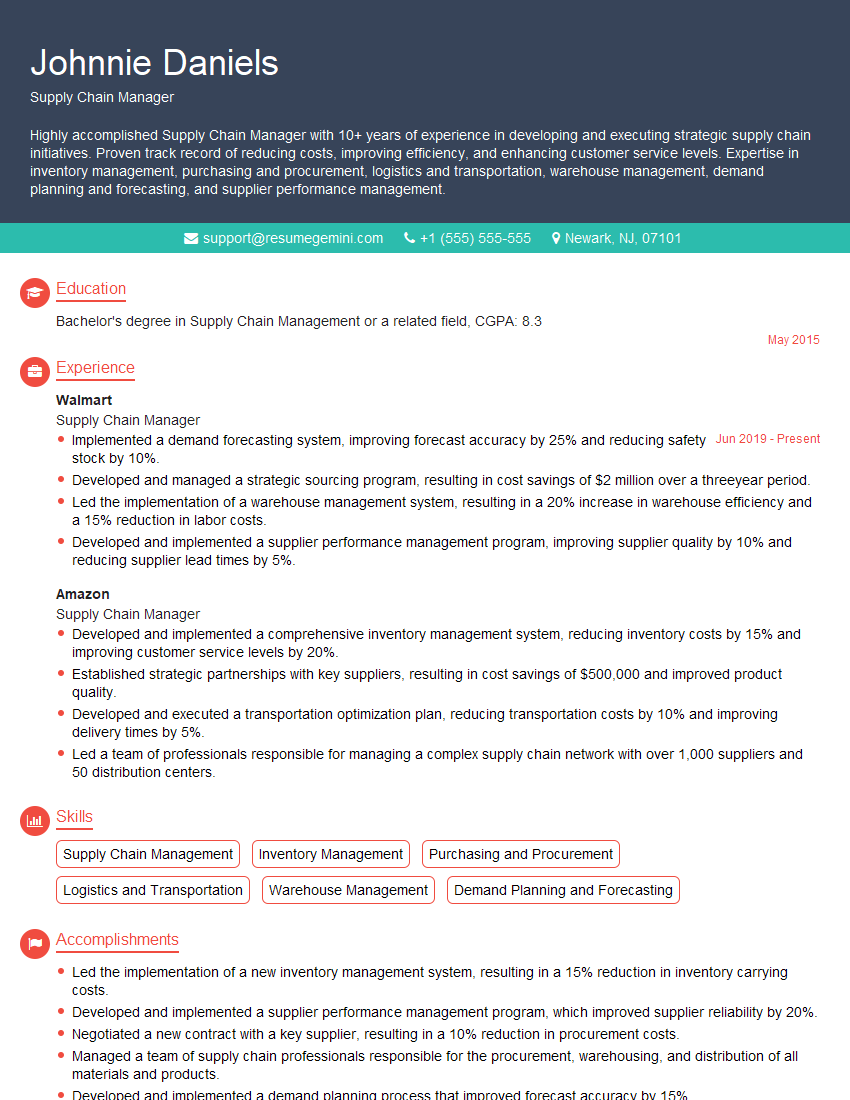
Supply Chain Manager Resume Sample
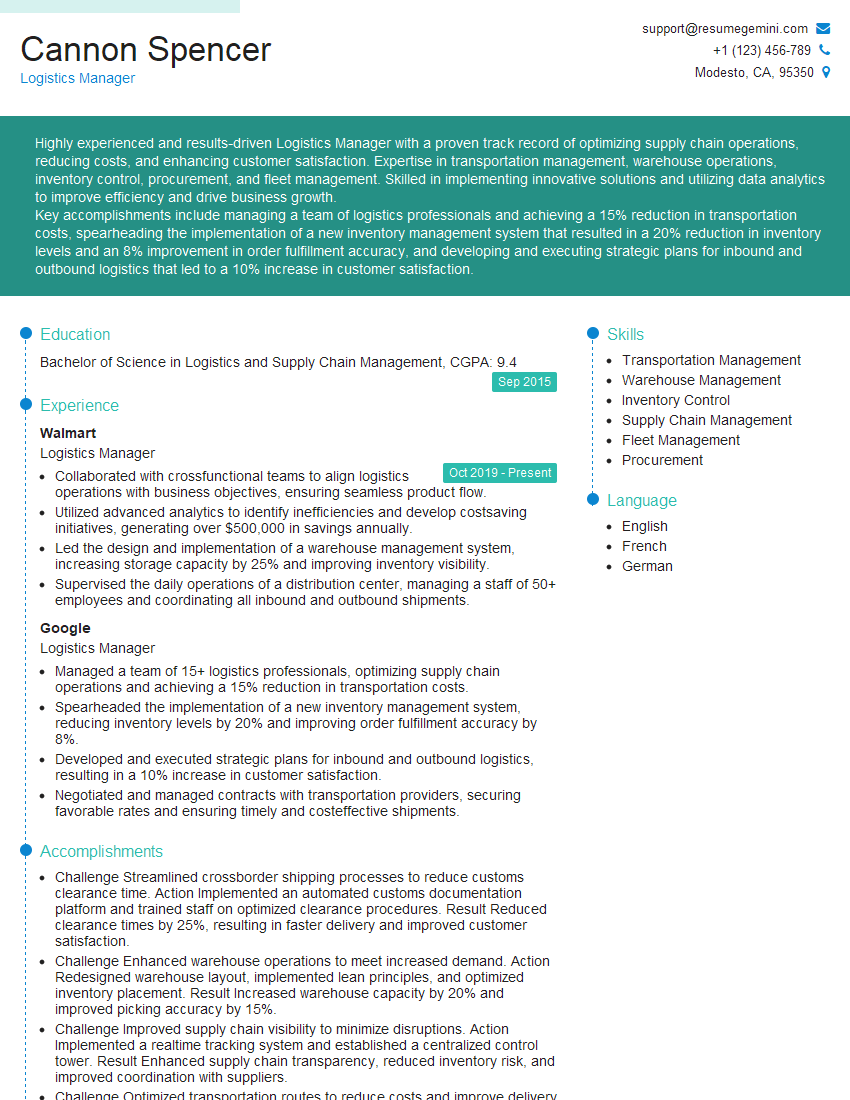
Logistics Manager Resume Sample
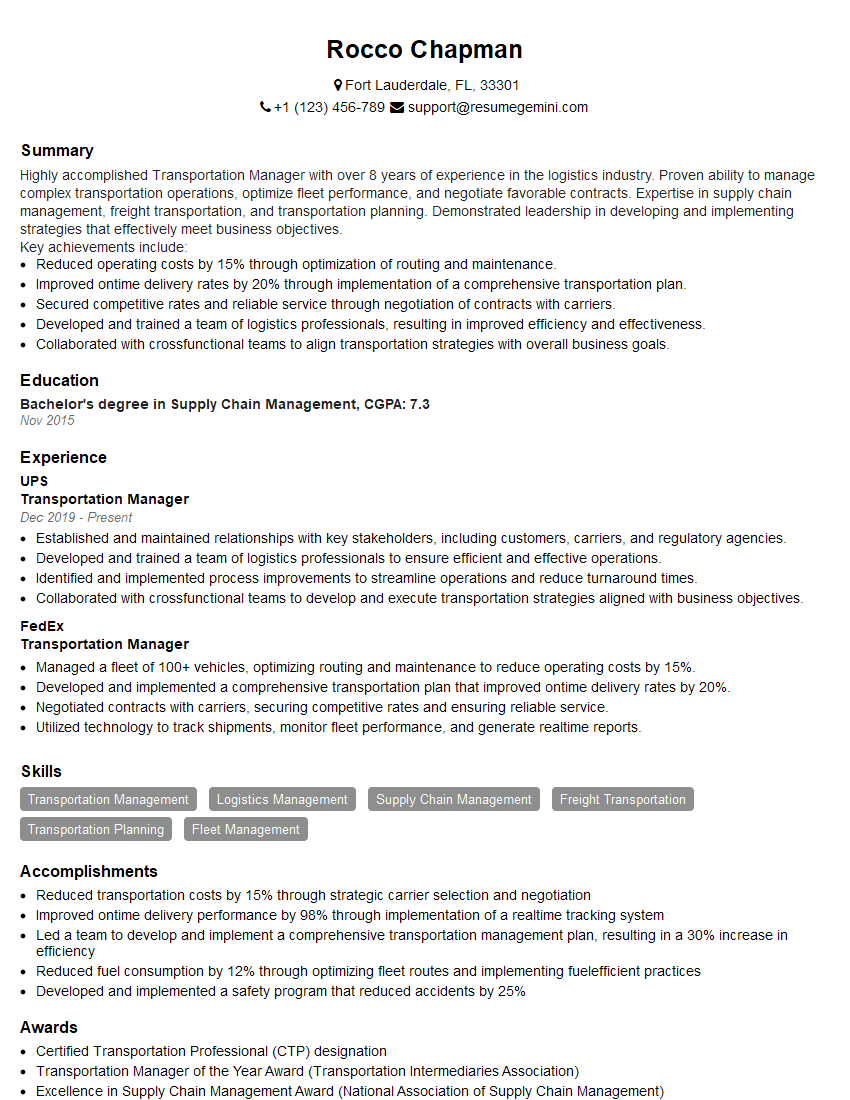
Transportation Manager Resume Sample
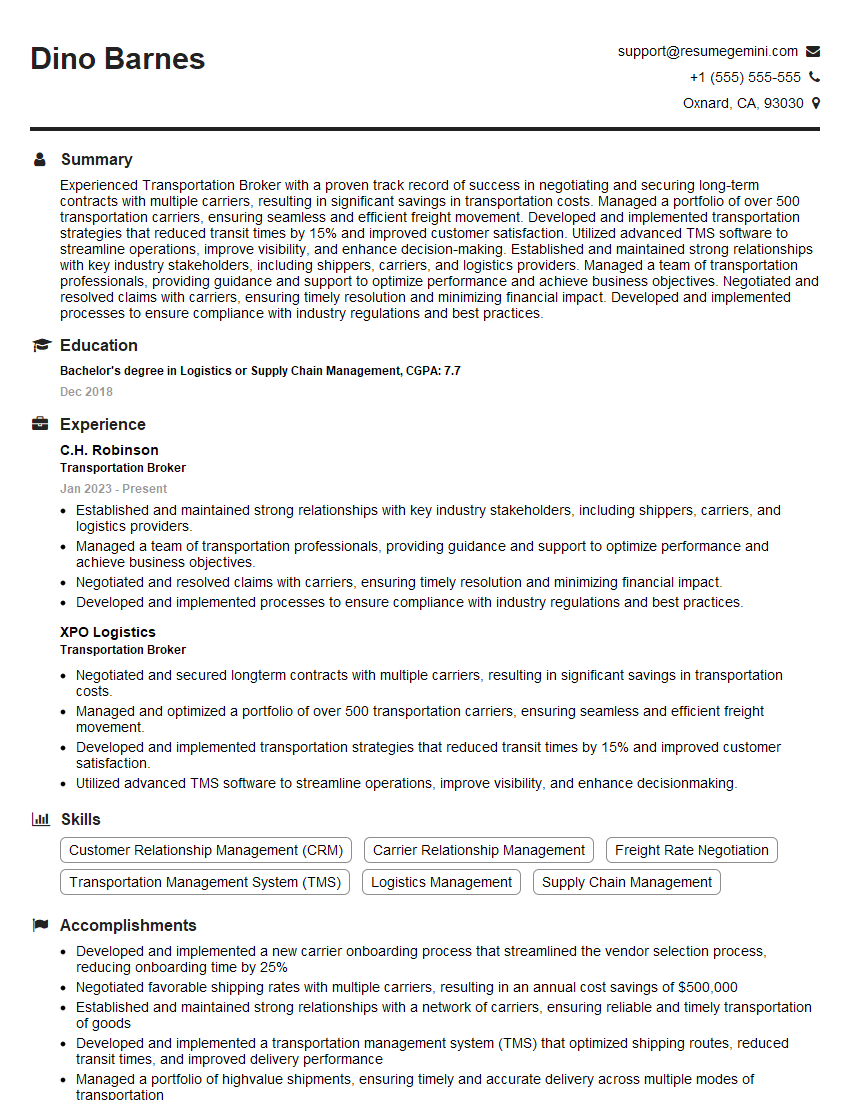
Transportation Broker Resume Sample
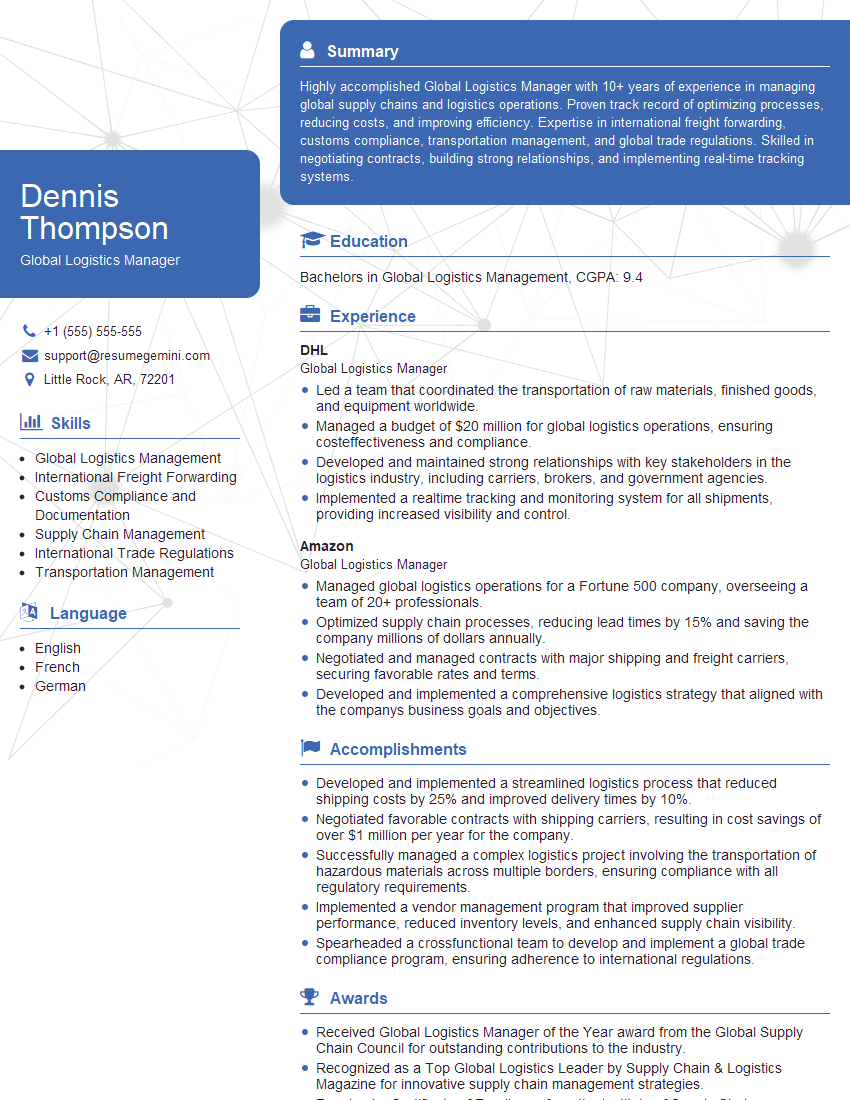
Global Logistics Manager Resume Sample
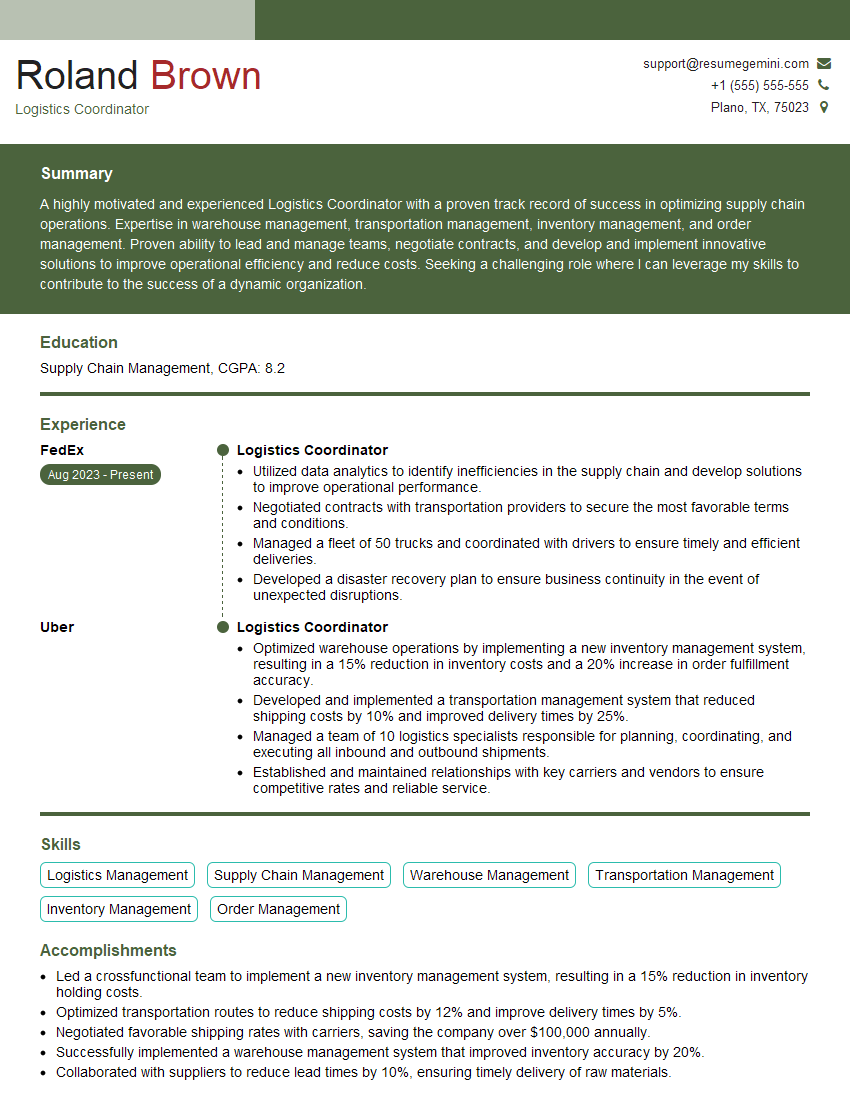
Logistics Coordinator Resume Sample
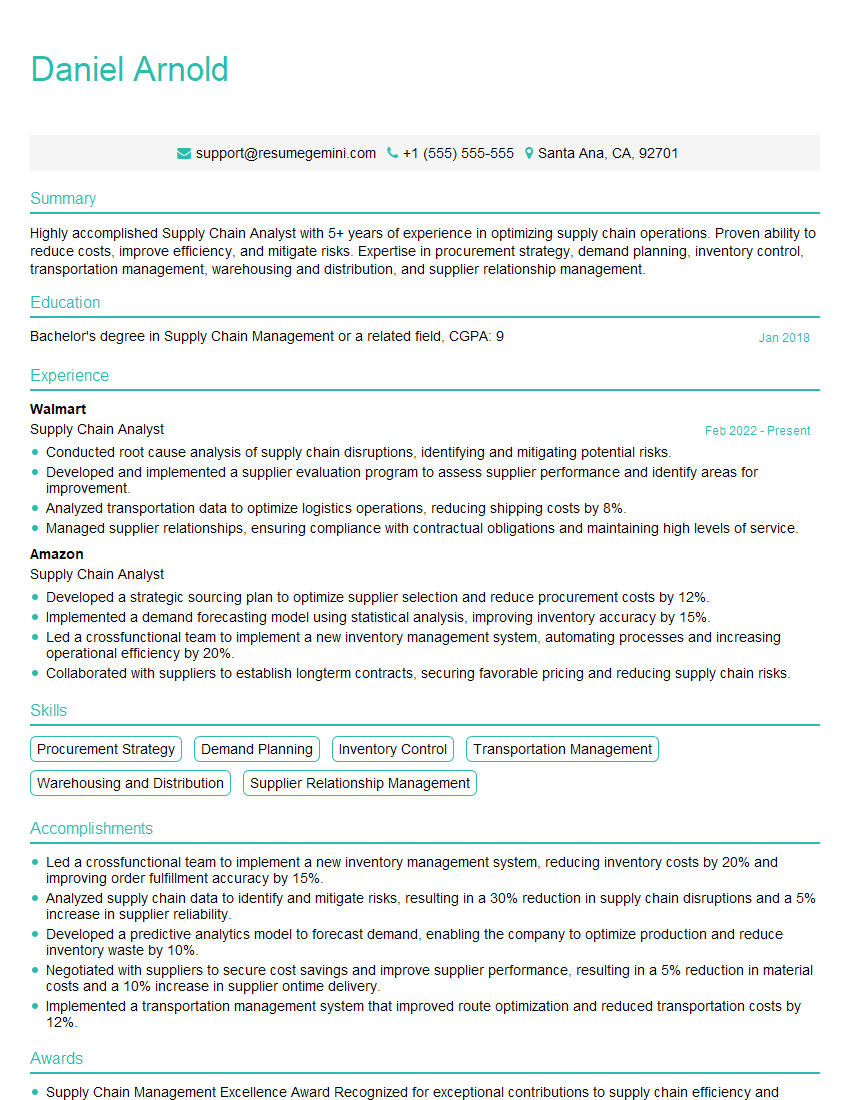
Supply Chain Analyst Resume Sample
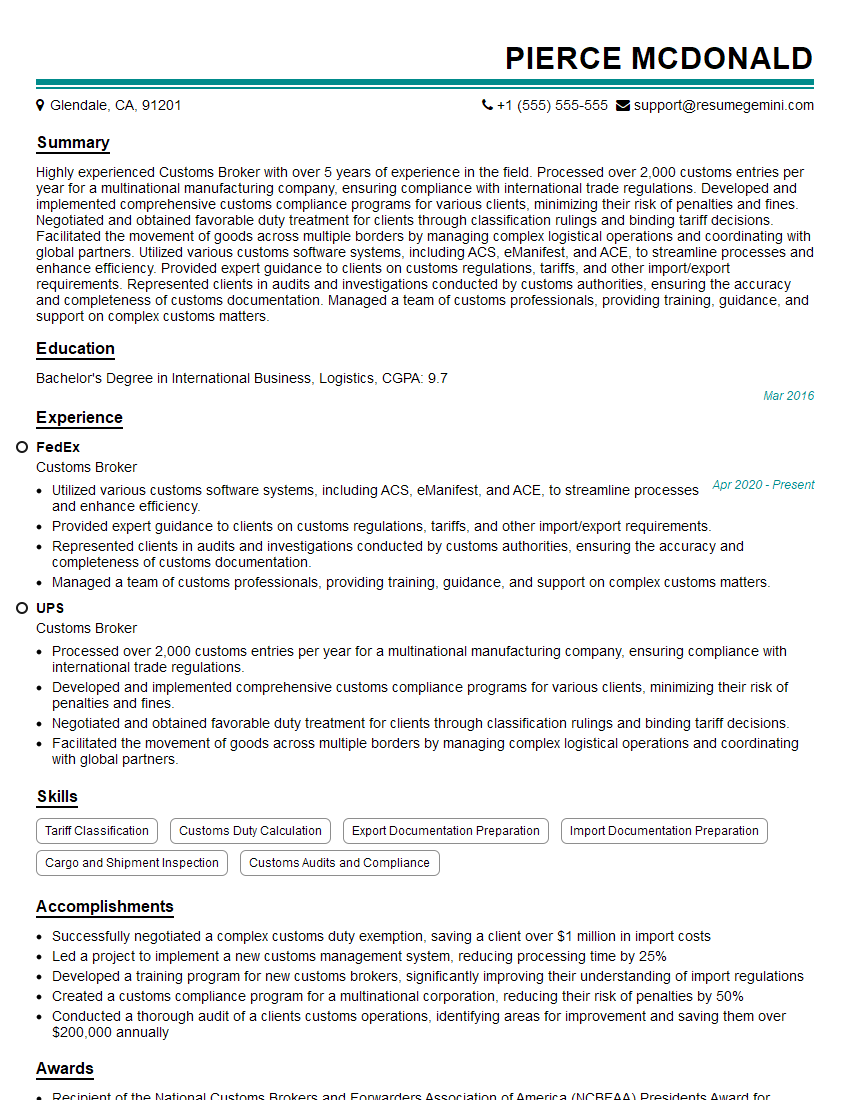
Customs Broker Resume Sample
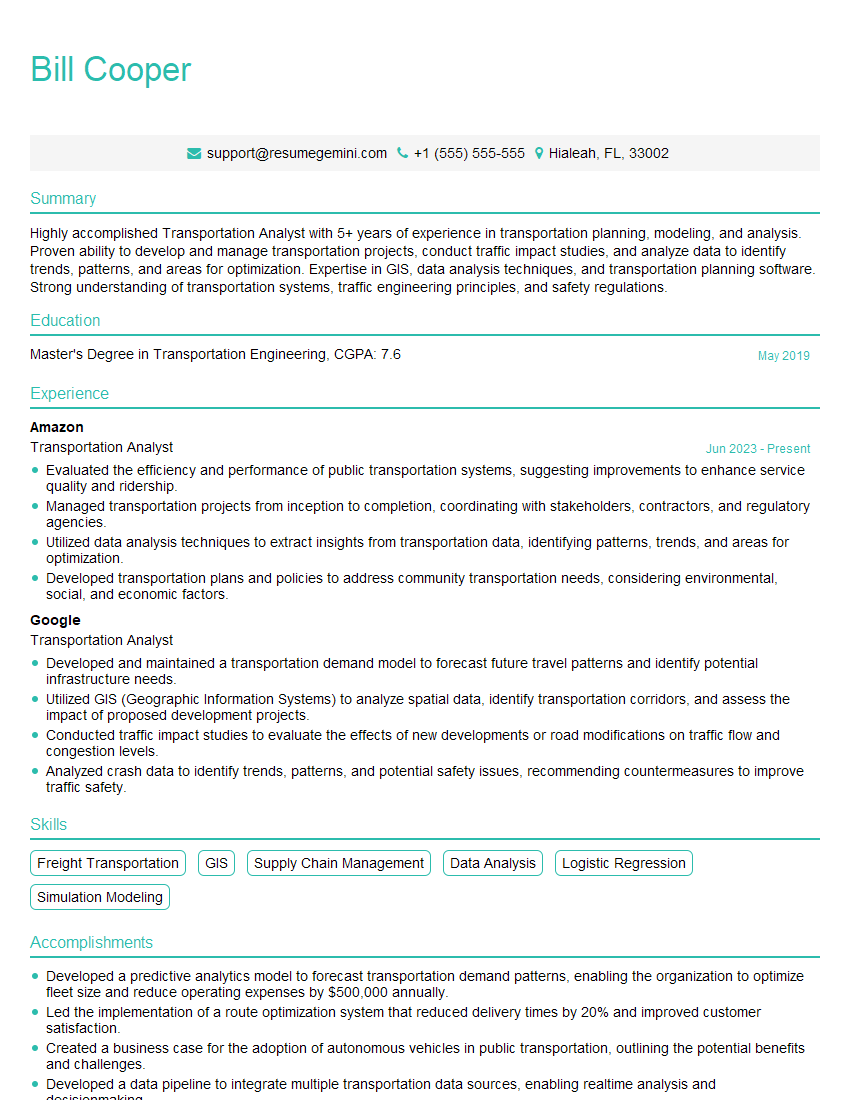
Transportation Analyst Resume Sample
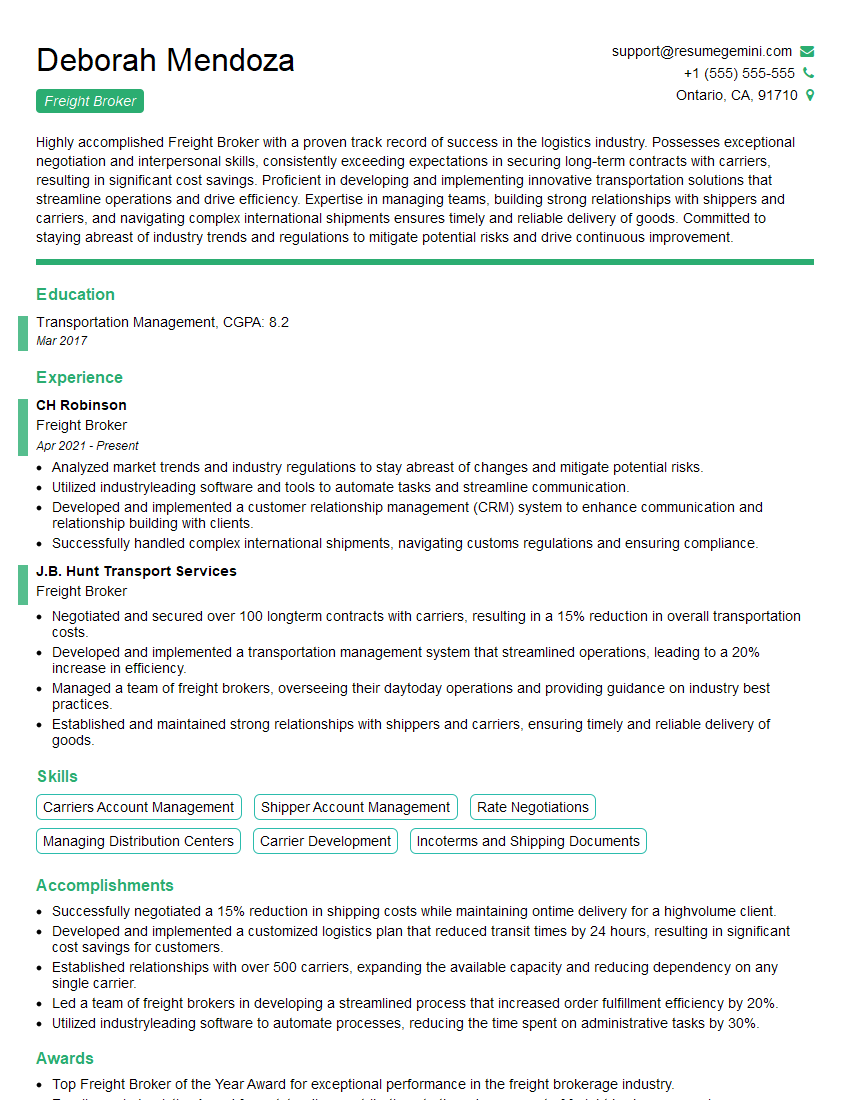
Freight Broker Resume Sample
Explore more articles
Users Rating of Our Blogs
Share Your Experience
We value your feedback! Please rate our content and share your thoughts (optional).
What Readers Say About Our Blog
To the interviewgemini.com Webmaster.
Very helpful and content specific questions to help prepare me for my interview!
Thank you
To the interviewgemini.com Webmaster.
This was kind of a unique content I found around the specialized skills. Very helpful questions and good detailed answers.
Very Helpful blog, thank you Interviewgemini team.