Interviews are more than just a Q&A session—they’re a chance to prove your worth. This blog dives into essential Fundamentals of Steam Generation interview questions and expert tips to help you align your answers with what hiring managers are looking for. Start preparing to shine!
Questions Asked in Fundamentals of Steam Generation Interview
Q 1. Explain the Rankine cycle and its efficiency.
The Rankine cycle is a thermodynamic cycle that converts heat into mechanical work. It’s the fundamental operating principle behind most steam power plants. Imagine it like this: you heat water, it turns to steam, the steam pushes a turbine (generating power), then the steam is condensed back into water, and the cycle repeats. It consists of four main processes:
- 1-2 Isentropic Expansion: High-pressure, high-temperature steam expands through a turbine, producing work. Think of this as the steam’s energy being harnessed to spin the turbine like a water wheel.
- 2-3 Constant-Pressure Heat Rejection: The steam is condensed in a condenser, releasing heat and turning back into water. This is like letting the steam cool down in a pool.
- 3-4 Isentropic Compression: The condensed water is pumped back to high pressure. This requires work but a comparatively small amount.
- 4-1 Constant-Pressure Heat Addition: Heat is added in the boiler to convert the water back into high-pressure, high-temperature steam. This is where the initial energy input occurs.
The efficiency of the Rankine cycle is limited by the temperature at which heat is added and the temperature at which it is rejected. Higher temperatures improve efficiency, but materials limitations impose practical constraints. Real-world Rankine cycles rarely exceed 40% efficiency, with typical values around 30-35%, due to irreversibilities like friction and heat loss.
Q 2. Describe the different types of boilers and their applications.
Boilers are classified in various ways, primarily by their design and application. Here are some common types:
- Fire-tube boilers: Hot gases pass through tubes surrounded by water. They are simple and relatively inexpensive but have lower efficiency and pressure capabilities. Think of a tea kettle where flames heat the outside and steam is generated inside.
- Water-tube boilers: Water passes through tubes surrounded by hot gases. They can operate at higher pressures and temperatures, offering greater efficiency and steam production capacity. These are more common in large power plants.
- Package boilers: These are pre-assembled units suitable for smaller applications and are relatively easy to install and maintain.
- Firetube boilers (Horizontal Return Tubular): Classic design with hot gases passing through tubes within a shell containing water. Common in smaller industrial applications.
- Fluidized Bed Boilers: Utilize a bed of solid particles kept in a fluidized state by an upward flow of air. They are environmentally friendly due to enhanced combustion efficiency and reduced emissions.
Applications vary widely. Fire-tube boilers are used in smaller buildings and industrial processes, while water-tube boilers are used in power generation, large industrial facilities, and district heating systems. Package boilers find applications in hotels, hospitals, and small manufacturing units.
Q 3. What are the safety precautions for operating a boiler?
Boiler operation requires strict adherence to safety protocols. These include:
- Regular Inspections: Thorough inspections are crucial to identify potential problems like corrosion, leaks, or damage to pressure vessels.
- Pressure Relief Valves: These valves automatically release excess pressure to prevent explosions – they are vital safety features and should be regularly tested.
- Water Level Monitoring: Maintaining the correct water level is essential to prevent overheating and damage. Low water levels can lead to overheating and tube failure.
- Flame Monitoring and Safety Systems: These are crucial for detecting malfunctions and stopping fuel supply to prevent accidents.
- Lockout/Tagout Procedures: These procedures must be rigorously followed during maintenance or repairs to prevent accidental start-ups and injuries.
- Proper Training and Certification: Operators should be thoroughly trained and certified to operate and maintain the boiler safely.
Ignoring these measures can lead to serious accidents, including explosions and severe burns. Regular maintenance and adherence to safety regulations are paramount for safe boiler operation.
Q 4. How do you control the steam pressure and temperature?
Steam pressure and temperature are controlled through several mechanisms:
- Fuel Supply Control: Adjusting the rate of fuel supplied to the boiler directly affects steam production and pressure.
- Feedwater Control: The rate at which water is fed into the boiler impacts steam production and pressure.
- Pressure Reducing Valves (PRVs): These valves regulate the pressure of the steam as it leaves the boiler, maintaining a constant downstream pressure.
- Temperature Control Valves: These valves regulate the flow of steam to control temperature. They work alongside pressure regulating systems to ensure optimal operation.
- Superheaters: These components raise the temperature of the steam beyond saturation, improving efficiency and reducing condensation in turbines.
Modern boiler systems often utilize sophisticated automated control systems to maintain precise pressure and temperature setpoints, ensuring efficient and safe operation.
Q 5. Explain the principle of superheating and its benefits.
Superheating is the process of heating steam beyond its saturation temperature at a constant pressure. Imagine saturated steam as a fully loaded sponge; superheating is like wringing the sponge slightly to remove some excess water, making the steam drier and more energetic. This produces ‘dry’ steam.
Benefits of superheating include:
- Increased Efficiency: Superheated steam has a higher energy content, leading to improved thermodynamic efficiency in turbines and other steam-driven equipment.
- Reduced Condensation: Dryer steam is less prone to condensation in pipes and turbines, reducing losses and improving performance. Condensation leads to significant efficiency drops.
- Improved Turbine Performance: Superheated steam enhances turbine performance by providing a more powerful and consistent driving force, reducing wear and tear.
The degree of superheat is an important design parameter, balancing benefits against the cost of additional heat input.
Q 6. What are the different types of steam traps and their functions?
Steam traps are devices that automatically remove condensate (water formed during steam condensation) from steam lines while preventing the escape of live steam. Think of them as intelligent valves that regulate the flow of condensate, but not the valuable steam.
Common types include:
- Thermodynamic Traps: These rely on the difference in temperature between steam and condensate to operate. Simpler and more reliable, they are often used in applications with moderate to high pressure.
- Thermostatic Traps: These use a temperature-sensitive element to control the flow of condensate. Cost-effective and suitable for many applications.
- Float and Thermostatic Traps: These combine the functions of a float trap (detecting condensate level) and a thermostatic trap (regulating flow based on temperature), offering high efficiency and reliability.
- Inverter Traps: Respond to the change in pressure and temperature to control the flow of condensate
Selecting the appropriate steam trap depends on the application’s pressure, temperature, and condensate flow rate. Improper trap selection can lead to energy loss and equipment damage.
Q 7. How do you troubleshoot a steam leak?
Troubleshooting a steam leak involves a systematic approach:
- Safety First: Isolate the affected area and ensure the safety of personnel. High-pressure steam can cause severe burns.
- Locate the Leak: Use visual inspection, listening for hissing sounds, or even thermal imaging to pinpoint the leak’s location.
- Determine the Severity: Evaluate the size and extent of the leak to assess the urgency of repair.
- Isolate the Section: If possible, isolate the leaking section of the pipe or equipment using valves to minimize steam loss.
- Repair or Replace: Once the leak’s location and severity are determined, the necessary repairs (e.g., replacing a gasket, welding a crack, or replacing a section of pipe) can be carried out by qualified personnel.
- Pressure Testing: After repairs, pressure testing is essential to ensure the system’s integrity before resuming normal operation.
Prevention is key. Regular inspections, proper maintenance, and adherence to safety protocols are essential to minimize the risk of steam leaks. Ignoring small leaks can lead to significant energy losses and potential safety hazards.
Q 8. Describe the different types of steam turbines.
Steam turbines are the workhorses of steam power plants, converting the thermal energy of steam into mechanical energy to drive generators. They are broadly classified based on their design and the way steam expands through them.
- Impulse Turbines: These turbines utilize the impulse of high-velocity steam jets to drive the rotor blades. The steam pressure drops primarily across the nozzles, and the pressure remains relatively constant across the rotor blades. A simple analogy is a water jet hitting a paddle wheel. They are generally simpler in design but less efficient for large power outputs.
- Reaction Turbines: In reaction turbines, the pressure drop occurs gradually across the moving blades. The steam expands both in the nozzles and across the rotor blades, resulting in a reaction force that drives the rotor. This is analogous to a rocket engine, where expanding gases propel the rocket forward. These are more efficient for larger power generation but more complex in design.
- Axial Flow Turbines: These are the most common type used in large power plants. Steam flows axially (parallel to the turbine shaft) through multiple stages of blades. Each stage extracts energy from the steam, gradually reducing its pressure and velocity.
- Radial Flow Turbines: In these turbines, the steam flows radially inward or outward as it expands. While less common for large power plants, they are sometimes used in smaller applications or where specific design considerations are needed.
The choice of turbine type depends on factors such as steam conditions (pressure and temperature), power output requirements, and efficiency goals. For instance, a large coal-fired power plant would likely utilize a multi-stage axial flow reaction turbine to maximize efficiency.
Q 9. Explain the concept of boiler blowdown.
Boiler blowdown is the process of periodically removing a small portion of the boiler water to control the concentration of dissolved solids and impurities. Think of it like draining a small amount of water from a bathtub to prevent it from overflowing with soap scum. If these impurities are left to accumulate, they can lead to several problems:
- Scale Formation: Dissolved minerals can precipitate out, forming a hard crust on the boiler tubes, reducing heat transfer and potentially causing tube failure.
- Corrosion: Concentrated impurities can accelerate corrosion, leading to leaks and premature failure of boiler components.
- Carryover: Concentrated solids can be carried over with the steam, causing damage to turbines and other downstream equipment.
Blowdown is typically performed in two ways: continuous blowdown, a small, constant flow of water, and intermittent blowdown, a larger volume of water discharged at intervals. The frequency and amount of blowdown are determined based on factors such as boiler water quality, operating conditions, and the type of water treatment used.
Q 10. What are the common causes of boiler scale and how to prevent it?
Boiler scale is a hard, mineral deposit that forms on the internal surfaces of boilers. It’s primarily caused by the precipitation of dissolved minerals, primarily calcium and magnesium salts, from the boiler water. Imagine it as a stubborn layer of limescale in your kettle, only much more serious.
- Hard Water: The most common cause is the presence of hardness minerals (calcium and magnesium) in the feedwater. These minerals are dissolved in the water and precipitate out as the water evaporates and concentrates in the boiler.
- High Alkalinity: High alkalinity in the boiler water can also contribute to scale formation.
- High Boiler Water Temperature: High temperatures promote the precipitation of minerals.
Prevention strategies focus on treating the feedwater to remove or control these minerals:
- Water Softening: Using ion exchange resins or other methods to remove hardness minerals before they enter the boiler.
- Chemical Treatment: Adding chemicals that prevent the precipitation of scale-forming minerals.
- Proper Blowdown: Regularly removing a portion of the boiler water to control the concentration of dissolved solids.
- Regular Inspection and Cleaning: Periodically inspecting the boiler and cleaning any accumulated scale.
Q 11. Explain the importance of water treatment in steam generation.
Water treatment in steam generation is crucial for preventing problems like scale formation, corrosion, and carryover, ultimately ensuring efficient and safe operation of the steam system. Untreated water can wreak havoc on expensive equipment.
The goal of water treatment is to remove or control impurities such as dissolved solids, suspended solids, gases, and microorganisms. This involves a range of techniques, often tailored to the specific water source and boiler design. Common methods include:
- Pre-treatment: This may involve clarifying, softening, and de-aeration to remove suspended particles, hardness minerals and dissolved gases (like oxygen and carbon dioxide) that cause corrosion.
- Internal Treatment: This focuses on chemical treatment within the boiler to control pH, prevent corrosion, and inhibit scale formation. This includes adding chemicals like oxygen scavengers, phosphates, and anti-foam agents.
By carefully managing water quality, power plants can significantly extend the lifespan of their boilers and turbines, reduce maintenance costs, and improve overall operational efficiency. Neglecting water treatment can lead to costly repairs, downtime, and even safety hazards.
Q 12. Describe the different methods of feedwater heating.
Feedwater heating is the process of increasing the temperature of the water fed into the boiler before it enters. This significantly improves the overall efficiency of the steam power plant by reducing the amount of heat required to generate steam.
Several methods are used:
- Extraction Heating: Steam is extracted from the steam turbine at various stages and used to heat the feedwater in feedwater heaters. This utilizes the steam’s latent heat that would otherwise be wasted.
- Contact Heating: Direct contact between the steam and feedwater increases the feedwater temperature. This is typically used for lower-pressure feedwater heating.
- Surface Heating: The steam and feedwater are separated by a heat transfer surface, such as a shell and tube heat exchanger. This prevents contamination of the feedwater.
- Regenerative Heating: A multi-stage process where steam extracted at multiple points in the turbine successively heats the feedwater to higher temperatures. This is the most common and efficient method in larger plants.
The choice of method depends on factors such as the size and type of power plant, steam conditions, and economic considerations. The higher the feedwater temperature, the greater the increase in thermal efficiency and reduced fuel consumption.
Q 13. What are the different types of steam condensers?
Steam condensers are crucial components of steam power plants. They convert the exhaust steam from the turbine back into liquid water, creating a vacuum that increases the efficiency of the turbine and also providing condensate for reuse in the boiler. Different condenser types exist based on their design and cooling method:
- Surface Condensers: These are the most common type. The exhaust steam condenses on the outside of tubes through which cooling water flows. They prevent the mixing of condensate and cooling water, ensuring high purity condensate.
- Jet Condensers: In jet condensers, the exhaust steam mixes directly with the cooling water, resulting in a combined discharge. They are simpler and less expensive but don’t produce high-purity condensate.
- Barometric Condensers: These condensers use a barometric leg (a tall column of water) to create a vacuum and discharge the condensate and cooling water. They’re typically used in applications with limited cooling water availability.
- Direct-Contact Condensers: Similar to jet condensers, these allow direct contact between steam and cooling water, which can be air or water.
The selection of a condenser type is influenced by factors such as plant size, cooling water availability, environmental considerations, and desired condensate quality.
Q 14. Explain the concept of thermal efficiency in steam power plants.
Thermal efficiency in a steam power plant represents the ratio of the net work output of the turbine to the total heat input to the boiler. Essentially, it measures how effectively the plant converts the heat energy from fuel into useful electricity. A higher thermal efficiency indicates better energy utilization and lower fuel consumption.
The formula for thermal efficiency is:
Thermal Efficiency = (Net Work Output / Heat Input) x 100%
Several factors affect thermal efficiency:
- Steam Conditions: Higher steam pressure and temperature lead to higher efficiency.
- Feedwater Heating: Preheating the feedwater reduces the heat required in the boiler.
- Turbine Design: Efficient turbine designs minimize energy losses.
- Condenser Vacuum: A good vacuum in the condenser improves turbine efficiency.
- Boiler Efficiency: A well-designed and maintained boiler minimizes heat losses.
Improving thermal efficiency is a continuous goal in power plant design and operation, often involving optimizing each component and employing advanced technologies to minimize energy losses and maximize electricity generation from a given amount of fuel.
Q 15. How do you calculate the steam flow rate?
Calculating steam flow rate depends on the application and available data. A common method uses the mass flow rate equation, which relates flow rate to steam properties. Think of it like filling a water bottle – the faster you fill it, the higher the flow rate. Similarly, the faster steam flows through a pipe, the higher its flow rate.
The basic formula is: Mass Flow Rate (kg/s) = (Area (m²) * Velocity (m/s) * Density (kg/m³))
Where:
- Area: The cross-sectional area of the pipe or duct carrying the steam.
- Velocity: The speed at which the steam is flowing. This can be measured using various flow meters.
- Density: The density of the steam, which depends on its pressure and temperature. You can find this using steam tables or specialized software.
For instance, if you have a pipe with an area of 0.1 m², steam flowing at 10 m/s, and a steam density of 1 kg/m³, the mass flow rate would be 1 kg/s. However, in real-world scenarios, you’d need accurate measurements of pressure and temperature to determine the steam density precisely.
Other methods exist, such as using orifice plates or venturi meters to indirectly measure flow rate based on pressure differences. The choice of method depends on the specific application and the level of accuracy required.
Career Expert Tips:
- Ace those interviews! Prepare effectively by reviewing the Top 50 Most Common Interview Questions on ResumeGemini.
- Navigate your job search with confidence! Explore a wide range of Career Tips on ResumeGemini. Learn about common challenges and recommendations to overcome them.
- Craft the perfect resume! Master the Art of Resume Writing with ResumeGemini’s guide. Showcase your unique qualifications and achievements effectively.
- Don’t miss out on holiday savings! Build your dream resume with ResumeGemini’s ATS optimized templates.
Q 16. What are the environmental considerations in steam generation?
Environmental considerations in steam generation are crucial for sustainability and regulatory compliance. Essentially, we need to minimize the negative impact of our steam production on the environment.
Key considerations include:
- Greenhouse Gas Emissions: Steam generation often relies on fossil fuels (coal, natural gas), leading to CO2 emissions. Reducing this impact requires using cleaner fuels, improving boiler efficiency, or exploring renewable energy sources for steam production (e.g., solar thermal, geothermal).
- Air Pollution: Combustion processes release pollutants like NOx, SOx, and particulate matter. Effective pollution control measures, such as scrubbers and selective catalytic reduction (SCR) systems, are crucial to meet emission standards.
- Water Consumption and Waste: Steam generation requires substantial water for boiler feedwater. Minimizing water usage involves efficient water treatment and recycling systems. Wastewater management is also vital to prevent water pollution.
- Noise Pollution: Steam turbines and other equipment can generate significant noise. Noise reduction measures, such as acoustic enclosures and proper equipment maintenance, are needed.
Implementing these measures not only protects the environment but often leads to cost savings through improved efficiency and reduced penalties for non-compliance.
Q 17. Explain the role of instrumentation and control systems in steam generation.
Instrumentation and control systems are the nervous system of a steam generation plant, ensuring safe, efficient, and reliable operation. They monitor critical parameters, automate control actions, and provide crucial data for optimization.
Key roles include:
- Monitoring: Sensors constantly measure parameters like pressure, temperature, flow rate, water level, and gas composition. This data is vital for assessing the health of the system and detecting potential problems.
- Control: Control systems automatically adjust parameters to maintain desired operating conditions. For example, a control system might adjust fuel input to maintain steam pressure or adjust water level to prevent boiler water shortages.
- Safety: Safety systems, such as pressure relief valves and interlocks, prevent dangerous situations. These systems are crucial for protecting personnel and equipment.
- Data Acquisition and Analysis: Modern systems collect and store vast amounts of data that can be analyzed to improve efficiency, predict maintenance needs, and optimize performance.
Think of it like driving a car – the dashboard instruments show speed, fuel level, and temperature, while the controls allow you to steer, accelerate, and brake. Instrumentation and control systems perform a similar function in steam generation, ensuring safe and efficient operation.
Q 18. Describe different types of steam valves and their functions.
Steam valves are crucial components controlling steam flow, pressure, and direction within a system. Different valve types cater to various needs and operating conditions.
Some common types include:
- Globe Valves: These valves use a disc to regulate flow. They are suitable for on/off or throttling applications but can cause significant pressure drop.
- Gate Valves: These valves use a gate to open and close the flow path. They’re ideal for fully open or fully closed positions, minimizing pressure drop when fully open, but not suitable for precise throttling.
- Ball Valves: A rotating ball with a hole controls flow. These are simple, compact, and suitable for on/off applications.
- Butterfly Valves: A rotating disc partially blocks the flow path. They offer quick on/off control and are compact but can be prone to wear.
- Check Valves: These automatically prevent reverse flow. Essential for protecting equipment from backflow.
- Safety Valves/Relief Valves: These automatically open to release excess steam pressure, preventing catastrophic failures.
The selection of a valve depends on the specific application, required flow control, pressure rating, and maintenance requirements. For example, a safety valve is crucial for boiler safety, while a globe valve might be used to control steam flow to a process unit.
Q 19. How do you perform a boiler inspection?
Boiler inspection is a critical aspect of ensuring safe and efficient operation. It’s not just a visual check; it’s a systematic process involving multiple stages and specialized personnel.
A typical boiler inspection involves:
- External Inspection: Checking for leaks, corrosion, damage to insulation, and proper operation of safety devices. Visual examination of all accessible parts is done.
- Internal Inspection: This often requires taking the boiler offline and involves a thorough examination of the internal components. This may include visual inspection using boroscopes or other tools, as well as thickness measurements to check for corrosion or erosion.
- Non-Destructive Testing (NDT): Techniques like ultrasonic testing, radiography, and magnetic particle inspection are used to detect internal flaws without damaging the boiler.
- Pressure Testing: The boiler is subjected to a pressure test to verify its structural integrity and identify potential leaks.
- Documentation: All inspection findings are meticulously documented, including any necessary repairs or replacements.
The frequency and scope of inspections depend on factors like boiler type, age, operating conditions, and regulatory requirements. Regular inspections are crucial to prevent accidents, extend the lifespan of the boiler, and maintain optimal performance.
Q 20. What are the common problems encountered in steam turbines?
Steam turbines, while efficient, are susceptible to various problems that can impact their performance and longevity. Understanding these problems is crucial for effective maintenance and troubleshooting.
Common problems include:
- Blade Erosion and Corrosion: Moisture and impurities in steam can erode or corrode turbine blades, reducing efficiency and potentially leading to blade failure.
- Bearing Problems: Wear and tear on bearings can lead to vibration, noise, and premature failure. Regular lubrication and monitoring are essential.
- Vibration: Excessive vibration can indicate misalignment, imbalance, or other issues that can damage the turbine.
- Seal Leaks: Leaks in seals can lead to steam loss, reduced efficiency, and potential environmental concerns.
- Scaling and Deposits: Impurities in the steam can form deposits on turbine blades, reducing efficiency and potentially leading to blade fouling.
- Governor Malfunction: Problems with the governor can lead to uncontrolled speed and potentially damage the turbine.
Regular maintenance, including inspections, cleaning, and lubrication, is crucial to minimize these problems and ensure the reliable operation of the steam turbine.
Q 21. Explain the concept of steam quality.
Steam quality refers to the dryness fraction of steam; essentially, how much of the steam is actual steam (vapor) and how much is liquid water. Imagine a cup of coffee with some milk – the steam quality is like the ratio of coffee to milk.
Steam quality is expressed as a percentage or a fraction (e.g., 95% dry steam means 95% of the mixture is vapor and 5% is liquid water).
High-quality steam (close to 100% dry) is generally preferred for many applications because:
- It provides maximum energy transfer.
- It reduces erosion and corrosion in turbines and other equipment.
Low-quality steam (wet steam) can cause problems such as:
- Reduced efficiency in turbines due to the liquid water impacting the blades.
- Increased wear and tear on equipment due to liquid water.
Steam quality is usually determined using devices like calorimeter or by calculating it using pressure and temperature readings from steam tables. Maintaining good steam quality is crucial for efficient and reliable operation of steam-powered systems.
Q 22. How do you maintain the efficiency of a steam system?
Maintaining the efficiency of a steam system is crucial for minimizing energy waste and operational costs. It involves a multi-pronged approach focusing on several key areas.
- Regular Inspections and Cleaning: Regularly inspect all components for leaks, corrosion, and scaling. Scale buildup on heat transfer surfaces significantly reduces efficiency. Cleaning the boiler and associated piping is essential. Think of it like cleaning the arteries of your heart; regular cleaning keeps everything flowing smoothly and efficiently.
- Proper Insulation: Steam lines should be well-insulated to minimize heat loss to the environment. Poor insulation leads to significant energy waste and can even create safety hazards. Imagine trying to keep a cup of hot coffee warm without a lid – the heat dissipates quickly! Good insulation is the lid for your steam system.
- Optimized Boiler Operation: Proper boiler operation involves maintaining the correct water level, pressure, and combustion efficiency. Regular servicing and tuning ensure optimal heat transfer and fuel consumption. Think of it like tuning a car engine for optimal performance.
- Effective Steam Trapping: Properly functioning steam traps are vital. They prevent steam loss and condensate buildup, both of which reduce efficiency. Malfunctioning traps are like leaving a tap running – a constant drain on resources.
- Air Removal: Air in the steam system reduces heat transfer efficiency. Regular venting is crucial to remove trapped air pockets. This is like clearing blockages in a pipeline – ensuring smooth and uninterrupted flow.
By addressing these areas proactively, you can significantly improve the efficiency and longevity of your steam system, leading to considerable cost savings and reduced environmental impact.
Q 23. Describe the different types of steam traps and their applications.
Steam traps are crucial components in any steam system, preventing the loss of valuable steam while allowing condensate to drain. Different types cater to various applications.
- Thermodynamic Traps: These traps utilize the difference in temperature between steam and condensate. They are simple, reliable, and suitable for a wide range of applications. A common example is the thermostatic trap, which uses a temperature-sensitive element to open and close.
- Mechanical Traps: These traps operate on the principle of pressure differential between steam and condensate. They are robust and suitable for high-pressure applications. Float and thermostatic traps are common mechanical types.
- Inverter Traps: These advanced traps incorporate sensors to measure parameters like condensate flow rate and temperature to adjust the opening/closing accordingly. This offers improved efficiency and reduced energy waste.
- Thermodynamic expansion traps: They work by using a bellows or diaphragm that expands or contracts with temperature, closing to retain steam and opening to release condensate.
The choice of steam trap depends on several factors, including the pressure and temperature of the steam, the type of condensate, and the specific application. Incorrect trap selection can lead to wasted energy and system inefficiencies.
Q 24. What are the safety regulations for steam systems?
Safety regulations for steam systems are stringent and vary depending on location and industry. However, some common elements include:
- Pressure Relief Valves: Pressure relief valves (PRVs) are essential for preventing overpressure, a major safety hazard. Regular inspection and testing are crucial.
- High and Low Water Level Alarms and Shutdowns: These are essential to prevent boiler damage and potential explosions. Automatic shutoff mechanisms are important for safety.
- Lockout/Tagout Procedures: Proper lockout/tagout procedures are necessary before maintenance or repairs to prevent accidental startup. This ensures the safety of personnel working on the system.
- Regular Inspections and Maintenance: Regular inspections and maintenance are essential to identify and address potential hazards before they escalate. Think of a regular car service; preventative measures avoid bigger problems later.
- Operator Training: Operators must be thoroughly trained on safe operating procedures and emergency response protocols. Knowledge and preparedness are essential.
- Proper Ventilation: Adequate ventilation is necessary to prevent the buildup of harmful gases.
Compliance with all applicable regulations and safety codes is paramount in ensuring a safe and reliable steam system.
Q 25. Explain the concept of backpressure in steam systems.
Backpressure in a steam system refers to the pressure resisting the flow of steam. It can originate from various sources downstream of the steam generating equipment.
Sources of Backpressure:
- Process Equipment: Equipment like heat exchangers or turbines may offer backpressure due to their operation.
- Clogged Pipes or Valves: Restrictions in the steam lines increase backpressure.
- Condensate Accumulation: Poor condensate drainage can cause a buildup of pressure.
- Altitude: Higher altitudes can affect the pressure in a steam system.
Effects of Backpressure:
Excessive backpressure can cause reduced steam output from the boiler, inefficient process heating, and potential damage to components. It’s like trying to inflate a balloon with a partially blocked nozzle – the air has difficulty flowing through.
Managing Backpressure:
Properly sized piping, efficient condensate removal, and regular maintenance of valves are necessary to minimize backpressure and ensure the efficient operation of the steam system.
Q 26. How do you prevent water hammer in steam lines?
Water hammer, a violent shockwave in steam lines, is caused by the sudden condensation of steam. It is a serious problem that can cause pipe damage, valve failure, and even equipment destruction. Preventing it requires a multi-faceted approach:
- Proper condensate drainage: Ensure efficient condensate removal using properly sized and located steam traps. This prevents the accumulation of condensate which can trigger water hammer.
- Air elimination: Remove air from the steam lines to prevent the formation of pockets where condensate can collect and flash to steam. Proper venting is essential.
- Slow startup and shutdown procedures: Avoid rapid changes in steam flow, which can cause abrupt temperature changes and condensation.
- Proper pipe sizing and layout: Ensure appropriate pipe sizing to minimize pressure drops and velocity changes. Avoid sharp bends and sudden changes in pipe diameter.
- Regular inspection and maintenance: Identify and repair leaks, corrosion, and other issues that can contribute to water hammer.
- Water hammer arrestors: In certain high-risk applications, installing water hammer arrestors can provide additional protection. These devices are designed to absorb the shock waves.
Think of it like gently filling a glass with water versus quickly pouring it in – the sudden impact can cause breakage. Similar care and consideration are needed to avoid water hammer in steam systems.
Q 27. What is the importance of regular maintenance in steam systems?
Regular maintenance is paramount for the safe and efficient operation of a steam system. Neglecting maintenance can lead to a cascade of problems resulting in increased costs, safety hazards, and reduced productivity.
- Reduced Downtime: Preventative maintenance significantly reduces the likelihood of unexpected shutdowns and repairs, minimizing production losses.
- Improved Efficiency: Regular cleaning, inspection, and adjustments optimize steam generation and distribution, resulting in energy savings and cost reductions.
- Enhanced Safety: Identifying and addressing potential safety hazards through inspections and testing helps prevent accidents and injuries.
- Extended Equipment Lifespan: Preventative measures prolong the lifespan of expensive components, delaying costly replacements.
- Compliance: Regular maintenance ensures compliance with safety regulations and industry best practices.
Regular maintenance is not just cost-effective; it’s an investment in safety, productivity, and the long-term sustainability of your steam system. It’s like regular health checkups – preventative care is far less costly than emergency treatment.
Q 28. Explain the concept of enthalpy and its role in steam calculations.
Enthalpy is the total heat content of a substance, representing the internal energy plus the product of its pressure and volume. In steam calculations, it is crucial for determining the heat transfer in steam systems and the energy required for various processes.
Role in Steam Calculations:
Enthalpy is used to calculate:
- Heat transfer during steam generation: Determining the amount of heat required to convert water into steam at a specific pressure and temperature.
- Steam quality: Determining the percentage of steam in a mixture of steam and water (wet steam).
- Heat transfer in steam heating processes: Calculating the heat released when steam condenses to heat a process fluid.
- Energy consumption: Estimating the energy required to operate steam-powered equipment and processes.
Example:
Consider a steam heating system. Knowing the enthalpy of the steam entering the system and the enthalpy of the condensate leaving, we can calculate the amount of heat transferred to the process. This is essential for optimizing energy usage and process control.
Enthalpy values are typically obtained from steam tables or thermodynamic property software. These tables provide enthalpy values as a function of pressure and temperature, allowing for precise calculations in various steam system applications.
Key Topics to Learn for Fundamentals of Steam Generation Interview
- Thermodynamics of Steam Generation: Understanding the thermodynamic principles governing steam generation, including enthalpy, entropy, and the various processes involved (e.g., Rankine cycle).
- Boiler Types and Operation: Familiarize yourself with different boiler types (e.g., fire-tube, water-tube, and their variations), their operational principles, and the associated safety procedures.
- Water Treatment and Chemistry: Master the importance of water treatment in preventing boiler scale and corrosion, and understand the chemical processes involved in maintaining water quality.
- Steam Distribution and Piping Systems: Learn about the design and operation of steam distribution networks, including piping materials, insulation, and pressure control strategies.
- Instrumentation and Control: Understand the various instruments used to monitor and control steam generation parameters (e.g., pressure, temperature, water level) and the underlying control systems.
- Safety and Regulations: Be familiar with relevant safety regulations and procedures pertaining to steam generation, including lockout/tagout procedures and emergency response protocols.
- Troubleshooting and Maintenance: Develop your problem-solving skills by studying common boiler malfunctions, troubleshooting techniques, and routine maintenance practices.
- Energy Efficiency and Optimization: Understand strategies for improving boiler efficiency and minimizing energy consumption, considering factors like combustion efficiency and heat recovery.
- Economic Considerations: Grasp the economic aspects of steam generation, including fuel costs, maintenance expenses, and overall operating costs.
Next Steps
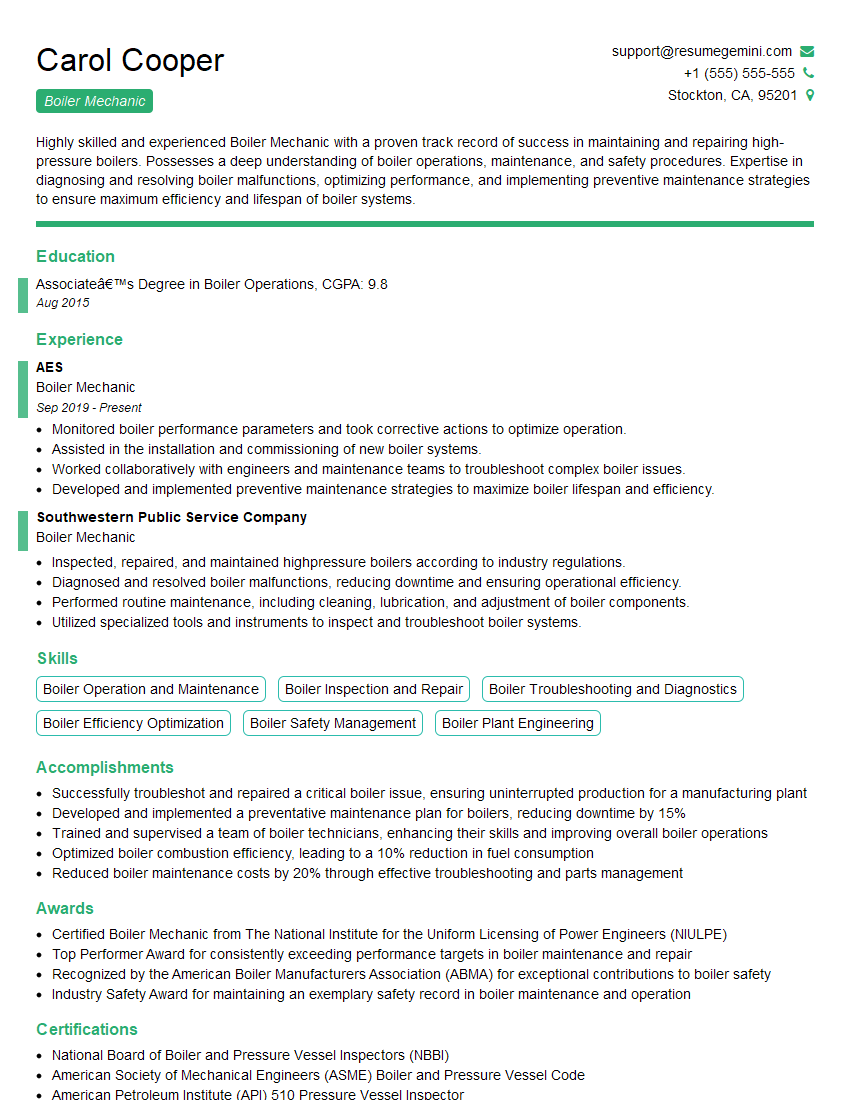
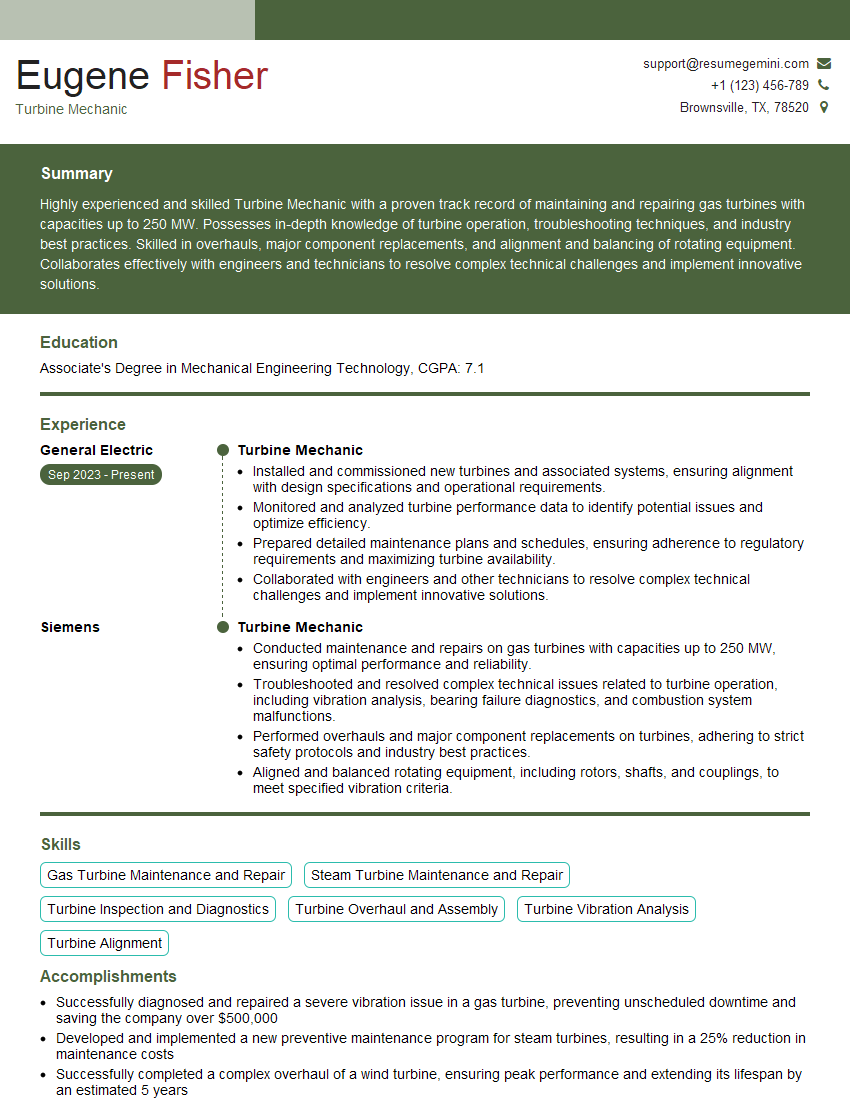
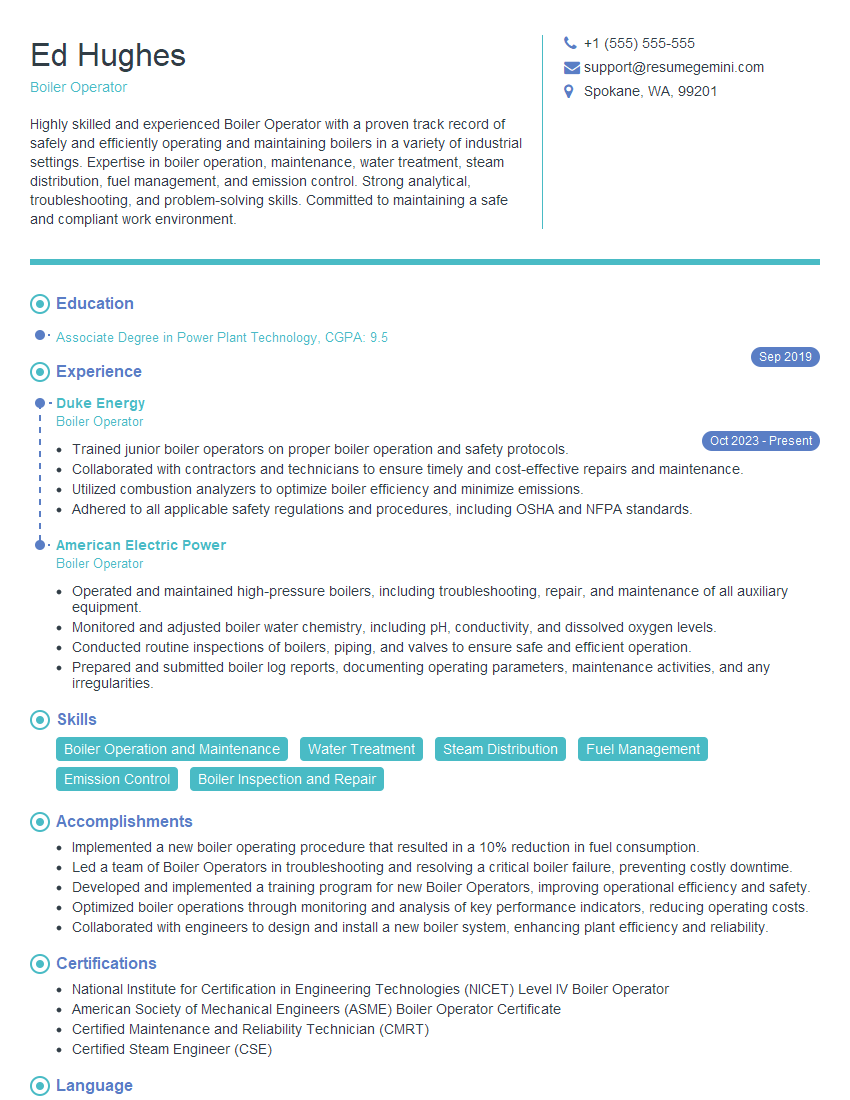
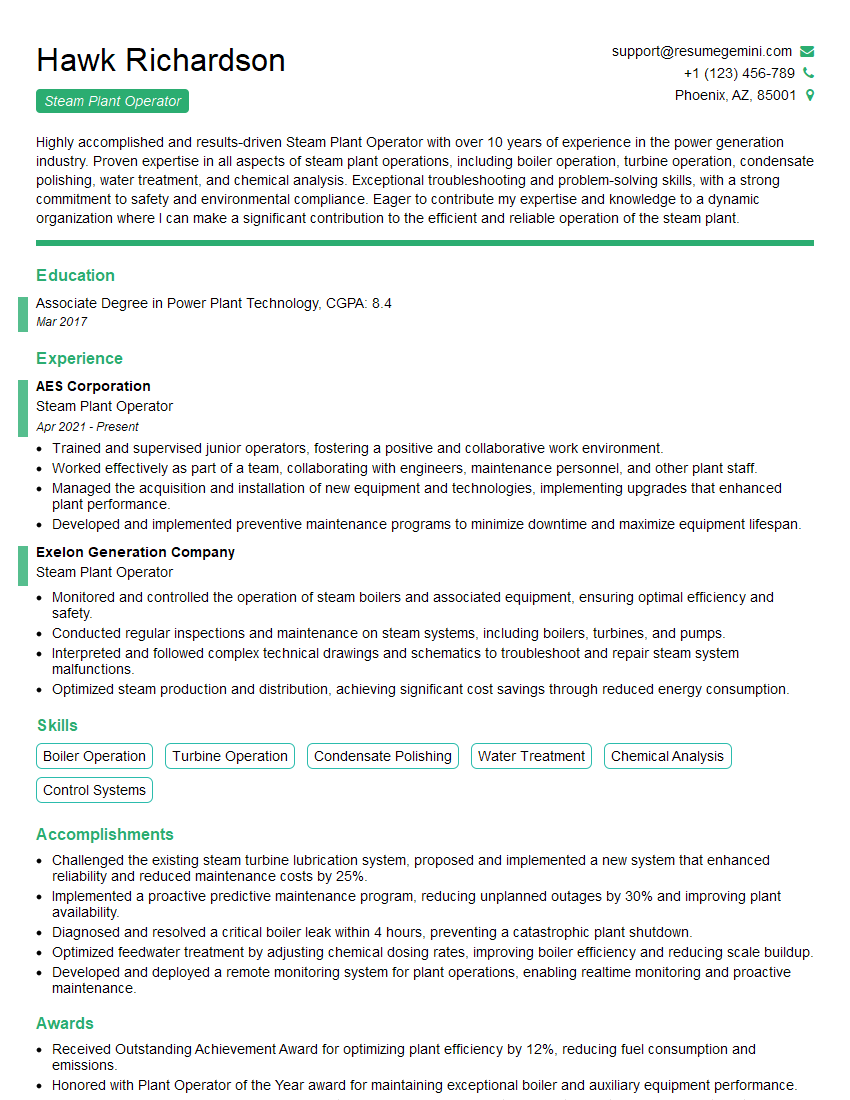
Mastering the Fundamentals of Steam Generation is crucial for career advancement in power generation, process industries, and other sectors reliant on steam technology. A strong understanding of these principles significantly enhances your value to potential employers. To increase your job prospects, focus on building a professional and ATS-friendly resume that highlights your skills and experience effectively. ResumeGemini is a trusted resource that can help you create a compelling resume tailored to the energy sector. We provide examples of resumes specifically designed for candidates with expertise in Fundamentals of Steam Generation to help you get started.

Explore more articles
Users Rating of Our Blogs
Share Your Experience
We value your feedback! Please rate our content and share your thoughts (optional).
What Readers Say About Our Blog
To the interviewgemini.com Webmaster.
Very helpful and content specific questions to help prepare me for my interview!
Thank you
To the interviewgemini.com Webmaster.
This was kind of a unique content I found around the specialized skills. Very helpful questions and good detailed answers.
Very Helpful blog, thank you Interviewgemini team.