The right preparation can turn an interview into an opportunity to showcase your expertise. This guide to Gas Fitting interview questions is your ultimate resource, providing key insights and tips to help you ace your responses and stand out as a top candidate.
Questions Asked in Gas Fitting Interview
Q 1. What are the common types of gas piping materials used in residential installations?
Residential gas piping typically uses materials chosen for their durability, safety, and resistance to corrosion. The most common are:
- Black iron pipe (BIP): A strong, durable option but susceptible to rust over time. It requires careful threading and is generally used for underground or less accessible areas, though less frequently now due to the availability of better alternatives.
- Galvanized steel pipe (GSP): Similar to BIP but with a zinc coating to resist corrosion. It’s a bit more expensive than BIP but offers better longevity. While still used, it’s also being replaced by more modern materials.
- Copper tubing: A highly corrosion-resistant and flexible option, making it easier to install in tight spaces. It’s widely used in many residential settings but requires specific joining techniques such as brazing.
- Corrugated stainless steel tubing (CSST): A flexible, lightweight material that’s resistant to corrosion and damage. It’s a popular choice for new constructions but requires specific grounding practices to mitigate the risk of electrical damage in the case of a lightning strike.
- PEX tubing: While primarily used for water lines, PEX is increasingly used with specialized fittings for gas applications in certain areas. It offers flexibility and ease of installation but should only be used with compatible fittings designed for gas pressure.
The choice of material depends on factors such as budget, local codes, the specific application, and accessibility of the installation area. For example, in a tight crawl space, the flexibility of copper or CSST is advantageous, while in underground applications, BIP or GSP might be preferred (though CSST is becoming increasingly common even in these cases).
Q 2. Explain the process of installing a gas meter.
Installing a gas meter is a job best left to qualified gas professionals due to the safety implications involved. It requires a permit and strict adherence to safety regulations. The process generally involves these steps:
- Site Preparation: Ensuring a level and stable foundation for the meter, typically a concrete pad or well-ventilated enclosure.
- Meter Installation: Securely mounting the meter onto the prepared foundation, ensuring proper orientation and accessibility for readings and maintenance.
- Pipe Connections: Connecting the meter to the gas service line (from the street or gas supplier) and the building’s gas supply line. This involves specialized fittings and often requires pressure testing.
- Leak Detection: Thoroughly checking for gas leaks using specialized equipment, such as a soap solution or electronic leak detector. This ensures the safety of the system.
- Pressure Testing: The gas line will be pressure tested to verify its integrity and the absence of leaks, often at a significantly higher pressure than the operating pressure.
- Meter Calibration and Commissioning: Verifying that the meter is correctly reading gas flow and functioning as intended. The gas supplier will generally be involved in this step.
- Documentation and Inspection: Completing all necessary documentation and calling for the final inspection to ensure compliance with local regulations.
Improper installation can lead to dangerous gas leaks or inaccurate billing. Always employ a certified gas fitter.
Q 3. Describe the different types of gas appliances and their installation requirements.
Gas appliances vary widely, each with unique installation requirements. Some examples include:
- Furnaces: Require proper venting to exhaust combustion byproducts safely. Installation must adhere to manufacturer’s instructions and local building codes, including adequate clearance from combustible materials.
- Water Heaters: Similar to furnaces, proper venting is critical. They need to be appropriately sized for the household’s hot water demand and installed with a pressure relief valve for safety.
- Stoves/Ovens: Must be connected to a gas line with the correct size and type of fitting. Adequate ventilation is crucial, particularly in enclosed areas. Installation requires a properly sized shut-off valve.
- Fireplaces/Fire Pits: Require specialized venting and installation to ensure safe combustion and prevent the buildup of dangerous gases. Many jurisdictions have strict codes for these installations.
- Gas dryers: Must be correctly vented to prevent dangerous carbon monoxide buildup. Appropriate clearance from combustible materials is also vital.
In every case, adhering to manufacturer’s instructions, local building codes, and employing qualified professionals is critical for safe installation and operation. Failure to do so can result in dangerous situations.
Q 4. How do you ensure gas line integrity during installation?
Ensuring gas line integrity is paramount for safety. This involves several key steps:
- Proper Material Selection: Choosing materials appropriate for the application, considering factors such as pressure, location, and potential corrosion.
- Careful Installation: Avoiding damage to the piping during the installation process, using proper fittings and techniques.
- Leak Detection: Using soap solution or electronic leak detectors to identify and address any leaks before putting the system into operation.
- Pressure Testing: Applying pressure significantly higher than the operating pressure to the system to detect leaks under stress. This is a crucial step, typically done after installation is complete but before the final connection to the gas source.
- Proper Connections: Ensuring that all fittings are properly tightened and sealed to prevent leaks.
- Visual Inspection: Conducting a thorough visual inspection of the entire gas line for any visible damage or irregularities.
Ignoring any of these steps risks dangerous gas leaks that can cause explosions, fires, or asphyxiation. A thorough approach, involving both visual inspection and pressure testing, is essential.
Q 5. What are the safety precautions you take when working with gas lines?
Safety is the top priority when working with gas lines. Key precautions include:
- Proper Training and Certification: Only certified and trained gas fitters should work on gas lines. Improper handling can have catastrophic consequences.
- Personal Protective Equipment (PPE): Wearing appropriate safety gear, including safety glasses, gloves, and protective clothing.
- Ventilation: Ensuring adequate ventilation in the work area to prevent the buildup of potentially hazardous gases.
- Leak Detection: Regularly checking for gas leaks using soap solution or electronic leak detectors, and immediately addressing any identified issues.
- Shut-Off Valves: Knowing the location and proper use of shut-off valves in case of emergencies.
- No Open Flames: Avoiding open flames or sparks near gas lines during installation or repair.
- Emergency Procedures: Knowing the emergency procedures to follow in case of a gas leak or other incident.
Working with gas is inherently risky. Following safety protocols diligently minimizes those risks considerably.
Q 6. Explain the importance of gas pressure regulation.
Gas pressure regulation is crucial for the safe and efficient operation of gas appliances. Gas is delivered at a relatively high pressure from the utility company, but appliances require much lower pressure for proper operation. A regulator reduces this pressure to the appropriate level. This prevents:
- Over-pressurization: This can damage appliances, leading to malfunctions or potentially even explosions.
- Insufficient Pressure: This results in poor appliance performance, such as weak flames or inefficient heating.
- Gas Leaks: Uncontrolled pressure can stress the system and increase the possibility of leaks.
Regulators are usually located at the meter and at individual appliances. Regular inspections and maintenance are necessary to ensure they are functioning correctly. A malfunctioning regulator can compromise the entire system’s safety and operational efficiency.
Q 7. What are the common causes of gas leaks and how are they detected?
Gas leaks can have serious consequences. Common causes include:
- Loose or Damaged Connections: Improperly tightened fittings or damaged pipes are common culprits.
- Corrosion: Corrosion of metal pipes can lead to leaks over time, especially in older systems. This is why newer materials are preferred.
- Cracked or Damaged Pipes: Physical damage to pipes, from external forces or age, can create leaks.
- Faulty Appliances: Malfunctioning appliances can create leaks in their gas connections.
- Improper Installation: Incorrect installation of gas lines or appliances can lead to numerous issues.
Gas leaks are detected using several methods:
- Soap Solution Test: Applying a soapy water solution to suspected leak points. Bubbles indicate a leak.
- Electronic Leak Detectors: These devices detect the presence of gas using sensors and provide an audible or visual indication.
- Smell: While not always reliable, a distinct rotten-egg smell (added mercaptan) can signal a gas leak.
If a gas leak is suspected, immediately evacuate the premises and contact emergency services. Never attempt to repair a gas leak yourself.
Q 8. How do you perform a gas leak test?
Performing a gas leak test is crucial for safety and involves several methods. The most common is using a soap solution. We apply a soapy water mixture to all joints and connections in the gas line. If a leak is present, bubbles will form at the point of leakage. This is a simple, visual method, effective for detecting smaller leaks. For larger leaks or more extensive systems, electronic leak detectors are used. These devices sense the presence of gas molecules and provide an audible or visual alarm. It’s vital to ensure proper ventilation during testing, as natural gas is flammable and can displace oxygen. After the test, we meticulously check all connections for tightness and potential damage, ensuring the system’s integrity before turning the gas supply back on. A successful test shows no leaks and guarantees a safe system. For example, recently I was testing a new gas line installation for a restaurant kitchen. The soap test revealed a minor leak at a compression fitting, which was easily tightened and re-tested to ensure complete sealing.
Q 9. Describe your experience with different types of gas valves.
My experience encompasses a wide range of gas valves, from simple on/off valves to sophisticated pressure regulating valves. I’m familiar with ball valves, which are common for their simplicity and durability; butterfly valves, often found in larger lines due to their wide-open flow capacity; and diaphragm valves, often preferred for their precise control and suitability for corrosive gases. I have extensive experience working with pressure regulating valves, which maintain consistent gas pressure to appliances, preventing damage from either over- or under-pressure. I’ve also worked with safety shut-off valves that automatically close in case of leaks or unusual pressure fluctuations, safeguarding against potential hazards. Troubleshooting a faulty valve usually involves testing its operation, checking for blockages or damage, and possibly replacing it if necessary. For example, I once had to replace a faulty diaphragm valve in a residential building after noticing inconsistencies in the gas supply pressure. The new valve corrected the problem immediately. Understanding the nuances of each valve type ensures safe and efficient gas system operation.
Q 10. What are the relevant safety codes and regulations you must adhere to?
Adherence to safety codes and regulations is paramount in gas fitting. We must strictly follow national and local codes, such as those set by organizations like [mention relevant local or national gas safety authority, e.g., CSA in Canada, AGA in the US]. These codes govern aspects including pipe sizing, material selection, installation methods, testing procedures, and appliance connection requirements. Understanding and applying these codes is non-negotiable, impacting safety, system performance and legal compliance. Regular updates on code changes are essential to stay current and maintain professional competency. Failure to comply can lead to significant risks, from gas leaks to explosions, and result in legal repercussions. I consistently ensure all my work adheres to these rigorous standards, regularly reviewing updated codes to ensure best practices.
Q 11. What is your experience with gas appliance servicing and repair?
My experience in gas appliance servicing and repair covers a broad spectrum of appliances, from furnaces and water heaters to cooktops and ovens. This involves routine maintenance, such as cleaning burners, checking for blockages, and adjusting gas pressure. More complex repairs involve troubleshooting malfunctions, identifying faulty components, and carrying out the necessary repairs or replacements. Diagnosing issues requires a systematic approach, starting with visual inspection, checking gas supply, and using testing equipment to pinpoint the source of the problem. Safety is a top priority during servicing and repair, ensuring the appliance is properly isolated before starting any work. For instance, I recently serviced a gas furnace, replacing a faulty igniter and cleaning out debris from the heat exchanger, ensuring its safe and efficient operation. This experience provides thorough insight into the operation, maintenance, and repair of various gas appliances.
Q 12. How do you troubleshoot a gas appliance that is not functioning correctly?
Troubleshooting a malfunctioning gas appliance is a systematic process. I begin by carefully inspecting the appliance for visible issues, checking gas supply and observing its operation. Next, I test the gas supply line for leaks, using soap solution or an electronic leak detector. If a leak is found, addressing it is the first priority. Then, I check the appliance’s components systematically: checking the igniter (for ignition issues), checking for blockages in burners or gas jets, and testing the thermostat (for temperature control issues). Advanced diagnostic tools such as gas pressure gauges and manometers may be employed for more precise assessments. If the issue persists, checking gas supply pressure at the appliance’s connection point often helps isolate the problem. A step-by-step approach, combined with appropriate testing equipment, helps pinpoint the fault effectively and safely. For example, I recently resolved a stovetop issue where one burner wouldn’t light. It turned out to be a clogged gas jet, which was easily cleared restoring the functionality.
Q 13. Explain the process of connecting a gas appliance to the gas line.
Connecting a gas appliance to the gas line is a critical process that requires precision and adherence to safety regulations. First, the gas supply must be turned off at the main valve before commencing any work. Then, we carefully disconnect the existing appliance (if applicable) and prepare the gas line for connection. This may involve using appropriate fittings and ensuring a secure, leak-free connection. The new appliance’s gas connection point is carefully examined, and the appropriate size and type of flexible gas connector is used to connect it to the gas line. Finally, after all connections are made, we perform a thorough gas leak test using a soapy water solution or an electronic leak detector. Only after a successful leak test, is the gas supply turned back on and the appliance’s operation verified. Every step adheres to safety codes to ensure that the appliance is safely and correctly connected. For instance, when connecting a new gas oven recently, I used a flexible connector of the correct length and diameter, carefully checking for tightness and leaks before turning the gas on.
Q 14. Describe your experience with gas line sizing and calculations.
Gas line sizing and calculations are vital for ensuring adequate gas flow to appliances. This involves determining the appropriate pipe diameter based on the appliance’s gas consumption rate, the length of the gas line, and the desired pressure drop. Industry-standard formulas and tables are used for calculating gas flow rates and pressure drops. Factors such as pipe material, fittings, and bends also influence the overall system’s performance. Incorrect sizing can lead to insufficient gas flow, impacting appliance operation or potentially creating dangerous conditions. For example, when designing a new gas line for a large commercial kitchen, I used specialized software to calculate the optimal pipe diameter, ensuring sufficient gas flow to all appliances without exceeding pressure drop limits. Accurate calculations and meticulous attention to detail ensure the gas system operates efficiently and safely.
Q 15. How do you handle emergency gas leaks?
Handling a gas leak is a serious matter demanding immediate and careful action. My priority is always the safety of myself, others, and the property. The first step is to immediately evacuate the area and move to a safe distance, ensuring everyone is clear. Then, I would:
- Shut off the gas supply: Locate the main gas shut-off valve (usually near the meter) and turn it off completely. This is the single most important step in mitigating the risk.
- Call emergency services: Contact your local gas company or emergency services immediately. Do not attempt to fix the leak yourself – this is extremely dangerous and should be left to qualified professionals.
- Ventilate the area: If possible, open windows and doors to increase ventilation and disperse any accumulated gas. However, prioritise your safety; don’t enter if there’s any doubt about the safety of the environment.
- Keep others away: Do not let anyone approach the area until the leak is confirmed safe by professionals. Avoid using any electronic devices (phones, lighters) near the leak as they could ignite the gas.
I’ve handled numerous gas leak emergencies throughout my career, from minor leaks in residential settings to more significant issues in commercial buildings. One instance involved a leak in a restaurant’s kitchen – quick action and immediate shutdown of the gas prevented a potentially catastrophic event.
Career Expert Tips:
- Ace those interviews! Prepare effectively by reviewing the Top 50 Most Common Interview Questions on ResumeGemini.
- Navigate your job search with confidence! Explore a wide range of Career Tips on ResumeGemini. Learn about common challenges and recommendations to overcome them.
- Craft the perfect resume! Master the Art of Resume Writing with ResumeGemini’s guide. Showcase your unique qualifications and achievements effectively.
- Don’t miss out on holiday savings! Build your dream resume with ResumeGemini’s ATS optimized templates.
Q 16. What is your experience with different types of gas meters?
My experience encompasses various gas meter types, including:
- Diaphragm meters: These are commonly used in residential settings and measure gas flow using a flexible diaphragm. I’m proficient in identifying potential issues and conducting routine maintenance checks.
- Rotary meters: These meters utilize a rotating mechanism to measure gas volume; I understand their operating principles and troubleshooting techniques.
- Turbine meters: These are more sophisticated meters, offering high accuracy and often used in commercial and industrial settings. I’ve worked with various turbine meter models and am familiar with their calibration procedures.
- Smart meters: These electronic meters provide remote monitoring capabilities, enhancing efficiency and safety. I’m familiar with their functionality and data interpretation.
Understanding the specifics of each meter type is crucial for accurate gas readings, leak detection, and efficient maintenance. I’ve encountered scenarios where a malfunctioning diaphragm meter caused inaccurate billing, and my expertise allowed me to promptly identify and resolve the issue.
Q 17. Describe your understanding of gas piping diagrams and blueprints.
Gas piping diagrams and blueprints are essential for understanding the gas distribution system. I can confidently read and interpret these documents, identifying pipe sizes, materials, locations of valves, meters, and appliances. This is vital for planning installations, repairs, and maintenance. The blueprints illustrate the complete layout, including crucial details like:
- Pipe sizing and materials: Correct pipe sizing is crucial for ensuring adequate gas flow and pressure; I understand the implications of using different materials (e.g., steel, copper, HDPE).
- Valve locations: Precise location of shut-off valves is critical for emergency situations; I use blueprints to quickly access the right valve during emergencies.
- Appliance connections: Blueprints show where appliances connect to the gas lines, facilitating proper installation and maintenance.
- Pressure ratings: Understanding the designated pressure of various sections of the gas piping is key to ensuring safe operation.
For instance, I recently used blueprints to plan a gas line extension for a new addition to a house, ensuring compliance with all safety regulations and optimal gas distribution.
Q 18. What is your experience with gas line purging and pressurization?
Gas line purging and pressurization are critical steps in ensuring a safe and functional gas system. Purging removes air and other contaminants from the lines before the introduction of natural gas. Pressurization tests the system’s integrity. My process includes:
- Purging: I use specialized equipment to carefully purge the lines, ensuring complete removal of air. This involves introducing an inert gas, like nitrogen, to displace the air.
- Pressurization Testing: After purging, I pressurize the lines to a specified pressure and monitor for pressure drops, indicating potential leaks. This involves using pressure gauges and leak detection tools.
- Documentation: All purging and pressurization tests are meticulously documented, complying with all relevant safety standards and regulations.
I once worked on a large commercial project where careful purging and pressurization prevented a significant leak during the initial system operation. This demonstrated the vital role these steps play in preventing costly repairs and safety hazards.
Q 19. How do you ensure the proper ventilation for gas appliances?
Proper ventilation is paramount for gas appliance safety, preventing the buildup of combustion byproducts like carbon monoxide. I ensure adequate ventilation by:
- Checking existing ventilation systems: This includes inspecting chimneys, vents, and exhaust flues for blockages or damage. I use specialized tools and cameras for thorough inspections.
- Installing appropriate ventilation components: This might include installing new vents, chimneys, or exhaust systems, according to the specific appliance and local building codes.
- Adhering to building codes: I always follow local building codes and manufacturer’s recommendations for ventilation requirements. I’m familiar with the relevant regulations and standards.
- Testing for proper ventilation: Post-installation, I conduct tests to confirm efficient gas appliance operation and ensure proper ventilation is maintained.
Inadequate ventilation can lead to dangerous carbon monoxide buildup, a scenario I’ve successfully avoided numerous times through careful attention to detail and adherence to safety standards.
Q 20. What safety equipment do you use when working with gas?
Safety is my top priority. When working with gas, I consistently use the following safety equipment:
- Gas detector: A portable gas detector is essential for detecting leaks and ensuring a safe working environment.
- Safety glasses and gloves: These protect my eyes and hands from potential hazards.
- Appropriate clothing: I wear flame-resistant clothing to minimize the risk of burns.
- Hearing protection: Some tools can be noisy, so hearing protection is important.
- Lockout/Tagout devices: To ensure the safety of others, these devices prevent accidental gas system activation during maintenance or repairs.
Each piece of equipment plays a crucial role in mitigating risks and ensuring safety. Neglecting any of these could have serious consequences.
Q 21. Describe your experience with gas line modifications and extensions.
I have extensive experience in gas line modifications and extensions. These projects demand precise planning and execution to ensure safety and compliance. My approach involves:
- Detailed planning and design: This includes reviewing existing blueprints, considering future needs, and ensuring compliance with all codes and regulations.
- Proper permits and approvals: Obtaining the necessary permits before starting any modifications or extensions is crucial.
- Accurate measurements and calculations: Precise measurements are essential for proper fitting and to avoid leaks or unsafe connections.
- Careful installation and testing: This involves using appropriate tools and techniques for a safe and durable installation. I always conduct thorough pressure testing after installation.
- Proper connection and sealing: Ensuring all connections are properly sealed and leak-free is of paramount importance. This often involves using specialized pipe thread sealant and leak detection tools.
I recently completed a project involving extending a gas line to a newly constructed workshop, ensuring compliance with all safety standards and providing a reliable gas supply. This involved meticulous planning, careful execution, and a thorough testing process to confirm the integrity of the new lines.
Q 22. What are the different types of gas fittings and their applications?
Gas fittings are crucial components in any gas system, ensuring safe and efficient gas delivery. Different fittings serve distinct purposes, depending on the application. They’re categorized by their function and material.
- Compression Fittings: These rely on a compression ring to create a seal around the pipe. They’re commonly used in residential settings for their ease of installation and relatively low cost. Think of them like a really strong clamp squeezing a rubber gasket onto the pipe.
- Flared Fittings: These involve flaring the end of the pipe, creating a wider diameter that fits snugly into a matching fitting with a compression nut. They offer a reliable seal, suitable for applications requiring a more robust connection. Imagine flaring a metal flower petal to create a tight fit.
- Solder Fittings: These are created with solder, a type of metal alloy. This creates a rigid and permanent connection. They’re often found in situations where durability and leak resistance are paramount, such as commercial settings or industrial applications. It’s like welding two metal parts together, creating a single, strong unit.
- Threaded Fittings: These fittings have male and female threads that screw together, creating a secure connection. They’re versatile and can be used in a variety of applications, but care must be taken to ensure proper thread engagement to avoid leaks. Think of it like screwing a lightbulb into a socket – it needs the right thread count and tightness.
The choice of fitting depends on factors like the gas pressure, the pipe material, and the application environment. For instance, a compression fitting might suffice for a low-pressure residential appliance, while a solder fitting would be more appropriate for a high-pressure commercial boiler.
Q 23. How do you identify different types of gas lines?
Identifying gas lines correctly is critical for safety. Different types of gas lines are typically identified by their color-coding, markings, and materials. Color coding is crucial for easy visual identification. Never rely solely on color; always confirm using other methods.
- Color Codes: While local codes may vary, common color codes include: Black for natural gas, yellow for propane, and red for high-pressure gas lines. However, rely on other identification methods as well.
- Markings and Labels: Gas lines often have markings indicating their pressure rating, material, and the gas type. These markings are crucial for ensuring compatibility of fittings and safe operation.
- Material: The material of the pipe also provides clues, with black iron pipe frequently used in older installations and copper or plastic piping used in modern settings.
- Location: Often the location of the pipe relative to the building or appliances can provide clues.
Always double check for proper identification before working on any gas line. Mistaking a line can have dangerous consequences. If unsure, consult the building blueprints or contact a qualified gas technician.
Q 24. What is your experience with working on gas lines in different environments (e.g., residential, commercial)?
My experience spans both residential and commercial gas line work. In residential settings, I’ve handled everything from appliance installations and repairs to leak detection and minor line modifications. I’m familiar with the typical lower-pressure systems and various appliance connection methods. I’ve addressed issues like faulty valves, leaky connections, and blocked vents. One memorable instance involved troubleshooting a gas leak in a century-old home with outdated piping—a challenge that required patience and meticulous attention to detail.
Commercial projects have presented more complex challenges, involving higher-pressure systems, larger-scale installations, and stricter safety regulations. I’ve worked on commercial kitchens, industrial equipment, and large-scale heating systems. For instance, I’ve been part of a team installing a new gas line for a large commercial oven, which required careful coordination and adherence to safety protocols.
The key difference between the two environments lies in the scale and complexity of the systems, along with the level of safety regulations and permitting required. My experience equips me to handle the unique demands of each setting while prioritizing safety and code compliance.
Q 25. Explain the process of disconnecting a gas appliance.
Disconnecting a gas appliance requires careful attention to safety procedures to prevent gas leaks and accidents. Always turn off the gas supply at the main valve before starting any work. This is the single most important step.
- Turn off the gas supply: Locate the shut-off valve for the appliance, usually located close to the appliance itself or at the main gas meter. Turn the valve clockwise to shut off the gas flow.
- Disconnect the supply line: Carefully disconnect the gas line from the appliance. The method depends on the type of connection (compression, flared, or threaded). Always use the appropriate tools and ensure a tight seal to prevent leaks. If unsure which type of connection, do not proceed until you have properly identified it.
- Cap the gas line: After disconnecting, immediately cap the open gas line end with a suitable cap to prevent gas leakage.
- Inspect for leaks: After capping, inspect the connection for any signs of gas leakage. Use a leak detection solution or an electronic leak detector to ensure there are no leaks.
- Dispose of the appliance properly: Follow local regulations for disposing of old gas appliances.
Remember, if you are not comfortable or lack the proper knowledge and tools, it is crucial to contact a qualified gas fitter. Working with gas lines requires expertise and adherence to stringent safety protocols.
Q 26. What are the signs of carbon monoxide poisoning and how do you address it?
Carbon monoxide (CO) is an odorless, colorless, and highly toxic gas. It can be deadly, so recognizing the symptoms is vital. Signs of CO poisoning include headache, dizziness, weakness, nausea, vomiting, and shortness of breath. High levels of exposure can lead to unconsciousness and death.
If you suspect CO poisoning, immediately:
- Get fresh air: Open windows and doors to ventilate the area.
- Call for help: Call emergency services immediately.
- Evacuate the premises: If possible, evacuate the building to a safe location.
Addressing CO poisoning involves immediate medical attention and identifying the source of the leak. This usually requires a qualified gas technician to locate and repair the leak. Regular inspection of gas appliances and chimneys are necessary to prevent CO buildup.
Installing CO detectors is crucial for early warning. These detectors should be placed on each floor of your home, particularly near sleeping areas. Regularly test and replace the batteries as needed.
Q 27. How do you maintain your tools and equipment?
Maintaining my tools and equipment is crucial for both safety and efficiency. Properly maintained tools are less likely to fail during critical tasks, preventing accidents and ensuring quality work.
- Regular Cleaning: After each job, I thoroughly clean all tools, removing debris, grease, and gas residue. This prevents corrosion and ensures proper functioning.
- Inspection for damage: Before each job, I carefully inspect all tools for damage, wear, and tear. Worn or damaged tools are immediately replaced or repaired.
- Lubrication: Moving parts are regularly lubricated to maintain smooth operation and prevent premature wear.
- Proper Storage: Tools are stored in a dry, secure place to prevent corrosion and damage. I organize my tools efficiently to make them easy to access.
- Calibration: Specialized tools, such as leak detectors, are regularly calibrated to ensure accurate readings. This is essential for safety and accurate gas line diagnosis.
My tool maintenance practices are integral to my work. A well-maintained tool kit is a reflection of professionalism and commitment to safety, efficiency, and high-quality results.
Q 28. Describe your experience working independently and as part of a team.
Throughout my career, I’ve had ample opportunities to work both independently and as part of a team. Independent work has honed my problem-solving skills and self-reliance. Many residential jobs require self-sufficiency, demanding a high level of competence in diagnosis, repair, and safety.
Teamwork is crucial in larger commercial projects. Effective collaboration is necessary for coordinating tasks, adhering to safety protocols, and ensuring efficient project completion. I value effective communication, mutual respect, and a shared commitment to achieving a common goal. For example, on a recent commercial building project, our team worked seamlessly, leveraging each individual’s expertise to complete the gas line installation ahead of schedule and without incident.
My adaptability and collaborative spirit allow me to thrive in both solo and team environments. I recognize that different tasks demand different approaches; however, I apply the same principles of efficiency, safety, and quality in all my work.
Key Topics to Learn for Your Gas Fitting Interview
- Gas Codes and Regulations: Understanding local, state, and national gas codes is paramount. Focus on safe installation practices and compliance procedures.
- Pipefitting Techniques: Master various pipefitting methods, including threading, brazing, soldering, and joining techniques for different pipe materials (e.g., copper, steel, PVC).
- Gas Appliance Installation and Servicing: Develop a strong understanding of installing, maintaining, and troubleshooting various gas appliances (furnaces, water heaters, stoves, etc.). This includes knowing safety procedures and leak detection methods.
- Blueprint Reading and Interpretation: Practice interpreting gas line schematics and blueprints to accurately plan installations and repairs.
- Gas Metering and Pressure Regulation: Learn about gas metering systems, pressure regulators, and their roles in ensuring safe and efficient gas delivery.
- Troubleshooting and Diagnostics: Develop your skills in identifying and resolving common gas line issues, including leaks, pressure problems, and appliance malfunctions.
- Safety Procedures and Practices: Emphasize your knowledge of safety protocols, including lockout/tagout procedures, personal protective equipment (PPE) usage, and emergency response plans.
- Ventilation and Combustion: Understand the importance of proper ventilation for gas appliances and the principles of combustion efficiency.
- Tools and Equipment: Familiarize yourself with common gas fitting tools and equipment and their proper use.
- Customer Service and Communication: Highlight your skills in effectively communicating with customers, explaining technical issues clearly, and providing excellent service.
Next Steps: Unlock Your Gas Fitting Career
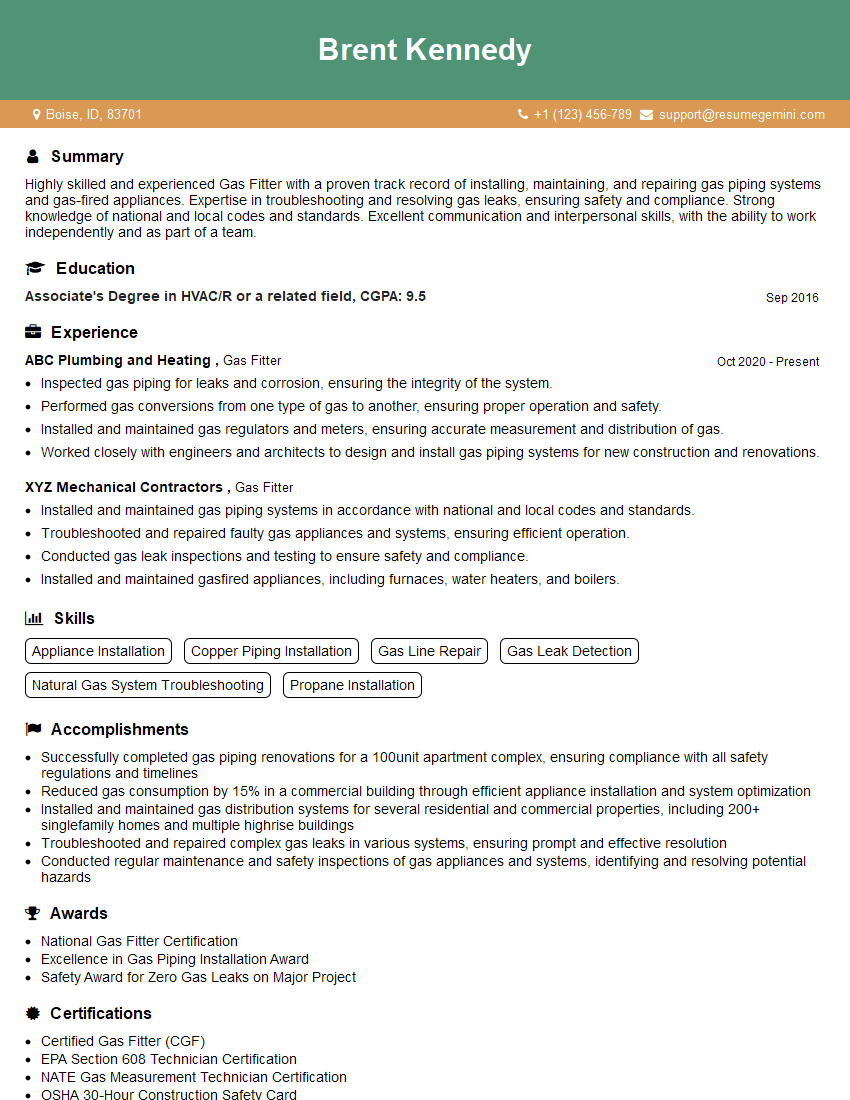
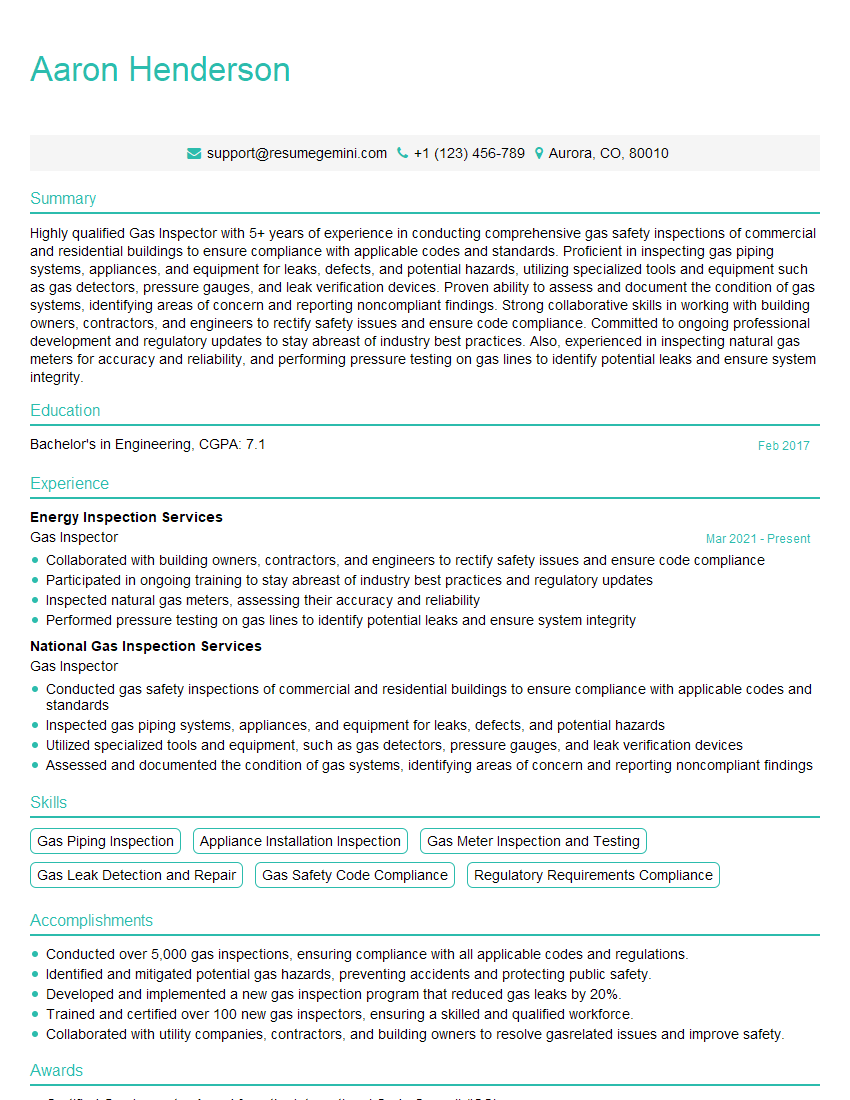
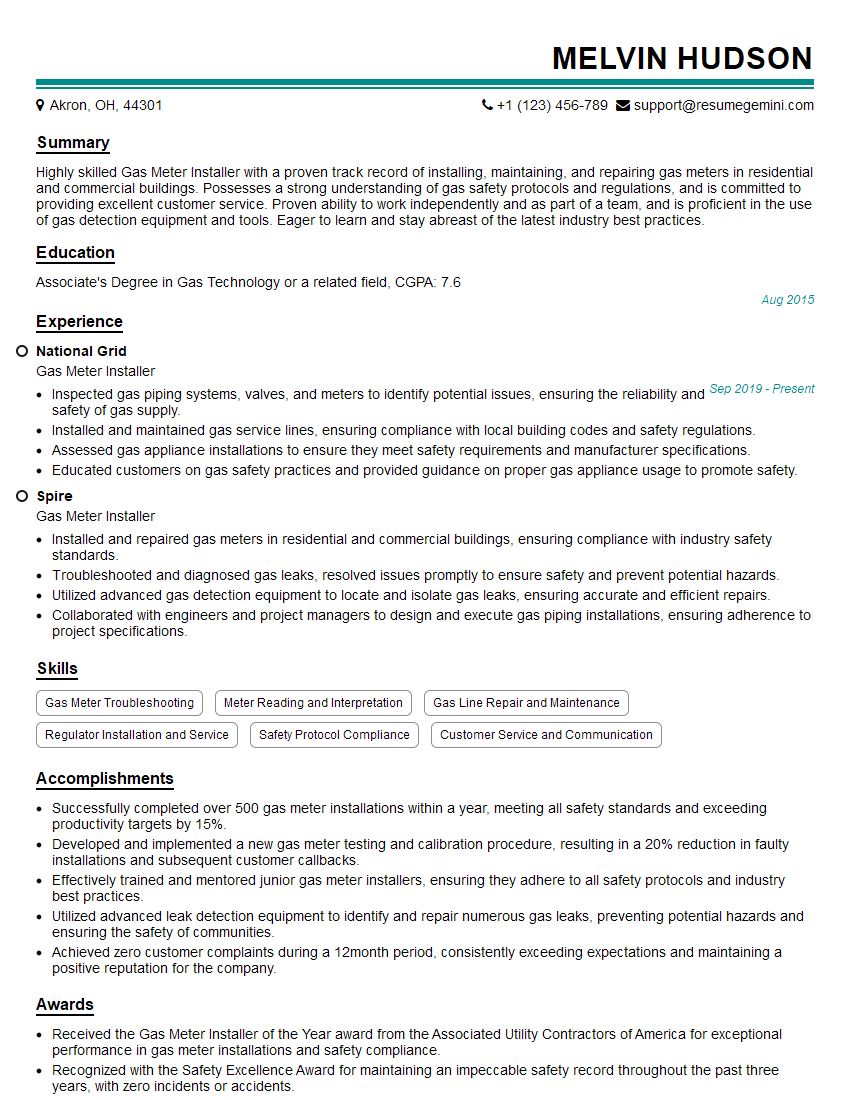
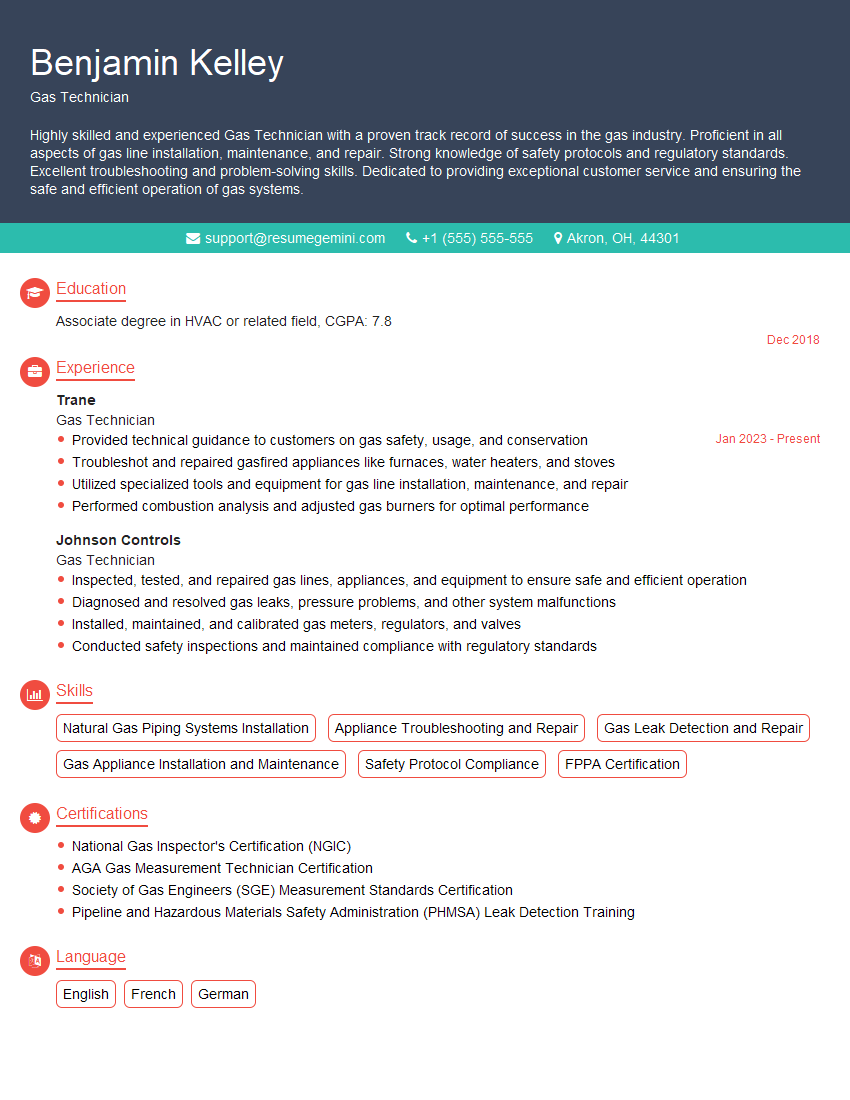
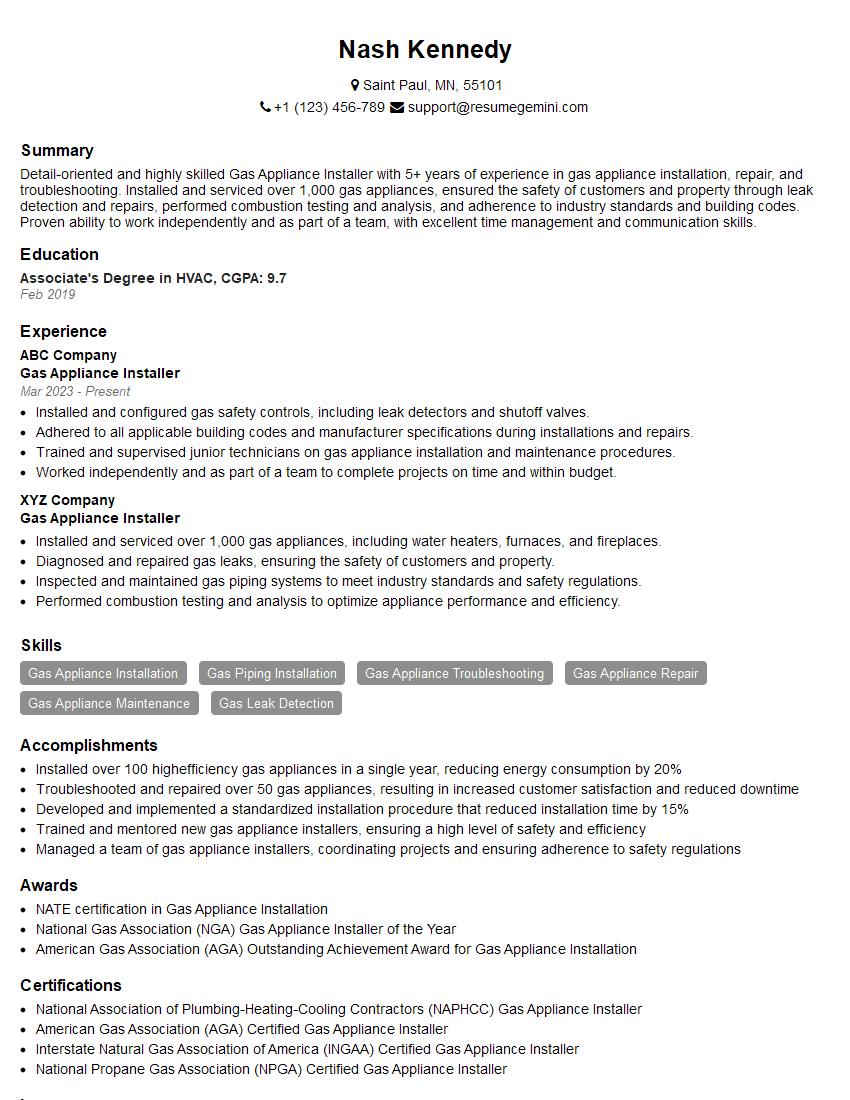
Mastering gas fitting opens doors to a rewarding and stable career with excellent growth potential. To maximize your job prospects, creating a strong, ATS-friendly resume is crucial. ResumeGemini can help you build a professional resume that highlights your skills and experience effectively. They offer examples of resumes specifically tailored for gas fitting professionals, ensuring your application stands out from the competition. Invest time in crafting a compelling resume – it’s your first impression with potential employers.
Explore more articles
Users Rating of Our Blogs
Share Your Experience
We value your feedback! Please rate our content and share your thoughts (optional).
What Readers Say About Our Blog
To the interviewgemini.com Webmaster.
Very helpful and content specific questions to help prepare me for my interview!
Thank you
To the interviewgemini.com Webmaster.
This was kind of a unique content I found around the specialized skills. Very helpful questions and good detailed answers.
Very Helpful blog, thank you Interviewgemini team.