Interviews are opportunities to demonstrate your expertise, and this guide is here to help you shine. Explore the essential Gas Processing and Distribution interview questions that employers frequently ask, paired with strategies for crafting responses that set you apart from the competition.
Questions Asked in Gas Processing and Distribution Interview
Q 1. Explain the process of natural gas sweetening.
Natural gas sweetening is a crucial process in the natural gas industry, aiming to remove harmful sulfur compounds, primarily hydrogen sulfide (H2S), and mercaptans, from raw natural gas. These compounds are corrosive, toxic, and have an unpleasant odor. The process transforms ‘sour’ gas (containing these impurities) into ‘sweet’ gas (meeting pipeline specifications).
Several methods achieve this, each with its own advantages and disadvantages. Common methods include:
- Amine Treating: This is the most prevalent method. Amines (like monoethanolamine or MEA) are used to absorb H2S and CO2 from the gas stream. The amine solution is then regenerated by heating, releasing the captured gases for further processing or disposal.
- Iron Oxide Treating: This method uses iron oxide to oxidize H2S into elemental sulfur (S). This is a relatively simple and cost-effective process, suitable for smaller applications or situations where the H2S concentration is low.
- Zinc Oxide Treating: Zinc oxide reacts with H2S at elevated temperatures to form zinc sulfide (ZnS). This method is effective for removing H2S but can be less efficient at removing mercaptans.
The choice of sweetening method depends on factors such as the gas composition, the level of sulfur compounds present, the processing capacity, and environmental regulations. For instance, a large-scale gas processing plant might opt for amine treating due to its high efficiency and capacity, whereas a smaller facility might choose iron oxide treating for simplicity and lower costs.
Q 2. Describe different types of gas compressors and their applications.
Gas compressors are essential for boosting the pressure of natural gas during transmission and processing. Different compressor types cater to specific needs and operational conditions.
- Reciprocating Compressors: These are positive displacement compressors using pistons to compress the gas. They are suitable for high-pressure applications and small flow rates. However, they can be noisy and require more maintenance than other types.
- Centrifugal Compressors: These use rotating impellers to accelerate and compress the gas. They excel in high-volume, moderate-pressure applications and are known for their high efficiency and relatively low maintenance. Large-diameter gas pipelines often rely on these.
- Axial Compressors: Similar to centrifugal compressors, but with multiple stages of impellers arranged along a central shaft. They are highly efficient for very large gas volumes and moderate pressure increases.
- Rotary Screw Compressors: These employ two intermeshing rotors to compress the gas. They’re known for their relatively compact size and smooth operation, making them suitable for a wide range of applications.
The selection of the compressor depends heavily on the required pressure increase, flow rate, gas composition, and overall operating costs. For instance, a long-distance pipeline would likely utilize several stages of centrifugal compressors to maintain pressure across its extensive length, while a smaller processing unit might use a reciprocating compressor for high-pressure applications such as gas injection into reservoirs.
Q 3. How do you ensure pipeline integrity and prevent leaks?
Maintaining pipeline integrity is paramount for safety and environmental protection. A multi-pronged approach is crucial:
- Regular Inspections: This includes in-line inspections (ILI) using intelligent pigs to detect internal corrosion, cracks, and other anomalies. External inspections are done by patrolling crews and aerial surveys to identify any external damage.
- Material Selection: Pipelines are constructed from materials specifically chosen for their strength, durability, and resistance to corrosion. The choice of material depends on factors such as the operating pressure, the gas composition, and the environmental conditions.
- Cathodic Protection: This electrochemical process protects the pipeline from corrosion by acting as a sacrificial anode, preventing rust and extending the pipeline’s lifespan.
- Leak Detection Systems: These use sophisticated sensors and monitoring systems to detect even minute pressure changes that could indicate a leak. This allows for rapid response and repair, minimizing environmental impact and ensuring safety.
- Pressure Monitoring and Control: Continuous monitoring of pressure within the pipeline ensures that it operates within safe limits, and sophisticated control systems can automatically shut down sections of the pipeline in the event of a pressure anomaly.
For example, a pipeline traversing a highly corrosive soil environment would require more frequent inspections and potentially more robust cathodic protection to mitigate corrosion risks.
Q 4. What are the key safety considerations in gas processing plants?
Safety in gas processing plants is paramount given the highly flammable and potentially toxic nature of the materials handled. Key safety considerations include:
- Process Safety Management (PSM): Implementing a comprehensive PSM system, following industry best practices and regulatory guidelines, is fundamental. This involves hazard identification, risk assessment, and control measures for preventing accidents.
- Emergency Shutdown Systems (ESD): These systems are designed to automatically shut down operations in case of an emergency, minimizing the potential for major incidents. Regular testing and maintenance are critical.
- Fire Protection Systems: Sophisticated fire detection and suppression systems are essential for containing fires quickly and effectively. This includes firewalls, deluge systems, and fire extinguishers strategically placed throughout the facility.
- Personal Protective Equipment (PPE): Employees must wear appropriate PPE such as respirators, flame-resistant clothing, and safety glasses to protect themselves from hazards.
- Training and Emergency Response Plans: Regular safety training for all personnel is essential. This includes emergency response drills, familiarizing employees with safety protocols, and ensuring they know how to react in hazardous situations.
- Leak Detection and Monitoring: A comprehensive leak detection system is crucial to minimize the release of flammable gases.
A well-designed safety management system, coupled with rigorous training and compliance, is fundamental to preventing accidents and protecting personnel and the environment in gas processing plants.
Q 5. Explain the principles of gas metering and measurement.
Gas metering and measurement are essential for accurate accounting, billing, and process control in the natural gas industry. The principle involves determining the volume and/or mass of gas flowing through a pipeline or processing unit.
Several methods are employed:
- Orifice Meters: These meters measure the pressure drop across a precisely sized orifice plate installed in a pipeline. The pressure drop is directly related to the gas flow rate.
- Turbine Meters: These meters utilize a turbine that spins at a rate proportional to the gas flow rate. The rotation speed is measured electronically to determine the flow rate.
- Ultrasonic Meters: These meters use ultrasonic waves to measure the velocity of the gas flowing through a pipeline, allowing for accurate flow rate determination.
- Coriolis Meters: These meters measure the mass flow rate directly by detecting the Coriolis force exerted on the flowing gas. They are highly accurate and suitable for high-precision measurements.
The choice of metering method depends on factors such as the required accuracy, pressure and temperature conditions, gas composition, and cost considerations. For instance, high-pressure applications might utilize turbine meters due to their robustness, while Coriolis meters would be chosen for applications requiring highly accurate mass flow measurements.
Q 6. Describe different types of gas pipelines and their materials.
Natural gas pipelines vary significantly in size, design, and material depending on factors such as operating pressure, gas composition, and geographic location.
- High-Pressure Pipelines: These pipelines transport gas over long distances at high pressures. They typically employ thick-walled steel pipes with stringent quality control and maintenance requirements. The steel is often coated to enhance corrosion resistance.
- Low-Pressure Pipelines: These pipelines operate at lower pressures and are used for distribution within cities and towns. They often utilize smaller diameter steel or even plastic (polyethylene) pipes.
- Transmission Pipelines: These are large-diameter pipelines designed to carry large volumes of gas over long distances. They usually consist of steel pipes buried underground.
- Distribution Pipelines: These pipelines are smaller in diameter and are used to distribute gas from transmission lines to consumers. They might be made from steel, polyethylene, or other suitable materials.
The choice of material considers factors such as cost, strength, corrosion resistance, and environmental impact. For instance, steel pipes are strong and durable but susceptible to corrosion, while polyethylene pipes are more resistant to corrosion but may have lower pressure ratings. High-pressure, long-distance pipelines generally use steel due to its strength and ability to withstand high internal pressures, while distribution networks might incorporate polyethylene pipes in lower-pressure applications.
Q 7. How is gas regulated and monitored for quality?
Gas quality is regulated and monitored to ensure it meets required specifications for safety, efficient combustion, and environmental protection. Key aspects include:
- Compositional Analysis: Regular analysis of the gas composition determines the levels of various components such as methane, ethane, propane, butane, and impurities like water, sulfur compounds, and carbon dioxide.
- Water Content: Excess water can cause corrosion and freezing in pipelines, so monitoring and control are vital. Dehydration units are often used to remove water from the gas stream.
- Heating Value: This represents the energy content of the gas and is crucial for billing and ensuring consistent energy delivery. It’s typically measured in British Thermal Units (BTUs) or megajoules (MJ).
- Sulfur Content: As mentioned earlier, sulfur compounds must be removed to meet environmental regulations and prevent corrosion. Continuous monitoring of sulfur content is essential.
- Odorization: Natural gas is odorless, so a strong-smelling compound (mercaptan) is added for safety, enabling detection of leaks.
Regulatory bodies such as the Department of Transportation (DOT) in the United States or equivalent agencies in other countries set standards for gas quality and pipeline safety. Regular audits, inspections, and compliance checks are conducted to ensure adherence to these standards.
Q 8. What is the role of SCADA systems in gas distribution?
SCADA, or Supervisory Control and Data Acquisition, systems are the nervous system of a gas distribution network. They provide real-time monitoring and control of the entire system, from individual pressure regulating stations to the main transmission pipelines. Think of it as a sophisticated dashboard showing everything happening across the network.
These systems use a network of sensors, actuators, and communication devices to collect data on pressure, flow, temperature, and other critical parameters. This data is then transmitted to a central control center where operators can monitor the system’s performance and take corrective actions if necessary. For instance, if pressure drops in a specific area, the SCADA system will alert operators, allowing them to remotely adjust valves or dispatch a crew for repairs.
The benefits of SCADA are immense. They enhance safety by providing early warnings of potential problems; improve efficiency by optimizing gas flow; and reduce operational costs by minimizing manual intervention. A large-scale gas distribution company might use a SCADA system with hundreds of remote terminal units (RTUs), each managing a specific part of the network, all seamlessly integrated into a central management system.
Q 9. Explain the concept of pipeline pigging.
Pipeline pigging is a crucial maintenance procedure in the gas industry. Imagine a pipeline as a long, narrow tube. Over time, various materials – like wax, hydrates, or corrosion products – can build up inside, reducing the pipeline’s capacity and efficiency. This is where ‘pigs’ come in.
A pipeline pig is a cleaning device, typically a cylindrical tool, that is inserted into the pipeline and propelled along by the gas flow itself. Different types of pigs are used depending on the task. Some are designed for cleaning, scraping away deposits; others are for inspection, equipped with sensors to detect internal defects. Think of it like sending a miniature robot inside the pipeline to clean or inspect it.
The process typically involves shutting down a section of the pipeline, inserting the pig, and then pushing it through using the gas pressure. Once the pig emerges at the other end, the cleaned or inspected section is put back into operation. Regular pipeline pigging ensures the smooth flow of gas, prevents blockages, and maintains the integrity of the pipeline, extending its lifespan and maximizing operational efficiency.
Q 10. Describe the process of gas dehydration.
Gas dehydration is the process of removing water vapor from natural gas. Water can cause several problems, including the formation of hydrates (ice-like structures) that can clog pipelines, and corrosion of pipeline materials. Therefore, dehydration is an essential step in natural gas processing.
Several methods are employed for gas dehydration, depending on the water content and the required level of dryness. Common techniques include glycol dehydration, which uses a desiccant (like triethylene glycol) to absorb water; adsorption using solid desiccants like silica gel or alumina; and membrane separation, which uses specialized membranes to selectively remove water molecules from the gas stream.
The process usually involves passing the wet gas through a dehydration unit, where the water is removed, and the dry gas is then sent downstream for further processing or distribution. The used desiccant is then regenerated (in the case of glycol or adsorption) to be reused, making the process efficient and cost-effective. The level of dryness achieved is critical, often specified as a dew point, indicating the temperature at which water vapor begins to condense out of the gas. This ensures the gas remains dry enough to avoid problems further down the line.
Q 11. What are the environmental concerns related to gas processing and distribution?
Gas processing and distribution, while vital for energy supply, bring several environmental concerns. Greenhouse gas emissions from methane leakage during production, processing, and distribution are a major worry, contributing to climate change. Methane, the primary component of natural gas, is a far more potent greenhouse gas than carbon dioxide.
Air pollution from venting and flaring of gas during processing and accidents can also cause significant local environmental damage. The release of volatile organic compounds (VOCs) and other pollutants can harm air quality and affect human health. Additionally, the disposal of spent chemicals (like glycols from dehydration) needs careful consideration to avoid water pollution.
The industry is addressing these issues with stricter regulations, technological improvements (like leak detection systems and reduced flaring practices), and a focus on sustainability. The implementation of carbon capture and storage (CCS) technologies is also gaining traction to minimize the impact of greenhouse gas emissions. Responsible practices and stringent environmental monitoring are crucial to minimize the environmental footprint of gas operations.
Q 12. How do you manage gas pressure and flow in a pipeline system?
Managing gas pressure and flow in a pipeline system is critical for safe and efficient operation. It requires a combination of strategic planning, sophisticated equipment, and real-time monitoring. Think of it as controlling the flow of blood in a complex circulatory system, ensuring that the right amount reaches every part of the body.
Pressure regulating stations are installed along the pipeline to control pressure, reducing it to the appropriate levels for different segments of the network. Compressor stations are employed to boost the pressure where it drops too low due to friction or elevation changes. Flow control valves regulate the gas flow rate, ensuring the demand is met without exceeding the pipeline’s capacity.
SCADA systems play a crucial role in this process by monitoring pressure and flow data from various points along the pipeline. Operators use this real-time information to adjust the equipment and maintain the desired pressure and flow within safe and efficient limits. Sophisticated algorithms and predictive modeling can help anticipate demand fluctuations and pre-emptively adjust the system accordingly. Effective pressure and flow management minimizes energy loss, prevents pipeline failures, and enhances the overall operational efficiency and safety of the gas network.
Q 13. Explain the different types of gas odorants and their purpose.
Gas odorants are added to natural gas, which is naturally odorless, to make leaks easily detectable. This is a crucial safety measure, as undetected leaks can lead to explosions or asphyxiation.
The most commonly used odorant is tetrahydrothiophene (THT), known for its strong, unpleasant smell reminiscent of rotten eggs or cabbage. Other odorants, such as ethyl mercaptan or tertiary butyl mercaptan, are also used sometimes, often chosen based on local regulations and the specific pipeline characteristics. The choice of odorant also depends on factors like odor intensity, persistence, and environmental impact.
The concentration of the odorant is carefully regulated to ensure it is detectable at levels well below the lower explosive limit (LEL) of natural gas. This means that if a leak occurs, the odorant’s smell will alert people to the presence of gas long before it reaches dangerous concentrations. Regular monitoring and testing ensure that adequate levels of odorant are maintained throughout the distribution system, protecting public safety.
Q 14. What are the common causes of gas pipeline failures?
Gas pipeline failures can stem from various factors, broadly categorized into internal and external causes. Internal issues often relate to corrosion, either internal or external. Internal corrosion is often caused by the presence of water or other corrosive substances in the gas stream, while external corrosion occurs due to soil conditions or stray electrical currents.
External causes include factors like third-party damage (e.g., excavation work), natural disasters (e.g., earthquakes, floods), and material defects or manufacturing flaws. Soil movement and ground subsidence can put undue stress on the pipeline, leading to cracks or failures. Pipeline aging and lack of adequate maintenance also significantly increase the risk of failure.
Regular inspections, both internal (pigging) and external (aerial surveys, ground patrols), play a critical role in identifying potential problems before they lead to failures. Strict adherence to safety standards, proper material selection, and effective corrosion management strategies are all essential for preventing pipeline failures and ensuring the safe and reliable operation of the gas distribution system.
Q 15. How do you address gas leaks and emergencies?
Addressing gas leaks and emergencies requires a multi-pronged approach emphasizing safety, speed, and efficiency. The first step is always to ensure the safety of personnel and the public. This involves immediate evacuation of the affected area and establishing a safety perimeter. Simultaneously, we initiate a rapid response plan, which includes:
- Leak Detection and Isolation: Utilizing specialized equipment like leak detection cameras, sniffer devices, and pressure gauges, we pinpoint the leak’s location and magnitude. Then, we isolate the affected section of the pipeline or equipment to prevent further gas release. This might involve closing valves or deploying emergency shut-off systems.
- Emergency Repair: Once the area is secured, qualified technicians initiate repairs using appropriate materials and techniques. The choice of repair method depends on factors like the leak’s size, location, and the type of pipe.
- Ventilation and Dispersion: We may use natural ventilation or deploy specialized equipment to disperse the leaked gas and minimize the risk of ignition.
- Post-Incident Investigation: A thorough investigation is conducted to determine the root cause of the leak and prevent future occurrences. This typically involves reviewing operating procedures, maintenance logs, and equipment inspections.
For example, during a high-pressure pipeline leak, we would first activate the emergency shutdown system, then use specialized equipment to locate the leak, and finally employ a hot tapping or plugging method for temporary repair before scheduling a permanent solution. Regular training exercises and simulations play a vital role in ensuring a smooth and efficient emergency response.
Career Expert Tips:
- Ace those interviews! Prepare effectively by reviewing the Top 50 Most Common Interview Questions on ResumeGemini.
- Navigate your job search with confidence! Explore a wide range of Career Tips on ResumeGemini. Learn about common challenges and recommendations to overcome them.
- Craft the perfect resume! Master the Art of Resume Writing with ResumeGemini’s guide. Showcase your unique qualifications and achievements effectively.
- Don’t miss out on holiday savings! Build your dream resume with ResumeGemini’s ATS optimized templates.
Q 16. Describe your experience with gas plant maintenance and troubleshooting.
My experience with gas plant maintenance and troubleshooting spans over fifteen years, covering diverse aspects from routine inspections to complex equipment repairs. I’m proficient in predictive, preventative, and corrective maintenance strategies. My approach is data-driven, relying on meticulous records, performance monitoring, and diagnostic tools.
For preventative maintenance, we adhere to strict schedules for inspections, cleaning, and lubrication of critical components like compressors, turbines, and heat exchangers. Predictive maintenance uses vibration analysis, thermal imaging, and oil analysis to identify potential problems before they become major failures. For example, detecting unusual vibrations in a compressor can help us predict and prevent catastrophic failure.
Troubleshooting involves a systematic approach: We begin by gathering data from sensors and instrumentation, analyzing process parameters, and investigating error logs. Then, we utilize diagnostic tools and flow diagrams to isolate the problem. We prioritize safety throughout the troubleshooting process, implementing lockout/tagout procedures before working on any equipment. I have successfully troubleshooted numerous incidents, including compressor malfunctions, heat exchanger fouling, and process upsets, often involving collaborations with multidisciplinary teams.
Q 17. What are the regulatory compliance requirements for gas processing and distribution?
Regulatory compliance in gas processing and distribution is paramount, governed by a complex web of federal, state, and local regulations. These regulations cover all aspects, from safety and environmental protection to operating procedures and record-keeping. Key areas include:
- Safety Regulations: These aim to prevent accidents and minimize risks, often mandated by agencies like the Occupational Safety and Health Administration (OSHA) and the Pipeline and Hazardous Materials Safety Administration (PHMSA). This includes regulations on pipeline integrity, emergency response planning, and personnel training.
- Environmental Regulations: These regulations focus on minimizing the environmental impact of gas processing and distribution, including air emissions, water discharge, and waste management, often guided by the Environmental Protection Agency (EPA).
- Operating and Reporting Requirements: Stringent reporting requirements necessitate meticulous documentation of operations, maintenance activities, and any incidents. This transparency ensures compliance and facilitates proactive risk management.
Compliance involves maintaining detailed records, conducting regular audits, and ensuring all personnel are adequately trained in safety and environmental protocols. Non-compliance can result in significant penalties, including fines and operational shutdowns. Keeping abreast of changes and updates in regulations is a continuous process demanding a dedicated compliance team and robust management systems.
Q 18. Explain the concept of gas compression ratios and efficiency.
Gas compression ratio refers to the increase in gas pressure achieved by a compressor. It’s calculated as the discharge pressure divided by the suction pressure. For example, a compressor boosting gas pressure from 100 psi to 500 psi has a compression ratio of 5:1. Efficiency, on the other hand, quantifies how effectively the compressor converts input energy (usually electricity or fuel) into compressed gas. It’s usually expressed as adiabatic efficiency or isentropic efficiency.
Adiabatic efficiency compares the actual work required for compression to the theoretical work needed in an ideal adiabatic (no heat transfer) process. Isentropic efficiency considers an ideal reversible adiabatic process. Higher compression ratios generally require more work, leading to potentially lower efficiency unless advanced compression techniques are employed. The efficiency is influenced by factors such as compressor design, operating conditions, and maintenance. Optimizing both compression ratio and efficiency is crucial for minimizing energy consumption and operating costs. For example, multi-stage compression with intercooling can significantly improve efficiency for high compression ratios.
Q 19. How do you perform gas quality analysis?
Gas quality analysis is crucial for ensuring gas meets specified standards before distribution or further processing. This involves using a range of analytical techniques to determine the composition and properties of the gas stream. The specific analyses performed depend on the type of gas and its intended application.
- Chromatography (GC): Gas chromatography is a widely used technique to identify and quantify different components in a gas mixture, providing the precise concentrations of methane, ethane, propane, butane, and other hydrocarbons, as well as impurities like hydrogen sulfide and carbon dioxide.
- Spectroscopy (IR, MS): Infrared (IR) and mass spectrometry (MS) provide complementary information about the gas composition and can help identify trace components.
- Physical Property Measurements: We measure parameters like density, water content, and heating value. These properties are critical for pipeline operations and end-user applications.
The results of these analyses are compared against established quality specifications to ensure the gas is fit for its purpose. For example, natural gas destined for residential use must meet strict standards for sulfur content and heating value to prevent corrosion and ensure consistent performance in appliances.
Q 20. Describe different types of gas storage facilities.
Gas storage facilities are essential for balancing supply and demand, ensuring reliable gas availability even during peak consumption periods or unforeseen disruptions. Different types of storage facilities cater to various needs and scales:
- Depleted Gas Reservoirs: These are underground formations that once contained natural gas. After extraction, the porous rock formations are repurposed for storing gas, offering massive storage capacity. These are often favored due to their large volume and relatively low cost.
- Salt Caverns: Salt domes provide exceptionally stable and impermeable underground storage. These are created by leaching out salt to create large, cavernous spaces that can hold significant quantities of gas.
- Aquifers: Porous rock formations filled with water can be used for gas storage after the water is displaced. This type of storage is often used for smaller-scale applications.
- LNG Storage: Liquefied natural gas (LNG) requires cryogenic storage tanks to maintain its liquid state at extremely low temperatures. LNG storage provides flexibility for handling varying gas demands and transportation.
The choice of storage type depends on factors like storage capacity, cost, geographic location, and regulatory considerations. Each type has its advantages and disadvantages concerning construction, operation, and environmental impact. For example, depleted gas reservoirs offer the largest capacity but may require significant investment in pipeline infrastructure for access.
Q 21. What are your experiences with gas system simulations and modeling?
Gas system simulations and modeling are critical for optimizing designs, predicting performance, and identifying potential operational issues before they arise. I have extensive experience using process simulation software like Aspen HYSYS, ProMax, and others. This involves developing detailed models of gas processing plants, pipelines, and distribution networks based on engineering data and operating parameters.
These models can simulate various scenarios, such as changes in gas composition, equipment malfunctions, or variations in demand. They can assist in optimizing compressor station performance, pipeline sizing, and overall plant efficiency. We use these models to identify bottlenecks, predict potential hazards, and evaluate the effectiveness of different control strategies. For example, we might use simulation to determine the optimal compressor configuration to meet peak demand while minimizing energy consumption. Simulation also assists in training operations personnel and evaluating the impact of proposed upgrades or modifications to the system.
Q 22. Explain your knowledge of different gas flow calculations.
Accurate gas flow calculations are crucial for efficient and safe gas processing and distribution. We use various methods depending on the scenario, ranging from simple empirical equations to complex computational fluid dynamics (CFD) simulations.
Weymouth Equation: This is a widely used empirical equation for estimating gas flow in pipelines. It considers factors like pipe diameter, pressure drop, and gas properties. It’s a good starting point for quick estimations, but it has limitations, particularly at high pressures and for long pipelines.
Panhandle Equation: Similar to the Weymouth equation but offers slightly better accuracy by incorporating a compressibility factor, making it suitable for a broader range of pressures. This equation simplifies the complexities of gas flow but still needs specific adjustments based on factors like temperature and gas composition.
General Flow Equation: For more precise calculations, especially in complex pipeline networks or non-ideal gas conditions, we utilize the general flow equation, which incorporates the real gas equation of state and accounts for elevation changes and frictional losses. This approach requires iterative methods for solution, often achieved through specialized software.
Computational Fluid Dynamics (CFD): For highly complex systems with intricate geometries or transient flow conditions, CFD simulations provide the most accurate predictions. These simulations solve the Navier-Stokes equations numerically, offering detailed visualizations of flow patterns and pressure distributions. I have extensive experience using various CFD software packages for pipeline design and optimization. For instance, I employed CFD to optimize the design of a new compressor station, resulting in 15% energy savings compared to the initial design.
Q 23. Describe your understanding of different types of pipeline coatings.
Pipeline coatings are essential for preventing corrosion, protecting the pipe’s integrity, and extending its lifespan. The choice of coating depends on factors such as the environment (soil type, water table), the gas being transported, and the pipeline’s operating conditions. Common types include:
Fusion Bonded Epoxy (FBE): A thermosetting polymer that creates a strong, durable barrier against corrosion. It’s widely used due to its cost-effectiveness and excellent performance in various environments.
Three-Layer Polyethylene (3LPE): Consists of an adhesive layer, a polyethylene layer, and an outer polyethylene layer offering enhanced protection against mechanical damage and improved abrasion resistance. Ideal for more aggressive environments or where mechanical damage is a higher concern. I have personal experience in pipeline projects where 3LPE has significantly reduced the corrosion rate compared to FBE in high-sulfur content soils.
Polyethylene (PE): A thermoplastic polymer offering good chemical resistance and flexibility, often used for smaller diameter pipelines or in areas where ease of installation is paramount. However, its long-term performance might not match that of FBE or 3LPE in all conditions.
Concrete Coating: Used for additional protection against external damage, often applied to pipelines buried in particularly harsh environments or those requiring extra strength. It is more robust but adds significant weight and cost.
Q 24. How do you utilize predictive maintenance techniques in gas processing?
Predictive maintenance in gas processing utilizes data analytics and machine learning to anticipate equipment failures before they occur. This minimizes downtime, improves safety, and optimizes maintenance costs. We employ several strategies:
Vibration Monitoring: Sensors detect vibrations in critical equipment, such as compressors and turbines. Abnormal vibrations can indicate impending bearing failure or imbalance. We use this data in conjunction with predictive models to schedule maintenance before catastrophic failures.
Thermal Imaging: Infrared cameras detect heat signatures, identifying potential issues like overheating components, insulation degradation, or leaks. Early detection prevents major equipment malfunctions. I’ve successfully used this method to prevent a major shutdown at a processing plant by identifying a failing heat exchanger well before it caused a complete system outage.
Oil and Gas Analysis: Analyzing the oil and gas samples from equipment provides valuable insights into degradation processes and the formation of potentially harmful deposits. This helps in the early identification of wear and tear or corrosion.
Data Analytics and Machine Learning: We integrate data from various sources (sensors, operational logs, historical maintenance records) into machine learning models that predict equipment reliability and provide maintenance recommendations based on anticipated failure probabilities. This approach greatly improves the efficiency of our maintenance strategies.
Q 25. What are your experiences with different gas separation technologies?
Gas separation technologies are critical for processing natural gas and removing impurities or separating valuable components. My experience includes:
Amine Treating: This is a common method for removing acid gases (H2S and CO2) from natural gas using chemical solvents. The selection of the right amine solvent depends on factors like the H2S and CO2 concentrations and the operating conditions. I have managed several amine treating units, optimizing their performance and ensuring efficient acid gas removal.
Cryogenic Distillation: This process uses low temperatures to liquefy and separate different components of natural gas based on their boiling points. This is used to recover valuable components such as ethane, propane, and butanes. I’ve been involved in the design and operation of cryogenic distillation plants, focusing on energy optimization and maximizing product yields.
Membrane Separation: This technology utilizes selectively permeable membranes to separate gases based on their size and solubility. This method is particularly useful for separating smaller gas molecules like helium or hydrogen from larger ones.
Pressure Swing Adsorption (PSA): This process uses adsorbent materials to selectively adsorb certain components from the gas stream under pressure. Then, by reducing the pressure, the adsorbed components are released. PSA is often used to remove traces of water and other impurities.
Q 26. Explain your knowledge of HAZOP and safety studies related to gas operations.
HAZOP (Hazard and Operability Study) is a systematic technique used to identify potential hazards and operability problems in gas operations. It involves a multi-disciplinary team reviewing process flow diagrams and identifying deviations from intended operations. This method helps ensure safety and prevent accidents.
Safety studies are an integral part of all phases of a project, from initial design to decommissioning. These studies cover aspects like risk assessment, emergency response planning, and personnel training. My experience encompasses conducting and participating in numerous HAZOP studies and safety reviews, leading to significant improvements in safety protocols and emergency response capabilities. For example, I was instrumental in identifying and mitigating a potential overpressure scenario during a HAZOP study on a new pipeline, preventing a major safety incident.
Q 27. Describe your experience with different types of pipeline valves and their operation.
Pipeline valves are critical components that control the flow of gas within a pipeline system. Different valve types are used depending on their application and purpose. I’ve worked extensively with:
Gate Valves: These valves are used for on/off operations, providing a full flow path when open. They are simple and reliable but not ideal for frequent operations or throttling.
Ball Valves: Offer quick on/off operation and are suitable for frequent use. Their simple design makes them reliable and easy to maintain. I have used ball valves extensively in high-pressure applications for their high-performance and resistance to fatigue.
Globe Valves: Primarily used for throttling and precise flow control. They’re often used in control systems for regulating flow but tend to have more pressure loss than gate or ball valves.
Check Valves: These valves prevent backflow, ensuring that gas flows in only one direction. I have overseen many installations where check valves have been crucial for maintaining the integrity of the pressure system.
Safety Relief Valves (PRV): These are crucial safety devices that automatically release pressure if it exceeds a pre-set limit, preventing pipeline over-pressurization. Regular testing and maintenance are critical to ensure their proper functioning. I have detailed experience managing testing and maintenance procedures for PRVs, in accordance with all safety regulations.
Q 28. What are the challenges associated with transporting natural gas over long distances?
Transporting natural gas over long distances presents numerous challenges:
Pressure Drop: Gas pressure decreases significantly over long distances due to friction within the pipeline. This necessitates the installation of compressor stations to maintain sufficient pressure. Efficient compressor station design and placement are critical for minimizing energy consumption and maximizing throughput. I have optimized the placement and sizing of compressor stations in several long-distance pipeline projects.
Pipeline Integrity: Maintaining the integrity of the pipeline over long distances and diverse terrains is crucial. Corrosion, ground movement, and third-party damage pose significant threats. Regular inspections, advanced inspection technologies such as inline inspection tools (ILI), and robust pipeline coating systems are necessary.
Environmental Considerations: The environmental impact must be carefully considered. Minimizing emissions (methane leaks), preventing spills, and protecting sensitive ecosystems are vital aspects. Careful route selection and proactive environmental monitoring are necessary.
Temperature Effects: Temperature changes affect gas density and flow rates. This needs to be considered in the pipeline design and operation. Proper insulation and temperature compensation measures are crucial, especially in colder climates.
Safety and Security: Ensuring the safety and security of the pipeline against vandalism, theft, and terrorist attacks is paramount. Security systems and emergency response plans are crucial for safeguarding the pipeline and surrounding communities.
Key Topics to Learn for Gas Processing and Distribution Interview
- Gas Conditioning: Understanding dehydration, sweetening (removal of H2S and CO2), and other crucial treatment processes. Consider the different technologies used and their advantages/disadvantages.
- Pipeline Operations: Familiarize yourself with pipeline design, construction, operation, and maintenance. Explore pressure regulation, flow control, and safety protocols. Consider real-world scenarios like leak detection and repair.
- Compression and Metering: Learn about various compressor types and their applications in boosting gas pressure for efficient transportation. Understand the principles of gas measurement and the importance of accurate metering for commercial transactions.
- Gas Quality Specifications: Master the different gas quality parameters and their significance. Understand how these parameters impact pipeline integrity and end-user applications. Think about how inconsistencies might be addressed.
- Safety and Regulations: Demonstrate a strong understanding of safety regulations, emergency response procedures, and environmental considerations within the industry. This is critical for all aspects of the process and distribution.
- Process Simulation and Modeling: Familiarity with software used for process simulation and modeling will showcase advanced technical skills. Consider discussing experience with relevant software packages.
- Troubleshooting and Problem-Solving: Be prepared to discuss your approach to identifying and resolving issues within a gas processing and distribution system. Focus on analytical thinking and decision-making under pressure.
Next Steps
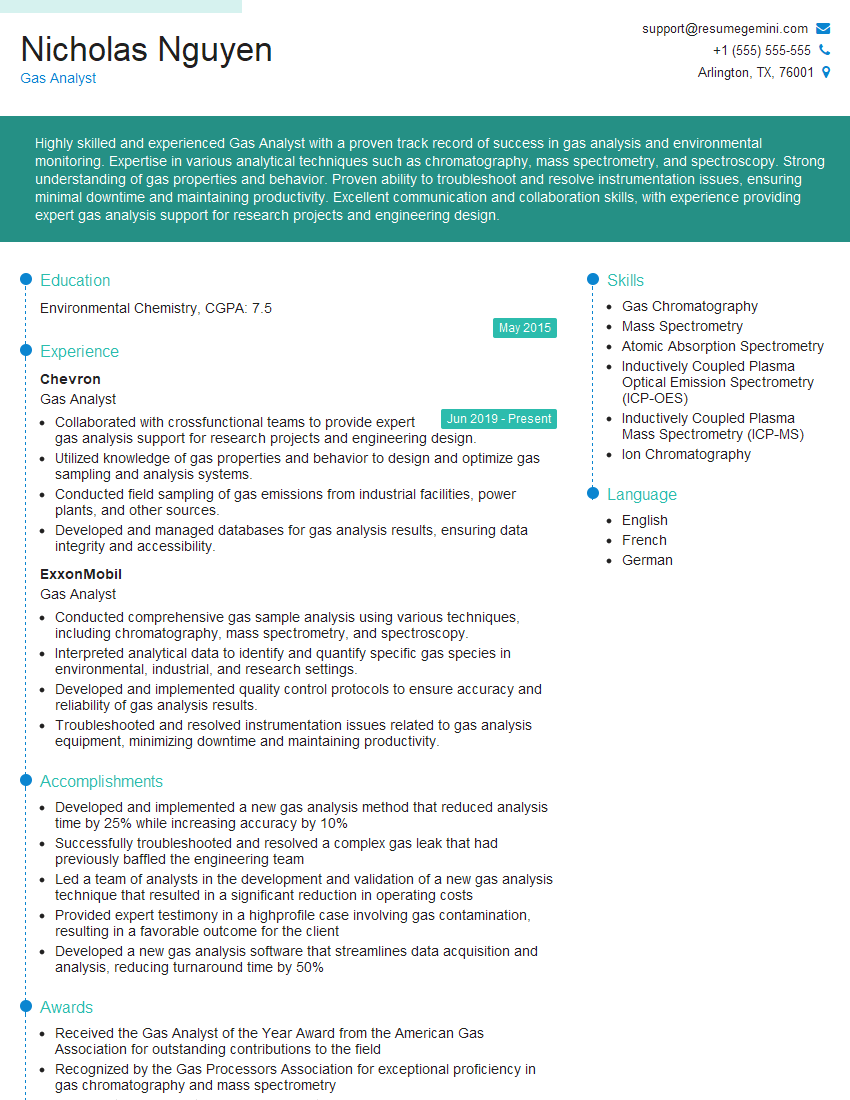
Mastering Gas Processing and Distribution opens doors to rewarding careers with excellent growth potential in a vital energy sector. To significantly enhance your job prospects, creating an ATS-friendly resume is crucial. A well-structured resume highlights your skills and experience, increasing the chances of your application being noticed by recruiters. We highly recommend using ResumeGemini to craft a professional and impactful resume. ResumeGemini provides a user-friendly platform and offers examples of resumes tailored to the Gas Processing and Distribution industry, helping you showcase your qualifications effectively.

Explore more articles
Users Rating of Our Blogs
Share Your Experience
We value your feedback! Please rate our content and share your thoughts (optional).
What Readers Say About Our Blog
To the interviewgemini.com Webmaster.
Very helpful and content specific questions to help prepare me for my interview!
Thank you
To the interviewgemini.com Webmaster.
This was kind of a unique content I found around the specialized skills. Very helpful questions and good detailed answers.
Very Helpful blog, thank you Interviewgemini team.