Preparation is the key to success in any interview. In this post, we’ll explore crucial Geolog interview questions and equip you with strategies to craft impactful answers. Whether you’re a beginner or a pro, these tips will elevate your preparation.
Questions Asked in Geolog Interview
Q 1. Explain the difference between intrusive and extrusive igneous rocks.
The difference between intrusive and extrusive igneous rocks lies primarily in how and where they cool and solidify. Intrusive igneous rocks, also known as plutonic rocks, form from magma that cools and crystallizes slowly beneath the Earth’s surface. This slow cooling allows large crystals to grow, resulting in a coarse-grained texture. Think of it like a slow simmer – the longer you cook something, the more developed the flavors (and crystals!). Extrusive igneous rocks, or volcanic rocks, on the other hand, form from lava that cools rapidly at or near the Earth’s surface. This rapid cooling leads to small crystals or even a glassy texture, as there’s not enough time for large crystals to form. Imagine pouring hot syrup onto a cold plate – it cools and hardens quickly, with little to no distinct crystals.
Examples: Granite is a classic example of an intrusive igneous rock, while basalt is a common extrusive rock. The difference in their textures is readily apparent; granite has large, visible crystals, whereas basalt has much smaller, less distinct crystals.
Q 2. Describe the process of sedimentary rock formation.
Sedimentary rocks are formed through a fascinating process that involves three main steps: weathering, erosion and deposition, and lithification. Weathering breaks down existing rocks into smaller pieces (sediments) through physical processes like freezing and thawing or chemical processes like dissolution. Erosion then transports these sediments – think of rivers carrying sand – to a new location where they are deposited, often in layers. These layers can be anything from sand dunes to deep-sea basins. Finally, lithification, meaning ‘to turn into stone,’ transforms the loose sediment into solid rock. This process involves compaction (squeezing out water and air) and cementation (minerals precipitating between sediment grains, binding them together). Imagine building a sandcastle; the compaction is like pressing the sand to make it firm, and the cementation is like adding water to make it stick together, ultimately forming a solid structure.
Examples: Sandstone is formed from sand grains, shale from clay particles, and limestone from the skeletal remains of marine organisms. The layering in sedimentary rocks often preserves clues about the past environment, such as ancient rivers or seas.
Q 3. What are the main types of metamorphism?
Metamorphism is the transformation of existing rocks into new rocks due to changes in temperature, pressure, or the presence of chemically active fluids. The main types of metamorphism are categorized by the dominant factors involved:
- Contact Metamorphism: This occurs when rocks come into contact with magma or lava. The heat from the magma bakes the surrounding rocks, causing changes in their mineral composition and texture. It’s localized and typically affects a smaller area compared to other types. Imagine the heat from a campfire altering the surrounding ground.
- Regional Metamorphism: This occurs over large areas, often associated with mountain building processes. Intense pressure and temperature changes associated with tectonic plate collisions transform vast regions of rock. It often leads to foliated rocks (rocks with layered textures) due to the directional pressure.
- Dynamic Metamorphism: This occurs along fault zones where intense shearing forces cause the rocks to crush and deform. The rocks become highly fractured and brecciated. Think of rocks being ground down between two tectonic plates.
- Hydrothermal Metamorphism: This involves alteration by hot, chemically active fluids circulating through rocks, often near volcanic areas or along mid-ocean ridges. These fluids can significantly change the mineral composition of the rocks.
Q 4. Explain the concept of plate tectonics and its geological implications.
Plate tectonics is a fundamental theory in geology explaining the Earth’s lithosphere (crust and upper mantle) is divided into several large and small plates that move and interact with each other. These movements are driven by convection currents within the Earth’s mantle. The implications of plate tectonics are far-reaching and explain a wide array of geological phenomena.
- Earthquakes: Occur along plate boundaries where plates collide, slide past each other, or pull apart.
- Volcanism: Associated with plate boundaries, particularly subduction zones (where one plate slides under another) and mid-ocean ridges (where plates move apart).
- Mountain Building: Formed by the collision of tectonic plates.
- Formation of Ocean Basins: Seafloor spreading at mid-ocean ridges creates new oceanic crust.
- Distribution of Fossils and Minerals: Plate movements influence the distribution of continents and oceans, resulting in unique fossil and mineral patterns.
Understanding plate tectonics provides a framework for interpreting Earth’s geological history and predicting future events such as earthquakes and volcanic eruptions.
Q 5. Describe different types of faults and folds.
Faults and folds are geological structures that result from deformation of rocks due to tectonic forces. Faults are fractures in rocks along which there has been significant displacement. Folds are bends in rock layers.
Types of Faults:
- Normal Faults: Form when the hanging wall (block above the fault plane) moves down relative to the footwall (block below). This is typical in areas of extensional stress (pulling apart).
- Reverse Faults: Form when the hanging wall moves up relative to the footwall, occurring in areas of compressional stress (pushing together). Thrust faults are low-angle reverse faults.
- Strike-Slip Faults: Form when blocks of rock slide past each other horizontally. The San Andreas Fault is a famous example.
Types of Folds:
- Anticline: A fold that arches upward, forming an A-shape. The oldest rocks are in the core.
- Syncline: A fold that dips downward, forming a U-shape. The youngest rocks are in the core.
- Monoclines: A step-like fold where one part of a rock layer is uplifted relative to another.
Q 6. How do you interpret geological maps and cross-sections?
Interpreting geological maps and cross-sections is crucial for understanding the subsurface geology of an area. Geological maps show the distribution of different rock units and structures at the Earth’s surface, using colors and symbols to represent different rock types, faults, and folds. Cross-sections provide a two-dimensional view of the subsurface geology along a specific line, showing the vertical relationships between different rock layers.
Interpretation involves:
- Identifying rock units: Recognizing different rock types and their boundaries on the map and cross-section.
- Analyzing structural features: Identifying faults, folds, and other structures and understanding their geometry and relationship to the rock units.
- Interpreting geological history: Using the principles of stratigraphy (discussed below) to determine the relative ages of rocks and reconstruct the sequence of geological events.
- Predicting subsurface conditions: Extrapolating information from surface observations to infer the subsurface geology.
For example, observing a steeply dipping layer in a cross-section might suggest a fault nearby, and a change in rock type across a line on a geological map might indicate a fault or unconformity. Effective interpretation requires a solid understanding of geological principles and careful attention to detail.
Q 7. Explain the principles of stratigraphy.
Stratigraphy is the branch of geology that deals with the study of rock layers (strata) and layering (stratification). It’s based on several fundamental principles:
- Principle of Superposition: In an undisturbed sequence of sedimentary rocks, the oldest rocks are at the bottom and the youngest are at the top.
- Principle of Original Horizontality: Sedimentary rocks are originally deposited in horizontal layers. Tilted or folded layers indicate subsequent deformation.
- Principle of Lateral Continuity: Sedimentary rock layers extend laterally in all directions until they thin out, grade into a different rock type, or terminate against the edge of a depositional basin.
- Principle of Cross-Cutting Relationships: A geologic feature that cuts another is the younger of the two.
- Principle of Faunal Succession: Fossil organisms succeed one another in a definite and determinable order, and any time period can be recognized by its fossil content. This is crucial for dating rock layers.
These principles allow geologists to determine the relative ages of rock layers and reconstruct the geological history of an area. Stratigraphy is essential for understanding Earth’s history, correlating rock layers across different locations, and exploring for resources such as oil and gas.
Q 8. What are the different methods used in geological surveying?
Geological surveying employs a variety of methods to investigate the Earth’s subsurface. These methods can be broadly categorized into remote sensing, geophysical surveys, and direct sampling techniques.
- Remote Sensing: This involves analyzing data collected from a distance, often using satellite imagery, aerial photography, and LiDAR (Light Detection and Ranging). Satellite imagery, for instance, helps identify geological structures like faults and folds based on variations in landforms and vegetation. LiDAR provides high-resolution topographic data, crucial for landslide hazard assessment.
- Geophysical Surveys: These techniques use physical principles to infer subsurface conditions without direct drilling or excavation. Examples include:
- Seismic Surveys: Using sound waves to map subsurface layers, commonly used in oil and gas exploration.
- Gravity Surveys: Measuring variations in the Earth’s gravitational field to detect density contrasts in the subsurface, useful for identifying ore deposits.
- Magnetic Surveys: Measuring variations in the Earth’s magnetic field to detect magnetic minerals, often used in mineral exploration.
- Electrical Resistivity Surveys: Measuring the electrical resistance of the subsurface, valuable for groundwater exploration and locating contaminants.
- Direct Sampling Techniques: These involve physically accessing and sampling the subsurface. This includes:
- Drilling: Provides core samples for direct analysis of rock types and properties.
- Borehole Logging: Measuring various physical properties (e.g., resistivity, gamma ray) within a borehole to build a continuous profile.
- Pit and Trenching: Open excavations used for relatively shallow investigations.
The choice of method depends on the specific geological questions, the scale of the investigation, and the budget available. For example, a regional-scale mineral exploration project might begin with remote sensing and geophysical surveys to identify potential target areas, followed by more focused drilling and sampling in promising locations.
Q 9. Describe your experience with geological data analysis and interpretation.
My experience in geological data analysis and interpretation spans various projects involving diverse datasets. I’m proficient in utilizing various software packages for data processing and interpretation. I have worked extensively with well logs, analyzing parameters like gamma ray, resistivity, and porosity to delineate subsurface stratigraphy and identify potential aquifers. I’m also experienced in interpreting geophysical data from seismic, gravity, and magnetic surveys. This involves integrating multiple datasets to generate 3D geological models using techniques like kriging and inverse modeling. A recent project involved analyzing geochemical data from stream sediment samples to map the distribution of pathfinder elements associated with a gold deposit.
For example, in a groundwater contamination investigation, I used geostatistical methods to create contour maps of contaminant concentrations, helping to delineate the extent of the plume and guide remediation efforts. In another project, I integrated borehole data with geophysical surveys to model the geometry of a complex fault zone, crucial for understanding its influence on groundwater flow.
Q 10. How familiar are you with GIS software (e.g., ArcGIS)?
I am highly proficient in using ArcGIS and other GIS software. My skills encompass data management, spatial analysis, and cartography. I regularly use ArcGIS for creating and managing geodatabases, performing spatial analysis (e.g., overlay analysis, proximity analysis), and generating various thematic maps. Specifically, my experience includes:
- Creating and editing shapefiles and feature classes.
- Performing spatial queries and analysis using ArcGIS tools.
- Generating high-quality maps and visualizations for presentations and reports.
- Integrating data from various sources, including remote sensing imagery, GPS data, and well logs.
In a recent project, I used ArcGIS to model the potential impact of a proposed road construction on groundwater resources. By integrating hydrological modeling results with spatial data on soil properties and land use, I was able to visualize the predicted changes in groundwater levels and identify potential areas of impact.
Q 11. Explain the concept of groundwater flow and aquifer systems.
Groundwater flow is the movement of water beneath the Earth’s surface, driven primarily by gravity and pressure gradients. This movement occurs within interconnected pore spaces in soil and rock formations known as aquifers. Aquifers are geological formations capable of storing and transmitting significant quantities of groundwater. There are two main types of aquifers:
- Unconfined aquifers: These are aquifers overlying an impermeable layer (aquitard) but with a free surface exposed to the atmosphere. Groundwater levels in unconfined aquifers directly reflect the water table.
- Confined aquifers: These are aquifers sandwiched between two impermeable layers (aquitards). The water in confined aquifers is under pressure, resulting in artesian conditions where water may rise above the aquifer’s top confining layer.
Groundwater flow is governed by Darcy’s Law, which states that the rate of flow is proportional to the hydraulic gradient (the slope of the water table) and the hydraulic conductivity of the aquifer material (its ability to transmit water). Factors influencing groundwater flow include recharge (water entering the aquifer), discharge (water leaving the aquifer), and the properties of the aquifer material (permeability, porosity). Understanding these factors is crucial for sustainable groundwater management.
Q 12. Describe different methods of groundwater exploration and monitoring.
Groundwater exploration and monitoring employ various methods to locate, characterize, and assess groundwater resources. These methods range from simple observation to advanced geophysical techniques.
- Hydrogeological surveys: Involving geological mapping, well inventories, and analysis of water levels to assess aquifer characteristics and groundwater flow patterns. This often includes drilling test wells to collect samples and conduct pumping tests to estimate aquifer properties.
- Geophysical methods: Techniques like electrical resistivity tomography (ERT), seismic refraction, and electromagnetic surveys are used to map subsurface geological layers and identify potential aquifers. ERT, for instance, helps to delineate the extent and properties of aquifers by measuring the electrical resistance of subsurface formations.
- Remote sensing: Satellite imagery and aerial photography can help identify surface features that reflect subsurface geological conditions, such as vegetation patterns and landforms, which can indicate the presence of groundwater.
- Isotope analysis: Analyzing the isotopic composition of groundwater can help determine its origin, age, and flow pathways. This information is valuable for understanding aquifer recharge and discharge processes.
- Groundwater monitoring wells: These are strategically located wells used to continuously or periodically measure groundwater levels and quality parameters. Data from monitoring wells are vital for assessing the impacts of groundwater pumping, contamination, or climate change.
The choice of methods depends on the specific objectives of the investigation and the available resources. A preliminary assessment might involve a simple hydrogeological survey and geophysical methods, followed by more detailed investigations, including drilling and installation of monitoring wells, as needed.
Q 13. What are the environmental concerns related to geological activities?
Geological activities, while crucial for resource extraction and infrastructure development, can have significant environmental consequences if not managed sustainably. Key concerns include:
- Habitat destruction and biodiversity loss: Mining and construction can directly destroy habitats, leading to species loss and ecosystem degradation. Examples include deforestation due to open-pit mining and habitat fragmentation from road construction.
- Water pollution: Mining operations can release heavy metals and other contaminants into surface and groundwater sources. Acid mine drainage, a process where sulfide minerals react with water and oxygen to produce acidic and metal-rich water, is a major concern.
- Air pollution: Mining, quarrying, and construction can release dust and other air pollutants, affecting air quality and human health. Particulate matter from dust can contribute to respiratory problems.
- Soil erosion and degradation: Land disturbance during construction and mining can lead to increased soil erosion and degradation, affecting soil fertility and water quality. Poorly managed tailings ponds (deposits of waste material from mining) can also lead to soil and water contamination.
- Greenhouse gas emissions: The energy consumption associated with geological activities, such as mining and processing of fossil fuels, contributes to greenhouse gas emissions, driving climate change.
- Waste generation: Mining and other geological activities generate large quantities of waste materials, requiring careful management to avoid environmental contamination.
Mitigation strategies involve employing environmentally friendly mining practices, implementing robust environmental monitoring programs, and establishing effective waste management systems. Careful planning and assessment are crucial to minimize the ecological footprint of geological activities.
Q 14. How do you assess geological hazards (e.g., landslides, earthquakes)?
Assessing geological hazards involves a multi-faceted approach combining geological mapping, geophysical surveys, remote sensing, and geotechnical investigations. The specific methods used depend on the type of hazard.
- Landslides: Assessment involves identifying unstable slopes using geological mapping, topographic surveys, and analysis of historical landslide events. Geophysical methods, such as seismic refraction and electrical resistivity, can help determine the properties of the subsurface materials and identify potential failure planes. Remote sensing data, including LiDAR and aerial photography, is crucial for mapping slope morphology and identifying areas of past and potential future landslides.
- Earthquakes: Assessment involves studying historical earthquake records, analyzing fault zones using geological mapping and geophysical surveys, and assessing seismic hazard using probabilistic methods. This often involves developing seismic hazard maps that show the likelihood of ground shaking of different intensities in a given area.
- Volcanic eruptions: Assessment involves monitoring volcanic activity using various instruments, including seismometers, GPS stations, and gas sensors. Geological mapping helps to understand the history of past eruptions and identify potential hazards. Remote sensing is used to monitor changes in volcanic landforms and thermal emissions.
Hazard assessment typically culminates in the development of hazard maps and risk assessments, which guide land-use planning and mitigation strategies. For example, in landslide-prone areas, hazard maps can guide development restrictions and infrastructure design to minimize risk. In earthquake-prone areas, building codes are designed to ensure structural integrity, and early warning systems are implemented to provide time for evacuation.
Q 15. Explain your experience with geological modeling and simulation.
Geological modeling and simulation are crucial for understanding subsurface systems. My experience spans various software packages, including Petrel, RMS, and Gocad, and encompasses the entire workflow, from data integration to uncertainty quantification. I’ve built 3D geological models for diverse projects, including petroleum reservoir modeling, geothermal resource assessment, and mining exploration. For instance, in a recent project involving a complex carbonate reservoir, I integrated seismic data, well logs, and core data to create a high-resolution model that accurately predicted reservoir properties and fluid flow. This involved using geostatistical methods like kriging and sequential Gaussian simulation to handle uncertainty in the data. The resulting model significantly improved reservoir management strategies and enhanced production optimization. Another project focused on creating a structural model using fault interpretation and balancing techniques to help in understanding the compartmentalization of a gold deposit. This led to more efficient targeting for exploration drilling.
Career Expert Tips:
- Ace those interviews! Prepare effectively by reviewing the Top 50 Most Common Interview Questions on ResumeGemini.
- Navigate your job search with confidence! Explore a wide range of Career Tips on ResumeGemini. Learn about common challenges and recommendations to overcome them.
- Craft the perfect resume! Master the Art of Resume Writing with ResumeGemini’s guide. Showcase your unique qualifications and achievements effectively.
- Don’t miss out on holiday savings! Build your dream resume with ResumeGemini’s ATS optimized templates.
Q 16. Describe the different types of geological resources and their exploration techniques.
Geological resources are broadly classified into energy resources (like petroleum, natural gas, coal, and geothermal energy) and mineral resources (metallic, like gold and copper; and non-metallic, like sand and gravel). Exploration techniques vary significantly depending on the resource type and geological setting. For petroleum, seismic surveys (reflection and refraction), gravity and magnetic surveys, and electromagnetic methods are commonly used to identify potential hydrocarbon traps. Drilling is essential for direct confirmation and subsurface analysis. In mineral exploration, techniques range from surface geological mapping and geochemical surveys (soil and rock sampling) to geophysical methods (induced polarization, magnetic, and gravity) and, ultimately, drilling to confirm mineralization. Remote sensing (satellite imagery) plays a vital role in regional-scale exploration for all resource types. For example, in a recent gold exploration project, we used airborne magnetic surveys to identify structural features favorable for gold mineralization, followed by detailed ground-based geochemical surveys to refine the target areas before drilling.
Q 17. How familiar are you with petroleum exploration and production techniques?
I possess extensive experience in petroleum exploration and production, encompassing all stages from initial seismic interpretation and prospect identification to reservoir simulation and production optimization. My expertise includes well log analysis (e.g., identifying lithology, porosity, and permeability), geological interpretation of seismic data to map subsurface structures, and reservoir simulation to model fluid flow and production performance. I’ve worked on several projects that involved designing well trajectories to maximize hydrocarbon recovery, managing water injection programs to improve reservoir sweep efficiency, and predicting future production rates using sophisticated reservoir simulation models. For example, in one project, I developed a dynamic reservoir simulation model that helped optimize the placement of horizontal wells, significantly increasing production in a mature oil field.
Q 18. Explain the concept of reservoir characterization.
Reservoir characterization is the process of defining the physical and petrophysical properties of a subsurface reservoir. It aims to create a detailed 3D model that accurately represents the reservoir’s geometry, porosity, permeability, fluid saturation, and other relevant properties. This involves integrating diverse data sources, including well logs, core analysis data, seismic data, and production data. The goal is to understand how these properties control fluid flow and ultimately influence production performance. Techniques employed include petrophysical analysis (calculating porosity, permeability, and water saturation from well logs), geostatistical modeling (using kriging or other methods to interpolate data between wellbore locations), and seismic interpretation (using seismic attributes to infer reservoir properties). A successful reservoir characterization improves predictions of reservoir performance and leads to more effective production strategies.
Q 19. What are the different methods used in mining exploration and resource estimation?
Mining exploration and resource estimation utilize a range of methods to locate and quantify mineral deposits. Exploration begins with geological mapping and geochemical surveys to identify areas with anomalous concentrations of target elements. Geophysical techniques, such as induced polarization (IP), magnetic, and gravity surveys, are used to delineate subsurface structures and mineralized zones. Drilling is critical for direct sampling and assessing the grade and tonnage of the orebody. Resource estimation employs various geostatistical methods to create a 3D model of the orebody and calculate the total amount of ore present, along with the grade distribution. Common estimation methods include inverse distance weighting, kriging, and polygonal methods. The accuracy of resource estimation depends heavily on the quality and density of the drilling data and the chosen geostatistical model. Each method has its strengths and weaknesses, and the best choice depends on the specific geological setting and the available data.
Q 20. Describe your experience with rock mechanics and stability analysis.
My experience in rock mechanics and stability analysis includes assessing the mechanical properties of rocks, predicting rock behavior under stress, and designing stable underground openings. This involves performing laboratory testing (e.g., compressive strength, tensile strength, and shear strength tests) on rock samples, conducting numerical modeling using finite element analysis (FEA) software to simulate rock mass behavior, and analyzing the stability of slopes, tunnels, and underground mines. For example, in a mining project, I used FEA to model the stress distribution around an underground mine opening to assess its stability and to design support systems to prevent potential collapses. Understanding rock mechanics is crucial for the safety and efficiency of mining operations and ensures the stability of engineering structures built in rock masses. This also assists in mitigating risks during exploration and extraction processes.
Q 21. How do you interpret geophysical data (e.g., seismic, gravity, magnetic)?
Interpreting geophysical data requires a thorough understanding of the underlying physics and the geological context. Seismic data, obtained through reflection and refraction surveys, provide images of subsurface structures. Interpreting seismic data involves identifying reflections and refractions, mapping geological horizons, and characterizing subsurface structures (faults, folds, etc.). Gravity and magnetic data reveal variations in density and magnetic susceptibility, which can be indicative of subsurface geological features such as ore bodies or igneous intrusions. The interpretation process often involves integrating geophysical data with geological information from surface mapping, well logs, and other sources. For instance, in a petroleum exploration project, I integrated seismic data with well log data to map a complex fault system and accurately delineate the boundaries of a hydrocarbon reservoir. This integrated approach allows for a more comprehensive understanding of the subsurface geology, reducing uncertainties, and supporting better decision-making in exploration and resource management.
Q 22. Explain the principles of geochronology and radiometric dating.
Geochronology is the science of dating geological events and materials. Radiometric dating, a key technique within geochronology, utilizes the predictable decay rates of radioactive isotopes to determine the age of rocks and minerals. Think of it like a geological clock: radioactive isotopes decay at a constant, known rate, and by measuring the ratio of parent isotope to daughter product, we can calculate how much time has elapsed since the material formed.
For example, the most common method uses the decay of Uranium-238 to Lead-206. Uranium-238 has a half-life of 4.5 billion years; this means half of the initial U-238 atoms will decay into Pb-206 in that time. By measuring the relative amounts of U-238 and Pb-206 in a rock sample, we can calculate its age. Other isotopes, such as Potassium-40 decaying to Argon-40, or Rubidium-87 to Strontium-87, are also used depending on the age and type of rock.
Radiometric dating is crucial for establishing the geological timescale, understanding plate tectonics, and correlating events across different geological locations. It provides a fundamental framework for understanding Earth’s history and the evolution of life.
Q 23. Describe your experience with petrophysical analysis and interpretation.
My experience with petrophysical analysis encompasses a wide range of techniques used to characterize reservoir rocks. I’ve extensively worked with well logs (gamma ray, neutron porosity, density, resistivity) to determine porosity, permeability, water saturation, and lithology. I’m proficient in interpreting these data to build reservoir models, estimating hydrocarbon volumes, and assisting in well placement decisions.
For instance, in one project, we used a combination of wireline logs and core data to identify zones of high permeability within a sandstone reservoir. By integrating the data, we were able to delineate the productive intervals and optimize the completion strategy, leading to significantly increased production rates. I’m also experienced with using petrophysical software such as Petrel and Techlog to process and interpret data, creating maps and cross-sections to visualize reservoir properties.
My expertise further extends to incorporating pressure data (pressure build-up and fall-off tests) to refine reservoir models and understand fluid flow behavior within the reservoir. This is vital for effective reservoir management and enhanced oil recovery strategies.
Q 24. Explain the concept of structural geology and its application in hydrocarbon exploration.
Structural geology focuses on the three-dimensional geometry of rocks and the processes that deform them. Understanding the structure of rocks is crucial in hydrocarbon exploration because it dictates the migration pathways and trapping mechanisms for hydrocarbons. Features like folds, faults, and unconformities create traps where hydrocarbons accumulate.
For example, anticlinal folds, which are upward-arching folds, are common hydrocarbon traps. The hydrocarbons migrate upward through permeable layers until they are trapped beneath an impermeable layer at the crest of the fold. Similarly, faults can create traps if they juxtapose permeable and impermeable layers, or if they form compartments within a reservoir.
My experience includes mapping faults and folds using seismic data and geological maps. I’ve utilized structural interpretation techniques to identify potential traps and predict the distribution of reservoir properties. This integrated approach, which considers both structural and stratigraphic elements, is crucial in de-risking exploration prospects and optimizing drilling locations.
Q 25. How familiar are you with remote sensing techniques in geological applications?
I possess significant familiarity with remote sensing techniques, primarily using satellite imagery and aerial photography for geological applications. These techniques are invaluable for regional-scale mapping, identifying lineaments, assessing geological structures, and monitoring environmental changes.
For instance, I’ve used Landsat and ASTER satellite imagery to map large-scale geological units, identifying areas of potential mineralization or hydrocarbon seeps based on spectral signatures. Aerial photography has been instrumental in creating detailed geological maps, especially in areas with limited ground access. I’m experienced in utilizing image processing software such as ArcGIS and ENVI to enhance and interpret remote sensing data.
Furthermore, I understand the applications of LiDAR (Light Detection and Ranging) for creating high-resolution digital elevation models (DEMs), useful for mapping fault scarps, landslides, and other geomorphological features that can provide valuable insights into subsurface geology.
Q 26. Describe your experience with geological report writing and presentation.
I have extensive experience in preparing clear, concise, and comprehensive geological reports and presentations, tailored to the audience’s needs, whether it be a technical report for colleagues or a presentation for clients and stakeholders. My reports incorporate all relevant data, including maps, cross-sections, and interpretations, to provide a complete understanding of the geological setting. I use a consistent structure and style to ensure clarity and readability.
I’m adept at using various presentation software, such as PowerPoint, to communicate complex geological information effectively. I always aim to simplify technical details without compromising accuracy, using visual aids like diagrams and animations to enhance understanding. In my past projects, presentations to investors, regulatory bodies, and internal teams have been consistently well-received.
Effective communication is paramount; my reports and presentations emphasize the key findings and their implications for decision-making. I always incorporate recommendations based on my analysis, highlighting uncertainties and suggesting further work where appropriate.
Q 27. Explain your understanding of health and safety regulations in geological fieldwork.
I am fully aware of and strictly adhere to all relevant health and safety regulations for geological fieldwork. This includes risk assessments prior to fieldwork, ensuring appropriate personal protective equipment (PPE) is used, and following established safety procedures for operating equipment and working in hazardous environments. Safety is paramount, and I always prioritize the well-being of myself and my team.
My understanding encompasses regulations related to working at heights, handling hazardous materials, and operating vehicles in remote locations. I have experience in developing and implementing site-specific safety plans, conducting toolbox talks before fieldwork, and reporting any incidents or near misses immediately. I am familiar with emergency procedures and first-aid practices relevant to field settings.
Furthermore, I’m well-versed in environmental regulations, ensuring minimal environmental impact during fieldwork and adherence to guidelines for waste disposal and site restoration. Compliance with all safety and environmental regulations is not just a priority; it’s an integral part of my professional practice.
Q 28. How do you approach problem-solving in a complex geological setting?
My approach to problem-solving in complex geological settings is systematic and multi-faceted. I typically follow a structured process:
- Data Acquisition and Integration: First, I gather all relevant data, including geological maps, geophysical surveys, well logs, and any available geochemical or remote sensing data. This ensures a holistic view of the geological setting.
- Hypothesis Formulation: I develop testable hypotheses based on the data, considering various geological processes and scenarios. This often involves considering multiple interpretations and evaluating their plausibility.
- Modeling and Analysis: I utilize appropriate software and techniques to model the geological setting and test my hypotheses. This could involve creating 3D geological models, performing geostatistical analyses, or applying numerical modeling techniques.
- Interpretation and Validation: I interpret the results, considering any uncertainties and limitations. I critically evaluate the findings by comparing them to existing knowledge and looking for inconsistencies.
- Refinement and Iteration: Based on the interpretation, I refine my models and hypotheses, iteratively improving the understanding of the geological system. This often involves revisiting the data and exploring alternative interpretations.
A key aspect of my approach is collaboration. I actively seek input from other experts, ensuring different perspectives are considered. This multidisciplinary approach is essential for tackling complex geological challenges effectively. Finally, clear communication of findings and recommendations, including uncertainties, is crucial for effective decision-making.
Key Topics to Learn for Geolog Interview
- Geological Data Analysis: Understanding various data types (seismic, well logs, etc.), data processing techniques, and interpretation methods. Focus on practical examples of how you’ve analyzed geological data to solve a problem.
- Reservoir Characterization: Mastering concepts like porosity, permeability, saturation, and their impact on hydrocarbon production. Be prepared to discuss different reservoir modeling techniques and their applications.
- Geophysical Methods: Familiarize yourself with seismic interpretation, well logging principles, and other geophysical techniques used to understand subsurface geology. Consider how these methods contribute to decision-making in exploration and production.
- Structural Geology: Understand fault systems, folds, and other structural features and their influence on reservoir geometry and fluid flow. Be ready to discuss how structural analysis impacts exploration and production strategies.
- Petrophysics: Develop a strong understanding of rock properties and their relationships to fluid flow. Practice applying petrophysical concepts to real-world scenarios.
- Geological Modeling and Simulation: Gain proficiency in using geological modeling software and techniques to create accurate representations of subsurface geology. Be prepared to discuss the advantages and limitations of different modeling approaches.
- Exploration and Production Strategies: Understand the overall workflow from exploration to production, including drilling, completion, and production optimization. Consider how geological knowledge influences each stage.
- Problem-Solving and Critical Thinking: Practice approaching geological challenges systematically. Highlight your ability to analyze data, identify potential solutions, and communicate your findings effectively.
Next Steps
Mastering Geolog is crucial for career advancement in the energy sector, opening doors to exciting opportunities in exploration, production, and research. A well-crafted resume is your key to unlocking these possibilities. To maximize your chances, create an ATS-friendly resume that highlights your skills and experience effectively. ResumeGemini is a trusted resource that can help you build a professional and impactful resume tailored to the Geolog field. Examples of resumes specifically designed for Geolog positions are available to help guide you.
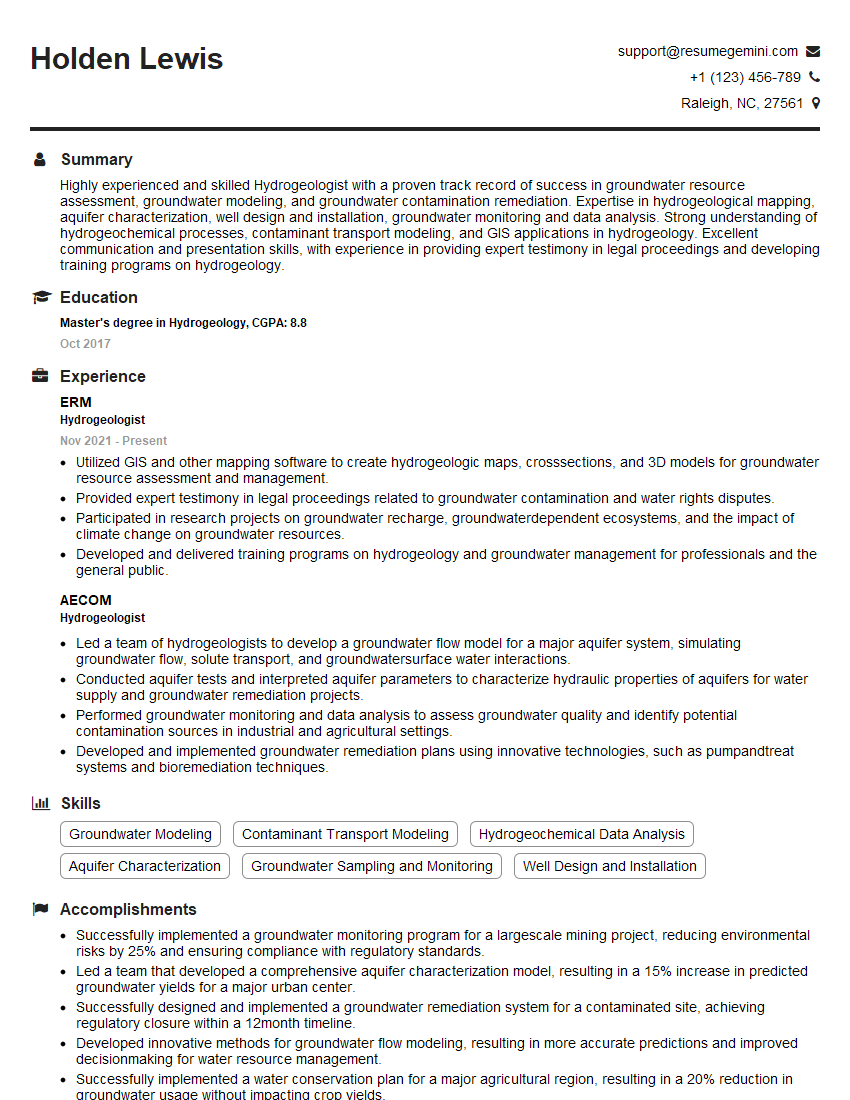
Hydrogeologist Resume Sample
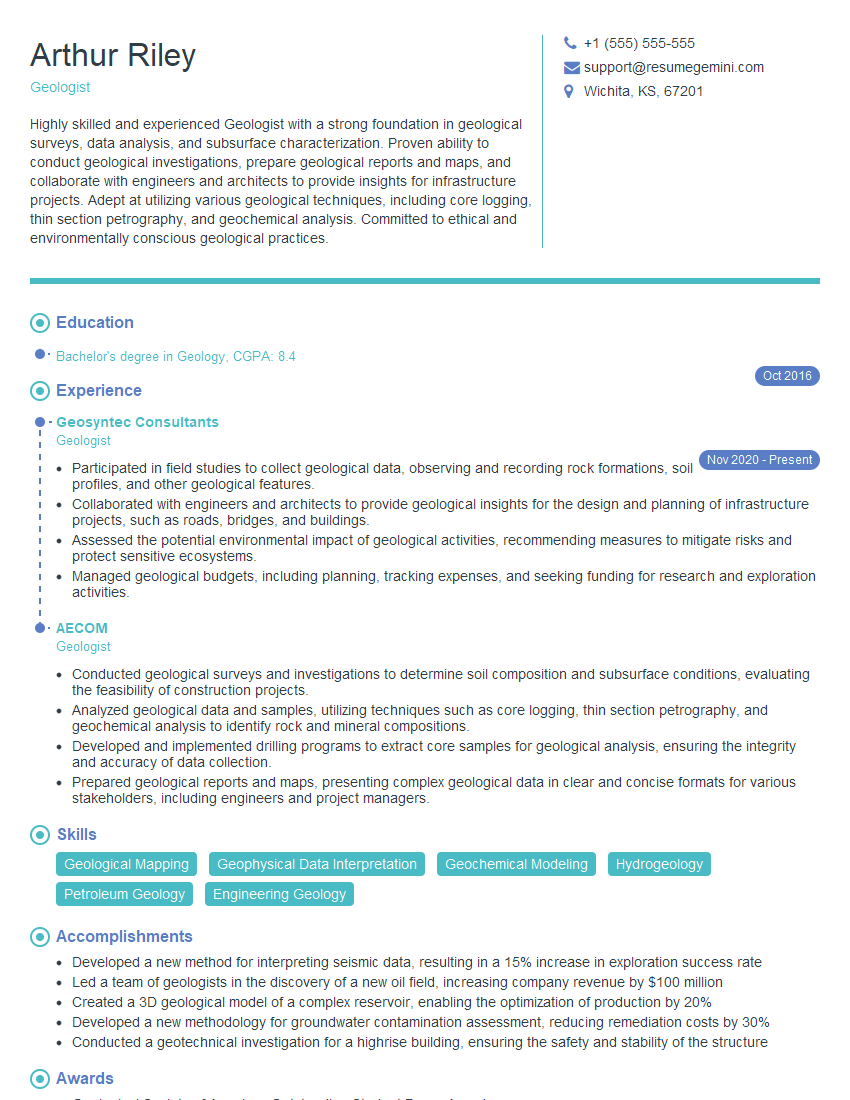
Geologist Resume Sample

Geological Engineer Resume Sample
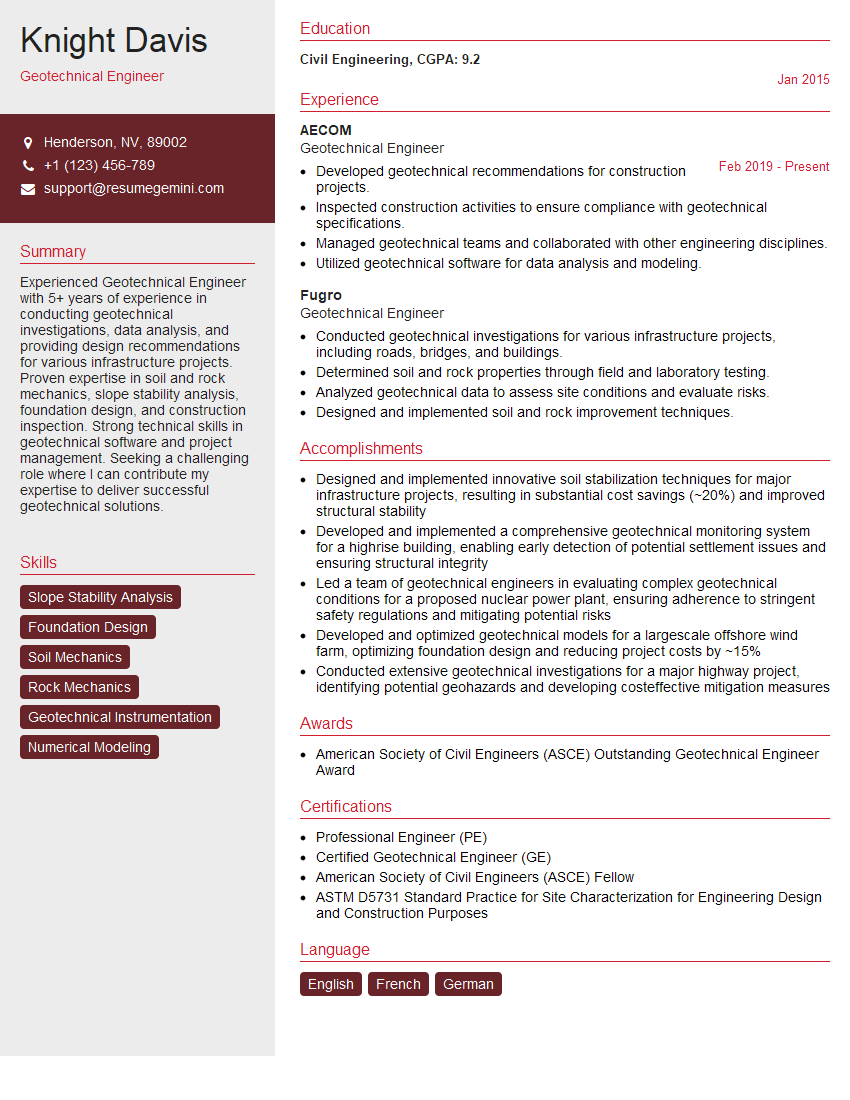
Geotechnical Engineer Resume Sample
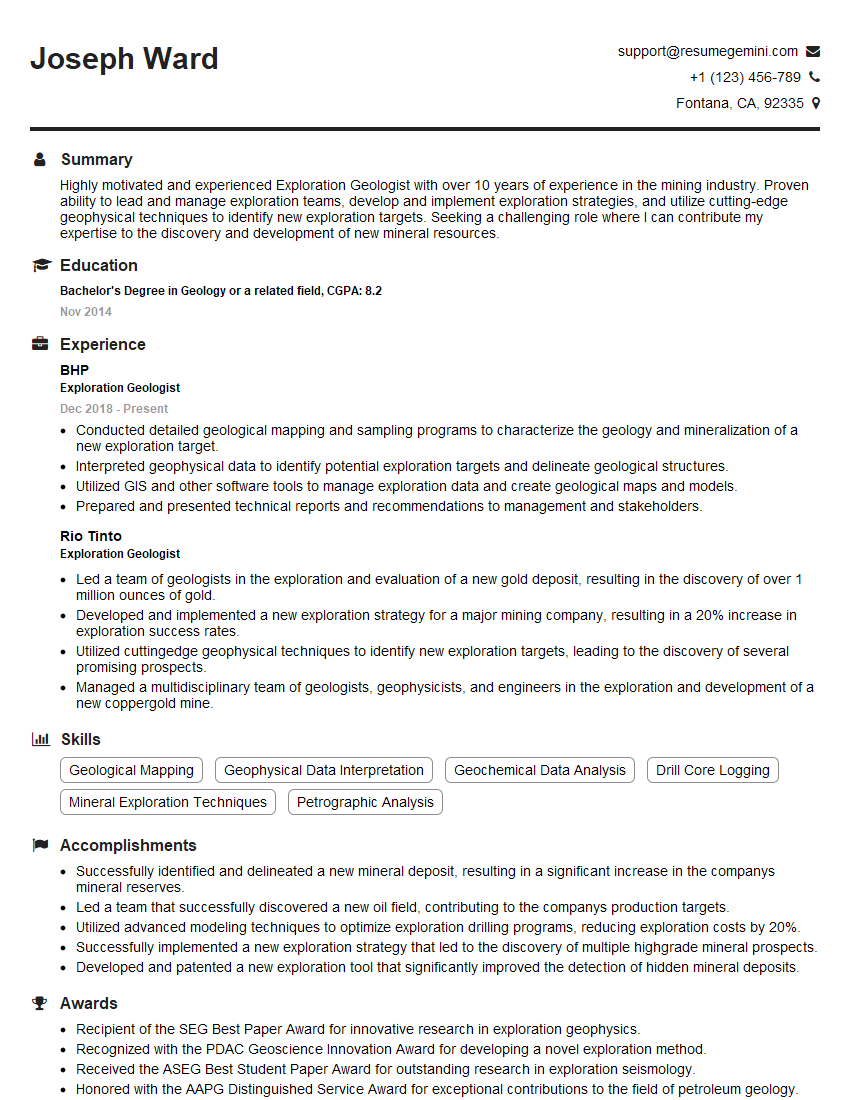
Exploration Geologist Resume Sample

Engineering Geologist Resume Sample
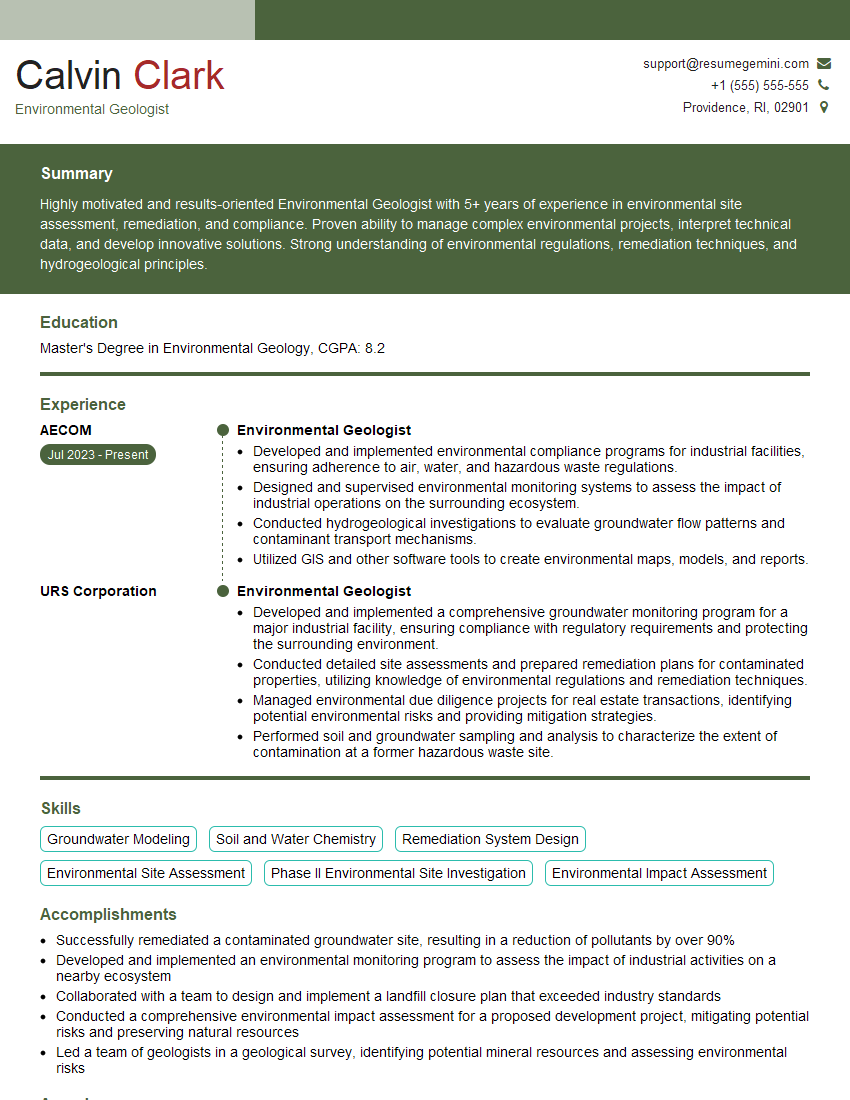
Environmental Geologist Resume Sample
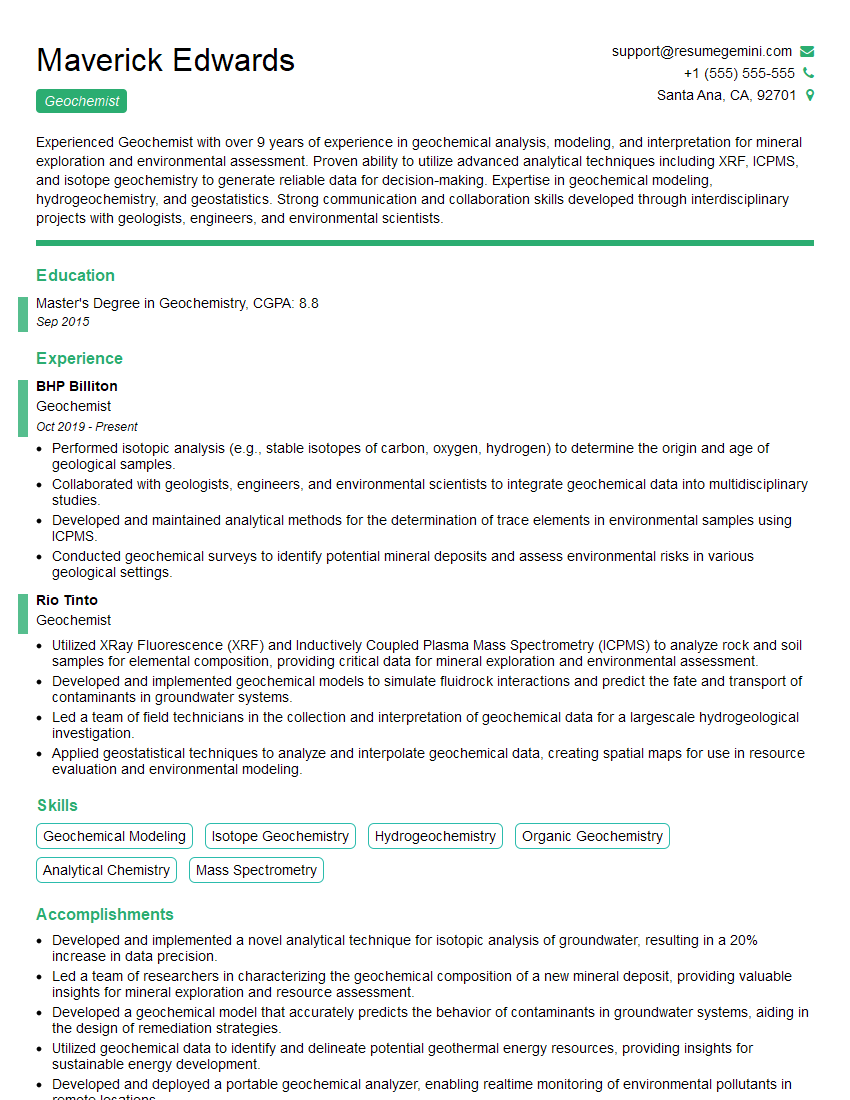
Geochemist Resume Sample
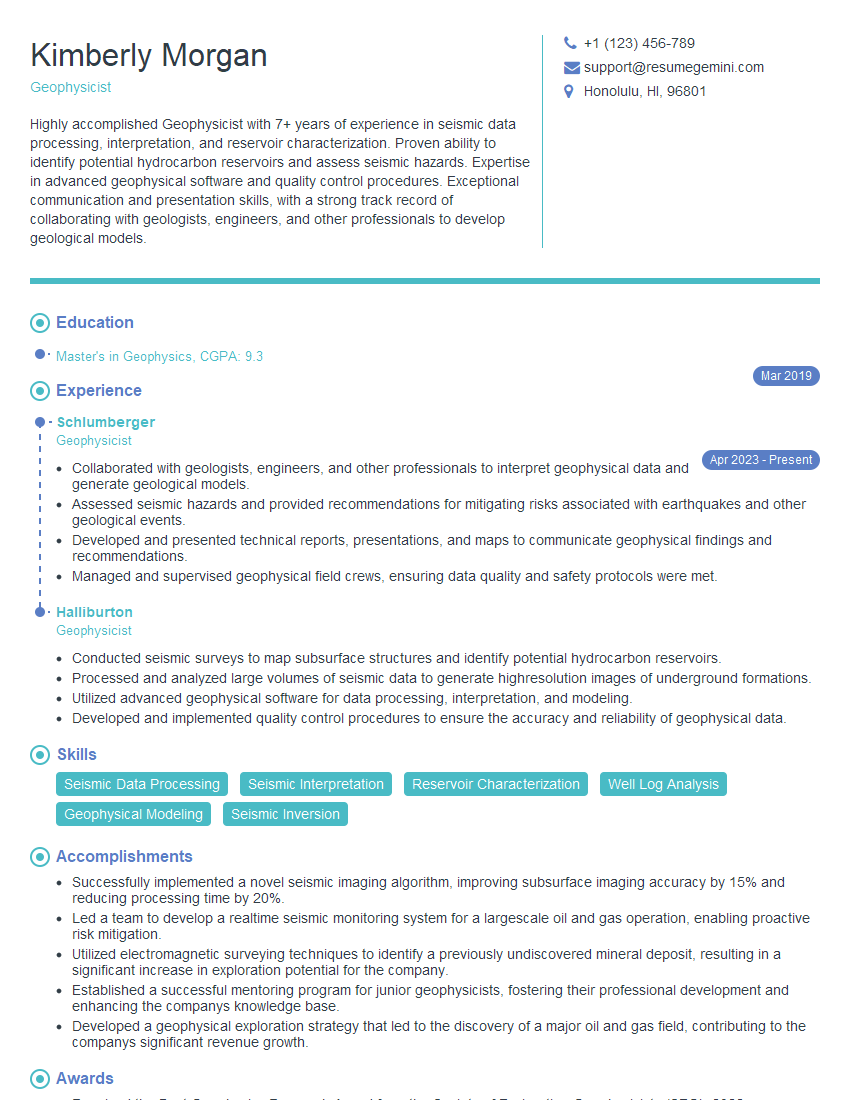
Geophysicist Resume Sample
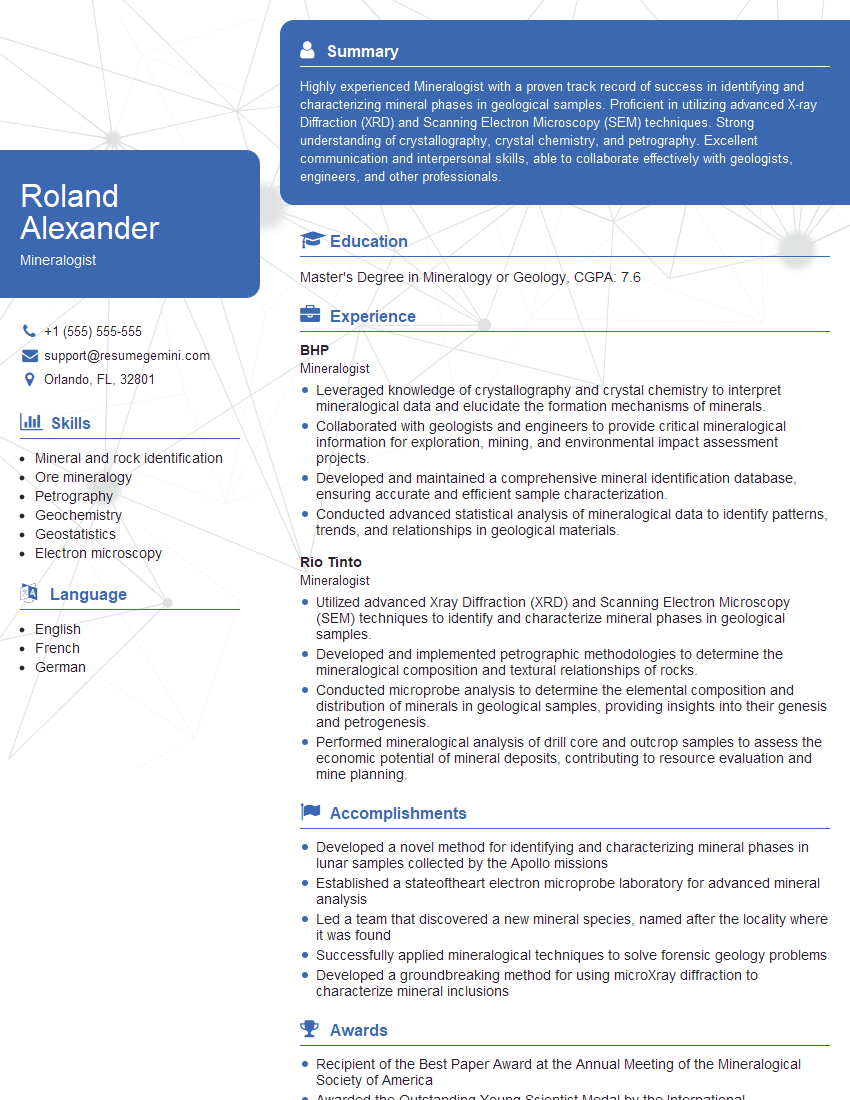
Mineralogist Resume Sample
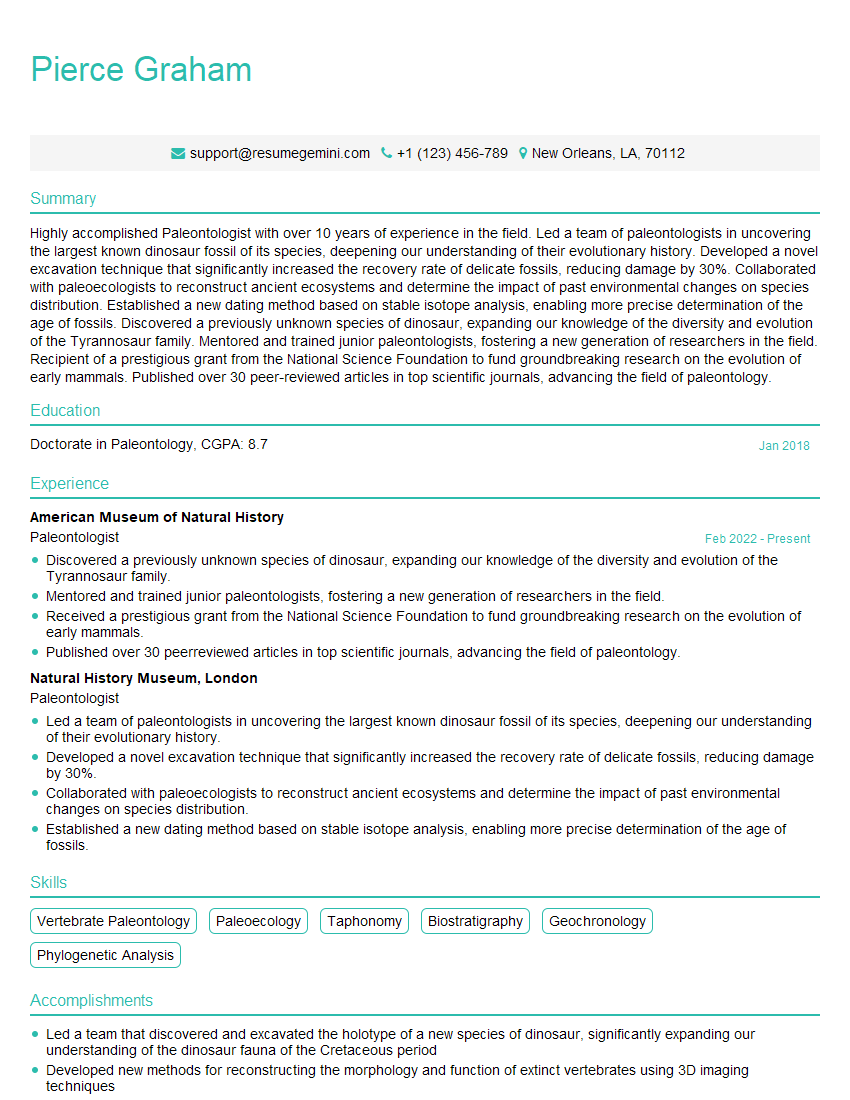
Paleontologist Resume Sample
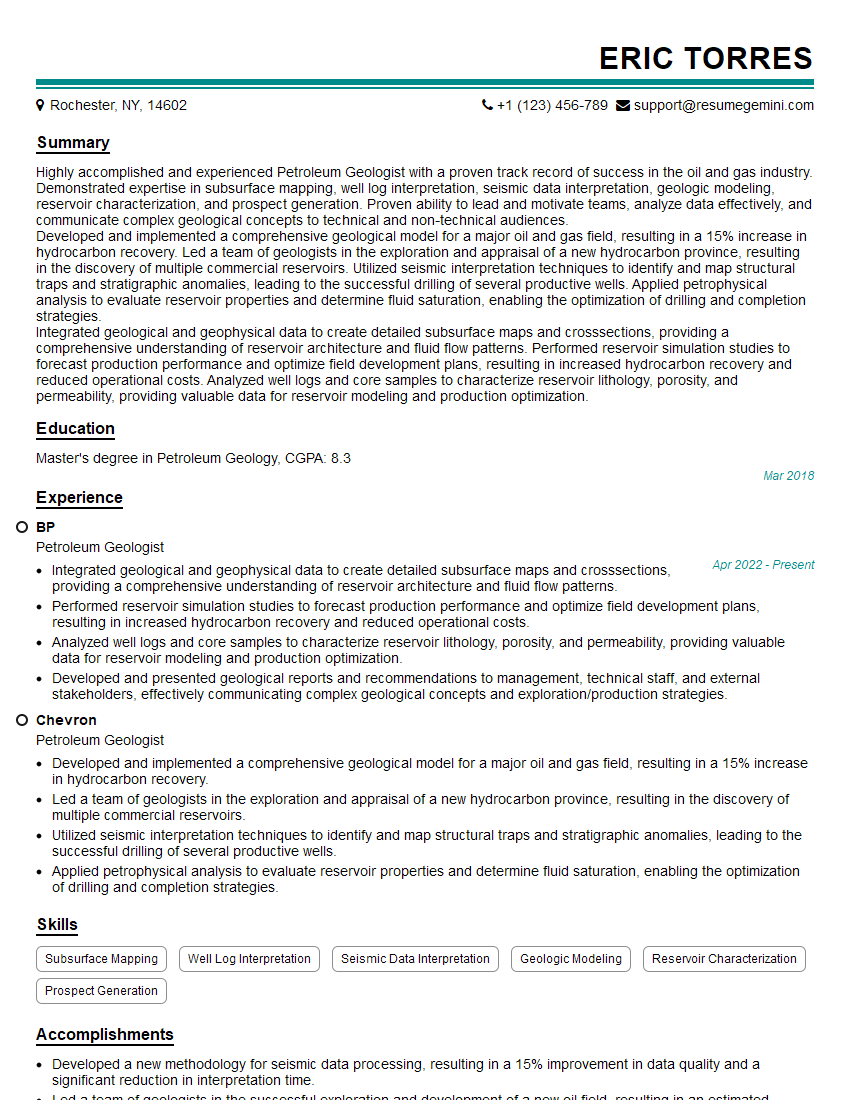
Petroleum Geologist Resume Sample
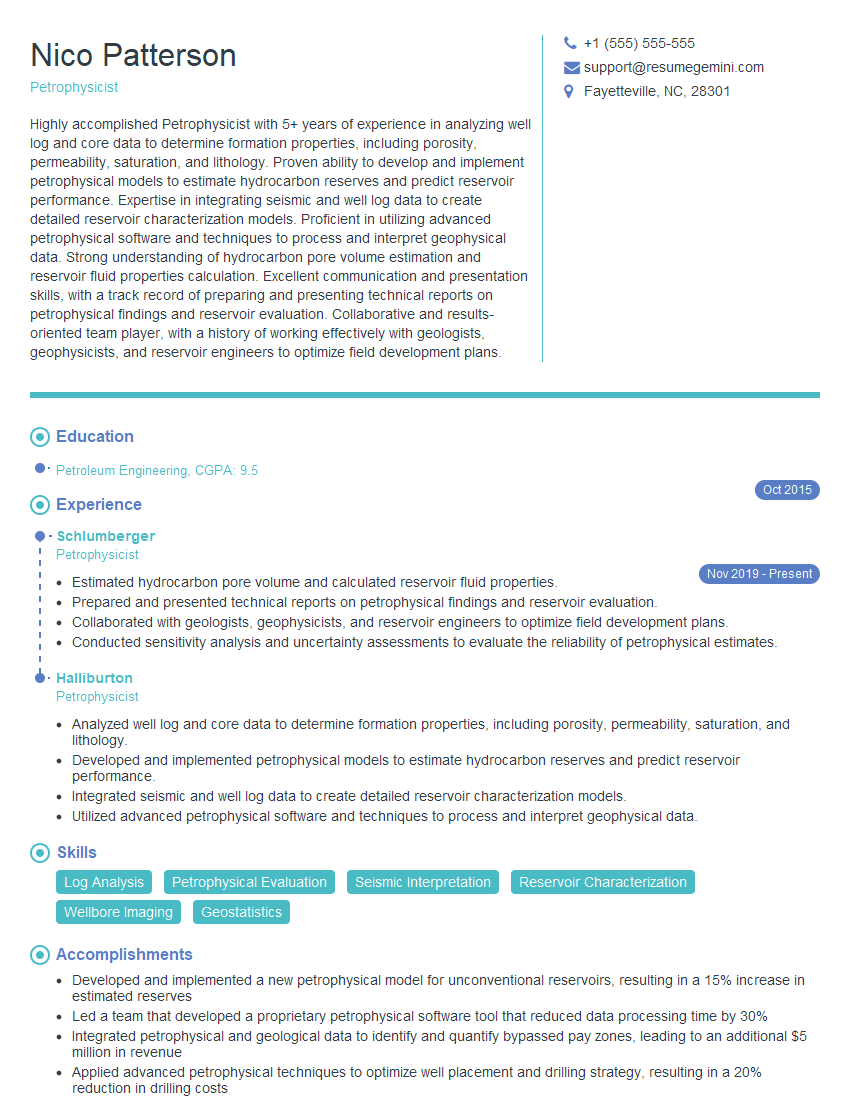
Petrophysicist Resume Sample
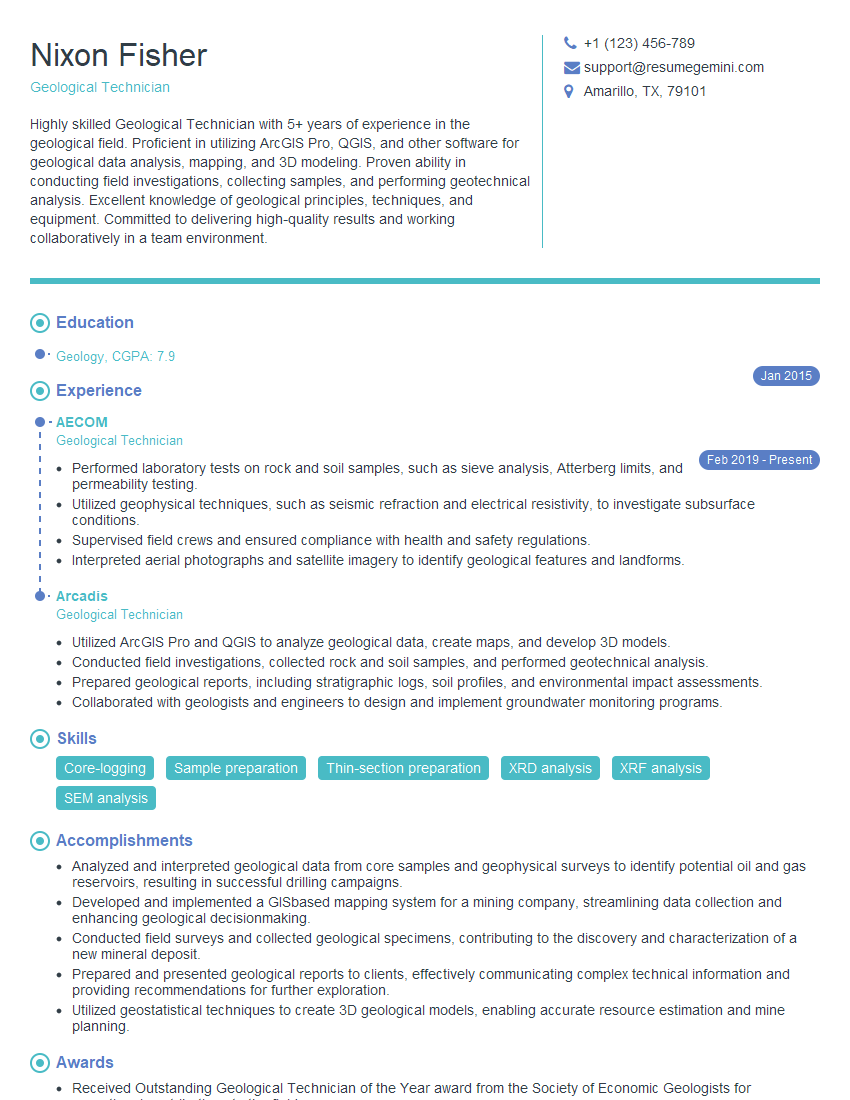
Geological Technician Resume Sample
Explore more articles
Users Rating of Our Blogs
Share Your Experience
We value your feedback! Please rate our content and share your thoughts (optional).
What Readers Say About Our Blog
To the interviewgemini.com Webmaster.
Very helpful and content specific questions to help prepare me for my interview!
Thank you
To the interviewgemini.com Webmaster.
This was kind of a unique content I found around the specialized skills. Very helpful questions and good detailed answers.
Very Helpful blog, thank you Interviewgemini team.