Cracking a skill-specific interview, like one for Geology and Soils, requires understanding the nuances of the role. In this blog, we present the questions you’re most likely to encounter, along with insights into how to answer them effectively. Let’s ensure you’re ready to make a strong impression.
Questions Asked in Geology and Soils Interview
Q 1. Explain the difference between weathering and erosion.
Weathering and erosion are both processes that break down rocks and soil, but they differ significantly in their mechanisms. Weathering is the in-situ breakdown of rocks and minerals at or near the Earth’s surface. This occurs through physical, chemical, and biological processes. Erosion, on the other hand, involves the transport of weathered materials by agents like water, wind, ice, or gravity. Think of it this way: weathering weakens the rock, making it more susceptible to erosion, which then carries the fragments away.
Examples of Weathering:
- Physical weathering: Freeze-thaw cycles (water expands when freezing, cracking rocks), exfoliation (shedding of layers due to pressure release), abrasion (rubbing of rocks against each other).
- Chemical weathering: Dissolution (minerals dissolving in water), oxidation (reaction with oxygen, like rusting), hydrolysis (reaction with water).
- Biological weathering: Root wedging (plant roots growing into cracks), burrowing animals.
Examples of Erosion:
- Water erosion: Rivers carving canyons, rain washing away topsoil.
- Wind erosion: Sand dunes migrating, dust storms.
- Glacial erosion: U-shaped valleys, glacial till deposits.
In a practical sense, understanding the interplay between weathering and erosion is crucial for land management, construction, and predicting natural hazards like landslides.
Q 2. Describe the process of soil formation.
Soil formation, or pedogenesis, is a complex process involving the interaction of five major factors: parent material, climate, organisms, topography, and time. Imagine it like a recipe: you need all the ingredients in the right proportions and enough time for the dish to be perfect.
- Parent Material: This is the underlying rock or sediment from which the soil develops. Its mineral composition significantly influences the resulting soil properties.
- Climate: Temperature and precipitation directly impact the rates of weathering, leaching (removal of soluble materials by water), and organic matter decomposition.
- Organisms: Plants, animals, and microbes contribute organic matter, alter soil structure, and cycle nutrients.
- Topography: Slope, aspect (direction the slope faces), and elevation affect water drainage, sunlight exposure, and soil depth.
- Time: Soil formation is a gradual process that takes hundreds or even thousands of years. The longer the time, the more developed the soil profile becomes.
These factors interact dynamically, creating a unique soil profile at each location. For instance, a warm, humid climate will typically lead to highly weathered soils with significant leaching, while a cold, dry climate may produce thin, poorly developed soils.
Q 3. What are the major soil horizons and their characteristics?
A mature soil profile is characterized by distinct layers or horizons. The most common horizons are:
- O horizon (Organic layer): This is the uppermost layer, composed primarily of undecomposed or partially decomposed organic matter like leaves, twigs, and other plant debris. It’s typically found in forested areas.
- A horizon (Topsoil): A dark-colored layer rich in organic matter and minerals. This is the zone of active biological activity, where most plant roots are concentrated. It’s vital for plant growth.
- B horizon (Subsoil): This layer accumulates materials leached from the A horizon, such as clay, iron oxides, and other minerals. It’s often denser and less organic than the A horizon.
- C horizon (Parent material): This layer consists of weathered parent material – the unconsolidated rock or sediment from which the soil developed. It shows little or no alteration due to soil-forming processes.
- R horizon (Bedrock): This is the underlying consolidated bedrock, representing the base of the soil profile.
Not all soils exhibit all these horizons. The presence and thickness of each horizon depend on the interplay of the soil-forming factors mentioned earlier. For example, soils in arid regions may lack a distinct A horizon due to limited rainfall and organic matter.
Q 4. How do you identify different soil types?
Identifying soil types involves a combination of field observations and laboratory analysis. Field methods include:
- Visual inspection: Observing soil color, texture (sand, silt, clay content), structure (arrangement of soil particles), and moisture content.
- Feel test: Assessing the texture by rubbing the soil between fingers. Sandy soil feels gritty, silty soil feels smooth, and clayey soil feels sticky when wet.
- Simple field tests: Determining pH using a soil testing kit or assessing drainage characteristics by observing water infiltration rates.
Laboratory methods provide more precise analysis, including:
- Particle size analysis (grain size distribution): Determining the proportions of sand, silt, and clay using sieving and sedimentation techniques. This is essential for classifying soil types using systems like the Unified Soil Classification System (USCS).
- Atterberg limits: Determining the water content at which the soil transitions between different consistency states (liquid, plastic, semi-solid, solid). These limits are crucial for assessing soil workability and engineering behavior.
- Specific gravity: Determining the density of soil particles, which is important for calculating soil volume and mass relationships.
Using these methods, one can classify soil according to established systems like the USCS or the AASHTO Soil Classification System. This classification is crucial for geotechnical engineering and agricultural applications.
Q 5. What are the engineering properties of soil, and how are they determined?
The engineering properties of soil dictate its behavior under stress and strain. Key properties include:
- Shear strength: The soil’s resistance to deformation and failure under shear stress. It’s crucial for designing foundations and slopes.
- Compressibility: The soil’s tendency to decrease in volume under applied pressure. This is important for predicting settlement of structures.
- Permeability: The soil’s ability to transmit water. It affects drainage, groundwater flow, and erosion.
- Consolidation: The process by which soil compresses over time under sustained load. This is important for predicting long-term settlement.
- Bearing capacity: The soil’s ability to support loads without excessive settlement or failure. Crucial for foundation design.
These properties are determined through laboratory and field tests. For example:
- Direct shear test: Measures shear strength.
- Consolidation test: Measures compressibility and consolidation characteristics.
- Permeability test: Measures permeability using methods like constant head or falling head permeameters.
- In-situ tests: Methods like Standard Penetration Test (SPT) and Cone Penetration Test (CPT) provide field assessments of soil properties.
The results of these tests are essential for designing safe and stable structures and understanding potential ground movement issues.
Q 6. Explain the concept of the water table and its importance in geotechnical engineering.
The water table is the upper surface of the zone of saturation in the ground, where all pore spaces in the soil and rock are filled with water. Its depth varies depending on factors like rainfall, topography, and geology. In geotechnical engineering, the water table’s position is critical because it influences soil properties and the stability of structures.
Importance in Geotechnical Engineering:
- Effective Stress: The presence of water reduces the effective stress (the stress carried by the soil skeleton) within the soil. This decrease in effective stress can significantly reduce the shear strength of the soil, making it more susceptible to failure.
- Buoyancy: Submerged soils experience upward buoyant forces that reduce the effective weight of the soil. This needs to be considered in foundation design.
- Seepage: Groundwater flow through the soil can cause erosion, piping (the erosion of soil particles through pore spaces), and instability in earth structures like dams and embankments.
- Settlement: Changes in the water table can cause significant settlement in structures due to changes in effective stress and soil compressibility.
Therefore, accurate determination of the water table location and fluctuations is crucial for the design of foundations, earth retaining structures, and other geotechnical projects to ensure stability and prevent failures. Methods like piezometers and well points are used to monitor and measure water table levels.
Q 7. Describe different types of geological structures (faults, folds, etc.).
Geological structures are features formed due to deformation of the Earth’s crust. They are broadly classified as:
- Faults: Fractures in rock along which significant displacement has occurred. They can be categorized based on the relative movement of the blocks of rock on either side of the fault plane. Common types include:
- Normal faults: Hanging wall moves down relative to the footwall, often associated with extensional stress.
- Reverse faults: Hanging wall moves up relative to the footwall, often associated with compressional stress. A thrust fault is a type of reverse fault with a low-angle dip.
- Strike-slip faults: Blocks move horizontally past each other.
- Folds: Bends or warps in rock layers. They are formed by compressional forces and are described based on their geometry. Common types include:
- Anticline: An upward-arching fold, with the oldest rocks in the core.
- Syncline: A downward-arching fold, with the youngest rocks in the core.
- Monoclines: A step-like bend in otherwise horizontal rock layers.
- Joints: Fractures in rock without significant displacement. They can significantly affect rock mass strength and permeability.
- Other structures: There are other geological structures like dikes (igneous intrusions), sills (igneous intrusions parallel to the rock layers), and unconformities (gaps in the geological record).
Understanding these structures is crucial for various applications such as assessing geological hazards (earthquakes, landslides), siting infrastructure (dams, tunnels), and exploring for natural resources (oil, gas, minerals). Geological mapping and geophysical techniques are used to identify and characterize these features.
Q 8. Explain the principles of stratigraphy.
Stratigraphy is the branch of geology that studies rock layers (strata) and layering (stratification). It’s like reading a layered book of Earth’s history. The fundamental principle is the Law of Superposition, stating that in any undisturbed sequence of rocks deposited in layers, the youngest layer is on top and the oldest on bottom. This is a powerful tool for relative dating – determining the chronological order of events, even without knowing the exact ages.
Other key principles include the Principle of Original Horizontality (layers are initially deposited horizontally), the Principle of Lateral Continuity (layers extend laterally until they thin out or terminate against the edge of their depositional basin), and the Principle of Cross-Cutting Relationships (a geologic feature that cuts another is the younger of the two). By applying these principles, geologists can reconstruct past environments, understand tectonic events, and even find valuable resources like oil and gas, which are often trapped within specific stratigraphic sequences. For example, finding a layer of sandstone overlying a layer of shale in a sequence indicates that a period of sandy sediment deposition followed a period of clay deposition, giving insights into past river systems or coastal environments.
Q 9. What are the different types of rocks and their formation processes?
Rocks are broadly classified into three main types based on their formation:
- Igneous Rocks: Formed from the cooling and solidification of molten rock (magma or lava). Think of it like volcanic rock solidifying after an eruption. Intrusive igneous rocks, like granite, cool slowly beneath the Earth’s surface, resulting in large crystals. Extrusive igneous rocks, like basalt, cool quickly at the surface, forming small crystals or a glassy texture.
- Sedimentary Rocks: Formed from the accumulation and cementation of sediments (particles derived from the weathering and erosion of pre-existing rocks). These are like the Earth’s ‘archives,’ preserving evidence of past environments. Examples include sandstone (from sand grains), shale (from clay particles), and limestone (from calcium carbonate shells and skeletons).
- Metamorphic Rocks: Formed from the transformation of pre-existing rocks (igneous, sedimentary, or other metamorphic rocks) due to heat, pressure, and/or chemical reactions. It’s like baking a rock! For example, heat and pressure can transform limestone into marble or shale into slate. The original rock’s characteristics are often altered or completely changed during metamorphism.
Understanding the formation processes of different rock types is crucial for interpreting Earth’s history and for resource exploration, such as identifying potential locations for mineral deposits.
Q 10. How do you interpret geological maps and cross-sections?
Geological maps and cross-sections are essential tools for visualizing subsurface geology. Geological maps show the distribution of different rock units and geological structures at the Earth’s surface. Cross-sections are vertical slices through the Earth, showing the three-dimensional arrangement of rock layers and structures.
Interpreting these requires understanding the symbols and patterns used. For example, different colors or patterns represent different rock types. Fault lines and folds are shown using specific symbols. By carefully examining these features and applying principles of stratigraphy and structural geology, geologists can build a three-dimensional model of the subsurface, which helps in various applications, from understanding tectonic activity to locating groundwater resources or assessing the stability of hillsides.
Imagine a geological map as a bird’s-eye view of the land, showing rock types distributed across the surface. A cross-section is then like cutting a vertical slice through that view to see what lies beneath, revealing the layering and structure below the surface.
Q 11. Explain the concept of permeability and its significance in groundwater flow.
Permeability is a measure of a rock or soil’s ability to transmit fluids (like water or oil). It’s essentially how easily water can flow through the material. High permeability means water flows easily, while low permeability means it flows slowly or not at all. This is determined by pore size, pore connectivity and the degree of fracturing within the material. The significance of permeability in groundwater flow is immense. Groundwater movement depends entirely on the permeability of the subsurface materials. Highly permeable aquifers (underground layers of rock or sediment that hold groundwater) can provide abundant water resources, while low-permeability materials act as barriers, creating confined aquifers or preventing water from flowing freely. For example, a sandy aquifer will have much higher permeability than a clay aquifer, leading to very different groundwater flow patterns and well yields.
Q 12. What are the common methods used for subsurface investigation?
Subsurface investigation methods aim to gather information about the soil and rock layers below the ground surface. Common methods include:
- Drilling: Provides physical samples for analysis and allows for in-situ testing.
- Borehole logging: Uses various tools lowered into boreholes to measure properties like electrical resistivity, natural gamma radiation, and density, giving indications of the subsurface materials.
- Seismic surveys: Use sound waves to image the subsurface, revealing layers and structures.
- Ground-penetrating radar (GPR): Uses radar pulses to create images of the subsurface, especially useful for identifying shallow features.
- Cone penetration testing (CPT): Measures soil resistance to penetration, providing information on soil strength and layering.
The choice of method depends on factors such as the project’s objectives, depth of investigation required, and site conditions. For instance, in a construction project where engineers need information on the bearing capacity of the ground, CPT is routinely used to characterize the soil layers that the foundations will rest on.
Q 13. Describe the different types of landslides and their causes.
Landslides are the downslope movement of soil and rock. Several types exist, categorized by their movement type and speed:
- Falls: Sudden, rapid detachment and free-fall of soil or rock. Think of a rock tumbling down a cliff.
- Topples: Forward rotation of a block of material about a pivot point. Imagine a large rock leaning and slowly tipping over.
- Slides: Movement along a relatively well-defined surface. This can range from slow creep to fast-moving debris flows.
- Spreads: Lateral movement of the ground involving spreading and fracturing of the ground mass. This often happens in areas of weak or unconsolidated material.
- Flows: Movement of unconsolidated material with fluid-like behaviour. Debris flows (a mixture of mud, water and rock debris) are a common example.
Causes are complex and usually involve a combination of factors: steep slopes, heavy rainfall, earthquakes, deforestation, human activities (like excavation), and the properties of the soil and rock themselves. For example, an area with weak clay soils, made unstable by prolonged periods of heavy rainfall, would have a high susceptibility to landslides.
Q 14. How do you assess the stability of slopes?
Slope stability assessment is a critical aspect of engineering and geology, especially in areas prone to landslides. It involves evaluating the factors that affect the stability of slopes and predicting the likelihood of failure. Several methods are used:
- Visual Inspection and Mapping: Identifying potential hazards such as cracks, bulging, and previous landslide scars.
- Geotechnical Investigation: Involves subsurface investigation methods (as discussed previously) to determine the soil and rock properties.
- Slope Stability Analysis: Using engineering principles and computer software to analyze the forces acting on a slope (gravity, water pressure, and shear strength) to predict its stability.
- Monitoring: Using instruments (such as inclinometers and piezometers) to monitor movements and pore-water pressures in the slope over time, which can serve as early warnings.
A key concept is the factor of safety (FOS). This is a ratio comparing the resisting forces on a slope to the driving forces. A FOS greater than 1 indicates stability, while a FOS less than 1 indicates potential failure. These methods are routinely applied to ensure the safety of infrastructure located on slopes. For instance, before the construction of any road or building on a slope, a comprehensive stability analysis would be required to ensure that the stability of the slope will not be compromised.
Q 15. What are the environmental impacts of mining and how can they be mitigated?
Mining, while crucial for resource extraction, significantly impacts the environment. The primary impacts include habitat destruction from deforestation and land excavation, water pollution from chemical runoff and acid mine drainage, air pollution from dust and emissions, and soil degradation from erosion and compaction. These effects can cascade, impacting biodiversity, water quality for human consumption and ecosystems, and even human health.
Mitigation strategies focus on minimizing these impacts. This involves careful site selection to avoid sensitive ecosystems, employing sustainable mining techniques like in-situ leaching to reduce excavation, implementing effective water management systems to capture and treat runoff, utilizing dust suppression measures, and implementing robust reclamation plans to restore the land after mining operations cease. Regular environmental monitoring and adherence to strict regulatory frameworks are also crucial for successful mitigation.
For example, the use of phytoremediation, employing plants to absorb and remove contaminants from the soil and water, is becoming increasingly popular as a sustainable remediation technique.
Career Expert Tips:
- Ace those interviews! Prepare effectively by reviewing the Top 50 Most Common Interview Questions on ResumeGemini.
- Navigate your job search with confidence! Explore a wide range of Career Tips on ResumeGemini. Learn about common challenges and recommendations to overcome them.
- Craft the perfect resume! Master the Art of Resume Writing with ResumeGemini’s guide. Showcase your unique qualifications and achievements effectively.
- Don’t miss out on holiday savings! Build your dream resume with ResumeGemini’s ATS optimized templates.
Q 16. Explain the concept of remediation of contaminated soil.
Remediation of contaminated soil aims to reduce the concentration of pollutants to acceptable levels, making the soil safe for intended use. This might involve residential development, agriculture, or simply preventing further contamination spread. The approach depends on the type and extent of contamination, the soil type, and the desired end use.
Methods range from relatively simple techniques like excavation and disposal of contaminated soil to more advanced in-situ treatments. In-situ treatments, performed on-site, include bioremediation (using microorganisms to break down contaminants), phytoremediation (using plants to extract contaminants), chemical oxidation or reduction, and soil washing. The selection of the most appropriate method requires a thorough site investigation, risk assessment, and cost-benefit analysis.
Imagine a site contaminated with petroleum hydrocarbons. Depending on the level of contamination and the depth of the affected soil, remediation might involve excavating and disposing of the heavily contaminated soil in a licensed landfill, while applying bioremediation to less affected areas to accelerate the natural breakdown of the hydrocarbons.
Q 17. What are the different methods for groundwater remediation?
Groundwater remediation focuses on removing or reducing contaminants from aquifers. Several methods exist, each suitable for specific contaminant types and hydrogeological conditions.
- Pump and treat: This involves extracting groundwater, treating it above ground (e.g., using filtration, aeration, or activated carbon adsorption), and then re-injecting the cleaned water or disposing of it safely.
- Bioremediation: Stimulating the growth of naturally occurring microorganisms that can break down contaminants in the subsurface.
- Permeable reactive barriers (PRBs): These are underground barriers containing reactive materials that intercept and remove contaminants as groundwater flows through them.
- Air sparging: Injecting air into the subsurface to volatilize volatile organic compounds (VOCs), which are then removed by soil vapor extraction.
- In-situ chemical oxidation (ISCO): Injecting oxidants into the subsurface to chemically break down contaminants.
The choice of method depends on factors like the type and concentration of contaminants, the geological setting (e.g., aquifer properties, depth), and cost considerations. Often, a combination of methods is employed for optimal results. For example, a plume of chlorinated solvents might be addressed using a combination of pump and treat, enhanced by ISCO to accelerate the breakdown of the solvents.
Q 18. Describe the principles of seismic hazard assessment.
Seismic hazard assessment determines the likelihood and potential severity of earthquakes at a specific location. This process integrates geological, seismological, and geophysical data to estimate ground shaking intensity and potential damage.
The assessment typically involves several steps:
- Seismic source characterization: Identifying active faults and their historical seismicity, estimating earthquake recurrence intervals, and determining potential maximum magnitudes.
- Ground motion prediction: Using empirical relationships or physics-based models to predict the expected ground shaking intensity for different return periods (e.g., the ground shaking expected in a 500-year earthquake).
- Site response analysis: Evaluating the effects of local soil conditions on ground motion amplification. Soft soils tend to amplify seismic waves, increasing shaking intensity.
- Hazard mapping: Combining the above information to create maps showing the spatial variation of seismic hazard.
For example, assessing seismic hazard for a city would involve analyzing nearby fault activity, estimating the probability of different magnitude earthquakes, modeling ground motion amplification based on soil type, and integrating this information into hazard maps used in building codes and land-use planning.
Q 19. How do you interpret geophysical data (e.g., seismic, gravity)?
Interpreting geophysical data involves analyzing measurements of physical properties of the Earth to infer subsurface geological structures and properties. Seismic data, for instance, uses the travel times of seismic waves to image subsurface layers, while gravity data uses variations in gravitational pull to detect density contrasts.
Seismic data interpretation involves identifying reflections and refractions of seismic waves on seismic sections (essentially 2D images of subsurface layers). These reflections and refractions are indicative of changes in acoustic impedance (the product of density and seismic velocity). We use software to process the data, often involving noise reduction and velocity analysis. Interpreting the processed images then requires a strong understanding of geology and geophysics to accurately map geological layers, faults, and other structures.
Gravity data interpretation focuses on identifying anomalies, or variations from the expected gravitational field. These anomalies often indicate changes in rock density, which can be used to infer geological features like buried ore bodies or geological structures. The process often involves modelling these anomalies to determine the geometry and density contrasts of potential geological targets.
Both techniques often require integration with other datasets, such as borehole data or geological maps, to create a comprehensive understanding of the subsurface.
Q 20. What are the different types of geological hazards (earthquakes, volcanoes, etc.)?
Geological hazards encompass a wide range of natural events that pose risks to human life and infrastructure. Some key examples include:
- Earthquakes: Ground shaking caused by the sudden release of energy along faults.
- Volcanic eruptions: Eruptions of lava, ash, and gases from volcanoes.
- Landslides: Movement of masses of rock, debris, or earth down slopes.
- Floods: Inundation of land by water.
- Tsunamis: Large waves generated by underwater earthquakes or volcanic eruptions.
- Ground subsidence: Gradual sinking of the ground surface.
- Rockfalls: Sudden detachment of rock masses from cliffs or slopes.
The severity and frequency of these hazards vary greatly depending on geographical location and geological context.
Q 21. How do you assess the risk associated with geological hazards?
Assessing the risk associated with geological hazards involves determining the probability of an event occurring and its potential consequences. This is often expressed quantitatively as risk = probability x consequence.
The process typically involves:
- Hazard identification and characterization: Identifying potential hazards and determining their frequency and intensity.
- Vulnerability assessment: Evaluating the potential impacts of a hazard on exposed elements (e.g., buildings, infrastructure, people).
- Risk estimation: Combining hazard and vulnerability assessments to quantify the potential losses.
- Risk management: Developing and implementing strategies to reduce risk, such as land-use planning, building codes, early warning systems, and emergency response plans.
For instance, assessing the risk of a landslide in a hillside community requires determining the probability of a landslide occurring based on slope stability analysis, evaluating the potential damage to homes and infrastructure, and then combining this information to determine the overall risk. This risk assessment then informs strategies such as improved drainage, hillside stabilization techniques, and evacuation plans.
Q 22. Explain the concept of sustainable groundwater management.
Sustainable groundwater management focuses on using groundwater resources responsibly to ensure their availability for current and future generations. It’s about balancing the need for water with the need to protect the aquifer’s health and longevity. Think of it like managing a bank account – you can withdraw money (water), but you need to make deposits (recharge) to avoid depleting your funds.
Key aspects include:
- Accurate Assessment: Thorough hydrogeological investigations are crucial to understand the aquifer’s characteristics, including its size, recharge rate, and water quality. This involves techniques like aquifer testing and groundwater modeling.
- Efficient Water Use: Promoting water-efficient irrigation techniques in agriculture, improving industrial water recycling processes, and implementing water-saving measures in urban areas are vital.
- Artificial Recharge: Techniques like managed aquifer recharge (MAR) can help replenish depleted aquifers. This involves strategically directing surface water into the ground to replenish groundwater resources.
- Groundwater Monitoring: Regular monitoring of water levels, quality, and contaminant levels is essential to detect any changes and take corrective actions promptly. This often involves installing monitoring wells and analyzing water samples.
- Regulatory Frameworks: Strong legal and regulatory frameworks are essential to govern groundwater extraction and prevent overuse. This could include setting extraction limits and enforcing regulations to prevent contamination.
For example, in arid regions, implementing rainwater harvesting systems coupled with efficient irrigation methods is crucial for sustainable groundwater management. Failing to do so leads to aquifer depletion, land subsidence, and saltwater intrusion – severely impacting the environment and community livelihoods.
Q 23. What are the ethical considerations in geological and soil science practice?
Ethical considerations in geological and soil science are paramount. Our work directly impacts the environment, public health, and resource availability. We have a responsibility to:
- Objectivity and Honesty: Presenting findings accurately and transparently, without bias or manipulation, is essential. This includes acknowledging limitations and uncertainties in our data and interpretations.
- Environmental Protection: Minimizing the environmental impact of our projects, such as avoiding soil erosion during construction or preventing groundwater contamination during exploration activities. We should always prioritize environmental sustainability.
- Public Safety: Ensuring our work doesn’t pose risks to public health or safety. For example, correctly assessing geological hazards like landslides or earthquake risks is crucial for community safety.
- Data Integrity and Confidentiality: Maintaining the integrity of data and protecting sensitive geological information. We must adhere to the principles of data confidentiality when required.
- Social Responsibility: Considering the social and cultural implications of our work, engaging with communities affected by our projects, and respecting local knowledge.
For instance, if a site investigation reveals potential contamination that could affect a nearby community’s water supply, we have an ethical obligation to report it immediately and work towards remediation. Ignoring this could have severe consequences for the affected population.
Q 24. Describe your experience with GIS software and its application in geological studies.
I have extensive experience using GIS software, primarily ArcGIS and QGIS. I’ve applied these tools in various geological studies, from mapping geological formations and analyzing spatial patterns of mineral deposits to modeling groundwater flow and assessing landslide hazards.
For example, in a recent project involving the assessment of groundwater contamination, I used ArcGIS to:
- Create thematic maps showing the spatial distribution of different soil types and groundwater quality parameters.
- Perform spatial analysis to identify areas with high contamination risk.
- Integrate data from various sources, including well locations, soil samples, and geological maps.
- Develop interactive maps to visualize the results and communicate them effectively to stakeholders.
The ability to visualize and analyze spatial data using GIS is invaluable in geology, allowing for a more comprehensive understanding of complex geological processes and making it easier to communicate findings effectively to non-technical audiences.
I’m also proficient in using various spatial analysis tools within GIS software, such as interpolation techniques (e.g., kriging) to estimate values at unsampled locations and overlay analysis to identify areas of overlap between different datasets.
Q 25. Explain your understanding of remote sensing techniques and their use in geology.
Remote sensing techniques utilize data acquired from a distance, typically from satellites or aircraft, to study the Earth’s surface. In geology, these techniques offer a powerful means of mapping large areas quickly and efficiently, obtaining data that would be difficult or impossible to gather through traditional ground-based methods.
The types of remote sensing data used in geology include:
- Multispectral imagery: Provides information on the reflectance of different wavelengths of light, helping to identify different rock types, vegetation patterns, and geological structures.
- Hyperspectral imagery: Offers a much finer spectral resolution, allowing for detailed analysis of mineral composition.
- LiDAR (Light Detection and Ranging): Uses laser pulses to create highly accurate 3D representations of the terrain, useful for identifying geological features like fault lines and landslides.
- Radar: Penetrates clouds and vegetation, providing information on subsurface structures and geological formations.
For instance, I’ve used Landsat imagery to map lineaments (linear features indicating geological structures) and to monitor changes in land cover related to mining activities. Similarly, LiDAR data has been invaluable in creating high-resolution digital elevation models (DEMs) for landslide susceptibility mapping. The application of remote sensing data often precedes or complements field work, enhancing the efficiency and accuracy of geological investigations.
Q 26. How would you address a situation where soil contamination is discovered at a construction site?
Discovering soil contamination at a construction site necessitates a prompt and thorough response following a well-defined protocol. The first step is to immediately halt any activities that could potentially spread the contamination.
The subsequent actions would be:
- Assessment and Characterization: Conduct a detailed site investigation to determine the extent and nature of the contamination. This includes collecting soil samples for laboratory analysis to identify the contaminants and their concentrations.
- Risk Assessment: Evaluate the potential risks to human health and the environment. This assessment should consider the type and level of contamination, the proximity to water bodies, and potential pathways of exposure.
- Remediation Strategy: Develop a remediation plan based on the risk assessment. Remediation options might include excavation and disposal of contaminated soil, in-situ treatment (e.g., bioremediation), or soil vapor extraction. The choice of remediation method will depend on the nature and extent of the contamination, site-specific conditions, and regulatory requirements.
- Regulatory Compliance: Ensure all actions are compliant with relevant environmental regulations and report the incident to the appropriate authorities.
- Monitoring and Validation: Monitor the effectiveness of the remediation efforts and validate that the site meets regulatory standards before construction can resume.
Proper documentation throughout the entire process is critical for transparency and accountability. Failing to address soil contamination adequately can lead to significant legal, environmental, and financial liabilities.
Q 27. Describe your experience with soil testing and laboratory analysis.
I have extensive experience in soil testing and laboratory analysis, encompassing various methodologies to determine physical, chemical, and biological properties of soils. This involves both field and laboratory procedures.
My experience includes:
- Field Sampling: Proper collection of soil samples using appropriate techniques to ensure representative samples are obtained, accounting for depth, location, and homogeneity.
- Laboratory Analysis: Performing or overseeing various soil tests including:
- Particle size analysis (e.g., hydrometer method) to determine soil texture.
- Atterberg limits (liquid and plastic limits) to assess soil consistency.
- pH and electrical conductivity measurements to determine soil acidity and salinity.
- Nutrient analysis (e.g., nitrogen, phosphorus, potassium) for agricultural or environmental applications.
- Heavy metal analysis for contamination assessment.
- Data Analysis and Interpretation: Interpreting laboratory data to understand soil properties and their implications for various applications, such as construction, agriculture, or environmental remediation.
- Quality Control: Ensuring adherence to quality control procedures to guarantee the reliability and accuracy of results.
For example, in a project assessing the suitability of a site for a residential development, I was responsible for conducting a comprehensive soil investigation, including particle size analysis, Atterberg limits, and compaction tests. The results guided the design of the foundation system, ensuring its stability and preventing potential settlement problems.
Q 28. How would you manage a project with conflicting geological data?
Conflicting geological data is a common challenge in geological projects. Resolving these conflicts requires a systematic and rigorous approach.
My strategy would involve:
- Data Review and Assessment: Begin by critically evaluating all available data sources, considering their methodologies, accuracy, and potential biases. This may involve examining original data, field notes, and reports.
- Data Reconciliation: Try to identify and resolve any discrepancies. This might involve checking for errors in data entry or processing, reviewing sampling techniques, or seeking additional information.
- Independent Verification: If discrepancies persist, conduct independent verification using different methods or sources. This might include obtaining new data, performing additional field surveys, or utilizing alternative analytical techniques.
- Weighting of Evidence: Assign weights to data sources based on their reliability and credibility. This requires expert judgment and a thorough understanding of the methodologies used to obtain the data. More reliable data should carry more weight in the final interpretation.
- Probabilistic Analysis: Incorporate uncertainty by using probabilistic approaches, such as Monte Carlo simulations. This helps to quantify the uncertainty associated with different geological interpretations and provides a more robust assessment of the risks.
- Integrated Interpretation: Synthesize all available data to create a coherent and consistent geological model. This often requires incorporating geological principles and regional context into the analysis.
For example, if geophysical surveys and drilling results disagree on the location of a fault, I would carefully evaluate the limitations of each method, potentially conduct further investigations using different geophysical techniques or high-resolution borehole geophysics, and then integrate the data using a probabilistic framework to arrive at a more reliable geological interpretation. Transparency in documenting the conflicting data and the process of resolving the conflict is essential.
Key Topics to Learn for Geology and Soils Interview
- Mineralogy and Petrology: Understanding mineral identification, rock classification (igneous, sedimentary, metamorphic), and their formation processes. Practical application: Interpreting geological maps and core samples.
- Structural Geology: Analyzing geological structures like folds, faults, and joints; understanding plate tectonics and their influence on geological formations. Practical application: Evaluating geological hazards and resource potential.
- Sedimentology and Stratigraphy: Interpreting sedimentary rock sequences, understanding depositional environments, and applying stratigraphic principles for geological dating. Practical application: Analyzing subsurface data for hydrocarbon exploration or groundwater resource management.
- Geomorphology: Studying landforms and their evolution, including processes like erosion, weathering, and mass wasting. Practical application: Assessing environmental impact assessments and land-use planning.
- Soil Science Fundamentals: Understanding soil formation processes (pedogenesis), soil classification systems (e.g., USDA), soil properties (texture, structure, composition), and their impact on land use. Practical application: Site selection for construction projects, agricultural management, and environmental remediation.
- Hydrogeology: Understanding groundwater flow, aquifer characteristics, and contaminant transport. Practical application: Designing and implementing groundwater remediation strategies, assessing water resources.
- Geotechnical Engineering Principles: Applying geological and soil knowledge to engineering projects, including slope stability analysis, foundation design, and earthwork construction. Practical application: Designing stable infrastructure in challenging geological settings.
- Geological Mapping and Data Interpretation: Proficiently using geological maps, cross-sections, and other data visualization techniques to analyze geological data and present findings effectively. Practical application: Presenting complex geological information clearly and concisely.
Next Steps
Mastering Geology and Soils opens doors to a diverse range of exciting careers in environmental consulting, resource exploration, engineering, and academia. A strong understanding of these fields is crucial for showcasing your expertise and securing your dream job. To maximize your chances, creating an ATS-friendly resume is essential. This ensures your application gets noticed by recruiters and hiring managers. ResumeGemini is a trusted resource that can help you build a professional and impactful resume tailored to your skills and experience. We provide examples of resumes specifically designed for Geology and Soils professionals to help guide you in the process. Invest the time to create a compelling resume – it’s your first impression and a crucial step in advancing your career.
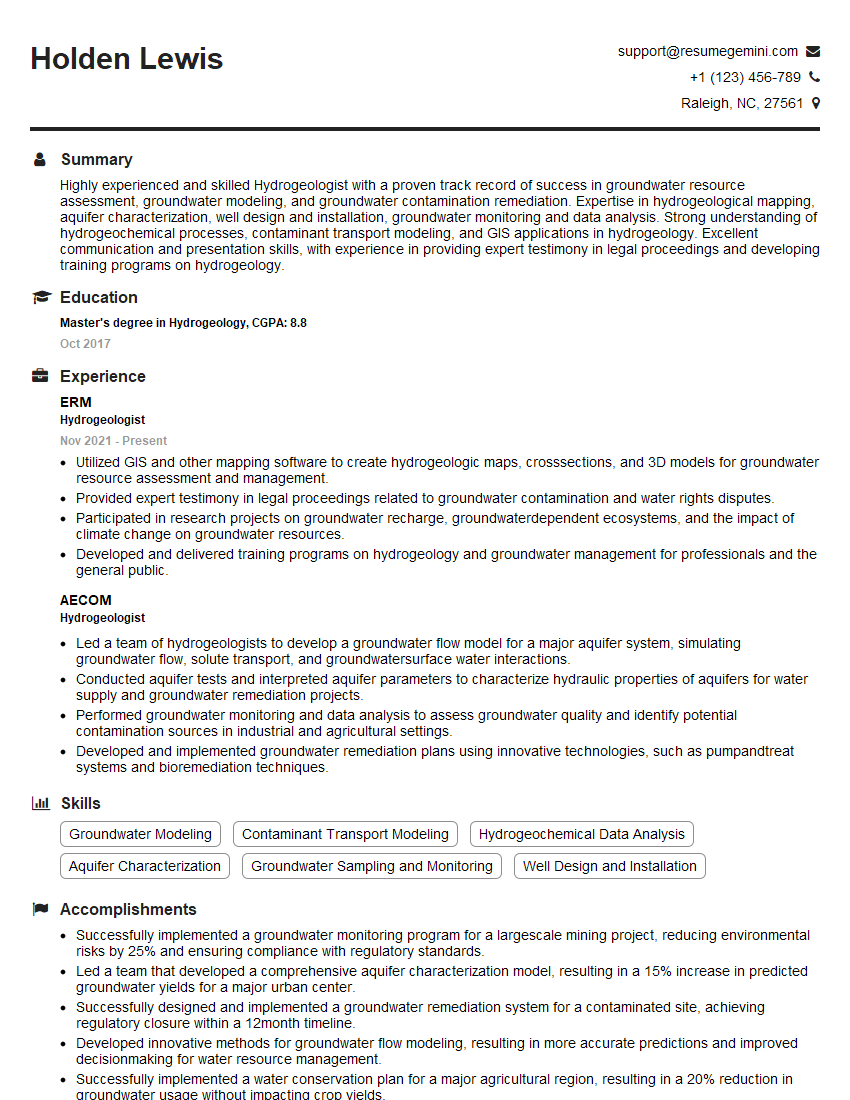
Hydrogeologist Resume Sample

Geologist Resume Sample
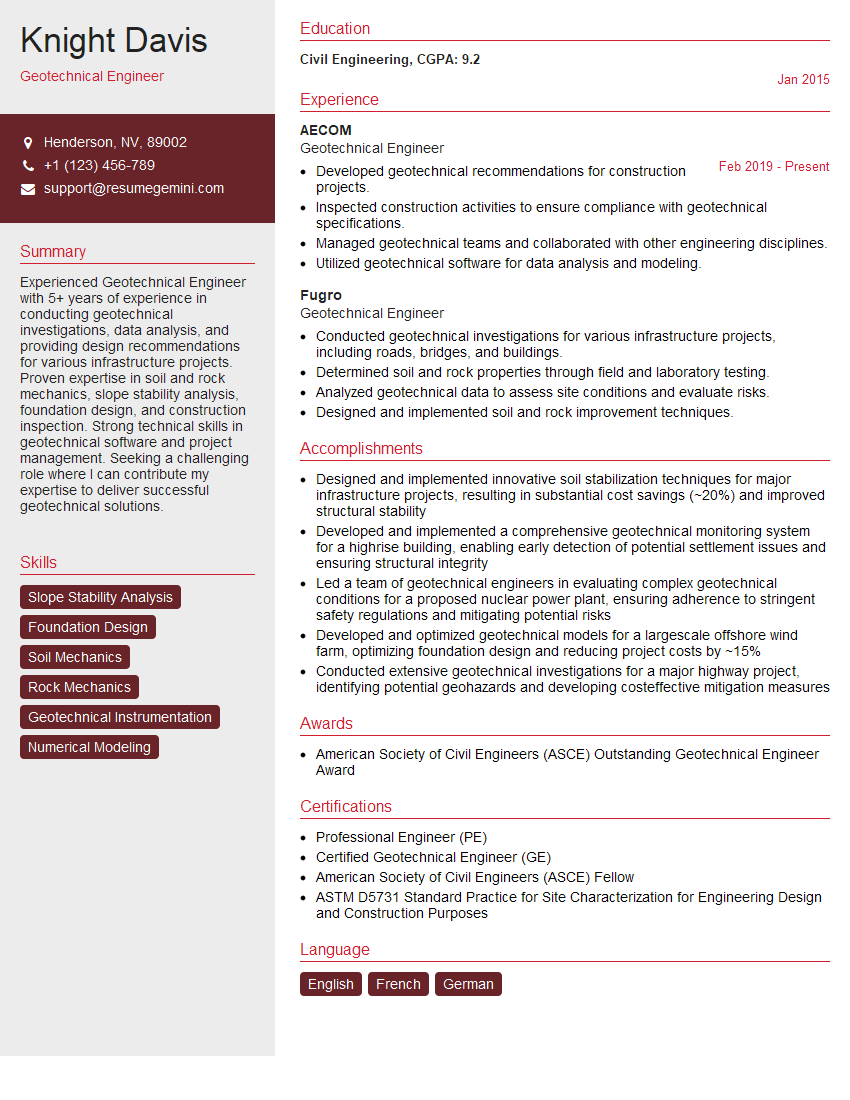
Geotechnical Engineer Resume Sample

Exploration Geologist Resume Sample

Soil Scientist Resume Sample

Soil Conservationist Resume Sample

Engineering Geologist Resume Sample
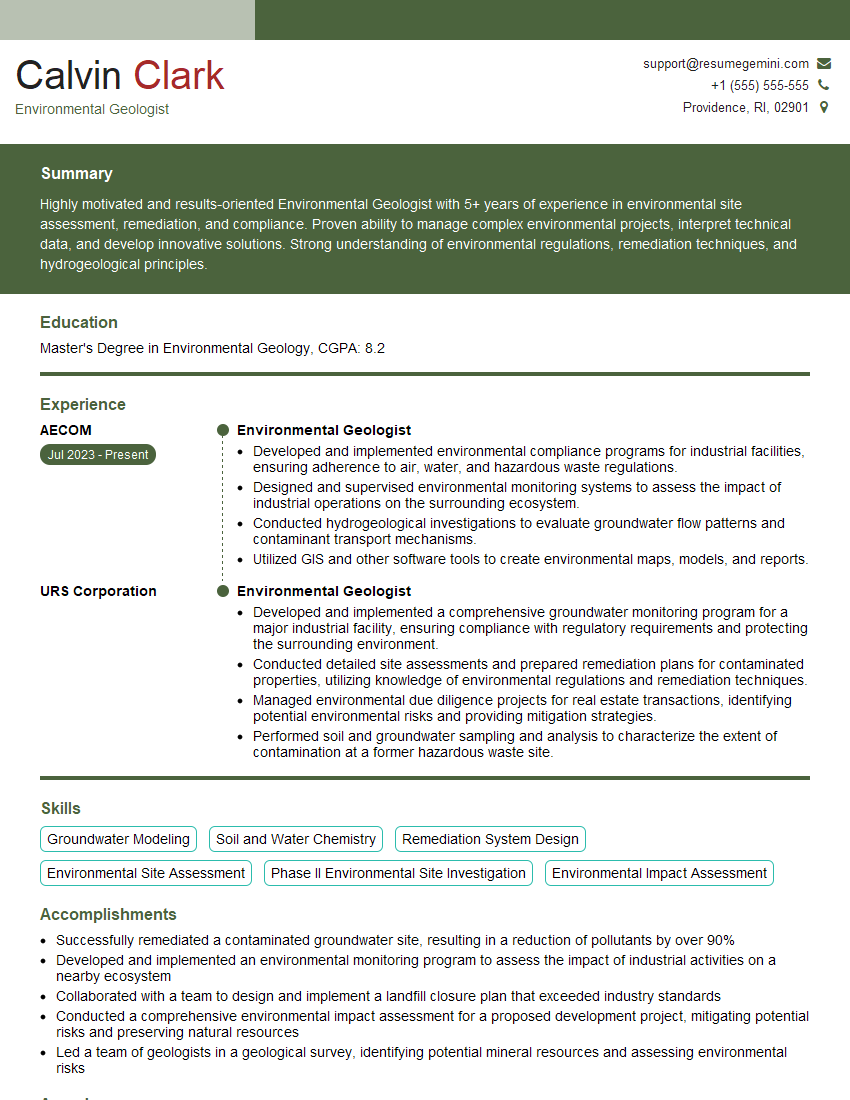
Environmental Geologist Resume Sample
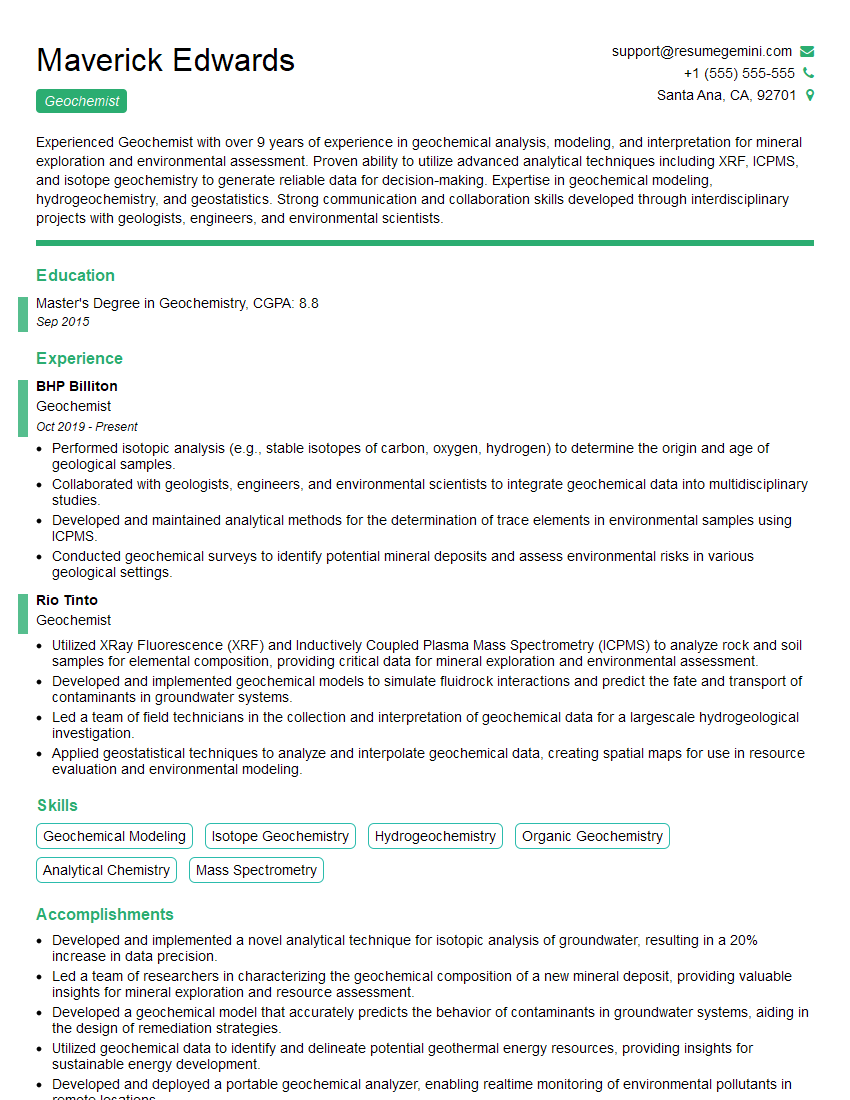
Geochemist Resume Sample

Geophysicist Resume Sample

Mine Geologist Resume Sample

Petroleum Geologist Resume Sample
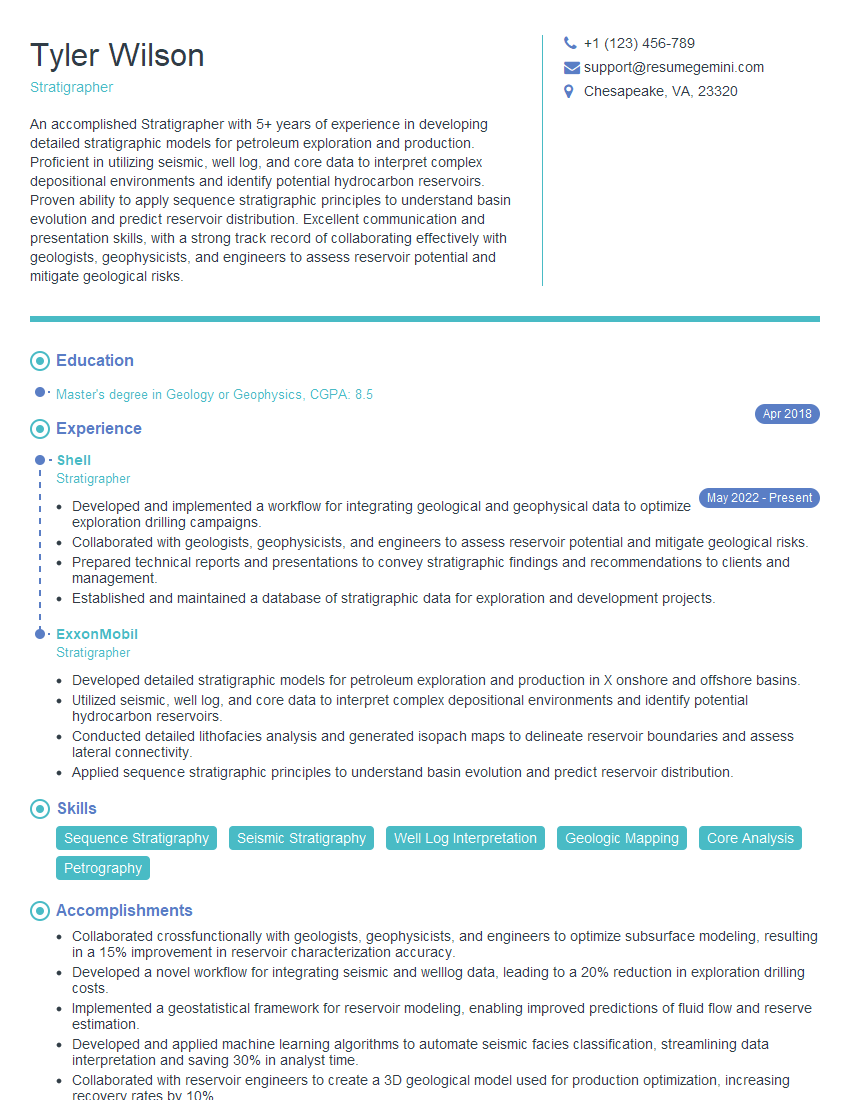
Stratigrapher Resume Sample

Remote Sensing Specialist Resume Sample

Geological Technician Resume Sample
Explore more articles
Users Rating of Our Blogs
Share Your Experience
We value your feedback! Please rate our content and share your thoughts (optional).
What Readers Say About Our Blog
To the interviewgemini.com Webmaster.
Very helpful and content specific questions to help prepare me for my interview!
Thank you
To the interviewgemini.com Webmaster.
This was kind of a unique content I found around the specialized skills. Very helpful questions and good detailed answers.
Very Helpful blog, thank you Interviewgemini team.