The thought of an interview can be nerve-wracking, but the right preparation can make all the difference. Explore this comprehensive guide to Get Out the Vote (GOTV) Campaigns interview questions and gain the confidence you need to showcase your abilities and secure the role.
Questions Asked in Get Out the Vote (GOTV) Campaigns Interview
Q 1. Describe your experience developing and implementing a GOTV strategy.
Developing and implementing a GOTV strategy is a multifaceted process that begins long before election day. It involves a deep understanding of the electorate, available resources, and the most effective communication channels. In my experience, it starts with a thorough analysis of voter data to identify persuadable voters and those most likely to remain inactive.
For example, in a recent campaign, we segmented our voter file into four categories: confirmed supporters, likely supporters, persuadable voters, and unlikely supporters. We then tailored our GOTV efforts to each group. Confirmed supporters received thank you notes and requests for volunteer help, likely supporters received targeted messaging highlighting key policy positions, persuadable voters received information emphasizing candidate similarities with their values, and unlikely supporters received minimal outreach focusing on voter education.
Next, I develop a detailed plan outlining the specific GOTV methods we’ll use (canvassing, phone banking, text messaging, etc.), assigning responsibilities to team members, and setting timelines. This plan also includes a robust communication strategy to keep volunteers engaged and informed.
Finally, rigorous tracking and analysis are crucial. We monitor key metrics (covered in the next question) throughout the campaign to adapt our strategy as needed, ensuring maximum impact.
Q 2. What metrics do you use to measure the success of a GOTV campaign?
Measuring the success of a GOTV campaign requires a multi-pronged approach, going beyond simply looking at the final election results. We track a range of metrics to understand the effectiveness of our efforts at each stage.
- Turnout Rate: This is the most fundamental metric – the percentage of registered voters who actually cast a ballot. We compare this to historical turnout rates for our target demographic to gauge improvement.
- Contact Rate: This measures the percentage of targeted voters we successfully contacted through our chosen methods (phone, text, in-person). High contact rates indicate efficient resource allocation.
- Persuasion Rate: This is harder to measure directly, but we can infer it by analyzing changes in voter sentiment or support levels among targeted groups, often tracked through surveys or polls before and after our outreach.
- Volunteer Engagement: Monitoring volunteer hours, the number of contacts made by volunteers, and their feedback helps to evaluate team effectiveness and identify areas needing improvement.
- Cost Per Vote: This helps us assess the efficiency of our campaign spending by dividing total GOTV costs by the number of additional votes secured.
By analyzing these metrics, we can pinpoint what worked well, what needs improvement, and how to optimize our strategy for future campaigns.
Q 3. How do you identify and target key voter demographics for GOTV efforts?
Identifying and targeting key voter demographics is crucial for effective GOTV. We start by leveraging voter data, which provides valuable insights into voter registration status, past voting history, party affiliation, and sometimes even demographic information (age, race, ethnicity, etc.).
For example, we might identify young, first-time voters as a key demographic. Understanding their specific needs and concerns allows us to tailor our messaging. Instead of focusing on traditional political issues, we might highlight candidates’ stances on student debt or climate change. We also employ methods particularly appealing to this demographic, like social media campaigns and text message reminders.
Another approach involves identifying likely swing voters – those who are not strongly affiliated with a particular party and might be persuaded by our message. We use predictive modeling and analytics to identify these voters and focus our resources on engaging them through direct mail, personalized phone calls, or canvassing.
Geographic targeting is equally important. We might concentrate our efforts on specific precincts with historically low turnout or areas where our candidate’s support is particularly weak. This allows for targeted resource allocation and maximizes our impact.
Q 4. Explain your experience using voter data to improve GOTV effectiveness.
Voter data is the backbone of any successful GOTV campaign. We use it to create detailed voter profiles, allowing us to segment the electorate based on various factors like past voting behavior, party affiliation, and demographics. This allows us to personalize our messaging and outreach efforts.
For instance, we might use voter file data to identify registered Democrats who haven’t voted in recent elections. We can then create a targeted outreach strategy using phone calls, text messages, or even personal visits to encourage their participation, focusing on aspects of the candidate’s platform that resonate with their values. We can also use data to identify likely supporters of the opposing candidate to inform our messaging and target persuasion efforts.
Predictive modeling plays a crucial role. We use algorithms that analyze historical voter data and predict the likelihood of a voter turning out based on various factors. This helps us prioritize our outreach efforts, concentrating on the voters most likely to be persuaded or mobilized. This allows for efficient resource allocation, maximizing the impact of our GOTV program. We also use data analysis to track the effectiveness of our efforts in real-time, allowing us to adapt our strategy based on performance.
Q 5. What are some common challenges in GOTV campaigns, and how do you overcome them?
GOTV campaigns face numerous challenges. One common issue is voter apathy – many people simply don’t see the importance of voting or feel their vote doesn’t matter. We combat this by creating compelling narratives emphasizing the direct impact of voting on their lives and communities. We might utilize testimonials from constituents or showcase the candidate’s specific focus on issues affecting their neighborhoods.
Another hurdle is resource constraints – limited time, money, and volunteers. To overcome this, we prioritize efficiency through strategic data analysis and precise targeting. We focus on high-impact methods and leverage technology to automate tasks and enhance volunteer productivity. For example, using a robust voter database with integrated communication tools enables us to maximize outreach with minimal effort.
Logistical challenges, like weather delays or difficulty reaching certain voter groups, are also common. We mitigate these by building in contingencies, such as flexible scheduling and alternative outreach methods. For example, if inclement weather prevents canvassing, we can shift resources to phone banking or text messaging campaigns.
Q 6. How do you manage and motivate a team of GOTV volunteers?
Managing and motivating a GOTV volunteer team requires clear communication, effective training, and recognition of their contributions. We start with a thorough volunteer orientation, outlining the campaign goals, their roles and responsibilities, and the tools and resources available to them.
Regular communication is key – keeping volunteers updated on campaign progress, addressing their concerns, and providing feedback. We use various methods, such as weekly meetings, email updates, and a dedicated online platform for communication and resource sharing. This keeps them informed and engaged.
Motivating volunteers often involves highlighting the importance of their work and the impact they make on the election outcome. Regular appreciation and recognition of their efforts, through small gestures or public acknowledgment, builds morale and sustains their commitment.
We also strive to create a positive and supportive team environment. Encouraging collaboration and peer-to-peer support fosters a sense of community and ownership amongst the volunteers. Finally, we make sure the tasks are clearly defined, manageable, and offer a sense of accomplishment to enhance their overall experience and maintain their motivation.
Q 7. Describe your experience with various GOTV methods (e.g., phone banking, canvassing, text messaging).
My experience encompasses a wide range of GOTV methods. Phone banking remains a powerful tool, particularly for reaching voters who might be hesitant to engage in person. We use sophisticated call scripts designed to address common concerns and personalize the interaction.
Canvassing, while more time-consuming, offers a highly personal approach. It allows for direct interaction with voters, building rapport and addressing their questions directly. We carefully plan canvassing routes based on voter data, targeting specific demographics and neighborhoods.
Text messaging is a cost-effective and timely way to reach large numbers of voters with concise messages, reminders, or information about polling locations. We use automated systems to send personalized messages, but also allow for human interaction when necessary.
In addition to these core methods, I’ve also utilized digital strategies, such as social media campaigns and email outreach, to expand our reach and complement our on-the-ground efforts. The key is to integrate these methods strategically, leveraging each one’s strengths to maximize overall impact.
Q 8. How do you adapt your GOTV strategy based on different voter segments and locations?
Adapting a GOTV strategy requires a deep understanding of the electorate. We segment voters based on demographics (age, race, ethnicity), geography (urban, suburban, rural), political affiliation, past voting behavior, and engagement levels with the campaign. For example, younger voters might respond better to digital outreach (social media, text messaging), while older voters may prefer traditional methods like phone calls or direct mail. Geographically, a rural area might require a more personalized, door-knocking approach, whereas a densely populated urban area might benefit from targeted digital advertising and community events. We tailor messaging to resonate with each segment’s specific concerns and motivations. A key aspect is ensuring that our communication channels match the preferences of each target group for maximum impact.
Example: In a recent campaign, we noticed low turnout among young Latino voters in a specific zip code. Our analysis showed they were active on Instagram and TikTok. We shifted resources to develop engaging video content on these platforms and partnered with local influencers to reach this group successfully.
Q 9. What is your experience with voter identification and registration efforts?
Voter identification and registration are foundational to any successful GOTV effort. My experience includes managing large-scale voter registration drives, utilizing online registration tools, and conducting extensive voter file analysis to identify unregistered or inactive voters within specific demographics and geographic areas. We employ both proactive and reactive strategies. Proactive strategies involve identifying potential voters who haven’t registered and encouraging them to do so, often through partnerships with community organizations and events. Reactive strategies involve responding to registration inquiries and assisting voters with the registration process. We rigorously track our progress to ensure we are reaching our target demographics effectively and consistently updating our voter files.
Example: In one campaign, we partnered with local colleges to register students, leading to a significant increase in youth turnout. We also used a CRM (Customer Relationship Management) system to track registration efforts and follow-up with individuals who had expressed interest but hadn’t yet registered.
Q 10. How do you ensure accurate and up-to-date voter data for GOTV operations?
Maintaining accurate and up-to-date voter data is paramount. We use a multi-pronged approach: Firstly, we leverage commercial voter files which contain demographic data, past voting history, and contact information. Secondly, we continuously update our database with data from our own campaign activities – registrations, surveys, event attendance, and interactions from various outreach methods. Thirdly, we employ data hygiene practices, regularly cleaning and deduplicating our data to eliminate inaccuracies and inconsistencies. This involves verifying addresses, correcting typos, and removing duplicates. Finally, we regularly cross-reference our data with public records and other voter databases to ensure accuracy. Data quality directly impacts the efficiency and effectiveness of our GOTV strategies.
Example: We developed a system to automatically flag potential inconsistencies in address information, triggering manual review by our data team. This significantly improved the accuracy of our targeting and reduced wasted resources.
Q 11. Describe your experience using voter turnout models and predictions.
Voter turnout models and predictions are essential tools for optimizing GOTV resources. I have extensive experience using statistical models and predictive analytics to forecast voter turnout based on historical data, current political climate, and our campaign’s performance. These models help us prioritize our outreach efforts by identifying likely voters, persuadable voters, and those at risk of not voting. They allow us to allocate resources strategically, focusing on the segments most likely to yield positive results. We use a combination of regression analysis, machine learning algorithms, and statistical modeling techniques to build these predictive models.
Example: In a recent election, our predictive model identified a specific group of undecided voters in a key district. Based on this, we deployed targeted messaging and field operations in that area, resulting in a significant increase in turnout and favorable election outcomes.
Q 12. How do you track and analyze key performance indicators (KPIs) for a GOTV campaign?
Tracking and analyzing KPIs is crucial for evaluating GOTV campaign effectiveness. We monitor a range of metrics, including:
- Voter Registration Rate: Number of voters registered divided by the target population.
- Contact Rate: Number of successful contacts (phone calls, emails, etc.) made to voters.
- Turnout Rate: Percentage of targeted voters who actually cast their ballots.
- Conversion Rate: Percentage of contacted voters who commit to voting.
- Cost Per Vote: The cost of GOTV activities divided by the number of additional votes gained.
We use these metrics to assess the effectiveness of different GOTV strategies and make data-driven decisions to optimize our approach. Regular reporting and data visualization provide insights into campaign progress and areas for improvement. A/B testing different communication approaches helps determine which methods are most effective for different voter segments.
Q 13. What software or tools do you use for GOTV data management and analysis?
We utilize a range of software and tools for GOTV data management and analysis. This includes:
- Customer Relationship Management (CRM) systems: Such as Salesforce or NationBuilder, for managing voter data, tracking interactions, and organizing volunteers.
- Voter file software: To import, cleanse, and analyze voter data, and integrate with other campaign tools.
- Data visualization tools: Such as Tableau or Power BI, for creating dashboards and reports to track progress and identify trends.
- Predictive modeling software: Statistical packages like R or Python with relevant libraries for building voter turnout models.
- Phone banking and text messaging platforms: To manage communication with voters at scale.
The specific tools we use depend on the size and complexity of the campaign, but the underlying principles of data integration and analysis remain consistent.
Q 14. How do you integrate GOTV efforts with other campaign activities (e.g., fundraising, communications)?
GOTV efforts are not isolated activities; they are intricately linked with other campaign functions. We ensure seamless integration with fundraising by using data analytics to identify potential donors among our most engaged voters, and tailoring our fundraising appeals to resonate with their values and interests. Similarly, communications are closely aligned with GOTV – messaging developed for GOTV is integrated into our broader communications strategy, including press releases, social media, and advertisements. We leverage data from our GOTV activities to refine and personalize communications. Field organizing and volunteer recruitment are closely aligned, with volunteers playing a critical role in executing GOTV strategies, such as canvassing and phone banking.
Example: Data from our early canvassing efforts identified specific policy concerns that resonated strongly with voters. This feedback was incorporated into our messaging, advertisements, and fundraising materials. This integrated approach ensures consistency and maximum impact across all campaign activities.
Q 15. Explain your experience with budget management and resource allocation in GOTV campaigns.
Budget management in GOTV is crucial for maximizing impact. It’s not just about spending money; it’s about strategic allocation to achieve the highest voter turnout. My approach involves a multi-stage process starting with a detailed needs assessment. This involves identifying target demographics, their preferred communication channels, and the resources required to reach them effectively (e.g., volunteer recruitment, printing costs, digital advertising, phone banking software).
Next, I create a detailed budget outlining anticipated expenses across various categories such as volunteer recruitment and training, advertising (digital and print), data acquisition and analysis, field operations (transportation, supplies), and technology (software subscriptions, phone systems). I leverage data analysis to identify cost-effective strategies. For instance, if data reveals a high concentration of potential voters responding to text messages, I might allocate a larger budget to this channel compared to direct mail.
Throughout the campaign, I track spending diligently against the budget, using project management software to monitor progress and make necessary adjustments. Regular reports are generated to ensure transparency and accountability. For example, during one campaign, we identified a cost inefficiency in our phone-banking operation. By switching to a more efficient dialer system, we managed to save 15% of our allocated budget while maintaining call volume.
Career Expert Tips:
- Ace those interviews! Prepare effectively by reviewing the Top 50 Most Common Interview Questions on ResumeGemini.
- Navigate your job search with confidence! Explore a wide range of Career Tips on ResumeGemini. Learn about common challenges and recommendations to overcome them.
- Craft the perfect resume! Master the Art of Resume Writing with ResumeGemini’s guide. Showcase your unique qualifications and achievements effectively.
- Don’t miss out on holiday savings! Build your dream resume with ResumeGemini’s ATS optimized templates.
Q 16. How do you handle unexpected challenges or setbacks during a GOTV campaign?
Unexpected challenges are inevitable in GOTV. My strategy focuses on proactive planning and robust contingency measures. We start by identifying potential risks – everything from unexpected inclement weather affecting field operations to a sudden surge in misinformation campaigns. For each potential risk, we develop a mitigation plan.
For example, if our primary volunteer recruitment platform fails, we have backup systems in place. If a key community partner unexpectedly pulls out, we have alternative relationships already established. During a campaign, we encountered a sudden change in voter registration rules. We quickly adapted by updating our voter database and communicating the new rules immediately through various channels to ensure accurate information reaching voters. We also leverage data to quickly identify new trends, allowing for agile reallocation of resources. This requires a data-driven approach, real-time monitoring, and flexible personnel who can adjust strategies quickly.
Q 17. What is your experience with GOTV compliance and reporting requirements?
GOTV compliance is paramount. My experience includes meticulous adherence to all federal, state, and local election laws regarding campaign finance, voter registration, and get-out-the-vote activities. This involves maintaining detailed records of all campaign expenditures, ensuring compliance with contribution limits, and accurately reporting all activities to the relevant authorities.
We utilize specialized campaign finance software to track donations, manage expenses, and generate reports. All our communications comply with regulations regarding misleading or deceptive information. Regular internal audits and external legal counsel ensure we are up to date on regulations and avoid any violations. In a past campaign, we successfully navigated a complex set of reporting requirements by partnering with an election law expert and utilizing a robust compliance system, allowing us to submit accurate and timely reports.
Q 18. Describe your experience with different GOTV communication channels (e.g., email, social media, direct mail).
Effective GOTV communication requires a multi-channel approach tailored to the target audience. My experience spans email marketing, social media campaigns, direct mail, and text messaging. Each channel demands a distinct strategy.
Email marketing involves creating segmented lists based on demographics and voter history. Personalized messages increase engagement. We use A/B testing to optimize subject lines and content. Social media utilizes targeted advertising to reach specific demographics, with content focusing on candidate messaging, event promotion, and voter registration. Direct mail is strategically employed for key demographics who may not engage with digital channels. We leverage data to optimize the timing and messaging of mail pieces. Text messaging offers quick and personalized reminders, updates, and crucial election-day information. For example, during a recent campaign, we discovered that texting reminders were far more effective than email reminders for a younger demographic, resulting in a significant increase in voter turnout among this group.
Q 19. How do you build and maintain relationships with community organizations for GOTV purposes?
Building relationships with community organizations is essential for successful GOTV. This involves more than simply asking for help; it’s about establishing long-term partnerships based on mutual trust and respect. It starts with identifying organizations aligned with the campaign’s values and whose membership overlaps with the target voter base.
We then engage in active outreach, attending community events, attending meetings, and proactively communicating campaign goals and activities. We offer them opportunities to participate in the campaign, possibly through volunteer recruitment, event co-hosting, or community outreach initiatives. We also provide them with relevant campaign materials and resources, empowering them to effectively advocate for voter participation. In one campaign, building strong relationships with local churches and community centers resulted in an increased volunteer base and significantly higher voter turnout in underserved communities.
Q 20. How do you measure the ROI of different GOTV initiatives?
Measuring the ROI of GOTV initiatives requires a data-driven approach. We track key metrics before, during, and after each initiative. This includes the number of contacts made, the number of voters registered, the number of absentee ballots requested, and, ultimately, the number of votes cast. We compare this data with voter turnout data from previous elections to assess the impact of our initiatives.
For example, we might compare the voter turnout in areas where we conducted extensive canvassing versus areas where we only relied on digital outreach. By analyzing the data, we can determine which strategies were most effective in driving voter participation and allocate resources accordingly in future campaigns. We also analyze the cost per vote acquired to determine the overall efficiency and effectiveness of our investments. It’s not just about the total number of votes but also about the cost-effectiveness of each initiative.
Q 21. What is your experience with A/B testing in GOTV strategies?
A/B testing is integral to optimizing GOTV strategies. We use it to test different versions of our communication materials, such as email subject lines, social media ad creatives, and direct mail messaging. For instance, we might test two different versions of a voter registration email, one with a strong call to action and another with a more subtle approach. By analyzing the response rates and click-through rates, we determine which version is more effective.
Similarly, we test different social media ad copy and images to see which resonates better with our target audience. We also test different times and days to send text messages to identify optimal delivery windows. The results guide us in refining our communication strategies and maximizing their effectiveness. In one campaign, A/B testing revealed that a shorter, more concise email resulted in a significantly higher open and click-through rate, ultimately leading to a better voter registration response.
Q 22. Describe a time you had to adapt your GOTV strategy mid-campaign. What was the challenge, and how did you respond?
Adaptability is crucial in GOTV. During a mayoral race in a large city, we initially focused heavily on digital outreach, targeting young voters through social media. However, halfway through the campaign, we realized our online engagement metrics, while strong, weren’t translating into significant in-person voter registration or early voting.
The challenge was a disconnect between our digital strategy and actual voter turnout. Our initial assumption that young voters would primarily engage online proved inaccurate; many preferred more traditional methods or needed more personalized assistance.
Our response was a three-pronged approach. First, we significantly increased our ground game, deploying volunteers for door-to-door canvassing and phone banking in identified key neighborhoods. Second, we shifted some digital budget to hyperlocal targeted ads focusing on voter registration deadlines and polling locations. Third, we partnered with community organizations to host voter registration drives at trusted locations frequented by the target demographic, addressing accessibility concerns. This multi-faceted approach corrected the course, significantly increasing voter registration and participation among our target demographic.
Q 23. How do you address concerns about voter suppression or access in your GOTV planning?
Addressing voter suppression and access is paramount to ethical and effective GOTV. We proactively identify potential barriers and build strategies to mitigate them. This involves a thorough understanding of the legal landscape regarding voter ID laws, registration deadlines, and polling place accessibility.
Our strategy includes:
- Preemptive education: We provide voters with clear and accessible information about voter ID requirements, registration deadlines, and polling place locations, including transportation options to polling stations.
- Targeted outreach: We prioritize outreach to communities disproportionately affected by voter suppression, such as those with limited English proficiency, elderly populations, or those with disabilities. This might include translating materials, providing transportation assistance, or ensuring poll worker training addresses accessibility needs.
- Monitoring and response: Throughout the election cycle, we monitor for potential instances of voter suppression or irregularities at polling stations and report any concerns to the appropriate authorities.
- Legal expertise: We collaborate with legal experts to understand and address any challenges related to voter access laws and ensure our strategies comply fully with all applicable regulations.
By implementing these measures, we aim to create a level playing field, ensuring every eligible voter has a fair chance to exercise their right to vote.
Q 24. How do you incorporate diversity, equity, and inclusion in GOTV strategies?
Diversity, equity, and inclusion (DEI) aren’t just buzzwords; they’re fundamental to effective GOTV. Ignoring the diverse needs and perspectives within a community guarantees an ineffective campaign.
Our DEI strategy is integrated across all aspects of our GOTV planning:
- Team diversity: We build a campaign team that reflects the diversity of the community we serve, ensuring diverse perspectives are present at every stage of planning and execution.
- Culturally sensitive messaging: We tailor our communication materials and outreach methods to resonate with the cultural nuances and linguistic preferences of different communities. This includes translating materials into multiple languages and employing culturally appropriate communication styles.
- Addressing specific needs: We proactively identify and address barriers faced by specific groups, such as individuals with disabilities, low-income communities, and those living in rural areas, through tailored transportation assistance, accessible materials, and targeted communication strategies.
- Community partnerships: We work closely with community organizations and leaders to understand their specific needs and concerns, ensuring our strategies are aligned with their priorities.
Our success depends on reaching every eligible voter, and a DEI-centered approach guarantees we build trust and effectively engage with all segments of the population.
Q 25. Describe your experience with GOTV technology, such as voter databases and CRM systems.
GOTV technology is indispensable. We rely heavily on voter databases and CRM systems for efficient and targeted outreach. Voter databases provide detailed information on registered voters, including demographics, voting history, and contact information. This data helps us segment voters into targeted groups for personalized messaging.
We use CRM systems to:
- Manage voter interactions: Track volunteer activities, phone calls, text messages, and door-knocking efforts.
- Segment and target voters: Identify high-propensity voters, persuadable voters, and those who need reminders or assistance getting to the polls.
- Analyze campaign performance: Monitor key metrics such as voter contact rates, conversion rates, and turnout patterns.
- Automate communications: Send personalized text messages, emails, or robocalls to remind voters of deadlines or provide important information.
For example, we might use a system like Vantage or NationBuilder to manage our voter data and tailor communication based on individual voter profiles. This allows us to optimize our resources and maximize our impact.
Q 26. What is your understanding of the legal aspects of GOTV campaigning?
Understanding the legal aspects of GOTV is critical. Campaign activities must comply with all federal, state, and local election laws to avoid legal challenges and maintain the campaign’s integrity.
Key legal areas we focus on include:
- Voter registration: Ensuring all registration efforts comply with deadlines and requirements, including proper handling of registration forms and assisting voters with registration challenges.
- Campaign finance: Adhering to regulations related to campaign donations, expenditures, and reporting requirements.
- Electioneering communications: Understanding and complying with restrictions on election-related advertising, including disclosure requirements for paid political advertising.
- Voter intimidation: Avoiding any activities that could be construed as voter intimidation, coercion, or harassment.
- Accessibility: Adhering to laws and guidelines related to accessible voting for individuals with disabilities.
We work closely with legal counsel to ensure full compliance. Ignoring legal considerations can lead to significant penalties and undermine the entire campaign effort.
Q 27. How would you approach GOTV in a low-resource environment?
GOTV in low-resource environments requires creativity and strategic resource allocation. While technology and sophisticated strategies are valuable, they are not always feasible.
Our approach would prioritize:
- Leveraging volunteers: Building a robust volunteer network is crucial. Volunteers can be trained for phone banking, door-to-door canvassing, and community outreach.
- Strategic partnerships: Collaborating with community organizations, faith-based groups, and local leaders to leverage their existing networks and resources can amplify our reach.
- Targeted outreach: Focusing resources on high-impact areas and key demographics increases efficiency. Data may be limited, but even simple demographic analysis can inform targeted efforts.
- Low-cost communication: Employing inexpensive methods like grassroots canvassing, community meetings, and word-of-mouth campaigns alongside simple, well-designed flyers.
- Utilizing free/low-cost tools: Exploring free or low-cost voter data platforms and communication tools, along with leveraging social media effectively.
In such environments, building trust and strong relationships with community members becomes even more essential, as it provides a cost-effective yet highly effective method of getting out the vote.
Key Topics to Learn for Get Out the Vote (GOTV) Campaigns Interview
- Voter Identification and Targeting: Understanding different voter segments, identifying likely supporters, and employing data analysis techniques to prioritize outreach efforts.
- Campaign Strategy & Planning: Developing a comprehensive GOTV plan including timelines, resource allocation, and key performance indicators (KPIs) to measure success. Practical application involves creating a sample GOTV plan for a specific election scenario.
- Volunteer Recruitment & Management: Strategies for recruiting, training, and managing volunteers effectively, including delegation of tasks and maintaining team morale. Consider the challenges of managing geographically dispersed volunteers.
- Communication Strategies: Utilizing various communication channels (phone banking, text messaging, social media, canvassing) to reach voters effectively and tailor messaging for maximum impact. Analyze the pros and cons of each approach.
- Data Analysis & Reporting: Tracking key metrics, analyzing data to understand campaign effectiveness, and reporting progress to stakeholders. This includes understanding voter turnout rates and identifying areas for improvement.
- Compliance & Legal Considerations: Understanding election laws and regulations related to voter contact and campaign finance. Explore potential legal pitfalls and best practices for compliance.
- Technology & Tools: Familiarity with voter databases, CRM systems, and other technologies used in GOTV campaigns. Discuss the importance of data security and privacy.
- Problem-Solving & Adaptability: Addressing unexpected challenges, such as low volunteer turnout or negative media coverage, and adapting the strategy accordingly. Develop case studies illustrating successful problem-solving in a GOTV context.
Next Steps
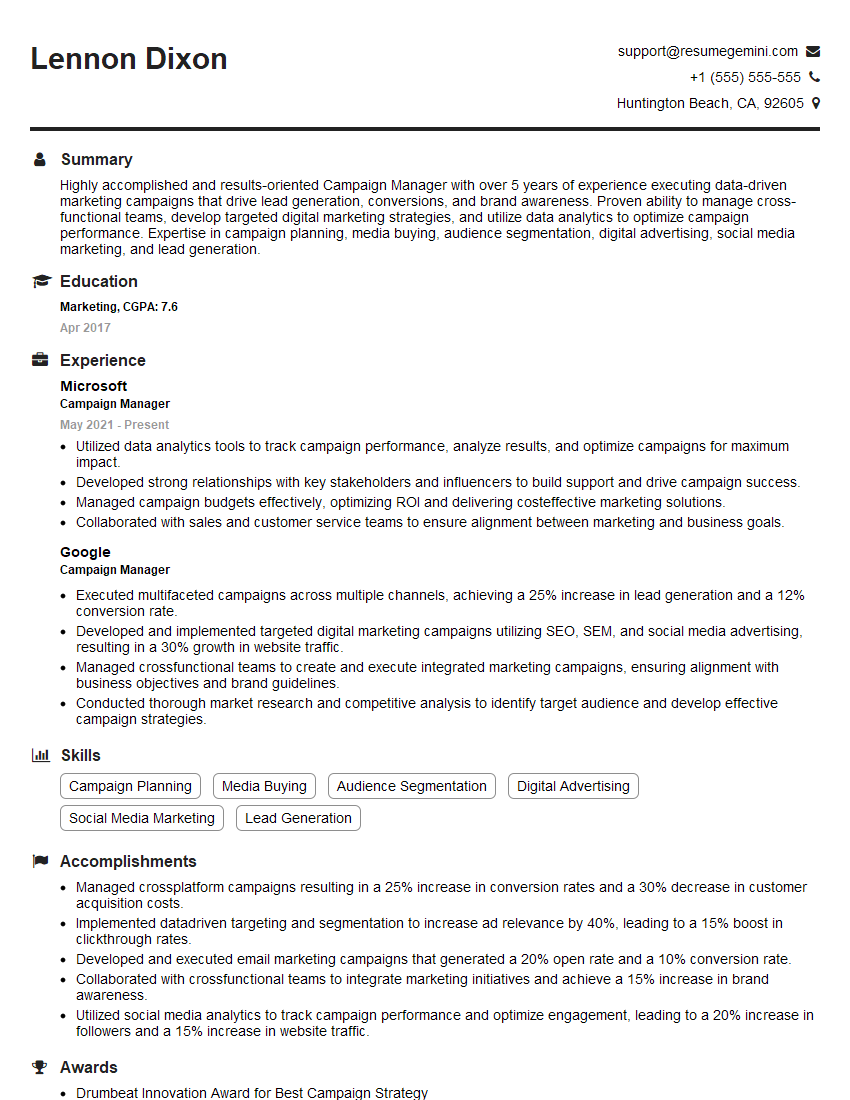
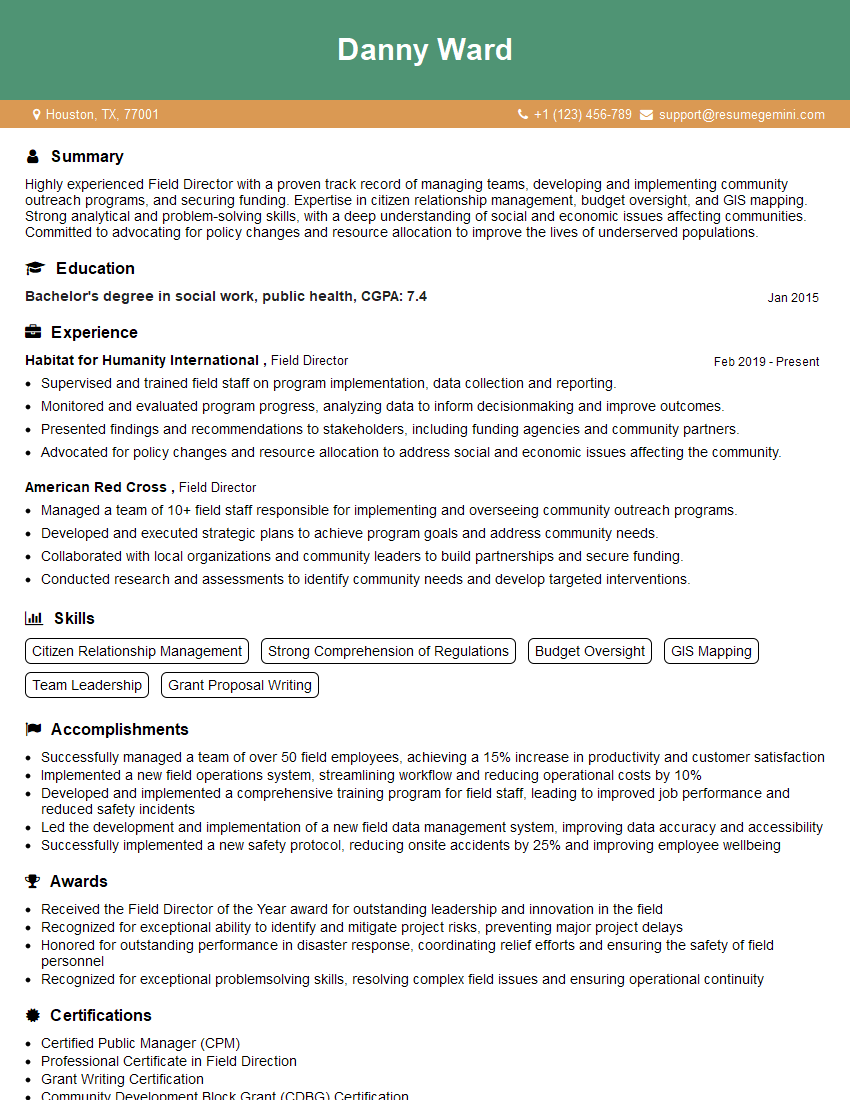
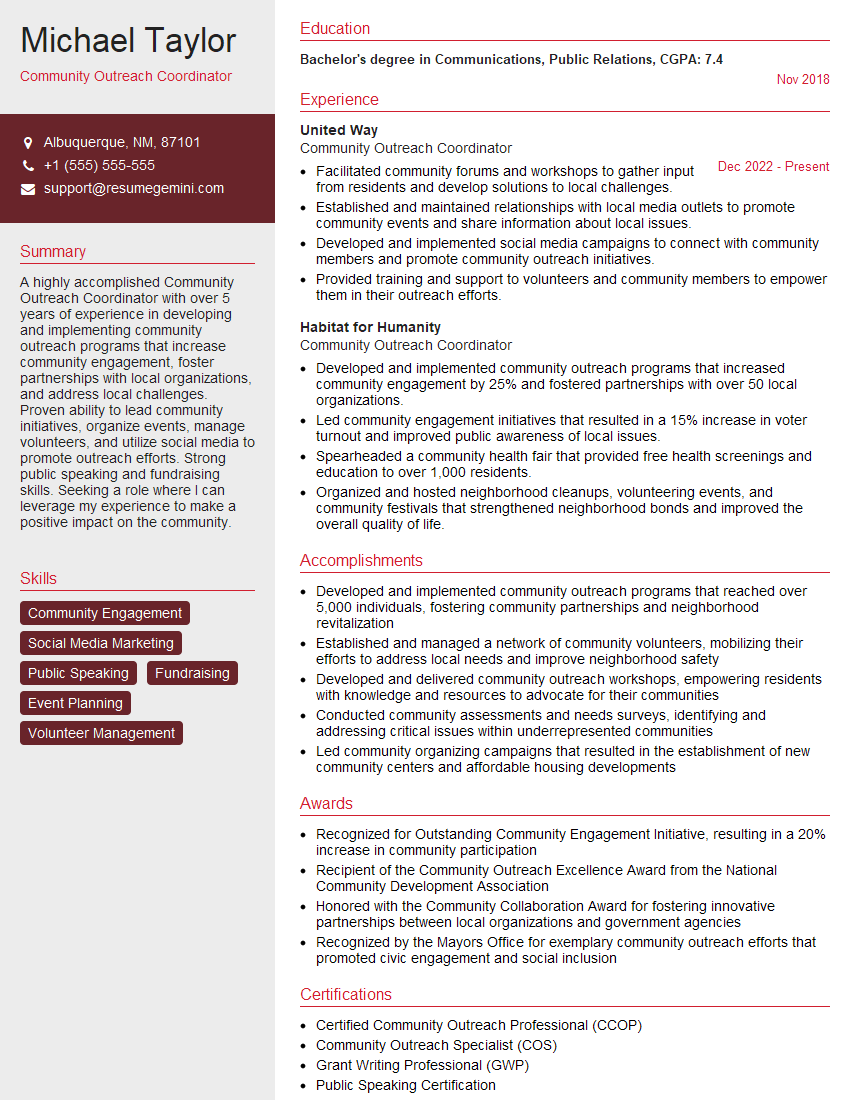
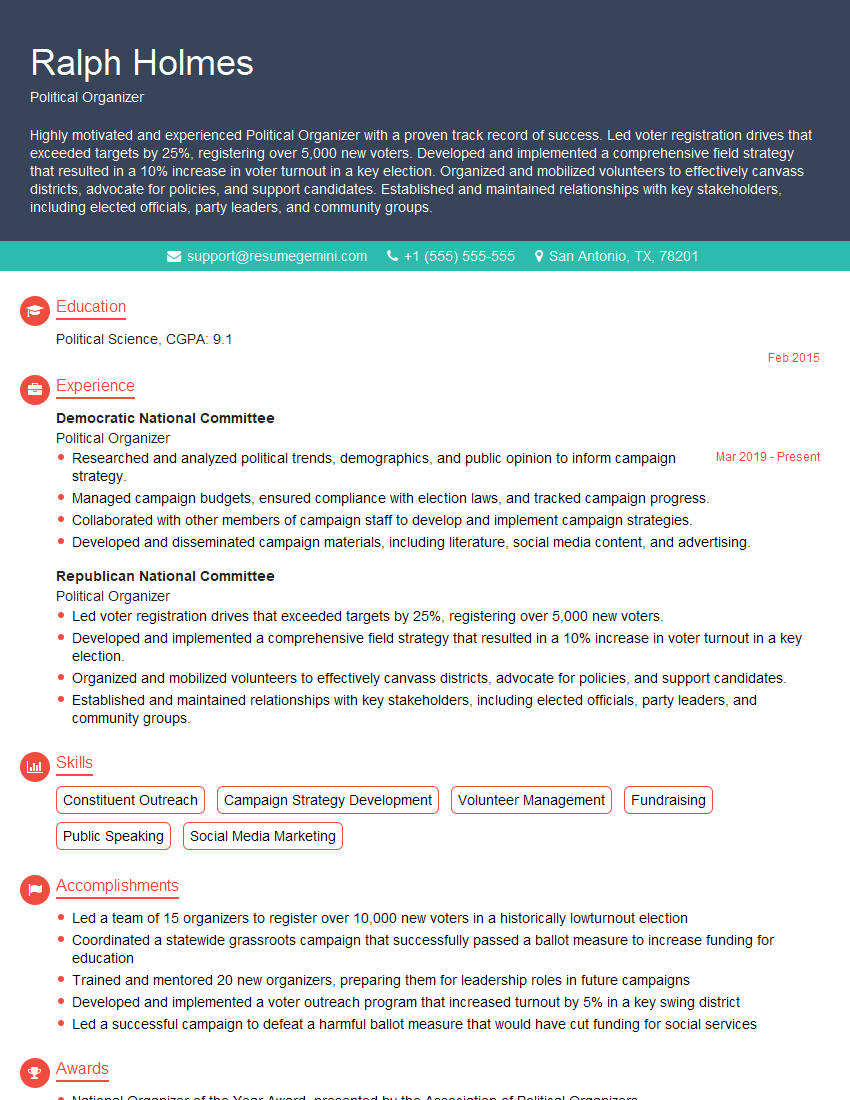
Mastering Get Out the Vote (GOTV) campaigns significantly enhances your political and campaign management skills, opening doors to diverse and impactful career opportunities. A strong resume is crucial for showcasing your abilities to potential employers. Creating an ATS-friendly resume increases your chances of getting noticed. We highly recommend using ResumeGemini to build a professional and effective resume that highlights your GOTV expertise. ResumeGemini provides examples of resumes tailored to Get Out the Vote (GOTV) Campaigns to help you craft a compelling application.
Explore more articles
Users Rating of Our Blogs
Share Your Experience
We value your feedback! Please rate our content and share your thoughts (optional).
What Readers Say About Our Blog
To the interviewgemini.com Webmaster.
Very helpful and content specific questions to help prepare me for my interview!
Thank you
To the interviewgemini.com Webmaster.
This was kind of a unique content I found around the specialized skills. Very helpful questions and good detailed answers.
Very Helpful blog, thank you Interviewgemini team.