Interviews are more than just a Q&A session—they’re a chance to prove your worth. This blog dives into essential Glass Installation and Removal Procedures interview questions and expert tips to help you align your answers with what hiring managers are looking for. Start preparing to shine!
Questions Asked in Glass Installation and Removal Procedures Interview
Q 1. Describe your experience with different types of glass (e.g., tempered, laminated, insulated).
My experience encompasses a wide range of glass types, each with its unique properties and installation requirements. Tempered glass, also known as safety glass, is heat-treated to increase its strength and shatter resistance. It breaks into small, relatively harmless pieces, making it ideal for applications like shower doors and car windows. I’ve worked extensively with tempered glass, understanding its crucial safety aspects and the specialized handling it requires. Laminated glass consists of two or more layers of glass bonded together with a layer of polyvinyl butyral (PVB) interlayer. This interlayer holds the glass together even when broken, providing exceptional security and protection against impacts. I’ve used laminated glass in projects requiring high-impact resistance, such as storefront windows and hurricane-resistant glazing. Finally, insulated glass units (IGUs) are comprised of two or more panes of glass separated by a hermetically sealed air or gas-filled space. These units offer superior insulation, reducing energy costs and noise pollution. I have considerable experience in the precise installation of IGUs, ensuring airtight seals for optimal performance. Each glass type demands a different approach in terms of cutting, handling, and installation to ensure optimal safety and performance.
Q 2. Explain the process of measuring and cutting glass for a window installation.
Precise measurement and cutting are paramount for a successful glass installation. I begin by carefully measuring the window opening, accounting for any existing frames or reveals. This involves using a high-quality measuring tape and double-checking dimensions to minimize errors. Then, I transfer these measurements to the glass sheet. For cutting, I typically use a glass cutter, applying even pressure to score the glass. This process requires steady hand and precision. Once scored, I gently snap the glass along the score line, using specialized tools to avoid chipping or breakage. For more complex shapes, I may utilize a CNC glass cutting machine which ensures accuracy and efficiency for intricate designs. After cutting, the edges are meticulously polished and smoothed to prevent sharp edges. Think of it like baking a cake – precise measurements are essential for a perfectly sized and fitting result.
Q 3. What safety precautions do you take when handling glass?
Safety is my utmost priority when handling glass. This starts with wearing appropriate personal protective equipment (PPE), including safety glasses, gloves, and cut-resistant clothing. I always handle glass with care, avoiding sharp edges and using specialized tools to lift and move heavier pieces. When cutting glass, I make sure the area is free of obstacles, providing a safe working space free from distractions. Glass shards are a significant hazard, so I use a dustpan and brush to carefully collect and dispose of any broken glass, immediately. Furthermore, I use protective coverings on the floor and any surrounding surfaces. A simple analogy is handling a newborn – delicate handling and precautionary measures are crucial to prevent any harm.
Q 4. How do you ensure a proper seal around a newly installed glass unit?
Achieving a proper seal around a newly installed glass unit is crucial for preventing drafts, leaks, and energy loss. I typically use high-quality sealants designed for this specific purpose. The type of sealant employed depends on the application and the type of glass being installed. Before applying the sealant, I meticulously clean all surfaces to ensure proper adhesion. The sealant is applied in a continuous bead, ensuring full contact with both the glass and the frame. I then use a smoothing tool to create a consistent and aesthetically pleasing finish. For exterior applications, I’ll choose a sealant designed to withstand extreme weather conditions, providing a long-lasting seal. The process resembles caulking a bathtub – a thorough, continuous seal is critical for waterproofing and longevity.
Q 5. What are the common causes of glass breakage and how can they be prevented?
Glass breakage can stem from various causes. Impact damage from objects like stones or tools is a common culprit. Thermal stress, caused by rapid temperature changes, can also lead to cracks. Improper installation, neglecting proper support or using unsuitable sealants, is another significant factor. Manufacturing defects can also contribute to breakage. To prevent breakage, it is crucial to handle glass carefully, select appropriate glass types for the application, utilize proper installation techniques, and inspect the glass for any flaws before installation. Using protective films or coatings can also help mitigate risks. This is analogous to preventing car accidents – defensive driving, proper maintenance, and following traffic laws are all key to avoiding collisions.
Q 6. Describe your experience with different types of glazing systems (e.g., putty, silicone, sealant).
My experience encompasses various glazing systems. Putty, a traditional method, offers a strong bond but requires careful application and curing. Silicone provides excellent flexibility and weather resistance, ideal for applications needing expansion and contraction allowance. Sealants, available in various types (polyurethane, butyl, etc.), are selected based on the specific needs of the installation. Each system requires specific techniques and considerations, ensuring a durable and weather-tight seal. Choosing the right glazing system is akin to selecting the right paint for a project – each type has unique properties suitable for specific tasks.
Q 7. How do you handle difficult or unusual glass installations?
Difficult installations may involve unusually shaped glass, complex framing systems, or challenging access points. For instance, installing curved glass in a conservatory requires precise measurements, specialized cutting techniques, and careful handling to avoid breakage. High-rise installations present safety concerns, demanding the use of specialized equipment like suction cups and harnesses. I approach such challenges by careful planning, risk assessment, and employing the appropriate tools and techniques. Sometimes, this involves consulting with engineers or architects for specialized guidance, or even using specialized glass handling equipment. It’s like solving a complex puzzle – each piece needs to be carefully considered and fitted to achieve the overall goal.
Q 8. What tools and equipment are essential for efficient glass installation and removal?
Efficient glass installation and removal requires a range of specialized tools and equipment. Safety is paramount, so having the right tools minimizes risk and maximizes efficiency.
- Safety Glasses and Gloves: Absolutely essential to protect eyes and hands from flying shards of glass.
- Measuring Tape and Level: Precise measurements are crucial for accurate cuts and proper alignment.
- Glass Cutters: For precise cutting of larger glass sheets on-site, though pre-cut glass is often preferred.
- Putty Knife and Chisel: Useful for removing old glazing and sealant.
- Rubber Mallet: Gently taps glass into place without causing breakage.
- Glazing Spacers: Maintain even spacing between glass panes.
- Glazing Compound or Sealant: Creates a waterproof and airtight seal.
- Sucker Cups: For safely handling and maneuvering large glass panes.
- Utility Knife: For cutting sealant and other materials.
- Drill with appropriate bits: Depending on the frame material, for pilot holes or securing hardware.
For example, when installing a large storefront window, suction cups are indispensable for safely moving and positioning the heavy glass panes. A lack of these tools would significantly increase risk and reduce efficiency.
Q 9. Explain your experience with removing and replacing broken glass.
Removing and replacing broken glass requires a careful and methodical approach. Safety is the top priority. I always start by assessing the damage, noting any potential hazards like sharp edges or unstable framing.
My process generally involves:
- Safety First: Donning appropriate PPE (safety glasses, gloves, long sleeves and pants).
- Careful Removal: Using a putty knife and chisel, I carefully remove any remaining glazing compound or sealant around the broken glass. I work slowly and methodically, avoiding sudden movements that could cause further damage.
- Fragment Removal: Once the sealant is removed, I carefully remove the broken fragments of glass using a putty knife and dustpan and brush, ensuring I collect every piece to avoid injury.
- Frame Inspection: I thoroughly inspect the window frame for any damage, repairing cracks or loose components before installing new glass.
- New Glass Installation: I install the new glass, ensuring it is correctly sized and aligned. I then apply new sealant, taking care to create a watertight seal.
I’ve worked on numerous projects involving broken glass, from small residential windows to large commercial storefronts. One memorable instance involved a shattered display window in a high-traffic area. By maintaining a calm, methodical approach, I was able to safely remove the dangerous glass, minimizing disruption to the business and preventing any further accidents.
Q 10. What are your troubleshooting skills when facing issues during installation?
Troubleshooting is an integral part of glass installation. Problems can arise from various factors, including improper measurements, damaged frames, or unsuitable sealants. My troubleshooting skills involve a systematic approach.
- Identify the Problem: Carefully examine the situation to pinpoint the exact issue. Is the glass not fitting correctly? Is there a leak? Is the frame damaged?
- Analyze the Cause: Determine the root cause of the problem. Did a measurement error occur? Is the sealant failing? Is there structural damage to the frame?
- Develop a Solution: Based on the analysis, I develop a plan to fix the issue. This might involve re-measuring, replacing the sealant, repairing the frame, or using different installation techniques.
- Implement and Test: Implement the solution and test it thoroughly to ensure it solves the problem without creating new ones.
- Document Findings: To improve future processes, I always document the problem, my analysis, and the solution implemented.
For example, I once encountered a situation where a window kept leaking despite seemingly correct installation. Through careful investigation, I discovered a small crack in the frame hidden beneath the sealant. Repairing this crack solved the leak permanently.
Q 11. Describe your experience working with different types of window frames (e.g., wood, aluminum, vinyl).
Experience with various window frame materials (wood, aluminum, vinyl) is critical for successful glass installation. Each material has unique characteristics that affect installation techniques.
- Wood Frames: Require careful handling to avoid damage. Often require putty and caulk for sealing. Expanding foam can be used to fill gaps.
- Aluminum Frames: Generally more durable, but can be prone to corrosion. Sealants and appropriate fasteners are crucial.
- Vinyl Frames: Demand careful handling to avoid scratches or cracks. Certain sealants are preferred to avoid compatibility issues.
My experience spans all three types. Wood frames, for instance, need a more delicate approach to avoid cracking the wood during installation or removal. Aluminum frames might require specific sealants to resist corrosion, whereas vinyl frames benefit from using sealants that are compatible with the vinyl material and won’t cause discoloration.
Q 12. How do you ensure the structural integrity of a window after glass installation?
Ensuring structural integrity after glass installation is crucial for safety and longevity. This involves a multi-faceted approach.
- Proper Frame Support: The frame must be structurally sound and able to adequately support the weight of the glass. I always check for any weaknesses or damage before installation.
- Accurate Measurements and Alignment: Precise measurements and proper alignment prevent stress on the glass and frame, minimizing the risk of breakage.
- Secure Installation: The glass must be securely installed to prevent movement or shifting, causing damage or breakage. Appropriate fasteners and sealants are key.
- Appropriate Sealants: High-quality, weather-resistant sealants are essential for creating a watertight and airtight seal, protecting the frame and glass from moisture and other elements.
For instance, when working with large glass panels, ensuring proper support from the framing is critical to prevent sagging or cracking. Improper installation could lead to costly repairs or safety hazards.
Q 13. How familiar are you with building codes and regulations related to glass installation?
Familiarity with building codes and regulations regarding glass installation is paramount for safe and legal work. These codes vary by region and often specify requirements for glass thickness, safety glazing, and installation techniques, especially for safety glass in high-traffic areas.
I regularly consult local and national building codes, paying particular attention to requirements for safety glazing in areas such as doorways, sidelights and shower enclosures. For instance, tempered glass is often mandated in such areas due to its higher impact resistance and fragmentation characteristics when broken, minimizing the risk of injury. My knowledge ensures that all my installations are compliant and meet the necessary safety standards.
Q 14. Explain the importance of using appropriate personal protective equipment (PPE).
Using appropriate Personal Protective Equipment (PPE) is non-negotiable in glass installation and removal. Glass shards are extremely sharp and pose significant risks to eyes, hands, and skin.
- Safety Glasses: Protect eyes from flying debris.
- Gloves: Prevent cuts and abrasions.
- Long Sleeves and Pants: Minimize exposure of skin to sharp fragments.
- Closed-Toe Shoes: Protect feet from dropped objects.
- Dust Mask or Respirator: Protect against dust and fumes from sealants.
Ignoring PPE can lead to serious injuries, including eye damage, deep cuts, and even infection. I always prioritize safety, both for myself and those around me, making PPE an indispensable part of my work process. In fact, on a recent job, a colleague accidentally dropped a piece of glass, but because he had his safety glasses on, he wasn’t injured. This reinforced the importance of PPE, even in routine tasks.
Q 15. Describe your experience with handling large or heavy glass sheets.
Handling large glass sheets requires meticulous planning and the right equipment. My experience includes working with sheets exceeding 100 square feet and weighing several hundred pounds. Safety is paramount. We use specialized suction cups, vacuum lifters, and strategically placed supports to lift and maneuver these heavy panels. For example, on a recent project involving a large storefront window, we employed a glass-handling system with multiple suction cups and a motorized lift to safely install the glass without risk of breakage or injury. We always ensure multiple team members are involved in handling large sheets to prevent accidents. Proper lifting techniques and communication are crucial to prevent strain and damage.
Career Expert Tips:
- Ace those interviews! Prepare effectively by reviewing the Top 50 Most Common Interview Questions on ResumeGemini.
- Navigate your job search with confidence! Explore a wide range of Career Tips on ResumeGemini. Learn about common challenges and recommendations to overcome them.
- Craft the perfect resume! Master the Art of Resume Writing with ResumeGemini’s guide. Showcase your unique qualifications and achievements effectively.
- Don’t miss out on holiday savings! Build your dream resume with ResumeGemini’s ATS optimized templates.
Q 16. How do you maintain the cleanliness of the work area during and after installation?
Maintaining a clean work area is crucial for both safety and the quality of the finished product. Before starting, we protect the surrounding area with drop cloths and masking tape. We use dust collection systems where appropriate and carefully clean up debris such as glass fragments and sealant residue as we go. After installation, a thorough final cleaning ensures the area is spotless. This involves using specialized glass cleaners and tools to eliminate smudges and any remaining sealant. For instance, after installing a shower enclosure, we’ll carefully wipe down all surfaces to ensure the glass is streak-free and the sealant looks neat and professional.
Q 17. What is your experience with different types of glass sealants and their applications?
My experience encompasses a wide range of glass sealants, including silicones, urethanes, and butyl sealants. Silicones are versatile and commonly used for general glazing, but their flexibility can be a disadvantage in some applications. Urethanes offer superior strength and adhesion, particularly important in structural glazing. Butyl sealants are excellent for creating a watertight seal, often used in automotive and marine applications. The choice of sealant depends heavily on the application, the type of glass, and the environmental conditions. For instance, in a project involving a high-rise building, a high-performance structural sealant like a high-modulus polyurethane would be necessary to withstand wind loads. I can accurately assess the required properties and select the best sealant for a given project.
Q 18. How do you address customer concerns or complaints regarding glass installation?
Addressing customer concerns is a top priority. I start by actively listening to their concerns, asking clarifying questions to understand the issue completely. Then, I calmly explain the situation, addressing any misconceptions, and collaboratively finding a solution that satisfies the customer. For example, if a customer is concerned about a minor imperfection in the sealant, I’ll explain the process and offer a neat touch-up. If the issue is more significant, I’ll work with the relevant parties to implement a resolution, be it repair or replacement, ensuring clear communication throughout the process.
Q 19. What is your experience with installing custom-shaped glass units?
Installing custom-shaped glass units demands precision and careful planning. It starts with accurately interpreting the design specifications and creating templates for cutting and shaping. I use a combination of manual and automated cutting methods to ensure accuracy and a clean cut. Special care is required during handling and installation to avoid breakage. For instance, I once installed a curved glass feature wall requiring precise measurements and custom-cut glass pieces. This involved creating templates, carefully cutting and polishing the glass, and employing a special installation process to secure it in place according to the design.
Q 20. Describe your proficiency with various hand and power tools used in glass installation.
Proficiency with a range of tools is essential. I’m adept at using hand tools such as measuring tapes, utility knives, and various types of scrapers. I also have extensive experience with power tools including glass cutters (both manual and automated), grinders, drills, and specialized sealant applicators. Safety is always my top concern. I ensure all power tools are maintained properly and used according to manufacturer’s instructions. I regularly inspect tools to ensure they’re in good working order before using them on a project.
Q 21. Explain your understanding of different glass thicknesses and their applications.
Understanding glass thicknesses and their applications is crucial. Thinner glass (e.g., 3mm, 6mm) is suitable for applications where weight and cost are primary concerns such as interior partitions or smaller windows. Thicker glass (e.g., 10mm, 12mm, and even laminated glass) is necessary for structural applications and areas requiring high impact resistance, like storefront windows or exterior doors. Laminated glass adds layers of interlayer film to improve strength and safety, mitigating breakage and reducing potential injury. The selection of glass thickness depends on factors such as the intended use, the size of the glass, and local building codes.
Q 22. What are your methods for inspecting the quality of installed glass?
Inspecting the quality of installed glass involves a multi-step process ensuring both safety and aesthetics. I begin with a visual inspection, checking for any chips, cracks, scratches, or imperfections in the glass itself. This is crucial as even minor flaws can compromise structural integrity or lead to future issues.
Next, I assess the installation itself. This includes verifying that the glass is properly seated in its frame, with no gaps or movement. I check the sealant for proper application, ensuring it’s even and completely fills any gaps between the glass and the frame, preventing water ingress and drafts. This step is crucial for weatherproofing and energy efficiency.
Finally, I use specialized tools to measure the precise alignment and levelness of the glass, ensuring it’s perfectly plumb and square. Any deviation can indicate improper installation and may lead to structural problems or glass breakage down the line. For example, a slightly out-of-square window can create stress points in the glass, increasing the risk of breakage.
Q 23. How do you manage your time effectively on multiple glass installation projects?
Managing multiple glass installation projects effectively relies heavily on meticulous planning and organization. I start by creating a detailed schedule for each project, breaking down the tasks into smaller, manageable units. This allows for accurate time estimation and resource allocation. I use project management software to track progress, deadlines, and potential delays.
Communication is key. Maintaining clear and consistent communication with clients and subcontractors is paramount. This ensures that everyone is aware of the timeline, potential challenges, and any necessary changes. Regular progress meetings help identify and address potential bottlenecks early on.
Prioritization is also crucial. I prioritize projects based on deadlines and urgency, ensuring that time-sensitive installations are handled first. This requires a flexible approach, allowing for adjustments as unforeseen circumstances arise. For instance, if a material delay occurs on one project, I may need to re-allocate resources temporarily to another to maintain the overall schedule.
Q 24. What is your experience with working at heights and using safety harnesses?
Working at heights is an integral part of glass installation, and safety is my utmost priority. I have extensive experience using safety harnesses, fall arrest systems, and other fall protection equipment. I’m certified in their proper use and regularly undergo refresher training to maintain proficiency and compliance with all safety regulations.
Before commencing work at heights, I always conduct a thorough risk assessment, identifying potential hazards and implementing the necessary safety measures. This includes ensuring proper anchoring points for safety harnesses, using scaffolding when necessary, and meticulously following all manufacturer’s guidelines for equipment use. I never compromise on safety; it’s the foundation of my work.
For example, on a recent high-rise installation, I ensured that every member of my team was properly trained and equipped before we began work. We used a full-body harness system connected to secure anchor points on the building, and followed a strict ‘buddy system’ to ensure constant supervision and support.
Q 25. Describe your process for disposing of broken glass safely and responsibly.
Safe and responsible disposal of broken glass is crucial to prevent injuries and protect the environment. I follow strict protocols for handling broken glass, beginning with immediately securing the area to prevent accidental injuries. I then carefully sweep up the larger pieces of glass, using a broom and dustpan. Smaller fragments are collected using a brush and dustpan, ensuring thorough removal.
Once collected, the broken glass is placed in sturdy, clearly labeled containers designed specifically for sharp waste. These containers are then sealed securely and disposed of according to local regulations. In many areas, this involves taking the containers to a designated hazardous waste disposal facility. This careful procedure minimizes the risk of accidental cuts or environmental contamination.
I always prioritize the safety of my team and the public during the glass disposal process, emphasizing cautious handling and adherence to all safety regulations. I regularly update my knowledge on the latest regulations and best practices related to waste disposal.
Q 26. How do you ensure that the installed glass meets the required energy efficiency standards?
Ensuring installed glass meets energy efficiency standards involves selecting the right type of glass and ensuring proper installation. I carefully select glass with high-performance coatings that reduce heat transfer, lowering energy consumption for heating and cooling. These coatings often include Low-E (low-emissivity) coatings that reflect infrared radiation.
The installation itself is critical. Proper sealing and framing are essential to prevent air leakage. Any gaps or cracks can significantly reduce energy efficiency. I meticulously check the sealant application, ensuring it’s even and complete, preventing drafts and energy loss. I may also utilize specialized insulating spacers within the window frames to further enhance thermal insulation.
For instance, specifying and installing insulated glass units (IGUs) with Low-E coatings and argon gas filling substantially improves energy efficiency compared to single-pane glass. This reduces reliance on HVAC systems, lowering energy bills and minimizing the environmental impact.
Q 27. What is your experience with different types of glass coatings and their benefits?
I have extensive experience with various glass coatings, each offering specific benefits. Low-E coatings, as mentioned, reduce heat transfer, improving energy efficiency. They can be designed for different climates, maximizing their effect. For instance, a Low-E coating optimized for a hot climate will prioritize solar heat rejection, while one for a cold climate will focus on retaining heat.
Other coatings include those that enhance security, by making the glass more resistant to breakage. Some coatings improve acoustic insulation, reducing noise pollution. And some coatings are designed for self-cleaning purposes, reducing the need for frequent cleaning. The choice of coating depends heavily on the project’s specific needs and requirements.
For example, in a commercial building, we might use security-enhanced glass with Low-E coatings to enhance both security and energy efficiency. In a residential setting with significant road noise, we might opt for a glass with an acoustic coating to reduce noise intrusion.
Q 28. Describe a challenging glass installation project and how you overcame the obstacles.
One challenging project involved installing a large, curved glass facade on a modern museum. The curvature of the glass presented significant challenges in terms of cutting, handling, and installation. The precision required was extremely high; even minor errors could lead to structural issues or aesthetic flaws.
To overcome these obstacles, we collaborated closely with the glass manufacturer and structural engineers. We utilized specialized cutting and handling techniques to ensure the glass was cut to the exact specifications and installed precisely. We employed advanced lifting equipment and rigorous quality control measures throughout the process.
Careful planning and communication were vital to the project’s success. We meticulously mapped out the installation process, accounting for every detail. This allowed us to efficiently manage the complexities of the project, ensuring timely and successful completion despite the significant challenges.
Key Topics to Learn for Glass Installation and Removal Procedures Interview
- Safety Procedures: Understanding and adhering to all relevant safety regulations, including proper personal protective equipment (PPE) usage and risk assessment for different glass types and installation scenarios.
- Glass Types and Properties: Knowledge of various glass types (tempered, laminated, insulated, etc.), their properties (strength, fragility, thermal characteristics), and appropriate handling techniques for each.
- Measurement and Cutting Techniques: Accurate measurement of glass panes, proficiency in using glass cutting tools, and understanding of tolerances for precise fitting.
- Installation Methods: Familiarity with different installation methods for various applications (windows, doors, shower enclosures, etc.), including the use of sealants, glazing beads, and other fastening systems.
- Removal Procedures: Safe and efficient removal of existing glass, minimizing damage to surrounding structures and ensuring the safety of personnel.
- Troubleshooting and Problem Solving: Identifying and resolving common installation issues (e.g., cracks, leaks, improper fit), and understanding how to adapt techniques for challenging situations.
- Tools and Equipment: Proficiency in using a range of tools and equipment specific to glass installation and removal, including suction cups, glazing tools, and power tools (where applicable).
- Quality Control and Inspection: Understanding quality control procedures, conducting thorough inspections of completed installations, and identifying potential defects.
- Code Compliance: Awareness of relevant building codes and regulations pertaining to glass installation and ensuring compliance in all projects.
Next Steps
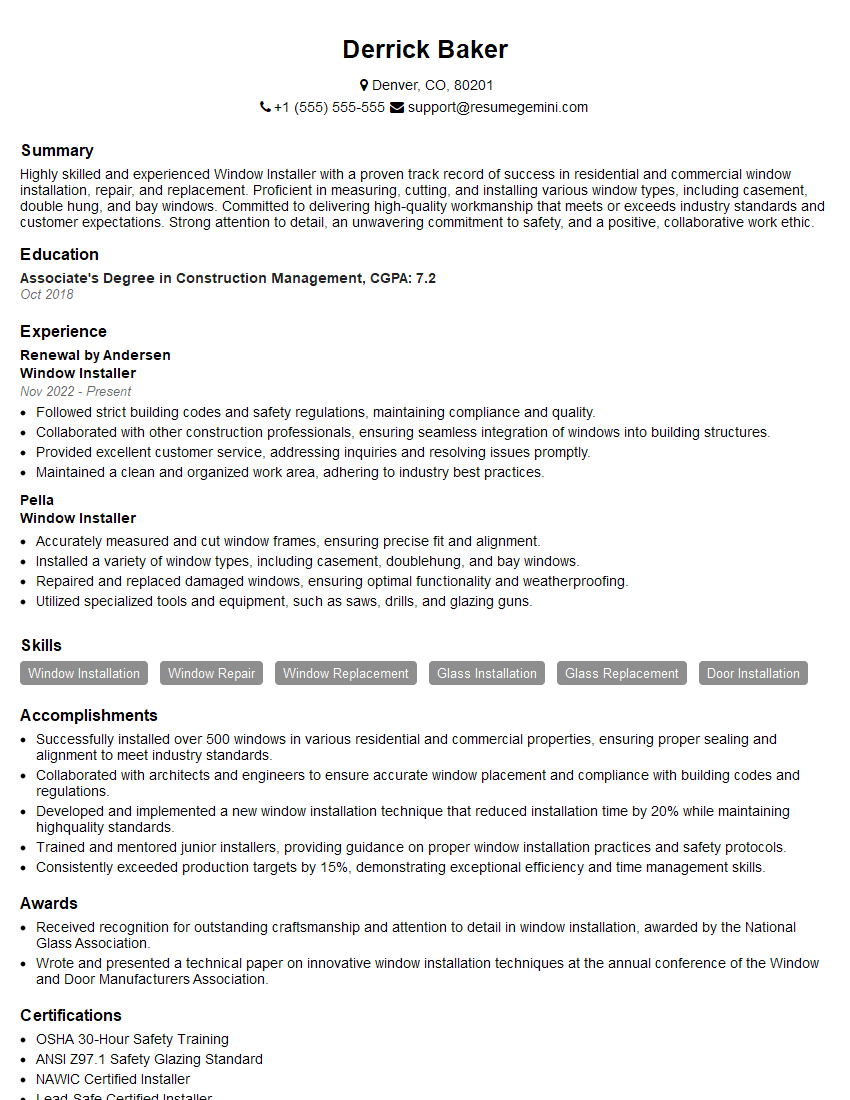
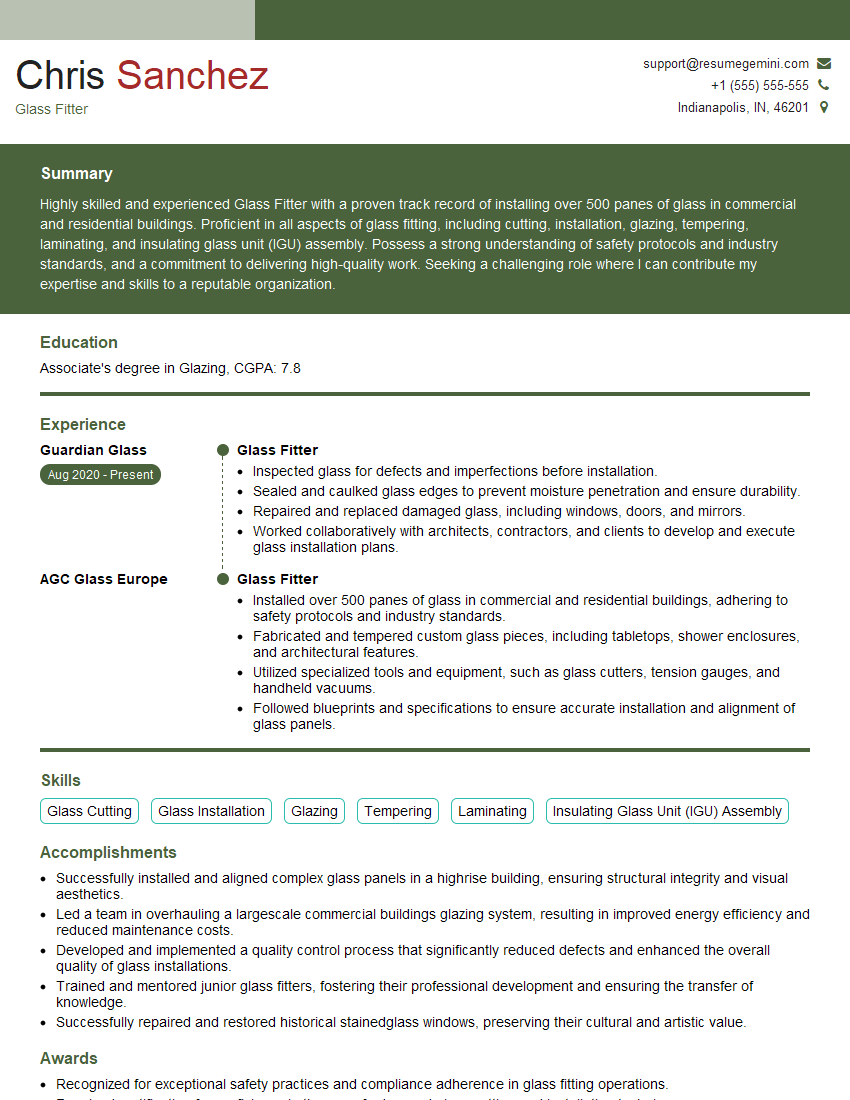
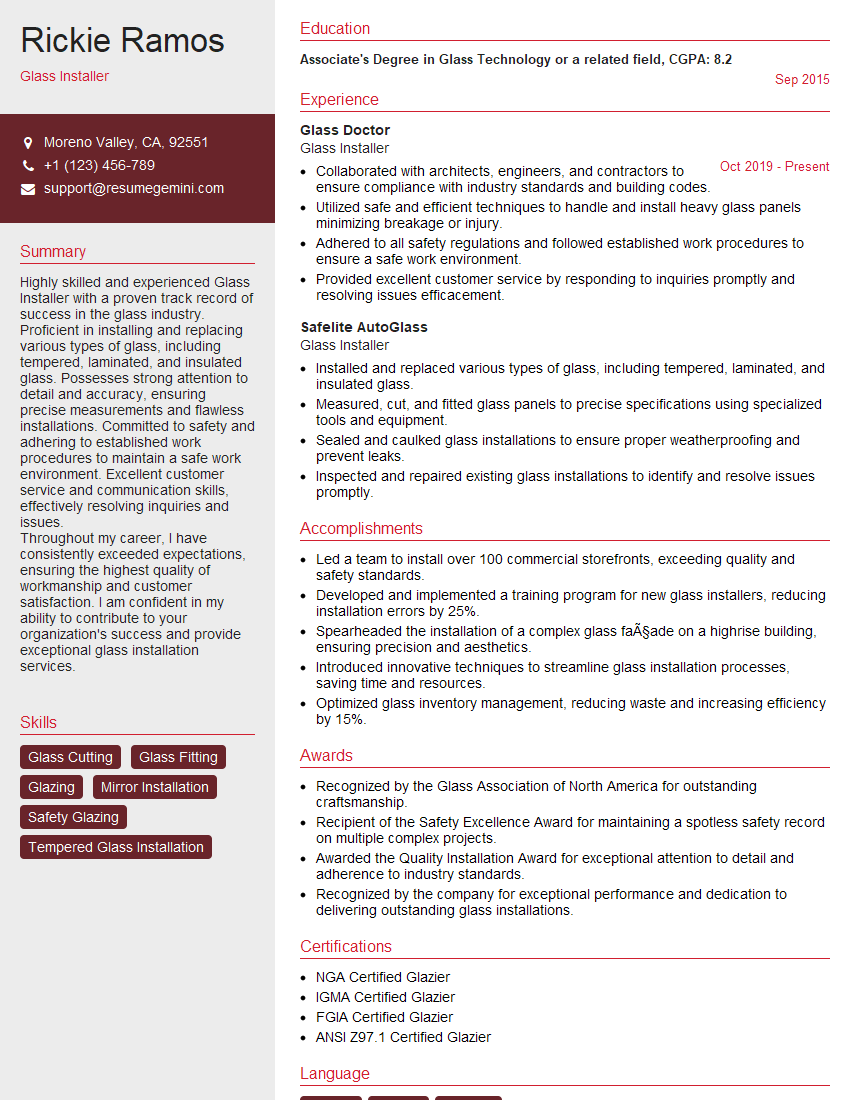
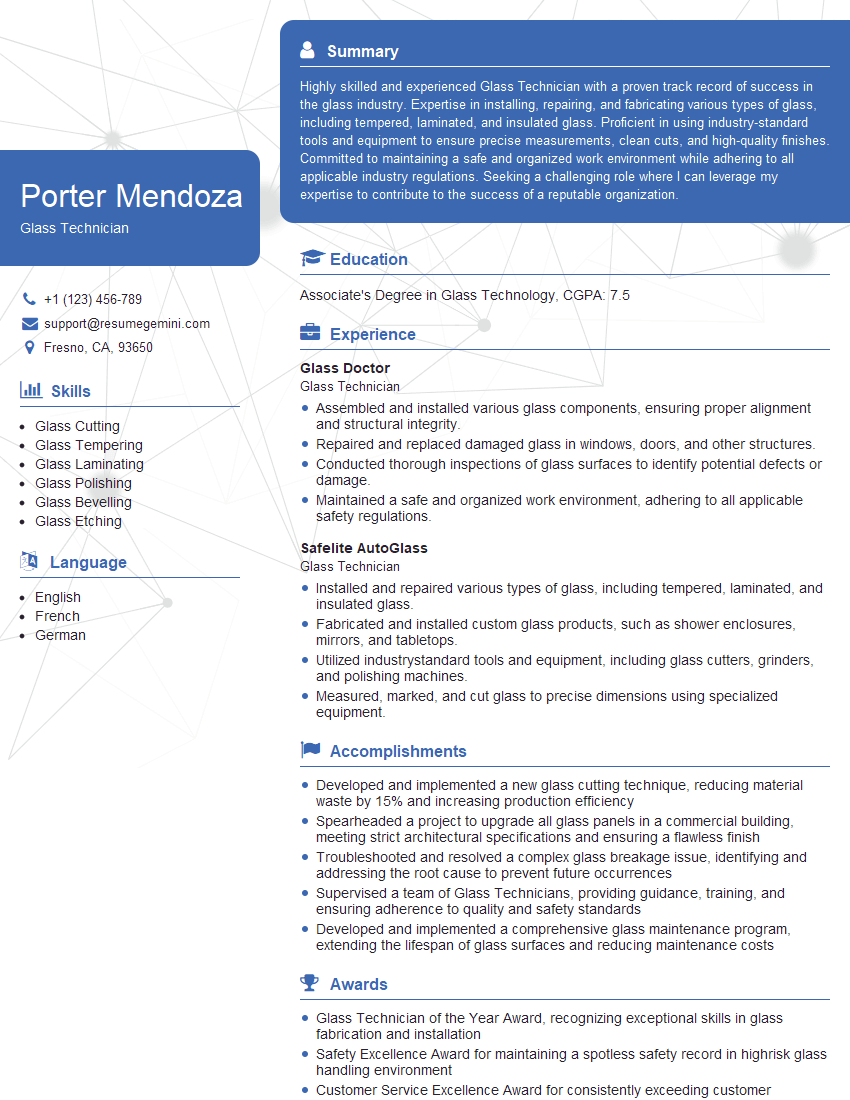
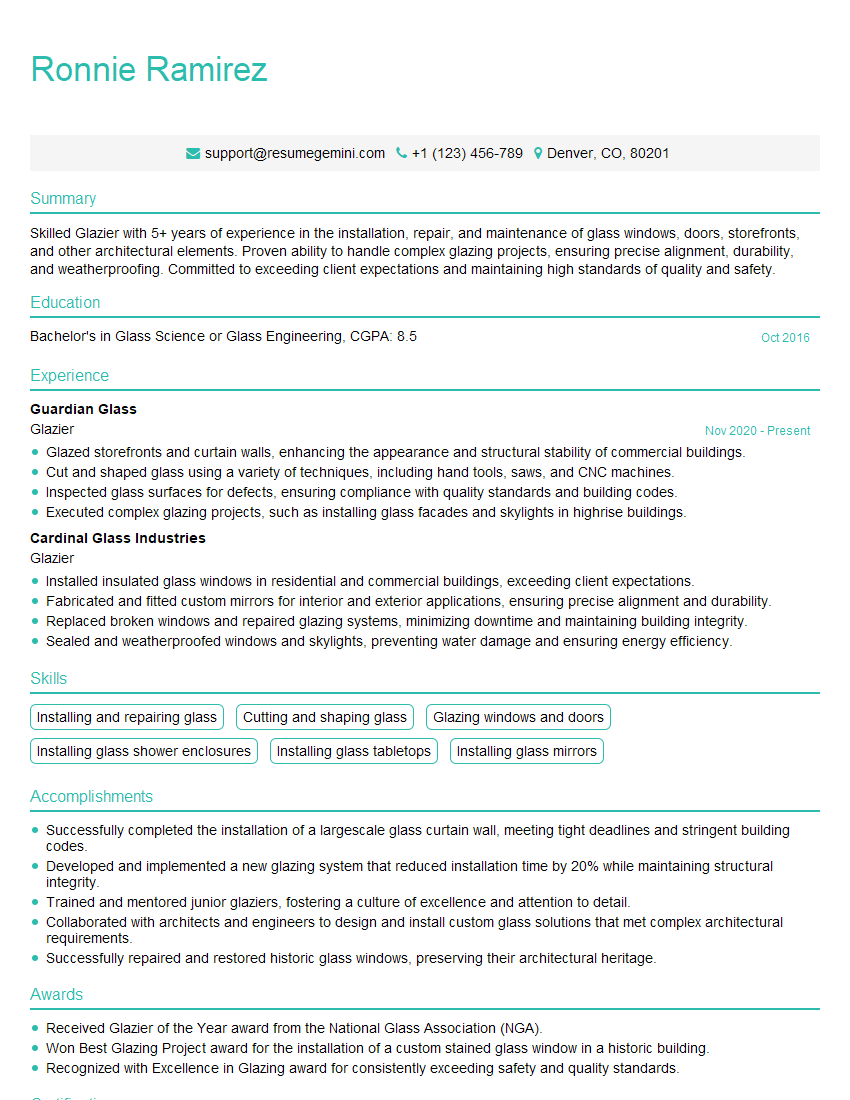
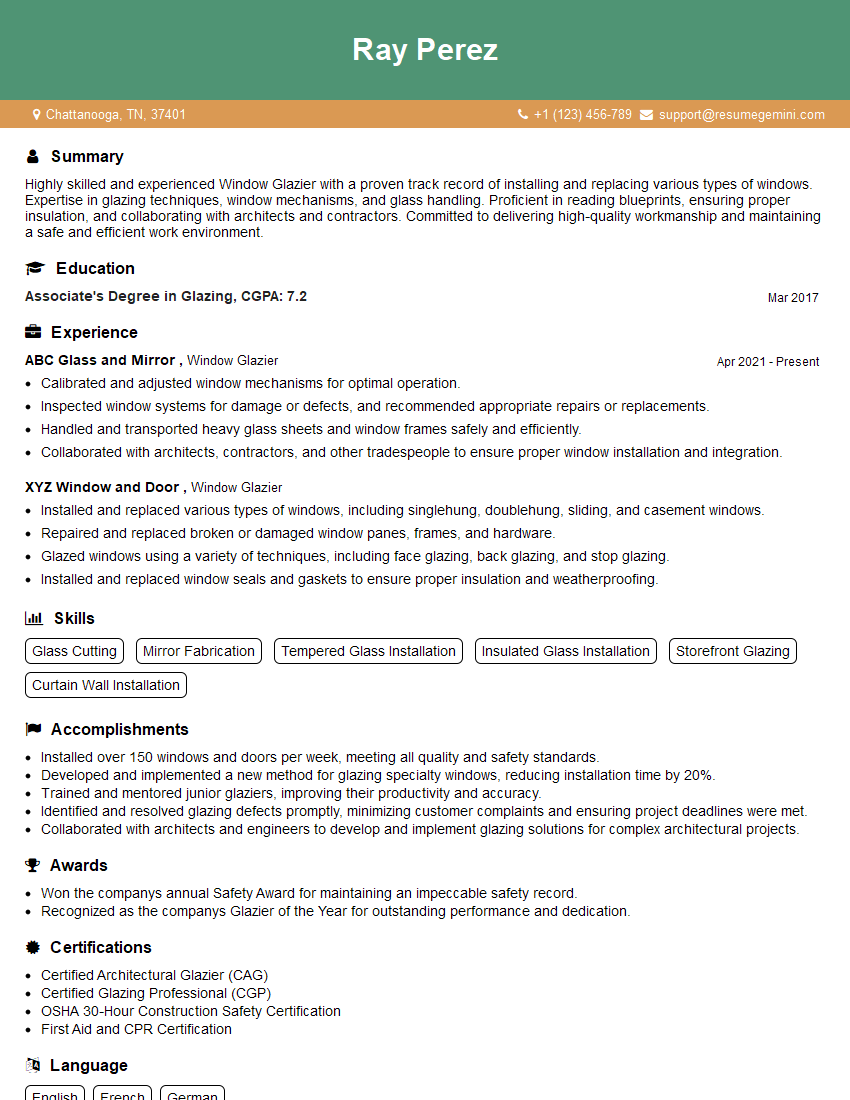
Mastering Glass Installation and Removal Procedures is crucial for career advancement in the construction and glazing industries. A strong understanding of these procedures demonstrates competence, attention to detail, and a commitment to safety – all highly valued attributes. To significantly boost your job prospects, creating an ATS-friendly resume is paramount. ResumeGemini can help you craft a professional and impactful resume that showcases your skills and experience effectively. Examples of resumes tailored to Glass Installation and Removal Procedures are available to guide you through the process. Invest time in building a strong resume – it’s your key to unlocking exciting career opportunities.
Explore more articles
Users Rating of Our Blogs
Share Your Experience
We value your feedback! Please rate our content and share your thoughts (optional).
What Readers Say About Our Blog
To the interviewgemini.com Webmaster.
Very helpful and content specific questions to help prepare me for my interview!
Thank you
To the interviewgemini.com Webmaster.
This was kind of a unique content I found around the specialized skills. Very helpful questions and good detailed answers.
Very Helpful blog, thank you Interviewgemini team.