Interviews are more than just a Q&A session—they’re a chance to prove your worth. This blog dives into essential Graded Exercise Testing interview questions and expert tips to help you align your answers with what hiring managers are looking for. Start preparing to shine!
Questions Asked in Graded Exercise Testing Interview
Q 1. Explain the purpose of a Graded Exercise Test (GXT).
A Graded Exercise Test (GXT), also known as a stress test, is a non-invasive procedure used to evaluate the heart’s response to increasing workloads. It’s primarily used to diagnose coronary artery disease (CAD), assess functional capacity, and guide exercise prescription for patients with various cardiac or pulmonary conditions. Think of it as a controlled ‘stress test’ for your heart, allowing us to observe how it performs under pressure.
In essence, we gradually increase the intensity of exercise while monitoring the heart’s electrical activity (ECG), blood pressure, and heart rate. This gives us crucial information about the heart’s ability to adapt to increasing demands. For example, a patient with CAD might show significant ST-segment depression on the ECG during exertion, indicating reduced blood flow to the heart muscle.
Q 2. Describe the different stages of a GXT.
A typical GXT involves several stages, each characterized by a progressive increase in exercise intensity. The most common method uses a treadmill or stationary bicycle. Stages usually last 2-3 minutes each.
- Stage 1: Baseline: The test begins with a period of rest to obtain baseline measurements of heart rate, blood pressure, and ECG.
- Progressive Stages: Exercise intensity (speed, incline, or resistance) is gradually increased in a predetermined manner, usually every 2-3 minutes. This increase can be based on protocols such as Bruce, Balke, or modified Naughton protocols.
- Peak Exercise: The patient continues exercising until they reach their predetermined endpoint or experience limiting symptoms (e.g., chest pain, shortness of breath, fatigue).
- Recovery: Once the test is terminated, the patient is monitored during the recovery period, often for at least 6 minutes, to assess the heart’s return to baseline.
The specific protocol used depends on the patient’s fitness level and the purpose of the test. For instance, a less fit individual may begin with a modified Bruce protocol, which is a less strenuous starting point compared to the standard Bruce protocol.
Q 3. What are the contraindications for performing a GXT?
Several contraindications exist for performing a GXT, making it crucial to carefully assess the patient’s medical history before proceeding. These can be absolute or relative, meaning that a relative contraindication might allow the test under certain conditions or with modifications, while an absolute contraindication usually means the test shouldn’t be performed.
- Absolute Contraindications: These include acute myocardial infarction within the past two days, unstable angina, uncontrolled heart arrhythmias, severe aortic stenosis, uncontrolled hypertension, and acute pulmonary embolism.
- Relative Contraindications: These include left main coronary stenosis, moderate stenotic valvular heart disease, electrolyte abnormalities, and recent stroke or transient ischemic attack (TIA).
It is vital to carefully weigh the risks and benefits of performing a GXT in patients with relative contraindications. Often, a thorough clinical evaluation and a discussion with the patient are necessary to make an informed decision. For example, a patient with well-controlled hypertension might still undergo the test with close monitoring of blood pressure.
Q 4. How do you monitor a patient’s vital signs during a GXT?
Continuous monitoring of vital signs is essential during a GXT. This involves:
- Electrocardiogram (ECG): Continuous monitoring of the heart’s electrical activity to detect any abnormalities like arrhythmias or ischemia (reduced blood flow to the heart muscle).
- Blood Pressure: Blood pressure is measured at regular intervals (e.g., every stage or every minute) to assess the cardiovascular response to exercise. This is crucial in detecting hypertension or hypotension.
- Heart Rate: Heart rate is continuously monitored to track the increase in heart rate with increasing exercise intensity. This provides information about the heart’s response to the workload.
- Respiratory Rate and Oxygen Saturation (SpO2): Observing the patient’s breathing rate and oxygen saturation levels helps assess respiratory function and detect any signs of respiratory distress.
- Rate of Perceived Exertion (RPE): Asking the patient to rate their level of exertion (typically using a Borg scale) helps assess the patient’s subjective experience and tolerability of the exercise.
All this information is recorded and analyzed to assess the patient’s cardiovascular response to the stress test.
Q 5. What are the common methods for interpreting GXT data?
Several methods exist for interpreting GXT data. The analysis focuses on several key metrics:
- Heart Rate Response: Analyzing the heart rate at rest, during exercise, and during recovery helps assess the heart’s ability to respond to increased workload. An abnormally high or low heart rate response can indicate a problem.
- Blood Pressure Response: Changes in systolic and diastolic blood pressure during exercise provide insight into the cardiovascular system’s ability to cope with stress.
- ECG Changes: Observing ST-segment depression or elevation on the ECG provides crucial information about the possibility of myocardial ischemia or infarction.
- Peak Exercise Capacity: The maximum oxygen consumption (VO2 max) achieved during the test is an important measure of cardiorespiratory fitness.
- Ischemic Threshold: The exercise intensity at which myocardial ischemia starts to appear on the ECG is a critical piece of information used to guide exercise training prescription (discussed in the next answer).
Interpretation usually involves comparing the patient’s results to age- and sex-matched normative data and considering their medical history and symptoms. Software and algorithms are often used to analyze data objectively and efficiently.
Q 6. Explain the concept of ischemic threshold during a GXT.
The ischemic threshold is the point during a GXT at which myocardial ischemia (reduced blood flow to the heart muscle) begins. It is typically identified by the appearance of ST-segment depression on the ECG. This is a crucial finding in diagnosing coronary artery disease (CAD).
Imagine a highway with traffic. If the highway (coronary artery) is narrowed due to plaque build-up, the flow of blood (traffic) will be restricted when the demand increases (during exercise). The ischemic threshold is the point where the traffic flow becomes significantly impacted, and ischemia occurs. Observing this threshold provides important information about the severity and location of coronary artery narrowing.
Determining the ischemic threshold is critical because it helps in guiding exercise prescription for patients with CAD. Exercise should be carefully managed to avoid pushing the patient beyond their ischemic threshold.
Q 7. How do you calculate the heart rate reserve?
Heart rate reserve (HRR) is the difference between the maximum heart rate (MHR) and the resting heart rate (RHR). It represents the available range of heart rate for exercise. It’s often used to calculate target heart rate zones for exercise training programs.
The calculation is straightforward:
HRR = MHR - RHR
Where:
MHRis the maximum heart rate, often estimated using the formula220 - age(though more accurate methods exist considering individual variations).RHRis the resting heart rate, typically measured after several minutes of quiet rest.
For example, a 40-year-old with a resting heart rate of 60 bpm would have a maximum heart rate of approximately 180 bpm (220 – 40) and a heart rate reserve of 120 bpm (180 – 60). This reserve is then used to determine training intensities. For instance, a target heart rate of 70% of HRR would be 84 bpm above their resting rate, resulting in a target heart rate of 144 bpm (60+84).
Q 8. Describe the difference between absolute and relative VO2 max.
The difference between absolute and relative VO2 max lies in how it’s expressed. Absolute VO2 max is the maximal oxygen uptake expressed in liters per minute (L/min). It’s a measure of the body’s total oxygen consumption capacity. Think of it as the total amount of oxygen your body can utilize during peak exertion. A highly trained athlete might have an absolute VO2 max of 5 L/min, while a less fit individual might have 2.5 L/min. This value is influenced by factors like body size; larger individuals generally have higher absolute VO2 max values.
Relative VO2 max, on the other hand, normalizes this value for body weight, typically expressed in milliliters of oxygen per kilogram of body weight per minute (mL/kg/min). This gives a better comparison between individuals of different sizes. For example, two individuals might have the same absolute VO2 max, but if one is significantly heavier, their relative VO2 max will be lower. Relative VO2 max is often preferred when comparing fitness levels across individuals with different body weights. It provides a better reflection of cardiovascular fitness.
Q 9. What is the significance of the anaerobic threshold?
The anaerobic threshold (AT), also known as the lactate threshold, is the point during exercise where the body begins to produce lactic acid faster than it can remove it. This leads to a rise in blood lactate levels. Before the AT, the body primarily relies on aerobic metabolism (using oxygen) to produce energy. However, once the AT is reached, the body increasingly relies on anaerobic metabolism (without oxygen), which is less efficient and produces lactic acid as a byproduct.
The significance of the AT lies in its relationship to exercise performance. It represents the highest exercise intensity that can be sustained for a prolonged period before significant lactate accumulation causes fatigue. In simpler terms, it indicates the transition point between sustainable aerobic exercise and unsustainable anaerobic exercise. Determining the AT is crucial in designing personalized exercise training programs, as it helps to optimize training intensity and prevent overtraining. For example, a training program designed to improve endurance might focus on exercises performed just below the AT to enhance aerobic capacity.
Q 10. Explain the use of electrocardiogram (ECG) monitoring during a GXT.
Electrocardiogram (ECG) monitoring during a Graded Exercise Test (GXT) is crucial for assessing the heart’s electrical activity and detecting any abnormalities that may arise during exertion. The ECG provides real-time information about the heart rate, rhythm, and electrical conduction pathways. This helps identify potential problems like arrhythmias (irregular heartbeats), ischemia (reduced blood flow to the heart muscle), or other cardiac events that could indicate underlying heart disease.
Specifically, ECG monitoring allows healthcare professionals to monitor for ST-segment depression or elevation, which are important indicators of myocardial ischemia or infarction (heart attack), respectively. By constantly monitoring the ECG, clinicians can promptly identify any potentially life-threatening situations and take necessary interventions. Continuous ECG monitoring adds significantly to the safety of a GXT. In essence, it provides a real-time window into the heart’s function under stress, enabling timely detection and management of any adverse events.
Q 11. What are the safety precautions to be taken during a GXT?
Safety precautions during a GXT are paramount. They involve careful pre-test screening to identify individuals at high risk. This includes a thorough medical history, physical examination, and potentially other diagnostic tests like ECGs or blood work depending on the individual’s risk factors. The test environment needs to be properly equipped with emergency medical equipment, including defibrillators, oxygen, and appropriately trained personnel.
During the test itself, continuous monitoring of vital signs (heart rate, blood pressure) and ECG is essential. The exercise intensity should be carefully adjusted based on the patient’s response and symptoms. Clear communication with the patient is crucial to ensure they understand the procedure and can communicate any discomfort. Regular breaks or adjustments to the exercise protocol may be needed to accommodate individual tolerance levels. Post-test monitoring is also critical, ensuring that the patient recovers appropriately before leaving the testing environment.
Q 12. How do you manage a patient experiencing symptoms during a GXT?
Managing a patient experiencing symptoms during a GXT requires immediate attention and a systematic approach. The first step is to immediately stop the exercise. The patient’s vital signs should be closely monitored, and any symptoms should be carefully assessed. Oxygen administration might be necessary depending on the symptoms.
The specific management strategy depends on the nature and severity of the symptoms. For example, chest pain might necessitate calling emergency medical services (EMS) immediately. Other symptoms such as dizziness or extreme fatigue may require slowing the exercise progression or even stopping the test entirely. Documentation of all symptoms, interventions, and the patient’s response is vital. If the patient’s condition doesn’t improve, immediate medical attention should be sought. The patient’s safety and well-being are the top priorities during this process.
Q 13. What are the different types of exercise protocols used in GXTs?
Several exercise protocols are used in GXTs, each with its advantages and disadvantages. The choice of protocol often depends on the patient’s fitness level, the purpose of the test, and the available equipment.
- Ramp protocols: These protocols involve a constant increase in workload over time, providing a steady increase in exercise intensity.
- Stage protocols: These involve a series of stages, each at a specific workload, with a rest period between stages. Examples include the Bruce protocol and the Balke protocol.
- Step protocols: These protocols involve a step-wise increase in workload, maintaining a steady state at each step before progressing to the next level.
Each protocol offers a unique approach to progressively increasing exercise intensity, allowing for assessment of cardiovascular function at various levels of exertion. The choice of protocol often depends on factors such as the patient’s fitness level and the specific goals of the test.
Q 14. Explain the Bruce protocol and its application.
The Bruce protocol is a widely used, stage-based GXT protocol. It’s characterized by a progressively increasing workload on a treadmill, with each three-minute stage increasing in speed and grade (inclination). The speed and grade are pre-determined for each stage, making it a standardized protocol. For instance, the first stage might be a speed of 1.7 mph at a 10% grade, while subsequent stages progressively increase both speed and grade. The test continues until the patient reaches their volitional fatigue or meets specific criteria defined by the healthcare professionals (e.g. reaching a predetermined heart rate, showing signs of cardiac ischemia).
Its application is widespread in evaluating cardiovascular fitness and diagnosing cardiac disease. The standardized nature of the Bruce protocol allows for reliable comparisons across individuals and studies. However, it’s important to note that its intensity makes it unsuitable for all patients, particularly those with very low fitness levels or pre-existing cardiovascular conditions. Modifications to the protocol may be necessary based on the individual’s limitations and tolerances. Its predictable nature helps accurately assess maximum oxygen uptake and cardiovascular response, aiding clinical decision-making.
Q 15. What are the limitations of GXT?
Graded Exercise Testing (GXT), while a powerful tool, has limitations. It’s crucial to understand these to interpret results accurately and avoid misdiagnosis. One key limitation is its indirect nature; it assesses cardiovascular function through observable responses like heart rate and blood pressure, rather than directly visualizing the heart or blood vessels. This means we infer underlying issues based on the patient’s physiological response to exercise.
- Subjectivity: Patient effort and perceived exertion can vary, affecting the test’s reliability. A patient’s motivation or pain tolerance might influence their performance, leading to inaccurate interpretations.
- False Positives/Negatives: GXT may produce false-positive results (indicating disease when none exists) in individuals with conditions unrelated to the heart, such as anxiety or deconditioning. Conversely, false-negative results (missing disease) are possible if the test isn’t strenuous enough to elicit significant changes in vital signs.
- Limitations in specific populations: GXT may be difficult or inappropriate for certain patient groups such as those with severe pulmonary disease, advanced heart failure, or those who are extremely deconditioned. Modifications are necessary, but may limit the reliability of the results.
- Underlying conditions: Pre-existing conditions can affect test interpretation. For instance, a patient with anemia may experience fatigue at lower exercise intensities, masking their true cardiovascular capacity.
For example, a highly anxious individual may exhibit a disproportionately high heart rate response to a relatively low workload, potentially leading to a misinterpretation of their cardiovascular health.
Career Expert Tips:
- Ace those interviews! Prepare effectively by reviewing the Top 50 Most Common Interview Questions on ResumeGemini.
- Navigate your job search with confidence! Explore a wide range of Career Tips on ResumeGemini. Learn about common challenges and recommendations to overcome them.
- Craft the perfect resume! Master the Art of Resume Writing with ResumeGemini’s guide. Showcase your unique qualifications and achievements effectively.
- Don’t miss out on holiday savings! Build your dream resume with ResumeGemini’s ATS optimized templates.
Q 16. How do you interpret a patient’s response to a GXT?
Interpreting a patient’s response to a GXT involves a holistic approach, considering various physiological parameters recorded throughout the test. We’re looking for patterns and deviations from expected responses to exercise.
- Heart Rate Response: A normal response shows a linear increase in heart rate with increasing workload. Abnormal responses include a blunted or excessively high heart rate increase.
- Blood Pressure Response: Ideally, systolic blood pressure should rise steadily with exercise, while diastolic pressure should remain relatively stable or slightly decrease. Significant drops in blood pressure or failure of systolic blood pressure to rise are worrisome signs.
- Electrocardiogram (ECG) Changes: The ECG is constantly monitored for signs of ischemia (reduced blood flow to the heart muscle), such as ST-segment depression or elevation. These changes are highly indicative of coronary artery disease.
- Symptoms: The patient’s subjective experience is crucial. Angina (chest pain), dyspnea (shortness of breath), dizziness, or leg claudication (pain in the legs during exercise) are significant indicators of cardiovascular limitations.
- Exercise Capacity: The total amount of work performed (measured in METs or peak oxygen uptake) provides a measure of functional capacity and can be compared to predicted values based on age and sex.
For instance, a patient who develops chest pain and ST-segment depression during a GXT might be diagnosed with coronary artery disease, requiring further investigation. Conversely, a patient who completes the test without any significant physiological changes or symptoms might be considered to have good cardiovascular health.
Q 17. Discuss the role of GXT in diagnosing cardiovascular disease.
GXT plays a vital role in diagnosing cardiovascular disease (CVD), though it’s not definitive on its own. It’s often used as a screening tool, helping identify individuals at risk of CVD. It doesn’t directly visualize the heart, but rather assesses its functional capacity under stress.
- Ischemia Detection: The most significant diagnostic use is the detection of myocardial ischemia. The ECG changes during exercise can reveal reduced blood flow to the heart muscle, a hallmark of coronary artery disease.
- Functional Capacity Assessment: The test measures how well the cardiovascular system responds to exertion, which helps evaluate the severity of existing disease and guide treatment decisions.
- Risk Stratification: By determining exercise capacity and observing the presence of ischemia or other abnormal responses, GXT helps stratify patients into different risk categories for future cardiac events.
- Symptom Provocation: In some cases, GXT can provoke symptoms like angina or dyspnea, helping confirm their presence and severity.
For example, a GXT showing significant ST-segment depression might prompt further investigations like coronary angiography to confirm the diagnosis of coronary artery disease.
Q 18. What are the benefits of GXT in exercise prescription?
GXT provides invaluable information for creating safe and effective exercise prescriptions. It determines the individual’s functional capacity, identifying safe exercise intensities and prescribing appropriate exercise modes.
- Target Heart Rate Determination: The GXT establishes the patient’s maximum heart rate and allows calculation of safe target heart rate zones for exercise training.
- Exercise Intensity Prescription: The test helps prescribe an appropriate exercise intensity, ensuring the patient trains effectively without overexertion. This helps optimize training without risking injury.
- Exercise Mode Selection: Based on the patient’s response during the GXT, certain exercise modes (e.g., cycling vs. treadmill) might be recommended or contraindicated.
- Monitoring Progress: GXT can be repeated to monitor the effectiveness of exercise training and adjust the prescription as needed.
Imagine a patient recovering from a heart attack. Their GXT might reveal a low functional capacity. Based on this, the exercise prescription would start at a very low intensity, gradually increasing as the patient’s fitness improves, avoiding potential complications.
Q 19. Explain the role of GXT in risk stratification.
GXT plays a significant role in risk stratification, helping clinicians assess a patient’s risk of future cardiovascular events. This is done by analyzing various factors observed during the test.
- Exercise Capacity: A lower exercise capacity (measured by peak oxygen uptake or METs) indicates a higher risk.
- ECG Changes: The presence of ischemia (ST-segment depression or elevation) significantly increases the risk of future cardiac events.
- Symptoms During Exercise: The development of symptoms like angina or dyspnea during the test points to a higher risk profile.
- Blood Pressure Response: Abnormal blood pressure responses can also contribute to risk stratification.
Based on the combination of these factors, the patient is assigned to a risk category (low, moderate, high), which then guides treatment strategies and preventive measures. For instance, patients with a high risk might be prescribed medication, lifestyle modifications, or further diagnostic testing.
Q 20. How do you modify a GXT protocol for different patient populations?
Modifying a GXT protocol for different patient populations is essential to ensure safety and obtain reliable results. Adaptations are based on the patient’s specific conditions and limitations.
- Cardiac Disease: Patients with known heart conditions (e.g., heart failure, valvular disease) may require a modified protocol with lower intensity and shorter duration. They might also require closer monitoring and more frequent ECG readings.
- Pulmonary Disease: Patients with lung conditions might benefit from a ramp protocol that emphasizes shorter intervals with a slower rate of intensity increase to avoid dyspnea.
- Older Adults: Protocols for older adults may incorporate slower ramp protocols with less intense workloads to accommodate age-related physiological changes.
- Obesity: Individuals with obesity might need modified protocols to account for their increased body weight and higher oxygen demand.
- Other Conditions: Orthopedic limitations or neurological conditions may require modifying the exercise mode (e.g., arm ergometry instead of treadmill) or utilizing alternative assessment methods.
For example, a patient with severe heart failure might undergo a very low-intensity GXT on a cycle ergometer with frequent rest periods to avoid overexertion. This allows for risk assessment while mitigating potential complications.
Q 21. What are the ethical considerations involved in administering GXT?
Ethical considerations are paramount when administering a GXT. The safety and well-being of the patient must always be the top priority.
- Informed Consent: Patients must be fully informed about the purpose, procedures, risks, and benefits of the test before providing their informed consent. This should be done using clear and understandable language.
- Proper Training and Supervision: The test must be administered by trained healthcare professionals who are equipped to handle potential complications. This includes having emergency equipment readily available.
- Risk Stratification: A thorough evaluation of the patient’s medical history is vital before testing to identify any contraindications and to adequately stratify risks.
- Appropriate Termination: The test should be terminated immediately if the patient experiences any significant symptoms (e.g., chest pain, severe dyspnea) or shows signs of abnormal physiological responses.
- Confidentiality: Patient information and test results must be maintained with strict confidentiality, adhering to all relevant regulations and guidelines.
For example, if a patient expresses discomfort or uncertainty, the test should be paused or terminated. It’s crucial to create a safe and respectful environment.
Q 22. What are the potential complications associated with GXT?
Graded Exercise Testing (GXT), while generally safe, carries potential complications. These range from minor to life-threatening, and their likelihood depends on the patient’s pre-existing conditions and the intensity of the test.
- Cardiac events: The most serious complication is a cardiac event, such as myocardial infarction (heart attack), angina (chest pain), or arrhythmias (irregular heartbeats). This is more likely in individuals with known heart disease. For example, a patient with significant coronary artery disease might experience chest pain or an arrhythmia during exertion.
- Orthostatic hypotension: A sudden drop in blood pressure upon standing, potentially causing dizziness or fainting. This is more common in patients with dehydration or autonomic nervous system dysfunction.
- Musculoskeletal issues: Muscle strains or sprains can occur, particularly in individuals who are not physically fit or have pre-existing joint problems.
- Respiratory issues: Patients with respiratory conditions might experience shortness of breath or bronchospasm (constriction of the airways).
- Anxiety and panic attacks: The stress of the test can trigger anxiety or panic attacks in susceptible individuals.
- Electrolyte imbalances: Intense exercise can disrupt electrolyte balance, leading to potential complications.
It’s crucial to carefully screen patients before a GXT, assessing their risk factors and medical history to minimize these risks. This involves a thorough physical examination, review of medical records, and sometimes additional diagnostic tests.
Q 23. Describe the importance of patient education before and after GXT.
Patient education is paramount for a successful and safe GXT. Before the test, I thoroughly explain the procedure, its purpose, and potential risks and benefits. This includes explaining the sensations they might experience (shortness of breath, muscle fatigue, etc.) and how to communicate these to the testing team. I emphasize the importance of honesty regarding symptoms and encourage them to stop if they feel any discomfort. For example, I’ll use analogies like ‘imagine climbing stairs – you’ll feel your heart rate and breathing increase, that’s normal, but if the pain in your chest intensifies, you need to tell us immediately’.
After the test, I explain the results in clear, simple terms, avoiding medical jargon. I answer any questions the patient might have and provide recommendations based on the findings. This might involve lifestyle modifications, referral to specialists, or initiation of a cardiac rehabilitation program. For instance, if the test reveals a low functional capacity, we would discuss strategies to improve fitness gradually, such as a supervised exercise program.
Effective communication builds trust and ensures patients feel comfortable and empowered throughout the process. Providing written materials summarizing the procedure and results further enhances understanding and adherence to recommendations.
Q 24. How do you document the results of a GXT?
Documentation of GXT results is meticulous and crucial for accurate interpretation and future reference. The documentation typically includes:
- Patient demographics: Age, gender, medical history, medications.
- Pre-test data: Resting heart rate, blood pressure, ECG.
- Protocol used: Specific exercise protocol followed (e.g., Bruce protocol, modified Bruce protocol).
- Exercise data: Heart rate, blood pressure, ECG readings at each stage of the exercise test, rate of perceived exertion (RPE), and any observed symptoms.
- Termination criteria: Reason for test termination (e.g., reaching target heart rate, symptoms, equipment malfunction).
- Post-test data: Recovery heart rate and blood pressure, ECG, and any observed symptoms.
- Interpretation and recommendations: Summary of findings and recommendations for management. This may include a calculation of the functional capacity.
All this information is typically recorded in a standardized format, often electronically, ensuring data integrity and efficient access. A comprehensive report is then generated, providing a concise summary of the test results and recommendations for the patient’s physician.
Q 25. Explain how you would interpret a positive and negative GXT result.
Interpretation of GXT results requires careful consideration of various factors. A ‘positive’ result doesn’t necessarily mean a serious problem; it indicates the presence of a physiological response that warrants further investigation. For example, a positive GXT might show significant ST-segment depression on the ECG during exercise, indicating myocardial ischemia (reduced blood flow to the heart). This might necessitate further testing like a coronary angiogram.
A ‘negative’ result suggests the absence of significant cardiovascular abnormalities during the test under the specific conditions of the test. However, it doesn’t rule out the possibility of underlying conditions that were not detected by this particular test. A negative test simply means that at the exertion levels attained during the GXT, no significant cardiovascular issues were identified. It is also important to consider the limitations of the test—for example, a patient might have a condition that is not stressed by the GXT protocol used.
The interpretation of a GXT result should always be considered within the patient’s overall clinical picture and in conjunction with other findings. It’s often not an isolated piece of information but rather a component of a larger diagnostic puzzle.
Q 26. Describe the role of technology in modern GXT.
Technology has significantly advanced GXT, enhancing its accuracy, safety, and efficiency. Modern systems incorporate:
- Automated ECG analysis: Sophisticated software detects and quantifies ECG changes during exercise, improving the accuracy of ischemic detection.
- Telemetry systems: Wireless monitoring of heart rate and ECG allows for greater freedom of movement during the test.
- Stress testing on treadmills or stationary cycles with automated adjustments: This facilitates graded exercise with precise control and reduced human error.
- Advanced data analysis software: Software packages provide detailed graphical representation of the test data, streamlining analysis and interpretation.
- Integration with electronic health records (EHRs): This allows for seamless data transfer and access, improving efficiency and coordination of care.
These technological advancements have made GXT more convenient, accurate, and safer for both the patient and the testing personnel. They enable us to collect comprehensive data, enhance the quality of our interpretation, and streamline the reporting process.
Q 27. Compare and contrast GXT with other diagnostic tests.
GXT is one of many diagnostic tools used in cardiovascular assessment, each with strengths and weaknesses. Let’s compare it to a few:
- Echocardiography: Provides detailed images of the heart’s structure and function at rest. It’s excellent for detecting structural abnormalities but doesn’t directly assess the heart’s response to stress.
- Coronary angiography: A more invasive procedure that directly visualizes the coronary arteries, identifying blockages. It’s definitive for diagnosing coronary artery disease but carries inherent risks and is not suitable for routine screening.
- Nuclear stress testing: Uses radioactive tracers to evaluate blood flow to the heart during exercise or pharmacologic stress. It provides valuable functional information and is less invasive than coronary angiography but involves radiation exposure.
GXT offers a relatively simple, non-invasive way to assess cardiovascular function during exercise, particularly valuable in evaluating functional capacity and identifying potential ischemic changes. While it’s less precise than procedures like coronary angiography, its cost-effectiveness and relative simplicity make it a crucial tool in the diagnostic armamentarium.
Q 28. What continuing education have you undertaken in Graded Exercise Testing?
My continuing education in Graded Exercise Testing is an ongoing commitment. I regularly attend workshops and conferences focused on advancements in GXT techniques, interpretation, and risk management. Recently, I completed a course on the latest advancements in ECG interpretation during stress testing, including the use of artificial intelligence in automated analysis. I actively participate in professional organizations like the American College of Cardiology and regularly review the latest peer-reviewed literature to stay abreast of evolving best practices. This ensures I can provide the most accurate, safe, and efficient GXT services for my patients. Additionally, I maintain current certification in ACLS (Advanced Cardiac Life Support) to handle any emergency situations during the test.
Key Topics to Learn for Graded Exercise Testing Interview
- Physiological Responses to Exercise: Understanding heart rate, blood pressure, and respiratory responses during graded exercise, and the interpretation of these responses in different populations.
- Exercise Prescription and Protocol: Developing and implementing safe and effective graded exercise test protocols, considering individual factors like age, health status, and fitness level. This includes understanding the various stages of a GXT and how to modify them as needed.
- Equipment and Technology: Familiarity with various types of equipment used in GXT (e.g., treadmills, bicycles, metabolic carts) and the ability to troubleshoot any technical issues. This also includes understanding the data acquired from these devices and their interpretation.
- Risk Stratification and Safety Procedures: Identifying individuals at high risk for complications during a GXT and implementing appropriate safety measures, including emergency response protocols. This includes knowing contraindications to exercise testing.
- Data Analysis and Interpretation: Analyzing data obtained from the GXT to determine an individual’s functional capacity, identify potential abnormalities, and make appropriate recommendations. This includes interpreting ECG changes during exercise.
- Exercise Testing in Specific Populations: Understanding how to modify GXT protocols for individuals with specific health conditions (e.g., cardiac disease, pulmonary disease) and other considerations for different populations (age, gender etc.).
- Ethical Considerations: Understanding the ethical implications of conducting GXTs, including informed consent, patient confidentiality, and appropriate professional conduct.
Next Steps
Mastering Graded Exercise Testing opens doors to rewarding careers in healthcare, fitness, and research. Demonstrating expertise in this area significantly enhances your job prospects. To maximize your chances of landing your dream role, create an ATS-friendly resume that effectively showcases your skills and experience. ResumeGemini is a trusted resource to help you build a professional and impactful resume that grabs recruiters’ attention. We provide examples of resumes tailored specifically to Graded Exercise Testing to give you a head start. Take the next step towards your career success today!

Wellness Coach Resume Sample

Athletic Trainer Resume Sample

Fitness Instructor Resume Sample

Registered Dietitian Resume Sample

Medical Doctor (MD) Resume Sample

Physician Assistant Resume Sample

Clinical Exercise Physiologist Resume Sample

Exercise Physiologist Resume Sample

Exercise Specialist Resume Sample

Sports Physiologist Resume Sample

Occupational Therapist Resume Sample
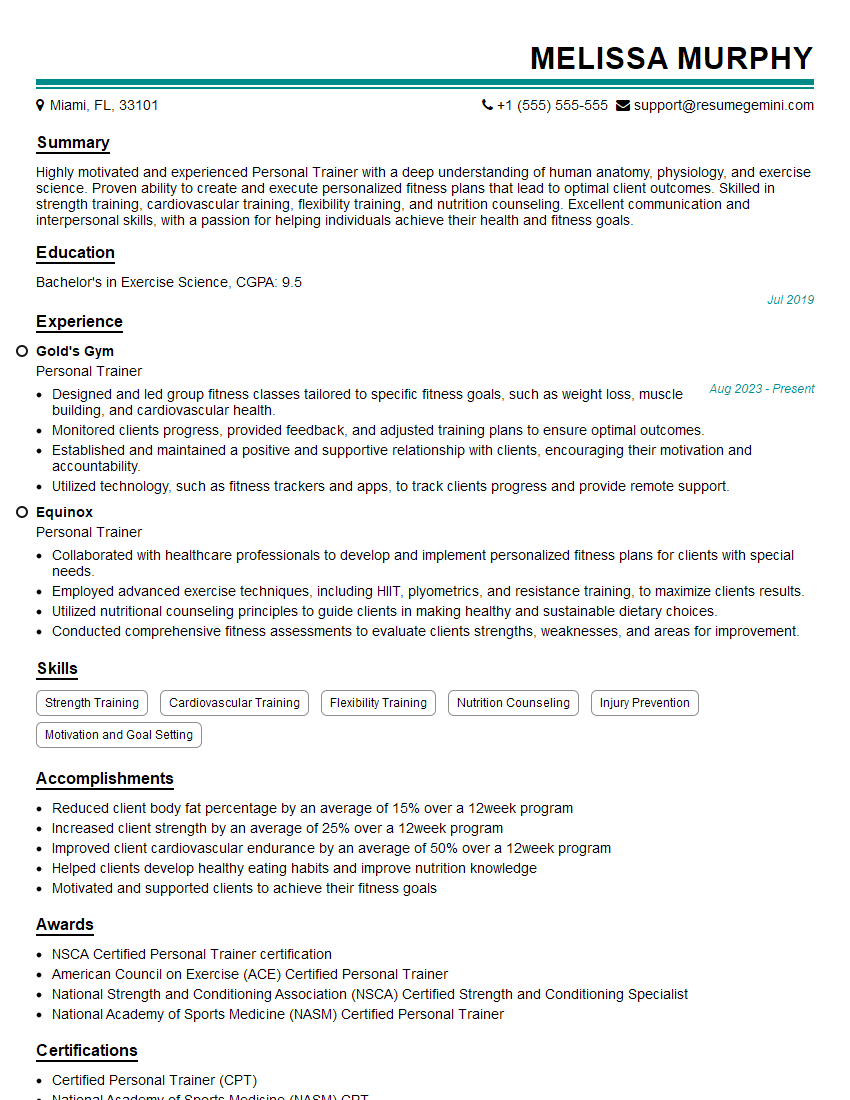
Personal Trainer Resume Sample
Explore more articles
Users Rating of Our Blogs
Share Your Experience
We value your feedback! Please rate our content and share your thoughts (optional).
What Readers Say About Our Blog
To the interviewgemini.com Webmaster.
Very helpful and content specific questions to help prepare me for my interview!
Thank you
To the interviewgemini.com Webmaster.
This was kind of a unique content I found around the specialized skills. Very helpful questions and good detailed answers.
Very Helpful blog, thank you Interviewgemini team.