Preparation is the key to success in any interview. In this post, we’ll explore crucial Grid-Tied System Design interview questions and equip you with strategies to craft impactful answers. Whether you’re a beginner or a pro, these tips will elevate your preparation.
Questions Asked in Grid-Tied System Design Interview
Q 1. Explain the key components of a grid-tied photovoltaic (PV) system.
A grid-tied photovoltaic (PV) system seamlessly integrates solar panels with the existing electrical grid. Think of it like adding a new, clean energy source to your home’s power supply. Key components include:
- Solar Panels (PV Modules): These convert sunlight into direct current (DC) electricity. Imagine them as the system’s energy collectors.
- Mounting Structure: This supports the solar panels, ensuring optimal sun exposure and structural integrity. Think of this as the panels’ sturdy foundation.
- Grid-Tied Inverter: This converts the DC electricity from the panels into alternating current (AC) electricity, compatible with your home’s electrical system and the grid. It’s the system’s translator.
- Metering System: Monitors energy production and consumption, allowing you to track your system’s performance and energy savings. This is like the system’s dashboard.
- Disconnects: Safety switches allow for isolation of the system during maintenance or emergencies. Think of these as emergency shutoff switches.
- Wiring and Conduits: These safely connect all the components together, ensuring a safe and efficient energy flow.
- Grounding System: Provides a path for fault currents to ground, protecting against electrical shocks and damage.
The system’s efficiency depends on the careful selection and integration of these components.
Q 2. Describe the function of a grid-tied inverter and its various operating modes.
The grid-tied inverter is the heart of the system, converting the DC power from the solar panels into AC power that’s usable by household appliances and compatible with the utility grid. It has several operating modes:
- PV Power Generation Mode: The inverter operates when sunlight is available, converting DC to AC power and feeding it to the grid and/or your home’s loads.
- Grid Synchronization Mode: The inverter continuously monitors the grid’s frequency and voltage, ensuring it operates in perfect synchronization to safely inject power. This is crucial for preventing damage to both the system and the grid.
- Islanding Prevention Mode: This safety feature prevents the inverter from continuing to operate if the grid fails, preventing any risk to utility workers during maintenance or repair. This ensures the safety of personnel working on the grid.
- Overcurrent Protection: The inverter monitors the current flowing through it and shuts down if the current exceeds a pre-set limit, preventing overload and potential damage.
- Fault Detection and Shutdown: The inverter continuously monitors for faults within the system, such as ground faults or short circuits, automatically shutting down to ensure safety.
These modes work together to ensure efficient, safe, and reliable operation of the grid-tied system.
Q 3. What are the safety considerations for designing and installing a grid-tied system?
Safety is paramount when designing and installing grid-tied systems. Key considerations include:
- Electrical Safety: Complying with all relevant electrical codes and standards is crucial, including proper grounding, overcurrent protection, and isolation devices. This prevents electrical shocks and fires.
- Arc Flash Protection: Implementing measures to mitigate the risk of arc flash incidents, which can cause serious burns and injuries. This often involves using appropriate personal protective equipment (PPE) and specialized equipment.
- Fire Safety: Using fire-resistant materials and ensuring proper ventilation to prevent overheating and potential fires. This includes ensuring correct installation and spacing of components.
- Grounding and Bonding: Establishing a reliable ground connection to prevent electrical shock and damage. Grounding is absolutely essential.
- Proper Installation Procedures: Following manufacturer’s instructions and best practices throughout the design and installation process. A well-trained and certified installer is essential.
- Permits and Inspections: Obtaining all necessary permits and ensuring the system undergoes thorough inspections by the relevant authorities to ensure code compliance.
Neglecting these safety considerations can lead to serious accidents and damage.
Q 4. How do you ensure grid compliance in the design of a grid-tied system?
Ensuring grid compliance involves meeting the requirements and standards set by the utility company and relevant regulatory bodies. This includes:
- Anti-Islanding Protection: Implementing effective anti-islanding protection to prevent the system from continuing to operate if the grid fails, protecting utility workers from potential hazards. This is mandated by grid codes.
- Voltage and Frequency Regulation: Ensuring the system does not negatively impact the voltage and frequency stability of the grid. This requires careful inverter selection and system design.
- Power Quality: Meeting specific requirements for harmonic distortion and other power quality parameters to avoid impacting other grid-connected customers.
- Interconnection Agreement: Obtaining and complying with the terms of an interconnection agreement with the local utility company. This outlines the requirements for interconnection.
- Testing and Commissioning: Undertaking thorough testing and commissioning of the system to ensure it meets all grid compliance requirements before connection to the grid.
Non-compliance can lead to system disconnection and potential penalties.
Q 5. Explain the process of sizing a grid-tied PV system for a specific load.
Sizing a grid-tied PV system involves calculating the system’s capacity to meet the specific energy needs of the load. This involves a step-by-step process:
- Determine Energy Consumption: Calculate the total energy consumption of the load over a year, typically obtained from electricity bills or load profiling.
- Account for Losses: Factor in system losses, including inverter efficiency, wiring losses, and shading losses. These losses can be significant.
- Calculate PV System Size: Divide the total annual energy consumption by the estimated annual solar energy production per kWp (kilowatt-peak) in your location. This figure varies based on location and climate. You’ll need local solar irradiance data for accurate calculations.
- Select Solar Panels and Inverter: Choose panels and inverters that meet the calculated system size, ensuring compatibility and efficiency.
- Design System Layout: Plan the arrangement of solar panels, ensuring optimal sun exposure and minimizing shading. This often involves using specialized software.
- Perform Simulations: Use specialized software to simulate the system’s performance under various conditions to confirm the design meets requirements.
It’s crucial to consult with a qualified solar designer to ensure the system is properly sized and meets the specific energy requirements of the load.
Q 6. What are the different types of grid-tie inverters available, and what are their advantages and disadvantages?
Several types of grid-tie inverters exist, each with its own advantages and disadvantages:
- String Inverters: These are simpler and generally less expensive but less efficient in partial shading conditions. Think of these as a simpler, more cost-effective solution.
- Microinverters: These are attached to individual solar panels, optimizing power output even with shading. They’re more expensive but offer improved performance in shaded environments. These are ideal for complex roof designs.
- Power Optimizers: These sit between the panels and the string inverter, improving performance similar to microinverters but at a lower cost. They offer a balance between cost and performance.
The choice depends on factors like budget, system size, shading conditions, and desired performance.
Q 7. Describe the concept of Maximum Power Point Tracking (MPPT) in grid-tied systems.
Maximum Power Point Tracking (MPPT) is a crucial feature in grid-tied inverters. Solar panels don’t produce power at a constant rate; it varies with sunlight intensity and temperature. MPPT algorithms constantly monitor the panel’s voltage and current and adjust the inverter’s input to extract the maximum power at any given time.
Imagine a hill with the peak representing the maximum power point. MPPT is like an intelligent climber always seeking the highest point, maximizing energy harvesting even under varying sunlight conditions. Without MPPT, the system might operate at lower efficiency, leading to reduced energy production.
Q 8. How do you account for shading effects in the design of a PV array?
Shading significantly impacts the performance of a PV array. Even a small shaded cell can drastically reduce the output of the entire string due to the phenomenon of bypass diodes and current mismatch. To account for this, we employ several strategies during design.
- Detailed shading analysis: We use specialized software and site surveys to meticulously map potential shading sources throughout the day, considering trees, buildings, and even clouds. This analysis informs the optimal PV array orientation and layout.
- String optimization: We design strings of panels to minimize the effect of shading. Shorter strings are less affected than long ones. We aim for strings with similar orientations and shading profiles.
- Employing bypass diodes: Each PV module contains bypass diodes that allow current to bypass a shaded cell, minimizing the overall power loss. The number and placement of bypass diodes are crucial for effective shading mitigation.
- Microinverters or power optimizers: These devices are placed at each module or string level, maximizing energy harvest from each individual panel, even if others are shaded. Microinverters convert DC power to AC at the panel level, reducing the impact of shading on the entire array. Power optimizers perform a similar function, but feed into a central inverter.
- Selecting appropriate modules: Some PV modules have superior shading tolerance characteristics than others, and choosing the right module can significantly reduce the impact of shading.
Q 9. Explain the impact of different string configurations on system performance.
Different string configurations significantly influence system performance, primarily affecting voltage and current levels, and ultimately, the system’s efficiency and energy production. Let’s consider some examples:
- Series Configuration: Connecting modules in series increases the voltage while maintaining the same current. This is advantageous for reducing losses in longer wiring runs to the inverter, but it’s very sensitive to shading: one shaded module can severely impact the entire string’s output.
- Parallel Configuration: Connecting modules in parallel increases the current while keeping the voltage the same. This improves tolerance to shading, as a shaded module won’t affect others in parallel; however, longer cable runs might lead to increased voltage drop and power loss.
- Series-Parallel Configuration: This combines the benefits of both; multiple strings of series-connected modules are then connected in parallel. This configuration offers a balance between voltage, current, and shading tolerance, and it is the most commonly used.
The optimal string configuration depends on various factors including the number and type of PV modules, inverter specifications, distance to the inverter, and expected shading conditions. Poor string configuration can significantly reduce energy output, potentially by 10-20% or more.
Q 10. How do you calculate the energy yield of a grid-tied PV system?
Calculating the energy yield of a grid-tied PV system involves a combination of factors. It’s not a single calculation, but rather a process.
- PVWatts or similar software: These tools use location-specific solar irradiance data, module specifications, and system parameters to estimate annual energy production. They account for various factors including angle of incidence, temperature, and shading.
- System losses: The calculated output from software needs to be adjusted to account for real-world losses, including:
- Module mismatch losses: Variations in module performance.
- Wiring losses: Resistance in the cables.
- Inverter losses: Efficiency limitations of the inverter.
- Soiling losses: Reduced efficiency due to dirt or debris on panels.
- Shading losses: As previously discussed.
- Historical data: If data from a similar system in the same location is available, this can refine the estimation, providing a more accurate prediction.
Ultimately, the energy yield is expressed in kilowatt-hours (kWh) per year, representing the total amount of electricity generated by the system.
Q 11. What are the common types of protection devices used in grid-tied systems?
Grid-tied systems require comprehensive protection to ensure safety and reliability. Common protection devices include:
- Overcurrent protection: Circuit breakers or fuses protect against excessive current flow due to short circuits or overloads.
- Ground fault circuit interrupters (GFCIs): Detect and interrupt ground faults, protecting against electric shock.
- Arc fault circuit interrupters (AFCIs): Detect and interrupt arcing faults, reducing fire risks.
- Surge protection devices (SPDs): Protect against voltage surges from lightning strikes or other sources.
- Reverse current protection: Prevents energy from flowing back into the grid during outages (critical for islanding prevention).
- Overvoltage protection: Protects the system from excessive voltage levels.
The specific protection devices and their ratings depend on the system’s size, location, and applicable codes and standards.
Q 12. Explain the role of anti-islanding protection in grid-tied systems.
Anti-islanding protection is crucial for grid-tied systems. Islanding occurs when a PV system continues to energize a section of the grid after a power outage. This poses a significant danger to utility workers who may unknowingly come into contact with live wires. Anti-islanding protection devices detect when the grid is down and automatically disconnect the PV system from the grid, preventing islanding.
Various methods are used for anti-islanding protection, including:
- Passive methods: Rely on the inherent characteristics of the PV system and grid. These are often insufficient on their own.
- Active methods: Employ sensors and algorithms to actively monitor grid conditions and detect islanding events. These include frequency, voltage, and impedance detection.
Regulations often mandate the use of anti-islanding protection for grid-tied systems to ensure the safety of utility workers and prevent potential damage to equipment.
Q 13. What are the different types of grounding techniques used for grid-tied systems?
Grounding is essential for grid-tied systems to provide a safe path for fault currents, protecting personnel and equipment. Common grounding techniques include:
- Grounding electrode system: A network of conductive rods or plates driven into the earth, providing a low-impedance path to ground.
- Grounding conductors: Wires connecting various system components, including the inverter, array, and building structure, to the grounding electrode system.
- Equipment grounding: Connecting metallic enclosures and other conductive parts of equipment to the grounding system, ensuring that any fault currents are safely diverted to ground.
The specific grounding method must meet relevant electrical codes and standards, which vary based on location and system size. Proper grounding is paramount for safety.
Q 14. How do you perform fault current calculations for grid-tied systems?
Fault current calculations are critical for determining the appropriate sizing of protective devices in grid-tied systems. The process involves determining the maximum short-circuit current that the system could generate under a fault condition.
This calculation considers factors such as:
- Grid impedance: The resistance and reactance of the utility grid at the point of connection.
- System impedance: The impedance of the PV system, including modules, cabling, and the inverter.
- Fault location: The point where the fault occurs in the system.
Specialized software tools are often used for this calculation, employing complex algorithms to model the system and predict fault currents. The results are then used to select appropriate circuit breakers, fuses, and other protection devices that can interrupt the fault current safely and reliably. Incorrect fault current calculations can lead to inadequate protection, creating significant safety hazards.
Q 15. Describe the process of commissioning a grid-tied PV system.
Commissioning a grid-tied PV system is a crucial step ensuring its safe and efficient operation. It’s a systematic process verifying all components are correctly installed and functioning as designed before connecting to the grid.
- Pre-connection checks: This involves verifying wiring connections, checking for correct polarity, ensuring proper grounding, and testing all protective devices (breakers, fuses, etc.) to ensure they operate correctly. We use multimeters and other testing equipment to confirm voltage, current, and resistance values meet specifications.
- PV array testing: We measure the open-circuit voltage (Voc) and short-circuit current (Isc) of the array to validate its performance and confirm there are no damaged modules. Infrared thermography might be used to detect hot spots indicative of cell failure.
- Inverter testing: The inverter is thoroughly tested to ensure it’s functioning correctly – checking its output voltage and frequency, confirming grid synchronization, and verifying its protection mechanisms.
- Grounding and bonding checks: We rigorously check grounding and bonding to safeguard against electrical shocks and ensure safety compliance. A ground resistance test is a critical part of this phase.
- Grid connection and synchronization: This is done under the supervision of a qualified electrician and often involves a utility company representative. The inverter must synchronize perfectly with the grid’s frequency and voltage before it’s allowed to inject power.
- Performance monitoring and data logging: Once connected, the system is monitored for several days to ensure optimal performance and identify any anomalies. Data loggers record key parameters like power output, voltage, current, and temperature, helping us fine-tune the system and make any necessary adjustments.
For example, during a recent commissioning, we discovered a loose connection in the combiner box causing intermittent power output. This highlights the importance of meticulous testing at each stage.
Career Expert Tips:
- Ace those interviews! Prepare effectively by reviewing the Top 50 Most Common Interview Questions on ResumeGemini.
- Navigate your job search with confidence! Explore a wide range of Career Tips on ResumeGemini. Learn about common challenges and recommendations to overcome them.
- Craft the perfect resume! Master the Art of Resume Writing with ResumeGemini’s guide. Showcase your unique qualifications and achievements effectively.
- Don’t miss out on holiday savings! Build your dream resume with ResumeGemini’s ATS optimized templates.
Q 16. What are the common troubleshooting steps for a malfunctioning grid-tied system?
Troubleshooting a malfunctioning grid-tied system requires a systematic approach. Safety is paramount, so always disconnect the system from the grid before starting any work.
- Visual inspection: Begin with a thorough visual check for obvious problems like loose connections, damaged wires, or faulty components. Look for signs of overheating, burns, or unusual wear.
- Check circuit breakers and fuses: Ensure all breakers are closed and fuses are intact. If a breaker is tripped or a fuse is blown, it indicates a fault within the circuit. It’s important to identify the root cause before resetting.
- Measure voltage and current: Use a multimeter to measure the voltage and current at different points in the system, comparing readings to the expected values based on the system design. This helps pinpoint the location of the fault.
- Inverter diagnostics: Most inverters have built-in diagnostic capabilities that provide error codes and performance data. These codes often indicate the nature of the problem.
- Check string voltage and current: Measure the voltage and current from each string of PV modules to identify any underperforming or damaged strings. This often reveals shading issues or module failures.
- Grid monitoring: If the problem involves grid connection, checking the grid voltage and frequency using a suitable monitoring device is vital. Verify if the grid is supplying the correct voltage and frequency.
For instance, if the inverter is displaying an over-voltage fault, the problem could be due to a faulty module, a problem with the grid voltage or a misconfiguration in the system’s settings. Systematic troubleshooting allows us to isolate the source of the issue.
Q 17. Explain the importance of using appropriate wire sizing in grid-tied system design.
Appropriate wire sizing is critical for safety and optimal performance in a grid-tied system. Undersized wires lead to excessive voltage drops, overheating, and potential fire hazards. Oversized wires are inefficient, unnecessarily increasing costs.
The correct wire size is determined by the current carrying capacity required. This depends on factors such as the system’s size (kWp), the length of the wiring runs, the ambient temperature, and the voltage drop allowed. National Electrical Codes (NEC) and similar standards provide guidelines and tables to determine appropriate wire sizes based on these factors.
For example, a 10kW system with longer wire runs will require thicker wires (lower AWG number) compared to a smaller 2kW system with short runs. This ensures sufficient current can flow without excessive voltage drops. Oversized wires lead to unnecessary costs, whilst undersized wires jeopardize the system’s safety. Using the correct wire size minimizes energy loss due to resistance and ensures the system’s longevity and safety.
We use wire sizing calculation software and consult the relevant electrical codes to determine the appropriate wire size for each part of the system. These calculations take into account factors such as the length of the wire runs, the expected current, the acceptable voltage drop, and the ambient temperature.
Q 18. What are the potential effects of harmonics on the grid from a grid-tied system?
Grid-tied PV systems, particularly those using power electronics like inverters, can introduce harmonics into the electrical grid. Harmonics are multiples of the fundamental frequency (usually 50Hz or 60Hz) and can cause several problems.
- Increased power losses: Harmonics create extra current flow in the grid, leading to increased resistive heating in transformers and other grid infrastructure, resulting in energy loss and reduced efficiency.
- Overheating of equipment: The additional current from harmonics can lead to overheating of transformers, cables, and other electrical equipment, potentially causing premature failure.
- Interference with other devices: Harmonics can interfere with the operation of sensitive electronic equipment connected to the grid, causing malfunctions or inaccurate readings.
- Resonance problems: In some cases, harmonics can interact with the grid’s natural resonant frequencies, causing resonance that can lead to further voltage and current distortion and equipment damage.
Mitigation strategies include using inverters with low harmonic distortion (THD), employing filters to reduce harmonic currents, and careful grid connection planning to minimize their overall impact. Stringent regulations often limit the allowable THD injected by grid-tied systems to prevent issues.
For example, an inverter with a THD of less than 3% is generally considered acceptable. Higher THD values may require the addition of harmonic filters to comply with grid codes.
Q 19. How do you design a grid-tied system for optimal energy efficiency?
Designing a grid-tied system for optimal energy efficiency involves considering several key factors throughout the entire design process.
- PV module selection: Choosing high-efficiency modules with excellent temperature coefficients minimizes energy losses due to heat and maximizes energy generation. We also consider the module’s degradation rate over time.
- Optimal array orientation and tilt: System orientation and tilt angle are optimized for maximum solar irradiance throughout the year, using solar irradiance data and appropriate software tools.
- Minimizing wire lengths and using appropriate wire sizing: Shorter wire runs reduce resistive losses. As previously discussed, the right wire size is crucial in reducing energy loss from resistive heating.
- Inverter selection: High-efficiency inverters with maximum power point tracking (MPPT) capabilities are essential for maximizing energy harvest from the PV modules. We evaluate inverters based on their efficiency curves and MPPT algorithms.
- Shading analysis and mitigation: Shading from trees, buildings, or other obstacles can significantly impact energy production. A thorough shading analysis should be done during the design phase to identify and mitigate shading issues, potentially requiring changes to the PV array layout.
- System monitoring and optimization: Installing a monitoring system allows for real-time performance tracking and enables identification of any issues affecting efficiency. Data analysis can help optimize system operation and identify areas for improvement.
For instance, in a recent project, optimizing the array tilt angle based on detailed solar irradiance data resulted in a 5% increase in annual energy production.
Q 20. Explain the concept of reactive power compensation in grid-tied systems.
Reactive power compensation is crucial in grid-tied systems to improve power factor and reduce losses. In simple terms, reactive power is the part of the electrical power that flows back and forth without doing any actual work. It’s often associated with inductive loads, which are common in electrical grids.
A low power factor (typically expressed as a lagging power factor) means the system draws more current than necessary for the actual power used, resulting in increased line losses and reduced grid efficiency. Capacitive compensation is often employed to counteract the inductive reactive power, bringing the power factor closer to unity (1.0).
This is usually achieved by installing power factor correction (PFC) capacitors at the point of common coupling (PCC) – where the grid-tied system connects to the utility grid. These capacitors supply reactive power, reducing the burden on the grid and enhancing overall efficiency.
There are various methods for reactive power compensation, including:
- Fixed capacitor banks: These provide a fixed amount of reactive power compensation.
- Switched capacitor banks: These allow adjusting the amount of compensation based on system demand.
- Dynamic reactive power compensation: More sophisticated systems using power electronic devices to continuously adjust compensation based on real-time conditions.
By improving power factor, we minimize line losses, reduce the stress on grid infrastructure, and often improve system stability. Many grid codes mandate minimum power factor requirements for grid-connected systems.
Q 21. How do you incorporate energy storage into a grid-tied PV system?
Integrating energy storage into a grid-tied PV system significantly enhances its functionality and value proposition. Energy storage systems (ESS), typically using batteries, can store excess solar energy generated during peak production times and release it later when needed, improving energy self-consumption and reducing reliance on the grid.
There are several ways to integrate energy storage:
- Battery-based ESS: This is the most common type, involving connecting a battery storage system (usually lithium-ion) to the inverter. The inverter controls the charging and discharging of the battery based on the solar generation, grid availability, and load demands.
- Hybrid inverters: Some inverters are designed to integrate with battery storage systems directly. These hybrid inverters simplify the system architecture and typically manage energy flow between the solar panels, battery, and grid more efficiently.
- AC-coupled systems: The battery system is connected to the grid through a separate AC inverter. This allows for greater flexibility in the choice of battery and inverter technologies but adds complexity and cost.
- DC-coupled systems: The battery system is connected to the PV array on the DC side, before the inverter. This is generally more efficient than AC coupling, but limits the choice of battery systems compatible with the PV inverter.
The size of the battery system is determined by the desired level of self-consumption and backup power requirements. For example, a large battery can allow for near-complete self-sufficiency during the day and provide backup power during grid outages. Proper sizing and control algorithms are critical for optimal ESS performance and ensuring battery longevity.
Integrating energy storage increases the overall system cost but provides significant benefits, including increased self-consumption, improved grid stability, potential for peak demand shaving and emergency backup power in case of grid outages.
Q 22. What are the permitting requirements for installing grid-tied PV systems in your region?
Permitting requirements for grid-tied PV systems vary significantly by region, often involving multiple agencies. Generally, you’ll need permits from your local building department, fire marshal, and the utility company. The building department will check for compliance with building codes, ensuring structural integrity of the mounting system and safe electrical wiring. The fire marshal will inspect for fire hazards, particularly related to electrical components and potential rooftop access issues. Finally, the utility company will review the interconnection application, which details the system’s design, ensuring it meets their grid interconnection standards and won’t negatively affect grid stability. This often involves submitting detailed system specifications, including inverter models, panel specifications, and a system design drawing. In some regions, you may also need permits from environmental agencies if the system impacts protected lands or species. For example, in California, you might need a permit from the California Energy Commission (CEC) in addition to local permits. Always check with your local authorities for a definitive list of required permits and their application procedures. Failure to obtain the necessary permits can lead to significant fines and potential system disconnection.
Q 23. How do you ensure the proper interconnection of a grid-tied system with the utility grid?
Proper interconnection of a grid-tied system requires careful planning and execution to ensure safe and reliable operation. It’s a critical step involving several stages. Firstly, a detailed interconnection application, including system specifications and design drawings, must be submitted to and approved by the utility company. This application undergoes rigorous review to ensure compliance with grid codes and standards. Next, the system needs to be installed according to the approved plans, with careful attention to grounding, wiring, and safety measures. Once installation is complete, a qualified electrician should conduct thorough testing to ensure that all safety and performance parameters are met. A crucial aspect is the installation of a dedicated meter to measure the energy produced by the PV system and the energy consumed from the grid. The system must also incorporate a rapid shutdown mechanism, automatically disconnecting from the grid in case of a fault or emergency. Finally, the utility company will conduct a final inspection to verify the correct and safe integration of the system with the grid before allowing it to operate. Think of it like connecting a new appliance to your home’s electrical system – you wouldn’t do it without making sure it’s wired correctly and safely. This is amplified on a larger scale with grid-tied PV systems to maintain grid stability and safety.
Q 24. What are the economic considerations associated with the design of a grid-tied PV system?
Economic considerations are paramount in grid-tied PV system design. The primary goal is to achieve a financially viable project that provides a reasonable return on investment. This involves a detailed cost-benefit analysis. Initial costs include equipment purchases (panels, inverters, mounting hardware, etc.), permitting fees, labor, and engineering. Ongoing costs involve maintenance, insurance, and potential repairs. Revenue comes from reduced electricity bills (using self-generated power) and potentially from feed-in tariffs (payment for excess energy fed back into the grid). Key factors to consider are the system size (optimizing energy production based on energy needs and available roof space), panel efficiency (impact on overall energy output), inverter efficiency (affecting energy losses), and financing options (loans, leases, or outright purchase). For example, a larger system upfront requires more investment, but it can generate more energy, potentially leading to faster payback. Using high-efficiency panels and inverters reduces energy losses and improves system performance. Incentives like tax credits and rebates can dramatically alter the financial feasibility, making otherwise marginal projects worthwhile. A thorough financial model is crucial to assess profitability and payback period, considering factors like inflation, interest rates, and energy price fluctuations over the lifetime of the system.
Q 25. Explain the role of monitoring and data acquisition in grid-tied system operation.
Monitoring and data acquisition are essential for ensuring optimal performance, identifying potential issues, and maximizing the return on investment of a grid-tied PV system. A monitoring system continuously tracks key parameters such as energy production, voltage, current, temperature, and inverter status. Data is typically collected using sensors and communicated via wireless or wired networks to a central monitoring platform (either on-site or cloud-based). This data allows for real-time performance assessment, allowing operators to identify underperforming components, such as a shading issue affecting a particular panel string or a malfunctioning inverter. It also enables predictive maintenance, anticipating potential failures before they occur. For example, a gradual decline in panel output might indicate degradation or shading, requiring attention. Similarly, irregular inverter performance can be detected early and addressed before it leads to system failure. Data analysis over time provides insights into seasonal variations in energy production and the overall system’s long-term performance, allowing for informed decision-making regarding system upgrades, maintenance strategies, and potential future expansion. Detailed historical data is crucial for making accurate estimates of energy production for financial reporting and optimization purposes.
Q 26. Describe the impact of different weather conditions on grid-tied PV system performance.
Weather conditions significantly impact grid-tied PV system performance. Sunlight is the primary driver of energy production, so variations in solar irradiance (the amount of solar radiation reaching the earth’s surface) directly affect output. Cloudy conditions and periods of high atmospheric haze lead to lower energy production. Temperature also plays a role: while higher temperatures can initially increase energy production, excessively high temperatures often reduce panel efficiency. Snow and ice accumulation can completely block sunlight, halting energy generation. Wind can affect panel performance indirectly, potentially causing damage to the system or reducing its structural integrity. For instance, a heavily overcast day might only generate 20% of the energy produced on a sunny day. Heavy snowfall can cause significant downtime until the panels are cleared. System design needs to consider these weather-related factors to achieve optimal performance. This might involve using higher-efficiency panels to maximize output in less-than-ideal conditions or designing the mounting system to withstand high winds and snow loads.
Q 27. How do you deal with voltage fluctuations in the grid on grid-tied system performance?
Voltage fluctuations in the grid can affect grid-tied PV system performance and even lead to damage or system shutdown. Inverters are designed to operate within a specific voltage range, and significant deviations can cause them to shut down as a safety measure. This protects both the inverter and the grid. Excessive voltage can damage components, while undervoltage can reduce power output or cause instability. To mitigate this, several strategies can be employed. These include utilizing inverters with a wide voltage tolerance range, employing voltage regulation techniques within the system (like using appropriate transformer taps), or adding a voltage stabilization device. Furthermore, installing high-quality surge protection devices is essential for preventing damage from voltage spikes and surges. Regular monitoring of grid voltage levels through a sophisticated monitoring system will help detect issues before they lead to more serious problems. The utility company’s grid management practices also play a critical role in preventing voltage fluctuations and ensuring a stable grid. This is an ongoing consideration where close collaboration with the utility provider is necessary for seamless grid integration and operational stability.
Q 28. Discuss the differences between various types of grid interconnection agreements.
Grid interconnection agreements define the terms and conditions under which a grid-tied PV system connects to the utility grid. Different agreements exist, reflecting varying levels of complexity and commitment. A simple interconnection agreement might involve only basic technical requirements and safety protocols. More complex agreements may include provisions regarding net metering (allowing customers to receive credit for excess energy exported to the grid), feed-in tariffs (fixed payments for exported energy), and liability issues. Some agreements might be standardized within a specific region or state, while others may be negotiated on a case-by-case basis, particularly for larger-scale PV systems. For instance, a commercial-scale PV system might have a complex agreement outlining specific performance guarantees, maintenance responsibilities, and procedures for handling grid faults. For residential systems, agreements are generally simpler, focusing on ensuring compliance with grid codes and safety regulations. Understanding the specific terms and implications of the interconnection agreement is crucial for the owner of the PV system. This involves considering the financial aspects, the technical requirements, and the responsibilities related to grid operation and maintenance.
Key Topics to Learn for Grid-Tied System Design Interview
- System Architecture: Understanding the components of a grid-tied system, including solar panels, inverters, metering equipment, and grid connection points. Explore the interaction between these components and their role in energy flow.
- Power Electronics: Grasp the fundamentals of inverters, their control strategies (MPPT, etc.), and their function in converting DC to AC power for grid injection. Be prepared to discuss efficiency and safety considerations.
- Grid Codes and Standards: Familiarize yourself with relevant grid interconnection requirements and safety regulations. Understand the importance of compliance and the potential consequences of non-compliance.
- Protection and Safety: Discuss various protection mechanisms within grid-tied systems, including overcurrent, overvoltage, and islanding protection. Understand the importance of grounding and safety protocols.
- Performance Analysis and Monitoring: Learn about methods for monitoring system performance, identifying potential issues, and optimizing energy production. Consider data logging and analysis techniques.
- Design Considerations: Explore factors influencing system design, such as site assessment (solar irradiance, shading), load profiling, and economic optimization. Be ready to discuss trade-offs and decision-making processes.
- Troubleshooting and Maintenance: Prepare to discuss common issues in grid-tied systems and troubleshooting strategies. Understanding preventive maintenance practices is crucial.
Next Steps
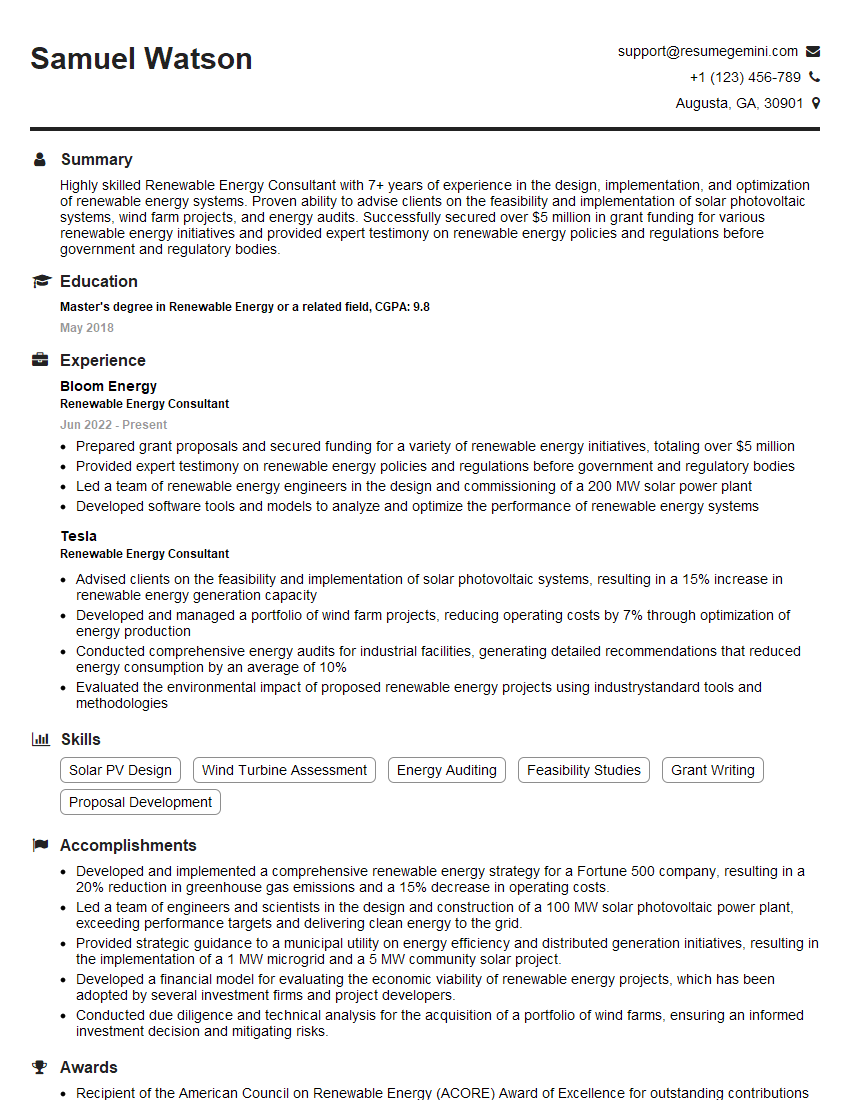
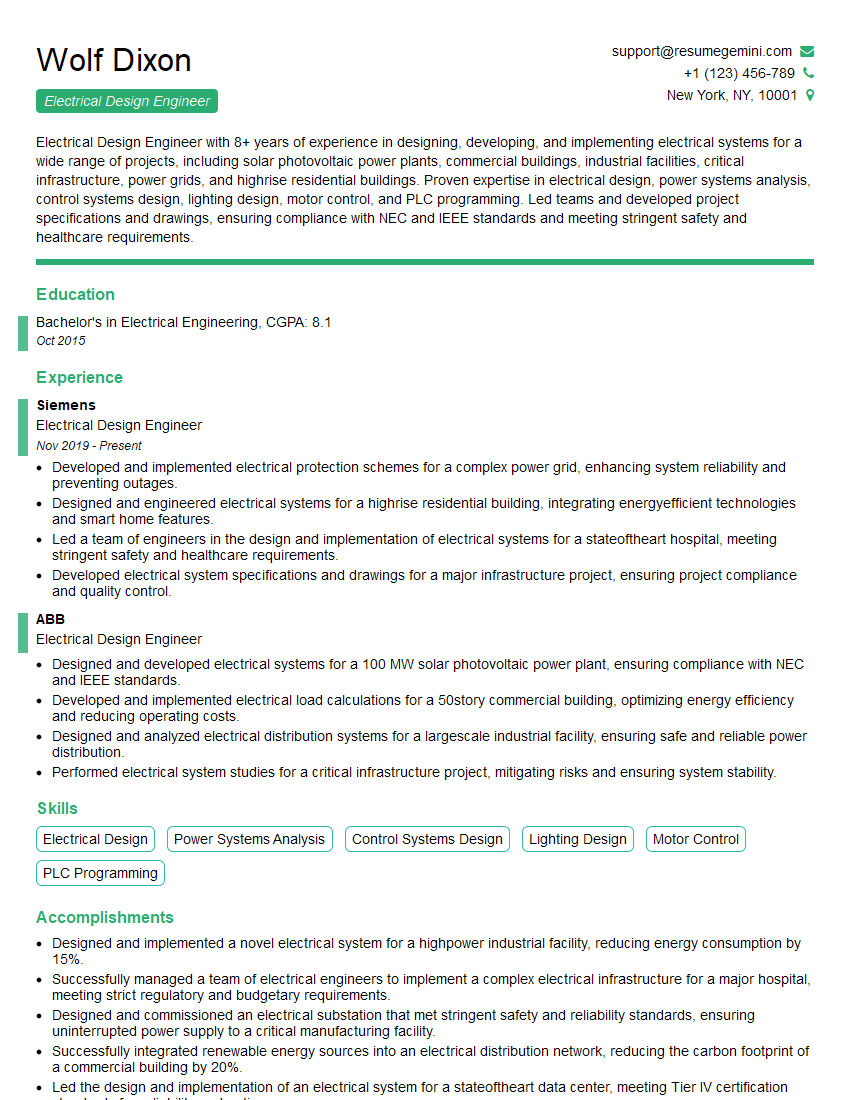
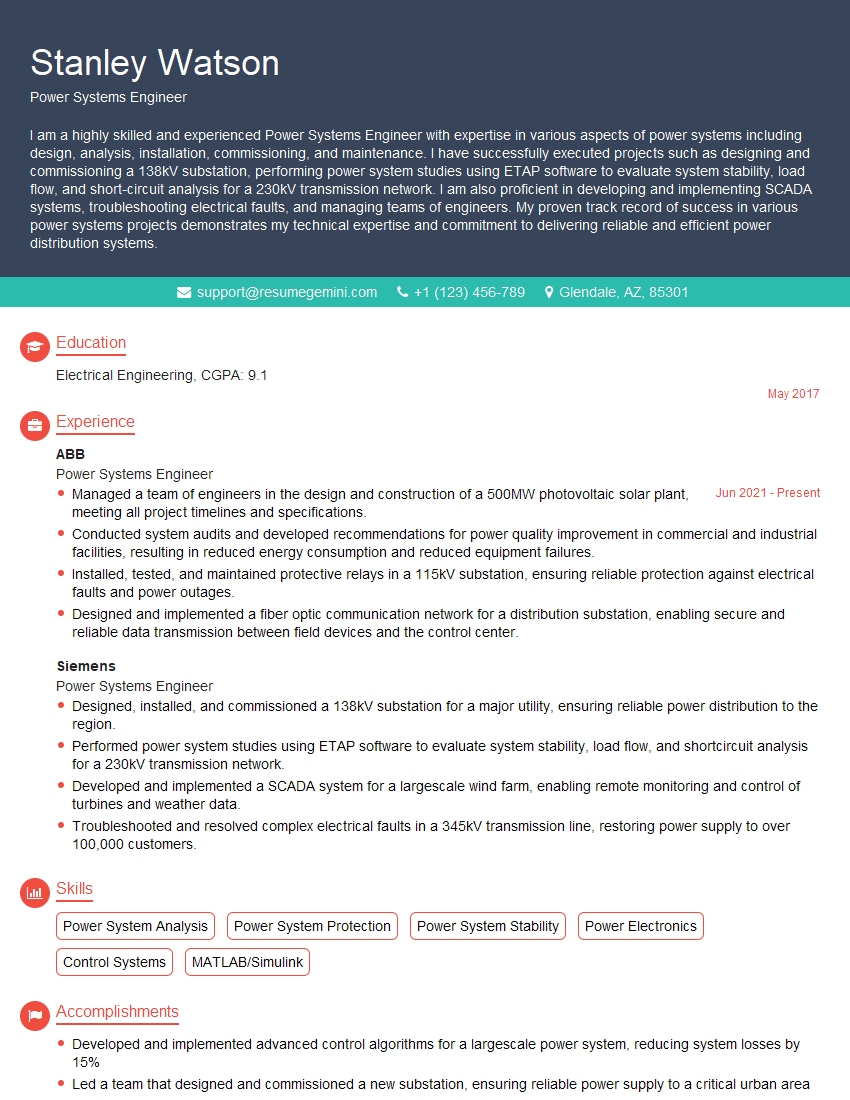
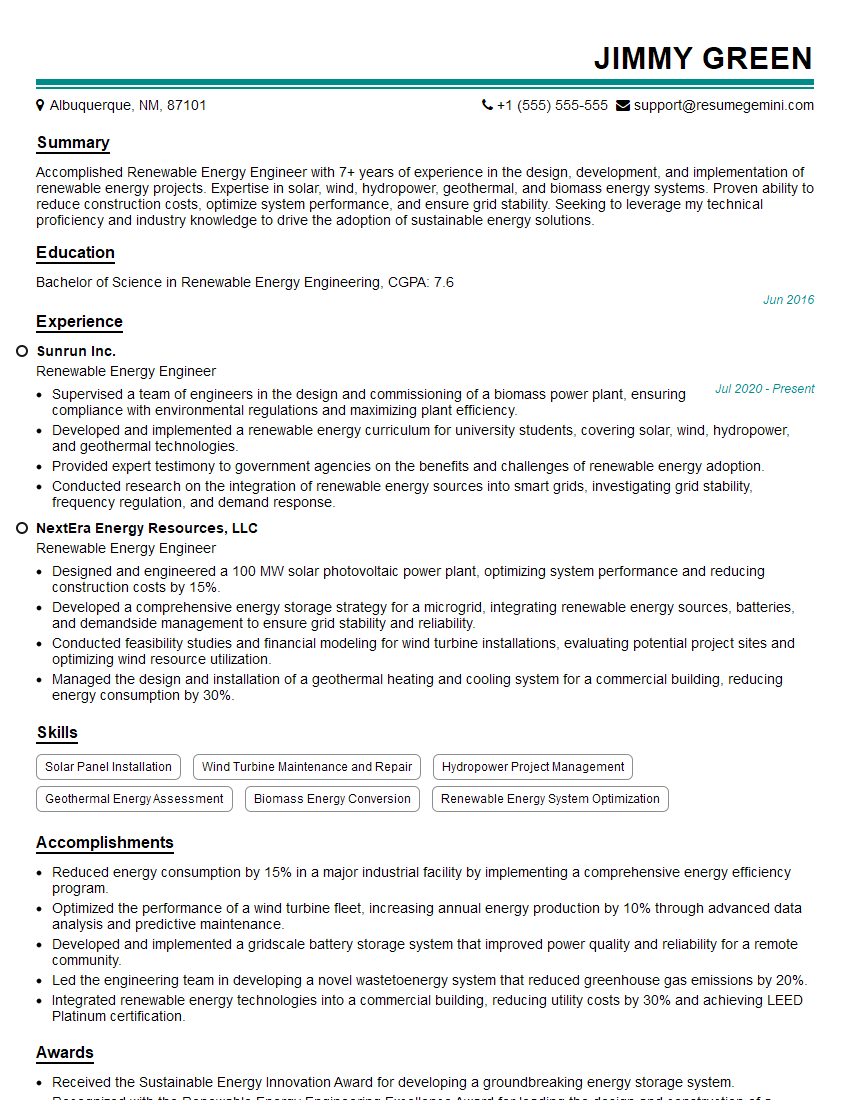
Mastering Grid-Tied System Design opens doors to exciting and rewarding career opportunities in the rapidly growing renewable energy sector. A strong understanding of these concepts is highly sought after by employers. To significantly boost your job prospects, crafting a compelling and ATS-friendly resume is essential. We strongly recommend using ResumeGemini to create a professional and impactful resume that highlights your skills and experience effectively. ResumeGemini provides examples of resumes tailored specifically to Grid-Tied System Design roles, helping you showcase your qualifications in the best possible light. Invest the time to build a resume that truly reflects your expertise – it’s an investment in your future.
Explore more articles
Users Rating of Our Blogs
Share Your Experience
We value your feedback! Please rate our content and share your thoughts (optional).
What Readers Say About Our Blog
To the interviewgemini.com Webmaster.
Very helpful and content specific questions to help prepare me for my interview!
Thank you
To the interviewgemini.com Webmaster.
This was kind of a unique content I found around the specialized skills. Very helpful questions and good detailed answers.
Very Helpful blog, thank you Interviewgemini team.